Embrace God's truth with our new book, The Lies that Bind

Rebekah Lyons’ 6-Step Morning Routine to Reduce Anxiety

This article is based on information provided by Home Instead Senior Care.

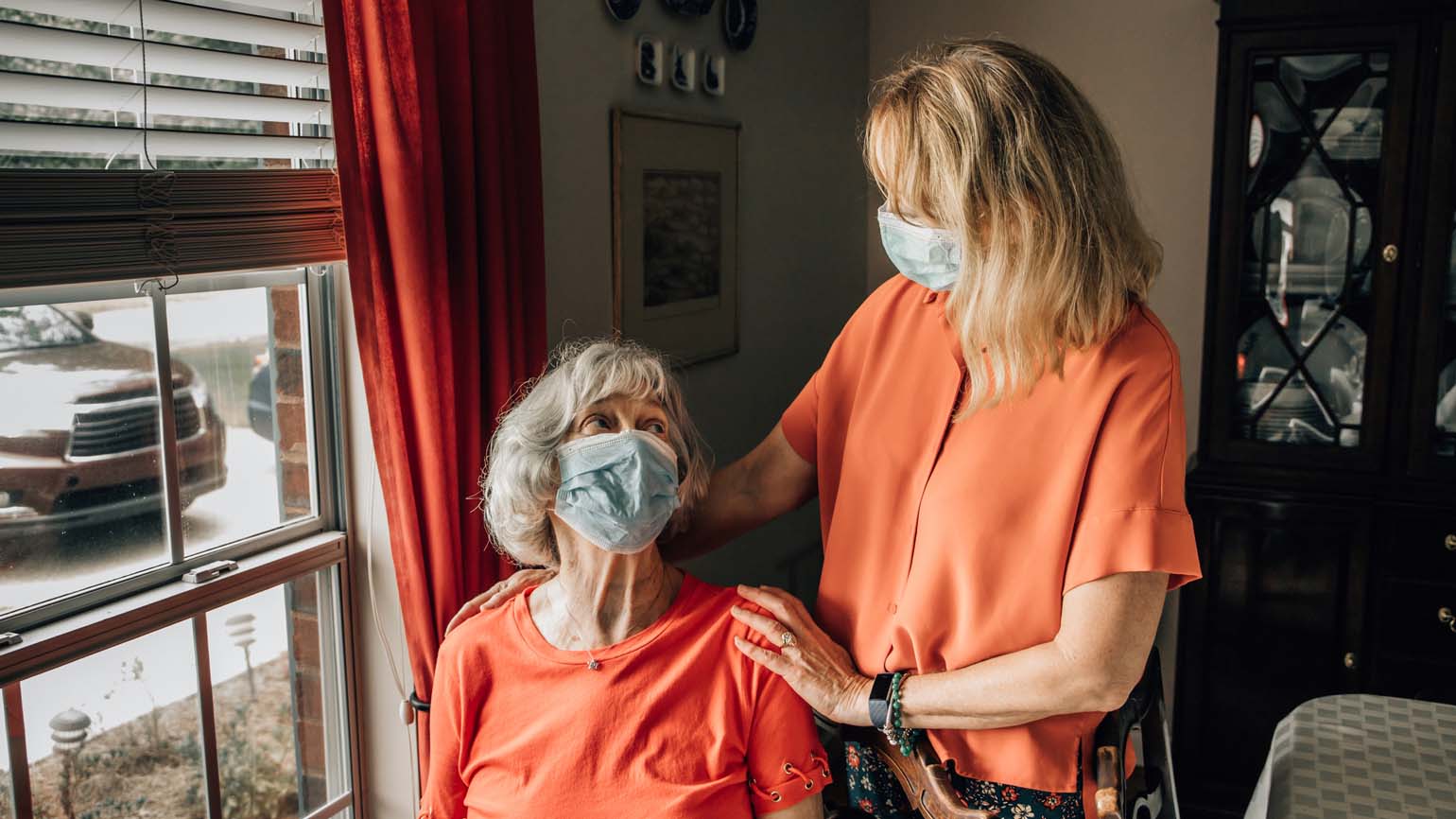
People with Alzheimer’s disease may at times deal with emotions related to loss, as well as with boredom. It is not unusual for them to react to these feelings by rummaging through drawers, closet or cupboards. In a misguided effort to hold onto familiar possessions, they may hoard or hide them away. When you understand that unmet needs are partly behind your loved one’s behaviors, you can better deal with them. The following tips can help you understand the behaviors and develop methods to cope with the hiding and rummaging. 

Handling Rummaging

People with Alzheimer’s display a variety of repetitive behaviors, including rummaging through drawers or papers. This particular behavior can be triggered by nervousness, boredom, anger, or vulnerability.

These tips can help you as a caregiver:

·      Appreciate that this curious system is a function of the disease that can’t simply be stopped.

·      Try to identify what brings on the behavior.

·      Focus on the person more generally, rather than dwelling on the behavior.

·      Redirect annoying or problematic rummaging to a less problematic alternative.

·      Put together a dedicated box or drawer for this behavior.

·      See if you can come up with other activities involving the hands, as a way to channel the nervous energy. These could involve balling yarn, working with hand tools, or playing with worry beads.

·      Speak reassuringly and use positive body language.

What to Consider When Your Loved One Hides or Misplaces Things or Rummages

·      Don’t overreact if items go missing. Stay calm.

·      Help your loved one maintain a regular routine.

·      Keep valuables locked away.

·      Pay attention to daily mail.

·      Encourage positive rummaging.

·      Keep an eye on your loved one to determine whether he or she is hiding things.

·      Think about installing a surveillance camera in the home if items continually come up missing.

·      Regularly check the trash before it is put out.

·      Get duplicates of items to replace things more quickly and smoothly.

Soothing Ways to Talk About Hiding and Misplacing Items or Rummaging 

“Dad, I’m sorry we can’t find your book. I’ll look for it later. I am sure it will turn up.”

“Dad, I probably misplaced the remote control myself. Don’t worry, I’ll find it.”

“Dad, it looks like you’re looking for something in the drawer. Can I help you?”

“Mom, your scarf is not in this drawer. Why don’t we take a walk and look for it later.”

“Let’s leave your glasses on your dresser, Mom, where we know we can both find them.”

“Mom, I know you’re upset you can’t find your make-up compact. Let’s go to the store and get a new color!”

Tips to Prevent Your Loved One From Rummaging or Misplacing and Hiding Items

·      Get organized.

·      Take charge of valuables.

·      Use creativity.

·      Regularly check your loved one’s usual hiding places.

·      Look through the garbage whenever you’re taking it out.

·      Make sure your loved one is occupied with activities throughout the day.

3 Tips for Caregivers of People Who Rummage or Hide and Misplace Things

·      Clear away clutter.

·      Stress can wear on you. Allow yourself to take breaks.

·      Stay as organized as possible. It will make your life run more easily and efficiently.

Ragnar Relay: 36 Hours of Inspiration

What is a Ragnar Relay Race? One team, 12 runners, two vans of six people, three legs of the relay per runner, covering close to 200 miles over two days and one night. Late this winter I was asked to join such a team to participate in the Cape Cod Ragnar Relay Race, from Hull, Massachusetts (South Shore) to Provincetown, Massachusetts (the very tip of the Cape). With not a lot of thought, other than checking my calendar and with my boss, I said yes, which included taking the as-yet-unclaimed longest leg for the team.

With life as full as we all know it can be, I squeezed in running more consistently and at greater lengths to train for the race. Still, I felt some pangs of nervousness. I did not question whether I could complete my three required legs of the relay (you are not disqualified for walking), but I wondered: How would my body fare? Would I get any sleep at all in the van (where we lived for 36 hours)? The five teammates in my van, Van 1, are great pals, easygoing, supportive, fun and hilarious. Like me, they were all doing this relay to enjoy the experience, to be challenged and to step away from the daily routine. We had no expectations of each other. There was no better situation to be in for running a relay.

Whistle Stop Cafe In Article Ad May 2023

I have pushed myself physically before, in triathlons and half marathons (not many of either), but not since my college days had I been on an athletic team with a goal. I have coached teams since college, but that is not quite the same as being a participant. 

Our first runner took off at 6:30 a.m. on a drizzly Friday morning in May. The rest of us then took our turns running in relay order. Once we in Van 1 completed our first legs, Van 2’s runners did theirs. The pattern went on for approximately 31 hours. Our final team member arrived in Provincetown, with us to greet her, at 12:30 p.m. on Saturday.

There were day runs, middle of the night runs and early morning runs for our van. There were brief stops for food, a catnap here and there, lots of hydrating, no showers, enthusiastic cheering, many pit stops and an incredibly wonderful number of laughs. There were teams running to support causes. There were families and friends running in honor or memory of a loved one. There were teenagers and octogenarians. There was a man who juggled throughout his running legs (he used glow-in-the-dark balls during his nighttime runs). There were encouraging t-shirts on runners and supportive signs held by people along the routes.

The energy that comes with hundreds of people sharing a common goal is palpable and invigorating, even stress reducing. What better time to let the demands of your work and home life, the list of to-do’s, slip away? The beauty of seashore towns, the salty breeze and friendly people are tonics, not to mention being in a position to offer support, encouragement and humor to other participants, not just your team, but hundreds of others.

A recent thought and act from the OurPrayer Daily Scripture & Reflection newsletter caught my eye:

Be with someone who brings out the best in you, not the stress in you. –Anonymous

Grasp every opportunity to offer encouragement to others.

I felt very fortunate to be asked to join an effort that gave me the opportunity to be enveloped by others who supported me and whom I could support as well. Participating in the Ragnar Relay Race gave me the chance to push myself athletically, to see the Cape on foot, to be energized and encouraging, and to be surrounded by a tremendous team of game and fun friends. Not a bad gig for 36 hours.

Rev. Pablo Diaz on Hope and Recovery

Pablo Diaz: I want to share with you about believing that recovery is possible through hope. Addiction affects people of all ages, nationalities, professions, class, race. Addiction not only impacts a person who is addicted, but impacts their family, loved ones, their friends and co-workers. In the United States, there are 21 million individuals battling addiction under the age of 12. If not treated properly, addiction will destroy your family, marriage, business, a community, and even a country.

According to the Surgeon General’s report of 2016, every 19 minutes, an American dies of an overdose. One in seven individuals will face substance abuse. Let’s begin. Count.

Inspiration from the Garden in article ad

Audience members: 1. 2. 3. 4. 5. 6. 7.

Pablo: One in seven—that’s staggering to think that 1 in 7 of Americans will face substance abuse. Now, let me give you the economic impact. The economic impact is $442 billion a year as a result of drugs, alcohol, and addiction in this country—staggering.

But the reality is that addiction is more than statistics. Addiction is about people. For every person addicted, there’s a name, agenda, a family, a history. The sad part of it is that when you battle addiction, you lose, ultimately, the opportunity to exercise the great potential given to you by your creator. You lose the opportunity to express the greatness that you have as an individual. And ultimately, you can lose your life.

Pastor David Beddoe, whose story was in the “Guideposts” January issue of 2018, who battles addiction himself, said the following. “Addiction is not about good or bad people. Addiction is about people who are suffering and want to be made whole.”

I know firsthand the impact of addiction on a family. My wife’s family battled addiction for many years. They lost four siblings connected to the drugs and alcohol. No one overdosed, but the impact of it over long haul—even my father-in-law, a career vet, 29 years and 10 months in the reserve, struggled with his own experience of war and drank quietly, for he was a reserved man. I remember asking, can I marry your daughter? He said, yes. And that was the end of the conversation—quiet. At the age of 62, he passed away.

You see, when you’re battling addiction as an individual—as a family, you feel alone and isolated. You can feel defeated, depleted, in despair. It is in these moments that we must remember the words of that great prophet in the “Book of Lamentations,” in the Hebrew scripture. “Lamentation” is comprised of five different poems that speak about the anguish, the agony, the pain, and the suffering the community, the people of God were experiencing as the Babylonians had invaded and destroyed their land.

Chapter 3, the following verse—”Yet I dare to hope. Yet I dare to hope when I remember the Lord’s faithful love. His mercies never cease. Great is his faithfulness—his mercies anew every single morning.”

Hope, hope, hope—a four-letter word that has power that infused the human spirit, that brings optimism, that breaks through with possibilities, that breaks through with a sense that all things can change. Hope—hope is that light that cracks through the darkness and paves a wave to say, here’s a role that you can take that is different and that can give you the recovery that you need.

Hope is the small whisper in the heart that doubts—quiets the doubts of the mind and the voices of despair and defeat. Hope is the courage that comes to us and the strength that comes within us to say, I am going to hold on one more day. That’s what hope is. It’s that light at the end of the tunnel—hope.

Sometimes, like Jimmy Santiago Baca, author and poet writes, “You must hold on to the ledge of hope.” Or as Dr. Martin Luther King said, “We must accept the finite disappointment, but never lose the infinite hope.” No matter what your circumstances are, recovery is possible.

I remember a young man named Charlie. Charlie came to church that Sunday morning. I was a pastor serving this congregation. And Charlie walked in and attended service. And I got a chance to meet him. He looked fragile, worn out, tired. As we sat, he said, I’m tired of living a life of drugs. I feel ashamed for all the pain I’ve cost my beloved, wonderful mother. I don’t want to be an addict. I’m exhausted from treatments and relapses and from all the drugs that I’ve taken. I want to be a loving, caring father.

I befriended him, and we journeyed for quite a while. I provided pastoral care. He agreed to get treatment and go for counseling and get the care that he needed. And together, we journeyed. And the family that loved him was there to support him. The weeks and the months went by. And the years went by. And Charlie was able to overcome a drug and alcohol addiction.

Now, I also remember the words of that young Jewish girl in World War II who kept a diary in hiding, who didn’t live to see her future, but whose words continue to inspire us. Ann Frank wrote, “Where there is hope, there is life. It fills us with courage and makes us strong again.” Hope—that four-letter word that I love, hope.

When a young person walks into a recovery center rehab because they want to break the addiction, hope is present. When resentment and anger and bitterness and loneliness is no longer ruling the heart, hope prevails. When a person is clean from their addiction and free from what bounded their heart and their bodies and their mind, hope wins.

How about when a mother and a daughter are reunited because the daughter’s made whole again, and the mother holds the daughter in on her arms and says, that’s my little girl. She’s come home. She is the young girl that I once knew.” Or the father embraces a son and says, here’s my son. He’s no longer bound by addiction.

So let us not lose hope, the infinite hope in us. Let us hold onto the ledge of hope—loosely, tightly, but never letting go. For as long as we have, hope we have life. As long as we have hope, we have courage. As long as we have hope, we become strong again. As long as we hold onto the ledge of hope, and we hold onto it tightly or loosely, the possibilities of recovery, of redemptions, of being made whole again, becomes real. Hope, for today gives me faith for tomorrow.


Pure Grace

It was the men’s figureskating finals of the 1988 Winter Olympics. I was 16 and already had racked up my share of skating titles. Someday I’d be in the Olympics. In fact, it was my dream.

That night I lay on our living room floor excitedly watching the battle of the Brians in Calgary: American Brian Boitano facing Brian Orser in his home territory of Canada. Both of them had been world champions. Both of them deserved to win.

Community Newsletter

Get More Inspiration Delivered to Your Inbox


Naturally I was rooting for Brian Boitano, a northern Californian like me. We’d skated on the same ice. I held my breath in amazement. Boitano pulled off an amazing eight triple jumps, almost flawless. The gold medal! I jumped in the air when his score went up.

But what happened next is what I’ll never forget. Brian sat in front of the camera with his coach, surrounded by a crush of journalists scribbling in notebooks, lights flashing, the TV interviewer holding a microphone up to him.

Brian was talking about his career and his medal, talking to the whole world. A tremor went through me, then a terrible sinking feeling. I could never be in the Olympics, I thought. No way could I talk in public like that. I’d freeze. Just the idea of a press conference terrified me.

You see, I loved skating partly because I didn’t have to talk. I could express myself with camel spins, split jumps and spirals. I didn’t have to stand up and give a speech like some teachers expected.

Public speaking was one class in high school I would never take. I could feel the blood rush to my face if I thought a teacher was going to call on me. I stared at my shoes. Please, please, let someone else talk, I’d pray. I was sure I’d get my words jumbled up and make a fool of myself.

What if journalists asked me questions like they asked Brian: “When did you first learn to skate?” “Where did you grow up?” “Tell us about your family.” I’d freeze up like the ice beneath my skates!

And yet, there was so much I would love to say, about my family and all the support they’d given me. About following my dream of being a figure-skating champion.

Why should a dream have some part of it that was so scary? Why would I have to do something I feared in pursuing something I loved?

Then I would fantasize: Maybe if they did a profile of me I could let the pictures speak for themselves, like a slide show.

I could find a snapshot of my maternal grandfather in his Army uniform, the only non-Caucasian in his platoon during World War II. A second-generation Japanese-American, he fought against the Nazis in Europe.

His wife, my grandmother, stayed in an internment camp in Colorado, barracks of rough cabins, families crowded on top of each other. Even with her husband a soldier in the U.S. Army, she didn’t feel safe in the outside world. Anti-Japanese sentiment ran too deep.

“Where was your mother born?” a journalist could ask.

“My mother was born in an internment camp,” I would have to say, “on January 1, 1945.” A New Year’s gift, they called her. I had a picture of the camp.

I would also look for a picture of me as a child: dark-haired, round-faced and my tiny legs and feet in casts. I was born with club feet, pointing inward and curled under. For the first 18 months of my life they were in plaster casts. Then I had to be fitted with special corrective shoes with a metal bar connecting them. I remember the bar clanking on the hardwood floors when I tried to walk. I was quite a sight.

No wonder I yearned to do something graceful when I was finally free of that thing. First it was ballet, then baton twirling. Speechless magic! I could show you a photo of my older sister, Lori, and me with our batons. But what I really wanted was to go ice skating like Lori.

We rented skates and I slid out tentatively on the ice, my mom holding my hands, my legs wobbly and unsure. We made a few turns on the rink, me slipping and sliding. And then something happened. I could do it! I could stand on the ice and skate all on my own.

Something inside of me clicked. This is me, I thought. This is what I am meant to do. It felt like pure grace had found me. I burst into tears when I had to return the rented skates. I thought I’d never get them back!

Every child has dreams. But dreams need to be nurtured and shaped or they’ll fade. My parents encouraged me to take lessons and a group class. I was intimidated by all the other kids, scared when I had to skate in front of them by myself, but I stuck with it.

Teachers, too, saw something in me that I couldn’t begin to see in myself. “Try this,” they urged. “Try that.” A jump, a turn, a figure-eight pattern that cut elegantly through the ice, leaving my marks behind. Things that seemed impossible became second nature.

I was given a Dorothy Hamill doll, dressed in a miniature version of the red costume she wore in the 1976 Olympics when she won gold. Not that I ever thought I would do the same, but a seed had been planted. I had something to aim for.

I took my Dorothy Hamill doll with me to the rink and let her watch me skate.

Of course, it was work, all that training, but as long as you have a goal in your head and you’re working toward it, gaining skills, gaining strength and ability, you don’t always realize how hard it is.

Up at four to get on the ice at five o’clock and train before school. Back to the rink at the end of the day. It wasn’t like school. I never had that feeling of wanting to sink in my chair and hide behind my desk. I didn’t mind being in the limelight in a skating program.

I wasn’t shy Kristi staring at her feet. I was someone else on the ice. Happy, confident, free. Some people express themselves by speaking eloquently, telling jokes or singing beautifully. I expressed myself with my skating. Everything I was feeling inside could come out on the ice.

I worked myself up to a level where I was the Junior American champion and skating in competitions with people I had admired only from afar, like Brian Boitano. That was what was so intimidating about watching Brian in his press conference. He was so calm, unflappable, quick and funny.

I clicked off the TV in a funk. My coach insisted I was Olympic caliber, but I could only imagine falling apart in front of a camera. Live? In front of the whole world?

I would rather die, I told myself. Why would God give me this gift, something I was so grateful for, and then add something that made it impossible?

The next day I was at the rink. As usual. I was practicing a combination of jumps that had once seemed impossible. I could remember seeing others doing them and thinking, I’ll never be able to do that. Almost like having to skate across the ice by myself that first day of class. But look, now I could.

Same thing can happen to you when you talk to people, the thought came to me. A strong, insistent thought.

You can do this, Kristi, the same way you learned to do a triple Lutz and triple Salchow. You didn’t do it all at once. But step by step, you learned. You took a big challenge and chopped it down to bite-sized pieces.

I worked very hard the next few years—on the ice and especially off. After competitions journalists talked to me and although my heart pounded every time I spoke to them, I got to know them. They became familiar faces. And they got to know me.

Slowly I learned that the best approach was simply to be myself. To be honest and gracious and do my best, just like on the ice, to answer their questions. So when my big moment came four years after Brian’s, I was ready.

Sometimes I think my biggest accomplishment at Albertville was not winning the gold but talking to the press afterward. When you do the thing you fear most you put an end to fear.

I am still shy. I don’t love giving a speech, though I am always grateful and honored to be asked. I might look composed and relaxed, but I have to take several deep breaths to calm myself.

I’m glad I have this challenge because it helps me as a mom, helps me remember what my girls are going through, with all the challenges kids face these days.

Fear can stop you dead in your tracks. Fear can kill a dream. But facing a fear is empowering. What are you afraid of? What one thing scares you more than anything else? This year, walk right up to it and conquer it, step by step.

Watch and listen as Kristi reveals the three people who most inspired her!

More stories from Winter Olympians!

Download your FREE ebook, Rediscover the Power of Positive Thinking, with Norman Vincent Peale

Protecting Yourself from Physical Injury as a Family Caregiver

As any good family caregiver knows, the job requires a constant eye to safeguarding your loved one against physical injury—from eliminating fall risks to taking over the driving. But what about your own injury risks? With so much of your focus placed on the needs of the person in your care, you can place yourself in harm’s way.

“Caregivers are notorious for neglecting their own health,” Lisa Winstel, chief operating officer of Caregiver Action Network (CAN), told Guideposts.org. “A caregiver can suffer because they’re not going to take the time for routine care that could help keep them healthy.”

Sweet Carolina Mysteries In Article Ad

While your overall well-being is fundamental to your success as a caregiver, it’s not only easy to forget routine self-care, but to disregard important steps that can help you avoid injury.

“Full disclosure: I’ve got bad knees,” Winstel said. “I was talking to my orthopedist and he asked what I do for a living. I was telling him and he was like, ‘Oh, terrific! I have a patient who really needs to get a knee replacement and she won’t because if she’s recovering, there’s nobody to take care of her husband.’ So his patient is causing herself repeated harm and constant pain, because she can’t stop her caregiving, in her mind.”

Whether it means getting help from others or learning how to reduce your own risks, Winstel shared these suggestions to help you avoid getting hurt:   

Learn how to handle daily activities better. “Let’s say your mom lives with you and she has Alzheimer’s, and your goal is to keep Mom with you as long as possible,” Winstel said. “That means that every day you’re starting with getting Mom on and off the toilet, in and out of the shower, teeth-brushing … If you’ve got an elderly couple where the care flows from the person who can give it to the person who needs it, something as simple as folding up a transport chair and putting it into the trunk for somebody who has arthritis can really be painful, as well as exacerbate the arthritis and actually cause injury. Or let’s say you’re caring for somebody with limited mobility or a movement disorder. Just getting somebody out the door and into a car—things that we all take for granted can become a huge challenge and risk.” An estimated 60% of family caregivers assist their loved ones with activities of daily living (ADLs) such as eating, bathing and showering, grooming, mobility, and using the toilet. To help these caregivers, CAN has launched a new set of articles and videos with practical tips on how to safely handle these activities.

Reducing and removing bbstacles that could lead to injuries for you. “Think in terms of how to reduce your own fall risk,” she said. “It may be something as simple as automatic night-lights, so if you have to get up in the middle of the night to care for somebody, the lights will come on. Have all of your light bulbs changed to some form of a long-lasting bulb so that you’re not getting up on chairs and stepladders. Remove trip hazards. You usually think of throw rugs, but there are lots of other types of trip hazards. I’m looking at my floor, thinking, ‘Physician, heal thyself.’ There are two dog toys that could really wipe me out, and a pair of shoes that didn’t get put away. If I were to be helping somebody with a walker or a wheelchair, if my head turned, I could trip.”

Understand your loved ones’ possible health changes and symptoms. Dementia can cause aggressive behavior, so it’s important to learn how to avoid physical altercations. “It’s something that caregivers hesitate to discuss,” Winstel said. “If you say, ‘Dad was acting crazy last night and he hit me,’ you don’t want somebody to say you have to put him in a home. You want to figure out a way to make it work. Sometimes it can’t work. I’m not saying that you always have to keep everyone at home. But if having someone at home with you is your goal, there are ways that you can do that more safely.” CAN’s Lighting Your Way digital tool provides information to help caregivers better understand some of the lesser known behavioral and psychological symptoms that can accompany dementia and what can be done about them.

Ask for help and don’t be too hard on yourself. “Give yourself a break,” Winstel said. That may mean in-home care, if it’s feasible. If so, Winstel said, “you definitely want to make sure that you get somebody who has the skills and experience you need to be helpful. If you’re going to have another family member or friend come and help you, definitely have a family meeting. Discuss who’s going to be responsible for what. Have lots of good, open conversation. Let everybody else know what’s going on with the loved one you’re caring for. Help doesn’t even have to be in the house with you. Maybe you can say, ‘I’ll take care of Mom in the house but somebody else can manage her finances.’ Your brother’s in North Carolina—maybe he can handle the bills. You can relieve your burden with other family members other than with hands-on help. And don’t be too hard on yourself. You’re handling a lot. You’re not failing if you need to ask for help. Asking for help is a sign of strength!”

Learn more information on ways to safely care for a loved one with dementia.

Promise in the Manger

Dust covered the top of the crates I dragged out of storage. They didn’t exactly scream holiday spirit.

It had been years since I’d opened Mom’s collection of Christmas decorations. Without her around to appreciate it, why decorate the house?

extraordinary women of the bible

“Let’s see what’s inside!” my fiancée said.

The excitement in Stephanie’s eyes made the effort seem worth it. This year. Maybe.

I pulled open the first box and lifted out a three-foot-tall ceramic tree. Stephanie unwound the cord and plugged it in. Multicolored lights flickered to life. “Your mother sure knew how to celebrate,” Stephanie said.

That was an understatement. Christmas was Mom’s favorite time of year. She believed it was filled with promise and acted accordingly.

Each December our house became transformed. Mom wrapped garland around the banisters, stacked holiday dishes on the buffet and set out her hand-painted Santa’s workshop. The house reeked of Christmas.

After Mom died my family tried to celebrate Christmas the way we used to, but for me it just wasn’t the same. It was as if I had a big hole in my life where Mom used to be. A big hole where Christmas used to be.

Every year since I’d think about putting up the old decorations at my own place. Thinking was as far as I got. Then Stephanie and I got serious about a future, maybe starting a family of our own. I told her about the decorations in storage.

“Look!” Stephanie said, digging into another crate. “A little church—with real stained-glass windows.”

Mom liked to run her finger up the steeple, peering inside as if imagining a quaint Christmas service. Now maybe Stephanie would care for the little church the way Mom did.

I started on another crate and unwrapped the piece on top. At the first glimpse of blue I knew it was Mary, her expression as soft as I remembered.

Next I unwrapped a figure with an elaborate crown—the first of the three wise men. The next piece I identified before I even unwrapped it. Those two points could only be the ears of the donkey that carried Mary and Joseph to Bethlehem.

Pieces lined up perfectly before me as the pile of tissue paper grew: the angel with her trumpet, the lowly shepherd with a lamb slung over his shoulders, simple Joseph in his brown robe. Only one more to go. I know what this one is, I thought as I peeled off the tissue paper to reveal…a lamb?

But where…. The box was empty. “Where’s baby Jesus?” I said, searching through the pile of tissue paper.

“He must be there. Did you check his manger?” Stephanie said.

I held up the cattle’s trough that served as his bed. “It’s empty. And Jesus is nowhere to be found. But he can’t be missing. He’s the most important part.”

Stephanie and I rummaged through all the wrapping paper scattered across the floor. “He was there for Mom’s last Christmas,” I said. “She never would have lost him.”

Hours later every box was empty and every bit of tissue paper laid out flat in a tall stack. Still no baby Jesus. Holding the empty manger in my hand, the aching feeling of loss washed over me again.

The most important part of Christmas was missing just as surely as the most important piece of Mom’s nativity set. I shouldn’t have hoped to make Christmas the way it used to be.

“We should just pack the nativity back into the crate,” I said.

“Not yet,” said Stephanie, putting her arm around me. “We’ve come this far. I’ll go to the hobby store tomorrow and find another baby tiny enough to fit.”

I couldn’t say no. At least the nativity set would be complete, even if my Christmas never would be.

The next night Stephanie showed up at my door empty-handed. “I couldn’t find a single baby to fit that manger,” she said. “I’m sorry.” She came inside and put the manger down between Mary and Joseph. We stood there staring at it. Empty, I thought. With nothing to fill it.

Stephanie reached out with her finger and pushed the little bed more securely between Mary and Joseph.

“You know, it really is a beautiful set,” she said. “I’m going to imagine the manger isn’t empty at all. I’m going to imagine it’s filled with new life. Our new life together as a family, and the new life Jesus promises us with his birth.”

I considered what she said. Wasn’t that the real reason Mom loved Christmas? Wasn’t that why she decorated and celebrated? This was the season of promise. The season of what might be.

Instead I’d been dwelling on what wasn’t. I had to stop looking back with sadness. Stephanie was right: It was time to look ahead with joy. “I think I know where the baby Jesus is,” I said.

Stephanie looked at me hopefully. “Where?”

“He’s with Mom up in heaven.”

One day I’d see them both. But for now Stephanie and I had a perfect nativity set to display at Christmas. We’ll celebrate our eighth together this year.

Our daughter will help us unpack Mom’s decorations—the ceramic tree, the little church, and the nativity scene with a manger that is full to the brim with memories. Memories and promise.

Download your free ebook Angel Sightings: 7 Inspirational Stories About Heavenly Angels and Everyday Angels on Earth.

Preserving Memories for Your Loved One with Dementia

Remaining socially and mentally engaged has alleviated her husband Bob’s symptoms of Alzheimer’s disease, Luanne Bole-Becker says. She’s onto something. Research has shown that talking to people with dementia about their lives creates positive emotions, reduces stress and improves their quality of life.

A wonderful way to connect with your loved ones is by capturing and preserving their memories. Here are tips from the experts at Home Instead Senior Care on how to make it a fulfilling experience for everyone involved:

Mys of Blackberry Valley In Article Ad

Ask open-ended questions. Dementias typically erode short-term memory first, so it’s often rewarding to recall events from further in the past. Try questions like “What did you do for fun when you were little?” or “What was your favorite job?” Work up to deeper questions like “What are you most grateful for?” or “How would you like to be remembered?”

For more ideas, search conversation starters at caregiverstress.com or go to storycorps.org.

Listen patiently. Your family member might struggle for words. Keep listening for as long as they want to share. Let their reactions guide you. If they’re eager to talk, ask for more details. If there’s something they can’t remember or don’t want to get into, move on.

Use photos, music, objects and scents. Of all the senses, smell has the most direct connection to the parts of the brain where memories are stored. Aromas can unlock rich memories even when verbal and visual cues fail. Flowers, a campfire, sawdust, cookies baking, pine…any scents that are significant to your loved one can work.

Create a memory box. The sense of touch stimulates memories. What items hold special meaning for your family member? Some ideas: a military medal, trip souvenirs, gardening gloves, seashells, jewelry. Collect the items in one place so they’re easy to pull out when needed.

Be ready to capture reminiscences at family gatherings. Keep a video camera, a voice-recording app on your phone, a laptop, or a journal and pen handy.

Integrate memory gathering into daily activities. At mealtime, talk about favorite recipes and the stories that go with them. Ask about pictures and keepsakes while you’re cleaning. Something on TV might trigger a recollection.

For free training for family caregivers, including local workshops, online classes and videos, visit HelpforAlzheimersFamilies.com.

Preparing for Promotion

If there’s one thing I’ve learned in life, it’s this—promotion takes preparation.

That truth was never more evident than when I took a magazine feature writing position at a worldwide ministry, only to be informed I’d actually be doing something entirely different…and I wasn’t thrilled about it.

Pray A Word a Day - 2023 In article

My editor explained that they had a greater need for another ghostwriter, so I would be fulfilling that role. During my years at Indiana University journalism school, I’d been told to “find my voice.” So, I’d been working hard every day since college graduation to do just that. Now, my new boss was telling me: “Lose your voice, and find somebody else’s.”

That just didn’t make sense to me.

“Let me get this straight,” I answered. “I’m going to be taking somebody else’s thoughts and words from a sermon or a presentation, and then I’m going to write an article weaving all of those thoughts together in that person’s voice? With no byline?”

“Exactly,” my editor answered. “That’s why it’s called ‘ghostwriting.’ You are invisible.”

Little did I know, not only was God working out some of that stubborn pride from my heart, but also He was preparing me for a role that would be a great blessing in my life—spiritually, professionally and financially.

I was able to learn to ghostwrite while getting paid to do so and being mentored by one of the best ghostwriters in the business who happened to work two offices over from me. It wasn’t an especially easy season in my life, but it was one of preparation, though I didn’t know it then.

A few years later, I was offered the assignment of a lifetime, ghostwriting a book for a celebrity I greatly respected. That book ended up being a New York Times bestseller, which opened up numerous ghostwriting doors for me. Over the years, I’ve been able to ghostwrite for many wonderful people, and it’s been a privilege to help them tell their stories.

But I wouldn’t have had those awesome opportunities without that season of preparation at the worldwide ministry.

You know, there are examples of preparation preceding promotion throughout God’s Word. Take Esther, for example. She was just living her life as a lovely young Jewish girl in Persia when she ran smack dab into her destiny—becoming the queen and ultimately saving the Jews from annihilation.

However, to step into that destiny she had to go through a year’s worth of beauty treatments (Esther chapter 2). God was preparing her both spiritually and physically. Had she not gone through those 12 months of preparation, she wouldn’t have been in position for that promotion.

So, let me ask you, are you experiencing a season of preparation? If so, don’t be discouraged or grow weary in the waiting. Just know that you are being prepared for promotion, and rejoice in it!

Pray Your Way to a Clutter-Free Home

Today’s guest blogger is Courtney Ellis, author of Uncluttered: Free Your Space, Free Your Schedule, Free Your Soul.

A few years ago I found myself drowning in stuff. My shelves were overflowing. My closets didn’t close. Don’t even get me started on the guest room, which is where unused exercise equipment, outdated electronics and all manner of holiday decorations piled up in small mountains of plastic tubs. 

Journey With Jesus in article ad

Possessions aren’t neutral. Each item we own takes time to care for, store, dust and maintain. Each one takes up space in our lives. An overabundance of clutter can be not only an eyesore, but a barrier to hospitality and stumbling block in our walk with the Lord, stealing time away from what matters most.

Uncluttering is big business these days. From Marie Kondo to storage solutions to the minimalist movement, it’s clear that many people are tired of their possessions owning them. But the root of our problem is deeper than just having too much junk. At its heart, it’s a spiritual issue.

We hoard things out of fear (what if I need this later?), a lack of trust (what if God doesn’t provide?) or even a desire to control (now I’m prepared for everything!). Yet God calls us to a better way, unencumbered by the clutter that can weigh down not only our shelves but our souls.

The good news is that there’s another way! Scripture teaches the ancient Christian virtue of simplicity (see Matthew 6:19-20)—letting God order our lives for our good and His glory. Jesus reminds us that He clothes the lilies (Luke 12:27) and cares for the sparrows(Matt. 10:29)—we can trust Him to care of us instead of hoarding and clinging to what we own. Regular worship reminds us of the rhythms of the kingdom—that in giving up, we gain, and in laying down our life (and our possessions!) we find new hope (1 John 3:16).

As I’ve begun my own uncluttering journey, my prayer has changed from “God, show me what I should give away!” to “God, teach me what I need to keep.” I’ve learned that I don’t want hundreds of Christmas ornaments; I really only need those that will fit on the tree. I’ve discovered that I can let go of those jeans from college. (Let’s be honest, they’re never going to fit me again anyway!)

Through sharing what I have, God has brought me into deeper relationship with my neighbors as we swap a ladder for a lawnmower on a sunny afternoon, rather than each owning one of our own.

Over the past couple of years I’ve gone through not only my home but my calendar and my digital devices too, paring down to the essentials and learning that with every possession I let go of, my soul grows a little lighter.

Remembering that our lives are in God’s hands frees us to live simply, one shelf, one sock, one soup ladle at a time. 

Praying Their Way Through Turbulent Times

Mail thunked into the mailbox and I ran to get it. Ads, bills and…my stomach knotted. There it was. An envelope from the mortgage company.

I went in to where my husband, Doug, was in the living room. We opened the letter together and started reading: Dear Mr. and Mrs. Crane, we regret to inform you that your request for another mortgage modification has been denied…. It went on with more financial mumbo jumbo, but that first sentence told us enough.

Journey With Jesus in article ad

Doug let the letter fall to the floor. “That’s it,” he said. “We’re done.”

I gazed around the living room. Pictures of our three sons. The framed wedding photo above the mantel. Our furniture. Our whole life.

Two weeks earlier we’d received the foreclosure notice from the bank. We hadn’t panicked then because we were still waiting to hear about the loan modification. If we could bring those loan payments down we might figure out some way to hang on to our house.

Now the last door was closed. We had two weeks to move out. We were two weeks away from living on the streets.

I looked at Doug. He’s a stoic man, not one to complain or let his feelings show. But I could tell that he was as shaken as I was. How had we come to this?

Mentally I traced back through the last few years. Doug losing his job. My cancer diagnosis. This house we loved so much, where our three boys had grown into men and where we had raised our dog from a puppy.

Was it the house where we’d gone wrong? It was a big house, bigger than our family of five strictly needed. But that’s because when we bought it we’d thought that my parents would be moving in with us.

At the last minute they had backed out. Rochester, New York, where I grew up, is a lot chillier than Atlanta, but the rest of our family was there and so Mom and Dad decided to stay.

At the time Doug and I didn’t mind. Doug has been a hard worker all his life and he had a good-paying job doing woodwork and trim for a construction company owned by a friend. We could afford the mortgage payments plus raising three teenage boys.

We spread out in the big house. It was so nice to live in a quiet, relatively new development.

Read more: Prayers for Financial Help

Even my cancer seemed manageable. In 2003, a year before we bought the house, I’d been diagnosed with a slow-progressing form of leukemia. Doctors said I had a good chance of outliving the disease but I needed to take better care of myself.

I switched to a healthy diet and took up exercise—regular walks with Lexi, our boxer, through the neighborhood. I’d been a receptionist at a hair salon, but my health issues meant I couldn’t work anymore.

Then the recession hit. One day Doug came home from work looking worried.

“I won’t be getting a paycheck this week,” he told me. His friend who owned the construction company had told Doug that a few contractors had failed to pay him. “He said that things should be back on track by next week,” Doug said.

But things didn’t get back on track. Soon Atlanta’s booming construction business ground to a halt. After eight weeks without a paycheck Doug finally drove over to his friend’s house to find out what was going on. The house was abandoned. His friend was gone.

That evening Doug and I sat in the living room in shock. It was 2009, five years since we had bought our house. All three of our boys had finished high school and our two older boys had moved out. Aaron, our oldest, worked as a chef in Portland, Oregon. Shawn remained in Atlanta studying to become a pharmacist. And Adam worked at his brother’s pharmacy.

Even without the expense of three hungry teenagers, Doug and I knew we could not last long without an income. We didn’t have much savings. We pulled together some bills and tried to make a rough estimate of how much we spent each month. Ouch.

Living in a big house in the Atlanta suburbs was expensive. Our monthly air-conditioning bill alone was several hundred dollars. Same for heating in winter. Then there was gas. We had to drive everywhere. It took 15 minutes just to get to Walmart.

“I need a job,” said Doug. “Fast.”

The next day Doug started sending out applications and résumés like crazy. Finally he found a part-time job as an attendant at a fuel depot. A few months later he landed a full-time position on the sales floor at Home Depot.

The job came with health insurance, which we needed for my leukemia, and we thanked God for that. But it paid less than a third of what Doug had made in construction.

“We can’t keep up with these bills,” I told Doug a few months after he started at Home Depot. I wanted to be more encouraging but the numbers were unforgiving.

We cut out every extra. No more cable TV. No more landline telephone. I stopped getting haircuts and using conditioner.
We got two loan modifications from our mortgage company. At the end of each month we still made less than we spent.

The following summer the air conditioner broke. We couldn’t afford to fix it. At last came the day I’d been dreading. There was no longer enough money in our bank account to write the mortgage check. The foreclosure notice came a few months after that, on the first of February 2011.

Now we’d been denied a third loan modification and once again Doug and I were in the living room staring at each other in shock. The letter from the mortgage company lay at his feet. As usual Doug didn’t let his feelings show. He didn’t have to. We both knew we were desperate.

“Better start looking at rental listings,” Doug muttered, tromping off to get his laptop.

I went to our old desktop computer and tried to summon energy to look at rental listings myself. There was a new e-mail from my cancer support group. Those always included an inspiring quote or prayer so I clicked on it. The minute I saw the prayer I printed it out and ran to Doug.

“You have to hear this,” I said. I read: “Lord, your almighty power parted the Red Sea. When I face my Red Seas of life please give me the courage and faith to step out and follow you. I know that you are right here with me like you were with Moses at the Red Sea.”

Doug gazed at me in silence. Then suddenly the long months of holding in his feelings gave way. Tears ran down his cheeks.

“We can’t give up, Roxann,” he said, choking out the words. “I know that everything looks terrible and there’s no reason for hope. But we have to stay faithful. That’s all we have left.”

He reached for the paper with the prayer and I handed it to him. He read it again. “Let’s say it together,” he said. We did.

We needed that prayer big-time. None of the rental listings we looked at worked for us. They were too big, too small, too expensive, too far from Doug’s work, didn’t allow pets. All of them required a credit check, which we knew we would never pass, not with a foreclosure on our record.

Moving day was getting closer and we still had no place to move.

One afternoon on my daily walk I glanced down a side street. I don’t know what made me look, but a sign caught my eye in front of a small ranch house: For Rent. I hurried home.

“We’ll never be able to afford it,” Doug said. “Not in this neighborhood. Besides, you know that they’ll want a credit check.”

“Remember the prayer,” I said, trying to sound more hopeful than I felt.

We called the number on the sign. A few hours later the leasing agent met us on the front lawn of the ranch house. “You must be from New York,” the agent said after hearing my Rochester accent. “Me too.”

He showed us around the house. It was half the size of our current house but big enough for our things.

“What’s the rent?” we asked. It was less than our mortgage.

“You seem like nice people,” the agent said. “If you want it, it’s yours. Don’t worry about the credit check.”

I felt a shiver run down my spine. I know that you are right here with me, Lord. How else could this have happened except through the grace of God?

Other things began to fall into place. Doug and I had tried not to burden our boys with our financial troubles, but when we finally told them that we were moving, right away they asked what we needed.

Shawn paid our first and last month’s rent, and since pets weren’t allowed in the rental, he took Lexi in. Adam said that he would be happy to live in the new house with us and contribute to the rent.

With the boys’ help—and our friends’ too—we got packed up and moved into our new place in a single weekend. Doug applied to a special fund at Home Depot for employees in financial need and received a small stipend that we put toward utilities. A girlfriend took me to a salon for my birthday and I finally got a decent haircut.

We are not out of the financial woods yet. Even with reduced housing costs and help from the boys, our budget is still tight as a drum.

Still, we don’t despair. Not long ago Doug and I sat in the living room going over bills. “A few more months like this and we might have to move again,” Doug said, halfway serious.

I blanched, but then I thought of our prayer. I squeezed Doug’s hand. “God will be with us,” I said. I didn’t need to say anything more. God had parted one Red Sea for us and I knew he could do it again.

Doug knew it too. “Let’s say our prayer together,” he said. We did.


Download your FREE ebook, The Power of Hope: 7 Inspirational Stories of People Rediscovering Faith, Hope and Love.

Praying for Her Son’s Sobriety

Two guys walked up to us in the strip mall parking lot just as my husband and I were about to get in our car. They were carrying a cooler. Something about them gave me a strange vibe, so I opened the passenger door and climbed in.

“Would you like to buy some banana bread?” I heard one of the men ask David.

What do they really want? I wondered.

“No, thanks,” David said. “My wife makes the best banana bread.”

“I understand,” the man said. “Please take this, though.” He handed David some sort of paper.

“Sure,” David said casually, no tension in his voice as he opened the driver’s-side door. He’s a retired Houston cop, and if alarm bells weren’t ringing for him, I figured there was nothing to worry about.

Besides, it wasn’t as if I didn’t have enough on my mind. The oldest of my three kids, my son Wesley, had been addicted to drugs since his early teens. But I’d never seen him as hopeless as he was now, at 20.

Lately every time my phone rang, I expected it to be the morgue asking me to come identify his body.

Really, I’d worried a lot about Wes right from the start. Changes that other toddlers got used to with just a little fussing totally threw him. Everyday things like wearing long sleeves, taking timeouts and putting on sunscreen triggered huge tantrums that took him forever to come down from.

It tore at my heart to see the frustration and misery in his big blue eyes. Even worse, sometimes there was nothing I could do to ease his pain. It was as if he didn’t want me to help him.

The only place I could turn was my faith. Every night when I tucked Wes into bed, I would lay one hand on him and ask God aloud to protect him, our family and anyone we knew who was having a tough time.

Then I’d say a silent prayer, not wanting to put pressure on my little boy, who already struggled with so much. God, please make life easier for Wesley, I prayed. Bring him peace.

I hoped he’d grow out of his oversensitivity once he was in school, but if anything, his moods grew more extreme. At one point, I tried making all his food from scratch, hoping that if I eliminated additives and preservatives it might help him.

We took him to a chiropractor, an acupuncturist, a psychologist and a psychiatrist, who diagnosed Wes with ADHD and put him on medication. Thank you, Lord, I thought. This is what I’ve been praying for. The meds didn’t bring him much relief, though.

When Wes was a teenager, I took a job as a flight attendant, which had me away from home only on weekends so it wouldn’t disrupt the kids’ routines. Still, he had frightening outbursts—he’d bang his head against the wall, beat things with his fists.

I worried about his younger sister and brother too. They weren’t getting as much attention from me and Wes’s behavior had to be traumatizing for them.

Wes’s dad and I had our own issues—dealing with a troubled child puts a tremendous strain on a marriage and ours wasn’t the strongest—but we did everything we could for Wes. We gave him love. We gave him rules. He broke them all.

Wes was over at a friend’s one day when I called to check in. He sounded off, his words slurred. “You okay, Wes?” I asked.

“Yeah, Mom…” he mumbled. “I’m… fine.”

He’s lying, I thought. The minute Wes got home, I confronted him. He admitted to smoking pot. “But I don’t have a problem,” he said. I dropped to my knees and sobbed. I knew life was a constant struggle for Wes, but drugs at 14?

“Why couldn’t I have seen this coming and stopped it?” I cried out to God. “Why didn’t you? You say in your Word that you love Wes and me, so why are you allowing this to happen?”

Wes was right. He didn’t have a problem. He had a full-blown addiction. He was caught at school hiding a joint. I found more pot and a pipe in the attic above his room. From there it was tranquilizers, narcotic painkillers, hallucinogens.

When Wes was 16, his dad and I divorced and Wes went to live with him. Even though we weren’t in the same house, his addiction consumed me.

I managed to keep things together at home, barely, and take care of my other two kids. On the road, though, I’d lock myself into my hotel room and scream, not caring who heard me. I was that desperate to release my own pain.

God, why haven’t you brought my son the peace I asked for? Can’t you see he’s suffering? Don’t you care?

If it hadn’t been for another flight attendant I met at work, a wonderful man named David, my spirit would have been completely broken. David was kind, supportive and strong. His background as a narcotics officer gave him insight and understanding about my son’s struggles. And mine.

“We’re going to get through this. So will Wes,” he told me. “We’ve got God on our side.” Having David in my life made me want to believe that again, hope again.

David and I got married when Wes was 17. As much joy as our marriage brought me, it was tempered by the heartache of watching my son plummet further and further into the hell of addiction.

I can’t remember how many times I confronted him, pleaded with him to get clean. Or how many times he landed in hospitals or rehab, only to start using again as soon as he got out.

Now Wes was 20 and I felt like I was in mourning, with the terrible grief of a mother who knows her child is lost to her, beyond prayer, beyond hope.

I wanted to rest my head against the dash and cry. Instead I put on my seat belt and watched the two guys walk away with their cooler. And their banana bread. What was that all about, anyway?

David got in the driver’s seat. “I think you need to see this,” he said, handing me the paper he’d been given.

It was a flyer. “Victory Family Center: The Road to Recovery Starts Here” the front proclaimed. A shiver ran down my spine.

David had started to drive away. “Wait!” I said. “Turn around.”

Back in the parking lot we spoke to one of the men with the banana bread.

“Victory Family Center has a six-month live-in recovery program,” he told us. “Residents participate in daily chapel services, group sessions, Bible studies and various work activities designed to motivate and build character. All our services are free.”

To help support the center, residents sold banana bread, which also gave them an opportunity to tell others about the ways God had worked in their lives.

I felt that shiver again, and I knew he had to be at work right here and right now. I called Wes on my cell phone. “There’s this place I think you should check out,” I said. “It’s a rehab center that really focuses on God. Please just see how it is. Not for me. For yourself.”

Silence. Was he going to hang up or tell me to stay out of his life? I braced myself.

“Yeah, okay,” Wes said. “I’ll go, I guess.”

David was the one who took Wes to Victory Family Center that very night. I couldn’t bring myself to go. If he refused to check himself in, I wouldn’t be able to take it. As soon as David got home, I ran to him. “Please tell me he stayed,” I said. “Please tell me something good.”

“The first thing the counselors did was open their arms and hug Wes,” he said. “They told him they loved him and were there for him no matter what.”

On my first visit to the Victory Family campus, I saw that love in action. The place was very structured—no TVs, no couches to lounge on. Every resident was given a job, something to take responsibility for. “I love it here,” Wes told me. “I feel like I have a purpose.”

Still, after he finished up the six months, he relapsed. But now I understood that relapse was part of the disease. He got clean again and recommitted to Victory Family for a two-year program.

He traveled all over the Houston area with a cooler full of banana bread, helping addicts get on the road to recovery. Helping others get straight helped him stay straight. David and I talked to him all the time, and we visited regularly with his sister and brother too.

One afternoon David and I took Wes out for lunch. “Mom, if I hadn’t gone through everything that I did,” Wes said, “I never would have changed or given my life to Christ.” His big blue eyes were filled with light, with life—and something else I couldn’t quite put my finger on.

“I’m so proud of you, Wes,” I said to him. “I…”

Before I could finish, he spoke again.

“And, Mom, when I wake up in the morning I am at peace. And when I go to bed at night, I have peace.”

My deepest prayer for my son was answered, a miracle as sweet as banana bread.

Pray, Hope and Don’t Worry

Another long night in my 15-year-old son Lenny’s room. Another night with worries that kept me awake. I sat up and looked over at Lenny’s bed. At least he was sleeping soundly.

The room was quiet. No equipment beeping here. This wasn’t the emergency ward. It was a rehabilitation hospital where Lenny had been sent to recover from a severe spinal cord injury.

GP In Article Desktop

I’d dropped everything–my sixth-grade teaching job, life at home with my husband and our two daughters–to devote full time to Lenny’s care. Lenny had broken his neck while snowboarding with friends. He was paralyzed from the chest down. As always when I couldn’t sleep I was praying.

I’d been praying a long time, ever since that February day when my cell phone rang at the restaurant where I was having a wedding anniversary lunch with my husband, Len. “I’m with ski patrol,” a stranger’s voice said. “Your son’s been in an accident.”

At the emergency room I saw Lenny on a stretcher, his neck engulfed in a huge brace. “Don’t cry, Mom. I’m okay,” he told me. “I just can’t feel anything.”

I’d prayed all through Lenny’s surgery. Doctors took bone from his hip and fused it to the broken vertebra in his neck. I’d prayed for him in ICU and for strength to comprehend the magnitude of what our family was entering into. Medical jargon and forms to fill out and treatments to authorize came flying at us.

“Every spinal cord injury is different,” doctors kept saying, which I realized was their way of tamping down my expectations. Lenny was transferred to the rehab hospital and I prayed for good therapists and signs of progress.

But we’d been in this hospital for months, Lenny enduring grueling physical therapy for hours every day, and he didn’t seem much closer to walking.

He could jiggle his feet–sometimes. He could stand while holding onto bars in the therapy room–sort of. He could make his legs do what his brain told them to do–but not consistently, especially with his right leg.

Early in his treatment I’d overheard someone say Lenny had about a five-percent chance of walking again and making a complete recovery. I held on to that five percent.

I prayed for that five percent. I took extended leave from my job and camped out at this hospital to help Lenny reach that five percent. We were still somewhere in the other 95 percent.

I gazed at Lenny breathing softly in his bed. He was a happy, upbeat kid, fun to be around. He had probably comforted me through this whole ordeal more than I’d comforted him. But even he was getting frustrated and discouraged at his lack of progress.

Most of all, Lenny loved sports and using his body to its full potential. That’s what broke my heart. Baseball, lacrosse, football, basketball–he’d played them all. He had friends from all of his teams.

He looked up to his coaches, really responded to their mentoring. I despaired to think of him losing that side of his life completely.

I thought I had hit on the perfect motivator one day when I overheard one of Lenny’s therapists say, “Hey, Lenny, your last name’s Martelli. Any relation to Coach Phil Martelli?”

He was talking about the basketball coach at Saint Joseph’s University in Philadelphia, celebrated for transforming a tiny Catholic university basketball program into a national powerhouse.

Lenny brightened. “Coach Phil? No, we’re not related. But still it would be really cool to meet him.”

Quick as I could I was on the phone to the Saint Joseph’s athletic office asking if maybe Coach Phil could send Lenny a note. Imagine my surprise when an hour later my cell phone rang and the coach himself told me he wouldn’t be sending an encouraging note–he’d be coming to visit Lenny.

“How does Wednesday afternoon at four work for you?” he asked.

“Um, Wednesday afternoon would be great,” I stammered. I figured it was better not to tell Lenny in case the coach ended up not being able to make it.

But sure enough, at four o’clock sharp on Wednesday, Coach Phil strode into the hospital room and shook my astonished son’s hand. We compared family notes. No, we weren’t even distantly related.

“We share a great last name, anyway,” said Coach Phil. Then he turned serious. “Tell me, Lenny, how’s the rehab coming?”

Lenny’s grin faded. “Still can’t walk,” he mumbled.

Coach Phil wasn’t fazed.

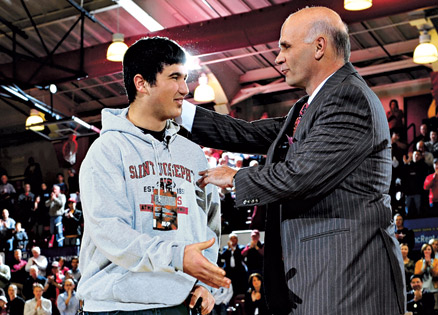
“You’re rebuilding, Lenny. That takes time,” he said. “I’ll make you a deal. When you’re walking again–and notice I say when not if–I’m going to have you join me at the Saint Joseph’s basketball arena and we’re going to walk to the center of the court together and wave to the fans. That will be this upcoming season. What do you say?”

Lenny looked at Coach Phil. I knew that expression on my son’s face. It was that determined, “I’m not going to give up” look he wore when one of his coaches asked him to push himself to the next level. “Okay, Coach,” he said, “that’s a deal.”

Lenny worked even harder in physical therapy, and Coach Phil called regularly to check in on him. I searched all over for more exercises to do with Lenny in his room. I made sure he kept up with his schoolwork and got plenty of visits from his friends.

But the five percent I’d been clinging to, the miraculous results I’d been praying for? We were still waiting for that.

What was left for us to try? I wondered. Or did I need to let go of that five percent and face the fact that Lenny was a part of that 95 percent who would never fully recover?

Maybe it was time for me to pray for something else–for fortitude to walk whatever path the Good Lord set for us and thank him for my son’s life.

I looked down at my hand. I was clutching a prayer card that someone had given to us. On it was a picture of Padre Pio, an Italian friar born in the nineteenth century who went on to become a saint. Padre Pio’s simple advice to believers was: Pray, Hope and Don’t Worry.

But how could I not worry? I’d tried everything and my son was not recovering. A bit of light filtered into Lenny’s room from his window and I held the card up to read the prayer printed on one side.

At the end of the prayer I was supposed to state what I was asking for. “I confidently beseech you, Lord, to grant me the grace of healing for my son.” I said those words over and over. The prayer was so short. It seemed tiny compared to the monumental miracle we needed.

I said the prayer until it seemed that I was saying it in my sleep.

I sat up with a jolt. Had I dozed off? Well, I was awake now, because I realized that Lenny and I weren’t alone in the room. A figure stood by the door.

I squinted to try to see more clearly. It wasn’t a doctor or a nurse. It was a man wearing a long robe made of rough fabric and tied around the waist by a rope. Okay, I thought, this is weird. There’s a friar in the room with me. I should have been freaking out. But I wasn’t.

The figure radiated peace and calm. He walked slowly to Lenny’s bedside and stood looking down at my son. He then laid his hand on Lenny’s right leg, the one that always gave him the most trouble in therapy. The hand rested there for a moment, then the figure backed out of the room.

I let out a long breath. What on earth had just happened? I looked at the prayer card again. Pray, Hope and Don’t Worry. Relief began to trickle through me, then surged, as mysterious as the figure of the old friar who had just visited.

For the first time in ages I did not feel worried. I leaned back, closed my eyes and dropped back to sleep.

The next day in the therapy room, two therapists put their arms around Lenny’s waist and shoulders. He stood, able to put weight on his legs. “Let’s try something new,” they said.

“Okay,” said Lenny. “What do you want me to do?”

“Walk.”

Lenny took a step with his left foot, then another with his right. All of a sudden, before any of us quite realized what was happening, he was walking. Supported by the two therapists, he made it to the end of the hallway and then turned around.

“Whoa,” he said, looking startled. “How did I get here?” A huge grin and he answered his own question. “I walked!” He headed back up the hall toward me. “Mom!” he cried. “I’m walking!”

Lenny’s progress was rapid after that amazing–dare I say, miraculous?–night. He walked farther and farther, step by step, each day, first with someone supporting him, then using the bars along the hallway and finally using nothing but a pair of canes.

Soon he was back home getting ready to return to school.

A few months later, leaning on his canes, he indeed walked out onto the Saint Joseph’s University basketball court to wild applause, just like Coach Phil promised he would. Not if, when.

Today Lenny is back at school and doing everything he used to do, except sports.

I still can’t say for certain what really happened that night in Lenny’s hospital room. Obviously, God performed a miraculous work of healing. But I think there’s a little more to it than that. Maybe the real miracle is in those simple words of Padre Pio’s: Pray, Hope and Don’t Worry.

I’d wanted healing for Lenny and I’d worried I wasn’t doing enough to make it happen. I’d forgotten God has his own timing and his own way of working.

The doctors, the physical therapy, the visits from Lenny’s friends, the wonderful visit from Coach Phil–those were all part of the miracle of Lenny’s healing. There’s a saying, “Give time, time.” Perhaps time is one of the greatest healing miracles of all.

Maybe Padre Pio did visit us that night not so much to heal Lenny as a reminder from God that healing was already underway. Pray, Hope and Don’t Worry. These days I do all three.


Download your FREE ebook, True Inspirational Stories: 9 Real Life Stories of Hope & Faith.