Embrace God's truth with our new book, The Lies that Bind

Placing Mom’s Care in Good Hands

I walked up the three flights of stairs to Mom’s floor at the nursing home instead of taking the elevator, feeling my stomach tighten with sorrow. With guilt.

It’s not as if my siblings and I had any other choice for Mom. She had dementia and cancer. None of us could take care of her on our own. My brain knew that but my heart resisted. Lord, have we really done the right thing? I wondered. Have I?

Journey With Jesus in article ad

I took a deep breath and pushed open the heavy door. I spotted Mom in the lunchroom, sitting at a table with some other women. I waved and her friend Rosa waved back. “Jean, your daughter is here!” she told Mom loudly.

The room smelled like a school cafeteria: meatloaf, milk, peas, mashed potatoes. I nodded hello to Janelle, the only aide on duty today. As usual, they were running shorthanded.

I pulled up a chair next to Mom’s wheelchair and kissed her cheek. “Hi, ladies. How’s lunch today?” I said, trying to sound more cheerful than I felt.

“Delicious,” Mom said. At least her attitude was good. Be grateful for that, I said to myself. I told her what her grandchildren were up to, reminding her who was who and what ages they were. The others chimed in with stories about their own children and grandchildren—stories I pretended to hear for the first time.

Mom looked across the room at Janelle. “I love her,” she said. “She is beautiful.” Janelle’s face lit up. For a brief moment I could see the mom I remembered, the woman who always had a kind word for everybody. But then she turned back to me and frowned.

“I need milk,” she said, agitated. She’d already had her milk. I looked around for something to placate her. Antonia, another of her friends, slid her own milk carton across the table. “Here,” she said. “Give this to your mom.”

Elsa, my mom’s roommate, handed me a straw for the milk carton.

“Thanks, Shirley,” Mom said.

“I love how your mom calls me Shirley,” Elsa said. She and Mom broke into giggles. “My mother always said, ‘Lachen ist gut medizin,’” Elsa went on. “Laughter is good medicine.”

“Shirley is German,” Mom whispered to me.

Lunch was over. I wheeled Mom into the lobby. She was impatient now. “I want to go to sleep,” she said. “Put me in bed.”

But I couldn’t do that on my own and all the aides were busy. The familiar feeling of helplessness, of my own inadequacy, came over me. Mom had taken such good care of me at the beginning of my life. It didn’t seem right that I couldn’t do the same at the end of hers.

Then Frankie hobbled over and plopped down in a chair. Frankie is from South Philly, a former mummer and a real kidder.

“Hey, Jean, where are you going all dressed up?” he asked.

“I’m dressed for the cemetery,” Mom muttered.

“Not yet,” Frankie said. “You have to stay here with us in Suffering Springs.”

A feeble joke but it worked. They both laughed. Then it was time to go. The minute I stood up, Mom said, “Don’t leave,” and I felt guilty all over again, as if I were abandoning her. I bent down to kiss her and Frankie started in on a new joke.

Only when I was in the car did I put it together. Her friends, her sweet roommate, Frankie and his jokes, Janelle and the other aides…they were almost like family.

Mom’s care was too much for one person, but I didn’t have to worry. She had a whole team to look out for her—and of course, the One who looks out for all of us from the beginning to the end.


Download your FREE ebook, Rediscover the Power of Positive Thinking, with Norman Vincent Peale

People, Not Pawns

One day, deep into my research for a book about World War II, I encountered a photo that stopped me cold. Suzanne Spaak was a lovely woman in her 30s with a soulful gaze. Who are you? I wondered, searching the photo for clues. The caption linked her to an espionage ring in Paris, but that didn’t give me much to go on. What was the story behind this mysterious woman?

In 2009 I finally tracked down her daughter Pilette, an 80-year-old knitting instructor in suburban Maryland. I gave her a call. “Everyone thinks Mama was a spy,” Pilette told me, “and I wouldn’t care if she was, but she was actually something very different.”

New Every Morning Journal In Article Ad A

It turned out that her mother’s principal activity was organizing a network that rescued hundreds of Jewish children from deportation to Auschwitz. But amid all the publications about World War II, Suzanne Spaak’s story had never been told.

She was born into a wealthy Catholic family and married into a political dynasty that was Belgium’s version of the Kennedys. Her brother-in-law, Paul-Henri Spaak, was Prime Minister and a wartime leader. His writings were published and collected in the national archives. But as a wife and mother, Suzanne was omitted from the archives, and as a member of the Resistance, she worked in secrecy.

A few months after we spoke on the phone, I met Pilette in person. She was a spritely grandmother. She’d been through more ordeals by the age of 20 than many experience in a lifetime, but she maintained a puckish sense of humor and an indomitable spirit. I got into the habit of buying her lunch on my trips to Washington, scribbling notes as she ate.

Her mother Suzanne received an education in embroidery and household management, but she pursued her own passions for literature and social reform. She was especially moved by the plight of penniless immigrants. As a young wife in Brussels, she joined a women’s group and met Jewish women who had fled persecution in Eastern Europe. One of them, a social scientist named Mira Sokol, shared her love of reading and reform, and needed her support. The two became close friends.

Suzanne’s husband, Claude, was a difficult man with a short fuse, who moved the family to Paris in 1938 to advance his playwriting career. Mira and her husband moved to Paris a little later, and Suzanne found comfort in Mira’s friendship. When the Germans invaded in 1940, the Spaaks joined millions of Parisians fleeing the city. They planned to leave for New York, but German forces cut off their route to the sea and they returned to Paris.

The Spaaks’ money and privilege shielded them from the worst hardships of the Nazi occupation. Mira and her husband were not so lucky. Over the course of the occupation, Suzanne watched with dismay as Jews were deprived of the right to use public parks, go to the movies, own a bicycle or a radio. Suzanne offered her help to the Jewish underground, even though she had to convince them that as an outsider, she was sincere. When the Germans arrested Mira and her husband, it increased Suzanne’s determination.

Because Suzanne was not Jewish, she could travel freely, knocking on doors and asking for funds and assistance for the targets of the arrests. She listened to BBC broadcasts illegally and shared the news with friends. She sheltered Jewish fugitives in her home, employing them as “tutors” and “maids.”

Suzanne enlisted her children in her efforts. Pilette, 15, joined her mother in the kitchen to forge documents. She learned how to lift the old signatures from the ID cards with a hot iron and a damp cloth, leaving a space to write in the new identity. Her little brother, Bazou, carried messages to members of the French Resistance.

Things got worse, much worse. The French police began by registering immigrant Jews, then arresting them and finally deporting them to an unknown destination in “the East.” The French were used to deportations. Millions of French prisoners of war and workers had been shipped on railway cars to work on German farms and in factories. At first, the public assumed that the immigrant Jewish men were experiencing the same fate. Then, in July 1942, the Nazis ordered a massive arrest of over 11,000 Jewish men, women and children. It was obvious that something more dire was going on. By October 1942, the Jewish underground had begun to receive credible reports of the extermination camps, though the details were far from clear.

In February 1943, Suzanne learned that the Nazis were planning to make a mass arrest of children in Jewish orphanages, and deport them to Auschwitz. She had heard that Pastor Paul Vergara, from the Protestant church near the Louvre, had preached stirring sermons denouncing the persecution of the Jews. She showed up at his office and told him what was about to happen.

Pastor Vergara was joined by Marcelle Guillemot, who ran the church soup kitchen. The trio hatched a plot. The next Sunday, Marcelle Guillemot slipped a note to female members of the congregation she regarded as most trustworthy. On the morning of February 15, some 25 Protestant women and 15 Jewish women showed up at the orphanages singly or in pairs, volunteering to take the children for a walk. The children would never return.

That morning Suzanne told Pilette she would be skipping school; her mother needed an extra pair of hands. They headed to the Protestant soup kitchen at dawn. Gradually the women arrived with the ragged, hungry children, 63 in all, ranging in age from 3 to 18. Those over the age of six wore the required yellow star. Suzanne and her friends briskly registered their names, preparing records for relatives who might claim them after the war. They received a hot meal and a change of clothes, and their yellow stars were burned in the stove. Next came temporary lodging. Pastor Vergara called his parishioners to take children in, and welcomed a group into his own family. Suzanne sent a dozen children to her country house in Choisel. The grand Countess de la Bourdonnaye took in five, and so did a humble concierge.

In the days following “le kidnapping,” Suzanne rode the trains across France. Her practice was to find a village with a Catholic church, go into confession, and ask the priest for names of families who might host a child on a long-term basis. Then the children would be shuttled from Paris to the countryside. Suzanne took the lead in organizing the funds to pay for their upkeep until the end of the occupation.

I spent nearly eight years piecing together the story of Suzanne Spaak and her network. I found two of the rescued children—now in their 70s—a few weeks after they had left a wreath at Suzanne’s grave, unaware that she had children of her own. I introduced them to Pilette more than 60 years after she helped her mother save their lives.

Pastor Vergara and Marcelle Guillemot are also long dead, but I visited their soup kitchen and sanctuary. Each spot bears a small plaque recognizing their efforts. But when I told the pastor I was writing a book about these acts of courage and compassion, he looked at me quizzically. “Why?” he asked. “It was the natural thing to do.” His congregation was guided by love, in fellowship with Suzanne Spaak.

For more angelic stories, subscribe to Angels on Earth magazine.

Pecan Pie Muffins for Daddy

I missed Daddy an awful lot. I couldn’t go into the kitchen without thinking of him.

He was the cook in our family, always trying out new recipes and methods. Once he rigged up a big metal fish fryer so he could fry catfish over a firepit in our yard.

Sweet Carolina Mysteries In Article Ad

Then he took sick. That was the only time I ever came up with a recipe for him.

He’d come down with cancer and had lost his appetite. Our family doctor made house calls just to plead with him to eat. I tried too. “Please eat something, Daddy,” I said one day, stroking his hand. “You need to keep your weight on.”

“I’d love to have some pecan pie,” he finally said with a mischievous glint in his sunken blue eyes. Pecan pie. His favorite. But it was made mostly of butter, nuts and corn syrup. The doctor thought it was too rich.

I had to whip up something just as good that would be good for Daddy too. I messed around with a few recipes and, after some trial and error, baked a batch of pecan pie muffins. I thought they were delicious. But would Daddy?

You bet he did. He was crazy for them. Even when he didn’t feel like having any he’d wrap one up and put it in a drawer, “just in case.”

Pretty soon his visitors wanted muffins too. Even his nurse, Winnie. “Sorry,” he’d tease, “but my daughter made them just for me.” It was the one thing I could do for him while doctors, chemo and everything else did its best. It was our special bond through a very hard time.

Daddy died in August 2003. I quit making the muffins. It was too painful. Then one morning Winnie called. “I was thinking of your daddy and those pecan muffins. Think you could make a batch for me?”

It was the least I could do for the woman who’d taken such good care of my father. I chopped up the pecans and added the other ingredients, tears rolling down my cheeks. Lord, I said, I miss Daddy. Help me with my grief.

Six muffins. I wrapped them in a towel and put them into a basket to take to Winnie. I cried and laughed on my way over, remembering how Daddy would hoard them all. I pulled up to Winnie’s and checked the muffins again. I counted them…and counted them again. There were only five muffins! They’d never left my sight, yet somehow one was missing.

Daddy might have been gone, but at that moment I could feel him close to me. Like the warm lingering smell of a fresh-baked muffin.

Try these Pecan Pie Muffins in your kitchen!

Peace Is the Presence of God

Carolyne Aarsen, under the pen name Kathleen Bauer, is the author of Before the Dawn from the Guideposts Books series Home to Heather Creek.

Garth Brooks' song “The Dance” talks about a young lady he loved who left him for someone else. In the song he thinks he could have saved himself pain had he not invested in the relationship. But then, he would not have had that dance.

Go For It In Article Ad

This song has resonated with me after the loss of our foster child, Justin. Like Charlotte in the Home to Heather Creek series, who was devastated after the death of her daughter, I leaned on my faith and my family to keep going.

We made the decision to become foster parents because we wanted to share what God had blessed us with: a loving, secure family. Our first foster child was Justin, a malnourished one-year-old baby with cerebral palsy (CP). The doctors and nurses who cared for him knew that if he stayed in the hospital, he would simply fade away, give up and die. So social workers placed him in our home.

The first few months were a blur of learning to feed him via stomach tube, counteract the build up of mucus in his lungs and, later on, manage oxygen equipment. We learned how to work with atrophied limbs and muscles, teaching him to use them again.

Justin thrived in our busy home of four children age four and up. He was cuddled, played with, hugged and kissed with abandon. He now had a reason to live, and live he did. Against all odds, he learned to talk, to handle his own toys, to use a spoon and feed himself the pudding he loved.

After four years in our home, we started to see a future for Justin. We were building a new house and incorporated wider hallways for his wheelchair, planned a room with a wall of cupboards for all the equipment he needed.

Before the house was finished, Justin went into the hospital for surgery to his hips, which were pulled askew by his CP. The day before he was supposed to come home we got the devastating phone call that Justin had died in the hospital of a grand mal seizure.

The darkness that fell on our family was profound and long lasting. I remember being thankful we had the house to build to keep me busy and keep me away from our home and reminders of Justin.

I spent a lot of time praying the pain would leave. We stumbled through days, wondering what our purpose was now that Justin was gone. I wondered if I would ever smile again. Grief held our family in a fierce grip for many months but as we negotiated our way through this valley, we slowly realized God’s grip was stronger still. I learned that peace is not the absence of pain; peace is the presence of God. My faith was shaken but God held our family firm. I know for a fact that the pain would have been more profound had we not had the comfort that in life and death, we are not our own but belong to Christ.

There were times when I saw my children crying over Justin that I wondered what our lives would have been like had we not taken Justin in. We could have missed the pain.

But we would not have had those blessed moments of him calling out the kids’ names when they picked him up from the church nursery. Those times when he grabbed us around our necks and hugged us with pure joy.

If we hadn’t taken him in we would have missed the pain, but we would have missed the blessing of our “dance” with him.

Pawsitive Change: Teen Raises Money for Animal Shelters

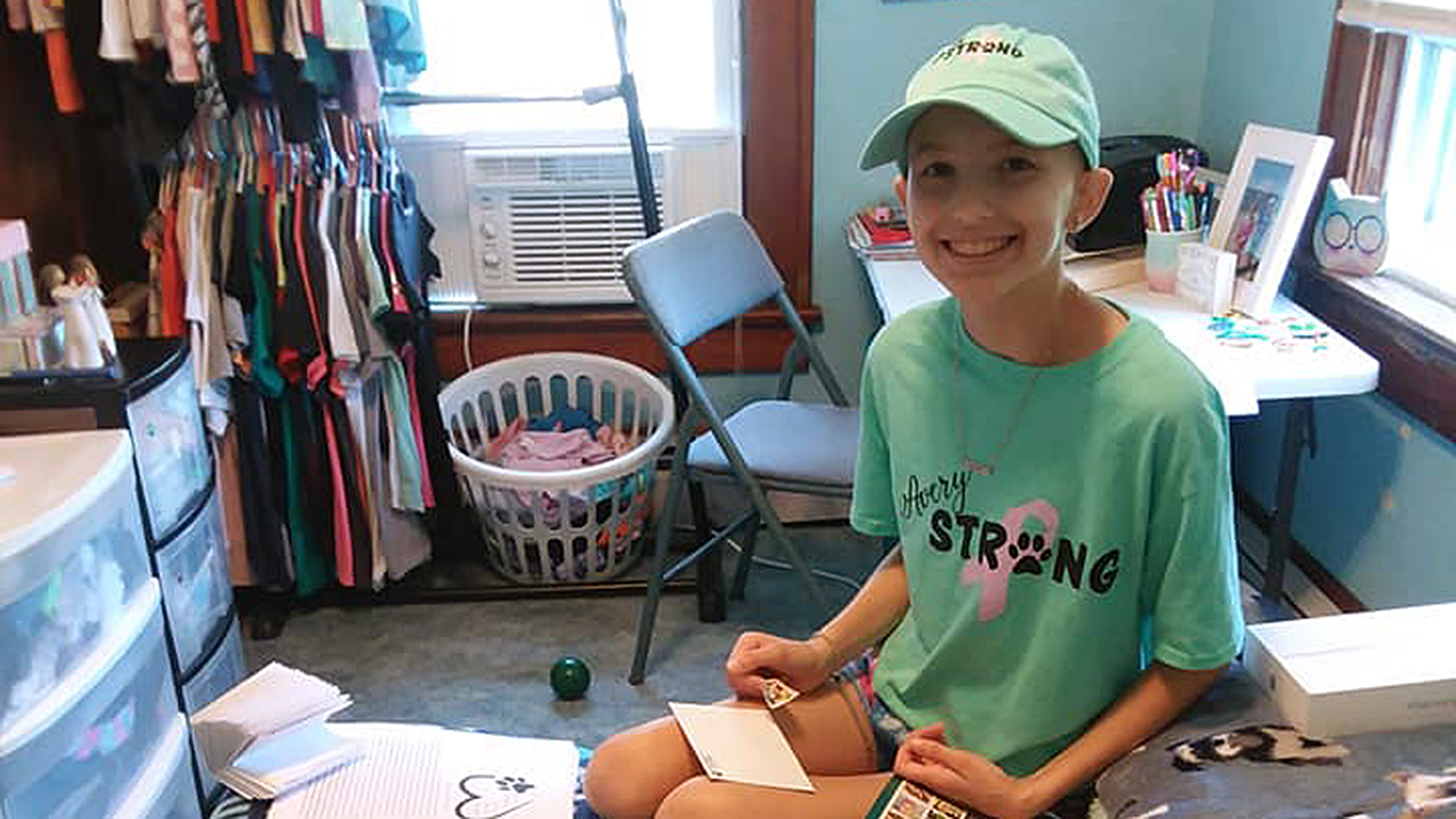
Back in March, 13-year-old Avery Sontheimer of Corry, Pennsylvania, won a baking contest and received a $25 gift card to Walmart. Without hesitation, she knew exactly what she wanted to buy: more gift cards. Avery decided to purchase five $5 gift cards and send them to local animal shelters. “She’s always been an animal lover,” says Avery’s mom, Kim. “She wants to save them all.”

Kim helped Avery set up a GoFundMe page where people could donate to her cause. By mid-October, Avery had sent out 914 gift cards to shelters all over the U.S. “Receiving the donations, buying the gift cards and packaging them for the mail brings her such joy,” Kim says. “It’s amazing to watch her be so motivated about something. You want your child to find a passion in life and this is hers.”

Daily Strength for Women in Article ad

Avery, who is currently undergoing treatment for Ewing’s sarcoma, a rare cancer that usually grows in the bones or in the surrounding cartilage, is preparing more gift cards to send out soon. Despite enduring multiple rounds of chemotherapy since her diagnosis in July, Avery always find the energy—even when she is bedridden, surrounded by her own six cats—to keep up with her mission. Connecting with her Facebook followers by responding to their prayers and messages, Avery and her mom post positive videos and photos of her latest medical and fundraising updates. “What an inspiration you are to all of us,” wrote one follower recently. In turn, Avery, whose ultimate goal is to open her own animal shelter, draws the inspiration to keep going by doing this meaningful work. Says Kim: “She’s never going to take a break from helping animals.”  

Follow Avery’s mission on Facebook at Avery’s Pawsitive Change.
 

Pat Summitt: Coaching with Faith, Courage and Commitment

We were sorry to learn of the passing on June 28, 2016, of Pat Summitt, legendary head coach of the University of Tennessee’s Lady Volunteers basketball team. As a tribute, we offer this 2012 story from one of Summitt’s longtime assistant coaches, Mickie DeMoss:

The phone call came out of the blue one spring day in 2010. I wasn’t surprised to hear from Pat Summitt, the legendary University of Tennessee women’s basketball coach and my mentor.

You Got This In Article Ad

I’d been one of her assistants for 18 years. We’d worked together until 2003, coaching the Lady Volunteers to six NCAA titles, and we were still good friends. But I was surprised to hear Pat say, “I want you to come back to Tennessee.”

Why now? I’d been away for seven years. When I’d left to run the University of Kentucky women’s basketball program, no one had been more thrilled for me than Pat. And she knew I was happy in my current job as an assistant coach at Texas.

READ MORE: ALZHEIMER’S CAREGIVER LEARNS NEW WAY TO LOVE

“Come on, Mickie,” Pat said. “Let’s finish out our careers together.”

I couldn’t put my finger on why, but there was something beyond the usual insistence in her voice. It was like having my sister say, “Come home. I need you.”

So I didn’t hesitate. But in the back of my mind I thought, When had Pat ever needed help? She was the toughest, strongest, most capable person I knew. She was the one I leaned on when I went through the hardest struggle in my life—my mother’s long struggle with dementia.

Pat came with me on visits home to Mom in Louisiana. She gave the eulogy at Mom’s memorial service. Pat did so much for me that I sometimes wondered, Lord, how can I repay her? Please don’t ever let me let her down.

The day I arrived back in Knoxville, I drove straight to Pat’s. She said I could stay with her till I found my own place. True to form, she filled me in on the team right away. But she seemed oddly distracted and after 10 minutes, she stood abruptly and left the room.

She probably had a million things going on, too much even for a champion multitasker like her to keep up with. Maybe that was why she asked me to come back.

One night not long after that, Michelle Marciniak, a star point guard for the Lady Vols in the mid-1990s, called and said she’d be in Knoxville the next day. Could she stay at Pat’s? “Sure,” I heard Pat say. “It’ll be great to see you.”

The next morning at breakfast I mentioned I was looking forward to catching up with Michelle. “She’s coming today?” Pat said. “I didn’t know that.”

READ MORE: AN INSPIRING HOOPS HERO

“She called last night, around ten,” I reminded her.

“I remember now,” Pat said. But I could tell by her expression she didn’t.

Pat was notorious for being so focused on her work that she’d forget where she put her keys or parked the car. All of us assistants teased her about it. But forget even the smallest detail about one of her players? That wasn’t the Pat I knew.

I felt a flicker of unease. This was how things had started with my mom, these little lapses. Pat’s just overworked, I told myself. Mom was in her late seventies when she showed symptoms of dementia. Pat was only 57. Way too young for Alzheimer’s.

When we first met, back in the early 1980s, Pat was already like Wonder Woman. She had this aura about her. People were drawn to her, both players and coaches.

She taught us to believe not just in her and in the team and the program she’d built from scratch at Tennessee but also in ourselves, which was probably the even bigger challenge.

That didn’t mean she wasn’t tough on us. If you follow women’s college basketball at all, you’ve seen the stare. That laser-like look that could burn holes in the hardwood. Its message was clear: I expect more from you. A heck of a lot more!

If a player or assistant didn’t live up to her standards, she didn’t hesitate to deploy the stare and call us out. It didn’t matter if it was a passing drill we ran every day at practice or the nervewracking final seconds of the NCAA championship game, Pat demanded that everyone give their all at all times.

She asked no less of herself, and let me tell you, that was powerful. When you see your role model put her heart and soul into her work, you try your best to do the same.

READ MORE: CARING FOR B. SMITH

Pat cared deeply about us off the court too. When I left to become the head coach at Kentucky, she promised she’d always be there for me. Boy, did I test that promise my first year at UK. I must’ve called Pat three times a week.

I’d inherited a last-place team and it seemed like we lost more games in a month than we had in all my years with the Lady Vols. Nothing I tried worked. My patience with my players got shorter.

One night after we’d blown yet another game, I called Pat to vent. “I’ve been tough on these kids, made them practice harder, but we’re still not winning. I’m not getting anywhere with this team!”

She let me talk myself out. Then she said, “Look, Mickie, one of your great gifts is your personality. If you’re focused on being tough, your team won’t see your best side. Let the kids know you. Care about them as much as you care about winning. Then they’ll play hard for you.”

I took Pat’s advice and eased up a little at practice, let more of the real me show. Guess what? Over the next few weeks, the team loosened up and we won a game. Then another. My last two years at Kentucky we had back-to-back 20-win seasons.

I had to thank Pat—she’d always been good about giving her assistants responsibility, preparing us for the next step in our careers.

READ MORE: KIM CAMPBELL ON ALZHEIMER’S AND FAITH

Then came that 2010-2011 season, my first back at Tennessee. Pat seemed to be pulling back more than usual and letting the other assistant coaches, Holly Warlick and Dean Lockwood, and me take charge.

There were more of those little blips. Pat would hesitate calling a play or forget what time we’d scheduled a meeting. The change in Pat probably struck me more than it did Holly and Dean since I’d been away for so long. They’d been working side by side with her, and a slow erosion is less obvious when you’re with someone day to day.

We sensed something was wrong, but we didn’t talk about it. Out of respect for Pat. And maybe even more to protect ourselves. It shakes up your whole world when the person who’s always been your rock starts to crumble.

Typically it was Pat who faced her problem first. One day last April I was going to see my family in Louisiana. “I’ll drive you to the airport,” Pat said. We got on the highway and she started right in. “I just got back from the Mayo Clinic. They confirmed I have early onset dementia.”

She glanced at me and tried to gather herself but couldn’t. She got emotional. So did I. Mom’s decline was one thing; she’d lived a long full life by then. But Pat! She was in her prime. Lord, I wondered, how can this be happening to her? I could hardly bear to ask. “What are you going to do?”

“The doctors told me I can still coach if I want to,” she said. “And I do.”

My two biggest role models—my mom and Pat. What were the chances that they’d both be stricken with dementia? I didn’t understand Mom’s disease at first. I got impatient at having to repeat myself and frustrated by her unpredictable moods.

I’d go see her between games and recruiting visits, but my sister, who lived near Mom, was the one with her day to day. She got me to understand that we had no control over Mom’s mental state. I had to learn to take things not one day but one moment at a time.

Lord, is this how I can help Pat? I asked. Show me what to do for her.

READ MORE: THE HEALING GIFT

That summer Pat redistributed some of her duties among Holly, Dean and me, especially in-game coaching and recruiting. She went on medication to manage her symptoms and loaded up her iPad with crossword puzzles, Sudoku, all kinds of brain games.

In August, she told us, “It’s time our players knew.” She called a team meeting in the film room at the basketball complex. She stood up in front of us, like she had in a thousand meetings, and announced, “I’ve been diagnosed with early onset dementia, Alzheimer’s type.”

Stunned silence.

Pat’s face was fierce, determined. “I wanted all of you to know,” she said. “I also want you to know it will not change the way we work in practice, or play as a team. I’m not going to forget your names. And I’m not going to stop yelling at you. I’ll be your coach as long as the Good Lord is willing.”

Our players broke down. Me too. I tried to hide my tears, but you can’t slip anything by Pat. “DeMoss,” she said, “we’re not having a pity party for me.”

READ MORE: BIBLE VERSES FOR ALZHEIMER’S CAREGIVERS

Then it hit me. Pat taught me everything I knew about coaching, and she was teaching me still. Showing me that with clear-eyed honesty, courage, faith and a little humor, we would face this like any other challenge and carry on.

This past season Pat set the tone for the Lady Volunteers. She still burned to win, still turned that famous stare on us, but I noticed she had a lighter touch with players. She’d talk to them one-on-one if they needed motivation instead of calling them out in front of everyone.

She still loves having people over to her house. She invited us coaches to dinner not long ago, and cooked up steaks and chicken, asparagus and squash, and some jalapeño corn. She jokes around more than she used to and stays positive.

One day I left my cell phone down on the court. She brought it to my office. “Look what I found,” Pat said. “And I thought I was the one with dementia.” I had to laugh at that.

I’m taking my cues from her, day by day, moment by moment, like I did with my mom. You know, I don’t think there are a lot of coincidences. I believe I was meant to be back with Pat for this time in her life, being there for her the way she’s always been there for me.

Did you enjoy this story? Subscribe to Guideposts magazine.

Patience–God’s Grace at Work

Praying for patience? Don’t we all?

A couple of years back, when my dad was struggling through various health issues, my mom was his primary caregiver. One Sunday morning they’d driven to church and were getting out of the car to walk the last few steps, Mom barreling ahead with her usual energy, Dad coming behind slower with his walker.

Walking with Jesus L&E evergreen_in article ad

Someone asked how they were doing. Mom said, “I just pray and pray for patience.” Dad, quick-witted as always, even if he wasn’t moving very fast, was heard to mutter, “Well, that’s a prayer God hasn’t answered.”

Read More: The Power of Patience

Quite frankly, I think she was a phenomenally patient caregiver. But patience is a hard one, a virtue that doesn’t come easy to most of us, certainly not me.  When I mentally go through Paul’s fruit of the Spirit list, “love, joy, peace, patience, kindness, goodness, faithfulness, gentleness and self-control,” I often pause at patience.

Is it really something we should always have? I noticed recently reading the Gospel of Mark that Jesus wasn’t always patient. As He said to His disciples when they couldn’t cast a demon out of a possessed young man, “You faithless generation, how long will I be with you? How long will I put up with you?” (Mark 9:19)

How patient was that?

On the other hand, I think of a friend who is a therapist, surely one of the most demanding jobs in the universe. “I have endless patience with people’s suffering,” he says. “I get impatient, though, with people’s evasiveness and their self-deception or their arrogance especially.”

Maybe there are things we are meant to be impatient with in our prayers: our yearning for justice, for peace, for an end to suffering, for a relief from our own pains.

Read More: Mornings with Jesus Devotional

Love, which is the greatest answer to any prayer, is indeed patient. Paul says so right at the beginning of his famous passage in 1 Corinthians: “Love is patient, love is kind, it isn’t jealous, it doesn’t brag, it isn’t arrogant, it isn’t rude, it doesn’t seek its own advantage…”

I find that when patience comes, it’s really not through any of my own doing. It is simply God’s grace at work. Perhaps we’re most patient when we least realize it.

Like my mom, I pray and pray for patience. And when it comes, it’s a gift.

Pastor’s Shrimp and Corn Bisque

When we lived in Georgia I attended a church where the pastor was an inspiration in more ways than one. Not only could he raise the roof with a sermon, he could cook up a storm. Every month he shared one of his recipes in the church newsletter. My favorite was his Shrimp and Corn Bisque. 

Ingredients

½ stick butter 2 c. cream, or 2 cans evaporated milk
¼ c. flour 1 Tbsp. dried parsley
1 medium onion, chopped 1 tsp. salt
2 c. chicken broth ½ tsp. black pepper
1 10-oz. package frozen corn kernels cayenne pepper to taste
4 medium, red-skinned potatoes, peeled, cooked and cubed 1 lb. raw, peeled shrimp (about 30-35 shrimp)

Preparation

1. Melt butter in a soup pot and make a roux by gradually adding the flour and stirring over medium-low heat until flour and butter are blended evenly.

GP In Article Desktop

2. Add onion and cook until tender and translucent, but not brown. Gradually add broth.

3. Gradually add broth. Stir in corn, potatoes, milk and seasoning. Cook 15 minutes on medium, stirring the whole time.

4. Add shrimp. Cook on lowmedium until shrimp turn pink and float (about 5 to 8 minutes).

Serves 4.

Nutritional Information:  Calories: 650; Fat: 37g; Cholesterol: 250mg; Sodium: 1850mg; Total Carbohydrates: 55g; Dietary Fiber: 5g; Sugars: 5g; Protein: 25g.

Parkinson’s Disease: Fighting It Head On

Content provided by Good Samaritan Society.

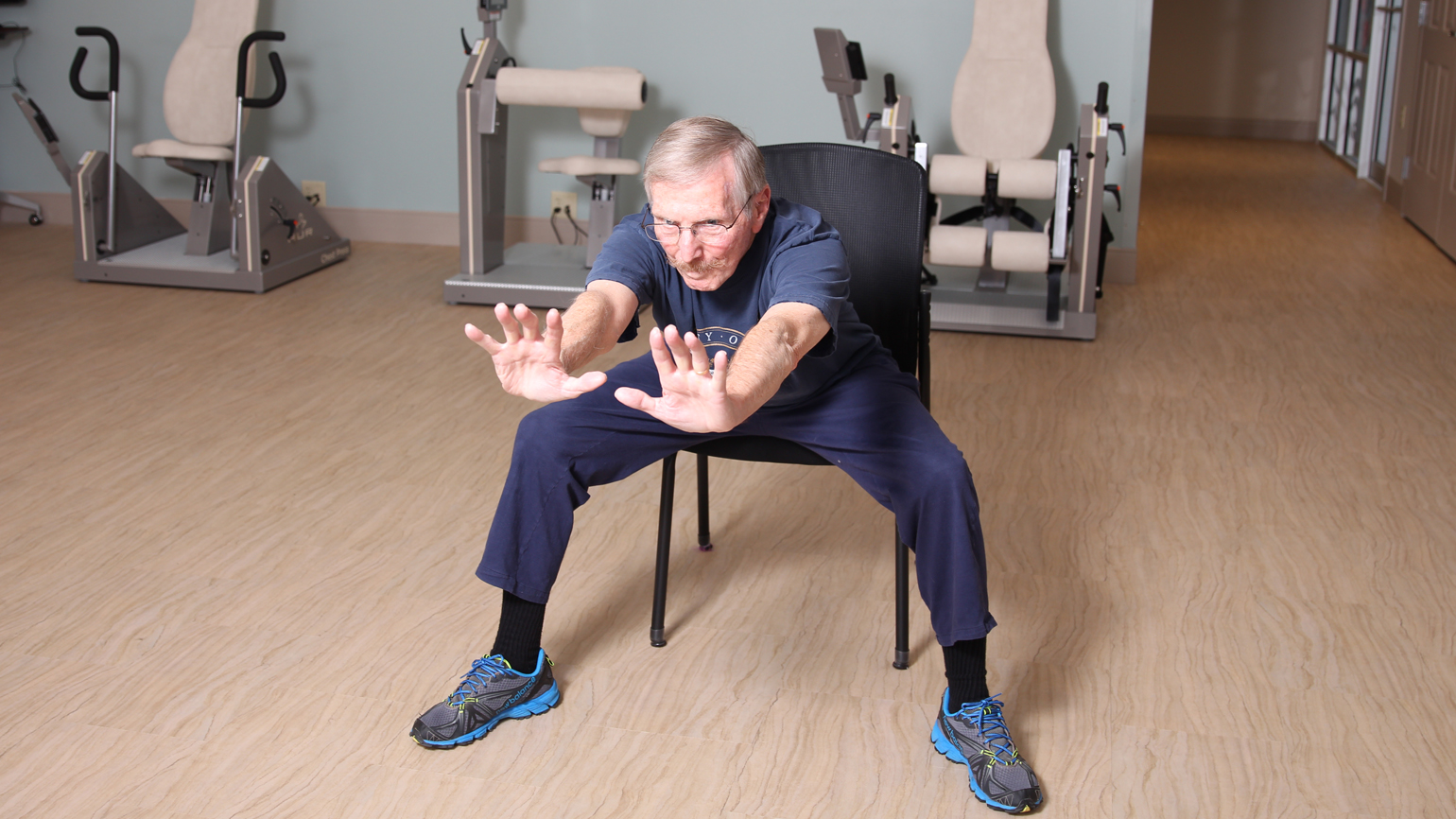
Ed Toscano, a resident of Good Samaritan Society – Mountain Home in Arkansas, was diagnosed with Parkinson’s disease (PD) in early November 2017. Less than six weeks later, he had already started to see improved outcomes thanks to the Parkinson’s therapy offerings at Mountain Home.

God's Constant Presence In Article Ad

“I have gained some strength and a little more confidence in the ability to use my voice,” says Ed. 

This success can be attributed to the strength of the therapy services offered by Ward Therapy at Mountain Home. Engaging with the LSVT Big and LSVT Loud programs, Ed was able to quickly make big improvements in his ability to talk and move. LSVT stands for Lee Silverman Voice Training. Big is the exercise and stretching program. Loud is the voice maintenance and development piece.

The therapy has been so effective that Ed’s wife jokingly quipped that she didn’t know who was in her house. “My wife was wondering who the guy in the house was as I was walking around bellowing and startling her,” says Ed. “I frightened the cat, too!”

Pair Your Prayers for Healing

The Bible encourages us to pray for everything: “In every situation, by prayer and petition, with thanksgiving, present your requests to God” (Philippians 4:6, NIV). “And pray in the Spirit on all occasions with all kinds of prayers and requests” (Ephesians 6:18, NIV). One of the most obvious and common occasions for prayer, of course, is when we are suffering from a sickness or simply the painful effects of aging.

Sometimes, however, praying repeatedly for our physical aches and ailments can turn us inward and foster unhealthy fixations on ourselves and our pains. But there is a way to pray for our own pains without dwelling on them. Call it “pairing” your prayers.

The Lies That Bind In Article Ad

That is, whenever you pray for healing or relief from some ailment or pain, pray also for others—ideally, a specific person—who suffers similarly.

Pairing your prayers may sound something like this:

“God, please grant me relief from this migraine headache, quickly and completely, even as I ask you to remember Elissa who also suffers from frequent migraines. Free her completely from both causes and symptoms.”

Another time, your prayer might be similar to this one:

“Lord, I need your help right now. Deliver me from this infection or virus or whatever it is that is making me so sick. And while you’re doing that, please visit Rita, who I know deals almost daily with the pain of fibromyalgia. Send her relief and healing.”

Pairing your prayers can not only take your focus off yourself; it can actually turn your sickness into an occasion for ministry! It can discourage the enemy of your soul who may have sent (or is trying to use) your ailment. And it can actually transform a prayer for healing into a prayer of thanksgiving, as you are reminded that some people carry heavier and more relentless burdens than you may be suffering at any given moment. Most importantly, of course, because God loves to answer prayer, your pain may be the path to someone else’s healing.

Try it. Pair your prayers, and watch God use you…and your pain.

Overcoming Loneliness and Finding Love

I never thought I would be a single mother. I’d witnessed the many hardships my mother endured to raise me and my twin sister on her own. Seeing how demanding single motherhood could be, when it was my time to choose a spouse, I asked myself: is the person I’m going to marry capable of being a good father? Would he be there for our children?

I thought I married the man of my dreams, a man that would be an incredible father. The truth is, I endured three years of physical and emotional abuse.  One weekend, he physically abused me while I was pregnant with our first child, and I had to leave.  Hurt, embarrassed, confused and incredibly uncertain about my future, my entire life changed in just a few days. I had to start my life over again—pregnant and alone.

Pause & Pray In Article Ad

My pregnancy should have been full of happiness and joy, but it was tough and even unpleasant given my circumstances. Appointments with my OB, which should’ve focused on enjoying my child’s sonogram, were spent discussing how to manage neck and back pain from years of abuse, and planning maternity leave wisely, since I was now going to be the primary breadwinner.

Given the legal implications of my separation, instead of decorating a baby room, I also had to take on learning things like how to file subpoenas to keep a restraining order in place after it had been appealed. My life was complex and I felt lonely—in addition to losing my husband of 3 years, I felt alone, because no one was going through what I was going through. They couldn’t possibly understand my pain. 

When my mom, sister and friends all tried to take me maternity shopping, I would end up crying and leaving the mall. It just wasn’t how I imagined this period of my life would be. The loneliness turned to anxiety which led me to also question God— Don’t you hear me crying? Why are things happening this way? Why can’t I escape these feelings? Will I feel alone forever?

Then, something remarkable happened.

My anxiety began to turn into hope and gratitude. Over time, my family, colleagues, doctors and friends helped me get excited over my baby’s arrival and my relationships rocketed to another level. I’d come to work and find that my boss had left magnets with inspirational quotes on them on my desk. I’d open my mail and get surprises from my best friend—thoughtful books and baby items—and I started to see joy. And when I walked through the maternity ward in my final trimester, watching other pregnant happy women holding hands with their significant others, my mom was by my side, holding mine, and I felt incredibly loved.

In all the hurt, sadness and disappointment, God still had a plan for me that was good. After the devastating loss of my marriage, I became closer than ever with my friends and family. I’ve grown so much in my career and I’ve been empowered to take on new challenges and become even more of the woman God created me to be. 

My life didn’t turn out the way I desired or dreamed, but the truth is, I’m not alone and I’ve never truly been alone. Through every heartache, God surrounded me and filled me up with love. That same love I now pour out onto my beautiful daughter, the greatest gift I’ve ever been entrusted with, and the greatest reminder that God not only hears your prayers, but is also always there.

The feeling of being alone can arise from time to time, but now I know that loneliness is just a phantom of my expectations—desired outcomes set to timelines I created myself. But God doesn’t work on my timeline. Now, when I’m feeling lonely, I ask God to show Himself to me, in every blessing, in every kindness, in every bit of warmth and love around me. I lean on my faith that God’s plan for me is active and working. Even when I can’t see it or feel it, I rest on the faith that God is always by my side.

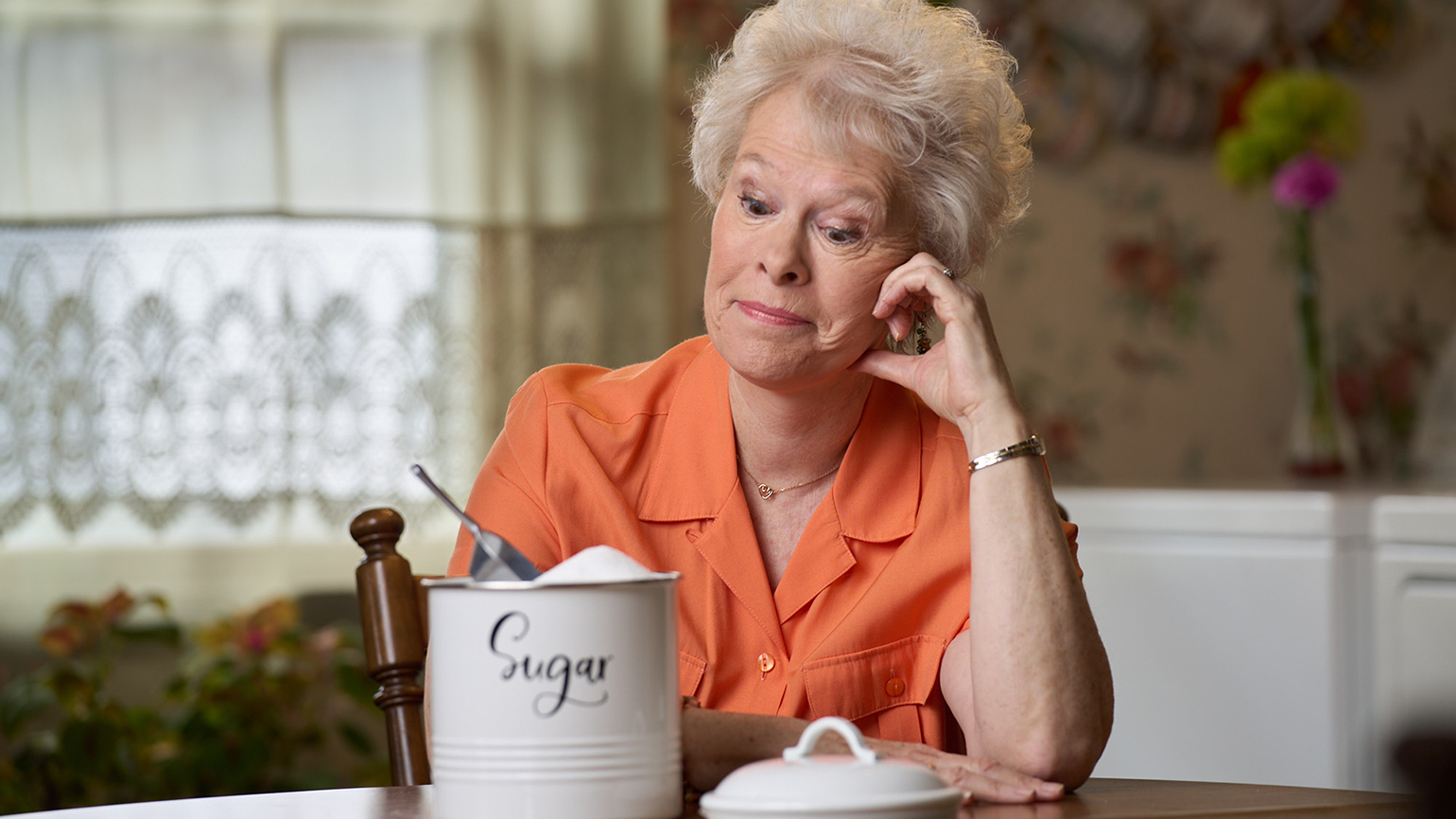
Overcoming Her Sugar Addiction Was the Sweetest Victory of All

My husband, Kevin, handed me a bowl of my favorite ice cream, raspberry with dark chocolate chunks. “Just set it on the TV tray, honey,” I told him. “I can’t eat while I have this traction collar on.”

I hated putting on that contraption every night, but my chiropractor said it would help ease my chronic neck pain. How aggravating that I was still having sharp pain and numbness from a car accident injury more than 40 years ago! Would I always need the heat packs and neck-stretching exercises for relief?

New Every Morning Journal In Article Ad A

I longed for a more permanent solution, especially since I had committed to taking better care of myself. I exercised four or five times a week, got plenty of sleep and had a healthy diet. Well, mostly. Except for sugar. Besides a serious dessert ritual, I kept chocolate and other candy in my desk drawer at work. I joked that my biggest regret in life was a freezer that held only 17 cartons of ice cream.

But in light of sugar being proven harmful to health in many ways, I had started wondering if my intake of sweets was exacerbating my pain. The next time I visited my chiropractor, I asked if my habit could be affecting my joints. “Oh, yeah,” he said. “Refined sugar is one of the worst things you can eat to aggravate joint pain.”

Even so, with the holidays coming up, I wasn’t ready to say no to Christmas cookies, pies and other treats. I decided to wait until after the new year to start my low-sugar lifestyle.

In late January, the family gathered at our favorite Mexican restaurant to celebrate Mom’s ninety-fourth birthday. We feasted on enchiladas, chimichangas and a double-chocolate cake. As I wiped fudge frosting from my lips, I told myself, This is it. My last major helping of sugar. Tomorrow I’d cut back to just seven grams a day— the amount that worked for my friend Diana, who had a serious digestive issue that forced her to avoid sugar and simple carbohydrates.

But after the next day’s breakfast of unsweetened oatmeal and lunch without dessert, my body was screaming for a cookie. Who am I kidding—three cookies! I grabbed some mixed nuts and pretended those satisfied my sweet tooth. If only! Over the following weeks, I underwent the tortures of sugar withdrawal: fatigue, carbohydrate cravings, even depression.


Then came the day I had a stressful conversation with a coworker. I retreated to my desk and ransacked the drawer in a near panic, searching for a peppermint patty or peanut butter cup. That night, I promised myself a Girl Scout cookie as a reward for finishing a tough writing assignment but found Kevin had eaten the last one.

I was beyond frustrated—I was angry. “Lord, why is this so hard?” I asked, near tears.

The word addiction ricocheted in my brain. There finally was the truth: I was addicted to sugar, not just superficially dependent on it. Admitting this to God and to myself made me see how powerless I really was. I needed far more than just a fix for my aching neck and shoulder; I needed healing for whatever it was that caused me to turn to sweets. And that meant some painful soul-searching to unearth the why of my sugar addiction.

I forced myself to dig deep, scenes from my childhood flashing through my mind. Whenever my brother told me I was stupid and I ran to Mom crying, she gave me a cookie. “Here, honey, this will make you feel better,” she’d say. Dessert wasn’t just a sweet end to a meal; it was also a reward for eating my veggies and drinking my milk, things that made Mom happy.

And having a stash of candy in my dresser drawer made me feel rich in blessings. I could pretend I was a princess whose daddy never got drunk, who never had to listen to angry shouting behind closed doors, who never had to hear her mom say, “We’re getting a divorce.” A princess who never had to attend her father’s funeral after he died of cirrhosis of the liver, just seven months into Mom’s new marriage to another alcoholic.

Looking back at the psychological role that sweets played in my past explained why I used them as a crutch. I didn’t reach for candy and cookies to satisfy any physical hunger. I did it to reward, cheerlead and comfort myself. It was emotional eating. This new understanding helped. But I also needed healthy ways to cope with my addiction, both physically and spiritually.

I thought of my friend Diana again. I knew she could share some strategies for managing my cravings. I zipped off an email to her with the subject line “Help!”

Diana sent me links to articles with great tips. Like eating sour or bitter foods and drinks, to block the brain’s response to sugar. Exercising more to increase the feel-good hormones. Meditating on encouraging Bible verses and repeating positive affirmations.

Diana also committed to pray for me as I wrestled with my addiction. And wrestle I did. Whenever I felt powerless or overwhelmed by my urges, I learned to shift my focus. I’d walk around the neighborhood and revel in the wonders of nature, work a jigsaw puzzle with Kevin or get lost in a novel.

As each month passed, I became stronger in my resolve. When I was able to go two full months between chiropractor visits, the doctor told me, “Cutting out sugar is one reason you’re doing so well.”

For more than a year and a half now, I’ve been eating no more than seven grams of sugar a day. I no longer panic when the only snack at hand is trail mix or popcorn. I can push my chair back from the dinner table and not pine for a dish of ice cream. I don’t even feel deprived when Kevin orders from a list of 27 pie flavors at a café and I have only two sugar-free choices.

Yes, I’m still tempted occasionally, and I have to lean on my new habits to get me through a church potluck or a birthday party. But I’m no longer responding to stresses and hardships like that little girl, trying to soothe her broken heart with sweets. I know where to turn when I can’t do life on my own. I’m learning to ask God for comfort and affirmation, and that is the sweetest feeling of all.

For more inspiring stories, subscribe to Guideposts magazine.