Embrace God's truth with our new book, The Lies that Bind

Kate Mulgrew Shares Lessons Learned from Alzheimer’s Caregiving

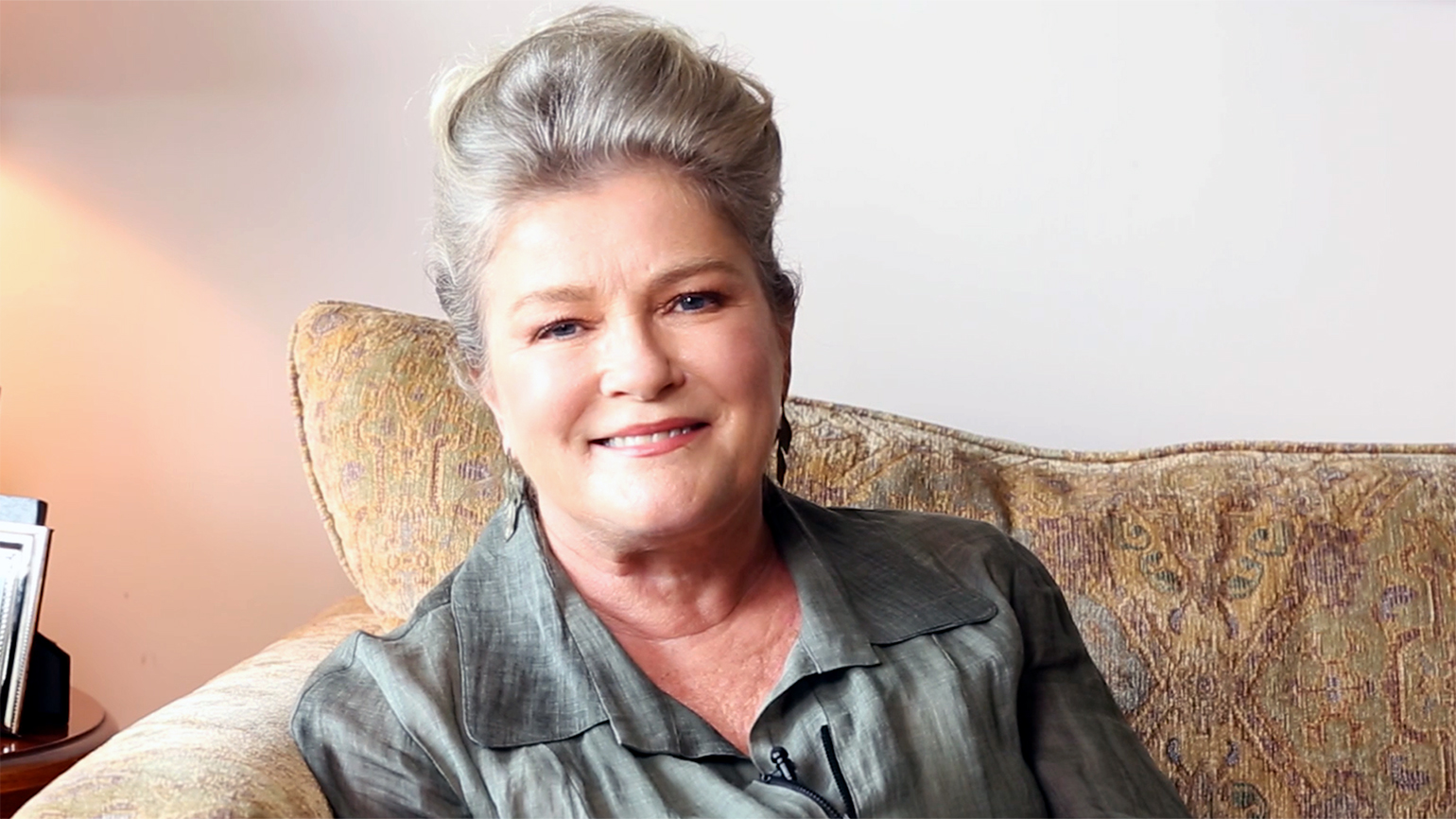
Hello, everybody. My name is Kate Mulgrew. You may know me as an actress. I’ve been on television since I was 19 in Ryan’s Hope and then Mrs. Columbo and then Star Trek: Voyager and finally, Galina Reznikov in Orange Is the New Black. It’s been a very happy career.

But I’m here today to talk about a book that I have written called How to Forget: A Daughter’s Memoir about the deaths of my parents and also how they lived.

Sweet Carolina Mysteries In Article Ad

But what shaped them? In my mother’s case it was Alzheimer’s disease. My mother died of Alzheimer’s disease, a disease with which I’m sure many of you are familiar, unfortunately. This is a pernicious, grotesque, and very, very, very difficult disease to deal with.

I became my mother’s health care guardian. I sort of demanded this—and I would advise anyone who finds themself in this predicament to demand guardianship—because that is the only way you will have complete control over the eventualities that will befall you as a result of this awful illness. It is very good if someone in the family—the oldest daughter or the oldest son is usually the choice—becomes the health care guardian, that way conversations within the family can flow more smoothly.

I think it is very important that wherever you are, you should know that there is an Alzheimer’s chapter, a local chapter available to you with all kinds of important information. They will give you caregiver advice. They will give you progress advice. They will give you all kinds of helpful information and that could really be an anchor for you as this thing evolves, and it does, and it does quickly, and at the same time, it is a protracted and very difficult thing. As much as you can get your ducks in a row, for lack of a better way of putting it, that’s the best way to try to deal with this very, very awful disease.
Something that I find to be a problem with Alzheimer’s disease—quite outside of the disease itself, which is sufficient unto the day, rest assured ladies and gentlemen—but what happens within that fabric of the family is a tension, and pretty soon people aren’t talking to each other because somebody’s got the guardianship, or somebody’s calling the shots, or somebody wants this and somebody else wants that.

Get over it and mend those fences. If you do not work together as a collective, you cannot help your loved one who is dying of this disease, so you must work together, strongly, as a collective. And that, of course, is a tribute to the love you actually have for the person who is suffering the most—the person who is afflicted.

After my mother died—she lived for nine years from diagnosis to death—I became involved with the Alzheimer’s organization as a spokesperson, and I threw myself into the fray wanting to do whatever I could at any time, but it’s slow going because we have to raise the funds.

So, I urge anyone who is listening to this or watching this, to overcome it, whatever difficulties you have with the disease itself—mainly, mortality; mainly, not attractive; mainly, we get old and we die—to get over it. Otherwise, by 2050, one in three of us will have this disease and we really don’t want that. So, I urge everybody to get out and call your local chapter. See if you can contribute and donate in whatever way is possible for you. Thank you very much.

Karen Kingsbury’s Inspiring Encounter on the High Line

I’ve been writing novels for more than 15 years, and I’ll admit it: My imagination can run pretty wild sometimes! I see the stories come to life in my mind way before I ever get them on paper–envisioning the characters and the twists and turns they’ll take on their personal and spiritual journeys.

Then last year something unexpected happened in my own life, something so incredible that even I couldn’t have imagined it.

Whistle Stop Cafe In Article Ad May 2023

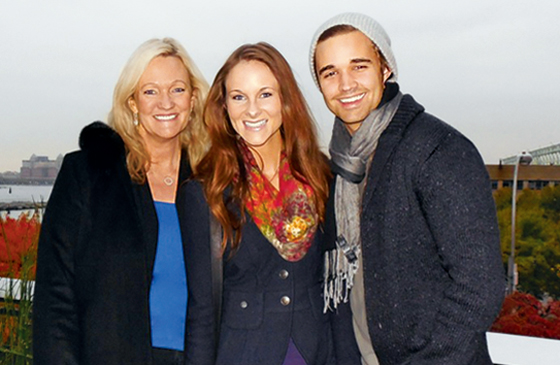
I’d gone to New York City to meet with my publisher. My daughter, Kelsey, and her husband, Kyle, came with me because they wanted to see the city.

It was a glorious autumn afternoon. Kelsey, Kyle and I were walking on the High Line–a park built on a historic elevated railroad line above the streets on Manhattan’s West Side.

That morning I’d had a dream-come-true meeting with my publisher. My novel The Bridge had become an overnight best seller and they’d signed me to a 10-book deal! I felt so blessed, especially to be able to celebrate with Kelsey and Kyle.

Yet, standing there on the High Line, looking up at the bright blue sky, all I could think was, I wish I could tell Dad about all this.

My father had passed away six years earlier. He was my rock. My very first and biggest fan.

“Have I told you lately that I love you, Dad?” I whispered. That was Dad’s favorite song–the Rod Stewart version of “Have I Told You Lately.” He’d called me the first time he’d ever heard it.

“This song is how I feel about you, Mom, our whole family,” he said. “Whenever you hear it I want you to know that I love you.” I was surprised. Dad wasn’t usually into pop music. But the more I listened to Rod’s distinctive raspy voice belting it out, the more I understood what Dad meant.

“Have I told you there’s no one else above you? You fill my heart with gladness, take away all my sadness, ease my troubles, that’s what you do.” When one of us heard the song, we’d call the other. Sometimes we’d hear it when we were together and Dad would give me a wink.

“I can’t say it any better than Rod,” he’d say. The song was that powerful for us. It connected us. So much so that my family had the title engraved on Dad’s headstone.

Not long after Dad died, I began to hear our song at odd but significant moments. Like when my husband, Don, and I were driving home from watching Kelsey and our oldest son, Tyler, in the opening-night performance of the school play–the kind of occasion Dad wouldn’t have missed for the world–and the second we turned on the car radio, there it was.

Or when we took our first family vacation to the Bahamas without Dad. I stepped out onto the balcony overlooking the sparkling sea. “Oh, Dad, you would’ve loved this!” I said. Then I heard a familiar melody.

I looked down onto the deck below and the Bahamian band had switched from playing island music to–yes, you guessed it–“Have I Told You Lately.”

Now here I was, at one of those moments when I knew Dad would have been so proud of me, and I couldn’t share it with him. I missed him more than ever. Lord, I prayed, please tell Dad that I love him.

“How ’bout we take some pictures?” I said to Kelsey and Kyle, hoping to distract myself from missing Dad. “We’ve got this amazing view of the Hudson from up here.”

I pulled out my camera and took some shots of Kelsey, then of her and Kyle together. I wanted to get one of the three of us. I was stretching my arm out, trying to hold the camera far enough away so we were all in the frame, when a man and a woman walked up.

“I can help take your picture,” the man said to us. He was older than me, dressed stylishly in a sweater and jeans. He had a slight accent. Australian? English? He was a tourist like me, probably. “Would that be okay?”

“Yes!” I said. “Thank you so much.”

“Just show me how to use the camera,” he said.

Kelsey walked over and showed him which button to press, then we got into place again.

He snapped the photo. “That’s lovely!” he said, brushing a wayward strand of blond hair from his eye. He handed me the camera. “God bless you,” he said, then he and the woman went on their way.

When they were almost out of sight, Kelsey turned to me. “Mom, did you hear what that man said when I was showing him how to use the camera?”

“No, honey, I didn’t.”

“He said, ‘I’m usually on the other side of this thing. But this is fun too.’”

“Why would he say that?” I wondered aloud.

Then it dawned on me: the spiky blond hair, the fashionable clothes, the lilt in his voice…. Could it be?

I followed the couple, walking as fast as I could.

“Sir, sir! Excuse me, sir!” I called. The man stopped and turned around. We were face-to-face.

“You just took our picture back there,” I said.

“Yes,” he said. By now Kelsey and Kyle had caught up to me.

“Can I ask you something?”

“Sure,” he said.

“Are you Rod Stewart?”

“Sometimes,” he said.

“No, really, I have to know,” I insisted. “Are you Rod Stewart?”

He must have seen something in my eyes because he said quietly, “Yes, I am.” My knees went weak. If only my dad could have seen this!

“Can I tell you a story?” I asked.

Rod nodded.

I told him that “Have I Told You Lately” was my father’s favorite song and that just an hour earlier I’d been wondering if Dad knew how much I missed him.

Rod gently put his hand on my arm. I rested my hand on top of his. “And now I’m meeting you,” I said. “It’s crazy. Your song’s title is even on my dad’s gravestone.”

Tears came to Rod’s eyes. “Can I give you a hug?” he asked. He pulled me in tightly. “Thank you for sharing that. You made my day.”

When we let go, Rod clasped his hands together and pointed them heavenward. Then he and his companion walked away.

Kelsey, Kyle and I looked at each other and sat down on a bench. We all felt stunned. Just at the moment when I was missing my dad so badly, the rock star who sang our song crosses my path? Really? You could never plan or even imagine something like that!

But Someone had. Someone who orchestrates unforgettable encounters and writes amazing moments into the stories of our lives. I looked up into the bright blue sky. There really is no one else above him.

Watch as Karen discusses her book 15 Minutes and tells the story of her High Line encounter!

Download your FREE ebook, Messages from the Hereafter: 5 Inspiring Stories Offering Proof of the Afterlife

Just This Much Exercise Could Help You Live Longer (and You Won’t Even Break a Sweat)

We all know that exercise is a guaranteed way to help you live a longer, healthier life, but did you know that you could accomplish that goal without even breaking a sweat?

According to a study from the Journal of the American Geriatrics Society, published last year, 30 minutes a day of light exercise is all it takes to reap health benefits. The study, which surveyed 6,000 women aged 65-years and older, intended to answer one simple question: How much exercise is enough to improve a person’s life expectancy?

NIVFLB Inarticle ad

Researchers had women wear activity-tracking accelerometers for seven days as they went about their normal routines, following up with them over the course of three years. The results? Researchers discovered that women who enjoyed 30 minutes of light exercise daily were 12% less likely to die early, compared to those who got less. Women who got 60 minutes of moderate exercise daily were 39% less likely to die early.

The good news here lies in the kind of exercise the women were getting. For most, gym memberships and marathon training just aren’t plausible. Illness, injury, a lack of funds and time, all of these can affect the kind of workout plausible for people looking to stay healthy. The women in this study weren’t hitting the treadmill or taking a spin class, they were doing everyday activities, like taking out the trash, walking up the stairs, doing laundry, or going on a grocery run. These kinds of exercises more than 55% of older adults’ daily activity according to the study’s author, Andrea LaCroix, professor of family medicine and public health at the University of California San Diego, but most people just don’t view them as physical enough when discussing physical activity.

“The paradigm needs to shift when we think about being active,” LaCroix says. “We’ve always been told that this type of activity isn’t enough to do you good. But what we have here is solid evidence that light physical activity reduces a woman’s risk of dying over the next three to four years—and we see the benefits are substantial and independent of moderate-to-vigorous physical activity.”

The study only proves there’s an association between light exercise and a longer life, but it’s present regardless of age or ethnicity. That’s because, as adults get older, they need more energy to do the same kinds of tasks – meaning something that was once low-intensity for a younger adult, like walking the dog, now burns more calories in an older individual.

“We know that people of different ages need different amounts and intensities of exercise to get the same result,” LaCroix says. “It’s not one size fits all.”

While the national guidelines still recommend adults over age 65 get at least 150 minutes of moderate-to-vigorous exercise per week, this new study is welcome news for anyone looking for easier ways to live longer.

Just the Right Child

This time of year was hard for me, but at least I wasn’t doing last-minute shopping at the mall. It wasn’t the stress of searching for just the right gift. December marked the anniversary of the death of my young daughter, Bridget.

As the anniversary approached, my sadness deepened. The last thing I could imagine facing was a bustling crowd of shoppers at a mall, but I had friends and family to consider. I’d finished my gift list in August.

A Journey of Faith In Article Ad - Avail Now

I will make it through another Christmas, I told myself as I sat down on the couch to watch the news with my son Dan. With God’s help I know I will make it.

“Shoppers all over the country have their eyes set on a new toy,” the anchor said. “Tickle Me Elmo.”

A photo of a red plush toy with a happy grin appeared in the upper-right corner of the screen. A caption read, “This Season’s Hottest Trend.”

As the report continued, Dan and I watched footage of shoppers in long lines at stores and jammed into auction halls all across the country. Everyone wanted to get their hands on a Tickle Me Elmo.

I thought about the unopened box sitting in my closet. The one I hadn’t looked at since August. “I have one of those toys. I bought it this summer, not sure who I’d give it to.”

Dan looked at me sadly. He knew I was imagining just how much Bridget would have loved the toy.

“You could make some money on that toy,” Dan said.

I shook my head. “I can’t sell it. It’s Christmas. It should be a gift. For a child who would love it as much as Bridget would have.” But I hardly had the energy to think of who that might be. Now I wasn’t even sure why I had bought that Elmo at all.

I went through the motions, making holiday preparations, but the season would never again hold the kind of magic it once did for me. On the morning of December 21, the anniversary of Bridget’s passing, I got up wondering how I would survive the day.

While having a cup of coffee, my son Matt came in and sat with me. Just his quiet presence was a comfort.

“I heard you have a Tickle Me Elmo toy,” he said.

“Your brother suggested I sell it, and I will not do it. It’s Christmas.” It was Christmas—even if sadness kept me from feeling the Christmas spirit.

“Let me explain,” Matt said. He’d taken his TV to the electronics shop to be fixed, and heard the owner asking every customer if they knew where to find a Tickle Me Elmo for her granddaughter. It was all the child wanted.

The owner had entered raffles, combed newspapers, asked customers’ help for days. She couldn’t find a Tickle Me Elmo anywhere.

Lord, is this why I bought that Tickle Me Elmo? Did an angel nudge me to buy it for a little girl I didn’t even know?

I couldn’t have another Christmas with Bridget on this earth. To see her smile when she opened her presents. But maybe I could give that joy to another little girl. Perhaps, by some small miracle, I’d bought the toy just for her. “Matt,” I said, “how’d you like to go for a ride?”

I got the toy from the closet. Matt grabbed his keys. We drove to the electronics shop with me feeling a hint of Christmas spirit. This time of year would always be hard, but it was less hard knowing I was chosen to be a little girl’s Christmas angel. And that felt like no small miracle to me.

Download your free eBook, Let These Bible Verses Help You: 12 Psalms and Bible Passages to Deepen Your Joy, Happiness, Hope and Faith.

Living with Cancer: On the Air

The offer burst out in a bustling hospital corridor. It was the best—the only—thing I could do.

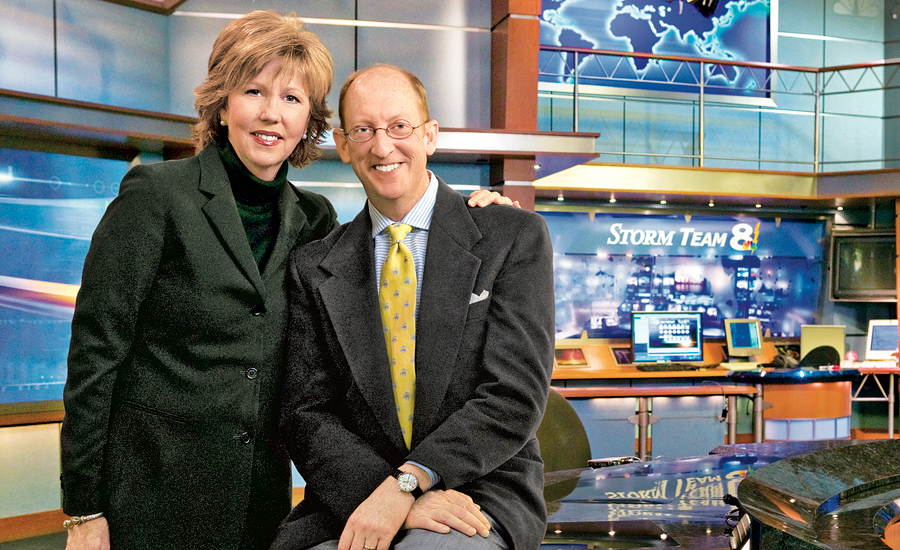
Minutes before, I had stood at the bedside of one my colleagues, Lance Williams, a reporter at WFLA, the Tampa, Florida, television station where I’m a local news anchor. Lance, a talented, Emmy Award-winning newsman and father of two young children, had leukemia.

Journey With Jesus in article ad

I almost didn’t recognize him. The young, tireless reporter I knew, adept at putting together compelling human-interest stories, was gone. In his place was a silent, pale, emaciated form. I couldn’t help thinking I would never see him alive again.

Now I was outside the room, sitting in a hallway beside his wife, Amy. Nurses and orderlies strode past, calm, purposeful. I wasn’t sure what to say. Amy had told me that caring for Lance, keeping on top of his treatment, was a full-time job. I longed to reply, “I’ll drop everything and help.”

But, like everyone else at the station, I knew I couldn’t. News never stops, and most of us had families of our own. My three kids, all involved in sports, were a full-time job in themselves. What Lance needed was something any of his coworkers, no matter how overscheduled, could do.

“Listen,” I told Amy. “We’re going to pray for Lance at the station. As many people as we can gather before the evening broadcast. Whatever you’re facing, know that at four o’clock we’re praying for you.”

Amy looked at me gratefully. “That would be wonderful,” she said. “You guys mean so much to Lance.”

She put her arms around me, and I marveled at how strong she seemed, as if she already knew God was surrounding and protecting her family.I hoped our prayers at the station could become part of that protective strength.

That afternoon I mentioned to several of my coworkers that I had seen Lance. “We really need to pray for him,” I said. “Let’s try to gather at four in the conference room.”

It was a little audacious—four o’clock is one hour before our first evening broadcast, and by that point the newsroom is running full speed, everyone racing to make deadlines, readying final scripts, getting lights and cameras ready.

But it was a window of time, and I figured Lance was important enough that people would make it work.

Just before four, I slipped into the conference room and looked out its big glass windows at the Hillsborough River snaking below. Autumn light was turning the city orange, and I thought of all the people out there in Tampa who knew Lance from his broadcasts.

A reporter named Keith Cate, who was also my five o’clock coanchor, walked in. Keith, so solid in his faith, had responded enthusiastically when I’d suggested meeting. A couple of others followed, and I saw it would be just a few of us. It was a start.

We stood around the conference table and held hands.

“Father,” I began softly, “you tell us that when two or more are gathered in your name, you are there with them. We’re gathered here in this conference room to pray for our friend, Lance, for his healing and for support of his family. Please be with them. Lift them up. Give them strength to carry on.”

I stopped, and almost immediately Keith followed with a prayer for Lance’s doctors. The others offered more prayers for Amy, the family. Almost as soon as we had begun, we were saying, “Amen.” Our words were few. But at least we were doing something.

The next day, a couple more people from the newsroom slipped into the conference room. The day after that, a few more. The prayers were always short—we were news people, after all. But they were closely tied to Lance’s day-to-day progress.

Amy called the station periodically with updates, and we immediately incorporated each one into our prayers. Mostly, we prayed for Lance’s leukemia cell count to go down.

He had a genetic abnormality that increased his resistance to chemotherapy. And yet the leukemia had to be completely eradicated from his body before he could proceed to a bone marrow transplant.

Sometimes Amy’s news was good. Sometimes it wasn’t. Once, she called to say Lance had fallen into depression, worried he lacked faith to lift himself up.

We prayed through all of it, and I quickly found myself looking forward to those four o’clock gatherings. Just a few minutes with God made us feel more connected to Lance’s struggle, more confident that he would survive.

I only wished there could be more of us. An entire chorus swarming heaven with prayers for our friend.

One day, a few weeks after our gatherings began, our news director, Forrest Carr, announced that the station had decided to tell viewers about Lance’s leukemia. Viewers would be wondering why he had disappeared from the broadcast.

The announcement would be made by my coanchor, Bob Hite, a good friend with whom I’d worked for more than 20 years. I was glad, almost excited, to hear we’d be telling the community about Lance. The more people rooting for him, the better.

At 6 p.m., with teleprompters rolling, lights glaring and music cueing, the news began. Bob and I tossed stories back and forth, and then Bob was introducing Lance, talking briefly of his illness, Amy, and their two children, three-year-old, Palmer, and six-month-old, Olivia.

“So please join us in wishing Lance and his family well,” Bob concluded. “We’re all hoping for a quick recovery.”

There was a beat. And then, without any premeditation, I added, “Yes, and if any of you out there believe in the power of prayer, now might be a good time to say a prayer for Lance.” I let out a breath, the cameras shifted and the broadcast rolled on.

Instantly I felt a calmness about what had just happened—a prayer request to the entire 10-county region served by our station. What would viewers think? I didn’t have time to wonder. We were on to other stories.

But it didn’t matter. The rest of the broadcast, the rest of that day, I felt a great peace settle over me. Peace like I hadn’t felt since I saw Lance in the hospital.

The next day, I got to work and opened my email. Dozens of messages, all with Lance’s name in the subject line. Oh, boy, I thought, what were people going to say?

I opened the first. “We’re praying for Lance,” it read. “Please tell his family we’re on his side.” The next: “Is there anything we can do for Lance’s wife and kids?” Another: “Thank you, Gayle, for inviting us to pray for your colleague. Our whole church is behind him.”

I read every message. Not one was bothered by my request for prayer. All said they were praying for Lance. The whole community. Hundreds of thousands. My vision of prayers swarming heaven—it had come true.

That afternoon more than 20 people showed up in the conference room. Newsroom people, managers, employees from all over the building. There was barely room. As always, we held hands in silence.

Outside, the newsroom hummed. Then, one by one, those seen-it-all journalists, those busy media people added their prayers for Lance—as if it was exactly what his colleagues should be doing at four o’clock in the afternoon.

I wish I could say Lance’s progress after that was swift and happy. It wasn’t. Chemotherapy cleared much of the leukemia from his body—but it came right back, just before he was scheduled for his transplant.

Lance went on a brand-new drug—so new, our health reporter did a story as he started taking it—to bring his cell count down in preparation for the procedure. But then doctors announced none of Lance’s family was a bone-marrow match.

It was months before they found a suitable donor. Lance even had to travel out to California for further treatment. Through it all we continued to pray.

And Lance survived. That wasn’t supposed to happen. His odds were very long. But then, Lance had all the right people in his corner. Amy. The rest of his family and friends. His doctors. His church. And his newsroom family.

We couldn’t be there for Lance the way Amy could, by his hospital bed night and day. But we could be there in a way just as powerful. A way open to anyone whose friend, colleague or loved one suddenly stares death in the face.

It’s the way God is there for all of us. Always. Whenever two or three gather in his name.

Download your FREE ebook, A Prayer for Every Need, by Dr. Norman Vincent Peale.

‘Just Mercy’ Star Michael B. Jordan on How His Upbringing Shaped His Life

Award-winning actor Michael.B. Jordan stars in the new movie, Just Mercy, playing a real-life hero—trailblazing lawyer Bryan Stevenson who created the Equal Justice Initiative which represents wrongly accused death row inmates.

Guideposts Editor Celeste McCauley spoke with Jordan about how family and his faith helped him become the actor he is today.

Daily Strength for Women in Article ad

CM: Tell us about your role playing lawyer Bryan Stevenson. What inspired you to be in this movie?

Michael B. Jordan: Just Mercy tells a true story of what it’s like to be wrongly accused and convicted of a crime. To be put on death row. To feel hopeless. To find no recourse. And then to have a lawyer with a passion for justice take on your case and give you a second chance. In this movie, I play that trailblazing lawyer, Bryan Stevenson. My friend Jamie Foxx plays Walter McMillian, an innocent man who was saved from death row. I took this project on because I believe in the work that Bryan does and the organization he started, Equal Justice Initiative, a legal practice dedicated to defending the poor and the wrongly condemned. As Bryan once said, “The opposite of poverty is not wealth; the opposite of poverty is justice.”

CM: How did your own upbringing lead you to this role?  

MBJ: It’s a movie I would not have made without the influence of my own parents. I grew up in Newark, New Jersey. My mother trained as an artist, seeing the natural beauty of the world. When I was in junior high, she worked as a counselor at the school I went to, helping poor families navigate the system, doing all she could for “the least of these.”

My dad, a former Marine, worked nights as a supervisor at JFK Airport. Then he started a catering business he ran from home. We always had good food cooking in the kitchen. No wonder my friends were constantly coming around, staying for sleepovers. Our house was the house. You could get a great meal and play basketball or video games or watch a movie. Education mattered a lot in our family. We were expected to read not just the textbooks assigned in school but books that told us who we were and where we had come from and how we could make a difference. Whenever I’d walk by the dining room, there would be Dad absorbed in another book, reading about issues of justice, civil rights, black history—the kinds of things that Bryan Stevenson also cares about it.

CM: When did you get the bug for acting?

MBJ: When I was 11 years old, I was in a doctor’s office one day and someone in the waiting room told my mom that I should be a model or an actor. One little comment from a complete stranger, but that got me going. I started taking acting classes, going to auditions. Soon I was getting callbacks, getting parts, meeting agents. I was only a teenager when I was cast in a major soap opera. I felt called. Perhaps it has something to do with my name, my middle name. People hear “Michael Jordan” and think of the basketball player. But I’m Michael B. Jordan and that B makes a world of difference, B for Bakari. The word means “noble promise” in Swahili. My parents saw and nurtured noble promise in all of us, my two siblings, Khalid and Jamila, and me.

Michael B. Jordan and his parents, Donna Jordan and Michael A. Jordan. 

CM: Your parents have been huge inspirations in your life. They both battle chronic illnesses. How does your positivity and faith help you help them?

MBJ: When I was a teenager, my mother got a scary diagnosis: lupus, or SLE, a chronic autoimmune disease in which the body attacks healthy tissues, damaging skin, joints, the kidneys and other organs. Mom is not one to complain, but you could tell when things were hard, how tired she was, how much pain she was in. She put a smile on everything, but I knew when she was not at her best. When she was down, I’d try to give her strength. That’s the thing about family—we’ve got to be strong for each other. Still I wished I could do more for her. At age 19, my role in the soap opera came to an end. I didn’t need to stay in the New York area anymore. I figured I’d try my luck in L.A. The parts came, roles in TV shows like Friday Night Lights and Parenthood and then in movies like Fruitvale Station and Creed II. It was amazing to work with Sly Stallone. Some people might say I had a lot of good luck, but it was work too—hard work. Sticking with it, not being afraid to risk failure, to risk all. One of my favorite Bible verses comes from Psalm 91: “You will not fear the terror of the night, nor the arrow that flies by day.” That takes faith, trust, the awareness that there is a higher power looking after you. That there is something stronger than fear.

CM: Your biggest role to date was in the huge blockbuster, Black Panther. How did your role in that compare to Just Mercy?

MBJ: I was barely 30 when I took on my role in Black Panther. I played the bad guy in that one, Erik Killmonger. You learn something by being the villain, getting inside a character, trying to see what makes them tick, what makes them so different from you, looking at them from the inside out.

Bryan Stevenson in Just Mercy is a whole different sort of person, someone who does something heroic, who takes huge risks, speaking out for justice, becoming a force for change in the world. It’s almost harder than playing a villain to take on the role of a truly good person and make them believable. You wonder how he does what he does, what motivates him. Well, it’s like that Psalm. Trusting in God. Knowing that there’s something bigger and more powerful than the evils of injustice and racism and that it can triumph. Just mercy.

A couple years back, all my success made it possible for me to buy a house out here in L.A.; big enough for more than a single guy like me. I knew right away who I wanted to move in with me: Mom and Dad. Whatever I could do to make their lives better, Mom with her lupus and Dad—unfortunately, he’s got diabetes these days. They looked after me for so many years. It was nice to have the chance to look after them. Sort of like my childhood, when our house was the go-to house for everybody. Because of them.

Last year, Black Panther was nominated for seven Academy Awards. I was also asked to be a presenter. Of course I was going to go. And I knew exactly who I wanted to take for my date, someone to join me on the red carpet, someone who would really enjoy the moment. Dad was fine about watching it all on TV. Stepping into the chauffeur-driven limo were just the two of us: Mom and me.

On May 20, the American Bar Association announced that Just Mercy was selected to receive the 2020 ABA Silver Gavel Award for Drama and Literature.

‘Just Keep Swimming’: A Premie Baby’s Inspiring Journey

When Francis William Azize was born in Providence, Rhode Island, he weighed just 1 pound, 9 ounces. According to his mother Maureen Azize, the premie was 17 weeks early and doctors gave him only a 15% chance of survival. To give the family some hope, Azize’s sister drew a Finding Nemo theme on the nurses’ board in Francis’ room. It reminded the family of beloved Nemo character Dory’s mantra, “Just keep swimming.” Then Francis’ uncle, Charles Kinnane, shared a video with Azize and her husband of Finding Nemo creator Andrew Stanton’s inspiring 2012 Ted Talk. The end of the Ted Talk brought the Azize family to tears.

GIVE BACK: HELP GUIDEPOSTS SEND COMFORT KIDS TO HOSPITALIZED CHILDREN

GP In Article Desktop

“I was born premature… I wasn’t fully baked,” Stanton illustrated in his Ted Talk. “I was very, very sick and when the doctor took a look at this yellow kid with black teeth, he looked straight at my mom and said, ‘He’s not going to live.’” He continues, “I was in the hospital for months. I lived. Whatever I ended up being good at, I would strive to be worthy of the second chance I was given.”

Seeing Stanton’s survivor story gave the family new hope. “It was really inspiring to hear his story and [see] how much he’s amounted to,” said Azize in a Facebook video recounting Francis’ story.

About a month later, while Francis was still fighting for his life in the NICU, Kinnane happened to be on a flight to California sitting next to none other than Andrew Stanton.

“My brother showed him some pictures and told him about Francis and before the plane ride was over, Andrew Stanton handed my brother a piece of paper that said, ‘To Francis William: Just Keep Swimming.’”

After 113 days in the NICU, baby Francis got to go home. On June 17, 2016, the Azizes and Kinnane celebrated the now 1-year old with a video titled, “Just Keep Swimming,” documenting Francis’ journey and featuring excerpts of Stanton’s Ted Talk. The video instantly went viral, and many people shared their experiences of having premature babies using the trending hashtag #GoFrancis.

Stanton shared the video on his Twitter feed, saying: “Can’t stop crying. Profoundly moved is an understatement. #GoFrancis.’”

“He just kept swimming throughout the NICU,” Azize says in the video, “And he continues to keep swimming and thriving.”

Watch Francis’ viral video here:

Joy to Your World: Have a Stress-Free Holiday

Mom of three Anita Berding thought past Christmases were hectic. A typical December weekend might involve the office holiday party; costume fittings for the kids’ pageants; buying presents for the Brownie troop gift swap, teachers and the neighbors’ party; a quick workout; making photo Christmas cards; ice skating with extended family and an awkward conversation with her brother-in-law. This year Anita remarried, adding two stepsons to her family and a host of new challenges to her holidays. “I’m exhausted just thinking about it!” she says.

Which is how many of us feel when we flip the calendar to November and see the Thanksgiving to New Year’s marathon is about to begin. Whether you’re worried about travel, weight gain, socializing, family tension, gift-buying or all of the above, we’ve got the stress-busters to make your holidays fun again!

The Lies That Bind In Article Ad

Travel
So Aunt Sally and Uncle Steve have invited the whole clan to Des Moines. Don’t end up stranded in Denver. With an estimated 60 million travelers hitting the skies and roads this season, you’ll need a little planning to get anywhere without getting stressed.

Try to book as far in advance as you can. If it’s possible to arrive or depart on the big days (Thanksgiving or Christmas) you’ll not only pay less, you’ll have less of a mob to wade through.

Pack carefully. To check up on the latest security restrictions visit tsa.gov. Leave gift-wrapping for your destination. Weigh your luggage beforehand if it seems heavy (check your airline’s website for specific rules). Leave room in your carry-on for a good book, your cell phone and its charger. They’ll come in handy in case of a delay or a cancellation.

Before you leave, check the weather for the city of your connecting flight. If it’s storming, call the airline to reroute. Allow plenty of time to get to the airport and through security (expect longer lines than usual).

If you end up stuck in an airport, strike up a conversation with other stranded travelers. Maybe they know a good Des Moines diner if you get in too late for Sally and Steve’s supper.

Weight Gain
A sliver of pumpkin pie here, a spoonful of gravy there, two dipped chips won’t kill you, right? Actually, you are right! Don’t deprive yourself during the holidays or waste valuable time and energy chiding yourself over a bite of brownie. It’s all about moderation. Focus on maintaining weight, not losing it. You can dive back into your diet next year.

Become a “food snob” and eat only the treats you really want. If Aunt Laura’s pecan pie was never your favorite, skip it, and instead share one of Cousin Katie’s seven-layer bars with your mom.

If you’re the one manning the stove, simple substitutions will make dishes a bit lower in calories, but just as satisfying. For healthier versions of holiday favorites, substitute skim milk for whole, applesauce for oil, Splenda for sugar. Use nonfat evaporated milk to thicken a liquid.

Start a new holiday tradition where everyone goes for a walk or plays football after a meal. Won’t snowman sightings or your dad’s game-winning Hail Mary pass be more memorable than napping?

Parties
Parties are supposed to be fun, but for many of us, going to or throwing them is a source of stress. The solution? Keep everything simple.

If you’re the guest, pick up a couple of hostess gifts when you’re doing other November shopping to avoid a day-of-party rush. While you’re at it—does that dress need to go to the cleaners?

The soiree-savvy don’t eat or drink too much. You don’t need the guilt of the extra calories or racy behavior. It’s okay to go to a party for a limited time. Everyone understands how demanding the season is; the host will be happy you made the effort. If you’re anx-ious making small talk, stay seasonal: Will you be traveling somewhere? Have you bought gifts yet? Can you believe this weather?

If you’re the host, only give a party if you truly want to and you have the time. Don’t be afraid to enlist family and friends to help. After all, it’s only fun if you’re not frazzled. Don’t go crazy with decorations or choices of food and beverages. Go with a simple menu and consider making it potluck. Keep everything self-serve: a table for drinks, a table for food. Guests are happy when they can help themselves.

Gifts
It happens to the best of us. You spend months searching for the perfect present and then Christmas Eve you’re elbowing someone for the last singing fish or going over budget because you can’t show up at get-togethers empty-handed.

The key is to plan ahead, way ahead. If money worries you every year, start budgeting in June, or propose a new plan, like giving to just kids, or a charity, or drawing names so you each give to only one other person. If the mall makes you tense, try online shopping. Or if it’s gift-finding that’s nerve-wracking, make a list—again, early—of ideas and interests for each person. Check out gifts.com or the book Gifted: 1,000 Gift Ideas for Everyone in Your Life.

You know that saying “It’s the thought that counts”? Don’t get bogged down in competitiveness or perfection or let holiday spending get out of control. The cost of the gift won’t be important to the recipient. If money’s tight, get creative with homemade gifts or make coupons for babysitting or cleaning. Remember the reason you’re giving: to make some-one feel loved and appreciated.

The Blues
“We have these illusions that everyone has this happy, loving family in a blissful reunion, with all wishes fulfilled,” says psychologist Jon Allen, Ph.D. “The pressure to feel good and happy is escalated at the holidays. We should not expect weeks of unending happiness. There will be highs and lows as with the rest of the year.”

Allen adds, “With any blues what’s poison is alcohol.” Alcohol is associated with so many holiday functions, and while it may ease stress or anxiety temporarily, it’s actually a catalyst for depression.

To keep the blues at bay, Allen offers some common-sense tips. Be sure to exercise and get enough sleep. Make an effort to do things you enjoy. For most people, social activities provide the greatest pleasure and feeling of connection.

Instead of coming away from the holidays feeling like you didn’t accomplish all your “shoulds,” try reaching out to others. It will take the focus—and pressure—off of you. Look for meaningful moments. The more you’re open to them, the more you’ll find!

Relatives
Family dynamics can be challenging. We’re disappointed when reality doesn’t match our high expectations of a cozy holiday reunion. Or we find ourselves repeating past frictions:  cringing at Grandma’s sometimes brutal honesty or snapping at a cousin who’s always comparing her life with yours.

“Moderating expectations is a good first step,” says Shelley MacDermid, Ph.D., director of the Center for Families at Purdue University. She also suggests examining your family’s patterns. Are there ways to restructure events to remove the stimulus that causes tension?

Develop and rehearse some strategies to deal with your stress, whether it’s finding questions to draw out a reserved uncle or a graceful way to deflect Dad’s teasing. “Enjoy!” says MacDermid. “Even if these people are annoying, they are your family and they won’t always be there. What do you want to remember?”

Overbooking
Peace on earth? For whom? Lucky you are so caring and popular but when the holidays fly by you’re left exhausted—physically and emotionally. News flash: You don’t need to bake 20 different kinds of cookies, make your own cards, buy gifts for everyone and attend every party.

Prioritize what is most important to you. Be honest with yourself and make conscious choices about which holiday rituals you will participate in. Do you truly enjoy baking? Home decorations? If yes, continue. If no, drop them or leave them to someone else. Try to do several errands in one trip to maximize efficiency. Here are a few items for the top of your Stay Stress-Free list: Exercise, eat and sleep well, make time for spiritual practice and relaxation, and plan ahead.

That’s Anita’s strategy. With five kids celebrating the holidays together in very new circumstances, she’s taken some big steps to bring peace to the season, including finding a work-share partner so she can take time off to spend with her blended family. “My family shouldn’t have to watch a totally stressed-out wild woman whip in and out of their lives,” she says. “I’m blowing off everything except making sure they have an enjoyable holiday!” Sounds like a plan.

Download the free ebook, Rediscover the Power of Positive Thinking.

Download your FREE positive thinking ebook!

Journey to Sobriety: One Man Rides for Hope

In late May, Spencer Nee found himself at a campsite in Colorado talking to a woman he’d just met. She wasn’t vacationing;  she was trying to wean herself off heroin. She was on her third day, dope sick and struggling to remember why sobriety seemed like a good idea. Nee can relate.

Although Nee is celebrating seven years of sobriety, he tells Guideposts.org his debilitating addiction to alcohol left him “in a really frightening place in my life. I’d pretty much accepted my death.”

Go For It In Article Ad

Unlike the woman he met at the campsite, who grew up in the foster care system and survived childhood sexual abuse before becoming addicted to drugs, Nee came from a loving home. He excelled in sports and academics, graduated from college and owned a business for a time. He drank socially. Only after college, when his business fell through and his peers were successfully transitioning into adulthood, did his dependence on alcohol grow.

“I was self-medicating a lot of holes in my life,” Nee says. “A lot of anxiety and depression. [Alcohol] just slowly started to rule my life.”

His relationship with his parents deteriorated, and some friends disappeared. He couldn’t hold a job – Nee estimates he had seven in 2007 alone – and the jobs he did manage to snag were places where he could indulge his drinking.

Soon, he wasn’t able to afford his rent and became part of the “invisible population” of homeless people, sleeping in a tent in the woods next to his alma mater or spending a night in a dingy motel.

“I felt like a complete outcast, like I was a hassle to people,” he says about his time on the streets.

But the scariest part of his spiral into addiction was the toll it took on his health. Nee remembers the early days, waking up to his body shaking uncontrollably, desperately craving a drink.

“I’d wake up so shaky that I was afraid I’d go into a seizure and die without alcohol,” Nee says. “I’d have to drink in the mornings and at work. It just took over my life.”

READ MORE: ANNIE LOBERT FINDS REDEMPTION ON THE VEGAS STRIP

After one night of drinking, Nee fell asleep behind a dumpster and woke up to a stranger dumping trash on him. That rock bottom moment made the then 27-year-old realize he needed to get sober.

Nee called his parents to ask for help. It was the first time they’d heard from him in six months. That call led him to Providence Network in Denver.

The faith-based organization works to help homeless, addicted and at-risk men, women and families become healthy, productive members of society. The group offers transitional homes with faith-based counseling, life and job skills training and a live-in staff to ease recovering addicts and homeless people back into a normal life. For Nee, Providence Network was able to do what other homeless shelters and smaller programs couldn’t.

“I’m one of the lucky ones,” Nee says. “But I think [my sobriety] does say something about Providence Network in general. They have a really unique approach. You become a member of the community, you go out and get a job, you have your meals together, there’s a live-in staff. There’s just a feeling of family that I was really missing.”

Nee spent two years in one of the organization’s homes before moving into a “Victory House,” or sober living apartment. There Nee returned to school and became a registered nurse. Eventually, he was able to leave the transitional facility and continue sober living on his own.  

“There are a lot of good people buried under addictions that lead them to homelessness, but with a little help, they can go on to live productive, healthy lives,” Nee says. He’s living proof. “They are people. They deserve love and respect.” 

While working in the E.R. of a hospital in Colorado, Nee got the idea to show love for those with addictions in a new way. 

“We were starting to get this major influx of kids overdosing, most hooked on heroin,” Nee explains. He did some research and found the number of homeless youth was rising, not only in Colorado, but across the nation. He felt compelled to help.

READ MORE: MY MOMENT OF TRUTH IN REHAB

Nee partnered with Providence Network to raise money for a new transitional home the organization was planning, one focused on youth and young adults. His plan: to bike 4,000 miles cross-country, from the Golden Gate Bridge in San Francisco to the Brooklyn Bridge in New York City to raise the $10,000 needed for the new housing unit. Staying at campsites, rehab centers, and transitional homes along the way, Nee shared his story of addiction, homelessness, recovery and faith to hundreds of people struggling with the same demons that once held him hostage—including the woman recovering from heroin addiction, with whom he’d kept in contact.

Roughly four months after he left the Golden Gate Bridge, Nee reached the finish line at the Brooklyn Bridge. As he rode over the East River, in a bustling crowd of tourists, he received a text message from the woman he’d met at the campsite.

She was 60 days sober, thanks to Nee’s words of encouragement.

“I wanted to spread the message of hope,” Nee says of his bridge-to-bridge ride. “I wanted to reach out to these people and show them that you can have fun when you’re sober, there is a life rich in adventures if you can just hang on.”

A Dee-lightful Change

Sleek black trousers? Check. Teal silk blouse and patent-leather pumps? Double check.

I was dressed to the nines, but really didn’t know why. It was my first day at my first job out of college. I’d dreamed of a career in fashion, maybe as a style editor at a magazine—something thrilling and glamorous.

Community Newsletter

Get More Inspiration Delivered to Your Inbox


But from the minute I settled in at my desk and looked around, I saw how far I was from that dream: gray walls, gray carpet, gray furniture. This was no glam gig. I was a receptionist at Rockwood Retirement Community in Spokane, Washington. What am I doing here? I’m way overdressed!

A few months before, I’d graduated from Gonzaga University with a degree in public relations and English—full of optimism, ready to conquer the world. That summer my wonderful boyfriend, Jeremy, asked me to marry him—a romantic surprise proposal with the promise of a Caribbean honeymoon.

It felt like a fairy-tale beginning to my life in the real world. He had graduated with degrees in journalism and sports management, and now had a job he loved—selling tickets for his favorite minor-league hockey team. I was certain my big break in fashion was right around the corner.

July passed. August too. Still no job. No leads. Nothing. One morning, I buffed up my résumé for the umpteenth time and prayed, Please, God, I appreciate all the blessings you’ve given me, I really do. But can’t you lead me to my dream job too?

By fall I’d gone from aiming for a job in fashion to scrounging the web and classifieds for a job, any job. I was trading in pencil skirts for pajama pants, confidence for self-doubt. Why wasn’t God listening? Why wasn’t he giving me an opportunity to shine?

The job market stayed bleak. In late September, I came across a listing on an online job site: “Receptionist needed at Rockwood Retirement Community. Greet and assist visitors and residents, operate the telephone system and direct callers to appropriate personnel.”

Okay, it wasn’t a position at Vogue. But it was something and I needed a paycheck, so I applied. They offered me the job.

Now here I was on my first day, wondering what I had gotten myself into. A woman’s voice startled me. “Hello, who’s there?” she asked.

Right away my eyes lit on her elegant red-and-black silk scarf. Christian Dior, if I wasn’t mistaken. Now that’s a girl after my own heart, I thought.

“Hi, I’m Lacie, the new receptionist,” I said. “I absolutely adore your scarf. Can I help you with anything?”

“Thank you,” the woman said. “I was hoping you could read this card to me. I’m partially blind. By the way, my name’s Dee and I’m in apartment 712.”

“I would love to! It’s wonderful to meet you, Dee,” I said.

I read Dee’s card for her, and over the next few days we chatted more. Her life story was fascinating! She’d grown up in Minneapolis, then worked for 20 years as a flight attendant for American Airlines back when air travel was luxurious and glamorous.

She married a man named Mel, a general manager for Kaiser Aluminum. His work took them to Ghana and, six years later, to Spokane when he got a job managing the 1974 World’s Fair. Mel died in 2003.

“I still miss him every day,” she said. I told her all about Jeremy, how romantic he was, and about my hopes for a career in fashion. One day I mentioned that I’d taken 15 years of dance classes and still found it to be a great stress reliever. “The time step is one of my favorites,” I said.

“I know the time step!” Dee shouted. “My sister was a dancer on The Burns and Allen Show and she taught me a long time ago. Let me see if I remember how it goes…” Right there by my desk, Dee hopped and stomped through the step. Of course I had to join her.

We wound up bent over, clutching our stomachs, we were laughing so hard. After that, Dee would occasionally saunter over to my desk. “Is anyone around?” she’d ask conspiratorially. “I feel like doing the time step.”

Word of our shared talent got around and other residents at Rockwood would ask us to perform. It became our signature showpiece.

Six months after starting at Rockwood, I still didn’t have any leads for a job in fashion. But I wasn’t stressing about it. I looked forward to going to work in the morning, spending time with Dee and the other residents.

Sometimes, after work, I’d drop by her apartment. It was impeccably furnished with sea-blue couches, white carpet and a dazzling crystal chandelier. She would show me old photographs, her wedding dress, keepsakes from her time in West Africa.

Dee wanted to know every detail of my upcoming wedding. “What does your dress look like, dear?” she asked.

“It’s a couture-inspired off-white gown with flowers on one strap and—”

 “Wait,” Dee said, cutting me off. “I’ll be right back.”

She rummaged through her closet and emerged with an ivory beaded purse. She handed it to me along with a picture of herself holding that exact purse at President Richard Nixon’s inaugural ball! “Would this match your dress?” she asked.

“Oh, Dee! It’s just lovely!” It was the perfect “something old” that I needed to complete my outfit.

Dee gracefully declined her invitation to my wedding (it was a bit too far for her to travel), but as soon as I returned from my honeymoon, she wanted to hear all about it. I described the ceremony, dancing at our reception, snorkeling with Jeremy in Curaçao and the colorful markets in Puerto Rico.

Dee listened intently, then gently squeezed my hand. “Lacie, always remember to give Jer a kiss at night and tell him how much you love him. Don’t take these times for granted. I wish I had given my dear Mel more kisses and said ‘I love you’ more before he passed.”

Okay, Lord, I said later. I think I get it…just because I’m not working at my dream job right now doesn’t mean I’m not where I need to be.

That August, nearly a year after I’d started at Rockwood, Jeremy got an offer for a great job in California—one that we couldn’t pass up. A few days before we moved, Dee sent me off with a party in her apartment.

I looked around at all the residents. You know something? My self-esteem was back. And I had the job to thank. I was going to miss all my new friends, especially Dee. She’d practically become my best friend.

Dee interrupted my thoughts. “Lacie, how ’bout we do the time step real quick before dinner?”

I slid off my cheetah-print stilettos and Dee removed her pale pink pumps. We held hands, ready to perform our duet. Yes, God had led me to a better first job than I’d ever dreamed of. A pretty glamorous one too.

Read more inspiring stories about personal growth! Download your FREE ebook, Paths to Happiness: 9 Real Life Stories of Personal Growth, Self-Improvement and Positive Change.

Joan Lunden’s Happiness Plan

My views on aging changed forever on a trip to Morocco nearly 20 years ago with my three eldest daughters. Somewhere between riding camels in the Sahara and exploring the medina in Fez, we encountered a tribe of nomadic Bedouin sheepherders. We were invited to join them for mint tea and, as we entered one of their tents, were greeted warmly by an elderly tribeswoman. We talked through our translator, and I asked how old she was. The woman looked at me in confusion, then explained that Bedouins live by the changing of the seasons—no one knows their exact age. How old was she? It didn’t matter.

That experience made me realize how much we limit and define ourselves by the date on our birth certificate. How old would you be if you didn’t know your age? How old are you in your mind? Although I’m 69, I pick 45 for my age, and I’m sticking to it! In my new book, Why Did I Come Into This Room?: A Candid Conversation About Aging, I discuss the ways we can stay healthy, happy and engaged in life as we age.

Go For It In Article Ad

For almost two decades, I was the cohost of Good Morning America. When that chapter closed, I had to focus on what to accomplish next. I was invited to go on a national speaking tour, and although public speaking always terrified me (unlike in a TV studio, I could actually see all the people in the auditoriums!), I jumped at the chance. Fear of the unknown makes us resist change, but little by little I conquered that fear. I now average more than 20 speeches a year, and I love each one. Many changes were still to come in my life. At 49, I married my husband, who was 39. Within a few years, we welcomed two sets of twins, born with the help of a surrogate. As a member of the Sandwich Generation, I was buying strollers for my young children, cars for my three teenagers and wheelchairs for my mom—all at the same time! And now I have four grandchildren to boot. But none of this would have been possible had I succumbed to the societal trap of acting my age.

Plan for happiness. One way to stay open to the possibilities for future joy: Have a bucket list or a happiness plan. Mine includes taking a photojournalism trip through the Serengeti, reading more books and enjoying health and nutrition classes. What passion projects would you like to pursue? Maybe you’ve always wanted to be of service to others. Figure it out, and put it in your plan. My mother, Gladyce, known as Glitzy Glady for both her effervescent personality and her love of anything trimmed in gold, always said, “Half the fun of anything is anticipating and planning for it.”

Aspire to inspire. When I got diagnosed with breast cancer in 2014, my first instinct was to hide. My inspiration to go public came from my father, a cancer surgeon. He died in a plane crash when I was just 13 years old, and this was my opportunity to carry on his legacy, to inspire and educate others through my own battle. I chronicled my journey on social media, even taking a camera in with me to chemo, and wrote a book, Had I Known, about what I learned. Now as I speak across the country, women tell me that I “took the scary out of it.” That makes it all worth it. Turning my cancer diagnosis into a way to serve others has changed my life and career for the better and given me more purpose than I ever could have expected.

Let it go. Stress can wear you down, not just physically and mentally but spiritually too. To deal with our stresses, we must first identify them. The things I worry about these days: Am I making the right decisions with my teenagers? Will my cancer come back? Have I planned wisely for my future? My biggest no-stress strategy is to know my priorities and stick to them. Balancing work and family is a challenge, so it’s important to learn that no is not a dirty word. You simply cannot be everything to everyone. Another thing that keeps my stress in check? Organization, organization, organization. I am notorious for my to-do lists and a giant calendar in our kitchen, marked with the entire family’s schedules. My family might laugh, but it keeps everyone’s stress at bay.

Pick your peak. I feel so much better after my workouts—can you say endorphins?—but getting up the motivation isn’t always easy. My main motivation comes from my incredible exercise buddies. We challenge each other and cheer each other on. At 45, I signed on for a mountaineering trip to climb the Teton Range. When our group stood on the mountain that magnificent June morning, our guide gestured at the peaks all around us. “Pick your peak,” he said, and that’s exactly what we did. We didn’t need to summit the highest peak to get to the top of one. From that day forward, I’ve used that lesson not just for exercise but whenever I’m making tough decisions. Pick your peak and go for it!

Have a caregiving plan. For nearly two decades, I was the long-distance caregiver—New York to California—for my mom, who’d begun slowing down and eventually developed dementia, and my brother, who had Type 2 diabetes. I arranged for them to move into a condo to keep each other company and had an aide help them out a few days a week. But it wasn’t until my brother’s death in 2007 that I realized my mom’s dementia, at age 88, was much worse than I’d thought. It’s easy to overlook things when you live far away from your loved one. They might put on a happy face and act fine when they’re really not.

I had done stories on aging and dementia, but when I found myself in the role of caregiver, I wasn’t prepared. My mother and I had never had that tough conversation about what life would look like as she aged, so I had to put one foot in front of the other and figure it out. A great rule to go by is the 40/70 rule: By the time you’re 40 and your parents are 70, you should talk about living arrangements, finances and other aging issues, so you are prepared when that day comes.

Practice gratitude. My cancer battle opened my eyes to just how much my family and friends loved and supported me. Now I find myself driving to work with an intense appreciation for the beauty of snow glittering on tree branches or sunlight dappling the leaves—life’s little miracles I might not have noticed before. To deepen that gratitude, I’ve embarked on a visual reconstruction of my life using family albums, keepsakes and memorabilia from my career. Revisiting memories and milestones gives us a chance to reflect on our lives, to be grateful for what has come before and help us plan for what’s next. Want to know my new mantra? Make today and tomorrow so awesome that you make yesterday jealous!

For more inspiring stories, subscribe to Guideposts magazine.

Jesus Is the Ultimate Inspiration

It’s a joy to be able to share with others what you feel God has shared with you. It’s also good for me, personally, to live with a mindset of looking for Jesus in every day moments, which is what most of my devotions are about.

I don’t consider myself deeply theological. But seeing glimpses of Jesus in my child’s eyes, or even dirty dishwater—that’s what I like to write about.

Pause & Pray In Article Ad

There is just no other subject like Jesus. It’s amazing to me every time I approach the person of Jesus that there’s an infinite amount of Him. The well never runs dry. You can never put Him in a box. Never feel like you’ve thoroughly researched Him. Never feel like you’ve tied that subject up and it’s time to move on. For me, He is the ultimate inspiration.

I was reminded that I don’t know much about Jesus. And after writing for Mornings with Jesus, I still don’t. I love the CS Lewis quote that says, “He’s good, but He’s not a tame lion.” I know He’s good. And while there’s this intimacy I know He wants us to have, and that I believe I do have on some level, like it says in John 17:3, there’s also this deep, unfathomable side to our faith, and I just can’t ever say I know much.

How much do we know about space, or the ocean, for example, after studying it since the beginning of the world? But I do believe through this experience I drew a little bit closer than I was before to His heart. And I hope to always be learning more of who He is.