Embrace God's truth with our new book, The Lies that Bind

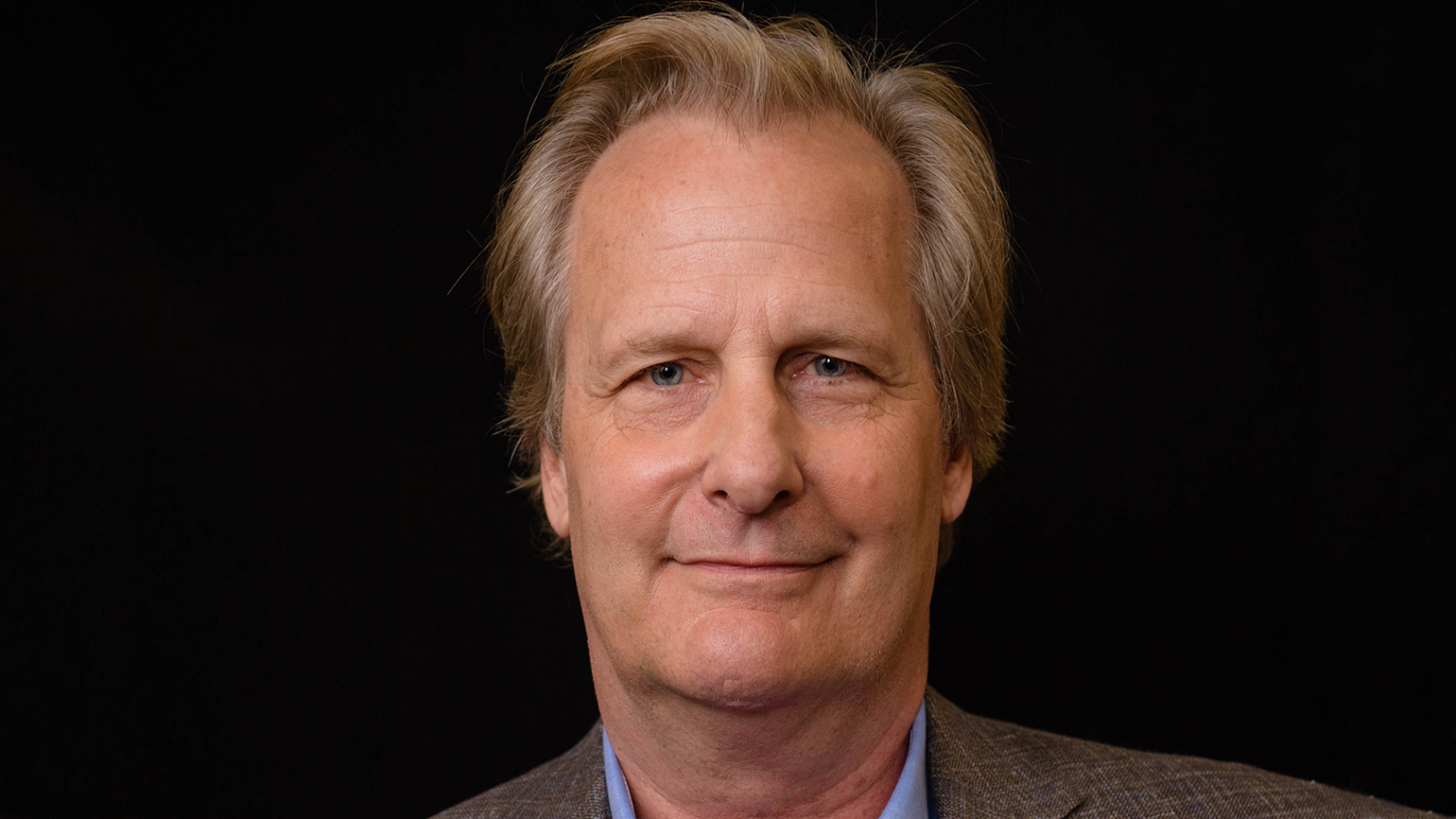
Jeff Daniels, Hometown Boy

Let me tell you about the small town where I come from: Chelsea, Michigan, population nearly 4,700, just west of Ann Arbor. It has one hospital, three elementary schools, a high school, a train depot, golf courses, several churches and a tree-lined Main Street. And right out of central casting there’s the lumber company (where my folks still work), Zouzou’s coffee shop, a hockey rink and a first-rate theater (more about that later).

With its small-town atmosphere and solid Midwestern values, it’s the sort of place where an actor with both promise and ambition grows up and then leaves, never to return…unless he’s the grand marshal in the annual Fourth of July parade and his agent or studio needs to buff up his image.

Light for Life NASB Study Bible in Article

Well, I left Chelsea when I was 21 to try my luck in the theater, which was pretty good. I appeared on the Broadway stage and in a couple of Hollywood films, and after bouncing around between the East and West Coasts, my wife, Kathleen, and I asked ourselves where we wanted to raise our children—our one son was almost two years old. The answer was easy: “Michigan.”

We knew Michigan. And if it was going to be Michigan, it would have to be Chelsea, where we’d met. Even if the winters were as cold as the summers were hot and sticky and everyone knew everyone else’s business, it was home. It was the one place I knew I could give my kids the good things I had growing up, things I believed in.

First, there were teachers like Miss DiAnn L’Roy. She taught chorus in sixth grade. One day she had us do improvisations. “Okay, Jeff,” she said, “I want you to get up there and act like you’re a politician giving a speech and his pants are falling down.” I’d never done anything like that—standing in front of a class, tugging at my belt and making a pompous speech, but evidently I was pretty funny because everybody cracked up. “You were great,” they said. Miss L’Roy saw something in me I’d never seen in myself.

She didn’t forget, because sophomore year in high school when I had no intention of ever trying out to be in a school play, she caught me as I was coming out of basketball practice and stopped me by the auditorium doors. “Jeff,” she said, “get in here.” She was holding auditions for South Pacific and needed sailors. The next thing I knew she had me onstage doing this silly dance. My hair was still matted and wet from practice and I was singing a funny song, but it was good enough for Miss L’Roy. I was in the show. 

The next year she raised the stakes by casting me as Fagin in Oliver (I listened to Ron Moody on the record for hours to learn the accent and songs). From there it was Harold Hill in our ragtag community theater’s production of The Music Man and Tevye in The Fiddler on the Roof

Miss L’Roy gave me stage time, but I had to learn on my feet. She asked me to try things I didn’t think I could do, like the villain Jud Fry in Oklahoma! “I want you to look into the psychology of this character, the material that’s not written in the script,” she told me. She wanted me to study the character and figure out his motives…but first I had to look up the word “psychology.”

Make no mistake. Just because Miss L’Roy was teaching in a small town, there was nothing small-time about her. Like a lot of teachers all over America she was opening my eyes to something new. She was giving me a chance to take bigger risks in a bigger world. She knew I’d learn something, even if I failed. When I had the opportunity to go to New York City I had to try because there was somebody back home who believed in me.

I didn’t take to the city. It was crowded and noisy and you didn’t know the people you passed in the streets. There were hundreds of actors from all over the country all going after the same jobs. I didn’t see how I’d ever make it. After about six months I was desperate to come home. I called my mom and complained. She listened. At the end of my harangue, she said quietly, “Find a way to stay.” My mom is a woman of few words and they’re always well chosen—there was no room for argument. She’d seen what Miss L’Roy saw and knew what good people also know in small towns: There are times you have to leave home to grow.

I wanted to go home, but I stayed and had some lucky breaks. I got cast in some great plays and movies like Ragtime, Terms of Endearment and The Purple Rose of Cairo. But I never forgot home. I married my high school sweetheart and, after 10 years, like I said, Kathleen and I moved back to Chelsea. “What if you get cast in a movie or a play?” she asked.

“Detroit has an airport,” I said. “I can fly from there to wherever I have to go.” At least when I returned I’d be returning to a home that was really home, not some modern house tucked in the Hollywood hills.

Small towns might have a reputation for being set in their ways, not a good place to experiment or feel stimulated or inspired. Well, I have to disagree. Coming back to Chelsea I felt free to try things I hadn’t done before—like writing. I wasn’t sure how to make a play, but I figured if we had the space we could find the actors and experiment. Kathleen and I bought an old wooden warehouse. That was the beginning of what we called The Purple Rose Theatre—what I envisioned was a company for the 21-year-old kid I used to be, where he could explore and grow before he went to New York or L.A. Or maybe he wouldn’t even want to go. Maybe he’d stay here and make great theater in Michigan. 

Michiganders love their theater. And that’s what The Purple Rose has become… a place for actors, directors and playwrights from Michigan and the Midwest to get the training and breaks I did. We’ll see the hunger in some young actors who have talent and we’ll help them get as good as they can before they leave. We take pride in helping make talented people better. It’s a matter of good stewardship, passing on the gifts God has given us. Small towns take pride in what they produce.

There’re other things Kathleen and I have been a part of. There was an old school, a nice solid brick building that was going to be torn down and turned into condos. We bought it and saved it for a group called the Chelsea Center for the Development of the Arts. It was just a husband-and-wife operation in one room of a church, giving lessons in cello, voice and violin. Now, you go into the renovated building and there are people singing, rehearsing and playing instruments. Kids—the non-sports kids—have gone on to win university scholarships because of the training they’ve gotten.

Then there’s the ballpark. We used to have baseball and softball fields at the high school that were in bad shape. My buddy, who’s now the athletic director at Chelsea High, wanted something new. With a little money and a lot of imagination, he built a new stadium with box seats, a press box, dugouts and scoreboards. A lot of people got behind him. Pooling our resources and doing some fundraising we’ve built something great.

In Boy Scouts they say, “Leave a place better than you found it.” Well, I think it’s true of the towns and cities where we live. I can look at Chelsea and see the things my parents have done for it—like the adoption agency my dad started for hard-to-place kids in southeastern Michigan. I hope someday someone will be able to say it about me. In the meantime, I’m not leaving. Sure, I go to California to make a movie or fly to New York to appear in a Broadway show, but then I come back to Chelsea, where my roots are, where God planted me, you might say. It’s where your roots are deepest that you grow the most.

Read more about Jeff Daniels at jeffdaniels.com and his theater at purplerosetheatre.org.

For more inspiring stories, subscribe to Guideposts magazine.
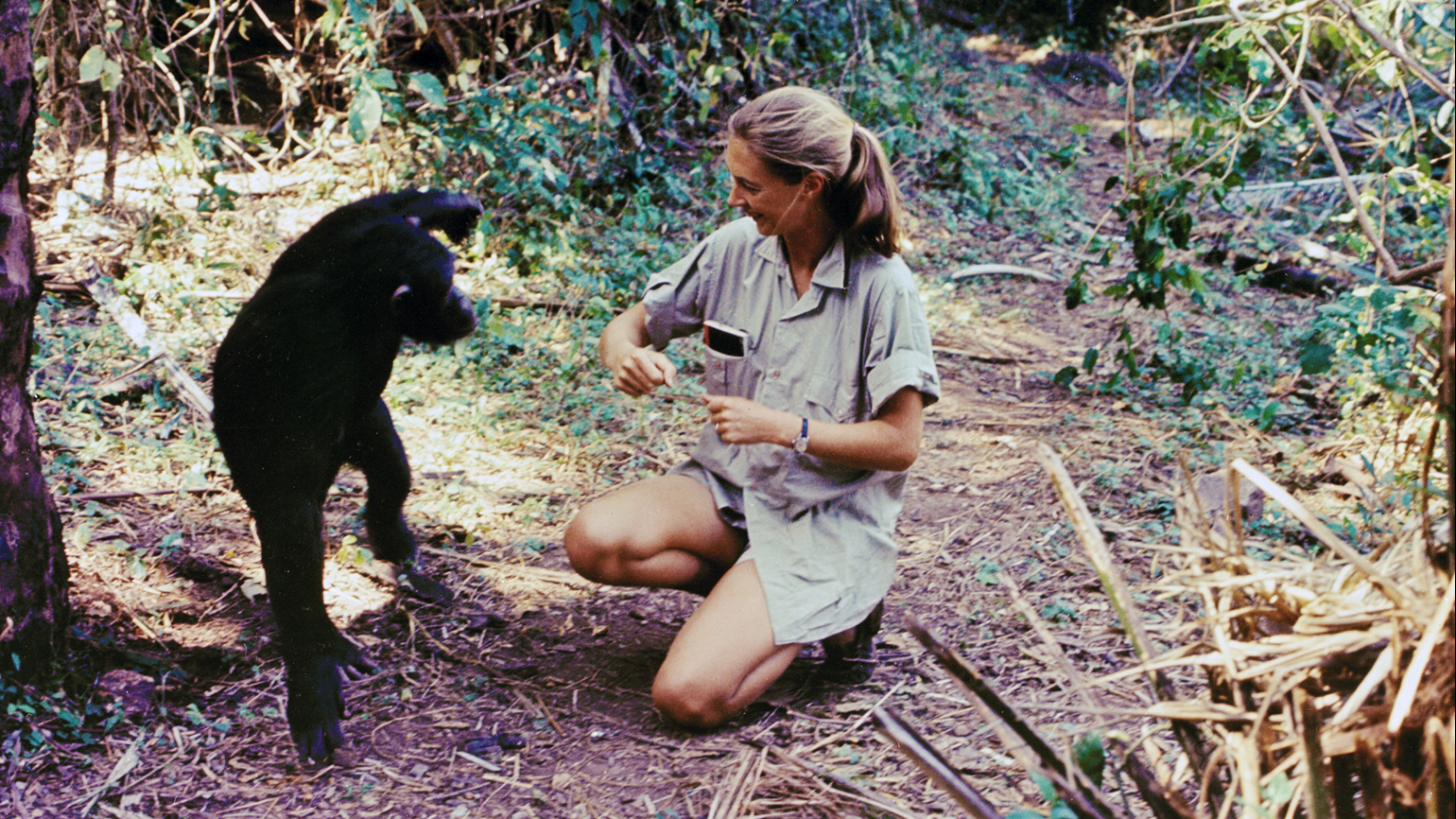
Jane Goodall: I Carry Hope with Me

For more than 40 years, I have studied some of our closest relatives in the animal kingdom. Much of that time I lived among the chimpanzees of Gombe National Park in Tanzania, East Africa, observing them for hours, filling notebooks with accounts of their behavior.

More recently, alarmed by the harm we have inflicted on the natural world, I have turned my energies to the protection of wildlife and the environment.

Pray A Word a Day - 2023 In article

I travel all over the globe in my efforts for conservation, and people often ask me: Having seen what we have done to this world and to the living things that share it, how can you keep doing the work you do?

It was a question I found myself thinking about when I returned to Gombe on July 14th, 2000, 40 years to the day after I arrived with my mother, Vanne, to begin my research.

I was there to celebrate the fortieth anniversary of the longest study of any group of animals anywhere. My mother had died just a few months before at age 94, so the memories that flooded into my mind were bittersweet—thoughts of days and people long gone.

From the earliest times, my mother nurtured my passion for animals. Instead of scolding when she found that I, at 18 months, had taken a handful of earthworms to bed, she quietly told me they would die without earth. I promptly gathered them up and toddled with them back into the garden.

Years later, when the authorities in Tanganyika (now Tanzania) refused to allow a young English girl to venture alone into the forests of Gombe to observe chimpanzees, it was Vanne who volunteered to accompany me.

Items Jane Goodall carried with her when traveledOn that anniversary day at Gombe last year, I climbed to the Peak, the outcropping of rock above Lake Tanganyika from where, armed with binoculars, I had made many of my early observations of chimpanzees.

From there I had first noticed an adult male, whom I named David Greybeard, pick leafy twigs and strip the leaves to fashion tools, which he then used to fish termites from their underground nests. I had learned—again from David Greybeard—that chimpanzees are hunters and that they share their kill.

I had been privileged to know some amazing chimp characters over the years … Olly, Mike, Mr. McGregor, each with his or her unique personality. I thought of the grand old matriarch, Flo, and her daughter Fifi, a tiny infant in 1960 and the one individual from those days still alive now.

Sitting up there, in that place of memories, I reflected on the plight of chimpanzees and other wild animals in Africa today. In 1960 there were forests fringing the 300-mile shoreline of Lake Tanganyika and extending for miles. Now cultivated fields surround the mere 30 square miles of Gombe National Park.

With the tree cover gone, every rainy season sees more of the precious topsoil washed away into the lake. Where there were once lush forests, many places today are desert-like. Not only have the animals gone—the humans are suffering. And this scenario is repeated again and again in the war-torn countries of Africa.

I understand why many of my fellow scientists believe we are spiraling toward global disaster. Still, I have reason for hope. And I collect and always keep with me on my travels symbols that express that hope.

My first reason for hope is the marvel of the human brain. Surely having conquered space and invented the Internet, we can find ways of living in greater harmony with nature.

Around Gombe we are currently working with people in 33 villages to improve their lives with tree nurseries, environmentally sustainable development, conservation education, primary health care, and AIDS awareness.

Science is inventing alternatives to fossil fuels; laws have been enacted to control dangerous emissions; timber companies are practicing responsible logging, and so on.

As a reminder of the ingenuity of the human brain, I carry with me a part of an eco-brick made from industrial waste. It is coated so that it will last 300 years or so, yet it is cheaper than an everyday building brick.

These eco-bricks can be used to build hospitals and schools in the developing world—and solve their waste-disposal problems at the same time.

My second reason for hope is nature’s amazing resilience. Polluted water can be cleaned; man-made deserts can bloom again. I carry a leaf from a tree that grows in Nagasaki, where the second atomic bomb was dropped at the end of World War II.

Scientists predicted that nothing would grow in the scorched, devastated area for at least 30 years—yet the plants came back quite quickly. One slender sapling did not die. Now it is a huge tree and every year puts out new leaves; it is one of these which I always keep with me.

Animals on the verge of extinction can be rescued. I have in my collection a feather from a California condor—a species reduced to only 14 individuals a few years ago. All were captured for breeding, and now there are 40 condors flying free in 4 different release sites.

I also have a feather from another species making a comeback against the odds, the peregrine falcon.

My third reason for hope is the indomitable human spirit—the people, all around us in all walks of life who tackle seemingly impossible tasks and never give up.

I carry a piece of limestone from the quarry on Robben Island where Nelson Mandela labored for 18 of his 27 years of imprisonment and yet emerged with so little bitterness that he could go on to lead his nation from the evil of apartheid into democracy.

And I have a wooden comb with a decoration of woven wool made and sold by a Tanzanian man who lost his fingers to leprosy but still found a way to make a living—weaving colored yarn with his stumps and his teeth.

I also have a surgical glove with a bent-in thumb, from the left hand of orthopedic surgeon Paul Klein. When he was only a six-year-old boy, an explosion all but destroyed his hands. Though his left thumb could not be saved, after hours of painful surgery, his fingers were reattached.

He decided he wanted to become a surgeon himself. “Impossible,” people said. Yet he persisted, and today Dr. Klein operates on children who have been injured in accidents.

My fourth and final reason for hope is the enthusiasm of young people once they know the problems facing the world and are empowered to act. To remind me of that, I carry a stuffed toy, a small spotted dog that five-year-old Amber Mary brought me, along with a plastic bag holding a few pennies, at the end of a talk I gave in Florida.

She had seen the National Geographic special where the little chimpanzee Flint dies of grief after losing his mother.

Little Amber Mary knew about grief; her brother, who had loved to watch the chimps at the zoo, had died of leukemia. Week after week, she had saved her allowance to buy the toy dog.

Would I give it, Amber asked, to one of the orphan chimps we were caring for, so that he might be less lonely? And, she added, with the leftover pennies, could I buy him some bananas?

I kept Amber Mary’s dog and her pennies to show others. When they see those pennies, people reach into their pockets for whatever they can give to help orphan chimps and other animals.

Sitting there on the Peak last July fourteenth, I remembered all my reasons for hope. As the sun sank lower in the hills on the other side of Lake Tanganyika, I climbed down to a waterfall that, for me, is a spiritual place.

Over the aeons, the falling water has carved a deep channel into the rocks. The roar of the water and the spray-laden wind created by the falls stimulate the chimpanzees to perform spectacular, rhythmic displays, swaying from foot to foot and hurling rocks into the streambed.

Could they perhaps be expressing their awe and wonder at the splendor of God’s creation?

The chimpanzees have taught us that we are not the only beings on this planet with personality, the ability to reason, and the capability for love, compassion and altruism as well as violence and cruelty.

But we humans are the only beings who have developed a sophisticated spoken language. With that gift, I believe, comes a responsibility: to act as stewards for God’s creation, this amazing planet.

Each one of us makes a difference every day of our lives, and we have a choice: What sort of difference do we want to make? There at the beautiful waterfall I felt utterly connected with that great power from which we draw our strength—God.

With the sun setting, I began to make my way from the waterfall to my house on the lakeshore. Later that evening I showed slides of the early days at Gombe with our Tanzanian staff. Afterwards, I took a walk along the pebbly beach. It was a full moon and once again, I felt keenly the privilege of being in such an unspoiled place.

I thought of my mother, Vanne, remembering her constant encouragement. She was always urging me to carry on, to share the message of hope with people around the world. “Without hope,” I could hear her saying, “what is the future for your three grandchildren, your two nephews? What is the future for all the world’s children?”

All I could do, sitting alone on the beach in the moonlight, was open my heart to the greater power of God. And I felt renewed, ready again to carry the message of hope, as I carry its symbols, for the beleaguered chimpanzees of Africa and for the children of the world.

I knew, as I sat there on the lakeshore, that hope for the future lies not in the hands of the politicians, the industrialists, or even the scientists, but in our hands. In yours and mine.

For more inspiring stories, subscribe to Guideposts magazine.

James Hampton’s Masterpiece of Folk Art

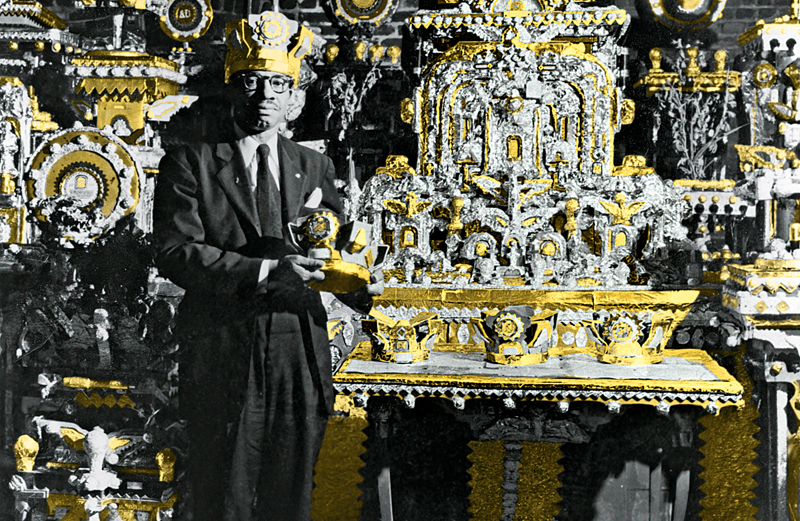
Myer Wertlieb walked around behind 1133 Seventh Street in Washington, D.C., lugging a pair of bolt cutters. He didn’t know much of what his tenant, James Hampton, was doing in the dilapidated garage—he wasn’t too concerned, as long as the 50 bucks rent was paid.

But payment had lapsed, so he cut the lock and slid back the heavy metal door. Sunlight poured into the dark interior. Flashes of silver and gold bounced so brightly off the walls that he was forced to squint. Biblical verses and prophecies were nailed to chipped brick and rotting beams.

NIVFLB Inarticle ad

The glittering structure in front of him appeared to be made of precious metals.

But when he drew closer, he saw that it was composed of recycled glass bottles, green blotters, old wooden furniture and lightbulbs, with crafted angels’ wings, seven-pointed stars and cherubs made from cardboard, nearly every surface overlaid with gold and silver foil.

It was all held together with tape, glue, tacks and pins. Orbs, crowns and altars flanked an intricately detailed throne with a crimson cushion. Above it all, the words Fear Not seemed to levitate. Myer recalled that James had once told him he’d rented the garage for his “life’s work.”

“I’m going to finish it before I die,” he’d said. Myer’s eyes fixed on a banner: Where There Is No Vision, the People Perish. He called out, but there was no sign of the strange work’s creator.

Sixty years later, I took the train to D.C. to see what James called The Throne of the Third Heaven of the Nations’ Millennium General Assembly, now preserved in the Smithsonian American Art Museum. I was disappointed to hear that only a small portion of The Throne was on display.

I was hoping to catch some of that same awe Myer Wertlieb had experienced, hoping for some insight into how a simple man, a lowly janitor, shrouded in mystery, constructed one of the most fascinating works of American art. Was he touched by God? Or was he just touched?

Little is known about James outside what is revealed in public records. He was born in the rural community of Elloree, South Carolina, on April 8, 1909.

His father was a black gospel singer and preacher whose call to the ministry was stronger than his dedication to his wife and four children. James’s mother was left to raise James and his siblings on her own. From a young age, James was devoted to reading the Bible and claimed he often spoke with God.

At 19, James headed to Washington, D.C., to live with his older brother Lee and his family. In 1931, James had his first vision. “This is true that the great Moses, the giver of the 10th Commandment, appeared in Washington D.C., April 11, 1931,” he wrote in a notebook.

In 1942, he was drafted into the 385th Army Aviation Squadron. His duties consisted of carpentry and air-strip maintenance. While serving in the jungles of Guam, James designed a tiny altar. After the war, he moved into a D.C. boardinghouse, bringing his creation with him.

A year later, he was hired by the General Services Administration as a night janitor. That’s when his second vision took place. “It is true that on October 2, 1946, the Great Virgin Mary and the Star of Bethlehem appeared over the nation’s capital,” James wrote.

Three years later, James had another vision. “This is true that Adam, the first man God created, appeared in person on Jan. 20, 1949, this was the day of President Truman’s inauguration,” he wrote.

By this time, God was doing more than speaking and bestowing visions—James believed the Lord was delivering specific instructions on how to construct the throne. He drew up blueprints and in 1950, contacted Myer Wertleib and signed a lease for the ill-lit, unheated garage.

Every midnight, he’d clock out of the GSA and shuffle down the dark streets of the city, collecting items from garbage piles and dumpsters.

For five to six hours, he’d work tirelessly in the garage—peeling foil from corner-store displays and cigarette boxes to wrap lightbulbs and cardboard in silver and gold. Items to the right of the throne were labeled with events from the New Testament. Events from the Old Testament marked the ones on the left.

James approached local churches about using his creation as a teaching tool. But nothing came of it. Two reporters who once came to see The Throne disdained James and his life’s work. Still, nothing stopped him.

James continued his labors—and recorded more revelations—until his death, from stomach cancer, in 1964. He was 55. And with him his fantastic creation might have died too, but for Myer Wertleib cutting open that garage door the following month, and realizing he’d stumbled upon something astonishing.

The Smithsonian examined James’s artwork and notebooks and determined The Throne to be a masterpiece of American folk art. Many of the labels attached to the altars refer to the Book of Revelation, chapters 20 and 21, which touch on the Second Coming, the Final Judgment and the New Earth.

In addition to The Throne, James left behind a written work called The Book of the 7 Dispensations by St. James and multiple binders recording his visions, written in an indecipherable code.

As I entered the west wing to view The Throne for myself, I approached a museum security guard, and asked if he knew of the exhibit.

He looked at me and said, “I wish I could bring you in to see it at midnight. When it’s quiet and still, there’s a peace I can’t describe. To nonbelievers, it may spook them. But to me, it’s the presence of the Lord.”

I sat on a bench in front of The Throne for a long time, in awe of its splendor. I thought about its creator’s faith. Where there is no vision, the people perish.

How close had James’s work come to perishing in that run-down garage? Soon I knew for certain that someone other than James Hampton intended for this to be seen.

Help decode some of James Hampton’s mysterious manuscripts!

Download your FREE ebook, Mysterious Ways: 9 Inspiring Stories that Show Evidence of God's Love and God's Grace.

James Gordon: A Relaxation Exercise

[UPBEAT MUSIC] – I like to begin with a– with basics. And what’s most basic in our lives is breathing. We take our first breath. And we say, oh, the baby’s here, it’s breathing. And then we expire. We die with our last breath. So the body is so and all of our life here on earth is absolutely intimately connected with breath. And since breath is always with us, I mean, you can’t not breathe. 

Try holding your breath. You do it for a minute or two. But after that, you gotta breathe. Breath is the most easily available tool that we have for changing the way we think and feel, for improving our biology, for sharpening our mind, for elevating our spirit. 

The Daily Bible Large Print relaunch with digital free gift in article ad

So I work with a very simple technique. It’s called– has a very esoteric name of soft belly. And it’s so beautifully simple. And what’s involved is sitting comfortably in a chair. Anyone who’s watching can do this as well. Sit comfortably in a chair. And allow your breathing to deepen. 

And perhaps, breathe in through your nose and out through your mouth, which may be a little unfamiliar to some people, but it turns out it’s just about the most relaxing way to breathe. And allow your belly to be soft. And if you feel comfortable, close your eyes because that shuts out external distractions. Let your belly be soft. 

If the belly is soft, more oxygen goes to the bottom of the lungs. You get better oxygen exchange. And oxygen is basic fuel for our brains. If the belly is soft, it activates the vagus nerve, which comes up from the abdomen through the chest, back to the brain. The vagus nerve is the primary nerve that counteracts the fight or flight and stress response. 

In our bodies, we have what’s called the autonomic nervous system. And there are two branches to it. There’s the sympathetic nervous system, which is fight or flight. So when we’re in trouble or we’re anxious, our blood pressure goes up. We breathe fast and shallowly, heart rate goes up, muscles get tense, blood flows away from our hands to the big muscles so we can fight or run away. 

And then balancing that, there’s the parasympathetic nervous system, which creates relaxation. And the vagus nerve is the central part of the parasympathetic nervous system. And by breathing deeply, by letting the belly be soft, you activate the vagus nerve. 

So breathing deeply, also if you relax your belly, if the belly is soft, all the other muscles in the body begin to relax as well. So breathe deeply. Perhaps say to yourself soft as you breathe in and belly as you breathe out. If thoughts come, let them come. Let them go. Gently bring your mind back to soft belly. If you do that for three to five minutes three to five times a day, you can make a shift in your whole life. 

[UPBEAT MUSIC] 

It’s Never Too Late: A Middle-Aged Marathon Runner’s Story

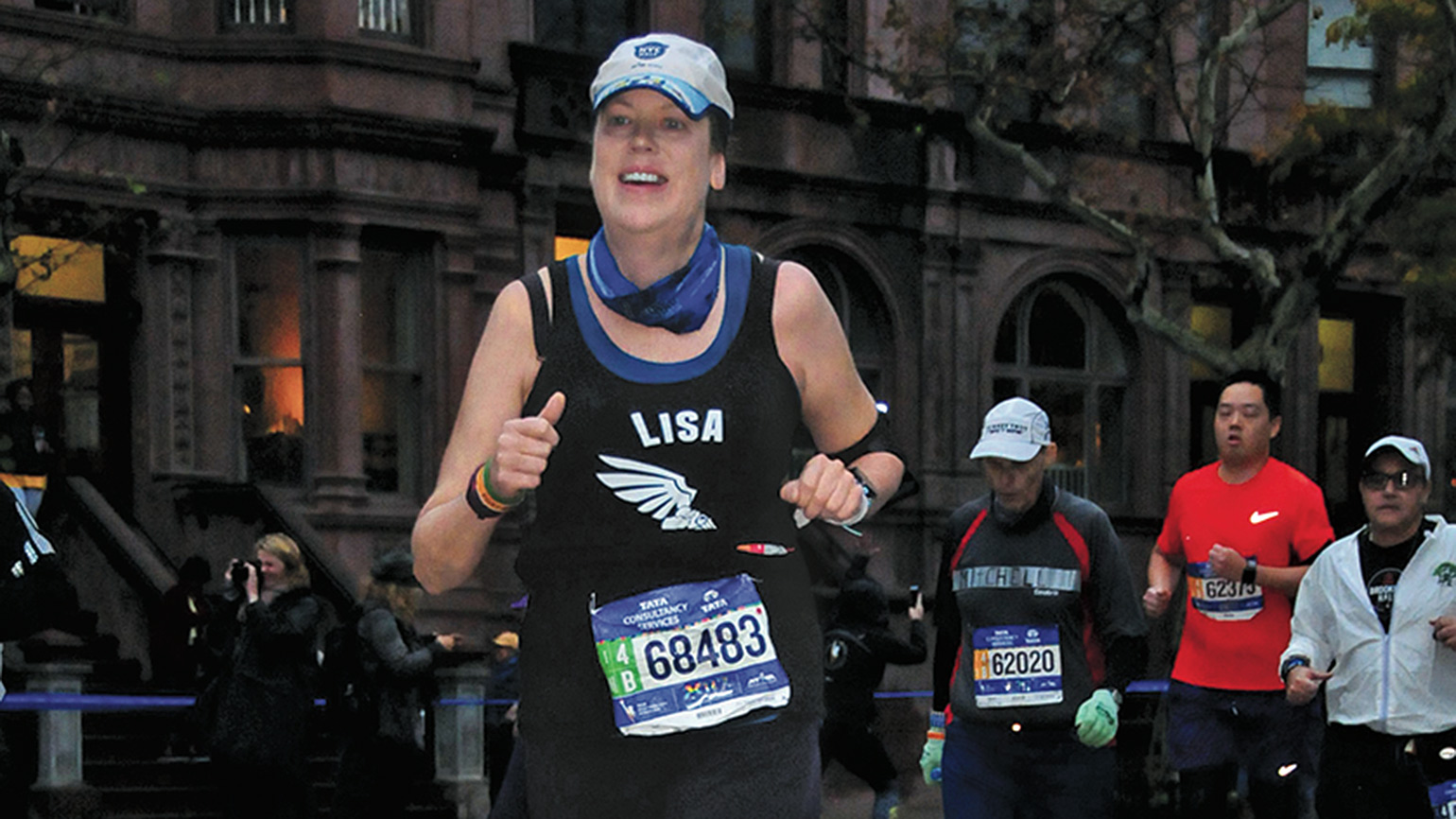
Hi, I’m Lisa Swan; I’m from Staten Island, New York. I was a lifelong couch potato; I couldn’t imagine myself ever running. But I wanted to live a healthier life. 

I started with walking, then somehow I started to run. And I couldn’t imagine, when I took those first steps, where it was going to take me. It ended up taking me to the finish line at the New York City Marathon.

Journey With Jesus in article ad

I started running around five years ago. I was the opposite of a natural athlete. I wanted to lose weight and it seemed like running was a good way to do it. 

That’s why I got started, and it was very hard at first–I was basically waddling more than running when I started–but I kept at it.

When I started training running, I was just trying to build up stamina, and just the idea of even going three miles, even walking, was a challenge, and I basically started just walking as much as I could and then sprinkling in a little bit of running and then as time went on, I kept on going more and more with the running. 

I met Mario through my running club, the Staten Island Athletic Club, and he’d been running for over 30 years so he had a lot of knowledge.

My coach, Mario, was very good about sending various Biblical quotes and devotionals to inspire me and encourage me and remind me what this was all about, and he would tell me things about how to have a purpose, you need to have a plan, and we worked on the plan together.

Running the New York City marathon for the first time was probably the greatest experience of my life. I was really prepared, more prepared than I thought I would be, thanks to Mario.

I learned a lot of great life lessons on preparation and really believing in yourself because if you don’t believe in yourself, no body else will. 

In a lot of ways, the race was almost like a party for me because I saw various friends along the way. When I crossed the finish line, it was just the greatest experience of my life. 

I remember just getting to the end and realizing, “Oh my gosh, I’m going to do this! I’m going to do this.!” I hear them say, “Welcome to the finish line,” and I thought, wow, I’m actually going to get through this! It was just really, really wonderful.

I felt like God had a plan for me, that this was something I could never have pictured. There’s a saying, God has bigger dreams for you than you have for yourself, and I really could never have imagined myself doing the New York City Marathon, and here I am and I finished it.

It’s All Right to Break Thanksgiving Traditions

Traditions can be wonderful at the holidays and it’s okay to break them—especially when you’re overwhelmed. Thanksgiving, of course, is the traditional time to bring family members or friends together over an elaborate meal. It’s marked by days of shopping and cooking (and then hours of cleaning up). When you’re up for it, nothing can be more meaningful or fun. When you’re emotionally and physically drained from life challenges such as caregiving, it can be daunting, to say the least. If the latter describes your present circumstances, why not do something completely—or partially—different that meets your needs?

Give yourself permission to forge new paths while holding to what Thanksgiving means to you. You may want to change up everything, or only one or two traditions. It comes down to finding ways to lighten your load and hold a simple, yet significant, festivity for you and your loved one, as well as for any others you hold dear and want to spend time with on this day. Here are a few ideas to help you celebrate Thanksgiving with fresh eyes:

Whistle Stop Cafe In Article Ad May 2023

Tell others what you need. Be clear about your present circumstances and the fact that you need to pare things down this year. This will help your family members and friends to understand what’s going on and can alleviate a lot of your pressure. Clear communication is an important way to avoid hurt feelings and it allows people who care about you to offer their assistance, if they’re so inclined.

Celebrate on another day. If Thursday doesn’t work for you, hold your Thanksgiving on Friday, Saturday, Sunday or the following week.

Ask for a hand. Whether you’re planning to mark Thanksgiving with just your loved one or with a small group, it’s not a sign of weakness to ask for help. If you’re having other family members or friends over, consider a potluck to take off some of the pressure. If you and your loved one are celebrating alone, you might want to hire someone to clean your house beforehand. It can be a great way to lift your spirits. Maybe someone in the family could drop off groceries. If you need some emotional bolstering, you may want to take part in a caregiver support group in the run-up to the holiday. An in-home care aide could be another boon by taking over your loved one’s care as you shop, spruce up the house, cook—or take a nap.

De-stress the shopping experience. Combing through all the exciting food selections at the grocery store can be a mood-booster when you have time and energy. But when you’re harried, it can simply exacerbate your stress. When another family member or an in-home care aide gives you a breather from caregiving, you can shop easier. Holding a more streamlined Thanksgiving will also make for a shorter shopping list. You can buy prepared dishes or the ingredients to prepare a few of your own favorites.

Streamline the menu. Think of a few dishes that are most special to you and your loved one on Thanksgiving. Maybe you’ll want only side dishes this year or dips and finger foods. You could try a couple of new nutritious dishes like a pasta with hearty fall ingredients or a bean or squash soup, which may be simpler for your loved one to eat.  A smaller dinner menu leaves more room for dessert.

Rest up. When you give yourself permission to simplify plans, the night before the holiday is likely to be far more relaxing. Rather than cooking and washing pots and pans all evening, you might simply want to decompress. You may even consider participating in an in-person or online support group before Thanksgiving. This can be an excellent way to get coping tips and share thoughts about things that may be coming at you too fast, including heavy emotions that tend to go hand-in-hand with the holidays. Expressing your feelings and listening to others in such a forum can help you to feel less alone.

Start the day with quiet time. Give yourself some space. Clear your mind with positive affirmations, meditation, prayer, inspirational reading—whatever bolsters you. Don’t beat yourself up. Reflect on the good things you have done. Thank yourself for the care you give your loved one each day. Focus on what you can do today and what is good about it rather than how it may not measure up to previous years. Think about any people who are actually supporting you.

Use a couple of special decorations. Without expending much effort, you can lift the mood with objects that remind you that this is a special day and hearken back to happier times. It may simply be a beautiful tablecloth or plates. Flowers, gourds, photos of those you love on the table—it doesn’t take a lot to lift the environment.

Cook together. If your loved one is up to it, cooking one or two easy recipes can be a nice way to bring you together. Experiment with a recipe you’ve never tried before, even if it’s something completely different like a chocolate truffle pie or cranberry cake. Or maybe you’ll want to stick to one or two family recipes. You can listen to music, chat and, if you feel like it, play the parade in the background.

Let others do the cooking. If you and your loved one want to include additional people in your plans, take the stress off by asking everyone to bring a favorite dish. A small potluck can be a lovely way to enjoy Thanksgiving dinner. Or opt for a restaurant, sit back and enjoy whatever you want to eat.

Give thanks to one another. Name one or two things that you and your loved one appreciate about the other. Be open about your positive feelings. This may be an eye-opening and uplifting new tradition. Raise a toast to one other, whether with wine, sparkling cider, water or even milk.

Savor the moment. Put your feet up and watch Thanksgiving-themed movies. Tell family stories. Write your thoughts and feelings in a gratitude journal or let loose with a sketchpad. Art can be a great release.

Crunch through fall leaves. Take in the vivid colors of the season with a walk around the block. It will refresh you and either stimulate your appetite or allow you to walk off your meal. If your loved one is unable to get around on foot, consider a fall foliage drive.

Have pie in bed the next morning. Pamper yourself the day after with a delicious treat. Reflect on the special day you just had with your loved one. It’s a way to reward yourself before swinging into the caregiving day ahead.

Is Social Media Bad for Spiritual Life?

The benefits of social media are obvious. We can stay updated with our friends and reconnect with old ones; Twitter and Facebook curate news and entertainment for us based on what we like. We’ve shared stories about how a force for good often works through the internet, reconnecting people with lost thingscalling good Samaritans into action, even saving lives. But is there a point when our helpful distraction becomes a harmful addiction?

A recent New York magazine story, “I Used to Be a Human Being,” by Andrew Sullivan gets to what may really be at stake when we overuse social media—our spiritual lives. “Observe yourself in line for coffee, or in a quick work break, or driving, or even just going to the bathroom,” Sullivan writes. “Visit an airport and see the sea of craned necks and dead eyes. We have gone from looking up and around to constantly looking down.”

Walking with Jesus L&E evergreen_in article ad

Read More: When Social Media Leads to Inspiring Connections

One of the first well-known Internet bloggers, Sullivan eventually realized that he was plugged in so often that his virtual life had replaced his real one, and he could no longer be alone with his thoughts, prayers, or observations of the world. “Although I spent hours each day, alone and silent, attached to a laptop, it felt as if I were in a constant cacophonous crowd of words and images, sounds and ideas, emotions and tirades — a wind tunnel of deafening, deadening noise,” he writes.

I suffer from this affliction myself sometimes: scrolling through social media like a zombie, doing nothing productive, feeling like I’m avoiding something important. This feeling increased since I’ve begun meditating, so much so that sometimes I feel guilty for being on my phone. I’m more aware that with every app I open, I’m missing out on the present moment. Which is ironic, because for most of us, FOMO (fear of missing out) is why we began feverishly checking our newsfeeds and Instagram friends in the first place.

Read More: How a Facebook Post Saved a Girl’s Eyesight

Overloading our minds with social media has implications for spiritual life because it’s in silence and solitude—and perhaps most importantly, our present-moment experience—that spiritual life happens. Maybe I’m meant to have a revelation while I’m bored and waiting for the train, or meant to learn something from a friend face-to-face instead of through Facebook comments. If I block out the real world for the virtual one, I may miss out on what God can tell me.

I recently blogged about my silent experience at the Abbey of Gethsemani. There’s no doubt in my mind that had I been checking my phone, it wouldn’t have been so meaningful. Sullivan had a similar insight at his own religious retreat. “The reason we live in a culture increasingly without faith is not because science has somehow disproved the unprovable, but because the white noise of secularism has removed the very stillness in which it might endure or be reborn,” Sullivan writes.

Of course, the internet and technology aren’t inherently bad, but in my own experience, and in Sullivan’s, we need to question whether we use it as distracting noise or a more efficient way to reach out to others. As for me, I’m far from giving up my smart phone, but I’ve started to designate times when I’m completely off the grid—and these are some of my finest moments.

How do you think the internet and social media affect your spiritual life? Share your story here.

Is It Possible to Be Too Empathetic?

Empathy—the ability to see things from another’s perspective and actually imagine and feel what others might be going through. What could be wrong with that?

While empathy is an unquestionable part of walking a positive path through life, enabling us to be kind to others and foster lasting relationships, professor of humanities Fritz Breithaupt says empathy also has “a dark side.” 

Go For It In Article Ad

“Empathy is a riddle,” Breithaupt recently told NPR. While it can help us cultivate positive and kind habits, it can also motivate dysfunctional relationship patterns and self-serving behaviors.

On the positive side, Breithaupt describes the benefits of healthy empathy. He says, “Beings with empathy understand that there are all these different minds around [that] have different experiences and different feelings. They can participate in them. Someone with empathy lives more than one life. Of course, sometimes that means that you have to carry the suffering of others, but in many cases their joy becomes your joy. So it’s a richer, much more complex life.”

But he also refers to a more toxic form of empathy called “vampiristic empathy,” in which in the process of feeling on behalf of others, an empathetic person actually steers the relationship in a self-serving direction, in which an empathetic person feels more proud of their own heroics than compassionate for the experiences of others.

“Humans are very quick to take sides,” Breithaupt said. “And when you take one side, you take the perspective of that side. You can see the painful parts of that perspective and empathize with them, and that empathy can fuel seeing the other side as darker and darker or more dubious.”

This shouldn’t lead us to abandon the pursuit of healthy empathy. Instead, understanding the full complexity of the emotion can help us to check in with ourselves to make sure our efforts are truly compassionate and directed at the people in our lives who we are deserving of our empathy. 

As Breithaupt puts it, “We can learn to use empathy in a somewhat controlled way. We can learn when to block it, when to not allow empathy to be manipulated and when to fully turn it on.”

I See God When I Go Running

Most mornings, I start the day in motion. I wake up early, force myself out of bed, pull on running shoes and hit the road. I live in the middle of Manhattan in New York City, so my running options are limited. Sometimes I run a six-mile loop road in Central Park. Other times I try to be more creative, weaving through the park’s many crisscrossing paths. If it’s light enough, I run on the park’s dirt bridle trail, where every now and then I’ll see someone riding a horse.

I have prayed countless times in countless places over the years, but my morning runs are where I encounter God most reliably. There’s always a moment when it happens. Maybe it’s when the sun crests the horizon and suddenly Manhattan’s east side blazes orange and the apartment buildings encircling the park light up like lanterns. Maybe it’s when a gentle rain falls and the skyscrapers of midtown are wrapped in clouds. I’ve run through snow, sleet, hail and pounding thunderstorms. Once, the temperature dropped below zero and I was stopped by a local news crew who came to Central Park to interview people crazy enough to go jogging on the coldest day of the year.

GP In Article Desktop

There is something about being outside in the early morning in all kinds of weather that feels uniquely exposed to the mysterious forces of God. I feel God’s presence in the beauty. In the quiet. In the friendly nods of other runners on the road. Even in the air itself. I hate summer humidity but I know it’s part of creation, so I (try to) give thanks for it anyway on muggy mornings. Before the sun comes up, runners and dog walkers pretty much have the park to themselves. There are no tourists. No kids from nearby schools using the fields for recess. No musicians or bike cabs or horse-drawn carriages. The city feels subdued, as if, for this brief time, God has turned his attention to this hustling metropolis and said, “Be still.”

Many days when I first wake up, the last thing I want to do is haul myself out of bed and exercise. It’s always worth it. Even the repetitiveness of my running routes becomes a source of prayer. Tiny variations loom large. I spot the first crocuses and bluebells that announce the coming of spring. See the first cherry trees blossom. Hear the first cries of migrating geese. Get excited over the first sign of fall (my favorite season). Run through the year’s first snowfall.

I don’t listen to music when I run. I like to hear the world wake up. I imagine God gently stirring everything back to life. There is nothing to do but look around and take it all in. My mind wanders but it always comes back to this central fact: God is present and at work in the everyday moments around me. Soon, I’ll be back home, swept into the work day, my mind stressed and distracted. Here, for a precious hour, I am fully alive and fully aware. In motion under the watchful care of God.

Is Caring for a Family Member Good Experience for Professional Caregiving?

If you’ve been the primary family caregiver for a loved one with dementia, you know that it takes a special type of person to do the job well. If your loved one has passed away, it’s possible that you’ve had a desire to apply your caring nature and experience to exploring work as an in-home caregiver. Since this is foreign territory to you, it can help to know a bit about what it takes to be successful at this potentially very rewarding job, and to understand the differences between caring for a loved one at home and caring for someone professionally.

“When we care for our parent or another family member, we have different ways of being because of the whole family history, so it’s one of the things that people have to become aware of—this is not your parent,” Donna Schempp, LCSW, of the Family Caregiver Alliance told Guideposts.org. “As a professional caregiver, you have to establish a relationship, whereas with your parent, you have a relationship already there. Sometimes we think we can just walk right in and do what we did before.”

Sugarcreek Amish Mysteries In-Article Ad 2023

The most important thing at the outset is to get training in dementia care, Schempp said. This goes for anyone who is considering working as an in-home caregiver, regardless of the level of care the person would be providing. In-home caregivers are responsible for a wide spectrum of services, from being a companion and handling household tasks to providing skilled health care. Agencies generally require and/or offer training. But Schempp said it’s equally important for private caregivers, and even for family caregivers, to get training. “The biggest mistake that people make is they think that they can make it up as they go along and they’ll be successful and it’s not true,” she said.

Schempp suggested checking with your local chapter of the Alzheimer’s Association for information on training and workshops, as well as with a community college in your area. Through classes, you will learn crucial things like transfer skills—how to use your body properly so that you don’t hurt yourself—as well as what issues require medical care or other outside attention, and how to communicate effectively. If you can’t take a class, she said, you can also learn a lot by reading articles on the dementia care.

Dementia care is counterintuitive, Schempp said. “What we tend to do when someone doesn’t want to do something is make our case and explain why it’s important to get dressed right now, or to take a shower, and that doesn’t work with people with dementia. You have to learn how to communicate, how not to just harass or bully somebody.” Good interpersonal skills, an air of levity, the ability to “jolly someone” and a generally positive attitude are important for any dementia caregiver, she said.  

Many classes also teach caregivers, prospective or otherwise, how to entertain through reminiscence via photo albums and stories, and about the soothing balm of music, Schempp said. “Sometimes if you can sing to somebody what you want them to do, they’ll be more responsive than if you just tell them. And if you’re singing, you’re going to help your mood too.”

Certain personal qualities are, needless to say, a major component of successful caregiving. Through your experience as a family caregiver, you are no doubt familiar with the all-important role that patience plays in successful interactions. “Patience is probably the hardest—the one quality that’s going to get frayed,” Schempp said. Proper rest, relief and support are crucial to maintaining patience as a caregiver, she said. It also helps to be “self-contained,” she said. “You have to be able to maintain your equanimity or your ability to feel okay without getting it necessarily from the person you’re caring for.”

In addition, the caregiver needs to be a good advocate for the person with dementia. “If you take someone to the doctor, they’re not accurate reporters,” Schempp said. “The doctor’s going to say things like, ‘How are you?’ and they’re going to say, ‘I’m fine’. They’re not going to generally tell you what’s going on, and so the person who’s a caregiver has to tell other professionals kind of what is happening at home and what is different than it used to be.”  This means developing a relationship with the person you’re caring for, and paying close attention to behavior and moods. “If you’ve been doing this for your family, things just flow in a certain way and you take all kinds of stuff for granted. But you go to work for somebody else and the same assumptions aren’t there,” Schempp said. “If you have to run errands, for example, can you leave the person for a half an hour or do you have to take them with you everywhere you go? There are just so many little pieces that have to be figured out that no one thinks about until they come up.”

Challenging as it may be, working as a caregiver offers the opportunity to form a close bond with an individual who can benefit greatly from your help, potentially over a period of several years. At the moment, with social distancing measures in place, this can be even more valuable and rewarding. For the right person, Schempp said, “it’s a great job!”

The Alzheimer’s Association has released tips for Dementia Caregivers to deal with Covid-19, both at home and in long-term and community-based settings.

For more information on caregiving, go to the Family Caregiver Alliance website.

Is A.A. for Alcoholics Only?

The opera stage is crowded with outsized characters, and in my long career as a leading soprano I’ve played most of them. Wagner’s Brünnhilde, Strauss’s Salome, Puccini’s Tosca. I’ve sung these and countless other roles around the world, sharing the stage with the likes of Luciano Pavarotti and Plácido Domingo. But there was one role I never came close to mastering—though I played her every day. That role was myself.

Onstage, gathering audiences into the soaring sweep of my voice, I was beloved as one of the opera world’s most passionate, most versatile singers. Offstage, my life was a wreck. I was an alcoholic. A binge eater. Cycling through relationships with abusive men. From childhood I’d felt called by God to sing.

Witnessing Heaven In Article Ad 827x123

But you would never know that, watching me in my hotel room after a performance, drinking until I passed out, waking up covered in bruises, scrolling through the text messages on my phone to try and figure out what I’d done. I lived by my voice. But it took years, decades, my whole life, really, before I finally accepted that only one Voice could save me from myself.

I’m serious when I say I felt called by God to sing. It happened when I was 14 years old. I was lying in bed early one morning, watching sunlight filter through a gap in my curtains. Suddenly a voice—at once loud and soft, warm and fierce, real and otherworldly—spoke to me with utter clarity. You are here to sing.

That was all. Yet I knew those words came from God, and were meant for me, because I’d been singing, and loving to sing, for almost as long as I could talk. As a toddler I begged my grandmother to put on her vinyl record album of My Fair Lady. I learned all the songs by heart and belted them out in Grandma’s living room, outfitted in her apron and one of her pillbox hats.

I sang at church, at school, in Christmas pageants, wherever I could. I knew there was something special about my voice. I could tell by people’s faces when I sang. Their eyes widened. They smiled, leaned forward. Oh, how I lived for those moments of connection! At one with an audience, I felt at one with myself.

But such moments were fewer than I wanted because my parents, strict Southern Baptists, made it clear that singing for any other reason than to please God was prideful and wrong.

“Who do you think you are?” my dad asked once when he caught me playing the piano and singing show tunes in the living room. He loomed up beside me, his face a mix of awe and fear, as if my voice were a powerful, uncontrollable force. I shut my mouth and slunk away.

There was a reason my parents were so strict, why Dad sometimes spanked me for no reason or washed my mouth out with soap, making sure the washcloth got all the way back to my molars. Theirs was a shotgun wedding.

Mom was just a teenager when I was born. And by the time I was three, I could tell Mom and Dad fought a lot, more than most couples—sometimes over other women at our church. My parents were young and didn’t know how to raise kids. Mom was a curvaceous woman, and Dad, I guess wanting to spare his daughter a lifetime of weight struggles, monitored everything I ate. That backfired. I became obsessed with food, using it to calm my fears that Dad would up and leave us, or that he’d suddenly get mad and spank me.

By the time I heard God so distinctly affirm my teenage singing aspirations, my own feelings about singing—about my life, really—were a tangle. I got praised for singing at church, but punished for it at home. My body produced the voice I lived for. But I was ashamed of my body, which already was bigger than other girls’, and only growing bigger as I binged on food to soothe my anxieties. I feared God didn’t approve of how I used his gift. I stopped listening for more affirmation. I figured I didn’t deserve it.

You’d be amazed how far an artist can go without an ounce of self-esteem. I won major singing competitions in college. Soon I was working as an understudy at famous opera houses, then drawing rave reviews for my own starring roles. I toured the world, singing at Covent Garden in London, La Scala in Milan, the Metropolitan Opera in New York. “One of the most important American singers to come along in years,” The New York Times called me.

If only they knew what my real life was like! I married a man I met in high school. He didn’t love me and cheated on me. After we divorced I took up with a marijuana grower—yes, seriously—who turned me on to hard drinking. He had a terrible temper and once kicked me in the head during an argument.

My weight soared to nearly 300 pounds, so heavy even the critics who loved my voice took notice, and I was passed over for roles because I couldn’t fit costumes and directors said I couldn’t portray romantic heroines. (Which deeply bothers me, this idea that only skinny women deserve love lives—but that’s a different story.)

I tried fad diets and weight-loss drugs, even had a balloon inflated in my stomach. At last I found relief from food cravings through gastric bypass surgery. But even as the pounds started falling off and I could actually buy outfits in regular sizes, my addictions blossomed.

All those feelings of fear and shame I’d carried since childhood—they didn’t go away just because I was thinner or famous. Actually, being famous made them worse. I felt like a fraud. Like a beautiful voice hiding an ugly mess. Even my family was a mess. Mom and Dad had divorced and gotten remarried to other people. They hardly spoke to each other.

Finally, the mess got too ugly even for my voice to hide. I had taken up with yet another damaging man—a member of the Metropolitan Opera chorus who already had a girlfriend when we started dating. No surprise, he refused to commit, and every time he retreated I went on a bender. I was frightened of myself—but not too frightened to drink more.

During a singing trip to China in 2013, I sat in my hotel room drinking all day and passing out by evening, surrounded by empty bottles. I woke up one night in a Chinese hospital room with an IV drip in my arm. “Put her on suicide watch,” a doctor said.

A few weeks later I checked into a rehab center in Miami. I didn’t have high hopes. I’d gone to Alcoholics Anonymous before and never stuck with it. Why would this time be different? The rehab felt like a prison. I didn’t get along with my roommate, Betty, who—like most addicts, I’ve come to learn, including me—was very self-centered.

She always grabbed the same spot on the couch for group therapy sessions, no matter who else wanted to sit there. One day we inmates (what I called the patients) were asked to do a trust exercise: lead one another around the center blindfolded. I got partnered with Betty. She put a blindfold on me and began guiding me through the halls. “I’m right here, Debbie. Follow me. Follow my voice.”

The exercise ended in a courtyard. I took the blindfold off and turned to Betty. Somehow, following her like that had softened my feelings toward her. But she’d already raced off to claim her favorite spot on the couch. For a moment I stood there feeling abandoned. Story of my life, I thought.

But almost as soon as those words entered my mind they vanished. My attention was yanked back to what Betty had said as she led me through the halls: “Follow me. I’m right here, Debbie. Follow my voice.”

My voice. Long ago, I had heard a voice in my childhood bedroom. The voice had told me to sing. And I had spent my life singing. But had I truly followed that voice?

If I had, I wouldn’t have ended up on suicide watch. I wouldn’t be in rehab wondering if it was possible for me to stay sober. I wouldn’t have binged on food and alcohol and men all my life in a frantic effort to numb my gnawing fears. I wouldn’t have felt those fears in the first place because I would have known that, no matter what happened in my childhood, no matter what size I wore, I was loved by God. God loved my voice and wanted me to use it for his glory.

But I had been using my voice to drown out the one Voice that could save me. I looked around the courtyard. Everyone was going in for group therapy and I was there alone, in the stillness and soft tropical air. I breathed in—that breath, so necessary for singing. Only now, I felt God there, deep inside my body, where my voice originated.

You are here to sing.Yes, and it was God who gave me singing, and blessed it, and said it was good. I went inside to group therapy. For the first time I had reason to hope that this time my efforts to stay sober would turn out differently.

And so far they have, although, as we say in AA, it’s one day at a time. My days are happier and more peaceful than they’ve ever been. I still sing leading opera roles, but I’m branching out too, into other kinds of music. And I’ve begun mentoring up-and-coming singers.

“You have to take care of yourself,” I tell my protégés. “Don’t let the work consume you. Your voice is a gift. Use it wisely.”

I wish someone had told me that when I was young. Actually, Someone did. What it took me years to learn was how to listen. I’m right here. Follow me.Those words are the sweetest aria I will ever hear.

This story appeared in the February 2015 issue of Guideposts magazine.