Embrace God's truth with our new book, The Lies that Bind

How Gardening Can Help You Live Longer

“Life begins the day you start a garden,” says a Chinese proverb. Research on five global “blue zones”—places where residents are known for their longevity—suggests that those lives that begin in the garden will last there for a long, high-quality time.

In Okinawa, Japan, a “blue zone” that boasts the world’s highest ratio of centenarians (someone who has lived at least 100 years), the social connectedness that comes with sharing flowers and produce grown in small home gardens benefits happiness and overall health. On an emotional level, tending a garden also contributes to well-being.

Pause & Pray In Article Ad

Dr. Bradley Willcox of the University of Hawaii, who studies Japanese centenarians, recently told the BBC, “In Okinawa, they say that anybody who grows old healthfully needs an ikigai, or reason for living. Gardening gives you that something to get up for every day.”

The connection between gardening and longevity goes on and on. People who grow more fruits and vegetables themselves, for example, are more likely to have diets containing more plants than animals or processed foods. 

Then there’s the fact that simply spending time in nature can carry health benefits—according to Scottish doctors who are literally prescribing regular outdoor time to encourage wellness. 

But really. Do you need more research findings to convince you that tending a small patch of the planet—cultivating its most positive potential, thinking about its future, nourishing yourself from its bounty—can help you live a longer and more meaningful life? 

I don’t need such convincing. I know gardeners to be creative, patient, flexible and curious—qualities that define the positive path I try to walk each day. The idea that continuing my garden habit could contribute to a longer life is inspiring, but not as profoundly so as the simple joy that I feel each time I clear a patch of weeds, pluck a ripe tomato from the vine or sit in the quiet presence of my flowering containers. 

That pleasure is an end in itself. That research continues to confirm its validity is encouraging. But the seeds of a lifetime of gardening have already been planted in me.

How about you?

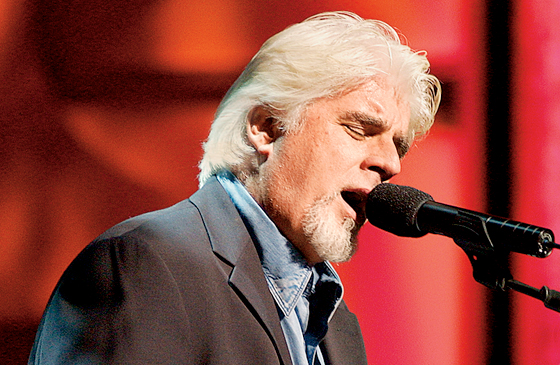
How Faith Helped Michael McDonald Let Go of the Past

I have this recurring dream. I’m driving a car on a racecourse with no one else around. There’s a turn up ahead. I try to steer, but I bang into a wall. Then another. Desperately, I try to get control. But it’s no use. No matter how hard I try, I keep careening off the walls, losing control.

It’s taken me a long time to understand that dream. But a young boy I met 25 years ago started me on the right track.

Witnessing Heaven In Article Ad 827x123

In 1980 things couldn’t have been better for my band, the Doobie Brothers. Our album Minute by Minute had sold three million copies and we’d won four Grammys for the song “What a Fool Believes.” I should have been on top of the world. Truth was, I’d never been so unhappy.

We’d just finished our annual benefit concert at the children’s hospital in Palo Alto, California, and had gone upstairs to visit a 14-year-old boy with cystic fibrosis who wasn’t expected to live much longer.

The moment we walked into the boy’s room, his face lit up. His parents stood near the window. The boy had to lie face down because that was the only position in which he could still breathe, but he never stopped smiling and joking as we signed autographs and played a couple of numbers.

How can he look so happy when he’s so sick? I thought. He’s so young. 

Fourteen. That’s how old I was when I wrote my first song with my dad, called “My Heart Just Won’t Let You Go.” Dad drove streetcars and buses in St. Louis for a living, but his true love was singing.

Sometimes I’d ride with him on the morning local and listen to his Irish tenor soar above the sounds of the street. He and Mom were divorced. Mom worked long hours managing the local S&H Green Stamp store. So it was my grandmother who mainly raised me and my two sisters.

All of us sang. I played banjo and fiddled around on the piano some too. Grandma bought me my first guitar from Sears, Roebuck, and Co.—a Silvertone classic with an amp in the case.

Pretty soon I was in a band with some guys I knew. They were a little older than I was and had grown up singing gospel in church. I loved the passion in gospel songs. The music came from a place deep down.

I didn’t study music formally, but I still had my teachers: Ray Charles, Stevie Wonder, Marvin Gaye. I played their records over and over, learning every note, every inflection, every feeling by heart. 

After that first song with my dad, I wrote more on my own, mostly ballads. Love songs came naturally to me—maybe because I was born just two days before Valentine’s Day. Who knows? Our band would land some little gig—a church dance maybe or a community center—and I’d be thrilled.

My voice was lower than Dad’s, a husky baritone instead of his lilting tenor. I learned pretty fast that trying to direct it got me nowhere. Every show I struggled to surrender to it and let it carry me. 

I moved to Los Angeles when I was 18. I got a lot of backup work, but for years I wasn’t really getting anywhere. Then I got a break to play with Steely Dan. That led to joining the Doobies in 1975. The lead singer got sick and I stepped in.

I took Dad to my first concert. We pulled up to a stadium and walked in to see thousands of fans. Dad grinned. “This is all right, Son. I think you’re doing all right.” 

It didn’t really hit me until the night we won all those Grammys. A driver had been sent for me. “Could you drive up Highway 1 for a while?” I asked him. I was too wired to go home. So much had happened so fast. I’d made it. A poor kid from St. Louis with a big voice and a lot of luck.

I knew my family was proud of me. But skimming through the darkness that night, the white crests of the waves in the distance, the crisp salty air blowing back my hair, I felt lost. Do I really deserve all this? I thought. I should be enjoying this. But why does it all feel so empty? 

These thoughts still haunted me months later as I stood at the bedside of a boy who would never get the chance to go on a roadtrip with his pals, take his girlfriend to prom, start his own life. Yet he was making the most of this moment, taking life on life’s terms. He filled the room with love.

I was twice his age but between all the touring and interviews, I didn’t feel as if I had much of a life. And I’d picked up some bad habits from the rock ’n’ roll lifestyle, habits I couldn’t break. I didn’t know who I was anymore. What had happened to that boy from St. Louis?

I was certain—as sure as if I were the one who was dying—that I had to make some changes. 

I was known for singing love songs. What about the love in my own life? I’d been kind of dating someone—Amy, a singer whose voice I loved—but I didn’t have much time for a personal life.

I started to make more time though. I’d leave the recording studio in Hollywood at 1:00 a.m., pick up Amy and hop onto Highway 5. We’d drive into Death Valley, make camp on the desert floor and talk for hours under the stars.

One night I was going on and on about my first solo record—how I wanted everything to be perfect. Amy reached out to touch my cheek. “Look up at the stars, Mike,” she said. “They’re perfect and they’re here right now. Don’t miss them.” 

Amy was changing her lifestyle. I wanted to also. I’d had some close calls with drugs and alcohol. I didn’t want to end up a rock ’n’ roll cliché—dying on silk sheets in some hotel room. I didn’t want to lose Amy. But the harder I tried to break my addictions, the stronger they became.

I’d wake up from my dream. Sweating. Heart pounding. I’m not in control. I can’t do this alone. I need help. And so I began to ask for it. From family and friends. From counselors. From Amy. And from God. 

Giving up drugs and alcohol meant making room for new things in my life. Amy and I tied the knot in a big church wedding in 1983. We settled in a house just around the corner from that church and had a son and daughter.

I’d listen for the church bells every day. They reminded me of the new path my life was on. I wanted to get back to the music of my roots and be closer to my extended family.

So in 1995 we went south—to Nashville. We bought a hundred-acre farm with cows and horses and pigs—Old McDonald’s Farm the kids called it. I worked on my solo career and Amy worked on the house.

And then life took a sharp turn. Amy was diagnosed with breast cancer. There was lymph node involvement. Her prognosis wasn’t good. 

One afternoon during a chemo session, I sat holding Amy’s hand, hoping the side effects wouldn’t be too bad this time. Suddenly she turned to me. Our eyes met and she gave me this sad little smile, as if to say, “I’m sorry you have to go through this.” Me? I thought. Why is she worried about me?

Suddenly my thoughts flashed back to that young boy at the children’s hospital almost 20 years earlier. I’d written love songs all my life but only now was I beginning to truly understand love. I squeezed Amy’s hand.

Her long blond hair was gone, her green eyes dull above her sunken cheeks. But she had never looked more beautiful to me than at that moment. On the drive home, Amy stared out the window a long time. Finally she turned to me. “I don’t know what I’m facing here. I mean—” 

“You’re not going anywhere,” I stopped her. “You’re going to be here a long time. Everything will be okay.” To stop believing that would be to give up hope. 

Amy was exhausted but wouldn’t hear of missing our daughter’s Christmas pageant. Sitting in the auditorium with my arm around her, I could feel her shoulders trembling as we watched our daughter glide across the stage in her angel wings. I turned to my wife. Her eyes were wet with tears.

She’s wondering if she’ll be here next year, I realized. If our kids will have to grow up without their mother. 

I thought of meeting Amy so many years earlier. Without her, I may never have found myself. I’d let go of my old life. Now I had to let go of the future too because I couldn’t control it.

God, you gave me my voice, brought me success, brought Amy into my life when I needed her most. Help her now. Allow us to stay together as a family. 

Our daughter took a bow, her wings brushing the stage. Amy clapped with all her strength. In that moment I felt an incredible strength too, of hope and love and all the blessings we receive, deserved and undeserved.

Eight Christmases have come and gone since then. Eight New Year’s. And soon, eight birthdays (I’ll be 54 this year). And I’m thankful to say Amy is cancer-free. She’s working on a new album and our 22-year marriage is stronger than ever. 

You know, I still have that old dream sometimes. It happens when I try too hard to shape the future instead of taking things one day at a time. We have to let go in life. Allow a Higher Power to take the wheel and trust we’ll be taken care of no matter what. That’s how I try to live, minute by minute.

Read more about Amy's struggle with cancer.

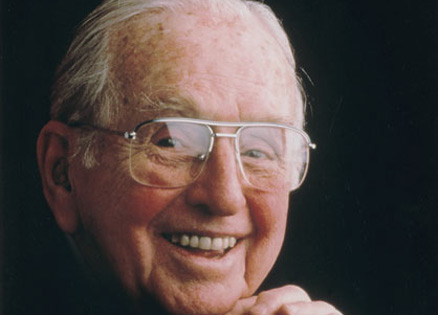
How Dr. Norman Vincent Peale Interprets the 12 Steps

Many years ago I met a remarkable man known to millions all over the world as Bill W. His full name was William Griffith Wilson, but most of the time he preferred not to use it because self-effacement was so important in the organization he and a friend known as Dr. Bob had founded: Alcoholics Anonymous.

Bill W. was a tall, courtly man. To look at him, back in the days when I knew him, you never would have thought that he had been a hopeless drunk. When I asked him once how the miracle of his recovery had happened, he gave me an answer so vivid and so simple that I never forgot it. “I had reached the end of the line,” he said. “I was powerless to save myself from an evil force that was stronger than I was. One night I went up on a windy hill and looked at the stars and cried out to God. I bagged Him to let the great healing wind of His Spirit blow through me and make me clean once more. And He heard my cry. I never touched alcohol again.”

Rejoice in All Things in article ad

Bill was an eloquent speaker. He was also a modest man. Once, I remember, we were talking about heaven. Doubtless remembering his dismal days as a drunk, Bill said that he probably would never get there. “Yes, you will,” I assured him, “because you have lifted more people out of hell than any person I know.”

I thought of Bill the other day when his gracious wife, Lois, died after long and faithful service in such groups as Al-Anon and Alateen. When I heard that Lois had left us to be with Bill, something impelled me to go to the bookcase and take down a volume containing the Twelve Steps that have given so many hopeless people victory over alcohol I reread them, sensing the the tremendous spiritual power that is packed into them, and I realized that for years I had been making a mistake that I’m sure is very common—the mistake of assuming that the steps are for alcoholics only.  Now quite suddenly I saw that the power contained in them could be tapped by anyone wrestling with a power stronger than self.

Alcoholism is a deadly evil, certainly. But what about the millions of people in bondage to some other form of compulsion? Gamblers who cannot stop gambling? Unfaithful marriage partners who can’t stop being unfaithful? People consumed by hatreds or grudges they can’t relinquish? Shoplifters or habitual thieves? Compulsive liars? Tax evaders? The list is almost endless.

But the wonderful truth is this: God becomes directly and actively concerted with us humans when we want Him enough. The Twelve Steps are a channel through which we can direct our appeal to the one Power that can lift the burden from us no matter what that burden is.

You will find the Twelve Steps here. Let’s glance at each of them and try to pinpoint some of the key words or key ideas that are just lying there, waiting to be picked up and used by any of us, alcoholics or not.

Take the very first phrase: We admitted we were powerless. Look at your own life carefully; what are you powerless over? As a young man I was powerless over a terrible inferiority complex that held me in its grip and made my life miserable. One day, in despair, I sat down on the steps of Gray Chapel at Ohio Wesleyan, told the Lord that I was helpless and asked Him to remove this burden… which in His great kindness He did. But it was the admission of helplessness that let the power come through.

Or take the second step: Came to believe that a Power greater than ourselves could restore us. The self-surrender is terribly difficult; it may take years. But once again, the important thing is to decide to do it. As the Chinese philosopher Lao Tzu wrote many centuries before Christ, “A journey of a thousand miles must begin with a single step.”

The fourth, fifth, sixth and seventh steps involve deep and honest self-examination, admission of wrongdoing, and willingness to have God remove our faults and character defects. That willingness is absolutely essential; there’s no use asking God to move some weakness from our lives when deep down we really don’t want the change to take place.

And the requirement to admit our faults to a third person (why not your minister?) is also of great importance. Once that is done, the guilty secret is out in the open where it can be dealt with, not locked in some dark area of your heart or mind. This is not easy; none of the Twelve Steps is easy. You just have to remember that you are climbing a ladder to a better life, a better self, a closer relationship to God—and that the rewards infinitely outweigh the difficulty or the pain.

Steps eight and nine involve making amends to persons you may have wronged or injured. Not just some of them. All of them. This too takes great courage and determination, but when it is done, invisible chains fall away. The universe is an ethical place of great balance and harmony. If you have wronged someone, that harmony in you is damaged; you are out of balance with the universe and the Creator of that universe. When these imbalances are removed, a great surge of joy and wellbeing will sweep through you.

The last three steps are really a reiteration of the first nine, with the added injunction to share what you have learned spiritually with others. I remember a good definition of a Christian that I heard or read somewhere: A Christian is a person whose life makes it easier for others to believe in God. I’m convinced that anyone who studies and masters and applies the Twelve Steps will become such a person, whether he or she is an alcoholic or not.

What the Twelve Steps do, really, is bring a person closer to God, and as I have said so often, when that happens, anything can happen. Sometimes you don’t even have to approach God in a reverent or positive way. I remember one rainy night in New York when I was working in my office at Marble Collegiate Church on Fifth Avenue and 29th Street. My secretary, Mary Creighton, tapped on my door and said that a man from Brooklyn wished to see me. “He seems to have some kind of problem,” Mary said.

The problem the man had was a drinking problem, and he wanted me to help him with it “I’ve tried all the others,” he said angrily. “All they give me is a lot of talk about God. I’m sick and tired of hearing about God. I want a human solution and I want you to give it to me!” I could tell from his breath and general demeanor that he had brought some of his problem with him. “How can I handle it?” he kept saying. “How can I handle it?”

“Friend,” I said, “I think you may have come to the wrong place. God is in charge here. All I do is try to put people into contact with Him.”

“You too!” he cried. ‘’You too! I told you, I’m sick of all this God stuff!” And he stormed out of the office, muttering under his breath, somewhat to the alarm of my gentle secretary.

But 20 minutes later Mary tapped on my door again. The man was back. He wanted to see me again. “He’s changed, Mary said. “He seems different, somehow.”

The man indeed was different. He had a stunned look on his face. “I think I’m going crazy,” he said. “I think I must be nuts!”

He told me that he had left the church and walked along 29th Street, ranting and crying out, “God! God! I’m sick of this God stuff!” He said that as he walked along, denouncing the very idea of God, suddenly an unearthly radiance lit up the dark street. Buildings glowed with it. The faces of passersby shone with it. Even the sidewalks seemed bathed in it, and he himself was full of light The experience left him stunned, overwhelmed.

“What happened to me?” he kept saying. “Am I going crazy? What happened to me?”

“My friend,” I said, “you’ve just had a religious experience. I might well call it a mystical experience. The God you have been denying reached out and touched you, and you should start thanking Him right now, because it wouldn’t surprise me if your drinking problem is solved and your drinking days are over.”

And this was indeed the case, because he kept in touch with me for a long time and told me that he never touched alcohol again.

So if you have a problem that you cannot master, be it alcohol or anything else, I heartily urge you to study the Twelve Steps. Apply them to your own difficulty, remembering that, in a very deep sense, each step is a prayer. Countless people have found that when they do this humbly and sincerely, miracles happen.

Such a miracle can happen to you.

This story first appeared in the April 1989 issue of Guideposts magazine.

How Divine Intervention Guided Her Out of Drug Addiction

There’s no way of justifying what I did that terrible evening in June 1982, but at the time I felt I had hit an all-time low. I had been rejected time after time. I had lost my job, then my townhouse. I had been forced to go on food stamps and to move in with my boyfriend to give my three children a roof over their heads. Then it got worse. My boyfriend was selling drugs, and I soon became addicted to cocaine. All of his money went for drugs; all I had for my family were food stamps. 

When it happened, I was down to my last $10 food stamp, and I couldn’t get any more for two weeks. For several days I had been feeding the kids macaroni and cheese, but the meals were getting smaller and smaller. That night after dinner I hit bottom when my five-year-old daughter said, “Mommy, I’m hungry,” and I had nothing to feed her—nothing. 

God's Constant Presence In Article Ad

So I took that $10 food stamp, got into my car and, with tears rolling down my cheeks, drove to a nearby convenience store. I figured I’d at least buy my kids some cereal and bananas. But when I arrived in the parking lot, I couldn’t stop crying. That’s when it hit me: There was no way I could feed my kids for two more weeks on $10. I backed out of the lot and drove aimlessly while I tried to figure out what to do. 

Aimless—that was the story of my life. Nobody cared about me, really. My mother had allowed my father to take me from her as an infant. Before I was a year old my father ended up in jail. I was pushed from one family member to another, and physically, verbally and sexually abused—until I ended up in an orphanage. Through it all I had held on to the dream that marriage was the answer. But far from being perfect, my marriage too had ended in abuse. Even now my boyfriend was abusing me. 

Tears blurred my vision so that I could hardly see to drive. But then I noticed a service station. That’s when the thought hit me: There’s a gun under the front seat. I parked and put the gun in my purse. That gas station represented a chance to feed and clothe my children. Maybe it would also get me out of the abusive situation I was in. And I could get cocaine, the only thing that made me feel good anymore. 

Just as I was getting out of the car, the most beautiful voice I had ever heard spoke my name: “Sandra. Take the bullets out of the gun.” No one was in sight, but maybe because the voice was so compelling, I obeyed. It’s a miracle I didn’t shoot myself as I tried to figure out how to unload the gun. Then I headed to the gas station. The attendant, a young man with red hair and a thick neck and body, was alone. I couldn’t bring myself to pull out the gun, so I said, “Sir, my car broke down back there. Do you have a phone I could use?” 

“There’s one outside,” he said, pointing to a pay phone near the road. I pretended to make a quick call, then went back into the gas station, trying to bolster my confidence by telling myself I really wasn’t going to hurt anybody. The attendant was still standing behind the counter. I asked, “Do you mind if I wait here for my boyfriend?” 

“Not at all.” 

Every time I opened my mouth to tell the attendant this was a holdup, my courage failed me. I was about to leave when he reached under the counter and brought up three white bags full of money. He emptied them to count the day’s receipts. There it is, I told myself. That’s what I came for! I yanked the gun out of my purse. 

“This is a holdup!” I shouted. 

The man behind the counter gasped, “You’re kidding!” 

I thought if I explained why I needed the money, he’d understand. After all, it wasn’t his money. He was just working for a corporation. But he didn’t understand; so I ordered him into the back room and told him to sit there. While I was getting the money, he yelled, “Hey, you. Come back here!” 

He called me back twice more before it dawned on me: “You’re calling me back so you’ll be able to identify me to the police.” My mouth went dry with fear. I grabbed an electrical cord to try to tie him up. As I stood behind him, I thought, Maybe if I hit him real hard on the head, he’ll get amnesia like they do on television. Shuddering, I hit him with the gun butt. He fell to the floor, saying, “I can’t see! I can’t see!” 

I ran to him saying, “I’m sorry! I’m sorry! I didn’t mean to hurt you!” He was faking. He jumped up, overpowered me and took the gun. He kicked and stomped on me, dragging me through the double glass doors at the front of the station. I kept screaming, “Stop, I didn’t hurt you! Please stop!” 

During the struggle, the glass in one of the doors broke. Blood spurted from a deep gash in my left leg. When he got me outside, he put his foot on my neck, pointed the gun at my temple, and pulled the trigger. Nothing happened. Cursing, he screamed. “There are no bullets in this gun!” 

“You tried to kill me!” I screamed back. “Why did you try to kill me?” 

The attendant raised his hand as if to strike me with the pistol, but just then the lights of a police car hit us. It turned out an off-duty policeman had been driving by and had called in an alarm. I was arrested, taken to the hospital for stitches, then locked up in the county jail. 

A friend I used to work with raised bail money. I got a job in a Kentucky Fried Chicken restaurant. But while awaiting trial, I fell back into the same old patterns. By August I was high on coke, had no money for food, and was trying to digest the information from my attorney that I would probably have to serve mandatory jail time for the gun charge. 

You wouldn’t think a person in that situation would try to do the same thing again, but I did. I found a tear-gas gun that my boyfriend had and in broad daylight drove to the local meat market. There I walked around drinking a soda, trying to get up my courage. Finally I set the can down at the checkout counter, pulled the gun out and demanded all the money in the cash register. 

That night about 2:00 A.M. the phone rang. When I picked it up, I heard a policeman say, “Come on out, Sandra. We’re waiting outside.” They had found my fingerprints on the soda can at the checkout counter. I was sentenced to five to ten years in prison; my children ended up in foster homes. 

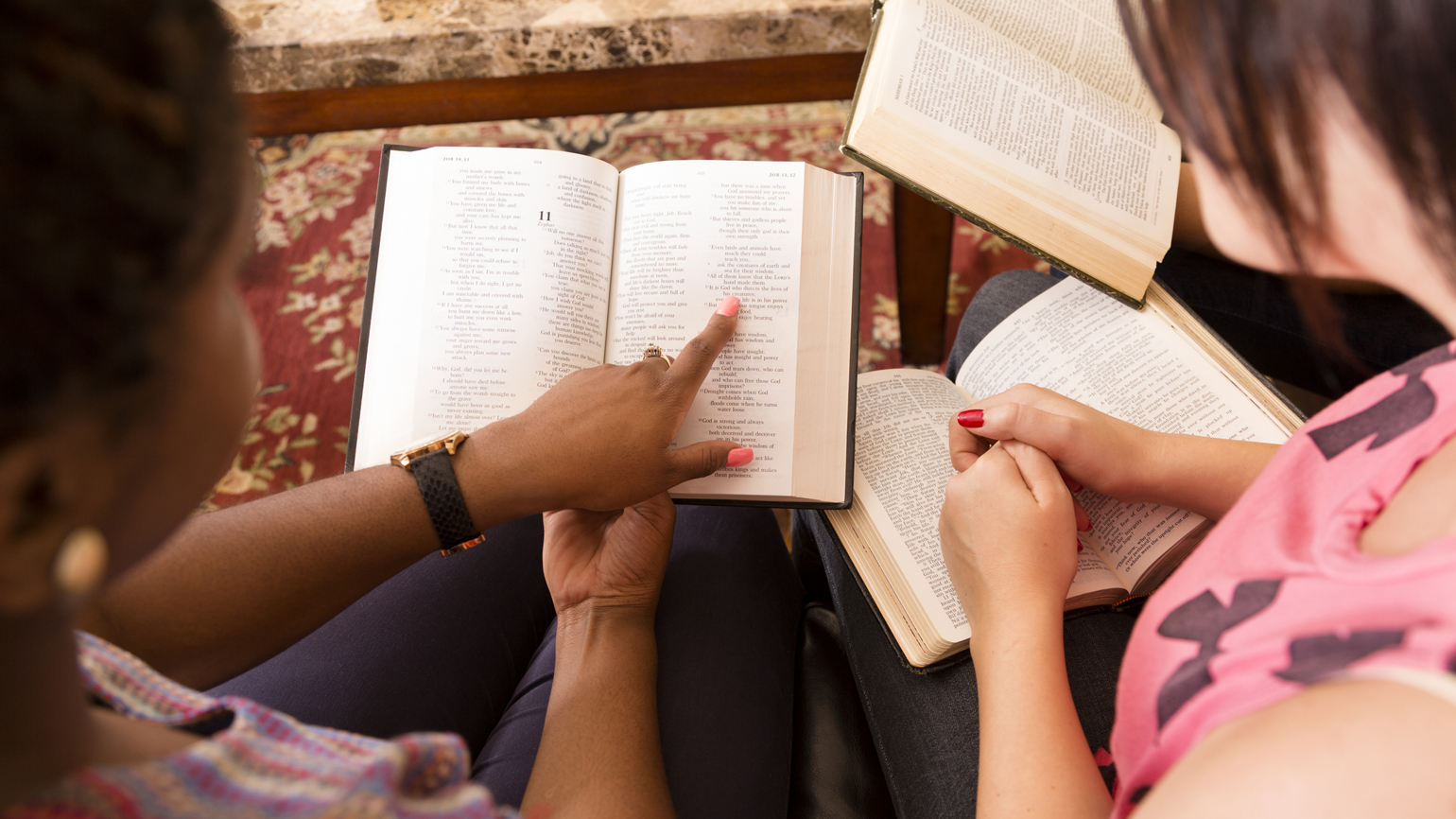
During the five months before my sentencing I was moved to five different jails. In each one the women kept inviting me to Bible studies, but I didn’t want to hear it. I had a real chip on my shoulder, and tried to avoid those women. After all, I didn’t figure that God cared a whole lot about me. But the women were persistent and when they told me I could get some extra time outside my cell by attending the Bible studies, I decided to go. It was better than being cooped up. 

At one of the Bible studies, a guest speaker, Chris, was telling us about an automobile accident she had had. “Five minutes before the accident,” she said, “the Lord told me to fasten my seat belt. It saved my life.” I remembered the night I had tried to rob the gas station. What about the voice that had told me to take the bullets out of the gun? 

“Chris,” I asked, “does God talk to people?” 

“Yes, Sandra,” Chris said, “God talks to people.” 

I told her about my experience, and she exclaimed, “Praise the Lord, Sandra! You’re alive today because of divine intervention!” 

At first, I was angry. I went back to my cell, laid down the Bible they had given me, and looked up at the ceiling and said, “God, what do you want? Why did you spare me? All I’ve been doing is trying to kill myself.” Then I looked down at my open Bible, and my eyes fell on Ephesians 2:8: “… by grace are ye saved …” That day I gave myself to Christ, and my whole life changed. 

I spent nearly five years in prison, but I studied God’s Word and witnessed to other inmates. I held Bible studies in my cell. And I decided that when I got out, I would start a ministry, which I would call Inside, Outside Prison Ministry. Since then God’s grace has prevailed, and doors began to open for me to develop my ministry. I am a member of the Pennsylvania Department of Corrections’ Incarcerated Women’s Advisory Committee, and I have developed a Bible study curriculum for inmates. 

It’s been 12 years since God called me by name and told me to take the bullets out of the gun. Today I continue my ministry. All three of my children have accepted Christ. I can testify that far from being rejected, I’m living proof of God’s grace, which has been sufficient for me in every situation. And I believe it is sufficient for all who will trust him.

This story first appeared in the August 1995 issue of Guideposts magazine.

How Depression Brought Sheila Walsh Closer to God

Last week, best-selling author, singer and dynamite Bible teacher Sheila Walsh rocked the house at the Houston, Texas stop of the Women of Faith conference, Unwrap the Bible. Walsh taught from John 4:1-26, the story of Jesus and the Samaritan woman at the well, and her message to the 6,000 women in attendance was simple but so profound: “The Good News will never be good news until you know that God knows all of your bad news.”

Like the woman at the well—and every other person on earth—Walsh had some bad news. Twenty-three years ago, she left her job as the co-host of The 700 Club show on Christian Broadcasting Network and checked herself into the psychiatric ward of a hospital. That seemed like bad news because having clinical depression as a Christian, and particularly as a ministry leader, is misunderstood as a problem of faith by many in the religious community, instead of a serious medical issue with many medical solutions.

Witnessing Heaven In Article Ad 827x123

“If you have a brain tumor, you can show people an x-ray and they can see something physical and they’ll pray for you right away,” Walsh told Guideposts.org.

“But if you have a mental illness, where they cannot see the lack of particular serotonin or whatever you need in your brain to be able to function well, people often put that down to a lack of faith and say, ‘If you’re a believer, you can do all things through Christ that strengthens you.’ You wouldn’t say that to a child who fell off a swing and broke her leg. You wouldn’t say, ‘Get up and walk, because you can do all things through Christ.’”

For Walsh, checking herself into the hospital not only got her the help she needed, it helped her learn how unconditionally loved and accepted she is by her Creator.

On her first morning at the psychiatric ward, her psychiatrist asked her, “Who are you?” Walsh gave the psychiatrist her name. “No, I know your name,” he responded, “but who are you?” The co-host of the 700 club, she answered. “No, no, no. Not what you do. Who are you?”

“I actually don’t know,” she had to confess to him. “And that’s why you’re here,” the psychiatrist told her.

By the time she was ready to leave, her psychiatrist called out to her from his office window, “Sheila! Who are you?” She was finally able to answer: “I’m Shelia Walsh, daughter of the King of Kings.”

Walsh says that really understanding that truth about who we are is what transforms Christians into the kind of people who have a heart for God and for other people.

“It’s not enough to be a 3rd grade teacher or mother of four or somebody’s wife, because all of those things can be gone in a moment. What we need is to hold onto our eternal identity. And when we get that, then I think we are able to transform how we are with other people. But if you’ve never received grace yourself, it’s very hard to extend it to other people. So I think we need to talk less and listen more. We use the Word of God, which is supposed to be healing, we use it as a weapon against one another.”

That’s why Walsh used the woman at the well (an outcast who had been publicly shamed and cast aside by the community) in her Unwrap the Bible message, to help us see each other, ourselves and the struggles we’re dealing with—whether it be mental illness or even sin—through Christ’s eyes.

“I think one of the things we misunderstand about the heart of the Gospel [is that] we categorize sins,” she says. “We look at someone who is a prostitute or someone who has committed adultery and we label them a certain way. We don’t think that our gossip or our overeating or whatever it is is as great a sin. But the reality is, if it had only been one person on the planet and all we ever did was speak one little lie, Christ would still have had to die. Our sin weighs the same before God. And I think if we begin to understand that we’re not the Good News, Jesus is, then I think we’ll be able to open up our hearts.”

“Most of us haven’t been married 5 times [like the woman at the well] but what I saw in her was how Christ pursues us in the midst of our most hopeless moments and loves us back to life. And so that really began to resonate and I actually began to see myself in this woman. Our circumstances were different but our needs were exactly the same.”

Through her renewed relationship with Christ, Walsh was able to not only accept her diagnosis, but to thank God for it and allow her testimony to be a beacon of light for other people who may be struggling in the same way.

“There are other people like me. I’ll be on medication for the rest of my life because my brain simply does not produce enough serotonin for me to function as the woman God called me to be. But what I used to think of as shameful, I no longer do. I take that little pill every morning with a prayer of thanksgiving that God has given help to those of us who need it that way. I always mention it a little bit [when I teach], so that anyone who’s listening can know: You’re not alone.”

And that’s good news.

Sheila Walsh’s new book, Loved Back to Life, is available now..

How David Tyree’s Faith Helped Him Turn Away from Drugs and Alcohol

Super Bowl XLII. 1:15 left on the clock. Third and long. We were trailing the New England Patriots by four points.

The undefeated New England Patriots.

Faithful Paws and Purrs In Article Ad

I played wide receiver and special teams for the New York Giants. Our quarterback Eli Manning took the snap and dropped back. I started running my route.

Then the Patriots defense swarmed Eli. He broke away and launched a desperation pass. All at once everything slowed. It was just me and the ball. It hung in the air for what seemed like ages, but I knew it was coming to me. I reached out.

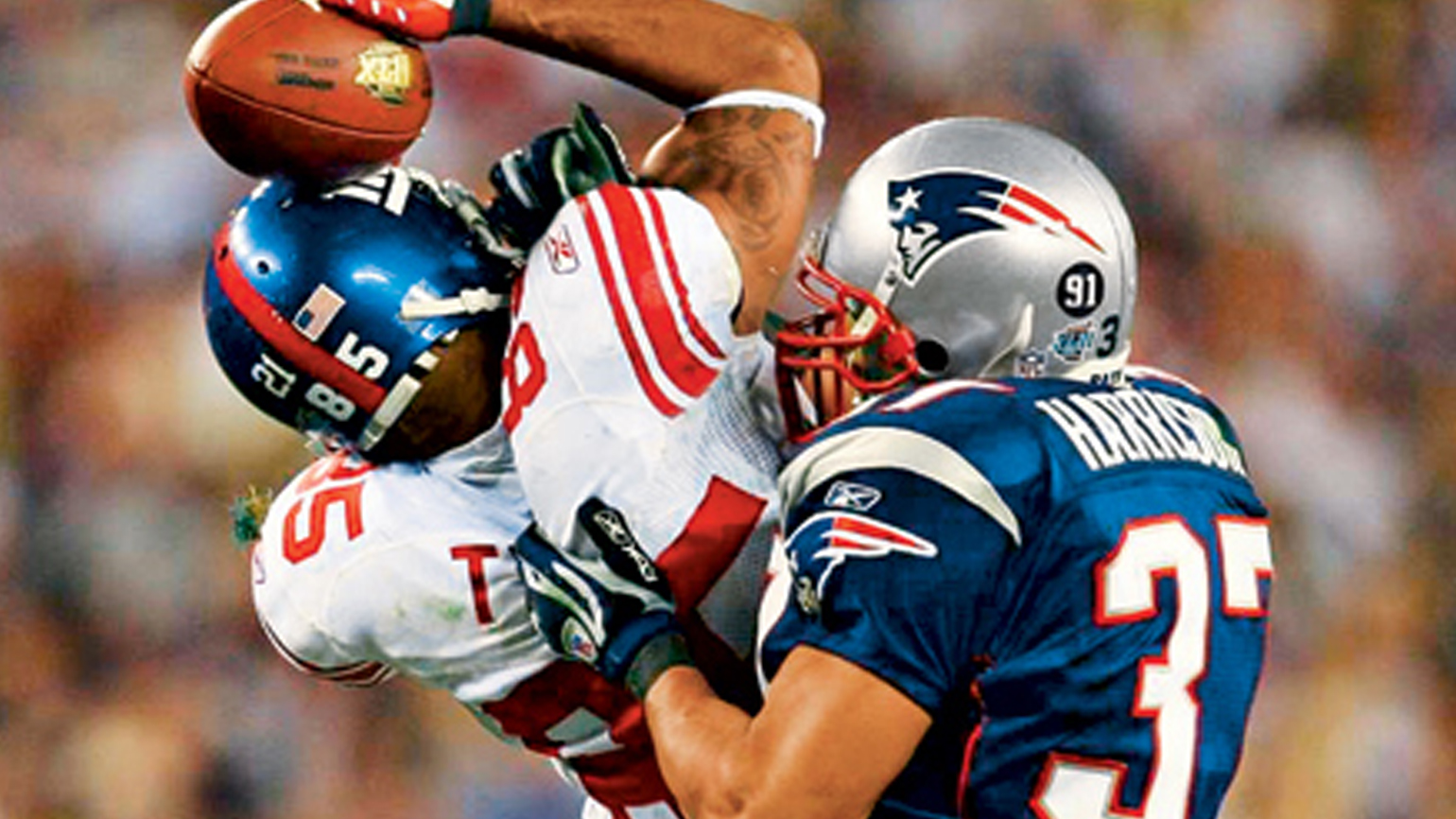
Even if you’re not a football fan, you might know what happened next because it made all the papers and TV shows. I leapt for the ball at the same time Patriots All-Pro safety Rodney Harrison did. I grabbed it. Rodney smashed into me. I felt myself falling. My left hand slipped off the ball. No! I pinned the ball to my helmet with my right hand and hauled the pass in just before I hit the turf.

Four plays later we scored what would be the game-winning touchdown. Giants 17, Patriots 14.

Reporters called it one of the biggest upsets and that ball-on-the-helmet catch one of the greatest plays in Super Bowl history. Suddenly, everyone knew my name. I was on talk shows, the cover of Sports Illustrated.

Everywhere I went people asked me to reenact “the catch.” It was pretty overwhelming for an under-the-radar player like me.

“That catch will change your life,” people said. But the truth is my life was changed long before that. And let me tell you, it—or rather, I—needed changing.

I started playing football in middle school. I started drinking not long after that. In high school my post-game ritual was getting loaded on malt liquor, whiskey and marijuana.

I don’t know how, but I kept my grades up enough to qualify for college scholarships. I got 45 offers, as a matter of fact. I still don’t believe it.

When I told my mom I’d decided on Syracuse, she smiled so big I almost couldn’t see the corners of her mouth. Mom was my first fan and she’d worked so hard to move my sisters and me from the inner city to the suburbs so we could have a better education. I wanted to make her proud.

Before long I was a team captain for the SU Orange. I was an all-star partier too. But somehow I found myself drawn to a girl on campus who shied away from that scene.

Leilah had the most adorable sleepy brown eyes. I talked her into giving me her number. We hit it off. Leilah was not only beautiful but smart too, a nursing major. She really had her act together.

From the outside it looked like I did too. I had a wonderful girl, a supportive family and, in 2003, I landed the job of my dreams. Pro football player with the New York Giants.

But if college was one big party to me, the NFL was a never-ending bender. Leilah begged me to get clean. She’d started reading the Bible, exploring her faith. But, me? I didn’t have time for that stuff. I was living in the fast lane.

Then at the end of my rookie year I got pulled over for speeding. My car reeked of marijuana.

“Do you have anything in here that I ought to know about?” the officer asked in a voice that said he knew I did. He searched the car and found a bag of pot under the seat. I was arrested.

You know that expression “rock bottom”? Well, I hit it. Literally. There I was, sitting in a holding cell, staring at the cement block walls. What had I been doing with my life? I needed to change. Was it too late to ask God for help?

I didn’t know where to start, so I looked up, clasped my hands like I’d seen people do, and said, “Lord, I need you right now. If you could spare my job, I’d really appreciate it.” I wanted a chance to make it up to Leilah and my family.

I was released the next day, and eventually the charges were dropped. God had heard me.

That weekend I drove up to see Leilah in Syracuse. I wanted to clear my head, tell her how sorry I was for being such a lousy boyfriend and that I wanted to change.

I walked into her room. That’s when I noticed it. A Bible lying in the middle of her perfectly made bed. I don’t know how to say this or if I expect anyone to believe it. There was something about that Bible. Something…physical. No joke—it looked like it was glowing.

I felt myself reach out for it, almost the way I would reach for a pass. In that way that time seems to slow down when you’re doing something incredible, I picked it up and turned to the first page. Genesis 1: “In the beginning God created heaven and earth.”.

I read more. “And God said, ‘Let there be light!’” It’s not like I’d never opened a Bible before, but for the first time the words on the page made sense. As if their meaning was brought to life. God was real. And he was in control. Not me. That was the answer.

Leilah and I had a long talk. “I feel like I can finally get my life together,” I said.

“David, are you really ready to make that commitment?” she asked.

I couldn’t blame her for doubting me. But less than a week later I completely lost my desire for drugs and alcohol. God was already working on me. I really wanted Leilah to know I was serious, so a few weeks later, I proposed. We were married in a small ceremony. My family was ecstatic, especially Mom. She was so proud to see her only son finally settle down.

The Giants let me keep my job. It took a while for Coach Tom Coughlin and the rest of the team to realize I’d changed. I let my actions speak for me.

I practiced harder, started playing better than ever, even led the team in prayer. By the time the 2007 season rolled around, Leilah and I had two sons and were expecting twin girls. My teammates looked to me as a responsible family man, a man of faith. That felt good.

I thought this would be a breakout season for me and the team. Then we lost our first two games and 21 guys landed on the injured reserve list. Morale was at an all-time low. Something had to be done. One day after practice I stuck a note in every player’s locker. “I believe God wants to do great things with this football team,” I’d written. “This is a wake-up call for us to come together. To trust God and put our gifts to the test. Let’s do it!”

I’m not sure if the note helped, but I can tell you that by December we were headed for the playoffs. I was gearing up for practice the Saturday before a big matchup against the Washington Redskins when Coach Coughlin pulled me aside. “Your wife needs to see you, David. It’s urgent.”

Were the babies coming early? As soon as I saw my wife’s face, I knew something was seriously wrong.

“Your mother had a heart attack, David,” Leilah said. “She’s…gone.”

Mom was just 59 years old. She wasn’t even sick. God, I don’t understand this, but you’ve been with me through my darkest days. I’m trusting you now.

It was hard to get back out on the field, but I knew it was what Mom would have wanted. For me to make her proud, even in heaven. We made it to the Super Bowl, up against the strongest team in the NFL—the New England Patriots. Game day was electric.

We played with everything we had, but it just wasn’t enough. We went into the fourth quarter behind by four points, and still hadn’t managed to score a single touchdown.

With 11 minutes left, I stood in the end zone. Eli hurled a pass. It came toward me like metal to a magnet. Bam! “Touchdown, David Tyree, number 85!” Our first touchdown of the game! A touchdown at the Super Bowl. It doesn’t get any better than that, right?

Well, as God proves time and again, just when you think things can’t get any better, they do. The next big play I made was “the catch.” A minute later we were the Super Bowl champs, the team everyone counted out in October.

I like to call that game the Supernatural Bowl because I’ve got to give credit where it’s due. Did “the catch” change my life? Not exactly. God did.

This story first appeared in the October 2008 issue of Guideposts magazine.

How Creative Expression Can Improve Your Loved One’s Well-Being

Ashlee Cordell is a Research Assistant and Project Coordinator with the Benjamin Rose Institute on Aging

Coming up with activities to keep your older loved one mentally and physically engaged can be a tall order, particularly during Covid-19 restrictions. Exploring the creative arts is one of the best ways to begin! Your loved one can enjoy creative expression either from the comfort of home or by venturing into the community. Older adults benefit in numerous ways—physically, mentally and socially—from participating in the arts.

God's Constant Presence In Article Ad

As people get older, their body of knowledge and expertise continues to expand, and can become major building blocks of creative expression. Pandemic restrictions have caused social isolation and loneliness to rise, so creative expression is more important than ever, as it can help to alleviate these issues, as well as others.

Among the benefits of artistic expression are:

  • Better overall mood: Creative arts can reduce feelings of anxiety, depression and loneliness among older adults, and boost your loved one’s overall mood.
  • Mental stimulation: Creative arts spark connections in the brain that ultimately lead to sharper senses. A Mayo Clinic study has shown that participating in the arts may also lower the risk of dementia.
  • Improved mobility: Creative arts get the body moving in ways that can improve things like hand-eye coordination and overall blood flow.
  • Expanded social connections: Creative arts offer situations for meeting other people and building new relationships, two important factors to boosting mental health.
  • Non-verbal expression: Creative arts enable older adults to express themselves non-verbally. This alternative form of communication is a new way for your loved one to express his or her thoughts and emotions.

The result can be better overall health and well-being for your loved one. This is the case whether he or she takes part in arts programming that’s led by a professional or simply enjoys the creative arts as a hobby. Another plus is that your loved one can experience the physical, mental and social benefits of creative expression without having any art training or experience.

Either in the community or a long-term care environment, you and your loved one can participate in the creative arts in a number of ways, including:

  • Movies, plays and dance: It’s fun to watch movies and plays, and it can be even more fun to follow your inspiration and create your own. Dancing is also a great way to express yourself and to reap the additional benefits of exercise.
  • Music: The love of music is universal! Play your favorite recordings together, and if the spirit moves you, pick up an instrument or sing.
  • The written word: Poetry, fiction and non-fiction have the magical ability to take us away from reality for a bit and give us insight and comfort. Expressing yourself through writing can also lift you up and help you process feelings.
  • Making visual art: There’s a wide array of visual arts to explore, including ceramics, collaging, drawing, filmmaking, painting, photography, printmaking and sculpture. You can try your hand on your own, or join with others in groups or virtually via video chat.
  • Viewing visual art: There’s nothing like an art museum to inspire creativity. Many currently offer virtual tours, so put your feet up and take in artwork from anywhere in the world!

For more information on the social impact of art, visit the Arts + Social Impacts Explorer Tool on the Americans for the Arts website. The interactive tool includes downloadable fact sheets to make the great impact of the arts more visible to all. For additional behavioral health and social support services, use the Eldercare Locator to find what is available in your area.

How Crafts Are Helping People with Chronic Illness Heal

When Karen Thomas was diagnosed with a chronic illness 5 years ago, she never thought she’d find her life’s purpose: empowering others through her online support community and craft website Conscious Crafties.

It started in 2011 when Thomas was in a car accident. After awhile, she would get sick and faint when she tried to stand up. She felt queasy just sitting on her couch. It took a year to find a diagnosis — Postural Orthostatic Tachycardia Syndrome (POTS), a rare condition affecting the blood vessels and heart rate. It took a while longer to discover that her POTS was caused by Ehlers-Danlos Syndrome (EDS), a connective tissue disorder affecting the skin, cartilage, ligaments, and blood vessels of the body.

Sugarcreek Amish Mysteries In-Article Ad 2023

Her symptoms appeared suddenly, but Thomas says that’s how it works for many people.

“A lot of people get sick after trauma to their body, whether it is physical trauma like a car crash or emotional trauma,” Thomas tells Guideposts.org. “It’s almost as though it lies dormant and then something happens and you get sick practically overnight.”

She started going online, looking for support groups where she could connect with people managing illness the same way she was. She thought it might make her feel better, but as she began chatting with others facing similar chronic diseases and disabilities, she realized they all had something else in common.

“Everybody just felt as though their life had been stripped away,” Thomas says. “They didn’t feel that they had any purpose. It really upset me. I was lucky in that I was able to work around my sickness but so many people weren’t able to do something that was from home. And, there weren’t many sympathetic employers that would let them work around their sickness.”

That general, overwhelming feeling of uselessness spurred Thomas to act.

A lover of crafts from a young age, she realized many of the people she chatted with online shared her creative hobby.

“[Crafting] was something that really helped me because it was quite meditative; I think it is for a lot of people,” Thomas explains. “It takes you away from the stresses and strains of life for a bit. When you’re creating, making something beautiful that you know other people will appreciate, it just makes you happy. You feel useful.”

There was so much talent in her online community but many of the people with chronic illnesses that she spoke to didn’t know how to effectively sell their products online. They found sites like Etsy were too confusing and selling things on Facebook was a slow process.

Thomas decided to take her experience creating and managing retail websites, her love for crafts, and her newfound commitment to helping others and put it all to good use.

“It was almost as though everything in my life up until that point had prepared me to do something that was going to help lots of people,” Thomas says.

She bought the domain name ConsciousCrafties.com in 2011 but wasn’t able to create the website until four years later because of her illness. In the meantime, Thomas reconnected with her love of crafting, selling some of her own products online.

“I was able to escape judgment from people who couldn’t understand my illness, from worries about work, worries about money, my pain,” Thomas says. “I was focusing on something else and it was giving me a sense of achievement again.”

She was able to get Conscious Crafties up and running in 2015, building it to be both a business platform – sellers can contact her to have their shops and products added to the site – and a support group for people living with or caring for someone living with a chronic illness or disability.

 “We needed a way to work around our health and we needed a way to showcase our talents,” Thomas says. “Our group isn’t just about how sick we feel today, it’s about positive things that have happened. When we have sales, we share it with the group; we all just share in each other’s happiness. It’s important for us to be successful. We want to feel more than our illnesses.”

Now, the site hosts over 200 crafties and over 7,000 products. They are inviting more people to participate. Thomas has connected with other crafties who help mentor new members. She welcomes each crafter to the site personally and offers her help in selling their goods, giving them advice on everything from how to take great photos to how to market on social media.

She’s also using her site and the community she’s building to bring attention to problems people managing chronic illness face. After fighting for so long to get diagnosed, Thomas says she still battles misconceptions about her condition.

“The hardest thing is trying to help other people understand.  They’re not feeling it themselves and [we] look perfectly fine,” she explains. “You can have good and bad days and also good and bad hours. I might be able to walk my dog one minute and the next minute, I’m consciously deciding if I have enough energy to go to the bathroom. It’s so variable. When people see me on the rare occasion when I leave the house, that would be a very good day. They don’t see what really goes on with my health.”

Still, Thomas feels lucky to have found something meaningful in her struggle.

“I was a workaholic before, but nothing that I was doing was of value to anybody,” Thomas says. “It was all meaningless to me. As much as I loved my job, it didn’t light my heart up like this does. There’s a tiny part of me that’s quite glad that I got sick because it means that I’ve been able to do something that’s actually worthwhile.” 

How Could She Best Care for Her Widowed Father During the Pandemic?

I’d been imagining this moment for months. Finally it was here. The big reveal. “Dad, you are going to love this,” I said, swinging open the door to the in-law suite we had spent the winter building off our garage. “Surprise!”

My husband, Jeff, had put down new carpet in the sitting area. The walls gleamed with fresh paint. My college-age daughter, Jess, had added some big potted houseplants. There was a desk for Dad to write at and a comfy leather armchair and matching footstool where he could read his Bible. Perfect!

The Daily Bible Large Print relaunch with digital free gift in article ad

It was March 2019, and I’d flown to Florida days earlier to help Dad drive home to Indiana after his two-month winter vacation. At 93, he wasn’t as comfortable driving long distances anymore, and I was happy for the time together.

Somehow I had managed to keep the secret to myself all those hours in the car. It went back to the promise I’d made to Mom just before she died eight months earlier. “It will be okay. You can go now,” I’d whispered. “I’ll take care of Dad.” Mom’s eyes had met mine, and I knew she understood. God had given me the chance to help Mom pass peacefully. In a way, I felt I owed it to him as much as her to keep that promise.

Mom and Dad lived two hours northeast of us, in Frankfort, Indiana. Dad had been a pastor and church district superintendent. He’d built a rich life there. Even retired, he led a Bible study, visited shut-ins, gardened and nurtured the trees he’d planted on his property.

But life without Mom wouldn’t be the same. They’d been married for nearly 70 years. I didn’t want him trying to do everything on his own. That was the beauty of surprising him with the suite. Once he saw it, he’d be won over. And if he moved in with us, I could really be there for him.

“What do you think?” I said. Dad took in the collage of family photos I’d hung on the wall above the chair, the wardrobe waiting for his clothes, the framed picture of Mom on the bookcase.

“It’s beautiful,” Dad said. “But you didn’t do all this for me, did you? The guest room was fine.” His smile didn’t quite reach his eyes. I pushed down a twinge of doubt. It was late, and we were both exhausted from the long drive. “Sleep well, Dad,” I said. “We’ll talk more in the morning.”

I slipped into bed beside Jeff. “Thanks for everything,” I said. “The suite looks great.” It had taken some doing to talk Jeff into giving up his office for Dad’s suite. Had it been a mistake? Tired as I was, I lay awake worrying. One day last fall, when I was visiting Dad, he’d mentioned the possibility of downsizing. Had I misread what he wanted?

At breakfast, Dad picked at the bananas in his cereal, quiet. It wasn’t like him. “Was the bed comfortable?” I asked.

“Very.”

“You’re ready to go home, aren’t you?” I forced a smile.

“Yes!” Dad said, suddenly animated. “I need to see if the old place is still standing.”

I watched as he closed his suitcase, afraid to bring up the idea of moving here permanently. He’ll be back soon, I told myself. Of course he had to go back to Frankfort. He needed to put his house on the market. Say goodbye to his friends.

I went out to his car with him. “Come back soon,” I said.

“I will,” he said, kissing me on the cheek. “I love you.”

A few days later, I called to check on Dad. “When can you come again?”

“Let’s see…. I have Bible study on Wednesday and teach Sunday School this week,” he said. “I’m taking a friend to the doctor Tuesday. Then Bible study again.”

At 93 years old, he had more going on than I did!

“I’ll be back soon,” Dad said. “I’m looking forward to relaxing in that addition you built. Right now I need to prune my trees. I’m thinking of digging up the lily bed….”

We said goodbye. If he really liked the suite, why didn’t he want to move in? Why wouldn’t he let me take care of him the way I’d promised Mom?

Dad came to visit a couple weeks later but only for a few days. He was anxious to get back to his volunteer work, gardening, Bible study. A pattern that repeated itself every month.

At a family gathering that summer to celebrate my nephew’s graduation, my brother posed the question I’d been dancing around for months. “Dad, why don’t you sell your house and move in with Beth and Jeff?”

Dad set his fork down on his plate with a clank. “I’m not ready to sell my house yet,” he said, emphasizing each word. “I have a life in Frankfort, people who count on me. My memories of your mom are there. I’m not ready to give that up.”

I understood how hard this was for him. As much as I missed Mom, Dad must have missed her a thousand times more. Still, I was hurt. All the work we’d put into making that suite for him. I felt as if Dad was saying he didn’t want my help. And there was guilt too—I’d convinced Jeff to spend time and money on a remodeling project that wasn’t even necessary. How could something that felt so right turn out so wrong?

Summer faded into fall and winter. Dad visited every few weeks. There was nothing he needed from me to make his life better, easier, safer. Certainly not his own addition. He was as independent as ever. The one concession he made to age was letting me pick him up in Frankfort and bring him to our house for visits.

In February 2020, we began hearing about a virus making people sick on the East and West Coasts, especially among the elderly. It seemed a world away from rural Indiana. Week by week, we watched Covid-19 creep closer, not realizing it had already reached the heartland, long before test results confirmed there was no safe haven.

In late March, the governor announced that Indiana was going into lockdown. Jess was sent home from college. It felt as if we were under siege, everything uncertain: how long we’d have to shelter in place, whether we’d be able to avoid infection, the availability of food—toilet paper even.

I called Dad and told him I was coming to get him before the lockdown order went into effect. He didn’t argue. We packed up his clothes, emptied his fridge and grabbed every roll of toilet paper in his house.

Back at our place, we settled into living together. It wasn’t like Dad’s other visits, when he never seemed quite at home. He was more relaxed, more a part of the rhythms of our family. I was more comfortable too. The question of where Dad should live no longer seemed important. Every minute felt as if it was meant to be treasured.

The suite gave Dad a place he could be on his own to read his Bible or call his friends, yet still offered closeness to family and shelter from the threat of the virus. A need only God could have foreseen.

I got Dad reminiscing about his childhood and recorded his memories. Jess listened, rapt. The two of them bonded on their own. Dad would tease Jess about her preference for chicken over any other meat. Jess learned the exact amount of mayonnaise to make the chicken sandwiches that Dad pronounced sheer perfection.

As the weather warmed, Dad took to working in the yard. He pulled weeds, cleaned my tools and spread gravel around the tool shed.

One afternoon, Dad stuck his head in the door and said, “There’s a really nice hawthorn sapling that’s out of line with the rest of your trees. Would you like me to transplant it for you?”

“Sure,” I said. He strode off with the energy of a man half his age. “Wait,” I said. “I’ll help.”

By the time I caught up to him, he was already digging around the tree. What he called a sapling was taller than his six-foot frame.

 “Let me take a turn,” I said. He handed me the shovel and told me where to dig. “Watch out for the roots,” he said. For the next hour, we took turns digging and resting until finally we were able to wiggle the roots free.

“Where do you want to plant it?” Dad said, holding the tree in one hand and the shovel in the other. I leaned against the shed, exhausted.

I pointed to two gingko trees he had given me the summer before. A half hour later, we were lugging buckets of water to help the hawthorn get off to a good start in its new home. Dad found some chicken wire and poles in the shed for staking the tree.

I thought of the promise I’d made to Mom. I’d imagined cooking for Dad and doing his laundry, giving him a well-earned rest after his years of service. Yet here he was doing things for me!

Living together under lockdown had reminded me of something deeper. God had shown me that the heart of caregiving was connection. It wasn’t about what you wanted or hoped to do for the other person; it was about understanding what they needed. We’d been there for each other, and I knew that would continue even when Dad returned home.

After six weeks, lockdown ended. Dad was eager to get back to his own yard, telling us what he’d plant in his garden. Jess offered to drive him home. Saying goodbye was bittersweet. I hugged him close. “I love you,” I said as his arms tightened around me. What Dad needed most wasn’t in my house. It was in my heart.

For more inspiring stories, subscribe to Guideposts magazine.

How Being a Realist Can Make You Happy

Those of us who spend time thinking about and working on walking a positive path through life might be best served by two simple words, according to a new social psychology study: Get Real.

Realists, those whose expectations are neither unreasonably optimistic nor heavily negative, are a group who the researchers found had the highest sense of well-being and happiness over the long term.

The Daily Bible Large Print relaunch with digital free gift in article ad

The study focused on participants’ financial expectations and outcomes over an 18-year period of time. Those who overestimated their financial outcomes over those years had a lower self-reported sense of well-being than those who had more unbiased expectations based on an accurate assessment of their finances. Similarly, those who negatively underestimated their financial outcomes by seeing themselves pessimistically were less happy and satisfied than those who were more realistic.

These findings are part of the case against “toxic positivity,” the overly-simplistic, ultimately harmful use of positivity in a vacuum, denying any challenging or negative realities in pursuit of uncomplicated optimism.

“We see that being realistic about your future and making sound decisions based on evidence can bring a sense of well-being, without having to immerse yourself in relentless positivity,” said Chris Dawson, an economics professor at the University of Bath, where the study was conducted.

This rings so true to me, and readers of this blog will recognize my advocacy for the term “authentic positivity” as a worthy goal. To be authentically positive is not so different from being a realist, actually. Being unreasonably optimistic about future financial success denies the possibility that financial challenges will arise, while being self-defeatingly pessimistic denies us the opportunity to succeed in unexpected ways. 

So instead, let’s be optimistic enough to affirm our own possibilities, while remaining grounded in the world in which we actually live. That is authentic positivity in a nutshell—for real.

How a Teacher Saved Her Student from Addiction

The first time I saw her, Loretta barely looked at me. It was January 1989 and I had come to her junior high school to serve as its new speech pathologist. None of my students said too much to me that first day but Loretta was quieter than the rest. Dressed in a baggy black T-shirt and jeans, she sat in the back of the classroom, her hair hiding her face. But not even her wild blond locks could completely hide the sadness and need in her eyes.

I’d been teaching for nine years and loved my work. Still, it troubled me to see students like Loretta who seemed so lost. I could barely get a full sentence out of her when I called on her in class. As the semester went on, some of my students started to confide in me, but Loretta always shuffled out without so much as a backward glance. When she was absent for several days in a row, I learned from a school administrator that she had been suspended on a drug violation.

Light for Life NASB Study Bible in Article

The last day of school came and I said goodbye to Loretta for what I thought might be the last time, praying silently that she would find her way.

The next afternoon I got a call. “Hi, Miss Fry, this is Loretta.”

“Loretta? What a nice surprise! What can I do for you?”

There was a pause. “Oh, nothing. I looked you up in the book. I just thought I’d call and say hello.”

“I’m glad you did. What’re you doing?”

“Just sitting in my room, listening to the radio. No one’s around.”

We made small talk for another 10 minutes, with me filling awkward silences, until Loretta said good-bye. I stared at the phone a moment after putting the receiver down. What was that all about? I wondered.

The next day she called at exactly the same time. And again the next. She never had much to say, yet she kept calling. I began asking her questions about her family life and learned she lived with her stepfather. Complaining about him was one of her favorite pastimes.

One afternoon when Loretta called I sensed immediately something was amiss. A minute or two into the conversation I realized she’d been drinking. She started talking about school. Then out of nowhere she told me that her father passed away when she was only a year old. “What about your mom?” I asked.

“She died two years ago … when I was twelve,” Loretta said.

I caught my breath. “I lost my mom when I was your age,” I said softly. I was an only child, and my mom and I had been extremely close. We’d spent countless hours talking, shopping, and cooking meals together. When Mom died suddenly of complications from surgery it was a devastating shock. I went through high school on autopilot, burying my head in textbooks. It wasn’t till senior year that I finally began to form friendships. Even at the age of 30, I still had a quiet ache in my heart from losing my mother, a fear of getting that close to anyone again.

“I know how it feels,” I said to Loretta, “but I also know that drugs and alcohol won’t make the pain go away.”

Again, Loretta changed the subject and soon ended the call. But a few days later, she called again and told me more about her mother. She was opening up to me, slowly but surely. We continued to talk all summer. I wondered if I’d hear from her once the new school year started since she wouldn’t be in my class anymore. The first day of school, though, she showed up after class to chat. She stopped by each day, revealing more about her difficult relationship with her stepfather, the bad neighborhood she lived in, and her involvement with the drug crowd. Some days I suspected she was high. “Drugs aren’t the answer, Loretta, no matter how bad you feel,” I’d remind her. “They only make things worse.”

Loretta called me late one evening that fall. “Can you come over, Miss Fry?” she asked weakly. She had a terrible cold and her stepfather wasn’t around. I hurried over. “Thanks for coming, Miss Fry,” she greeted me between coughs. She gave me a tour of her small three-room home, then pulled a photo album out of her dresser drawer and showed me old pictures of her mother and father. I couldn’t help but wonder if this was the real purpose of having me visit.

Lord, Loretta needs someone to really take care of her, I thought as I drove back home. Then, almost instantly, the thought came back, It should be you, as clear as a spoken phrase. I dismissed it. The idea of all that responsibility was overwhelming. I was young and single, busy with my career, and active in my church. How would I find room in my life for a teenage girl? But there was something else behind my resistance, a darker fear. Did I want to risk getting that attached?

Yet I couldn’t resist Loretta, especially when she seemed so eager for my company. I took her out for a bite to eat after school sometimes, and to school football games. One weekend I invited her to join me and my friends on a camping trip to Lake Kissimmee State Park. As I was finishing up breakfast Saturday morning, I glanced up and saw Loretta perched high in an oak tree. She giggled and waved. It was the first time I’d ever heard her laugh like that.

The more time we spent together, the more I felt a responsibility to this girl who seemed to have picked me out to help her. No longer would I just take off for the weekend without a second thought. Now I’d tell Loretta where I was going and when I’d be back. She’s getting to you, Carolee, I thought.

One cold Friday night in March, Loretta called me from the hospital emergency room, where she’d just been treated for severe bronchitis. “Can I come stay with you, Miss Fry?” she asked, her voice hoarse and shaky. “My stepdad won’t take care of me like you will.”

“Of course you can, Loretta,” I said. When she got to my little house and we unfolded the sleeper sofa, Loretta crawled under the covers fully clothed. “Thank you,” she whispered right before her eyes closed. I watched her sleep for a while, her slow breaths ruffling the hair that hung down over her face. Finally I went to bed.

In the middle of the night, I was awakened by Loretta’s coughing. I turned on the living room lamp and went to the sofa. I put my arms around Loretta’s rail-thin frame and she clung to me. “It’s okay, I’m going to look after you,” I promised. “You’ll be better in no time.” Stroking her hair until she was calm, I realized that though Loretta was 15 years old, she was still a lost little girl who needed someone to hold onto. It should be you, my heart said again, and this time the thought lingered.

That weekend I looked after Loretta round-the-clock, making her soup, seeing that she took her medicine. By the time she went back to her stepdad’s Monday morning, I was looking forward to some time alone. But when I came home from school that evening, the house seemed terribly empty.

Loretta soon recovered from her illness. Then one day after school she stumbled into my classroom, her knees about to buckle under her. “I took some new pills,” she croaked. She could barely keep her head up. Panic jabbed through me. What do I do? I rushed to the school office and got the vice principal.

When the drugs wore off, Loretta was fine but I was terrified. First, because I knew she was getting deeper into drugs. But mostly because I’d had to report to the vice principal what was responsible for her condition, and he assigned her to a disciplinary school for 60 days. Lord, I’m the only lifeline this kid has. What if she doesn’t trust me anymore? I couldn’t bear to think about her hurt and alone, sinking deeper into substance abuse, losing her way again after reaching out for my guidance. I called her that evening. “I’m so sorry, Loretta,” I blurted out. “I never meant for things to turn out this way.”

“It’s okay, Miss Fry, I know you were just trying to help me,” she said.

Loretta had fallen so far behind in class that she had to go to summer school, except she had no transportation to get there. This time I knew what I had to do. I asked her stepdad if she could stay with me so I could drive her to school. Reluctantly he agreed. It was a huge step, having Loretta live with me full-time, if only for the summer. I wanted everything to be just right, which meant finding a place with enough room for her. I went house hunting and took Loretta to see my favorite one. “What do you think?” I asked. She gazed around slowly, then looked at me, her eyes shining. “It feels like home,” she said. That was good enough for me. I signed the papers on the house the next week.

The first week of June Loretta moved in. She had all of her belongings in two large plastic bags—clothes, rock-and-roll posters, a boom box, a softball bat, stuffed animals, even an old box of Legos. I sat her down and made it clear she could not use drugs or alcohol while under my roof. “You can’t stay here if you do,” I said. “Those are the rules.”

It was a struggle for Loretta to break free from drugs and alcohol after using them to numb her pain for so long. She often woke me to tell me she’d had a nightmare. “That’s the past chasing you, honey,” I told her. “The more you feel safe and loved, the less it’ll haunt you.”

Gradually she started sleeping and eating better. Her pasty cheeks turned rosy. And most afternoons she went Rollerblading instead of lying on the sofa listening to the radio.

After summer school ended, Loretta’s stepdad allowed her to keep staying with me. Each day there seemed to be a new challenge. I still wasn’t used to having another human being completely dependent upon me. I’d pray over every little thing. Often some small problem would set Loretta off and she’d run to her room and slam the door. We spent many a night—me sitting on her bed or her sitting on mine—having heart-to-heart talks. My mother and I had talked about everything, and I wanted Loretta and me to have the same kind of relationship.

“What’s gotten into you?” my friends would ask me, incredulous. “You’re focusing your whole life on this girl.” It was true, and the more time and energy I invested in Loretta—the more emotion —the less scared I felt of getting close to her. I had become convinced that she must have been guided into my life and that I was meant to take care of her.

One night after dinner, Loretta forgot to clean up yet again. “How many times do I have to tell you, Loretta? Put your dishes in the sink!” She flew into one of her tantrums, the worst yet, and stormed off to her room. I followed, knowing something deeper was troubling her. Finally she admitted her stepfather used to throw things at her when she didn’t do the dishes.

Loretta looked up at me. “I never want to go back there again,” she whispered. I knelt in front of her. “Do you want me to ask for custody of you?” Her eyes lit up. “Yes,” she said hugging me tightly. “Yes, please, Miss Fry.”

“All right, Loretta, I will. But you’re going to have to stop calling me Miss Fry,” I said, laughing.

Her stepdad refused to give up custody, but I persisted, calling him every week. In the meantime, I tried to give Loretta all the attention my mom had given me. We went everywhere together—hiking, shopping, the movies. I arranged for her to see a counselor. Every night I helped her with her homework. It turned out she had dyslexia and had fallen into a pattern of giving up when an assignment seemed too difficult. “Being learning disabled doesn’t mean you can’t learn—just that you have to work harder. Don’t let circumstances rule you—run your own life,” I told her, remembering how my mom had encouraged me. Slowly Loretta’s grades improved.

Finally, in April of 1991, after Loretta had lived with me for nearly a year, her stepdad consented and gave me custody of her. By July what had already happened in my heart became official: Loretta was my daughter.

Loretta graduated high school and went to junior college, the first in her family to do so. Today she is 25 years old, has a full-time job, and lives in her own home about a half hour away from me. I see her often, and each time I do I marvel at how God brought us together and at how good it feels to give of myself without holding back, to love completely and unconditionally again. “If it wasn’t for you, Carolee, I wouldn’t be here,” Loretta sometimes tells me. I was right—Loretta needed someone. What I hadn’t realized was just how much I had needed someone too.

This story first appeared in the January 2001 issue of Guideposts magazine.

How a Root Canal Helped Me Think Positive

“No doubt about it, the nerve is infected,” my dentist said, peering at my problem tooth. “I have to do a root canal.” I had known that was a possibility when I came in for my appointment this morning, but I’d been hoping all I needed was a deep filling. Now negative thoughts raced through my head. How much would this end up costing? How many more visits till a permanent crown was in place? How badly would it hurt?

“I’m giving you more anesthetic,” Dr. Gonzalez said. “This might sting a little. Don’t forget to breathe.”

You Got This In Article Ad

Breathe, I told myself, trying not to flinch as the needle went in. And stop with the negativity. Start thinking positive.

I know when you’re feeling down, counting your blessings really lifts your mood. That’s what I was going to try here. While Dr. Gonzalez went to work on my tooth, I put my mind to work on the pluses of this particular dental procedure. (Hey, it helps to be specific in your prayers so why not in counting your blessings?)

One, this root canal will probably save my tooth.

Two, my dentist is really good about explaining what he’s doing as he goes along, which makes everything much less scary.

Three, I put aside enough in my flexible spending account to cover what insurance doesn’t.

Four, I get to hear what’s happening with the U.S. Open in real time. (Dr. Gonzalez is a golf fanatic and has his TV tuned to the tournament coverage.)

Five, this doesn’t hurt! I feel some pressure but no pain.

By the time Dr. Gonzalez set his instruments down, I was actually in a good mood. And it got even brighter when he said, “No eating until the numbness is completely gone. If you really have to have something soon, get a milkshake.”

Doctor’s orders to have a milkshake? Now that’s one blessing I didn’t count on!