Embrace God's truth with our new book, The Lies that Bind

How a Retiree Found New Purpose Helping Homeless Young Adults

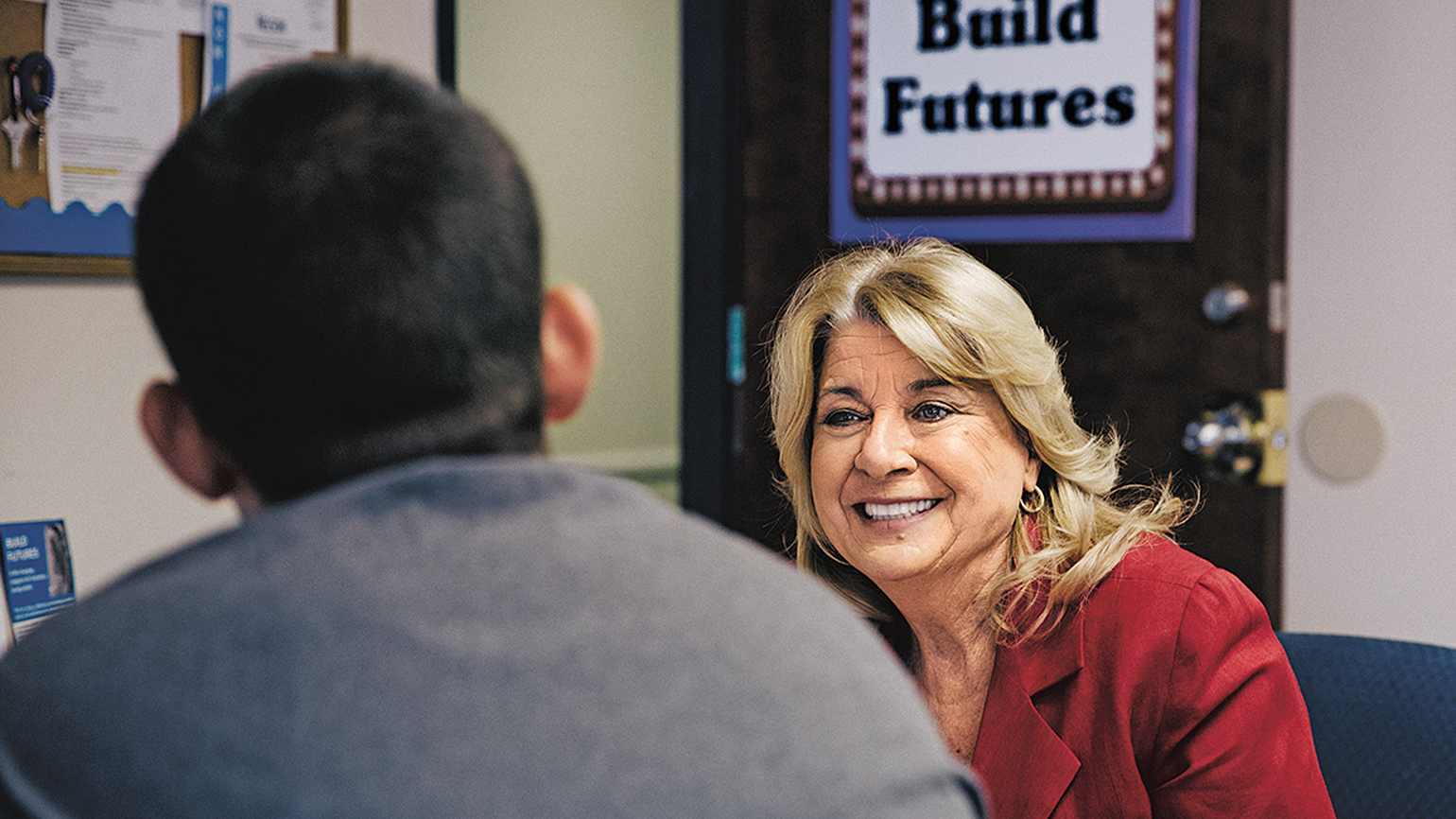
In getting homeless youth off the streets, Kathy Tillotson found that volunteering benefits not only those being helped but the volunteers as well. That’s something the people at Good Samaritan Society–Ambassador, in New Hope, Minnesota, have experienced. We talked to them about how volunteering does you good:

1. It gives you new purpose. This is especially true for people who feel lost when their working days are over. George Rosch came to Ambassador as a rehab patient after brain and spinal injuries landed him in a wheelchair, ending his career as a truck driver. “He was very depressed,” says customer engagement coordinator Barb Burger. “He had no idea how to find meaning in life. I reminded him God works in mysterious ways. We were looking for a concierge, and I thought, Who better to talk to patients than someone who’s been through it?”

Go For It In Article Ad

Rosch is now in his fifth year as a full-time volunteer. “I do many different things here, and I love it all,” he says. “It feels good to know I can help other people. This is my job now.”

2. It improves mental and physical health. Volunteering helped Rosch recover from depression and traumatic brain injury. Studies have shown that seniors who volunteer have fewer physical limitations, less depression and better cognitive function than nonvolunteers.

3. It lets you meet people. Social interaction is vital to well-being. Rose Marie “Toots” Holland, a resident at Ambassador, packs nutritious weekend snacks for local elementary students and makes fleece blankets for women in shelters. “My husband passed away, and I need to keep myself busy,” she says. “It’s fun to meet the other ladies volunteering.”

4. It helps you develop new skills. Georgia Helvick, originally a pet therapy volunteer, liked the seniors at Ambassador so much, she asked her church to do more outreach there. “‘Sure,’ they said, ‘but you’ll have to lead the ministry.’ That was new for me!” she says. Rosch, meanwhile, went from not wanting to touch the computer to “I can do this!” His tasks now include scanning documents.

5. It helps you grow spiritually. Volunteers find their compassion for and interest in others deepen. Rosch says he’s become “more understanding, more caring toward people.” Helvick adds, “You can’t tell from the outside what an interesting life someone has led. You only find out when you sit down and talk to them.”

Visit good-sam.com/guideposts to learn how volunteering benefits both the volunteers and their communities and to watch a video about George Rosch’s accident and recovery.

For more inspiring stories, subscribe to Guideposts magazine.

How a Police Veteran’s Faith Helped a Victim He Knew

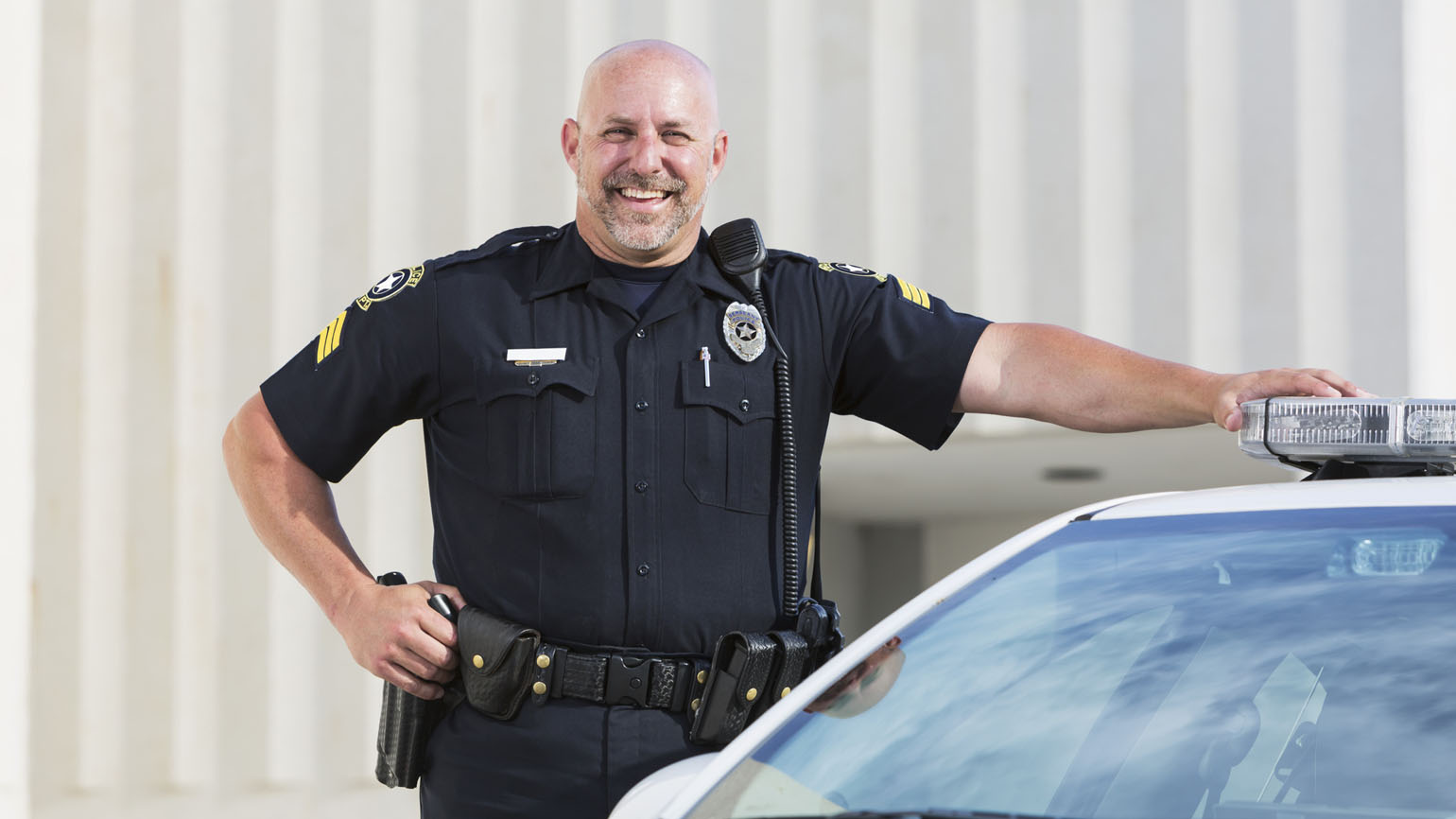
One of my officers tapped me on the arm right after I got off the radio telling the precinct that we’d made a bust. “Sarge,” he said, nodding toward the squad car. “The girl says she knows you.” Yeah, I wanted to say. Right.

I’m in charge of the St. Petersburg, Florida, vice squad, and we’d just busted a drug deal in an alley off Fourth Street, a notorious neighborhood. I was focused on the dealer, not the prostitute we’d caught him selling a rock of crack cocaine to.

Light for Life NASB Study Bible in Article

I glanced at her, huddled in the backseat of a squad car. Typical crack addict: pale and thin to the point of emaciation, with short, dirty hair. How did she know me? Had I arrested her before? The officer handed me her driver’s license. The young woman in the picture looked so different—long hair and big brown eyes—I checked the name. Melissa Collora. Age 21. I almost dropped the license. I did know her. When I was a kid, the Colloras lived right next door. This was the little girl I used to babysit.

I went over to the squad car. “Melissa? What are you doing?”

Her sunken brown eyes were glazed but unmistakable. “What do you think?” she said, then looked away.

“Is there anything I can do to help you?”

“If you can’t get me a rock, just leave me alone,” she snarled.

I didn’t ask the question I really wanted to ask. What happened, Melissa, to the girl I used to know?

I’m a man of faith. I try to see the best in people, as I know God does. That’s not easy with a job like mine. I’m a 15-year police veteran. The past seven years I’ve run the vice squad. I see the worst that people do to one another—and to themselves—and I deal with some truly hopeless cases. Cases so terrible and heartbreaking I can’t afford to let myself get emotionally involved. I couldn’t imagine that Melissa Collora was one of them.

I remembered being at the Colloras’ house on steamy summer days when I was 15 or so. Melissa would have been about three. Her brothers and I played football in the yard. Melissa would sit on the swing-set clutching her teddy bear, watching us with those big brown eyes. So sweet. So innocent.

I remembered her father too. All the boys on our block loved Mr. Collora, a big guy with a great sense of humor. He owned a gas station and an auto lot, and he’d let us kids play around in his jalopies. Then about the time Melissa was eight, Mr. Collora died. I went into the Army shortly after that. I hadn’t seen Melissa or her brothers in the 13 years since.

I called my mother as soon as I got home that night. “Guess who I arrested today,” I told her. “Melissa Collora.”

“That’s terrible, Tim,” she said. “I’d heard she was in trouble.”

Mom filled me in. Mrs. Collora remarried. Melissa’s step-father abused her. In 1993 her mother committed suicide. Melissa went to live with relatives outside New York City. That’s where she discovered crack and life on the street.

I hung up the phone, depressed. Not because it wasn’t a familiar story. It was. This time, though, I had actually known the girl before her life went wrong. That’s what really hurt.

The next time Melissa and I crossed paths, she was getting arrested on yet another prostitution charge. “You see her a lot?” I asked the arresting officer.

“Melissa? She practically owns the corner of Forty-eighth and Fourth. Even wrote her name in the cement to keep the other girls away.”

She had a black eye and bruises all over her arms. “Melissa, what can I do?” I asked, though hard experience told me not much. I was a vice cop, not some bleeding-heart social worker.

“I told you before,” she snapped. “Just leave me alone.”

Since age 18 Melissa was booked more than a dozen times for drug possession and prostitution. Sooner or later she’d rack up enough convictions to send her to state prison for a very long time.

I’d see her every week, either at the station house or walking the streets. She wouldn’t look me in the eye. Sometimes I ignored her. My cop instincts said she was never going to change. That’s what the streets do to you. I’d seen it a thousand times. The damage starts young. By the time they start taking drugs and selling their bodies, it’s too late. But then I’d think, How can I turn my back on this kid? Invariably, though, Melissa would tell me to get lost.

“That girl’s a lost cause,” the guys on the squad said. “Why do you keep trying?” But no matter how many times I told myself it was pointless, I kept picturing that wide-eyed little girl in her swing, who’d had her whole life ahead of her.

One day I gave a presentation about prostitution to a St. Petersburg civic group. One of the slides I used was a booking shot of Melissa. A woman in the audience asked who she was, and I told Melissa’s story.

The woman came up to me afterward along with a friend. “I’m Linda Cheney, from Praise Cathedral,” she said. “This is Tracy. We’re looking for a woman to sponsor for the Walter Hoving Home in New York, a recovery program for prostitutes. How about Melissa?”

“I don’t think she’s your girl,” I said. “Melissa, she doesn’t want to recover.”

Linda slipped me her card. “Call me if anything changes.”

“All right,” I said. “But I doubt it will.”

There I was again, the hard-nosed cop.

I stuck Linda’s card in my desk drawer. I probably would have forgotten about it, except for a few days later. My team cornered a prostitute and her client in a rubble-strewn lot off Forty-eighth Avenue. It was Melissa. I turned and walked away. I had a sick feeling in my stomach. Melissa was looking at hard time now. At least 10 years. She was barely in her 20s.

“She wants to talk to you,” one of my officers said.

I walked over slowly and leaned into the window of the squad car. Melissa was hunched over in the backseat, her hands cuffed behind her. I didn’t say anything. Just stood. What was there left to say?

She stared at her feet. “I think … ,” she began. She lifted her head. Those big brown eyes looked straight into mine. “I think I need help.”

My instincts said, don’t trust her. Crackheads use anybody and anything to get what they want. She was in deep and she knew it. She’d say anything. Drugs strip you of your soul. I thought about the first time we’d busted her. She told my guys she knew me. Why? She didn’t have to. Had that been a cry for help? That one part of her the streets hadn’t claimed? Was it enough? “I’ll see what I can do.”

Back at the precinct, I fished Linda Cheney’s card out of my desk and called her. “I think I found one for you,” I said. “I’ll take it from here,” she replied.

She called back the next day. “The Hoving Home will take her,” she said. “My church will cover the plane tickets and fees. All we need now is the judge’s approval.”

“I’ll talk to the prosecutor, but don’t get your hopes up,” I warned her. “You’ll have to convince the judge that Melissa wants to turn over a new leaf.”

“Tracy or I will testify,” Linda said. “We met with Melissa in jail this morning. She told us she’s accepted Jesus. She wants to start a new life. That’s why she asked you for help.”

Don’t kid yourself, lady, I wanted to say. But I kept my mouth shut. I would have to testify at Melissa’s trial. You don’t lie on the stand. I wasn’t going to say anything I didn’t believe, no matter what Melissa claimed. What if she was sincere, though? Linda and Tracy believed her, but they were church ladies. Turned out the prosecutor was on board. What about me? What did I believe? I wasn’t sure.

The judge was a real hardliner. He scowled at Melissa as the bailiff led her into the courtroom. He was ready to send her away right then.

“Your Honor,” the prosecutor began, “the state recommends that Melissa Collora’s sentence be commuted to treatment at the Walter Hoving Home in New York. A church group is willing to sponsor the treatment.”

The judge looked incredulous. Tracy took the stand. She spoke of Melissa’s faith conversion and said she believed it was sincere. “Who are we to know what is truly in a person’s heart?” she asked.

The judge looked at her. “If I had a nickel for everybody who comes into my court and says they’ve changed their lives, I’d be a rich man.”

I was next. The judge fixed me with his sharp eyes. “Your Honor,” I said, “if I had a nickel for everyone who tells me that they’ve changed their lives, I’d be a rich man too.”

“So what makes this young woman different?” he countered.

“It’s my understanding,” I continued, “that Melissa Collora has had a transformation. I believe faith can change lives. I believe it can change Melissa’s.”

There was dead silence in the courtroom. Finally the judge spoke.

“I’ve never seen anything like this,” he said. “A veteran police supervisor testifying on behalf of a prostitute?” He turned to Melissa. “Young lady, I was going to sentence you to ten years. I commute your sentence to treatment at the Walter Hoving Home. A lot of people are sticking their necks out for you—me included. Do not violate this trust. Don’t blow this chance. It’s your last one.”

He banged his gavel and Melissa was led away.

Melissa called me from Linda’s cell phone on the way to the Hoving Home. “Tim, I just want to thank you … ,” she started to say. Then the signal faded. I didn’t need to hear anymore. What I did for her wasn’t much, but I think it was the best thing I could have done. Even a vice cop can’t go through life letting it harden him. Maybe that’s where I’d changed. I believed in her.

It’s up to Melissa now. And to the One who made sure our paths kept intersecting until we both saw what he did—a young woman with a whole new life ahead of her, a life in him.

This story first appeared in the July 2004 issue of Guideposts magazine.

How Ann Reinking Helped Her Son with Marfan Syndrome Feel Accepted

You guys know why you’re here, right?” I strode across the wood floor and spread my arms. The kids in the room stood with their backs hunched, eyes downcast to avoid looking at the wall lined with mirrors. I could see their anxiety.

It reminded me of how I’d felt as a little girl on Good Friday. I’d loved going to church. Except for Good Friday. The pre-Easter service filled me with dread. The sanctuary was dark, the cross in the center covered with a shroud. There was no singing or communal Eucharist. Everyone was solemn and silent.

Go For It In Article Ad

Kind of like the kids in front of me at the dance studio. Lord, help me show them the truth about who they are. I asked. Like you helped me with Chris.

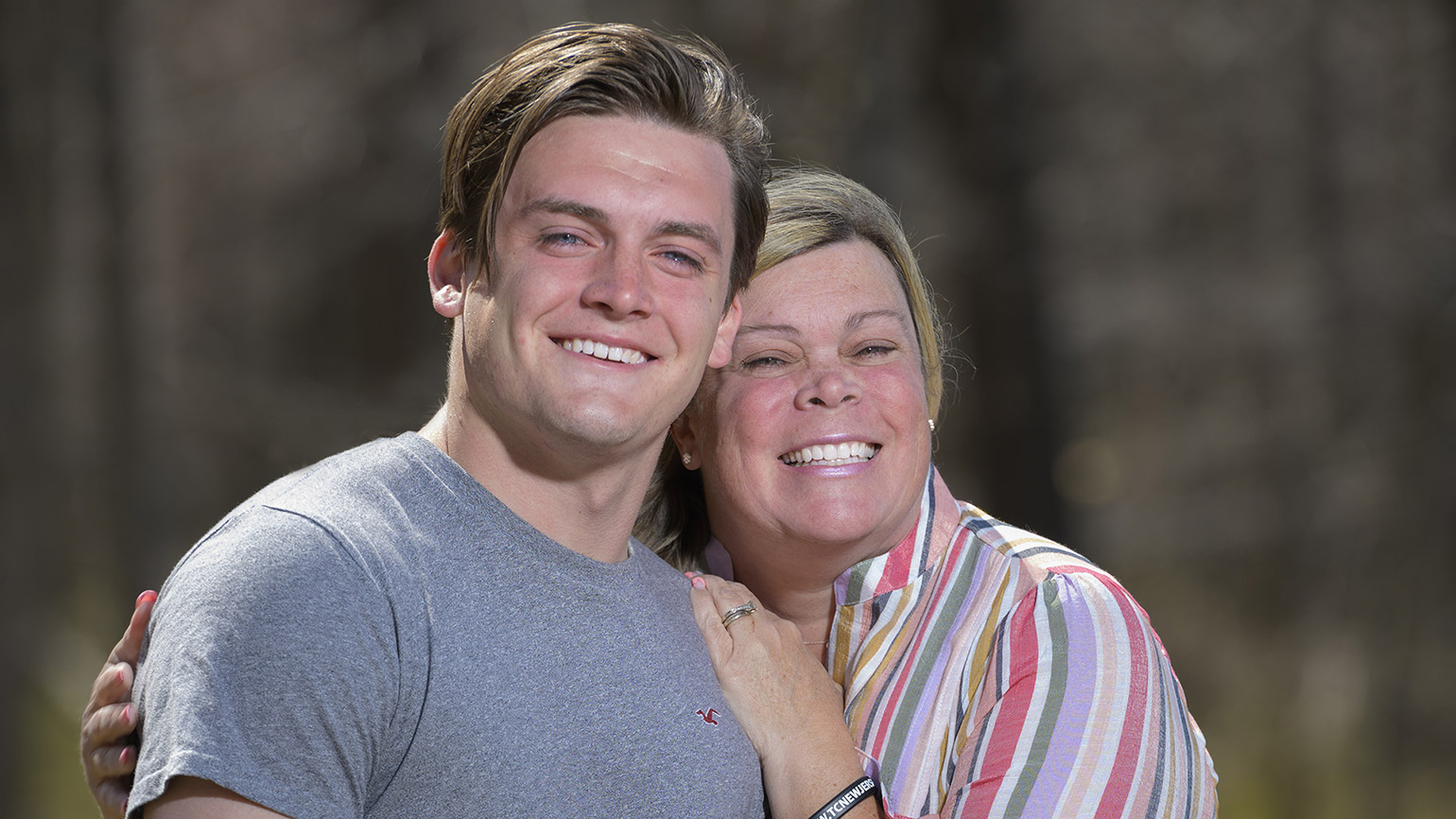
Anne with her son, Chris
    Ann with her son, Chris

Chris was my 18-year-old son. “He’s going to be a basketball player!” a friend exclaimed the first time she saw him as a toddler. Other friends told me that his long fingers meant he was destined to be a pianist or a swimmer. Sweet compliments. But inside I knew. Something wasn’t right.

I’d known about Marfan syndrome, a rare genetic disorder that affects the body’s connective tissue, for years. As a little girl, I’d had an unusual celebrity crush…on Abraham Lincoln. I’d read that experts believed he may have suffered from Marfan, which would explain his gangly body.

At the time, there was no genetic test to confirm whether Chris had the disorder. Doctors gave me conflicting opinions. All any of us could do was wait for symptoms to manifest. And manifest they did. Chris’s eyesight was poor. His spine began to curve. By the time he was six, it was official. Chris had Marfan syndrome.

The trajectory of my life changed with his diagnosis. Before having Chris, I’d been an award-winning dancer, singer and actress. I’d made my Broadway debut in Cabaret at age 19, and the legendary choreographer Bob Fosse soon became my mentor. I went on to star in shows like A Chorus Line, Chicago and Sweet Charity and in movies such as Annie and All That Jazz. But when I got pregnant, I was ready to retire. My husband and I were then living in Florida, and I was running the Broadway Theater Project, a performance program for high school students.

Marfan changed everything. I needed to go back to work to provide for Chris’s care; the situation became even more urgent after his father and I divorced. Only one place had the best performance opportunities and medical care in the world. I moved back to New York City with Chris. He had one procedure after another. Physical therapy. Heart monitoring. Scoliosis required rods to be put in his back. Four operations on his right leg. Three eye surgeries. More back surgeries. Surgery to replace part of his aorta, the large artery that carries blood away from the heart.

Medically, our move to New York made sense. Spiritually I struggled. I missed our Florida church community. Marfan magnified the normal anxieties of motherhood until they threatened to overwhelm me. Chris looked different from other kids. Would he be able to make friends? Would he find a place where he belonged?

I wanted Chris to have a haven to turn to when life got tough, and for me that haven had always been my faith and the church. I wanted him to feel the somber dread of Good Friday and experience the joy of Easter Sunday, when the shroud was lifted and the sanctuary covered in flowers. I remembered exclaiming to my mother when I was little, “How did they do this? It was so sad on Friday. And now it is wonderful!” I’d thought it was a miracle.

Now I needed another miracle—for myself and for my son. If we were really going to make New York home, we needed to find a spiritual community.

I enrolled Chris in Sunday school at the Church of Heavenly Rest, on Manhattan’s Upper East Side. The first time I walked up to the church to drop him off, I felt that Good Friday dread welling up inside. What if someone made fun of Chris? What if the teacher didn’t reach out to him?

The moment I walked through the imposing wooden doors, I was greeted by a woman. “I’m Pippa!” she said brightly. “And who is this little guy?”

He clung to me. “This is Chris,” I said.

Pippa walked us to Chris’s class and introduced me to his teacher. “He’s in good hands,” she assured me.

I had my doubts. Chris stood out. He was taller than the other kids and looked older. Would they accept him? Would the priests know how to interact with someone so different? Chris seemed to like school, but I still worried.

On Palm Sunday, my nerves were at an all-time high. The church was celebrating by giving each parishioner a palm and having us march in a parade around the block.

“Can I walk with the other kids?” Chris asked. I nodded, trying not to let my worry show. What if they ignored him? Or, worse, mocked him?

I took a palm from the priest and stepped onto the sidewalk. The sidewalk was crowded. I clutched the palm in my hands and stood on tiptoe, keeping an eye on Chris. He was ahead of me with a few other kids.

The procession was led by a man holding a banner. Behind him, choir members in long red and white robes rang bells as they walked. The younger children had maracas and shook them as they ran down the sidewalk. All I could think about was Chris. I craned my head to get a glimpse of him. Was he okay? What if he was looking for me?

He was talking with some of the kids. At one point, the teacher leaned down to say something and Chris laughed.

“He fits right in,” Pippa said.

I held the palm to my heart and watched as my son exchanged smiles with his new friends. He had found a place where he belonged. In fact, we both had. My Easter miracle had arrived a week early.

During Chris’s teenage years, when the differences in his appearance became starker, our church friends made sure there was a place for him. He took confirmation classes with his friends and was confirmed at age 14. He played Lazarus in the church play. He carefully set bananas at each plate when the church served meals for the less fortunate. He was never the odd man out.

Walking down the street, I’d sometimes hear people whisper, “What is wrong with that kid?” At church, no one whispered or stared. Chris was accepted—and loved—just as God made him.

Our church community’s embrace of Chris’s differences inspired me to celebrate beauty and uniqueness wherever I found it. That’s how I’d ended up in that room full of frightened teenagers—at a national conference of The Marfan Foundation.

Those teens were there because I had choreographed a dance specifically for them. My background as a dancer helped me see the beauty of elongated figures. Part of a choreographer’s job is creating the right dance for the dancer’s body. I’d trained for this special assignment my whole life! I choreographed a dance that would highlight the long-stemmed and lithe bodies of Marfan kids.

“You know why you’re here?” I asked. “You’re here to celebrate the beauty and grace of your bodies. You’re here because you’re unique and beautiful. If you were a Giacometti or Modigliani, you’d be worth millions of dollars!”

No one moved.

“Can anybody here make their knees go flat on the ground?” I asked. “It’s a lovely move. Chris, can you show them?”

Chris smiled and dropped to the floor. He lay down with his knees together and his lower legs straight out to each side in an L shape. Because Marfan had given him flexible joints, his knees stayed flat against the floor.

“Can anybody else do that?” I asked. A couple kids nodded. “Wonderful! Let’s get to work.”

I spent a week working with the kids, watching them dance and laugh and become close friends. On our final day together, we filmed the dance for a documentary being made about Marfan syndrome.

Choreographing that dance was like Easter Sunday all over again. I found beauty and joy in the disorder that had once filled me with anxiety and dread. Dance is all about taking what you have and making it work. That’s what life is all about too. My son, and my faith, remind me of that day after day.

For more inspiring stories, subscribe to Guideposts magazine.

How an Art Class Gave This Worried Mom Hope

My heart broke a little with each step my 18-year-old son took toward the white Volkswagen idling in the dark at the end of our neat suburban drive­way. I’d never felt so powerless.

He climbed into the car, his shoul­ders slumped. He looked so sad. I took my husband David’s hand and squeezed hard. Together we watched the taillights fade into the darkness.

Community Newsletter

Get More Inspiration Delivered to Your Inbox


“What if we never see him again?” I said, my voice hoarse with emotion.

“It was his decision,” David said slowly. “He knew the rules.”

We’d given Tim every chance to get clean from drugs and alcohol. All we got in return were two years of lies and half-hearted attempts. Finally we told Tim that if he continued doing drugs he would have to move out. He defi­antly refused to quit. This time, we insisted he take an at-home drug test. It came back positive. Tim went to his room and called his girlfriend. Then he packed a bag and left.

David was right: Tim was an adult. Our son had made a choice—drugs over his family. I cried for days after­ward, but other emotions surfaced through the tears. Anger. Resentment. Over and over, I justified our ultima­tum to Tim, as if to trying to convince my heart. He knew the rules. How could he do this to our family? To himself? He was becoming someone I didn’t recognize and couldn’t stand it.

Other times, I felt guilty. How could I not have caught this? I worried Tim would die and I’d never see him again.

Tim was the second of four children, spiritually mature at a young age. He got baptized in our church as a teen­ager, never missed youth group, stud­ied his Bible. Then he turned 16. And everything changed.

I tried to chalk it up to typical teen­ager angst, yet a nagging sense told me this was something more. He seemed depressed, and I grew increasingly concerned. One day, I opened his phone and read through his messages. I didn’t feel as if I had a choice. To my horror, I scrolled through text after text about smoking pot. Worst of all, they were all from older kids in youth group.

David and I confronted Tim that evening. “I’m not going to stop!” he said. “Even my teacher says smoking pot is better than drinking alcohol.” He turned and retreated into his room, into himself.

Loving Christian families didn’t have kids doing drugs. What would people think? I was filled with anger at the friends who had in­troduced him to drugs.

Tim grew more distant from us, like a kite being torn from our hands by an unyielding wind. Getting kicked out of high school? Check. Staying out all night without telling us where he was or who he was with, or lying about it? Check. Endlessly protesting that he wasn’t ad­dicted to drugs when we knew he was? Check. It was a list we thought hap­pened to other families, not ours.

People we thought were friends at church stopped talking to us, literally turning their backs to us as we walked through the door. I stopped going, but David continued taking our other three kids. I kept praying every day, on my knees, but it felt as if God had abandoned me.

One thing helped keep my head barely above water: a newfound gift of painting and drawing. A friend had invited me to a painting party she was hosting. I didn’t really want to go. I was barely leaving the house those days. But my friend was persistent, and I relented.

It was only after the class that it hit me: I’d spent two hours barely think­ing about Tim. I hadn’t worried, cried or felt guilty. I came home and told David I was buying art supplies, even though I’d never painted before and my work was mediocre. I just knew I couldn’t wait to paint again. I started painting day and night.

Eventually I got good enough to teach my own painting parties. Soon after Tim walked down our driveway and left us, I was scheduled to teach a painting party for a women’s Bible study. I was terrified I couldn’t do it.

Parked on the street outside the par­ty host’s house, I struggled to pull my­self together, wiping away my tears. In­side a dozen women were chatting and laughing. I couldn’t wait any longer.

I set up an easel, canvas and paints in front of each woman. They looked at me expectantly.

“I never picked up a paintbrush until I was 42,” I said. “My son fell into ad­diction at the same time God gave me the gift of art. When I paint, my mind gets a break. I hope in these next two hours, your mind gets a break too.”

The outpouring of support I got from those women was humbling. Still, I yearned to feel a divine presence. I’d heard nothing from God for seven months. Desperate, I went on a wom­en’s retreat. During a break between sessions, I went outside, wanting to be alone. A sudden cool breeze washed over me. Then a thought, like a com­mand, shot through my mind: You will minister to addicts.

“No, I won’t!” I said. How could this be God?

Tim turned 19, but what was there to celebrate? I was running errands one day when my phone rang. “May I speak to Heather Henry?” a man’s voice said.

I took a deep breath. Was it about Tim? Had something happened? “This is Heather,” I said.

“I got your name from someone who attended one of your painting par­ties,” he said. “They were impressed with your compassion…. Would you consider teaching at a rehabili­tation center?”

Wait, what? “Like people do­ing physical therapy?” I said.

“No, I mean a drug and alco­hol rehab,” he said.

“Did you know I was the mother of an addict?” I said.

“No, I hadn’t heard that,” he said.

         Heather’s Takeaways
         1. Parents of an addict must
present a united front.
  2. Enabling does not equal love.
         3. Biblically prepare for a long
spiritual battle.

My mind was a jumble. You will minister to addicts. Those words came back like that sudden cool breeze at the retreat. I’d forced them out of my head until this moment.

“Don’t hire anyone else,” I said. “I’m the person for this job.”

My palms were damp as I stood before my first class, two rows of fac­ing tables in a big conference room. “My name is Heather,” I said. “I’m the mother of an addict. I’m here to teach you painting, and I have only one rule. You are not allowed to talk negatively about your art.”

I demonstrated overall concepts: color, shape, space, texture. I worked with each student one-on-one. Talk came easily, naturally, not like with Tim, where conversations were tense standoffs. I felt a strange affinity for the people in my class. Maybe I wished Tim were among them. At every class, I told my students that they were worth the work it takes to stay clean and hugged them as they left the room.

One day, a student asked how Tim was doing. I told her he had just re­lapsed again and we didn’t know where he was.

“He’s not doing this to hurt you,” she said. “He doesn’t want to be this way, but he doesn’t know how to stop.”

All this time, I had been so angry at Tim for not trying hard enough to overcome his addiction, not caring enough to change, but as those words sunk in, I realized that I had misunderstood his struggle. Now all I felt was pity. My heart was broken for him, instead of because of him.

Tim couldn’t do this on his own any more than I could. Neither one of us was any match for the disease of addiction. It was in the recognition of that need for help that I found God again waiting to meet me. It was a relief, flooding me with compassion and love.

That evening, David and I agreed to rebuild our relationship with Tim. That didn’t mean enabling him. We couldn’t give him money or allow him to live with us while he was using. It wasn’t easy. Tim continued to relapse, but we committed to seeing him each week, and in those conversations, I found hope. Every time we met, in exchange for the food we brought him, Tim had to endure my crying, praying, pleading for him to enter the faith-based residential recovery program run by Adult & Teen Challenge.

In April 2020, I asked Tim if he would take a one-hour drive with me to visit a Christian retreat center and addiction treatment center. Tim agreed.

“Mom, I’m miserable,” he said, sobbing. “I just want to be normal.” His body was emaciated, covered with sores I knew were the result of using methamphetamines and heroin. This felt like his last chance. We talked the entire way, honestly, heart to heart.

We arrived and drove down the winding road, passing trees with Scriptures attached to them. One read, “I will restore the years the locusts have taken.”

“Do you know what that Scripture means?” I asked. Tim shook his head no. “It means these last four years you’ve been doing drugs, God can restore to you.”

“But how, Mom?” Tim asked.

“I don’t know,” I said. “All we can do is trust God.” It felt like a message I was telling myself as much as Tim.

By the grace of God, Tim decided to attend Adult & Teen Challenge and has been clean now for more than a year, a day at a time. Recovery is a miracle, one I will never stop being grateful for. At our lowest point, when we felt most helpless and hopeless, God met each of us—Tim and me—and changed our hearts.

For more inspiring stories, subscribe to Guideposts magazine.

How an Addict Started the Great American Race

I believe in dreams, the kind that God plants in our hearts as seeds. Sometimes they’re big dreams that change the course of our lives. Or sometimes they involve a specific project you believe in, that you hope people will enjoy and have fun with.

A dream like that started for me in 1982, when I was president of Interstate Batteries and seeking more public recognition for our company.

Sugarcreek Amish Mysteries In-Article Ad 2023

One night a longtime friend, Tom McRae, excitedly talked about something called the Great American Race. “It would be classic cars, built before World War II,” he said, “racing from Los Angeles to Indianapolis and arriving in time for the Indy 500 at the end of May. It would be the first time ever for an event of this kind.” He looked at me intently.

“What about your company sponsoring a race like that? Think of the publicity value!”

I gulped. Although we had been close friends for years, Tom and I had never had any business dealings together. But when he looked at me and said, “If God wants this to happen, it will work out,” that cranked me up! For it was only through the grace of God I sat there that day.

Once a hopeless alcoholic, I had felt I was on a treadmill from which there was no escape. One night, after the police had pulled me over on the highway, I knew my life was out of control and found myself screaming out to God, “I can’t handle this by myself!” God helped me take control of my addiction, and when I put Christ in charge of my life, my old fears, hang-ups and compulsions were replaced by a sense of joy and peace.

Tom McRae had gone through a similar experience, so when he proposed we put our plan before God, I was more than glad to kneel down with him. “We want to honor you, Lord, in all things,” we prayed. “If this venture is your will, help us to make it happen.”

That’s how Tom and I became race promoters. Our plan was to open the event to classic-car owners who would pay a fee to enter, and offer prize money to the winners. As the cars chugged from town to town, we hoped people would turn out to see a lot of interesting old cars and participate in a pleasant community event. And on the way we hoped to generate a lot of goodwill, community spirit—and publicity for my company.

But at the end of January 1983, our Great American Race was scheduled to begin in four months, but we had no entries.

For a while I was feeling like my grandson Zach did when one day he got cut on the foot by a toy car. When he looked down and saw the blood, he started to wail, “Grandma, Grandma, put your finger on it. All my air is gonna go out!” Well, I was feeling like all my air was going out too. But I thought of our prayer again, and how much the event meant to me, and determined to hang in there.

Sure enough, one of our press releases hit pay dirt when Old Cars Weekly ran a front-page story on the race, and entries began rolling in.

On the morning of May 24, 1983, 69 antique cars lined up at Knott’s Berry Farm, south of Los Angeles, ready to commence their 2000-mile race.

One beautiful 1909 Mercedes, a four-door convertible in lustrous enamel, had bronze exhaust pipes snaking from the hood. Another was a 1930 Cord Cabriolet in gleaming burgundy. Near it purred a sleek 1929 Duesenberg. Down the line was a 1930 Packard Boattail Speedster in brilliant vermilion accented by a chrome radiator. And I couldn’t help smiling at the picturesque 1931 Ford Model A wooden-sided delivery truck.

The Great American Race featured competitive “orienteering” runs in which each team (driver and navigator) would be given accurate route and time instructions. For guidance, participants were only allowed a clock, stopwatch, their speedometer, pencil and paper.

Our organizers prayed at the beginning of each race, in the morning, at lunch and on overnight stops, asking God for the safety of the racers and a blessing on the communities we passed through. Even though skill and determination on the part of the drivers were clearly involved, I also saw the race as what I called a jaunty journey of joy. One that would bring drivers and observers alike together in a satisfying and fun experience.

On Saturday morning, May 18, Tony Curtis—who had starred in the film The Great Race—waved the starting flag. The racers roared off. It was an amazing sight to behold, antique machines traversing back roads and interstates, covering 170 to 480 miles a day, through all kinds of terrain and weather.

To me, it was a display of true Americana as jubilant crowds applauded us in every town and city. In each city where we stopped, we were feted with old-fashioned picnics, homemade ice cream, cookies and

gallons of cold lemonade. Flags fluttered from lampposts, high school bands played on courthouse lawns and banners greeted us with “Welcome, Racers!”

Naturally, there were breakdowns. Six cars blew their engines in the mountains. Ancient gears gave out and bearings crumbled as cars gave up the ghost along the way. But their owners all took it in good spirits.

Out of 69 cars that started the Great American Race, 62 finished a week later in Indianapolis. On the Friday before the Indy 500, the city’s 32-police-officer world champion motorcycle drill team shut down traffic and escorted our racers to the Indy 500 track for a victory lap.

In the years since, the race has continued to be a big hit, and old cars have driven through towns all over the U.S. and Canada. Sure, any dream can encounter obstacles. But if you’re determined to do it, with God’s help you can keep chugging along and follow your dream all the way. As the motto of the Great American Race goes: to finish is to win.

This story first appeared in the May 1998 issue of Guideposts magazine.

How a Memory Box Can Help People with Alzheimer’s

This article is based on information provided by Home Instead Senior Care.

Jack held the old leather baseball glove in his hand and suddenly found himself in another time and place. He stood on the pitcher’s mound, gripped the ball, wound up and hurled it toward the star batter at the plate. As he sat in a chair and traced his fingers along the fold of the familiar mitt, the ump yelled ‘Strike!’ Jack heard it plain as day, as if he were right back in the game.

Community Newsletter

Get More Inspiration Delivered to Your Inbox


The sense of touch has a unique way of triggering memories for people like Jack, who have Alzheimer’s or other forms of dementia. Since tactile stimuli work in a way that other forms of communication cannot, a collection of meaningful items can be a great calming influence for your family member. First come up with items that have special significance for the person. Did your loved one play an instrument, do a lot of cooking, enjoy gardening or sports, build things in a workshop? Put all the relevant items you can think of in one place so that when you need to comfort the person, you can pull them out.

The memory “box” can take a number of forms—maybe a basket, an inexpensive plastic container with snap-on lid, a designated shelf or drawer, or a shoebox for smaller items. Putting the box together could be a fun, intergenerational activity for your family. Enlist the help of the grandchildren to decorate the box or contribute to the collection.

A Memory Box

You can add anything to the box that seems meaningful to the person with dementia:

  • A baseball mitt
  • Gardening gloves
  • Various fabrics
  • A stuffed animal
  • A musical instrument
  • Trip souvenirs
  • A family heirloom
  • A favorite article of clothing
  • A trophy

Or, you may want to get creative and create themed memory boxes with items relating to a specific experience:

Seashore Memory Box:

  • Sea shells
  • Pan filled with sand, large enough to place feet in
  • Dried starfish
  • Beach towel
  • Suntan lotion

Nature Walk Memory Box:

  • Leaves
  • Tree bark
  • Flower petals
  • Pine cones
  • Acorns
  • Rocks
  • Pot of soil (particularly if the person likes gardening)

Have the person with dementia hold each item and encourage them to share what it brings to mind. You can talk about how it feels—bumpy, smooth, fuzzy, hard—and what memories the person associates with it.

Use your creativity to put together a memory-stimulating collection of items customized specifically to the person with dementia. The possibilities are endless.

How a Letter Saved Him from Alcohol Addiction

I don’t remember a thing about the accident. It was April 11, 1991, and I was driving home to Montgomery from Birmingham along I–65 near Clanton. There’s a rest area there, and I’m told the tractor trailer rig was pulling out onto the highway when I ran under it in my Volvo. But as I say, I have no recollection beyond leaving the political rally I had attended in Birmingham that night until I woke up at the University of Alabama Hospital in Birmingham two weeks later. It was a few weeks more before I got Eddie’s letter, but I’m getting ahead of myself.

I do know that I was in a hurry to get home to my wife and kids that night and that I was also drunk behind the wheel. I was drunk most nights back then so I don’t want to give the impression that these were unusual circumstances. If anything, it was the natural—if calamitous—culmination of the life I had been leading.

Walking with Jesus L&E evergreen_in article ad

I am a lawyer who does a good deal of work in politics and the mental health field. That means I’m with people a lot. Back then, I was entertaining clients and trying to project an image of confidence and “big-shotism.” I managed to prop up this facade for many years with a whiskey bottle. It was the alcohol that lubricated my insecurities and fears, that made life just a little less daunting and numbed any bad feelings I might have. Alcohol may have nearly killed me, but it kept me going for many years when I hadn’t yet discovered what I had been searching for all along.

When I woke up in the hospital I swore I would never take another drink for as long as I lived. This is it, Corky. Your drinking days are over!

During the month that I was hospitalized I received hundreds of letters and calls from folks pulling and praying for me. One day a letter arrived from Eddie Walker. He said he had been at the scene of my accident. So far, so good. But then he went on to profess his faith to me, how Christ had turned his life around, and how he felt the Lord had protected me that night, protected me for a reason.

I almost threw the letter away. It didn’t upset me; I knew all about God and Jesus. It’s just that I didn’t have much use for Eddie’s type of faith. I was in charge of my life here on earth—the day-to-day stuff, I mean. God could take care of heaven.

But I didn’t throw the letter away. I put it aside like all the others, thinking that I would drop Eddie a thank-you note someday.

I have always been an achiever. I competed aggressively in law school. I was an athlete in high school. It was only natural that I went after my recovery from the accident tooth and nail, to be as successful at that as I had been at everything else. That’s the way I felt about not drinking too. I was going to stick to my pledge come hell or high water.

The months went by and my body got stronger. Yet my spirit weakened, though I mistook that weakness for strength. After nine months I thought I could try taking a drink again. Just one. No one would know. You’ve learned your lesson, I told myself. Soon I was drinking regularly, then daily. And it was no secret.

A year after the accident my family and some friends and colleagues confronted me about my continued drinking. They didn’t pull any punches: They called it alcoholism, and left me with the option of drinking myself to death or going to a rehab hospital. I had no choice. Willpower had failed me. I checked into Parkside in Warrior, Ala., on April 7, 1992, almost exactly one year after my accident.

Among the things I took with me for the month’s stay in the rehab was Eddie Walker’s six-page letter. I had never been able to get it out of my head, and I often reread it, even when I was drinking. In fact, I began carrying it in my briefcase.

One line jumped out at me: “All I know,” Eddie had written, “was that I was one person, then I asked Christ to come into my life, and I was a new man.”

I wanted to be a new man, and I had more or less proved to myself that I couldn’t do it alone—and the best thing for me to do was to get out of the way and let God take over. That was the decision I made in rehab. On Good Friday, 1992, I became a new man, a different man, thanks in great part to the message of Eddie’s letter.

Twelve-step groups like Alcoholics Anonymous say you must undergo a “spiritual awakening” to change your life. I have found the Holy Spirit. Some call it being born again or saved. I like what Saint Paul said. He described himself as transformed. We change. We go from the dark to the light. We see things differently. I am an Episcopalian, and the Episcopal Church celebrates the conversion of Saint Paul as a holy day on January 25. That’s my birthday.

In his letter Eddie talked about mysterious people who arrived at the accident on I–65 that April night as possible angels. “It really doesn’t matter who they were,” Eddie wrote. “God sent them with perfect timing to give you a second chance at life.”

That second chance was my transformation. I have read Eddie’s letter to countless people. I have copied it and laminated it. My cousin, a missionary, took it to Malaysia with him and shared it there. Another friend read it at a Bible study in Russia.

Though I don’t remember the strangers who saved my life that night, I will never forget the message they helped deliver—that I could become a new man, transformed forever by God.

This story first appeared in the November 1995 issue of Angels on Earth magazine.

How a Horse Helped Her Overcome Fear and Self-Loathing

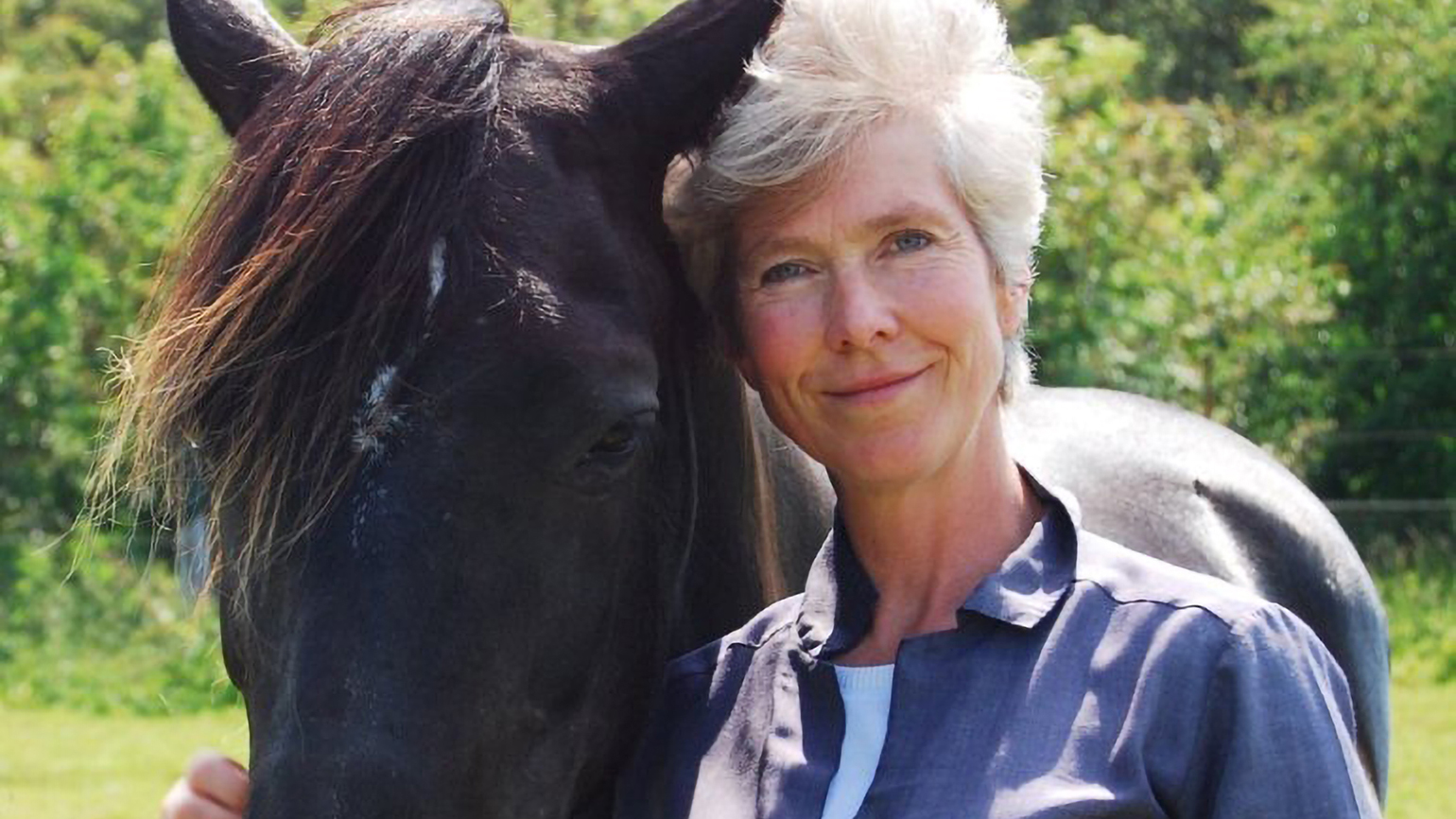
Had I made the right decision, getting these horses? I paced in our home near Norfolk, England, waiting for the horse whisperer to pull into the drive. I’d found his information in an equine magazine. He claimed to help people with difficult horses. I was desperate. My two horses ran from me or lashed out. What if I couldn’t make them feel settled? What if I failed with them as I had with so much in my life?

My son, Richard, then 11 years old, had convinced me to adopt a small pony, Gus, several months earlier. Richard had a Saturday job tending horses for a neighbor. “Please, Mum, please! I’ll take such good care of him,” he pleaded.

God's Constant Presence In Article Ad

We had the land, and Gus had been abandoned. He needed a home. My friends, after they got over the initial shock, insisted that I adopt a second horse. “Horses only feel safe in a herd,” one said. So we got Bronwen, a dark bay mare, to keep Gus company.

What did you think would happen? I asked myself as I looked out the window for the horse whisperer. Perfect harmony? I wanted so badly for us to all get along. I’d always loved animals. But Gus, fiery little thing, kicked and bit. And Bronwen, who had been so loving and well-behaved in her old home, bolted for the farthest corner of her paddock whenever I approached. What could she possibly be afraid of? I was so small and meek. The only person who’d ever been afraid of me was me.

Fear had controlled my life for as long as I could remember. Fear of God. Of sin. Of my own nature. I’d been raised a vicar’s daughter. My family was Church of England clergy for five generations on both sides, very serious—almost puritanical—about religion and God. Every Sunday of my childhood, I heard my father preach the terrors of sin and damnation.

“Sin is intentional disobedience and rebellion against God,” he would tell the congregation. “Saint Paul clearly states that all have sinned and fallen short of God.”

I was horrified. I must be very bad, I thought. I’m full of sin. Why couldn’t I be better? Why couldn’t I be someone whom my father and, by extension, God, could be proud of? Someone they could love?

To punish myself, I started rationing food in my early teens. This was the mid-1970s. Nobody knew what to do with anorexic girls back then. I couldn’t imagine that someone as worthless as I was deserved pleasure, and certainly not happiness. I felt so bad about myself that I just wanted to disappear. I got smaller and smaller, thinner and thinner. My mother, fearing for my health, sent me to a psychiatric hospital.

Nurses stood watch at mealtimes and handed me a glass of milk every hour, along with sedatives. “Drink this, Joanna,” they said. The nurses weren’t unkind, but the patients scared me. I would watch them rock back and forth in chairs, lashing out seemingly at random. I was a sheltered teenager. I didn’t know anything about mental illness and trauma. I need to gain enough weight to get out of here, I decided.

In three months, I put on enough weight that the doctors let me go home. I ate in front of my parents but purged in secret, developing bulimia. You don’t deserve this nourishment, I told myself. You are bad.

I hid my eating disorder into adulthood. I got married at 26 to a man 20 years my senior. Did I love him? Or did I just want to be useful, to keep his home and bear his children? I didn’t do so well at that. We had Richard only after years of trying to conceive.

By my early forties, I was a shell of a person, trapped in a destructive cycle. Binge, purge, binge, purge. I agreed to adopt Gus and Bronwen not because I wanted horses but because I wanted to please my son. Maybe this was something I wouldn’t fail at.

Yet here I was, three months later, calling in the experts. The horse whisperer and his assistant arrived, and I walked them to the paddock. As soon as she saw me, Bronwen turned tail and ran to the opposite corner.

“I don’t know what to do,” I said, biting back my tears. “How do I show her that I don’t want to hurt her?”

The horse whisperer opened the gate and walked calmly toward Bronwen. Her eyes, which had been wide with terror just moments earlier, softened. Her breathing steadied. “That’s it, girl,” he said. Within minutes, the man had Bronwen moving in circles, backing, stepping sideways and listening, her eyes fixed on him, mesmerized.

I was stunned. Why can’t I do that?

“She’s mirroring his behavior,” the assistant said. “Horses respond to calm with calm, fear with fear.”

A lump caught in my throat. How had I been communicating with Bronwen these past months? I imagined how I must appear to her: a woman whose fear and pain followed her into the paddock, whose whole body screamed “Danger!” No wonder Bronwen is scared, I thought. She’s only reacting to what she sees in me. Gus too. He was responding to the part of me with no self-respect. If I couldn’t approach my horses with peace and positivity, how could I expect them to do the same?

I tore through books about horses and healing. I paid close attention to how I approached Gus and Bronwen. No more rushing into the paddock, tense with anxiety and shame. Instead I would walk slowly toward Bronwen, studying every twitch of her ears, every ripple of her muscles, every shift in her energy. Becoming more aware of her body made me more aware of my own.

How am I feeling? I focused, step by step, on my head, my heart, my stomach, my arms and legs. Every sensation was related to my fear, I noticed. I breathed out my negative feelingsyou’re bad, you’re worthless—and Bronwen let me come a bit nearer. Day by day, over many months, she and I became friends.

One morning, I got nearer to Bronwen than I’d ever dared. Would she let me touch her? I centered myself with a deep breath. I’d spent decades convincing myself that I didn’t deserve a moment like this, a chance to feel peace, closeness. Could I break the cycle? I put out my hand. “That’s it, girl,” I said. Bronwen didn’t bolt, just watched me and waited. No fear in her eyes. Only curiosity. I glided my fingers gently down her mane, grazing her neck.

“Good girl,” I said, slipping my arms around her. I felt a great whoosh pass through us, almost like a divine spirit. Bronwen wrapped her head and neck around me, embracing me. Such love and kindness! She and I were part of the same herd, the same great universe. I felt from Bronwen the goodness I’d pushed away my whole life, that I’d punished myself for feeling. Is it possible I’m not so worthless after all? Bronwen didn’t seem to think so. Maybe God didn’t think so either.

I practiced meditation and breathing exercises daily to help manage my defeatist feelings. In, out. In, out. Was I really so bad? Did I need to punish myself? Pain and fear began to dissolve in my body, replaced by a new ease. I purged less and less until, two years after Bronwen came to live with us, I realized I didn’t want to do it anymore. It was as if God had used Bronwen’s love to give me permission to live without fear of judgment. To just be.

What if other people could benefit from horses like Bronwen? I wondered if I could create some sort of program to do that. I started working on what would later become the Natural Herd Model, an equine involvement therapy that I pioneered.

I’d learned from Bronwen and through my reading about an amazing phenomenon: Though individual horses can carry trauma, the herd naturally dissipates fear. If a horse—or even a human—enters the herd with fear, the others determine whether that fear is useful. Is danger close by? Does the herd need to protect itself and run away? If not, the herd lets the fear go. The fearful horse is reintegrated into the group, and the herd as a whole rebalances to its natural state of calm. A miracle of social equilibrium.

The numbers in our herd grew. Nine horses, then 15, eventually 21. I left my marriage and moved to Wales, to a place with enough land for my horses to roam freely. I found clients, people searching for healing from their traumatic memories. I brought them to the paddock. I wanted to help my clients sort through their fear and shame and negative self-worth. We’d walk in together, and the horses would greet us.

“When we enter the herd, we become part of their natural rebalancing cycle,” I’d say. “Isn’t that amazing? How does it feel to let go of what you’ve been carrying?”

Over time, i saw that my own body was filled with the same loving energy I’d shared with Bronwen that day in the paddock all those years ago. I wasn’t worthless. I didn’t deserve punishment. I was just a human being, imperfect as all humans are. The horses knew that and didn’t judge me. I could let go of the self-hatred I’d carried for most of my life. I didn’t have to fear. Not my father. Not God. Not my own nature.

God wasn’t an external force of damnation but a light inside that made all things possible, even a recovery from a 30-year battle with anorexia and bulimia. If ever I need a reminder, I only have to watch Bronwen and the other horses roam the paddock. Happy and free and at peace with themselves. The way I am and deserve to be. A miracle in the making.

For more inspiring stories, subscribe to Guideposts magazine.

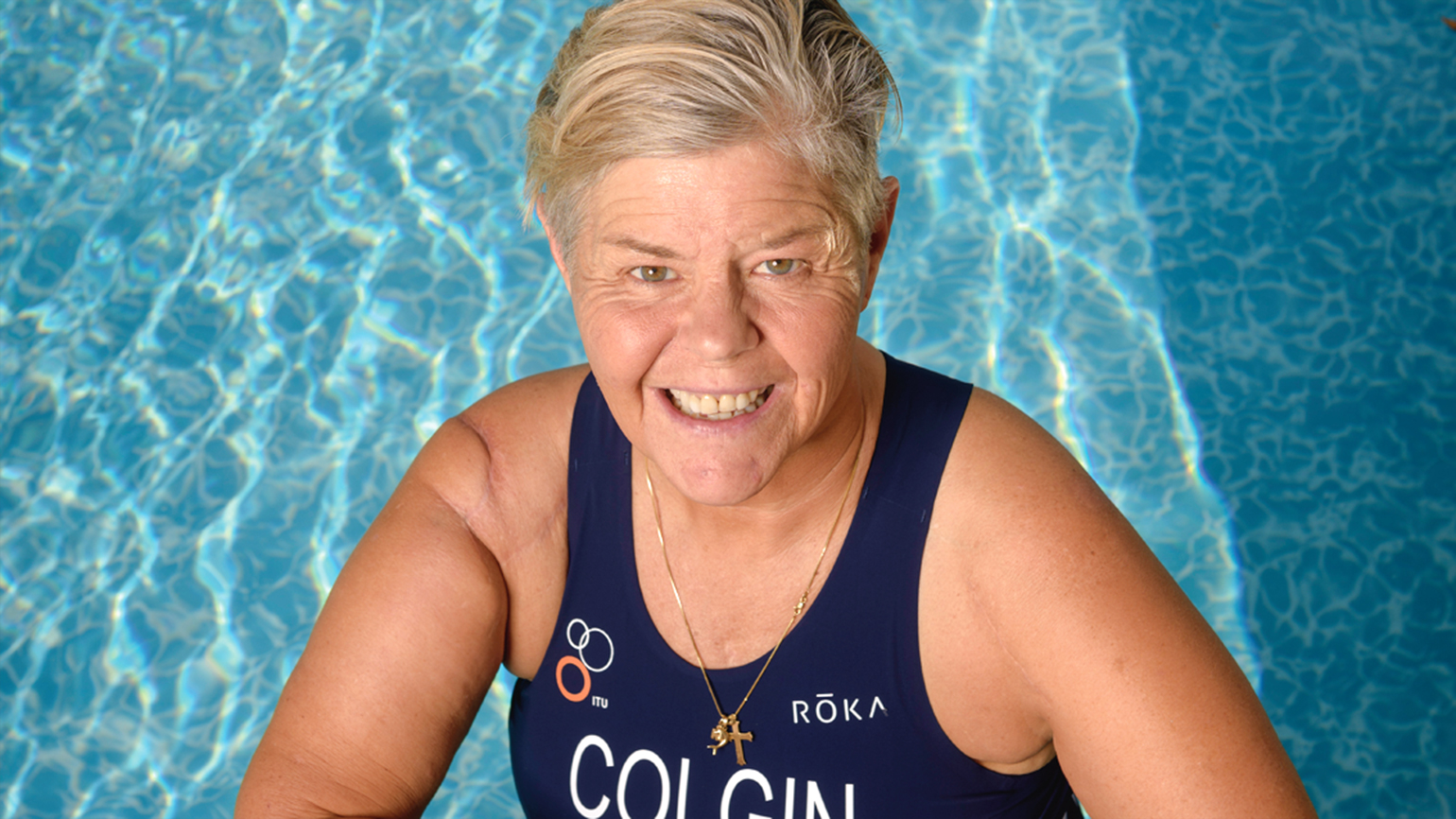
How a Driven Surgeon Found a New Passion

You’re our last hope,” the marine’s mother told me. “If he can’t do this, I’m afraid he’ll…” Her voice trailed off, but I knew what she feared.

At 23, her son had suffered a spinal injury in combat, leaving the use of his arms and legs extremely limited. She’d brought him here, to the Lakeshore Foundation rehabilitation center in Birmingham, Alabama, in hopes of finding some physical outlet. Could I teach him to swim? “He’s terrified he’ll drown,” she said.

Journey With Jesus in article ad

She introduced me to him. His core body was still strong, but I saw the fear in his eyes. I knew it wasn’t the water he was most afraid of. It was moving on to a different kind of life than he’d imagined.

“You’ll have to trust me,” I said. “Can you do that?”

He nodded, uncertainly. I helped him into the water, faceup, and put my arms underneath him. His body trembled. “Don’t let go of me!” he said.

“It’s okay,” I said. “I’m right here. Take a deep breath. All you need to do to float is relax.”

Slowly his body stopped shaking and his breathing normalized. “I’m going to let go,” I said. I pulled my hands away. He was floating. He looked at me, his eyes filled with wonder. On the pool deck, his mother was crying.

I was in high school when i knew I wanted to be a doctor. Not just any physician. I was going to be a hand surgeon, specializing in microsurgery and reconstruction. The work was demanding, intense. Both my parents were driven, but it was my mother who inspired me most. She’d been a chemist, working for rocket pioneer Wernher Von Braun, then later for the U.S. Department of Defense. She taught me that God had a plan for my life but that nothing got handed to us. “He gives us talents, but what we do with them is up to us” was how she put it. What I heard was: You need to work your tail off. Always.

Skip ahead twenty years, to 1993. I had my own practice in Birmingham. On a typical day, I spent 10 to 12 hours in the operating suite, peering through a pair of surgical loupes, reconnecting veins, nerves and tissues, my every movement requiring absolute care and precision. The board that listed that day’s patients was filled to overflowing, people coming from hundreds of miles to see me. It was everything I’d ever dreamed of and prayed for. I was helping people, giving them a second chance at life. This was what I was meant to do.

One time, I’d operated for 24 hours straight, reattaching a man’s hand. I’d reattached fingers so that you’d barely know they’d been severed. Taken a toe and transformed it into a working thumb. Teamed with another reconstructive surgeon to remove a forearm bone and give a man with cancer of the mouth a new jaw. Helped hundreds of people with cartilage tears and carpal tunnel damage. On top of all that, I was on call at the hospital. 24/7. Nearly every day. I didn’t mind. I couldn’t imagine doing anything else. All I wanted was to work, work, work. Yet work energized me so much, I couldn’t wind down.

So I went running, three or four miles, twice a day. Feeling that burn, sweat pouring off me, heart pounding, was the closest thing to relaxation I could find. I loved knowing I was in shape. Those early-morning runs were when I felt closest to God. There were days, though, when even running didn’t do it for me—I was so wound up.

That’s when I went roaring down Alabama’s winding back roads on my Suzuki Boulevard. In winter, I’d go skiing. (Yes, there’s skiing in the South.) Hurtling down a double black diamond slope one Saturday, going way faster than I should have been, I wiped out and busted my knee. “No running,” my doctor said. “Don’t even think about it for a while.”

A few weeks later, I slipped into the water at the YWCA, feeling the chill against my legs. I hadn’t swum since I was a kid. But I had to do something. I was going crazy not running. I put my head into the water and made it okay across the pool, but coming back I couldn’t get enough air, my legs felt like lead, my strokes uneven and flailing. I felt as if I were going to drown. I reached for the side of the pool. Out of the corner of my eye, I noticed a man watching me.

“Do you mind if I show you a few things?” he asked.

Patiently, he demonstrated how to breathe, how to extend my reach, how to kick. He was East German. Had been a swim coach over there. Lucky me! Soon I was swimming a mile. Easily.

I was at my Thursday spin class one evening in 2001. In my late 40s, I was on top of the world. My practice was booming. And I was in the best shape of my life, a three-sport athlete: running, swimming and biking. Competing in triathlons all over the Southeast, finishing near the top of my age class. I’d even started coaching a group of rank amateurs on how to train for a triathlon.

Now in class, I was pumping hard. And I got the strangest sensation, like fingers pressing on my throat. The pressure grew the harder I pedaled. I’m just tired, I thought. I slowed my pace and didn’t worry about it.

Friday, I spent eight hours working in the OR, no problem. At the end of the day, I told a doctor friend about the odd feeling I’d had. “You’d better get that checked out,” she said. “Like tonight.”

To ease her mind, I called a former ER doc in private practice. “Why don’t you come over?” he said. “We’ll do a stress test.”

I had my shorts and shoes in the car. At least I’ll get in a run, I thought. On the treadmill, I’d run for only 30 seconds or so when the doctor said, “You should quit.”

“No, I’m good,” I said.

“Sherry, stop!” he said. “Now!”

I stepped off, and he showed me the test results. “You’re looking at a massive heart attack,” he said, tapping the steep dip in the graph line. “You need an arteriogram immediately.”

No. Not possible. Not me. But the arteriogram (an X-ray of the blood vessels) confirmed the stress test results. “You have a 99 percent blockage of one of your arteries,” the doctor said. “If you weren’t in such great shape, you’d be dead.”

I took it in stride. I had a stent inserted and, within weeks, was training for a triathlon. But my problems were only beginning. In the next four years, I had two bypass surgeries. I slipped on some ice and ruptured a disc. A bike accident ruptured it again. Then, a major systemic infection. When I wasn’t hospitalized, I was still working 10 to 12 hours a day. Work had to continue, especially now.

2005. My cardiologist called me into his office. “We’ve had a meeting,” he said. “All of your doctors. We’re telling you to retire. You can’t keep going like this.”

I opened my mouth to protest. “Sherry!” he said. “You’ve gotten three or four lives out of your heart. Enough already. You’ve got to slow down. We’re not giving you a choice.”

I was in shock. I was only 51. Everything I’d worked so hard for—my career, my athleticism, my entire identity—was being taken from me. One day, to clear my head, I took my Suzuki for a ride. Going too fast over a ridge, I totaled the bike and broke my wrist. I set it myself, with the help of a doctor friend. But it felt as if I’d broken way more than a bone and I had no idea how to fix it. Even my prayers seemed broken, too weak to even reach God.

I was home, doing nothing, fighting depression, when the phone rang. It was Jill Collins, a friend of mine and the athletic director at the Lakeshore Foundation, a facility renowned for its work with people with disabilities. “I need someone to coach my top swimmers,” she said. “What do you say?”

I hesitated. The most I’d done was teach rank amateurs to swim in a lake. These were Paralympian-level athletes Jill was talking about. They needed someone with serious coaching cred. “I don’t think I’m right for the job,” I said. Silence. “We’ve got a meet in four weeks,” Jill finally replied. “You’ll figure it out. It’s not like you’re doing anything else.”

Boom. That hit home. There were four of them—one legally blind, another with no use of her arms or legs. One with muscular dystrophy. The last with cerebral palsy. That first day, I watched as they slowly, awkwardly, made their way to the water. And then, it was as if they’d been transformed. They flew across the pool.

These were people who had lost way more than I had. And yet nothing was holding them back. They didn’t need me to work on their mechanics. But I could be an encouraging presence, could help with their mental game, things I’d once excelled at. Even then, I knew I’d be learning more than teaching. That I would finally be able to move on.

Now I was thrilled to see the accomplishment of the young marine. Minutes later, I showed him how to flip over, how he could move himself through the water. We worked for another hour. He didn’t want to get out of the pool.

Watching him and his mother leave, I couldn’t help thinking how life had brought me here to this moment. I wasn’t doing what I’d thought I’d be doing, but there was no doubt that I was where I was meant to be, still helping people, giving them a second life. Using the skills I’d been blessed with. I took a deep breath. I relaxed.

5 Easy Ways to Be Physically Active at Any Age

For more inspiring stories, subscribe to Guideposts magazine.

How a Caregiver Found Surprising Support on Facebook

My husband, Lee, and I were sitting in the doctor’s office, waiting to hear the results of a stress test. The cardiologist looked grave. “Lee,” he said, “you could drop dead at any moment. Your heart is operating at only twenty-five percent.” Twenty-five percent? Lee had always been so healthy!

Lee’s face turned pale. He seemed a million miles away. “You’ll need bypass surgery,” the doctor went on. “And after that, there’ll be a lot of rehab.” It could go on for weeks, months. Lee wouldn’t be able to lift anything or have energy to do much.

The Daily Bible Large Print relaunch with digital free gift in article ad

Neither of us was young—I was 75 and Lee was 81—but that had never stopped us from doing the things we loved. Writing and singing folk songs, seeing our friends at the Blackbird (our favorite coffeehouse), going to church, working in the garden at our farm. I’d worked for years as a child therapist, and Lee had only just retired from the public TV station in town, where he’d been a top-notch fund-raiser.

I tried to stay focused on the doctor, but what scared me most was becoming Lee’s caregiver. How would I do it? I dreaded the loss of freedom. And I had very little patience for all the things caregivers were supposed to handle: bedpans, wheelchairs, medications, getting up in the middle of the night, all the constant reassurance and support. It made me feel small just to admit it to myself.

For the next few days, we waited for the surgery to be scheduled and tried not to let our worries run wild. In preparation, we bought two deluxe recliners, comfy enough for Lee to sleep in and for me to be next to him, along with a device to help him stand. That meant I wouldn’t have to lift him. We listened to music and talked. I worked on a 1,500-piece jigsaw puzzle.

One day, I wandered outside to take photos of the wildflowers, the birds, the setting sun, the wild turkeys, seeking comfort in God’s creation. Normally I’d post my favorite images on Facebook with some sort of uplifting comment. But I wasn’t feeling so upbeat right now. What could I say? I didn’t want to bum people out.

I announced the upcoming surgery. My fingers hovered over the keyboard. “My friends say, ‘Live in the moment,’” I typed. “Lee and I try, but sometimes we can’t find the off switch to our worries.” I frowned at the words. Should I delete them? I thought of what I’d learned in my years as a therapist. Honesty was everything. Even painful honesty. So I posted the comment.

Later that day, I logged on and was amazed by the number of comments, more than I’d ever gotten before. There were lots of prayers and some lighthearted comments (“Lee is in for a good chance to catch up on videos and reading”), but it was especially helpful to hear people mirroring my feelings. “It’s okay to feel scared,” one friend said. “Or even inadequate.”

In early October, Lee underwent double bypass surgery. He seemed to bounce back. The doctors said his heart was strong. He was in good shape otherwise. I didn’t hesitate to post pictures this time, of Lee smiling ear to ear. And pictures of his nurses and doctors. And the friends who came to visit. Each night I slept next to him at the hospital.

We were back at our farm in a week. I let everyone know on Facebook. The next morning, Lee stirred early. “Can you put on my compression socks?” he asked.

“Of course,” I said. I tugged and pulled but could barely get the socks up past his ankles. The nurse at the hospital had made it look so easy. I stood and yanked hard, worried that maybe I was hurting Lee. Finally, done.

“Can you help me to the bathroom?”

“Sure,” I said. I nearly collapsed under his weight, but we made it there. And back again. Then he wanted a blanket. A glass of water. Soon it was time for his medication.

“Anything else?” I couldn’t stop myself from snapping. “I can only do one thing at a time.”

“I’m sorry,” he said. That only made me feel worse. All my fears about being a lousy caregiver to the man I loved seemed fulfilled. Would every day be like this? If only I could get outside, take a picture, gaze at the wildflowers.

But there seemed no end of things to do. That day or the next or the next. I loved to cook, but in all our 38 years of marriage I’d never had to do breakfast, lunch and dinner for both of us before. Day after day. One morning, I got up before dawn just to get outside. But before I could even get my shoes on, Lee was up. “Can you help me with my socks?” he asked. “I have to get up to go to the bathroom.”

Alice and her husband, Lee, enjoy an evening
walk together.

I nearly came apart. After that, we made a deal. I needed time on my own to recharge. “Lee,” I told him, “unless it’s an emergency, you’re on your own until 7:30 a.m.” I’d set out a tray next to him with everything he’d need in the morning: pills, half of a banana, some nuts, ginger ale. He understood.

I was able to go outside and connect with nature before I launched into my caregiving role. One night, Lee had a panic attack. And another one. “I drag myself out of bed hoping for a spectacular sunrise,” I wrote on Facebook, “after a night when Lee’s emotions exploded with a panic attack, our second in our up-and-down path after major surgery. All I can do is caress his head, sing soothing songs, pray to God and hope that eventually both of us can calm down and sleep.”

Again the comments came: “Panic attacks are NO fun. I used to have them in the dead of night. Hoping and praying that ALL anxiety passes soon and you both can relax a little.” “Hang in there. It will get better.” “I know this is scary and hard.” It was scary and hard. I didn’t have time to call friends, go out for lunch, go to the Blackbird or even church. Facebook was my refuge, my support system.

In mid-November, Lee had to go back to the hospital. He kept having falls, and the doctors were trying to figure out why. They put in a pacemaker and a defibrillator. I posted photos whenever anything positive happened. Pictures of Lee in physical therapy. Pictures of a high school classmate who visited us one day. “Here, Alice,” she said to me. “I’ve done a painting for you.”

She’d copied a photo I’d done of our garden house, the sun shining through the windows. The painting was magnificent. “Your posts have made such a difference to me,” she said. “Every day they give me a lift.” All this while I’d been worried about sounding self-absorbed or complaining or saying too much or doing too little. But the photos and the posts communicated more than I could have ever imagined.

Lee is home now. He’s going to cardiac rehab, and I’m not a full-time caregiver anymore. I’ve had time to do the things I love—being outside, taking pictures. When we were in the hospital, a friend from church made a delicious apple pie for us, and I’d been waiting to return her plate until I had something to put on it. That moment finally arrived. A big slice of the pineapple upside-down cake that had just come out of my oven. I dropped it off at her house and took a picture.

You can probably guess what I posted on Facebook, the smiling face of a friend who prayed for us—and baked for us—and followed us as Lee and I were going through a hard time. I’d written about our experiences in more detail than I ever intended. That turned out to be a good thing. The best thing, in fact.

Did you enjoy this story? Subscribe to Guideposts magazine.
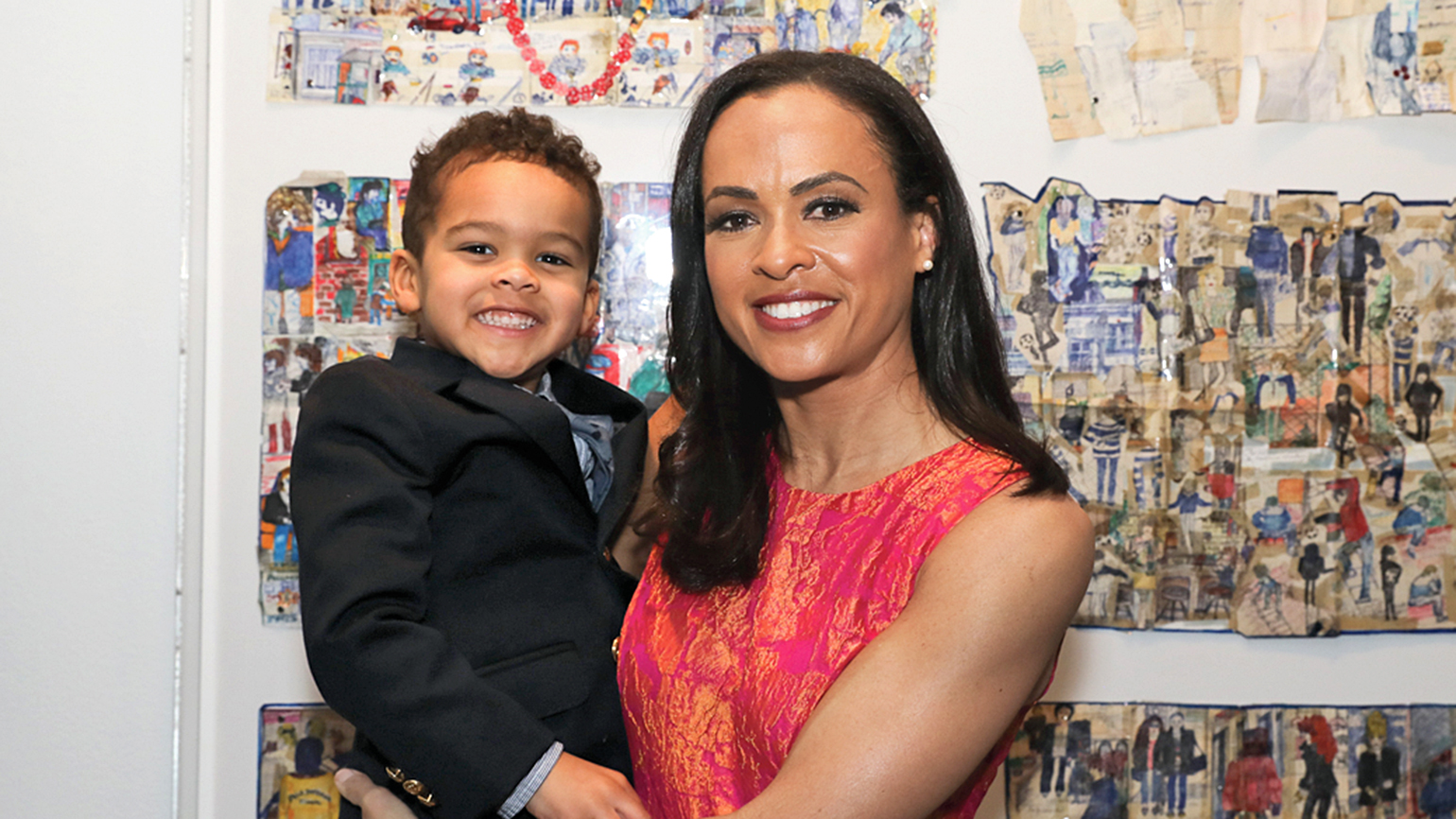
How ABC’s Linsey Davis Overcame Anxiety

I sat in the rocker in our bedroom staring at the blood pressure monitor, dreading what the numbers would say. I could hear my mom cooing in the other room, cradling my newborn son, Ayden. It should have been the happiest time of our lives. A baby boy in perfect health. My husband, Paul, and I were blessed, richly blessed. But I couldn’t see it that way.

I was so afraid I wouldn’t live long enough to see Ayden’s first birthday. Any day now, I could die, I thought. I couldn’t turn off the negative tape playing in my thoughts. My head throbbed; my heart raced. Here I was home, finally home, and I felt as if I were millions of miles away, trapped in fear. “I want my wife back,” Paul had said. I wanted my old self back too, the relentless, intrepid woman I used to be, the news reporter, the broadcaster who never hesitated to ask a subject a difficult question on live TV. Now I trembled at greeting each day.

NIVFLB Inarticle ad

If only I could just find a way to retrain my thoughts. To keep them from veering off into this pervasive negativity.

I gazed at the bookshelf across the room. There was an old paperback Bible, a read-in-one-year version that had been my constant companion in the early days of my career, when I worked at local stations in Michigan and Indiana. Before I got my job as a national news correspondent for ABC, I went through that Bible three times, marking and underlining favorite passages. Therefore do not be anxious about tomorrow, for tomorrow will be anxious for itself. Let the day’s own trouble be sufficient for the day.

Troubles? My return from the hospital had been delayed by six days. Preeclampsia, the doctors said, a serious condition characterized by high blood pressure. I thought it happened to women during their pregnancy, not after they delivered a healthy child. All seemed to have gone well, and I was thrilled to have my son in my arms. “You should be able to go home in 24 hours,” the doctor had said at first.

She came back 10 minutes later. “Your blood pressure is too high,” she said. “You need to stay here until it goes down. How does your head feel?”

As if someone were hammering inside. The hospital staff gave me medication and kept checking my blood pressure. The numbers were dangerously high. Paul stayed at my bedside as Ayden slept in an Isolette nearby; my mom kept vigil. I was sure she was praying. I’d grown up in a church-every- Sunday-morning, prayers-at-bedtime family. How well I remembered seeing my grandparents kneel by their beds at night, holding hands, saying their prayers.

I wished I could go home. But day after day, the numbers didn’t budge. Trust in the Lord with all your heart, and lean not on your own understanding.

On Day Four, I read an article about white-coat hypertension—how your blood pressure can go up in a hospital or a doctor’s office, when a “white coat” is checking it. The reporter in me latched on to the new info. This had to be the explanation for my situation. “I’m sure my blood pressure will go down once I go home,” I told the doctor. She looked at me skeptically. “It’s the stress of being in the hospital,” I said.

“If you need to come back,” she warned, “you won’t be able to bring Ayden with you.”

“I’ll be fine.”

On Day Six, the number on the monitor in the hospital was only one digit above the okay zone. The hospital let me go. With the promise that I would monitor myself at home three times a day and alert my doctor if there was any rise in my blood pressure.

I wanted to be happy in our car on the way home, Ayden strapped in a carrier next to me, Paul driving and my mom in the passenger seat. All I felt was fear. I grew certain I’d collapse from a stroke. I couldn’t reason with myself. Even Scripture wasn’t helping. For my thoughts are not your thoughts, neither are your ways my ways, says the Lord.

Paul and I had met at a charity benefit at New York’s Plaza Hotel, where I was speaking. My cousin had been trying to set us up for months. “There’s this great guy I know from church,” she said. “He’d be perfect for you.” I was already dating someone. I didn’t need to meet this friend of hers. But she put together a table at this event. Who should be sitting next to me? That nice guy from her church. Paul. We chatted some. Okay, he was nice.

It might have gone no further than that but, at the end of the evening, we stood outside, trying to catch a cab. I should explain something. You can always get a cab at the Plaza. But for some reason, not one appeared. So Paul and I talked. And talked some more. More than 20 minutes went by before a single yellow cab pulled up.

“You take it,” he said gallantly.

“No, you take it,” I said.

“Shall we share it?” he asked.

The rest is history. I ended things with the guy I was seeing. Paul and I started dating and fell madly in love. He proposed and we walked down the aisle together as though God had orchestrated it all. Through my cousin. This is the day that the Lord has made; let us rejoice and be glad in it.

If only the Lord could engineer something like that now.

I got up from the rocker and pulled that tattered, dog-eared Bible off the shelf. I sat down again, opening to a page at random, my eyes fixing on a verse. I can’t even tell you which verse it was, but it was one I loved, one of those passages I had underlined, starred or circled. I took in the words, letting them wash over me, repeating them to myself. They silenced all the negativity in my head. At least for the time being.

For days this became my habit. Whenever the fears assaulted me, I’d pick up my Bible, look for a verse and meditate on it. My blood pressure didn’t go down immediately, my anxiety didn’t disappear at once, but the routine became my medicine, as crucial for me as the pills the doctor had prescribed. Paul and I would kneel beside our bed—as my grandparents had done—hold hands and pray. Pray that I would return.

One day, I was in the rocker, the Bible in my lap. I lingered over Psalm 23: “The Lord is my shepherd; I shall not want.…” I looked up from the pages and saw the room with new eyes. It’s me. I’m okay. I was myself again. As if to prove it, my blood pressure finally went down and stayed down.

“Your mom’s here,” I told Ayden. “Your wife’s back,” I said to Paul.

I took the full three-and-a-half month maternity leave from work and returned, full of joy at being back on the beat, so many words of Scripture still with me. Ayden is now a rambunctious four-year-old. Not long ago he asked, “Mommy, does God open flowers?” I started telling him a story about the world God created. I ended up writing a children’s book, The World Is Awake: A Celebration of Everyday Blessings, with a boy that looks just like him (and a little girl he gives different names to every time we read it).

The first sentence? This is the day the Lord has made. It is. Every day

For more inspiring stories, subscribe to Guideposts magazine.

Linsey Davis’s children’s book, The World Is Awake: A Celebration of Everyday Blessings is available wherever books are sold.

Hope Village

Home for Christmas, like always, no matter how crazy my schedule. It was 1997 and I decided to spend the afternoon visiting my friend at the shelter for children she’d started back in 1992 in my hometown of Meridian, Mississippi. When I stepped off the front porch into the living room, it was warm and cozy, with soft couches against the walls and a thick colorful rug on the floor. Not like what I’d pictured a shelter to be at all.

“Hi,” my friend said, relieving me of the armful of packages I’d bought for the kids at the local Wal-Mart that morning. We knelt down and piled them under the brightly lit Christmas tree in the middle of the room. “That was so sweet of you to bring these.”

Mys of Blackberry Valley In Article Ad

As I stood up to give her a hug I noticed a pair of little boys standing against the wall. I could tell they were brothers, not so much by their matching brown eyes, but by the way they alternately laughed and fussed. “Merry Christmas,” I said, smiling at them.

The younger boy turned away shyly, but the older one smiled back.

“Merry Christmas, ma’am,” he said.

Maybe it was the simple down-home politeness of that “ma’am.” But at that moment something melted in my heart. Their shy smiles, the way they shuffled their feet nervously. There was such a sweetness and promise to them. I just wanted to scoop them up and take them home with me.

I pulled my friend aside. “Tell me about those boys,” I said.

“It’s a sad story, Sela,” she said, “but a much too common one. Michael and Jimmy are eight and nine. They were taken out of their house because their father had been abusing them. He’s in jail now. No one knows where the mother is. Drugs, probably.”

“What will happen to them?” I asked quietly.

“They’ll probably be split up, sent to different places in Mississippi,” she said. “With our overtaxed foster-care system it’s too hard to keep them together.”

If only they could be placed together somewhere, I thought. Someplace safe. That’s what kids need most. To feel loved and protected. Growing up in Meridian, that’s what I had felt. That’s why I came back with my own kids every chance I got.

I was raised here in the Deep South, loving Bear Bryant on Saturday and worshiping Jesus Christ on Sunday morning, savoring sweet tea and porch swings, corn bread and courtesy and all the tender mercies of a Mississippi childhood. It took a lot to leave and when I finally did I traveled north to New York and then west to southern California where I became an actress in TV shows like Sisters and movies like The Fugitive. I married a tall handsome beau and started a family, who became the center of my world.

I thought I had everything. But midway through my life’s journey, I began to realize what I’d been missing—the good, irreplaceable things I’d left behind in the South. And though I’m not in the South most of the time, I am undeniably of the South. The roots of my family tree run deep into the red dirt of Mississippi. There have been Wards living in and around Meridian for six generations—since the 1840s. Daddy grew up there in the Depression, and the concept of helping was always familiar to him.

In 1953 Daddy met a dark-haired beauty named Annie Kate Boswell who would become his wife and, not long thereafter, my mother. She had an indomitable sense of pride, a regal bearing and steely dignity. And like all good Southern women, Mama believed in the secret power of manners.

Our neighbors took turns hosting weekly card games and our house would fill with friends and laughter. But Sundays were different. After breakfast, Mama would dress us for church. My two brothers wore slacks and coats and ties. My sister and I, like our mother, would die a thousand deaths before showing up in pants. It was plain and simple; dressing up was a matter of respect for God. We Wards attended First Christian Church in downtown Meridian, and we always sat in the balcony. The gentle faith that was passed on to me required a belief in the authority of the Bible, a conviction that you had direct access to God through prayer and a commitment to love your neighbor as yourself. That was something else Mama believed in deeply. So did Daddy.

I went off to college at the University of Alabama, and then to New York and Los Angeles for my career. But I’d never miss a Christmas in Meridian. Every time I returned, the sight of those humble hills and red-clay hollows became dearer to me than I could possibly express. That’s why when my husband, Howard, and I started our family I knew we needed to have a place there. We bought a farm on a pond and put out a porch swing for visits from neighbors. I was afraid if I didn’t take care, my children might never get to know this part of me and of themselves.

And then I met those two little boys, Michael and Jimmy, at that shelter my friend had started. They’re part of my family too, of my community, my town. They were part of the very fabric that had given me my life, my sense of self. I couldn’t just walk away.

I had to do something for them. I went home to my businessman husband and told him about Michael and Jimmy and all the powerful feeling they had stirred up in me. “What can we do?” I asked him. “How can we help the next Michael and Jimmy?”

“If what kids like these need is a good safe permanent home,” he said, “then let’s build one.”

And that’s what we set out to do. We discovered an abandoned building on a grassy hill in Meridian that had once actually been an orphanage. Now I just needed to be able to afford to buy it. I contacted a friend back in L.A. She helped me broker a deal to do an ad for Kentucky Fried Chicken. That did it! I made enough to buy the home and surrounding land. Within months renovations began on the building and our dream had a home: Hope Village for Children, a permanent refuge for abused and abandoned kids.

Howard came up with the idea to make Hope Village more than just a safe and comfortable place for kids to live until they turned 18. He suggested that we make it “a campus for the care of children.” We could teach the kids all kinds of practical skills—the kinds of things more fortunate children learn from their parents, the sorts of things I learned from mine. Even after they left we’d still be available to offer them advice and guidance. And we started wading through all the red tape—building codes, state child welfare laws, the state of Mississippi foster care bureaucracy. Not surprisingly the people of Meridian pitched in. Teachers volunteered to start tutoring programs, doctors set aside time to work with our children and churches organized groups to help out. Some even took over the decorating.

Hope Village is now a reality. We have more than 40 kids living there. Every time I come back I stop by to see the boys and girls and I end up feeling both small (in a good way) and useful.

Christmas is for children. Maybe that’s why I would never miss coming back to Meridian. For if there is one lesson Christmas teaches us, it is to love and care for our neighbors in every way we can.