Embrace God's truth with our new book, The Lies that Bind

Holy Habit: How to Stretch Your Soul

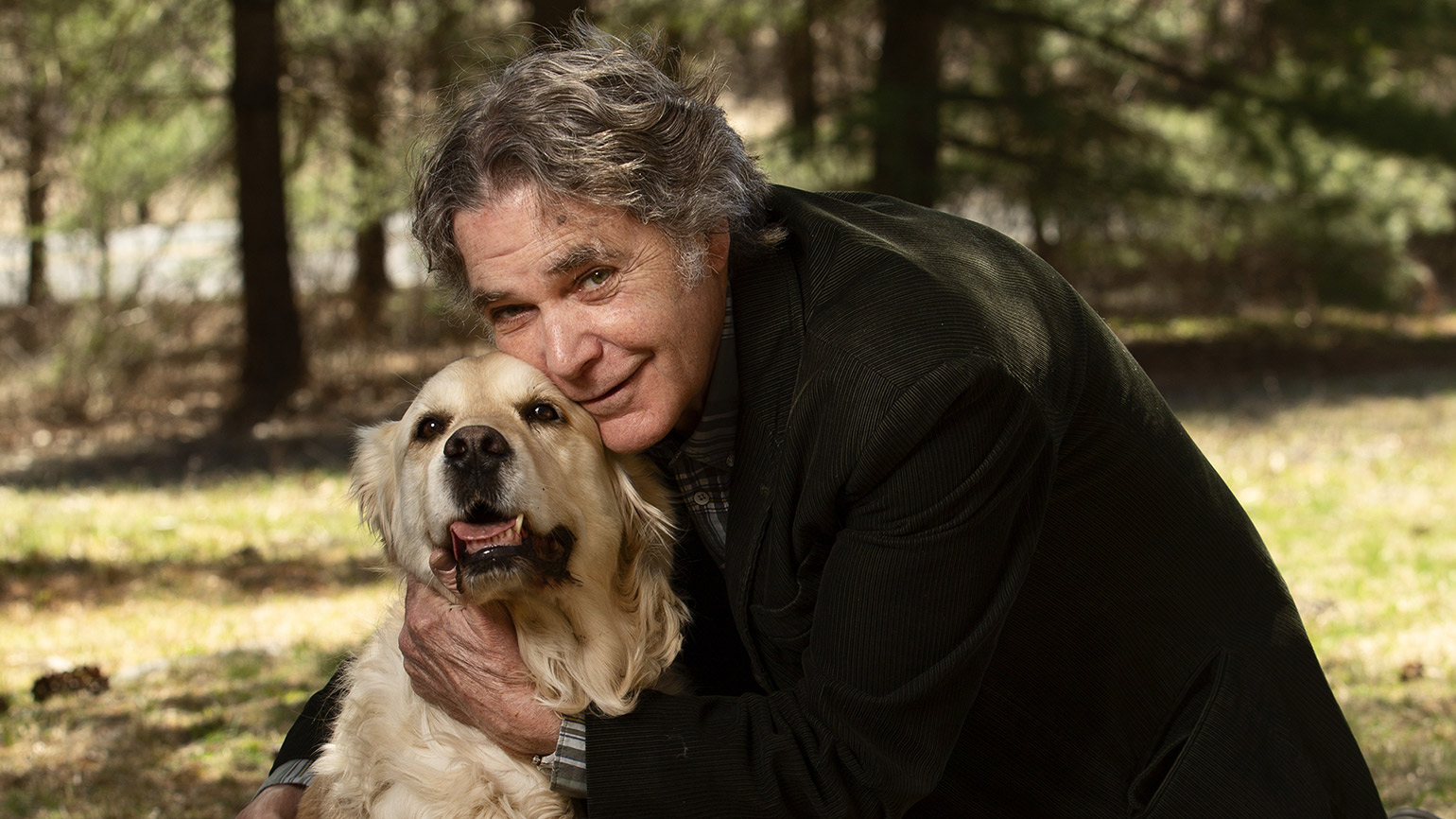
By now you know that I learn more from my golden retriever, Gracie, than she learns from me. Take the healthy habit of stretching, a good habit trainers and doctors have urged me to do to ward off stiffness. Do I listen to them? Not usually. I’m too impatient. I just want to get moving.

Except I’ve been watching Gracie lately. Every morning before our daily hike, Gracie does a graceful, luxurious stretch. She totally elongates herself, stretching her lower back first, then her hips, then her hind legs, lifting each in the air one at a time, spreading her toes wide. Then she does the real downward dog, opening up her chest and forelegs. She does a big yawn, stretching out those jaw muscles for better barking, perhaps. Then she rolls over and gives herself a little back rub, springs up, shakes off and she’s ready to rock’n’roll. Let’s go!

A Journey of Faith In Article Ad - Avail Now

Why can’t I be as smart as my dog? So, I’ve taken up the healthy habit (finally) of stretching before exercise. Quads, hamstrings, hip, lower back, shoulders. I even waggle my jaw, though I haven’t started barking yet. I stretch along with Gracie. If anyone peeked in the window, they’d think Gracie was teaching me basic yoga.

You know what? Gracie is onto something. Not only do I feel more limber when I’m on the move, but I don’t get so stiff later in the day and the next morning. What Gracie does naturally—because God instilled her with the knowledge—I have finally learned.

What other ways can I stretch? Can I stretch my soul too? Here are a couple of soul stretches I’m trying out.

Stretch Your Soul with Bible Verses

Unlike some of my friends, I didn’t grow up memorizing the Bible. I memorized a lot of Latin as an altar boy (and even understood some of it) but not much scripture. So, I’ve taken to memorizing a bit of scripture every day, opening the Good Book at random and finding words that speak to me. Today it was Exodus 34:6. See? I made you look it up. It’s a good one.

Stretch Your Soul with Poems

I don’t read poetry as much as I used to, which is a shame, for a good poem is a bouquet for the soul. It can stretch the heart and imagination. We shouldn’t let ourselves live without poetry, so I memorize a short poem whenever I can. There are tons of sites where you can find short poetry. Or you can try committing a longer poem to memory one stanza at a time. Today, in Gracie’s honor, I memorized a lighthearted poem by Marilyn Singer called “April is A Dog’s Dream.” You’ll be surprised how quickly you can train yourself to memorize verse, and once you do, that poem becomes part of you. The practice is also good for keeping your memory sharp.

Stretch Your Soul with Love

This is a simple one. Tell someone every day that you love them. That may seem obvious, as if any idiot should know this, but no day is complete without that word slipping from your lips. Just saying it expands the heart. When I am alone all day writing whom do you think I say that lovely word to? That’s right. And I know she understands.

Holly Rowe: How Cancer Changed Her Life

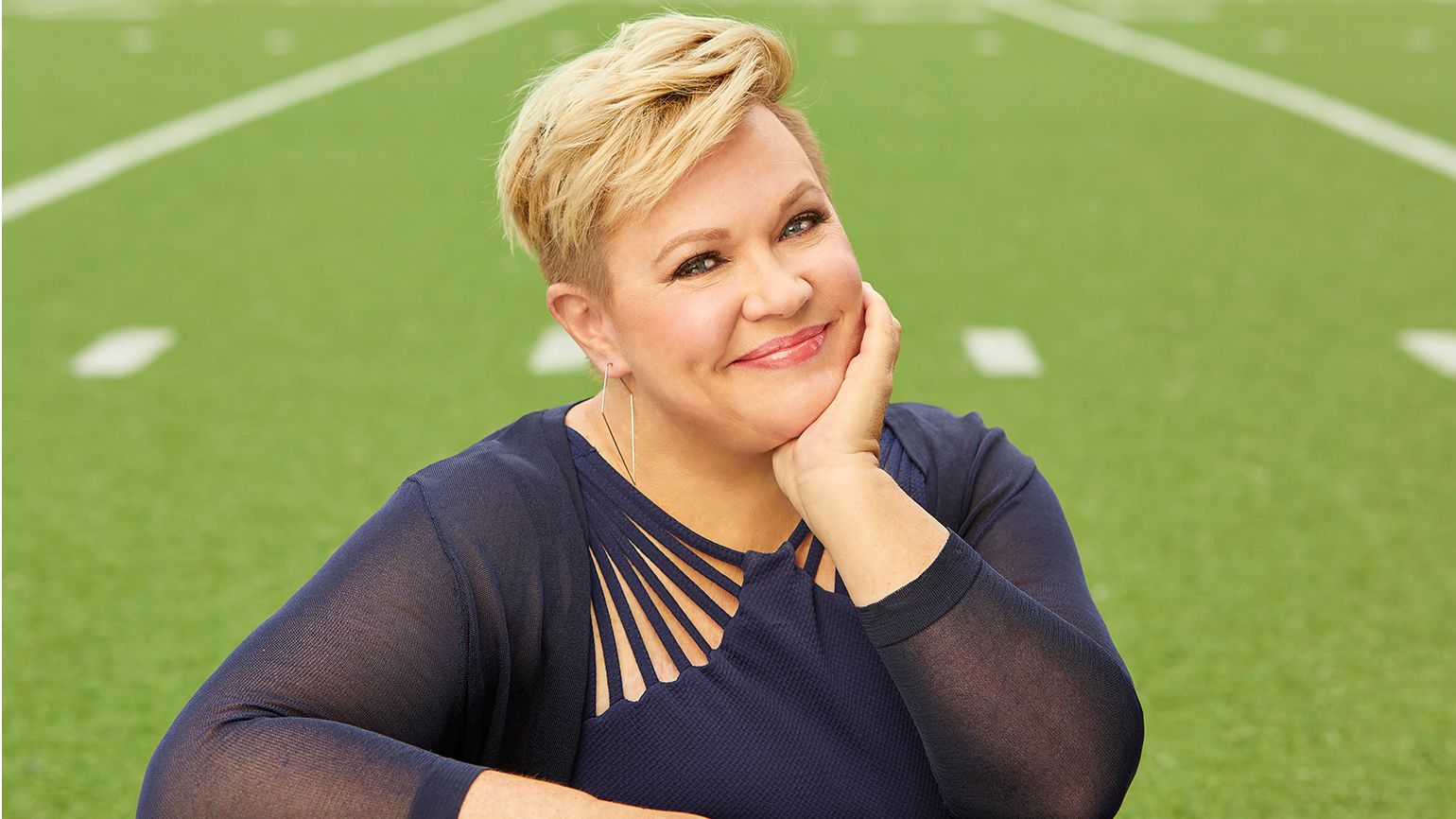
For the last two years, I’ve had a constant companion, one that’s made me feel embarrassed and scared and vulnerable. Yet it’s also opened me up to people and experiences more wonderful than I could have ever imagined. Cancer. It’s more than a diagnosis, more than a disease. It’s a journey, one that some of you have been on too, though perhaps not as publicly.

Not that I set out to go public about desmoplastic melanoma, the rare and aggressive form of skin cancer I’ve been dealing with. I’d already had a tumor in my chest removed. Then my cancer recurred, and in February 2016, I was in the hospital for a second sur­gery, to remove a tumor under my arm. While I was waiting to go into the OR, I thought maybe I should let the PR per­son at ESPN know. For 20 years, I’ve been covering college sports from the sidelines, interviewing people, but I’d never been the subject of the story; it’s the athletes and coaches who are. They’re the stars.

Community Newsletter

Get More Inspiration Delivered to Your Inbox


I was sitting in bed, wearing one of those horrible hospital gowns, and all these different people came in, ask­ing me to sign forms, to be in a clini­cal trial, to donate my tumor so they could do research on it (as if I’d want it back). As one person was putting in an IV drip, someone else asked, “Are you Holly Rowe, the sports reporter at ESPN?” “Yes,” I said. “That’s me.” I texted our PR person: “Just in case anybody asks, I’m in the hospital….” (My bosses knew, of course.) Then I was wheeled off to surgery.

A couple of hours later, I was in the recovery room, groggy from anesthe­sia. My family was there: my mom, my sisters, my son. They had ESPN on. I glanced at the TV and saw something startling. “Did my name just scroll across the screen?” I asked.

My son couldn’t believe it either.

I sat up in bed. There was something about a football player and then: “Holly Rowe has successful surgery for can­cer….” Right there, on the bottom line.

“Oh, my God!” I said. It was both prayer and exclamation.

All along this cancer journey, I’ve been grateful to have my work to dis­tract me. I’m the biggest sports nerd. I even go to games on my day off. So it helped to have a goal of getting back to reporting after surgery, to have some­thing to look forward to that wasn’t an­other scan or test. But I didn’t advertise what was happening to my body. Now anybody watching ESPN would know.

Almost immediately, the prayers started coming, and they haven’t stopped. I had 244 text messages that one day alone.

Can I tell you about all the people who have sent me notes and cards? Not just players and coaches. Referees too. Col­lege football and basketball referees, WNBA referees. Complete strangers have said they’re thinking of me. The offensive line coach at Ole Miss, whom I didn’t know well at the time, walked over before one of their games and said, “Holly, I just want you to know my wife and I are praying for you.” Me, the girl who has always been nuts about sports.

I’m the second of four girls in my family. My dad had to wait a long time before he had a son: My little brother didn’t come along until I was 16. That wasn’t a problem for Dad. He grew up on a sheep farm in a tiny Utah town and played every sport. He was a jockey, he boxed, he wrestled, and (despite being only 5’3″) he also played basketball and football. He made sure his daughters loved sports too—watching as well as playing. Every Saturday, we’d go to the gym and play pickup basketball. Five on five. You had to win to stay on the court. Del Rowe and his four little girls would take on teams of grown men. To this day, I can call any of my sisters after a game on TV and say, “Did you see that big play in the second quarter?” and they’ll know exactly what I’m talking about.

Dad taught us that we could do any­thing. I think that’s why three out of the four of us sisters have gone into male-dominated professions. When I got my start in sports journalism, I couldn’t believe it when some of the an­nouncers wouldn’t accept stats if they came from women. They didn’t know who raised me.

I love what I do, traveling all over the country, going to game after game, talk­ing to the players and coaches. Cancer took me by surprise. The first time I got diagnosed, I was in New York City, heading to the Emmy Awards—I’d been nominated. I was standing on a street corner when my dermatologist called to tell me that the mole he’d taken off my chest was cancerous. I was shocked but not scared. A quick surgery and I’d be done with it, I figured. It ended up being a big surgery because there was a large tumor under the skin. Still, I didn’t real­ize how melanoma could spread.

The second diagnosis came nine months later. I’d found a lump under my arm and gone in for a biopsy. When the dermatologist called this time, I was in the car, driving. “I hate to tell you this,” he said, “but you’ve had a recurrence.” I pulled over and cried. I worked two or three college basketball games be­fore they could get me in for surgery. One was a big matchup—Oklahoma at L.S.U. It was a wild, crazy game, and I did this great interview with star guard Buddy Hield, who led Oklahoma to the win. He put his arm around me and I was thinking, Man, I’m going in for cancer surgery in two days, and here I am, just enjoying life. It was so surreal.

The third time I was diagnosed, I was at the hospital getting a routine scan. I was in the waiting room of the oncol­ogy ward. There’s this little screened-off area in the hallway where they take your weight, temperature and blood pressure before you go into the ex­amination room. A woman in her late sixties was sitting there, struggling with the blood pressure cuff. I went to help her, and she broke down crying in my arms. “It’s going to be okay—just stay strong,” I kept repeating. Then I walked into the exam room and the nurse practitioner told me, “You have a new tumor in your lung.”

Cancer creates its own curious bonds. At that moment, I was more up­set for the woman in the hallway than for myself.

I’ve found it’s the little things about cancer, the little indignities, that get to me. Like losing my hair. I loved my long blonde curls. First, I noticed more and more hair on the bathroom floor when I got ready in the morning. Then it would just come out in my hands when I was shampooing and rinsing my hair. I woke up one day, and it looked as if a puppy were sleeping on my pillow. All the hair on the back of my head had fallen out.

“Honey, this is so stressful for you—losing your hair in stages,” my mom said. “Let’s go get it all shaved off.” She and I went and had a fun day at the beauty salon.

I got some cute hats and a wig I named Wanda. But can I tell you how miserable it is to wear a wig, even one as nice as Wanda, when you’re running along the sideline at a football game in Texas and it’s 104 degrees and sweat is trickling down the back of your neck and face? So I decided to ditch Wanda and go with a short, spiky cut.

Then there’s the stuff people can’t see. That surgery to remove the tumor under my right arm—when my name scrolled across the bottom of the TV screen—also took out 29 lymph nodes, which left a huge scar, about 14 inches long. I had all these drains coming out of my body, plastic tubes that directed excess fluid into a pouch. Ten days af­ter the surgery, I had to fly to Los An­geles and do interviews for our softball feature. Twenty fabulous teams were taking part. There was no way I was going to miss that.

I wondered what they were going to say at airport security about this bag of liquids hanging around my neck. I did have a note from my doctor to explain it. The funny thing was, TSA didn’t say a word. Didn’t even ask what was un­der my shirt.

I’m doing something called immuno­therapy now. Doctors use medicines to stimulate your own immune system to attack the cancer cells. I’m on treat­ment number 13, and I go every 21 days to get an infusion. It’s really shrinking the big tumor. The last three scans haven’t shown the little tumors at all. I like to think they’re gone.

The doctors and nurses are great. So are all the prayers. I believe in the power of prayer. It’s the best therapy. And to have people ask for blessings for you—what a humbling feeling that is. Like getting a text from a star like Buddy Hield. “My mom and I are so upset,” he wrote. “We are praying for you.” That’s the most precious gift you can give someone: to pray for them. I’m not used to making myself this vulnerable, to step out for a moment from the sidelines and take center stage. But I’ve seen what comes of it, the help and the healing. Not just for myself but for others.

Not long ago, I was in Kansas cover­ing a basketball game and a 16-year-old came up to me with her parents. She has cancer. She’d been wearing a hat to school because she was embarrassed about her hair loss. Until the day I shaved my head and talked on air about going on TV without hair. That day she went to high school without her hat.

What a reminder that the Lord has his hand in everything, bringing people together so we can help each other. We sat on the side of the basketball court in Lawrence, Kansas, that 16-year-old and I, new friends, drawing strength from each other. It made me so grate­ful to be at work. To share my cancer journey. To make every day count.

For more inspiring stories, subscribe to Guideposts magazine.

Holistic Approaches to Beating Breast Cancer

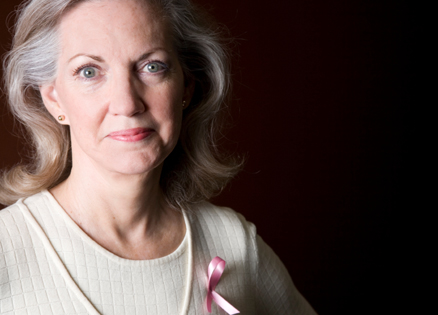
The prevention and treatment of breast cancer is more than a medical matter. It involves the well-being of the body, mind and spirit, which is why a healthy spiritual life is as important as the self-exam every woman should do monthly. To support all aspects of breast cancer prevention and awareness, we’ve collected six resources for you.

1. Inspiring Messages
The American Cancer Society, which founded the National Breast Cancer Awareness Day in 1985, continues to provide comprehensive resources and medical information on this disease including a page of Words of Inspiration. Survivors, caregivers, researchers and doctors offer everything from practical advice about gathering support around you to positive faith affirmations.

2. Don’t Lose HOPE
Lori Hope (Yes, that really is her name!) reminds those with breast cancer about four often forgotten yet critical healing elements on her HOPE Cards: Humor, Options, Protection and Empathy (with those who say the wrong things). You can print out the HOPE Card and affix it to a mirror, post it on a bulletin board, or tape it to your fridge as a daily meditation and reminder.

3. Bald Is Beautiful
MGA Entertainment is now producing “True Hope” Bratz and Moxy Girlz bald dolls to comfort families that suffer from the alienation and stigma associated with cancer treatment. The dolls are both male and female and one dollar from each purchase is donated to City of Hope for cancer research. Read about the woman behind the Bald Is Beautiful movement, Jane Bingham.

4. Think Pink
Care for your spiritual self while tending to the needs of others by purchasing a pink Bible or devotional. A portion of the proceeds from each of these publications goes to breast cancer charity. Your options are many, including the New International Version Pink Bible  the New King James Version Devotional Bible for Women: Pink Edition  and the Pink Ribbon Bible. Also consider The Message//Remix: Solo, a daily devotional specifically aimed at bringing hope and encouragement to breast cancer patients and survivors.

5. Recovery Resources
Breast Cancer Partner, an organization for women who are finishing or have survived breast cancer treatment, provides information and resources for a recovery that involves “body, mind, emotions and spirit.” The group organizes weekly educational events around the country, hosts health and wellness retreats, and creates survivorship programs in the form of care plans to aid recovery. The website links to resources including practitioners—nutritionists, yoga instructors, homeopaths, acupuncturists, etc.—news and other online resources.

6. Focus on Awareness
A self-examination can help detect breast cancer early, which is why it’s an important monthly ritual for every woman. Self-exams need to be done standing, lying down and in the shower, which is why the Sydney Breast Cancer Foundation made this hanging shower-card. Print it, laminate it and hang it on your shower head to begin (or continue) your monthly self-exam routine.

Holiday Memories Bring Hope and Happiness

A shriek of frustration came from the dining room.

I poked my head in from the kitchen, where I was drying dishes. The table was cluttered with wrapping paper, boxes, ribbons, bows, scissors, felt, thread, buttons and a sewing machine. Half draped across the sewing machine was a red felt Christmas stocking. It looked like my wife, Kate, had just thrown the stocking.

Walking with Jesus L&E evergreen_in article ad

“It’s ruined!” she cried.

“What?” I asked.

“That.” She jabbed a finger at the stocking. “There are moth holes in the back. How could I not have noticed? Now Frances won’t have a stocking!”

Kate had been working on it for weeks. “My brothers and sister and I all had handmade stockings,” she’d explained. “So I have to sew Frances a stocking.”

Frances was our one-year-old daughter, at that moment asleep in her crib. It didn’t matter that Christmas is one of the busiest seasons for Kate, a priest at an Episcopal church. It didn’t matter that she’d had to trek all over Manhattan to finally find a tiny fabric store in Chinatown with the kind of wool felt she needed. It especially didn’t matter that I’d pointed out Frances was too young to care about stockings, or that I’d pleaded for a peaceful, stress-free Christmas.

“You could try being more supportive,” she’d replied.

Now Christmas was just days away. Soon my mom, her friend and my brother would be arriving to stay with us. Kate had to write a sermon. Gifts were waiting to be wrapped. And there was the stocking. Kate picked it up and ran her finger over the holes.

“The felt must have been old,” she said. She’d already sewn ribbon across the top. Flower-shaped buttons and gold thread to write Frances’ name lay on the table. “I don’t know if I have time to start over.” She looked at me. “Frances needs a stocking!”

“Well,” I said, “I tried to tell you—”

Her face hardened. “Jim, I don’t need a Christmas lecture right now. If you’re not going to help, let me figure it out.”

She turned back to the stocking. I retreated to the kitchen.

The counter was cluttered there too. Kate was baking sugar cookies to give to her colleagues. One batch cooled on a rack. Powdered sugar spilled from a bowl. The oven timer ticked down. Gift bags of chocolate from parishioners lined up next to presents for Frances, some from people I didn’t even know. The timer beeped.

“Could you take those cookies out?” Kate called. I set down the dishtowel. I don’t even like sugar cookies, I thought.

This wasn’t the first time Kate and I had disagreed about Christmas. I remembered airily telling her roommate when we were dating how foolish I thought it was for couples to argue over such a thing. “What’s to argue about? It’s just a holiday.”
<

Well, the next year I did have a few objections. Why did Kate insist on getting a tree when we weren’t even going to be home? We were spending that Christmas with family on the West Coast.

Didn’t she know some of those ornaments she’d saved all those years were kind of tacky? I came home from work one day to hear Bing Crosby on the stereo. Bing Crosby’s not really my style. And this business of making cookies for everyone at church—what a hassle! Add to that hours of gift-wrapping and exhausting Christmas services. I felt like some sort of Christmas machine was taking over our lives.

Actually, there was more to it than that. I have a vexed relationship with Christmas. I’m not sure why. My own holiday memories are wonderful. I’d lie awake late into the night at my grandmother’s house, my brother in the next bed, both of us straining to hear the slightest rustle of Santa’s arrival.

We competed over who got to hang the final angel ornament on the Christmas tree advent calendar. We got to open one gift on Christmas Eve, a moment of exquisite, torturous deliberation. We ate roast beef and lots of pie.

Somehow, though, by the time I was grown up, I’d decided Christmas was one of my least favorite holidays. I love the church season of Advent. I love Christmas Eve services with all their candles and ancient carols. And I love especially the idea of setting time aside to remember that moment 2,000 years ago when everything changed.

I’m overcome staring at the slightly beat-up, out-of-scale crèche our church erects before the altar. I try to reconcile the enormity of the event with the tiny helplessness of the baby. Some vast mystery of God is expressed in that helplessness. What is it?

The rest of Christmas, though, I can do without. All the gift-giving feels like consumerism run amok. The cheer seems forced. People exhaust themselves lugging packages and fractious kids across the country. Where’s the God in that?

I took the cookies from the oven and set them on the cooling rack. Why did that stocking matter so much to Kate? Why, for that matter, were we arguing so much more this year? I’d made my peace with the Christmas ornaments. And I thought we’d solved the Bing Crosby problem—Kate played him when I wasn’t around.

Somehow, though, Frances’ arrival seemed to have ratcheted up the holiday tension. I dried the last of the dishes and decided to leave Kate alone. If she wanted to let the Christmas machine whip her into a frenzy, fine.

We got ready for bed, brushing our teeth in silence. I wandered into the living room and looked to where my old stocking—made by a friend of my parents’—and Kate’s hung, softly lit by Christmas tree lights.

Kate’s was pretty cute, I had to admit, with “Katie” sewn in felt letters and a little jingle bell on the toe. I tried to picture her all those years ago holding the stocking in her tiny hands. What would Frances look like holding hers?

We got into bed. Kate lay quietly, hands folded across her chest. I pretended to read. “I’m not going to make the stocking,” she said quietly. I put down my book. “I’d have to start from scratch and I don’t have time. I still have to write a sermon and wrap up those cookies.”

I was about to find a delicate way to say, “Told you so,” when I looked over and saw her tears. I took her hand. “Kate, what’s wrong?” She didn’t answer. “What’s wrong? Tell me.”

She was silent a while longer, then suddenly it all came out in a rush. “I’m a terrible mom and Frances is going to have the worst Christmas. I know you say she won’t know, but I’ll know. My mom always did so many great things for us at Christmas. She and Dad used to set up our little crèche, and late Christmas Eve night they’d put the baby Jesus in there and I always thought he appeared by magic. Now we’re so far away from them and you don’t even care about Christmas. How do I make all that happen for Frances by myself? If I was a better mom I could do it, but I can’t.”

She wiped her eyes. All my ranting about Christmas, my tsk-ing about to-do lists—it shriveled up. I reached over and put my arms around her. “Don’t say that,” I said. “You’re a great mom.” We lay like that a long time.

I thought about the messy dining room table, the sugar cookies, the gifts. And I thought about the stocking. How on earth could I ever have objected to giving Frances, no matter how old, a taste of beloved Christmas memories?

That wasn’t the Christmas machine. That was love, as clear an expression of God’s vast mystery as anyone could ask for. Besides, it mattered to Kate and Kate mattered to me. I held her tight. And I told her we were all—yes, all of us—going to have a wonderful Christmas.

His Wife Led Him Back to His First Love—Music

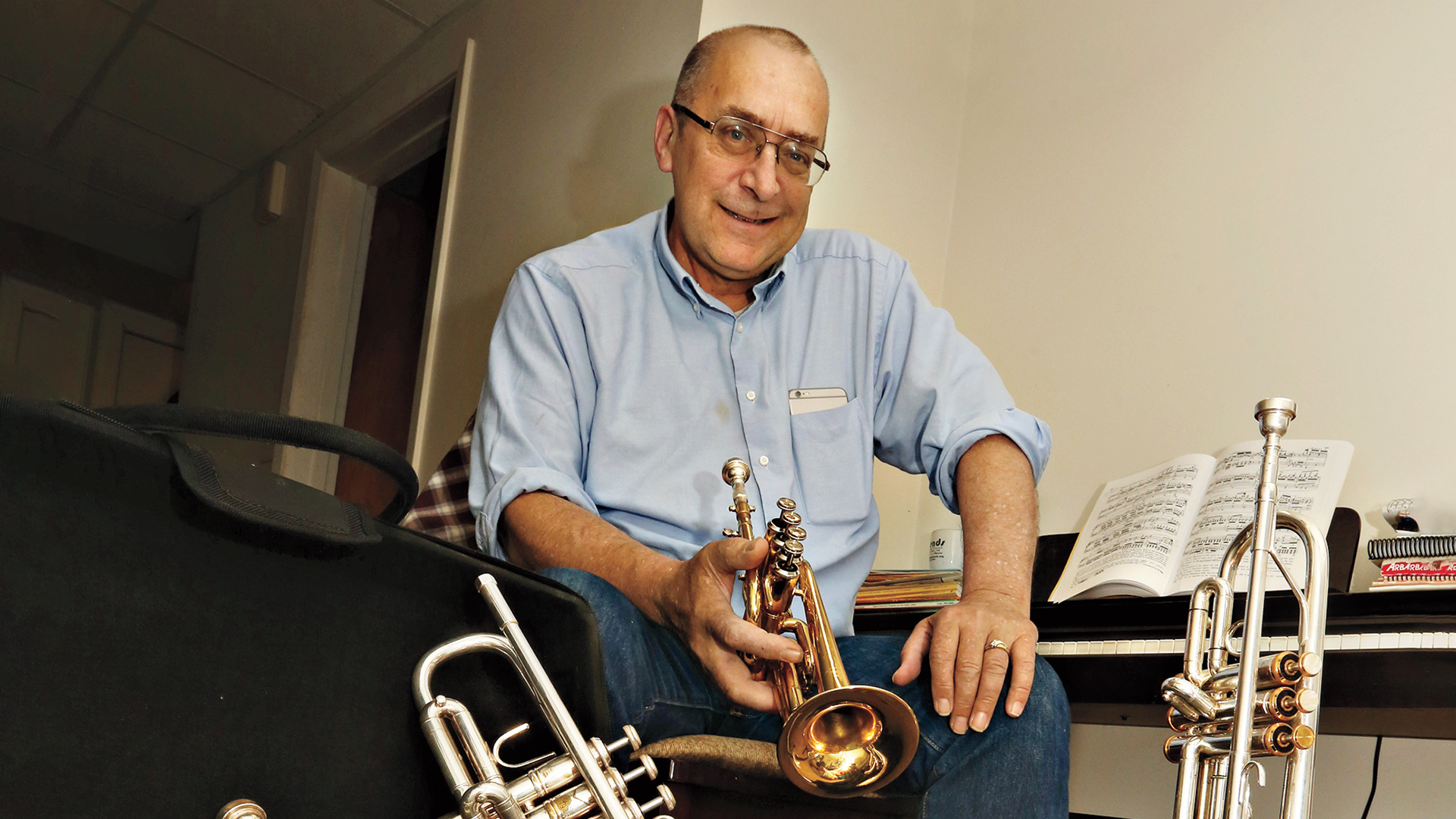
For more than 10 years, I kept a painful secret. I told no one—not even my wife, Ronda. The secret was my love of music. Not just listening. Playing. Making a living with my instrument. Closing my eyes and becoming one with a piece of music.

I’d done all of that once. After learning classical piano and trumpet as a child, I thought I’d found my calling, playing around the world in the U.S. Army Band.

extraordinary women of the bible

It was a dream come true. Until I was abruptly discharged during the post–Cold War drawdown of forces. The loss of my job came right as my second marriage was falling apart.

I loved music and felt betrayed by all that happened. I’d grown up in a military family. What would I do now? Crushed, I vowed never to play again. I returned my Army-issued trumpet and began a financial planning career.

I didn’t even tell Ronda about my musical past when we met and married years later. I kept things vague: “I was in the Army nine years. Served in the first Iraq War. Honorable discharge from my last post in Fairbanks.”

A few years after marrying, Ronda and I were visiting my parents in Texas when my mom asked, “Play something for me, Brian.” She still had the piano I’d played as a kid.

The request threw me. Mom had never taken an interest in my music. She and Dad didn’t play and disliked classical and jazz. They certainly didn’t approve of music as a career. They were relieved when I’d put down the trumpet and found a “real” job. Mom hung on to the piano because she thought it made the house look respectable. I probably could have let her comment slide.

For some reason, I sat down at the keyboard. My fingers hovered over the keys, as if ready to play. A strange sensation came over me. I closed my eyes. Years of memory and longing gathered in my hands.

Why was this part of me so hard to forget? The family joked when I was growing up that my parents liked only two kinds of music: country and western. Nothing in my upbringing would have pointed toward a musical career. Piano lessons came from Mom’s notions of respectability.

I was transported the first time I heard a classical music record that had been given to my dad by a military friend. Dad didn’t want it, so I took it. Tchaikovsky’s Piano Concerto No. 1 was so romantic and dramatic. My joy was magnified when my teacher told me I could learn to play like that someday.

Our church denomination was conservative and frowned on instrumental music in worship. The more proficient I became playing Tchaikovsky, Rachmaninoff, Beethoven and Bach, the more I wondered if God approved.

My parents sure weren’t enthusiastic, especially after my dad, a career military officer, was transferred to Okinawa, Japan. Unable to take our piano, I focused on trumpet and joined my high school band.

We returned to the United States, and I graduated high school and enrolled at Abilene Christian University. Mom and Dad insisted I major in music teaching, not performance. With $18,000 in mounting student loans, I perked up when a friend mentioned I could find work playing trumpet in the military.

A recruiter told me that not only could I start playing straight out of basic training but the Army would pay off my student loans and I’d get to travel all over the world.

I left college without graduating and enlisted. It was just as the recruiter promised. I played for soldiers at bases, entertained officers at clubs and inspired crowds at ceremonial occasions.

My most solemn duty was playing taps at funerals. That’s a trumpeter’s job, and I never took it for granted.

The work truly was all over the world. My bandmates and I traveled constantly. I burned through two impulsive marriages and began to feel burned out myself as I neared a decade of service.

It was the relentless schedule, not the music, that ground me down. My job performance began to slip. I got a couple negative annual reviews.

Bad timing. In the mid-1990s, the military was drawing down. Guys with low job ratings were the first to go. Less than two years after arriving at an assignment in Fairbanks, I was discharged.

Suddenly jobless and alone on the frozen rim of the continent, I was shocked to discover that, in a way, my parents were right: There was little paid work for musicians in Fairbanks.

For a while, I drove a taxi and did odd jobs. Finally I admitted my musical dream was dead. Maybe God really hadn’t approved of the whole thing. It all felt so raw, so painful. I just wanted to forget. Never again would I let music break my heart.

By the time I started dating Ronda, it almost felt as if my life as a musician had never happened.

Which is why it made no sense that I responded to my mom’s casual request by sitting down at the piano.

The score above the keyboard was the second movement from Beethoven’s Sonata Pathétique. A beautiful piece of music, one I’d always loved. Could I play it now? Did I want to?

I lowered my fingers. The notes were clunky at first. I kept having to look at the score. Faster than I anticipated, the old feeling came back. My eyes closed. My fingers danced across the keys.

Lost in the music, I didn’t notice Ronda standing at the doorway. I looked up. She gave me what I call the dreaded spousal stare, then turned away, shaking her head.

Flustered, I kept playing.

Ronda didn’t mention it the rest of the trip, and I was too self-conscious to bring it up. Still, I kept catching her giving me “the stare.”

“Why do you keep looking at me like that?” I blurted one morning back home in Alaska.

“You play piano!” she exclaimed. “How come you never told me?”

I mumbled something back about my playing days being a long time ago.

“We don’t even have a piano in the house,” she interrupted. “That’s just not right!” Before I could reply, she got up and left the room. I sat there cupping my coffee, wondering whether she was mad.

Ronda said nothing more, though she continued to give me strange looks. They evolved from expressions of incomprehension to something closer to that of a parent keeping a secret before a birthday.

“I ordered a piano,” Ronda announced one day.

“You what?!” I sputtered.

“It’ll take a couple months to get here though,” she said. That was Ronda. Efficient, good-hearted and no-nonsense.

“Where’d you get the money?”

“Coin jar,” she said. For the past year, I’d noticed her wrapping coins from our large coin jar. She’d amassed $900.

The piano arrived just before Christmas. It was a Yamaha electric with weighted keys and settings for various keyboard instruments.

It was an unbelievably generous gift. It also scared the heck out of me. The piano at my parents’ house was far away. I’d played it, then left.

This piano was here in my house, challenging me. I couldn’t walk away. If I played, I had to live with the results. What if that burst of inspiration at my parents’ house had been a fluke? What if the old skill never came back?

I started tentatively at first, playing the keyboard a bit each day. I also told Ronda more about my musical past. What this instrument meant to me.

“I wish you’d told me earlier,” she said. “When they discharged you, it was military bureaucracy, not a judgment from God. There’s no reason you shouldn’t play as much as you want. Music is part of you.”

I worked up to practicing an hour a day. Unable to resist, I bought a cheap trumpet online and dug out my old scores and handbooks.

Within a couple months, I was playing trumpet and piano as if I’d never stopped. Ronda even unearthed a clarinet she’d played in high school, and we would play together. Our house filled with music.

An old Army buddy of mine, another trumpeter, called me up. “Heard you’re playing again. About time. Listen, how would you feel about filling in for me at a rehearsal tonight? It’s a community jazz orchestra. Big band stuff. You’ll love it.”

Before I could say yes or no, my buddy said, “Great. The rehearsal’s at seven. I’ll tell the guys to expect you.”

When I arrived at the rehearsal, I was handed the lead trumpet book. In a big band, the lead trumpeter sets the style. It’s a huge responsibility.

To my immense relief, every piece we played was one I knew from years ago. It all came back. I was asked to join the band at the end of the rehearsal.

It’s been more than a decade since I sat at my parents’ piano and stunned Ronda with the Beethoven sonata. I wonder sometimes what prompted my mom to ask me to play that day.

But maybe I know. A few years ago, I quit financial planning and earned a degree in music performance. I play in the Fairbanks Symphony Orchestra, the University of Alaska, Fairbanks Wind Symphony and at churches and other venues around town.

I like to think it was God saying, “Play something for me, Brian.” That day and every day.

I’m so glad I listened. I’m so glad I get to do what makes me me.

Read more: 6 Ways to Boost Your Well-Being

For more inspiring stories, subscribe to Guideposts magazine.

His Son’s Brave Battle to Recover from Polio Bolstered a Father’s Faith

Guideposts celebrates its seventy-fifth anniversary this year. We’ve been looking back at stories that mark important events during those years, moments when America came together.

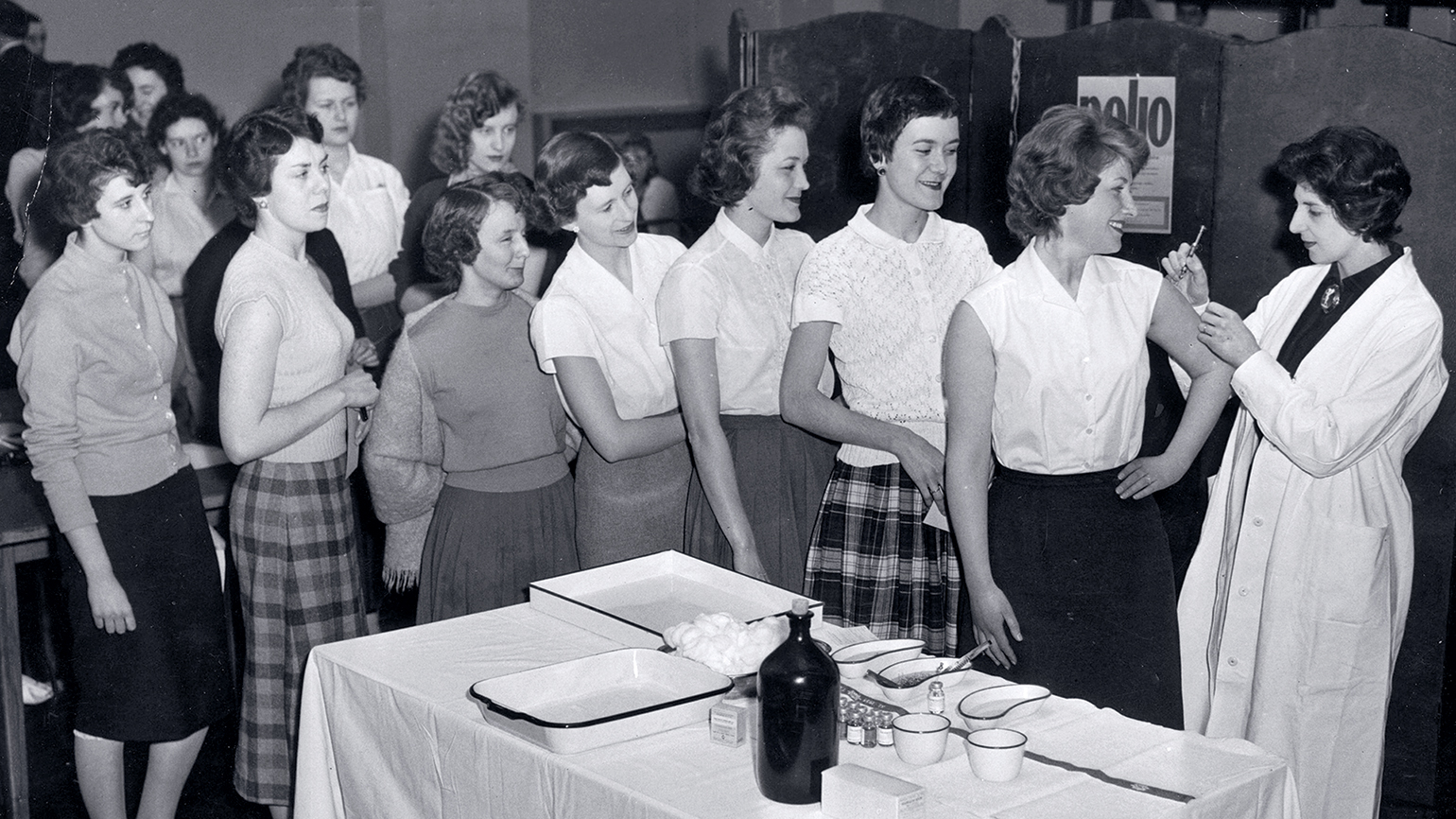
In the early fifties, polio was a national scourge. The epidemic peaked in 1952; there were nearly 58,000 cases, with more than 3,000 deaths and some 21,000 people left paralyzed, most of them children.

Whistle Stop Cafe In Article Ad May 2023

The next year, Jonas Salk announced his polio vaccine. The first volunteer to test it had been Bill Kirkpatrick, a teenage polio patient. (Someone who’d already contracted polio wouldn’t get the disease again if something went wrong.) In 1954, his father wrote an open letter to his son in gratitude for his role in creating the lifesaving vaccine.

Bill not only recovered from polio but thrived. He graduated from Franklin & Marshall College, went to seminary and became a minister in the Episcopal Church. He served in several dioceses, scaling back his work in the 1980s, when he developed post-polio syndrome. He died in 2003.

Here are his father’s poignant words, as published in the October 1954 issue of Guideposts.

Dear Son:
Every father has a special feeling about his son that’s hard to put into words. From the day you were born, back in 1935, and all during your next 19 years of achievement, I saw a little of myself in you—just as I did in Joe, your older brother, during his school days—my hopes, my dreams, my own ambitions unfulfilled.

I was proud of your boyish ability to cast for trout, your skill in other sports. I’ll not forget the football game at Shady Side when you, a 130-pound tackle, kept breaking through the opposing team’s line to down their 175-pound fullback. When you were rushed to the hospital that Labor Day weekend in 1951 and put on the critical list with polio, I couldn’t believe it. In the ambulance, I was too numb to say anything, while your mother kept whispering, “Keep your faith in God, Son; remember the Psalm: ‘The Lord is my Shepherd, I shall not want.…’”

As you fought for life, I tried to put the pieces of my own confused faith back together. How much faith did I have?

Once before I had seen it demonstrated—back in 1928, when your mother was seriously ill. The doctors had given her up. I prayed then that she might live, and my prayers were answered. Had I forgotten in so short a time?

Now, 23 years later, I had to admit to myself that in this crisis with polio, your mother’s prayers and faith were stronger than mine.

While the doctors were fighting for your life during the next weeks, you were more concerned about another polio-stricken boy in the same ward. Remember how he kept saying, “I wish I could die, I wish I could die.…”

The Reverend Mr. Penrose was the only person permitted to visit you while in isolation, and he told me how you repeated the Twenty-Third Psalm to this boy and prayed for him. Also how you led prayers with others who were suffering.

And I heard that the nurses looked forward to going into your ward. They knew that, regardless of your pain, they could always count on a smile lighting up your face and their day.

These reports made me feel more proud of you than any of your football or scholastic achievements.

Then a series of God’s miracles started to happen. Although the doctors thought you would die, you lived. They felt you would never walk again, but in three months you began to sit up with the aid of a steel back brace.

Remember your visit home that Christmas holiday? At midnight that New Year’s Eve, Mother and I held you upright while we all sang “Auld Lang Syne.” She believed that if you stood on your feet at the beginning of the year you would continue your progress.

Three months later, with some help, all 90 pounds of you stood on your feet. Dr. Jesse Wright was amazed but stated that you would probably always have to wear leg braces. “I’ll walk without braces,” you said. Within a year, you did.

Something happened to me during this period. Before you were stricken, I had always considered myself a good Christian, attending church, contributing money, serving on committees.

But I honestly wonder now how much I really believed. At home we were always too busy to have blessings at meals. When you were so helpless, I even questioned God’s existence.

Then you began to recover and credited it to faith and prayer. I felt ashamed.

It was in June 1952, while still badly paralyzed, that you and 40 other polio patients volunteered to help Dr. Jonas Salk in his experiments with a new and untried anti-polio vaccine. We had no idea, until told by reporters in the spring of 1953, that you were listed as the world’s Case History No. 1 to receive the vaccine.

When you persuaded us to sign the consent for the test, we hesitated at first because of the possible danger. Then you talked about your brother. “Joe has two young sons, my nephews,” you remarked. “I’ll do anything possible to help protect them and others from polio.” When you said that, I thought of Christ’s words “Greater love hath no man than this…” (John 15:13).

We don’t have all the results yet, Bill, but I feel sure Dr. Salk’s work may save thousands of lives. Today I can understand clearly how God works through people and how he can use a paralyzing illness such as yours for good.

I also learned about the concern and love of friends. During your illness, our telephone never seemed to stop ringing. Mattie [the Kirkpatricks’ maid] gathered together a group of people in her church and held prayer meetings for your recovery. And your mother never let our spirits lag. How I remember her in those dark days, by the piano, playing and singing her favorite Welsh hymn, “God That Madest Earth and Heaven.”

A father is fortunate when he can learn as much from his son as I have learned from you. You helped me see that the test of a Christian is how he meets difficulties, tragedies and sorrows. You also helped me see the message of triumph in Christ’s experience on the Cross.

Whether you become a doctor or a minister, I know your one concern will be to relieve suffering, to bring help and cheer to those in need.

Your mother and I are very proud of you.

Love, Dad

For more inspiring stories, subscribe to Guideposts magazine.

His Loving Voice to Guide Me

One of the most frightening signs that there was something seriously wrong with me were the voices I began hearing in 1974.

At first they were just stray, nagging worries that dogged me through the day, self-doubts that we all have from time to time. They seemed to rise up out of nowhere—vague thoughts with an accusing edge: You really don’t work very hard, do you? Or I’d be alone in my car and it was as if I overheard someone whisper, Everyone knows Lionel Aldridge doesn’t care about his job.

Journey With Jesus in article ad

The fact was I worked hard and cared very much about my job. I was something of a fixture on the Milwaukee scene. After an all-pro career as a defensive end with coach Vince Lombardi’s two-time Super Bowl champion Green Bay Packers football team, I’d moved easily into the role of NFL commentator and local TV sports anchor. I had a successful, high-profile life.

That was before the voices.

The voices were very scary and confusing. I didn’t know what to do. I didn’t want anyone to find out the terrible things happening inside my head. As an athlete I’d been trained to be tough; it was not my nature to seek help. I wanted to be strong.

At first I tried to ignore them. I was just going through a bad period, I thought. But the voices grew more belittling and threatening, more real. I’d be standing in front of the mirror shaving when I’d hear from the next room, You don’t take very good care of your family. “That’s bull!” I’d shout. I’d search the house for my tormentor. “How’d he get in here?” I’d mutter, as my wife, Viki, shook her head in dismay. There never was any intruder.

If a co-worker at the station didn’t smile at me in the morning, a voice would hiss, See? He doesn’t think much of you either. He knows you don’t deserve your job. I became hard to get along with. I started talking back to the voices, bickering and pleading and cursing. I am a large and imposing man; it must have scared folks half out of their wits to see me shouting at people who weren’t there.

Rumors flew around town that I was on drugs. That was completely false, but I was in no shape to prove otherwise. I was getting worse. People wanted to help but they didn’t know how. “He’s under a lot of pressure,” I heard them say.

One night, attending a Bucks basketball game with a friend, I froze with terror as we moved in front of the crowd toward our courtside VIP seats.

“What’s wrong?” my friend asked.

“These people,” I stammered, “they…they know everything I’m thinking. They’re all watching me.”

I was dizzy with panic. I wanted to run.

“Take it easy,” my puzzled friend whispered, looking at me as if he suspected I was playing a gag on him. Then he saw the perspiration drenching my shirt collar. “Maybe you’re working too hard,” he muttered, putting an arm on my shoulder and easing me into my seat.

Soon that feeling of being watched wouldn’t let up, even on the air. Looking into the camera, I could barely hold my composure as I reported the nightly sports scores. The wide camera lens zooming in on me was a glistening, all-seeing eye that could plumb the farthest, most hidden reaches of my soul. Everyone who was watching on their TV sets, I was convinced, could see right inside my brain, where laid bare for all to look on in disgust were the grimmest secrets of my life.

I was sure there was a far-flung conspiracy to destroy me. I fought with total strangers on the street. I separated from Viki and our two daughters, and eventually divorced. I lost my job and my friends. There was nothing left but the voices shouting in my head, as real to me as an opposing 260-pound pulling guard on a goal line stand back in my playing days. My life spun out of control.

One night the voices commanded me to start driving. I didn’t want to leave Milwaukee. It had been my home for so many good years, and a part of me still understood that I needed a home now more than ever. But my state of extreme delusion robbed me of choice.

I hastily packed up the car with some old clothes and a few basics. Almost as an afterthought I threw in a Bible I’d owned since the Packers. I used to take it with me when I traveled with the team. Even now I’d read it to try and drown out the voices. What little relief I could get sometimes came from immersing myself in that old Bible.

I started to drive with no map or plan—I just filled up on gas and went. I tried to turn back; I couldn’t do it.

I crisscrossed the country in a wilderness of interstates. At first I slept in hotels, then motels, then flophouses. I went to Chicago, Kansas City, Dallas, Sacramento, Las Vegas. My funds evaporated and my credit cards were cancelled, so I started living in the car, occasionally washing dishes for food and gas. In Florida I ditched the car for a hundred dollars and hit the streets with just a battered satchel on my shoulder.

Occasionally I hung around a town for a while doing odd jobs, living on the streets and eating at soup kitchens. Quite naturally, people would stare at me, and that would only make my delusions of persecution worse. I never held a job for long. What could you do about a menial laborer who marched and sang for no reason and jabbered at people who were 2,000 miles away? Had I seen such a man on the street in Milwaukee only a few years before, I would have shaken my head sadly and crossed to the other side.

I’d become one of those lost, devastated souls. There were a lot of them out there with me, crippled by mental illness, but as I wandered the country I was only aware of my own haunted, unhappy world a million miles from the life I once had.

One night I slept in a field off an interstate near the Great Salt Lake. I didn’t notice when I woke up, but while I was sleeping my jewel-encrusted Super Bowl ring must have slipped off. Those rings are not easy to come by, and I’d hung on to mine as a kind of symbol of who I’d once been. No one ever questioned me about it. I guess they thought it was just some crazy piece of jewelry that a crazy man wore.

I didn’t think about the Packers much anymore, and when I discovered the ring missing, it was as if I’d been stripped of one final link with my past. I sat in the middle of a sidewalk and wept into my hands.

It wasn’t long afterward that I was gripped by a gruesome hallucination. I was hanging on a cross, like Jesus. Standing in a roadside ditch under a hot white cloudless Utah sky, legs together and arms outstretched, I vividly experienced my own crucifixion. It is hard to explain now, but in my tortured imagination I actually believed that I was living out the event. It seemed so absolutely real.

I remained that way for hours. People shouted from cars whizzing by on the desert highway. A few threw objects at me. But I was anchored to that spot, fully convinced that I could be seen hanging on a cross and no one cared.

“Help me!” I cried out, the sweat and tears streaking my dust-caked face. “Help! I’ll accept help from anyone.”

That night, exhausted and hungry, I huddled beside a bridge and read my battered Bible, the only thing left now from my old life. I still had moments when I could dimly perceive reality. A core part of me knew that I must get well. But that clarity was fleeting, and my madness always took me back in circles and filled me with hurt and fear.

I was reading Paul when I came across a passage that stopped me: “Earnestly seek the higher gifts.” I’d been taught that these gifts were spiritual, given by God to lift us up. Were they still there for me? I wondered what gift could be found in the demented chorus that chased me across the country. Those voices were so angry and critical.

Yet didn’t I know all along that there was one voice with me my whole life, a flowing, wordless voice that said, You are loved? It was the voice of God, a voice for all of us to hear in our own way. I’d never stopped believing in God, but His voice had been drowned out by my illness. When I stopped long enough to listen, I knew that with God I had hope, I had love. That was what Paul was talking about.

Eventually I wandered back to Milwaukee. The voices still besieged me. I lived on the streets. Being back brought me in contact with old friends. I was ashamed for them to see what I’d come to. I tried to hide. Yet for some reason I’d come back here. I knew that.

Finally, through the repeated intervention of people I’d known for a long time, I was committed to a hospital. I didn’t want to go in—I thought it was all part of the big conspiracy. Commitment is difficult legally, and I made it harder. Yet it marked the start of the road back.

I learned that I had paranoid schizophrenia, a physical disease that affects the mind. Hearing voices was one of the symptoms. Slowly the doctors hit upon some drugs that helped. Little by little my condition improved, the voices gradually subsided.

At first it was horrifying. It was an awful thing to face, like seeing a crazy man on the street and suddenly realizing that you are looking into a mirror. One day during therapy, I begged the doctor to show me one person who’d recovered from paranoid schizophrenia.

“Well, Lionel,” he replied, “statistically many people do recover partially, even fully.” He went to quote all the facts and figures.

“No,” I interrupted, “I want to actually meet someone who’s beat it.”

There was no one to show me. People who recover from mental illness rarely divulge that devastating stigma. It would have helped me to see someone who’d come back. “If I get out of here, Doc,” I promised him, “I’m going to make a point of talking about it.”

I did recover. Not without setbacks and relapses, not without moments when I thought I could never again face life, but I did get well with the help of friends, doctors who found the right medication to help me and the voice of a loving God.

I discovered new strategies to cope with the world. For a while, symptoms sometimes came back. Like one night after I got out of the hospital. I was walking up to a cafe near my apartment for dinner when suddenly I knew that every patron inside was saying terrible things about me. I stood at the door, terrified, my heart pounding. I was about to run home and lock myself in when I thought, No, you’ve got to do this. You’ve got to go inside and face these people.

Still I was convinced they were all talking about me. Well, I figured, maybe they’re saying good things like, “Hey, there’s Lionel Aldridge. He used to play for the Packers and then he got sick. Look how good he’s doing now.” If people really were saying bad things about me, I would have to forgive them. Forgiveness made what they said harmless; it didn’t matter whether it was real or imagined.

I went inside, sat down and ordered my dinner. The room was alive with chatter. I was almost too nervous to eat. Then slowly it dawned that these people were talking about everything in the world except me.

It worked. From then on when I thought strangers were talking about me, I always convinced myself that they were saying good things, or forgave them for the bad things I imagined them saying. And through the whole process I never stopped asking God’s help or listening for his voice.

In time the voices went away. I still see a doctor and take my medication, like anyone with a serious illness, but I am well again, well enough to keep a promise. Today I travel the country speaking to groups about mental illness and recovery. It’s vital for patients, families and even doctors to see someone who’s actually made it back.

In January 1985, the anniversary of the Packers’ first Super Bowl win 18 years before, I got a card in the mail from a bunch of my old teammates. They’d gotten together and commissioned an exact copy of the missing victory ring to give to me.

I knew that day that I had returned. Even when you think you’ve lost everything in your life, there is always hope of finding a way back, sometimes to an even better place.

I found my way, with the loving voice of God to guide me.

His Faith Overcame His Pride

I could hear the inspector cutting into the walls of our half-finished, handcrafted log home, muttering under his breath. “Hmm,” I heard him say. “Uh-huh.” More scraping, each scratch more excruciating than the last, as if he were slicing into my heart.

It was frustrating to not see his face. To be in the dark. Literally. I’d been blind for 40 years, over half my life. Most of the time I more than compensated. But then there were times like this.

Rejoice in All Things in article ad

I’d spent over a decade building this log home in rural Maine. You bet I wanted to see everything he was doing, to see if his expression was as grave as his voice. To see if this dream had gone horribly wrong.

“Is it bad?” my wife, Debra, asked. For months she’d been telling me the wood was rotten. But I’d stubbornly refused to believe her. We’d suffered so many setbacks already. I couldn’t accept that God would have this in our plans too. No way. But finally I’d agreed to call this inspector.

I heard his feet shuffling toward me. “The logs are rotten,” he said. “I’m guessing you used an inferior preservative. I’m sorry. I wish I had better news.”

I held Debra, her body slumped against me, long after he’d left. I’d gotten bad advice on the preservative. Not that it made any difference now. “It’s going to be okay,” I said. “I’ll figure something out.”

“It’s too late,” she said. “Didn’t you hear him? It’s too late.”

I’d heard him. But this was my grand plan. I couldn’t let it die.

Okay, so maybe I am a little strongwilled, but it’s important to me to do things on my own. I never wanted my blindness to be a barrier. I’d proven that. Twenty years before, in 1990, I thru-hiked 2,167.9 rugged miles of the Appalachian Trail. It took nearly nine months, three months longer than average.

I fell thousands of times, even with the aid of my guide dog Orient. But I persevered, reaching the end here in Maine at Mt. Katahdin the day before Thanksgiving. There I dropped to my knees and thanked God for the chance to glorify his name. He’d shown me not what a man can do, but what God can do with a man.

I met Debra just a few years after my epic journey. Eager to start a new life together we moved from North Carolina to Maine after we married, not far from the trail’s end. We had a new dream, a challenge beyond anything we’d done before, to build our own home, log by log, like the pioneers.

In my mind I could see it perfectly, a beautiful, rustic cabin, made of timbers notched and fitted by hand—our hands. Debra would be my eyes. Externally. Internally my vision was perfect. It would be just the two of us, building a dream together. Literally.

On a cold, snowy October day we took possession of 72 acres of beautiful timberland and one long-abandoned tumbledown shack. “We can tough it out for a couple of years,” I told Debra.

Come spring, we bought plans for a big, two-story house and 200 white pine logs. We’d work at it between my engagements as a motivational speaker.

I taught Debra how to use a chainsaw. She made a rough cut for each connecting notch then used another tool to outline where the edges should be. I chiseled out the wood until I reached her mark. “Do you really think we can do this all on our own?” Debra said as I chipped away. “It seems like a lot of work.”

“One step at a time,” I said. “We have to be patient and believe in ourselves.”

We’d studied DIY videos over the winter. Plus we’d taken a home-building course, working with our classmates to construct a house using beams, posts and prefabricated panels, a process known as timber framing.

It was slow going. It took us nearly two days to finish a single log. Once the notches were cut out I had to plane the wood with hammer and chisel, following Debra’s indentations, until it fit perfectly against the log above it.

The final piece was putting the log in place using a forklift. Debra wasn’t strong enough to pop the clutch, so she guided me while I drove and maneuvered the lift. That’s right. A blind guy driving a forklift with a 2,000-pound log on it. We made it work.

By fall, walls nearly four feet high surrounded a beautiful, tongue-and-groove wood floor. We were on our way.

In March the floor collapsed, buckled by five feet of frost underneath it—like nothing we’d ever experienced in balmy North Carolina.

“That’s okay,” I told Debra. “We can fix it.” I knew from hiking, when you stumbled you just had to get up and keep going. Stumbling is part of learning. I drove in deep support posts that held until the next winter, when heavy snows crushed the floor again.

So much for learning! A thick steel I-beam ultimately proved the solution.

As the walls grew higher the work of fitting the logs together grew ever more difficult. Debra and I were short with each other, our halcyon days when everything was new and exciting fading as time went by. We spent the next 10 years slowly working on the log home whenever we could.

There were frequent interruptions. Between work and day-to-day life it was hard to dedicate the time that was needed. Still, we kept at it. I’d thought we were near the end.

Now, the inspector’s words still burning my ears, I paced around our home, feeling the logs with my hands, digging into them with my knife. There was no saving them. I climbed the ladder to the top of the scaffolding and jerked the starter cord to my chainsaw. It was late evening when we toppled the last wall.

That night I lay in bed thinking. The vision had been so clear. To build a home by hand from scratch. It would be almost an extension of my soul. I’d seen it so clearly in my heart. Now all I could imagine was a pile of rotting debris. It was a blessing I couldn’t see it. I might just give up.

The next day friends invited us to their house for lunch. The husband, Sam Francis, was a builder. I dreaded telling Sam what had happened. We weren’t five minutes through the front door when Sam asked, “How’s the log home coming?”

“I cut it down yesterday,” I said. “The wood rotted on us.”

The room went totally silent. “You must be devastated,” he said.

I shuffled my feet. “What if you tried another approach?” Sam said hesitantly. “You could use beams and posts, prefabricated panels for the roof and walls.” I knew that. Everyone knew I knew that.

But that wasn’t my dream. And the panels were huge, unwieldy. No way could Debra and I handle them on our own. Pioneers didn’t use panels!

“I can knock out some plans for you on the computer today,” Sam said. I heard Debra clear her throat. She might as well have punched me in the back. Lord, I prayed, if this is your will…

Somewhat reluctantly, I followed my friend’s advice. Debra and I worked nearly every day that summer, cutting notches in the beams and putting them in place with a hoist, one every couple of hours. We quickly fell into a comfortable rhythm. It was fun again. A labor of love.

By fall our home’s beautiful exposed wood skeleton was nearly complete. One chilly afternoon I bolted in the last roof beam. Time for the panels. It was critical to get them on before winter. Yet we had not made any arrangements.

What now, Lord?

Again I tossed and turned in bed. I thought of those hard days I’d spent on the trail. The worst was near the end, winter closing in. For three days Orient and I were trapped in a snowstorm near Mt. Washington.

I’d taken comfort in the words of an old hymn, “Count your blessings,” and began thanking God for all the people who’d helped me on my journey. Then I’d heard a voice: “Bill Irwin? Boy, am I glad to see you!” God had sent rescuers. Someone had always been there for me.

The house was no different. There’d been Debra, of course. And Sam. And me. I was always there. Maybe too much there.

The next day, like heavenly clockwork, a friend called. “Say, could you use an extra hand or two on your house?” he asked. There was a note of hesitation in his voice, as if he half expected me to blow him off.

“Uh, sure,” I answered, a little ashamed at the surprise in my voice. “Actually that would be great.”

A few weeks later a convoy of pickup trucks drove up our road, bringing 19 men and women. It was amazing, an old-fashioned barn-raising just like pioneers used to hold.

This fall Debra and I hope to move in—our dream home nearly complete at last. When I walk through it I see every beam, every post in my mind, the floor to ceiling windows, snow-capped Mt. Katahdin in the distance.

Once I stood atop that peak with Orient, blind but feeling I could see for miles. All that long hard journey I’d kept my eyes focused on a light that burned inwardly, brighter than any I’d ever known when I could see, the light of the Lord. It had not failed me.

Now, though, I had almost failed it, blinded by my own will, and willfulness, possessed of a dream instead of possessing it. I could not build my house until I got right with God, with Debra, with my friends and neighbors. Yes, I am like the beggar in John. I was blind but now I can see.

Read Bill’s account of his thru-hike of the Appalachian Trail.


Download your FREE ebook, The Power of Hope: 7 Inspirational Stories of People Rediscovering Faith, Hope and Love

His Caregiving Journey Led Him on a Path of Spiritual Growth

For five years, I’d been dealing with the fears as best as I could: prayers, books, Scripture, retreats, talking to people. Now I was at the end of my rope. I had to do something, something different, even if it meant traveling halfway around the world. I wanted to meet the one person whose words had made the biggest difference. For both my wife and me.

Martha had been 50 years old when she got the diagnosis, devastating both of us: early-onset Alzheimer’s.

Daily Strength for Women in Article ad

Martha had always been a force of nature, her energy level twice mine. “What’s next?” was her response to any challenge, whether it was raising our three children or working with me at the magazine I’d started or serving on the St. Petersburg city council. Then in 1997, something went wrong. There was a creeping listlessness about her, a blank look on her face, the inability to remember something I’d just asked her. She laughed less and less and was checking off fewer items on her to-do list.

At my urging, she made an appointment with a neurologist but walked out before even meeting with him. “I got tired of waiting” was all she would say. The second time around, I went with her and sat in the waiting room while she went through a battery of psychological and memory tests. The weeks crept by as we waited for the results. I already feared the worst.

Still, hearing the doctor say “Alzheimer’s” was a shock, even if it wasn’t a surprise.

“Are you sure?” I said, my question unconvincing even to me.

“There’s no mistake,” he said.

A disease that steals your memories, your personality, everything that makes you who you are…how were we going to get through the years ahead?

We talked to our Presbyterian minister, the man who’d married us and baptized our kids. His usual booming voice became hushed. Tears crept down his face—I’d never seen him cry. He had one suggestion: that we go on a retreat with the Catholic Sisters of Loretto in Kentucky. There was one nun in particular he felt we should talk to: Sister Elaine. “I’ve never met another person with Elaine’s gift for discernment,” he said.

So began our spiritual journey, one set out on in desperation. At the retreat house, Martha kept practicing responses to all the diagnostic questions that had stumped her. What was her birthday? What was today’s date? Who was president? Could she count backwards from 100 by sevens? As though, by memorizing the answers, she could reverse her fate. Her struggle broke my heart.

We told our youngest daughter first. She was a junior in high school and still living at home. She’d noticed the signs. Our other two were away at college, and we made a trip to see them both. The four of us cried together.

I kept focused on the internal work I needed to do to get through the day, what Sister Elaine had told me at the retreat: “Your main calling at this time is to trust that you belong to God and not to yourselves. And to deepen your love for God and between yourselves.”

I took over more and more of the household chores. Food shopping, getting breakfast ready, figuring out what to make for dinner before I headed to work. We managed okay for a while. Martha took an art class with her sister-in-law, painting watercolors. I carved out some dedicated prayer time, trying to do what Sister Elaine had said.

Then one day, Martha’s art teacher called me at the office. “Carlen, Martha walked out of the art class.” Where had she gone? She could be anywhere. I got in the elevator and stepped out into the lobby of my office building. Just in time to see Martha walk in the door.

After that I had to hire caregivers to watch over her when I wasn’t there. Our older children—now graduated from college and living on their own—came up with a plan to take over one weekend a month, giving me precious time off. They’d help Martha dress, take her out to eat, go for walks, see a movie, visit friends. Meanwhile I’d go off on a retreat, to vent and seek solitude.

I read all I could about how faith could heal, not just for Martha but for me. The small Tennessee town where I’d grown up saw its share of tent revivalists and faith healers. They were expert at two things—shaking fear into you and shaking money out of you. But the people I read now were different, credible. In particular I was drawn to Canon Jim Glennon, an Anglican priest from Australia and a spiritual healer. I read his book Your Healing Is Within You and listened to all his tapes.

One thing he suggested was turning physically away from fear, rotating your body 180 degrees from the fearful thoughts. I’d do it at my desk at work or at home. Sometimes I did it so much it actually made me dizzy. If only it banished my fear.

I got Jim’s number and called him in Australia. “I’m enjoying your book and tapes,” I told him. “But I’ve got to tell you I’m scared. Really scared.”

“We all get scared,” Jim replied. “That’s not the issue. The issue really is what we do with the fear.”

Martha and I had met back when we were in college. We connected again when I was coaching football and teaching at a high school in Atlanta and she’d just moved there to work at a different school. After helping her unload her things at her new apartment, I asked very casually—hoping against hope—if she wanted to come with me to scout a football game and then “grab something to eat.”

“No, thanks,” she said.

I did a double take.

“Okay…well, then, can I come by and see you after the game is over, Martha?”

“Sure, that’d be great.”

I got in my car and sat there for a minute, then went back to her apartment, knocked and asked, “Out of curiosity, if I’d asked you to the downtown Hyatt for dinner tonight, would you have gone with me?”

“Of course,” she said, her blue eyes dancing. I laughed. This was a woman who knew her mind.

“I just needed to know what the rules are,” I said. Martha and I got married 10 months later.

Now, five years since the diagnosis, that sharp woman I’d loved for 30 years, who knew exactly what she wanted, was gone. She resisted my help every step of the way. It took me forever to get her dressed in the mornings. On our evening walks, she literally dragged her heels. I would have to pull her, step by step. Is there any part of her left to love me or for me to love? I wondered.

I listened to Jim’s tapes over and over, but it wasn’t enough. I decided I needed to see him face-to-face. I called him, telling him I wanted to come to Australia. I arranged for the kids and caregivers to be with Martha. For a week. The longest we’d ever been apart.

I got off the plane in Sydney, picked up my bag and caught a taxi to the retreat center where Jim worked. Jim left a note saying he would meet me at 10 o’clock the next morning. I showered and fell fast asleep, jet-lagged.

I ate breakfast with a handful of guests and staff, then waited for Jim in a large drawing room. The door opened and he entered. I’d seen pictures of him, but they didn’t come close to conveying the presence that filled the room. We both sat down. “Why have you come?” Jim asked.

I thought I’d made it clear on the phone. I needed healing from the worry and pain. I fumbled for an answer. Jim said nothing. There was silence. And more silence. I found it hard to catch his eye. Maybe it’s his age, I thought. He was 82, of my parents’ generation. Finally he broke the silence, launching into a story about a couple whose young daughter had a severe case of scoliosis. Severe scoliosis can be disabling, causing heart and lung damage. The doctors said that her prospect for growing into adulthood was dismal.

They went to their pastor, looking for a healing ministry, and found nothing. They decided to study the New Testament, highlighting all of Jesus’ healings. They began to focus their prayers and thoughts on God’s gifts and promises rather than on their daughter’s problems. When Jim met the couple many years later, their daughter had grown into adulthood, her spine fully straightened.

I’ve already heard this story, I thought. In fact, I must have already heard it half a dozen times on his tapes. “Why ask for what you’ve got?” Jim would say, just as he said to me now. The healing that the girl’s family needed was there all along. Sure…but wasn’t there some fresh insight he could share? I waited all week. In the meanwhile, Jim was both spiritual guide and tour director. He showed me Sydney’s iconic opera house and its fabled surfing beaches. He arranged for me to meet with friends of his who’d been healed in their own right. He sat back and listened as they talked.

“If you’re fighting with your problems,” he emphasized, “you’re already on the losing side.” I was reminded of all my wrestling with Martha’s symptoms and the fear they engendered.

On my last day in Sydney, I was stirred awake early in the morning. I found myself praying the Lord’s Prayer: “Our Father, who art in heaven, hallowed be thy name…” Something jarred me. In my mind’s eye, I saw God step down from his throne in heaven and unfurl a tent over me. It covered my dear Martha, our children and me. But it was more than a tent. It was as though God was unfurling his name over us. We were protected; we were his.

Back home in St. Petersburg, things were different. Martha began to relax during our short evening walks, holding my hand. Changing her into her nightgown was no longer a wrestling match. An empathy that I thought she had lost for good returned. “I love you, Martha,” I told her. She looked in my eyes and said without hesitation, “I love you too.” Was it my change in attitude that had changed her? I couldn’t be sure, but I knew the fear had faded.

Martha stayed in our home for another six years and then entered a nursing home. I visited her there almost every day. I know people wondered: Why see her when she can’t walk, can’t talk, can’t feed herself, rarely recognized me? “Because Martha is still the woman I love and our children’s mother” would be my response.

I would sit beside her and take her hand, which I’d often find clenched into a fist. I’d envision Christ spreading his cloak over us. A stillness from somewhere beyond Martha and me would descend upon us. The tension in Martha’s body would relax. My heart and my mind too would settle. And our hands would soften and gentle within each other’s.

Martha died in 2014—16 years, nine months and one week after she was diagnosed. She was 66 years old. In the viewing room at the funeral home, I sat beside her one last time, held her hand as I had so often before and said the Lord’s Prayer—“hallowed be thy name.” Once more I sensed the tent that covered us. It had always been there. For Martha, the children and me.

For more inspiring stories, subscribe to Guideposts magazine.

Hidden Treasure

“Team Ria will find the loot!” my niece Regina declared.

She brandished a compass and a journal, items from the treasure-hunting kit her mother, my sister Maria—Ria for short—had assembled as a Christmas gift. Now we were putting them to good use.

The Lies That Bind In Article Ad

Somewhere amid the browning oak trees and rocky shores of Catskill Point Park was a golden doubloon that had lain hidden for 17 years—and we wanted to find it. We needed to.

God, we need something to keep our minds off missing Ria, I prayed, holding back tears as I watched Regina look under benches and picnic tables with my sons and my brother’s children.

Had it really been six months since Ria died, so suddenly, so utterly unexpectedly, in her sleep? I took a deep breath of the chill autumn air and touched the photograph of her that I kept in my coat pocket. How I wished she were still here with us. Ria was all about treasure hunts and family time.

A few days earlier, my sister Laura had sent me an e-mail with the subject “Want to look for treasure?” I followed the link in the e-mail to a newspaper article “Treasure Hunt Unsolved For Nearly Two Decades.”

Officials in nearby Greene County had created the treasure hunt back in 1991 to promote tourism to Catskill, New York. Although there had been plenty of interest at first, over the years the treasure had been forgotten by all but a few dedicated hunters.

The prize that Greene County had put up for finding the golden doubloon—a specially made jeweled crown valued at over ten thousand dollars—seemed like it might never be claimed.

Ria would have loved this! I thought. She loved everything about the ocean, waves, seashells…but especially pirates.

Every summer our families rented a cluster of cottages on the beach in Wellfleet, Cape Cod, and on our last vacation, Ria planned an elaborate treasure hunt for the kids, burying clues and making a large X in the sand with rocks and flotsam above a big treasure trunk filled with goodies.

She even threw Mom a pirate-themed birthday party complete with skull-and-crossbone hats, swashbuckling outfits and plastic swords. It was nutty…but that was Ria. Life was one big adventure, full of hidden clues and joyful surprises.

The picture in my pocket was from Mom’s party—Ria dressed like a regular Captain Hook. It seemed like her goofy ideas and energy were what brought our family together, our center of gravity.

Who else but Ria could get us all digging through sand for clues to buried treasure or wearing eye patches, laughing as we did our best pirate shouts: “Avast Matey!”

Now that she was gone, every family gathering was tinged with sadness. Her oldest daughter’s graduation, Regina’s birthday. I even dreaded Christmas, because we always spent it at Ria’s.

The treasure hunt was the first thing we’d gotten excited about in a while. We were all in: my husband, Tony, my two sons, Solomon and Henry, my brother, Paul, my sister Laura and their families. Even Mom, who had been hit the hardest by our loss.

As the kids searched, decked out in pirate swag, I thumbed through the treasure story concocted by the tourism office, which held the clues to finding the now-legendary doubloon.

Mom, Laura and I had read it earlier. “Captain Kidd and The Missing Crown” was filled with details of the infamous pirate’s travels, and about the cargo, crew and supposed lon­gitude and latitude of his stops.

I reread the ending, which said the treasure was buried “somewhere on the banks of the Hudson River.” The hand-drawn map depicted Catskill Point but lacked the usual X for buried treasure.

All day we scratched around in the dirt. Lifted up rocks. Searched behind buildings and through bushes. But every shiny glint turned out to be a crushed soda can, a penny, a gum wrapper.

“That doubloon could be anywhere,” Mom said. I nodded. In 17 years, no one had found it. Had it been washed away somehow, irretrievably lost like Ria?

We resumed our search the next weekend. Team Ria gathered at a restaurant called, of all things, Captain Kidd’s. We’d learned from the locals that the restaurant had once been owned by an organizer of the treasure hunt. Aha! Was the doubloon hidden on Captain Kidd’s property?

Regina tore ahead to a larger-than-life statue of the captain himself. Pushing aside leaves, we looked to see if there was a hidden compartment. “Is that a doubloon on his boots?” Solomon asked excitedly. No, just gold-colored buckles. We joked at how silly we must look. How would we explain ourselves if the owner came out?

Laura was sure she had it figured out when she spotted a big pig statue across the bridge from Catskill Point. The clues were filled with references to St. Anthony, who, according to our research, was often accompanied by a fat pig.

But we checked it out and discovered that the statue had been a promotion for the movie Babe…and had been placed there seven years after the hunt began. “Arrgh,” we said.

Later that week we got together at Laura’s and went over the story, map and our notes. “Maybe there’s a hidden code,” someone suggested. Taking out Scrabble tiles, we rearranged the letters of the names of the story’s characters. Among the many combinations possible, one stood out: “low tide marker.” We decided to zero in on the Hudson’s shoreline at low tide.

The next few weekends were filled with trudging the shoreline of the park and even taking kayaks out on the river, searching land only accessible at low tide. The kids splashed each other and had a great time, but we still came up empty.

It’s just a silly treasure hunt, I tried to convince myself. Inside though, I ached for Ria’s presence in my life. Lord, will it always feel like this? I asked.

I came home from hunting one day to find my refrigerator on the fritz. Great, just what I need. Tony pulled the refrigerator away from the wall and fiddled with the back.

“Look what I found!” he said, holding up a postcard. On the front was a treasure map, on the back, “We already miss you guys! Can’t wait for next year. Love, Ria.” She had sent it from Cape Cod last summer.

I shook my head and smiled. “Who else would send a postcard to the people she had just vacationed with as a surprise for them to come home to?”

All of a sudden the fridge hummed back to life. Tony scratched his head and looked puzzled. “I didn’t really do anything yet,” he said. I stuck the postcard to the front of the fridge with a magnet. We had to keep looking. Ria would have wanted it.

By our next outing, only a few stray leaves still clung to the trees as our crew of 15, ages two to 62, hiked through a nature preserve just north of Catskill Point.

The sun retreated behind a steel gray cloud, as if to hide from the rain that soon began. We trudged along, tugging our hoods over our heads, and I couldn’t help but laugh. What other family does this?

The laughing spread to my brother and sister. Ahead on the trail, Regina giggled with her cousins. Hiking in the rain in search of buried treasure? We had to be nuts, as nuts as Ria.

Oh, Ria!

It didn’t feel as if we were missing something. We were celebrating all the joy and optimism that was my sister. It didn’t matter if we found the doubloon. This was the way to get past the sadness: living our lives a little bit like Ria had.

Back at the car, sopping wet, I whispered a prayer of thanks.

A few days later Laura called. “Are you sitting down?” she asked.

Her husband, Michael, was walking their puppy that morning. “He felt guided to look under a big rock buried in the riverbed,” Laura said. There wasn’t any one clue, any logical explanation as to why he picked up that particular rock of the hundreds of large rocks on the edge of low tide. But when he did, the doubloon—worn and blackened by years underwater—was underneath.

Our family was awarded the jeweled crown right before Christmas. It had been kept for 17 years in an old cake box under the bed of one of the organizers of the hunt. It’s in a safe-deposit box now, though Mom keeps the box it was stored in at the top of her stairs. “It makes me smile every time I see it,” she says. Me too.

Hunters who had searched for years sent us e-mails and phoned us, from as far away as California. “How did you find the treasure?” they asked.

“We had lots of help,” I tell them. A sister nuts for pirates and treasure hunts. An encouraging postcard at the right time. A nudge toward a certain rock.

And the crown wasn’t the most precious treasure we found. We discovered Ria’s joyous spirit, alive in all of us.   

He Stopped Running from His Past to Head Toward God

There I stood in a small classroom at church, about to make a fool of myself.

I was supposed to be teaching a class about running and faith, a class I’d organized. But I had no idea what to tell the people who’d signed up.

Walking with Jesus L&E evergreen_in article ad

I didn’t know much about what the Bible has to say about exercise. I didn’t know much about the Bible, period.

I was a runner, yes. But that didn’t qualify me to teach this class. Running was my spiritual problem. I ran too much. Focused on it to the exclusion of everything else. Up to now, running seemed to be leading me away from God, not toward him.

So what was I doing here? Why had I organized this class, and what could I possibly say that would help these good people spiritually?

Great questions. I wished I had answers. Stalling for time, I started the class by asking a question of my own.

“What brings you here?” I asked the dozen or so people facing me. “What do you hope to get out of this class?”

What happened next changed the course of my life.

Let me back up and tell you how I got to that moment.

I am not a professional runner. I wasn’t even a particularly athletic kid. I did two sports in high school: golf and bull riding. Really, I just liked to have fun.

My dad built homes. My mom sold insurance. Financially my parents did okay, but my dad had an alcohol problem, which slowly cost him his marriage, his profession and ultimately his home. Disorder and dysfunction were two words I knew well growing up.

Maybe that’s why I took to running in my twenties. It started with a joke. Some buddies and I dared each other to enter the annual Peachtree Road Race, an 10K race in Atlanta on July 4. They say it’s the largest 10K in the world, with about 60,000 runners.

None of us was in shape or had any idea how to train for a race. It was a painful 10 kilometers, let me tell you. But something indescribable happened as I ran the course.

The feelings of anxiety and inadequacy I’d carried from my childhood seemed to fade with each kilometer. An uncanny serenity and focus came over me. Was this what they called the runner’s high? I wanted more of it.

I began running every day. I completed my first marathon in January 2008, just six months after the Peachtree race. Soon I was doing triathlons, then Ironman triathlons, grueling events that combine a 2.4-mile swim with a 112-mile bicycle ride and a 26.2-mile run.

Along the way, I settled into a career building homes just like my dad, married a wonderful woman named Holly and had two boys, Lane and Landon.

You’d never have known about those other parts of my life from talking to me, though. All I cared or talked about was running and triathlons.

“How’re you doing, Mitch?”

“Great, I just beat my personal best time at the triathlon last weekend. Now I’m training for…” Blah, blah, blah.

My day was planned around workouts. The minute I finished a race, I began prepping for the next one. I researched exercise and nutrition techniques to get faster. I was obsessed.

One day, I was chatting with a friend after church. H.R. was 30 years older than me and a runner. I liked that he ran, but what I really admired was H.R.’s faith. He was a plainspoken believer who lived with integrity and called things as he saw them.

I was bragging about my son, who’d just completed his first triathlon at age six. Suddenly H.R. stopped me.

“Mitch, don’t let this become your God,” he said.

I stared at him. What was he talking about? What right did he have to meddle in my faith? Irritated, I wrapped up the conversation, found Holly and the kids and headed home.

I tried to brush off H.R.’s words. Yet each morning, when I laced up and headed out for a run, that simple phrase—don’t let this become your God—wouldn’t leave me alone.

Was there something wrong with my approach to exercise?

I had to admit, my life centered on running. And no amount of racking my brain turned up any obvious connection between improving my time in a marathon and growing closer to God. I thought about running more than I thought about God. Way more.

Why did I love running so much anyway? What was I running toward?

Maybe the better question was, What was I running away from?

Exercise instilled discipline and gave me a feeling of accomplishment, two things in short supply during my dysfunctional childhood.

But if I craved structure and a sense of self-worth, shouldn’t I be getting those things from God? Maybe H.R. was right. Maybe exercise was taking God’s place in my life.

I knew what I had to do. Give up this sport I loved or give it to God.

You hear that a lot, from pastors and such: “Just give it to God.” How was I supposed to put it into practice?

A couple days later, I remembered something. Years ago, when I was starting out as a runner, I’d been doodling during a church service. (Sorry, Pastor.) I drew a funny-looking stick figure running. Next to the stick figure I wrote, “Run for God.” I stuck the paper in my Bible and for some reason filed it in a drawer at home.

I rummaged through my files and found the drawing. I took it to a print shop and had it printed on a dozen T-shirts. I pictured myself wearing the shirt and being forced to explain to people what it meant to run for God.

People did ask about the shirt, especially at church. I told them my story and what H.R. had said to me, that running had become my idol.

“I’m trying to do this thing I love for God instead of myself,” I said.

“Sounds like a subject for a class at church,” someone said.

“Definitely,” I said. “I would take that class.”

“No, I meant you should teach it.”

Me—teach a class? The guy who doodled in church? I didn’t know enough about the Bible to teach anyone about faith!

People kept asking. Finally I went to my pastor for confirmation that I was not qualified. “Sounds like a great class,” he said instead. “When do you want to start?”

I couldn’t argue with that. Holly and I prayed about it. I put up a few signs and talked to some church friends. I tried to make a lesson plan, but all I came up with were vague ideas about the relationship between faith and endurance.

That’s why I stalled for time by asking everyone why they were in class.

A woman named Gaye Coker raised her hand. I braced for a biblical question I was unprepared to answer.

“My husband and I need this class,” she said. “We’re in a rut. We’re both overweight. All we do is work, come home, eat, watch TV and go to bed. We’ve had some parenting challenges, and we’re depressed. We don’t think we can run, but maybe this class will kickstart something.”

Other people told similar stories. No one asked a theological question. Everyone had a spiritual need that they thought exercise might help with.

I didn’t have to be an expert. These people probably knew more about the Bible than I did. All I had to do was be myself, share my story and guide people to a level of exercise they could manage. We would pray and explore Scripture together.

We would run for God.

God can do amazing things when you let him lead.

What happened with that class? First, everyone took up running. We started with walking, then slowly built up to running three times a week. By the time the class was finished, everyone was ready to run a 5K race.

We discovered the Bible actually has quite a lot to say about running. As the book of Hebrews puts it, “Let us run with perseverance the race that is set before us.” There’s more where that came from.

People at our church heard about the class and asked for another one. Other churches in the area soon did the same. I was asked to write a curriculum that other churches could use. I published the curriculum, and soon I had a nonprofit ministry called Run for God that was helping thousands of people around the country learn to run and deepen their faith.

Guess who works for Run for God? Gaye Coker. She went on to run half-marathons, and her husband became a marathoner.

“Running changed my life,” she tells people who sign up for our groups.

It changed mine. Or maybe it’s better to say God changed my life when I turned my love for running over to his care.

Today Run for God has been taught in more than 6,500 communities around the world to more than 200,000 people. Our organization’s small team (my wife, Holly; Gaye; local running legend Dean Thompson; and me) offers programs from beginner to marathon. We are passionate about sharing God’s love through fitness.

A life of faith is indeed a life of endurance. Some days we may find the incredible serenity and focus I remember feeling during the first 10K I ran. Other days, we might struggle to take another step. But with God leading the way, we are sure to finish the race that has been set before us.

*  *  *

Deepen your faith and your joy of running with Running in Faith—a 52-week devotional for runners, created in partnership with Run for God. Every week, you’ll be encouraged by inspiring stories of ordinary people who have become spiritually and physically fit. Plus, expert tips and observations to help boost your joy of running. Enlightening Scriptures that will guide your steps and draw you closer to God. Penetrating questions to help you reflect on and apply what you discover each week. For a free preview and gift, go to shopguideposts.org/run.


Her Son Helped Her Learn to Cope with COPD

My husband, Jim, added another pill to the pile of meds on the kitchen counter. Ever since my release from the hospital two days earlier, he’d kept careful track of which ones I needed to take and when. It was overwhelming, everything I would need to do to recover. And most of it was on me. It’s not as if Jim or anyone else could breathe for me. This is hopeless, I thought. I’m never going to be able to do this.

Just then, my youngest son, Jeremey, walked into our apartment. “What did the doctor say?” he asked. Jim had taken me to a follow-up pulmonologist appointment earlier that morning.

New Every Morning Journal In Article Ad A

“He wants me to go to pulmonary rehabilitation,” I said, trying to sound more positive than I felt. “It meets two or three times a week about managing COPD, learning to monitor and better control breathing, managing stress and exercising. It sounds great, but with your dad out of work, we just can’t afford it. I asked him if I could do it on my own.”

I’d started smoking when I was 16. I loved everything about it: the nicotine rush, the taste, the feel of a cigarette between my fingers, how smoking kept me slim and especially how social it was, hanging out with other smokers. My parents smoked; so did nearly everyone I knew back then. Jim included. I quit smoking while I was pregnant with each of our four kids, but I always picked it up again afterward.

I started having breathing difficulties, frequent colds, lung infections. No big deal, I told myself. At 41, I was hospitalized with pneumonia. That’s when a doctor told me I had COPD, an incurable, chronic lung disease. I’d shrugged that off too. Until both my parents died from COPD-related causes. Even so, it took me another six years before I was able to quit for good. By then I was landing in the hospital regularly.

I figured I was headed down the same path as my parents. Nothing I could do to stop it. I hated thinking I wouldn’t be there for the kids and grandkids. But God hadn’t saved my parents. I couldn’t imagine him working some miracle for me.

The spring of 2013, I started coughing all the time. I would come home from my job as a night manager at Denny’s, my head swimming from lack of oxygen. One night, I felt so weak I begged God to get me back to our apartment safely. I figured I’d be okay after a few hours with my nebulizer. But the next morning, I collapsed. I was in the hospital a week. The doctors told Jim I wasn’t going to make it, but I’d pulled through—barely. At 58, I felt more like 88.

The pulmonologist’s words from this morning rang in my ears. “This is serious. You need to be in a treatment program. Immediately.” I’d meant what I said about doing a program on my own. But I had no idea where to begin. Just walking across a room made me feel as if the wind had been knocked out of me.

There in the kitchen, my son looked at me, his eyes pleading. “Let me help you,” Jeremey said. “Tomorrow before you leave for your shift, we’ll go down to the fitness room.” Our apartment complex had a fitness room, where Jeremey worked out. I was proud of him, especially how he and his siblings had quit smoking, but he couldn’t understand what I was going through.

“Maybe in a few days,” I said. “I have to get my strength back.”

“We’ll go slow, Mom,” he said. “I’ll be with you every step of the way. You can’t put this off.”

Just getting to the fitness room, I had to stop several times to catch my breath. I felt the sweat trickling down my face.

Finally we got there. “Let’s try the treadmill,” Jeremey said. Couldn’t we just call it a day?

I stepped on the machine gingerly, and Jeremey adjusted it to its lowest speed. “You’ve got this, Mom,” Jeremey said.

Within seconds, I was gasping for air, gripping the bars on either side for dear life, my feet straddling the belt. “I can’t do this,” I said.

“It’s okay,” Jeremey said. “Take as many breaks as you need to.” He was so patient, so eager to help. I didn’t want to let him down. This time, I made it an entire minute before stopping. Finally, after I’d walked a total of 10 minutes, with plenty of breaks, he let me stop.

“That was great,” Jeremey said. “I want you to work up to an hour of exercise a day.” An hour? Was he nuts? My lungs burned. Maybe if I were younger. There were limits to what someone with COPD could do.

Jeremey never let me miss a workout. At the end of the first week, I’d gone 12 minutes before I even realized it. “You rock, Mom!” Jeremey said. Every few days, I made it another minute. To 15, 20. At the end of the first month, I was walking 30 minutes a day. I was still taking breaks but far fewer than when I’d started. Jeremey walked on a treadmill beside me.

Every session felt like an eternity. But I looked forward to spending time with Jeremey, having something to share, that thing I’d always liked about smoking. The rest of my family cheered me on: Jim, my other children, even my oldest granddaughter, Ashlee.

In two months, I was up to an hour on the treadmill. Amazing! Jeremey was as pumped as I was. I said a prayer of thanks that he wasn’t pushing me to do more. My breathing was easier, and I had more energy than I’d had in years, but it wasn’t as if I were an athlete or anything.

I still had bad days—days when I felt winded, when I strained for each breath. I’d been able to get off some medications, but I still depended on steroids. The side effects sometimes made it impossible to sleep.

One night, I was in the living room, well past midnight, watching television when Jeremey got home from his job at a window manufacturing company. Jim had gotten hired there too.

Jeremey sat down next to me. A commercial came on for a local charity race, a 5K.

“You and I should do that!” he said. “It’s not much longer than what you’re already walking.”

I stared at him. “No way,” I said. Walking on a flat treadmill was one thing, but going up and down hills? I’d be in the way of the actual runners. Jeremey’s encouragement could take me only so far.

“We’re doing this, Mom,” Jeremey said. There was the same determination he’d had from the beginning. I took as deep a breath as I could manage.

“Okay,” I said to him. “As long as you’re there to carry me when I can’t go any further.”

With Jeremey, I trained for months, starting with walking around the block and then graduating to hills. With the slightest incline, I was bent over, catching my breath. When it got too tough, Jeremey supported my hips and literally pushed me to the top of the hills. Slowly, I felt myself getting stronger. My confidence grew.

The time I spent exercising with Jeremey was the best part of my day. I started wearing a pulse oximeter, a fingertip blood oxygen saturation monitor, so I could see when my oxygen level was getting low and rest before I was out of air, managing my breathing, as I would have been taught in pulmonary rehab.

Race day. A year ago, I had nearly died. Now Jeremey and I were standing amid a throng of people, all eager to take on this challenge. Except me. I took some comfort in spying a few other nervous faces. My whole family, including my grandkids, had come to watch.

“Remember, this was your idea,” I muttered to Jeremey.

“I don’t think I can do it,” he said. I thought he was joking, but he was doubled over. “I’ve got a stomach bug or something. I’m really sorry.”

“It’s okay,” I said. “I guess it just wasn’t meant to be.” I did my best not to look disappointed. Behind me I heard a voice.

“I’ll do it with you, G’mama,” said Ashlee, my 19-year-old granddaughter. I hesitated. I hadn’t trained with her. She didn’t know my pace. What if I had problems?

“G’mama, we are doing this together,” she said. Jeremey wasn’t the only one who wouldn’t take no for an answer.

The starting gun sounded, and I felt a surge of adrenaline. One step at a time, I told myself. I thought about the past year, that scary night driving home from work, begging God to help me breathe. I was here because of him. He’d given me the best coach and trainer I could’ve asked for in Jeremey. A whole family of cheerleaders. God had always wanted me to be healthy. I just needed to want it too, enough to do something about it. I took a bigger step. Then another, my pace quickening.

Ashlee was wonderful. She sensed when I was tiring and when I needed to push myself. We crossed the finish line in less than an hour—57 minutes to be exact. Less time than I walked on the treadmill.

My family rushed to me and gave me a group hug. “I’m so proud of you, Mom,” Jeremey said. I knew it had been a team effort—Team Norris. I sure liked the sound of that. My legs ached. My breathing was ragged. But I felt great inside.

“The next race,” I told Jeremey, “we’re doing together.”

That was six years ago. Since then, Jeremey and I have completed seven 5Ks and two obstacle courses. I’m taking up yoga and doing calisthenics every day. COPD is chronic and incurable but not untreatable. In fact, I feel more alive than ever.

For more inspiring stories, subscribe to Guideposts magazine.