

Embrace God's truth with our new book, The Lies that Bind

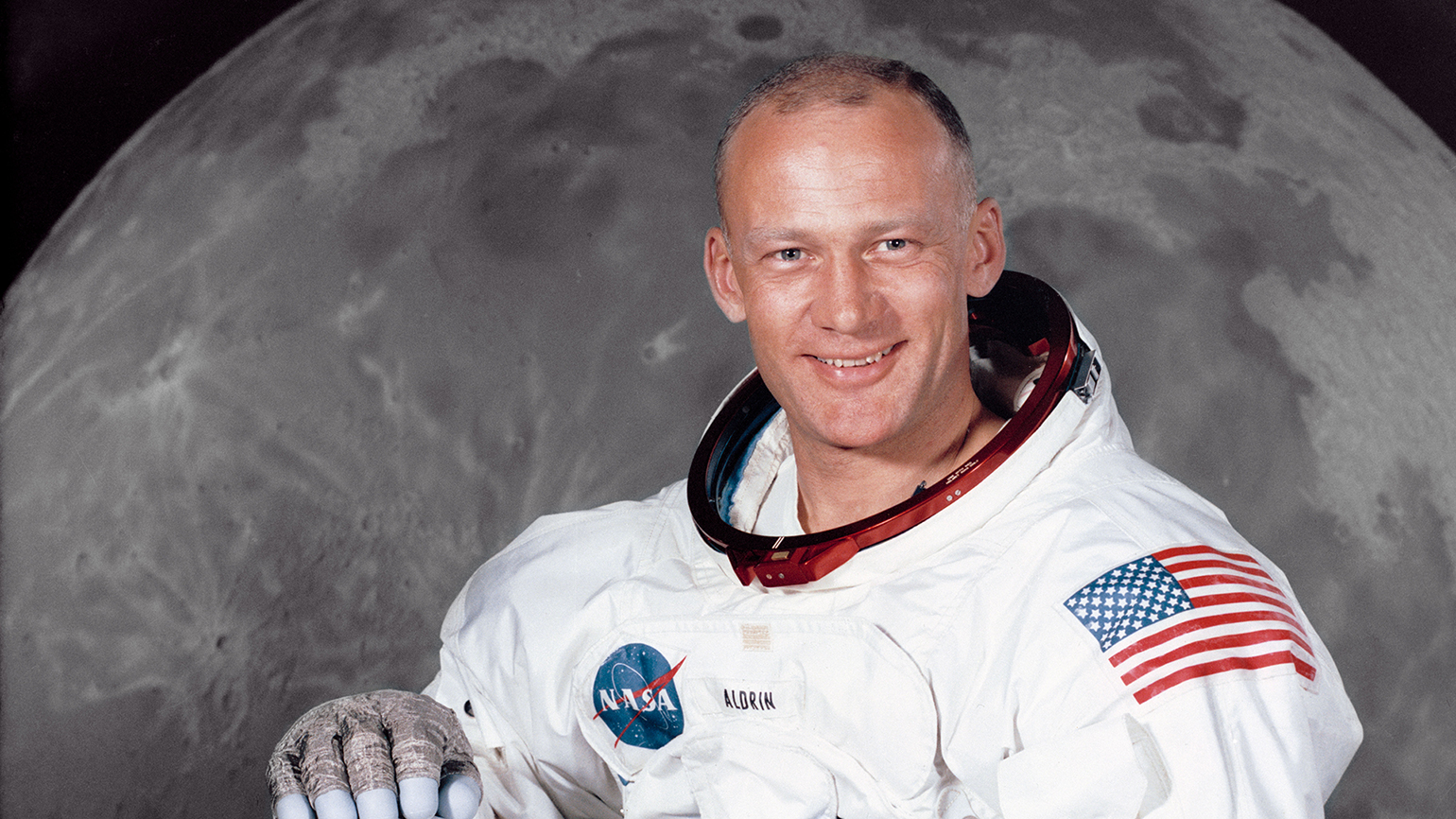
Guideposts Classics: When Buzz Aldrin Took Communion on the Moon

For several weeks prior to the scheduled lift-off of Apollo 11 back in July, 1969, the pastor of our church, Dean Woodruff, and I had been struggling to find the right symbol for the first lunar landing.

We wanted to express our feeling that what man was doing in this mission transcended electronics and computers and rockets.

Dean often speaks at our church, Webster Presbyterian, just outside of Houston, about the many meanings of the communion service.

“One of the principal symbols,” Dean says, “is that God reveals Himself in the common elements of everyday life.” Traditionally, these elements are bread and wine—common foods in Bible days and typical products of man’s labor.

One day while I was at Cape Kennedy working with the sophisticated tools of the space effort, it occurred to me that these tools were the typical elements of life today.

I wondered if it might be possible to take communion on the moon, symbolizing the thought that God was revealing Himself there too, as man reached out into the universe. For there are many of us in the NASA program who do trust that what we are doing is part of God’s eternal plan for man.

I spoke with Dean about the idea as soon as I returned home, and he was enthusiastic.

“I could carry the bread in a plastic packet, the way regular inflight food is wrapped. And the wine also—there will be just enough gravity on the moon for liquid to pour. I’ll be able to drink normally from a cup.

“Dean, I wonder if you could look around for a little chalice that I could take with me as coming from the church?”

The next week Dean showed me a graceful silver cup. I hefted it and was pleased to find that it was light enough to take along. Each astronaut is allowed a few personal items on a flight; the wine chalice would be in my personal-preference kit.

Dean made plans for two special communion services at Webster Presbyterian Church. One would be held just prior to my leaving Houston for Cape Kennedy, when I would join the other members in a dedication service.

The second would take place two weeks later, Sunday, July 20, when Neil Armstrong and I were scheduled to be on the surface of the moon.

On that Sunday the church back home would gather for communion, while I joined them as close as possible to the same hour, taking communion inside the lunar module, all of us meaning to represent in this small way not only our local church but the Church as a whole.

Right away questions came up. Was it theologically correct for a layman to serve himself communion under these circumstances? Dean thought so, but to make sure he decided to write the stated clerk of the Presbyterian church’s General Assembly and got back a quick reply that this was permissible.

And how much should we talk about our plans? I am naturally rather reticent, but on the other hand I was becoming increasingly convinced that having religious convictions carried with it the responsibility of witnessing to them.

Finally we decided we would say nothing about the communion service until after the moonshot.

I had a question about which scriptural passage to use. Which reading would best capture what this enterprise meant to us? I thought long about this and came up at last with John 15:5. It seemed to fit perfectly.

I wrote the passage on a slip of paper to be carried aboard Eagle along with the communion elements. Dean would read the same passage at the full congregation service held back home that same day.

So at last we were set. And then trouble appeared. It was Saturday, just prior to the first of the two communion services. The next day Neil Armstrong, Mike Collins and I were to depart Houston for Cape Kennedy.

We were scheduled for a pre-mission press conference when the flight physician arrived and set up elaborate precautions against crew contamination. We had to wear sterile masks and to talk to the reporters from within a special partition.

The doctor was taking no chances. A cold germ, a flu virus, and the whole shot might have to be aborted. I felt I had to tell him about the big church service scheduled for the next morning. When I did, he wasn’t at all happy.

I called Dean with the news late Saturday night. “It doesn’t look real good, Dean.”

“What about a private service? Without the whole congregation?”

It was a possibility. I called the doctor about the smaller service, and he agreed, provided there were only a handful of people present.

So the next day, Sunday, shortly after the end of the 11 o’clock service my wife, Joan, and our oldest boy, Mike (the only one of our three children who was as yet a communicant), went to the church. There we met Dean, his wife, Floy, and our close family friend Tom Manison, elder of the church, and his wife.

The seven of us went into the now-empty sanctuary. On the communion table were two loaves of bread, one for now, the other for two weeks from now. Beside the two loaves were two chalices, one of them the small cup the church was giving me for the service on the moon.

We took communion. At the end of the service, Dean tore off a corner of the second loaf of bread and handed it to me along with the tiny chalice. Within a few hours, I was on my way to Cape Kennedy.

What happened there, of course, the whole world knows. The Saturn 5 rocket gave us a rough ride at first, but the rest of the trip was smooth. On the day of the moon landing, we awoke at 5:30 a.m., Houston time.

Neil and I separated from Mike Collins in the command module. Our powered descent was right on schedule, and perfect except for one unforeseeable difficulty. The automatic guidance system would have taken Eagle to an area with huge boulders. Neil had to steer Eagle to a more suitable terrain.

With only seconds’ worth of fuel left, we touched down at 3:30 p.m.

Now Neil and I were sitting inside Eagle, while Mike circled in lunar orbit, unseen in the black sky above us. In a little while after our scheduled meal period, Neil would give the signal to step down the ladder onto the powdery surface of the moon. Now was the moment for communion.

So I unstowed the elements in their flight packets. I put them and the scripture reading on the little table in front of the abort guidance-system computer.

Then I called back to Houston.

“Houston, this is Eagle. This is the LM Pilot speaking. I would like to request a few moments of silence. I would like to invite each person listening in, wherever and whomever he may be, to contemplate for a moment the events of the past few hours and to give thanks in his own individual way.”

For me this meant taking communion. In the radio blackout I opened the little plastic packages which contained bread and wine.

I poured the wine into the chalice our church had given me. In the one-sixth gravity of the moon the wine curled slowly and gracefully up the side of the cup. It was interesting to think that the very first liquid ever poured on the moon, and the first food eaten there, were communion elements.

And so, just before I partook of the elements, I read the words which I had chosen to indicate our trust that as man probes into space we are in fact acting in Christ.

I sensed especially strongly my unity with our church back home, and with the Church everywhere.

I read: “I am the vine, you are the branches. Whoever remains in me, and I in him, will bear much fruit; for you can do nothing without me.” John 15:5 (TEV)

For more inspiring stories, subscribe to Guideposts magazine.

Guideposts Classics: Shirley Temple’s Happiest Moment

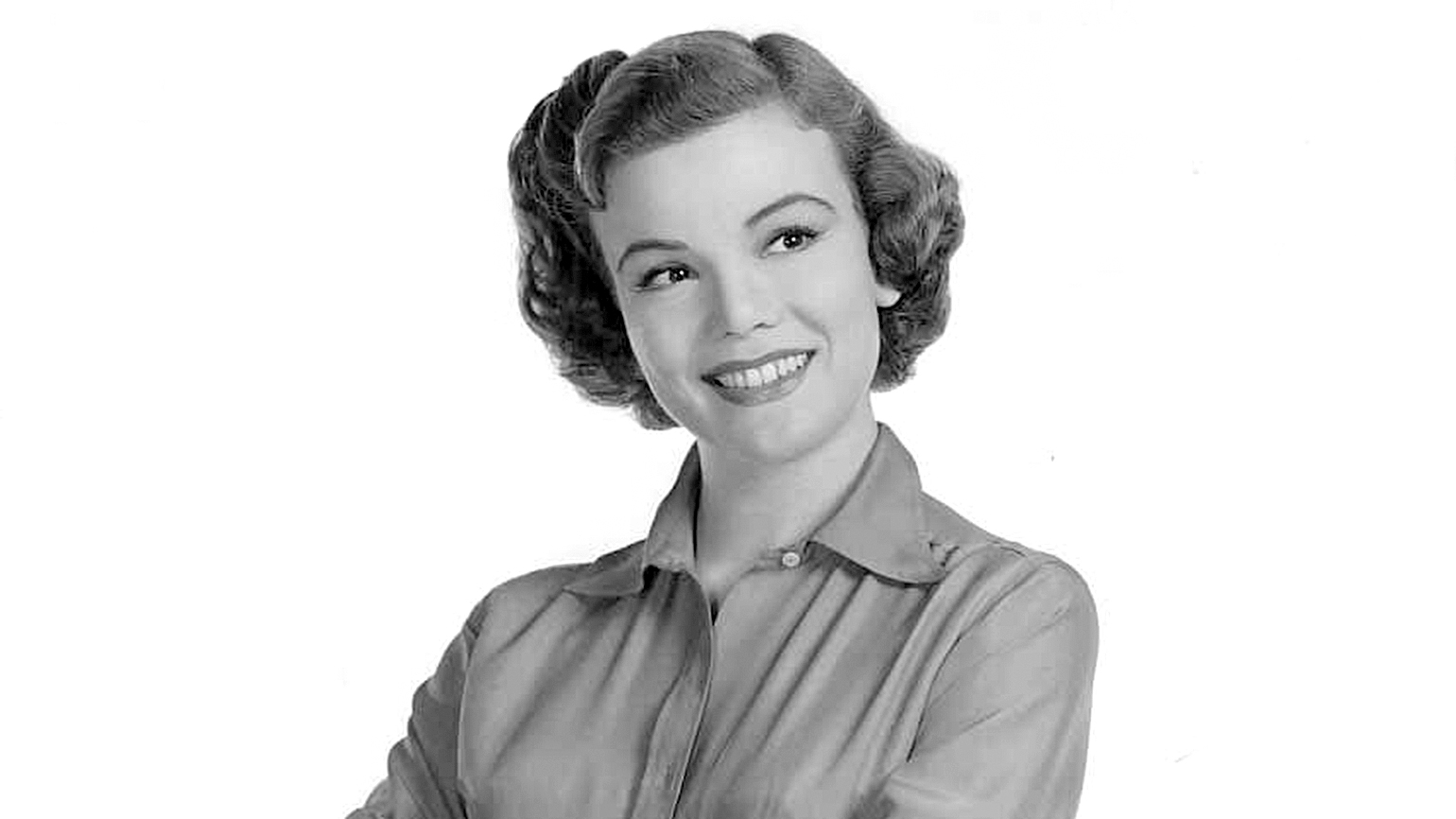
When we drove away from the house on the hill, we left her standing in the California sunshine, a pretty woman in her mid-thirties with blue eyes and chestnut hair and a kind of cheerful serenity about her. Ahead of us, on the horizon, we could see the soaring San Francisco Bay Bridge.

“What are you frowning about?” my wife asked. “That was a wonderful visit. And she’s so friendly and relaxed and … and normal.”

“Yes,” I said, “Completely. That’s the trouble.”

Celebrating Guideposts' 75th Anniversary“Trouble? I think it’s marvelous. She was a great movie star and could easily be spoiled and selfish and vain and neurotic. But she’s none of those things. She’s a good wife and mother. She’s a happy person. And not just because she’s a celebrity. In spite of it.”

“I agree with you,” I said. “But as a writer I have a problem. Happiness is tough to write about. It’s like describing a sunset. Once you’ve said it’s beautiful, you’ve said it.”

“There’s a little three-letter word,” my wife said, “that you can apply to anything: why. Why is a sunset? Why is happiness? Why, specifically, is Mrs. Charles Black, formerly the famous Shirley Temple, now a completely balanced and fulfilled human being? Why?”

“She didn’t tell us,” I said glumly.

“Ah,” said my wife, “but she did. She told us, and her house told us, and the pictures of her family told us, and her flowers and her books told us, and her child’s lavender bedroom told us, and her bright sparkling kitchen told us … oh, hundreds of things! If you’d just stop being difficult and think back, you’d see…”

“It’s good to see you,” Shirley Temple had said, “although things are a bit hectic around here. Lori—she’s our 10-year-old—has the measles, and I’m feeling a little headachy myself … I don’t think I’ve ever had them. Have you? That’s good! Come and have some coffee.”

To a writer interviewing a celebrity—or anyone, for that matter—first impressions are important. And they’re not arrived at consciously.

You see your subject; you’re aware of the background; you hear the first conventional phrases. But all the time you are listening on a kind of psychic level, groping for the essence of the person.

This woman: friendly, outgoing, not shy, no self-consciousness, no wariness. This house: comfortable, but not pretentious. Neatness and quietness. A warm center with a feeling of distance surrounding it, perhaps because it’s a hill-top home with a far-reaching view…

“Those pictures?” said Shirley Temple. “Yes, everyone looks happy because they were happy occasions. One was the golden wedding anniversary of my parents. The other was the golden wedding anniversary of my husband Charlie’s parents.

“Imagine having two such events in the same family within six months! And everybody’s still going strong.”

Fifty years and 50 years: a century of wisdom and happiness to draw on. That explains a lot. You can inherit certain things without even knowing that you’ve inherited them: outgoingness, good manners, an instinctive concern for other people, a sense of obligation to life, a feeling of gratitude…

“I’ve been terribly lucky,” Shirley Temple said. “I’ve bad such a wonderful life that the few mishaps or misfortunes seem very small.

“Think of all the things I’ve had! Parents who were strong and wise enough to protect me from the pressures that might have been damaging when I was a little girl. A marvelous girls’ school—Westlake—when I was 12 that brought me out of the make-believe world I’d lived in for so long.

“Now a marriage that’s completely happy. Charlie and I have backgrounds and values so similar that we even think alike! And, of course, three wonderful children.

“Then I have my community activities: I work as a volunteer every Monday at the Children’s Health Council in Palo Alto. And my occasional television work; I like that, so long as it doesn’t interfere with my family. If I thought it bothered Charlie or upset tile children I’d give it up tomorrow.”

Values: a key word when it comes to this business of happiness. You have to know what you want froth life, for yourself, and for others. Take the value of individuality, for instance…

“Charlie and I,” said Shirley Temple, “have a horror of forcing a child into a pattern that may please the parent but is all wrong for the child. We think children should be allowed to develop their own personalities in their own way—within a framework of good manners and good behavior, of course.

“I still get letters, sometimes, from doting mothers who tell me that their little girl looks just like the Shirley Temple of 30 years ago and has even learned some of my old dance routines.

“I always try to discourage them. The little girl that I once was had her place in time and in show business, but she’s gone now, and so is that era.”

Or the value of shared affection:

“Charlie and I almost always eat supper early with the children. We feel that if we all can be together for at least one hour a day, we can give the children a sense of security about family life that they can get in no other way.

“We try to keep that meal apart as a sort of special family hour. No television, no telephone calls, no outside interruptions. We take turns saying a simple grace. Sometimes I read from a set of Bible stories that I loved as a child. My children love them too.”

And the value of perspective:

“When we moved into this house a few years ago, we brought with us a lot of scrapbooks from my child-actress days. And Charlie suggested keeping them here in the living room, but I asked him to put them in the attic.

“They may interest our grandchildren some day. But I believe you have to live in the present, not the past or even the future.

“Charlie’s mother tells a story that expresses my philosophy very well. Once, when he was little, he asked her to name the happiest moment of her life. ‘Why this one, right now,’ she said. ‘But what about the day you were married?’ Charlie wanted to know.

“‘Well.’ she said, ‘my happiest moment then was right then. You can only live the moment you’re living in. So to me that’s always the happiest moment.’ And she’s right, you know: the happiest moment is now!”

The happiest moment is now. Maybe that’s her secret. Maybe that’s why she’s as serene and adjusted and well-balanced as she is.

Ahead of us now the skyscrapers of San Francisco were standing up to greet us. In a few more hours my wife and I would be home again with our own children, our own way of life.

To be yourself, not some artificially assumed personality. To live one day at a time. To accept the joy of being alive in the one moment when you can really feel it—the moment that is now…

“You’ve stopped frowning,” my wife said. “It was a good visit, wasn’t it?”

“Yes,” I said. “Very good.”

For more inspiring stories, subscribe to Guideposts magazine.

Guideposts Classics: Robert Frost and Faith

Robert Frost talks with the subtle indirection that gives such unique quality to his poetry. For weeks after his interview with America’s great poet, Guideposts reporter John Sherrill found the experience meaningful, almost haunting.

The poet, dressed in a gray suit and white shirt open at the neck, was finishing breakfast. His first words were keynotes. Frost looked up. His great eyebrows moved upwards as he spoke.

I hope you won’t ask me to put names on things,” he said. “I’m afraid of that.

Yet that was what I had come to do. And one of the first topics we discussed was what God meant to him in his poetry, as for example in “Bereft,” written after the death of his wife:

Where had I heard this wind before
Change like this to a deeper roar?
What would it take my standing there for,
Holding open a restive door,
Looking down hill to a frothy shore?
Summer was past and day was past.
Somber clouds in the west were massed.
Out in the porch’s sagging floor,
Leaves got up in a coil and hissed,
Blindly struck at my knee and missed.
Something sinister in the tone
Told me my secret must be known:
Word I was in the house alone
Somehow must have gotten abroad,
Word I was in my life alone,
Word I had no one left but God.

Frost folded his massive hands—he is a large, well-built man—and spoke softly: “People have sometimes asked me to sum up my poetry. I can’t do that. It’s the same with my feeling about God. If you would learn the way a man feels about God, don’t ask him to put a name on himself. All that is said with names is soon not enough. If you would have out the way a man feels about God, watch his life, hear his words. Place a coin, with its denomination unknown, under paper and you can tell its mark by rubbing a pencil over the paper. From all the individual rises and valleys your answer will come out.”

We reviewed, a little, what I knew about Frost’s life. Perhaps from its rises and valleys a picture would emerge.

Robert Frost was born in 1875 in San Francisco, 3000 miles away from the New England he writes about in most of his poetry. Frost’s family, however, was ninth generation New England, and when his father died, Frost’s mother moved with her son back to Lawrence, Massachusetts, to live with in-laws.

READ MORE: VAN CLIBURN ON TRUE SUCCESS

It was while Frost was living with his grandparents that he bought his first book of poetry. As a boy, Frost’s spending money was at a minimum, but he liked to visit bookstores and browse. “I had gone to Cambridge one day,” Frost recalls, “and I was standing in a bookstore, thumbing through Francis Thompson’s famous religious poem, The Hound of Heaven. I became fascinated with his idea that we are not seeking God, but God is seeking us. I bought the book. I spent my carfare for it, and I had to walk home.”

The distance was 25 miles!

It was in Massachusetts, too, that Robert Frost wrote his first poem. In his high school, no English was taught. Only history, mathematics, Greek. In history one day, Frost learned about Cortez, the Spanish conqueror of Mexico, and on his way walking home that afternoon, Frost composed a long ballad about Cortez.

“I remember the time so clearly,” said Frost. “I recall how there was a wind and darkness. I had never written a poem before, and as I walked, it appeared like a revelation, and I became so taken by it that I was late to my grandmother’s. The next day I took it to the editor of our school paper, and it was published.”

Nothing was quite the same with Robert Frost after that. It isn’t that he suddenly had a burning ambition to become a great poet. It was more of a stirring, a desire somehow to keep poetry in his life even if it meant difficulties.

And the difficulties were not long in coming. It was apparent to those close to Frost that something had happened. He seemed to have lost all ambition. His grandfather thought he was plain lazy, and began bending every effort to get him settled into some respectable work.

Reflecting on those days, Frost spoke of how no one had confidence in his future. “Where is it that confidence and faith separate?” he asked. “…We have confidence in the atom. We can test the atom and prove that it is there. I have seen an old New England farmer try to test God in this same way. He stood in his field during a thunderstorm and held his pitchfork to heaven and dared God to strike him. You just can’t prove God that way.”

Robert Frost must have had faith in his poetry. It certainly couldn’t have been confidence. He submitted to magazines time and again. Most of his work was returned.

And all this while, pressure was great to pin Frost down, to get him to commit himself to a career. Frost evaded the efforts. His grandfather got him a job as a bobbin boy in one of the textile mills in Lawrence, hoping he would rise through the ranks. Frost took the work, but he refused to advance. All the while Frost was steadily writing.

A little later Frost married his childhood sweetheart, Elinor White. His grandfather bought them a farm up in New Hampshire, but Frost refused there, too, to be classified, pigeon-holed. Reports soon began to circulate through the neighborhood that young Frost milked his cows late at night so he wouldn’t have to get up early in the morning. Frost has always preferred to write at night. But the townsfolk called it laziness.

READ MORE: CORRIE TEN BOOM ON FORGIVENESS

Then, to help increase the support of his growing family, Frost began to teach school up in New Hampshire. The school was impressed by the stimulation of Frost’s unorthodox classes, where the students were expected to catch the spirit behind Frost’s teaching, not the exact fact. When Frost was 36, the job of headmaster became vacant. Frost was offered the position.

At last, in the eyes of his hometown folk, Frost was on the verge of redeeming himself. Then he ruined it all by committing what they described as an act of supreme shiftlessness—Frost declined the post of headmaster.

“That would have been the ruin of the poetry in me,” he says. “I’d never have taken up my writing again. People called me lazy. Perhaps they were right. I’ve always been careful to protect this laziness.”

It took a long time to gain recognition—until he was 40 years old in fact—but into his poetry Frost managed to instill some of this same haunting subtleness that he sought in his life. There was a quality about his poetry that the 20th century responded to, and now, after 40 years, Frost is recognized as the dean of American poets.

Often Frost has been asked to interpret the philosophy behind his poetry before a group of students. Each time Frost refuses. He says that the poem’s meaning is as the individual reader interprets it. “It must be personal with you,” he says.

So I won’t try to pin Frost down and say, “This is what he has to say.” But I can say what meeting Frost, learning about his life, reading his poetry, talking with him about his views on religion has meant to me.

When I went to see Frost that day I was hoping, I can see now, to put him quickly into a pigeon-hole in my mind, I’d have liked to pin him clown and classify him.

Robert Frost refused. And that is precisely why his interview haunted me so. Let me put it this way.

Imagine that you see a butterfly, and its beauty is something you want to capture and take home with you.

You catch the butterfly and place it carefully on a cardboard under glass.

And to your sorrow, you haven’t caught the butterfly at all. You can examine the thing that you have under glass, and give it a name. But your relation to it is changed. Where once the butterfly had a subtle, vibrant aliveness, the very act of pinning it down has destroyed it for you.

As we make more and more progress controlling and classifying the material world, we are tempted to try to capture more elusive qualities of the spirit in the same way. It just can’t be done. And that to me was Robert Frost’s message. Frost, through his poetry, his life, was saying:

There is a point beyond which the spiritual side of life must be protected, kept sacred as a personal experience, not captured or tested like the farmer with his pitchfork tried to do. As Frost himself said: “You can’t test a stirring. You can’t pin down the God within you.”

Did you enjoy this story? Subscribe to Guideposts magazine.

Guideposts Classics: Ray Bradbury on Celebrating God’s Gifts

The longer I live the more I see how God often touches our lives through other people. I’ll never forget that magical autumn afternoon when He used Mr. Electrico to touch mine. It happened when I was 12, in my hometown of Waukegan, Illinois, on Lake Michigan’s shore.

It was the kind of golden September day when farewell summer touched the land while the autumn wind promised winter. It was also the day when the Dill Brothers Combined Traveling Shows came to town.

To me the Dill Brothers Shows might well have come from Katmandu, the other side of the moon or the outer rings of Saturn. As soon as their gasoline generators coughed awake and the calliope’s chords drifted over the seared fields I dashed headlong toward this faded and patched canvas wonderland.

I ran so hard I tasted iron, and my heart exploded as I arrived at the sideshow where I stared openmouthed at Mr. Electrico. A towering hawk-nosed figure with a fiery stare that put out your eyes, he spoke in tones I felt proclaimed God’s truth. With a flourish of his black cape, he ensconced himself in a wondrous electric chair, and an assistant threw a switch and proclaimed, “Here go ten million volts of pure fire, ten million volts of electricity into the flesh of Mr. Electrico!”

As the current surged through his body, his white hair billowed into a bright halo, his body seemed to glow and incandescent fire danced at his fingertips. I watched mesmerized as he picked up a silver sword, leaned down and with it touched me on both shoulders, then the tip of my nose. The electricity surged through me, making my hair stand on end. He shouted, ”Live forever!

I fell back stunned. His words brimmed my ears like a divine command. I did not know that the electricity used in such performances was of low amperage and harmless, but I did know that something incredible was happening to me.

The next day, even while attending an uncle’s funeral, I could not forget Mr. Electrico. As our car headed home for the family’s post-funeral wake, to my parent’s consternation I leaped out and raced down the hill to the carnival. I carried with me a ball-in-vase trick I had ordered through the mail from Johnson Smith & Co. as an excuse to see Mr. Electrico. I had to find out just how to “Live forever!” How did it fit with what I’d learned Sundays at my Baptist church? I sensed that we could live on with God after we died, but Mr. Electrico’s proclamation indicated something different.

I found him wandering thoughtfully among the tents. He seemed happy to see me and offered to introduce me to his fellow performers. Before we entered he slapped the side of the faded tent with his cane and cried, “Clean up your language!”

The sideshow folks “cleaned up their language” and he ushered me in and introduced me to the Skeleton Man, the Fat Woman, the Illustrated Man and the Bearded Lady. Then we walked out to the sandy shore of Lake Michigan, where we sat on a log. He talked his small philosophies and let me talk my big ones.

It was a long conversation that lasted until the lake horizon melted into dusk. What were my goals? What was the meaning of my life? As we talked, I discovered he had been a Presbyterian minister. As I was to learn, he was still ministering.

He spoke of how important it was for us to be true to what we had been given to do in life. And on that log I began to realize just what he meant by “Live forever!” He wasn’t referring to salvation. His emphasis was on the word live. He was saying that this life too was sacred and must be lived to the fullest. Each day, each hour was precious. Each of us must make the most of every moment to use the gifts God had given us.

As I listened to Mr. Electrico, I realized that a few years before I had almost discarded the gift God had given me. At age nine the call of distant planets had excited my imagination. I had carefully cut out Buck Rogers comic strips from our local newspaper. But when the kids in school learned about it they made fun of me. I tore them up in embarrassment. A month later I burst into tears and wondered why I was crying. Who had died? Me! For I had listened to those fools who couldn’t understand my gift or my need for the influence of Buck Rogers in shaping my future. I went back to collecting him. I was made whole again.

Something happened to me as Mr. Electrico and I talked through that warm autumn afternoon. His blazing sword had truly fired my imagination, to make me fully realize what my calling in life was.

Though I had done some writing, after my encounter with Mr. Electrico I began to write faithfully every day. I asked for and got a Simplex toy typewriter from my parents for Christmas. It took hours to compose a single paragraph on the machine, dialing letters on a rubber disc and pressing them one by one against the paper. But I wrote all of my first stories with the wondrous gift.

Since that one bright afternoon with Mr. Electrico I have never stopped writing. Thus I celebrate the gift God has given me. I believe each of us has such a talent to put to work to find ourselves and in the finding help others. Some ignore their talents, some let friends talk them out of their gifts as not being “practical.” Sadly, too many forgo their inherent genetic ability in the mindless pursuit of money.

I’ll never forget the taxi driver I once met in New York; he took great joy in celebrating his gift. He was a joy to ride with because he madly loved his cab. It must have been 30 years old but he kept it polished so that it blazed. When we reached our destination, he jumped out to lift the hood and proudly display its motor. It was all silver-chromed; he had burnished every part by hand. As the engine purred between us like a huge contented cat, I looked up at him to see a delighted, fulfilled man.

He knew how to live. Somewhere, long ago, he had met his Mr. Electrico!

For more inspiring stories, subscribe to Guideposts magazine.
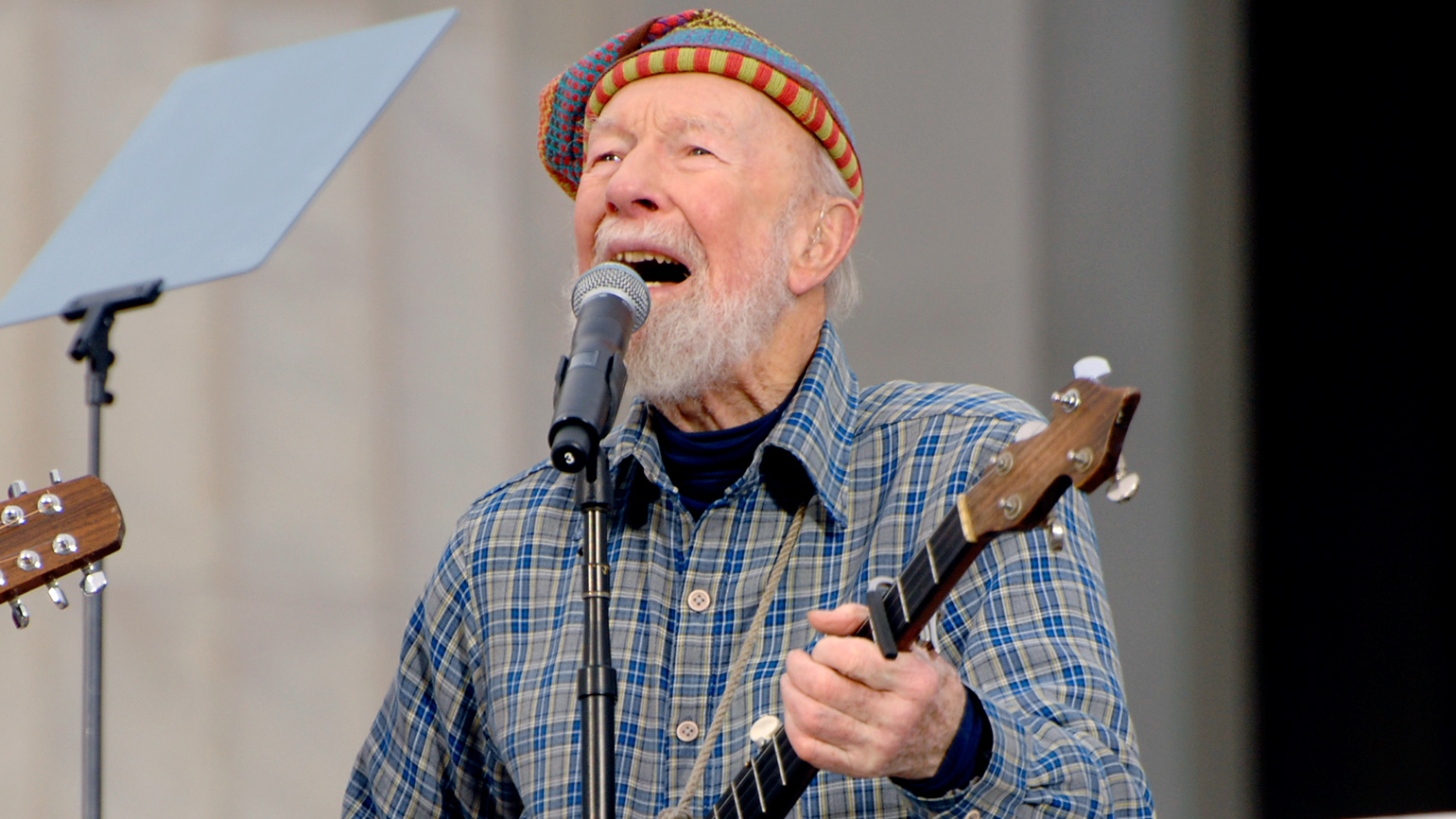
Guideposts Classics: Pete Seeger on Environmental Stewardship

Twenty years ago my wife, Toshi, and I were fortunate to be able to start living on a mountainside overlooking the Hudson River. We hand-built a log cabin for ourselves and two babies.

We came to love the river and started learning her history: how the last ice age gouged out her present channel, how the Algonquins and Iroquois made their homes along her shores, how early Dutch captains sailed her waters in their floating family businesses–the Hudson River sloops.

I liked to dream of our river in the days of the sloops, and spent hours poring over a book written by a Hudson River Dutch descendant, William E. Verplanck.

“Before I die,” he wrote in 1908, “let me put down as much as I can remember about these boats. They were the most beautiful I ever knew and they will never be seen again.”

Looking down on our Hudson, we could watch the river itself, as the Indians and as Verplanck knew it, also disappearing. Every year 100 billion gallons of gook are dumped into this water. The great clam and oyster beds are gone.

Huge 100-pound sturgeon used to be the backbone of an important industry, but today the fish don’t always taste so good. Upriver children occasionally swim in the Hudson, but after a good rain the Health Department chases the youngsters away. Water’s too full of overflow sewage.

This was getting to me, as it was getting to a lot of people. Who’s to blame for pollution?

In a sense we all are. On the other hand, I will not cop out and say that all of us are equally to blame. That makes the word “blame” meaningless.

Is a newborn baby to blame? No, even though his diapers need changing ten times daily. Is a Navaho herdsman to blame? He doesn’t manufacture DDT or drive a Detroit smog machine.

Is an adult U.S. citizen to blame? Yes, considerably, I’d say; we have more facts at hand and should know how to act on them.

Is a government or business leader more to blame? Yes, I’d say, because they have the power to make this kind of decision: Shall we keep this river clean or make a profit on it?

Behind that question lies a still more basic one: To whom does a river belong? The Algonquins who used to live along the Hudson had no trouble answering. “We are stewards of the river,” they used to say. “Not owners. Caretakers.” Isn’t that the attitude we should be taking?

About four years ago I began to wonder if it were possible to get a lot of people at once to ask that same question. I proposed an impractical and hopeful idea, typical of a banjo picker, I suppose.

What would happen if a group of people got together and built a replica of one of the old cargo sloops? We’d take her up and down the river and at each port we’d do something very simple. We’d try to teach people to love their river again.

Late one night I committed this harebrained idea to paper and mailed it to a friend who lived near me. A few weeks later he surprised me by asking, “When do we get started?”

On a summer evening in 1966 we held our first outdoor “sloop concert.” About 150 people showed up. Everyone was so enthusiastic that we began right away to try locating a naval architect to design our replica. We found such a man, Cyrus Hamlin, of Kennebunk, Maine.

“A sloop such as you want will cost a hundred thousand dollars,” he said.

By the end of the first year we had dollared and dimed our way to a total of $5000. At the end of the second year we had only $15,000; then an unusually successful fundraising picnic brought in $10,000.

Our architect located a shipbuilder whose men still knew how to shape big oak planks and ribs–Harvey Gamage, of South Bristol, Maine. “I think you ought to get started right away,” Harvey Gamage told us in 1968.

“I don’t understand,” I said. “We’ve only raised thirty thousand dollars so far.”

I can still hear Harvey’s Maine twang. “You’ll find money comes quicker once the keel’s been laid.”

And that’s exactly what happened. As soon as the keel was laid, the project went into high gear.

There was a new excitement at the concerts. Help came from up and down the Hudson Valley. Mrs. DeWitt Wallace, founder with her husband of Reader’s Digest, promised us the final $10,000 if we succeeded in raising the rest.

Long before the total sum was raised, we were teaching love of our land. For instance, there was the matter of littering.

One wealthy gentleman gave us permission to hold concerts on his waterfront farm. Members of the sloop organization decorated cardboard boxes with designs and animal figures and sprinkled them every 30 feet across the field. We called them “plizyuzmis.”

At the end of the program there was hardly a chewing-gum wrapper or bottle top on that grass. It’s true; we don’t litter what we love.

With our concerts and with singing in churches and fire halls up and down the Hudson, and with a few bigger checks, we finally launched the Clearwater, 76 feet long, a sturdy beauty sailing upriver out of the past.

Since that day, hundreds of volunteers have taken turns plying the Hudson waters, talking to people about pride–pride in the land where they live.

Soon far more was going on than a clean-up campaign. Other problems were being tackled–including, for instance, the many splits in communities today that make it hard for people to talk to one another. We’ve seen neighbors meeting neighbors for the first time ever–and liking it.

Pulling on the same rope aboard the Clearwater may be a shaggy-haired youth, a middle-aged estate owner from upriver and a shy farmer s son who s never bee off dry land before. And each one will be thinking that he alone has just made the momentous discovery: In a cooperative situation, people are great!

Or take the mass-produced life that has a lot of us wondering if we’ve lost some essential humanity. Remember old-fashioned country fairs with the homemade quilts and home-grown vegetables and sweet, fresh pies?

Well, today there’s a country-fair feeling every time the Clearwater warps up to a dock. It takes a little planning, but when people see others helping, they want to help too. Wherever we stop, the homemade soup or beans appear mysteriously.

We have homemade music too. A small brass band turned out on the dock in Kingston. Someone warned us the band was so out of tune it would be hooted off the wharf. How wrong they were. The band’s forthright conviction had the audience whooping with delight.

Who cared if they weren’t precisely on pitch? Their spirit captivated all. Some of the longest-haired kids began to do somersaults and stunts. Soon we had a homemade circus on the public landing.

We’re enjoying our river again. And one of these days we’ll see it cleaned up. We’ve just barely begun, of course. We must now give people some idea of what it’s going to cost to keep it lovely. Few really understand this yet.

New York state has allocated 1.7 billion dollars to clean up the Hudson, and that money–far short of what it will actually take–will eventually come out of each of our pockets.

We’ll end up paying more for certain products–paper, electricity. We’ll have to stop using other products which damage the environment too much. Tremendous changes must come.

For a long, long while social prophets have urged in effect. “Let’s eliminate the gap between rich and poor, black and white. Then, when mankind is united, we can solve any problems which face the human race.”

Now biologists are telling us, “Man must immediately–within a decade–solve our environmental crisis or the human race is kaput. All else can wait.”

The experience of the past year has tended to convince me that these various crises–social, moral, environmental–are going to be solved simultaneously or not at all. In fact, they can be more easily solved if we work on them simultaneously, for everything in the world is linked together.

When you tackle one problem, you are also doing something about the whole. The place to start generally is right where you are. I chose the river because it was–quite literally–under my nose.

Is it worth it? What is a river worth? What is life worth? Sometimes when people see the beautiful view from the few acres which Toshi and I cleared so long ago, they ask:

“Do you own all this?”

Our answer is not original with us. It dates back to the feeling the Indians had toward the land–and before them, to all those who have regarded this earth with reverence.

“God owns it; we’re only trying to take care of it for a while.”

For more inspiring stories, subscribe to Guideposts magazine.
Guideposts Classics: Peter Lind Hayes on Caring for Strangers

A good scare can often teach a man more than the best advice.

Some years ago, I had such a scare, shared by my wife and about 200 other people.

It was the last night of our two week engagement at a posh private supper club—The Mounds—in Cleveland. Mary was on stage, in front of the band, decked out in a lovely taffeta gown. As part of our act I was in the audience, heckling her.

I was sitting at a table where there was only one guest—a slight, neatly dressed man, who seemed rather lonely. He smiled at me and tried to start a conversation. I brushed him off. I was busy playing the part of a western lumber tycoon, Mr. Goodpile. Mary was trying to get me to come up on the stage.

ENJOYING THIS STORY? SUBSCRIBE TO GUIDEPOSTS MAGAZINE

Our banter was interrupted by the sudden appearance of 14 masked men. Over their heads they wore dark stockings with eye slits. One was wearing a gray felt hat. A few of the men carried submachine guns. The rest held revolvers and wore Army fatigues and overseas caps. It just didn’t seem real—not in The Mounds. Was this some kind of a gag?

More in fear than doubt I yelled to Mary, “I don’t figure on comin’ up there, Miss, until you tell these clowns to take off their masks.” One of the men leaped onto the stage, grabbed the mike from Mary and snarled into it, “This is a stickup! We’re not kidding.”

Maybe Mary thought it was a gag too. She grabbed back the mike. (Never, never take a mike away from a performer.) The thug pointed his submachine gun at the ceiling and sprayed it.

Mary went wide-eyed, looked up at the ceiling, saw the holes, sprinted from the stage and through the nearest door leading to the kitchen area. I got up to follow her. A gunman pushed me back to my seat. Val Ernie, the band leader, slipped off the stage. The gunman shoved him into a seat next to mine.

I was frantic about Mary. Did any of them go after her? I counted them. They were all in the room, all 14. Thirteen seemed nervous. Amateurs. I was even more frightened. Amateurs have jumpy trigger fingers. The 14th, the man with the gray felt hat, was confident, decisive; apparently he was the leader.

One man in the audience still thought it was a joke. He shouted, “Stop this nonsense. Get on with the show.”

The leader rushed over to him, slammed his revolver against the man’s head. The man fell over the table, stunned.

“Anyone else?” the man demanded.

READ MORE: ARLENE FRANCIS ON LISTENING LOUDER

There was a deadly silence.

The leader snapped quick orders to the others, positioning them around the room. No one was going to leave before the gunmen were through.

I looked at Val, our band leader. His face was chalk white. The face of the other man at the table was just as white. Mine was probably whiter. I began mumbling, unaware at first that I was praying:

Our Father, Who art in heaven, hallowed be Thy name; Thy kingdom come…

The leader barked. “All women put your jewelry in your hands! Palms up. Men do the same with their money! All of it.”

Thy will be done on earth as it is in heaven. Give us this day…

Val’s head was lowered in prayer. The little man was praying too—in Hebrew. Then he took his money out of his pocket, a packet of neatly folded bills. He looked at it, not ruefully, but just as if he were hoping it would content the greediest stickup man. He held it in his upturned palms and continued his prayer.

I broke out in a sudden sweat. I had left whatever money I had been carrying in the dressing room. Actors don’t like the slightest bulge in their pockets. Vanity. I glanced over at Val, wondering if band players were as vain as actors.

“I haven’t got a dime on me,” I moaned.

Val stuttered, “Neither…neither have I.”

How were we going to convince the thugs that we really didn’t have any money? They were moving around the room, collecting the loot from the upturned palms. I shot a quick look at the man the leader of the gang had slugged. He had come to. There was blood on the side of his head.

And forgive us our trespasses… Dear God, where is Mary? Keep her safe…

READ MORE: NANETTE FABRAY ON GROWING WITH GOD

Val groaned, “What are we going to do? They won’t believe us.”

Our companion looked at the consternation on our faces. He held out his hand with the money toward us and whispered, “Take a little. Leave a little.”

There was a sudden bond between the three of us. And a few minutes earlier I had brushed him off so brusquely.

Val and I took a little—a little money, but a lot of strength. Then we all returned to our own thoughts and prayers. But we were no longer strangers.

And forgive us our trespasses as we forgive those who trespass against us…

The stickup men reached us and took the money. The leader had forced the manager to open the safe. They all fled with the collection and the contents of the safe, about $120,000 in cash and four times as much in jewelry. The whole episode took less than 30 minutes.

As soon as they were gone, there was a babel of voices and spurts of hysterical laughter. I turned to thank the little man, but he had disappeared. I wanted to follow him, to find out his name, but instead bolted after Mary. I found her in a tiny storeroom. She and two waiters had hidden themselves there.

All three were terrified because every time Mary moved her taffeta gown rustled. Afraid that the gunmen would hear her rustling, the waiters tried to hold her still. It was the kind of comic scene that verged on tears.

Mary was trembling. “How is it possible for gangsters to come into a place like this—private and well protected—and threaten everyone with death?” she asked. She was bewildered and shocked, shocked into what turned out to be a long illness. It took us all some time to recover.

Ever since that night I have wondered about the stranger at our table. If he should ever read this, I want him to know how much I regret the cold way I first greeted him and how grateful I am for his act of brotherly concern.

Did you enjoy this story? Subscribe to Guideposts magazine.

Guideposts Classics: Naomi Judd on Stepping Out in Faith

Once liver disease forced me to retire from my country music career in 1991 I thought people wouldn’t be interested in my life anymore. Turns out they have more questions than ever.

Folks always ask: How did a girl from sleepy little Ashland, Kentucky, who’d nev­er sung a note in public, end up performing concerts all across America? How did a single mom who just wanted to find steady work become a country music star? How did I keep from losing my spirit when I lost the career I loved? How did I find healing from a devastating chronic illness?

The answers are really different verses of the same song. The song of faith, of believing, of seeing not with the eyes, but with the mind and heart and soul.

The first verse came to me in the spring of 1975, af­ter I’d moved back to Kentucky with my daughters, Wynonna, 10, and Ashley, 6. I needed to put the troubles of the last six years in Los Angeles be­hind me—a divorce from the girls’ dad (whose job had taken us to California), a string of dead-end jobs (all I could get without a college degree), a stint on welfare.

I wanted to give my girls the stable upbringing they deserved. Where better to do that than in the Kentucky hills where my roots were?

We stayed in a dirt-cheap rental cabin near Berea while I start­ed my nursing school classes. I promised Wy and Ashley, “This is just until we find a place of our own.” Except, six months lat­er we were still there.

Had I uprooted my girls for nothing? One day in May when they were at school, I turned on the radio, opened the window and sat down on a blan­ket right outside so I could listen to music while I studied. The Stanley Brothers’ achingly beautiful bluegrass tunes came on. I closed my eyes and drifted back to my childhood, back to the days when God was as real as our house at 2237 Montgomery Av­enue.

Lord, even if I can’t lay eyes on you, I still know you’re real, I prayed. So I’m going to believe the same with this home we’re searching for. I will hold on to this image in my heart—a cozy little house in the hills—and have faith that you’ll lead us to it.

The following evening the girls and I were driving through Berea when we saw an elderly woman slip and fall. We stopped to check on her. She’d twisted her ankle badly, and the aspiring nurse in me insisted we take her to the emergency room. We got to talking, and I confided my difficulty in finding a home.

The next day I found a note in my mailbox at nursing school from Mar­garet Allen, a friend of the woman we’d stopped to help. Mrs. Allen had a house she wanted to show me.

Her directions took us to the tiny town of Morrill. We turned off Big Hill Road and at the crest of a knoll stood a two-story house with a big front porch and apple trees dotting the yard. An elderly lady stepped out and introduced herself as Margaret Allen. “Welcome to Chanticleer,” she said. “Your new home.”

I was speechless. “It’s com­pletely furnished, linens, dish­es, silverware, everything. . . . ” she said. “Come, I’ll show you.”

Inside, the house was even loveli­er, like something out of a fairy tale, filled with antiques. “Mrs. Allen, we couldn’t possibly afford to rent this place!” I gasped.

“Could you afford one hundred dollars a month?” she asked. “I don’t need the money, just the right people to have it.”

We moved into Chanticleer in June, and it was there on that big front porch we discovered something that would change our lives. Some­one had given me an old guitar, and just for fun I brought it out. Wynonna took to the guitar like a bee to honeysuckle, returning to it again and again.

I bought Wy her own guitar, a used but nice instrument. I unearthed an old bluegrass album by Hazel and Al­ice in the used bin at a record store. Two women singing, their voices blending in a way that sent shivers up our spines. That was the sound of our Kentucky hills!

Wy and I taught ourselves every song on that record. Strange thing was, I’d never sung before, not even in church—I’d felt too shy to do more than mouth the hymns. But on the porch with Wyn­onna, a voice I never knew I had came out, harmonizing naturally with hers, a musical expression of our family bond. The first song we learned all the way through was “A Mother’s Smile.”

It wasn’t till four years later that I learned the second verse of my own song of faith. By then I knew music was Wy’s gift, her destiny. My job was to go with her and make sure it didn’t become her downfall too. I’d started writing songs for us to sing together, and we moved to Nashville—Music City, USA—on the condition that she finish high school.

I house-sat while we looked for a place in the countryside to rent. I had to wait for my Tennessee nursing certification to come in, so I took a low-paying job as an assis­tant to a booking agent on Music Row.

One Friday night that summer of 1979 Larry Strickland, an amazing bass singer whose band my boss managed, asked me out. Since I didn’t go to bars or clubs, I suggested we check out an old property I’d heard about in Franklin, just outside Nashville. We stood in the moonlight looking at the neglected house and just talked. Then he kissed me softly and that was it. I was head over heels.

Sunday after church I called Lar­ry on the road only to find he was out with another woman. My heart broke. That night the person I was house-sit­ting for told me he would be returning soon, and we’d have to move on. I felt so defeated. No partner, no real job, no place to call home. Had I dragged us right back into the mess I’d worked so hard to get us away from?

That’s when I remembered a verse from Hebrews I’d heard in church that morning: “Now faith is the sub­stance of things hoped for, the evi­dence of things not seen.”

God, I’m going to believe that all the dreams I have in my heart are as real as you are, I prayed. Our own home, with everything in it working. A car that didn’t clank, smoke or break down. A job that would leave me enough to buy my daughters Christmas pres­ents. And finally, the wildest dream of all, a career in country music.

I pictured the future I hoped for. I formed a clear image of it in my mind. Then I set about making it happen. I stepped out in faith and rented the run-down house in Franklin for three hundred and fifty dollars a month. The girls and I fixed it up, one thing at a time. And with a lot of talking and praying, Larry and I patched things up too.

My nursing certification came in that winter. I signed up with a nurs­es’ registry so I would have flexibili­ty in my work schedule to check out music-related opportunities. Like sweet-talking a local TV producer into letting Wynonna and me perform on the early morning Ralph Emery Show on February 11, 1980. We became reg­ulars on the show.

One of my patients, a teenager recovering from a car ac­cident, recognized me from TV. She introduced me to her dad, record producer Brent Maher. I mustered up the nerve to give him a demo tape Wyn­onna and I had made on our Kmart tape recorder. Right away Brent un­derstood our unique sound. He and manager Ken Stilts, Sr., landed us an unprecedent­ed live audition with RCA Re­cords.

On March 2, 1983, in the RCA board­room, Wy and I reached back to our roots, to the very first song we’d learned, “A Mother’s Smile.” Like the old days on our front porch, our voices came together in perfect harmony. Forty-five minutes later, we were officially RCA record­ing artists!

Seven years on top of the country music world—that’s what Wynonna and I were blessed with. Then in 1990 my body fell apart and I would have too, if I hadn’t discovered the third verse of my lifelong song. The symp­toms started with headaches and de­bilitating exhaustion. Some days I couldn’t even get out of bed.

Wy and I had to cancel one concert after anoth­er. Blood tests showed I had hepatitis C, a chronic and sometimes fatal liver disease that I’d most likely contracted from an accidental needle stick in my nursing days.

Treatment with the antiviral drug interferon didn’t work, and my weak­ened system couldn’t take the stress of touring. I had no choice. I would have to give up the career I loved. There would be no more making music. No more chasing dreams. What if you don’t live to see your daughters get married? The fears taunted me. What if you never know your grand­children?

I went right to a children’s store and started grabbing christening gowns and baby blankets for Wy and Ashley to save for their kids. Maybe it was touching those things, so con­crete and real, that made me remem­ber the song, the faith, that had saved me before. I called our church elders to set up a prayer healing.

That night they anointed me with oil, and I claimed my healing, just like I’d claimed all the other dreams God had put in my heart. Lord, from now on I will focus not on my illness but on the restoration of my health. On both Wynonna and me coming out of this whole.

Knowing God had the power to make all of that real, I went on our 1991 Farewell Tour. My liver function continued to be monitored, but no longer with any fear about the results. I took my final bows with Wynonna on December 4, feeling completely at peace.

And so I remain, living in harmo­ny with God’s ongoing vision for me. Which is as real as my 11-year-long remission from hepatitis C. As real as Wy’s success as a solo artist and Ash­ley’s as an actress. As real as the books I’ve written and the TV shows I’ve done since my “retirement.” As real as the Sunday dinners Larry and I have at home at Peaceful Valley, the farm we share with Ashley and her hus­band, Dario Franchitti, and Wynonna and her two kids, the grandchildren I once thought I would never live to see. As real as the vision that fills my mind, heart and soul—of a loving God with his arms wrapped around my life.

For more inspiring stories, subscribe to Guideposts magazine.
Guideposts Classics: Nanette Fabray on Growing with God

Not too long ago I made the most astonishing discovery of my life–that God created us as incomplete persons in an imperfect world, and He had good reasons for doing just that. When I had my first real look at this Master Design recently, many things that have happened in my past became clear to me.

When other little girls were playing with mudpies and dolls I was in vaudeville. This was at age four. I was a movie actress at five and at eight a veteran singer, dancer and actress.

I did not understand much of what was going on around me, except that I had to be on time for activities I didn’t particularly enjoy. I was being asked to compete in an adult world, and all I wanted was simply to be a child.

READ MORE: MAUREEN O’SULLIVAN ON LONELINESS

Almost from the start, my life was haunted by incompleteness. My parents were divorced before I was ten years old, and so our family was incomplete. My mother loved the entertainment world and was determined that I should become a part of it. And so my childhood also was incomplete.

Did my mother mean harm? Certainly not. Her love for me was expressed in trying to make me a star. She was thoroughly convinced I deserved it. And eager to win her love and to please her, I did anything she wanted.

One result was that I lived mostly in a make-believe world. Now it’s a strange thing, but the world of make-believe does have a kind of artificial completeness. All the loose ends are neatly tied together. All the problems are solved.

I clung to this unreal world because in it I was complete too. But the more you live in the perfect world of make-believe, the harder it is to face the imperfect world of reality.

The sense of incompleteness that haunted me was heightened by a physical handicap. For a long time, nobody knew that I was partially deaf. I didn’t realize it myself. I thought everybody heard just the way I did. When I discovered they didn’t, it made me feel even more incomplete, even more apart.

As I grew up, this sense of not being a whole person filled me with fears that resulted in a paralyzing form of indecision. It reached the point where I just couldn’t make up my mind about anything.

If I was asked to approve a few scripts I’d say they were all fine. I developed the feeling that I had no mind of my own. The thought came to me that perhaps I was too dependent on my mother. And so, when I was 20, I decided to go to New York where it is so easy to be alone.

READ MORE: JANE WYMAN ON LOOKING OUTWARD

And I was alone, terribly alone. Oh, there was success. I had star roles in hit shows like Bloomer Girl and High Button Shoes, and the critics were kind. But when we went on tour with Bloomer Girl we played in a theater in one city where the orchestra was under a sort of shell and I could only see the conductor.

He gave me a nod to start, and I began singing but heard no music at all. Between acts I asked him,“Where’s the music? Why isn’t the orchestra playing?” He looked at me strangely and said,“They are playing.”

An ear doctor told me that in five years I would be totally deaf. It was like a sentence of death. Every night from then on I went to bed tormented by the thought that this physical incompleteness was going to destroy my career.

I was terrified about going into a new show, Arms and the Girl, but I went ahead and somehow survived the run. Then the excitement of making a movie, The Band Wagon, kept me going for a while.

But after that the simplest task just overwhelmed me. I couldn’t order dinner or make up a laundry list. I began to develop stomach pains and muscle aches. Finally I couldn’t even memorize lines.

When I spent four weeks trying to learn a lyric that ordinarily should have taken me four minutes, I folded up. I decided to quit work, go to the country for a rest and stay under the care of a doctor.

That wasn’t easy to do. There was fear and shame, and I was forced to look at myself hard and ask,“Who am I? Where are my roots? Why am I such an incomplete person?”

Basically, I am a happy individual, always have been. Yet these problems laid me low for a time. I knew all along that what I lacked was any kind of faith in myself.

What I didn’t know, and had to discover the hard way, was that if you don’t have faith in yourself, you hardly can have faith in people, in the world, in God. I had to see that since God created us in His image, then we must have faith in the image: ourselves.

READ MORE: SHIRLEY JONES ON FATHERLY LOVE

If we achieve that, then we have His spirit within us, and we can accomplish anything, even ridding oneself of fear.

In cases like mine, I’ve since learned, there comes a point of crisis when you are painfully aware that you simply cannot go on alone. If you accept this and ask for help, this is the turning point. It can come as a sudden inner light or a slow dawning. For me it was slow, very slow.

After staying under the doctor’s care in the country for seven months, I returned to New York in 1954, and Sid Caesar asked me to be on his TV show. I didn’t know whether I wanted to go back to work or to face an audience at all.

Sid persisted. I explained that he was taking an awful chance on me. He said he would take it. (Editor’s note: Miss Fabray won three Emmy Awards for her performances.)

My torment over my hearing also ended when I returned to work. I finally located the right doctor for me, a man as amazing for his ability to reassure as he is for his skill. He explained that the stapes, a bone in my inner ear, the smallest bone in the body, was being calcified and so made rigid.

We hear when the stapes vibrates. The more rigid mine got the less I heard. But the doctor said that maybe it wouldn’t get any worse and even if it did it wasn’t the end of the world. I still could live a normal and happy life as so many others did with the same affliction.

READ MORE: ETHEL WATERS ON SHARING GOD’S LOVE

Seven years ago the doctor performed the first operation on my right ear. He wasn’t entirely satisfied with the results, and performed another operation two years later. The second was a success: I have about a 30 percent hearing loss in my right ear.

My left one has been going downhill a bit, and there is now about the same hearing loss as in my right ear.

I’m not self-conscious about my hearing loss or my hearing aid. It’s part of my life, a small part of it. My hearing aid is no more important now to me than my husband’s eye glasses are to him.

Before my first operation I met screenwriter Ranald MacDougall and was immediately impressed with his knowledge, though he never flaunts it. His compassion and understanding, among other things, make him one of the kindest men I ever have met. We were married in 1957.

Earlier in my life when I was offered love I didn’t know how to accept it. This time I knew how. Love is a growing thing. The more I love, the more I am able to grow toward completeness.

READ MORE: AGNES MOOREHEAD ON THE BIBLE

I know now that I never will be totally complete, but I also know that this is good. God created the drama of the universe and made the working cast when He took a lump of clay and said,“Let there be man” (Genesis 1:26). But I think that He left man incomplete on purpose.

This divine incompleteness runs through all of life. We ask God for our daily bread and He gives us the field to plow and to seed and to harvest. We ask Him to forgive us our trespasses and He asks us first to forgive those who trespass against us.

We ask Him to let us perpetuate ourselves. And He does not give us grown men and women; He gives us babies. If we are incomplete, I know that it is because God still is making us. Once I feared to do anything, anything at all. Now the wonderful thing about life is that so much remains to be done.

For more inspiring stories, subscribe to Guideposts magazine.

Guideposts Classics: Minnie Pearl on Appreciating God’s Gifts

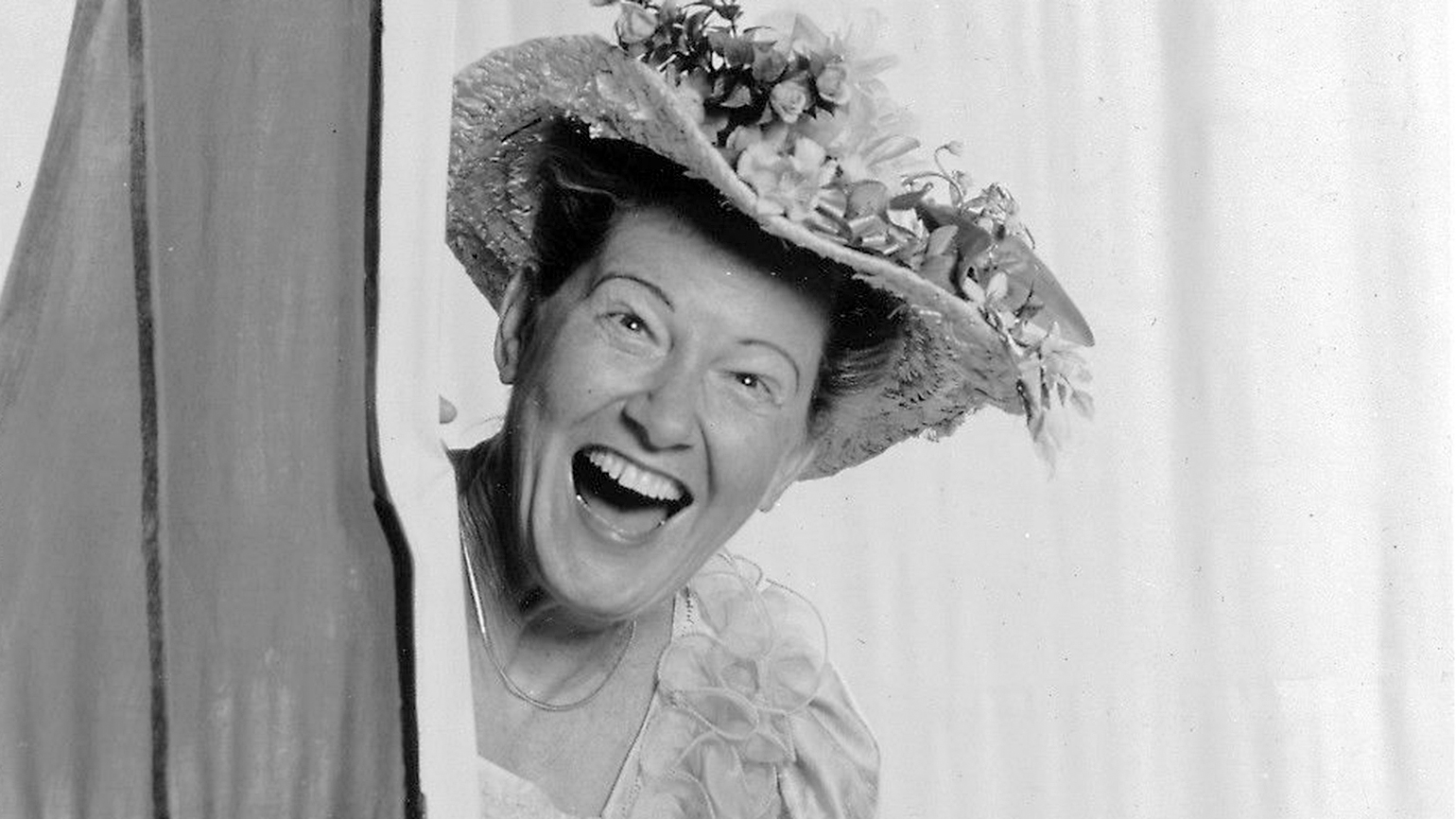
I was 28 years old, the age when most young people have their eyes firmly fixed on the promise of success—and I was a failure. Life had reached a dead end for Sarah Ophelia Colley, the aspiring dramatic actress from Centerville, Tennessee.

Six years earlier, fresh from Ward-Belmont College, I had joined a theatrical producing company in Atlanta, and had been going into small towns and rural communities producing country-style musical comedies.

Community Newsletter

Get More Inspiration Delivered to Your Inbox


But now, in the summer of 1940, the country was in a depression, radio and changing times had altered people’s tastes, and amateur shows weren’t all that big any more.

ENJOYING THIS STORY? SUBCRIBE TO GUIDEPOSTS MAGAZINE!

So, jobless and with nothing else in sight, I went back to Centerville. To bring some money into the house, I finally got a WPA job as a recreation-room director. It paid $50 a month, for which I was grateful, but it sure was a dull job.

I felt so frustrated in my plan to be a dramatic star that I kept praying, “God, where, where, where do I go? What do I do?” And when no answers came to me, I found myself questioning God in despair.

Restless and dissatisfied though I was, it was nice, in a way, to be back home. I tried to relieve the dullness of my job by teaching some of the town’s youngsters music and drama. And when I got a chance, I’d try my luck as a performer myself.

I’d dress up as this rangy country girl, which I was anyway, and tell little stories and jokes that I’d picked up during my years with the production company, living around country folk. I gave this country girl a name—Minnie Pearl.

Summer faded, and my spirits sank lower and lower; One dreary October afternoon I was in the WPA recreation room, waiting for the children to thunder down on me at three o’clock when a banker friend, Jim Walker, came in.

“Ophelia,” he said, “we’re going to have a banker’s convention here. I understand that in the evenings you’ve been teaching some children dramatics and dancing and singing. Would you let the children entertain the bankers?”

I said, yes, of course. He started to walk away, then he stopped and turned. “Oh, by the way,” he added, “the speaker from Chicago is flying into Nashville and then driving to Centerville. If he’s late, would you mind doing that thing you do?”

“You mean Minnie Pearl?”

“That’s it. Would you kill time with this Minnie Pearl thing until the speaker gets here?”

I told Jim I’d do it.

That night we performed for the bankers. The children sang and danced to old-time, popular songs while I was backstage, disheveled and frantic, getting the children off and on the stage.

We finished the program, and Jim came backstage. “The speaker’s not here yet, Ophelia. You’ll have to help us.”

“All right,” I told him. “Just give me a minute to straighten up.” Then I went out in front of the hundred or so men in the audience and said, “I’d like to give you my interpretation of the mountain girl, Minnie Pearl.”

I started telling them about the marvelous, mythical town of Grinder’s Switch. about my Uncle Nabob and Aunt Ambrosia and Brother and his dog and the horseshoe and all those silly things. And the bankers were laughing and applauding. When I ran out of stories, I looked over at Jim, and he shook his head.

“No,” he said, “he’s not here yet!”

So I went over to the piano and started playing and singing—Maple On the Hill and Careless Love and Red River Valley and a lot of other old country songs. The men loved it.

After I’d sung a while, and still no speaker, I said to the audience, “Well, let’s just all sing.” The men joined me in My Wild Irish Rose and Let Me Call You Sweetheart.

Then finally Jim came over to me and said, “He’s here. You can stop now.”

The men shouted. “Oh, no! Let’s sing some more!” I smiled real big, thanked them real big, and turned the program back over to Jim.

When I got home, Mama asked me how it went. “Oh, pretty well,” I said. I had just spent the evening clowning. It didn’t mean anything.

But one of the bankers in the audience, Bob Turner, knew Harry Stone, the manager of the great country music station in Nashville, WSM.

“Harry,” he told him, “there’s a girl down in Centerville who belongs on that Grand Ole Opry. She’s down on her luck. I know her family; I come from down that way—and if you can give her a break, it sure would be a big favor to me.”

Harry Stone said all right and had me come up for an audition. And that changed my whole life. It was the beginning of Minnie Pearl, and, to me, the beginning of a new way to look at things.

I saw at last that I had become a failure only because I wouldn’t accept what I truly was. I had been trying to become something I couldn’t be. I would never be a great dramatic actress: I was a Minnie Pearl, a plain, comic country girl, poking fun at herself and sharing that fun with others.

When I learned to accept that role, the one God had given me, He turned my failure into success.

Did you enjoy this story? Subscribe to Guideposts magazine.

Guideposts Classics: Milton Caniff on the Meaning of Success

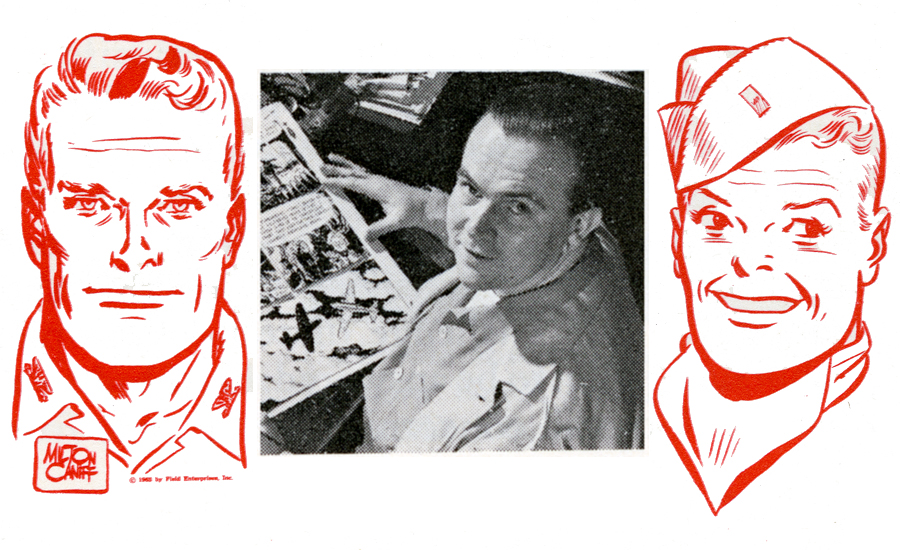
Have you ever wanted to go back in time to thank someone for something—and then ached inside because it was no longer possible? Every so often I feel that way about a fellow by the name of Ferd Appel. Actually, it’s not that I’d like to thank Ferd Appel—though he did a lot for me—as much as I’d like to tell him something. I’d like to tell him what a success I think he was.

On the surface, Ferd simply wasn’t the kind of guy that you would single out as being successful. And he himself, I rather think, felt that he had been a failure. Yet over the years I have come to realize that he was wrong.

Ferd was the head of the art department of what was then the Dayton (Ohio) Journal when I was brought into his presence as a lad of 13. Some of my illustrations had just been published on the Boy Scout page of the newspaper and my father, a newspaper printer, felt that the time was ripe for me to get some real professional experience after school and on Saturdays.

READ MORE: PAUL HARVEY ON SUBMITTING TO GOD

I was frightened. In those days, the apprentice was completely dominated by his mentor and you worked just for the experience—there was no salary. Besides fearing what this new master of mine might be, I also was scared of the shop. Newspapers had a reputation for being pretty rough places.

True enough, there was a great deal more horseplay in newspaper plants then than there is now, and the freshman was normally the butt of countless practical jokes, a traditional hazing process. But I soon discovered that I had a friend in Ferd Appel.

From the moment I met him he seemed to treat me with a kind of respect. There was something about his attitude that seemed to say that I was not just a kid there to wait on him, I was a fellow artist. From that first day Ferd Appel made me feel that if I worked hard I could become good at my trade. He gave a 13-year-old a sense of dignity.

Ferd was a lean and waspish man, a little stooped from the drawing board and, though his hair was thinning, he could have been almost any age. He wore steel-rimmed glasses and always had a cap on his head. On stifling summer days, most of us would get down to our B.V.D.s but Ferd always was fully and impeccably dressed. He never swore. He had little sense of humor.

Ferd did have a girl friend. She was the society editor and, though they never recognized one another during working hours, they had a date every Saturday night. Every Saturday morning for five years, I was sent out to buy the box of candy that Ferd would tuck under his arm before boarding the street car for her home that night. As far as I know, they never married.

Ferd was very serious about his work. He had studied art at the Chicago Art Institute and yearned to be a good illustrator, but he was never any great shakes.

The remarkable thing about the man, as I look back now, was the respect he had for his job and for anybody who hoped to be the illustrator he himself could not be. The boy who had preceded me in my job had become so expert that the rival newspaper hired him away. Ferd always mentioned this with pride; he accepted the fact that his chicks had to leave the nest one day, and he never resented the fact that they became more successful than he.

READ MORE: WILL ROGERS JR. REMEMBERS HIS FATHER’S LESSONS

Ferd let me bring my bicycle up to the second floor with me so it would not be stolen; something most people would not have tolerated. He never, if he could help it, let the engravers play their tricks on me and if I came in to find my compass or drawing paper or pencils gone, they reappeared miraculously while I was in school.

He encouraged me in my work and would spend hours explaining techniques and good taste and what my goals ought to be. He disabused me of more cockeyed ideas than anyone else, I think, and he was uncannily correct. He didn’t know what a good teacher he was.

Eventually it was Ferd Appel who recommended me for a job on the Miami (Florida) News. It was Ferd, too, who advanced me part of the money to go. And I went there, happily, confidently and without much thought, really, for the forlorn fellow who suffered because he could not do well what he wanted most to do.

A failure though? No. Real failure, I’ve found, can make people shrivel up, makes them bitter and petty and often cruel. Success, on the other hand, usually makes people humble, tolerant, kind, big, giving.

God has not made it possible for each of us to be a great painter or leader or businessman or great anything. But God has given each of us the opportunity to live successfully. We all can develop humility and tolerance. And what life ever was described as a failure that has been spent in doing for others?

Guideposts Classics: Mike Wallace on Coping with Depression

Like most people, I’d had days when I felt blue and it took more of an effort than usual to get through the things I had to do.

But I always snapped out of it.

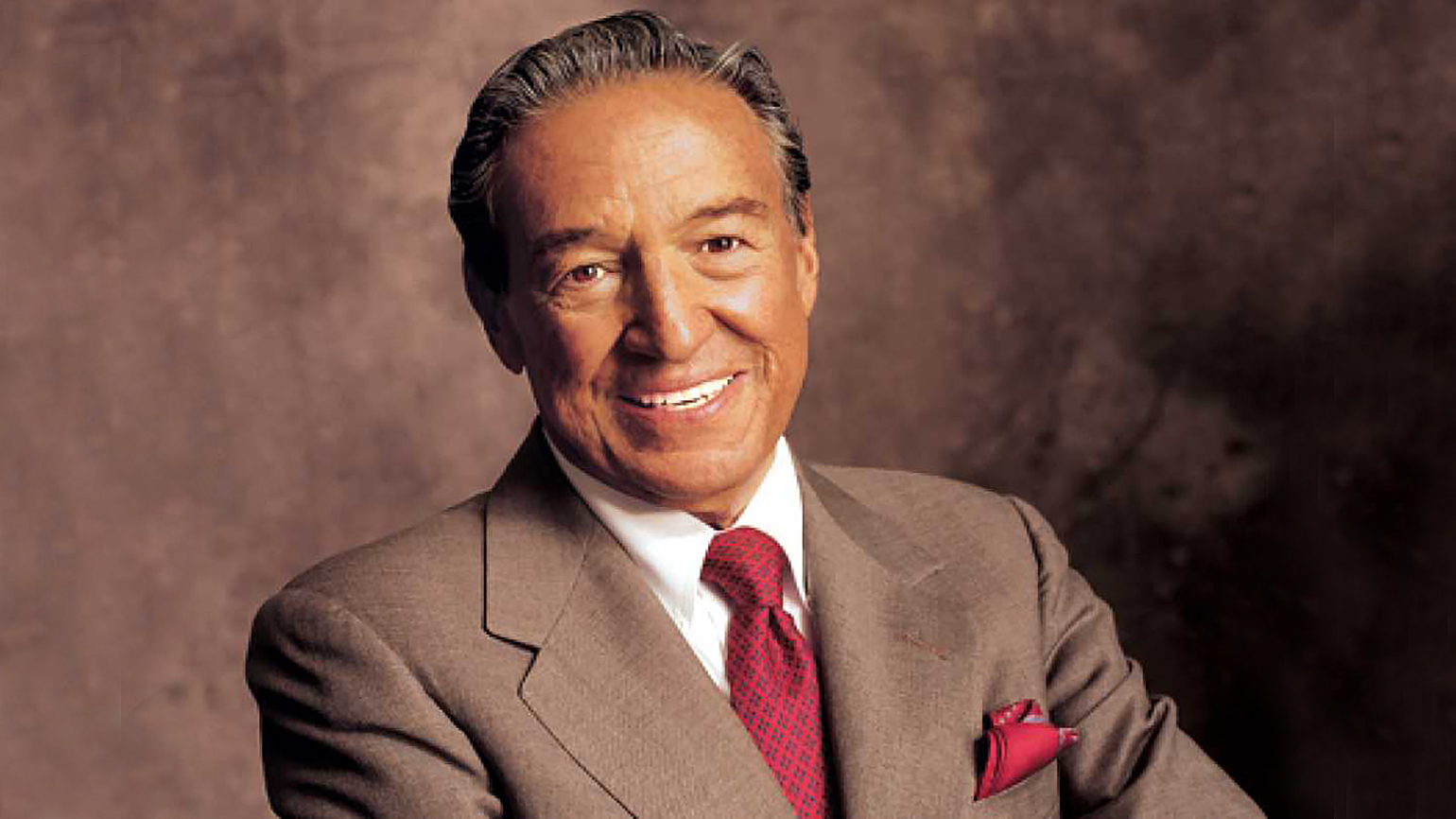
Before I knew it, I would be corralling another reluctant interview subject for 60 Minutes or trying to whip a crosscourt forehand past my opponent in a tennis match.

Relentless as ever, basically. (And a pain in the neck to my colleagues at CBS News, who claim that “Mike Wallace is here” are the four most dreaded words in the English language.)

So my down times invariably passed. Until the fall of 1984, that is, when I found myself suddenly struck, then overwhelmed, by something—an emptiness, a helplessness, an emotional and physical collapse—I’d never experienced before.

CBS News was embroiled in a high-profile lawsuit filed by General William Westmoreland over a documentary we had made about the Vietnam War, a special report for which I’d been the chief correspondent.

The case went to trial in early October. Every morning after Mary and I had breakfast, instead of heading to my office in the mid-Manhattan CBS News building on West 57th Street, I went downtown to the federal courthouse in Foley Square.

As I made my way into the courtroom, past the phalanx of reporters, I had a feeling their eyes on me were skeptical. A pretty jarring reversal of roles.

Still, that was nothing compared to having to listen to the other side’s lawyers call into question not only the accuracy of our documentary but also my own professional integrity.

You’d think I’d have just let the allegations roll off my back. After all, they weren’t true. Plus, as Mary reminded me, I had nearly 50 years in broadcasting to back up my good name.

But day after day, I sat trapped in room 318 at the courthouse, hearing people I didn’t even know attack the work I’d done. Given the way trials proceed, I didn’t have a chance to defend myself right then, so the accusations ate at me.

Doubts started to haunt me. Did I do something wrong? It was as if all my experience in radio and TV news didn’t count for anything anymore. What if I really am dishonest as a reporter? Dishonest as a person?

I tried to keep going on with life as usual. Whenever court was out of session, I worked on stories for 60 Minutes, doing research and interviews at night if necessary. But I had a hard time concentrating. Me, the guy who was famous for never giving up on a story, for asking such pointed questions, they made everyone from gangsters to movie stars to political leaders sweat.

In November I had a brief escape from the courtroom. I went to Ethiopia to cover the famine. The tragedy unfolding before my eyes in that drought-ravaged country, the human suffering I witnessed, resharpened my focus.

With something approaching my usual vigor, I did a segment for 60 Minutes. We edited it and got it on the air. Things are getting back to normal, I told myself.

But as soon as I returned to the daily grind of the trial, that strange, dark malaise set in again. If anything, it was more pervasive than before, casting a pall over every part of my life the way the chill gray of winter seemed to blanket all of New York City.

I didn’t have an appetite, no matter what Mary put on the table. I could barely summon up the energy to get out of bed each morning, let alone run after balls hit to the corners of the tennis court. But at night I would lie awake, restless.

Sometimes I’d give up on sleep and switch on the television, looking for something on the late-night shows to get my mind off all my dark thoughts. And even when I could go back to the office and do the work I loved, I felt dead inside.

Maybe the only constant, the only part of my day-to-day life that hadn’t changed since the trial began, was what I said before I fell into bed at night. The Shema, one of the oldest and most important prayers of the Jewish faith.

“Shema Yisrael Adonai Eloheinu Adonai Echad,” I would recite each night, as I had every night since I learned those words growing up in Brookline, Massachusetts. “Hear, O Israel, the Lord our God, the Lord is One.”

I tried to draw strength from that prayer. And from Mary, who was always at my side, incredibly patient with me and my moods. Still, I’d catch her looking at me, her eyes full of worry.

One evening after we came home from the courthouse, she said, “Mike, you need to go see a doctor. Something’s wrong.”

I denied it. “The pressure of the trial’s getting to me,” I said. “I’ll be myself again once it’s over.”

Mary insisted on taking me to the doctor. I told him what I’d been experiencing, even swallowed my pride and asked, “What can you do to help me?”

“You don’t need help,” the doctor said. “You’re tough. Everybody knows that. You’ll bounce back in no time.” He warned me about the damage to my reputation if word got out I was having these emotional difficulties.

Mary was still concerned. “I don’t want to be right about this,” she told me on our way home, “but I think what you’re feeling goes way beyond being under stress. It’s taken over your life.”

Why is it that the people you love so often know you better than you know yourself? It took a complete physical collapse on the heels of a bout of the flu in December to make me concede I might be in as bad shape as Mary feared.

Right before the new year, I was admitted to the hospital, “suffering from exhaustion,” a CBS spokesman announced.

The truth, I was to learn from Dr. Marvin Kaplan, the psychiatrist I started seeing, was something I’d never imagined. My defenses were pretty much broken down by then.

When Dr. Kaplan asked me to give him a complete history of my symptoms, I poured out everything to this man who was all but a stranger to me. I told him about the trial; about the doubts that plagued me; about not being able to eat, sleep or enjoy the things I used to. “I just don’t see any way out of this,” I confessed. “It’s like I’m going out of my mind, I feel so low, so…hopeless. No, copeless.”

“You feel as you do, Mr. Wallace, because you are experiencing clinical depression. Any stressful change in one’s life can trigger an episode, and some people are more prone to it than others.”

Depression? Wasn’t that some sign of emotional weakness?

“Depression is a disease,” Dr. Kaplan explained. “A disease that millions suffer from. The good news is that almost all depressed people can get better with treatment.”

First, he prescribed an antidepressant to relieve my symptoms. “Once it takes effect, it will put a pharmaceutical floor underneath your depression, so that you don’t sink any lower.” Then psychotherapy to help me gain insight into myself and figure out ways to cope with what was troubling me.

Within a week I was released from the hospital, continued my sessions with Dr. Kaplan and went back to work, nowhere near functioning at full capacity, and still too ashamed to tell people in the office what was going on. They must have wondered why Mike wasn’t acting like his usual demanding, abrasive self.

I was due to testify at the trial, so while the CBS attorneys prepared me legally, Dr. Kaplan got me ready emotionally. “You believe that if your side loses, it will be the end of your professional life,” he observed. “Why don’t we talk about how you will go on if you do lose?” A seemingly simple exercise, but it helped me regain some perspective.

Nearly five long months after the trial began, the day before I was to take the witness stand, the other side dropped the lawsuit. Obviously I was hugely relieved, but why didn’t I feel well again?

“That’s not how depression works,” Dr. Kaplan told me. “You don’t just snap out of a serious illness. You have to stay on the treatment and give it time to work.”

I did what he said, and sure enough, within a couple months I felt better. So much better, in fact, that I disregarded Dr. Kaplan’s advice and stopped taking the medication. Less than a week later, I happened to fall playing tennis and busted my left wrist.

And just like that, I was in deep again. As deep as the first time. I’d look out the window at all the people on the streets of New York. So much energy out there, so much going on, and all I wanted to do was turn my back on it. I didn’t care about anything except how miserable I felt and how I might end this pain.

Even so, I was still reluctant to acknowledge that I had what I had. The only ones who knew were Mary, Dr. Kaplan (who put me back on medication), and my son and daughter. And two good friends who were going through the same thing and were much braver than I in sharing their experiences: writer William Styron and humorist Art Buchwald.

Arty called me night after night. It was so reassuring to know that what I was feeling was normal for a depressed person, to talk to someone who’d been through it himself and come out the other side.

I continued to take refuge in prayer. When I couldn’t sleep at night, I’d turn to the affirmation that had been a mainstay for nearly as long as I could remember.

Shema Yisrael Adonai Eloheinu Adonai Echad. Those old, familiar words brought me back to my boyhood in Brookline, a town that was simply wonderful to grow up in. Back to a place and a time as far away from this oppressive darkness as I could imagine.

Eventually the depression lifted, as it had the first time, and I went back to doing what I loved—reporting stories, playing tennis, going out on the town with Mary. But grateful as I was for the help I’d been given during my darkest days, I still worried that people might think less of me if they knew about my depression, so I kept quiet about it.

Then came the night I was a guest on the late-night TV interview show Later with Bob Costas. Bob planned to devote the show to my work, but while I was talking to him about 60 Minutes, it suddenly occurred to me who might be watching television at one o’clock in the morning.

There are probably a lot of people listening at this moment who can’t get to sleep because they’re depressed, I thought. People who need to know that there’s hope.

That’s when I finally went public about my depression. I wanted whoever might be listening and suffering to understand how low I’d sunk and how I was getting better every day with treatment. Help was out there for them too.

Depression, I’d come to see, was a part of me, something I’d always have to watch out for. The difference was, if it hit me again (and it did in 1993), I knew I couldn’t retreat into its depths. I had to keep taking my medication and going to therapy, keep talking to people.

In a way, that’s been the key to my still going strong for all these years. Every time I reach out beyond myself—to my family and friends, to my doctor, to my coworkers and the public to whom we bring the news, to the whole community of people who battle depressive disorders, and to the one I have turned to ever since I was a boy in Brookline—I find the hope that has led me out of the darkness.

For more inspiring stories, subscribe to Guideposts magazine.

Download your free ebook on happiness and personal growth.

Guideposts Classics: Maureen O’Sullivan on Loneliness

In 1963 my husband John Farrow died. We had been married 26 years and were the parents of seven children. I was very fortunate, I believe, in having a career which I could resume, an acting career. Aside from financial necessity and the fact that I do enjoy acting, it was good to be busy. That’s the advice everyone gives a new widow: “Stay busy.”

In this case, “everyone” is right. It is wise to be very busy. But a full schedule does not stop you from thinking back and it does not prevent that underlying sense of sadness from gnawing at you. Like wind in a rustic cabin, it comes through the chinks of living, at unexpected moments and places.

It’s generally some tiny thing that triggers the melancholy—something you want to share and suddenly you are surprised that he’s no longer there. Certain things force you to remember because you no longer know how to accomplish them; how to order plane tickets, for instance. John always did that for me.

And there’s that painful moment when you go into a restaurant alone and ask for a table. I’m convinced that the rule for a restaurant is the same as that for the Ark: you appear only in pairs.

These things, however, are mere scratches. They come nowhere near the depths of that great yearning thing, that “shuffling of memory and desire,” that ageless hunger we call loneliness. I have been lonely many times during my lifetime—who has not been?—but it is only in the last several years that I have been able to determine the many shapes of loneliness. There are a number of them.

Certainly Christmas Day my first year in Hollywood represented one shape. I was 18, fresh from Ireland, waiting to do my first (of five) Tarzan pictures (no matter my other roles, I seem to be remembered as “Tarzan’s Jane.”) I was alone that Christmas, and feeling the early tinges of self-pity.

I thought of my mother far away in Ireland. As a widow, her own advice about loneliness had always been “contact someone.” She meant really contact, to learn as much as possible about that person, to understand, to help. “Stretch a hand to one unfriended and thy loneliness is ended.”

But my mother was outgoing; I was not, nor was I quick to make friends. What worked for her, and well, would not necessarily work for me.

As it turned out, that Christmas Day was a most successful one because I used my aloneness for a purpose.

READ MORE: DONNA REED ON FAITH IN HARD TIMES

Years later, in reading Anne Morrow Lindbergh’s Gift From The Sea, I was reminded of that purpose:

“For it is not physical solitude that actually separates one from other men,” Mrs. Lindbergh wrote, “not physical isolation, but spiritual isolation. It is not the desert island nor the stony wilderness that cuts you from the people you love. It’s the wilderness in the mind, the desert wastes in the heart through which one wanders lost and a stranger. When one is estranged to oneself, then one is estranged from others, too. If one is out of touch with oneself, then one cannot touch others.”

That day I began to look at myself. I made certain that my goals were worthy ones and natural to me. And I drew confidence from confirming the fact that the career that lay in challenge was something I could and should undertake. So it happened that, as I made the effort to get in touch with myself, my loneliness dissolved. But that was only one kind of loneliness. There were others.

There was The War. John was away in the Navy. Everyone was doing something helpful. I was volunteering at St. John’s Hospital in Los Angeles and being mother and temporary father to the children. The days were full and often frantic, but after nine o’clock in the evening, with the children tucked into bed and the house silent, I’d face the night hours and shiver.

It is true that children, with their lives to be fashioned and their problems to be solved, can absorb you. Children can fill a home to the tiptop, but John’s absence could not be camouflaged by activity. Night after night I’d find myself restlessly roaming the house. Is this, I wondered, what being a widow is like? I didn’t know until later that true widowhood is a loneliness of a different texture.

In wartime, one lives closer to God. And for a while I thought that my restlessness would become easier through prayer. Instead, it seemed to grow more acute. Perhaps prayers for myself are wrong, I thought, though I knew at heart that any communion with God must be in some way beneficial. Yet, I also knew that the answer to my problem would come eventually from a realization within myself. It did, in an oblique way.

A friend of mine’s baby was stillborn. Later, she and I talked about the tragedy and its meaning and, at one point, she said to me, “If I had known ahead of time that my baby were to be born dead, I believe the physical pain of birth would have been unendurable. It’s odd about pain, isn’t it? If there’s good reason for it, you endure it—sometimes gladly.”

READ MORE: LORETTA YOUNG ON THE POWER OF LOVE

The curious thing was that I took my friend’s thought about pain and applied it to my own problem. A philosopher once wrote, “He who has a why to live for can bear almost any how.” Aware that I did indeed have a “why”—John’s return —I now knew that I could and would endure the “how”—loneliness.

This loneliness, I said, is my own special, personal, private participation in the war. I was able to put my loneliness in perspective when I was able to say, “I will endure it. John will come home.” And he did.

There came a time, though, when I no longer had that perspective. The ache I felt was different from the previous aches. It was deeper, emptier. My husband was dead; the “why” gone. This was the texture of true widowhood—emptiness.

The children were older now and, for the most part, busy with their own projects and careers from which I was excluded. That was as it should have been.

It seemed wrong to be lonely. My career went well. I was starred in a Broadway play called Never Too Late, and it was a great hit. I went out often. I knew that the life of an actress, a celebrity-type, had an advantage over the widow who lived within a small circle in a quiet town. Yes, of course it had, except that when I returned home, the contrast was shattering.

READ MORE: MARY ASTOR ON THE GIFT OF FAITH

That is when I began to reevaluate loneliness, to review its previous forms, to bring logic and heart and faith to bear. I drew some conclusions which I hold now. Perhaps those conclusions are not the ones that people suffering from loneliness want to hear, but I believe they are basic and true.

Most of us, I fear, do not wish to face the fact that human beings are lonely creatures. We have been lonely always; we will be always. I am not being flippant when I say that the one area in which we are not alone is our loneliness.

Everywhere I go I find people who are lonely and for whom there seems to be no relief or answer. Certainly as a woman I recognize that there is a restlessness in me that is not satisfied by human contact or by a full schedule.

It has been said that loneliness is a searching for God. Centuries ago, St. Augustine wrote, “Thou hast made us for Thyself, and restless are our hearts until they rest in Thee.”

Yes, we are born searching and restless and only when we can admit the hard fact that we are lonely and will remain so is there hope for some tranquility and receptivity to life. It is then that we can begin to appreciate the world that God created for us to accept and use, not deny.

In the play The Chalk Gardens by Enid Bagnold there is a governess who has had a particularly ill-starred life. When yet another misfortune befalls her which seems to close off her future, she is asked what she plans to do. Her answer, “I shall continue to explore the astonishment of living.”

Life is astonishing. Not just in its vastness, but in the microscopic, too, in its infinite, intriguing detail and in what many of us condemn as routine and day-to-day. But to be aware of today, to know that it is different from yesterday and to welcome the adventure of tomorrow is to accept life. To accept life is to remove the pain from loneliness.

Did you enjoy this story? Subscribe to Guideposts magazine.