Embrace God's truth with our new book, The Lies that Bind

Faith as a Bridge to Healing

Recently, my wife was telling me about two of her friends who are going through a difficult time. One friend, who has no history of dealing with emotional stress, is now battling severe anxiety. This is a strong, hard-working man, who is suddenly feeling very anxious about work, his upcoming retirement and other life matters, but refuses to take medication. Her other friend is left heartbroken from the unexpected death of her son in a car accident. The emptiness and profound sadness she feels are physically and mentally draining.

These two individuals have been struck with the unexpected, leaving them without words, strength and energy to move forward. At times, life can be messy and complex. Getting through life’s struggles and inner battles will call for the support of loved ones, medical intervention for some, and spiritual strength for all. Faith allows us to cross the rising waters of life. Let faith be the bridge you build to overcome hurts, addiction, grief. As God said in the Book of Isaiah, “When you pass through the waters, I will be with you; and when you pass through the rivers, they will not sweep over you. When you walk through the fire, you will not be burned; the flames will not set you ablaze.”

When you lack the strength to keep your faith, God will provide and keep you close. We must believe and trust in God when the waters of life are rising, our faith will get us through it.

Lord, help us to keep our faith and give us the strength to hold on to You.

Faith and the Art of Waiting

For most people, learning to be patient is a challenge. In today’s fast-paced society, we expect instant results and speedy service–from the promise of quick-fix fad diets to expedited shipping options when we buy something online. When we do not get immediate results, we become cranky and impatient.

Recently I encountered both the positive and negative effects that waiting can have on a crowd. While traveling home from a business trip, the pilot announced a possible mechanical problem with the plane. He explained that prior to departing, the mechanics would need to assess the situation.

Twenty minutes later we received great news, the plane was fine, and we were good to go–or so we thought. Once on the runway, the pilot then announced that we were behind several planes, and it would be over an hour before takeoff. This caused many to become frustrated.

For those of us who are impatient, a brief delay can seem long and troublesome. In the spiritual world, waiting requires practice and discipline. Waiting for a prayer to be answered or for God’s intervention can be trying. But what if we changed the way we think about waiting?

Instead of viewing a delay as a burden, what if we saw it as a time to practice submission? Some of my fellow plane passengers practiced submission by busying themselves with other activities such as reading and writing while we waited.

As we wait for answers, we can engage in continuous prayer, worship and other forms of spiritual discipline. During this process we gain self-discipline and tranquility.

READ MORE: 3 BIBLE VERSES TO HELP YOU LIVE JOYFULLY

As Isaiah, the prophet, once said to the people of God during a difficult time, “But those who wait upon God get fresh strength. They spread their wings and soar like eagles, they run and don’t get tired, they walk and don’t lag behind.” There is much to be said about waiting as an act of submission to God. How do you practice waiting? Do you find it to be difficult at times? Please share.

God, teach me the spiritual discipline of waiting on You and for everyday living; grant me fresh energy to wait and live out my faith.

Faith and Prayer Helped Her Overcome Depression

Easter Sunday, the calendar on my kitchen wall proclaimed. So did the kids’ baskets with their neon-colored eggs and marshmallow bunnies. And our new outfits for church.

Jamie, 13, and Katie, 11, had polka-dot dresses like mine, and three-year-old Thomas proudly wore a miniature tie. Easter was all around.

So why wasn’t it Easter inside me too?

“Look!” my husband, Rick, said as we pulled out of the driveway. “The pear trees are blooming! First time since we planted them!”

I don’t even remember us having pear trees. What’s the matter with me, Lord? It had come on so suddenly, this gray, gloomy hopeless feeling.

At church, shouts of “Happy Easter!” bombarded us. “Happy Easter!” I parroted, mimicking my friends’ bright smiles. Put on a happy face. What kind of Christian is sad on Easter?

I told myself it was only temporary. But April and May went by with the same dreary numbness. I forgot to eat, I was losing weight, I couldn’t sleep. My mother wanted me to see my doctor, but what could I say to him–”I’m feeling sad but there’s no reason for it”?

Besides, weren’t Christians supposed to rejoice in the Lord? All my 34 years I’d gone to two church services every Sunday, Tuesday night outreach, Wednesday night Girls-in-Action when I was younger, nowadays Prayer Meeting with Rick.

What would everyone think if they knew that I was feeling this darkness inside, that I was failing God so?

Maybe I just needed a change of scene. In June, when we went on vacation, things would be different.

On the drive to Florida’s Gulf coast, I tried to join in with Rick and the kid’s excited plans about everything they wanted to do once we got to the beach, but I ended up feeling like the odd sock in the dryer.

At our rental condo I went through the motions, packed picnics for the beach, played games, and at night while my family slept, slipped outside to cry.

Stepping out the glass sliding doors into the briny darkness, I listened to the rhythm of the waves. Why didn’t it soothe me as it always had? I have new freckles on my arms, Lord, so I must be in Florida. Why can’t I feel anything?

I came home feeling worse than when we left. I stopped looking in mirrors, unwilling to face the drawn, needy-eyed woman lurking there.

All summer I forced myself to take the kids to our neighborhood pool, thinking, Maybe if I act like the other moms, I can feel like a mom again. As my friends chatted, I put on sunglasses and pretended to be absorbed in a magazine.

I thought I was fooling even Rick, till one evening he said, “You don’t hum any more, Julie. Is something the matter?”

No! That was the trouble. Everything was fine, except me. “I’m just a little tired,” I told him.

“Let’s pray about it,” he said.

I have prayed! I’ve prayed and prayed and nothing happens. Rick must have been more worried than he let on, because for the first time in our married life, he suggested we kneel and pray out loud together. I repeated everything after him, like wedding vows.

“The Lord is my shepherd, I shall not want.”

“The Lord is my shepherd, I shall not want.”

It became a nightly ritual, praying together at bedtime. “Thank you, Lord,” Rick would close, “for giving Julie your perfect peace.” I’d feel peaceful too–for as long as he prayed. Then he’d fall asleep, and when I couldn’t lie still any longer, I’d ease off the covers and tiptoe over to the clock.

12:10. 2:30. 4:15. It became one more thing to conceal. How could I tell my husband that his prayers weren’t working? How could I disappoint Rick like I’d disappointed God?

By October my mother had started dropping in “just to say hello” a couple of times a week. She asked no questions but her transparent efforts to cheer me up told me that my forced smiles were no longer fooling her, either.

In early November she insisted on taking me shopping. At the mall Mother zipped over to an outfit. “Look, Julie, this is the new color for fall! Mustard. See those jeans? And the matching vest?” Explaining it to me like I’m a preschooler.

She grabbed the clothes and pushed me into the fitting room. My back to the mirror, I pulled on the jeans, two sizes smaller than usual, and tightened the belt to its last notch.

“Julie, what’s taking so long? Can I come in now?”

“Okay,” I said resignedly.

“Oh, Julie, that color’s wonderful with your red hair! I’m getting you the outfit. Why don’t you wear it out, and we’ll stop for ice cream on the way home.” Yippee. Ice cream.

Back in her Oldsmobile, I refused to get out again. “You go in for the ice cream and bring it out.” I was safer in the car than with people who might expect me to be chatty and cheerful.

Mother came back with my childhood favorite, a chocolate milkshake with real whipped cream. I sucked hard and fast through the straw to try to remember those shivery feelings. It was no good. Why isn’t anything in life fun anymore?

Mother started coming by daily. I hated it when she arrived, and I hated it worse when she left. One morning she walked in with her camera and followed me around the house snapping pictures. “I want to show you how pretty you are.”

Mothers always think daughters are pretty. I’m a fake and a failure and it has to show. Still, seeing her trotting after me, clicking away, was so funny that I had to laugh. It was like hearing a forgotten song. She finished the roll and hurried off to a one-hour developer.

Coming back, she fanned out the pictures like a winning hand of cards. She must have had these touched up. I look so… normal.

I picked out my favorite shot, the one with me laughing, and carried it around the rest of the day, then put it on the refrigerator. I wanted to hold on to that laugh, to believe it meant I could be happy–be me–again. But as with Rick’s prayers at bedtime, the lift didn’t last.

When Mother came back the next day, I was sitting on the kitchen floor crying. She got down beside me. “Julie, I think it’s time to see the doctor.”

The last fragments of my self-respect crumbled at that. Dialing the doctor’s number felt like the final defeat. He gave me an appointment right away.

I sat in the familiar green leather chair in his waiting room, wishing I could be one of the other patients. The lady with the five fidgety kids, the old man staring out the window, the gangly teenager.

What grown woman needs her mother to go to the doctor with her? And what would Dr. Kelly say when he found there was nothing wrong with me? I could see him marking my chart “Mental Case/Weirdo.”

“Julie, come on back,” the nurse called. Would she have to know too?

“What’s the matter, Julie?” Dr. Kelly prompted gently.

Confessing my condition to someone else was one of the hardest things I’d ever done. “I–I just don’t feel like myself anymore. I guess I haven’t felt like me for maybe nine months now and I can’t seem to stop crying.”

In a matter-of-fact manner, my doctor went on asking questions. Had the symptoms come on suddenly? he inquired.

“Have you lost weight?”

“Do you sleep too little or too much?”

“Have you lost pleasure in the things you used to enjoy?”

“Do you have trouble concentrating?”

Yes, yes, yes! To them all.

“Julie,” the doctor said, “you’re in a depression. Depression can have many causes, but when it comes on this suddenly it can be a physical condition due to a decreased serotonin level in the brain. It’s not a character failing or a sign of weakness. Even big, strong football players experience depression.”

He’s not judging me! Football players. Say it again… a physical condition…

“But, Dr. Kelly, if I had enough faith, couldn’t God heal depression?”

“I’m a man of faith too, Julie. Sometimes God uses doctors to help heal. Remember when Jamie broke her arm? You took her to an orthopedist.

“Depression is an illness,” he went on, “often treatable with medication.” He tore a prescription off his pad.

“With this, your serotonin level will gradually increase. As it does, I believe you’ll start feeling like your old self. You’ll need to stay on the medicine at least six months. I’ll want to see you again in four weeks.”

I left his office walking on air. But a week on the medication changed nothing. Hope slipped away like an escaping balloon.

Then one morning in the second week, I woke up and realized I had slept the whole night through. Like a slow-motion film, frame by frame, other changes followed, cheerful moments breaking one by one through the grayness.

One Saturday some two months after my visit to the doctor, Rick and I took the kids to McDonald’s. We stepped through the door and suddenly I remembered the taste of french fries. This is what it feels like to be excited about food! I stood in line like an impatient child.

“May I take your order?” said the boy on the other side of the counter.

“Yes!” I answered eagerly. “I’ll have a large order of french fries and a large chocolate milkshake, and, oh yeah, lots of ketchup!”

I grabbed the tray and followed my family to a booth. Yummy, salty, hot french fries! Adding plenty of pepper, I dragged each fry through a big mound of ketchup. The saltiness made me crave my milkshake. I sucked the cold drink down so hard and fast that my throat shivered.

Thank you, Lord, for my chocolate milkshake. I grabbed Rick’s hand under the table and whispered, “I love you.”

Two more months went by, the good days coming more and more often. Then it was Easter Sunday again–oh, but not like any Easter I’d ever known!

As we pulled out of the driveway on the way to church, I noticed the pear trees were a glory of white lace. In place of dull gray were yellow daffodils, pink dogwood–everywhere new life, new hope.

And most of all in me. Dr. Kelly was wrong. “You’ll be your old self again,” he promised. But this was a new self! This self didn’t have to be the model Christian who never missed a church service and showed only her best side.

This self was weak and needy and depressed and knew that was all right–all right with people and all right with God. Once I admitted I was hurting, I’d found his helpers all around me. Rick. Mother. Dr. Kelly. My friends at church I’d assumed would be so disapproving.

It was when I thought I’d failed God that I’d truly found him, when I’d plummeted the farthest that I’d landed in his arms. Sometimes, I realized as we drove up to the church, the most glorious way we can rejoice in the Lord is to let him have our deepest pain.


Faith and Family Behind Jennifer Hudson’s Success

Before the tragic deaths of her mother and brother, Guideposts spoke to Jennifer about the influence of her grandmother on her singing and her meteoric rise to fame.

Even I can’t believe it sometimes, how incredibly blessed I’ve been in my young career. Not that I haven’t worked hard and kept believing in the face of setbacks, but so have plenty of other talented people and they’re still waiting for their big break.

I went from my first professional job, singing in a local production of Big River when I was 19 to being on American Idol to winning an Academy Award for my portrayal of Effie White in Dreamgirls. I turned 27 this fall, and I have a lot to celebrate and be thankful for. Incredibly thankful.

My first album just came out—something I’ve been dreaming of for years! And now I’m playing the strong, outspoken character Rosaleen in the movie version of Sue Monk Kidd’s bestseller The Secret Life of Bees.

You might think all of this success would go to my head. It’s exciting, definitely, and I’m enjoying every minute of it.

But no matter how many red carpets I get to walk down, no matter how many big names I’m fortunate enough to know, or how many albums and movies I make, I’ll always be the same girl whose greatest joy in life was singing, even if there was no one around to listen. I’ll always be my grandma’s girl.

That would be my mother’s mom, my late grandmother Julia Kate Hudson. Our family’s what we call “born into the church,” and I was no exception.

So many of my earliest memories are of being at Pleasant Gift Missionary Baptist Church on the south side of Chicago. We were there Tuesday night for choir rehearsal, Wednesday night for Bible study and all day Sunday—morning service, evening service, communion, everything.

My grandmother was a deeply spiritual woman, the soloist in the church choir and the singer in the family.

She was so good that people used to tell her she could be a professional, but she always insisted that her voice was a gift from the Lord and the best way to show her gratitude was by using it to serve him. Like when she was singing one of her all-time favorites, “How Great Thou Art.”

No doubt about it, I got my voice from my grandma. I didn’t realize that right away, but everyone else knew. My mom likes to tell a story about when I was a lap baby, not even one yet, sitting with her during choir rehearsal.

The choir director was trying to get the group to hit a certain note, and they didn’t do it. But out of the blue, I opened my mouth and hit that note right on! I can almost imagine my grandma slapping her hand over her mouth so she wouldn’t giggle out loud.

The fact is, I was surrounded by music. Not just at church, but at home too. My grandma couldn’t live on her own because of her health—she had diabetes and seizures—so she lived with us.

I was the youngest. When my mom was picking my sister up from school and my brother was out playing basketball or riding his bike, it was just Grandma and me in the house. She’d sing, I’d listen.

One day—I don’t even remember what prompted it—I joined in and something just clicked. I felt beyond happy. I felt connected to something larger and more beautiful than I’d ever imagined.

I didn’t have the words for it then, but now I’d say it was a rightness in my soul, the kind of feeling you get when you sense something is meant to be. I was only seven years old, but from then on, I knew singing was what I wanted to do, what I was meant to do.

That’s why I started asking around at church, “Could I have a solo? Please?” I begged the choir director, who sent me to the head musician, who sent me to someone else. They kept giving me the runaround.

I got so frustrated that I hid in the bathroom and cried. “If nobody will listen to me,” I decided, “I’ll listen to myself sing.

I did just that until I finally wore the choir director down. I got my first solo, “Must Jesus Bear the Cross Alone.” I practiced and practiced in my little pink bedroom on the third floor of our house. I couldn’t wait to show everyone what I could do.

That Sunday I got up in front of the congregation. I stood there and looked at everyone sitting in the pews—my family, my friends, people from the neighborhood. Then I opened my mouth. Nothing came out. Not a sound! Here it was, my big moment, and I forgot the words!

I closed my eyes, praying that I’d remember just one word, one note. Dear Lord Jesus, help me! I’m stuck! All of a sudden I heard a beautiful sound. Someone singing the first words of the hymn.

I opened my eyes. It wasn’t just one person; it was the whole congregation helping me along, lifting me up with their voices until I found my own again.

It started to dawn on me then what my grandmother meant about singing being an expression of gratitude. To God, first and foremost, and to the people he put in my life to support me and inspire me.

I thought about that a lot when my grandma’s health was failing. By the time I was in seventh grade, she was bedridden. She couldn’t really carry on a conversation anymore, let alone sing.

So I sat with her and sang to her: “How Great Thou Art” and “Jesus Promised Me a Home Over There,” all her old favorites from church. And a new song—the first one I ever wrote—“To Love Somebody.”

It was my way of thanking her for all she had given me. It probably wasn’t enough, but it was everything I had.

Even though my grandmother died in 1998, I kept thinking of her, singing for her. Like when I was voted off American Idol. I was shocked at first. I thought that my biggest opportunity had just been lost.

Was it time for me to give up trying to make it as a singer? Just go home to Chicago and do something else? Who did I think I was, anyway?

But the next morning I woke up and remembered how my grandmother used to say her voice was a gift from the Lord. I still have my voice, my gift, I thought. No one can take that away because God put it in me. He made music a part of me. I couldn’t give it up. I knew I couldn’t walk away.

Of course, I haven’t. I love singing for people, moving them and inspiring them, like music has inspired me since I was that little lap baby sitting in choir practice. But I also sing every day without consciously thinking about it. It feels as natural to me as breathing or praying.

I sing even if there’s no one around to listen. Actually, I take that back. There’s always Someone listening. And like my grandmother before me, I know he hears in my voice how grateful I am.

Jennifer’s Inspirational Playlist

“What songs inspire you most?” we asked Jennifer.

1. “Encourage Yourself” by Donald Lawrence
I tell everyone to listen to this. Sometimes you have to encourage yourself. What you think, how you feel, what you believe—all you’ve got to do is set your mind to it.

2. “I Believe in Music” by Donny Hathaway
I love what this legendary soul singer is saying: “Music is the universal language and love is the key.”

3. “Can’t Give Up Now” by Mary Mary
All of the songs from this sister duo are uplifting, this one especially.

4. “There Is No Failure in God”
God will do whatever you ask him to, but you need to have faith.

5. “Impossible Dream” sung by Luther Vandross
Such a motivator for me!

6. “How Great Thou Art”
Every time Grandma would get happy she’d shout, “How great thou art!” We’d be in the car and she’d see clouds or mountains or trees and say, “How great thou art.” I wondered, What does Grandma mean?

But now I understand, and it’s why I feel so blessed—that God, out of all the things he does, took time to touch me, to give me a gift.

When I did the song “And I Am Telling You” in Dreamgirls, everyone asked me where all that emotion came from. It was from this song “How Great Thou Art”—because Grandma used to sing it. I had a recording of it and listened to it before I did that scene.

Download your FREE ebook, True Inspirational Stories: 9 Real Life Stories of Hope & Faith

Failing Forward

Like most people I have failed more times than I care to remember.

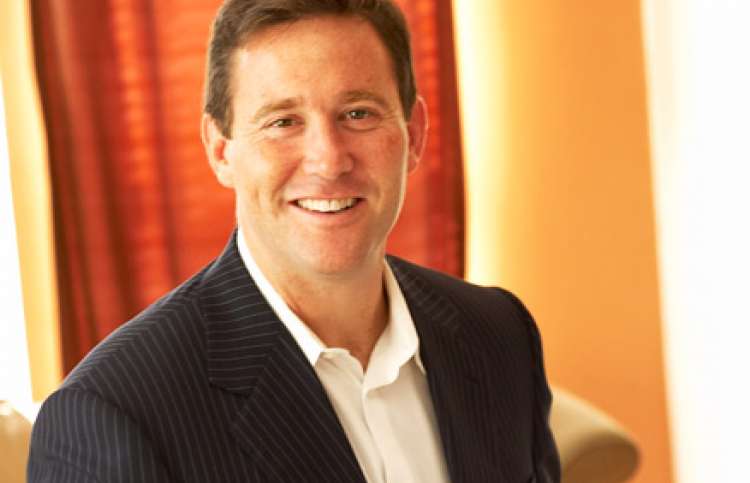
I’ve struck out playing baseball, I’ve failed to win the client, I’ve lost the big opportunity at work, I’ve had to close two of my restaurants, I lost my race for city council of Atlanta when I was 26, I was fired once, I was once a month away from bankruptcy, I was initially rejected by over 100 publishers, I’ve made mistakes as a parent and boss and the list goes on and on and on.

Yet, when I look back I realize that every failure has moved me forward. Every failure taught me a lesson and made me stronger, wiser and better. I failed many times but I failed forward (I first heard this term from John Maxwell).

Failing to win a client taught me what not to do so I could start winning more business. Shutting-down restaurants taught me to be smarter about picking the right locations. Losing the race for city council led to me leaving Atlanta, moving to the beach in Florida and doing the work I do now.

I’ve realized that sometimes we have to lose a goal to find our destiny. Sometimes we have to fail to move forward.

I know some of you might be saying, “Well that’s you Jon. You’re just lucky. It doesn’t work that way in my life. You have no idea what failure has done to me.” I hear these comments often and I always respectively disagree.

I believe there are two kinds of people in the world. Those who fail and those who fail forward. We all fail but what we do with our failures is our choice. At any moment we can stop being someone who fails and become someone who fails forward.

Through each challenge and failure we must stay hopeful and know that failure always leads to a better future if we have an attitude of faith, are open to the possibilities and trust that new and exciting opportunities are coming our way. We have to look at failure not as a dead end but rather as a detour to a better outcome than we could have ever imagined.

If you are experiencing a failure right now at work or home please know you are not alone. If you haven’t failed, you haven’t lived. It’s time to ask what you can learn from your failure. What is it teaching you about yourself and your team?

Don’t be afraid to fail, just make the choice to fail forward. Use it to learn, grow and become the you who you were meant to be.

Download your FREE ebook, Rediscover the Power of Positive Thinking, with Norman Vincent Peale

Facing the Empty Chair This Holiday Season

I knew that first holiday season without her would be difficult.

After all, she wasn’t just my mother. She was my very best friend, my secret keeper, my cheerleader and my favorite Christmas shopping buddy.

After Mom lost her battle with colon cancer in May 2006, I stumbled through Mother’s Day, her birthday and the summer months–still numb from her passing. But I dreaded the holiday season.

Thanksgiving had been hard enough–I just couldn’t bear to face the empty chair at Christmas.

That was her favorite holiday.

When I phoned my older sister to tell her we wouldn’t be home for the holidays, she was devastated.

“But we need each other, especially this year,” she pleaded. “Please come home.”

I knew it might be selfish, but I couldn’t go through the normal traditions we’d always shared as a family. I wasn’t prepared to fake my way through that first Christmas without Mom, so I sort of boycotted the norm and asked my sweet family to be patient with me.

Then, I booked a condo at Hollywood Beach, Florida, and my husband and I and our two tweenage daughters headed south for a totally non-traditional Christmas.

We traded in our Christmas tree for palm trees and spent Christmas morning on the beach–no present opening, no holiday movies, no Christmas cookies, no ugly Christmas sweaters–just us, the ocean and God.

The four of us bonded in a new way and remembered Mom as we walked along the beach at sunset Christmas night. What could’ve been a disastrous holiday ended up very sweet and meaningful.

It also gave me a chance to cry out to God and let Him comfort me, away from the hustle and bustle of the holiday crowds.

That’s how I survived my first Christmas without Mom, but grief is a very personal thing so maybe you handled it differently.

There’s no right or wrong way, but there are some actions we can take to help other families who might be facing their first Christmas after the passing of a loved one.

Dr. Helen McIntosh, a licensed Christian counselor, inspirational speaker, and the author of Extreme Damage Makeover From the Inside Out, shares these tips for helping a hurting family this holiday season:

1. Lend a listening ear: Let the person share special memories of holidays gone by and offer to help compile a memory scrapbook in honor of the loved one who is gone.

2. Provide a special holiday chair: Ask the grieving family if you could create a special memorial ribbon for “the empty chair” to honor the loved one’s memory.

3. Throw a card shower: Ask friends and extended family to write special memories of the person who is gone, affirming just how special that person was while on earth. Then, gather the cards and give them to the grieving family.

4. Offer to do mundane tasks: Running errands, cooking meals, Christmas shopping and cleaning the house all become more difficult during the holiday season–especially if a family is dealing with the recent loss of a loved one. Offer to do whatever needs to be done.

5. Ask if you can help honor their loved one in a special way: The grieving family might not have even thought about establishing a scholarship in the loved one’s name. Offer suggestions and then help that family make it happen.

Whether you’re experiencing grief this holiday season or you know someone who is hurting, the Heavenly Father is in the heart healing business.

He understands pain and grief. After all, He experienced it firsthand when He sent His Son to die on the cross for our sins. Turn to Him today and let Him love you through the holidays.

Pray this with me:

Father, I am asking that You help me focus on the joy of this Season. And, Father, help me to be sensitive to those who might be struggling with grief and loss this Christmas. Help me to show Your love to them. In the mighty Name of Your Son, Jesus, Amen.

Excellence Equals Success

Success is often measured by comparison to others. Excellence, on the other hand, is all about being the best we can be and maximizing our gifts, talents and abilities to perform at our highest potential.

We live in a world that loves to focus on success and loves to compare. We are all guilty of doing this. However, I believe that to be our best we must focus more on excellence and less on success. We must focus on being the best we can be and realize that our greatest competition is not someone else but ourselves.

For example, coaching legend John Wooden often wouldn’t tell his players who they were playing each game. He felt that knowing the competition was irrelevant. He believed that if his team played to the best of their ability they would be happy with the outcome. In fact, John Wooden never focused on winning. He had his team focus on teamwork, mastering the fundamentals, daily improvement and the process that excellence requires. As a result he and his teams won A LOT.

A focus on excellence was also the key for golfing legend Jack Nicklaus. His secret was to play the course not the competition. He simply focused on playing the best he could play against the course he was playing. While others were competing against Jack, he was competing against the course and himself.

The same can be said for Apple’s approach with the iPod and iPhone. When they created these products they didn’t focus on the competition. Instead they focused on creating the best product they could create. As a result, rather than measuring themselves against others they have become the measuring stick.

We have a choice as individuals, organizations and teams. We can focus on success and spend our life looking around to see how our competition is doing, or we can look straight ahead towards the vision of greatness we have for ourselves and our teams. We can look at competition as the standard or as an indicator of our progress towards our own standards. We can chase success or we can embark on a quest for excellence and focus 100% of our energy to become our best… and let success find us.

Ironically, when our goal is excellence the outcome and byproduct is often success.

Download your FREE positive thinking ebook!

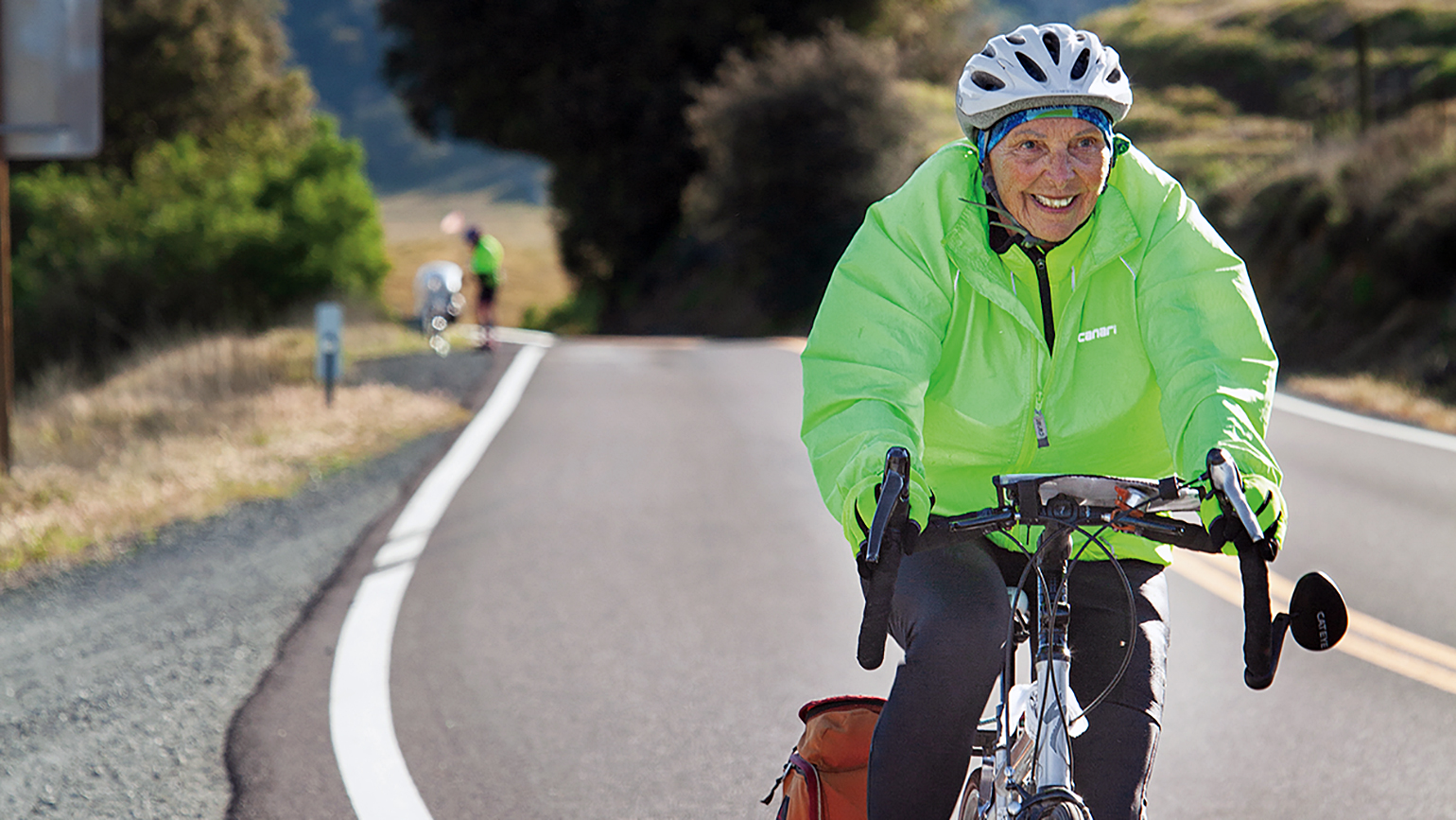
Everyday Greatness: This 77-Year-Old Woman Biked Across the Country

Who she is: Carol Zemola Garsee is a 77-year-old cyclist. Though biking since childhood, Carol went on her first long-distance ride (500 miles!) in 1994 for the American Lung Association, after her mother—an avid cyclist—died of lung cancer. She loves that biking keeps her in shape, physically and spiritually. Carol started meditating and praying 12 years ago, after joining Alcoholics Anonymous, and distance cycling helps her focus: “I’m praying while riding. I talk to God.”

What she does: Carol joined a group of 13 seniors for a cross-country trip from Florida to California. She was the oldest female member to complete the journey; an 81-year-old man biked partway, and a 75-year-old man completed the ride. “There was one young man,” Carol says. “He was 59.” The group biked 50 to 80 miles a day for 65 days between February and April of 2019. “I didn’t know if I had the stamina for the whole trip,” she says. “But at Mile 1,000, I knew it was a done deal.” Some trip highlights? Mardi Gras in Alabama, where the celebration actually started. Singing “America the Beautiful” on the road. Visiting relatives in Arizona. But nothing beat dipping her tires in the Pacific after 2,757 miles across eight states.

Why she does it: “You never know what you can do unless you try,” says Carol. She’d biked the northern border with the same organizers, Nancy and Ken Wright, in 2006. “I had already done the northern tier, so I wanted to do the southern.” Carol also raised money for several organizations—including breast cancer charities. Some people even handed her money on the road. “I’m a 25-year breast cancer survivor,” Carol says. “It’s going to be a generous donation.”

How she does it: Carol biked 150 miles a week in her hometown of Chicago to train for the ride and brought Boiron Arnicare on the trip for muscle pain. “I was using a lot of new muscles.” She says the journey wouldn’t have been possible without the people who helped along the way. Carol’s friend Dot, another group member, waited for her at crucial turns after Carol’s odometer broke—making it difficult to follow Nancy’s printed directions. “Dot was my guiding light,” Carol says. Another time, Carol and Dot took shelter from the rain on a couple’s front porch. “They insisted that we come inside and warm up at the fireplace,” Carol says. When Carol and Dot explained that they were seniors biking across the country, the couple’s little boy looked up at them cheerfully and said, “We don’t see this every day.”

How you can do it: Make safety your priority. “Invest in a good bike,” says Carol. She recommends getting a fluorescent vest, a comfortable helmet, an odometer and water-bottle cages. Find a local bike route with good signage, and start small. Ride a mile or two a day. Then three or four—keep going! “It has to be slow and fun,” she says. “If it’s not fun, you’re not going to want to do it.”

For more inspiring stories, subscribe to Guideposts magazine.

ESPN’s Maria Taylor Relies on Faith to Guide Her Career and Life Decisions

Find me on Twitter and you’ll see that I “talk sports for a living on ESPN,” with a photo of me on College GameDay, where I’m a reporter. You’ll also see that I cofounded an organization called the Winning Edge Leadership Academy (more on that later). Most important—and perhaps unexpectedly for some—there’s a Bible reference: Ephesians 2:10, “It is God himself who has made us what we are and given us new lives from Christ Jesus; and long ages ago he planned that we should spend these lives in helping others.”

I put that there for a purpose. People can expend a lot of negative energy on social media. I understand how that happens. I’ve made tons of mistakes—some of them even on air. I’m not immune to criticism or self-criticism. But it seems more important than ever to remember just who we are and what bigger purpose God intends for us.

I inherited a lot of that from my parents. My siblings and I grew up knowing we were very loved and that much was expected of us.

Dad was a big car buff, so just because I was a girl—the middle child—didn’t mean that I shouldn’t know how to change a tire, check the oil and know what’s under the hood. I might have been a little more interested in the inside, like the radio and upholstery, but that didn’t matter. “Every engine is a little different,” Dad said. “Get to know ’em.” When I was 16, he took me up a hill in a 1992 Honda Accord—I called it Putt-Putt. He put me in the driver’s seat and told me to drive. Did I mention that it was a stick shift?

Mom was the CFO for the Institute of Paper Science and Technology at Georgia Tech, but we kids always came first. She never missed a game or parent-teacher conference. Dad worked for the FBI and for a while was commuting from Atlanta to Washington, D.C. I don’t doubt that was stressful, but Mom and Dad made it work. Marriage wasn’t something you messed with. I took after my dad in more ways than one. He was six foot seven, and I topped out at six foot two in ninth grade, fending off nicknames like the Jolly Green Giant. I’d played basketball since sixth grade, and in high school, a coach asked if I’d like to try volleyball. My first thought was: If I play volleyball in the fall, then I can get out of that boring preseason strength training we do for basketball.

“Sure,” I said. It was love at first serve. I was hooked. I was team MVP for three years running and named All-State as a senior. I was recruited for the basketball and volleyball teams at the University of Georgia. It was there, my sophomore year, that I had one of the most important conversations of my life.

It was in the spring—the off-season—and one of my volleyball teammates, who worshipped the sport, came into the locker room in tears. “I need to quit,” she said. “I’m not meant to do this.”

“What?” I asked. I thought maybe, as a freshman, she was discouraged. “Your first year can be tough,” I said. No, it was nothing like that. She still loved the game, but she sensed that God had something else in mind for her.

“I’m supposed to become a teacher. I’m meant to help kids,” she said. She realized through prayer that volleyball was no longer in God’s plan for her life. The pressures and time commitment were taking focus away from worshipping God and his new purpose for her.

It seemed so outlandish, so impossible. That faith in God would trump everything, even volleyball. I knew how much being an NCAA Division I athlete meant to her. I’d heard about people whose lives were guided by what they believed. This was the first time I met it face-to-face, in my locker room, in someone my age no less. Her face was aglow with strength and clarity of purpose. I looked at her and thought, I want what she has. To live like that.

I became more intentional about my faith. I read the Bible. I joined a Bible study. I prayed a lot and sought out a church. Sports were still important—and still are. But I came to see how the wins and losses of life were so much more manageable when you had a real relationship with a higher power.

That helped me make the transition from playing sports to talking about them. I went into broadcasting after college, working my way up the ladder. My first football assignment for ESPN was a game on ESPNU, where Arkansas was facing a nonconference team they would likely destroy. That’s probably why a rookie like me got the assignment. I was so nervous that I had my finger on the mic’s talk-back button. Only the producer could hear me. Colleagues in the truck shouted into my ear monitors, “Let go of the talk-back button! Nobody can hear you.” They had to take me off the air.

I was devastated. Stewed about it for weeks. How could I have made such a silly mistake? Finally, I made a rule for myself. If I made a mistake, I could wallow in self-pity and rake myself over the coals. But only for eight hours. Eight hours to ask God what I’m supposed to learn, eight hours to contemplate whatever lesson it was. Then move on. I’ve managed to do that. Mostly.

There was another TV flub—you can find it online. I was at the 2016 Rose Bowl game (the Rose Bowl!) on a sun-drenched January day in Pasadena, California, interviewing Stanford running back Christian McCaffrey. I was trying to say productivity and it merged with another word in my head and out popped a new word—one you won’t find in any dictionary: productition.

“ESPN Reporter Invents Awesome New Word” went the headlines. I posted a few laughing-till-I’m-crying emojis on Twitter with what I hoped was a playful explanation: “‘Productition’ definition: the combination of production and productivity on a level most humans can’t achieve…”

Mom had come to Southern California with me, and the two of us stuck around for a couple of days to enjoy the beach. I kept going on and on about that stupid thing I’d said. So much for my eight-hour rule. Finally Mom burst out, “No one else cares. Let it go!”

Letting go of something and making the right choices in life mean to continually ask myself, Is this what God wants? Is this God’s purpose for me? Last year, I really discovered how important those questions could be. I was turning 30. All my friends were getting married. I had been going out with a great guy. He seemed like the one. He popped the question; I said yes. He gave me the ring. We booked the church.

Our minister insisted that we do premarital counseling for nine months. We had one session in person and several more Skype sessions. He had us read a book and answer important questions. I bought the dress, we sent out the invitations and we picked the food, the flowers, the bridesmaids’ dresses, our favorite Bible passages.

Yet something was wrong, and I tried to ignore it. Until one month before my wedding, at a bachelorette party for a close friend. I could see it in her deep-down joy, hear it in her voice when she talked about her soon-to-be husband. It was like the love my parents had, the kind of love and trust that sustains a marriage through life’s challenges. What I had with my fiancé was not the same. God was telling me something. I had to listen. This was not the man I was supposed to marry. I spent the night in tears and prayers.

I called my fiancé and told him, one of the hardest things I’ve ever had to do. I called our pastor, who said, “I’ve been praying for discernment for you. You made the right decision.” I called our wedding planner, my friend Shelley. “Don’t worry about it,” she said. “Your mom and I will undo everything.” And they did. I hated to think of all the wasted money. I volunteered to send refunds to the people who had already sent wedding presents—they refused. My wedding dress still sits in Mom’s closet, and I can barely look at it. But as one divorced friend later confided, “I walked down the aisle knowing it was wrong, but I felt I was in too deep.” That could have been me.

“It is God himself who has made us what we are and given us new lives…” goes that verse from Ephesians. New lives—as long as we truly pay attention.

On the wedding weekend, I went off to New York by myself and had one of the best weekends of my life. I got to shadow Robin Roberts on Good Morning America and get her advice on my career. This was the same summer I got the promotion of a lifetime, this job that I love on College GameDay, as the first African-American female reporter on the college football pregame show every Saturday during the season.

In 2018, I was able to go back to the Rose Bowl and interview Oklahoma Sooners and Georgia Bulldogs. I was thrilled to see my alma mater win. I’m happy to report there were no manufactured words on the air.

That Ephesians quote emphasizes something else very important to me: “that we should spend these lives in helping others.” It’s why my friend Corinne Milien and I started the Winning Edge Leadership Academy—or WE Leadership, our shorthand for it on Twitter. We’re dedicated to mentoring young women and minorities in the professional sports business. Mentoring others as I have been mentored, helped and encouraged.

Something I tell young people is this: Do that thing you’re called to do. Whatever it is, it will take courage, commitment and lots of hard work. It means learning from your mistakes and moving on, moving forward. Sometimes it means saying no to someone even as you say yes to yourself.

I have some great credentials and a lot to be grateful for. But what I hold on to more tightly than any mic is this: I am God’s creation. Like you. Like all of us. Wonderfully made.

For more inspiring stories, subscribe to Guideposts magazine.

Erin Napier Shares How She and Husband Ben Came to Be HGTV Stars

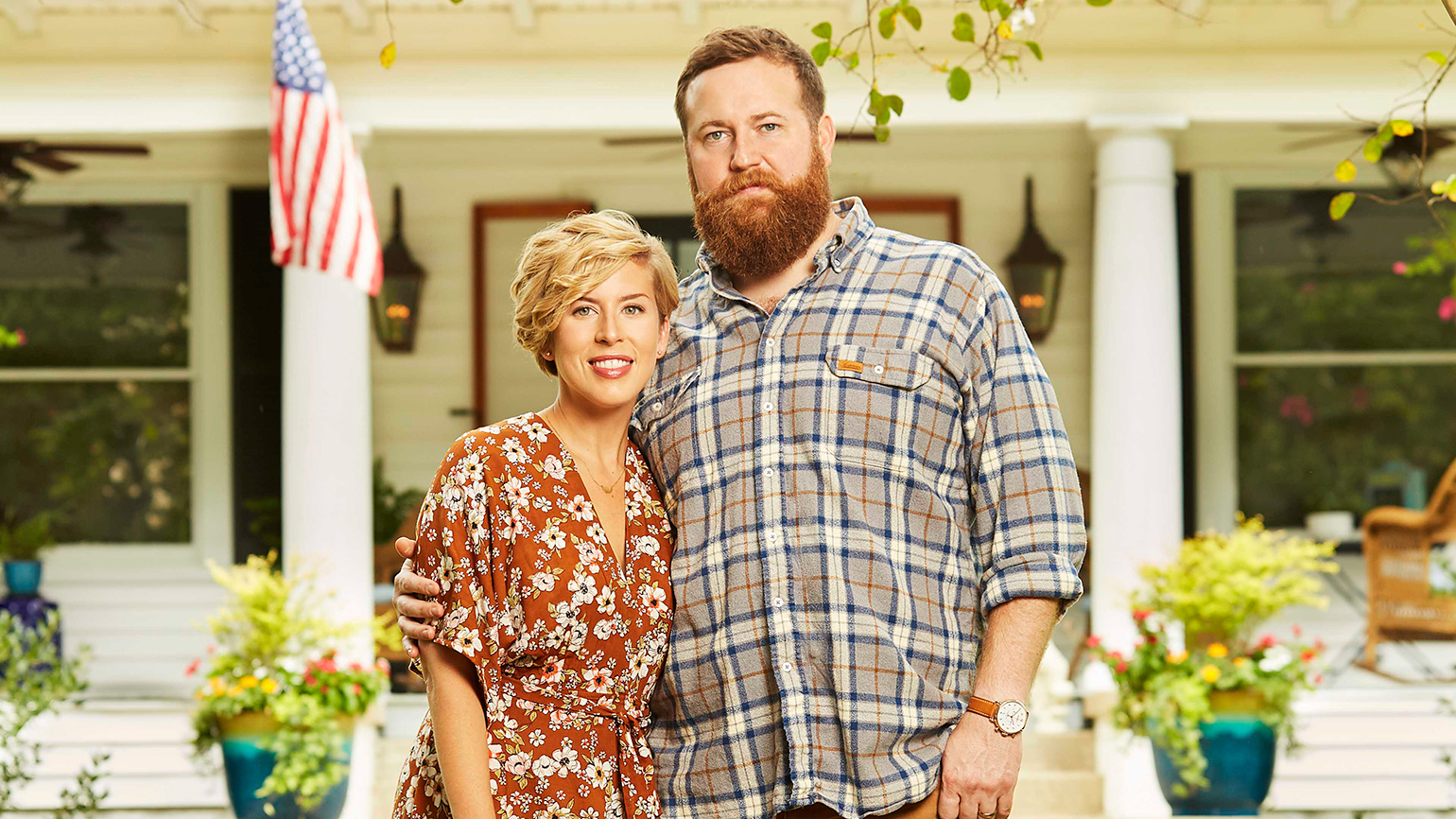
My husband, Ben, and I are about to launch our third season of Home Town on HGTV, where we help folks in our town of Laurel, Mississippi, make and remake their houses into dreams come true. Truth to tell, the whole thing still boggles my mind. It is not at all what we thought we’d do or become when we met at Jones County Junior College.

I figured I’d be an art director for a publisher in a big city far away. Ben was a fledgling history major who volunteered on every committee on campus. I was quiet and shy, not seeking out the limelight that seemed to belong to him. He was tall (six foot six) and broad-shouldered, bearded and magnetic without ever letting it go to his head. We fell for each other hard over the course of six days and soon after transferred to Ole Miss. And that’s where we got married on a cold November day.

Ben was the son of a Methodist preacher. His family had moved around a lot, so he didn’t really have a hometown. I did: Laurel, a sleepy old place that had seen better days. Founded in the 1880s, it had flourished when lumber mills were harvesting the area’s yellow pines. But industry moved on, and people moved out. Others might have hurried past the shuttered storefronts, but I kept seeing the myriad possibilities amid architecture that was worth preserving. What if there could be a bookstore on the corner or an Italian restaurant or a shop that sold sweet-smelling candles and soaps?

Ben and I made Laurel our home. Together, we fixed up a second-floor loft in a flatiron building in the historic district. The floorboards had nickel-size gaps, the nine-foot-tall single-pane windows were a century old and too expensive to replace, so we learned to love how the wind whispered through them in all seasons.

Ben had always been handy, but in redoing the place, he discovered his gift for woodworking: restoring old pieces of furniture, making an armoire from reclaimed material because we couldn’t afford to buy one. Though he had a job as director of youth ministry for a Methodist church around the corner, that armoire—made from an old door he found in the rafters of my grandfather’s woodshop—was a harbinger of things to come. I would wish for things, and he had the vision to make them happen.

As for my job, I commuted to an office cubicle at a tech company, where I worked as a designer. I was grateful to have a paycheck, but the work wasn’t at all what I’d dreamed of. I couldn’t wait for five o’clock to come each day. To do the work I loved.

I’d started a blog right after college to showcase my freelance design work, mostly birthday party invitations and wedding stationery. I did the invitations for our own wedding, using a simple typeface that felt like Ben and me, printed on ivory cotton paper in red and blue inks that reminded me of the November colors of the trees and sky. A childhood friend of mine was so taken with the design, she asked me to create a save-the-date announcement for her own wedding. “Think outside the box,” she said.

I came up with a classic design but, instead of printing it on card stock, screen-printed it on ivory handkerchiefs with lace around the edges. I snapped a photo of them to post on my blog—which I had named Lucky Luxe—packaged them in boxes and mailed them off. My friend was pleased; I was pleased. I figured that was it.

The next thing I knew, I got an email from a woman in New York who’d seen what I’d done and wanted me to do something similar for her wedding. Then she shared the hankies on her blog, and within hours I had a rush of inquiries from customers all over the world, not to mention a call from Martha Stewart Weddings, saying it would be featuring me and my handkerchiefs on its website. Lucky Luxe was launched.

The challenge came for me when I had to decide whether I could do it full time. To be my own boss. The prospect scared me out of my wits. I am not by nature an optimist. I’ve always been afraid that if I don’t manage my expectations, the other shoe will drop. What if the business failed? What if we ran out of money?

I prayed. Boy, did I pray. I sought counsel from Ben, our friends, our family and our church. The answer came from a devotion that my best friend from high school e-mailed me: “Wherever God’s finger points, his hand will clear a way.” I had to trust. Even so, on that first day of self-employment, January 1, 2010, I felt like two different people merging into one: equal parts fear and hope, small potatoes dreaming big.

The only remedy I could find for my fears was to erase them by keeping track of my blessings, writing them down, remembering them. I started an online journal, Make Something Good Today. Each day, I focused on what gave me and the people around me joy. I cooked and taught a painting class, joined a women’s Bible study, spent time with my parents and walked the streets of Laurel. Even on the worst days, I’d search out the positive so I wouldn’t be empty-handed when it came time to write an entry. It was a way to make my faith more real than my fear.

At the same time I was launching my business, Ben was launching his: woodworking. His hobby grew into a shop making his own furniture, beautiful hand-finished works of art. He made a 14-foot dining room table for his parents out of an old church pew, finished just in time for us to use on Thanksgiving Day. He studied joinery and picked oil-based stains that gave the wood a rich depth.

He’d had a big decision to make too. Though he loved being with the kids at the church, it had become clear that God was calling him to another field. Like me, he’d put off resigning the one job so he could do the other full time. In the meanwhile, we had moved out of the loft and bought and restored a Craftsman cottage on a tucked-away street. Picking out the new paint colors, renovating the kitchen, finding the furniture, remaking it into our own home. Everything we loved doing. Together.

Do you see where this is going? We didn’t. Or at least I didn’t. Naturally I wrote about the sheer joy—and the challenges—of fixing up an old home, and I posted plenty of pictures. Of course I talked about Laurel and my dreams for it and how I saw some of those dreams coming true: new stores opening up, people feeling drawn here to revive a small town. I could describe how, after our dog got spooked by a thunderstorm and snuck out of the fence, I got a call from the chief of police, who’d spotted him running to our vet’s. Or how Ben and I on our late-night walks often ended up in a church that’s always open, where anybody can seek refuge, light a candle and pray.

Ben finally wrote that letter of resignation and called up the pastor. We didn’t know exactly how it would work out, but we’d work together. We’d take a risk. Within two hours—two hours!—I got an e-mail from a woman I’d never heard of who said she was from HGTV and had seen me on Instagram. “Your life looks amazing,” she wrote, “and I want to get tape of you and your hubs and your space and your business.”

I should be very clear here: The odds of getting an e-mail like that and having someone send a crew to take some pictures, followed by another crew making a pilot that gets picked up and turned into a TV show…well, they are incredibly slim. Ben and I knew this. Everybody on the crew kept telling us as much. Fine by me. It was such a long shot anyway. We were too busy learning new things, like how not to stumble over words when speaking into a camera and how to say the same thing a million times for different takes. Or discovering that I had to stand on an apple box next to Ben because otherwise he was just too tall for the two of us to be together in one shot.

When the show did get picked up—amazingly—I wanted to be sure it wasn’t all about us. It would be about Laurel and the people whose houses we were fixing up. As in our own houses, I always look for things that are very personal. For instance, in our second season, we worked with Caroline, whose antique toy trucks from the 1950s had been her daddy’s. They had been special to him and, now that he’d passed away, were special to her. We gave them a place of pride in the foyer of her home.

Or in the Edwards house in the first season, with Will’s rods and reels for fly-fishing. They took up half the master bedroom, to his wife’s dismay. We found a way to display them as art in another room. The gear could be taken down and used on weekends.

I am still that quiet, sometimes shy girl who fell madly in love with the big, bearded, boisterous son of a preacher. We each have our own special qualities, and God can use them. If we’re open to the opportunities. If we let go of our fears and focus on our hopes. If we look for the blessings that come every day. Our biggest blessing came just this year—with the birth of our baby, Helen. No telling what she becomes—although from the noise she makes I wouldn’t say she’s going to be quiet or shy. In the meanwhile, I’m just ready to share with her the wonders I find every day in our beloved hometown.

For more inspiring stories, subscribe to Guideposts magazine.

Enjoy the Journey

Look here, you who say, ‘Today or tomorrow we are going to a certain town and will stay there a year. We will do business there and make a profit.’

How do you know what your life will be like tomorrow? Your life is like the morning fogit’s here a little while, then it’s gone. What you ought to say is, ‘If the Lord wants us to, we will live and do this or that.’ Otherwise you are boasting about your own plans, and all such boasting is evil.” (James 4:13-16, NLT).

I recently heard of a study involving the top CEOs of the biggest companies in the world, and one common theme was apparent.

When interviewed, the majority of them said something like this: “If I could do it all over again, I would take time to stop and smell the roses. I would take more walks with my spouse. I wouldn’t be so stressed and uptight. I would slow down and enjoy the journey more.”

This intrigued me, as I am also very career-driven and goal-oriented, so I researched this topic a bit more and stumbled upon an article about Bronnie Ware, author of The Top Five Regrets of the Dying: A Life Transformed by the Dearly Departing.

Ware, who cared for those who were nearing the end of their lives, wrote: “All of the men I nursed deeply regretted spending so much of their lives on the treadmill of a work existence.”

After pondering, processing and praying about all of this, I’ve come to this conclusion–being driven is a good thing, as long as you take time to enjoy the journey in all of your “driven-ness.”

That’s how we should live life.

We shouldn’t be so consumed with our goals in life that we miss the privilege of living. It’s important that we take time today and every day to appreciate the people and the blessings that God has given us.

If we don’t, when we finally reach our goals, after neglecting our friends and family along the way, we’ll have no one to celebrate with us. Or, we will have worked so hard and so long to accomplish our goals, that we’ll be too tired or in too poor health to savor that success.

Winter sky. Photo by Michelle Medlock Adams.

We really can have it all, if we do it God’s way. Allow Him to prioritize your life and direct your steps. And, don’t be in too much of a hurry to bask in the beauty of the moment.

Every day is a gift, so treat it as such. Then, when we get to the end of our lives, we won’t have any regrets, only sweet memories of a life filled with love, laughter, success and satisfaction.

Here are 10 things you should take time to do in the near future:

1) Read a book to a special child in your life.

2) Slow dance with your significant other.

3) Watch the sun set, and thank God for painting the sky so beautifully.

4) Take your dog for a walk.

5) Visit or call your parents just to say you love them. (If your parents have already passed, then visit an elderly aunt or uncle.)

6) Stop by your best friend’s house with her favorite Starbucks concoction and share a few moments of cappuccino and conversation.

7) Put on some worship music and praise the Lord at the top of your lungs.

8) Go to that community concert that you’re always too busy for…you know you’re going to love it!

9) Look up into the night sky and find the various constellations, and then thank God for His handiwork.

10) Do something silly and fun with your family like have a picnic in your living room or have pancakes for dinner or wear your PJs all day on Saturday while having a movie marathon.

Pray this with me:

Father, I am thankful for the reminder that every day is a gift. Help me to not get so caught up in the busyness of life that I forget to enjoy living and appreciating all of the blessings You have given me.

And, Lord, please prioritize my life so that I will achieve the dreams You have placed in my heart while still enjoying the journey. In the precious Name of Your Son, Jesus, Amen.

Endless Summer

I’m having a post-Labor Day letdown. Much as I enjoyed the long holiday weekend, it’s also left me feeling kind of sad. Unlike my friend and fellow blogger Edward Grinnan, whose favorite season is fall, mine is summer. And I’m not ready for it to be over quite yet.

If you worked with me, you could tell. I’m still wearing white pants and sandals. I walked a mile at lunchtime today just to get a lobster roll from the Luke’s Lobster food truck. Not the most efficient use of your time, I chided myself as I hurried back to the office with my lunch, thinking of the stack of manuscripts that awaited me.

Community Newsletter

Get More Inspiration Delivered to Your Inbox


Then I sat down at my desk and took a bite. Chilled lobster with mayo, lemon and spices, all in a buttery toasted bun … totally brought back the mellow vibe of my lazy days in Maine last summer. It occurred to me: What better way to beat my end-of-summer blues and restore my positive attitude than by stretching my favorite season a little longer?

That’s why I’m going to keep doing summery things well past the autumnal equinox, which falls on September 23 this year. I’ll wear white pants and sandals and bright colors on my toenails. Have watermelon every day. Watch baseball. Make limeade. Go for long outings to the dog park with Winky. Leave the gym with hair still wet from the shower. Try unusual flavors of ice cream … I’m getting Coolhaus’s brown butter with candied bacon next. Look at photographs from Alicia Bock’s Homecoming series (I have a print of “Bathing Beauties” on my nightstand). And bring on those lobster rolls!

End of summer? Nah, I’m going for endless summer. What about you?