Embrace God's truth with our new book, The Lies that Bind

Feed the Positive Thinking Dog

Let me share a simple story. A man goes to the village wise woman about what’s troubling him. He says, “I feel like there are two dogs inside me. One dog is positive, loving, kind and enthusiastic. The other is this mean-spirited, jealous and negative dog. They fight all the time. I don’t know who is going to win.” The woman thinks for a moment and says, “I know who is going to win. The one you feed the most. So feed the positive dog.”

Each of us has a positive dog and a negative dog inside. The key is to feed the right dog, so it becomes bigger and stronger. That means each day we must make a conscious choice to feed ourselves with positive energy rather than negativity. The actions are simple. We just need to make them a habit. Here are some ways to feed your positive dog:

1. Smile.
It boosts your serotonin levels, making you feel happier.

2. Practice gratitude.
It’s impossible to be stressed and thankful at the same time.

3. Laugh and play.
It’s not just for kids.

4. Listen to your favorite music.

5. Think of your greatest moment.
Whenever you are feeling down or blue, remember a success you had in the past.

6. Start a journal.
Make note of your successes, big and small.

7. Choose your friends wisely.
Get together with positive people.

8. Call someone who has made a difference in your life.
And thank them. Gratitude can boost your spirits.

9. Engage in a random act of kindness.

10. Read uplifting books.

11. Go for a prayer or meditation walk each morning.
I do this and it feeds me spiritually all day long.

Pick one thing on this list and do it today. You’ll be amazed at how it helps you think and feel differently. Your positive dog is hungry for some nourishment. Go on, feed it!

Download your FREE positive thinking ebook!

February is Dedicated to Heart Health

Content provided by Philips Lifeline.

Every February is American Heart Month. With Valentine’s Day as its centerpiece, the month has long been associated with heart-friendliness. The American Heart Association (AHA) also dedicates each February to heart health, working to raise awareness of heart disease and ways to prevent it. The AHA’s effort is in collaboration with communities and organizations throughout the United States.

Healthcare professionals can play an important role in this effort by staying well-informed about coronary heart disease (CHD), imparting this information to their patients, and serving as models by demonstrating their own good heart health practices.

The Human Toll of Heart Disease
According to the U.S. Centers for Disease Control and Prevention (CDC), approximately 720,000 Americans experience a heart attack each year. Heart disease is the leading cause of death in both women and men; one in every four American deaths results from heart disease. CHD, the most common type, takes the lives of about 380,000 people each year and costs nearly $110 billion in medical expenses. Heart disease can also contribute to other potentially costly issues such as fall injuries and medication errors.

The human toll is readily apparent to the healthcare professionals who treat heart disease patients daily. Because these professionals routinely see the real people behind the statistics, they share a responsibility to educate both themselves and their patients on healthy behaviors that fight heart disease. This is key, as many cases of heart disease are preventable.

Understanding Heart Disease and Its Treatment
You don’t have to be a cardiology specialist to help your patients better understand heart disease and how it can be prevented. Whether during American Heart Month—or the remainder of the year—it’s important for all healthcare professionals to have a good grasp of the basic definitions and distinctions of heart disease.

According to the National Heart, Lung, and Blood Institute (NHLBI), the following are among the principal risk factors for heart disease:

  • Smoking
  • Family history of heart disease
  • Obesity
  • Poor diet
  • Diabetes
  • Sedentary lifestyle
  • High levels of cholesterol
  • High blood pressure
  • Advanced age

How is Heart Disease Defined?
Even though they are often used to mean the same thing, the terms “heart disease” and “cardiovascular disease” are actually different. Cardiovascular diseases involve the heart and/or blood vessels and can occur anywhere in the circulatory system. Coronary heart disease, also called coronary artery disease or just heart disease, is one type of cardiovascular disease. CHD occurs when plaque builds up in the coronary arteries, decreasing blood flow to the heart.

Likewise, heart attacks and cardiac arrest are not the same thing. Cardiac arrest means that the heart has stopped beating for any reason, and heart attacks typically do not result in cardiac arrest. When someone has a heart attack, a vessel is blocked from supplying blood to a specific area of the heart muscle. It occurs primarily because of plaque buildup, but it can also happen when a vessel spasms tightly enough to block blood flow. A blood clot that breaks off from another part of the body and lodges in the heart can also cause a heart attack.

A heart attack’s severity is determined by how much heart tissue has been destroyed due to a blockage. Inadequate blood oxygenation can also cause a type of heart attack called demand ischemia.

What Are the Symptoms of Heart Disease?
Because heart disease can be stealthy, once a person shows symptoms, there may already be extensive damage to the cardiovascular system. This is why preventive measures such as screenings and early lifestyle changes can make such a difference.

The signs and symptoms of heart disease vary according to the specific cause(s) and can be confused with illnesses that are not as serious. For instance, a fluttery feeling in the chest accompanied by lightheadedness and shortness of breath might indicate an arrhythmia or anxiety, and acid indigestion could be mistaken for a heart attack. So, it’s crucial to know which symptoms require urgent medical attention.

When a person has any of the following symptoms, immediate medical attention is warranted:

  • Chest pain (angina), especially if in the center or left side
  • Bluish to gray skin discoloration (cyanosis)
  • Swelling in the extremities
  • Pain, weak, or numb legs or arms
  • Rapid pulse
  • Shortness of breath and tiring easily
  • Dizziness

When symptoms of heart disease present along with a fever, dry cough, or rash, a heart infection may be the cause.

It can be difficult to spot the signs of an acute heart attack. They can range from breathtaking pain to mild or even no symptoms. Signs can be especially easy to miss in women, as their only immediate symptoms may be a vague pain or discomfort in the back. When someone complains of pain in the chest, particularly if it radiates to the arms, or if the person feels faint, nauseated, or out of breath, it’s important to immediately call emergency services.

How is Heart Disease Diagnosed?
Heart disease is diagnosed in a variety of ways, starting with establishing a patient’s medical history and then determining risk factors. When a doctor suspects heart disease, he or she may order laboratory diagnostics and refer the patient to a cardiologist. Among the available diagnostic tools for detecting CHD are:

  • Chest X-ray
  • Stress test
  • Electrocardiogram (EKG)
  • Echocardiography
  • Coronary angiography
  • Cardiac catheterization

How is Heart Disease Treated?
It’s important that any treatment for CHD include heart-healthy practices. General practitioners, as well as cardiology specialists, can assist patients by giving them information and referring them to dietitians, physical therapists, and other professionals.

NHLBI lists five objectives for treatment: to relieve symptoms, reduce risk factors, prevent complications, decrease the chance of developing blood clots, and clear or go around clogged arteries. Treatments can include:

  • Lifestyle changes, including improved diet and increased activity
  • Medications to relieve symptoms, thin blood, and reduce blood pressure
  • Procedures that clear vessels (angioplasty) or bypass them by grafting tissue
  • Replacement valve or heart transplant surgery
  • Cardiac rehabilitation, which involves counseling, exercise, education, and training

Teaching Prevention
Prevention is the central message of American Heart Month. It’s important at any stage of life, from the early to the senior adult years. Among the most effective ways to teach good heart health practices this month or any other time of year is by living them. When healthcare professionals follow positive lifestyle practices themselves, they can serve as good role models to their patients. At the same time, they can decrease their own health risks.

The Healthcare Professional as Model
A large segment of healthcare workers are overweight. According to a study published in the American Journal of Preventive Medicine, 5.7 million health and social assistant workers are obese. Compared with 20 other industries, healthcare ranked fifth in obesity rates. Specific healthcare workers in particular, including nursing assistants and home health aides, have higher rates of obesity. Studies have demonstrated that job stressors like long work weeks and difficult work environments significantly contribute to obesity among these workers.

One of the most effective ways to learn something is by teaching it, and modeling is an excellent tool to that end. Although diagnosis or conversations about treatment options should be limited to a patient’s doctors, all healthcare professionals can benefit themselves, as well as their patients, by taking the following steps to prevent heart disease.

Stop Smoking
Smoking can increase the risk of heart disease up to four times, according to the AHA. Smoking cessation is a major factor in preventing heart disease. It’s important for any healthcare professionals who are in a position to talk about heart health with their patients to be prepared with resources on quitting smoking when asked. For instance, smoking cessation material from the American Lung Association could be offered.

Eat Heart-Healthy Foods
Adopting a healthier diet can significantly decrease the risk of heart disease. A number of resources are available to teach people about the components of a healthy diet. Easily accessible tools include recipes and menu planners to help with gradual eating habit shifts.

Get More Exercise
The CDC recommends that adults participate in 2.5 hours of moderate and 1.25 hours of vigorous activity each week, in addition to muscle strengthening activities on two or more days. For older adults, the CDC recommends increasing that activity to five hours at a moderate level and 2.5 hours at a vigorous level. Taking a walk is a very effective exercise option.

Strive for Enough Sleep
Adults in any age group should try to get eight hours of restorative sleep on a nightly basis. This can be a challenge for many, including the one in five adults who experience sleep apnea, a repeated cessation of breathing throughout the sleep cycle. Those who have apnea are often unable to get restorative sleep. They can be at a higher risk of heart disease because they are often awakened while their organs are deprived of adequate oxygen.

Employ Positive Stress-Coping Mechanisms
Everyone has stress. It is normal. But there are ways of reacting to and dealing with stress that can be unhealthy. Problematic approaches include overeating, smoking, and consuming alcohol or drugs. Positive ways of coping include relaxation, creative activities, listening to music, and physical activity. A professional counselor may help when stress interferes with a person’s health or ability to work or maintain relationships.

Take Advantage of Healthcare Screenings
Many health fairs offer free or low-cost screening services. These can give people critical information on health conditions and allow healthcare professionals to use their skills as volunteers.

Other Ways to Participate
Healthcare professionals can get involved in American Heart Month in a variety of ways. The AHA suggests additional ideas to actively raise awareness about heart health and prevention. For example, healthcare professionals may want to:

  • Join an AHA walking club
  • Participate in physical programs, such as Hoops for Heart and Jump Rope for Heart
  • Become a You’re the Cure advocate
  • Provide information through the Get with the Guidelines program
  • Join any of the Go Red for Women activities
  • Other ways for healthcare professionals to participate include handing out pamphlets, donating money, or hanging posters in their communities.
  • It takes a combined effort to effectively prevent and fight heart disease. Whether they are modeling heart-healthy practices or volunteering their valuable services, healthcare workers can play a huge role in bringing across the important message of prevention this American Heart Month.

Just as educating seniors on preventing heart disease can help improve their quality of life, informing them about the potential benefits of medical alert devices can help seniors maintain their independence. Learn more about how to refer your senior patients for a medical alert system.

9 Famous Love Letters To Inspire You

Letter-writing is an art—one that’s sadly gone out of style—but we should always remember the power of putting words to the page. Before texting was born many of the most famous and influential figures in history preferred to pour their undying love out on paper. Luckily, a few of those letters still exist today. From country legend Johnny Cash to Presidents Ronald Reagan and Gerald Ford to the Queen of England herself, here are a few famous love letters that prove pen and paper are the best way to express feelings of love. Read them for yourself and be inspired to write a beautiful love letter of your own!

Ronald Reagan's famous love letter to Nancy Reagan

Ronald Regan’s Letter to Nancy

In 1972, Ronald Reaganthen Governor of Californiaand his wife Nancy celebrated their 20th anniversary. Prior to that happy occasion, Reagan wrote a playful letter to the love of his life sharing the joy he felt in being her husband. Part of this famous love letter reads:

This note is to warn you of a diabolical plot entered into by some of our so called friends — (ha!) calendar makers and even our own children. These and others would have you believe we’ve been married 20 years. 20 minutes maybe — but never 20 years. In the first place it is a known fact that a human cannot sustain the high level of happiness I feel for more than a few minutes — and my happiness keeps increasing. 

Love Letter Tip #1: Ronald Reagan’s letter focuses on how happy Nancy makes him. Think about the ways your partner makes you happy. Do they make you laugh? Do you love going on walks together? Do they make you feel special? List out the ways they make you happy in your love letter.

Beethoven's famous "Immortal Beloved" love letter

Beethoven’s ‘Immortal Beloved’ Letter

The great German composer Ludwig Van Beethoven penned one of the most famous love letters to an unknown woman in 1812. In it, Beethoven passionately declares his devotion to his “immortal beloved.” Part of it reads:

Even in bed my ideas yearn towards you, my Immortal Beloved, here and there joyfully, then again sadly, awaiting from Fate, whether it will listen to us. I can only live, either altogether with you or not at all.

Love Letter Tip #2: Beethoven’s letter shares how much he loves his unknown woman, even when he is away from her. It reminds us that distance is no obstacle when it comes to true love. If you and your partner have to be away from each other, use love letters to stay connected and share what you think about when you miss them.

Gerald R Ford's famous love letter to Betty Ford

Gerald Ford’s Famous Note to His Wife Betty

Less than two months after Gerald R. Ford became President of the United States, Lady Betty Ford was diagnosed with breast cancer. Her husband penned a letter of support, encouragement and love, three things he provided throughout her battle with the disease. As a section of the letter reads:

No written words can adequately express our deep, deep love. We know how great you are and we, the children and Dad, will try to be as strong as you. 

Our Faith in you and God will sustain us. Our total love for you is everlasting. 

Love Letter Tip #3: Gerald Ford’s letter is about loyalty and staying strong through uncertain times. Think about a time when you and your loved one stayed strong through a crisis. Include it in your love letter and thank them for their love through it all.

John Keats famous love letter to Fanny Brawne

Poet John Keats’ Love Letter to Fanny Brawne

Celebrated poet and literary great John Keats met Fanny Brawne in 1818 when the two became neighbors in the small village of Hampstead. Despite Keats’ poor health and financial difficulties, the two fell in love and became engaged. Sadly, Keats would succumb to tuberculosis just a couple of years later, but their love inspired some of the writer’s greatest poetry. Part of a famous love letter to her from 1820 reads:

You must believe you shall, you will that I can do nothing say nothing think nothing of you but what has its spring in the Love which has so long been my pleasure and torment. 

Love Letter Tip #4: John Keats’ letter is filled with emotions. Don’t hold back in your own love letter. Let the words come pouring out. This is the space to truly let your partner know how much they mean to you.

Johnny Cash's famous love letter to wife June Carter

Johnny Cash’s Birthday Letter to Wife June Carter

The love story of Johnny and June is immortalized in plenty of classic country tunes, but Cash proved he had a knack for writing love letters as well as hit songs when he penned this sweet tribute to his wife on her 65th birthday. Part of the 1994 love letter reads:

But once in awhile, like today, I meditate on it and realize how lucky I am to share my life with the greatest woman I ever met. You still fascinate and inspire me. You influence me for the better. You’re the object of my desire, the #1 Earthly reason for my existence. 

Love Letter Tip #5: Gratitude is an important part of any relationship. As we can see in Johnny Cash’s letter, he often gives thanks for having June Carter in his life. Include your own feelings of gratitude in your love letter. List out the reasons you are thankful to have your partner in your life.

Winston Churchill's famous love letter to wife Clementine

Winston Churchill’s Famous Love Letter to His Wife Clementine

Winston Churchil1 and Clementine Ogilvy Hozier met once briefly before reuniting four years later at a dinner party in 1908. Just a few months later, the two were married and enjoyed a long and happy marriage despite the stress of Churchill’s position as Prime Minister of England during the second World War.  The two often wrote letters to one another that included affectionate nicknames. He was her “pug,” she his “cat” and “p.k.” was a reference to their first child who they called “puppy kitten.” A section of a love note from Churchill in 1909 reads:

Sweet cat—I kiss your vision as it rises before my mind. Your dear heart throbs often in my own. God bless you darling keep you safe & sound.

Kiss the P.K. for me all over

With fondest love

W.

Love Letter Tip #6: Inside jokes and nicknames can be the cherry on top of any close relationship. Keep those sweet moments in your love letters. If you have a special name for your partner, use it in the letter to show them how much they mean to you. Include any inside jokes you two share so the laughs can keep on coming. Maybe even include some art, like Churchill did.

Robert Browning's famous love letter to Elizabeth Barrett Browning

Robert Browning To Elizabeth Barrett Browning

Elizabeth Barrett Browning is one of the most widely celebrated English poets of the Victorian Era. She had already achieved fame and critical success when she met writer Robert Browning, who wrote her after reading her first collection of poems. The two were married a year later and continued to write togethersome of their most famous works were a result of their love and courtshipwhile living in Italy with their son, Pen. A famous love letter from Robert to Elizabeth from 1846 reads:

“Look down on you”,-my Ba? I would die for you, with triumphant happiness, God knows,-at a signal from your hand! But that,-look down,-never, tho’ you bade me again & again, and in such words! I look up,-always up,-My Ba, when I indulge in my deepest luxury, I make you stand .. do you not know that? I sit, and my Ba chooses to let me sit, and stands by,-understanding all the same how the relation really is between us,-how I would, and do, kiss her feet,-my Queen’s feet!

Love Letter Tip #7: Robert Browning’s love letter is all about devotion. Think about what devotion means to you. What does it mean to your partner? How can the two of you be more devoted to each other? List out the ways in your love letter.

Prince Albert's famous love letter to Queen Victoria

Prince Albert’s Love Letter to Queen Victoria

The match between Queen Victoria and her cousin, Prince Albert of Saxe-Coburg and Gotha, was initially arranged by her uncle, King Leopold but the two grew to share an enduring love during their 21 year marriage. Victoria proposed to Albert on his second visit to Windsor in 1839 and the couple was married just a few months later. Though the pressure of the crown were rumored to have hurt their relationship, both husband and wife often wrote of their affection for one another throughout their years together. A 1839 love letter from Albert to Victoria reads:

I need not tell you that since we left, all my thoughts have been with you at Windsor, and that your image fills my whole soul. Even in my dreams I never imagined that I should find so much love on earth. 

Love Letter Tip #8: Prince Albert’s letter proves how important love letters are, no matter what is going on in your lives. Even when things were hard, Albert and Victoria made sure to always express what they meant to each other. Think about times when you can write a love letter to your partner besides birthdays, anniversaries, or Valentine’s Day. Could a love letter on an ordinary Tuesday prove to be even more special?

Marci's love letter to John

Marci Seither’s Love Letter to Her Husband John

Guideposts contributor Marci Seither may not be a famous poet or a Country icon, but she has followed in the footsteps of some, at least when it comes to letter writing. Her letters to husband John helped the couple reconnect after he served overseas and led to a love story worthy of being on this list. As part of the letter reads:

Thank you so much for playing guitar for me. It was really nice. Looking forward to hearing from you or seeing you.

Love Letter Tip #9: Include details in your love letter about how you spend time with each other and how much that time means to you. Also tell your partner how much seeing them brings you joy. Even the simplest love letters can make a huge impact.

READ MORE ABOUT LOVE:

Family, Faith Inspired Newsman to Aim Higher

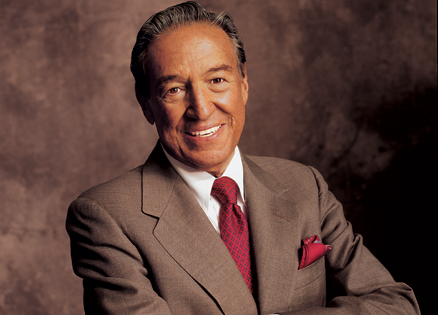
When I interviewed Mike Wallace about his battle with depression (My Darkest Hour,” January 2002, Guideposts), I didn’t realize I’d also be talking with him about another painful experience—the death of his 19-year-old son Peter in 1962. When I first brought it up he was quiet for a moment, pensive.

As a father of two sons myself, I knew how difficult this would be for him. I worried I had overstepped. But then in his matter-of-fact way, he said, “Okay.” This is when I learned how his son’s death came to change Mike Wallace’s life.

“I’ll always remember that late summer in 1962, leaning against a jet’s window, staring down at the Mediterranean. My 19-year-old son had disappeared and I was on my way to find him.”

The strapping Yale student was Mike’s eldest. “The last we heard was that he was on a jaunt in Greece.” Mike smiled in memory. “If there was one place Peter loved to be, it was that ancient Mediterranean country. Even as a youngster, he had explored its history. I could still see him as a little boy proud in a bedsheet toga, brandishing a wooden sword from behind a garbage-can-lid shield.

“Peter had written about going to a little town called Kamari on Santorini Island in the Aegean Sea. Suddenly his letters stopped,” Mike said. “Despite our attempts to locate him, it was as if he had disappeared from the face of the earth.”

Fraught with anxiety, Mike cancelled a global news trip and caught the next plane for Athens. All the way he tried to console himself with “what ifs?” Maybe he had found a girl, Mike thought, and the two had taken off. He was ready for anything.

From the Athens airport he raced to the American Embassy. Together with an understanding consul he flew to Kamari. It was a beautiful seaside town with ancient ruins and black-sand beaches.

“Just the kind of place Peter loved,” Mike said. “Many of the local folks we talked to remembered the tall, brown-eyed man.

“They pointed up a mountain that loomed over the sea,” he continued. “They said a monastery was on top of it and Peter had gone up alone to see it.”

Mike said he could understand, as he squinted up in the dazzling sun. Just like Peter, he thought.

But he had never returned. Searchers found no leads. Those in the monastery had not seen him. “My son seemed to have vanished into thin air,” Mike said.

There was only one thing to do.

The consul and he got some donkeys, a necessity for the precipitous stony mountain climb, unless one was a young athlete like Peter. They slowly ascended, the Mediterranean sun hot on their backs, while their dun-colored beasts picked their way up the dusty ochre path.

As they climbed higher, Mike began to sense Peter’s presence; he had trod this very path.

“His very curiosity in visiting the monastery reflected his spiritual bent,” said Mike. “I remember him talking about the Greek philosophers’ search for meaning in life. One day he said to me, ‘Dad, you know that famous line in Shakespeare’s Hamlet, To thine own self be true? Shakespeare took that from Socrates’ Know Thyself.’”

That was Peter, forever seeking, always looking for a deeper meaning in everything.

“Was it tears or sweat stinging my eyes as we plodded higher?” Mike continued. The hot, dry air seemed too thin and a breeze brought a briny scent from the sea.

“The view took my breath away. Thrown out before us was a scene I could have never imagined—a vast panorama of the Aegean stretching across the horizon. Dark islands punctuated its cerulean surface. I took a deep breath and knew Peter would have stopped here to feast on this wonderful vision.”

Mike turned to the consul. “Let’s take a break for a moment,” he said. They dismounted and stepped to the overlook. “Neither of us said anything as we drank in the magnificent view.

“And then I happened to look down at the earth before my feet. It had been disturbed, as if it had given way under…someone? My heart pounded. I didn’t want to look down that mountainside. But I had to.

“Some five hundred feet below lay the crumpled body of my son. Even from that height I knew it was Peter. He was wearing the bright madras shorts we had bought together from Rogers Peet men’s store in Manhattan.”

Mike’s voice choked. “I fell to my knees in anguish. The rest of the nightmare was a blur.” All Mike could remember was being back on the mainland for the formalities, driving behind the pickup carrying the rough wooden box holding his son’s body in the glare of the headlights.

“We buried Peter at the spot where we found him, where he would have loved to be, looking out over the Aegean,” said Mike softly. “Some of the townsfolk joined our little family as we left him to God. Through my agony and tears it was almost as if he was saying, It’s all right, Dad. It’s all right.

But that was not the end of Peter.

Before Peter’s death, Mike had a varied career in broadcasting, including heading a tough-minded, controversial program called Night Beat in which he had begun to develop an interview style.

But in 1962 he was mostly reading news on television. “Rip and read, as we called it,” said Mike, a term dating back to when reporters snatched the news off the teletype to read over the air.

But Peter’s death changed him.

“I felt strongly led to do something more significant, more meaningful, as if I was again hearing, To thine own self be true. Peter wanted to follow in my footsteps. But so far I didn’t think he’d be proud of the ones I had been leaving,” Mike said.

That’s when Mike quit everything and decided to take a year off and reevaluate his life. He wouldn’t go back to work until he found something Peter and he would be proud of.

Mike had been making a hundred and twenty-five thousand dollars a year when a call came offering him the news anchor at KTLA in California. It was tempting, but then he heard from Richard Salant, then President of CBS News. Mike had interviewed him on Night Beat.

“Mike,” Salant urged, “I know you’ve been making more money, but if you’re really serious about doing something special, come on over here. The salary is forty thousand a year, a lot less, I know, than what you’ve been making, but it may be the beginning of something for you.”

“It sounded right,” said Mike.

And so he worked as a reporter, each night praying the Shema: Here O Israel, the Lord our God, the Lord is One. “Undergirding my faith. I was on the right path,” said Mike.

“I didn’t know what I was being groomed for,” he said. “But five years later in 1968 Richard Alant finally gave producer Don Hewitt the okay to start 60 Minutes, which is where I have been ever since.

“Sometime later, I returned to Peter’s grave to kind of tell him what I had been doing, though I’m sure he knew it all along.” Again he rode a donkey up that very steep, stony climb to where the magnificent Aegean spread out before him. When he reached Peter’s grave he was stunned.

The Kamari townsfolk, who knew how much Peter had loved their homeland, had adopted him as one of their own. They had erected a simple tombstone and enclosed his grave with a wrought-iron fence entwined with graceful metallic leaves.

Struggling with emotion, Mike looked out on the sea his son had loved so well and felt his presence again. “Thank you, Peter,” he whispered.

Download your FREE ebook, True Inspirational Stories: 9 Real Life Stories of Hope & Faith

Family, Faith and the Feud

Family nights at our house are all about food. Fun. And the Feud. That’s right, the game show Family Feud. It’s a Rankins tradition. My husband Thomas and I watch every episode and we play along, laughing and shouting out answers like we’re on TV.

“Hurry,” Thomas called from the living room one family night in the spring of 2010, “it’s about to start.”

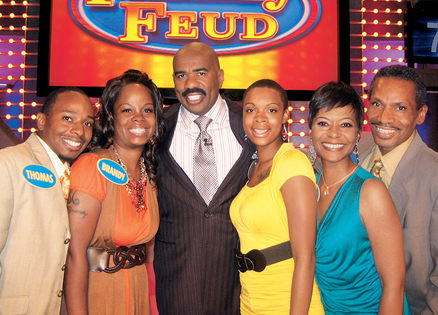
I dished up some spaghetti and hustled out to the couch, squeezing in next to Thomas and his aunt Yvonne just as the host, comedian Steve Harvey, strolled onto the stage, looking extra sharp in a gray suit and silver necktie.

“Hey, everybody, welcome to Family Feud,” he said. “We’ve got a good one for ya…” I couldn’t hear the rest, the audience was hollering so loud.

The camera pulled back to show two families opposite each other, clapping and stomping like they were at a revival meeting. One contestant from each family ran to the podium at center stage.

“Name something that goes with a hot dog,” Steve Harvey said.

“Ketchup!” I jumped up and yelled before the contestants could even get a word out. “Mustard! Relish! Onions!”

Yvonne looked at me. “Girl, you’ve got it down. You oughta be on the show.”

“Me? I don’t think so,” I said. I sat down and stared at my spaghetti, twirling it on my fork. Why’d I say that? One of my resolutions this year was to think positive, and here I was, falling back into my old habit of counting myself out.

It was a hard habit to break. I’d had enough trials and tribulations in my life, I figured I wasn’t the kind of person good things just naturally happened to.

The thing was, I would’ve given anything to be on the Feud. Not just because I liked playing the game. I’d watched the show since it was first on the air, back when I was a kid and Richard Dawson was the host, and I loved it because your team was your family.

That meant something to a girl whose parents’ marriage was rocky, whose own family wasn’t exactly jumping up and down for joy.

I’d imagine myself up on that stage, joking around with the host. Getting the question and guessing the most popular answer. Hearing “Survey says…” and seeing the scoreboard light up. Number-one answer. Whoo hoo! Then I’d do a happy dance and high-five with my family.

Family. If being on Family Feud was my secret little dream, having a strong marriage and family that stuck together was my big dream, the one I put out there in my prayers. And, boy, did God answer! He brought Thomas and his tight-knit family into my life and blessed us with four awesome kids.

God had answered so many of my prayers since. For our children (when there’s four kids under the age of 10, there’s plenty to pray about). For me to do well in my journalism classes at college. For Thomas to succeed in his work as a paramedic and as a musician.

I didn’t need to be bothering God with something as silly as a game show.

“Wonder what you have to do to get on the show,” Thomas said.

“They must get tons of applications,” I said. “We wouldn’t have a chance.”

“It couldn’t hurt to try,” he said. “You’re always saying you’re better at it than the people on there.”

True, I did say that. But that was just me goofing around in our living room.

Steve Harvey asked the next question, and mercifully no one brought up the Rankins playing on Family Feud again. But now I couldn’t get the idea out of my head. It was like I’d been keeping my little dream locked up inside and someone flung open the door and let it out.

Wouldn’t you know it? Thomas and I were watching the Feud a few nights later when the announcer said, “Time for open auditions. Go to our site for details.”

“There you go!” Thomas said.

I didn’t want to get my hopes up. Still, I got my laptop and typed in the web address. I scrolled through the audition locations. Nothing in the Midwest. The closest was in Texas. No way could we swing a trip like that.

“I’d love to be on the Feud,” I said. Had I really uttered those words out loud? “I just don’t think it’s meant to be.”

But something made me keep checking the website. They added locations. Still nothing near us. Then one day I saw it, near the bottom of the page: “You can submit a video of your family in lieu of a regular audition. Upload it to YouTube and e-mail us the link. Have fun with it!”

I knew from my journalism classes how to make a video. And the Rankins definitely knew how to have fun. You know how sometimes on the Feud everything comes together and a team gets one right answer after another and the whole board lights up? That’s what this felt like.

Okay, God, maybe I won’t win. Or get on the show. But I know you’re telling me I’ve got to try. I’ve got to be positive.

We decided on our team: Thomas and I, Yvonne, my father-in-law, Thomas Sr., and my sister-in-law, LaTonya. We wore matching outfits and squeezed on our couch for the video. “Hello, everybody, this is my wonderful family,” Thomas said. Then we each introduced ourselves and hammed it up.

We had a blast. But when we were done Thomas Sr. took me aside. “Now I don’t want you to feel bad if we don’t make it,” he said. “There’s thousands of people trying out.” That was all it took to bring my insecurities rushing back.

Two weeks after I put the video up on YouTube, an application came in the mail. They probably send these out to everyone. I filled it out and sent it back.

One night in November our phone rang. Thomas answered. His eyes bugged out. “Brandy, it’s Family Feud,” he whispered. I screamed. “That’s my wife making all that noise,” Thomas said.

I leaned in to hear what the caller was saying. “Tell her to bring that enthusiasm to Atlanta because you’re coming to Family Feud in August.” Yeah, baby!

Family nights we got down to business. We came up with answers to every question we could think of and practiced our buzzer-hitting moves till we were lightning quick. I lay awake at night, thinking up clever lines to say to Steve Harvey.

Still, I worried we were nowhere near ready. “Ask me something. Anything,” I badgered Thomas on the flight to Atlanta. “We’ve gotta stay sharp.”

“Honey,” he said, “we’ll be fine. This is your dream. And it’s really happening. Just relax and enjoy it.”

Easy for him to say, I thought. I was so keyed up that night I barely slept.

The next morning at eight we were driven to the studio in a white van. After a practice round, it was time to go on.

We ran onto the stage and stood behind our podiums. Good thing because I didn’t want everyone to see how my legs were shaking. The studio was huge, rows and rows of people in the audience. Not that I could see much with lights shining on us from every direction.

Behind us a giant sign read RANKINS in neon blue letters. The familiar theme song came on. The announcer sang out, “It’s time to play Family Feud.” I clapped and stomped, my mind spinning like a kaleidoscope. I can’t believe this is for real!

“Give it up for Steeeeeve Harveyyyyy!” My eyes were riveted on the handsome host, not more than five feet away. He was wearing that same sharp gray suit and silver necktie. He said hello to the audience then strode right up to me.

“Brandy, how are you doing?” I tried to think of one of the clever lines I’d rehearsed but it was no use. There was only one word that captured everything I was feeling. I raised my hands up over my head and shouted, “Hallelujah!”

Steve gave me a huge smile and turned to the audience. “You didn’t know you were coming to church today, did you?” he said. Everyone laughed, including me.

But there was no time to relax. The game was starting. The first question for Team Rankins: “Name someone you might frighten away if you came to the front door naked.”

Concealed on a big board in the middle of the set were the top six responses from a survey of 100 people. Our job was to guess them all before we got three wrong answers.

“Postman,” Thomas said.

“Survey says?” The answer flashed on the board. Yes!

My turn. “My pastor,” I guessed. Another right answer.

Then Thomas Sr. guessed, “Bill collector.” A big X flashed on the board. Wrong. Yvonne said, “Paper boy.” Wrong again.

Too soon it was my turn again. There were two answers left. What could they be? This was nothing like playing at home. “Grandparents?” I ventured. Another big X, our third.

We went from bad to worse. Halfway through the game Team Rankins had 79 points. The other team: a whopping 258. I didn’t want my dream to end like this!

The final round. Steve said we still had a chance at victory. A slim chance. The question: “Name something horses do standing up that you might not do.” Team Rankins got five right answers, but we missed two. It all came down to Thomas Sr. “You can do it!” I said. But my insides were twisted in knots.

“Uh,” he stammered. “Make, uh, make little ponies?”

Everyone cracked up. “You’re sure that’s your answer?” Steve asked. “’Cause I wouldn’t have thought of that.” Thomas Sr. nodded, slowly. All eyes went to the board. With a flip, there was his answer. We’d won!

I grabbed Thomas and we jumped up and down and did a happy dance together. This was way better than anything I could have dreamed up.

On October 7, we had a family night to beat all family nights. Team Rankins piled on the couch to watch our episode of the Feud. I sat between Thomas and Yvonne and called out the answers. “How could I have missed that one?” I shouted at the TV, laughing.

There’s one question I wish they’d asked: Name someone you can trust with your dreams, big or small. Survey says? I don’t have to guess the numberone answer. I know.

Download your FREE ebook, Rediscover the Power of Positive Thinking, with Norman Vincent Peale

Faith Will Give You Courage, Courage Will Give You Faith

Dr. Norman Vincent Peale was a preacher’s kid, the son of a very good preacher, in fact, who had high expectations for all his children, especially Norman. Norman didn’t believe he possessed a natural aptitude for the pulpit. He was terrified of public speaking. He didn’t even like to speak up in class, though he was a decent student. After college he pursued a career as a newspaper reporter in Detroit, reporting on events rather than being at the center of them.

One night, covering a story on a house fire, Dr. Peale witnessed several firemen imploring a woman to walk to safety across a shaky board that led to an adjacent rooftop. The woman was paralyzed with fear, her eyes frozen in a stare of terror. No threats that she would burn up if she didn’t exercise her only avenue of escape seemed to sway her. Fear had completely taken over. It was a do-or-die moment if ever there was one, with the latter being the probable outcome.

Dr. Peale, standing nearby, suddenly started talking to her, telling her that he knew she had enough strength to put one foot in front of the other, and then the next, and when her courage faltered God would be there to help. “Don’t look down,” he said. “Look ahead and see yourself safe. Faith will give you courage and courage will give you faith!” In minutes the woman had crossed to safety. “You should be a preacher,” one of the firemen said, yet Norman was as surprised as anyone by his actions.

Finally Norman’s strong-willed mother persuaded him to enter the seminary. Again fears and insecurities took hold of him. Seminary was a struggle. One day in his sophomore year an eminent professor took him aside after class. He demanded to know how much longer Norman was going to allow bashfulness to hold him back. He lambasted him for being hesitant and tentative. “How long are you going to be like this, Peale?” he nearly shouted. “A scared rabbit afraid of the sound of your own voice?” The professor accused him of using shyness as an excuse. “You better change the way you think about yourself, Peale, before it’s too late. That’s all. You may go.”

Norman was devastated. It was as if a bomb had gone off in his life. He ran from the classroom all the way to the steps of the chapel and collapsed, holding his head in his hands. All his insecurities were arrayed before him. He was angry, hurt and resentful, and he felt powerless: powerless to change the way people saw him and powerless to do anything about himself. Most of all he was frightened. He knew what the professor had said was as true as anything he’d ever known about himself. He was a scared rabbit, worse than the woman at the house fire, who at least had had something real to fear.

Now he prayed with the greatest intensity of his life, a do- or-die prayer: “God, please help me. I know you can do it because I’ve seen you make drunkards sober and turn thieves into honest men. Please take away these inferiority feelings that are holding me back, this awful shyness and fear. Let me see myself not as a scared rabbit but as someone strong and confident who can do great things.”

After that moment on the chapel steps, Dr. Peale’s life would never be the same. His insecurities and self-doubt did not evaporate overnight, and never vanished completely. But from then on he used the technique he called imaging to face down his problems, to see himself as a success rather than a failure, to envision overcoming challenges rather than succumbing to them. What was most remarkable about his plea was this: He didn’t desperately ask for the divine intervention you would expect. He didn’t beg God to change him, but rather to help him see himself as a person who could do great things in life. He prayed for the gift of imagination.

Try this: At the beginning of any change effort, large or small, develop a change vision statement. Commit to your effort by stating explicitly:

  • what it is you want to change;
  • why you want to change it;
  • how you will be different;
  • how you will feel different;
  • and who will be positively affected by this change, in addition to yourself.

Then call on your imagination to fully envision how that change occurs in you. See the tangible, physical results, but also envision a change in the underlying dynamic…Be sure to imagine not just the change itself, but also how achieving that change will make you feel. Ultimately change is about feelings, not behavior.

Faith Puts Bausch’s Life Back on Track

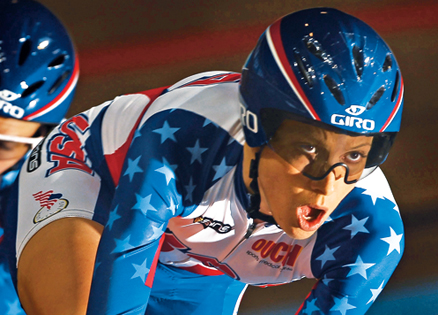
Dotsie Bausch is the picture of power, her muscular legs like pistons propelling her bicycle around the indoor velodrome track at world-record-setting speeds. At 39, she still has the looks that once made her a runway model.

It’s hard to imagine that in her twenties she barely had the strength to walk across a room, her 5’ 9” frame literally skin and bones, her hair falling out in clumps, all due to severe eating disorders.

Some recent graduates thrive on the uncertainty of post-college life. Not Dotsie. She’d earned a communications degree, but an internship as an entertainment reporter showed her the field was all wrong for her. She tried modeling and found it no more fulfilling.

Stricken with anxiety, she binged and purged and strictly limited her diet, convinced that the punishing regimen would give her some control over a life that seemed to have no direction or purpose.

What am I living for? she half wondered and half prayed. Yet when she thought about ending it all, she couldn’t do it. Her family would be devastated.

She got help and went into treatment for eating disorders. Slowly her body began to recover. One day her counselor said, “You’re ready to get moving again. But I want you to do something new, something with no connection to what you’ve been through.”

What about bike riding? She hadn’t done that since she was a little girl.

Dotsie bought a mountain bike with thick knobby tires and found an empty stretch of road. It was exhilarating, the wind blowing through her hair, her legs pumping faster and faster. She felt so alive! She rode every day, getting stronger each time out.

One afternoon she was tooling around Griffith Park in Los Angeles. A group of guys on road bikes flew past. Dotsie gave chase. In seconds she’d caught up.

Her heart was pounding, her legs burning. But she stayed right on their heels for one mile, then two, close enough to notice their matching skintight jerseys. These guys were competitive cyclists, yet here she was keeping up with them, on a clunky mountain bike, no less.

“This cycling thing, I’m actually pretty decent at it,” she told a friend that night. “Who knows, maybe I’ll enter a race.”

Two years later, in 2000, she won the California state championship open division. By then she had been transformed. She was strong and confident. She’d found her passion, her purpose. And she knew it wasn’t by chance.

As part of her recovery, she started going to church and studying the Bible. She was reading Philippians when verse 4:6 jumped out at her: “Have no anxiety about anything, but in everything… let your requests be made known to God.”

Yes! Hadn’t he answered her most desperate prayer, the one she had uttered back when she didn’t even know who she was praying to?

In 2002, Dotsie joined the U.S. national team. She has won six national titles in 10 years. Now she hopes to race for Olympic gold as part of the team pursuit squad.

She wants to win not only for herself. The better she does, the more she can tell her story and help people looking to find their way, like the more than 70 women she mentors in their healing from eating disorders.

Read more inspiring Olympic profiles.

Faith Over Fear in the Battle Against Cancer

Content provided by Cancer Treatment Centers of America

When someone is diagnosed with cancer, the first question is often focused on the medical treatment plan: Will I need surgery, radiation, chemotherapy or perhaps a combination of options? Such treatments are essential to fighting the cancer. Some patients have also found that a spiritual treatment plan helps prepare them for the road ahead—mind, body and spirit.

Cancer not only attacks you physically; it also tears at you mentally, emotionally and spiritually. As a Chaplain at our hospital in Newnan, Georgia, I meet with patients and talk about the importance of staying spiritually strong. For many people, spiritual strength is critical in the fight against cancer. Spiritual strength can help you maintain a sense of hope, faith and courage in the face of the disease.

Read more on developing your spiritual strength to fight cancer.

Faith in a Greater Vision

When the phone rang in my office that morning, I had no idea how it would change my life.

I assumed it was a business call. In some sense it was. The caller was Bill Bryce, an old friend from church. “Hi, Rich,” Bill said. There was something funny in his voice.

“Everything okay?” I asked.

“Oh, sure,” he replied. He paused. “It’s just that our president’s leaving World Vision.” Bill had moved away several years earlier to take a job raising money for World Vision, an international humanitarian organization. I was one of his first donors, but I still didn’t know a whole lot about the organization.

Bill paused again. And then our phone call turned very weird. “Actually, that’s why I’m calling,” Bill continued. “I’ve been praying, Rich. And, um, the thing is, God told me you’re going to be the next president of World Vision.”

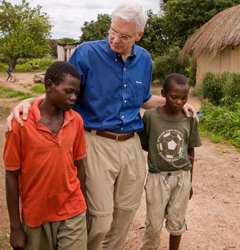
For a moment I was speechless. My eyes darted around my office. I was CEO of Lenox, one of the world’s largest makers of fine china. I sat behind an imposing cherry wood desk at our headquarters near Princeton, New Jersey, surrounded by oil paintings and cabinets lined with elegant plates and teacups. A fountain splashed in a pond outside. A door led to my private bathroom. “You must be joking,” I said to Bill.

Bill insisted he wasn’t. “I know it sounds crazy,” he said, “but I’m certain God spoke to me.” He told me where to send my résumé.

“Bill!” I finally barked. “I’m not sending my résumé anywhere. I like my job. I don’t know anything about international—whatever it is World Vision does. I’m not qualified, I’m not interested and I’m not available.”

Bill was silent a moment. “Rich, you’re not listening to God’s plan.”

Huh? That was almost rude! A few awkward moments later we hung up.

Not listening to God’s plan! I’d been listening for 25 years, ever since that day in business school when I fell to the floor and cried out, “My Lord and my God!” I’d been a hard-headed atheist before then.

Coming from a dysfunctional family, I’d been determined to get a business degree, become a CEO and get rich. My girlfriend Reneé, a committed Christian, broke up with me when I told her I’d never follow her in faith. Then I started reading the Bible and other books on religion and philosophy.

Gradually I became convinced Jesus Christ really was God’s son, and one day I committed my life to following him wherever he might lead. Everything afterward flowed from that decision. Reneé and I married and had five wonderful kids.

I climbed the corporate ladder, each rung an affirmation from God. We attended church regularly. Tithed. Participated in Bible studies. Supported missions.

The fruits of listening to God’s plan were all around me. My job at Lenox. The private school where we sent the kids. Our 10-bedroom, 200-year-old farmhouse in Pennsylvania. My company Jaguar. Just recently I’d told Reneé we could afford to retire in less than a decade. How could I listen any more diligently?

Bill called periodically to update me on the World Vision search process. A colleague at Lenox even mentioned seeing an ad for the job in the Wall Street Journal. I shrugged it all off. Eventually, World Vision would find a president and the issue would go away.

One day my assistant buzzed to say a job recruiter was on the phone. Absently I told her to put him through. “Hello, Rich, I’m Rob Stevenson, a recruiter for World Vision. They’re looking for a new president. Do you have a few minutes?”

A chill ran down my spine. “Did Bill Bryce put you up to this?”

“Bill who? No, I got your name from a list of World Vision donors.”

I regained a bit of composure. The recruiter asked if I knew anyone who might be a good fit for the job. Relieved, I said, “You’d have to be part CEO, part Mother Teresa, part Indiana Jones. I don’t know anyone like that. Sorry.”

“What about you? You interested?”

“Me? Hey, I run a luxury goods company. I don’t know anything about international relief and development.”

Rob persisted. “You’re not going to believe this, but while we’ve been talking I’ve sensed the Holy Spirit telling me we ought to meet. I’ve talked to two hundred people so far. You’re the first I’ve had this feeling about.”

Whoa. I felt a stir of panic. I knew World Vision was a Christian organization. That was one of the reasons I gave them money. But this was unbelievable. “We don’t need to meet,” I said.

Rob paused. “Let me ask you a different question. Are you willing to be open to God’s will for your life?”

I practically dropped the phone. This was becoming a dangerous conversation. “Of course I want to be open to God’s will,” I stammered. “But I’m pretty sure this isn’t it—”

“Let’s find out,” Rob interrupted. “Have dinner with me.”

That night I told Reneé about the latest encounter with World Vision. She said, “You never know what God might have in store. We need to be open to his leading.”

I cringed. It was never a good sign when Reneé and I disagreed. Since our first impassioned discussions about faith all those years ago, she’d been setting the spiritual bar for our family.

There had to be a benign explanation for all these signs pointing to World Vision. I hadn’t gone to business school to run a nonprofit! Obviously Reneé wasn’t thinking about paying for the kids’ college.

Rob must have enjoyed our dinner. To my chagrin I found myself on a shortlist for the World Vision job. I was interviewed along with three other finalists. I did everything I could to explain to the search committee why I was a terrible fit. Rob called the next day. “Congratulations! You got the job!”

Flabbergasted, I told him I wanted to fly with Reneé to Seattle to visit World Vision’s headquarters. “I’m not committing yet. I need to find out more. I need time to think!”

Rob arranged the trip and I spent the days leading up to it in agony. How had I gotten myself into this jam? I’d been trying to turn these people down for a year. Still they offered me the job! It fit no definition of God’s plan I even remotely understood.

The very day I was to leave for Seattle a visitor arrived at my Lenox office. Keith, a successful tableware executive about 10 years older than me, said he was planning to buy an English china company and merge it with his own. “I’d like to hire you as CEO of the merged company,” he said. “You’d get a ten-percent ownership stake worth about twenty-five to fifty million dollars.”

My jaw dropped. I stammered for a moment until I realized the only way to preserve my sanity was to tell Keith the truth. I explained I’d been offered a position leading a charity and wouldn’t be able to consider his proposal until I’d dealt with the other job offer.

For a moment Keith seemed taken aback. Then a strange look came into his eyes. “That’s really admirable of you,” he said. “But you know, I think I understand.” He launched into a story.

Years before, devastated over the sudden death of his 10-year-old daughter, he’d begun sponsoring a little girl in India. That simple act of helping another child had eased his grief like nothing else.

“The charity that put me in touch with her was absolutely wonderful,” he said. “They’re called World Vision. Whatever charity you’re interviewing with, I’m sure they’ll benefit from a man with your experience. I hope you’ll take my offer. But I’ll understand if you don’t.”

By the time Keith finished speaking I seemed to hear another voice, the same voice that had spoken to my good friend Bill Bryce and recruiter Rob Stevenson all those months before. I realized Reneé and I were witnessing something profound—God working directly in our lives, showing us, plain as day, that his plan for us involved something more amazing than I ever could have imagined.

My corporate career, my comfortable life, my safe and tidy church involvement—all of it was just prologue, maybe even a distraction from serving the Jesus I had committed my life to 25 years earlier. I knew then that if I truly wanted to follow that Jesus, I would have to follow the one who gave himself for the poor and dispossessed.

Rich, Jesus seemed to say, you promised you’d follow me wherever I might lead. Will you follow me to the poor, to the refugee camps and to the garbage dumps where children scavenge for food? Will you follow me there, Rich?

I’m embarrassed to say it took several more weeks and a lot more prayer before I finally gave in and became World Vision’s president. Today, more than a decade later, I can hardly believe my agony over that decision.

Friends from our Lenox days still marvel at what Reneé, the kids and I gave up. I try to explain that corporate perks and Jaguars mean nothing after you’ve tasted the reward of doing the real work God always meant for you to do.

In the end, though, words fall short. Follow me, says God. And when we do, we find our deepest purpose and the true adventure begins.

Faith Fuels This Fire Chief’s Fight Against the Opioid Epidemic

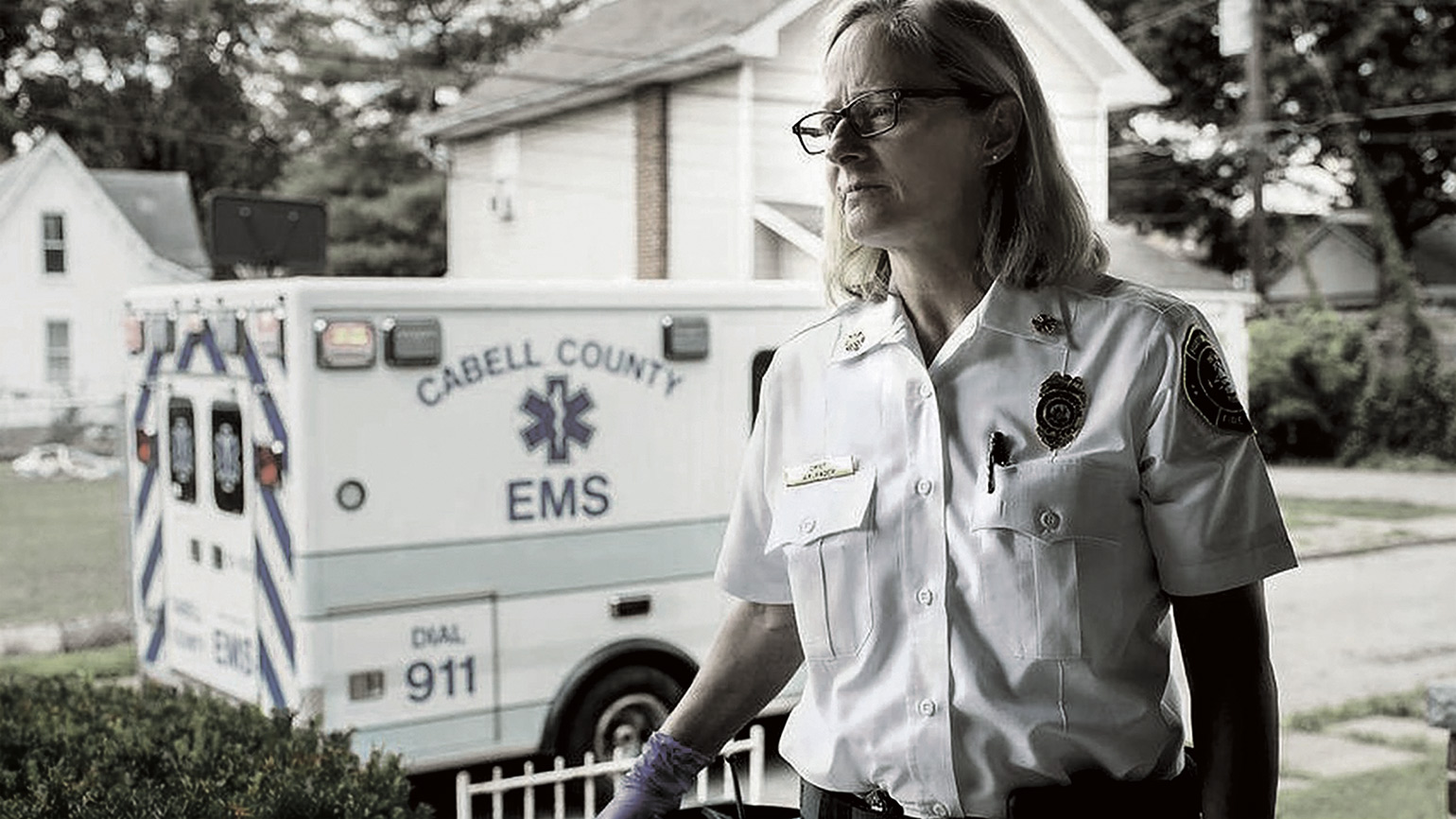
I’m the fire chief in the city of Huntington, West Virginia. I command a department of nearly 100 firefighters. I grew up in this area, just across the river in Ironton, Ohio. I’ve been a firefighter in Huntington for 24 years. I love this city, and I’m fiercely loyal to it.

It pains me deeply that these days Huntington is known to the rest of the world mostly for the people who die here. “Overdose capital of America,” the national media calls my city. It’s true, the rate of drug overdose here is tragically high. We had close to 2,000 overdoses in 2017 in Cabell County, which includes Huntington. The county’s population is just 96,000 people.

The overdose rate more than quadrupled in the past two years. One in 10 residents of Cabell County suffers from a substance use disorder. One hundred thirty-two of those users died in 2016. The medical cost of this crisis in our county is estimated to be about $100 million annually.

The cost for us firefighters is high too. More than a quarter of all emergency calls we respond to today are drug overdoses. By comparison, just eight percent are for actual fires. Every day, my firefighters encounter people with substance use disorders at their worst—strung out, passed out, dead or near death, sometimes sprawled in front of their own children. We revive those people with Naloxone, a medicine that rapidly blocks or reverses the effects of opioids. Often we revive the same user a few days later. And again a few days later.

Fire chief Jan Rader on the cover of the Feb 2018 issue of Guideposts
As seen in the Feb 2018 issue of Guideposts

Firefighters are tough and stoical by nature. The men and women in my department do their jobs with commitment and professionalism. Still, the work takes a toll. We all mourn for our city. We are baffled and frightened by the destructive power of drugs. We grow frustrated at helping the same people over and over. We feel helpless when we arrive at a house and find children in diapers crying over the bodies of their incapacitated parents.

And yet I have hope. I believe Huntington will come to grips with this crisis. I believe even the most addicted individual can recover. I do not face the future with fear.

Why? My answer to that question starts in an unlikely place—a filthy apartment above a bar in downtown Huntington. That’s where three firefighters and I responded to an overdose call a few years ago. There we found a man named Mickey Watson lying fully clothed in a tub filled with water and ice. Mickey had overdosed on heroin. His friends put him in the tub in a misguided effort to revive him.

My firefighters and I were on our guard. We’d revived Mickey from drug overdoses four times in the past six weeks. He was a hard-core addict. He’d been using drugs since he was a child— his mom, also an addict, gave him his first taste of alcohol when he was eight years old. Now 30, Mickey could become enraged as he crashed from a high, even if his life was being saved.

His lips were blue, his body gray. The drugs had stopped his breathing. Were we too late? Two firefighters heaved him from the tub while a third kept an eye on his drug-addled friends. Mickey’s hair was plastered down his shoulders. A paramedic put a breathing mask on his face and handed me a canister of Naloxone nasal spray. I administered the medicine. An anxious pause. Mickey heaved a breath.

He was alive!

There are some people in Huntington— anyplace, really, dealing with drug abuse—who wonder why so many resources are expended on people like Mickey. I think that’s the wrong question. All people were created by God. It’s not up to me or anyone else to judge the worth of a human life. Substance use disorders do not discriminate by race, economic background or spiritual background. I can drive through any neighborhood in this city, rich or poor, point to houses and say, “Someone overdosed there.”

Many addicts in Huntington were prescribed powerful opioid painkillers after an injury. They got hooked without knowing it, then needed more drugs to avoid becoming what we call “dope sick”—nauseous, in pain, freaked out, unable to sleep. The classic symptoms of opioid withdrawal. Heroin is the next step, cheaper and stronger than pills. Before you know it, a once upstanding member of our community is a heroin addict or hooked on fentanyl. Then that person overdoses and my firefighters are called to save another life. It’s the lifesaving that gives me hope.

Lifesaving is what drew me to firefighting. In my twenties, I was happily employed as a gemologist at a mall jewelry store near Washington, D.C. One day I saw a woman collapse in the mall outside the store. I didn’t even know CPR then. I called 911 and waited helplessly until the paramedics arrived.

To my surprise, one of the paramedics was a woman. I’d always assumed firefighting was a guy’s job. They revived the woman and took her to the hospital. At that moment, I knew I wanted to do that kind of lifesaving work.

My brother, then a pastor in Huntington, told me the city was hiring firefighters. “You’re in great shape,” he said. (I was a runner.) “You should apply.”

I took the test and scored high enough to be hired. There was one other woman in the department. The next year she retired. For the rest of my time in Huntington, I’ve been the sole woman in the department.

I fought lots of fires. But my passion was always for saving lives. I even went back to school, got a nursing degree and worked on my days off in a hospital emergency room. I wanted to know more about medicine, what happened to the people we rescued after they left the ambulance.

The overdose calls started coming in the early 2000s, around the time I got promoted to lieutenant and then captain. Suddenly firefighters under my command were reviving people strung out on prescription pain pills. We never imagined we were on the cusp of an epidemic. Drugs, we thought, were a big-city problem, not an issue here in the Bible Belt.

The calls kept coming. We had to learn how to respond. I helped write our standard operating procedure for using Naloxone. We also had to develop safety measures to protect ourselves from violent addicts and to help bystanders, especially kids. The drugs we deal with are always changing—different formulations, strengths and mixtures with other drugs, such as methamphetamines. Every addict behaves differently. When a call involves a shooting or a stabbing, we wait for police to give us the all-clear before we go in.

That doesn’t sound very hopeful, does it? Well, I was raised in the First Baptist Church in Ironton. And one of the principles of my faith is that God is present even in the midst of tragedy. My mom was active with the American Cancer Society. Dad built houses with Habitat for Humanity. My parents did not let the size of a problem stop them from contributing to the solution.

I do not view the work my firefighters do as a hopeless rearguard action against an unbeatable epidemic. Every life we save is another opportunity for an addict to bottom out and turn around. You never know when God is going to change someone’s life. Remember Mickey Watson? The heroin addict in the bathtub? That day, my firefighters and I were accompanied by a film crew making a documentary about drug addiction in the heartland— a sad by-product of Huntington’s reputation as an overdose capital is the steady stream of reporters and film crews documenting life in our city.

After we revived Mickey with Naloxone, the filmmakers needed him to sign a release form so they could show the episode in their documentary. Before he signed the form, he demanded to see footage of his overdose. He watched himself getting hauled from the tub, his skin blue, his face contorted. The sight shocked and disgusted him. That moment, he made a decision to get sober.

Today Mickey is off drugs, married and working as a cook at a local restaurant beloved for its barbecued ribs. He’s a loving father to the four kids he had during his years of addiction. He helps others suffering from substance use disorders. None of that would have happened if we’d given up on him.

That’s why I have hope. Addiction is not a sign of irredeemable moral failure. It’s a disease, a physical, mental and spiritual condition. And like every other disease, it can be treated. One reason Huntington is in the news so much is because our mayor believes in being open about the problem, not fudging or downplaying the numbers. Our city’s transparency has enabled us to come together to work on solutions. Doctors and nurses do ride-alongs with my firefighters. Churches are partnering with the local medical school to share wisdom about how to help the addicted. Once a month, pastors, community leaders and I meet to confer and pray for our city.

Not long ago, I was at one of those prayer breakfasts, sitting with the police chief and other community leaders. My phone buzzed with a Facebook message. It was from someone in longterm recovery.

“I know this is random, but God put it in my heart to let you know the difference you’ve made in my life,” he wrote. He recalled the many times we’d revived him from an overdose. He described his treatment for addiction, his marriage, his job and his newfound joy raising his kids. “None of this would have happened if not for you all doing what you do so selflessly,” he concluded.

Hopeful? You bet. Every day, we firefighters see addiction’s destructive effects on our community. We persevere, knowing that God and good people working together can overcome any challenge. We will never give up.

For more inspiring stories, subscribe to Guideposts magazine.

Faith, Family, Football for NFL’s Oldest Cheerleader

"Action!” the director yelled. A camera crew huddled around me while I tore open the letter that could change my life. This is it, I thought. A local network was filming “The Making of a Ben-Gal,” a show about women who’d tried out for the Cincinnati Bengals cheerleading squad. Was my dream about to come true?

Ah, who was I kidding? The other girls auditioning were in their 20s. I was a divorced single mom about to turn 40. Me? An NFL cheerleader? Get real, Laura, I thought. I could hear my ex-husband’s voice in my head. You’re too old. Who do you think you are? Ugly. Idiot. Dumb.

I wasn’t always so hard on myself. Growing up in Dayton, Ohio, I’d often catch Bengals games on TV. Whenever I caught a glimpse of the fit, glamorous Ben-Gals, I was mesmerized. They were everything I wanted to be.

After high school, I graduated from California State University with a degree in dietetics. I was ready to help others fall in love with staying healthy too.

Then I got married, moved back to Ohio and became a dietitian. Things looked picture-perfect—my husband and I had great jobs, a beautiful home. But just under the surface, my life was a nightmare. He was abusive and controlling.

It didn’t take long for me to believe the cruel things he said: “You’re ugly!” “I hate you!” “You don’t know anything!”

Still, I stayed. He was better around our daughters, Marija and Courtney, and I didn’t want to break up our family. To deal with the pain, I overate. I felt worthless. Until one day I grew the courage to leave him. For good.

Starting over was a blessing. I’d never been so happy with the girls, and I threw myself back into health and fitness. One Sunday I was invited to a Bengals game. The Ben-Gals took the field, and I was eight years old again, mesmerized by the glamour of those strong, beautiful women. That’s what I want to be, I thought.

The idea was ridiculous. But it inspired me to sign up for a dance class. One of the other girls had once cheered for the Ben-Gals. “You’re really good,” she said. “You should think about trying out for the squad.”

She didn’t think I was too old. Back home I went online and read up on the Ben-Gals. The pay was low. There were long practices, public appearances, charity work. I loved the idea of helping the community, and I could handle the low salary and hectic schedule…I printed out the application.

It’s not like I’ll make it, I thought, stuffing it in the mailbox.

A few weeks later I arrived at Paul Brown Stadium for the first round of auditions. The girls came in droves! About 120 of them. I looked around at the army of Barbies and panicked. Their faces were wrinkle-free, their lips lustrous and their hair—oh, their hair! I was the oldest. By far.

“Five, six, seven, eight!” a judge called. I kicked, did the double turn, then launched into a leap and…tripped. I tried once more and landed it. Phew! After a few more rounds of tryouts, they called my number. I’d made it to the finals!

There, my kicks were high (my hair was even higher), my leaps were on point and I nailed the dance.

Now it was time to find out if I was good enough. The girls came over and sat down next to me. I held that all-important letter, my hand trembling. I imagined myself running out onto the field, shaking those orange-and-black pom-poms.

I read it aloud: “Dear Ben-Gal Candidate, We appreciate your hard work. Unfortunately, your score did not make the final squad.”

I’d just been rejected. On air. In front of the whole city. The director turned off the cameras. “Hey,” he said, “I’m really sorry.”

The girls leaned in. “You did great, Mom,” Marija assured me.

“You made it to finals—most people never get that far,” Courtney said.

After wiping my tears, a calm fell over me. The girls were right. I’d overcome years of pain and abuse to make it to the finals of being an NFL cheerleader! How crazy was that? I was already a winner with two beautiful girls—cheerleaders of my own. That was something to celebrate!

“You know, Mom, you can try out again,” Marija piped up.

“Please!” Courtney added.

That decided it. The next year I worked even harder and made it to the finals again. A few days later I was interviewed on a radio show, along with two other girls who’d tried out. The director of the Ben-Gals walked in.

“You ladies are going to find out if you’ve made the squad, right here on the air!” she said, handing us each an envelope.

I flashed back to the “Making of a Ben-Gal” program. I couldn’t be rejected in front of the whole city again, could I?

“Why don’t you open yours first, Laura?” the host asked.

I pulled out the letter. There were words all over the page, but I only saw one: “Congratulations!” I bawled.

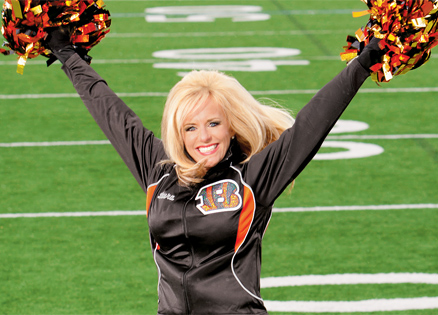
This year I’ll turn 44. I’m still the oldest cheerleader in the NFL. Other than “Mom” it’s the title I’m most proud of. Each time I grab those orange-and-black pom-poms, I’m reminded that it’s never too late to chase your dreams. Just have faith, and remember: Go! Fight! Win!

Watch as Laura shares more Ben-Gal inspiration!

Download your FREE ebook, The Power of Hope: 7 Inspirational Stories of People Rediscovering Faith, Hope and Love

Faith Cancels Out Fear

What are you afraid of? Maybe it’s losing your job or your home. It could be ill health or public speaking or even flying. Perhaps you struggle with fear of failure or divorce. I have good news, no matter what frightens or discourages you: You don’t need to go through life shackled by those fears.

How can you be free of them? I will answer that question in four words: FAITH CANCELS OUT FEAR. Faith is stronger than fear. That is saying a great deal, because fear is very strong. But faith is very much stronger. The Bible is literally full of texts on overcoming fear. “God is our refuge and strength, an ever-present help in trouble. Therefore we will not fear, though the earth give way and the mountains fall into the heart of the sea” (Psalm 46:1-2). “Fear of man will prove to be a snare, but whoever trusts in the LORD is kept safe” (Proverbs 29:25). “Perfect love drives out fear” (1 John 4:18).

But one of the greatest fear/faith verses in found in 2 Timothy 1:7: “For God has not given us the spirit of fear, but of power and of love and of a sound mind.” Power? What power? The power of faith. Faith can take a weak, fearful, defeated individual and completely change his life.

Here’s how to make faith conquer your fears:

1. Be bold and mighty forces will come to your aid.
The person who is afraid cuts himself off from the flow of power. But when you venture boldly, letting yourself go, then from the depths of your being, perhaps also even from the life-force of the universe itself, there comes a flow of power in response.

2. Deny adverse conditions.
Don’t go around saying or thinking, “Conditions are against me,” or “Things don’t look good.” Face facts, but realize it often happens that a person is defeated not so much by the facts of a situation as by his negative interpretation of the facts. In every problem there is an inherent good. Believe that.

3. See and constantly picture good outcomes.
By envisioning good things you actually bring good influences into play, both within yourself and in the world around you.

4. Practice brotherly love toward everybody.
Don’t just be nice or kind to those who treat you that way. Reach out.

As you go about your day, say to yourself, “I am strong in the Lord. I am not afraid. For God has not given me the spirit of fear; but of power and of love and of a sound mind.”

Download your FREE ebook, Let These Bible Verses Help You: 12 Psalms and Bible Passages to Deepen Your Joy, Happiness, Hope and Faith.