Embrace God's truth with our new book, The Lies that Bind

Finding Faith in Iraq

I burrowed deeper into my sleeping bag. The concrete floor in the quarters I shared with three other Marine platoon commanders felt harder than usual.

The others had likely been up for hours, anxious to patrol the streets of Ramadi, Iraq, with their men. But I’d lain here until the last minute. I wished I’d never have to get out of bed.

Witnessing Heaven In Article Ad 827x123

This room was the one place where I didn’t have to face my men. Where I didn’t have to make decisions that could cost them their lives.

Again I relived the events of that day just over two weeks ago. That image of Lance Corporal Bolding on the ground, his legs blown from his body, played back.

A lieutenant nicknamed Ox blocks the way 10 feet from the scene. “You don’t want to see this,” he says, the words echoing in my mind. “You want to be able to lead your men with a clear head.” He’d meant well, but now it seemed like so much bravado. As if by looking away I could stop the pain.

Nothing was going to bring Bolding back. If only I could reverse my order for that day. That was the only way he’d still be alive.

Once, I’d found comfort in my faith. My men and I had prayed that morning, recited the 23rd Psalm, like we did each day.

I’d started the prayer as a pre-battle ritual three months before, when we’d first come to Iraq, hoping it would bring us together. We gathered in a hangar each morning, the men forming a semicircle, heads bowed. But God was AWOL when I needed him most.

Bolding had been our platoon mascot, the one we rallied behind. He had a smile so electric it could have powered a small town. His enthusiasm was a force to be reckoned with. He had seemed unstoppable, indestructible.

How could my men—how could I—go on without him? I worried about them. We were such an odd collection of guys.

I thought about Private First Class Gabriel Henderson, a 19-year-old who looked 15, skinny, usually wearing a goofy grin and streaks of dirt on his face. How had he ever become a Marine? Then again, the same could be asked of me.

As a junior at Princeton I’d gone to Officer Candidate School just to burnish my résumé, never dreaming I’d actually see combat.

But senior year, corporate job offers had seemed trivial next to the opportunity to make a real difference in the world. I wanted to feel responsible for something that mattered.

I remembered a sergeant screaming in my face, “Candidate, the currency we trade in is human lives. Do you think you can handle that responsibility?” I had thought I could. Now, too late, I knew otherwise.

I had failed my men. I was to blame for Bolding’s death. Over and over I reviewed my decisions that day. What could I have done differently?

We’d been ordered to guard a school while Ox inspected repairs inside. I had resisted the assignment. Outside the school, fronted by a canyon of housing complexes, I knew we’d be sitting ducks. But I’d been overruled.

I nervously paced the length of our five Humvees parked along a small street outside the school. My men knelt next to the vehicles, eyes trained on the apartment buildings opposite for any movement.

After what seemed like an eternity Ox emerged from the school, a crowd of 20 children trailing behind. Henderson and other Marines handed out soccer balls and other gifts we’d brought.

I gave the order to mount up and waited by my door. Behind me, next to our third vehicle, clamoring for more gifts, the kids stood in a knot. I smiled and felt myself relax. It was nice to be appreciated.

Boom! A rocket-propelled grenade streaked by a few feet over the top of my door. Then another explosion. The children disintegrated into flames and smoke. I heard Marines screaming for our two medics: “Doc up! Doc up!”

I jumped to the ground. Dead and wounded children lay on the sidewalk, blood everywhere. Marines ran helter-skelter, collecting the wounded, applying first aid where they could. The medics worked frantically.

One of my squad leaders, Corporal Chris Bowen, ran up to me. Should we stay or go? I knew there’d be another attack. But I disregarded the danger. We were Marines, and wounded children needed us.

“We’ve got to form a perimeter around these kids until an Iraqi medical team can get here,” I yelled over the melee.

Bowen nodded. “Yes, sir. We’ll make it happen.”

I remembered being amazed at how fluidly my men moved into position, like a championship football team running a two-minute offense. I walked around the perimeter on the eastern side of the school, my heart pounding. A call came in: Help on the way. Not much longer.

To the north, I heard a boom. Then another. The horrifying cries of “Doc up!” on my radio. I ran toward the explosions. My radio crackled again, the words stabbing me: “Bolding’s been hit, sir. His legs, they’re gone, sir. They’re gone, sir.”

I recalled returning to base, telling my men that Bolding wouldn’t want us to lose sight of our mission, seeing Henderson nodding, his face streaked with tears. I remembered my words catching in my throat, turning, walking to the bathroom and sinking to the floor.

But my mind had never left the scene at the school. Why hadn’t I ordered Ox to leave the school sooner? Maybe I should have put the safety of my men over the children? It had seemed like the right decision to stay. Now two weeks later I second-guessed everything.

If I didn’t get up soon someone would come looking for me. I forced myself out of my sleeping bag. I felt exhausted. Mentally. Physically. Spiritually. I was hungry, but didn’t feel like eating. Didn’t feel like doing anything.

After Bolding’s death, I’d stopped participating in the daily prayer. What was the point?

Slowly, I put on my fatigues, then my boots, Kevlar vest and helmet. My M-16 felt almost too heavy to lift. My men were waiting for me inside the hangar where we began our missions. I gave the order to head out, but avoided eye contact.

Our mission was to make our way on foot to a building we had secured to keep watch over one of the city’s main thoroughfares. On a good day it took about a half hour. When we encountered militants, which was often, it could take much longer.

I shuffled along toward the rear. It was early, but already it was sweltering, making even this short journey grueling. I wanted only to be back in my room. Please, don’t let anything happen today.

Yet again, I thought of Bolding. How nothing fazed him. How he never let anyone get down. If anyone could’ve helped my men through their loss, it was Bolding. It seemed so unfair. Why couldn’t it have been me in the line of fire?

My men moved methodically through the streets of Ramadi, alternating between ad­vancing and covering other members. There was a rhythm to their work, every soldier backed by another.

I noticed Bowen walking among the men, talking to them, patting Henderson on the shoulder, teaching as always.

I watched two lance corporals getting in each other’s business, trading insults, tension rising. Then one reached over and squeezed the other’s arm and offered him his last stick of gum, both of them laughing.

A private, the shortest man in the platoon, volunteered to carry the machine gun, adding 20 pounds to his already heavy load. We reached the lookout building without incident.

I found a spot where I thought no one would notice me and sat on the floor. The men took turns watching the streets below, weapons ready. The rest began building sandbag bunkers at the building’s entrances. Everyone was busy doing a job. Everybody but me.

I spent the afternoon watching my men go about their work. For the first time in two weeks I found myself thinking about something other than Bolding’s death. Once, my men looked to me for leadership. Now, I looked to them.

That evening, back at base, I was standing alone when Henderson came up to me. “Sir, you know none of the platoon blames you for what happened to Bolding. It’s okay, sir.”

I stared at the skinny private, not knowing what to say. “Bolding’s in heaven,” he continued. “I know he’s smiling down at us right now, just like he always smiled at us when he was here. He’s okay, sir. Don’t worry, sir.”

I had to turn away to keep from crying. I’d never forget Bolding, but for the first time since his death, God felt present again. I could see him at work healing and comforting my men, restoring our souls, sending Henderson to reach out to me. We were a platoon, in good times and bad. Nothing could take that away.

Tomorrow, when the men gathered to say the 23rd Psalm together, I’d be there with them.

Read more about Guideposts’ Military Outreach Program, providing comfort and resources for military families.
Fighting Opioid Addiction: A Nurse Shares Her Family’s Struggles

I was on duty in the ICU when the hospital nursing supervisor pulled me aside.

“There’s a Jon Dennis in the ER,” she said. “Isn’t that your son’s name?”

Pray A Word a Day - 2023 In article

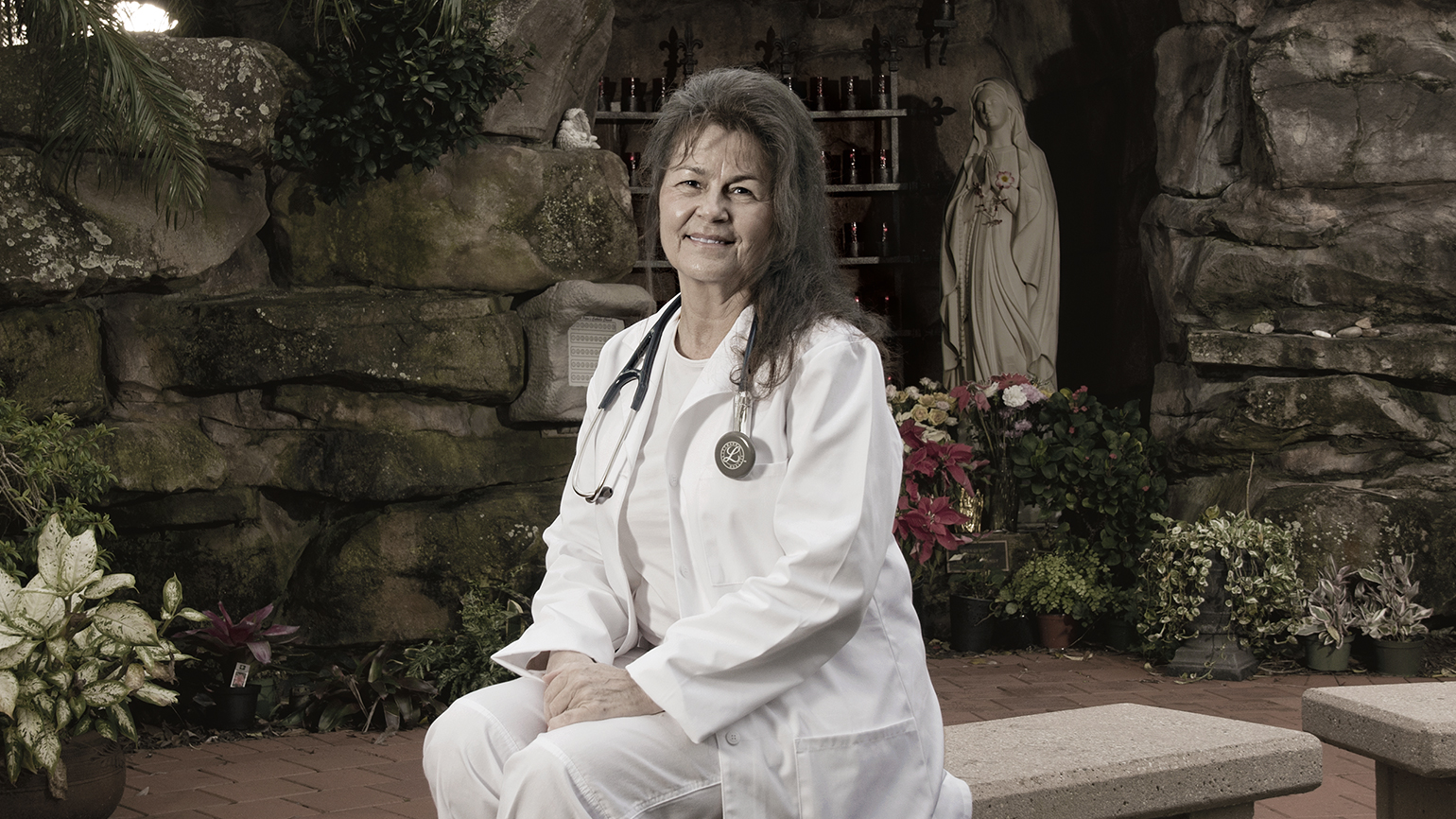
I’m an intensive care nurse at Jupiter Medical Center in northern Palm Beach County, Florida. For three years, my 27-year-old son, Jon, had battled addiction to pain pills. The supervisor knew about his struggle.

We raced to the ER. It was Jon. He was in a room by himself. One look and I knew what had happened. Overdose victims were all too common.

“Hi, Mom,” he said. His eyes and extremities were moving fitfully. Paramedics had brought him in after administering naloxone, a drug that reverses opioid overdoses.

“Oh, Jon,” I said. Then the nurse in me immediately asked for him to be hooked to a heart monitor, for an IV with fluids to be started and for blood work to be done. I wanted the top specialists in the hospital to see him. I could not bear to lose him.

Because I had already lost a son to opioids. In this same hospital. Six months earlier, Jon’s younger brother, David, had been admitted to the ER, to this same room.

David had taken opioids and drowned while spearfishing with Jon. He was put on a ventilator. A nephrologist ordered dialysis to flush the drugs from his system, but it was too late. My daughter, Jennifer, and I watched him take his last breath later that night in the ICU where I work.

Two sons. Two addicts. I’d dedicated my career to saving lives. But I couldn’t save my own children. What happened? What went wrong?

I’d wanted to be a nurse since college. I’d finished all my prerequisites for the nursing program when I fell in love and got married. I had a girl and two boys. I was happy being a wife and mother, but my marriage didn’t last.

Divorced, needing a job that could support the children and me, I went back to school and earned a nursing degree. David, my youngest, was 12 when I started working as a nurse. Juggling a demanding job and parenting was a challenge. But the kids weathered it. All three were A students in high school. Jennifer became a nurse. Jon worked in his dad’s plumbing business. David graduated with honors from Embry-Riddle Aeronautical University. He wanted to become a commercial pilot and supported himself crewing on yachts.

Nursing came naturally to me. I felt deep satisfaction every time I eased a patient’s suffering or helped doctors save a life. I was proud when I landed in the ICU at Jupiter Medical Center. Almost every day, I administered pain medication to my patients. Doctors prescribed opioids either by IV or pill, and it was assumed they were safe and non-addictive when used responsibly. I was happy to relieve my patients’ suffering by administering these meds, and the patients improved and felt better.

When he was 24, Jon hurt his knee riding a dirt bike and needed ACL surgery. The doctor prescribed an opioid medication. “I frequently give them to my patients,” I told Jon. “It’s going to make your recovery a lot easier.” I never imagined he would abuse them.

I said the same thing to David years later, after he hurt his back doing yard work and got a pain pill prescription. That spring, David was hired to help crew a yacht on a trip to Mexico. He assured me he’d be home in time for his college graduation ceremony.

He wasn’t.

Worried, I contacted the yacht captain. “I’m glad you called,” he said. “I don’t know where your son is. But he has a drug problem. You need to get him into treatment.”

My former husband and I booked the next flight to Mexico. We searched for three days before finding David in jail. He’d been mugged and drugged.

I was just grateful he was alive. We brought him home and took him to the hospital. “These pills, I’m addicted to them,” he said. “I want to get my life straightened out. Go to church and finish my flight certifications.”

“How did this happen?” I asked. I couldn’t understand it.

“I get pills from Jon,” he said. “He’s more addicted than I am.”

We were seeing more and more overdose patients coming into the hospital, but I’d had no idea my sons’ lives had spun out of control.

I tried to enroll David in a three-year treatment program, but the program rejected him. They didn’t think he’d be able to commit to the full length of it.

“Mom, don’t worry,” he said. “With God’s help, I’ll get through this.” He wanted to help Jon kick his addiction, but Jon pulled him more into his world. I was in a battle for my sons’ lives.

David said he was focused on his classes, but I noticed he was drowsy, not himself. He claimed he was exhausted from studying and working.

I begged him to get help. “People are coming into the hospital dead from these things. Please, David, do this for yourself, your family and me.”

David looked desperate. And worn out. “Okay, Mom, I’ll go for treatment,” he said. “And I’m going to try to get Jon to go with me.” That had been the reason David had gone fishing with Jon. To talk him into getting treatment. Hours later, David was dead.

His brother’s death spurred Jon to get treatment. Within days, he checked into a rehab facility for three weeks. But when he came home, he began using again.

“I’ve got it under control,” he assured me. “I can get straight on my own.”

By now I knew better. But what could I do? Jon was an adult. I couldn’t force him into treatment. I fasted and prayed night and day.

I was full of questions. Of all those patients I’d given pain medicine to, how many had become addicted? People from all walks of life were coming into the hospital addicted to opioids. Was there something wrong with the medicines themselves? Their availability? Or just the way they were used?

Then Jon overdosed. Even that experience didn’t convince him to take recovery seriously. Only after an 11-month stint in rehab three years later did he get clean. He’s been drug-free ever since.

For a long time, I was distraught over what happened to my sons. I grieved for them. Life wasn’t the same without David. Gradually, through prayer and my own research, I learned how to use my family’s experience to help patients.

Opioid pain medication, I discovered, is nearly identical chemically to heroin. Both drugs, at a high enough dose, produce a euphoric high and are extremely addictive, with severe withdrawal symptoms. Even when taken at the prescribed dose for a limited time, opioid pain medication can still be addictive. Patients can become physically dependent, beginning a cycle of higher and higher doses, increasing addiction.

There are other ways to manage pain. Opioid addiction is worse in America than anywhere else in the world. In Japan and Europe, opioid pain medicines are prescribed at vastly lower rates, generally only for people undergoing major surgery or at the end of life. Most other pain—bad backs, sprained ankles, pulled teeth—is treated with rest, physical therapy and over-the-counter painkillers. I’ve found that prayer, exercise, eating well and sometimes just relaxing with a cup of tea help me deal with the pains and stresses that life inevitably presents.

Tentatively at first, then with more confidence, when I sensed a patient was open to talking, I began sharing my thoughts about pain management with patients and families. Nurses don’t prescribe medicine or direct patient care. That’s the doctor’s job. But nurses do educate patients about how to use their medicines. And it is a nurse’s calling to ensure that patients are well cared for and safe. To do no harm.

I took a close look at the medicines I was administering to patients and sending home with them. Often I was shocked by how many painkillers they were taking. When it felt appropriate, I shared my own family’s story, cautioning patients about the addictive properties of opioids and offering other, non-addictive ways to manage pain. Sometimes I even talked to doctors and persuaded them to reduce the amount of pain medication prescribed.

“I lost one child and almost lost another,” I tell patients when I feel my story might help them make an educated decision about medication. I hold Jon and David close to my heart every time I have one of those conversations.

This year, after three years of study, I expect to become a licensed nurse practitioner, which will enable me to diagnose patients’ conditions and prescribe medication. My dream is to move to northern Michigan, where I was raised, and work in a small-town emergency room.

As a nurse practitioner, I’ll do all I can to help my patients. One thing I never plan to do is prescribe opioids. I prefer alternative methods for relief. If patients want pain medicine, they’ll need to visit other practitioners.

I’d rather not go there. Not after I watched David take his last breath. Not after seeing the glazed look in Jon’s eyes as he lay in the hospital, just pulled back from a fatal overdose. Not after I’ve learned that it isn’t always the user’s actions or character that causes addiction but the drug itself and its availability. That is the enemy we must defeat, with almighty God’s loving hand at the ready.

Editor’s Note: For more stories about addiction and recovery, check out our new series “Overcoming Addiction” in Guideposts magazine. The February issue featured the story of a West Virginia fire chief whose faith inspires her to never give up on her city’s addicted citizens.

For more inspiring stories, subscribe to Guideposts magazine.

Fighting Negative Self-Talk with Praise

“It happened again,” my son said. He came through the kitchen door and slumped on the corner chair, the household conversation place.

“Again?” I asked. I wiped my floury hands on a checked towel and pushed a pizza crust into the oven. “What did he say?”

Light for Life NASB Study Bible in Article

My son relayed the conversation. I winced. Then my mama-defense kicked in. I tried to push it away while we talked.

My son had a friend who consistently spoke unkindly to him. Put-downs. Insults. Words and jokes that held sting. My normally confident boy was beginning to bruise.

“You can’t let this go on,” I said. “In a friendship, we sometimes have to speak truth in love. And the truth is, a friend shouldn’t speak to you like that.”

My son and I talked about non-combative ways to handle things. But while we were talking, an interesting truth moved through my mind.

Sometimes I allow the same type of negativity in my thought life. It’s not acceptable either. So why do I let negative self-talk score and slander my soul?

I’m not any good at this. I could never do that. I’d like to try, to go, to become, to be…but I’m not made for that. That kind of stuff is for people more gifted, qualified and more able.

Binding, condemning self-talk. It will batter my spirit if I let it. It’ll pull me down and tether me tight and hold me in choke-hold of doubt if I allow it.

But I don’t have to.

Because there’s hope.

You keep him in perfect peace whose mind is stayed on you, because he trusts in you. (Isaiah 26:3, ESV)

Perfect peace. That’s sweet water for a spirit-gone-dry with negative self-talk. And the key? Keeping the mind stayed on Him. Releasing the grip of self-focus. Pulling my thoughts away from my weaknesses, short-comings and not-enoughs and residing in the thought-place of His glory.

His strength.

His goodness.

His provision.

His love.

I shouldn’t succumb to the damage of unhealthy thinking any more than my son should accept consistent, discouraging words from a friend. Standing there, in the mess of a kitchen and in the depths of my son’s heart, I vow to do better.

My boy and I talk a bit more about how to work through this tough circumstance. At the end of it, he’s encouraged and so am I.

Perfect peace.

Now that’s something to think about…

Fighting Depression with Hope and Faith

I pulled the bedcovers over my head and closed my eyes tight, trying to shut out the world, the pain, everything.

It was Thursday afternoon, and my three youngest kids were home from school. At that moment all I wanted was to escape. I didn’t want to be the wife of Steven Curtis Chapman, Christian music superstar, didn’t want to be mother to our five children. I couldn’t handle it.

Daily Strength for Women in Article ad

Everything was coming at me at once. The kids’ March basketball tournaments. Doctor’s appointments. Daughter Shaoey’s third-grade project due tomorrow. Then there was our son Caleb’s approaching wedding to think about and the high-school graduation of another son, Will Franklin. It was just too much for me in this state, this terribly familiar state. All I wanted was to be left alone with the sadness inside me, a sadness that seemed to go deeper than it ever had before.

Ten months had passed since Maria, our five-year-old, daughter, had died in a tragic accident at our home. I sobbed for weeks as if my heart had been ripped in two. I love all of my children, of course, but she had been the spark…I missed her endless questions. Her impish grin. I wanted so badly to see her running around the house wearing her fairy wings and Buzz Lightyear costume. Why? Why did she have to die? I’d cried out to God over and over, but it seemed as if he was someplace I couldn’t reach.

My first instinct had been to take care of my kids. I had leaped to action, found them counselors, talked to them about their feelings, how it was okay to feel sad, even angry. That’s my nature, to fix things. But it was overwhelming. How could I fix this? Slowly my grief had turned to anger, then to a hopelessness that refused to lift no matter how I struggled against it. I fought with all my strength, to no avail. I recognized it for what it was: depression, an illness I’d battled most of my life.

I’d been raised to believe that we make our own way in the world, that God helps those who help themselves. I needed everything to be perfect, needed to always be in control, to know what was coming next, so I could manage it. Yet nothing in my life had seemed to go according to my plan. In college I’d envisioned myself settling down with an accountant, someone like me who appreciated order. Instead I married a musician and artist.

My entire marriage, no matter how hard I tried, so little of what I did ever seemed good enough. To me, at least. The fatigue and despair overwhelmed me. Finally Steven talked me into getting help. Through medication and counseling I found a way out of the darkness. And that’s when I discovered God’s grace. I found that through prayer, intense and committed prayer, I could learn to let go—that God would be there to take my self-imposed burdens from me.

Now I burrowed down deeper under the covers, pulling the comforter tight around me. I was searching for that comfort I’d always been able to turn to before. But instead…I felt only isolation, as if I were deep in a dark forest. This wasn’t like the other times I’d been depressed. Maria was dead and my entire world seemed shattered. How was I supposed to pick up the pieces and go on? Would I ever feel anything like happiness again? Lord, where are you? I heard myself cry. Why have you left me?

“Mom! Maaahm!” It was Shaoey yelling from somewhere in the house. “I need you to help me.”

I took a deep breath, opened my eyes and exhaled slowly. I had promised her that I would work with her on her project. She needed me, just as Emily, Caleb, Will Franklin and Stevey Joy did. I couldn’t just stop being a mother. We were all hurting. I needed to make sure they were all right. It took a herculean effort to get out of bed. I stood, almost too debilitated to put one foot in front of the other.

Tomorrow was Pioneer Day at school. Shaoey had finished reading and writing a report on Little House in the Big Woods, the first of Laura Ingalls Wilder’s Little House books. Now she had to create a diorama of a scene from the book. She was always well organized. I hoped we could get it done quickly and I could burrow back under the covers.

I willed myself down the hall. “I’m coming, honey,” I shouted. There had been times before when hiding under the covers wasn’t enough. Steven would find me and hold me for hours while I cried, but there was nothing either one of us could do to make me feel better. He was hurting too.

When I reached the dining-room table I was surprised to see that Shaoey had started without me. She was ever-so-carefully cutting brown paper to wrap around a shoebox she had managed to find. I slipped into a chair next to her, not wanting to disturb her concentration. “So what are you doing?” I asked when she finished.

“I want to show Laura, the girl in the book, in her bed,” she said.

I breathed a small sigh of relief. That didn’t seem too difficult.

“I need to make Laura and her bed, with a rug under her bed. And she needs to be sleeping under a blanket. There’s a rocking chair. The window has a shutter that closes from the inside. And the walls need to look like a cabin.”

I nodded. “You’re sure that’s all?” I asked.

“Do you think we should do more?” she said. “That’s everything that was in the book.”

I could feel the anxiety building inside me. What she had planned was going to take hours. But that was only the beginning. Tomorrow at Pioneer Day the kids would learn to churn butter, wash clothes in a creek, run three-legged races. All the parents would be there. Then Shaoey had a basketball game in the evening. More games over the weekend if her team won. I wanted to be supportive and join in the fun. But I felt both numb and terrified—if that makes sense—as if I were sleepwalking through reality. If only there was some way to make it all stop. I just needed some time alone to get everything back under control, to stop this avalanche of hopelessness. To somehow get God to come to me.

Shaoey’s questioning face brought me back to the present. “What?” I said. “No, I think that’s definitely enough.” After a quick search, I found some Popsicle sticks and glue. “Why don’t you get started making the bed while I find some material for the rug and blanket?”

I went upstairs to a closet where I had saved odds and ends from art projects over the years in a box filled with bits of cloth, yarn, buttons, beads, pipe cleaners, feathers.… I scanned the surface, but nothing jumped out at me. I could spend half an hour searching and still not find anything useful. What then? I’d have to start all over again. It all seemed so meaningless and exhausting.

I wondered how long it would be before Shaoey even noticed that I was gone. If I lie down for just a few minutes. Maybe I would feel better then.

I hesitated. What good would it do? Even under the covers, stillness all around, God wasn’t there. I’d begged him to reveal himself, in even the smallest way, only to hear silence in return. It seemed nothing could help. Not even my appointment with the psychiatrist two days ago. “Isn’t there something else I can take?” I’d pleaded.

“This will help,” he said after he had prescribed an additional medication. “But you are not going to get over Maria’s death. It is always going to be part of your life. You will get through it, but that will take time.” How was that even possible? I wondered.

Slowly, I dug down through the assorted arts-and-crafts materials. Finally, in a corner of the box I spied some old handkerchiefs and a heavy piece of brown fabric that might do.

Steven was at the table. He and Shaoey had made a bed from Popsicle sticks and rolled-up paper.

“How about these?” I asked, handing my daughter what I’d found.

“Let’s see,” Shaoey said. She cut the cloth for the rug into an oval and laid it in the box, setting the bed, holding a clothespin Laura on top of it. Then she carefully covered her with a handkerchief, like a mother lovingly tucking in a child. She seemed older somehow, able to do so much on her own.

“It’s great, Mom!” Shaoey said. “Thanks.”

Suddenly I reached down and hugged her, hugged her tight and long, and in that moment something lifted. I felt God present with me and Shaoey and all the overwhelming things I had to do with her and the other kids. This was the “getting through” part that my therapist had talked about. It would come in small, hesitant steps taken one at a time: Pioneer Day, basketball games, a graduation and a wedding, the constant, natural ebb and flow of life. I’d get through it as I had weathered severe depression in the past. I would find God in the small moments when we are at our most human—imperfect, confused and longing for hope. That is where God would meet me, not cowering under the bedcovers.

Shaoey took a brown marker and sketched in a window and logs for the cabin walls. Then she and Steven rolled strips of paper tightly and attached them to pieces of a Popsicle stick to craft a rocker. Slowly the scene came together. She cut a piece of construction paper and glued it next to the window for a shutter. Then she was finished, too soon. “What do you think?” she asked.

“It’s beautiful,” I said. And it was a beautiful moment. I wasn’t all better. Not yet. Depression doesn’t work that way. It is a gradual clearing of the mind and heart. There would be difficult days to get through. And yet there was hope and the assurance that along the way God would meet me in the moment, moments of light.

Download your FREE ebook, True Inspirational Stories: 9 Real Life Stories of Hope and Faith

Fighting Cancer With Nutrition

The following information is provided for educational purposes by Cancer Treatment Centers of America and is not intended to be a substitute for professional medical or nutritional advice, diagnosis or treatment. Individuals should seek the advice of a qualified health professional with any questions they may have regarding a medical condition

Did you know that up to 80% of adults living with cancer are malnourished, and at diagnosis 1 in 2 cancer patients has some form of nutritional deficit? According to the National Cancer Institute (NCI), “Malnutrition is a common problem in cancer patients that has been recognized as an important component of adverse outcomes…”

The Lies That Bind In Article Ad

As disheartening as those statistics are, it should give you hope and empowerment that your nutrition is something you are able to control. And that is, indeed, good news.

One important distinction I have learned in my more than 20 years serving at the bedside of cancer patients is that malnutrition is not always defined as we have thought in the past. A person can be overweight and malnourished, as the true definition is to be: poorly or improperly nourished.

As I have gleaned insights from healthcare experts who monitor cancer patients’ wellbeing, I’ve learned that it is possible to be overweight or obese and still not be getting the proper nutrients your body needs to continue its fight.

Get hope for Breast Cancer here

“A lot of our patients have protein-calorie malnutrition,” said Dr. Michael DelaTorre, Internist/Intake Physician at Cancer Treatment Centers of America ® at Midwestern Regional Medical Center in Zion, Ill. “A great majority of them do not have the ability to continue with treatments because they’re so weak. If their immune system is compromised, so is their ability to respond to their treatments.”

So, how do we ensure we are eating with proper nutrition in mind, exercising properly and maintaining a healthy weight?

How Do We Know What’s Best?

My friends, the prevailing thought of nutritional experts in their field is diet and exercise may potentially be the best ways to maintain a healthy weight. But what exactly does that look like?

The good news is that it isn’t as difficult as you may think. Of course there is a necessary change of mindset, but there are ways to make minor adjustments for a dramatic difference.

“There are general health guidelines such as avoiding tobacco, avoiding smoking, and exercising 30 minutes a day, five times a week–and that’s just moderate activity,” said Education Specialist Kendra Laufer of CTCA ®’s Southwestern Regional Medical Center in Tulsa, Okla. “That’s not going to the gym. That’s just staying busy for a minimum of 30 minutes a day and trying to increase fruits and vegetables. Simple things like that go a long way.”

You hear the words diet and exercise and you immediately think of hours devoted to the gym and giving up all the foods you love. While you will certainly have to make some sacrifices in order to take control of your health, small steps are important steps.

If you are looking for optimal nutrition, however, more and more studies continue to point to the benefits of a plant-based diet.

“A lot of the epidemiological and observational data we have shows that people who follow more of a plant-based diet, sometimes find it easier to maintain a healthier body weight,” said Carolyn Lammersfeld, Vice President of Integrative Medicine at Cancer Treatment Centers of America.

“There’s new literature coming out which shows that a plant-based diet may help maintain a healthy gut microbiome so that we have more healthy bacteria in our gut and less unhealthy bacteria, which may play a role in obesity. A plant-based diet is one way to maintain a healthy balance of good bacteria.”

Carolyn is a voice in nutrition and finds that potentially one of the greatest nutrition guides we have access to is the Bible.

Back to the Book

From a spiritual standpoint, we have early direction from God on what a healthy diet should look like directly from the Bible.

Lammersfeld states “Certainly, we could argue that the Bible is one of the first nutrition textbooks, or the Book of Leviticus. We’re trying to move to more of a whole-foods, natural, plant-based diet with patients as much as possible.”

The Book of Leviticus discusses dietary practices and eating habits. Though the New Testament states that we are free to eat as we choose, throughout the Bible it defines the benefits of vegetables and water to a strong body.

Some helpful tips on what to choose:

  • Oatmeal is a good source of fiber magnesium, phytochemicals and provides some protein while being low in fat and sugar
  • Raspberries contain ellagic acid, a compound that may help fight cancer
  • Pumpkin seeds provide protein, potassium, iron, magnesium, zinc and copper
  • Sweet potatoes provide high levels of beta carotene (vitamin A) and Vitamin C and are a good source of Vitamin B6 and potassium. Vitamin A is important for immune function and maintaining healthy cells
  • Whole wheat is a good source of fiber, which may help satisfy your appetite longer
  • Whole grains contain more health-promoting phytochemicals than refined grains
  • Chickpeas, or Garbanzo beans, are a good source of protein. A cup of chickpeas provides more than 70 percent of daily folate, which is important for cellular health.
  • Tofu is naturally cholesterol free and is a good source of protein and iron – making it a good alternative to meat
  • Salmon contains omega-3 fatty acids, vitamin D, and many B vitamins, including Vitamin B12. Vitamin B12, which is often a common deficiency in people over 50 years of age, keeps nerves and red blood cells healthy.
    • Omega-3s may help with weight and muscle loss in people with cancer

Find more helpful tips in our Cancer Fighting Recipes Cookbook

When You Just Don’t Feel Like It

For some, cancer treatments can be grueling. You feel nauseous and the furthest thing from your mind is eating. But the importance of keeping your body strong cannot be overstressed. Again, according to the NCI Report, “Good nutrition practices can help cancer patients maintain weight and the body’s nutrition stores, offering relief from nutrition impact symptoms and improving quality of life.”

The medical community tells you to eat better and exercise more. Making a complete change to the way you lead your life, however, can be a huge challenge. Mentally, it may be even more difficult than it is physically.

When going through cancer treatments, your entire life is altered and nothing feels comfortable. You want to do anything to feel contented, including ingesting unhealthy comfort foods.

And that is where the real challenge comes in. Not only do you have to block out your own voice, which tells you to do what makes you feel comfortable now, but you also have to block out well-intentioned friends and family who also might lead you down the incorrect path.

Find a loved one who will walk with you through this journey and keep you on this path to health.

Having control over a vital part of your cancer battle is empowering. Although a shift in mindset will be necessary, small changes can produce life-altering results and make you an active participant in your fight.

For more information, please read about AICR’s Foods that Fight Cancer™.

OTHER RESOURCES:

10 Recommendations for Cancer Prevention

Cancer Preventability estimates by diet, activities, and weight management


Feeling Lost and Alone?

The New Testament is full of scripture about the Shepherd and the sheep:

  • Then Jesus told them this parable: “Suppose one of you has a hundred sheep and loses one of them. Doesn’t he leave the ninety-nine in the open country and go after the lost sheep until he finds it? And when he finds it, he joyfully puts it on his shoulders and goes home. Then he calls his friends and neighbors together and says, ‘Rejoice with me; I have found my lost sheep.’” (Luke 15:3-6, NIV)
     
  • I am the good shepherd; I know My sheep and My sheep know Me. (John 10:14, NIV)
     
  • He tends His flock like a shepherd: He gathers the lambs in His arms and carries them close to His heart; He gently leads those that have young. (Isaiah 40:11, NIV)
     
  • “My sheep listen to My voice; I know them, and they follow Me.” (John 10:27, NIV)

Recently I came across this video. The expression on the sweet little lamb reminded me of the way I sometimes feel, especially in a time of need or crisis. Lost. Alone. In the dark. But, by the end of the video I was uplifted and reminded of the truth. Are you ready? (Grab your tissues!)​

Light for Life NASB Study Bible in Article

Have you ever felt like the little lamb in the video? Lost and alone? That’s the time to look up and know that God is with you, directing your path. All you have to do is turn your eyes toward Him and feel his strong arms around you.

Most likely, our problems won’t magically go away, but we will be stronger and able to get through anything. We are never alone when we have a relationship with our Shepherd.

Feed the Positive Thinking Dog

Let me share a simple story. A man goes to the village wise woman about what’s troubling him. He says, “I feel like there are two dogs inside me. One dog is positive, loving, kind and enthusiastic. The other is this mean-spirited, jealous and negative dog. They fight all the time. I don’t know who is going to win.” The woman thinks for a moment and says, “I know who is going to win. The one you feed the most. So feed the positive dog.”

Each of us has a positive dog and a negative dog inside. The key is to feed the right dog, so it becomes bigger and stronger. That means each day we must make a conscious choice to feed ourselves with positive energy rather than negativity. The actions are simple. We just need to make them a habit. Here are some ways to feed your positive dog:

Whistle Stop Cafe In Article Ad May 2023

1. Smile.
It boosts your serotonin levels, making you feel happier.

2. Practice gratitude. 
It’s impossible to be stressed and thankful at the same time.

3. Laugh and play. 
It’s not just for kids.

4. Listen to your favorite music.

5. Think of your greatest moment.
Whenever you are feeling down or blue, remember a success you had in the past.

6. Start a journal.
Make note of your successes, big and small.

7. Choose your friends wisely.
Get together with positive people.

8. Call someone who has made a difference in your life.
And thank them. Gratitude can boost your spirits.

9. Engage in a random act of kindness.

10. Read uplifting books.

11. Go for a prayer or meditation walk each morning.
I do this and it feeds me spiritually all day long.

Pick one thing on this list and do it today. You’ll be amazed at how it helps you think and feel differently. Your positive dog is hungry for some nourishment. Go on, feed it!

Download your FREE positive thinking ebook!

February is Dedicated to Heart Health

Content provided by Philips Lifeline.

Every February is American Heart Month. With Valentine’s Day as its centerpiece, the month has long been associated with heart-friendliness. The American Heart Association (AHA) also dedicates each February to heart health, working to raise awareness of heart disease and ways to prevent it. The AHA’s effort is in collaboration with communities and organizations throughout the United States.

The Daily Bible Large Print relaunch with digital free gift in article ad

Healthcare professionals can play an important role in this effort by staying well-informed about coronary heart disease (CHD), imparting this information to their patients, and serving as models by demonstrating their own good heart health practices.

The Human Toll of Heart Disease
According to the U.S. Centers for Disease Control and Prevention (CDC), approximately 720,000 Americans experience a heart attack each year. Heart disease is the leading cause of death in both women and men; one in every four American deaths results from heart disease. CHD, the most common type, takes the lives of about 380,000 people each year and costs nearly $110 billion in medical expenses. Heart disease can also contribute to other potentially costly issues such as fall injuries and medication errors.

The human toll is readily apparent to the healthcare professionals who treat heart disease patients daily. Because these professionals routinely see the real people behind the statistics, they share a responsibility to educate both themselves and their patients on healthy behaviors that fight heart disease. This is key, as many cases of heart disease are preventable.

Understanding Heart Disease and Its Treatment
You don’t have to be a cardiology specialist to help your patients better understand heart disease and how it can be prevented. Whether during American Heart Month—or the remainder of the year—it’s important for all healthcare professionals to have a good grasp of the basic definitions and distinctions of heart disease.

According to the National Heart, Lung, and Blood Institute (NHLBI), the following are among the principal risk factors for heart disease:

  • Smoking
  • Family history of heart disease
  • Obesity
  • Poor diet
  • Diabetes
  • Sedentary lifestyle
  • High levels of cholesterol
  • High blood pressure
  • Advanced age

How is Heart Disease Defined?
Even though they are often used to mean the same thing, the terms “heart disease” and “cardiovascular disease” are actually different. Cardiovascular diseases involve the heart and/or blood vessels and can occur anywhere in the circulatory system. Coronary heart disease, also called coronary artery disease or just heart disease, is one type of cardiovascular disease. CHD occurs when plaque builds up in the coronary arteries, decreasing blood flow to the heart.

Likewise, heart attacks and cardiac arrest are not the same thing. Cardiac arrest means that the heart has stopped beating for any reason, and heart attacks typically do not result in cardiac arrest. When someone has a heart attack, a vessel is blocked from supplying blood to a specific area of the heart muscle. It occurs primarily because of plaque buildup, but it can also happen when a vessel spasms tightly enough to block blood flow. A blood clot that breaks off from another part of the body and lodges in the heart can also cause a heart attack.

A heart attack’s severity is determined by how much heart tissue has been destroyed due to a blockage. Inadequate blood oxygenation can also cause a type of heart attack called demand ischemia.

What Are the Symptoms of Heart Disease?
Because heart disease can be stealthy, once a person shows symptoms, there may already be extensive damage to the cardiovascular system. This is why preventive measures such as screenings and early lifestyle changes can make such a difference.

The signs and symptoms of heart disease vary according to the specific cause(s) and can be confused with illnesses that are not as serious. For instance, a fluttery feeling in the chest accompanied by lightheadedness and shortness of breath might indicate an arrhythmia or anxiety, and acid indigestion could be mistaken for a heart attack. So, it’s crucial to know which symptoms require urgent medical attention.

When a person has any of the following symptoms, immediate medical attention is warranted:

  • Chest pain (angina), especially if in the center or left side
  • Bluish to gray skin discoloration (cyanosis)
  • Swelling in the extremities
  • Pain, weak, or numb legs or arms
  • Rapid pulse
  • Shortness of breath and tiring easily
  • Dizziness

When symptoms of heart disease present along with a fever, dry cough, or rash, a heart infection may be the cause.

It can be difficult to spot the signs of an acute heart attack. They can range from breathtaking pain to mild or even no symptoms. Signs can be especially easy to miss in women, as their only immediate symptoms may be a vague pain or discomfort in the back. When someone complains of pain in the chest, particularly if it radiates to the arms, or if the person feels faint, nauseated, or out of breath, it’s important to immediately call emergency services.

How is Heart Disease Diagnosed?
Heart disease is diagnosed in a variety of ways, starting with establishing a patient’s medical history and then determining risk factors. When a doctor suspects heart disease, he or she may order laboratory diagnostics and refer the patient to a cardiologist. Among the available diagnostic tools for detecting CHD are:

  • Chest X-ray
  • Stress test
  • Electrocardiogram (EKG)
  • Echocardiography
  • Coronary angiography
  • Cardiac catheterization

How is Heart Disease Treated?
It’s important that any treatment for CHD include heart-healthy practices. General practitioners, as well as cardiology specialists, can assist patients by giving them information and referring them to dietitians, physical therapists, and other professionals.

NHLBI lists five objectives for treatment: to relieve symptoms, reduce risk factors, prevent complications, decrease the chance of developing blood clots, and clear or go around clogged arteries. Treatments can include:

  • Lifestyle changes, including improved diet and increased activity
  • Medications to relieve symptoms, thin blood, and reduce blood pressure
  • Procedures that clear vessels (angioplasty) or bypass them by grafting tissue
  • Replacement valve or heart transplant surgery
  • Cardiac rehabilitation, which involves counseling, exercise, education, and training

Teaching Prevention
Prevention is the central message of American Heart Month. It’s important at any stage of life, from the early to the senior adult years. Among the most effective ways to teach good heart health practices this month or any other time of year is by living them. When healthcare professionals follow positive lifestyle practices themselves, they can serve as good role models to their patients. At the same time, they can decrease their own health risks.

The Healthcare Professional as Model
A large segment of healthcare workers are overweight. According to a study published in the American Journal of Preventive Medicine, 5.7 million health and social assistant workers are obese. Compared with 20 other industries, healthcare ranked fifth in obesity rates. Specific healthcare workers in particular, including nursing assistants and home health aides, have higher rates of obesity. Studies have demonstrated that job stressors like long work weeks and difficult work environments significantly contribute to obesity among these workers.

One of the most effective ways to learn something is by teaching it, and modeling is an excellent tool to that end. Although diagnosis or conversations about treatment options should be limited to a patient’s doctors, all healthcare professionals can benefit themselves, as well as their patients, by taking the following steps to prevent heart disease.

Stop Smoking
Smoking can increase the risk of heart disease up to four times, according to the AHA. Smoking cessation is a major factor in preventing heart disease. It’s important for any healthcare professionals who are in a position to talk about heart health with their patients to be prepared with resources on quitting smoking when asked. For instance, smoking cessation material from the American Lung Association could be offered.

Eat Heart-Healthy Foods
Adopting a healthier diet can significantly decrease the risk of heart disease. A number of resources are available to teach people about the components of a healthy diet. Easily accessible tools include recipes and menu planners to help with gradual eating habit shifts.

Get More Exercise
The CDC recommends that adults participate in 2.5 hours of moderate and 1.25 hours of vigorous activity each week, in addition to muscle strengthening activities on two or more days. For older adults, the CDC recommends increasing that activity to five hours at a moderate level and 2.5 hours at a vigorous level. Taking a walk is a very effective exercise option.

Strive for Enough Sleep
Adults in any age group should try to get eight hours of restorative sleep on a nightly basis. This can be a challenge for many, including the one in five adults who experience sleep apnea, a repeated cessation of breathing throughout the sleep cycle. Those who have apnea are often unable to get restorative sleep. They can be at a higher risk of heart disease because they are often awakened while their organs are deprived of adequate oxygen.

Employ Positive Stress-Coping Mechanisms
Everyone has stress. It is normal. But there are ways of reacting to and dealing with stress that can be unhealthy. Problematic approaches include overeating, smoking, and consuming alcohol or drugs. Positive ways of coping include relaxation, creative activities, listening to music, and physical activity. A professional counselor may help when stress interferes with a person’s health or ability to work or maintain relationships.

Take Advantage of Healthcare Screenings
Many health fairs offer free or low-cost screening services. These can give people critical information on health conditions and allow healthcare professionals to use their skills as volunteers.

Other Ways to Participate
Healthcare professionals can get involved in American Heart Month in a variety of ways. The AHA suggests additional ideas to actively raise awareness about heart health and prevention. For example, healthcare professionals may want to:

  • Join an AHA walking club
  • Participate in physical programs, such as Hoops for Heart and Jump Rope for Heart
  • Become a You’re the Cure advocate
  • Provide information through the Get with the Guidelines program
  • Join any of the Go Red for Women activities
  • Other ways for healthcare professionals to participate include handing out pamphlets, donating money, or hanging posters in their communities.
  • It takes a combined effort to effectively prevent and fight heart disease. Whether they are modeling heart-healthy practices or volunteering their valuable services, healthcare workers can play a huge role in bringing across the important message of prevention this American Heart Month.

Just as educating seniors on preventing heart disease can help improve their quality of life, informing them about the potential benefits of medical alert devices can help seniors maintain their independence. Learn more about how to refer your senior patients for a medical alert system.
 

9 Famous Love Letters To Inspire You

Letter-writing is an art—one that’s sadly gone out of style—but we should always remember the power of putting words to the page. Before texting was born many of the most famous and influential figures in history preferred to pour their undying love out on paper. Luckily, a few of those letters still exist today. From country legend Johnny Cash to Presidents Ronald Reagan and Gerald Ford to the Queen of England herself, here are a few famous love letters that prove pen and paper are the best way to express feelings of love. Read them for yourself and be inspired to write a beautiful love letter of your own!

Ronald Reagan's famous love letter to Nancy Reagan

Ronald Regan’s Letter to Nancy

In 1972, Ronald Reaganthen Governor of Californiaand his wife Nancy celebrated their 20th anniversary. Prior to that happy occasion, Reagan wrote a playful letter to the love of his life sharing the joy he felt in being her husband. Part of this famous love letter reads:

Witnessing Heaven In Article Ad 827x123

This note is to warn you of a diabolical plot entered into by some of our so called friends — (ha!) calendar makers and even our own children. These and others would have you believe we’ve been married 20 years. 20 minutes maybe — but never 20 years. In the first place it is a known fact that a human cannot sustain the high level of happiness I feel for more than a few minutes — and my happiness keeps increasing. 

Love Letter Tip #1: Ronald Reagan’s letter focuses on how happy Nancy makes him. Think about the ways your partner makes you happy. Do they make you laugh? Do you love going on walks together? Do they make you feel special? List out the ways they make you happy in your love letter.

Beethoven's famous "Immortal Beloved" love letter

Beethoven’s ‘Immortal Beloved’ Letter

The great German composer Ludwig Van Beethoven penned one of the most famous love letters to an unknown woman in 1812. In it, Beethoven passionately declares his devotion to his “immortal beloved.” Part of it reads:

Even in bed my ideas yearn towards you, my Immortal Beloved, here and there joyfully, then again sadly, awaiting from Fate, whether it will listen to us. I can only live, either altogether with you or not at all.

Love Letter Tip #2: Beethoven’s letter shares how much he loves his unknown woman, even when he is away from her. It reminds us that distance is no obstacle when it comes to true love. If you and your partner have to be away from each other, use love letters to stay connected and share what you think about when you miss them.

Gerald R Ford's famous love letter to Betty Ford

Gerald Ford’s Famous Note to His Wife Betty

Less than two months after Gerald R. Ford became President of the United States, Lady Betty Ford was diagnosed with breast cancer. Her husband penned a letter of support, encouragement and love, three things he provided throughout her battle with the disease. As a section of the letter reads:

No written words can adequately express our deep, deep love. We know how great you are and we, the children and Dad, will try to be as strong as you. 

Our Faith in you and God will sustain us. Our total love for you is everlasting. 

Love Letter Tip #3: Gerald Ford’s letter is about loyalty and staying strong through uncertain times. Think about a time when you and your loved one stayed strong through a crisis. Include it in your love letter and thank them for their love through it all.

John Keats famous love letter to Fanny Brawne

Poet John Keats’ Love Letter to Fanny Brawne

Celebrated poet and literary great John Keats met Fanny Brawne in 1818 when the two became neighbors in the small village of Hampstead. Despite Keats’ poor health and financial difficulties, the two fell in love and became engaged. Sadly, Keats would succumb to tuberculosis just a couple of years later, but their love inspired some of the writer’s greatest poetry. Part of a famous love letter to her from 1820 reads:

You must believe you shall, you will that I can do nothing say nothing think nothing of you but what has its spring in the Love which has so long been my pleasure and torment. 

Love Letter Tip #4: John Keats’ letter is filled with emotions. Don’t hold back in your own love letter. Let the words come pouring out. This is the space to truly let your partner know how much they mean to you.

Johnny Cash's famous love letter to wife June Carter

Johnny Cash’s Birthday Letter to Wife June Carter

The love story of Johnny and June is immortalized in plenty of classic country tunes, but Cash proved he had a knack for writing love letters as well as hit songs when he penned this sweet tribute to his wife on her 65th birthday. Part of the 1994 love letter reads:

But once in awhile, like today, I meditate on it and realize how lucky I am to share my life with the greatest woman I ever met. You still fascinate and inspire me. You influence me for the better. You’re the object of my desire, the #1 Earthly reason for my existence. 

Love Letter Tip #5: Gratitude is an important part of any relationship. As we can see in Johnny Cash’s letter, he often gives thanks for having June Carter in his life. Include your own feelings of gratitude in your love letter. List out the reasons you are thankful to have your partner in your life.

Winston Churchill's famous love letter to wife Clementine

Winston Churchill’s Famous Love Letter to His Wife Clementine

Winston Churchil1 and Clementine Ogilvy Hozier met once briefly before reuniting four years later at a dinner party in 1908. Just a few months later, the two were married and enjoyed a long and happy marriage despite the stress of Churchill’s position as Prime Minister of England during the second World War.  The two often wrote letters to one another that included affectionate nicknames. He was her “pug,” she his “cat” and “p.k.” was a reference to their first child who they called “puppy kitten.” A section of a love note from Churchill in 1909 reads:

Sweet cat—I kiss your vision as it rises before my mind. Your dear heart throbs often in my own. God bless you darling keep you safe & sound.

Kiss the P.K. for me all over

With fondest love

W.

Love Letter Tip #6: Inside jokes and nicknames can be the cherry on top of any close relationship. Keep those sweet moments in your love letters. If you have a special name for your partner, use it in the letter to show them how much they mean to you. Include any inside jokes you two share so the laughs can keep on coming. Maybe even include some art, like Churchill did.

Robert Browning's famous love letter to Elizabeth Barrett Browning

Robert Browning To Elizabeth Barrett Browning

Elizabeth Barrett Browning is one of the most widely celebrated English poets of the Victorian Era. She had already achieved fame and critical success when she met writer Robert Browning, who wrote her after reading her first collection of poems. The two were married a year later and continued to write togethersome of their most famous works were a result of their love and courtshipwhile living in Italy with their son, Pen. A famous love letter from Robert to Elizabeth from 1846 reads:

“Look down on you”,-my Ba? I would die for you, with triumphant happiness, God knows,-at a signal from your hand! But that,-look down,-never, tho’ you bade me again & again, and in such words! I look up,-always up,-My Ba, when I indulge in my deepest luxury, I make you stand .. do you not know that? I sit, and my Ba chooses to let me sit, and stands by,-understanding all the same how the relation really is between us,-how I would, and do, kiss her feet,-my Queen’s feet!

Love Letter Tip #7: Robert Browning’s love letter is all about devotion. Think about what devotion means to you. What does it mean to your partner? How can the two of you be more devoted to each other? List out the ways in your love letter.

Prince Albert's famous love letter to Queen Victoria

Prince Albert’s Love Letter to Queen Victoria

The match between Queen Victoria and her cousin, Prince Albert of Saxe-Coburg and Gotha, was initially arranged by her uncle, King Leopold but the two grew to share an enduring love during their 21 year marriage. Victoria proposed to Albert on his second visit to Windsor in 1839 and the couple was married just a few months later. Though the pressure of the crown were rumored to have hurt their relationship, both husband and wife often wrote of their affection for one another throughout their years together. A 1839 love letter from Albert to Victoria reads:

I need not tell you that since we left, all my thoughts have been with you at Windsor, and that your image fills my whole soul. Even in my dreams I never imagined that I should find so much love on earth. 

Love Letter Tip #8: Prince Albert’s letter proves how important love letters are, no matter what is going on in your lives. Even when things were hard, Albert and Victoria made sure to always express what they meant to each other. Think about times when you can write a love letter to your partner besides birthdays, anniversaries, or Valentine’s Day. Could a love letter on an ordinary Tuesday prove to be even more special?

Marci's love letter to John

Marci Seither’s Love Letter to Her Husband John

Guideposts contributor Marci Seither may not be a famous poet or a Country icon, but she has followed in the footsteps of some, at least when it comes to letter writing. Her letters to husband John helped the couple reconnect after he served overseas and led to a love story worthy of being on this list. As part of the letter reads:

Thank you so much for playing guitar for me. It was really nice. Looking forward to hearing from you or seeing you.

Love Letter Tip #9: Include details in your love letter about how you spend time with each other and how much that time means to you. Also tell your partner how much seeing them brings you joy. Even the simplest love letters can make a huge impact.

READ MORE ABOUT LOVE:

Family, Faith Inspired Newsman to Aim Higher

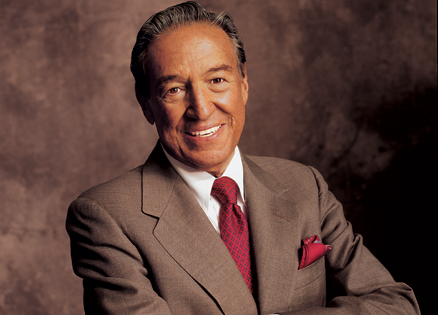
When I interviewed Mike Wallace about his battle with depression (My Darkest Hour,” January 2002, Guideposts), I didn’t realize I’d also be talking with him about another painful experience—the death of his 19-year-old son Peter in 1962. When I first brought it up he was quiet for a moment, pensive.

As a father of two sons myself, I knew how difficult this would be for him. I worried I had overstepped. But then in his matter-of-fact way, he said, “Okay.” This is when I learned how his son’s death came to change Mike Wallace’s life.

Sugarcreek Amish Mysteries In-Article Ad 2023

“I’ll always remember that late summer in 1962, leaning against a jet’s window, staring down at the Mediterranean. My 19-year-old son had disappeared and I was on my way to find him.”

The strapping Yale student was Mike’s eldest. “The last we heard was that he was on a jaunt in Greece.” Mike smiled in memory.  “If there was one place Peter loved to be, it was that ancient Mediterranean country. Even as a youngster, he had explored its history. I could still see him as a little boy proud in a bedsheet toga, brandishing a wooden sword from behind a garbage-can-lid shield.

“Peter had written about going to a little town called Kamari on Santorini Island in the Aegean Sea. Suddenly his letters stopped,” Mike said. “Despite our attempts to locate him, it was as if he had disappeared from the face of the earth.”

Fraught with anxiety, Mike cancelled a global news trip and caught the next plane for Athens. All the way he tried to console himself with “what ifs?” Maybe he had found a girl, Mike thought, and the two had taken off. He was ready for anything.

From the Athens airport he raced to the American Embassy. Together with an understanding consul he flew to Kamari. It was a beautiful seaside town with ancient ruins and black-sand beaches.

“Just the kind of place Peter loved,” Mike said. “Many of the local folks we talked to remembered the tall, brown-eyed man.

“They pointed up a mountain that loomed over the sea,” he continued.  “They said a monastery was on top of it and Peter had gone up alone to see it.”

Mike said he could understand, as he squinted up in the dazzling sun. Just like Peter, he thought.

But he had never returned. Searchers found no leads. Those in the monastery had not seen him. “My son seemed to have vanished into thin air,” Mike said.

There was only one thing to do.

The consul and he got some donkeys, a necessity for the precipitous stony mountain climb, unless one was a young athlete like Peter. They slowly ascended, the Mediterranean sun hot on their backs, while their dun-colored beasts picked their way up the dusty ochre path.

As they climbed higher, Mike began to sense Peter’s presence; he had trod this very path.

“His very curiosity in visiting the monastery reflected his spiritual bent,” said Mike. “I remember him talking about the Greek philosophers’ search for meaning in life. One day he said to me, ‘Dad, you know that famous line in Shakespeare’s Hamlet, To thine own self be true? Shakespeare took that from Socrates’ Know Thyself.’”

That was Peter, forever seeking, always looking for a deeper meaning in everything.

“Was it tears or sweat stinging my eyes as we plodded higher?” Mike continued. The hot, dry air seemed too thin and a breeze brought a briny scent from the sea.

“The view took my breath away. Thrown out before us was a scene I could have never imagined—a vast panorama of the Aegean stretching across the horizon. Dark islands punctuated its cerulean surface. I took a deep breath and knew Peter would have stopped here to feast on this wonderful vision.”

Mike turned to the consul. “Let’s take a break for a moment,” he said. They dismounted and stepped to the overlook. “Neither of us said anything as we drank in the magnificent view.

“And then I happened to look down at the earth before my feet. It had been disturbed, as if it had given way under…someone? My heart pounded. I didn’t want to look down that mountainside. But I had to.

“Some five hundred feet below lay the crumpled body of my son. Even from that height I knew it was Peter. He was wearing the bright madras shorts we had bought together from Rogers Peet men’s store in Manhattan.”

Mike’s voice choked. “I fell to my knees in anguish. The rest of the nightmare was a blur.” All Mike could remember was being back on the mainland for the formalities, driving behind the pickup carrying the rough wooden box holding his son’s body in the glare of the headlights.

“We buried Peter at the spot where we found him, where he would have loved to be, looking out over the Aegean,” said Mike softly. “Some of the townsfolk joined our little family as we left him to God. Through my agony and tears it was almost as if he was saying, It’s all right, Dad. It’s all right.

But that was not the end of Peter.

Before Peter’s death, Mike had a varied career in broadcasting, including heading a tough-minded, controversial program called Night Beat in which he had begun to develop an interview style.

But in 1962 he was mostly reading news on television. “Rip and read, as we called it,” said Mike, a term dating back to when reporters snatched the news off the teletype to read over the air.

But Peter’s death changed him.

“I felt strongly led to do something more significant, more meaningful, as if I was again hearing, To thine own self be true. Peter wanted to follow in my footsteps. But so far I didn’t think he’d be proud of the ones I had been leaving,” Mike said.

That’s when Mike quit everything and decided to take a year off and reevaluate his life. He wouldn’t go back to work until he found something Peter and he would be proud of.

Mike had been making a hundred and twenty-five thousand dollars a year when a call came offering him the news anchor at KTLA in California. It was tempting, but then he heard from Richard Salant, then President of CBS News. Mike had interviewed him on Night Beat.

“Mike,” Salant urged, “I know you’ve been making more money, but if you’re really serious about doing something special, come on over here. The salary is forty thousand a year, a lot less, I know, than what you’ve been making, but it may be the beginning of something for you.”

“It sounded right,” said Mike.

And so he worked as a reporter, each night praying the Shema: Here O Israel, the Lord our God, the Lord is One. “Undergirding my faith. I was on the right path,” said Mike.

“I didn’t know what I was being groomed for,” he said. “But five years later in 1968 Richard Alant finally gave producer Don Hewitt the okay to start 60 Minutes, which is where I have been ever since.

“Sometime later, I returned to Peter’s grave to kind of tell him what I had been doing, though I’m sure he knew it all along.” Again he rode a donkey up that very steep, stony climb to where the magnificent Aegean spread out before him. When he reached Peter’s grave he was stunned.

The Kamari townsfolk, who knew how much Peter had loved their homeland, had adopted him as one of their own. They had erected a simple tombstone and enclosed his grave with a wrought-iron fence entwined with graceful metallic leaves.

Struggling with emotion, Mike looked out on the sea his son had loved so well and felt his presence again. “Thank you, Peter,” he whispered.

Download your FREE ebook, True Inspirational Stories: 9 Real Life Stories of Hope & Faith

Family, Faith and the Feud

Family nights at our house are all about food. Fun. And the Feud. That’s right, the game show Family Feud. It’s a Rankins tradition. My husband Thomas and I watch every episode and we play along, laughing and shouting out answers like we’re on TV.

“Hurry,” Thomas called from the living room one family night in the spring of 2010, “it’s about to start.”

GP In Article Desktop

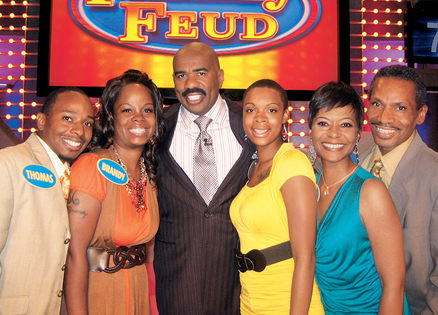
I dished up some spaghetti and hustled out to the couch, squeezing in next to Thomas and his aunt Yvonne just as the host, comedian Steve Harvey, strolled onto the stage, looking extra sharp in a gray suit and silver necktie.

“Hey, everybody, welcome to Family Feud,” he said. “We’ve got a good one for ya…” I couldn’t hear the rest, the audience was hollering so loud.

The camera pulled back to show two families opposite each other, clapping and stomping like they were at a revival meeting. One contestant from each family ran to the podium at center stage.

“Name something that goes with a hot dog,” Steve Harvey said.

“Ketchup!” I jumped up and yelled before the contestants could even get a word out. “Mustard! Relish! Onions!”

Yvonne looked at me. “Girl, you’ve got it down. You oughta be on the show.”

“Me? I don’t think so,” I said. I sat down and stared at my spaghetti, twirling it on my fork. Why’d I say that? One of my resolutions this year was to think positive, and here I was, falling back into my old habit of counting myself out.

It was a hard habit to break. I’d had enough trials and tribulations in my life, I figured I wasn’t the kind of person good things just naturally happened to.

The thing was, I would’ve given anything to be on the Feud. Not just because I liked playing the game. I’d watched the show since it was first on the air, back when I was a kid and Richard Dawson was the host, and I loved it because your team was your family.

That meant something to a girl whose parents’ marriage was rocky, whose own family wasn’t exactly jumping up and down for joy.

I’d imagine myself up on that stage, joking around with the host. Getting the question and guessing the most popular answer. Hearing “Survey says…” and seeing the scoreboard light up. Number-one answer. Whoo hoo! Then I’d do a happy dance and high-five with my family.

Family. If being on Family Feud was my secret little dream, having a strong marriage and family that stuck together was my big dream, the one I put out there in my prayers. And, boy, did God answer! He brought Thomas and his tight-knit family into my life and blessed us with four awesome kids.

God had answered so many of my prayers since. For our children (when there’s four kids under the age of 10, there’s plenty to pray about). For me to do well in my journalism classes at college. For Thomas to succeed in his work as a paramedic and as a musician.

I didn’t need to be bothering God with something as silly as a game show.

“Wonder what you have to do to get on the show,” Thomas said.

“They must get tons of applications,” I said. “We wouldn’t have a chance.”

“It couldn’t hurt to try,” he said. “You’re always saying you’re better at it than the people on there.”

True, I did say that. But that was just me goofing around in our living room.

Steve Harvey asked the next question, and mercifully no one brought up the Rankins playing on Family Feud again. But now I couldn’t get the idea out of my head. It was like I’d been keeping my little dream locked up inside and someone flung open the door and let it out.

Wouldn’t you know it? Thomas and I were watching the Feud a few nights later when the announcer said, “Time for open auditions. Go to our site for details.”

“There you go!” Thomas said.

I didn’t want to get my hopes up. Still, I got my laptop and typed in the web address. I scrolled through the audition locations. Nothing in the Midwest. The closest was in Texas. No way could we swing a trip like that.

“I’d love to be on the Feud,” I said. Had I really uttered those words out loud? “I just don’t think it’s meant to be.”

But something made me keep checking the website. They added locations. Still nothing near us. Then one day I saw it, near the bottom of the page: “You can submit a video of your family in lieu of a regular audition. Upload it to YouTube and e-mail us the link. Have fun with it!”

I knew from my journalism classes how to make a video. And the Rankins definitely knew how to have fun. You know how sometimes on the Feud everything comes together and a team gets one right answer after another and the whole board lights up? That’s what this felt like.

Okay, God, maybe I won’t win. Or get on the show. But I know you’re telling me I’ve got to try. I’ve got to be positive.

We decided on our team: Thomas and I, Yvonne, my father-in-law, Thomas Sr., and my sister-in-law, LaTonya. We wore matching outfits and squeezed on our couch for the video. “Hello, everybody, this is my wonderful family,” Thomas said. Then we each introduced ourselves and hammed it up.

We had a blast. But when we were done Thomas Sr. took me aside. “Now I don’t want you to feel bad if we don’t make it,” he said. “There’s thousands of people trying out.” That was all it took to bring my insecurities rushing back.

Two weeks after I put the video up on YouTube, an application came in the mail. They probably send these out to everyone. I filled it out and sent it back.

One night in November our phone rang. Thomas answered. His eyes bugged out. “Brandy, it’s Family Feud,” he whispered. I screamed. “That’s my wife making all that noise,” Thomas said.

I leaned in to hear what the caller was saying. “Tell her to bring that enthusiasm to Atlanta because you’re coming to Family Feud in August.” Yeah, baby!

Family nights we got down to business. We came up with answers to every question we could think of and practiced our buzzer-hitting moves till we were lightning quick. I lay awake at night, thinking up clever lines to say to Steve Harvey.

Still, I worried we were nowhere near ready. “Ask me something. Anything,” I badgered Thomas on the flight to Atlanta. “We’ve gotta stay sharp.”

“Honey,” he said, “we’ll be fine. This is your dream. And it’s really happening. Just relax and enjoy it.”

Easy for him to say, I thought. I was so keyed up that night I barely slept.

The next morning at eight we were driven to the studio in a white van. After a practice round, it was time to go on.

We ran onto the stage and stood behind our podiums. Good thing because I didn’t want everyone to see how my legs were shaking. The studio was huge, rows and rows of people in the audience. Not that I could see much with lights shining on us from every direction.

Behind us a giant sign read RANKINS in neon blue letters. The familiar theme song came on. The announcer sang out, “It’s time to play Family Feud.” I clapped and stomped, my mind spinning like a kaleidoscope. I can’t believe this is for real!

“Give it up for Steeeeeve Harveyyyyy!” My eyes were riveted on the handsome host, not more than five feet away. He was wearing that same sharp gray suit and silver necktie. He said hello to the audience then strode right up to me.

“Brandy, how are you doing?” I tried to think of one of the clever lines I’d rehearsed but it was no use. There was only one word that captured everything I was feeling. I raised my hands up over my head and shouted, “Hallelujah!”

Steve gave me a huge smile and turned to the audience. “You didn’t know you were coming to church today, did you?” he said. Everyone laughed, including me.

But there was no time to relax. The game was starting. The first question for Team Rankins: “Name someone you might frighten away if you came to the front door naked.”

Concealed on a big board in the middle of the set were the top six responses from a survey of 100 people. Our job was to guess them all before we got three wrong answers.

“Postman,” Thomas said.

“Survey says?” The answer flashed on the board. Yes!

My turn. “My pastor,” I guessed. Another right answer.

Then Thomas Sr. guessed, “Bill collector.” A big X flashed on the board. Wrong. Yvonne said, “Paper boy.” Wrong again.

Too soon it was my turn again. There were two answers left. What could they be? This was nothing like playing at home. “Grandparents?” I ventured. Another big X, our third.

We went from bad to worse. Halfway through the game Team Rankins had 79 points. The other team: a whopping 258. I didn’t want my dream to end like this!

The final round. Steve said we still had a chance at victory. A slim chance. The question: “Name something horses do standing up that you might not do.” Team Rankins got five right answers, but we missed two. It all came down to Thomas Sr. “You can do it!” I said. But my insides were twisted in knots.

“Uh,” he stammered. “Make, uh, make little ponies?”

Everyone cracked up. “You’re sure that’s your answer?” Steve asked. “’Cause I wouldn’t have thought of that.” Thomas Sr. nodded, slowly. All eyes went to the board. With a flip, there was his answer. We’d won!

I grabbed Thomas and we jumped up and down and did a happy dance together. This was way better than anything I could have dreamed up.

On October 7, we had a family night to beat all family nights. Team Rankins piled on the couch to watch our episode of the Feud. I sat between Thomas and Yvonne and called out the answers. “How could I have missed that one?” I shouted at the TV, laughing.

There’s one question I wish they’d asked: Name someone you can trust with your dreams, big or small. Survey says? I don’t have to guess the numberone answer. I know.


Download your FREE ebook, Rediscover the Power of Positive Thinking, with Norman Vincent Peale

Faith Will Give You Courage, Courage Will Give You Faith

Dr. Norman Vincent Peale was a preacher’s kid, the son of a very good preacher, in fact, who had high expectations for all his children, especially Norman. Norman didn’t believe he possessed a natural aptitude for the pulpit. He was terrified of public speaking. He didn’t even like to speak up in class, though he was a decent student. After college he pursued a career as a newspaper reporter in Detroit, reporting on events rather than being at the center of them.

One night, covering a story on a house fire, Dr. Peale witnessed several firemen imploring a woman to walk to safety across a shaky board that led to an adjacent rooftop. The woman was paralyzed with fear, her eyes frozen in a stare of terror. No threats that she would burn up if she didn’t exercise her only avenue of escape seemed to sway her. Fear had completely taken over. It was a do-or-die moment if ever there was one, with the latter being the probable outcome.

NIVFLB Inarticle ad

Dr. Peale, standing nearby, suddenly started talking to her, telling her that he knew she had enough strength to put one foot in front of the other, and then the next, and when her courage faltered God would be there to help. “Don’t look down,” he said. “Look ahead and see yourself safe. Faith will give you courage and courage will give you faith!” In minutes the woman had crossed to safety. “You should be a preacher,” one of the firemen said, yet Norman was as surprised as anyone by his actions.

Finally Norman’s strong-willed mother persuaded him to enter the seminary. Again fears and insecurities took hold of him. Seminary was a struggle. One day in his sophomore year an eminent professor took him aside after class. He demanded to know how much longer Norman was going to allow bashfulness to hold him back. He lambasted him for being hesitant and tentative. “How long are you going to be like this, Peale?” he nearly shouted. “A scared rabbit afraid of the sound of your own voice?” The professor accused him of using shyness as an excuse. “You better change the way you think about yourself, Peale, before it’s too late. That’s all. You may go.”

Norman was devastated. It was as if a bomb had gone off in his life. He ran from the classroom all the way to the steps of the chapel and collapsed, holding his head in his hands. All his insecurities were arrayed before him. He was angry, hurt and resentful, and he felt powerless: powerless to change the way people saw him and powerless to do anything about himself. Most of all he was frightened. He knew what the professor had said was as true as anything he’d ever known about himself. He was a scared rabbit, worse than the woman at the house fire, who at least had had something real to fear.

Now he prayed with the greatest intensity of his life, a do- or-die prayer: “God, please help me. I know you can do it because I’ve seen you make drunkards sober and turn thieves into honest men. Please take away these inferiority feelings that are holding me back, this awful shyness and fear. Let me see myself not as a scared rabbit but as someone strong and confident who can do great things.”

After that moment on the chapel steps, Dr. Peale’s life would never be the same. His insecurities and self-doubt did not evaporate overnight, and never vanished completely. But from then on he used the technique he called imaging to face down his problems, to see himself as a success rather than a failure, to envision overcoming challenges rather than succumbing to them. What was most remarkable about his plea was this: He didn’t desperately ask for the divine intervention you would expect. He didn’t beg God to change him, but rather to help him see himself as a person who could do great things in life. He prayed for the gift of imagination.

Try this: At the beginning of any change effort, large or small, develop a change vision statement. Commit to your effort by stating explicitly:

  • what it is you want to change;
  • why you want to change it;
  • how you will be different;
  • how you will feel different;
  • and who will be positively affected by this change, in addition to yourself.

Then call on your imagination to fully envision how that change occurs in you. See the tangible, physical results, but also envision a change in the underlying dynamic…Be sure to imagine not just the change itself, but also how achieving that change will make you feel. Ultimately change is about feelings, not behavior.