Embrace God's truth with our new book, The Lies that Bind

What ‘Our Father’ Really Means When You Pray

Christians around the world—and down through the centuries—have prayed by saying the words Jesus taught His first followers: “Our Father…”

They’re the first words of the prayer commonly called “The Lord’s Prayer.” They are so full and rich in meaning that it’s hard to overestimate their importance. Too often, however, when we say those words, we gloss right over them, barely thinking. But do you know what you’re saying when you pray, “Our Father”?

Walking with Jesus L&E evergreen_in article ad

You say, in an age when disconnectedness and loneliness are epidemic, that you never pray alone. Jesus said to pray Our Father. Not, My Father. It is a small word—just three letters long in English, but there is a whole world in our.

It means you pray with Jesus. He is your partner and advocate. It means you pray with the Holy Spirit, even when “we do not know what to pray for as we ought… the Spirit Himself intercedes for us with groanings too deep for words” (Romans 8:26-27, ESV).

It means you pray with the whole church—throughout history and around the world. You pray with people of all colors, shapes, ages, tribes, tongues, customs and personalities. It means that you pray with all Creation, which “has been groaning as in the pains of childbirth right up to the present time,” looking forward “to the day when it will join God’s children in glorious freedom from death and decay” (Romans 8:22, 21, NLT).

When you pray, “Our Father,” you are also appealing to an intimate relationship. My daughter, Aubrey, is a beautiful, intelligent and accomplished woman. She is a married and mother to three children. She refers to me as her father, of course. But there are times—precious times—when she, grown woman that she is, still calls me Daddy (and not always when she wants a favor). It never fails to warm my heart and, yes, make me even more willing than ever to make her dreams come true.

It’s like that when you say, “Our Father.” You’re agreeing with the words of Paul, who wrote, “Because we are His children, God has sent the Spirit of His Son into our hearts, prompting us to call out, ‘Abba, Father’” (Galatians 4:6, NLT).

There are many ways to pray, of course, and many of them are good ways to pray. But when you pray, “Our Father,” you say so much, and all of it is good.

What It Really Means to Pray ‘Forgive Us Our Trespasses’

It’s a beautiful, but sometimes confusing, part of the prayer commonly called The Lord’s Prayer. Some pray it every day. Some several times a day. Some in church. Some in private.

When Jesus showed His first followers how to pray, He included a plea for forgiveness: “Forgive us our sins, for we also forgive everyone who sins against us” (Luke 11:4, NIV). In some versions, the prayer is, “Forgive us our debts.” In others, it’s “Forgive us our trespasses.”

Pray A Word a Day - 2023 In article

Regardless of the exact words, the thought is the same. But what are we really saying when we say, “Forgive us our trespasses, as we forgive those who trespass against us?”

First, we’re saying, “I’ve sinned. I’ve done wrong. I’ve crossed the line.” It’s an admission, a confession, a mea culpa (to use the old Latin phrase). That’s key, because the Bible says, “If we confess our sins, [God] is faithful and just and will forgive us our sins and purify us from all unrighteousness” (1 John 1:9, NIV).

We’re also saying that we want and need forgiveness. In fact, when Jesus modeled this for His followers, He linked the petition for daily bread with the petition for forgiveness. “Forgive us” comes right after “Give us this day our daily bread.” It’s a hint that we need both, every day—food and forgiveness. We should pray for both on a daily basis.

But notice also that Jesus linked our forgiveness from God with our forgiveness of others. “Forgive us,” He told us to pray, “as we forgive.” As. It’s a tiny word, both in English and in Greek. When we say, “Forgive us … as we forgive,” we’re acknowledging the truth that Jesus taught, that being forgiven is tied to our forgiveness of others.

The phrase can be taken to mean, “Forgive us in the same way we forgive others;” it can be understood as a suggestion that our forgiveness of others will set the tone for the Father’s forgiveness of us. So when I pray, “Forgive us as we forgive others,” I am saying I want my mercy to be expanded.

I want to forgive willingly, because that’s the kind of reception I want from God. I don’t want God to measure out my forgiveness in measly human ways; I want to measure out forgiveness to others in big ol’ God ways. I want to be willing to forgive. I want to be quick to forgive. I want to forgive fully. I want to forgive repeatedly. Because all of those things are how I want—how I needGod to forgive me.

And just as my plea to be forgiven is a daily need, so my forgiveness of others can be a daily decision. “Forgive us as we forgive.” In other words, “forgive us today as we are forgiving today.”

No matter how deeply I feel someone has hurt me, I can choose—today—in realization of the grace God has shown me, to extend mercy to other. I don’t have to feel like it. I don’t have to drag up any warm feelings for those people. But I can refuse to retaliate. I can wipe the slate clean. I can forgive that debt. I can pray, “Forgive us today as we are forgiving others today.”

And as I do that, day by day, I will be forgiven…and I will experience the healing and wholeness that comes from releasing others’ sins against me. And, day by day, be released of sin’s hold on me as well.

Well Done Prayer

His lord said to him, “Well done, good and faithful servant; you were faithful over a few things, I will make you ruler over many things. Enter into the joy of your lord.” (Matthew 25:21)

What do you think of when you hear “well done”? I am not much of a steak person, but whenever I am out for dinner with family or friends, I order it well done. My husband says that takes away from the tenderness and flavor of the meat. But when it comes to matters of faithfulness, “well done” is always the best choice.

Pray a Day Vol 2 In Article Ad

Faithfulness is an important quality in a servant of God, as is being dependable and helping others consistently as a matter of principle. Jesus said that servanthood is tantamount to greatness in his kingdom. I think about how good I feel when taking care of my mom. She sometimes thinks that she is a bother, but I try to explain to her that it is my pleasure. At the end of her journey in life, I hope she can say that I served her well.

The ultimate goal, at the end of my life, is to hear from Jesus, “Well done.” I pray that I will have served him well in the assignments I was given. I pray that whenever I feel that the task is too big, I ask him for help and never quit. I pray now and ask for a servant’s heart with those I lead in ministry.

My prayer point is to challenge you to have the heart of a servant in all that you do. It may seem like the lowest place, but Jesus considers it to be a great place. Pray for your few assignments from God and be faithful to those.

God bless you!

Watch Out for the Spiritual Snake!

There’s an old saying, “The only good snake is a dead snake.” I disagree. I don’t even think dead snakes are good.

I know some of y’all enjoy your slithery pals, but I hate snakes. I cringe when I see one on TV. I shudder from head to toe when I see one outside my house. And the day I stepped over one on my front porch, I probably set a record for fastest runner in my town—and loudest screamer.

For the past few months, my Facebook news feed has been full of snake photos. Two huge rattlesnakes coiled up on the patio of a friend’s house in Texas. A snake wrapped around a fence post. A poisonous snake sunning on a driveway. And then the one that gave me nightmares for weeks—the snake they found inside my friend Sarah’s house…the first of two that they saw crawling around inside her home.

The situation was made even worse when well-meaning friends started sharing their snake stories about finding one coiled up in their pots and pans, or having a snake crawl out from between the couch cushions, or finding one under the bed. Yes, by this point, I was about to need counseling.

I about had a heart attack when I walked through my house the night after I saw the photo of Sarah’s snake. Let’s just say my husband received a stern warning about leaving his belt on the floor again until I’d recovered from the trauma of empathizing with Sarah.

So you can imagine my reaction when I saw the news post about the lost 8-foot king cobra in Orlando a few weeks ago. I live ten hours away from there, and it still freaked me out. After days of intensive searching for the cobra, they finally called off the search.

And then a few days ago, I read about a lady in the Orlando area who went out to the dryer in her garage. She heard hissing coming from under the dryer and called the folks at animal control. Yeah, you guessed it. An eight-foot king cobra was hanging out under her dryer.

Oh, sweet Jesus! I can’t even imagine. It was traumatic enough from ten hours away!

But you know what, folks? We might not have a king cobra hanging out around us, but Satan—that old serpent—is lurking around to see how he can wound, damage or destroy us. He wants to defeat us.

Just as the folks in Orlando were extra diligent when they knew that cobra was on the loose, we as Christians need to keep our guard up. I suspect that if the homeowner had kept her garage door shut, that snake might not have made it to where he was harmful to her. We need to shut the doors of our hearts to wrong-doing. We need to spend time in His Word, arming ourselves.

We’ve received the warning, friends. Watch out for Satan—that snake!

Top 10 Reasons to Take a Prayer Retreat

For more than 20 years, an annual—sometimes twice a year—prayer retreat has been a major boon to my prayer life. What began as an act of desperation and concern for my teenage son has since become a major factor in my growth in grace and survival in faith. Still, it is hard to express why I keep taking a prayer retreat, and why I look forward to it with such joy and anticipation. But the following list, of ten good reasons to take a prayer retreat, are a good start.

1.  For a change of scenery
Sometimes a simple change of scenery—especially if it allows you to spend time in nature—can lift your spirits, refresh your soul and renew your prayer life.

You Got This In Article Ad

2.  To get away from distractions
Daily life—internet, laundry, kids—can easily get in the way of prayer. A prayer retreat of almost any length can push the “reset” button for you.

3.  To experience silence and solitude
When did you last spend time alone? When did you last feel like you had time to think? The silence and solitude of the right prayer retreat can work wonders in your mind and heart.

4.  To meet with a spiritual director
At some retreat centers, you can sign up to meet with a chaplain or spiritual director. Sometimes there is a small cost involved, but it might lead to a breakthrough for you.

5.  To plan, pray through and set goals
I have sometimes spent time planning a new season or a new year on my prayer retreat—prayerfully evaluating and envisioning what I want to do and where I want to go. It is a great time to focus and dream. 

6.  To deepen your relationship with God—or take it to a new level
What better reason to spend time in focused prayer than to draw closer to the God who made you and longs for your company?                                                                                         

7.  To bask in God’s love
Many monasteries and retreat centers are configured to help a retreatant feel and enjoy the love of God in its many forms: a blooming flower, a flittering hummingbird, a beautiful verse painted on a wall, a song, etc. A prayer retreat provides the opportunity to stop striving for God’s favor and try to accept it and experience it instead. 

8.  To work through a problem
Some people enter a retreat vexed by a problem. They can’t see a solution. But often, by the time they leave, they take new understanding and wisdom home with them.

9.  To experience a new form of prayer
Previous retreats have introduced me and trained me in new ways of praying (chant, fixed-hour prayer, etc.) that I would never have experienced on my own. None of them were “pushed” on (or even overtly suggested to) me, and all have added immensely to my prayer life.

10. To pray through to a goal or destination
My first prayer retreat was focused on prayer for my teenage son. During a later retreat, I wanted to pray through the Psalms in the Bible. A focused retreat can give the opportunity to accomplish a goal or reach a new destination. 

These ten reasons to take a prayer retreat only scratch the surface. But any one of the above could be life-changing for you. They have been for me. 

The Spiritual Practice of Tithing

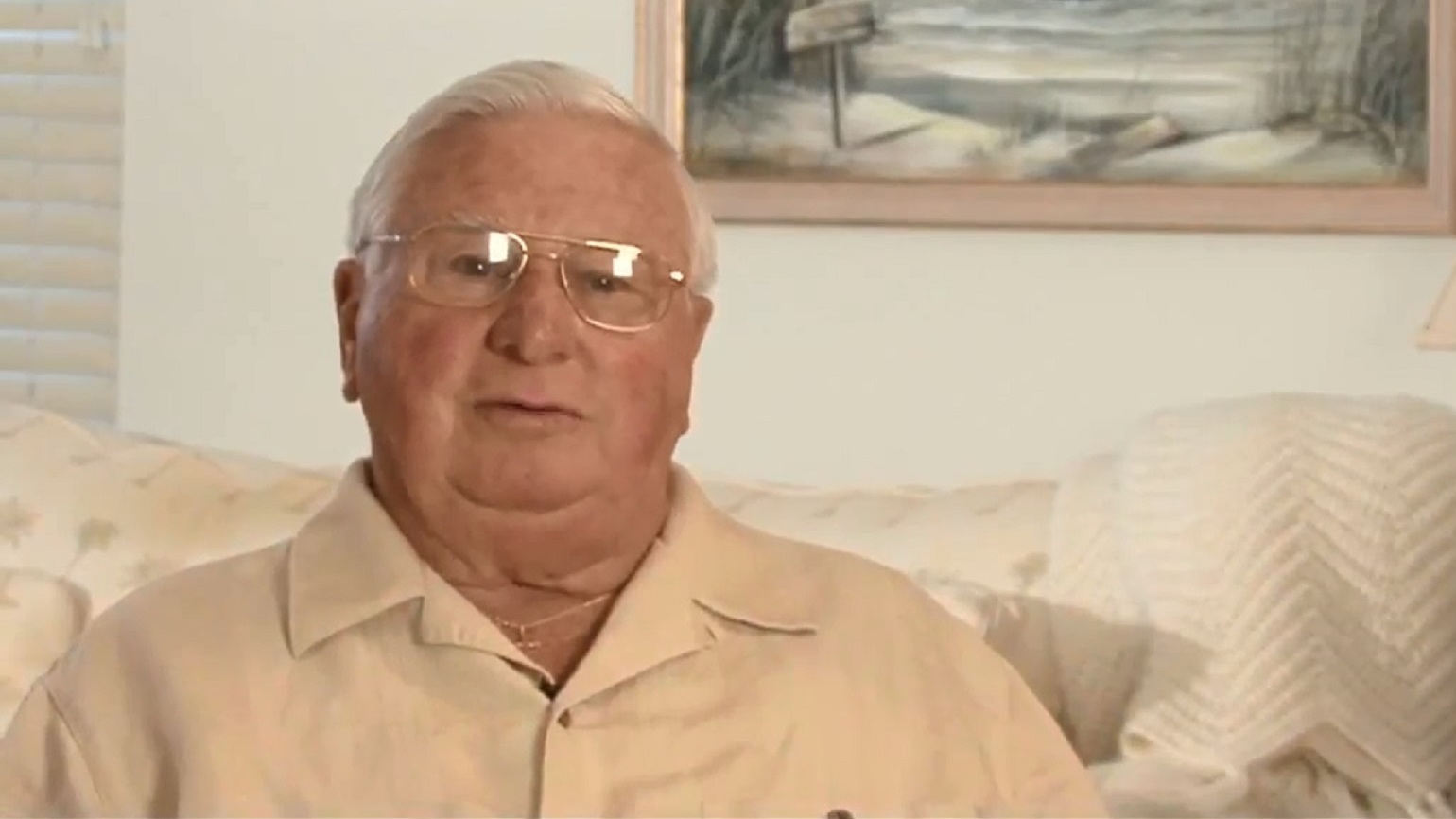
[MUSIC PLAYING] Well, I guess you’d have to start when I was a kid. My mom and dad were quite religious and truly believed in God, and I thought I was so fortunate to have parents like that. My first exposure was working. 

I was 11 years old and we went to this little corner grocery store, and the man said to me, hey Harry. He said, how’d you like to work this summer for me and the work in the produce, and put out apples, and shine them, and do those sort of things? And I thought, oh my god, this is great. And I didn’t ask him the pay or anything like that, but I just said, let’s do it. 

Go For It In Article Ad

Well, that first week went by and I worked 10 hours every day from 8:00 in the morning to 6:00 at night. And the end of the week came, I had worked there six days and he gave me three American dollars. Well, $3 to me was just unbelievable living on the farm. And I thought, oh my god, $3. 

And the next morning is Sunday morning and mom said, OK honey, how much did you make this week? And I said, I made $3. And she said, well good. She said, let me change this dollar– you’ve got three dollar bills so let me make some change here for you because we have to give $0.30 to the church. 

Mom, you have got to be kidding me. I work all week and I’m figuring this out at that age, and I’m thinking, $0.05 an hour and she wants me to donate $0.30 right now to church. And I said, oh mom, there are so many things I could do with $0.30 rather than give it to the church. And she said, oh no honey. She said, we’ve always done it and so this is something that you’ll find you should just go through life doing that. 

Let’s be truthful. I reluctantly gave this $0.30 to the church that day. And so then the summer went by and I enjoyed working there. It was really neat, a neat guy to work for. So that summer was over and he says, well, I hear you’re going back to school. So he said, how about just working on Saturdays for us? I said, oh, dynamite. 

Well, needless to say, I assumed that Saturday night will be there. After my 10 hours, I’m going to get $0.50. That first Saturday he handed me a dollar bill. And I was so excited to think that I had earned $1 all by myself. 

So I took the dollar and I went home and I said, mom, look at this. They doubled my salary just because I only work the one day. And she said, well honey, I think that was your tithing. And I said, well, whatever it was, all I know is that’s really great for me. And you know, here I am now. My god, I’m almost– I’m 83 next month. And that’s 72 years, and I’ve tithed ever since. 

[MUSIC PLAYING] 

I think sometimes people have said to me, Harry, I don’t understand you. I don’t understand how you could say that if you made $100,000, you would give $10,000 of that. I said, well, yeah. I’d just– whatever I make, I give 10% of it. But yet, you could save that or you could buy a car. There’s so many things you could do with that kind of money. 

And I said, well, but that isn’t my money to start with. So I just figure $0.90 is mine and God’s the other. Looking at it and saying, this is what he’ll do. And it could be church, it could be helping out some poor people just in food and water. I don’t know, but I said, I’ve just always done it so it’s too late in life for me to change now. 

Honestly, the happiness that is in that home makes all the difference in the world. Whether you have two bedrooms or six bedrooms, all of a sudden it doesn’t make that much difference. So I think sometimes we always are looking for happiness. Happiness comes right here from your heart mainly, as far as I’m concerned. And what’s crucial in this world is to remember that, you know, I’m not talking about tithing now as much as I’m talking about the fun. I don’t know of a person in the world who’s had the fun that I’ve had in this life. 

[MUSIC PLAYING] 

In our particular case, Fran and I sat down and made a decision. 30% of our donations go each year to Guideposts. I think that Guideposts, with its dollar bill, will reach more persons than any other organization in the world because they take this dollar and spend it on their publications that are all geared toward prayer, geared toward life, geared toward helping you. And you just become a reader. And you can’t wait for Guideposts to come out every month because when you get it, you know there’s going to be some neat stories about someone who’s helping someone else. And that’s Guideposts. It just takes its dollars and does the best job of anyone in the world that I’ve ever found to deliver the message of what God wants us all to do– love and help your fellow man through this life. My mom would say, now honey, you just help somebody cross the bridge and then you’re both across. 

[MUSIC PLAYING] 

The Prayer of Relinquishment

Like most people, when I first began active experimentation with prayer, I was full of questions, such as: Why are some agonizingly sincere prayers granted, while others are not? I still have questions. Mysteries about prayer are always ahead of present knowledge—luring, beckoning on to further experimentation.

But one thing I do know; I learned it through hard experience. It’s a way of prayer that has resulted consistently in a glorious answer, glorious because each time, power beyond human reckoning has been released. This is the Prayer of Relinquishment.

Journey With Jesus in article ad

I got my first glimpse of it in the fall of 1943. I had been ill for six months with a lung infection, and a bevy of specialists seemed unable to help. Persistent prayer, using all the faith I could muster, had resulted in—nothing. I was still in bed full-time.

One afternoon I read the story of a missionary who had been an invalid for eight years. Constantly she had prayed that God would make her well, so that she might do his work. Finally, worn out with futile petition, she prayed, All right. I give up. If you want me to be an invalid, that’s your business. Anyway, I want you even more than I want health. You decide. In two weeks the woman was out of bed, completely well.

This made no sense, yet the story would not leave me. On the morning of September 14—how can I ever forget the date?—I came to the same point of abject acceptance. I’m tired of asking, was the burden of my prayer. I’m beaten. God, you decide what you want for me. Tears flowed. I had no faith as I understood faith, expected nothing. The gift of my sick self was made with no trace of graciousness.

And the result? It was as if I had touched a button that opened windows in heaven; as if some dynamo of heavenly power began flowing. Within a few hours I had experienced the presence of the Living Christ in a way that wiped away doubt and revolutionized my life. From that moment my recovery began.

Through this incident, God was trying to teach me something important about prayer. Gradually, I saw that a demanding spirit, with self-will as its rudder, blocks prayer. I understood that the reason for this is that God absolutely refuses to violate our free will; that, therefore, unless self-will is voluntarily given up, even God cannot move to answer prayer.

In time, I gained more understanding about the Prayer of Relinquishment through the experiences of others in contemporary life and through books. Jesus’ prayer in the Garden of Gethsemane is a pattern for us, I learned. Christ could have avoided the cross. He did not have to go to Jerusalem that last time.

He could have compromised with the priests, bargained with Caiaphas. He could have capitalized on his following and appeased Judas by setting up the beginning of an earthly kingdom. Pilate wanted to release him, all but begged him to say the right words so that he might. In the Garden, Christ had plenty of time to flee, but he used his free will to leave the decision up to his Father.

J. B. Phillips, in his book The Gospels: Translated into Modern English, brings Jesus’ prayer into focus for us. Dear Father, all things are possible to you. Please let me not have to drink this cup. Yet it is not what I want, but what you want.

The prayer was not answered as the human Jesus wished. Yet power has been flowing from his cross ever since.

Even when Christ was bowing to the possibility of death by crucifixion, he never forgot either the presence or the power of God. The Prayer of Relinquishment must not be interpreted negatively. It does not let us lie down in the dust of a godless universe and steel ourselves just for the worst.

Rather it says, “This is my situation at the moment. I’ll face the reality of it. But I’ll also accept willingly whatever a loving Father sends.” Acceptance, therefore, never slams the door on hope.

Yet even with hope our relinquishment must be the real thing, because this giving up of self-will is the hardest thing we human beings are ever called on to do. I remember the agony of Sara, an attractive young girl who shared with me her doubts about her engagement.

“I love Jeb,” she said, “but he drinks. Not that he’s an alcoholic. Yet the drinking is a sort of symbol of a lot of ideas he has. This has bothered me so much that I wonder if God is trying to tell me to give Jeb up.” As we talked, Sara came to the conclusion that she would lose something precious if she didn’t follow the highest and the best that she knew.

Tears glistened in her eyes as she said, “I’m going to break the engagement. If God wants me to marry Jeb, he will see that things change—about the drinking and all.” Right then, simply and poignantly, she told God of her decision. She was putting her broken dreams and her future into God’s hands.

Jeb’s ideas and ideals didn’t change, so Sara did not marry him. But a year later she wrote me an ecstatic letter. “It nearly killed me to give up Jeb. Yet God knew that he wasn’t the one for me. Now I’ve met The Man and we’re to be married. Now I really have something to say about trusting God!”

It’s good to remember that not even the Master Shepherd can lead if the sheep have not this trust in him. That’s the why of Christ’s insistence on practical obedience: “And why call ye me, Lord, Lord, and do not the things which I say?” (Luke 6:46). Our pliability must be complete, from our wills right on through to our actions.

When we come right down to it, how can we make obedience real, except as we give over our self-will in reference to each of life’s episodes as it unfolds? That’s why it shouldn’t surprise us that at the heart of the secret of answered prayer lies the Law of Relinquishment.

So Mrs. Nathaniel Hawthorne, wife of the famous American author, found as she wrestled in prayer in the city of Rome one day in 1860. Una, the Hawthornes’ eldest daughter, had a virulent form of malaria. The attending physician had that afternoon warned that unless the young girl’s fever abated before morning, she would die.

As Mrs. Hawthorne sat by Una’s bed, her thoughts went to what her husband had said earlier that day. “I cannot endure the alternations of hope and fear; therefore I have settled with myself not to hope at all.” But the mother could not share Nathaniel’s hopelessness. Una could not, must not die. This daughter had the finest mind, the most complex character of all the Hawthorne children. Why should some capricious Providence demand that they give her up?

As the night deepened, the girl lay so still that she seemed to be in the anteroom of death. The mother looked out the window onto the piazza. A dark and silent sky was heavy with clouds.

I cannot bear this loss—cannot—cannot….Then suddenly, unaccountably, another thought took over. Why should I doubt the goodness of God? Let him take Una, if he sees best. I can give her to him. No, I won’t fight against him anymore. Having made the great sacrifice, Mrs. Hawthorne expected to feel sadder. Instead she felt lighter, happier than at any time since Una’s long illness had begun.

Some minutes later she walked back to the girl’s bedside, felt her daughter’s forehead. It was moist and cool. Una was sleeping naturally. And the mother rushed into the next room to tell her husband that a miracle had happened.

Now, the intriguing question is, What is the spiritual law implicit in this Prayer of Relinquishment? Fear is like a screen erected between us and God, so that his power cannot get through to us. So, how does one get rid of fear?

This is not easy when what we want most is involved. At such times, every emotion, every passion, is tied up in the dread that what we fear is about to come upon us. Obviously, only drastic measures can deal with such a gigantic fear and the demanding spirit that usually goes along with it. Trying to deal with it by repeating faith affirmations is not drastic enough.

So then we are squarely up against the Law of Relinquishment. Was Jesus showing us how to use this law when he said, “Resist not evil” (Matthew 5:39)? In God’s eyes, fear is evil because it’s an acting out of lack of trust in him.

Jesus is saying, admit the possibility of what you fear most. Force yourself to walk up to the fear, look it full in the face—never forgetting that God and his power are still the supreme reality—and the fear evaporates. Drastic? Yes. But it is one sure way of releasing prayer power into human affairs.

Download your FREE ebook, A Prayer for Every Need, by Dr. Norman Vincent Peale.

The Key to Trusting God

While suffering, He uttered no threats, but kept entrusting Himself to Him who judges righteously. 1 Peter 2:23 (NAS)

As a parent, one of the most hurtful things I experience is when I feel like my kids misunderstand my heart. It’s not so much the questioning that bothers me. It’s the attitude that goes with it—an attitude of distrust, like I’m trying to punish them rather than doing something good that they need. This is hurtful because I want them to know they can trust my heart of love—I’m doing what I do, ultimately, for their good.

Walking with Jesus L&E evergreen_in article ad

I was trying to explain this to my son, how it makes no sense to distrust me when I have proven myself to be trustworthy every day of his life. Then it occurred to me that I do the same thing when I doubt God, which I’m sure I do to some degree every day. And hasn’t He proven Himself, as the hymn says, “o’er and o’er”?

The key to trusting God is to follow Jesus’s example. Imagine how unfairly He was treated, how it must have appeared that God didn’t know what He was doing, as Jesus made His way to the Cross. But the Bible says Jesus entrusted Himself because He knew God would do what was right. Unfortunately, my kids can’t know that about me. The best I can do is try to do what’s right.

I’m going to make mistakes, but I need them to trust my love anyway.

We have a better deal than that. We know Jesus knew the character of God because He was God. He trusted God’s love—and so can we.

FAITH STEP: Are you going through something that makes it hard for you to trust God in this moment? As an act of your will, follow Jesus. Keep entrusting yourself, as He did.

The Healing Power of Scripture

I woke up with the same tormenting headache I had gone to bed with and struggled to the bathroom. I grasped the sink with both hands and reluctantly raised my pounding head to the mirror. The face reflected in the glass was a fiery red mask of tiny bumps and large acne-like sores. Hundreds of them.

The horrid rash covered my face like the Egyptian plague of boils in the Bible. The unending headache and rash comprised the mysterious condition I had lived with for twelve long, unbearable years.

Inspiration from the Garden in article ad

Here I was, a middle-aged woman with two teenage sons and a husband, and I could hardly bear to raise my head and look in the mirror.

Tears blurred my vision as I tried to remember the smooth, milk-white complexion I used to have. My fingers twitched, longing to claw at the fiercely itching skin on my face. I had tried everything–special diets, oatmeal soap, baby oil, vitamins, and enough creams and ointments to fill a small drugstore. And the long line of doctors I had seen had passed by like a dwindling parade of hope.

The rash had only grown worse, and my face swelled, itched and turned tomato red at the very slightest stimulus. Suddenly the pain behind my eyes tightened as if someone were packing cotton into my sinuses. I reached for a bottle of pain medication and quickly swallowed a couple of pills.

I took the maximum of eight pills a day. But they only forestalled the worst of it–when the pain crept down my neck, it made clear thinking nearly impossible. I felt consumed by despair, by the long years of this strange affliction. I had prayed so many times for it to go away.

 “Oh, God, why don’t You help me?” I dabbed at my eyes and dressed for work. My head ached so much I could hardly pull a comb through my hair. I thought about crawling back into bed. But, of course, I couldn’t.

I liked my work as a third-grade schoolteacher. I had to keep going. As I entered school that morning, a little girl peered up at me, her eyes wide with surprise and dismay. “How come your face looks like that?” she asked.

I raised my hands over my cheeks and tried to explain. But I fell silent. I had no answer. Not long after, someone told me about a dermatologist. I had seen half a dozen specialists already, but I made an appointment, ready to grasp at anything.

I sat slumped on his examining table after a long series of allergy tests. “Well, maybe we have an answer,” the doctor said. “It appears you are allergic to yourself.”

I stared at him disbelievingly. “You must be kidding!” “I know it sounds strange, but these allergy tests show you are allergic to your own bacteria.” Hope blew away like the last autumn leaf. Allergic to myself. How could I escape that?

“We’ll make a special serum, using your saliva,” said the doctor, “and teach you how to inject it.” And so began the next three years of giving myself shots. The headaches were not quite as severe, nor the rash quite as red–partial relief. The doctor did everything he could, prescribing medicines, creams and consultations. Still, the ever-present plague was agonizing, embarrassing.

So I followed my old, exhausted pattern and found yet another doctor. This time an outstanding allergist. More tests. More money.

This is no way to live, I thought dismally as I draped a scarf across my head and left for work. Then one Sunday as I struggled to teach my Sunday school class, I heard myself saying, “God is the answer.” I paused, the echo of my words thundering in my head.

As the class continued, the words burrowed inside me like a splinter. At home after church, I lay on the sofa with a warm cloth across my forehead. I gazed out the windows at the silent woods across the road.

The words I had spoken that morning nudged at me. I am a Christian, I thought. I tell other people God is the answer, that they can find wholeness through Him. Yet I’ve been a prisoner of this condition for nearly 12 years.

Suddenly the familiar old story of the woman in Mark 5:25–34 appeared in my mind–the woman who touched the hem of Jesus’ robe and was healed. I was so much like her. I, too, had suffered a condition for many years, gone to countless physicians, spent nearly all I had, and was not better, but worse. The difference was the woman in Mark had finally gone to Jesus with faith–and was healed.

Do such healings still happen today? I wondered. If so, could healing really happen to me? There on the sofa, the idea of real healing from God spun in my head.

It almost seemed too ancient to be real. If only I could be sure. The weeks passed and winter melted away. The incredible idea of healing lingered in my mind like a held-over Christmas present. I toyed with the ribbons, afraid to open it, afraid it might turn out to be empty…but was strangely unable to turn away.

Then one Sunday something happened. I lay in bed trying to find diversion from my headache by watching television. On the screen stood a beautiful young woman—Cheryl Prewitt, a former Miss America.

“God healed me,” she said. “I prepared myself to be healed, and God healed me.”

My heart began to pound with a strange excitement. She was speaking to me! No, God was speaking to me! He did still heal people today.

“Come quick!” I called to my husband and boys. I pointed to the TV, at the radiant young woman. Tears poured down my face. “If God can heal her, then He can heal me,” I said. Finally, after 16 desperate years of trying everything else, I was ready.

Again, I relived that biblical story in my mind. What had Jesus said to that woman after she had brushed her fingertips across His robe? “Your faith has made you well.” And what had Cheryl Prewitt said? “I prepared myself to be healed.”

Faith, there was the key. This was what had been missing before. My faith had grown flabby, like out-of-shape muscles. I knew intellectually that God is powerful and can heal. But somehow I had to get that knowledge from my mind down into my heart. I had to believe it as absolutely as I believed the sun would rise the next day.

On May 1, I began to prepare myself for healing like an athlete training for the Olympics. I sat in the kitchen rocker with a pad of paper and my Bible. I flipped to the concordance in the back—to the heading of “healing, health and faith.”

I picked out verses and then looked them up, writing each one down word for word. It took a couple of days, but I finally compiled a list of 36 Scriptures—sort of a training manual for my faith. The next day I tucked the papers into my purse.

While driving to work, I pulled them out and laid them on the seat. At the first stoplight, I focused on Psalm 103:2-3. “Let all that I am praise the Lord; may I never forget the good things He does for me. He forgives all my sins and heals all my diseases,” I whispered.

I closed my eyes, saying it over and over, letting it sink inside me. At a stop sign my eyes fell on another: “O Lord, if You heal me, I will be truly healed” (Jeremiah 17:14). I said it over and over.

All day I kept it up—before getting out of the car, walking along the school corridors, sitting in the playground at recess. Not a spare moment was lost; by the end of the school day, my Scripture papers were dog-eared from wear.

In the weeks that followed, this became my routine. The papers were as inseparable from me as my shadow. And by some inexplicable process the 36 Scriptures were slowly sinking into the core of my being with roots of belief. I was actually beginning to believe–really believe–that I could be healed.

I could almost feel my faith stretching with new strength. I circled July 12 on the kitchen calendar.

“Lord, this is the day I’m asking for complete healing,” I said. Then I added another exercise. I began to visualize my complexion as pink and clear as a newborn baby’s, and my sinus passages free and well.

I imprinted it on my mind day and night. This exercise became rather a strenuous one, because the mirror was such a contrast from my image. The mirror is wrong, I told myself. Soon it will reflect my inner image.

Late that spring, I hurried past a mirror at school. Suddenly I stopped, backed up and peered into it. I ran my fingers across my face. Was it my imagination, or did the fiery-red rash seem a bit faded? And my headache. Didn’t it seem better?

 “Oh, thank You, Lord!” I cried. “You are healing me.” July 12 dawned warm and shiny through the bedroom window. I tiptoed to the bathroom mirror, took a deep breath and looked into it. The rash still lingered on the lower part of my face, and a faint sinus headache tugged behind my eyes.

I will not give up, I thought. With a sudden burst of faith I said, “Well, Lord, this is the day! I know it will happen.” When the sun set in an orange glow I went to a mirror again. Again I stared at my reflection, tears sparkling on my face. A face completely smooth and clear! It was the face I had imagined.

The headache of the morning had drifted away as well. God and faith had made me whole. For almost a year now I have not experienced a single headache, and my skin remains clear. I’ve gotten rid of all the old ointments, medicines, allergy shots and diets. The only things I’ve kept are my precious dog-eared papers—those powerful Scripture exercises that brought my faith to life.

For there’s one thing I’ve learned: Though it’s important to keep physical muscles well-toned, it’s even more important to keep “faith muscles” strong. They are the ones that churn the spiritual energy, that move the mountains in our lives. Even a mountain like mine, which had towered over me for 16 years.

A few weeks ago at a meeting a stranger tapped my shoulder. “Your complexion is so beautiful,” she said. “Oh, thank you,” I said, breaking into an unusually big smile. A smile, I’m sure, no one there really understood… except me and God.


The Faith to Look Beyond Our Circumstances

There are times when we feel as if our circumstances will never change. We are unable to look beyond the crisis, troubles, problems or inactivity in our lives. We desperately look for a sign or message that tells us everything will be alright; that things will improve and get better.

When in this mindset, I think back to a story I once heard about a family out to dinner at a Chinese restaurant. At the end of the meal, everyone cracked open their fortune cookie and read their message out loud. However, the youngest child did not; instead she got up from the table and came back with another fortune cookie. This happened several times before the mom stopped her and asked, “What are you doing?” The small child responded, “I am looking for a cookie with the right fortune for me.” The mom turned to her and said, “There is only one thing you need to know and it’s not in a fortune cookie…God has a good plan for your life.”

When things are not going our way, we too may search for the “right fortune.” We seek hope for our future so that it will be better than the present. When the Israelis were displaced in a foreign country against their will, they did just that. Exiled in Babylon far from their home and place of worship, everything was strange: food, landscape, culture, and traditions. The people felt defeated and depressed and desperately turned to their religious leader for a message of hope. They were told that they would return quickly to their home land, but this was not true, giving them false hope. 

Then a letter arrived from the prophet of Jerusalem, Jeremiah, instructing the people to engage in their new environment and seek the wellbeing of the city. They were going to be there for a long time, but blessings would soon come their way. “For I know the plans I have for you,” declares the Lord, “plans to prosper you and not to harm you, plans to give you hope and a future.”

God was turning a bleak situation into an opportunity of faith, personal and community growth. Believing that God has a plan beyond our circumstances, takes faith, trust and hope. It does not come without its ups and downs, but it does prove that good things do come out of bad and difficult situations because God hasn’t and never will forget about us. Where do you turn to for hope? Please share with us. 

Lord, I don’t always understand your plans or ways; help me to trust them and most importantly to trust You. 

The Difference Between Faith and Trust in God

Recently, I wrote about my mother’s heart valve replacement and her fear around scheduling the necessary procedure. My mother’s faith in God is strong and always has been, but worried that something would go wrong, she couldn’t face having the surgery until she consciously put all of her trust in the Lord’s hands. Her situation left me wondering…is there a difference between faith and trust? This question has been on my mind for a while now.

It is one thing to believe in God, but another entirely to trust blindly in Him. And it is human nature to fear the unknown. The struggle with placing our trust entirely in God is something we must all face at one time or another.

GP In Article Desktop

It boils down to this: faith is a belief system; trust is action. Faith is believing that God is who God says He is and that what God can do, only God can do. But trust takes things a step further. It is making the willful choice to trust that God will do what He promises. The head versus heart. 

Here’s an example. In the Gospel, there is a story of a sick child whose father told Jesus, “I believe, help my unbelief.” Just like the father in the story, my mother had faith in God. But she needed to trust that God was in control of her situation before moving forward with the procedure. 

Most of us believe in the power of God thanks to our personal experiences and through reading the Bible. But putting these beliefs into action can be a true challenge for most. Placing our trust in God is our choice and one that we must make wholeheartedly. But no matter what, God is with us. 

Lord, help us put our faith into action so that we can trust You wholeheartedly with our lives.

Split-Second Prayers Straight to God’s Heart

Many of us allocate quiet time for prayer several times a week, if not every day, yet long for more in our spirit. How do we pray continuously as the apostle Paul encouraged us, while our jobs, household tasks and family life consume most of our days? Split-second prayers!

These are quick, unceremonious conversations and impromptu thoughts we express directly from our heart to the heart of God throughout the day, often times without audible words.

God's Constant Presence In Article Ad

I find myself saying brief prayers from the moment that my eyes open, “Thank you, Lord, for a new day.” On my drive to the office, “Lord, direct my steps and help me to achieve my goals for the day.” While walking into a staff meeting, “God, give me wisdom to direct your people.” I meet a colleague who shares about their sick parent, “Lord, heal the parent and strengthen my co-worker.” I am amazed how many prayers flow continuously throughout the day.

It doesn’t require elaborate, lengthy sentences to reach the heart of God. Brother Lawrence, author of Practice the Presence of God, reminds us,” A little lifting of the heart suffices; a little remembrance of God, one act of inward worship are prayers which, however short, are nevertheless acceptable to God.”

The spilt-second prayer connects us with God when we or others need it most. The blind man by the Jericho road cried out, “Jesus, Son of David, have mercy upon me.” The father with a sick child prayed, “I believe, help my unbelief.”

Maintaining a prayerful mindset helps us to stay in tune with God. As we make instant supplication for His will in our life or in the lives of others, we invite His intervention into the moment, thus releasing His blessing.

Have you ever felt a nudge to pray for someone you didn’t know while waiting in a doctor’s office, sitting in traffic or shopping at the mall? These are great opportunities to invade their life with the power of prayer.  They may be strangers to us, but God knows them intimately and sees their needs. Their circumstance can take a turn for the better, just because we obeyed the prompting of the Holy Spirit to lift them in prayer.

I believe that there are thousands upon thousands of people saying short prayers for others every day with huge impact, but most will never know their lives were touched by the intercession of split-second prayers.

Lord, help me to remember that my prayer, however short, is acceptable to You. It’s not about how long it is; it’s about how big You are!