Embrace God's truth with our new book, The Lies that Bind

A Hunger of the Soul

Let me tell you about an African woman named Leonida Wanyama. For Christmas dinner her family had boiled bananas. That’s all there was. In the hills of western Kenya, Christmas comes during the dry season when fall harvests are often already depleted.

Farm families live on tiny portions of corn, tea, bananas, sweet potatoes, beans and a few vegetables. Babies cry with hunger. Children’s eyes dull with exhaustion. It happens every year. Here, as in so many parts of Africa, farmers, the women and men who grow the food, go hungry.

Faithful Paws and Purrs In Article Ad

Except that this year Leonida Wanyama vowed that things would be different. A neighboring farmer had told her that an American organization called One Acre Fund was looking for farmers willing to try something new.

If the farmers agreed, One Acre Fund would supply them with hardy seeds, a bit of fertilizer, credit to pay for it and classes teaching modern farming methods. “They promise you will grow more than you have ever grown,” the farmer told Leonida.

Leonida is a woman of faith. She leads the choir at her village church. She prayed about the farmer’s offer Feeding Africa and studied her Bible. She came to this passage in Exodus: “I have promised to bring you up out of your misery in Egypt into a land flowing with milk and honey.”

Was this offer from One Acre Fund God’s deliverance from a lifetime of hunger? Leonida didn’t know. She decided to trust anyway.

I met Leonida for a very simple reason. My life, too, was changed by a verse from Scripture. Though in my case the verse was from Matthew: “For I was hungry and you gave me food.” Those words gripped me the moment I read them. I’m not sure why.

I grew up in a place vastly different from Lutacho, Kenya. I was raised in Crystal Lake, Illinois, outside Chicago—the heartland, where modern farming methods have produced harvests that are the envy of the world.

Teachers at my Lutheran grade school made us memorize Bible verses. That verse from Matthew planted itself in my heart like a seed.

For a long time the seed lay dormant. I became a journalist, traveling the world covering stories. In 2003 I landed in Ethiopia to report on a famine for The Wall Street Journal. I walked into an emergency medical tent filled with severely malnourished children. A farmer was there with his five-year-old son.

Just one year earlier the farmer had carried surplus sacks of grain to sell at market. Now he carried his starving son to this feeding tent. His son weighed 27 pounds. I stared into the boy’s eyes. Emptiness stared back at me. For I was hungry….

I left that tent struggling to understand how such misery could exist in the twenty-first century, in a world bursting with food. How could a farmer, a person who brought food out of the ground…be hungry?

I tried to answer these questions by writing newspapers stories and a book about hunger. Poor African farmers, I learned, struggle to grow enough because they don’t have access to the high-quality seeds and fertilizers that have revolutionized farming in developed countries.

Global agribusinesses considered them too poor, too remote, too insignificant. Their own governments and international development agencies similarly neglected them.

Things never change because when harvests are bad aid agencies rush to ship food from America and Europe instead of helping Africans raise their own crops.

Right now almost one billion people around the world are chronically hungry. Unless global agricultural production nearly doubles by 2050 to meet the demands of an increasing population, there will be shortages and rising prices and perhaps even riots and wars over food.

The simple reality that people are not getting enough food could destabilize the entire world.

I learned a lot. But the deeper I dug, the more dissatisfied I grew. Global food problems can seem overwhelming. Yet Jesus’ words are so simple: For I was hungry and you gave me food. Where was God in this problem? I wondered. Where was the solution?

One day, in the middle of a Chicago snowstorm, I sat down for tea with a young man named Andrew Youn. Andrew was the founder of a tiny nonprofit organization called One Acre Fund. I was curious about his work; he wanted to learn more about a book I’d written on global food problems.

Andrew told me about a searing experience he’d had while in business school. He was in Africa doing research. He met a struggling Kenyan farming family enduring the hunger season. He watched a teenage girl stretch a bowl of thin corn porridge into a day’s worth of meals for her entire family.

It was an image, he told me, that lodged in his mind. Right away I knew that I had found a kindred soul.

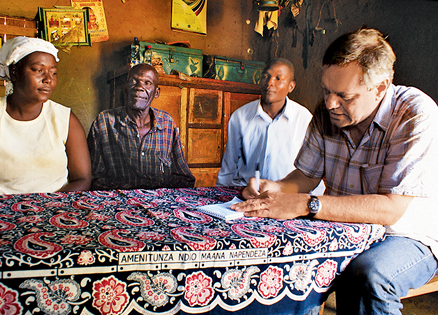
Andrew invited me to go to Kenya to learn more about One Acre Fund’s work. Soon I met Leonida Wanyama and other small farmers bravely risking their livelihoods on One Acre Fund’s promise to help them grow more food.

I had met countless African farmers while reporting stories. Something about this trip was different. Maybe it was because one of my first stops was not at a farm but at Leonida’s church in Lutacho.

It was there that a One Acre Fund teacher—himself a farmer—was showing a sanctuary full of farmers how to plant seeds in rows and space the seeds out by measuring with knots tied on a string. Traditional African farmers scatter their seeds and tend them haphazardly.

The class felt like a church service. The farmers sang, prayed, clapped and shouted hosannas.

For the first time since I’d started writing about hunger, I felt a stirring of hope, a deep pulse of optimism, as if God was showing me answers to all of my troubling questions.

I decided to chronicle a year in the life of these farmers in Lutacho and the nearby village of Kabuchai, writing about their yearning to change their lives. The farmers had far to go.

Leonida was 43 years old. Hardly had a year gone by without her enduring Wanjala, what Kenyans call the hunger season when food runs out. She and her husband, Peter, lived on about two acres, and grew corn, a Kenyan staple, on half an acre.

They had seven children. Anything extra they earned went to school fees.

Another farmer I met, Zipporah Biketi, lived in a hut in Kabuchai with a thatched roof that leaked into the bedroom. Her two youngest children were given middle names for the season in which they were born, Wanjala. Literally their names meant Hunger.

And yet these farmers were faithful. When Francis Wanjala Mamati, a 53-year-old farmer also from Kabuchai, waited for his year’s distribution of One Acre Fund seeds, he bowed his head and prayed silently. The entire gathering of farmers prayed, too, for rain and a plentiful harvest.

“Amen,” Francis whispered when the prayer concluded. “Amen.”

The year did not begin well. The farmers got their seeds and fertilizer on time—enough fertilizer for one thimble-sized dab with each seed. But then the rains, which signal the start of the planting season, did not come. Each day dawned bright and hot. Sunset glowed fiery orange on the nearby Lugulu Hills.

The ground was parched and dry, too hard for the farmers’ simple hand tools. Planting on small African farms is backbreaking work, done by bending over and chipping at the soil with a short tool called a jembe. Precious reserves of food are exchanged to hire a team of oxen. No one uses a tractor.

Timing is everything . Plant too early and seeds will die from lack of water. Plant too late and the soil will be mud. The farmers prayed for guidance. One couple I met, Rasoa Wasike and her husband, Cyrus, wrote prayers on the walls of their house.

Walking into their hut I was greeted by these words in chalk: “With God Everything Is Possible.” That year Rasoa and Cyrus bought a cow in hopes that, as One Acre Fund members they’d be able to feed the cow alongside their family.

The cow would produce milk for extra income. The income would help pay school fees.

At last, in the third week of March, the rains fell. Zipporah Biketi and her husband, Sanet, awoke before dawn, gripped their jembes and began to plant. “Almighty Father,” Sanet prayed, raising his hands toward the glowing eastern horizon, “take control of the planting. Thy will be done.”

Everywhere in Lutacho and Kabuchai, One Acre Fund farmers measured rows with knotted strings, dug holes, carefully added dabs of fertilizer and planted seeds. Then came months of weeding and tending.

It was the wet season, which meant malaria. Leonida, her husband and children were stricken. They scrounged money to pay for medication.

Shoots of corn appeared in fields. The shoots grew, rising higher than the farmers had ever seen. In August I joined Zipporah and Sanet as they awoke early to harvest. “There is no other like God,” sang Zipporah as she and Sanet strode through corn stalks with a machete.

Hack, hack, thump, thump. Ripe ears of corn fell to the ground. The corn was gathered; the husking commenced. I spent days sitting in huts shelling the corn by hand and preparing it to dry.

One morning I sat in Rasoa and Cyrus’s tiny living room. The radio played gospel music. Cyrus sat beneath the chalk words “I love my God.” Together we shelled piles of corncobs. We talked about school, about farming, about prayer.

I looked around. I was in a humble mud-walled hut surrounded by mounds of corn kernels. I had never been happier at work. I had never felt closer to God’s heart for the poor.

I remembered that verse from Matthew: For I was hungry…. At that moment the answer to all my questions about hunger seemed blindingly obvious. God feeds us, I understood, when we help feed each other, when we make sure others have enough.

World food policies must change, yes. But our hearts must change too. We have to recognize that the hungry are among us even if they live far away. God expects us to give our time, our resources and our love until everyone has enough.

That year Rasoa and Cyrus, Zipporah and Sanet, Francis and Mary, and Leonida and Peter grew bumper harvests of corn. They had enough to pay back One Acre Fund for their seeds and fertilizer. Enough to pay for school tuition for their children. Enough to eat through the coming Wanjala.

For Christmas that year Leonida’s family went to church then came home and ate a feast of beans, tomatoes, chicken, beef, bread—and bananas for dessert. “The land of milk and honey,” Peter sighed contentedly.

One Acre Fund now works with 130,000 African farmers, who together produce enough food to feed five times as many people. It’s a drop in the ocean of Africa’s food need. But it’s the beginning of a lasting solution.

For I was hungry and you gave me food. That’s a promise. And a calling.


Download your FREE ebook, A Prayer for Every Need, by Dr. Norman Vincent Peale

A Hospice Nurse Finds Glimpses of Heaven in Caregiving

Lenora was dying. She was 54 and had inoperable cancer. She lay in bed on pillows surrounded by fragrant flowers. The two of us were alone in her room. Lenora’s family was gathered at her house. Suddenly she addressed me sternly. “Ms. Nurse,” she said, pointing to a corner of the room, “this big angel comes and stands by my bed. Right there. He’s always smiling at me.” She fixed me with a look. “Ms. Nurse, when I see that angel, do you really think I see that angel?”

Something in Lenora’s tone told me she’d already tried convincing her family about this angel. Years before, when I first started working as a hospice nurse, I might have hesitated answering her question. I knew all too well the effects of medication and exhaustion on a dying brain. That day, though, I knew exactly what to say. I knew, because years of working with people at the end of their lives had taught me a new, more hopeful and, I believe, more truthful understanding of death. I knew Lenora was seeing more, not less, than the rest of us. “Yes, you do see that angel, Lenora. He’s right here in the room with you.”

A Journey of Faith In Article Ad - Avail Now

I never planned to become a hospice nurse. In fact, when I entered nursing school in the 1950s, there was no such thing as hospice, the formal program of care for terminally ill people. As a nurse I wanted to comfort people and save lives, not be there when they ended. If you’d asked me then, I’d probably have said what countless people have said to me over the years: “How depressing to deal with death every day!”

But it isn’t depressing. On the contrary, I mark the day I started work with hospice more than 20 years after I graduated nursing school as the beginning of my real education, an education in hope and joy. I’ve learned that death is not to be feared. In God’s loving hands it’s the door to peace and everlasting life.

My calling came about almost by accident. I worked for a while for a surgeon until I got married and had kids. I took a break from my career. Then my beloved father-in-law—we called him Grandfather—called one day with the news that he had pancreatic cancer. He didn’t have long to live. He and his wife, worried about coping on their own, asked if they could stay with us. Of course.

Soon after Grandfather and Grandmother arrived, I was running errands when I saw a sign for the local hospice organization, started by a minister and a nurse named Paul Brenner and Dottie Dorion. I went in. “I don’t know exactly what you do here, but I think I need you,” I said to Dottie. Soon, Dottie was helping care for Grandfather, ensuring he was comfortable and spiritually and emotionally prepared for what was happening to him. After he died, Dottie took me aside. “You’re a born hospice nurse,” she said. “I watched you caring for your father-in-law. You don’t seem to have that fear of death some people have. We’d love to have you as a volunteer.”

I wasn’t sure what to say. True, I was comfortable caring for people at the end of their lives. I’d done it for my dad and for a neighbor named Mary Anne. But they were people I knew. Dottie was telling me I had a gift. Finally I agreed to volunteer. I had the time now that the oldest of my sons was at college and my husband was traveling less for work.

At once I knew I’d found my calling. Not just because it felt good working again. Not even because I took to helping people in their last days. I knew hospice was my calling because almost from the day I started, I met people who showed me just how thoroughly I had misunderstood death. I came to understand the joy God has prepared for his children.

Consider one of my patients, Frank, a 68-year-old father dying of lung disease. One day Frank said to me matter-of-factly, “John is here with me now. Can you see him? He’s by the chair.” He meant his son, John, who’d been killed years before in Vietnam.

Startled, I said I couldn’t see John. “What does he look like?” I asked.

“He looks wonderful in his uniform,” he said. “He says it’s time for me to go.” A few nights later Frank died in his sleep.

Then there was Hank who, the day before he died, told me he’d just had a visit from his son Shawn. Shawn was in prison and couldn’t have visited Hank in body. But Hank was adamant. “I needed to tell him I forgave him and loved him,” Hank said with perfect lucidity.

I began to see a pattern in my work. The closer my patients came to dying, the more their eyes and spirits seemed to open to a reality I only glimpsed dimly. One after another, patients recounted not just visits from absent loved ones but an extraordinary awareness of God’s presence. Sins they’d agonized over for years suddenly felt forgiven. Grievances they’d spent a lifetime nurturing vanished in a rush of reconciliation. Even unbelievers unaccountably yearned for God, questioning or arguing with me about my faith, until all at once they began praying. Slowly it dawned on me that death is an ending only for those of us still wrapped up in the story of our own earthly lives.

From the perspective of the dying, death is a strange and wonderful beginning, a threshold to some new and more beautiful world. “Love must be like this, and it must be good,” a patient named Robin once told me. Robin was only 34. As death drew near, he focused ever more on his family gathered around him. He realized their love was a reflection of an even greater love awaiting him. The approach of death opened his eyes.

It has opened my eyes too. I remember when Grandfather was dying. One day we were sitting looking out the window. He turned to me and asked, “Who is that man standing there by the lake?”

“It’s the weeping willow tree,” I said.

“I see the tree,” he said with a smile. “I mean the man standing underneath. Who is he?” I saw no one and in those early days I had no idea what Grandfather might be referring to. That evening, though, I told my youngest son what Grandfather had said. “Do you think he saw Jesus?” my son, who was 10, asked.

I put the same question to Grandfather at bedtime. “Yes, dear, why?” he replied. He died a few hours later.

I believe all who die yearning for God see a wondrous presence as Grandfather did, someone who welcomes them from this life into the next. Thanks to my patients, I’ve been able to catch glimpses of that man under the willow tree, glimpses of heaven while I’m here on earth. There can be no greater hope than that.

This story first appeared in the April 2010 issue of  Guideposts magazine.

A Horse Named Pistol Helped Her Heal

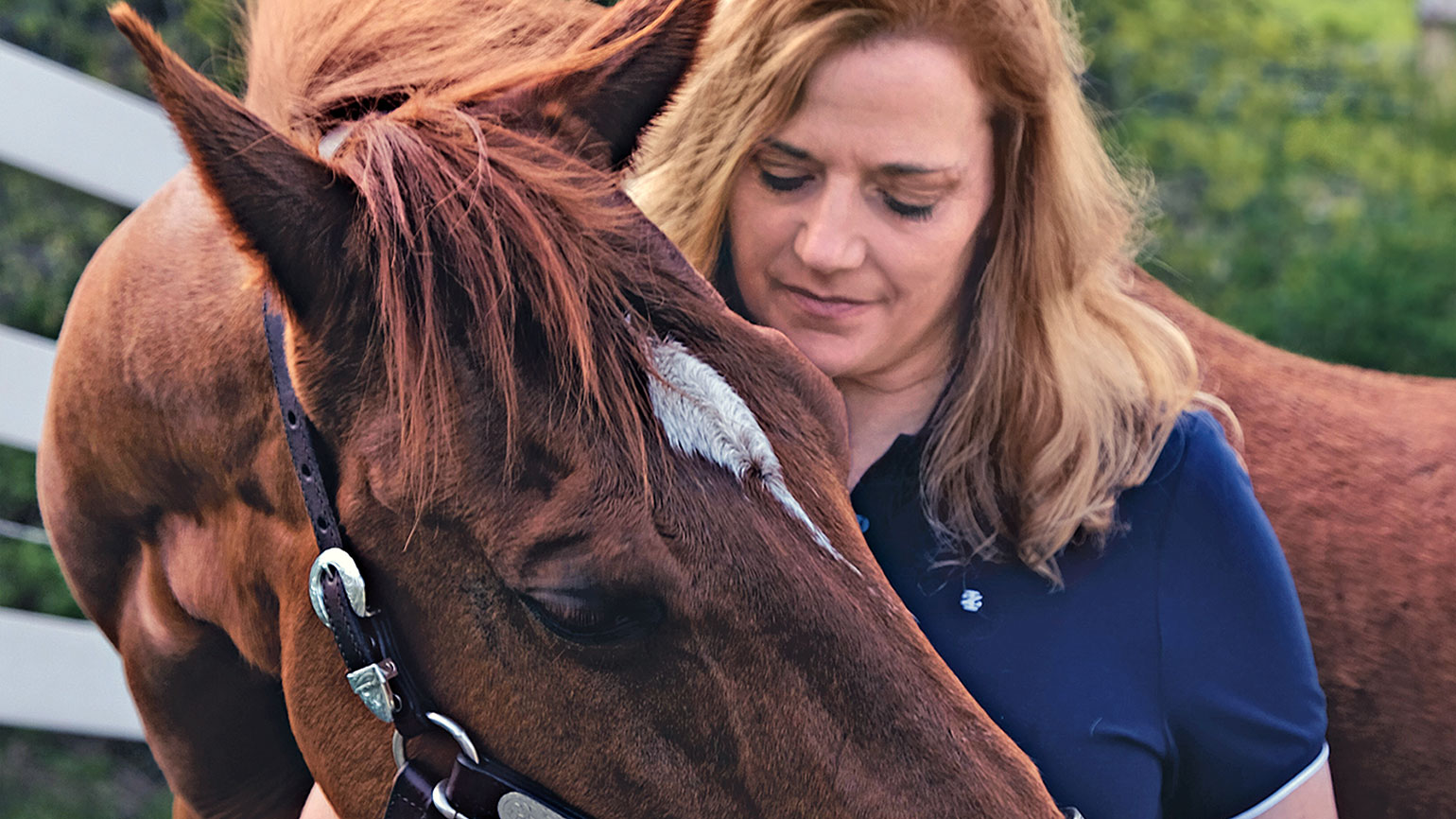
Pistol waits for me by the gate outside her stable. What took you so long? I can almost hear her thinking. It’s one of those mornings when the pain in my back, legs and arms makes me not want to even move. She nudges at my front pocket, at the peppermint puffs I’ve brought, her favorite treat. Practically my whole life, I’ve lived to be riding a horse. After the accident, the thought of never again knowing that feeling, that oneness, nearly killed me. I had lost so much: my job, my marriage. I had no idea then that it would be a horse who’d save me.

It started with such a small thing. In March 2003, getting out of my car on my way to work as an administrative assistant for the New York State Police, I’d slipped on ice, fracturing my left elbow. I had surgery and went on short-term disability for eight weeks while trying to care for three kids—ages 10, 8 and 7—as a single mom with one good arm. But what was the hardest was not being able to ride. I still owned the horse I’d bought when I was 12 years old, Reba. Ashlynne, my youngest, was learning to ride him with confidence. I loved sharing that bond. My cast came off and I went riding that very afternoon. I thought my troubles were over.

Sugarcreek Amish Mysteries In-Article Ad 2023

Two years later, I was driving and rested my left arm against the door. My hand went numb. I shook it to get the feeling back. Nothing. A week went by with no improvement. I went to a neurologist.

“Has this arm ever had some kind of trauma?” he asked. It took me a second to even remember the fall. “You’ve had nerve damage,” the doctor said. “Surgery should correct it. You won’t even miss a beat.”

Perfect, I thought. But the night after the operation, I woke, my arm throbbing. I took ibuprofen and spent the rest of the night tossing and turning. By the next morning, my fingers were swollen and turning blue.

Panicked, I called the surgical clinic. “Be patient,” the nurse said. “It shouldn’t last more than a couple days.” Within a week, my arm felt as if it were on fire. Finally, I told the guy I was dating, Scott. He said, “You should see another doctor.” He took me to a surgeon at one of the country’s top orthopedic hospitals.

“Will I need to have another surgery?” I asked.

“That wouldn’t help,” the surgeon said. “You have a condition called reflex sympathetic dystrophy, or RSD. Your nervous system is malfunctioning, which triggers pain signals and creates inflammation. The condition likely started with your original injury and then was aggravated by your surgery. There’s no cure. The most important thing is to stay active. If you don’t, your limbs can atrophy and require amputation.”

I tried to make sense of what the surgeon was saying. The thought I latched onto was: What about riding? I needed to have full use of my arms and legs, to be on my horse, not be distracted by pain.

Within days, the pain spread throughout my body. Even the slightest touch—from clothing or bedding—made me want to scream. I couldn’t shower. The force of the water was like a million pins stabbing me. Pinching my skin hard, digging my nails into my legs actually gave me a kind of relief, refocusing my mind from one kind of pain to another.

“Don’t, Mommy!” my kids would yell whenever they saw me doing it. It was horrible. I couldn’t hug the kids or do much to care for them. I felt worthless. They pitched in where they could. Ashlynne took over grooming Reba and her horse, Snoopy. Sometimes, I went with her. But one look at Reba’s big dark eyes, and the sadness would well up inside me. I’d always held fast to my faith. Was this pain my reward? God, how could you do this to me?

I went to a pain specialist. He prescribed opioid narcotics. They barely put a dent in the pain. But at least I could sleep. I didn’t take them until the kids got off to school, then spent the day in bed in a stupor. I quit my job and went on disability.

Through it all, Scott was there for me. “We’ll get through this,” he’d say. In 2007, when he asked me to marry him, I was so grateful that I’d never be alone. At our wedding, I managed to ride Reba, 28 years old at that point, sitting sidesaddle in my white dress, to where Scott and the minister waited.

Once we were married, Scott was different. He grew more demanding, less supportive. I felt trapped. In my house. In my body. In my marriage, which ultimately failed. I was 39. For three long years, I’d tried everything: Pilates, massage, acupuncture, yoga, physical therapy. Nothing helped. Nothing. Finally in the spring of 2008, I underwent an experimental surgery to implant devices along my spinal cord to modulate nerve impulses and lessen the severity of the pain. The implants didn’t eliminate the pain, but they made it more manageable.

Six weeks into my recovery, I saw a notice in an RSD magazine about a 5K charity walk in New York City, a few hundred miles from where I live upstate. The farthest I’d walked in months was the 50 yards from our house to the barn. I showed Ashlynne. “Mom, this looks great!” she said. As much as the walking, I was looking forward to meeting other people with RSD. People who understood what I was going through.

Ashlynne and my older son, Tyler, went with me. I was shocked by what I saw. People in wheelchairs. Others using walkers. Is this my future? I wondered. I made it the entire distance of the walk in Central Park, wearing a leg brace and leaning on my kids. I could barely take another step. Every cell in my body ached. Yet there was also joy I hadn’t known in years. I remembered what the doctor had said about my limbs: Use them or lose them. It was true about my faith too: Use it or lose it. Only God could love me through this pain. Not a man. Not even a horse. Besides, Reba’s riding days were behind him.

Lord, if I could just get off the meds, I prayed. I wanted my life back. I demanded my life back. In July, I made a roaring fire and tossed my pill bottles into the flames. By morning, I was in agony. I spent hours in the fetal position, willing my limbs to move. That became my morning routine, literally embracing the hurt, praying, meditating.

I heard about an autumn charity trail ride a local stable was putting on. Did I dare? Did I? The pace would be slow, but still…if I fell, especially with my recent operation, it would be a disaster. I remembered the vow I’d made in Central Park. A choice between faith and fear. I could do this!

Ashlynne and I went together. The horse I borrowed wanted nothing to do with me, and the feeling was mutual. Ahead of me, I saw a quarter horse, as shiny as a new copper penny, a young girl atop her. This horse was so gentle, her every step sure-footed, almost gliding. When the horse in front of her started acting out and kicking every horse around, the quarter horse calmly separated from the others, keeping the girl safe. I couldn’t take my eyes off that horse. I began to relax. Before I knew it, the ride was over.

I hobbled over to a cowboy, one of the trail ride organizers, as he helped the girl dismount. “That’s a beautiful horse,” I said.

“Her name’s Pistol,” he said. “We were training her for rodeo work, but then she injured her shoulder. She’s for sale if you’re interested.”

Injured? I stared into her big dark eyes. I’d already spent so much money on my surgery, but my family and I lived simply and the car was paid off. “I’d like to take her for a ride,” I said. A few quick circles around the stable and I was convinced. “I’ll take her.”

A few days later, she was in the stall next to Snoopy, my daughter’s horse. That morning, I’d spent curled up in agony. But I couldn’t wait to ride Pistol. Ashlynne helped me lift the saddle and cinch it. I put on the bridle, sliding the bit into Pistol’s mouth, as natural as could be. Already my legs, my arms burned. I slid my boot into the stirrup and winced. I swung my braced leg over her with a gasp of pain.

I steadied myself, the reins loose in my hand, then gently clicked my heels against her side. Pistol moved forward, slowly at first, then gaining speed, almost at a trot. I squeezed my legs tighter against her, bracing myself for the spasm of…

No pain. There was no pain! Not in my shoulders. Not in my arms. Nothing. All I felt was joy. And freedom. Freedom from pain. Freedom from fear. A freedom I’d longed for. On my own I couldn’t get there. But Pistol knew the way. As if she were guided. RSD would no longer control me.

It’s been 10 years now since Pistol came into my life and a lot has happened. My kids are grown, and Reba passed on. Nowadays it’s mostly Pistol and me. I work with her every day. The time we spend together never fails to comfort me, even when I’m not feeling up to riding her. Most likely, I will live with pain for the rest of my life. God didn’t give me pain. He didn’t take my pain away. Yet God is with me in the pain. He knew a gentle steed named Pistol would carry me out of despair.

For more inspiring stories, subscribe to Guideposts magazine.

A Horse for a Prince

Sunday evening at Church on the Rock in Oklahoma City. Soft music filled the sanctuary. I stood near the altar, my attention fixed on the two women facing me, their heads bowed in prayer. They were prophetic ministers, there for our Apostolic and Prophetic Conference. For those who were open to it, the women would relay words from the Holy Spirit, words they hoped would have an impact on our lives.

I wasn’t sure what to expect. A few years earlier, a different set of women at the conference had told me they saw me in business. “Use your gifts in the marketplace,” they urged. At the time, I’d been a busy stay-at-home mom while my husband, Randy, worked as a geophysicist.

Community Newsletter

Get More Inspiration Delivered to Your Inbox


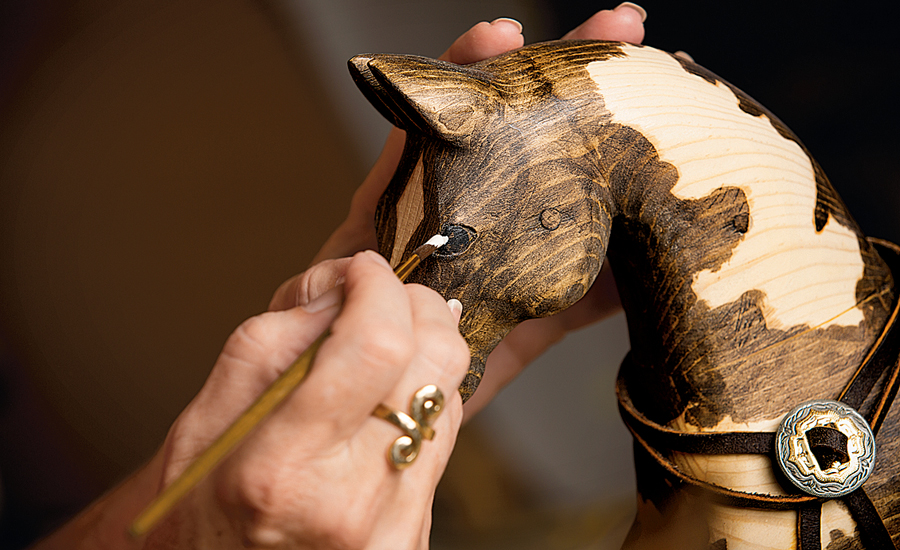
I spent my rare free time carving wooden rocking horses—a skill that came easily to me. One that people said was my gift. But I hadn’t had much luck selling them (most went to friends or relatives) and rarely made them anymore. Starting a business just didn’t make sense.

I leaned in closer. What would be said this time? Finally, one of the women lifted her head. “Jackie,” she said, “You have a gift that you’re not using.”

“I’m getting that feeling too,” the other woman said. “A talent that you’re meant to share with people. In the business world.”

Not again! I thought. This business thing? I loved handcrafting the old-fashioned horses, but if I had to practically give them away, why would I open a store? Especially at my age? I was almost 60. I’d dreamed of spending more time with Randy once he retired.

Clearly these women were off their rockers!

I ducked into a pew and prayed. Lord, I know you gave me a talent for making these horses, but people just aren’t buying them. What do you want me to do? I’m so confused.

About the only thing I was sure of was that God outdid himself when he created horses. They’d entranced me since I was 12 years old, growing up in Roselle, Illinois. That’s when Dad came home with Chiquita, a stunning pinto horse, for my older sister and me. I was in heaven! I’d blow through my homework and even things I liked doing (like tinkering with wood projects in Dad’s workshop in the basement) just so I could have more time with her.

My love of horses had only grown stronger by the time I married Randy. We moved to Oklahoma and I became pregnant with our daughter. One afternoon I thumbed through an issue of Early American Life magazine. An article practically galloped right off the page: “How to Make a Wooden Rocking Horse,” with step-by-step instructions.

Horses and woodworking? Perfect! I thought.

“I’ve got to make this for the baby!” I told Randy.

“If anyone can do it, you can, Jackie,” he said. “And I bet yours would be even nicer than that one.”

I got to work. I bought some wood: pine for the horse’s body and red oak for the legs and rocker. I thought I could do better than the magazine’s pattern, so I tweaked it a bit.

I hand-cut and shaped the pieces with the band saw in our garage, using the skills I’d taught myself in Dad’s workshop. I glued the horse together, then meticulously chiseled and sanded the head and body. Finally, I painted its coat a dappled gray and added a small saddle. All in all it took about a month of working on it for several hours a day.

“Wow! That is something else, Jackie!” Randy marveled. “You should really think about making these and selling them.”

“You’re crazy!” I told him. “I don’t know the first thing about any of that.”

“I’m serious,” he said. “Not every child can have a real horse like you did, but you could create almost the next best thing—something that can be passed down through generations.”

Building a horse for my own child was one thing. Building them for sale was another. They were labor intensive and never meant to be mass-produced. But when I began to consider making another horse, this one for our son, Justin, who arrived two years later, I asked myself, Can I really do this for other children? Or is it a hopeless dream?

I made six new horses, taking about a month to do each one. They turned out better than I’d dreamed! I even used real horsehair for their manes and tails. I priced them at $600 apiece (a fair price, I thought, considering the hours and hours of labor that went into them) and set up a booth at an art fair.

I sold one horse.

For less than half price.

The kids grew up, yet I couldn’t stop making rocking horses. It was like a compulsion. I tried selling them at different craft shows but hardly anyone bought them. It was no use! I finally put my tools away.

Now, as I left our church’s conference, the words from the prophetic ministers kept playing over and over in my mind.

Had God given me this insatiable urge to make rocking horses because I was meant to open a store? Would they sell better once they were all set up in a shop, on display for everyone to see?

I raised the idea of a store with Randy. “I’m all for it,” he said. “People need to see these horses, Jackie.”

In 2011, I found an affordable lease in a building right on Main Street in the heart of downtown Edmond. I put my best horses in the big picture window and hung a sign out front: Wilson Rocking Horses. I had a website set up too, so folks could order from home.

At first, there was excitement over the new shop. Families bustled in, kids hopping up on some of the horses to play. But the economy was in bad shape. Most parents were struggling to get through Christmas and birthdays. People couldn’t afford a handcrafted rocking horse. And not one order came through the website.

“What should I do?” I asked Randy when the time came to renew my lease.

“I’m so sorry, Jackie,” he said. “I know you’ve poured your heart and soul into the shop…but it’s just not making a profit.”

It broke my heart to hear those words, but deep down, I knew he was right. I had to shut down the business.

The day I cleaned out the shop, I think I cried the whole time. I ran a soft cloth over my worktable, watching wood shavings fall to the floor. I thought about saving them, the way I’d saved the locks of my children’s first haircuts.

How had this happened? I had heard those prophetic words—not once, but twice. I had prayed for God’s guidance and I thought I knew what he wanted from me. Lord, am I a failure at being your servant? On top of being a business flop?

Still, soon enough, i found myself back out in the workshop behind our house, designing a new horse. Who cared if I could sell them? I loved making them. One afternoon, I had just stepped inside to grab a soda from the fridge when the phone rang.

“I’m from the State Department,” a woman said, introducing herself. “Do you have time for a few questions?”

I swallowed the cold fizz and coughed. “What?”

“I was on your website and I’d like to talk to you about your rocking horses,” she continued.

The website. I’d forgotten about it. I’d meant to shut it down.

“Sure,” I said. “How can I help you?”

“My job is to purchase gifts for dignitaries and I’d like you to make a horse for us. It will be a gift.”

“Who is it for?” I asked.

“I can’t say,” she said. “It’s classified.”

I jumped at the chance, no charge. This would be fun. A secret rocking horse! We talked about the design. The specifications were elaborate. It was by far the most intricate horse I’d ever attempted. I made the horse and shipped it off.

About a year later I was out in my workshop using the band saw, making yet another rocking horse, when a text popped up from Justin. Mom, answer ur phone! it read. I called him back right away.

“Turn on Good Morning America!” he said. “I think they’re showing one of your horses.”

“That can’t be,” I said, running into the living room to fetch the remote. But as soon as I clicked on the channel, my mouth dropped.

They were showing off a rocking horse that the President of the United States had sent to Prince George! So that was the big secret! My horse had gone to an heir to the English throne!

Randy was so proud that last summer he flew us all over to London to see the horse in person in a display at Buckingham Palace. There, among other extravagant gifts, was the rocking horse I had made. My business’s name was engraved on a bronze plaque as the creator, along with the President and First Lady’s as the donors.

Several orders came in through the website after that, then slowly trickled off. That’s okay, though. I’m still making my rocking horses, finding joy in simply exercising the gift God gave me.

Horses, real and wooden, are Godgiven. Yep. He really outdid himself on that one.

Download your FREE ebook, Rediscover the Power of Positive Thinking, with Norman Vincent Peale.

A Hopeful Heart

The house was quiet. It was a spring day in 2011, mid-morning. My two older boys were at their preschool. Mike, my husband, had left for work hours ago. And Matthew, my youngest, my precious two-year-old, had just gone down for a nap.

I sat at my computer. I clicked over to the Facebook page that had become one of my go-to’s, a page for parents of children with congenital heart defects. Kids like Matthew.

Mys of Blackberry Valley In Article Ad

It took a moment for me to start reading without feeling distracted, without worrying whether Matthew was eating enough to keep growing, to keep his heart from failing. I wanted to understand this ailment, to give some meaning to these families’ suffering, to somehow find a ray of hope.

“Our daughter died three days after we brought her home from the hospital,” one post read. “We never knew about her heart defect. Until it was too late.”

There were so many posts like that. Families whose babies never had a chance because no one realized anything was wrong with them. The saddest thing was, it didn’t have to be that way.

People had posted that a simple test, a sensor placed on a newborn’s finger, could measure the baby’s pulse and blood oxygen level, and give an instant indication of a possible heart abnormality— the most common of all birth defects—and, most important, a chance for corrective surgery.

But most hospitals didn’t screen newborns for this. Only two states—Indiana and New Jersey—had passed laws requiring the test. In Indiana, a mother had pushed for the change—after the death of her baby girl at five days old.

I couldn’t imagine her sorrow. It had to be unbearable. And yet look what she’d done…

I heard Matthew stirring in his bedroom. We’d been so blessed. Even now the memory of the grim discovery during a routine ultrasound—the thought of what might have been—made my chest tighten.

“Your baby has a problem,” my obstetrician said, his face drawn. “The right ventricle of his heart hasn’t developed. He has only half a heart.”

How could this be? I was 23 weeks along. Everything had seemed fine, no different from my first two pregnancies.

“He’ll need multiple surgeries,” the pediatric cardiologist told us later that day. “But even that may not be enough. It’s going to be a major challenge for all of you. I’m sorry I can’t be more hopeful.”

For the next four months Mike and I prayed. I prayed for a miracle. For strength. For comfort. Most of all, I prayed for understanding. I’d always believed that God has a reason for everything that happens. But what good could possibly come from this?

My care was transferred from my local doctor to a specialist at Columbia-Presbyterian Hospital in New York City. Mike went with me every other week for tests. But the prognosis never changed. Our only hope was that the baby would live through the surgeries.

Still, what would his life be like? Would he be frail? Would he be able to run around with his brothers? “I wish I could tell you,” the doctor answered. “But there are a lot of unknowns. It’s important, I think, to stay focused on the present.”

I needed something more than that. Something I could cling to. Anytime I couldn’t feel the baby kicking, my worries went haywire. Was he okay? How was I supposed to know?

Then one day a word came to me, one that lingered in my mind. That night, when Mike came home from work, I said, “I thought of a name for the baby.”

“Me too,” he said, looking surprised. “What do you think of Matthew?”

“How did you know?” I said.

We looked it up in our baby name book. “Gift from God,” I read.

I said a new prayer: “Dear God, I’m so scared. But I know Matthew’s in your hands. All I can do is trust in you.” I felt a sense of peace wash over me. God was at work in Matthew’s life.

Matthew was born a few weeks later on August 6, 2008. A nurse rushed him to the neonatal ICU before I could even hold him.

A team of surgeons and nurses performed the intricate job of bypassing the right side of our son’s heart, enlarging his atrium and ventricle and disconnecting the blood return in order for it to take on the workload of a whole heart.

“It’s vital that he grows at a normal rate,” the doctor said when we were finally able to take him home, a whole month after he was born. “The challenge is that with his heart working twice as hard, he’ll need more calories. But he’ll also be tired, so he won’t want to eat. We’ll weigh him once a week.”

Caring for Matthew became my sole focus. For the first six months I fed him breast milk every two hours, coaxing him to eat as much as he could. Mike was a huge help, seeing to our older boys, Michael and Ryan, and doing the chores. Still, it was exhausting.

Before the boys were born, I’d worked as a hospice nurse, but this was stress I’d never experienced before. Some weeks Matthew barely grew at all, or worse, lost weight. Those were the times I felt most alone. Wasn’t I doing enough? What more could I do?

At six months Matthew weighed 12 pounds, eight ounces. The doctors were cautiously encouraged. We’d reached a milestone. He was ready for his second operation in early 2009.

The phone rang a few days before the surgery. “Hi, my name’s Erica,” the caller said. “My daughter Faith was born with a heart defect and, well, our doctor suggested I call you since your son will be going through the same surgery.”

She gave me advice on what to bring to the hospital and where to stay. What I appreciated even more was talking to a mother who knew what I was going through.

Erica was my connection to this world I was now a part of yet understood so little about. I’d never known how common congenital heart defects were.

I hoped Matthew and Faith would have playdates, become friends as they grew older. But it wasn’t to be. Faith died just months after her second birthday.

Now in my study at my computer I thought of how much each moment with Faith had meant to my friend Erica, how much each day meant to a parent of a child with a heart defect.

And these Facebook posts, from families left to wonder what might have been. They had never seen that first smile, fed their sweet babies their first bite of rice cereal. For want of a simple test.

I knew what I had to do. I could see God’s hand so clearly at work. He’d given me Matthew. Now he was showing me a way to help give other children with heart defects a chance at life.

I called the mom in Indiana who’d gotten the law passed there requiring newborns to be tested for heart defects. She gave me tips on media coverage.

“Just tell your story,” she said. “But it’s not easy. You’re going to need to tell it over and over.” I researched who to contact at the Connecticut legislature and mailed letters.

But I knew it had to be more than just my story. I wanted the law to be named in memory of Faith. A few weeks later I met with my state senator. He listened, nodding encouragingly.

“You’ve got my vote,” he said. “But you need to understand. These things take time. First it has to go to committee and sometimes it takes years before they’ll even hold a hearing.”

Years? “This can’t wait that long,” I said. “We need this law now.”

But what could I do? I was just a suburban mom with three young children, not a lobbyist.

“You need to get more people involved,” a friend said. “Start a nonprofit. Raise money and get the word out.”

I didn’t know how to do that, but I found other people who did. I used my contacts from my nursing days and doctors I’d met through Matthew. We called our organization Matthew’s Hearts of Hope. Our purpose: to raise awareness of congenital heart defects and support research on CHD.

At a craft fair I met a woman who made necklaces with beautiful ceramic pendants. “Could you design one with two hearts?” I asked. I couldn’t believe my eyes when soon afterward she showed me the pendant: a whole heart covering half a heart.

I ordered 100 of them with Matthew’s initials on the back to sell to family and friends who donated to our organization. Then 100 more. Soon it seemed as if women all over town were wearing them.

In August 2011 Matthew went in for his third open-heart surgery. He was in the ICU for six long days recovering. I couldn’t bring any of his toys. There was nothing I could give him to lift his spirits. I felt bad for him and for the other kids. “They need something to make them smile,” I said.

“What about pillows?” a nurse said. “Heart pillows.”

Everyone loved the idea. Matthew’s preschool teacher offered to buy fabric. The whole school pitched in.

That’s where I was that day last February, in a room filled with kids stuffing heart pillows, when the state senator’s office called on my cell phone. “Marie, your bill is going to be considered by the committee. They want you to testify at a hearing.”

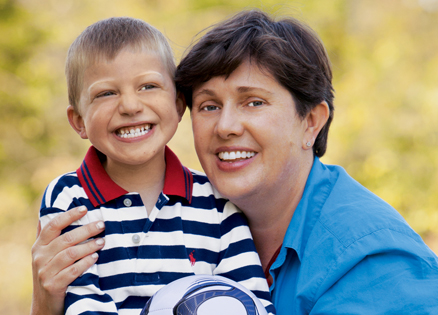
Matthew, an active little boy who loves swimming and playing soccer with his brothers, went with me. The bill passed out of committee unanimously, then the House and Senate. On May 8, 2012, Connecticut became only the fifth state to require newborn screening for heart defects.

It’s very possible a child’s life has already been saved because of Matthew and Faith’s Law. People want to give me the credit. Yet I know it was God’s hand that moved mine.


Download your FREE ebook, True Inspirational Stories: 9 Real Life Stories of Hope & Faith

A Heavenly Retirement Send-off

 It was never going to happen. Not even my family was planning to make a big deal about my retirement from the Army. After all, I was a humble chaplain, not a five-star general. No one would be unveiling a statue in my honor. The president wouldn’t be calling.

Still, I’d served my country for 36 years, on active duty and in the reserves. In Vietnam and Oman. I’d graduated from West Point, the class of ’64. My service seemed worthy of some kind of recognition. I didn’t want to just slip away unnoticed.

Pray A Word a Day - 2023 In article

I had this crazy idea, a kind of Walter Mitty fantasy, the most perfect send-off I could imagine. I wanted a parade.

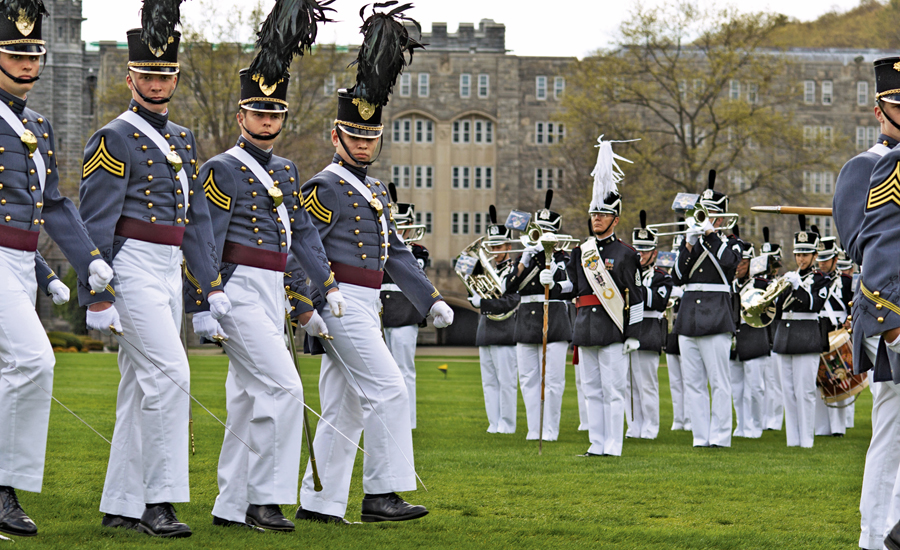
Not just any parade. I could picture it: Me, Chaplain Colonel Arthur Mack, in my shining moment, standing tall in my dress uniform at West Point, shoes spit-shined, looking over a vast green field while cadets marched past, each company snapping off a salute, a band playing the Army song.

I know. Dream on. The thing was, I’d had this idea way back when I was a plebe, marching across the Plain, our parade field, surrounded by the beauty of the Hudson Valley. We marched at least three times a week, drilling until we could step off perfectly in sync.

It was serious business, even more a part of our training than marksmanship and close-quarters combat. It was about discipline and precision. Each company was graded on its performance.

Of course, it was partly pageantry too. At West Point, parades were part of special occasions, the ultimate sign of respect. We marched in President Kennedy’s inaugural parade, and for General Douglas MacArthur’s farewell address.

There were less historic occasions as well, such as when staff or faculty retired. That’s where I got the idea. One sweltering May afternoon standing at attention on the Plain, I couldn’t help but think how wonderful it would be if someday the cadets would march just for me.

That would be the all-time best way to retire. I smiled at the thought. I was 22. I couldn’t really imagine being old enough to retire.

I graduated and went on to Ranger school. In 1966, I was sent to Vietnam. My heavy-artillery regiment was stationed in a village outside Saigon. I came home a different person. I’d seen the effects of war.

I loved the Army, but I wanted to find a different way to serve, a way of connecting more deeply with other soldiers. I prayed about it and talked to my minister about becoming a chaplain. “I’ll recommend you for ordination,” he said.

Now I could look back and see the path that God had set out for me, every assignment—from Fort Monroe, Virginia, to Fort Richardson, Alaska—leading me to this point in my life, pastoring a small Episcopal church near Buffalo, New York, full-time, and ministering at a Reserve hospital in Niagara Falls when my unit had drill weekends.

The camaraderie of a military unit, the opportunity to be a comforting presence for so many wonderful young men and women, to be part of something greater than myself…I was going to miss all that. At least with a parade I could go out with a bang.

But as my retirement date, October 1996, drew near, I had to face the facts. I was nobody. The idea of a parade just for me was ridiculous.

Then I saw a notice for a chaplain-training conference at Fort Dix, New Jersey. It was in September, weeks before my time was up. I could stop by West Point on the way back to Buffalo.

I might be able to watch the cadets practice marching. I could stand in the shadows and pretend they were marching for me. When I left for Fort Dix, I packed my dress uniform, just in case.

By the last day of the conference, all I could think about was going to the academy. I got my hair cut and shined my shoes until I could see my reflection in them. I was excited, but I felt a little silly. It wasn’t like anyone was expecting me.

I got to West Point about noon. At the Office of Graduates I asked if there were any parades scheduled. “Yes, sir, there’s one at sixteen hundred.”

I had lunch at the officers’ club, then strolled over to the chaplain’s office and chatted for a while. I spent the rest of the afternoon walking the grounds. By 4:00 p.m. the long-awaited time had arrived.

I stood at the bleachers. The Plain was empty. I waited for 15 minutes. Finally I saw a few cadets clustering around a microphone. I walked over. When they saw me in my uniform, my silver eagles shining in the sun, they stood at attention and gave me a sharp salute. I returned their salute.

I told them I was a sentimental old grad who would be retiring soon. “I just came to see the parade,” I said.

“Sir, there is no parade today,” one cadet said. “There will be one next week when General Vessey receives the Thayer Award.” I tried to hide my disappointment at the news, but it felt as if my whole body were wilting.

“We are having a practice to prepare for the visit and we need someone to fill in for the reviewing officer,” she added. “Sir, would you be willing to do that?”

Inwardly ecstatic, I calmly asked, “What exactly would I do?”

“Stand on this spot and when it’s time I’ll signal you to give the command ‘Pass in review.’ The cadets will pass in front of you and salute.”

I strode to my spot. One after another the companies of cadets marched onto the field. In my strongest command voice I gave the order, “Pass in review.” In perfect formation the cadets marched in front of me and saluted, the band booming in the background.

I doubt any five-star general could have felt more excited and honored than I did at that moment. It was the retirement parade I’d always dreamed of, but never imagined possible. I lifted my eyes to the sky. Thank you, Lord, for looking out for your servants, even this not-so-humble one.

The cadets pivoted and marched off the field, a long gray line I would always be a part of.


Download your FREE ebook, True Inspirational Stories: 9 Real Life Stories of Hope & Faith.

A Healing Practice: This Calming Technique Helps Manage Chronic Pain

If you suffer from chronic pain—particularly chronic back pain—you are far from alone. Since 2010, chronic pain has been considered to be a health condition in and of itself—and an estimated 100 million American adults experience chronic pain each year.

There are myriad approaches to coping with and reducing chronic pain. Among non-medical interventions, calming, mindful practices are supported by research, such as one study that showed an immediate benefit to those who practiced a “body scan” technique. The study reported reduced pain levels and distraction caused by pain after the practice.

Pray A Word a Day - 2023 In article

A body scan is a mental exercise in which you move your attention over your entire body and notice sensations without trying to change or “fix” them. This is an easy technique that you can practice anywhere, without any special equipment, apps, or even a quiet space (though guided meditations and quiet, peaceful surroundings can certainly help you relax).

At first, a body scan might seem counterintuitive as a way to manage chronic pain—if you are focusing your attention on parts of your body that are in pain, won’t that exacerbate the feeling? Psychologists and other researchers suggest the opposite; building awareness of specific sensations in your body, even if they are uncomfortable, will help you keep your pain in perspective and, over time, learn to manage it.

A body scan is easy to do:

  • Find any comfortable position—lying down, sitting, or standing comfortably all work.
  • Take a few deep breaths, bringing your attention away from eternal stimulation and into your inner world.
  • Choose whether to start at the top of your head or the bottom of your feet. Direct your attention to either place in your body.
  • Notice any sensations in your body as you mentally scan yourself either from top down or bottom up. These can include temperature, muscle tension, achiness, alignment, or simply the feeling of one part of your body connecting with the adjacent parts.
  • When you encounter an uncomfortable place in your body, breathe deeply and focus on that area. Be curious—what happens when you calmly breathe into the tight spot?
  • Continue until you either reach the top of your head—mentally releasing any tension you feel upward—or the soles of your feet—grounding yourself in the earth.
  • Take a couple of final deep breaths before moving on with your day.

Have you tried a body scan? Has it helped you relax or cope with chronic pain?

A Guardian Angel Named Floyd Henry

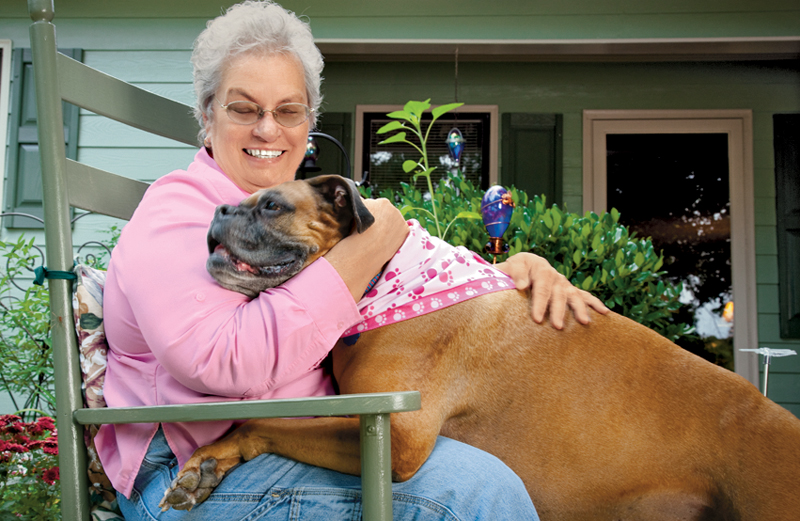
Dogs have always held a special place in my heart. Where others might just see an animal, I see a part of my family. So when my boxer, Floyd Henry, came up to me one evening while I was sitting on the sofa, I put down my novel and leaned in to give him a hug.

“Come here, boy,” I said, holding out my arms. He put his paws up on the sofa cushion and settled into my embrace. But then he reared his big square head.

Sugarcreek Amish Mysteries In-Article Ad 2023

“What is it?” I asked. “What’s got you startled?”

Floyd Henry regarded me with a questioning expression. This is odd. Floyd Henry had never given me such a concerned look before. Not in all of the five years we’d been together. He sniffed at my nose and mouth. Then he snapped his teeth in my face.

“Hey!” I yelled. I couldn’t believe what had just happened. Floyd Henry was in no way, shape or form aggressive. And we didn’t ever play rough.

I took his head in my hands, gently, but firmly. “No!” I said. “We don’t do that.”

Floyd Henry didn’t back down. Again, he snapped at my face. “Bad boy!” I said harshly, although it pained me to do it. I never had occasion to speak to him that way.

I pushed his paws back down onto the carpet. “Go lay down,” I told him.

Floyd Henry trotted off. I picked up my book and settled back into the sofa. But I couldn’t relax. There had to be a logical explanation for Floyd Henry’s behavior. Was he trying to grab food I dropped on myself at dinner? Was he scared of something? My loving companion wasn’t making sense.

In a way, the very beginning of our relationship didn’t make any sense, either. I hadn’t been looking for a dog when I bought Floyd Henry. I noticed an ad in the classified section of the newspaper: “Boxer for sale.” I flipped the page and sipped my coffee. I certainly didn’t need another dog.

Since retiring from teaching I’d been fostering boxer dogs in my home. Many came to me with physical limitations and emotional scars. I was determined to help them overcome their problems.

When I was a teacher, I taught all of my students that they were special and had a reason to be on this earth. I believed the same for my dogs.

One of my charges laid his chin on my knee as I browsed the rest of the classifieds that day. My mind kept going back to that tiny ad. I turned back. Boxer for sale.

Find out more about one of Guideposts.org’s sponsors, Cancer Treatment Centers of America

With so many dogs already counting on me, why was I even giving the advertisement a second thought?

Curiosity welled up inside me. I wanted to know this dog’s story. Why was he being sold? Where would he go? I gave in and made the phone call. A man answered, and we arranged to meet later that day.

I heard barking as soon as I stepped out of my car onto the property. The storm door opened and a puppy ran out, his tail wagging. The man of the house shook my hand.

“My daughter brought the puppy home,” he explained. “But then she went off to college. My wife and I were looking forward to traveling now that we have an empty nest, and we just can’t keep him.”

Looks like I’m getting another dog after all. For whatever reason, God had put us together. We loved each other—so why was he snapping at me? I watched Floyd Henry settle onto his bed for a nap. I tried to put the incident out of my mind.

But Floyd Henry’s odd behavior continued. He furiously sniffed at my breath and snorted loudly whenever I leaned in close to him.

Four days after he initially snapped at my face, I leaned in for another hug. He swung his head sharply and bumped my right breast with his nose. Hard.

“Ouch!” The pain was so intense I had to take a breath to get my bearings. Why was my breast so tender? That day I scheduled a mammogram.

“Ms. Witcher,” the surgical oncologist said after examining the results, “there’s a mass in your right breast. We can give you a breath test to learn more.” All I had to do was puff air into a small cylindrical tube. The organic compounds in my breath were then tested in a lab. I had stage three breast cancer.

The reality of my situation slowly began to sink in. I had to start treatment right away. Thank goodness for that mammogram!

Then I remembered why I got it: Floyd Henry had been trying to alert me to the danger he’d smelled on my breath. He had even tried to show me exactly where the tumor was when he bumped me.

After my first treatment, Floyd Henry greeted me at the door. Like usual, he snorted and huffed at my face. But this time I thanked him. “You’re a good boy, Floyd Henry. A good boy, and an angel.”

One year of chemotherapy and radiation shrunk the tumor so that my surgeon could remove it. Throughout treatment, Floyd Henry was at my side. I’ve now been cancer-free for more than three years. My tumor was detected in time for treatment— thanks to the newspaper ad I couldn’t ignore.

We’re all put on this earth for a reason. Floyd Henry was put here to save my life.
 

Download your FREE ebook, A Prayer for Every Need, by Dr. Norman Vincent Peale

A Grieving Widow Receives a Sign of Hope

I walked up and down the aisles of the bicycle shop, fighting back tears. Michael is supposed to be here with me, I thought. 

Two months before, my husband, Michael, died in a car accident. I tried desperately to keep a brave face for our two young boys but his death left a gaping hole in our hearts. Especially today. Michael had promised to buy our youngest a new bicycle for his eighth birthday. Now, here I was, doing it alone.

Sugarcreek Amish Mysteries In-Article Ad 2023

It was just another reminder of all the other things I’d experience by myself now. Birthdays, holidays, even our 18th wedding anniversary, just three weeks away. How would I get through that day without Michael?

Suddenly, a cherry-red bike caught my eye. It was perfect for my son. On my way to the register I spied another red bike—an adult one. My bicycle was unreliable for keeping up with two active boys, so I treated myself.  

“Don’t forget to buy chains and locks,” the salesman said.The bicycle I’d picked for my son came with a matching set, but I looked all around the store and couldn’t find a set for mine. Lord, Michael was so good at this stuff. Help me, I prayed.

Just then, on the bottom shelf, I spied a red padlock and chain. A perfect match.

The day of our wedding anniversary I’d never felt more alone. I could’ve stayed in bed all day. But Michael wouldn’t have wanted that. “Kids, let’s go for a bike ride!” I grabbed our three bicycles from the garage, along with my lock and a pen to jot down the combination: 38, 18, 38.

Those numbers! I’d never need to write them down. Michael and I would’ve both been 38 years old on our 18th anniversary. A reminder I wasn’t so alone after all.

A Grieving Mother Finds Peace

I turned the flash drive in my hands, my fingers running over its smooth case. It didn’t seem right that the last months of my son’s life were contained in this tiny bit of plastic and metal and computer circuitry. It felt flimsy, inconsequential, the complete opposite of my Joseph, a natural leader with a big presence—strong, solid, comforting.

Losing him left a void in my life so painful I couldn’t see how anything could ever fill it. I’d lost a part of myself forever. My husband, Carey, had re­turned to work, and our two younger children had gone back to college. I couldn’t seem to get back to my normal routine. I went to church, but I couldn’t sing in the choir or play my flute in the orchestra without breaking down. I turned away from friends. Some days I didn’t even leave the house, as if being alone with my grief was the only way to hold on to my son.

God's Constant Presence In Article Ad

Joseph was a sergeant in the Army’s 411th Military Police Company, stationed in Baghdad. The last time he called from Iraq, I asked if there was anything special he wanted when he came home on leave. “A big steak,” he’d said. “And I want to see the Gamecocks.” He was a huge University of South Carolina football fan. Carey and I bought tickets to a game. I could hardly contain myself. At night I would gaze at the sky and imagine that Joseph saw the same bright moon thousands of miles away in Baghdad. It made me feel closer to him. Soon, Lord, I’d think, soon he’ll be with me again, and we’ll look at the moon together.

That was before the call, the call every soldier’s mother dreads. One late September day, just a few short weeks before he was due home, Joseph was felled by an insurgent sniper. He died in surgery. He was only 25.

I should have been laughing with him as he hugged me so hard he lifted me off my feet, leaning into him as he yelled himself hoarse cheering for his beloved Gamecocks. Instead, I wept, sorting through the boxes the Army delivered. The men in his unit had packed up his belongings and returned them to me.

Here I was, months after the funeral, rummaging through Joseph’s things again, as if touching what he had touched could somehow bring him back to me. There were the laces from his boots, the desert dust still on them. The T-shirts that carried a hint of his scent. His Game Boy. The phone card he used to call home. The letters he’d saved—letters I’d sent in my care packages, every one sealed with a prayer for his safe return. Now the only prayer I could manage was for God to bring me out of this terrible, endless grief.

Joseph was my oldest, the only child from my first marriage. For a while, it was just the two of us. We were a tight team. Even after I married again and he had a stepfather and a younger brother and sister he loved, Joseph and I had a special bond. He was a big, strong kid. Loved to laugh and make everyone else laugh with him. He had a musical side and took up the cello. That pleased me to no end. I couldn’t wait for the day he joined me in our church orchestra. Only that day never came because Joseph discovered baseball. He put away his cello, and sports, not music, became his thing. In high school, he was the captain of the football and basketball teams. I was proud of him but a little concerned too, wishing he’d devote that same energy to his studies.

He graduated and, for a couple years, bounced around from job to job. Nothing seemed to be the right fit. My worries grew, and so did my prayers. Lord, I asked, let Joseph find his true purpose in life. Guide him.

Even so, I was upset—shocked—when he announced that he’d enlisted in the South Carolina National Guard. I begged him to reconsider. “Please, Joseph…you could get hurt.”

He was resolute. “Mom, this is what I really want to do,” he said.

Joseph thrived in the National Guard. He served with a military police unit and after a year, joined the Army. He did stints in South Korea and Iraq. First Tikrit, then Baghdad, where he was asked to help train Iraqi policemen. He loved his work. I could tell from the excitement and wonder in his voice when he told me about it that he had found what he was meant to do. He called in the afternoons, around three o’clock my time. The caller ID would come up Caller Unknown, but I knew it was him.

“Mom, you should see what I’m seeing,” he said. “The people here are really inspiring. I wish you could meet them.”

He promised to do the next best thing: Take pictures, tons of them. “I’ll put ’em all on a flash drive,” Joseph said. “We’ll have a big slideshow when I come home and I can tell you everything.”

That flash drive had been among the things the Army returned to me. For weeks I’d been staring at it, picking it up and putting it down again. At first I couldn’t bear the thought of looking at all of Joseph’s photos from Baghdad. What would be the point, if he wasn’t there to tell me the stories behind the pictures?

 But with each day that passed, I felt like I was losing more of him, as if that connection between us was weakening, fading bit by bit like his scent from his old T-shirts.

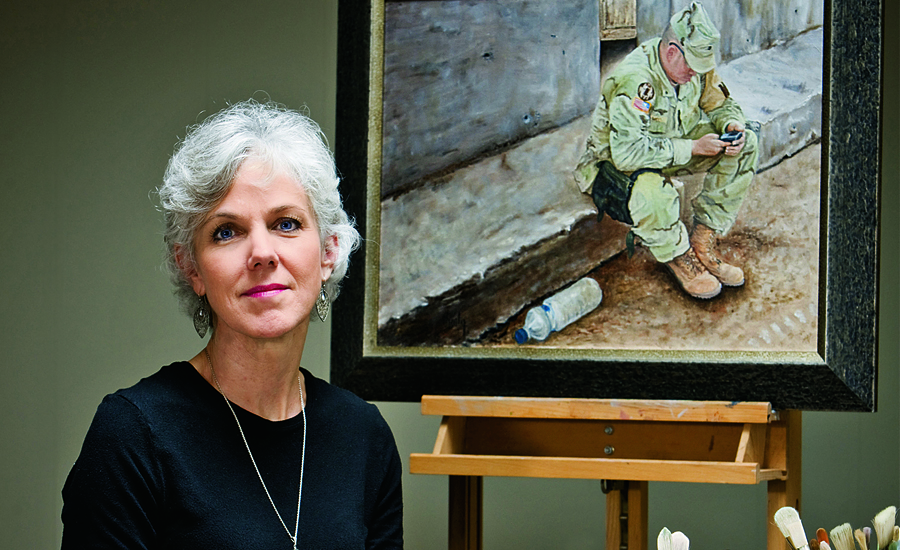
I looked at the flash drive now, so light in my hands despite the weight of what it might hold. Maybe it was time. I walked over to the dining table and stuck the drive into the port on my laptop. Joseph had saved hundreds of picture files on it. I clicked on one, my fingers trembling. The screen filled with an image of two soldiers standing guard at night. Click. A street in Baghdad, a mosque in the background. Click. An Iraqi policeman Joseph was training, his face lined, his bearing proud. Click. A bustling marketplace. Click. A G.I. sitting on a curb, calling home on his cell phone. Click. My son, hanging out in the barracks with the other guys in his unit.

Day after day, I went back to my laptop, going through the photos, one by one. Why did you save these pictures, Joseph? What did you want to tell me? The images haunted me. In a way, they became more real to me than my usual world of choir and orchestra rehearsals, lunches with friends. One picture in particular struck me. The two soldiers standing watch at night. They were in silhouette, a helicopter hovering, a full moon shining in the background.

Joseph Shealy in uniform The image was beautifully composed, and I wondered where Joseph had gotten his artistic talent. I was creative, but musically, not visually.
One day my friend Christy called. “Why don’t you come over for coffee this afternoon?” she said. I hesitated. “You need to get out, Suzy,” she insisted.

Carey had been telling me the same thing. I knew they were right. “Okay.”

It was nice to see Christy. She’d put new pictures on her walls since the last time I’d been over. Lovely paintings of flowers. Bright, sunny, vibrant. I leaned close to see the name of the artist. It was Christy. “I didn’t know you could paint!” I said.

Christy laughed. “I didn’t know either, but I started taking this class and I really got into it,” she said. “When I paint, every care I have seems to melt away.” She grabbed my hand. “Come with me next time?”

I’m not sure why, but I did. The feel of the brush in my hand, the smell of the oil paints, the richness of the pigments…something in me eased and calmed as I put those colors on the canvas and filled the expanse of white with meaning. From the canvas through the brush up through my hand and to my heart, I felt a connection. To what, I wasn’t sure.

Once I did a few practice canvases and had the basics down, the instructor asked me to choose a subject for my first original piece. “What do you want to paint?”

That night, after the dinner dishes were done, I set up my easel in the kitchen and took out my paints. I thought I’d paint something bright, like Christy’s flowers. Maybe the bowl of fruit on the counter. I closed my eyes and was startled by another image: Two soldiers silhouetted in the moonlight, a helicopter in the tawny sky behind them.

I went to my laptop and printed out the photo. Then I clipped it to my easel, dipped my brush in the paint and started in. When I got to the moon, I paused, remembering those nights I used to gaze at the sky and think of Joseph seeing the same moon far away in Iraq. I still felt the ache of loss, but there was a peace too, a peace that I knew could only come from God, a God who was taking me by the hand and leading me through my grief. I touched my brush to the canvas again, filling in the last piece of the painting with soft strokes.

I set down the brush and sat back. My eyes went from the painting to the photo my son saved. Joseph was with me. We were looking at the moon together.

Now I have an art studio behind our house. I paint almost every day, the images on Joseph’s flash drive my inspiration. I will never know the stories behind all those pictures, but when I work on a painting I see the world my son saw, and I feel close to him again, in a way only God could have helped me find.

A Gratitude Journal Improved Her Outlook on Life

In early 2014, when she was 86, Mom relocated from the mountains of northern California to the prairie of rural Illinois to live closer to us. My husband, Kevin, and I found a lovely apartment for her in an assisted living facility. I was happy to help take care of my mother. Until she arrived. The day after Mom moved into her apartment, she called me to complain about the food at the facility.

“That broccoli at lunch was overcooked. And the pizza crust was like rubber. I couldn’t even eat it.”

Journey With Jesus in article ad

“Can you talk to the management?” I said. But I already knew the answer, more or less.

“No, their weekly council meetings, when residents can give their suggestions, are too early in the morning. Besides, I don’t want to complain.”

“Mom, you’re complaining to me. Wouldn’t it make more sense to tell someone who might be able to fix the problem?”

“I’m not complaining to you. Just sharing how I feel.”

We hung up. I closed my eyes and massaged my temples. This was only her second day here. She’ll adjust, I told myself. But week after week, Mom found more to gripe about. I tried empathy: “I’m sorry, Mom. That must feel so frustrating.” Still, she continued to vent.

Kevin and I took Mom to a nice restaurant for Mother’s Day. On the way back to her place, I asked Mom if she enjoyed the meal. I should have known better. “It was fine, I guess. But they had the air conditioner turned up too high—I about froze.”

“Why didn’t you say something, Mom? We would’ve asked them to turn it down.”

“I don’t want people to think I’m a complainer.” I shook my head and glanced at Kevin.

When we got home, Kevin said, “I’m sorry. I know it’s hard to listen to your mom whine day after day.”

Not just hard. Discouraging. Depressing. “I don’t know why it upsets me so much. I grew up hearing Mom grumble.” Actually, a lot of my family members seemed to look on the dark side of life. Good thing I hadn’t inherited this tendency. I might speak up if the waitstaff in restaurants weren’t attentive or if people didn’t have good manners, but nothing like Mom.

At a monthly prayer meeting with my friends Beth and Dee, I spent 20 minutes sharing how Mom’s attitude irritated me. I asked for prayer that Mom would adjust to her new life, so I didn’t have to hear her complain all the time. Beth said, “Why do you think your mom’s gripes annoy you?”

“Because she seems ungrateful. After everything Kevin and I do for her, all we hear is what she doesn’t like.” As the words spilled from my lips, an uneasy feeling settled in the pit of my stomach.

The minute I arrived home, I found Kevin. I didn’t even take off my coat but stood in the doorway of his den. “Do you think I complain a lot, babe?”

Kev hesitated a few seconds before saying, “No, of course not.” But he stared out the window while he spoke. I realized that the family trait of whining had taken root in me. Kevin had never mentioned it. But it wasn’t like him to shine a light on my faults.

I decided to keep a better watch on my tongue. Things went fine for a few weeks. I rejoiced in my growth. But every time the phone rang and Mom’s voice was on the other end, the muscles in my neck and shoulders would tense. I felt a wall of defensiveness spring up. As if Mom were personally attacking me for the cold weather, her neighbors’ standoffishness, the fact that people at church didn’t speak loud enough for her to hear.

After each conversation, I’d stomp into Kev’s den. “How can Mom focus on the one or two things she doesn’t like about every situation? And why am I the only one she feels free to unload on?” The more I bit my tongue in Mom’s presence, the louder my complaining to Kevin grew. The same old complaints.

One night, I prayed, “You have to help me, Lord. My best efforts aren’t working.” It hurt my pride to admit I’d developed the same habit of whining that annoyed me so much in Mom, but I couldn’t deny it any longer. I felt powerless to change by myself.

A few days later, I received a package from my friend Torry. A bright orange journal with one word embossed in gold on its cover: Blessings.

On the first page, Torry had written, “Jeanette, I use a journal like this every day to write things I’m thankful for.”

The next morning, I snuggled into the love seat with our calico cat curled on my lap. I opened the journal and wrote the date, then three things I was grateful for. Number one, friends who encourage me. Two, my caring husband. And three, God’s provision. Contentment filled my heart. Maybe this was it. Not just the missing piece to help me overcome the whining but a joyous replacement. Gratitude.

Over the next few months, as I continued to list blessings each day, I noticed little things I’d been oblivious to. How the wind made the leaves dance. How the grin of a baby peeking out of a stroller lifted my heart.

Looking for things to thank God for led to a deeper shift in me. Life didn’t suddenly become trouble-free. But a new spiritual awareness of the blessings around me made me see how present God was in my life, handing out gift after gift. Including Mom, complaints and all. I couldn’t change her; I could only love her.

At a recent prayer meeting, my friend Dee noted how much my attitude toward Mom had improved.

“When you mention her, you don’t have that edge to your voice anymore,” she said.

Sometimes I still catch myself griping about hard circumstances and difficult people. This venture is not one of those new-attitude-by-Monday projects, but I’m not complaining. I’m grateful for the journey.

For more inspiring stories, subscribe to Guideposts magazine.

Agoraphobia: A Dark Fear Comes to Light

Even as I worked, I could feel it moving in, circling more tightly around me, focused and unswerving, like a wild animal sure of its prey.

Cold sweat began to moisten my forehead. In slow motion, my hands went on with the business of unpacking the boxes piled in the room. Keep working as if nothing is happening, I told myself. Maybe it will go away.

God's Constant Presence In Article Ad

Earlier that October morning in 1980, in the thin light of dawn, my son Bryan and I had moved from the house we’d rented into this apartment. Then he had left for high school. I was alone now, trying to organize the cartons and furniture.

With numb fingers I shoved and tugged at a heavy box of appliances. The panic, the fear of losing control of my fear, circled closer. My heart drummed. I began to pant and tremble. An unpleasant floating sensation rippled through me.

Walking with care, as if on a cliff’s edge, I made my way to the front room and leaned against a window frame. Only a half-block away I could see the house we’d had to move from because it was to be torn down.

If I could just go back there and sit on my old porch, just for a few minutes, I know I’d calm down, feel safe again.

But suppose you get out on the street and start screaming hysterically?

Right now, my throat dry, I was trying to swallow the urge to do exactly that.

What if the neighbors hear you?

Upstairs I could hear the bustle of normal everyday family activity—a vacuum cleaner prowling, the squeals of small children playing games.

They’ll think you’re a mental case.

But I’m not, I’m not!

I knew what the name for my trouble was: agoraphobia, a chronic state of fear. But who out there had ever heard of agoraphobia? That was one of the problems. People didn’t know that other people suffer from it. And doctors hadn’t found a standard form of treatment.

Push, pull, push, pull. I wanted to run, but fear weighted my feet. The conflict tore at me. It seemed I had two brains: a weak one, well-intentioned, fighting for sanity and self-control; a stronger one, hell-bent on destruction, inviting stress and negative thoughts.

My whole being felt like a battleground. At any minute I might be blown apart.

Ever so carefully, I began to creep toward the bedroom. The room tilted. With the last of my physical strength I made it to the bed and, exhausted, I slept.

When I awoke, a few hours later, the immobilizing panic was gone. But it had been replaced by tension. I turned onto my back and began counting out the breathing pattern that Dr. Leaman, a psychotherapist I’d consulted briefly, had taught me. Inhale one-two-three, hold one-two-three, exhale one-two-three.

If only I had the money to go back to Dr. Leaman. The four sessions I’d had with him had helped me, but I simply could not afford to go on seeing him.

I thought back to what Dr. Leaman had told me about agoraphobia. “The dictionary calls it ‘fear of open spaces,’” he said. “But agoraphobia is much more than that. It starts with anxiety—the kind anybody can feel about something like missing a train, going to the dentist, job pressure, an argument, an unfamiliar situation.

When stress builds up, certain people—especially tense people who tend to be perfectionists—may experience sudden panic. The symptoms make them feel as if they’re going crazy. They begin to be afraid of panicking—losing control—and embarrassing themselves in public.

So they gradually stop going places where they expect to feel anxious. They don’t know that agoraphobia is primarily a conditioned body response—a behavior disorder that can be unlearned—not a mental illness.”

Dr. Leaman was just beginning to help me unravel my snarl of fears and taboos and develop relaxation techniques when the visits became too much of a financial burden for me to carry. Now I was trying to cope with my problem alone again, and losing the battle.

Our moving had triggered another attack of anxiety. I glanced nervously at my watch. Soon Bryan would be home, and I didn’t want him to find me cringing in the bedroom with nothing accomplished.

My whole timetable was rigidly aligned with my son’s schedule. I felt terror when he left for school, safe again at supper; terror if he went out at night with friends, safe at bedtime because he was home; then I’d lie awake, brooding about the agony that would begin again in the morning.

Bryan had to accompany me anywhere I went (never beyond the limits of our town). I didn’t dare visit relatives in nearby communities for fear of losing control, of panicking and maybe passing out. The same fear made me dread going to stores, seeing friends.

Even mailing a letter at the corner box was an ordeal. Anything that represented a potential delay in getting back to the sanctuary of home—lines at checkout counters, traffic jams—had to be avoided. A job was out of the question.

I got up wearily and went back to the unpacking chore, still thinking about what a burden I’d become to my children. I’d been divorced in 1969 and the agoraphobia syndrome had begun in 1972.

Increasingly, over the years, my older child, Brenda, and Bryan had accommodated their outgoing lives to my ingoing one. Recently, Brenda had had to choose between going away to college and staying home with me. Though she’d gone off to school, I knew she felt guilty.

That left Bryan alone to cope with a nearly housebound mother. I dragged a heavy chair into a corner. Just like Bryan has to drag you around, my mind nagged.

That night, over supper, I asked my son the ritual question, hating myself. “Staying home tonight?”

Eyes on his plate, he shook his head. “Nope, Cary asked me over to do homework and listen to his new records.”

We both knew why Cary—or any of Bryan’s other friends—was never invited to our house. I was too afraid of having a panic attack.

When Bryan got home I was in bed, but still awake. I listened to the welcome sounds of his presence—the refrigerator door opening and closing, water running—and to the unwelcome, whining voice in my mind: Soon he’ll be leaving home to find his way in the world like any young man. What will you do then?

I did not dare let myself weep aloud. If I gave in, I might go crazy. Instead I sat up on the edge of my bed, hugged myself and rocked back and forth as tears trickled slowly down my cheeks. 

Then, for the first time since my teen years—when I’d become convinced that God didn’t love me—I found myself talking to Him instead of myself. I didn’t say His Name, and the words were an ultimatum, bitter and angry. Either let me get well, or let me die and have peace.

During the next weeks, Bryan and I finished unpacking and getting the apartment in order. The nights he went out, I tried to keep my mind occupied by crocheting. And often, when anxiety began to build up, I “prayed” my ultimatum. Heal me or take my life.

One day in early November an article appeared in our local paper, The Record Herald, about agoraphobia research at the Pittsburgh Institute. Phobics were interviewed, but most didn’t want their identities revealed.

Small wonder. Who wanted to risk being ridiculed—or having your family feel ashamed of you?

But at the same time, I felt a desperate urge to speak out. Agoraphobia was an affliction, not a crime. Impulsively, I took out a box of stationery and began to write a letter to the editor.

I admitted to being agoraphobic, encouraged him to publish similar articles, thanked him for the space, and signed my name.

Then, for two days, the envelope lay on my desk. I was having second thoughts. I could well understand why the interview subjects had chosen to remain anonymous.

The third morning, after Bryan had left for school, I sat down at my desk and picked up the letter. I wanted so much to mail it! Still holding the envelope, I let my head sink forward onto my folded arms.

The mailbox was only a few steps away from the house … I drew a shaky breath as my skin began to prickle.

In the far corners of myself I felt a stirring. Was it starting up again … the panic?

God.

The name exploded from my lips like a cork under pressure. And then the words poured out. “God, I’m so alone unless You’re there to help me. I need You to be in control of my life because I can’t be. and I can’t go on tormenting myself and my family this way.

"I’ve been talking to myself for all these years and it hasn’t done any good. From now on I’m talking to You … You’re in charge of everything. The fear, the panic, the whole mess that I can’t handle …”

Minutes ticked by. Almost before I knew what I was doing, I went out and mailed the letter.

Within two days it was published. That same evening, my phone rang. The caller said her name was Linda. She had read my letter and located my name in the phone book. “I’m agoraphobic, too,” she told me. Then, hesitantly, “Do you think we could help each other?”

Oh, God, thank You, thank You.

Linda and I decided to try to find out if there were others nearby like us. I called the Record Herald correspondent and asked if I could write another letter including my phone number.

After checking with her editor, she told me, “Yes, you can write another letter, but we’d like to do a story on you instead. How about it?”

Panic? Oh, yes! But I agreed to the interview. Then I wavered as the time for it drew close. Was it the right thing to do? I prayed again, asking God for just one more phone call so I would know if it was His will.

One hour after that special prayer, I received a second call—from Frieda. Then, as if God were giving me an extra measure of reassurance, I had a third caller—Judi—the same evening!

When the reporter came, she was compassionate and the interview went well. My third caller, Judi, had agreed to allow her name and number to be given in the story, and this took a lot of pressure off me. And calls did begin to come in steadily.

Whoever telephoned Judi got a follow-up call from me and vice versa. How we buzzed the telephone wires those first few weeks! And how I prayed!

I met Barb on the phone too. She, Judi and I took the initiative in meeting at Judi’s home to get acquainted in person and decide what we wanted to do.

On the evening of December 1, 1980, two months after my terrifying move, five strangers came together, frightened but excited. The success of that meeting led Barb to search out a room we could use to meet in on a regular basis. She found one at the Evangelical Lutheran Church in Waynesboro.

About 10 of us gathered at the church one cold night, while our families waited in their cars outside. Every one of us wanted to run away the minute we pulled into that parking lot, but every one of our little group managed to sit still in a strange room for 90 minutes.

That night, the Friends of Phobics was formed, and I supplied our motto: As God Ordained, Reach All People, Help Other Beings In Conflict.

Afterward, my son drove me home and I was so “up” that it scared me. I had forgotten how to feel good about anything! I prayed again, telling God that He was in control of whatever was to be, and again placed my life in His hands.

And He did work, drawing our group of new friends close, into a family. I was sure of His blessing because in time more contacts came about; when a need or question arose, it was somehow answered by a magazine or newspaper article or a personal experience shared by one of our members.

Information flowed in, public interest took hold, and we had several guest speakers from the psychiatric field—including Dr. Leaman—at little or no cost.

As a result of our meetings, we learned to trust each other, to express our feelings, cry together and laugh at ourselves. Yes, we can actually laugh! It’s fantastic.

Naturally the group hasn’t “cured” us. But we no longer feel helpless, or that we are fighting this hideous fear alone, trapped in our own private hells. We are armed with knowledge and the security of a support system.

How wonderful it is to pick up the phone and call a sympathetic fellow sufferer when we feel distress or want to share a triumph. (Who else could understand so well the victory of a successful shopping trip in a previously feared store, or a walk downtown alone?)

Our membership has grown to 75 people. Some of us have appeared on local TV, and affiliated groups have been formed in nearby Hagerstown, Maryland, and Chambersburg. Pennsylvania.

As for me, my eyes are not glued to the clock anymore, timing Bryan’s arrivals and departures. I am not glued to a chair for evening after evening of anxiety and crocheting.

I have learned to drive alone. walk short distances alone, go into large stores (very quickly), and even spend nights alone occasionally. Medication—a mild antidepressant and muscle relaxant—is helping me, too.

I still have panic attacks now and then, but by talking to God I’ve learned to let Him help me handle them. I feel reborn, spiritually and psychologically.

I thank God for so many things, but most of all I thank Him for helping me walk to the corner mailbox.

Or did He carry me?

Download your FREE ebook, A Prayer for Every Need, by Dr. Norman Vincent Peale.