Embrace God's truth with our new book, The Lies that Bind

A Good Friday Plea

Have you ever made a special request to God on Good Friday, one of the holiest days of the year?

That’s exactly what Pamela Anderson did, back when she was just 9 years old in Lancaster, Texas. Lonely on Good Friday, she prayed for a miracle.

Rejoice in All Things in article ad

Here’s her story…

I plopped down on the porch on Good Friday morning and cried my eyes out. I was 9 years old, a preacher’s daughter and the youngest of four kids. Daddy was away in Buffalo, New York. He’d gotten stranded there because of a blizzard. Meanwhile, Mom was in the hospital.

She’d just undergone surgery to remove three tumors in her right breast. The doctors didn’t yet know if the tumors were malignant, but one word dominated my thoughts–cancer.  I just wanted Mom to come home so bad. Even with all my family around, I never felt so alone.

I squeezed my hands together and prayed with all my heart, just like Mom had taught me. She’d told me all about miracles, and I’d heard about them at church every Sunday. If ever I needed one, it was now. “Please, Lord, please send my mom home for Easter.”

Something kinda funny happened after that. I stopped crying. I felt oddly at peace. Mom was going to walk through our front door on Easter Sunday–I just knew it!

I ran into the house to tell my grandparents, who were watching us while my parents were away. “Mom’s coming home on Easter,” I said. “God told me!”

“God definitely heard your prayer, sweetheart,” Granddad said. “But your mom isn’t ready to come home just yet. She’s still recovering.”

That weekend, I couldn’t help but feel blue. Maybe I had heard God wrong? Maybe my miracle wasn’t coming?

On Sunday morning, we were about to leave for church when a big yellow taxi cab pulled up to the front of the house. A woman holding a flowered overnight bag got out.

“Happy Easter, everyone,” Mom said, smiling weakly. She’d been released early with a clean bill of health–she was cancer free!

Many years have gone by since then and Mom has passed away. But every Easter I think about that Good Friday prayer. How God heard my lonely cry and sent my mother back home to me.

A Gold Medal Performance

Content provided by Good Samaritan Society.

Sharon Owen woke up dreaming she had been in a war. In a sense, she had been. After contracting pneumonia and spending a month in a coma, she could no longer walk, talk, sit up or even swallow. “I was fighting for my life,” she says.

Sweet Carolina Mysteries In Article Ad

I chose to say ‘I can.’” – Sharon Owen, Good Samaritan Society – Bonell Community resident

Unable to move, Sharon had to decide if she was going to live her life in the care of someone else, or work to regain her health. “A lot of people just don’t try,” she says. “They say, ‘I can’t.’ I chose to say, ‘I can.’”

Finding Help

When she arrived at Good Samaritan Society – Bonell Community in Greeley, Colorado, as an assisted living resident, Sharon had started to walk again but needed a cane. Wellness director Matt Biedron and his employees immediately started her in exercise classes that were part of the location’s wellness program. The focus was on getting her to walk with more confidence. Before long, Sharon’s cane was gone.

“People around here were very encouraging to her,”
Matt says of Sharon. “They noticed her progress and
were able to help push her along.”

“Soon after that I got her into my higher level fitness class,” Matt says, “so that she could build her strength and her confidence and her coordination.”

Sharon just kept going. From balance classes to chair exercises, and even Crazy 8 – a fast-paced circuit with eight stations – she’s working out nearly every day.

The wellness classes have helped her regain her strength so quickly that just a few months after arriving at the center, Sharon has moved from assisted living to a senior apartment. She also volunteers on campus.

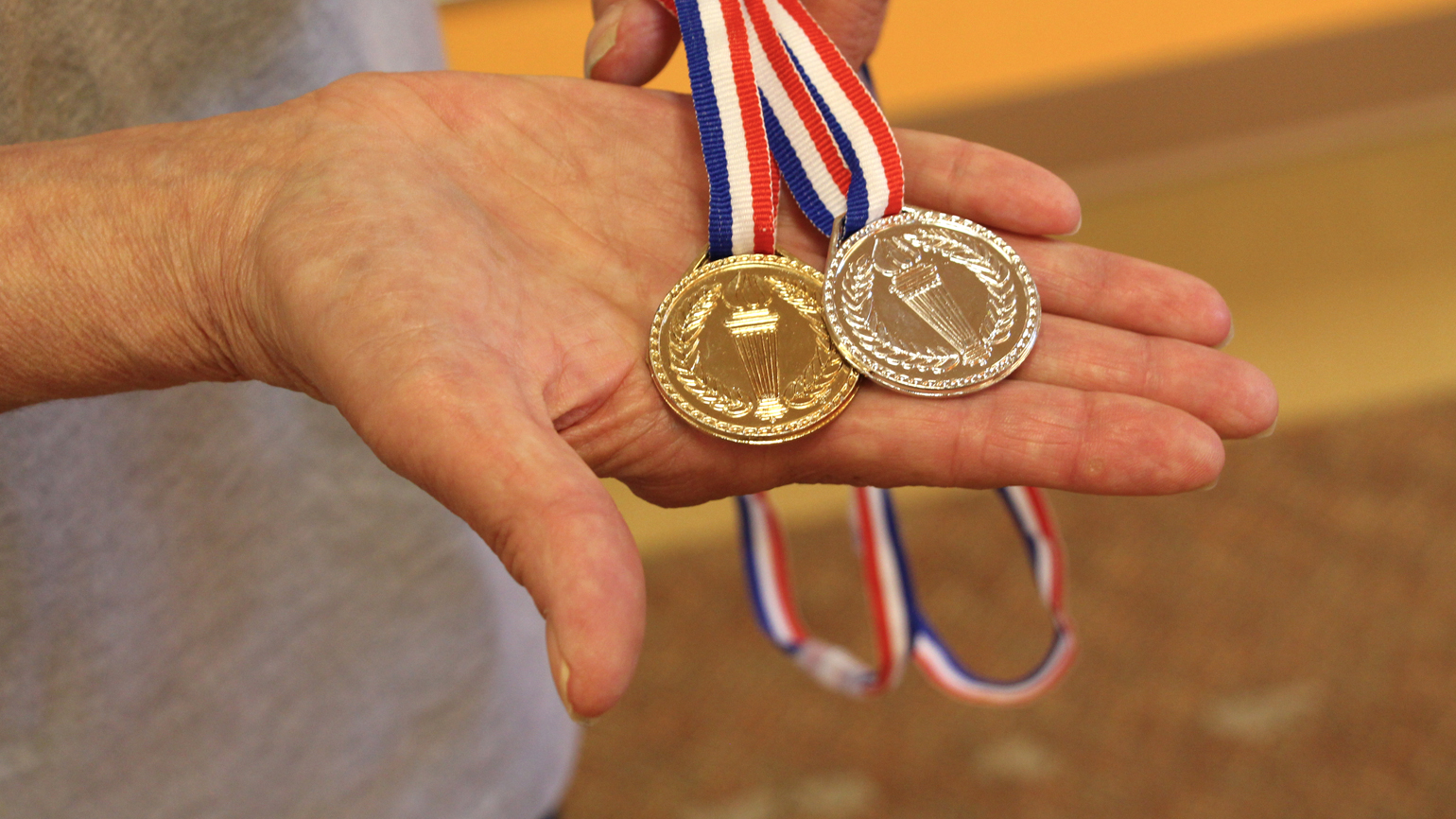
Not only is Sharon participating in Senior Olympics contests on campus, but she’s winning medals. Her specialties are pushups and ball tosses. “I’m not very good at golf,” she says with a laugh.

Attitude is Everything

Sharon credits Matt and the staff at Bonell Community for her rapid success. “Matt is a great teacher,” Sharon says. “Patient. (He) makes it fun. Makes coming to class great.”

Matt says Sharon’s attitude has a lot to do with her success.

“She’s done everything I’ve asked her to do. It’s her effort that has made the big difference here.”

He says others can look at Sharon and see how rehabilitation can transform the body.

“She encourages and motivates folks on this campus,” Matt says. “She just wanted to have a chance, and I think you let others see that and it helps them persevere and go, ‘Why not me?’”

A Glowing Reunion

Sit together. Every time that I prayed about what to do at the Christmas Eve candlelight service at my church, I got the same answer from God. Reach out to Nina. Make amends. Sit together.

I glanced at my phone. I imagined myself texting my ex-husband’s new wife. My heart thumped hard in my chest. I couldn’t text her. Not yet. But if not now, when?

You Got This In Article Ad

It was Christmas Eve, and in a matter of hours I’d have to walk into the church sanctuary. Nina would be there, like it or not. Bryan would be there, along with our teenage boys, Nick and Tyler.

Last year’s service still burned in my memory. I’d taken a seat in the front, waiting for the rest of my family to arrive. The sanctuary gleamed with fir wreaths and silver tinsel. The lights dimmed. The parishioners stood up, candles in hand, and swayed back and forth to the opening notes of “Silent Night.”

The door in the back creaked open. I swiveled around in the pew. Nick and Tyler filed in, their father trailing close behind—along with Nina. They slipped into an empty pew in the back row, not even looking in my direction. I watched them take off their coats, light their candles.

The four of them look like a complete family, I thought. But what about me? Where do I belong?

I couldn’t let that happen again. Not this year. I didn’t want bitter feelings to destroy my Christmas, or anyone else’s. I had spent the whole day getting ready—I wanted to look pretty tonight. Happy and confident. My favorite black dress was laid out on the bed. Matching high heels.

The diamond-pendant necklace that I wore for special occasions, like an amulet. Please, Lord, let this candlelight service be different. Please give me the gift of acceptance.

I picked up my phone and clicked on Nina’s number. “Hi, Nina,” I typed. I didn’t know what to say next. I hit the backspace button, deleting what I’d written. The pain of the past few years flashed through my mind. 

Getting through the divorce. Forcing myself to go to work as a first-grade teacher each day. Nick and Tyler going to live with their father down the street. Then Bryan’s marriage to Nina, who also worked as a first-grade teacher in our small town. It was all so humiliating.

Facebook didn’t help. One night after I’d finished grading my students’ worksheets, I logged in to check up on my boys. Big mistake. All I could look at were photos of them with their father and Nina. Out at restaurants. Barbecuing in the backyard. At the park, or their football games.

I used to be in those pictures, I thought.

One day I got a text from Tyler. “Mom, I want Nina to stand up with me, you and Dad at Senior Night. I just wanted to let you know.” Senior Night was a celebration for athletes at the high school.

What would it look like for all three of us to parade across the field? Nina and I are both teachers—everyone would know our drama. And they would all see how disposable I was.

“Can you please reconsider?” I’d texted back. “I don’t think that’s a good idea.”

Tyler didn’t reply for hours. I checked my phone over and over. Finally, he messaged back. “Nina is family. End of discussion.”

Tyler’s words cut me deeply. For days after, I barely ate or slept. I dragged myself to class. Senior Night finally came. I couldn’t even feel proud. I was a shell. Lord, I can’t keep living with all this turmoil in my heart, I prayed. Please help me!

I linked my arm through Tyler’s as we walked across the football field. On his other side, he linked arms with Bryan, who linked arms with Nina. I kept my smile pasted on. Do this for your son, I told myself. Be mature.

Afterward, I gave him a big hug. And then, without thinking, I hugged Nina and Bryan good-bye. For a brief moment, the tension lifted. What relief!

“I’m sorry I didn’t want you to come,” I whispered to Nina. “I’m glad you did.”

“Thank you,” she said. She seemed to mean it. Maybe things really could be different. Maybe in time for this year’s Christmas Eve service.

All summer and fall, I read my Bible, searching for peace. Every night, I prayed about what I should do. I got my answer all right. It scared me. Sit together.

Together? Like a family? No way! Our little hug at Senior Night was one thing, but Christmas Eve was something else. I remembered all the Christmases I’d spent with the boys, baking cookies, putting ornaments on the tree. Together. Like a family.

Now, holding my phone, I remembered what Tyler had said. Nina is family.

Maybe not the family I was used to, not the family I’d imagined when I first started raising my boys, not the family I’d prayed for when I got married. But she was important to Bryan, and my boys loved her too.

My sons had already accepted her—now it was my turn. I picked up my phone and typed a new message.

“Let’s make a unified front tonight at church,” I wrote. “Let’s sit together.” My finger lingered over the send button. I paused several long minutes….then pressed down. Am I going to regret this? I wondered. But there was no way to take it back.

A moment later, my phone buzzed. Nina. “OK!” she’d written.

That night, I sat in the front pew, my hair done up, my black dress freshly ironed. I fiddled nervously with my pendant and glanced around the sanctuary, tinsel and poinsettias f lanking the altar.

Familiar faces greeted me. Parents from school. People I’d known all my life. But no sign of Brian, Nina and the boys. I couldn’t stop myself from thinking about last year, how devastated I’d felt. Was that going to happen again?

Behind the pulpit, the pastor signaled for us to stand for the first hymn. I could hardly move. I shouldn’t have texted, I thought. Nothing’s ever going to change.

Just then, the door at the back of the sanctuary creaked open. I turned and saw Nina ushering Bryan, Nick and Tyler inside. I waved. At first, she didn’t see me. Then our eyes met. She smiled.

Nina led everyone down toward my pew. Bryan looked confused at first, but after a moment his expression softened. He smiled too. Nick and Tyler waved as they took their seat at the end of the pew—right in my row.

While the minister spoke, I clasped my hands. God, fill me with your peace. Touch Nina, Nick and Tyler with your love. Bless the father of my children too. Please, Lord, heal this whole family!

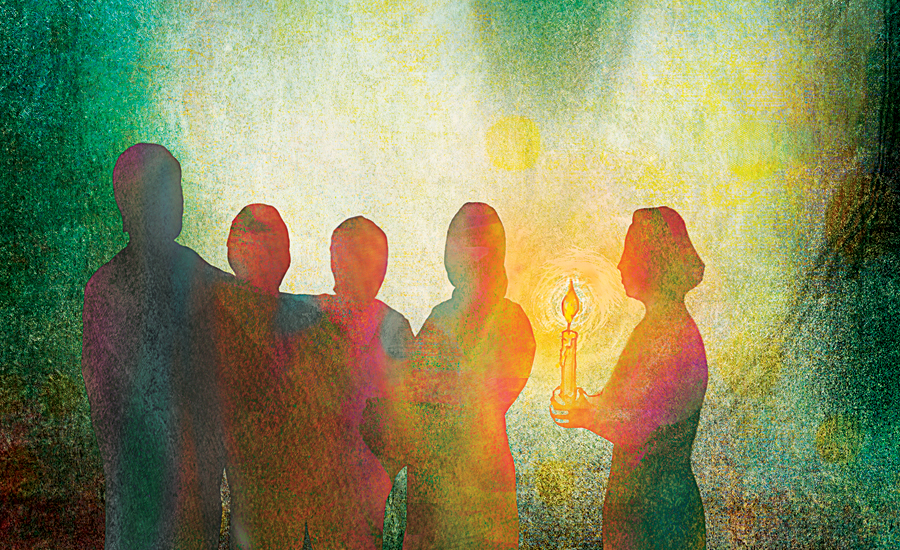
With each request, my body relaxed. My hands loosened. My heartbeat slowed. One by one, we lit the small white candles we held, and with each one I felt bitterness and anger leave me.

The sanctuary glowed. We sang the final notes of “Silent Night.” We moved closer. It was Christmas Eve, when all are family.

Download your FREE ebook, The Power of Hope: 7 Inspirational Stories of People Rediscovering Faith, Hope and Love.

A Gambling Addict’s Path to Redemption

This is what the end stage of a gambling addiction looks like.

I was alone in a tiny apart­ment in a suburb of St. Louis, Missouri. On TV, the football team I had bet on was about to lose. Not even the point spread was going to save me. That bet was the last of my money. I was broke.

Pray a Day Vol 2 In Article Ad

The apartment was bare except for a couch, a bed, the TV and a bookshelf with some books about gambling and a black leather Bible I’d never opened. I’d sold or pawned everything else.

The air reeked of cigarettes. I was 29 years old. I’d been gambling since high school. Believe it or not, I worked at a casino, dealing poker.

I’d been through countless rehabs. Declared bankruptcy. Alienated fam­ily and friends. Even put my dog in the pound once so I could go to an out-of-state casino. (I ran out of gas on that trip, bounced a check to fill the tank, then borrowed money to get the dog out of the pound.)

I had nothing. I felt like nothing.

I went into the bedroom and sat on the bed. A believing person would pray at a time like this, but I had not prayed for nearly two decades. Not since my dad had died of a heart attack when I was 12 years old. I’d thought of myself as a good kid up till then. I even went to church, though mostly for the youth group. I blamed God for Dad’s death and turned my back on religion.

Now all I wanted was to close my eyes and never wake up. I thought about taking all the pills in the apart­ment. Crashing my car into a wall at high speed.

“God, if you’re real, show me a fu­ture I can hope for,” I said to the ceil­ing. I did not expect an answer.

Dad had served in the Air Force dur­ing the Vietnam War. Like a lot of vets, he never talked about that experience and had difficulty showing emotion.

Work kept him away from home a lot. On weekends, he’d disappear for hours into the basement, the man cave where he worked on projects.

When I was 12, Dad decided to run for local government. All of a sudden, he was home every day. My brother and sister and I helped with his campaign, go­ing door to door and putting up signs around town.

It was more time than I’d ever spent with Dad, and I loved it. I even wrote him a letter telling him how much I loved him and how proud of him I was. When he read that letter, a look came over his face I’d never seen be­fore. He gave me a big hug. What an amazing feeling!

One morning a few weeks later, I woke up late for school. I raced out of my room. The house was full of rela­tives. Everyone looked devastated.

“We lost your dad last night,” Mom said in a broken voice.

There had been a big rainstorm, and Dad had been in the basement trying to stop some flooding. He’d had a heart attack and died. He was a smoker but otherwise in good health. Now he was gone.

Kids are literal-minded. The night before, I had asked God to give me a day off school because I was late with a big homework assignment. Was this God’s terrifying way of answering my prayer? Of punishing me for being selfish? How could I believe in a God like that or ever trust him?

Mom did her best, but she strug­gled. I felt lost. Mom gave me Dad’s watch, the contents of his wallet and a black leather-bound Bible.

“This Bible was your father’s,” she said. “He got it when he was stationed at a base overseas. It meant a lot to him. He’d want you to have it.

My dad read the Bible? Neither of my parents went to church. I’d started going only because my grandmother took me. Maybe faith was like a lot of things in Dad’s life—private.

I didn’t care. I’d already made up my mind about God. I stuck the Bible in my room and forgot about it.

Mom remarried when I was in high school and moved to a new town. I stayed behind to finish school under the care of my brother, who was nine years older.

My brother and his friends liked playing online poker. They invited me to join. The games were just for fun, low stakes.

Not for me. I was hooked after the very first game. Win or lose, I had to keep playing.

Card sharks on TV make poker look like a glamorous game of skill. Really, it’s like other forms of gambling. Even the best players lose big sometimes, and a lot depends on blind luck.

I got sucked in by the card shark part. After a couple wins, I saw myself striking it rich and impressing every­one with my cool.

Addicts love shortcuts. The world felt unpredictable and scary after Dad died. Playing poker simplified every­thing and gave me a false sense of fo­cus. Staring at a hand of cards, I felt calm and in control. I was one big win away from solving all my problems.

I never got that big win, even after landing a job at a casino. The gambling industry makes money by taking ad­vantage of willing fools like me.

By the time I was 22, I had burned through $100,000, much of it bor­rowed. I declared bankruptcy and started a cycle: Gamble, lose every­thing, own up to it, go to rehab, re­lapse, repeat.

I never quit my casino job. Why would I? The pay was great, and I could plow every paycheck back into poker or sports betting.

My brother gave up on me. My mom despaired. My life became a nonstop scramble to borrow money from someone to pay back someone else who’d lent me money for rent so I could avoid getting evicted. I lied. Manipulated. Schemed. Lied some more.

Finally the whole thing came crash­ing down, and I was sitting there in my apartment bedroom, broke, filled with self-loathing, wondering wheth­er I should kill myself.

I spoke my hopeless prayer to the ceiling and hung my head. Which was it going to be? Pills? Or a car crash?

“The kingdom of heaven is upon you,” said a voice.

I looked around. Who said that? The voice spoke again. I realized it was coming from inside me.

I jumped up. Was I going insane? I ran into the living room. At once my eyes were drawn to the bookshelf. Lying next to the books about gam­bling was that black leather Bible.

My father’s Bible. I had hung onto it all these years but had no idea why. It’s not as if I ever read it. Yet I couldn’t bring myself to get rid of it. It just kind of stuck to me.

I grabbed the Bible, sat down and opened it. The pages parted at the be­ginning of the Gospel of Matthew. I noticed writing in the margins. Dad’s handwriting. Cross-references. Un­derlined passages. I flipped around. Notes were everywhere.

Dad really had used this Bible. Had faith been more important to him than he’d let on? Trust this book, the notes seemed to be telling me.

I read through the confusing gene­alogy at the beginning of Matthew, followed by the account of Jesus’ birth and his baptism in the River Jordan.

Then I came to the first words Je­sus speaks at the start of his ministry: “Repent, for the kingdom of heaven is upon you.”

I froze. Those were the words I had just heard.

I raced through the Gospel of Mat­thew, slowing down only for the ago­nizing scene of the Crucifixion and the joy of the Resurrection. A warm feeling spread through my body, like a wave. I knew without a doubt that God was real and present in the words of this book I was holding.

I got down on my knees. “Please for­give me, Jesus,” I said. “Save me. I give my whole self to you.”

It’s a cliché to say a weight lifts when you pray, but that’s exactly what hap­pened. The despair, helplessness and shame that had been crushing me for 17 years vanished. I felt an unfamiliar feeling: hope.

A gambling addiction that has tak­en such deep root in a person’s life doesn’t vanish overnight. It was six months before I placed my last bet. Another two months before I quit my casino job.

Right before I left that job, I heard from God again. Very distinctly I heard him tell me that he wanted me to stop working at the casino to do something else—start an online ministry that helps people share their own stories of redemption.

That’s what I did. I could write a whole separate story of how God helped me do that. Togeth­er with a friend from the church I’d begun attending, I launched Testimo­ny House, which continues to this day.

When I told my casino coworkers that I had been saved and was plan­ning to give up gambling, start a min­istry, get married and have kids, they all laughed.

“John, you’re a broke loser and a de­generate gambler,” they said. “You’ll never change. No woman would ever marry you.”

Three weeks later, while working on my ministry, I met Megan through a friend at church. She and I married the following year, and today we have four children.

I still have Dad’s Bible, and I look in it whenever I need to feel close to him. I don’t know why Dad didn’t share his faith with me when he was alive, but that’s okay. I give thanks for that Bible, which waited patiently on my bookshelf until God knew I was ready to read it. When my very life de­pended on it.

For more inspiring stories, subscribe to Guideposts magazine.

After Retirement, Variety Keeps Life Interesting

Content provided by Good Samaritan Society.

For Tom Anderson and his wife, Claire, retirement means staying active and involved.

You Got This In Article Ad

Moving out of their home in the mountains of Idaho hasn’t stopped them from continuing to enjoy activities like camping and gardening. They often take their grandchildren camping in their RV or spend time fishing and playing in the water with their pontoon.

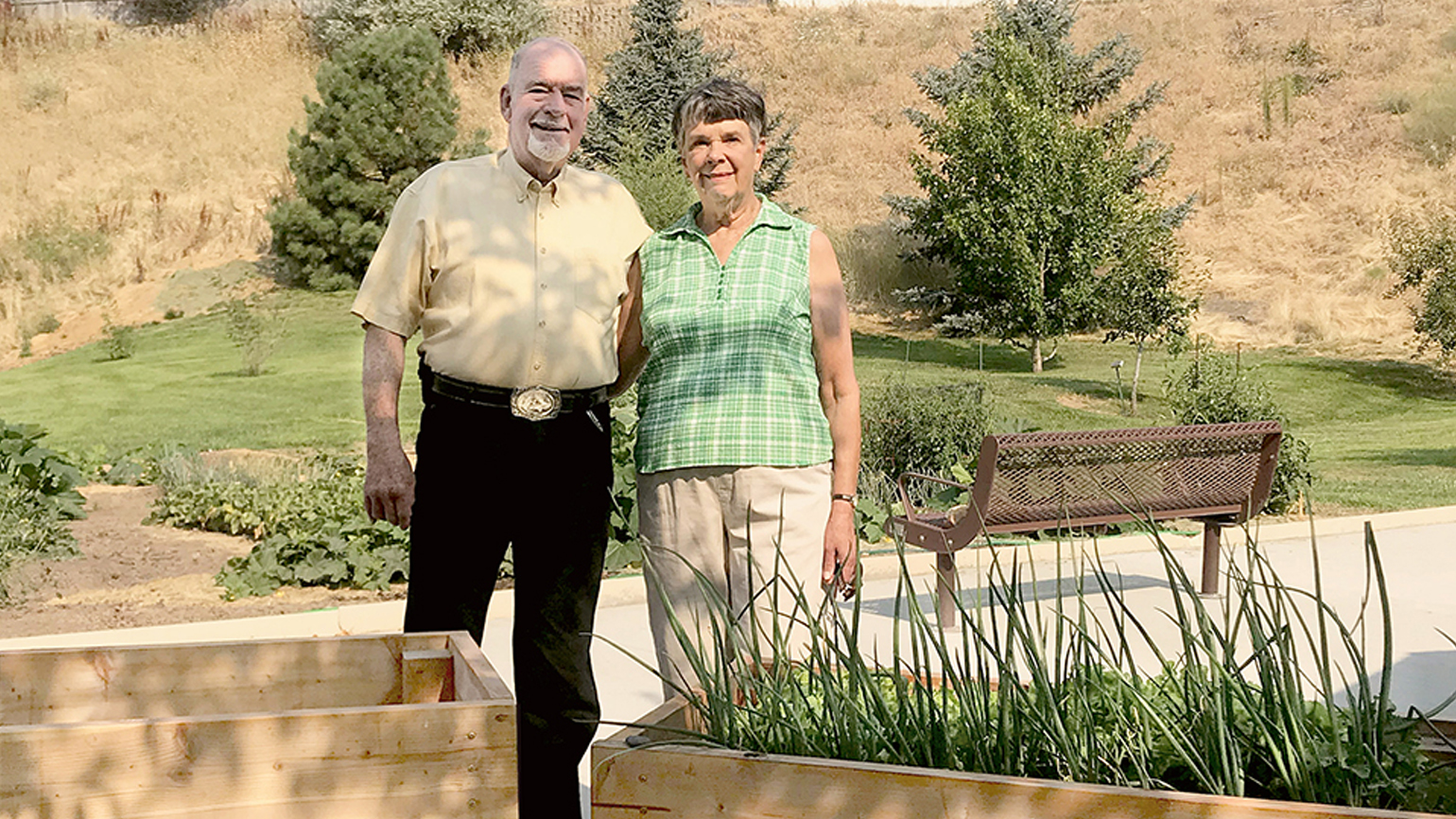
Tom, age 80, likes deer hunting and woodworking. He has made planter boxes (pictured at left) for their Good Samaritan Society retirement community. They volunteer together for Habitat for Humanity, and Claire volunteers at the library.

Each year, the Andersons plant the 12-by-16-foot garden outside their twin home. Neighbors in the apartments across the street benefit from the produce.

The Andersons continue to travel in their retirement. Tom says one of the advantages of a retirement community is being able to lock up and leave for vacation without worrying about anything happening while they’re gone.

And they like the flexibility of being able to go places whenever they decide to. 

“It’s the ability to not have to do something at a certain time,” says Tom. “We can travel when we want.”

Tom served in the Navy for 20 years. He then taught algebra for 15 years before running a remodeling company with Claire for 10 years.

In addition to different volunteer projects, he also enjoys being involved in politics.

Tom and Claire make it a point to stay active in community events. Two colleges are close by, allowing them to attend football games, concerts and other events.

In this phase of life, the Andersons appreciate the simple pleasures: family, friends, volunteering, community events and the outdoors.

After Divorce, Could She Find Forgiveness?

Mike and I sat side by side in the only two chairs in the hospital’s pre-op room, our arms almost brushing. We hadn’t been this close to each other in four years. Not since he’d left me and our marriage had come to a bitter end.

A guy with a laptop on a rolling cart came in and asked some questions about insurance. “There’s a hundred-dollar co-pay,” he said.

Sweet Carolina Mysteries In Article Ad

“Can you split it?” I asked as Mike and I each reached for our credit cards. We didn’t share anything anymore. Not finances. Not a bed or a home or a life. All we had in common now were our 11-year-old boys—Breckan, who was fidgeting in his hospital gown, and his twin brother, Brennan.

“Sure,” the guy said, taking both of our cards.

It wasn’t lost on me that 16 years ago to the day Mike and I had been in Hawaii on our honeymoon, snorkeling, hiking, eating shave ice. I’d dwelled on it every November since our divorce, my stomach tightening at the memory of what we’d had between us and how it was now gone.

Breckan was about to have minor surgery, except no surgery is minor when it’s happening to your kid. I was worried and scared. I didn’t find any comfort in having Mike there. But Breckan did. He and Brennan loved their father. They needed him. And I couldn’t deny them that.

A nurse and a tech came to take Breckan into surgery. I kissed him on the head. Mike high-fived him. Then they rolled him away to the OR.

Mike and I went to the waiting room and found seats. There were enough chairs to put a comfortable—or was it uncomfortable?—distance between us. That summed up our interactions these days. Mike had remarried, and the boys spent every other weekend with him and his wife. He picked them up on Friday and brought them home on Sunday. Sometimes we’d say a few words on my front porch. Usually he’d just nod as the boys ran up the steps, which was fine by me.

Now Mike took out his laptop and put in his earbuds. He was three seats and a world away. Kind of like the last years of our marriage.

I’d tried so hard to hold on to him. I’d prayed for things to work out. I’d looked to Scripture, but even the passage I had always quoted to people in crisis, James 1:2–4, didn’t seem to make sense anymore. “Consider it pure joy…whenever you face trials of many kinds, because you know the testing of your faith produces perseverance.” I wasn’t so sure about that. All this test of my faith had produced so far was anger, resentment, hate. I didn’t think I could ever forgive Mike.

But was it truly all his fault our relationship fell apart? There was plenty I could blame him for—and I did, to my friends and to my mom. She got so angry at Mike that she wouldn’t so much as glance in his direction at the boys’ Little League games. Still, I’d made mistakes too. Maybe it wasn’t possible to fully account for the failure of love. Maybe it wasn’t necessary.

I looked at my watch, wondering when Breckan would be out of surgery. My mom arrived and sat with me. We talked about my aunts and uncles, about my ready-to-conk-out dishwasher and where I might find a replacement, about various other topics Mom brought up to distract me. At last a man in scrubs came out to the waiting room. The anesthesiologist. “Everything went well,” he said. “Mom and Dad can come on back and see Breckan.”

Mike put away his earbuds and laptop, and the doctor led us to the recovery room. Breckan was restless and agitated, coughing and hiccuping, not himself at all. Mike and I sat on opposite sides of the bed, reaching over the rail to try to calm our son, me on the right stroking his hair, Mike on the left rubbing his arm. Finally Breckan relaxed and drifted off to sleep, a peaceful look on his face.

“We made a cute boy,” I said. “Two actually.”

“Mmm-hmm,” Mike replied, looking at Breckan, not at me.

What I was trying to say was, I’m not mad at you anymore. I’m grateful we had our time together because we made our boys—and they’re really neat people. But Mike didn’t pick up on that.

Breckan’s eyes fluttered open. He put his hand on Mike’s. “Dad, I saw really big lights in there, and fish on the ceiling. I closed my eyes, and then I was here.”

Seeing his IV-taped hand on his daddy’s made something melt in me. I took a picture with my phone and texted it to Mike. It was my way of saying, I’m glad you’re his dad, but he didn’t pick up on that either.

Then I noticed Mike’s other hand on the bed rail and the wedding ring on his finger. I’d caught glimpses of it before, at parent-teacher conferences and on my porch some Sundays, when he brought the boys home. But I didn’t ever think it was pretty until now. It looked different somehow.

Actually, a lot of things were different. I’ve learned so much since you left, I wanted to tell Mike. I’m the one who starts the lawnmower now and changes the filter in the air conditioner. I do my own taxes, and I can grill a steak with just the right amount of pink. I’d learned some things about myself too. That besides being an English teacher, I could write stories for the newspaper that people wanted to read. That I loved helping the homeless. That I could find joy in the tiniest of things.

That passage from James…I understood it now. The first part, about finding joy through my trials. And the second part, “Let perseverance finish its work so that you may be mature and complete, not lacking anything.” I’d grown so much in the past four years. Not only had my world not collapsed, as I was sure it was going to when my marriage ended, but my life was happier and more fulfilling than ever. I felt closer to living out God’s purpose for me than I ever had before.

The nurses let my mom come in. She and Mike and I sat around Breckan’s bed while he drank Gatorade and ate graham crackers, as if he hadn’t eaten all day because he hadn’t.

Mom looked right at my ex-husband and said, “So, Mike, how’s work? Are you doing the same job you were before?”

She hadn’t spoken to him in four years. She’d said plenty about him but not a word to him. Yet here she was, starting a conversation with him as though it were the most natural thing in the world.

“Well, yes and no,” Mike replied. Then he explained what he meant by that.

And I listened. I could do it without having to pretend to be interested because I really was interested in what he said. He was the father of my children, after all—the boys I loved more than I thought it was possible to love anyone on this earth. Somehow, unbidden, forgiveness had come.

I looked at Mom. Evidently she’d had some sort of breakthrough too. “What was that about?” I asked her when Mike stepped out to take a phone call.

“I just don’t feel like hating him anymore,” she said. “It was hurting my soul.”

I knew what she meant. My soul felt lighter too.

For more inspiring stories, subscribe to Guideposts magazine.

After a Deep Loss, a Heartfelt Thank You

I had an old editor at Guideposts once—you may remember him, Van Varner—who would tell me the tears are supposed to be in the eyes of the reader, not the writer or narrator. He also disliked the use of the word “heart.” He saw it as a substitute for genuine emotion in a piece. He would hate the ubiquitous heart emoji. 

Yet I can’t help admitting I was overwhelmed with emotion at your prayers and support in response to my piece on my wife, Julee’s, death. You exhibited the qualities that Guideposts strives to both practice and instill: faith, hope and prayer. Acceptance over judgment.

Sugarcreek Amish Mysteries In-Article Ad 2023

That will be all from me this week. A tearful, heartfelt thank you for all the love. (Sorry, Van.)

After 30 Years of Addiction, God Answered His Prayer for Sobriety

Months into my first serious attempt to stay sober, I was about to throw it all away. I stood in my dorm room at Mercy House, a residential drug and alcohol treatment center in Georgetown, Mississippi. Mercy House is faith-based, emphasizing spiritual growth alongside more traditional substance abuse treatment methods.

I’d cycled in and out of plenty of rehabs during nearly 30 years addicted to crack cocaine. None were like this. We spent most of our time learning about God, Jesus and the Bible. We worked at an in-house thrift store, an auto repair center and a craft workshop. Surrender to God and following Jesus were the keys to sobriety, we were told.

The Daily Bible Large Print relaunch with digital free gift in article ad

I wasn’t sure I believed that. I’d started using crack as a teenager in Oakland, California. I became an addict, a dealer, a thief, a junkie living behind a dumpster, a dad who deserted his child to get high, a fugitive from the law and a Mississippi penitentiary inmate.

Now I was here. Somehow I’d convinced my parole officer to go easy on me after I got caught using drugs following my release from prison. I’d conned so many people over the years, including my wife, Judy, who was crushed that not even 13 years behind bars could drive out my addiction.

I couldn’t use drugs at Mercy House. But I still had an addict’s habits. I held part of myself back. My main question from day to day was, How can I maneuver my way out of this?

Today I’d let my self-control slip. I’d been pulled off one job and reassigned to another. I felt disrespected. I’m sick of this place, I thought. I want out. I didn’t care if I wound up in prison. At least there I knew how to get respect. I snuck into my dorm room, where no one would see me. We weren’t supposed to be in our rooms during the day.

I threw my stuff in a bag. Mercy House wasn’t a locked facility. No one could stop me from leaving. I couldn’t wait to get high. Might as well go out in style.

I paused. There would be no going back if I walked out. I was 42 years old. A prison sentence now might as well be for life. Judy had already filed divorce papers three times, then changed her mind. As stubbornly hopeful as she is, this time Judy would be gone for good.

“God!” I shouted. “If you are who they say you are here, you need to show up right now! Because I am done!”

I stopped. I listened. Nothing. I didn’t have an easy explanation for why I’d gotten addicted to crack. Yes, my part of Oakland had a high rate of crime and drug use. And, yes, my biological father was out of the picture, my stepdad not much of a dad.

But my mom, who worked for the postal service, was a steady provider. She’d put me in private school and done her best to keep me on track.

So why did I take my first drink as a teenager? My first hit of marijuana? Why did I start dealing weed at school? Why did I try crack?

What I did know was that drugs create a vicious cycle. Once addicted, I needed money to get high. I stole, then became a dealer. I spent everything I earned on crack and wound up on the streets, eating out of garbage cans. I got a woman pregnant, then walked out on her and our son because they got in the way of my getting high.

It was a shameful life. Drugs dulled the shame. I made vows to get better, went to rehabs, started my life over in a string of cities.

I ended up in Mississippi, where I had relatives. I got a temp job at J.C. Penney. I met Judy there. She did visual merchandising. I charmed her by pretending to be honest about my drug past.

“I’ve been clean for two years,” I boasted. More like two hours.

I maintained just enough of a veneer of normalcy for us to get married. Though Judy saw the warning signs, she thought she could keep me on the right path. Like I said, she is stubbornly hopeful. We went to church, but I was just going through the motions.

Mercy House was practically a church. We woke up at 5 a.m. and spent much of the day reading Scripture. We also worked jobs and studied a book detailing 49 qualities of a godly person.

I tried to tell myself it was bull. But I was intrigued by this Jesus guy. Forgiveness? New life? Even for me?

It would be amazing to be forgiven and start over with a clean slate. Could I be a man Judy relied on and respected? Stop running and live a godly life?

I stood in the room, agonizing over what to do. “God!” I shouted again.

This time I did hear a noise. Someone sat up in one of the bunks and stared at me. A roommate who was sleeping off a sick day. How much of my ranting and raving had he heard? He gave me a strange look and slunk out of the room. I hung my head. God was obviously not coming to my rescue.

Then I felt it. A heavy weight nearly forced me to the floor. Every wicked thing I’d done pressed down on me. A moment later, it lifted. There was no booming voice from on high. No shining light. Just an inner certainty that God had heard my cry and turned me onto a new path.

I felt exhausted, as if coming down with the flu. But I knew what I had to do. I unpacked and returned to work.

Over the following days, I struggled to understand what had happened. There was no doubt in my mind: I would never use drugs or commit a crime or betray Judy again.

But how? It seemed too good to be true that God had simply removed that defect from my brain.

I committed myself to the Mercy House program and began praying for real. During one prayer, I got angry at God for healing me so abruptly. “If you could do that just by snapping your fingers, why did you let me suffer and inflict pain on other people for 27 years?”

God answered. He told me he acted when I surrendered. Until then, whatever prayer I might have sent his way was me trying to manipulate him, just as I manipulated everyone else. He waited until my cry for help was sincere.

The next time Judy visited, she teared up before she’d even crossed the room. She saw the change in my face.

I graduated from Mercy House and began living in a new way. Until then, I’d never held a job for more than six months, never voted, never paid taxes. After Mercy House, I enrolled in community college, then the University of Southern Mississippi, studying social work. I wanted to help people like me.

Guess where I was assigned to an internship while pursuing my undergraduate degree? The same courtroom where I was tried and sentenced to 20 years for dealing drugs and grand larceny. The D.A. who’d prosecuted my case was now the judge there. She recognized me and, outside the court, asked if she could give me a hug.

I graduated with honors and earned a master’s in social work from Southern Mississippi. After interning with the Department of Veterans Affairs, I became a counselor at an intensive outpatient drug and alcohol treatment center in Biloxi and served as an adviser to the Gulfport police department. (I know, I find it hard to believe myself.) I talk to professional organizations about the role of religious faith in addiction recovery and drug offender rehabilitation.

I know exactly what my clients are going through. One recently came to me after being released from prison. She was stunned to learn that her social worker had once been incarcerated too. We talked about how hard it is to communicate with loved ones from behind bars. She and her boyfriend, also incarcerated, used to call friends at the same house, who then placed their cell phones beside one another on speaker.

“You get it,” she told me.

On one wall of my office, I’ve hung my diplomas, awards and a framed newspaper clipping, its photo showing me with the chief of the Gulfport police department. “New Life” reads the story’s headline.

Beside it is a framed copy of my prison sentencing document. I try to make sure clients see both those things.

The ruling emotion of an addict is hopelessness. I want my clients to know that there is always hope. The new life God has given to me is being offered to them too. He is waiting for them to reach out.

For more inspiring stories, subscribe to Guideposts magazine.

A Fruitful, Faithful Life

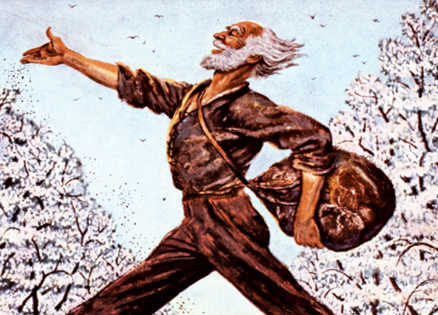
Picture the American frontier in the early 1800s: homesteaders chopping down trees and hunting wild animals. But one of the most beloved figures on the frontier never did either. He wandered the wilderness, sleeping in hollow logs and caves, or at the home of whatever pioneer welcomed him in.

His name was John Chapman, but Americans at the time gave him a different name. They called him Johnny Appleseed.

Pray a Day Vol 2 In Article Ad

The name came from the pouch of apple seeds he always carried with him, and the many orchards he planted in the American Midwest—over a hundred thousand square miles of apple orchards from Pennsylvania to Ohio to Indiana.

Why did Chapman choose such a strange life for himself? Nobody really knows. Some say he was jilted by a girl he loved. Some say he simply had an entrepreneurial spirit.

But others say John Chapman was inspired to spread his beloved apple blossoms across the country by nothing less than a message from an angel.

Like many things considered American today, apples originally came from somewhere else. Early immigrants found only crab apples growing in the New World. So they brought apples from England. Most of the early orchards in America produced very few apples, until the European settlers imported something else from home: honey bees.

By the time John Chapman was born in Leominster, Massachusetts, in 1774, New England was buzzing—literally—and the apple trees were blooming. John used to say that the first thing he ever saw were the pink blossoms of the apple tree.

A lot was happening in the colony of Massachusetts when young John was born. His father, Nathaniel, a carpenter and farmer, was a Minute Man who fought at the Battle of Bunker Hill.

When John was 24 he left home for Pennsylvania with a bag full of apple seeds he had gotten from a local apple press—and a pretty good idea of what his life’s work would be. Four years later, he bought sixteen bushels of seeds, loaded them into two canoes lashed together and took off down the Ohio River.

Soon John had a system for planting his orchards—and a thriving business as well. He traveled down river and over land, often carrying heavy bags of seed on his back, in search of rich, fertile land where he thought pioneers might settle.

He planted his trees in a straight line and built a fence to keep animals away. Then he hired a local boy to look after the saplings and continued on his way, returning regularly to check on his work. Within a few years he had saplings to sell to arriving families.

When he ran out of seeds he returned to the East Coast and started all over again. He became so well-known amongst both the pioneers and Indians that they renamed him Johnny Appleseed.

This very successful businessman had a knack for predicting where pioneers would settle and how popular his apple trees would be.

But when Johnny Appleseed’s legend grew, it wasn’t tales of money or power that people shared, but stories of his faith and charity and his love of God’s natural world. For all the trees he grew, he couldn’t abide the cutting of one down.

By all accounts—and there were many, because everyone seemed to know Johnny Appleseed—he was an odd-looking fellow. Small and energetic, with long dark hair and bright black eyes, Johnny traveled the wilderness with nothing but his bags of seeds and a Bible.

Some said he didn’t even carry a gun or a knife—a dangerous gamble in the American wilderness. But Johnny never got into trouble. He befriended everyone: pioneers, Indians, even wild animals.

One legend had it that during a snowstorm Johnny took shelter in a fallen tree. Once inside the tree, he discovered it was already being used by a mother bear and her cubs. Instead of driving Johnny away—or worse—the mother bear welcomed him as her guest.

One thing that’s for sure: Johnny never hurt an animal. A strict vegetarian, he refused even to ride a horse. He often used the profits from his apple trees to buy lame horses from their owner to save them from being killed. He bought mistreated animals for whatever amount the owners asked, then found the animals a kind home.

Johnny’s compassion and generosity extended to people as well. He gave away trees when necessary, or traded them for food or clothing. He lent a hand with the chores when he came upon settlers in need.

However, he wore no shoes, summer or winter. That was no easy feat in the deep snows of the frontier. In fact, he often entertained little boys by pressing hot coals or needles into the soles of his feet, which had grown tough and leathery in his travels.

For clothes he wore whatever anyone was willing to trade—that made for some pretty strange outfits.

However little Johnny Appleseed cared about his own personal adornment, he delighted in covering the American landscape with pink apple blossoms. And those weren’t the only seeds he sowed. A devout believer, Johnny loved to share his faith with everyone he met. He became a messenger of sorts himself; his angel had chosen wisely.

One can just imagine being a little boy or girl living on the frontier. Sun is setting. Chores are almost done. Then over the horizon a man appears. No ordinary man. He wears no shoes, and his long hair brushes his shoulders.

Perhaps he wears an old shirt a size too small, or a pair of pants several sizes too big. Perhaps he isn’t wearing a shirt at all, but an old coffee sack with holes cut out for arms and a tin pot on his head instead of a hat. Imagine the excitement as the child realizes who it is: the famous Johnny Appleseed.

He’s invited to stay for dinner. When the meal is ready everyone gathers round. Johnny refuses to eat until all the children have been served—that’s not something frontier children usually experienced! Over the meal, Johnny shares stories about his life in the wilderness.

After dinner Johnny sits by the fire. He reaches into his coffee sack and pulls out an old, dog-eared Bible. “Who’d like to hear the good news?” he asks. “News fresh from heaven?”

Then Johnny Appleseed begins to read, perhaps from the Sermon on the Mount, some of his favorite passages, it is said.

“Blessed are the poor in spirit, for theirs is the kingdom of heaven,” he begins in a voice one frontier housewife described as being “loud as the roar of the wind and waves, then soft and soothing as the balmy airs that quivered the morning-glory leaves about his gray beard.”

In 1845, when he was 70 years old, Johnny Appleseed arrived at the door of his friend William Worth in Fort Wayne, Indiana. Of course, William was glad to see him. They shared a simple meal of bread and milk. Johnny read from his Bible. Then Johnny stretched out on the floor and went to sleep. He never woke up.

When the news reached Washington, US Senator “Texas” Sam Houston said, “This old man was one of the most useful citizens of the world in his humble way. Farewell, dear old eccentric heart. Your labor has been a labor of love, and generations yet unborn will rise up and call you blessed.”

A true American legend had died. Many of the apple trees growing from Pennsylvania to Ohio today are descended from the very seeds he planted, barefoot, all those years ago.

The seeds planted by John Chapman—on the advice of an angel— bloom in America to this day. As does the faith he helped spread throughout the land.

View our slideshow of Johnny Appleseed images.


Download your FREE ebook, The Power of Hope: 7 Inspirational Stories of People Rediscovering Faith, Hope and Love

A Footpath Toward a Stronger Faith

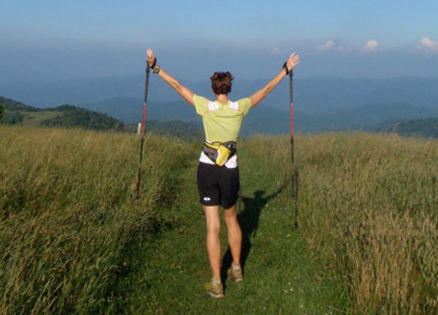
“Why the Appalachian Trail?” friends asked somewhat incredulously. Great question. I’d spent all of three nights in the woods my entire life. The one summer camp I went to had air-conditioned cabins and hot water.

Yet here I was, telling everyone I was going to thru-hike the trail from Georgia to Maine after graduation. Partly to test myself, sure. Isn’t that what you do when you’re young? Partly to put off getting a job. But the real reason went much deeper than that.

Walking with Jesus L&E evergreen_in article ad

Ever since I’d heard about the trail, I had the strangest, strongest sense that I was supposed to hike all 2,180 miles of it. I felt called to do it.

Fresh from college I set out from Springer Mountain, Georgia, on my unlikely quest. I have since thru-hiked the Appalachian Trail twice more, most recently in record time—46 and a half days (an average of almost 47 miles a day).

But speed has never been my true goal. What I’m really after are the spiritual lessons that come from the trail, a kind of freedom of the soul, lessons that serve us wherever our life’s journey takes us.

1. Choose your own identity.

Trail names are a hallowed tradition. Hikers pick nicknames to go by, like Dude or Mooch.

“You should be Stretch or Amazon,” people told me because I’m six feet tall and have the long stride to match. But after 21 years of others defining who I was, I was ready for a change. Who did I think I was?

The first time I was about to sign a register near the southern end of the A.T., I paused and thought of all the reading I’d done as a classics major. Homer’s Odyssey had captivated me.

Look at all the wisdom the hero, Odysseus, gained from the challenges he overcame. Could I be like him? That March day I picked up a pen and wrote my new name: Odyssa. Because I was on a life-changing journey.

2. Accept the generosity of others.

One evening in the woods I smelled something tantalizing. I followed my nose to a clearing where an RV was parked. There was a circle of lawn chairs around a campfire. Pots of beans, rice and corn were warming over the fire.

A table was set up with cheese, lettuce, salsa, sour cream and tortillas. The RV door squeaked. A motherly woman stepped out. She handed me a plate. “Take whatever you want,” she said. “Pull up a chair and enjoy.”

I’d heard about strangers offering gifts to thru-hikers—a ride to town, a shower, a hot meal. I’d always been the independent type. This hike was something I was doing on my own. But I soon discovered I was never going to make it without accepting the generosity of others.

They call it trail magic. I call it God’s grace. P.S. Those fajitas were fabulous.

3. Let your spirit sing.

My biggest fear was cold, wet weather. It hit early on, in Great Smoky Mountains National Park. A bonechilling rain fell. I had to slide down Clingmans Dome, the highest peak on the trail, 6,643 feet above sea level, over patches of snow and ice.

“Tomorrow will be better,” I muttered to myself. But, no, the next day was worse.

The weirdest urge came over me. Sing! What? Sing! So I sang. Not well and not loudly. I launched into “My Favorite Things” from The Sound of Music, then “Tomorrow” from Annie. If refugees and orphans could have a positive attitude so could I.

You know what? It worked. When you lift your voice in song, your spirit sings along with it. From then on, whenever something got to me—weather, blisters, mosquitoes—I’d sing myself into a better mood. Rap, hymns, pop, folk, gospel, rock, off-key at the top of my lungs.

4. Meet God where you are.

I was used to seeing God in church. I didn’t expect to find him on the trail. How little I understood of the wonders of his creation! One night in the Blue Ridge Mountains brought that home.

The mountains, true to their name, were transforming from a barren brown to a kaleidoscope of blues. The sky was lit up with red, orange, pink and yellow more vivid than any painting. “Praise God!” I shouted into the wind. Dorky, maybe, yet it felt so right.

I remembered a verse in the Bible that said if people failed to praise God, the rocks would sing out his glories. That’s just what they were doing. Praise God!

5. Be yourself.

I’d thought I was a pretty good judge of people, but I discovered that sometimes they’ll defy your expectations. One night I settled into a shelter when a man with a long beard came in. “Arrgh! Greetings, milady,” he said. “Is there room in here for a weary pirate?”

A pirate? He had to be kidding. “There are some open bunks,” I said.

“My name is Captain Jack Daniels,” he said, “but call me Captain.” He’d been a thru-hiker for 15 years and had a number of businesses on the side. He gave me his card. There was a Bible verse printed on it. Who would’ve guessed?

It’s easy to get into conversations with people on the trail—talking makes the miles go faster. At first I felt awkward telling others what I believed. Finally I dove in. By the time I reached Maine I was much more confident of who I was.

6. Dream in teams.

Soon after that first thru-hike I fell in love with Brew Davis, a schoolteacher and an old friend of my brother’s. We got married in June. I won’t be hiking as much anymore, I thought.

Brew surprised me. He suggested I thruhike the A.T. that summer and he’d follow in our car. That was how we spent the first summer of our marriage!

By the end of it, we knew each other so well, it was like we’d been married for decades. We learned to trust each other, to share, to be patient (that would be me waiting for Brew to drive up in our Toyota Highlander when I was exhausted and starving).

Brew says he was growing in his biblical role of husbands “loving their wives as much as Christ loved the church.” Sometimes that meant forgiving his wife for eating all the granola bars!

Then we hatched a plan of beating the thru-hiking speed record, and I must insist, it’s our record. Because I was hiking 18 hours a day I was getting six hours of sleep a night, which meant that was all Brew was getting too.

He had to pack up the gear, drive and find obscure trails, do laundry, buy food. More than that, he had to meet and anticipate my needs.

We started June 15, 2011, and finished July 31. Most people assumed the record-holder would run the trail. Not me. I hiked. I went three miles an hour. It’s not always the fastest or strongest that wins but the most persistent.

Of course, it helps when you have someone as devoted as my husband supporting and praying for you the whole way. More than once I was ready to collapse. “Get some sleep and you’ll be okay,” Brew would tell me. “God is with us, remember?”

Indeed, he has been, from the moment he called me to the trail, and every step of the way since. We are all of us put on this earth to complete a journey, and fast or slow, for each and every one of us that journey ends in glory.

View photos of Jennifer’s thru-hike of the Appalachian Trail.


Download your FREE ebook, True Inspirational Stories: 9 Real Life Stories of Hope & Faith

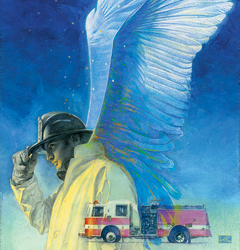
A Firefighter’s Earth Angel

Faces were grim on Engine Company 208.

We sped through the streets of Mesa on our way to one of the worst calls a firefighter can get. “Med-3 on North Rosemont,” the dispatcher’s voice had said. “Possible pediatric drowning.”

Light for Life NASB Study Bible in Article

The house where a little girl had tumbled into a swimming pool was only three and a half miles from the station. The four-minute drive felt like forever.

We were experienced firefighters. Between the five of us we had nearly 80 years’ experience. This was my sixteenth year with the Mesa department. I knew all too well the awful truth about kids who fall into swimming pools—few survive. It takes only minutes for an oxygen-starved body to shut down. By the time paramedics reach the scene victims usually show no sign of life.

I’d been called to more than a dozen pediatric drownings. Not a single child recovered. A few revived with catastrophic brain damage. Most died.

I reviewed our treatment protocols. First we insert a tube down the victim’s throat and pump it with pure oxygen. Then we establish an IV and administer drugs to strengthen cardiac contractions, all in hopes of restoring oxygenated blood flow.

I tried to stay focused, but my mind kept flitting back to my own kids, who’d grown up just blocks away from the house where we were now headed. Jason and Shannon were teenagers now, but I still saw their faces every time an emergency involved kids.

The worst part was talking to the victim’s parents. I remembered one call, a three-year-old who’d wandered into a neighbor’s backyard and fallen into a pool. The boy’s mother was a friend of our family’s. Her distraught face burned in my memory. I’d felt so helpless, so frustrated that there was nothing we could do. It’s the worst feeling a paramedic can have.

The truck halted in front of a two-story house with a desert garden. A cluster of neighbors stood out front. We hurried inside, lugging oxygen tanks and equipment. My eyes took in kids’ toys on the living room floor, a family portrait photo on the wall. I wondered if the baby in the photo was the child we were about to try to save.

More people clustered in the backyard near a swimming pool. A man on his knees frantically pumped the chest of a tiny girl. She looked about two years old. We raced over. The girl was motionless. Her skin was deathly pale, her lips and fingernail beds a purplish blue—all signs of severe oxygen deprivation. Her shoulder-length brown hair streamed wetly from her head. She wore shorts and a T-shirt.

I pulled the man away from the girl’s body. We inserted the tracheal tube, pumped it with oxygen, administered medication and hooked up a heart monitor. I looked for the parents. They were obvious by their horrified faces. The father, who’d administered CPR, clutched his wife.

They spoke in anguished bursts. The girl’s name was Paisley Walker. Her parents were Terry and Kaye. She was almost two, her birthday just a week away. The family—they had six kids—had only recently moved.

“We were about to put up a fence surrounding the pool,” Terry said.

“Paisley must have wandered outside and fallen in,” said Kaye.

“Please save her!” they both pleaded. I yearned to tell them their daughter would live, but I didn’t dare raise false hopes. I’d seen too many victims rally only to die moments later or live on in a coma. Instead I walked Terry and Kaye through our treatment procedures, keeping them focused on something tangible.

One of the paramedics at Paisley’s side spoke. “We have a pulse,” he said in the measured tone that comes from years of experience.

“She has a heartbeat,” I relayed to Terry and Kaye. “We’re going to medevac her by helicopter to a trauma center in Phoenix.”

Word came over the radio that the helicopter had landed in a nearby field. An ambulance arrived and we hoisted Paisley onto the stretcher, her little body so light and easy to lift. The stretcher wheeled through the house and disappeared inside the ambulance, which sped to the helicopter. I gave Paisley’s parents directions to the hospital and returned to the backyard to help pack up equipment.

A television news reporter hurried up to me. “Will the girl live?” she asked. I thought a moment. “I don’t want this on the record,” I said, “but I don’t think it’s going to be a real good outcome.”

I tried not to think about Terry and Kaye getting the likely pronouncement at the hospital—that Paisley hadn’t made it after all, or that she’d live, but not as the Paisley they’d come to know and love. It was a somber ride back to the station.

My job was finished, but I knew I’d never forget that little girl and how we’d probably failed to save her. I still felt so helpless I didn’t know if I could face another emergency call, whatever it might be. But you have to face it, I told myself as we pulled back into the station. That’s your job.

A week later on a brilliant June morning the guys and I were taking a break when a knock came at the station door. It was Terry and Kaye Walker. The anguished expressions I remembered were gone, replaced by excited smiles. I looked down. At their side stood a little brown-haired girl staring up at me with wide, shy eyes.

“Guys, come here!” I shouted, hardly believing what I was seeing. The guys crowded around and we welcomed the Walkers inside. It was as if nothing had happened to Paisley. She immediately began toddling around the station, marveling at her reflection in the fire engine’s chrome bumper and grabbing every piece of equipment she could reach.

“It’s Paisley’s birthday,” Terry said. “We wanted to stop by and thank you.”

“We wouldn’t be celebrating today if it wasn’t for you,” Kaye said.

I stared at them, then at Paisley. The Walkers kept thanking us, telling how Paisley had revived at the hospital and come home seemingly unscathed a few days later.

I thought of all the other drowning calls we’d been on, all the heartbreak we’d endured at the station. I thought of the grim feeling inside the truck as we’d pulled up in front of Paisley’s house.

Who’d saved whom? I wondered. Sure, we’d helped save Paisley’s life. But she’d saved us too. She was like an angel fluttering down from God to remind us why we did the work we do. To remind us never to give up hope, even when the odds seem so terribly stacked against us.

It’s been 10 years since Paisley toddled through our station door. We’ve celebrated every birthday with her. Watching her grow into a young lady with a bright future, I feel like I’m watching a miracle of God unfold in real time.

A miracle for Paisley—and for five grim-faced firefighters on Engine Company 208.

A Fire Chief Remains Hopeful in the Fight Against Her City’s Opioid Epidemic

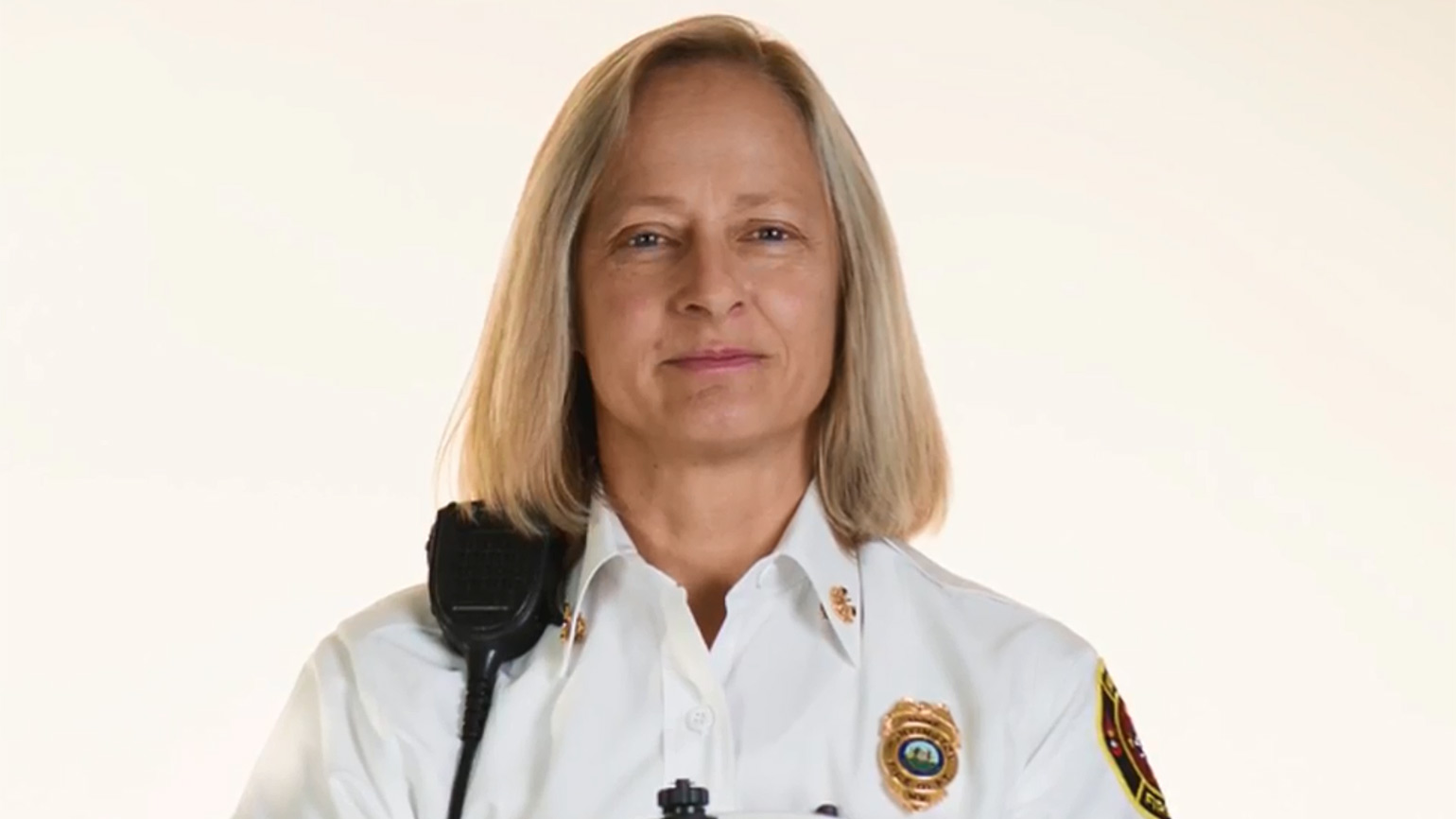
Hi Guideposts. I’m Jan Rader, fire chief in Huntington, West Virginia, and I’ve been a first responder for 23 years.

I actually was working as an assistant manager in a jewelry store in a mall, and a lady collapsed right in the doorway of the store, and I didn’t even know CPR. So I called 9-1-1 and waited, and the fire department showed up and there was a woman who was with them. They were actually able to save the lady, and it was the first time I realized that being a firefighter was something that a woman could do.

A Journey of Faith In Article Ad - Avail Now

Once I became a firefighter, I really was interested in the medical side as well, so I became a paramedic; I did that on the side.

Opioid addiction, or substance use disorder, is a country-wide problem. In 2016, it killed 64,000 people, and that’s more than died during the Vietnam War.

We try to stay as positive as we can in this area, and we focus our attention on the small successes here. We have a lot of people in the community diligently on this problem, helping firefighters and everybody who’s working to combat this epidemic.

Naloxone is a drug that we can administer, so by administering Narcan (brand name for Naloxone) over and over again, we are keeping people alive until they can seek treatment. We actually deal with people that have gone into longterm recovery daily, and they are healthy, happy, tax-paying citizens again. It’s wonderful to see. You know, it takes about three years for the brain to heal completely from substance use disorder, but people do recover and they can recover and they are amazing people.

We take an oath to save life and property, and nowhere in that oath does it say we have the right to judge. We don’t know back stories of people, and when you learn them, it’s devastating and you wonder why some have resiliency and some do not.

I keep a lot of people that I meet on the street and I deal with on a daily basis in my prayers, because I believe in the power of prayer. Several people have contacted me after they have recovered to thank me, and it really makes you feel good about what you’re doing. I feel like I’m ethically and morally doing the right thing and that I was chosen to do what I’m doing and I see too many good things coming out of this, so it’s easy to stay positive in that respect.

I have a lot of hope because I think that there’s more good than bad in this world, and we have the power to overcome this and be a better, stronger community and a better and stronger country.