Embrace God's truth with our new book, The Lies that Bind

5 Prayers for Caregivers During Times of Crisis

Caregiving can be a tough job at any time. But throw in a worldwide health crisis and suddenly the daily demands of caring for another may increase exponentially. Of course, the coronavirus has upended life as we know it all around the globe, and caregivers are subject to all the same stresses as the general population—fear of the unknown, disrupted schedules, limited ability to get groceries and increased isolation, among others.

Eating well, exercising and staying connected to others—even if that means saying hello online—can help you avoid caregiver burnout. Connecting with God will also allow you to tap into His perfect peace. So the next time your fears, exhaustion and confusion attempt to overwhelm you, find a quiet place and try one of these prayers.

Pause & Pray In Article Ad

1. Holy Father, show me what to do now.
 

2. Dear Lord, even during these difficult days, help me find the sacred in every moment.
 

3. Merciful God, I turn to You to help me navigate this new world brought on by the coronavirus crisis. Each day brings new challenges; please help me make the best decisions day by day. When I feel isolated and alone, wrap me in Your loving embrace and remind me that Your love and guidance is always available to me. When I feel weary or frightened, grant me patience and renew my energy so that, with Your grace, I can continue to be a capable and loving caregiver.
 

4. Dear God, thank You for trusting me with the precious role of caring for another. Infuse me with Your strength when this crisis saps my energy; comfort me when I am lonely and fearful. Remind me that You are the Great Protector and that You are holding me and my family safely in your hands.
 

5. Lord, help me see Your presence in the midst of daily struggles. Replace my weary moments with Your infinite strength. Embrace me with Your loving arms when I feel isolated and alone. Reassure me with Your perfect peace when I am overwhelmed and anxious. Lead me towards compassion and love amidst moments of frustration and sadness. Today and every day Guide me to the simple gestures I can do to ease another’s suffering. Remind me in moments of weakness that with Your help I have everything I need to carry on.

5 Perks of Going on a Walk in Your Neighborhood

As we continue to shelter in place during the Covid-19 pandemic, going for walks has become a regular activity for many people. Not only is it a great way to get out of the house for a bit, but it’s fairly easy to maintain the suggested 6-feet of social distance. And while it might be tempting to hop in the car and drive to a hiking trail or the beach, walking around your own neighborhood has multiple benefits, too.

1. Meet Your Neighbors
Daily walks in your community are a great chance to get to know your neighbors—and not just the ones next door, but the ones down the road or around the corner. Don’t be afraid to strike up a conversation; a smile and a “good morning!” can go a long way. Consider asking someone how long they’ve lived in the neighborhood, or comment on their garden. Taking the time to build stronger bonds with those living around you makes your neighborhood a friendlier place. Just don’t forget to keep social distance!

2. Discover Local Businesses
Going on a walk in your neighborhood also gives you the chance to find local businesses that you might never have patronized before. You’d be surprised what you may stumble upon by switching up your routine and going just a block or two further than you normally would. You might find a cute coffee shop or bakery or even a restaurant you can check out when dine-in eating becomes available again. Supporting these local spots can also help to keep your community thriving during these difficult times.

3. Learn the Lay of the Land
How well do you know the layout of your neighborhood? Sometimes we hop right into the car or walk straight to the closest subway and don’t take the time to explore where we live. Try walking down a street you’ve never explored before, or setting out in the opposite direction. You might find something new— like a community garden or a park— you never realized existed. Neighborhood walks can also help us get a better sense of direction. Turn off your GPS and just wander. Soon, you’ll know your neighborhood like the back of your hand.

4. It’s Healthy!
Sheltering in place is important for our health as we try to curb the spread of the Covid-19 virus. But exercise and fresh air, as well as soaking in some sunlight, are also vitally important to both physical and mental health. (Several recent major studies have indicated that severe Vitamin D deficiency may be correlated with Covid-19 mortality rates.) Going on a walk through your own neighborhood gives you the opportunity to get a daily cardio workout in. Try challenging yourself to go farther by adding another block on each day. Just don’t forget sunscreen and a face mask!

5. Take in Some Local Nature
Communing with nature is a vital part of the human experience. Take the time during your daily walk to get to know the flora and fauna of your neighborhood. Bring binoculars and do a little bird-watching. Take pictures of the different butterflies and look them up later when you get home; collect local leaves and flowers for a scrapbook. Bring a plastic bag along and pick up trash as you go; this way, you can  keep your neighborhood’s ecosystem nice and healthy while boosting your own health, too.

5 People Who Didn’t Become Artists Until Later in Life

Studies show over half of Americans are unhappy with their jobs. The good news? Research also shows that changing careers later in life can lead to a dramatic increase in emotional and physical health. Here are five exceptional artists who made career changes later in life. 

5 Organizing Tips for Cluttered Homes

Some people find their calling in school, at work or on a mission trip. I discovered my calling in my cousin’s kitchen. Sheila was throwing a dinner party and I went to her house early to help with the food. We put the lemon chicken in the fridge to marinate, and Sheila got started on the Assyrian rice. “Can you grab some containers out of there?” she asked, pointing to a cabinet. I opened it and was greeted by a Tupperware avalanche. “Sheila,” I said, “let me straighten up here.” In a few minutes I had containers matched with their lids and stacked in the cabinet according to size, as if some super-organizing part of my brain had just taken over.

“While you’re at it,” Sheila joked, “want to do the utensil drawer too?”

Journey With Jesus in article ad

“Sure,” I said. The utensils took a bit longer, but I was on a roll. Next I tackled spices scattered on four shelves. Then her toddler’s plates, cups and spoons, jumbled in a heap. For two hours, till other guests arrived, I worked on my cousin’s kitchen. I had fun too.

“You could make a job of this,” she said at the end of the evening. That’s just what I did. I became a professional organizer. In the 10 years since that day in Sheila’s kitchen, I’ve helped all kinds of people—singles, couples, big families, empty-nesters, retirees—clear the clutter from their homes. They emerge not just better organized, but also lighter in spirit. It’s a lot easier to live a balanced life—a life focused on what matters to you—when you’re not weighed down by the stress of disorganization. Try these tips to tame the chaos. Come on, you’ve got nothing to lose but the clutter!

1. Start small.
I had a client who’d recently retired and finally had time to sort through all the possessions she’d accumulated over the years. “But I don’t know where to begin!” she cried.

“Pick one room,” I suggested. “Actually, a section of one room.” She chose her bedroom closet, which (barely) contained more than 100 pairs of shoes. We sat there and went through one pair after another. “When was the last time you wore these loafers?” I asked. She couldn’t remember so I set them in the “no” pile. “What about these? Do they even fit?” She shook her head. Bye bye, pumps. I held up some red sandals that had never been worn. “I love those,” she exclaimed. “I’ll wear them, I promise!” Okay, they were keepers. It took us the whole day, but we cut her shoe collection by more than half. By day’s end we had a bunch of shoes for charity, and my client was feeling unburdened of possessions that were beginning to possess her.

Start with something small and simple. Like your sock drawer (if it doesn’t have a match, toss it). Next, your T-shirts. You’ll build momentum, and before you know it, your whole dresser will be organized. Just get started.

2. Use it or lose it.
Admit it. There are things you have that you never use, that you might have even forgotten about. That slow cooker (and those other duplicate wedding gifts) in the attic. The bikes your kids outgrew. Grandma’s bedroom set gathering dust in storage. Don’t feel obligated to hold on to something just because it was given to you. If you don’t love it or need it, why keep it? There’s probably someone who would like that slow cooker and more to the point, actually use it.

People waste thousands of dollars a year on storage spaces because they keep things they have no use for. “I might want it a few years from now,” they say. How about donating or selling those items and putting the money you would’ve spent on storage into your emergency fund? Then if rainy days come, you’ll have enough to cover your needs. (What good is Grandma’s bedroom set going to do when what you really need is cash to pay for car repairs?) This isn’t just a principle of organization. It’s good stewardship.

3. Sort it.
Go through your mail every day. Recycle junk mail right away—that’s anything you won’t read or need later. If you’re not going grocery shopping this week, the Stop&Shop flyer goes in the bin. Any issue of a magazine on a topic you’re not interested in—give it to someone who is or get rid of it.

As for the things you’ll need later, before you fill up another file, consider: Is there anywhere else you can get the same information? You’ll want to save insurance claims until your doctor’s bill comes, but you can get your bank statements online, so don’t hold on to those. For years, my mom kept papers in boxes in the garage. A rainstorm and a leaky roof ruined them all. Guess what? She hasn’t had reason to miss a statement, form, receipt or letter lost in that mess.

4. Get the kids in the game.
Make organization a game. Sheila’s six-year-old can set a table faster than you can say “fork, napkin, knife and spoon.” Challenge your children or grandchildren to a competition. Who can put their shoes away fastest? Who can be the first to get their toys off the floor? One of my clients wanted to teach her son how to put away his laundry. He couldn’t read yet so they drew pictures together—a shirt, a sock, a pair of pants—and used them to label his dresser drawers. They had a ball.

Kids can handle a lot of responsibility. Little ones like to emulate their parents. Avoid doing things for them even if it’s faster. Your daughter will never learn her coat doesn’t belong on the floor if you’re always hanging it. With teens, well, there comes a time when you have to close their bedroom door. Sooner or later—when they can’t find their take-home history test or that permission slip—they’ll get with your organizational program (or at least ask you for help).

5. Give it away.
De-cluttering your house isn’t just a way to do yourself a favor. It’s also a way to share your blessings and help make the world a better place. Those old gym shoes? Don’t send them to a landfill. Nike’s Reuse-A-Shoe program turns your sneakers into flooring used in running tracks, basketball courts and playgrounds. Collectivegood.com takes cell phones and refurbishes them for use in developing countries.

One neat trick: I keep a basket in my closet. Anything that doesn’t fit or hasn’t been worn in the past year goes into the basket. When it’s full, I donate what I’ve got. There are tons of places that will take unwanted items—the Salvation Army, Goodwill, your church or synagogue.

Taking small steps each and every day will help you get organized. Once you’re there, just 10 to 15 minutes a day will keep you that way.

Clear the clutter and you’ll turn your home into the sanctuary it was always meant to be. Your spirit will be lighter for it too.

5 Life Lessons Learned from Tom Brady and Patrick Mahomes

By all accounts, the matchup between NFL quarterbacks Tom Brady and Patrick Mahomes in Sunday’s Super Bowl is one for the ages. 

On the one side, we have 43-year-old Tom Brady—widely considered to be the greatest quarterback of all-time—trying to clinch his seventh Super Bowl Trophy during his first year with the Tampa Bay Buccaneers. Opposite him is wonderkid Patrick Mahomes of the Kansas City Chiefs. Only 25 years old, he already led his team to victory in last year’s Super Bowl and was named one of Time Magazine’s Most Influential People of 2020—and those are only two of the many honors he’s received during his three years in the NFL.

Light for Life NASB Study Bible in Article

You don’t have to play football or even like football to be impressed.

Personally, I like Super Bowl parties and have occasionally needed to be reminded of who is playing before I walk in the door. But that doesn’t mean I can’t glean some inspiration from these two gridiron giants. Here’s some life lessons that can make us all winners.  

1. Never give up. Like the Energizer Bunny, Brady has just kept going and going—through injuries, scandals (remember Deflatgate?) and the inevitable aging. He wasn’t born with extraordinary skill. At first meeting, his high school football coach was unimpressed with Brady, who he found to be “slow as molasses.” But through sheer determination and hard work, Brady currently ranks as one of  the most impressive football player of all time.

2. Look for role models. Mahomes grew up in the world of professional sports; his father was a major league baseball player until Mahomes was 8 years old. He credits being able to get up close and personal with players like his dad, Alex Rodriguez and Derek Jeter with teaching him the amount of discipline and hard work it takes to rise to the top.

3. Take the High Road. After leaving the New England Patriots in early 2020 after 20 years, Brady could have easily gloated about his return to the Super Bowl with another team. But he refuses to say a bad word about the Patriots or head coach Bill Belichick—no matter how often the press tries to goad him into it.  
 
4. Trust in God. Mahomes has been vocal about the fact that his strong Christian faith is what keeps him going—and has kept him humble during his rapid rise to stardom. “It’s given me a lot of blessings in my life and I’m trying to maximize and glorify Him in everything I do,” he said after last year’s Super Bowl win.  

5. Give back to your community. Both quarterbacks have committed time and big bucks to a number of charitable organization. Mahomes has worked to build tiny homes for veterans and in 2019 founded a charity, 15 and the Mahomies Foundation, which raises money for a wide variety of children’s causes. In 2015 Brady started the TB12 Foundation, an organization that encourages athletes—especially those at risk with financial problems or debilitating injuries—to keep going. The group also focuses on easing the burden for active duty military members, veterans and first responders. Brady has worked closely with a variety of other organizations and is credited with raising more than $45 million for Best Buddies International over two decades.

5 Lessons from a Long-Term Alzheimer’s Caregiver

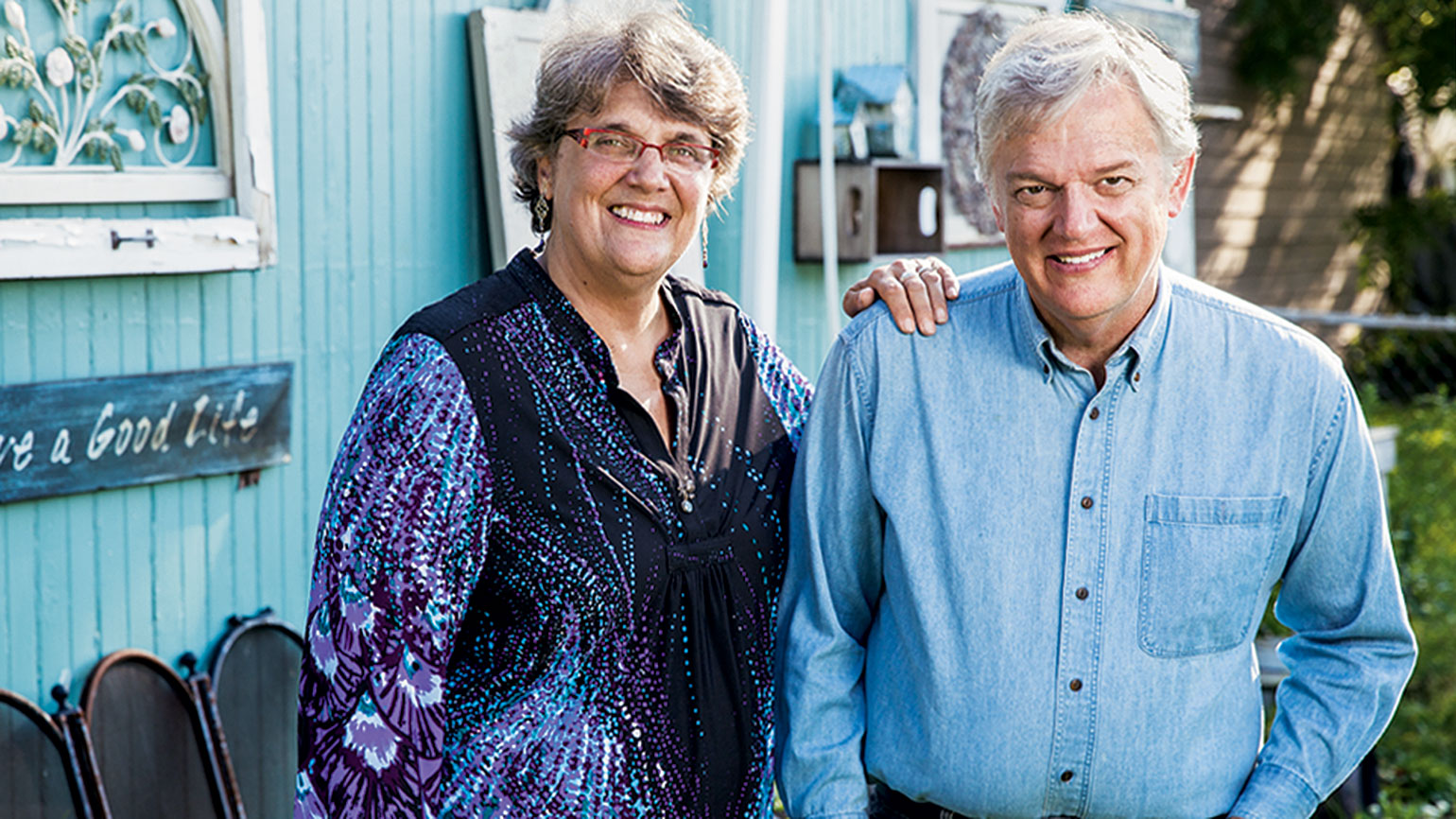
A decade ago, Alzheimer’s disease wasn’t on my radar. My husband, Bob, and I were in our fifties, immersed in our careers. He was a local radio and television personality, and together we had built an Emmy Award–winning video production company. Our two boys were working, with our youngest just a year shy of college graduation.

In 2012, Bob received a shocking diagnosis: probable Alzheimer’s. He was 58. There was no family history of dementia; he’d never had a head injury. I couldn’t fathom how this could happen or how our lives would change.

The Lies That Bind In Article Ad

Nine years later, I can emphatically say that Alzheimer’s has brought us challenges and joys. It drew us closer. Even when a spouse has dementia, you can still have a productive and loving life together. Here are the five most important lessons I’ve learned as a long-term caregiver.

Ask for Help

Alzheimer’s often causes the person who has it, as well as those who take care of them, to shrink from sight. Friends sometimes pull away too. It can be awkward communicating with someone who has dementia. There’s a loss of shared events or mutual responsibilities, even a fear of facing one’s own mortality.

Because Bob was in the public eye, I knew he would likely lose his jobs if word got out. To give me time to plan, I told almost no one.

We’d just moved into a new home when Bob was diagnosed. My coworkers and friends would ask: “How’s the new neighborhood?” “Find any new restaurants?” “Got all those boxes unpacked?” I wanted to shout, “Our lives are falling apart, and I don’t know what to do!”

As Bob’s condition worsened, I finally confided in more people. What a relief! I got better at asking for help. I used social media to find people to show me how to fix blocked drains and reglaze windows. Our church’s women’s group brought us meals. I launched a Facebook page to keep old friends and colleagues informed, which elicited offers to take Bob out. (One friend even took him to the Indy 500!)

Two of Bob’s coworkers began an annual tradition of helping me wrap my Christmas gifts. As Bob’s Alzheimer’s progressed, I brought in a volunteer to provide respite care and eventually day centers and paid caregivers. Each stage of dementia requires new knowledge and help, so even if you start alone, build your team around you. That’s how you survive well. You can’t do this alone.

Welcome Something Good into Your Life

A terminal disease crowds out everything else. Dreams dissolve. Unknowns loom large. New demands on your time and wallet make leisure activities seem impossible.

Other than for work and necessities, I barely left the house during the first nine months after Bob’s diagnosis. Finally we went to our first support group meeting of families afflicted with early-onset Alzheimer’s. Month after month we met, sharing invaluable life lessons. Then a novel idea emerged. What if we got together as a group without Alzheimer’s as our focus? What if we all just went out and had some fun?

I’ll always remember our group outing to the art museum. Spouses joked and laughed. And, yes, just like when we were young parents, more than once we had to pull our loved ones back from touching the art. (Dementia steals inhibitions as well as memories.) We capped off our group date with a bite to eat at a café. For a few hours, we felt carefree and alive again. No one was surprised at our parting words, “When’s our next date?”

Create Your Own Answers

How do you keep your loved one engaged while you take some time for yourself? I still needed to work part-time outside the home, plus find a few hours to recharge my batteries.

Conversations with four fellow caregivers about grandchildren led us to a unique solution. “What if we created a sort of playgroup for our guys? They already know and like each other.” “Oh, I’ve got a house full of craft items. I could come up with a weekly art activity.” “Let’s take turns providing dinner too.” “I’ll bring a movie!” And so our Forget-Me-Not co-op was born, giving us four hours of respite weekly.

Two couples offered their homes, and one spouse (we took turns) stayed with our loved ones each week, assisted by an aide for whom we split the cost. It was heavenly, even when all I did was sit in a coffee shop or take a nap. Later, when our spouses needed more extensive care, facility managers marveled at what we’d done on our own. Don’t let roadblocks send you careening off your caregiving path. Find a way around.

Re-Examine—and Release—Expectations

I’ve always been an overachiever. In school. In my work. Even volunteering. I accomplished a lot, but it wasn’t always healthy.

It’s no surprise that I was overwhelmed trying to handle all my new Alzheimer’s caregiver duties. Now, besides my household roles, I took over responsibility for my husband’s duties as he became more confused. There were also new demands: researching the disease and possible treatments, evaluating legal and financial impacts, looking for help. I was working all the time, exhausted and on edge.

One morning, I woke up to a snow-covered driveway. Ugh. I’d have to shovel it before driving Bob to his day center. I pulled on my coat and gloves, grumbling. Imagine my surprise as Bob came outside to help me! But my joy faded quickly. Each time I shoveled a path across the driveway, Bob came alongside, throwing new snow right on the section I’d cleared.

We were already late. I yelled at him for getting in my way. He yelled back, mirroring my anger but also amplified by hurt. Bob refused to get in the car once the snow was finally cleared. So much for being timely.

Why was I rushing? We could have been late with no major consequences. Why did I admonish Bob instead of appreciating his desire to help? We could have stopped to have a snowball fight or make snow angels. But my expectations of completing the task, of staying on schedule, got in the way of our relationship. They made us both feel worse in that moment.

I learned a valuable lesson. The next time Bob left the kitchen faucet running after trying to wash a few dishes, I didn’t say a word. Well, actually, I said four: “Thank you for helping.”

Overcome Stigma There will be plenty of uncomfortable situations that you’ll have to deal with. Store clerks and restaurant workers may be puzzled by your loved one’s behavior. They might think you’re being bossy or overbearing when you answer or order for the person with dementia. Simply saying your loved one has memory issues can turn the encounter into a positive learning experience.

It might be difficult for your loved one to neatly use the restroom or even remember why they’re in there. There’s a whole world of super-strength incontinence products out there to help. Whenever we went out, I’d ask about the nearest family bathroom so we could go in together. If they didn’t have one, I’d ask the manager if they preferred we use the men’s or women’s room, then just announce ourselves loudly upon entering. Crisis averted.

Trips to the grocery store could be an adventure. One time, I was busy surveying the fruit and veggies only to realize Bob was no longer beside me. He had wandered away and was standing alongside two young men who were talking with a young girl, probably a daughter of one of them. I could see looks of confusion—and concern—as they noticed my husband happily listening in.

I didn’t panic. I walked over and explained that this friendly stranger had Alzheimer’s. “He often seeks out people much more interesting than me!” I said. We all laughed, they learned a bit about Alzheimer’s, and the shopping trip continued without incident. Until the next time someone walked by with an interesting T-shirt or inviting smile!

With Alzheimer’s, our lives in our sixties are very different from what we’d once dreamed of. Still I thank God for every moment he has given Bob and me to share. This isn’t the journey we would have chosen, but it’s no less meaningful, because Bob and I are on it together.

For more inspiring stories, subscribe to Guideposts magazine.

5 Inspiring Misty Copeland Quotes

Enjoy these inspiring words of wisdom from barrier-breaking ballerina Misty Copeland, the first African-American principal ballerina in American Ballet Theatre’s 75-year history and read her cover story from the February 2016 issue of Guideposts..

Like this article? Sign up for “Your Weekly Inspiration”,  a weekly newsletter of Inspirational stories of hope and faith – Click Here.

God's Constant Presence In Article Ad

5 Important Conversations To Have with Seniors

Content provided by Home Instead Senior Care.

Who wants to think about a time without their loved ones?  Or that moment when you take one long, last look into your mother’s eyes. Someday, your own children will be facing that heartache.

“It’s a very sad thing,” noted Harriet Warshaw, executive director of the Conversation Project. “No one seems to want to talk about it so the topic is easy to avoid. In fact, every culture has their own taboos around death,” she said. And yet, at an individual level, people do want to talk, Warshaw has found.

Telling others about my profession often opens the door to interesting dialogues about death. As a result, many times people share their own preferences for the end of their lives. 

Research corroborates the desire that individuals have to discuss these issues. In a survey conducted by Home Instead, Inc., franchisor of the Home Instead Senior Care® network, nearly three in four seniors who have made plans for their final years have discussed them with their adult children, and half of those did so to let them know everything will be OK.

Following are five conversations to consider having with these important people:

Make sure everyone understands what you want. Adult children can be among the least likely to want to initiate these conversations, Warshaw notes. It’s important you know your parents’ or other older loved ones’ end-of-life preferences and that everyone is on the same page to avoid squabbles at the end. By the same token, you’ll want your own children to know. Make it a collaborative exercise: “Mom, I’ve been thinking about what I might like at the end of my life just so the kids don’t have to worry. What are your thoughts?” The Conversation Project Starter Kit can help you put your plan in place.

Find out what medical options are available. The medical community is an important resource for end-of-life conversations. Start the talk with: “I want to have a conversation about my wishes for end-of-life care.” Try to ensure someone approaching the end of life has regular touch points with the medical community to ensure his or her physical as well as emotional needs are being met.

Warshaw tells the story about her mother who fought cancer for years. After extensive treatments, she explained to family she wanted to forgo further medical intervention; that is, until she heard her grandson was studying for his bar mitzvah. After a discussion with her oncologist, her mother resumed treatments and was able to see her grandson celebrate this spiritual milestone. Go to the Conversation Project for other tips about how to talk with doctors.

Discuss your financial goals. Initiating conversations with attorneys, financial planners, life insurance agents and funeral directors can help individuals ensure everything is in order. It doesn’t take much to start these conversations since professionals in these industries are accustomed to dealing with end-of-life topics. You’ll want to be sure to communicate to these professionals’ budget or financial goals, final years’ lifestyle preferences, and how you’d like to celebrate a life. 

Engage a spiritual advisor for emotional support. Conversations with pastors, priests and spiritual advisors provide both comfort and clarity at the end. I often tell the story of my family’s qualms about a Do Not Resuscitate order for our father. Talking through the issue with the family priest brought me and my siblings much peace and the confidence in knowing they made the right decision.

Convey your wishes to your care team. Caregivers, whether they are family or professional caregivers or care communities, play an important role in many seniors’ lives. But oftentimes seniors are reluctant to accept help, or talk about their future care needs.

North American seniors surveyed by Home Instead, Inc., focus more on preparing financially and legally than planning for long-term care. Seventy-three percent had made a will, but only 13 percent had made plans for long-term care. Approach the conversation with a sense of working together. “Mom, I’d like to treat you to someone who could help you around the house. You deserve it, and having a little help will make it easier for you to stay at home.” For more tips, go to the 40-70 Rule: A Guide to Conversation Starters for Boomers and Their Senior Loved Ones.

Check out additional resources and information at www.ComposeYourLifeSong.com  (www.ComposeYourLifeSong.ca in Canada).

5 Heartwarming Stories of Community Spirit

No More Humbug at Chateau Waters

For Darwin Bonn of Sartell, Minnesota, the hectic Christmas season was not the most wonderful time of the year. His wife, Rosie, disagreed. “She’d bake up a storm,” 89-year-old Darwin says. “And she loved decorating. That’s where a humbug like me got in trouble.” Every year, Rosie pestered Darwin to put up their Christmas lights. She had to ask and ask until he finally complied. “It was a big deal for her,” Darwin says. The high school sweethearts were married for 58 years before Rosie passed and Darwin moved into the Chateau Waters retirement community.

extraordinary women of the bible

As Christmas 2020 approached, Darwin found himself feeling more apathetic than ever. “I was thinking about my wife,” he says, “and how I should be putting up the lights.” He wondered if it would make people at his new residence as happy as it had made Rosie.

Working with the Chateau Waters staff, Darwin arranged for the facades of all 72 apartments to be transformed with colorful strings. The whole community lit up like a Christmas tree. “People I’d never spoken to thanked us for what we did,” Darwin says. “It was rewarding to see the glow on their faces.” It put a glow on his too. Darwin plans to do it all again this Christmas, adding lights in the entryways and therapy suites. “My gift to Rosie is one we can all enjoy,” Darwin says. And one that still must make Rosie smile.

Santa’s Got Wheels in Panama City

Back in 1977, Mike Jones was moonlighting as a security guard for Sears. One day he went into a back room where workers were crushing broken toys for disposal. He immediately thought of the needy kids he had met through his full-time job as a detective with the Panama City, Florida, police department. “I was assigned to many child abuse cases,” he says. “I saw a lot of kids who didn’t have anything.” Mike collected the broken toys, repaired them himself and passed them out at Christmastime.

Mike’s efforts have grown into a year-round operation he calls Salvage Santa. His specialty is bicycles, and donations for refurbishment come from all over. “My goal used to be 100 bikes a year,” Mike says, “but now it’s 300. What kid doesn’t want a bike?” Got old tires, tubes and pedals? Tell Mike at salvagesanta.com.

A Tree Grows in Cajun Country

Victor’s Cafeteria on Main Street in New Iberia, Louisiana, is the go-to spot for locals who want their homestyle Cajun cooking without the hassle of a kitchen. Tradition keeps grits and French toast on the menu—and an artificial Christmas tree in the dining room all year long.

Catherine Huckaby runs the cafeteria with her husband, Victor. She says the tree had always stood bare between holiday seasons because it was a production to dismantle it completely. “You need a special ladder,” she says. The tree was simply ignored as diners focused on food and family. Until June 2021, when the Onellion family gathered at Victor’s as they often did on special occasions. They were celebrating their son Emmet’s twenty-first birthday, with Emmet video calling into the party while away in the Marines. After dessert, Emmet’s mom approached Catherine about the tree. What if it was a place where the community could honor service of all kinds?

“Mrs. Onellion comes from a line of military families,” says Catherine. “So do Victor and I. What a wonderful idea.” Catherine rehung the tree lights and put out a stack of blank cards. “We asked people to write a note of gratitude and hang it on the tree.” The patrons loved it, and a tradition was born. This Christmas, red, white and blue decorations will nestle between the many messages of thanks to our vets and all who serve in their own way.

Terre Haute’s Cross Lane Community Church Delivers

Becky Willimann organizes the lively children’s ministry at Cross Lane Community Church in Terre Haute, Indiana. Things weren’t the same during the holidays last year; they hadn’t been ever since families went into lockdown because of Covid-19.

“It was hard not seeing the kids for such a long time,” Becky says. How could she let them know their church family still cared? Cookies! she decided. “There’s just something about cookies.” Becky made up boxes with cookie dough, frosting and sprinkles, and dropped in some fun holiday activities, such as a Christmas maze or an advent calendar to color. Then she drove around delivering the kids’ church experience.

“I was thrilled when our families came to the doorway for a chat,” Becky says. Of course the kids couldn’t wait to start baking. “It was a way for our church to keep even our youngest members close.”

Paying It Forward, Worldwide

Mike Esmond of Gulf Breeze, Florida, opened his utility bill one day in early December 2019 and noticed the disconnect date for nonpayment: December 26. Mike had the money, but he remembered a time in his life when that wasn’t the case.

“Back in the 1980s, I was struggling financially,” he says. “I had a wife and three daughters. Our gas was shut off, and we had no heat the whole winter.” He worried about the people in his small town who might be in the same boat. At City Hall he got a list of his neighbors who were headed for trouble on Christmas Day. He paid 44 bills. “Now that I could, I wanted to do something to help,” he says.

Thank-yous came in Christmas cards, phone calls and text messages, and word spread beyond Florida and the U.S. “So many people wanted to know, How can I do this too?” Mike paid the utilities for 114 Gulf Breeze families in 2020. “Come this Christmas, people worldwide are going to be doing the same thing we do here in our little community of 7,000. This pay-it-forward has really caught on.”

5 Free Helpful Apps for Caregivers

Struggling to juggle the logistics and demands of caregiving? You’re not alone. Research from the University of California, San Francisco, has demonstrated that the stress of family caregiving can cause premature aging by deteriorating cells. 

Using tools to keep track of and distribute caregiving responsibilities among friends and family can be an important tool for providing the best care for your loved one—and combating caregiver burnout. Here are a few free apps designed to help caregivers:

Whistle Stop Cafe In Article Ad May 2023

1. CareZone

CareZone is particularly useful for managing the medical side of caregiving. The app is great for keeping track of medication schedules. It allows users to scan in photographs of medications, set up reminders for appointments and refills, and even has a home delivery option for prescriptions. Available on the IOS App Store and Google Play.

2. MindLight

Designed by and for caregivers, MindLight allows you to invite everyone involved in your loved one’s care to join a shared calendar. You can then create shared to-do lists, recurring tasks and post updates for the entire team. Available for IOS and Google Play.

3. Care.ly

Care.ly was created to “improve the family care experience.” Users create a “care circle” with a shared calendar and common space to post updates and questions. It also has capabilities to organize and track doctor’s visits, as well articles with general caregiving information. Available on the IOS App Store and Google Play.

4. Caring Village

Caring Village allows users to create a share-able care calendar and wellness journal for their loved one. One of the most useful features is the ability to upload important medical and financial documents that you can then access through the app at anytime. It also has messaging capabilities and the ability to create personalized permissions for each member in the care team. Available on the IOS App Store and Google Play.

5. Dementia Talk

Looking for tools to help with the care for someone with dementia? Dementia Talk is a one-stop shop for tracking the behaviors of your loved one. The app has features for scheduling, medication lists and a behavior care plan. It also has a “caregiver corner” with self-care advice, information and other resources for caregivers. Available on the IOS App Store and Google Play.