Embrace God's truth with our new book, The Lies that Bind

Washing My Mother’s Feet

It was two days before my mother died. My older sister and I were sitting with her in the hospital room. The doctors had told us she could go home the next day. Mom was walking and moving around a little bit. At one point, though, she needed to rest and sat down in the chair near the window of the hospital room.

“I feel useless,” my sister said.

Mys of Blackberry Valley In Article Ad

She wasn’t a nurse like me. She felt that she had nothing to offer in terms of medical care to our mother. But then, Mom said that her feet hurt. The next thing I knew, my sister was going to work.

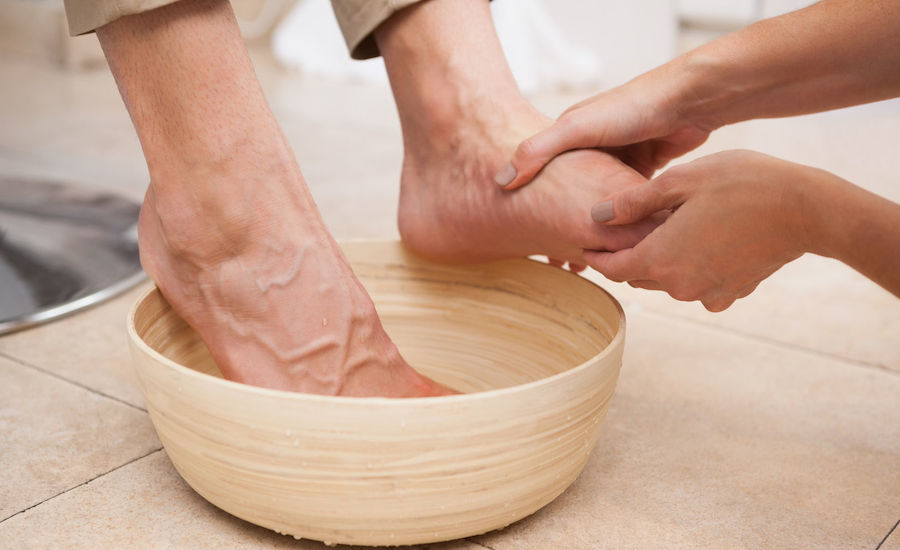
She took a pink plastic hospital basin, filled it with water, and got down on the floor. She washed and massaged my mom’s feet with lotion. I almost started crying. My sister’s feelings of inability to help were so far from the truth. In her actions, I saw Jesus.

During the Passover supper, Jesus poured water in a basin, grabbed a towel and washed the feet of His disciples. At first, one disciple refused to have Jesus wash his feet, for he didn’t think this action was worthy of the Son of God. What was Jesus doing?

Jesus was setting an example for their future. He wouldn’t be with them, physically, forever, and He wanted them to remember that He served willingly and washed the feet of His friends because He loved them. He wanted them to know that in order to serve Him, they had to serve each other, their friends, neighbors and fellow humans.

Does your teen daughter reach out and serve others? If not, here are a few suggestions.

1)  Be your daughter’s role model. Show her how to serve others by your own actions. When she sees you caring for others, she will follow and learn what it means to be compassionate.

2)  Encourage your teen daughter to help others in your neighborhood. Offering to mow a yard, shovel a snow-covered driveway or share a meal with someone will teach her about the needs of other people.

3)  Introduce creative ideas to her. Writing encouraging notes, creating goodie baskets or sharing her talents will show her that there are many ways to serve others.

There will be times when we feel like we can’t do much, for ourselves or for others. Let us be reminded of the One who cleanses us and washes our feet. Let us learn from Jesus how to serve and love others. 

Walking as a Woman of Faith

We stand in the vestibule after church service, my friend and I, and we talk in rushed sentences. The crowd comes around us like a wave moving toward our momentary shore. But I can tell, even though words are few, that the battle she’s engaged in rages strong.

I can see the burden in the lines of her smile.

Rejoice in All Things in article ad

I can hear the weight of worry in her words.

And I feel her hurt and pain on the skin of my own soul.

We chat for a few moments. Because I know her heart and she knows mine, we can get to deep places fast. There’s no room for surface skimming. We need to know how to pray for one another. And after a whisper of time, she goes in one direction. Off to her family. Off to her day. And I walk toward mine.

But it strikes me, as we part, that being a woman of faith is a precious thing.

Walking as a woman of faith doesn’t mean that there are not dark circumstances and deep shadows. It means that we have the promise of Light that will forever break through.

And again Jesus spoke to them, saying, “I am the light of the world. Whoever follows me will not walk in darkness, but will have the light of life.” John 8:12

Life holds struggles. Lonny and I have been working through a shadow of circumstance for some time now. But I’m learning, as I put one faith foot in front of the other, there’s not a form of darkness that light can’t penetrate.

There’s no situation so dank and deep that the Lord’s presence can’t shine through–scattering all shades of darkness with His sustaining, saving, hope-giving holy light.

Darkness can never really be darkness, because for us, the light of the Lord is there.

So when I pray for my friend, when I know that despair seems close and the end of the struggle far away, I’ll pray that she’ll walk in faith. That she’ll follow Jesus.

And that with every step her feet would fall on the grace-filled, Savior-illuminated path of light.

Use the ‘5 Love Languages’ for God

I don’t know when I’ve laughed as hard as I did last night at our family get-together. I love times like that!

My husband and I had joined our in-town kids and grandchildren at our son’s house to celebrate his birthday. We enjoyed a delicious meal on Jason and Kella’s deck, soaking in the stunning view of the mountains behind their house.

Pray a Day Vol 2 In Article Ad

We listened to sweet giggles and squeals as the children played in the yard. Nobody was in a rush and we just sat and talked—a wonderful treat since all of our lives are so busy.

We cleared the table and everyone moved indoors as drops of rain began falling in earnest. While the little ones played, the adults gathered in the great room, just hanging out and enjoying being together.

Read More: Mornings with Jesus Devotional

And then somehow as we discussed our son’s new gift (the drill he’d requested), the topic came up about our love languages. My daughter-in-law walked over to their bookshelves and found their copy of The 5 Love Languages–The Secret to Love That Lasts by Dr. Gary Chapman. She read a little to us about those love languages. (I think all of them are my love language!)

That’s when the laughter began, as we tried to guess each other’s love language. When Kella read the part about husbands cutting out hearts and leaving messages around the house for their wives, one daughter-in-law said the only way that would happen would be if her husband had their daughter cut the hearts out.

But the truth is that all of us in that house last night have been loved way beyond what we deserve. We are so blessed by our happy homes and marriages.

We laughed as we discussed our shortcomings, but we also had some great conversation. I was thinking about that this morning when I woke up, and the thought hit me, What’s God’s love language? That’s a lot to ponder, but I think we should just go ahead and give Him all the love languages today:

1)  Affirmation
What do you want or need to say to God today? Take time to praise Him. Express your love and your thankfulness. 

2)  Time
How can you carve time out of your busy schedule so you can spend more time with Him? Times of sweet fellowship where you can listen to what He wants to say to you.

3)  Gifts
Everything belongs to Him—so the only thing you have to give God is YOU. 

4)  Service
Think of how you can be of service to the people around you.

5) Touch

Let God know you love Him by becoming extensions of His hands to others who need help and kindness.

Unexpected Blessings: Reconnecting with Family

Forgiving Mom
Lou Dean from Dinosaur, Colorado

With Colorado’s stay-at-home order in place during the pandemic, I decided to make the best use of my time and finish sorting through boxes from the storage building. I opened the last box to find stacks of old photographs, documents and a tattered brown notebook with the years “1935-1937” written inside the cover. Bible verses and poems filled the pages. I stared at the pages in disbelief, realizing that what I’d found was a journal my mother kept as a teenager.

A Journey of Faith In Article Ad - Avail Now

Mama left us four kids on an Oklahoma farm when I was seven, and Dad raised us. She later remarried, and when we visited her in the summers, there was always an element of insecurity because of her alcoholism. I had succeeded with “levels” of forgiveness for her abandonment of us, her alcoholism and her inability to ever really get honest, but I knew in my heart that I’d never truly forgiven her for everything.

Looking over Mama’s poems more than twenty years after her death, I realized my gift of words had probably come from her.  But although she’d lived to see me publish my books, she’d never once told me that she herself had been interested in writing as a teenager. This realization made me feel closer to her than I had since I was a child. As I held the faded notebook in my shaking hands, I sensed God was giving me a nudge to let go of the last remaining anger and resentment toward my mother. I closed the notebook and let the waves of forgiveness wash over me, profoundly grateful that God used this time of crisis to grant me healing.

The Inspirational ABCs
Jeanette Levellie from Paris, Illinois

Our son Ron was a professional animator for five years. He now works at Eastern Illinois University, supervising the student workers in the library. But with no students on campus due to the pandemic, Ron has had extra time at home to draw. Last month, he posted on Facebook a drawing of a whimsical bird with a block letter A and the saying, “All is Well.” He got so many likes and comments that he continued his ABCs of drawings and encouraging sayings. “Bob Monster wants you to appreciate yourself.” “Corn Monster says it’s okay to admit you’re having a rough time.”

Besides being fun and uplifting in this distressing time, Ron’s alphabet of hope has proven especially surprising to me. Our son has always been a very shy, reserved and private person, a listener who rarely reveals much of himself. Although unfailingly kind and loving, in all his 39 years, I’ve never known him to reach out like this to others in such a public way.  “I didn’t even plan to do it,” he told me. “It just happened.” I’m so grateful for this unexpected peek into a bright new corner of my son’s soul. 

The Full Empty-Nester
Julie Lavender from Statesboro, Georgia

When our son Jeb moved out last summer, he was the last of our four children to go, and my husband David and I were left with a sad and empty nest. Jeb even took our beloved grand-dog Caramel! For most of our lives, we’d been used to having a lively, loving household, and I felt pretty down about it.

Then Covid-19 happened and my nest started filling up again. Jeb decided to stay with us while he worked remotely, and he brought back Caramel. Our daughter Jessica’s college campus was shuttered, and while she continued her coursework online, she came home too and brought her Pomeranian Coda. They moved right back into their old bedrooms.

Now, I’m cooking for four again, but loving every minute of the extra responsibility. Besides, having my kids back home is a blast—Jessica and I stay up until the wee hours blaring shows on Netflix and Jeb plays disc golf with his dad. Although we’re all praying for the pandemic to be over as soon as possible, my nest is full again and for that unexpected blessing I am grateful.

Out of the Rut
Marilyn Turk from Niceville, Florida

Before the stay-at-home mandate, my husband Chuck and I already had our own mandates firmly in place in our retirement. We each stayed at our desks in different rooms of the house, Chuck busy with ministry events and me working on writing projects and my own tasks. We only got together for meals, and often we ate in front of the television, so our conversation was limited. I missed my husband’s company and his conversation, but I didn’t know how to push past the rut we’d gotten ourselves into.

And then things changed very suddenly with the advent of the Covid-19 crisis. With all our events cancelled, Chuck now joins me on my daily walks. We’ve talked more in the last few weeks than we have in the last year. This new and unexpected time together has greatly benefited our relationship, allowing us to become much more attuned to each other’s wants and needs. It’s also been a boost to my fitness because Chuck walks a lot faster than I do and I have to push myself to keep up!

Unexpected Blessings: How Animals Bring Us Hope

Bringing the Zoo to Life
Leanne Jackson from Fishers, Indiana

My daughter Katie and her husband Brian live just outside Washington D.C., where Brian is a zookeeper at the National Zoo. Even with the zoo closed to the public due to Covid-19, Brian still feeds the animals there, but he really misses the interactions with the zoo visitors, especially the kids. When Brian and Katie’s group of old college buddies held a get-together on Skype, they learned that all their friends’ children were being home-schooled during the pandemic. Although Brian couldn’t let the kids meet the actual zoo animals, he and Katie have some pretty unusual pets themselves, so he came up with a plan.

Pause & Pray In Article Ad

At the next Skype meeting, Brian surprised the kids with ferrets. Following that, they all got to watch Katie shear her Angora rabbits. The children got to meet and learn about some adorable and unique critters, while Brian and Katie got to share their knowledge of, and passion, for animals. An unexpected win-win for all!

Friendly Neighbors to the Rescue
Linda Neukrug from Walnut Creek, California

There are 400 apartments in my Walnut Creek complex, and even though I’ve lived here for four years, I don’t know many of my neighbors. Now, during the mask-wearing, stay-inside weeks of the pandemic, it would be great to have a socially-distanced chat with a neighbor, but how would I possibly meet any of them? Anyway, at least I had my cat Junior for company. 

Last week, Junior escaped out the open window while I was disinfecting the sill  but I didn’t think too much of it, since he is sometimes gone for an hour or two before he taps the window to be let back in. 

But this time, it had been almost a whole day and Junior hadn’t come back. That never happened, and even though I knew it was ridiculous, I kept worrying he might starve to death. I cooked and sliced a chicken breast—his favorite—and put the dish on the windowsill. Junior would never be able to resist a special treat like that.

But when he returned after more than 25 hours gone, he vaulted over the plate of chicken, ignoring it completely, and went straight to sleep on the rug. That was bizarre. Junior was never not hungry. The next morning the chicken still sat on the plate, untouched. Oh no, was he sick? I was worried, but went about my day, heading down to the mailbox. A note had been slipped inside the box: “I hope it’s okay I fed your cat. I worried that maybe YOU are sick during this pandemic? So I emptied a can of tuna on my patio and he ate the whole thing. If you need anything, just call! Laura, Apt. 232.” 

I was dialing the number scribbled on the bottom of the note to thank her, when there was a knock at my door. I opened it to see a familiar-looking, grey-haired woman, masked and standing the requisite six feet back. “I’m from Apartment 4334,” she said. “Your cat was outside meowing and I thought you might be too sick to feed him, so I chopped up some fish sticks and he wolfed them down. I just came by to see if you need anything.” I thanked her profusely for her kindness and we exchanged numbers.

I picked up Junior and had him “wave” his paw goodbye to her.  How wonderful and unexpected to meet two friendly new neighbors, and all because they were kind enough to think about us. Nevertheless, I’m going to keep Junior on lockdown for the rest of the lockdown. I can’t have him getting fat because of my generous and thoughtful neighbors!

Georgia O’Keeffe the Cat
Kimberly Elkins from Brooklyn, New York

When the Covid-19 crisis started getting bad in New York in mid-March, my roommate Katie decided to stay at her boyfriend’s apartment for the duration of it. With the danger of viral infection from formerly benign objects like doorknobs, she didn’t want to take the subway or even an Uber back and forth between her boyfriend’s place and ours. But there was one problem: Katie has a cat and her boyfriend has a dog and never the twain shall meet.

On the weekends, I was already used to taking care of Georgia O’Keeffe, the beautiful part-Maine Coon named after the artist, but to have her be my sole responsibility for possibly several months? That didn’t sound good, especially when I realized I’d be cleaning the litter box. I liked Georgia fine, but we were more like two ships—one furry, one not—passing in the night than we were close buddies.

But as the lonely days turned into lonely nights, and then lonely weeks, Georgia grew on me. Yes, she can definitely be a little fussbudget when she’s hungry and yes, she does scratch up my precious velvet sofa, but her company has become worth the trouble. She’s only truly happy when she’s in the same room as people, always rolling over to have her belly scratched. She even waits at the door when I come home from one of my ten-minute masked, socially-distanced walks. Georgia O’Keeffe is not my cat, but she is, at least for now, my companion in this time of isolation. An unexpected blessing, even if that blessing sheds.

Hummingbirds Bring Hope
Mary Speck from Richmond, Texas

Last spring, our house in Richmond, Texas, flooded. It was completely ruined and we had to move out, while it was being rebuilt from the studs up. Finally in August, the house was ready and we were all set to move back in. But no—the air conditioners stopped working and the whole system had to be replaced. The front door was warped and wouldn’t open. I realized I was reaching my breaking point. I walked out into the backyard, closed my eyes in prayer and told God: I don’t know how much more I can take.

I felt a rush of air around me and opened my eyes to find myself at the center of a swarm of hummingbirds, all blazing color and tiny beating wings. I reached out my hand and a hummingbird landed on my finger. I knew then that God was telling me everything would be all right. We were finally able to move back into our home a few weeks later.

Then in recent months, Covid-19 spread like wildfire across our country and across the world. Our town shut down. Overwhelmed again with worry, I went to the backyard once more to pray. I’m losing myself to fear, I told God. And then there they were: another swarm of hummingbirds, one tiny bird perching on my finger. I couldn’t believe it—and yet I could believe it. Here was God once again letting me know—with a dazzling and unexpected blessing—that everything would be all right.

Twelve Months to Heal a Marriage

Sitting on a park bench, I tried to clear my jumbled mind. Maybe we should go our separate ways. The words echoed in my mind. My husband, Tom, had said them not half an hour earlier.

We’d been in the bedroom getting dressed. Suddenly I saw an expression on Tom’s face I hadn’t seen before. Resignation. Hopelessness.

Pause & Pray In Article Ad

“Maybe you’re right after all,” he said. “Maybe we are just too different. I don’t think I have the strength anymore to keep trying to make this work.”

Tom and I had never been fighters, but there was constant disagreement. We viewed almost everything differently.

But it had always been me throwing the verbal bombs, not Tom. I made dire threats just to get a reaction out of him. Tom was as steady and imperturbable as he’d been the day we’d married, two decades earlier.

Back then, his calm sense of purpose and his traditional manners had attracted me. I was young and unsure of what I wanted. What I wanted now— what I’d been wanting for years—was more emotion, more passion, more unpredictability. That wasn’t Tom. And so we lived in constant tension.

But go our separate ways? I never expected Tom to say such a thing. His words rocked me so hard I had to get out of the house.

I went for a walk to the park. My mind raced. I tried to pray. I sat on the bench, catching my breath in the cool November air. Was Tom serious? Would he really go through with it?

I hadn’t worked since our kids, now teenagers, were little. Tom had taken a significant pay cut to come here to Houston, leaving a career as a mortgage banker for one managing finances at a Christian foster and adoption agency.

We’d thought getting away from Des Moines, where we’d spent most of our marriage, might help. Obviously it hadn’t.

What now, God? It was all I could think to ask, because I didn’t know what to do. Then three words formed clearly in my head. Wait one year. Wait? Wait for what? I had no idea what the words meant. But something—Someone—seemed to be saying, Slow down.

I raced back to the house, confused about my future with my husband but certain about the message. Tom was still home. I told him about my prayer on the bench. He looked at me, his face unreadable.

“Okay, Amy,” he said. “If the Lord is telling you to wait, we will, and we’ll keep thinking and praying about it. We’ll trust in him and see what he has for us in the next year.”

I nearly collapsed after our conversation. How had we come to this? I knew that I had loved Tom when we married. He was handsome, considerate, sure of himself, a man of faith. I was the flighty one, just out of college, with big, fancy dreams.

We met at a company softball game in Des Moines. I was an intern. Tom was six years older, the company’s controller. Not long after, I took off for Chicago, where I expected to land my dream job and live a big-city life with a big-city husband.

It didn’t turn out that way. The dream job never materialized. Big-city life was tougher than I ever expected. Tom kept in touch. Before I knew it, I was back in Des Moines, and then we were married. Our first child arrived a couple of years later.

Would I have been better off if I’d just stuck it out in Chicago? a little voice in my head sometimes asked. If I hadn’t quit on my dreams? I often fantasized about that other Amy—big-city Amy, who worked in a high-rise and went to the theater with her nightlife-loving husband.

Maybe Tom would have been happier with someone else too. Someone who appreciated him for what he was, a steady, faithful provider. Would waiting a year help me fall in love all over again with that man? I doubted it.

Tom must have doubted it too. We had lots of decisions to make here in our new house—decorating choices, where to send the kids to school, managing money. We were on very different pages; sometimes, it seemed, in different books. And a year was a very long time.

Then, one morning in the shower, I felt a strange lump under my arm. Probably nothing. I got it checked out just to be safe.

“I’m sorry, Mrs. Hauser,” said the doctor. “It’s breast cancer. Stage Two B invasive ductal carcinoma, triple negative. That’s a lot of jargon, but basically it means you have a very difficult form of cancer to treat. We need to start chemotherapy right away. And we need to talk about surgery.”

I drove home in shock. In utter disbelief. Cancer? Along with everything else? I called Tom at work. Of course he didn’t freak out. Tom never freaked out.

“I’ll be right home,” he said. He paused. “Don’t be afraid, Amy. We will beat this. You’re strong.”

I wondered. All I could think of as I waited for him to come home was that if the cancer didn’t kill me, it would certainly finish off our marriage. How could we possibly handle this stress if we couldn’t even agree on the little stuff?

This wasn’t about the balance in the checking account or what color to paint the living room. This was cancer.

But when Tom came home he didn’t look crushed by stress. I could tell he was worried about me. There was something else there too, though, something I hadn’t seen in a long time. Or had I just failed to notice it?

It was as if Tom knew me so well he knew exactly what strength I had to fight cancer—and what he’d lose if I lost the fight.

He got businesslike talking about treatment options. For once I was glad he wasn’t as emotional as me. I could rest in his competence, knowing he wouldn’t falter.

We quickly agreed: start chemo immediately, with a double mastectomy after treatments concluded. Not an easy choice. “We’ll take the fight to the cancer,” Tom said. I loved his resoluteness.

And I needed that resoluteness when chemo started. Following the first treatment I was flat on my back.

“I don’t want you to worry about a thing except recovering,” Tom told me after he’d made up our bed with extra pillows. He caressed my forehead and squeezed my hand before heading to the kitchen to make dinner for the kids.

Already he’d figured out their schedules and made arrangements at work so he could get them to and from school and practices. So organized. So Tom.

We didn’t know many people at our new church in Houston, but word about my illness quickly spread. Of course Tom was on top of it and coordinated meal deliveries and offers of help. He seemed to be everywhere at once.

How did he know when I was thirsty or ready to try keeping down some food? There he was at the bedroom door the moment I needed him. He knew when I needed a back rub, prayers, an encouraging word or just a kiss on the forehead.

I realized that Tom had always been this way, attuned to his family. It was the reason he was so dependable—what I, in my worst moments, had derided as boring. Now I couldn’t help wondering, what if steadiness was as much a sign of love as passion?

I thought back to my early days in Chicago. All those big-city dreams I’d had. But maybe I hadn’t walked out on those dreams. Maybe I’d made the right decision going back to Des Moines. I had to admit, the guys I’d met in Chicago were mostly shallow and self-involved, on the make.

Of course, Tom wasn’t perfect either. Like me, he’d let his disappointment in our marriage slide into grasping at expensive houses and country-club dinners, hoping they would somehow fill the space between us. That’s part of why we moved from Des Moines to Houston and Tom took this new job.

We’d wanted a more godly way of life. Actually, it was mostly Tom who wanted that. He’d sought out this new job, this new city, in a last bid to save our marriage. He gave up only when he concluded I didn’t share his commitment.

But was that still true? Was I really ready to let him go just because he didn’t measure up to my naïve, youthful expectations? Compared with this fight against cancer, all my complaints seemed so petty. But where did we go from here?

Chemo lasted six months. I made it through the tests and surgeries. That November, two days after Thanksgiving, Tom and I were sitting quietly on the back patio, trying not to think about my prognosis.

I’d undergone the final surgery and biopsy just before the holiday. We figured we’d get the results after the weekend. But for now I felt something I hadn’t in a long time—comfortable. I was just sitting here comfortably with my husband. As if some great battle was over.

The phone rang. Startled, I picked it up. It took me a moment to register the doctor’s words: “You’re cancer-free, Amy. You’ve made a remarkable recovery.”

I put the phone down in a tearful daze and told Tom. He didn’t leap to his feet in joy and relief. He didn’t cry. Of course not. That’s not Tom.

Instead he stood up, walked over to me and gathered me in his arms. He held me like that for a long, long time, as if I were a precious object he’d nearly lost and now had found again. I could feel his heart beating against my chest and his arms tight around me, trembling slightly, refusing to let me go.

Suddenly I knew with blinding clarity. This man loved me. He showed his love in his own way. And yes, I loved him. I always had. His steadiness and his devotion had seen us through this disease. Cancer hadn’t killed me. It hadn’t killed our marriage. It had, in a way possible only with God, healed us.

I thought back to that awful day when I escaped the house and went for a walk in the park. Wait one year. With a start I realized it was exactly one year, almost to the day, since God gave me those life-saving words.

He knew then what I didn’t. That at my moment of greatest need, Tom would be there to love me and to hold me up. And that I, fighting for my life, would at last see my husband with unclouded eyes.

Tom pulled back to gaze at me. “I knew you could do it,” he said. “You are so strong, Amy. I love you.”

“I love you too,” I said. And I meant it. More than ever.

Download your FREE ebook, A Prayer for Every Need, by Dr. Norman Vincent Peale

TV’s Mike Rowe and His Mother, Peggy, on Her New Memoir

Guideposts Video: Inspiring True Stories

Mike Rowe: Do I look familiar, Guideposts? If I do, it’s because I was here back in 2013. I made the cover, Mom.

Faithful Paws and Purrs In Article Ad

Peggy Rowe: Oh, it’s lovely.

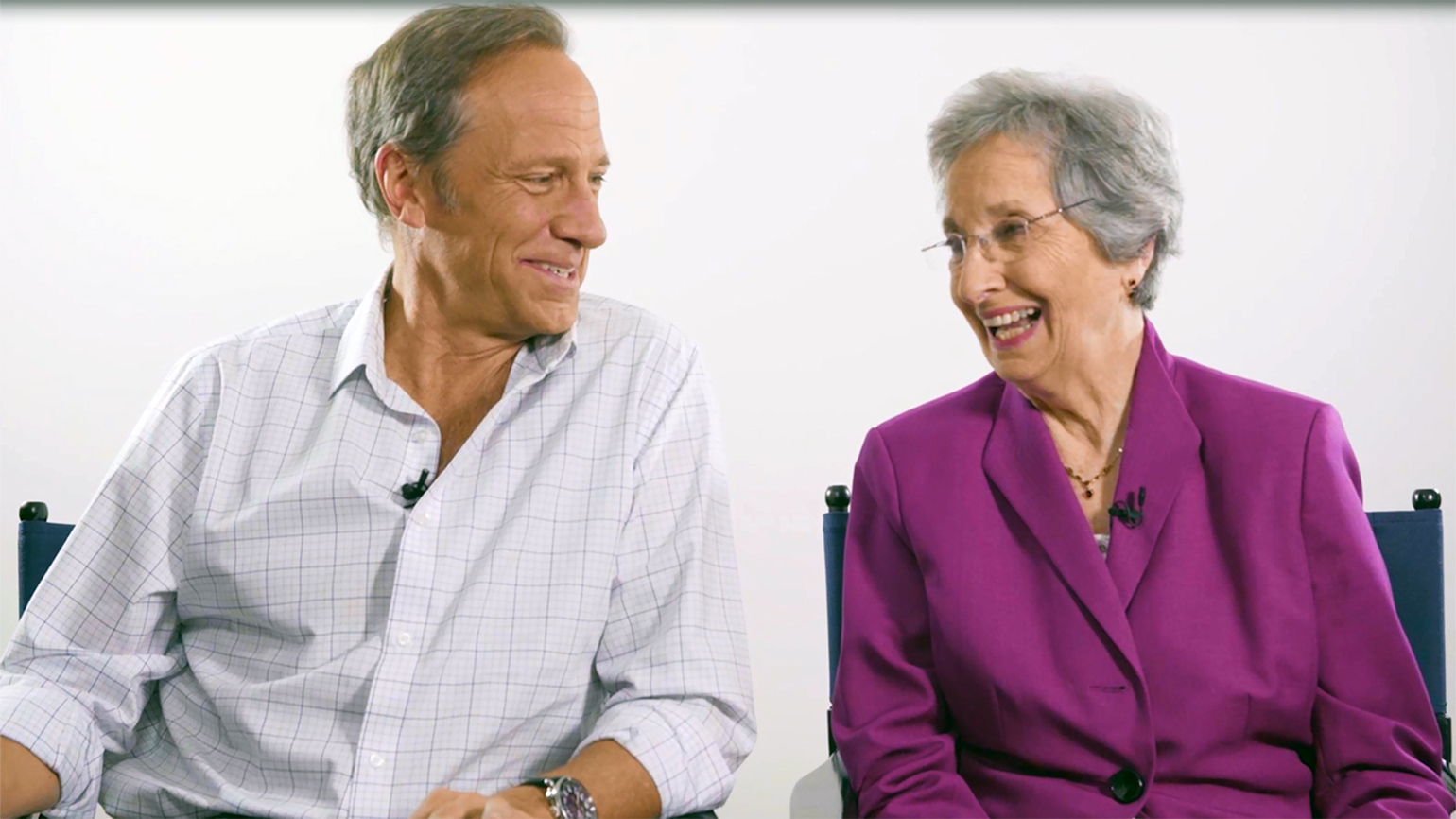
MR: I’m Mike Rowe. This is my mother, Peggy Rowe. We’re here today to discuss what I believe—and I don’t want to overstate it—but to discuss what I believe to be the finest book ever written.

PR: Maybe the second finest book.

MR: Oh, well, of course, we have the Bible and your book.

PR: Well, I’m in good company.

MR: What’s the book called?

PR: It’s called About My Mother. And the subtitle is True Stories of a Horse-Crazy Daughter and Her Baseball-Obsessed Mother.

MR: And it’s true. My grandmother was obsessed with baseball. My mother was obsessed with horses. These two women lived next door to one another for 70 years. They had almost virtually nothing in common, and yet they loved each other with the white hot intensity of 1,000 suns.

PR: Wow. That’s impressive.

MR: Sometimes I just say things, because I feel like it’s my turn.

PR: I know, I know.

MR: Why’d you write the book?

PR: Well, I wrote the book, because your grandmother is great material. But through the years, I’ve been a writer and I’ve written stories for newspapers and magazines and the response was just amazing. It is a feel-good story. So I decided to put a lot of them together and do a book.

MR: I’m gonna tell them the truth now. OK?

PR: OK.

MR: So here’s what happened. My mother’s been writing these stories for years. All right? And a couple of years ago, I started to share them on Facebook. And you wrote the story about the time you lost your big blue purse at the Wal-Mart.

PR: Yes, I did.

MR: And she basically wrote this story—she was trying to get my attention, because I hadn’t returned her calls. Being very terribly busy, I had committed the sin of not returning my mother’s calls for a 48-hour period. So she sends me this story, along with a note that says, “Obviously, you would prefer to communicate publicly on your Facebook page. So that’s fine. We’ll just do it like this if you’d like.”

So I read her story on my Facebook page, sitting at my kitchen table. And then I went back out to work. And when I came home, 70 million people saw that story. And that’s when the publishers started calling saying, “Hey, maybe she could write a book on these stories. And what came out the other end—that’s it, Mom.

PR: About My Mother.

MR: Yes. As a reader, there’s a lot to take away from the book, but if you want inspiration, I think you just have to think in terms of she’s gonna be 81 years old in two weeks and she’s written a book. She’s a first-time author and she’s on the bestseller list.

You did it at the perfect time. You know, I mean—this is a book you’ve been writing your whole life. And it’s not like all of a sudden you did anything different.

Everybody’s had a mom, you know, and a grandmother. And the connections that come out of this story, you know, they’re inspirational to me, because I never had a sister, you know? And you raised three boys.

PR: That’s right.

MR: So you know, you’re a very strong woman in your own way. And you probably never think yourself that way, but Nana was the strongest of strong women, you know.

PR: This is true, a little on the bossy side. She knew a lot of stuff.

MR: And she wasn’t afraid to share all of it.

PR: No. She wasn’t. No. She wasn’t.

MR: But for me—and I said this in the Guideposts article—you know, because my grandparents lived right next door to us, I had two dads and, of course, I also had two moms. And the fact that you guys were so different growing up and, from my perspective, almost polar opposites and yet so close in some weird way, I think is an important lesson for the country.

PR: There was mutual respect between my mother and me. We were different, but my mother had a passion for baseball, for the Baltimore Orioles. And sometimes it was embarrassing because she was quite the extrovert. She danced around and threw things at the television and yelled at the umpires.

And so I had to make sure I didn’t invite any friends over when there was a ball game on. Our lives were governed by the orange and black schedule that hung on the refrigerator door. And nothing was scheduled during a ball game, because ball games were sacred.

But she was equally embarrassed by my passion for horses. You know, I would gallop around the countryside and—and wear dungarees that smelled like horse manure.

MR: You stunk, Mom. You stunk.

PR: I stunk.

MR: You were a smelly daughter.

PR: But she embraced my…our differences. Yeah.

MR: Well, if you think about, again, huge differences, but the same passion…

PR: Yes.

MR: You know, like the same level of intensity for things that you actually cared about.

PR: Yeah. This is true.

MR: So when people read the book, all right, your readers, what do you want them to feel?

PR: I want them to feel good. I want them to feel peaceful. I want them to think back to their own families and the relationship they had with their mother or with their daughters.

I want them to be able to relate to my book and say, “Oh, yeah. I felt that. I felt like my mother didn’t completely accept me sometimes, but it turned out OK.” Yeah, I want them to feel good about it. This is a book that will make you feel good.

MR: It’s the feel-good hit of the season.

PR: Absolutely.

MR: Honestly, I’m biased, but I think people will be enjoying this book decades from now, as long as mothers are having daughters and as long as daughters are feeling like their mothers don’t understand them and as long as mothers are feeling like their daughters must have been left on the doorstep for something, right? You know, it’s that—it’s the love that you can find in the differences that’s gonna make that thing special.

PR: That was well put.

MR: It wasn’t bad.

PR: I like the way you said that. That should be on the cover.

MR: Maybe it will. And I wrote the foreword. In fact, I wrote two forewords, one for each printing.

PR: And they’re good, really. The forewords are excellent. But I might be a little biased.

MR: You want to hear a couple of lines from the foreword?

PR: Yes, it’s been a day since I’ve read that.

MR: [reads from book] When my mother finally finished the manuscript for her new book, she asked me if I wanted to write the foreword. “That depends,” I said. “Is it any good?” “Well,” she said, “I’ve sent it off to several publishers. They all say it’s terrific.” “Hey. That’s great,” I said. “Which publisher did you decide to go with?” “Oh, they all passed,” she said. “What? Why?”

“They told me a collection of loosely connected stories about a woman no one has ever heard of might be a tough sell in today’s highly competitive marketplace.” “I see,” I said. “So then, who exactly is publishing this book of yours?” “Well,” said Mom, “after you write the foreword, I thought maybe you could do it.”

PR: That was a little bit presumptuous, wasn’t it?

MR: It was a little bit. Yeah. I got some time on Thursday, I’ll publish your book…

PR: But it worked.

MR: Hey, it was the best thing I ever did.

PR: Oh, that’s nice to hear.

MR: I’ve never had a better time bragging about a product that actually matters than your book.

PR: Oh, that’s—that’s really nice to hear.

Reminds me of that old song” “You are a wonderful mother, what a friend, what a pal. Only now I can see how you dreamed and you planned all for me.”

PR: Oh, you’re good. You know what?

MR: I’m not done.

PR: Oh, I’m sorry.

MR: “I stole the gold from your hair. I put the silver threads there. I don’t know anyway I could ever repay you, wonderful mother mine, the pal of my cradle days.”

PR: You want me to cry right here?

PR: I was trying. I was trying. Studies show the more you cry, the more books they’ll buy. So give us a tear, Mom.

MR: Get out of here.

Trisha Yearwood’s First Holiday Meal with Garth Brooks’ Family

I’d recently moved to Oklahoma when Garth Brooks popped the question. No, not that one. It would be a while before he got down on one knee and proposed to me in front of 7,000 people. This was a more private request, one that gave me goosebumps nonetheless.

“Honey,” he said one October night, “I’ve been thinking maybe we could do Thanksgiving with my family. What if I invited them over?”

Whistle Stop Cafe In Article Ad May 2023

“That sounds wonderful,” I said.

“One more thing,” he said. “Could you do the cooking? You know how to make everything, right?”

“Of course,” I said, trying to project confidence. “I’d love to.” What else could I say? I was proud of my talent in the kitchen—I love it when somebody who only knows me for my singing discovers I can cook too. How could I admit that at the age of 38 I’d never made Thanksgiving dinner on my own?

The holiday was so special for our family that even if I was touring, I made sure to come home. But I just assisted with the feast. Mama and my older sister, Beth, were in charge of the turkey, the sides and the pies. They’d be cooking back home in Monticello, Georgia, and here I was in Oklahoma.

“How many people are we talking about?” I asked casually.

“About fifteen,” Garth replied. “Nothing fancy.”

Fifteen people for a turkey dinner with all the trimmings? He made it sound as easy as whipping up a bunch of pimiento-cheese sandwiches.

That night I got on the phone to Mama. How should I cook the turkey, how would I know it was done, what all went into Grandma Lizzie’s cornbread dressing anyway?

“You’re making this way too complicated,” Mama said. “Keep it simple.” Simple? This was a big deal! It was my chance to prove to Garth’s family that I was more than some chick singer. That I could make a warm, happy home for him and his three daughters. I didn’t want to blow it.

I took out a notebook. “Hold on, Mama, let me get this down. How many hard-boiled eggs go into Grandma Lizzie’s dressing? What’s the right ratio of cornbread to white bread?” Then it occurred to me. “Mama, can you just send me the recipe?”

“I would, but it’s not written down,” she said. “It’s all in my head.”

I should’ve known. I come from a long line of fabulous cooks, but the knowledge was passed down from generation to generation in the kitchen, not on paper. There are casseroles Mama taught Beth and me to make that she learned from watching Grandma make them for Granddaddy when he came in from working the fields.

And Daddy too. He knew his way around the kitchen—and the grill. If there was a fundraiser in town, people would ask, “Is Jack making his Brunswick stew?” or “Is Jack barbecuing the chickens?”

Every recipe in our family has a story. We still laugh about the time Beth put too much ranch dressing in her Super Bowl Sunday cheese ball. My dad renamed it “cheese wad,” and that’s what we call it to this day.

Or the year my career took off and I was looking for Christmas gifts for folks in the music business. Mama made a special batch of her cheese straws. We got a kick out of treating the movers and shakers of Nashville to something that had been made in little Monticello, population 2,000.

Food was how we showed our love. Once I came down with a bad case of the flu in Oklahoma. I swear I wouldn’t have recovered if it hadn’t been for an emergency shipment of Mama’s chicken noodle soup, packed in dry ice (where did she find dry ice in Monticello?).

How was I going to do Thanksgiving on my own? Just the thought of it made me ache for home. “Remember, with the turkey,” Mama was telling me, “exactly one hour at five hundred degrees. Then turn off the oven and don’t open the door till the oven cools. It might be another five or six hours.”

“I got it,” I said, closing my notebook. No one’s ever going to believe this, I thought, least of all Garth.

Sure enough, he looked at me incredulously. “You do what with the turkey?”

I explained again. “It comes out perfect and you don’t even baste it. Mama’s been cooking it this way for years. It’s the most tender turkey I’ve ever tasted.”

But what if it didn’t work when I cooked it? Maybe Thanksgiving wasn’t a moveable feast. Even the place didn’t feel right. Garth was living in a bunkhouse while his new ranch house was being built. We’d have to eat at card tables—card tables!

And Daddy wouldn’t be here to lead us in grace and recognize God for the blessings he’d bestowed on us. Would I feel that deep sense of love and connection without holding hands with my family and giving thanks together?

“I’ll do the shopping,” Garth offered. Well, that was one thing I wouldn’t have to worry about.

A few days before Thanksgiving Garth set out with my list. Turkey, carrots, celery, onions, beans, greens, potatoes, saltines for the dressing, buttermilk, white bread, cornmeal, eggs, canned cranberry sauce, butter, flour, shortening, sweet potatoes and pecans for the pies—I’d bake those the night before.

Garth’s girls would help set the tables and serve the food. But I was going to do all the cooking.

I spent almost all Wednesday in the kitchen, chopping, prepping, baking, studying my notes. By the time I took the pies out of the oven, it was after midnight. I could put in the turkey now.

“Where’s the turkey?” I asked Garth.

“Wait till you see it,” he said. He opened the door to the freezer and proudly showed me the rock-hard bird.

“Garth, it takes days to thaw a turkey! We’ll never be able to eat this one tomorrow.” Even if I stood over it with a hairdryer all night. I sank down in a chair, trying not to burst into tears. “Where are we going to find a turkey at this hour?”

“Don’t worry, Miss Yearwood,” he said (he likes to call me that). “The grocery’s open twenty-four hours.”

I didn’t wait for Garth. I jumped up, grabbed my purse and ran to my car. I wasn’t about to let him get the turkey. Who knew what he’d come back with? I got to the store and dashed to the meat department, praying they wouldn’t be sold out.

There in the cooler was a beautiful fresh turkey, the very last one. Triumphantly I carried it to the checkout.

Back at the bunkhouse, I preheated the oven to 500 degrees. I prepped the turkey the way Mama told me and put it in the oven. The last thing I did was put duct tape across the door and write “Do Not Open.”

Thanksgiving morning I cooked the beans and greens, whipped up the mashed potatoes, and, yes, I took the turkey out of the oven. It looked as good as Mama’s. I couldn’t resist taking a sliver of white meat and popping it in my mouth. Mmm, tasted as good as Mama’s too!

Next, the pan juices went into the gravy and, of course, Grandma Lizzie’s famous dressing.

Soon everyone was gathered around the tables. “Shall we pray?” Garth said. He took my hand and, on the other side, I held his brother Jerry’s. We bowed our heads.

“We are so grateful today for all the blessings you’ve brought us,” Garth said. “For our family and friends, for the chance to get together…” The last thing I heard him give thanks for was “the food we eat and the hands that prepared it.”

My hands. And really, those of everyone who had taught me what good cooking was all about: Mama and Daddy, Grandma Lizzie and Beth. I felt connected to them as deeply as ever, connected by the love that makes you want to give the best of yourself.

I didn’t need to prove myself to Garth’s family. All I had to do was open my heart (and my kitchen) and share that love with them.

“Amen,” we said and dug in.

“This is the most delicious turkey,” said Jerry. “How did you cook it?”

I looked at Garth. “It’s a family secret,” I said. “I’d be glad to tell you…”   

Try Trisha’s Broccoli Casserole and Cheese Straws!

For more inspiring stories, subscribe to Guideposts magazine.

Trisha Yearwood: Christmas in the Kitchen

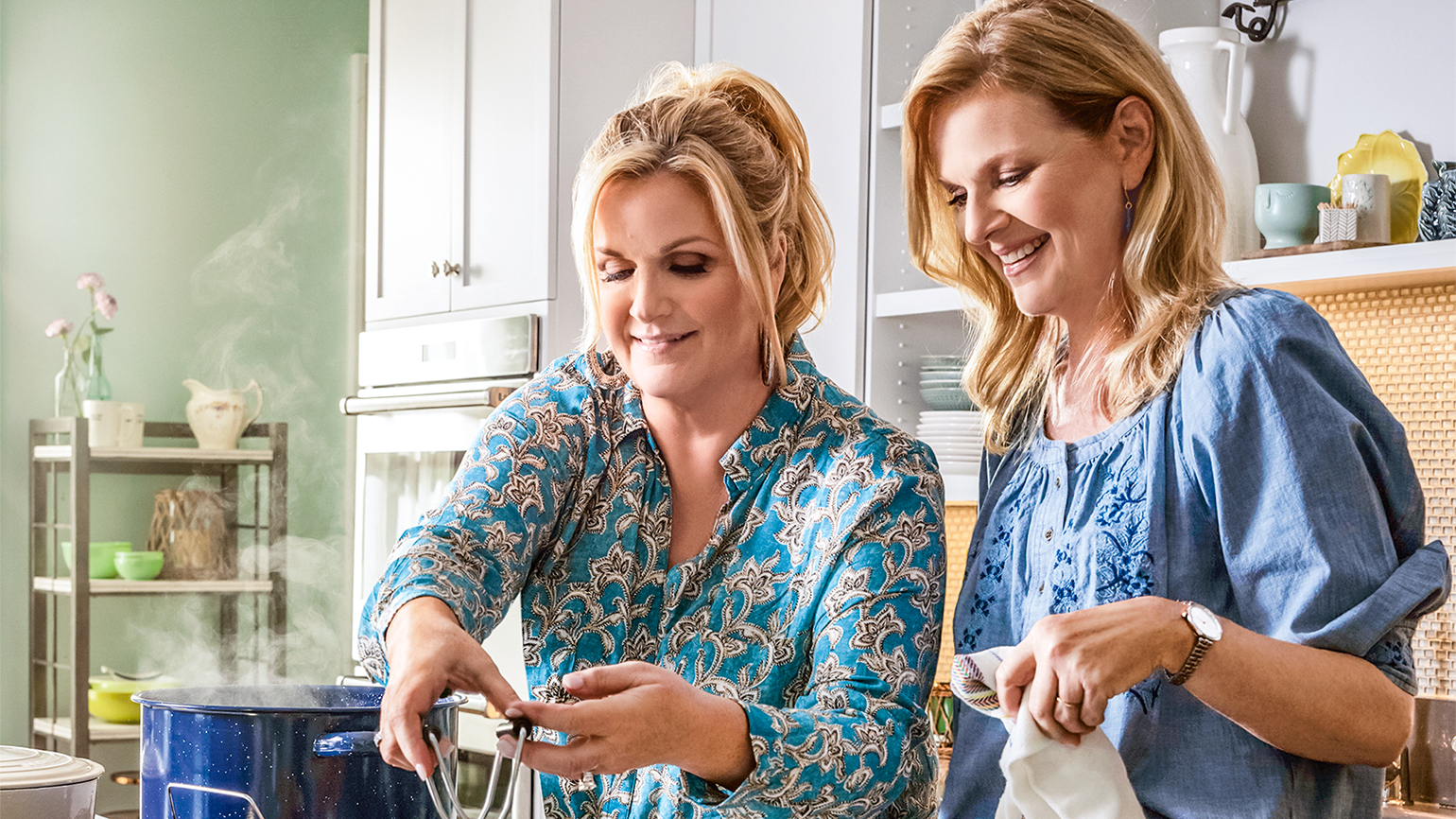
Garth walked into our kitchen one morning and said, “Hey, Miss Yearwood, could you make a lasagna for breakfast?” I tell my husband (yes, that Garth) he can call me Trisha; after all we’ve been married for almost 17 years, but if it’s not “Miss Yearwood” it’s “the queen.” Anyway, he’s doing the suggesting, but I know I’ll be doing the cooking.

“I’m not talking about a casserole,” Garth said, “but a real lasagna with noodles and breakfast things on the inside.” Yes, I could do that, especially since breakfast was a favorite meal in our house served anytime, day or night.

Whistle Stop Cafe In Article Ad May 2023

Cooking is right up there with singing for me. It’s become a second career. I learned from the best—my mom, Gwendolyn. An elementary teacher by day and cake decorator on the side, she was an excellent cook. Mama and my sister, Beth, and I compiled some of our favorite recipes—hundreds handwritten on index cards, more scrawled on napkins—and shared the stories behind them in our first cookbook.

Those recipes and stories have become even more important and special now that our mom has passed. After the success of the first cookbook, Food Network came calling, and now I’ve done 17 seasons of Trisha’s Southern Kitchen and written three more cookbooks with the help of my sister. Cooking has become a wonderful way to honor our parents’ memories.

Garth sees the benefits in all of this for him. He does cook, but he doesn’t really do anything fancy. He gets excited when he makes a sandwich and will take a picture of it because he thinks it’s so awesome. If we have company for dinner, he’ll say, “Okay, what needs to be chopped? What needs grilling? How can I help?” We both know I’m the recipe gal, but he’s the “whatever it takes guy” and I love him for it.

So I got to thinking about Garth’s breakfast lasagna request. This was going to be very different from the casserole my mom served on Christmas morning.

I grew up on a farm in the small town of Monticello, Georgia, where Christmas felt like something out of a storybook. Beth and I would go with Daddy to chop down the perfect cedar tree in the woods. Without fail, we’d discover we had picked one that was way too tall and we always had to drag the tree back out to the carport to trim it down. I guess measuring would have taken the fun out of the ritual.

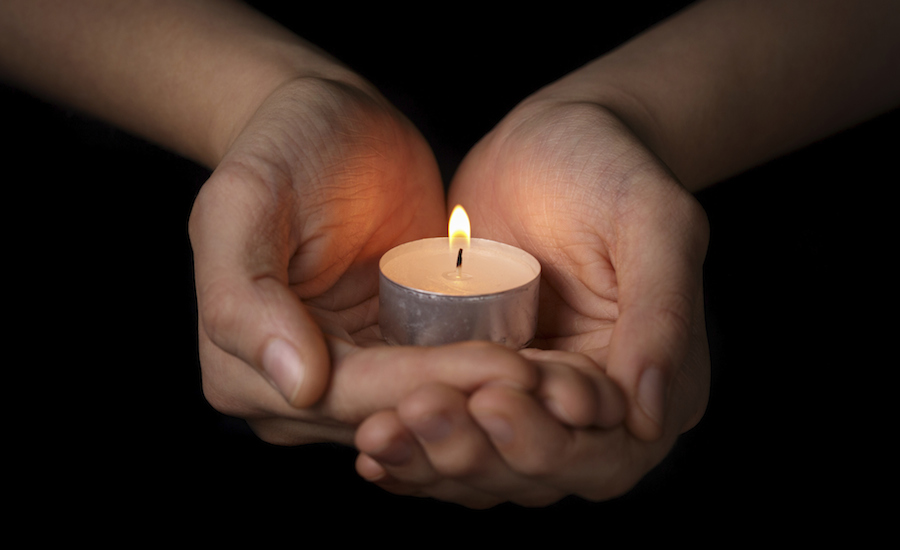
Our Methodist church had a beautiful Christmas Eve service. In the processional out, we each carried a candle and sang “Silent Night” a capella under the stars. I tried to capture that memory in one of my favorite Christmas cooking episodes. My sister and I made the Christmas Eve meal, and then we cut to a little candlelit church service, where I led the congregation in “Silent Night.” It was just like home. The preacher and his wife came back to the house for dessert, a cranberry pear crumble.

Mama’s Christmas Eve meal was impeccable—a classic ham, green beans, potato salad and her ambrosia served alongside fresh coconut cake. She made her breakfast casserole on Christmas Eve too, so all she had to do the next morning was pop it in the oven. I can still smell the sausage, egg and cheese mixture wafting into the living room as we unwrapped our gifts.

Even though she’s gone, my mama is always with me. As I got to work on Garth’s lasagna, pulling out my pots and pans and writing down measurements, I felt her guidance. The hearty cheese sauce she made for almost everything would stand up well to the breakfast meats Garth liked—sage-flavored sausage and, of course, bacon. Chopped spinach, pimentos and shallots offered a nice counterpoint.

I layered the ingredients just like a traditional lasagna, whisked six eggs and poured them over the top, then added one more layer of cheese. Forty-five minutes later the lasagna bubbled to a golden brown.

I called my taste-tester back into the kitchen. “It smells amazing in here,” Garth said. I cut a piece of lasagna and slid it onto his plate. He dug in and let out a big mmm…mmm. “Miss Yearwood, you did it!”

This recipe ticked all the yummy boxes. You can customize it with spicy or maple-flavored sausage, and different veggies and cheeses. Garth and I decided the lasagna would be our new Christmas morning tradition. I put it in the fridge the night before so I’m set to celebrate the day when love seems to come so freely.

I hope the kindness we show one another this season is a practice we can all carry throughout the year. Each of us has the essential ingredients to do that, in our own unique way. Love one another.

Make Trisha’s Breakfast Lasagna at home!

Tiny Blessings with Shimmering Wings

The insects live underwater, wondering what exists above. One brave bug offers to climb the lily pad and report back. He makes his way up the stalk, breaks the surface and feels the sun’s warmth. Suddenly his body is transformed into a beautiful four-winged creature—a dragonfly. After soaring through the air, he tries to return home but discovers he cannot dive beneath the water. He’s unable to tell anyone about the wonders of the world above…

The story wouldn’t leave my mind. I pulled my jacket tighter against the late-October breeze, hurrying from my office to the drugstore, where I intended to buy a card. Occasionally I glanced up into the clear blue sky for those shimmering wings.

A Journey of Faith In Article Ad - Avail Now

It’s just a story, I thought. A parable about heaven in a book that a friend had put in my hands after my daughter’s funeral, four months earlier.

Kari was only 27 years old when she died in an ATV accident. She occupied my every waking thought. All it took was a simple “How are you?” from a coworker and I was lost. Or the sight of gerbera daisies, her favorite. Whenever the phone rang early in the morning, I remembered Kari, who always called me on her way to work. “Sunshine walking through the door” was how a friend described her, and that was spot on. When she died, the darkness took over.

I tried to remember every detail about her. The way her shoulders shook when she broke into that infectious laughter. The faint cherry blossom scent of her body lotion—sometimes I used it just to feel closer to her. In the middle of the night, exhausted but unable to sleep, I sought refuge in my sewing room, stitching bib after bib for my grandkids, just as I had made pink dresses for Kari when she was little.

Take care of me, God, I prayed as I sewed. I’m hurting so bad.

Rounding the corner to the drugstore, I thought of the dragonfly pin Kari always wore on her winter coat. Gold with tiny amber rhinestones that twinkled in the light. Maybe that pin was one of the reasons the story stayed with me.

A few weeks after the funeral, Kari’s husband, Donnie, came to visit. We’d put on forced smiles and tried to say the right things without losing it. We took a pontoon boat out on the lake, the lapping of the water filling the gaps in our conversation. Then I looked over at Donnie and gasped. A dragonfly with delicate blue wings was hovering just above his shoulder.

All summer long, I saw dragonflies wherever I went, not just by the lake. In my backyard, a dragonfly landed lightly on my wrist. A swarm of dragonflies even surrounded my car on my drive home from work one evening. With every sighting of those slender bodies darting through the air, I felt as if God had poked a needle through the darkness, letting Kari’s light shine through.

Now it had been weeks since I’d seen one. Dragonflies couldn’t survive the harsh Minnesota winter. The darkness returned.

“Think of the good times,” everyone kept telling me. “She wouldn’t want to see you so sad.” But how could I not be sad? I faced a gloomy winter—and the rest of my life—without my daughter.

I reached the drugstore and opened the door. A little bell chimed. The cashier glanced in my direction. That’s when I froze, unable to take another step.

Everywhere I looked—the aisles, the displays, the discount bins and the card racks—translucent wings glimmered in the store’s fluorescent light. On wind chimes and garden stakes. On trinkets and souvenirs. On merchandise tagged for sale with one common theme: dragonflies.

“A late shipment of summer items,” the cashier said.

They weren’t late for me. The timing was perfect.

I felt myself emerging then, slowly breaking free. Out of the muddy waters below. Finally able to catch a clear glimpse of the sky above, where dragonflies go.

This Special Turtle Became a Lifelong Friend

What will it be this time? I wondered, yanking the rope through my bay window. Games? Puzzles? My twin brother, Brad, had rigged this pulley system to run between my second-floor bedroom and the front yard. Neighbors and friends left presents for me in a wicker basket, and I’d hoist them up once a day. The basket held everything from comic books and card games to snacks and flowers. I even pulled up a banana plant one day. Those little gifts really brightened my spirits.

It was mid-December and I’d just gotten back from Boston Children’s Hospital. The doctors had put me in traction for a month to treat the arthritis in my hips. My family visited from the suburbs, and I got to meet three Boston Bruins players. But being alone in a hospital was scary for a 12-year-old. Boring, too. This was 1968. There were no tablets or smartphones to help pass the time. I kept busy making crafts, but the days felt long.

Journey With Jesus in article ad

Now I was finally home but still confined to bed for another five months. For a kid who loved being outside and running around, this was torture. My family tried to cheer me up by playing games with me. They even put the Christmas tree in my bedroom. But apart from a tutor who came on weekday mornings, Brad’s pulley system was my biggest connection to the outside world.

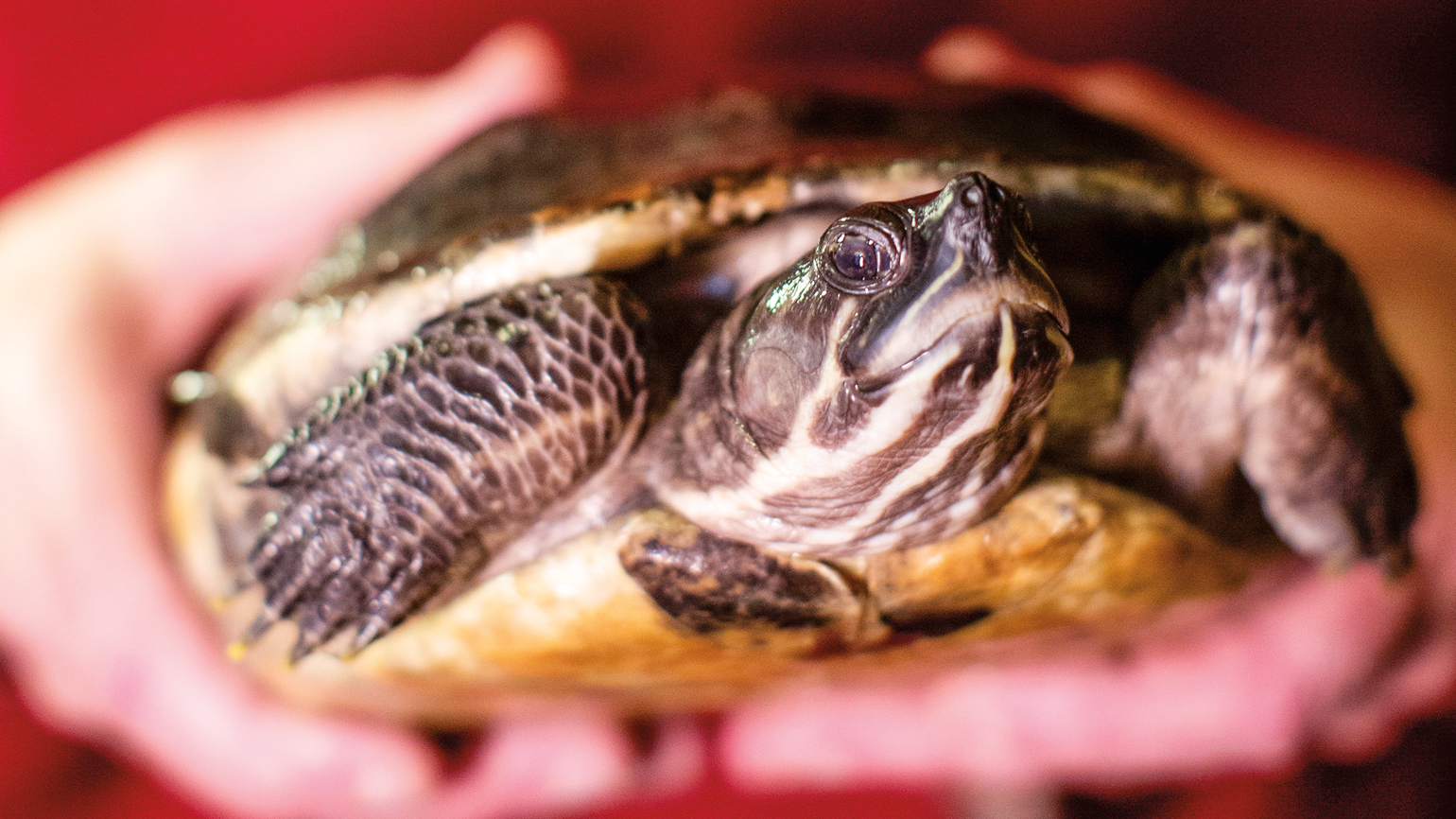
I gave the rope one last tug and peered into the basket. Staring back at me were two little black eyes poking out of a green body. I couldn’t believe it—a turtle!

I lifted her onto my chest. “Hello,” I said, petting her shell. Who had put her in the basket? There was no note. I thought of all the people who had been so kind to me. Mom. Dad. Brad. My sister Suzanne. Cousin Diane. Diane, I thought. I’ll name her Diane.

Dad set Diane up in a fish tank by my bedside. We watched shows together on a tiny black-and-white television, and I let her crawl around on me. Dad decorated her tank, including her own little Christmas tree. Everyone warned me not to get too attached; novelty turtles didn’t usually live more than 12 months. But I was smitten. I showered Diane with love and affection and always told her what was on my mind. She was a great listener.

Time came and went. One year. Two years. Ten! I thrived—Diane did, too. Eventually Brad and I opened Twin Designs Gift Shop in Bristol, New Hampshire. We kept Diane in the back office, but our customers loved her so much that we moved her out front.

“Can I see the turtle again?” people would ask when they came into the shop. It warmed my heart.

Visitors, whose photos cover the shop’s walls, come every week to watch Diane and to browse through all our turtle merchandise. It’s been 50 years since some wonderful soul put a 50-cent turtle in a lonely boy’s basket. They couldn’t have known what a joy she’d become. Diane is one of my oldest friends. After all, we grew up together.

View Diane’s live web cam at dianetheturtle.com.

Did you enjoy this story? Subscribe to All Creatures magazine.

This Rescue Chicken Changed Her Son’s Life

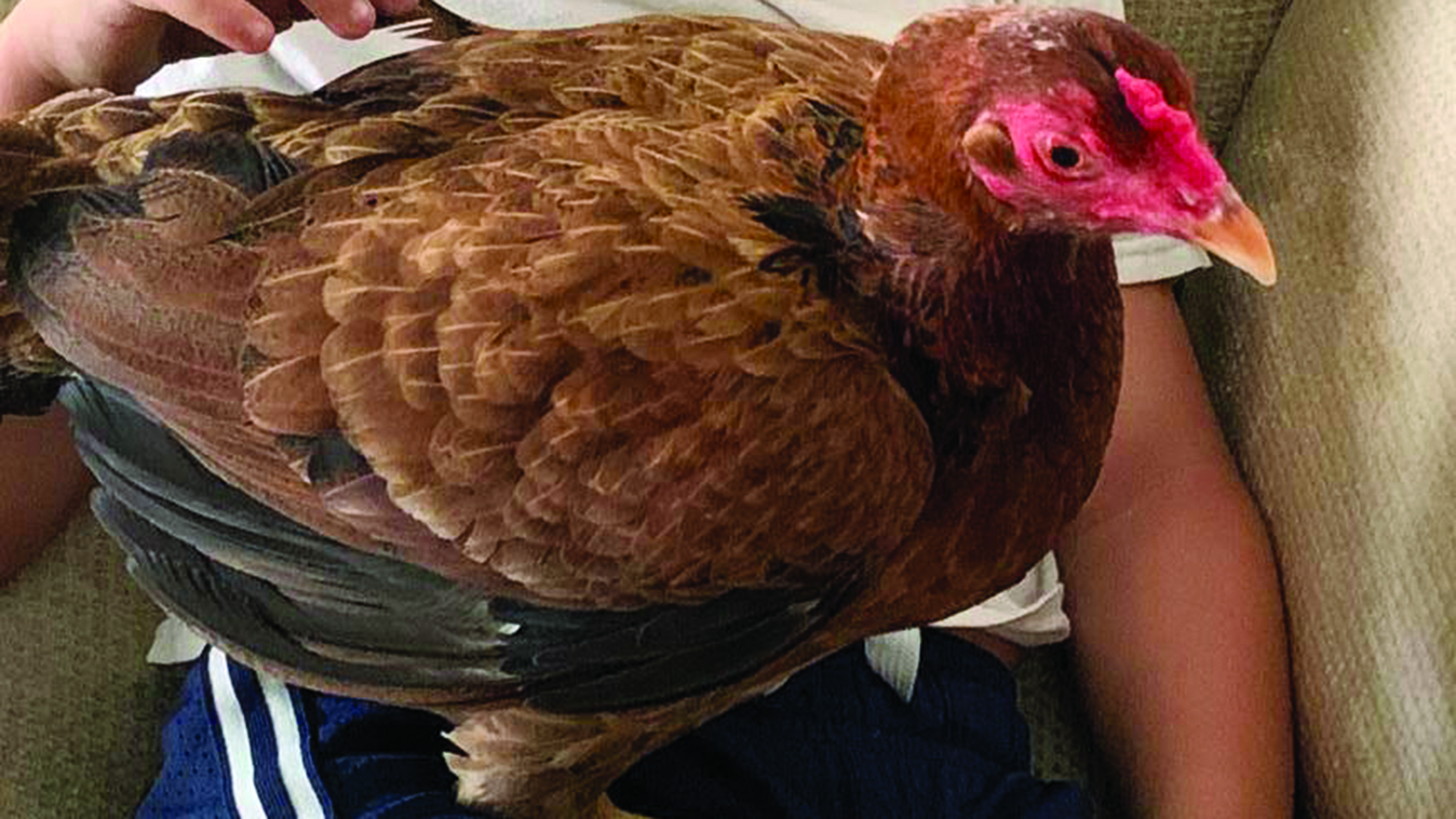
I got out of the car that rainy Tuesday, already tired, and headed toward the rehab center where I work as an addiction counselor. It had been a difficult morning with my seven-year-old son, Adrian, who has severe ADD and ODD (oppositional defiant disorder). By the building entrance, something caught my eye. A chicken. Where did she come from? Did she belong to someone?

None of my coworkers knew anything about it. But a client told me the chicken had been hanging around the last few nights. At the end of my shift, I saw the chicken in the same spot, cold and wet. “Go find your family,” I said.

Walking with Jesus L&E evergreen_in article ad

All night I worried about her. What if a coyote got her? It rained the next morning. No sign of the chicken. I figured she went home. But I stepped out for my afternoon break, and there she was, getting rained on again. I offered her some bread. She refused it and just stood there, staring up at me.

Halfway home that evening, I made a U-turn and went back to the rehab. I picked up the chicken and drove home with her in my lap, her beak on my shoulder the entire ride.

I posted on Facebook and our neighborhood app, asking if anyone had lost a chicken. A week went by, then another. No one claimed her. My rescue made herself at home—even laying eggs in the hay blanketing the crate I’d set up on our back patio.

The biggest surprise was how Adrian took to her. His ADD and ODD make him touchy and prone to tantrums. But not with the chicken, whom he named Henrietta. She follows him around the house and sits in his lap. I’ve never seen Adrian so calm—and happy. The bond between them has been such a blessing. I can’t remember the last time he and I had a difficult morning. That rainy Tuesday, I told the chicken to find her family. Little did I know it would turn out to be us!

Did you enjoy this story? Subscribe to All Creatures magazine.