Embrace God's truth with our new book, The Lies that Bind

What This Empty Nester Learned from a Family of Birds

My husband and I were new empty nesters. Our twins, Annie and Tyler, were leaving home after graduating from college. I was excited for them—and worried. Would they be okay on their own? Had we prepared them for the challenges out there in the world

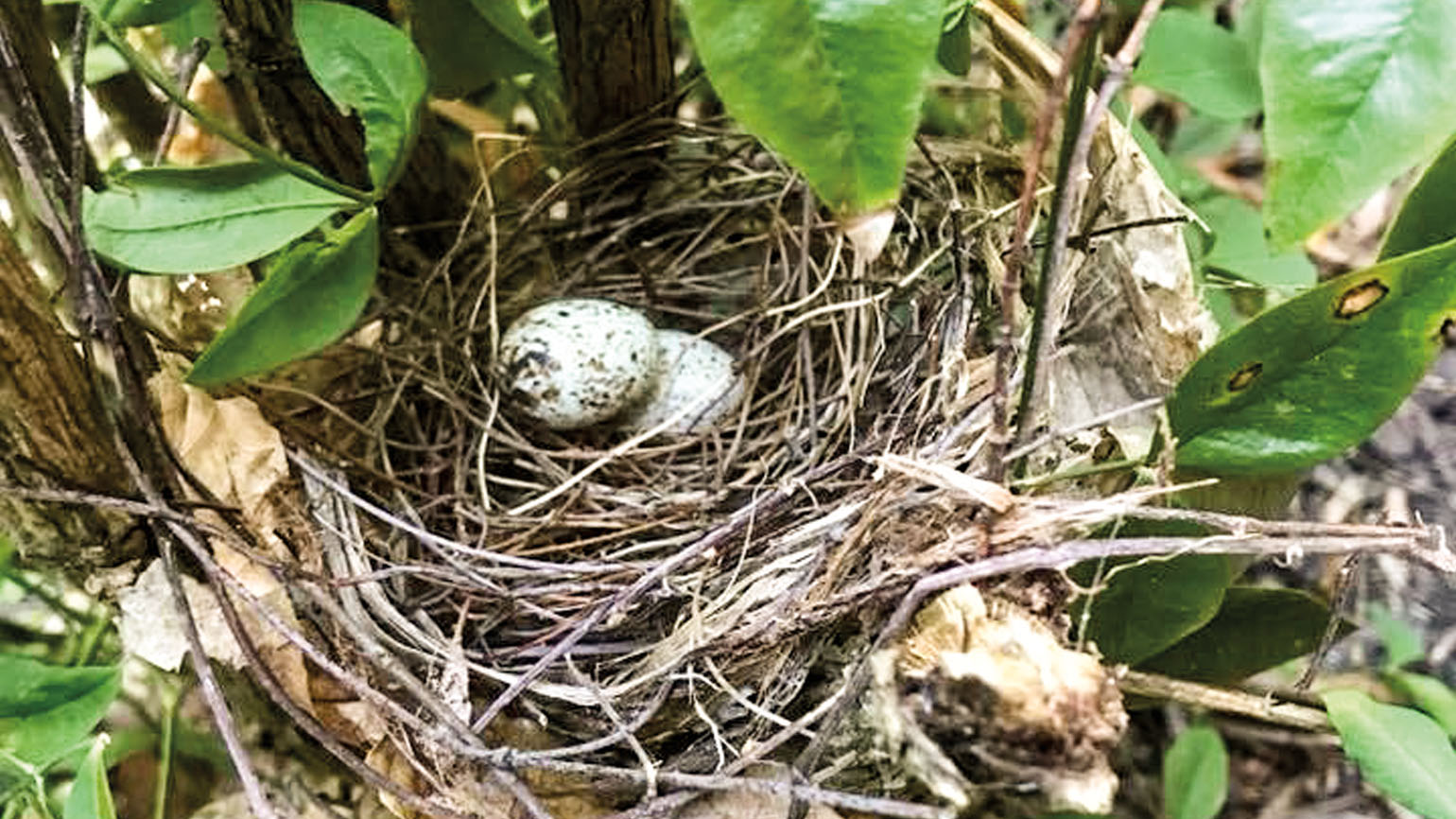
I was thinking about Annie and Tyler one day while pruning a huge nandina by our back door, when I discovered a nest with one little egg. How sad it didn’t hatch, I thought. The nest was tattered—and abandoned, I assumed—so I moved it to a table. An hour later I noticed a beautiful male cardinal flying back and forth to the bush, chirping, and realized he was looking for his nest. I returned it to the bush and put it between some strong branches. 

The Daily Bible Large Print relaunch with digital free gift in article ad

The next day I discovered that the nest had tipped over. There were two eggs on the ground. I put them back and carefully tried to wedge the nest between the branches. On the third morning, I found that the nest had tipped again. It was so thin at this point. What if the eggs fell through the bottom? 

I rummaged around our kitchen for some sort of holder and decided on a pimento cheese spread container. It was the perfect size and sturdy enough to support the nest. I poked about 50 holes in the container for ventilation and to keep it from filling with rainwater.

Making my way back to the bush, I found the nest completely tipped over once again. This time there were three eggs on the ground. I lined the container with some dry leaves and set the nest on top before gently arranging all the eggs inside. Then I put the new container-nest between the branches and wired it in place. I also added some wire fencing around the bush to keep our coonhound away.

Over the following weeks, I checked on the Pimento family every day. Mrs. Pimento was a wonderful mother, keeping her eggs warm and allowing me to keep an eye on her. She even let me take pictures. Mr. Pimento was a dutiful father, flying back and forth to feed his mate. Watching this cardinal couple prepare for parenthood reminded me of carrying the twins 23 years ago. I’d been put on bed rest for three months, and my husband had taken such good care of me, like Mr. Pimento. And when only two of the three eggs hatched, that made me draw an even greater parallel between the Pimento and Daniell families. I had started out pregnant with triplets, but God in his wisdom knew that only two would be able to survive and flourish, just like these two chicks. I named them Cheddar and Mayo—the ingredients in pimento cheese.

I kept looking in on the Pimentos and taking photos as the chicks grew. One morning, I pulled back the branches, and Cheddar leapt out of the nest and fluttered over to our wheelbarrow. I watched Mr. and Mrs. Pimento coaxing their sweet babies along and teaching them to fly. It was a long process, but as parents, there comes a time when you have to trust that you’ve done your best and your chicks will be okay out of the nest. What a joy it is to watch them fly!

Did you enjoy this story? Subscribe to All Creatures magazine.

What Is Your Teen Daughter Reading?

I’ve written and created many books for young adults, and I have learned never to put the word “teen” on a book that you want them to read.

As soon as they see that word as part of the title, they give the book to their younger sibling or try to hock it off in a garage sale. They do not want to carry or read a book that labels them as a teen. Instead, they often want to read what adults are reading.

extraordinary women of the bible

Last week I had a conversation with my son regarding the same issue. He asked me if I knew what books teen girls were reading, as if to suggest I was clueless. I was surprised when he said 50 Shades of Grey. “No way,” I thought. He gave me one of his “yes, they are, mom” looks.

READ MORE: MAKE A DIFFERENCE IN A TEEN’S LIFE

The next day, I saw on the national news that a high school teacher was suspended for showing the movie version of the book in her classroom. I was shocked. Maybe my son was right. Maybe we should all pay closer attention to what our teen girls are reading.

What is your teen daughter reading?

1)  Take time to find out. If the content of the book is inappropriate or you feel that it’s not age appropriate, discuss the reasons why and suggest alternatives.

2)  Make a trip to the bookstore or the library and let her choose a few new books that interest her. Suggest books that deal with her hobbies or talents.

3)  Some teens do not like to read books. Consider a magazine subscription.

4)  Research online what books are best for young adults. There are many good websites to help you choose the best books for your teens. Do it together. Goodreads.com is a great place to start.

5)  Choose a new book and read it together. Set a time to discuss the plot and the characters. This will give you a new perspective on what your daughter’s opinions are as well as allow the two of you some great bonding time.

Encourage your daughter’s imagination and creativity through reading books that will inspire her life.

What Is the Key to Lifelong Happiness?

What is the key to lifelong happiness? Each of us might have different responses to that question, reflecting on joy in the here-and-now as well as sustainable, authentic happiness over the years.

If you’re the sort of person who likes to learn “best practices” when it comes to emotional well-being, look no further than Harvard University, whose Study of Adult Development  is one of the longest-running pieces of happiness research. The study launched in 1938, following 764 men—then teenagers—from around the world.

A Journey of Faith In Article Ad - Avail Now

The findings point us in this direction: the greatest source of long-term happiness is positive relationships we cultivate with others.


Two friends of different ages in conversation

The Key to Lifelong Happiness: “Social Fitness”

The Harvard researchers use the term “social fitness” to describe the positive relationships that they note among people who report greater happiness over their lifetimes. The hallmarks of a socially fit person include:

  • Honesty when assessing which friendships and relationships are serving your life—and the courage to move on from those that aren’t.
  • A variety of types of relationships, including friends of different ages, with different life experiences, and including casual friendships as well as deep ones.
  • Strong communication skills, including understanding how to apologize when necessary.
  • Empathy and compassion for others—and recognition of how you and a friend contribute to each other’s lives.


Two friends, man and woman, talking to each other

What Makes a Positive Relationship?

Friendship, like love, is a muscle that needs to be exercised regularly if it’s to remain strong. Positive relationships often have these things in common:


Two women gardening together

Positive Relationships Keep Us Physically Healthier

Fostering positive relationships in these ways help us stay healthier and live longer. And if good health and longevity aren’t ingredients in lifelong happiness, I don’t what is. Try these other longevity-supporting activities (with a friend!) for a health-and-happiness win-win.

How “socially fit” do you feel? Take stock of your relationships and see how you can build more positivity—and happiness—into each connection you have with another person.

What His Daughter’s Brain Disorder Taught Pastor Chad Veach About Hope

When Pastor Chad Veach and his wife welcomed their first child into the world four years ago, they knew their lives would be forever changed. They had no idea of the challenges that would arise as a result of their daughter Georgia’s brain disorder, diagnosed just four months after she was born.

Georgia never cried, never fussed, hardly ever woke them in the middle of the night. Pastor Veach thought they’d hit the lottery with such a quiet bundle of joy.

Journey With Jesus in article ad

“She was perfect,” the author writes in his new book Unreasonable Hope. “She rarely cried at all. At the time, we didn’t realize that was not a good thing.”

It wasn’t until the couple noticed Georgia’s inability to focus and grasp small objects that they decided to visit a doctor. Thinking Georgia might have a vision impairment, Veach could have never prepared himself for what the two parents heard that day.

Georgia was diagnosed with Lissencephaly, or smooth brain, a rare disorder that results in a lack of development of brain folds. Medically, the diagnosis meant Georgia probably wouldn’t make it to her 10th birthday and that her mental development wouldn’t go beyond that of a 3 month old.

The diagnosis meant Veach and his wife were facing seemingly endless nights of seizures, constant worry over respiratory infections and aspiration – the two biggest threats to Georgia’s young life – and the stress of having no clue of how to care for a special needs child.

“The biggest struggle that we faced was just trying to understand what our new normal was,” Veach tells Guideposts.org.

That new normal involved late night calls to the neurologist, trips to urgent care and canceled family plans. Most of Veach’s wife’s day was filled with trying to get Georgia to eat. Many children suffering with Lissencephaly end up needing feeding tubes because their brain has trouble telling their body to chew and swallow food. Georgia required two hours, if not more, per feeding — breakfast, lunch and dinner.

“The stress, it’s a real game changer for your lifestyle,” Veach says.

One night, as the couple lay in bed, Veach’s wife woke him from a deep sleep. She wanted to make sure that, were something to happen to Georgia, Veach wouldn’t blame her or himself.

“I think it was a real definitive moment for us,” Veach recalls. “You have this guilt and shame, all these normal feelings that come with this as a parent. That moment for us was just going, ‘We have done everything we could, we haven’t dropped the ball, we haven’t been careless or irresponsible. If something happens to her we are going to celebrate her life and we are also going to move forward without guilt and without repercussion towards one-another.’”

It was a turning point in the couple’s relationship and the way they cared for their daughter. The seizures kept coming, a feeding tube eventually became necessary and those hard days weren’t behind them. But, freeing themselves of the guilt so many caregivers feel meant Veach and his wife could have hope for the future and for Georgia.

It was on a trip to New York to preach at Hillsong NYC that the pastor met up with a friend who encouraged him to honor Georgia’s story in a unique way, by getting a tattoo of a “G”.

“He designed [this] tattoo for Georgia and said every time we look at it, we’ll pray for her and then it just kind of took off,” Veach says.

Soon friends and family were getting Gs tattooed on their bodies and sharing their G-tats on social media and in their communities. Celebrities like Pretty Little Liars star Ashley Benson – a friend of Veach’s – and Justin Beiber were getting inked in solidarity with Georgia and her battle. Veach couldn’t visit a church or preach at a conference without at least one person coming up to him to show off their own Georgia tattoo.

That simple, extraordinary act of kindness left a mark on the young dad.

“People around the world going, ‘I want to do anything in my power to let you know you are not alone and I’m with you. I’m believing with you. I’m believing for your daughter,’” Veach says. “It’s just unbelievable. I don’t have words to articulate our gratitude.”

Veach wrote his new book in part to say thank you to everyone supporting Georgia and also to help others who may find themselves on a similar path.

His book’s title Unreasonable Hope carries its own special meaning.

“I think I did not have a full understanding of what hope was,” Veach explains. “Hope has this confident expectation. I think it is really easy for us to prepare for the worst [to think] ‘I don’t want to get my hopes because I could get disappointed.’ I found quite the opposite. When I put my hope in God, I have eyes to the future and towards possibility. Hope is the architect. Hope is the one that draws up the plans and lets you see it but in order to get the plans executed you’ve got to have faith.”

Veach and his wife recently moved to Los Angeles where they started their own church and welcomed two healthy boys into the family. Georgia just celebrated her fourth birthday and as more extensive care is required, things only get harder for her and her parents.

But Veach continues to trust in the promise of his faith and hopes his story can teach others to do the same.

“God is not the author of sickness,” Veach says. “People might say, ‘Well, we pray for healing how come we haven’t seen it?’ I can’t answer that question. I have prayed for my daughter to be healed and she hasn’t been healed yet. But I believe God is going to heal her on earth or she will be healed in heaven. So I think that is what hope is. Hope says, ‘There is more to this life. There is a better place God’s preparing for us.’”

What God Can Do with Small Things

When I saw the big, round, tub-belly of the washing machine in the middle of the kitchen floor, I knew things weren’t good.

I set my bag on the counter and walked to the washroom. The top half of my husband Lonny was inside the washer. There was grease on his Levis, and he wore work boots.

Rejoice in All Things in article ad

“Uh-oh,” I said. “Again?”

Lonny stood. His hair was wild, and his face was red.  

“It’s the motor,” he said. “I have another broken one in the garage. Between the two, I can rebuild one to last until a new one arrives.”

Lonny spent the rest of Memorial Day pulling apart motors and rebuilding. Piece by piece. Then he graded Samuel’s algebra. Then he helped another son register for summer classes. I did the bedtime routine, unloaded the dishwasher and looked at lesson plans for the next day. Lonny and I take care of things. A million little services go into keeping the family afloat.

READ MORE: REST FOR THE SOUL

A friend of mine has had a lot going on, too. Her parents have been ill, and she and her husband are caring for them while they raise their own family. A plethora of life- details are showered each day on their loved ones. I watch and see something beautiful.

Servanthood is large when tasks are small.

When we serve others on a day-to-day, moment-to-moment basis, we’re loving with the love of Christ. Even when the tasks seem mundane, trivial or common. Like finding socks. Or packing lunches. Driving children. Running errands. Providing food. Providing care.

Small things hold value in the economy of God.

If I pause to consider this, numerous examples from Scripture come to mind:

  • A small boy and the small lunch that fed the multitudes (John 6:9)
     
  • A small amount of oil and flour that didn’t run out (I Kings 17:16)
     
  • Faith small as a mustard seed (Matthew 17:20)
     
  • A small man who climbed a tree to see Jesus (Luke 19:4)
     
  • A boy with a slingshot and  a small stone (I Samuel 17:49)
     
  • A small girl raised from the dead (Luke 8:54)
     
  • A small babe sent to save us. (Matthew 1:21)

In the Word, the small is significant.

Lonny worked hard that night, prodding the motor along. At the end of the evening, we listened to the working washer chug and whir.

It was the sound of serving others and pleasing God.

What Does the Bible Say About Marriage?


Though there are many different opinions on marriage, the Bible is very clear about what it is and why it exists. Marriage is a God-given institution that predates even humanity itself. When we understand and embrace God’s design for marriage, we can experience the joy, fulfillment, and closeness that He intended for us in our most intimate relationships. If you desire a successful marriage, start by building a solid relationship with your spouse founded on the Word of God.

What Does the Bible Say about Marriage?

Many people wonder what the Bible says about marriage. While many verses discuss the topic, one of the clearest is found in Ephesians 5:22-33. In these verses, Paul instructs husbands to love their wives just as Christ loved the church. He also tells wives to respect their husbands and calls on both partners to be faithful to one another. It is designed to be a lifetime commitment, and both husband and wife must work together to make it thrive. Marriages based on God’s design can be a source of great joy and satisfaction.

Marriage in Bible

When it comes to the subject of marriage, the Bible is very clear in its teachings. In Genesis 2:24, God tells us that a man should leave his father and mother and cleave to his wife, and the two shall become one flesh. This teaching is repeated multiple times throughout the Bible, including in Matthew 19:5 and Ephesians 5:31. When two people are married, they become one in Christ, and their relationship reflects Christ’s relationship with the Church. Marriage is not simply a contract or an arrangement but rather a lifelong commitment between two people who have pledged themselves to each other before God.

The Purpose of Marriage According to the Bible

Marriage is a lifelong commitment to exclusive fidelity. The purpose of marriage is twofold: first, to glorify God by demonstrating His love to the world, and second, to provide husband and wife the opportunity to grow spiritually and emotionally by meeting each other’s needs.

God instituted marriage for our good and His glory. In marriage, we experience the Father’s love for us as Christ loves the Church. As we love and obey our spouse, we reflect Christ’s love for His Bride. In addition, marriage provides an intimate companionship that helps us avoid temptation and provides an outlet for sexual expression that is both proper and pleasurable. Marriage also enables us to have children and train them up in the Lord. By raising children in a home where they see their parents loving one another, we provide them with a strong foundation for their own future marriages.

When we enter into marriage with a Christ-like attitude, we can be confident that our marriages will glorify God and be a source of great blessing to us personally and to our families.

How to Have a Successful Marriage

While there is no guaranteed formula for a successful marriage, some key ingredients are essential for any lasting relationship.

  • Firstly, it is important to have a shared commitment to each other and to the marriage itself. This means making a conscious decision to work on the marriage even when things are tough.
  • Secondly, effective communication is crucial. This involves being able to openly share your thoughts and feelings, as well as listening carefully to what your partner has to say. It also means learning how to resolve conflict constructively.
  • Finally, it is important to show love and affection for each other on a regular basis. This can be expressed in many different ways, from physical affection to simply taking the time to spend quality time together. By keeping these things in mind, you can give yourself the best chance of having a happy and fulfilling marriage.

How to Build a Stronger Marriage

A strong marriage doesn’t happen by chance. It takes hard work, dedication, and a willingness to grow and change with your spouse. While there’s no surefire recipe for a happy and lasting marriage, there are certain things you can do to build a strong foundation for your relationship.

  • One of the most important things you can do is to keep Christ at the center of your marriage.
  • Pray together, attend church together, and read the Bible together. By making God a part of your relationship, you’ll be better equipped to weather the storms of life.
  • Another important ingredient in a strong marriage is communication. Talk openly and honestly with your spouse about your hopes, dreams, and fears. Let them into your heart, and don’t be afraid to express your needs.
  • Lastly, make time for each other. Among the demands of work, family, and other obligations, it’s easy to let your relationship fall by the wayside. But if you want your marriage to thrive, you must proactively nurture it. Set aside regular time for date nights, conversation, and simply being together. You can build a strong and lasting bond with your spouse by making your relationship a priority.

7 Bible Verses About Marriage

  1. Do everything in love. —1 Corinthians 16:14
  2. Be devoted to one another in love. Honor one another above yourselves. —Romans 12:10
  3. And now these three remain: faith, hope and love. But the greatest of these is love. —1 Corinthians 13:13
  4. Therefore encourage one another and build each other up, just as in fact you are doing. —1 Thessalonians 5:11
  5. Let love and faithfulness never leave you; bind them around your neck, write them on the tablet of your heart. —Proverbs 3:3
  6. Two are better than one, because they have a good return for their labor: If either of them falls down, one can help the other up. —Ecclesiastes 4:9-10
  7. Let the morning bring me word of your unfailing love, for I have put my trust in you. Show me the way I should go, for to you I entrust my life. —Psalm 143:8

READ MORE ABOUT MARRIAGE IN THE BIBLE AND YOUR LIFE:

What Does ‘Let Go and Let God’ Really Mean?

My 15-year-old will start at a new school this week. After severe anxiety, depression and PTSD led to a massive crisis last year that resulted in nearly six months in the hospital, it was clear that she could not return to the splendid high school where she started 9th grade.

The new school has tiny classes, a lot of flexibility and people on staff who can help when my daughter has a hard day.

God's Constant Presence In Article Ad

We’ll see how it goes. There was a time in my life when I would have been praying like mad in a situation like this. It would, after all, be a huge relief if this set-up were to work. But having been through a great many ups and downs, my prayer now involves far less begging and far more acceptance.

Read More: How Elizabeth Vargas Overcame Anxiety and Addiction

I used to think that the phrase “Let go and let God” was about turning my troubles over to Him, and He would take care of things. The saying bothered me because there were many times I tried to pass Him the baton, and it fell with a clunk on the ground.

I’ve finally begun to understand that the phrase means something different. “Let go [of the outcome you desire], and let God [manifest His will].”

The Lord already knows what I desire. So my prayer today goes more like this:

“Whatever happens, Lord, is what happens. If it’s Your will for this school plan to succeed, I will be thankful. I am very tired and I really, really, really don’t want more pain. But if it all falls apart again, I will love You. And I trust I can still serve You as we figure out Plan B.”

What Brandon McMillan Learned about Life by Training Dogs

Three months from retirement, I was anything but excited. All those hours to fill and no one to share them with. No place where I was needed. Retirement felt more like an end than a new beginning. For the first time in my life, I didn’t have a plan for where I was going.

From the time I was six, I’d known I was going to be a teacher. And a mother. That’s all I ever prayed for. The first prayer had been answered. I taught fourth and sixth graders in my hometown of Tuscaloosa, Alabama. But I’d long since given up on my dream of having a house full of kids. That just wasn’t meant to be.

Whistle Stop Cafe In Article Ad May 2023

Now I wouldn’t even be a teacher. After 15 years, with ever-growing class sizes and demands to teach to standardized tests, I’d left the public schools to teach at a children’s museum. It had been wonderful, but in time I’d grown restless there as well. In my early fifties, with a pension to support me, I’d decided to retire—what was I thinking?

“Why don’t you get a dog?” a friend suggested.

“Seriously?” I said. An animal to constantly clean up after? No, thanks. That was the last thing I needed. When I was growing up, my family had owned dogs. And they were okay, but I wasn’t crazy about them the way that some people are.

Still, the closer I got to retirement, the idea kept coming back to me. Would it really be so bad to have some company? I researched different breeds online. I didn’t want a yappy little dog. Or one so big it would pull me around on its leash. I didn’t want to do endless grooming. Honestly, I wasn’t sold on any breed. Until I saw an ad in the newspaper for an Australian shepherd puppy. Smart, fun, social. I knew that from my research. I called the number listed to see if I could just have a look. Within seconds of laying eyes on that tiny black-and-white fur ball, I was smitten. There was no way I was going home without her. I named her Kelly.

I introduced her to her food and water bowls. She seemed content, nosing about the house, and I busied myself making lunch. Until I heard growling from the bedroom. I ran back to find Kelly happily gnawing on one of my tennis shoes. “Kelly, no!” I cried. She looked up at me with those sweet dark eyes, then gleefully sank her teeth into my shoe again.

During the day while I finished my last month of work, I kept her in a crate, with some squeaky toys and a Kong toy stuffed with kibble treats. But when I came home, tired from the day, she was wound up tighter than a spring. She tore around the house. Wouldn’t stop jumping on me. Even after a long walk, she demanded attention and would bark until I’d rub her belly or play a game.

In desperation, I called a cousin in Alexandria, Virginia, who had dogs. “How long will it be before she grows out of this crazy puppy phase?” I asked.

“Oh, you’re looking at a couple of years,” she said. Really? Could I survive that long? “Get her into a good puppy kindergarten,” my cousin said. “A dog like Kelly requires mental stimulation. And take her to a dog park. She needs socialization with other dogs.”

I realized that dogs needed the same things my kids at school had. But Tuscaloosa didn’t have anything like that for canines. So I asked other dog owners if they’d be interested in having playdates.

It was amazing watching Kelly tear around a yard with another dog as if she’d been shot out of a cannon. Best of all, when the playdate was over, I couldn’t help but notice how well-behaved Kelly was. As they say, a tired dog is a good dog.

My friends and I took turns pet sitting for each other. One day, a woman I didn’t even know called. “Would you be able to watch my dog for the weekend?” she asked. “I’ll be happy to pay, of course.” Word spread until I was making money from dog sitting, sometimes more than one dog. Kelly loved the company, and—I had to admit—I did too.

My mom was visiting when I read an article in the paper about a Florida woman who’d converted a school bus to pick up dogs for a doggie day care in her backyard. “Now that I’m retired, I might like to do something like that someday,” I said, imagining Mom would tell me I’d lost my mind.

She thought for a moment. “Amy, that would be fantastic.”

A few days later, I called the woman in Florida. “Join the Association of Pet Dog Trainers,” she said. “They have all the information you need.”

That’s how I learned about Peaceable Paws, a weeklong program in Maryland that teaches people to be dog trainers. But did I really want to make that kind of leap? I prayed on it but still wasn’t sure. So I called Mom.

“When things feel as if they’re falling into place, sometimes that’s God’s answer to a prayer,” she said. “He’s trying to nudge you.”

A friend watched Kelly, and I flew to Maryland. I came home certain I knew what God wanted me to do—open a doggie day care.

I did more research, studying all I could about the business. I learned how to design the grounds to give the dogs a stimulating environment. I searched for property—a place big enough to contain separate areas for large and small dogs—and found a house with an expansive yard that was perfect. A friend came up with a name: Hot Diggity Doggie Camp. Playful, fun and nurturing. Everything I wanted my new business to be.

I opened the doors in 2007. At first people didn’t quite understand what I was doing. They knew about boarding animals—but day care? Word got around that you could drop off your pup at Hot Diggity Doggie before work and have them be happy and tired when you picked them up. Business was booming. I moved into the house so that I could be with the dogs who needed boarding or whose owners worked nights. Kelly loved having fulltime playmates, though I made sure to still give her lots of personal attention. I’ve never had fewer than a dozen dogs. I begin each day with a prayer: “Lord, please help me do the best job I can with these animals I’ve been entrusted with.”

All my experience teaching school was the perfect preparation for caring for dogs. Like children, they need a predictable routine. That’s why I run my day care like a classroom: play, nap, play again. And like children, dogs love to get grungy. During my research, I’d visited facilities that were entirely indoors. I wanted mine to have a big outdoors space for running too.

The biggest way that dogs are like children is that they both need to be nurtured. I stay with them. My regulars are like my children. I know who their best friends are, and I know them well enough to realize when they’re having an off day. If I have a “problem child,” I get to know them better, just as I did in the classroom. Like people, dogs want to be understood. Sometimes I’ll borrow a friend’s dog if I think she will be a good playmate for a dog that needs a friend.

God answered my prayer of wanting a family, though not in a way I could have ever dreamed. I didn’t fully appreciate just how much my canine children meant to me until a few years after I opened my business.

My parents’ health declined. Mom was diagnosed with Alzheimer’s. Dad died in 2011, followed by my younger brother a year later. My sweet Kelly developed an aggressive form of cancer, and by 2014 I had to make the agonizing choice to spare her any more suffering. Mom died two months later.

I don’t know how I could have held up without my doggie family. Every day they were there to greet me, tails wagging, eager to play. I couldn’t wallow in my grief. They needed me. And I needed them.

It’s been 11 years now since I started Hot Diggity Doggie. Nowadays dog day care and puppy kindergarten (I teach that too) aren’t such novelties around here. In fact, I have quite a few competitors in town and I welcome them. The more happy dogs, the better.

People ask why I didn’t kick back and enjoy my retirement. My answer is that God had another plan for me. He led me to Kelly, and she showed me a second career every bit as fulfilling as teaching. I count my blessings in dog years now. Just like those first days with Kelly, they come faster than I can keep up.

For more inspiring stories, subscribe to Guideposts magazine.

Welcome to Father John’s Animal House

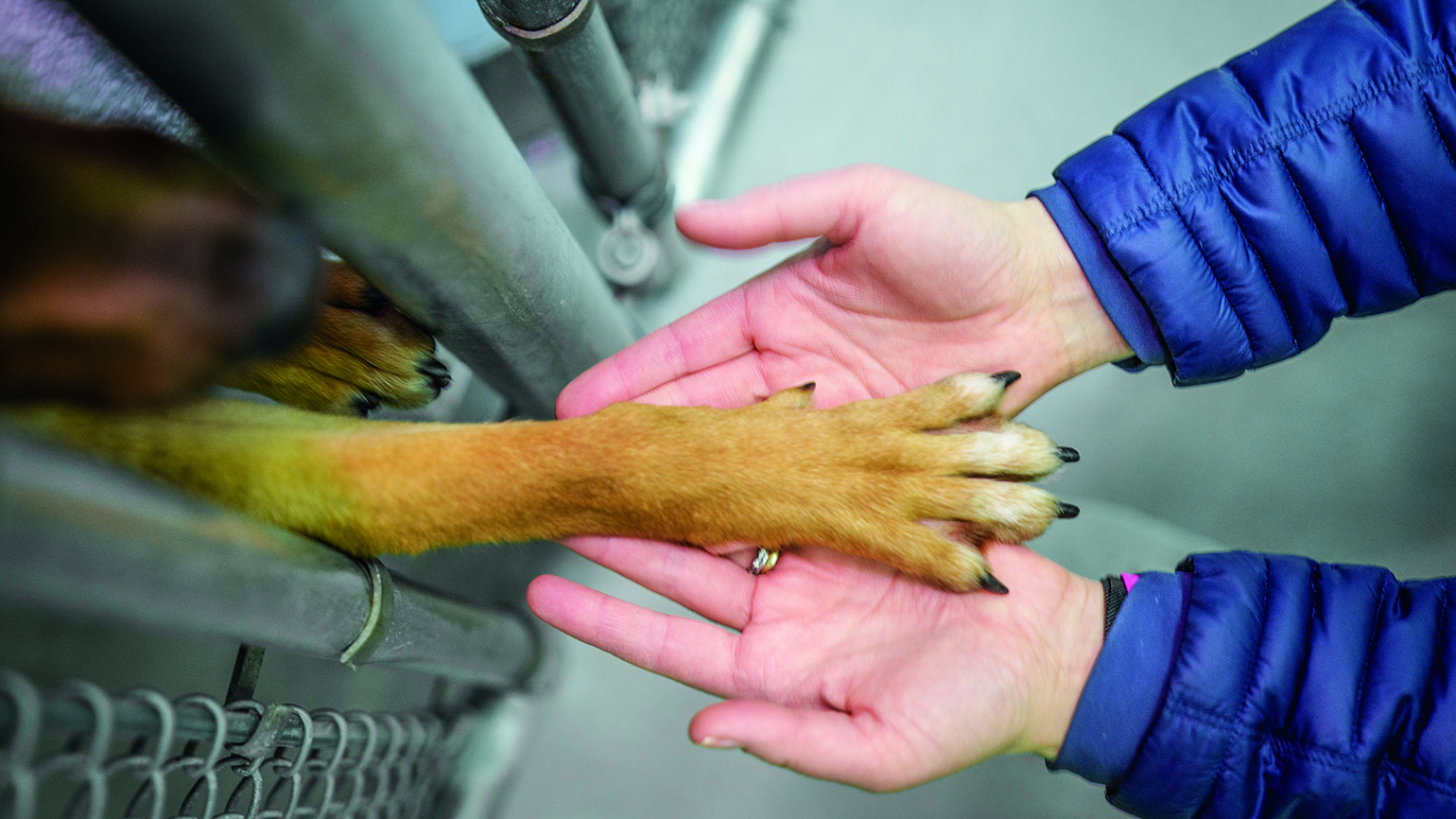
Retired clergyman Father John cared so tenderly for his livestock in the 1940s, that when he died, the lane by his farm in Lafayette, New Jersey, was named after him. New generations of animal lovers carry on his legacy of compassion through Father John’s Animal House, built on the land he used to oversee. The shelter has been through crises and, at times, faced an uncertain future. But there must be perseverance deep in the soil because shelter director Garret Barcheski and his team are saving hundreds of animals—and they have no plans to stop.

Did you have pets growing up?

God's Constant Presence In Article Ad

It was always a zoo at my house. Both of my parents are animal lovers, so I grew up with dogs, cats, rabbits, guinea pigs, snakes, birds, a chinchilla and a mouse named Kirby. They cultivated my appreciation for animals.

Where did you go from there? 

I earned a degree in animal behavior at the University of New England in Maine, and volunteered in shelters, observed obedience classes, trained shelter dogs—all of it. I got a job at an animal welfare society right out of college, caring for dogs and facilitating adoptions. There, I met a four-month-old pit mix named Doug and that was that! He was my best friend.

How did Father John’s get started?

Our property has housed animals since the 1940s, when Father John was doing agricultural research. After he died, a family with a dog kennel took over the property, housing dogs and pigs. Then in 1999, a few individuals in the community bought the property to start a shelter for stray animals. By 2012, the roof was caving in, and they said, “Is this the end or the beginning?” The board decided it was the chance for a new beginning, and they raised enough funds to build a state-of-the-art facility with ventilation systems, sound-absorbing panels, free-roaming areas and more.

How did you get connected with Father John’s?

I was running a dog training business, doing lectures on dog language and teaching dog-handling techniques to rescue groups. I first visited Father John’s in 2015, and became the kennel manager, which was a match made in heaven. 

With an increasing number of “pandemic puppies” being returned, how do you ensure animals remain homed? 

We help people understand the negative impact a surrender has on a dog. We offer coaching and phone counseling. Because when you have a puppy—and they’re chewing and pooping on everything—you need support. Or if someone has a huge vet bill, they may need help. There’s so much conflicting—and incorrect—information out there, people need to know where to turn.

What is your day-to-day life at the shelter like?

As shelter director, there is no typical day. It’s unpredictable. I’m a to-do-list guy, and the plan usually ends up getting thrown out. Recently, we were planning to work on an outdoor project, but a dog with very little medical history came in. We gave him a tick treatment, and the dog started having seizures. So we spent all day watching him. We have to be open to what happens and put the animals first.

How do cats and dogs end up at Father John’s?

We have a stray cat issue in this area. We’ll get 300 to 500 cats a year from Sussex County. Many are owner-surrenders, from people who are amidst a housing crisis or a life crisis. Or people will find kittens outside. Dogs come from everywhere. We will hold a stray, and they’re usually reclaimed. We accept surrenders and get about 30 of those each year, typically due to behavioral problems.

But the main way they arrive is through our partner rescues in Mississippi. In the Southeast in particular, there is a problem with a high supply of dogs and low demand. So we found a rescue partner that aligns with our mission, ethics and quality of care.

What do you attribute your success to? 

Two years ago was a turning point here. Despite the pandemic we decided we have to do more. So we made changes—like creating an efficient adoption process, increasing our responsiveness to adopters and providing phone counseling to potential pet parents—and we found homes for 765 animals in 2021! Our success comes from the 17 motivated, genuinely caring people who work here and all our volunteers. We’re focused on understanding how to support the adopter, the community, the staff and the board. We want to achieve 1,000 adoptions this year!

How do you match a pet with a family?

Our team is so good at this process. We’re matchmakers. We live and breathe it. We’re giving someone the joy they’re thirsting for. The process begins with filling out a questionnaire. People need to honestly examine their lifestyle and family. Then it’s a phone call or a walk-in. It’s a conversational adoption process. No one adopts without this counseling.

If you want a cat, we have multiple free-roaming cats so you can observe their personalities. You’ll get a chance to interact with a dog alongside an expert, who will counsel you on where they sleep at night, how many times the dog needs to go out, how much stimulation they’ll need. We observe the interaction and see if there’s a connection. We talk people through what to expect and make sure it’s the right fit.

How do you get funding?

We spend $1,200 to $1,300 per animal on medical care or behavior training. Father John’s is a nonprofit. Almost everything is from donations. Our biggest fundraising event is a beefsteak dinner. During the pandemic, we couldn’t do it, but 90 percent of the guests said they preferred to donate the money—it was incredible.

Is there a particular time you’ll never forget?
In January 2021, we took in four pregnant dogs who had 36 puppies within 14 days. That got us reenergized after the pandemic. We made it out alive!

What are some misconceptions about shelters?

People think the shelter is going to want all this personal info. We’re trending away from that because we want to eliminate barriers to adoption. If someone has already made this decision, then let’s help them.

People sometimes think there must be something wrong with a shelter animal. But just like humans, they’re products of nature and nurture. Some will come with terrible pasts, some not; some are not as resilient, some are. It depends. A newly adopted cat may stay under your bed for two months. They don’t know they are being saved! If you can take an empathetic approach, it’s a rewarding experience when the cat comes out from under the bed.

What is the most gratifying aspect of this job for you?

We’ve created a space for someone to experience companionship. It’s amazing that every day we’re giving people the chance to receive unconditional love.

For more information on the shelter, and to donate or adopt, visit fatherjohns.org.

For daily animal devotions, subscribe to All God’s Creatures magazine.

Weddings on a Budget

A mom stopped me last summer after reading a newspaper article that stated the average cost of a wedding was now $25,000.

“Jill, did you read that article about the cost of weddings these days?” I replied that I had seen the article to which she referred. She continued with, “I know your daughter is getting married next month. Please tell me that you can do a nice wedding for less than that.”

I responded that indeed we were spending far less than half of that number.

“After the wedding, why don’t you write an article about doing a wedding on a limited budget?” she asked. I promised her I would.

The gifts are unwrapped, the pictures are in albums, and the dress is cleaned and preserved in a box. We’re feeling a sense of normalcy again. Erica’s wedding is our third in three years. Each of our adult children have described their wedding day as a perfect day. Honestly, I’m not quite sure how they could have been any better even if we’d spent more money.

We’ve lived most of our married life with a limited income. We have shopped at Aldi, practiced “delayed gratification,” and limited our kids’ activities simply because we often couldn’t afford registration fees or lesson tuition.

When it came time to plan a wedding, we proceeded in the same manner. It took some extra effort on our part, but we determined that we had more time than money so we used our time to comparison shop and consider all possible ways to accomplish whatever task was before us.

In the process, we found that there are many ways to have a beautiful celebration on a limited budget. Here are some tips we can now share:

Shop clearance racks: A full price wedding gown was out of our budget, but we found many beautiful gowns on the bridal shop clearance racks. Our oldest daughter eventually chose a beautiful $1200 gown that we found on the clearance rack for $279. Erica chose to wear my wedding dress (which was my mother’s wedding dress, too!) and alterations were less than $200.

Shop outside of bridal stores: The average tiara in a bridal store is around $100, but stores in the mall carry tiaras, too. We found Anne’s for less than $10 and it was beautiful!

Jewelry can be purchased in the same manner. Even the Dollar Store has a wide range of wedding supplies that don’t look at all like they came from a “discount” store—the throw away garter is a perfect example of what can be purchased at the Dollar Store.

Take advantage of tux store offers: Many tux rental stores offer free invitations with tux rental. This saves hundreds of dollars. Erica and Kendall chose to forgo the tuxes. They did dress shirts, ties, and pants that the guys bought themselves and could keep and wear again.

Borrow what you can: Rather than renting a limo for the drive from the church to the reception, we asked family friends if we could borrow their convertible. Another friend offered decorations she still had from her daughter’s wedding. The church had silk greenery we were able to use and candle stands and white pillars were also borrowed.

Serve appetizers at the reception: Rather than a meal, if you time the wedding just right, you can serve appetizers or simply cake and punch.

Make anything you can: The wedding party can be more than just pretty faces on the wedding day. Let them help address invitations, make bouquets and bows or table centerpieces.

Purchase flowers yourself: Some florists will use your silk flowers and charge an hourly rate for assembling corsages, boutonnieres, and bouquets. We found silk stems for half price at Hobby Lobby and purchased the remaining flowers online at wholesale prices.

Attend Bridal Shows: Not only do you garner ideas for your wedding, but you can sign up for giveaways as well. After one bridal show, we won $70 off tux rental.

Ask friends to be a part of your day: Rather than paying musicians, you might ask musician friends to be a part of your special day. Ask friends to help decorate the church or set up the tables for the reception.

Do without: What items that are considered “traditional” do you really not need or even care about? Anne determined that she didn’t really care if she had an aisle runner at the church. That was one less thing to purchase.

The most important part of planning a wedding is letting the bride and groom create a day that is their very own. With a little bit of effort and creativity, a very special day can be created on any budget!

W. Bruce Cameron Opens Up About His New Book and His Lifelong Devotion To Dogs

Chances are, if the face of an adorable dog on a book cover or a movie poster has made you smile, W. Bruce Cameron is the man to thank. His best-selling books and three hit movies—including the latest, A Dog’s Journey—portray the dog–human bond with humor and poignancy. The prolific author, producer and screenwriter gives new meaning to the term dog lover: His marriage, career, life philosophy and technique for getting to know the neighbors all center around a passion for pups.

When and how did you become a dog lover?

You Got This In Article Ad

I was eight years old, around the age when Burke meets Cooper in A Dog’s Promise. My father opened the backyard gate one day and in bounded a Labrador puppy. I don’t remember meeting any dogs before then. We ran toward each other like twins separated at birth. That dog, Cammie, was my favorite creature on the planet from that moment on. She escorted me through my childhood and was at my side for knee skinnings, creek wadings and sled runs. She died when I was in college and just taking the faltering steps toward manhood. Perhaps she felt her job was done.

How did the story for your first dog book, A Dog’s Purpose, come about?

I was driving up the coast of California with a woman, Cathryn, who had recently lost her dog. She turned to me and said, “I will never have another dog.” I was just starting to get serious about Cathryn, but the whole no-dog thing was a deal breaker for me. I decided to tell her a story to convince her that if her heart was open to it, her dog would come back to her. She liked the story so much that she married me! And yes, we got another dog.

How did that story change your career?

It changed my life in so many ways. Now I’m the “dog book guy,” when before I was the “humor book guy.” Obviously the books and movies have elevated my profile, but even more important, my younger reader series has, according to teachers and parents, given many reluctant readers a reason to love reading. I feel I’m doing good in the world.

Why do you think people need help coping when a pet dies?

Because a dog is like a child in so many ways—a child who doesn’t talk back. Dogs love us, depend on us, look to us for guidance and help. Losing a pet means losing this devoted creature, and it cuts a real hole in our hearts. The notion that our friends might come back to us—if we only know where to look—has helped many people cope with their loss.

Tell us about discovering that A Dog’s Purpose would become a film.  

I had been through the development process with 8 Simple Rules for Dating My Teenage Daughter, which was a hit show on ABC, so I thought I knew what to expect. Instead, A Dog’s Purpose went into a dark room somewhere for more than half a decade. I had given up hope when I heard there was renewed interest. It was one of those long teases with positive news but no action, so by the time it resurfaced as a project I had become so skeptical I didn’t really believe it was happening until we arrived on set.

How did you learn to be a screenwriter?

Cathryn had a long career as a TV writer and screenwriter. When I sold 8 Simple Rules into development, my deal included a writing assignment for a screenplay based on the book. I had never written a screenplay, so I turned to Cathryn for help, and we still write together to this day.

In A Dog’s Way Home, you and your wife insisted that the dog star be a rescue. Why?

We and producer Gavin Polone made it an absolute requirement that the star of the movie be a rescue, because we wanted to demonstrate that these dogs can do anything. And it’s undeniable—Shelby, the star of A Dog’s Way Home, was living in a junkyard when animal control picked her up. We flew down to Tennessee to meet her and fell in love. She is sweet, loving, and motivated to work—human actors aren’t always as cooperative! I actually wrote a younger reader novel, Shelby’s Story, based on her incredible trek.

You’ve written seven books geared toward children. Why do you feel kids can relate to dog stories?

Everyone of every age can relate to a dog. Some younger reader novels skew in different gender, racial or cultural directions, and there’s certainly nothing wrong with that. But kids also want to read the same novel everyone is reading, and that’s where a dog point of view can help. The stories are approachable, relatable, funny and heartwarming.

Tell us about the dog you have now.

Tucker is a cocktail of various DNA samples, like a drink made by a bartender pouring a little from every bottle into the blender. He very much informed the character of Jake, the dog in my Repo Madness series. Like Jake, Tucker hates to go for a walk. A dog who doesn’t like to walk! He also doesn’t really love dogs. He adores cats if they run away, otherwise he ignores them to the best of his ability. Mostly he loves people. I’ve learned the names of a lot of the neighbors on my block because of Tucker. It’s a pretty good trick.

Earlier this year the movie adaptation of A Dog’s Journey came out. What do you hope audiences took away from it?

I’m hoping people will realize that love is a search and that those who love us the most will always try to track us down. In A Dog’s Journey, Bailey has a mission to find his person and to protect her as she makes some bad decisions throughout her life. I believe we will always be reunited with those we love.

A Dog’s Promise was published in October. What can readers expect

A Dog’s Promise continues the story of the original dog soul in A Dog’s Purpose and A Dog’s Journey, but with a very special twist. Bailey is back because his boy, Ethan, needs him to do something extremely important—something only a dog can accomplish. It’s possibly the most intriguing and exciting of any of the books!

Find out more about W. Bruce Cameron’s books and films at wbrucecameron.com.