Embrace God's truth with our new book, The Lies that Bind

They Were Meant to Be Together—After a Few Detours

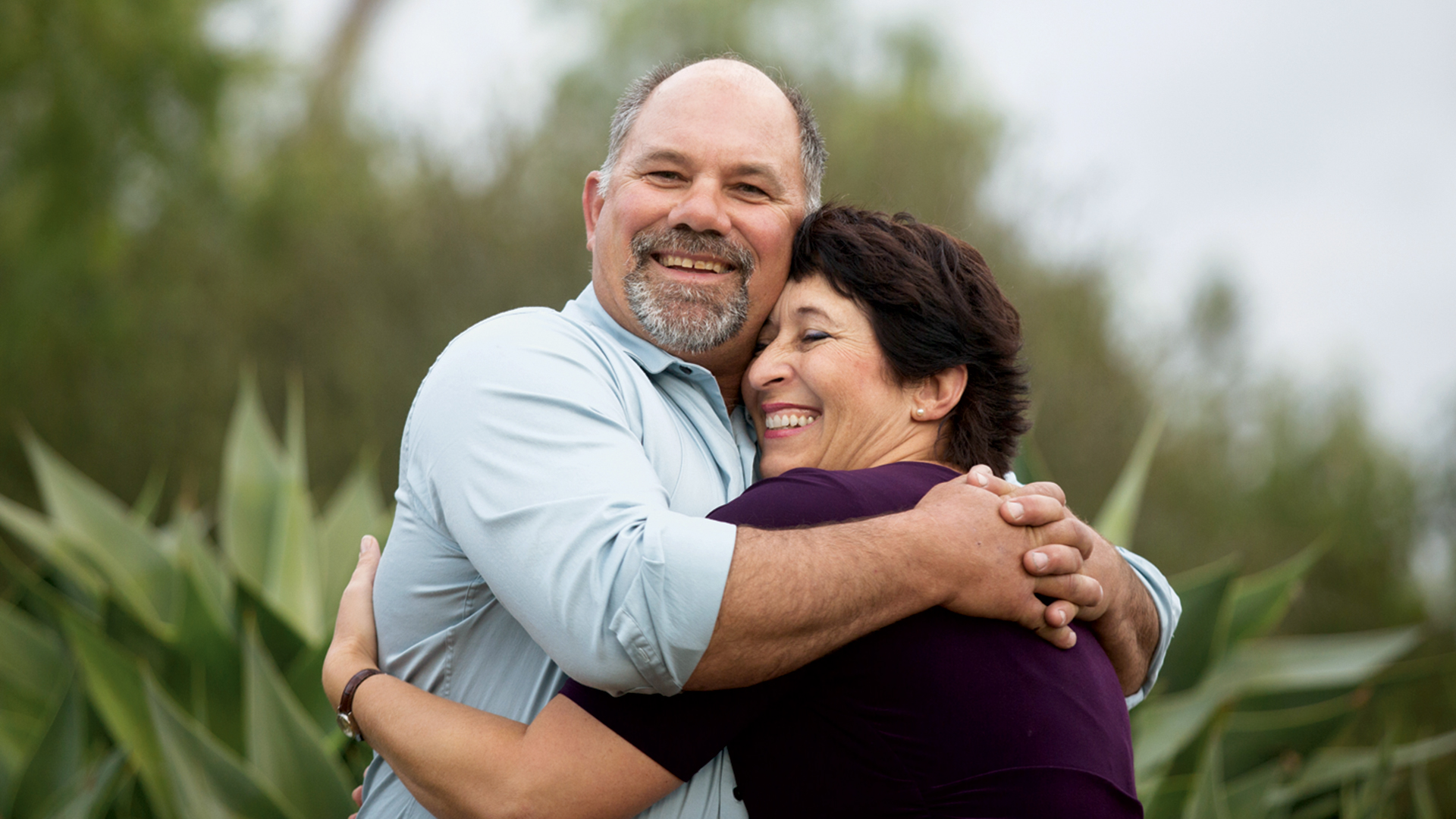
Marci: In high school, I spent my summers in the foothills of the Sierras with my grandmother, in a little town near Yosemite National Park called Bass Lake. My freshman year, I went along with her church on a mission trip to Mexico. That’s how I met John. Sitting by the campfire, strumming our guitars, John made me laugh. Made me feel special. He was three years older than me, just weeks away from joining the Marines. I hated to see the week end.

A year later, I was at church in Bass Lake with my grandmother and John walked in. He looked so different with his military buzz cut. We spent the afternoon together and before he left, he gave me his address and hugged me so close I could feel both our hearts beating.

NIVFLB Inarticle ad

“Someday I will come back for you,” he whispered.

That night, I pulled out my prettiest stationery and wrote him a letter.

John: I didn’t expect a letter from Marci. Or anybody. Getting that envelope during mail call at Camp Pendleton was a shock. A lot of people only pretended to care, then forgot about you. Alcohol and my parents’ divorce had all but destroyed my family. That was a big reason why I joined the Marines, to escape, to do something I could be proud of and get some order in my life.

I tore the letter open. Slowly read every word about Marci’s life in high school, a movie she’d gone to, the song she was learning on the guitar. She had all these questions about the Marines.

I wrote her back as soon as I could. I didn’t want to rush it, though. I wanted the words to be perfect.

We wrote back and forth for the next three years, even when my unit was deployed to Korea and the Philippines. Someone back home was thinking about me. I liked that. But toward the end of my service, I began to dread the idea of returning to civilian life, where there was no plan, no orders to follow. All I could think about was the terrible reality I’d escaped.

I started drinking, just like my dad. I quit church. And I stopped writing to Marci. Her last letter stayed tucked in my rucksack. I couldn’t throw it away, but I couldn’t answer it, either. What could I write? A girl like that deserved someone better than a lost soul like me.

Marci: It was just some schoolgirl crush, I told myself. John obviously didn’t feel the same way I did. If he did, wouldn’t he have written back?

I was 19 by then and had graduated from high school. I was going to junior college, living with my parents near Sacramento. I moved on. Started dating a cute guy. He was nothing like John, but I liked him okay. He was a good distraction. My friends thought he was too clingy, too controlling, but I didn’t want to end up alone, right? He was so in love with me that he proposed after only a few months. It felt way too soon, but I said yes.

John: I got a job working for Eric, an old high school friend from Bass Lake, pouring concrete in the San Francisco Bay Area. We even roomed together, in San Ramon. Two guys living the bachelor life. Eric owned a twin-engine plane, so for fun we’d take it up for a ride. I was free from my family, ready for a fresh start.

One day—it was sometime in early December—Eric had an idea. “Remember that girl Marci who came to Bass Lake in the summertime? Her family’s in Sacramento. It would be cool to see her again. Let’s fly and meet her. I’ll give her a call.” All I could think about was how she must have thought I’d dropped off the face of the earth after her last letter. Why would she want to see me? But I couldn’t tell Eric that.

“Sure,” I said. “Sounds great.”

Marci: I barely recognized the guy who climbed out of the plane. He’d grown a beard and added some muscle. When our eyes met, I felt that flutter I’d felt when I was 15.

John came to my parents’ house near Sacramento for dinner. He had two helpings of spaghetti and kept my family on the edge of their seats with his stories. After supper, I got my guitar and we played for each other. It was with him on that long-ago mission trip.

I drove Eric and John back to the airstrip. John hugged me for a long time before saying goodbye. I watched as the plane taxied down the runway, then stared at the ring on my finger. How could I marry someone I didn’t love? Especially when I knew I was in love with someone else?

John: I looked out the window at the stars and thought about Marci all the way back to San Ramon. She hadn’t said one peep about my not writing to her. She wasn’t resentful at all. But she was taken. I’d tried not to stare at her diamond. I’d missed my chance. One more thing I’d messed up. Loser!

Marci: I needed to write John one last letter. I racked my brain for just the right words. But how do you say “I love you” without actually saying it? Without sounding too forward? After all, I was engaged.

My hand shook as I wrote, “Hi, John. I just wanted to drop a note in the mail to let you know I really enjoyed seeing you tonight. I would really like to see you again, sometime soon, maybe?” I wrote a couple more lines, then signed it, “With love, Marci.” Maybe that wasn’t enough. I added a P.S.: “I’ve missed you.”

That’s when I realized that I didn’t have John’s address. I didn’t have Eric’s phone number in San Ramon, either. This was pre-Google. I called directory assistance. They couldn’t find a listing for Eric. Finally I addressed the letter to Eric’s mother near Bass Lake. That’s all I could do.

The next day, I met up with my fiancé, ended our engagement and said a long shot of a prayer. You are the God of love above all else. If John is who I’m meant to be with, please make it come true.

John: Just before Christmas, I had the most out-of-control night of my life. I woke up the next morning and had no idea where I was. My head was pounding. The sunlight hurt my eyes. I was in my truck, and the front end was buried in a snowdrift. I stared out the windshield at a big tree just a few feet ahead of my bumper. I could have killed myself.

Maybe I should have.

I barely remembered having driven back to Bass Lake, where I was supposed to house-sit for Eric’s family over the holidays. Going home stirred up old demons. I’d met up with some friends the night before and gone drinking. I must have hopped behind the wheel, blacked out. Was my life really that worthless, that I’d throw it away?

I got out of the truck and fell to my knees in the snow. God, I can’t do this on my own. I know how to follow orders. Just tell me what I need to do. I got to my feet. After a while, I was able to flag down a passing car that took me into town, where I got a tow truck.

Marci: Three weeks had gone by since I wrote my letter. There was no word from John. What if he had never thought of me as anything more than a pen pal? I’d almost gotten married. Now I’d be alone forever.

John: I finally got to Eric’s mom’s house and apologized to her for being late. The first thing she did was hand me an envelope. From Marci? How did she know I’d be here? How had she found me? I opened the flap and pulled out the letter. She didn’t come out and say it, but I could read between the lines. P.S. I’ve missed you.

For once, I knew just what to do without being told.

Marci: I was coming home from church after attending Christmas Eve services with my family. There was something waiting on the doorstep—a dozen red roses. My heart leaped. I ran to the flowers and pulled out the card with them: “Looking forward to seeing you again. John.”

John: I quit drinking. Went back to church. Got my act together. For myself. In June the following year, I married the woman of my dreams: Marci.

That was 34 years ago. Today, when I look at my wife, our kids and the home and family we built together, I thank God that the snowdrift stopped me before the tree did. I never would have gotten Marci’s letter. Never would have bought her those roses. Never would have cleaned up my life and let go of my bitterness. And never would have found lasting happiness and love.

For more inspiring stories, subscribe to Guideposts magazine.
The Unbroken Christmas Spirit of a Soldier

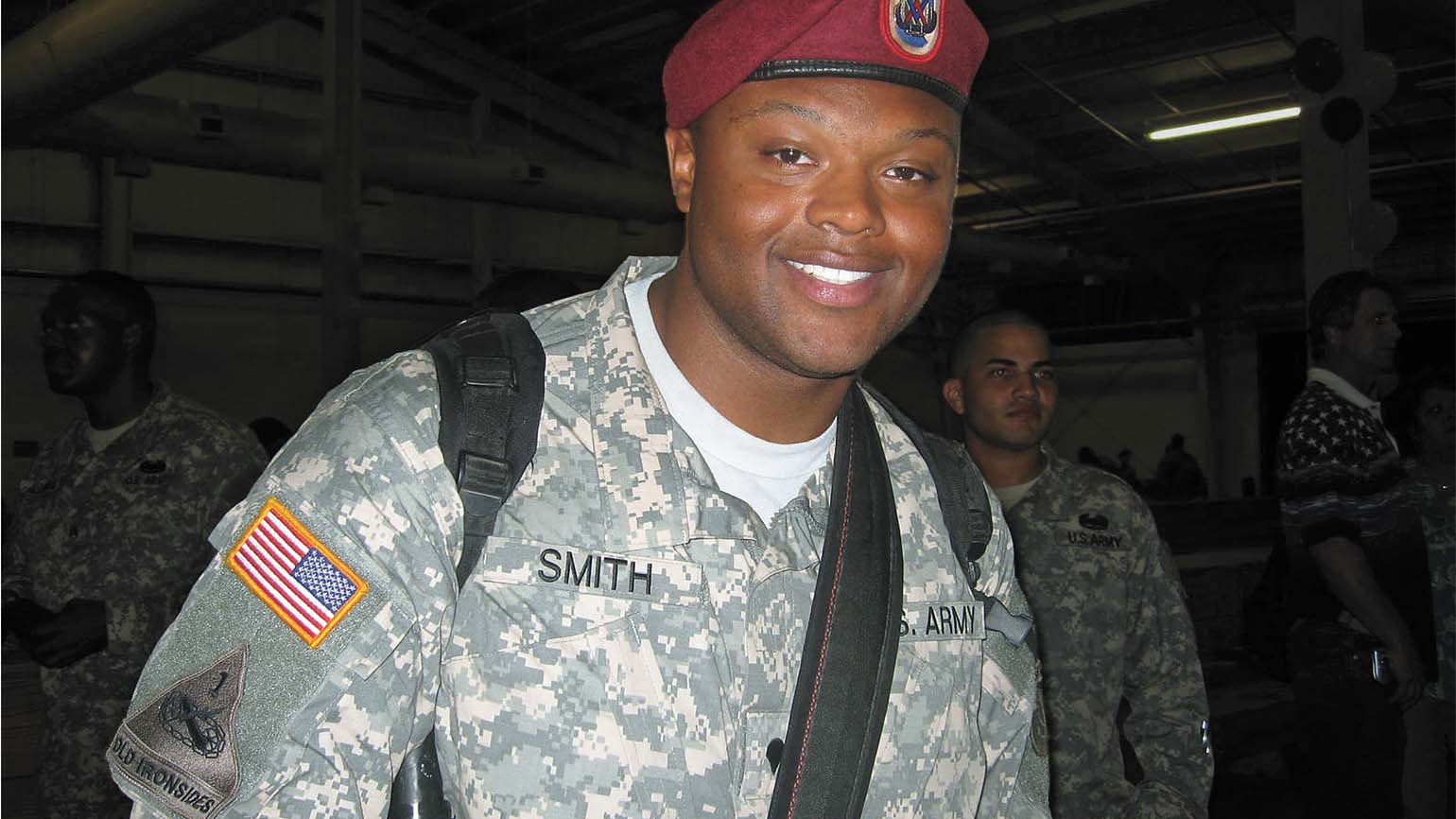
’Twas the season. Like every Christmas, I had taken great care with my tree. There it was, at the foot of my bunk, in a corner of my two-man shelter on a U.S. Army base in Baghdad. It wasn’t at all like the sturdy pines my family would pick out from the tree farm and trim with ornaments back home in Sparta, Georgia. This was just a mini-tree, no more than two feet high, that my mom had sent me along with a box of mini ornaments. “Thinking of you,” she had written.

For the last two months, I’d been stationed with the 503rd Maintenance Company at Log Base Seitz. Known informally as Mortarville, our small patch of desert was a favorite target for Iraqi insurgents. My job, in fact, was to repair tanks, troop transports and patrol vehicles that got hit. It was a job that seemed to have no end. Night after night, day after day, we grew used to the whine of air-raid sirens, and then the blast of mortars that followed. Well, used to it in a way that makes you pray for a day like Christmas, when you hope you’ll get a 24-hour break to practice peace on earth.

Community Newsletter

Get More Inspiration Delivered to Your Inbox


Unfortunately, the insurgents weren’t playing by those rules. My bunkmate, Anderson, wasn’t letting it get him down. “Hey, Smith,” he said. “Let’s go celebrate with the rest of the guys.” Celebrate seemed like the wrong word, but I couldn’t stare at my sad little tree any longer. We had just left the shelter when the sirens sounded. Anderson screamed, “Get down!” and yanked me into a sandbag bunker.

The mortars rained down, blasting jagged craters. Anderson and I hunkered as deep as we could. I covered my ears with my hands. Not today, Lord, I prayed. Don’t let me die on Christmas.

I thought of my mom and dad and my two younger brothers back home. In a few hours it would be morning in Georgia. My brothers would race downstairs and try to guess each present beneath the tree. They’d dress in their Sunday best and head to our small country church tucked against tall Georgia pines. They’d sing hymns and carols of brotherhood and goodwill toward all. Back at the house, they’d open their presents and then sit down to Mom’s Christmas dinner, featuring vegetables from Dad’s garden. As always, Mom would serve my favorite dessert—a crunchy homemade pecan pie.

Then everything went silent. As suddenly as it had started, the attack was over. “All clear!” bellowed a first sergeant. No one had been hurt.

Anderson and I climbed out of the bunker and dusted the sand from our uniforms. Around us, dozens of other soldiers did the same. All of us headed to the same place—the company’s recreation tent, where we were supposed to forget about the war for a few blessed hours. Some Christmas, I thought.

I pushed through the flap door. My eyes went wide. Across the ceiling, usually bare, hung strings of colored lights. Soldiers who just minutes before were crouched in bunkers were now laughing, talking, hugging, showing off pictures of family and friends. A cedar tree with thick green branches forming a perfect peak at the top stood at the center of the rec tent. A lot like the kind of tree my family searched for every year at the tree farm.

Off to the side, several soldiers stood on a stage and sang karaoke. A few of my buddies had brought along their care packages filled with much-coveted and usually well-guarded home-baked goodies. We shared and shared alike.

One guy passed around a picture of his dog, decked out in a Santa cap and scarf. We all told stories of home. We have different memories of Christmas, I thought, but spending time with family is common to all. The party lasted the whole afternoon. The sirens never sounded.

I stood in line at the phone bank for two hours to call home. It was so great to hear their voices! After all the how-are-yous, the I-miss-yous and I-love-yous, Mom asked me if I had gotten the mini-tree.

“I love it,” I said.

We talked for as long as we could, but it wasn’t nearly enough. Before I knew it, it was the next soldier’s turn. I had to say goodbye. “Mom, I love you,” I said. “I love all of you so much.”

I walked back to my tent with a smile on my face until I stepped inside.

​​My heart sank. Mom’s mini-Christmas tree—the mortar bombardment had tipped it over. This war, I thought.

I set the tree upright and straightened the ornaments—the little tractor, like the one Dad rode around our farm; the football that reminded me of my high school team; the race car that I dreamed of taking for a spin one day.

Those ornaments said home to me, like I could almost reach out and touch Sparta, Georgia. All were unbroken, as unbroken as my Christmas spirit.

The Unbreakable Connection of Love

Since both of us are single, my friend Audrey and I often talk about love and relationships. Audrey is French and believes in the coup de foudre–love comes like a “strike of lightning.”

I’m a sensible, pragmatic American. I don’t think love at first sight is necessary, or even always a good predictor of how a relationship will turn out in the long run. Similar goals, matching values, those are more important.

New Every Morning Journal In Article Ad A

This debate usually starts when I suggest she give online dating a chance. How can there be a coup de foudre, Audrey wonders, online?

Read More: The True Meaning of Love

Recently, I gained some insight on this debate from one of our readers. He sent me a story with a familiar Mysterious Ways scenario–after finding out about the death of a good female friend, he went to a beach they often visited, praying for a sign from God that his friend was in heaven. Of course, he stumbled upon just the sign he was looking for, something that only he and his friend would have understood.

Yet, I sensed that wasn’t all there was to this reader’s story. I saw through the use of the word “friend”–clearly the relationship was more than that. I made a phone call.

For over an hour, our reader told me about a relationship of ups and downs that spanned nearly a decade. He met his “friend” online–and in fact they did just start out as just friends.

There was an instant connection, but not a romantic one. It took two years before they started dating, and a couple of years after that, they married. Then after another few years, they divorced. They clearly cared for each other, but they wanted different things.

He moved out, but found a place on the same block. They still attended church together. They both became sick with cancer and supported each other throughout their treatments until our reader’s ex-wife passed away. After her death, our reader dedicated himself to fulfilling one of her last wishes, tracking down the final resting place of an ancestor she’d been searching for.

Their story was complicated–too many words to write here. It wasn’t as simple as coup de foudre, and it didn’t always make the most rational sense why they remained drawn to each other. But it was powerful all the same.

Sometimes it felt as if their love was outside their control, as if some other force had a vested interest in keeping them linked together.

While telling his story, he frequently was overcome with emotion, and my eyes were left with a manly misting when I hung up the phone. There was something special about the arrival of his story in my inbox, as if it came just when I needed a reminder that love transcends the ways we try to define it and pin it down. Often, it ends up defining us instead.

I know just what I’ll say, the next time I get into a debate with Audrey. Love isn’t just a single strike of lightning, and it’s not just a matching game. It’s far more powerful, and eternal. A current that flows through two beings always, even when the ups and downs of life split them apart.​

The True Value of Earthly Treasures

Do not lay up for yourselves treasures on earth, where moth and rust destroy and where thieves break in and steal; but lay up for yourselves treasures in heaven, where neither moth nor rust destroys and where thieves do not break in and steal. For where your treasure is, there your heart will be also. (Matthew 6:19-21, NKJV)

We are getting ready to show our home to prospective buyers this weekend, so Jeff suggested that it might be a good idea to clean out my closet, or at least straighten it up a bit, prior to the showing. Reluctantly, under the conviction of his gentle nudging, I began sorting through my shoes, organizing my jewelry and hanging up various scarves and handbags that had fallen from my shelves.

Community Newsletter

Get More Inspiration Delivered to Your Inbox


As I bent down to retrieve a couple of scarves, I found them covering a box I hadn’t seen in a very long time—it was a box that belonged to my Dad, the late Walter Medlock. I reached for it but when I did, I accidentally tipped it over, dumping out all its contents.

One by one, I picked up the various buttons, coins, cufflinks, keys and tie tacks. I felt such an overwhelming sense of gratitude as my eyes focused on a half a dozen keys, three little praying hands tie tacks, a little silver cross and Holy Spirit dove pin.

It was like God was giving me an object lesson right there in my closet.

Honestly, I have no idea what those keys unlock. Daddy never told me. For all I know, they could unlock a treasure chest full of gold coins or some safe-deposit box that holds precious stocks and bonds.

Guess I’ll never know, and I don’t really care because what my father gave me is worth more than all the gold in the world, and that’s what those three little praying hands, the silver cross and the Holy Spirit dove pin represent.

You see, Daddy taught me about Jesus when I was just a little girl. He told me that God sent His only Son to die on a cross for my sins so that I could spend eternity with Him. He also taught me the importance of starting each morning with prayer, and that I could talk to God throughout the day, no matter where I was or what I was doing. And, Daddy taught me about the Holy Spirit, that He would lead me and guide me in the way I should go.

Those life-changing truths are the real treasures my earthly father left me, and because he took the time to tell me about Jesus, I will get to spend eternity with my Heavenly Father.

As I placed those three little praying hands, the silver cross and the Holy Spirit dove pin back into Daddy’s special box, I thought…I am truly rich.

And, guess what?

So are you!

Pray this with me:

Father, thank You for sending Your Son to die on a cross for my sins. And, thank You, God, for the gift of the Holy Spirit who leads me and guides me in the way I should go. I love You, Lord, and I am so thankful that I am Your child. I am truly rich. In the Mighty Name of Jesus, Amen.

The True Meaning of Love

One of the most important relationships in my life is with my wife, Elba. We have been through a great deal together. We have raised two wonderful children and discovered the power of human love in its own unique way. And this week we celebrate 35 years of marriage.

Of course just like all couples, we have had our ups and downs, but she is my life mate and the greatest partner I could have asked for. Because love is like faith, without these highs and lows, it would not grow. And yes, some relationships and marriages don’t last, but the ones that do prove that it takes great effort, forgiveness and patience.

Pray A Word a Day - 2023 In article

Love gives us the strength to work through the difficult and messy realities we all face–like adjusting to the communication styles of each another. I’m a talker. Elba is a listener. And there are days when my talking gets me into trouble. But her graciousness and patience saves the day and, more importantly, us.

Read More: 10 Tips for a Lasting Marriage

Love also teaches us the value of prayer; when facing obstacles, it is the only way. It is prayer that gets us through financial setbacks, family issues and personal disappointments.

For us, it was prayer that lifted us when our son was born with a serious illness and when he was in a severe car accident 25 years later. And it was prayer that got us through our daughter’s move to the city.

But what is a relationship or marriage without fun, laughter and silliness? Not a strong one at all. Praying together and enjoying one’s company is the way our souls connect.

The Bible tells us, “Love is patient, love is kind. It does not envy, it does not boast, it is not proud. It does not dishonor others, it is not self-seeking, it is not easily angered, it keeps no record of wrongs. Love does not delight in evil but rejoices with the truth.It always protects, always trusts, always hopes, always perseveres. Love never fails.”

I’m still learning the way of love but am much closer today, thanks to God and Elba. Who has taught you the true meaning of love? Please share with us.

Lord, thanks for the gift of love and for those who help us discover its meaning and power.

The Top 10 Things Norman Vincent Peale Taught His Granddaughter

Our eldest daughter is a rising high school senior so, this summer, my husband and I have taken her to tour campuses, attend college’s information sessions and explore the cities and towns surrounding the colleges. We’ve also spent hours together in the car. Very special times.

One college had a very interesting way of getting to know its applicants. It asked the applicant to make a Top 10 list about anything she chose, which led to many good conversations around the ideas my daughter shared and helped us get to know her better, too

The Lies That Bind In Article Ad

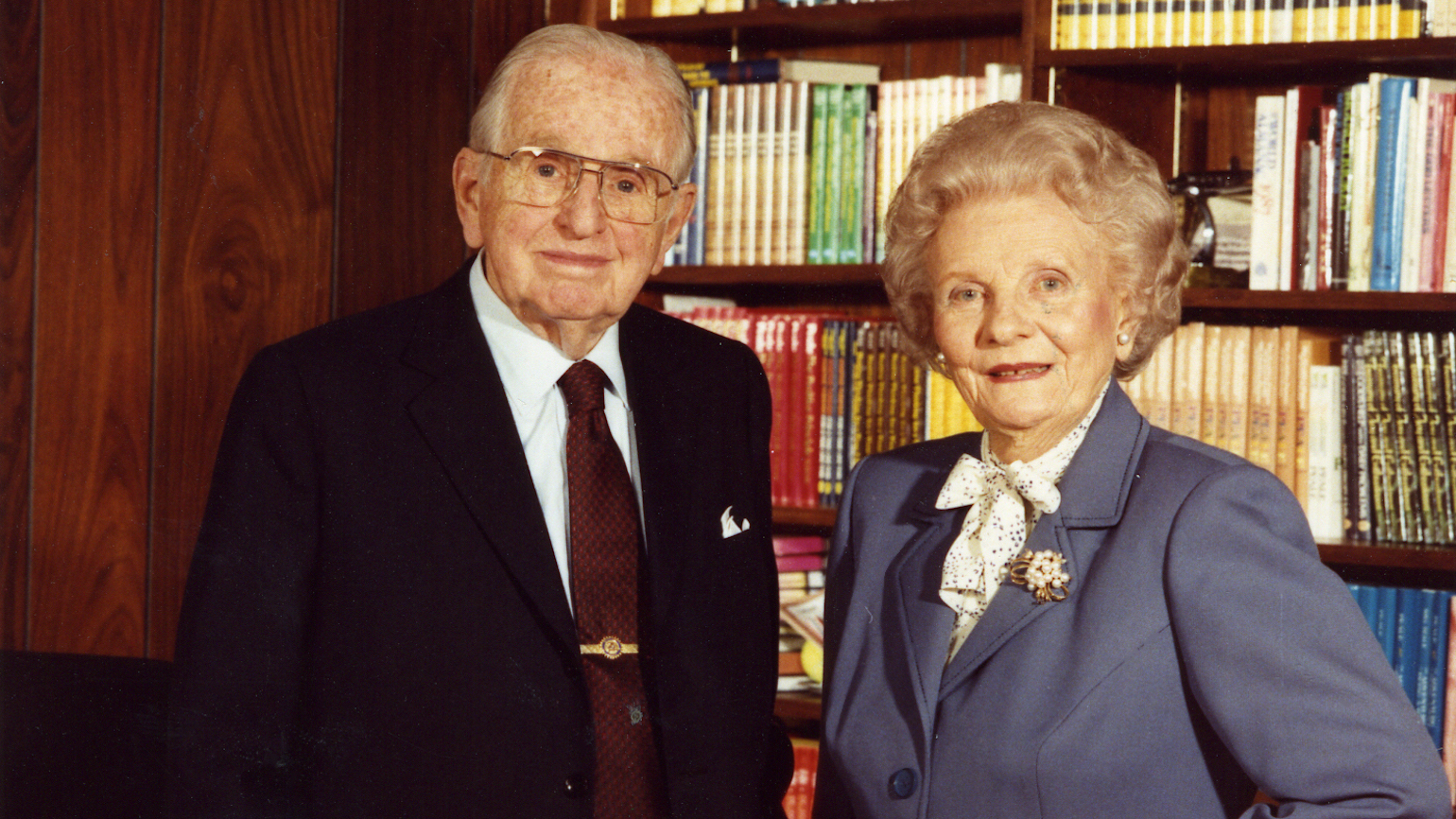
I have had fun thinking about a Top 10 list of my own. In light of my blogging for Guideposts as one of Dr. Norman Vincent Peale and Mrs. Ruth Stafford Peale’s grandchildren, I cannot help but think about the top 10 things I learned from them.

Unlike a true top 10 list, I do not have these in any specific order, as I always felt that each lesson held a significant weight for them. Here are my all-time favorite lessons from Grandma and Grandpa Peale.

1)  Make Time for Family

Time spent together as a family, with both connections and memories being made, was deeply important to my grandparents.

2)  Travel Together as Much as You Can

It was through many very generous and adventurous trips that Grandma and Grandpa provided for us that we strengthened our family connections and made many, many precious, hilarious and unforgettable memories.

3)  Keep the Faith

Grandma and Grandpa’s faith was real. It was vast. It was challenged. It triumphed every time.

4)  Show God’s Grace and Love

It was because of the strength of their faith that Grandma and Grandpa were able to show us, hence teach us, about the power of God’s love for each of us and the grace that surrounds us because of this love. We have an opportunity each day to feel His love and the grace that comes with it. They lived this.

5)  Be Humble

Grandma and Grandpa were a team, and they had deep love for each other and for all people. They were humbled by the blessing they had in being able to be a part of and inspire so may lives through their mission and their work. It was never about them; it was about others being able to see themselves as valuable and loved by God.

6)  Be Vulnerable

How can we help others or connect with others without understanding vulnerability in ourselves? Grandma and Grandpa taught us that to be helped, to be open to the love of God and that of others, requires vulnerability.

7)  Have a Strong Work Ethic

One of the realizations I had as I hit my teens was the amount of time Grandma and Grandpa spent on airplanes each and every week, visiting multiple cities, making speaking engagements. During those weeks, they were writing, thinking, innovating, planning and connecting with others. And then the weekends would come and Grandpa would write his sermons and preach at Marble Collegiate Church on Fifth Avenue in New York City. Truly amazing.

8)  Appreciate Nature

Grandma and Grandpa found peace in nature. They would spend time driving on country roads surrounding their Pawling, NY, home and sitting on their property taking in the fresh air, stellar and ancient trees, the lushness, and the snow covered lawns. They showed us how to be present and quiet in, and appreciative of, our natural world.

9)  Give Back and Pay it Forward

Filled by God’s love and grace, Grandma and Grandpa so naturally felt the desire to give back to their community, near and far. For them, it was an extension of their love of God. They were thoughtful and intentional about their giving, and their gifts continue to impact lives as a result.

10) Don’t Forget Family

Taking care of and being close with family was so important to my grandparents, I have to mention it again. No matter how far they traveled or how many lives they touched, making time for family was always a priority and something I’ll never forget.

The Surprising Health Benefits of Living With Friends

When I moved to New York last year, I spent almost two months on my friends’ couch. Eventually I found my job at Mysterious Ways (or it found me) and moved into my current apartment.

Seemingly, things are better now. I have a stable income and my own room. But I still miss something about those two months, when nearly every evening, my friends and I made dinner together, and sat and talked in the living room.

Journey With Jesus in article ad

Now I live with three complete strangers. We treat each other with polite indifference; we keep to ourselves. It’s not really home.

Thinking back to my time on my friends’ couch, I’ve realized that there was undoubtedly something beneficial about being around them and the community we built together. I didn’t just feel less lonely back then—somehow, I felt healthier too.

It turns out my feelings are backed by science: we are healthier living in a community, in close proximity to those we care about. Instead of flying solo, we should join a “soul tribe,” says Dr. Lissa Rankin, author of Mind Over Medicine, whom I interviewed for the upcoming of issue of Mysterious Ways.

Read more amazing stories! Click here to subscribe to Mysterious Ways

In her book, Rankin cites a famous study from by Dr. Stewart Wolf of the inhabitants of Roseto, Pennsylvania.

In the mid-20th century, Roseto was a close community of Italian immigrants with unusually low rates of heart disease. After studying a variety of factors–diet, tobacco use, genetics, exercise habits, etc.–Dr. Wolf found that the only thing unique about the residents was their sense of community.

In fact, this factor “was a better predictor of heart health than cholesterol levels or tobacco use,” Dr. Rankin writes.

A new study in Heart looked at data from over 181,000 adults and found that loneliness and social isolation increase the risk of heart disease by 29 percent and stroke by 31 percent.

Clearly, we’re meant to socialize. I take these studies as evidence that our roommates can give us something more than their portion of the rent. As people start families later and later in life (or not at all), maybe we should rethink how we live in the meantime.

Have you had a roommate who changed your life for the better? Share your stories with us.

The Strength of a Father

Nicholas raced out to the sandbar to catch the waves. What a perfect summer day. I’d gone fishing in the bay earlier until I caught my limit of trout. Now I was on the sea side of Matagorda Island with my friend Mark, his two teenaged sons and Nicholas, my 12-year-old.

I stood with my feet in the water and looked out at Mark and the boys bodysurfing. For years we’d been coming to this spot on the Texas gulf, our family getaway, the perfect break from the hectic work of running my small plumbing business back in Fort Worth.

NIVFLB Inarticle ad

Alisha, my wife, was still with our fishing boat on the bay side of the island. Today would be a scorcher walking back across the sand. All the more reason to cool off in the surf.

Nicholas waved from the sandbar. He was growing so fast, tall, broad-shouldered, quick with a football. Running my own business took up a lot of my time but I always tried to be there for Nicholas, as much as I could. I waved back and watched him dart toward the surf.

He fell. Scrambled up and then fell again. It was like someone had yanked him underwater. I held my hand up to block the glare of the sun. Was there something wrong? I felt my heart start to race.

Mark splashed through the water and picked Nicholas up. Next thing I knew he was racing back, carrying my son. A stingray, I thought. He must have been stung. But no, this looked worse. Blood gushed from Nick’s left foot.

“Bull shark!” Mark hollered.

I staggered forward. Panic seized me. Blood spurted from a gaping wound in Nicholas’s foot. Blood was dripping everywhere. Mark carried him up to the beach and I ran after, looking on in horror. “Help me, Cecil,” Mark yelled. “Make a tourniquet.”

I whipped off the old baseball shirt I was wearing and prayed I remembered how. An artery must have been severed, the blood was coming so fast. Ugly tooth marks were visible in the flesh. I wrapped the shirt above the wound and pulled it tight.

“I can’t believe I got bitten by a shark,” Nicholas said, dazed.

“You’ll be okay, buddy,” I said. “Just hang on. Stay calm.”

The bone was exposed. I moved a flap of skin across it. Nicholas groaned. The blood kept coming—my shirt was already red—and we were so far from help. None of us had a cell phone.

“Daniel,” I yelled to Mark’s 13-year-old. “Tell Alisha. Run across the island. Tell her to find the fastest boat that can get us back to the mainland. We need help. Hurry!”

Daniel raced to the dunes before I even finished. Now we had to keep Nick alive while we made the long trek back to the bay. Only a third of a mile, but it seemed like crossing the Sahara. Mark and his other son, 15-year-old Kevin, lifted Nicholas up.

“You stanch the wound,” Mark shouted to me. “Don’t let up on the pressure…” Or he’ll bleed to death. I didn’t even want to say it out loud. My son’s life was literally in my hands. Could I do it? Could I save him?

We started across. Flies buzzed around our faces. Sweat dripped down, blurring my eyes. Dune grass slapped at our ankles. The sand burned our feet. Nicholas was heavy. Mark and Kevin struggled under his weight. I dug my fingers into his wound to hold back the blood his heart was pumping out.

Up one dune and back down, we trudged. Please, please, please. Help, help, help. It was all I could think to pray. No other words. I looked to Nicholas’s face. His eyes rolled back in his head. He was going into shock.

“No, buddy,” I shouted. “Stay with us. You gotta stay with us.” I squeezed harder on his wound until my hands trembled and ached. Please, please, please. Help, help, help.

I searched the horizon for the blue waters of the bay. Daniel must have gotten there by now. Had Alisha found a boat? Had she called 911? Every moment counted. One last dune to climb.

Mark and Kevin were panting. “Hold on,” I said to Nicholas. “We’ll get a boat. We’re almost there.”

We trudged downhill and I glimpsed Alisha. She saw the blood on Nick’s legs and covering my hands. She rushed forward. “I found a boat,” she said. “EMTs are waiting on the other side of the bay. They’ll take him to the hospital.” But her eyes asked, Is our son going to live?

People stared at us. The news had spread. Shark attack! Alisha led the way to the boat. We lifted Nicholas up and lowered him into the back. Alisha cradled his head in her lap. I kept pressure on his foot, pain shooting all the way up into my shoulders.

Lord, I am weak. Keep me strong. The driver revved the engine and shot away from the dock. “Ten minutes,” he shouted. “We can get across in ten minutes.” What if 10 minutes was too long?

The boat pounded against the water. Nicholas’s face went ashen and his eyes rolled back again. With my free hand I splashed water on him. But I felt so weak, like a man who had lost all power. I looked at Alisha. She saw my fear.

Nicholas opened his eyes. “Mom, you need to pray for me,” he said.

“Your dad and I will both pray for you,” Alisha said. “Dear Lord, be with Nicholas. Give him strength. Let him be safe.” Her words rose over the noise of the engine.

I looked down at my hands, clutching my son’s foot, slippery with blood, and I thought of God holding me in his hands. A Father holding on to a father holding on to his son. Lord, I’m so weak, but I trust you.

Nicholas turned to me. “Dad, do you think I’ll still be able to play football?”

Hope surged through me. “Yes, buddy, you’ll play ball.”

“Squeeze my hand as hard as you can and don’t let go,” Alisha said.

We made it across the bay in eight minutes. Record time. A helicopter touched down to fly Nicholas to Children’s Memorial Hermann Hospital in Houston. EMTs surged around him, but I didn’t want to let go.

“We’ll be there real soon, buddy,” I said to my son as they rushed him into the helicopter. “And we’ll be praying for you the whole time.”

We changed out of our blood-drenched clothes, then drove to the hospital. Alisha texted friends and family the whole way: Pray. Pray for Nicholas.

He had an excellent surgeon and team of physicians. They reattached his nerves and arteries, applied skin grafts to his foot. It took five separate surgeries over a couple of weeks and I prayed over Nicholas each time.

Doctors, nurses, technicians, orderlies, hovered around my son. They came into his room, took his vitals, checked his bandages, changed his IV. They were the experts, but I never lost that sense of who was really in charge.

Nicholas didn’t lose his foot. In fact, after hobbling around on a crutch at home and undergoing one further operation and weeks of therapy, he was as strong as ever. He was able to play football on the junior high school team. My promise wasn’t an empty one at all.

But then, I should have known. God hears our prayers, no matter how frantic we are when we say them, no matter how weak or how afraid. That’s just when a father is ready to help a son.


Download your FREE ebook, A Prayer for Every Need, by Dr. Norman Vincent Peale

The Story that Sparked an Unexpected Friendship

You never know how God’s going to use something small to lead you to something big.

Take an incident that happened to me earlier this year. As you might recall, my parents were born in southeastern Turkey, but technically we’re Syriac, i.e. an Aramaic-speaking minority descended from some of the first Christians in the Middle East. In the February 2015 issue of Guideposts, I wrote about my family’s heritage–how we’re sort of an unknown people–in a story called “The Lord’s Words”.

The Lies That Bind In Article Ad

Boy was I in for a surprise! After the February issue came out, I received letters from people in response to the article. One reader wrote to say her son was studying the Syriac dialect of Aramaic all the way in Waco, Texas! Another reader sent me a postcard with the Lord’s Prayer written in Syriac–something she just happened to get on a recent trip to Israel.

And then there was the letter from Gladys.

“I am a longtime subscriber to Guideposts,” Gladys wrote. “Your article ‘The Lord’s Words’ in the Feb. issue is beautiful and inspiring to say the least…maybe mysterious ways is more like it!”

You see, Gladys knew all about the Syriac people and language. As it turned out, her priest and close friend, Dr. Joseph J. Palackal, was actively involved in preserving the Syriac language and music through a program called The Aramaic Project.

Of course, I was delighted to connect with someone who knew so much about my culture. But God had even more wonder up his sleeve.

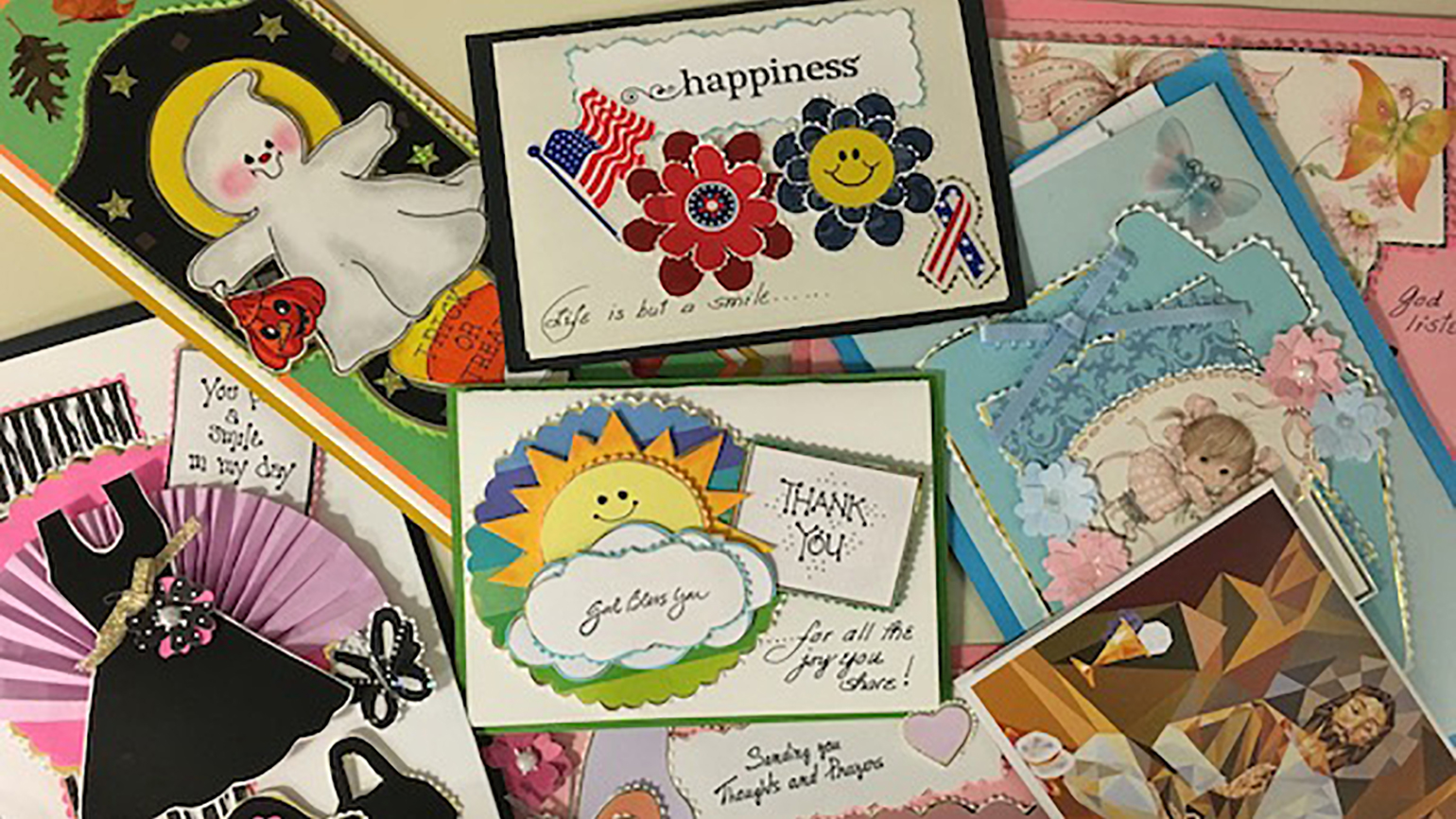
I wrote Gladys back and, quite unexpectedly, we struck up a friendship! Every so often, I’d come into work and find a colorful envelope waiting for me in my mailbox. One of Gladys’ beautiful handmade cards. After all, she taught elementary school for 50 years–she knows a thing or two about crafts! We chat on the phone now and then, too, like we’ve known each other for years. Kindred spirits, I like to say.

Isn’t it amazing? How God used a simple story–one where I confessed to feeling unknown and out of place–to make the world feel not so very big?

Mysterious ways, indeed

Has God ever led you to a friend unexpectedly? Share your miracle below!

The Stand-in Angel

We worry about the weather out here in Oklahoma, maybe more than most folks, especially in spring when vicious storms and tornadoes can gather deadly strength in the course of an afternoon. One minute the sun is shining and the next you’re running to the basement for shelter. But that spring seven years ago, there was little that could dampen my happiness. Just months earlier I’d given birth to twin girls, Emerson and Preslee. Harley, our Dalmatian, had a litter of 12 pups. One was very special.

We called her “Muff” because her brown ears made it look as if she were wearing tiny earmuffs. Dalmatian puppies are usually all white—the spots come later—but Muff stood out with her solid brown ears. We gave away the other puppies, but kept Muff for ourselves. The perfect puppy for my babies, I thought. “They’ll all grow up together,” I told my mom.

Mys of Blackberry Valley In Article Ad

One blustery afternoon early that May, Muff and Harley didn’t come back from playing outside. “Muff!” I shouted into the whipping wind. “Harley! Where are you?” May is the heart of tornado season out here, and there were reports of dangerous storms coming. I was worried. “They’ll come back. They probably chased a rabbit or something,” my husband, Brian, tried to assure me. “Dogs can always find their way back home.”

Get the new daily devotion for animal lovers!

But the next day they still weren’t back, and the weather was worse, much worse. I called the animal shelter, drove around town, checked with the neighbors. I was at my mom’s place when she said, “There’s a tornado coming and it looks real bad.” I scanned the darkening horizon, the sky bruised with storm clouds. “Lord,” I said, “keep my dogs safe, especially Muff. She’s just a pup.”

We took shelter in a nearby elementary school basement. Even down there I could hear the wind howling mercilessly outside. Still, I couldn’t stop thinking about Harley and Muff. Were they stuck out in the storm? I almost hoped they had been stolen. Then at least they’d be out of harm’s way. Harley was older and could take care of herself, but Muff would be helpless. All at once the wind’s howl turned to an incredible roar, like we were being run over by a freight train, and even my worries about the dogs were drowned out by it.

Finally it was over. The first thing I did was search for Muff and Harley. Driving around town, I realized how lucky my family had been. The tornado left a swath of unbelievable destruction less than a half mile from our house. The humane society shelter was chaotic—bursting at the seams with dogs and cats gone stray in the storm. Their eyes all searched desperately for a familiar face to claim them. But no Harley. No Muff.

Six months after the tornado, we moved into a new house 15 miles away. I still worried about the dogs. What if they came back to the old home and didn’t find us there? Where would they go then? I knew I was being unrealistic, but I still held out hope. It was a hope that faded with time, especially for Harley, but once you have a dog you never forget him. I always wondered about poor little Muff with those cute brown ears. The years passed, and we got two new dogs—a Dachshund and a Labrador retriever. The girls grew up playing with them. But my heart still skipped a beat anytime I saw a Dalmatian.

Then, six years after that terrible tornado season, on a Saturday afternoon a week before Easter, my mom called. She told me she and my sister had been surfing the internet when they came across the web site of Rocky Spot Rescue, a local organization that puts dogs up for adoption. “We don’t need another dog,” I started to say, but she cut me off. “I think you need to see this,” she said.

I turned on my computer and clicked to the web site. I scrolled down to the photograph of the dog Mom told me about. Chills ran down my spine. Those ears, just like earmuffs. The web site said this dog—named Ginger—had originally been rescued a week after the tornado six years ago. Could it be Muff?

Brian was cautious. “Lots of dogs got picked up after the tornado. I bet a bunch were Dalmatians,” he said. “Besides, do we have room for a third dog?”

“The shelter is hosting an open adoption at the pet store tomorrow,” I told him. “I have to act on this. Otherwise, I’ll always wonder if it was her.”

“Okay,” he said. “We’ll all go tomorrow. But don’t get your hopes up, Hon.”

Getting ready for bed that night, I had my doubts. What had become of Muff in six years? Why was she still up for adoption? Even if it were her, after six years, would she remember us? How could we even be sure it was her? She was only a puppy when she disappeared. I called my mom. “Maybe I should just let it be,” I sighed. “Nonsense,” Mom assured me. “A dog never forgets a scent. If this dog is Muff, she will know you.”

Sunday afternoon—Palm Sunday—we all piled into our SUV and headed to the pet store. My hands clutched a bunch of Muff’s puppy pictures. The girls talked excitedly about having a new dog to play with. “Now, don’t get too excited,” Brian said to them. “We’re just going to check this out.”

“But if it is Muff, we’ll get her, right?” Emerson said.

My husband gave me a look. “We’ll see,” I said.

The second I entered the pet store, my eyes scanned the dogs lined up for adoption. There were many Dalmatians, but none had those ears. I went up to one of the shelter volunteers. “Excuse me, but do you still have the Dalmatian you called Ginger?”

“Yes,” she said, “But she’s not available for adoption now. She’s recuperating from a dog bite.”

“Can we see her?” I couldn’t hide my excitement.

“Why her?” the volunteer inquired.

“Because…” I said hesitantly, “I think she’s our dog.”

I handed her Muff’s puppy photos. She flipped through them, eyes wide with disbelief. “Those ears look familiar, all right,” she agreed. “I’ll call the shelter right away and tell them about you. I’ll let them know you’re coming down.” She gave us directions and we drove off.

All the way to the shelter, my heart pounded. Please let it be Muff. Please let her remember us. As we pulled up, I could see a bunch of dogs in the fenced-in yard, some running around playing, others lazing in the shade. One Dalmatian stood at the fence. The car came to a stop and the dog turned toward us. I stepped out and called to her, “Muff?”

There was not even a moment of hesitation. The instant she heard my voice, she started to bark happily. She put her paws up on the fence, then tried to climb it, jumping up and down. The shelter employees came outside to see what all the commotion was about. “She doesn’t react that way to anybody,” one of them said to me. “She’s usually so shy.”

They let me in and the dog almost bowled me over. I kneeled down and put my arms around her. She was all over me, licking my face, barking, nuzzling against my chest. She was a whole lot bigger now, and filled out, but there was no mistaking that this dog knew exactly who I was. I held her head and looked deep into her eyes. “It’s her,” I shouted out. “It’s Muff!”

“Amy,” Brian said, his voice choking with emotion, “this dog definitely has to come home with us.”

It took us a while to find where our poor puppy had been the past six years. Rocky Spot had rescued her from the animal welfare division just days before she was scheduled to be euthanized. Her first adoptive parents after the tornado couldn’t care for her after she was hit by a car and broke her hip. Her next owners moved and left her behind, tied to a tree. She had other traumas and travails that I couldn’t even believe. But miraculously, she survived it all. And I don’t use miraculously as a figure of speech.

We call her Ginger now, but she’ll always be Muff to me. The kids got their new dog and I got my old one back. That first Easter Sunday, Muff—Ginger—and I went for a walk, just the two of us. She kept close, walking contentedly at my side, occasionally looking at me as if she couldn’t believe it. I knew how she felt. I could still remember clear as ever that day of the tornado when I searched the neighborhood for her, shouting into the rising wind. But my prayers too had been taken up by that same wind to the only One who could keep my dog safe when I could not. Now at last, she’d come home.

Did you enjoy this story? Subscribe to All Creatures magazine.

The Spiritual Side of Godparenting

It all happened so fast. My dear friend Sandy had just telephoned long distance from Florida to ask if I would consider being godmother to her second child, a newborn son.

Godmother! I was honored. I was flattered. I’d never been asked to be a godmother before. “Sure,” I replied easily.

New Every Morning Journal In Article Ad A

“You don’t have to answer right away,” Sandy said. “Being a godparent is a serious responsibility. Maybe you’d like to think it over for a few days, maybe even pray about it.”

“Don’t be silly,” I laughed. “I’d love to be Josh’s godmother.”

We talked some more, mostly about the baby and his upcoming baptism, and then, as quickly as it had begun, our conversation was over. Sandy and her new son were 2,000 miles away in the Florida sun, while here I sat in our New York City apartment, staring out the window at the zigzag pattern of fire escapes across the street.

With some unease I sensed that in the course of one simple phone call my identity had taken on a new, uncertain dimension. As mother of two, I was familiar with plain old garden-variety parenthood. But godmother—this was different. This was…

And then it hit me. I hadn’t the foggiest idea what being a godparent meant. What was it Sandy had said about godparenting being a serious responsibility? The way she talked, her request had more to do with Josh than with honoring me. Clearly her expectations were high. But what exactly did she expect?

I thought of my own godmother, my mother’s best friend from her college days. Our families lived thousands of miles apart. On the few occasions our paths crossed, I remembered her as a warm and friendly woman. When I was very young she sent me Christmas presents—sometimes a doll, sometimes a book. Still, I couldn’t recall that she had ever done anything that set her apart as a godmother.

Well, there was no turning back now. For better or worse, I’d impulsively said yes to Sandy’s request. “Father,” I whispered, “please teach me what it means to be a godparent.”

Over the next several weeks I set out to discover everything I could about godparenting. I’m an Episcopalian, my friend Sandy is Catholic, so I talked to a number of pastors. Books on the subject are surprisingly hard to find. I also talked to friends—godparents and godchildren alike—to learn from their experiences. And what I discovered was fascinating.

The tradition of godparenting among Christians is an ancient one going back to the days of the early church, when believers were persecuted—and when life expectancies in general were much shorter than they are today.

While modern-day American believers are not persecuted as the early church once was, it could be said that the healthy growth and development of our children’s faith is threatened as never before by the cumulative effect of society’s ills: widespread divorce; broken homes; rampant materialism; both parents working, out of economic necessity rather than choice; lack of parental supervision; parental mental illness; alcohol and drug abuse; parental physical, sexual and emotional abuse; and the desensitization of our children to violence and sex via unsupervised viewing of inappropriate television, videos and movies.

In other words, kids today need all the help they can get. Over and over I was astonished to hear from clergy and laypeople alike that something so old-fashioned as good godparents practicing good godparenting could make a powerful difference.

In the New Testament, in the Book of Acts, I read about whole households being baptized into faith, including infants, children and servants. Traditionally, the godparent acts as a steward of faith for the newly baptized child, serving as an added assurance (in addition to the parents’ efforts) that the child will be raised to understand fully his or her relationship to God through a personal, saving faith in Jesus Christ.

Today many godparents work to achieve this same blessed goal. Unfortunately, others still wrongly perceive the role as a purely social convention, a way for new parents to honor a family member or friend. With that viewpoint they lose the extra spiritual dimension to the relationship that grants a godparent license to reach out and be something more to the child than an aunt, uncle or “Mom’s best friend.” In fact, I learned of several cases in which it was the godparent who made the difference in a child’s coming to faith.

Even in churches that do not practice infant baptism, or in cases where the person being baptized is an adult, a sponsor is often appointed to serve in much the same capacity as a godparent to the newly baptized person.

As a godmother, I learned that it would be my fight (and responsibility!) over the years to pray for Josh, to introduce him to Christian concepts and to encourage any questions he might have about our faith.

When a person becomes a godparent at a child’s baptism, many churches provide a certificate that includes helpful suggestions and prayers. Much of this is very basic: Pray for your godchild daily, remember your godchild with a gift on his birthday, and—even more important—on the anniversary of his baptism; see that your godchild attends Sunday school and owns an age-appropriate Bible; and so on.

But it was the stories that people shared about their personal experiences as godchildren and godparents that really got to the heart of the task at hand.

One couple, over the course of two decades, had become something of experts when it came to gift-giving to their two godchildren, a boy and girl. Seeking to emphasize the unique spiritual dimension of their relationship to the children, they made a special effort to select gifts that had a specifically religious or inspirational content. Bible storybooks and Noah’s ark toys gave way to tiny gold-cross jewelry and the classic children’s books by C. S. Lewis. When the children entered their teens they received diarylike prayer journals and Christian rock and pop music tapes. Most recently, on the anniversaries of their baptisms, they were sent framed reproductions of the Renaissance painter Fra Angelico’s masterpieces of classic religious themes.

Another friend, who was musical, had a grand time singing hymns and playing the piano with his godson.

Another woman stressed the importance of not only praying for but with her goddaughter. The first time she did this she admitted she felt a little bit embarrassed and shy. But she persisted, convinced that the simple act of praying—or as she put it, “talking to God”—had a profound effect. It demonstrated that praying is something that she, a grown-up, did, and something that the child could do, too. Later she was deeply moved when one afternoon the goddaughter, now grown and in the midst of grave marital problems, called her on the phone. “Oh, Nana,” the troubled girl said, “will you pray with me? I need someone to pray with, and I knew you would understand.”

But by far the most unforgettable godparent I heard of was a member of my pastor’s first parish in South Carolina, nearly 40 years ago. A maiden lady “of a certain age,” Miss B. had no fewer than 26 godchildren.

Fresh out of seminary, my pastor thought that in order to do the job right one should generally not take on the responsibility of being godparent to so many. So he was understandably skeptical when he first learned of Miss B.’s “children.” But after he grew to know her well enough, one afternoon she escorted him to her room to show him the chart she kept at the foot of her bed. Big as a billboard, the chart took up the larger part of the wall; along the top were printed neatly the names of all 26 godchildren, and listed below in columns were their birthdays, baptism anniversaries, favorite books of the Bible, hymns, hobbies, foods, colors, latest accomplishments and more. Miss B. updated the information daily. Her chart, she said, was the first thing she saw in the morning and the last thing she looked at when she went to bed.

This extraordinary woman kept track of every single one of her godchildren’s comings and goings until her death. And in the end, she made a difference.

One young woman, now a nurse with children of her own, recalled how she treasured her relationship as Miss B.’s goddaughter. She appreciated the special notes of encouragement and gifts she had received each year on the anniversary of her baptism. And most of all, what a comfort it had been just to know she was being prayed for by her godmother every day.

Faith. . . prayer. . . comfort. . . make a difference. I kept hearing those words again and again. Being a godparent really was a serious responsibility, as Sandy had said. But yes, now I definitely wanted to do it.

“Thank You, Father,” I prayed. “Help me do a good job for Josh.”

A few days later I was sitting on the kitchen floor wrapping the small porcelain cradle medallion I had selected for Josh’s baptism gift, when my two children bounded into the room.

“What’s that?” asked 4-year-old Brinck.

“A cradle medallion for baby Josh down in Florida,” I said. “See, it’s a picture of an angel escorting a little boy and girl over a rickety bridge in the midst of a raging storm, it shows how God’s angels are protecting us all the time, even when we can’t see them.”

“I like it,” said 7-year-old Katy. “The little boy and girl remind me of Brinck and me. How come you’re sending it to Josh?”

“He’s getting baptized next Sunday. Sandy asked me to be Josh’s godmother, so I’m sending this to him for his first baptism present.”

“Baptism?” asked Katy. “what’s that?”

“Well, it’s sort of like a birthday,” I explained. “When you’re baptized, you’re born into the family of all the believers of Jesus.”

“Birthday?” echoed Brinck. “Do I have a baptism birthday? Can I get a present, too?”

And then a wonderful thought occurred to me. What was to stop me from being a godmother in spirit to my own children, too? For locked within the ancient tradition of godparenting was a fantastic treasure of practices and ideas for believers and the children they love and care about everywhere. A treasure that can make a difference.

“Why, yes, you two do have baptism birthdays,” I said, tying the bow on Josh’s gift. “Katy, as I recall, yours is in October. And Brinck, yours is in April. I’ll have to look up the exact dates.”

“Happy baptism birthday to us!” cried Brinck.

After all, kids these days need all the help they can get.

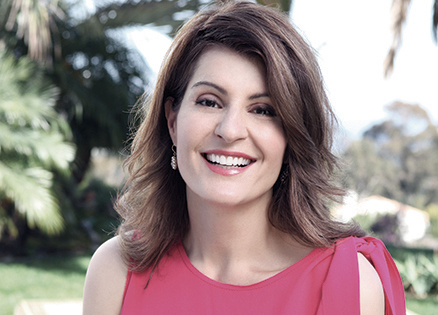
The Sign That Pointed Nia Vardalos Toward Adoption

There are signs in life. And if you’re looking, you’ll see them.

In my case, there was an actual sign, a giant billboard on Third Street and La Cienega. I must have driven past it a thousand times on my way to the supermarket or the shopping center. It was a picture of a child and the sign read, “Want to be a foster parent? Want to foster/adopt?”

No, I thought, that’s just one more path to disappointment.

ENJOYING THIS STORY? SUBSCRIBE TO GUIDEPOSTS MAGAZINE

I’m not proud of this, but I had a lot of misconceptions about American foster care. To me, foster care meant that a child would be placed with you, then taken away. I didn’t want to go through all of that.

For 10 years, my husband, Ian, and I had wanted be parents. We had tried everything. Then we looked into pri­vate adoption. We put our names on waiting lists in every state, then even in China and Greece.

But the phone never rang and the guest room—the room we hoped would one day be our child’s—stayed empty.

I don’t give up easily. I write most of the movies I act in, and if something doesn’t feel right, I rewrite the scene again and again until it works. Not this time. There didn’t seem to be any happy ending. I wondered if we’d exhausted all possibilities.

Now I can tell our daughter the whole story from start to finish, all the wonderful details, and I often do. I tell her about the phone call that came that evening, the call that changed our lives.

It was 9:00 P.M. and I was at home writing a screenplay when the phone rang. It was the social worker from the foster adoption agency, and she simply said, “You’ve been matched with a three-year-old girl.”

I was stunned. I sat down, then a minute later felt the cool floor on my forehead. I rolled over and stared at the ceiling. This was actually happening.

The social workers we’d been talking to for months were so hard-working, helpful, patient and understanding, I called them our super-pretty angels. When we met, they had promised this process would work, that I would be a mother. And here was that phone call I had been waiting for.

“When is she coming?” I asked.

“Tomorrow.”

Ian is an actor too. He was shooting then so I texted, “Call me when you’re done.”

When Ian called, I told him the news and we both laughed, then fell silent for a minute. What we’d wanted for so long was finally about to happen.

He got home and we stayed up giddily—and nervously—discuss­ing everything from where she would sleep, what groceries we would have to buy, to if she might be afraid of the dogs.

The next morning, Ian took off with a shopping list. I will never forget the sight of him driving up a few hours later surrounded by pink stuff. I could barely make out his smiling face and two hands on the steering wheel.

The car was crammed with comforters, pink pillows, a Hello Kitty blanket, pink stuffed toys, Elmo, clothes.

We brought everything into the guest room. We’d had only 14 hours notice—but we made it her room. We wondered how she’d like it.

Our daughter loves to hear the story of how we all moved into that one room. She didn’t say very much at first. We’d explain that we loved her and she was going to live with us. She was very brave. But at night she was afraid. “Help her feel safe,” our social workers advised.

So we slept in her room. Night after night Ian and I took turns holding her in our laps until she fell asleep. I look at her now, and it seems so impossible. She’s so secure. So confident. But back then, she didn’t know us, she didn’t understand what was happening.

I will always admire her bravery. She walked into our house, into her new life, and embraced it. It was only at night that she cried. Who wouldn’t? It was all so new.

During the day we did fun things, like blowing bubbles in the backyard and playing with the dogs. We bought tons of stickers and put them all over her room. It was really satisfying and a relief to watch her slowly get used to us.

Of course, we had our exhausted, sleep-deprived moments when we wondered if we’d done the right thing. Were we capable of being sudden parents to a three-year-old? Had we taken on more than we could possibly handle?

But then we’d stroke her hair and look at her beautiful face, and we’d know she was meant for us and we were meant for her. She was all we’d ever wanted.

Our social workers gave us such good advice. “Even though she’s not talking much, speak to her as if she understands,” they said.

I tell our daughter how she grew in another lady’s tummy. I explain that a man made a baby with that lady. I tell her they weren’t ready to be parents, but we were. She loves to hear the story, and tells me she’s going to have four babies and adopt four more.

Someday I’ll tell her how little I understood about foster adoption, that there are some 115,000 children in America who are in foster care and legally freed for adoption.

I was worried if you adopted a foster child, someone from the birth family could still come and take her back. I was afraid that any child in foster care might have suffered such trauma or neglect that she would be impossible to reach.

I’m not proud of these fears. But I understand now when others ask me the same questions.

What I didn’t know then is that there is no damage that has been done to a child that can’t be undone with love. I have met so many kids who have been adopted from foster care and have gone on to live fantastic, productive lives. It’s why I became the spokesperson for National Adoption Day.

Our daughter was not damaged or hurt in any way. She was simply relinquished to foster care by two people who were not ready to be parents. I admire them for giving her the chance for a better life. And I am grateful they gave my husband and me the opportunity to be parents.

Someday I’ll tell our daughter about that sign, the giant billboard that changed our lives.

I had passed it so many times. Then, one day, heading home, I looked up at it again. Foster/adopt? What did that mean, exactly? Was this one possibility we hadn’t explored?

I pulled over and called the number. I soon learned a new term: foster family agency. It’s a network of social workers who guide adopting parents through the system. This process is cost-free.

These social workers help prospective parents with the paperwork and home study so they can match you with a waiting child. They explained to me: If you want to foster a child, there are 350,000 kids who are currently in the system, and need temporary placement in a loving home.

If you want to adopt, there are an additional 115,000 children who are legally freed, available for adoption. I didn’t know this. I was surprised. And for the first time in a long time, hopeful.

The social workers were there for us at every step. Including the day we finalized the adoption of our daughter. At the family courthouse we all smiled for a photo. The look on our faces is of such joy. These loving social workers helped me realize a life goal.

I am a mom.

All because I looked up and saw that sign.

Did you enjoy this story? Subscribe to Guideposts magazine.