Embrace God's truth with our new book, The Lies that Bind

These 3 Pets Serve as Caregiving Companions

Edwina Perkins
Orlando, Florida

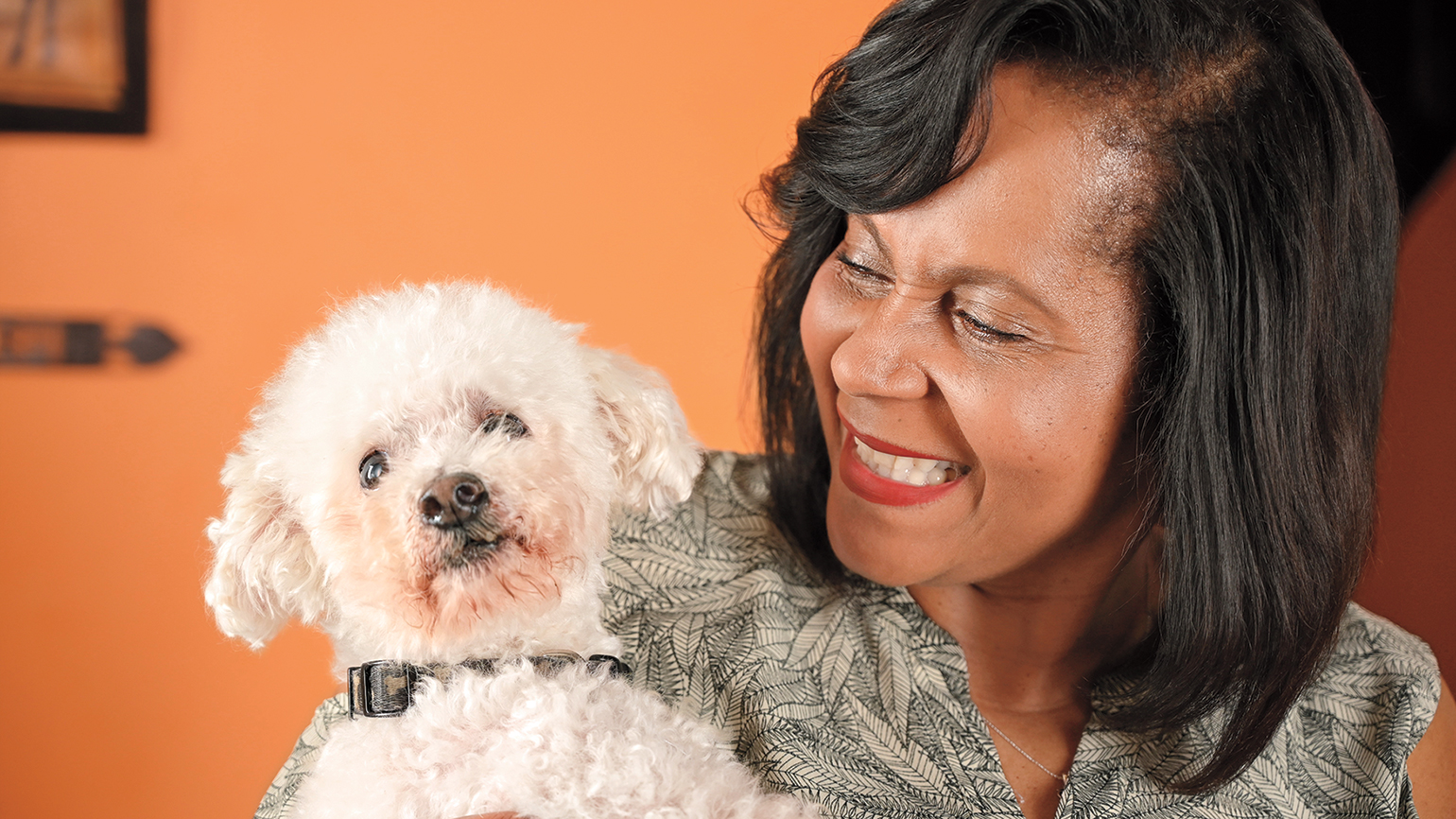
 The sound of whimpering woke me in the middle of the night. It was our 11-month-old Bichon-poodle puppy, Beethoven. He sniffed at our closed bedroom door. He had never done that before. You already went outside, I thought. What could it be now—a bad tummy?

Sugarcreek Amish Mysteries In-Article Ad 2023

I rose to take him downstairs for another bathroom break when I heard a noise in the hallway. I opened the door. My mother-in-law, Stevie, stood there, looking confused.

Mom had moved in with us a couple days earlier, and the house was still new to her. She was totally healthy except for her memory—she had dementia. We had planned to move her into a care facility in her hometown of Seattle, but she refused to go.

“I think God wants her to come live with us,” I said to my husband.

“If you’re sure,” he said. We already had four kids and a puppy in the house, but we could manage. At least I hoped we could.

Beethoven followed me as I led Mom back to her bed. Is this what you were whimpering about? I wondered.

When Beethoven cried again the next night, I opened the door and there was Mom—standing in the hallway, looking bewildered. This time, Beethoven passed me and walked to her room, as if guiding her back to safety. Mom followed.

That dog needs to leave,” she said. “I don’t sleep with animals.”

“Mom, he’s not staying,” I said as I tucked in the comforter around her.

“What’s his name again?”

“Beethoven.”

His work done, our dog trotted back to our room. This became an almost nightly routine. Same actions, same conversation.

Ever since we’d gotten him as a two-month-old, Beethoven had been my dog. He would follow me from room to room like a little shadow. But now that Mom was in the house, I noticed he paid more attention to her. The days she was most agitated, he would jump on the couch and lay his head in her lap. I’d often find her watching TV, absentmindedly rubbing his back. Other times Beethoven had only to scratch the front door and Mom would let him out.

“That dog got out again,” she would say. She never learned his name.

I’d run to the open door. “Kids, Beethoven escaped!”

Sometimes one of my kids would make a desperate leap and grab Beethoven before he reached the neighbor’s yard. Other times we gave up and he’d come home later.

I began taping notes near all the exits. First asking nicely not to let Beethoven out, then insisting, “Do not open the door.” Nothing helped. Mom had grown up with outdoor dogs. She just didn’t understand that letting Beethoven out without a leash turned into an unplanned game of catch me if you can. Several times a day he escaped and we chased.

Once, I was busy in the kitchen when I noticed Beethoven was whining loudly at the front door.

“You’re not getting out this time,” I said to him.

I turned to remind Mom not to let him out, then realized she wasn’t in her usual spot on the couch. Nor was she anywhere on the first floor. I looked out the front door. There she was, wandering around the yard.

“Mom!”

I led her back inside.

Beethoven became Stevie’s constant companion for the three years she lived with us. He always seemed to know when Mom was somewhere she was not supposed to be.

Eventually the day came that Mom needed more care than we could provide for her, and she moved back to Seattle, living in a facility near my sister-in-law. Beethoven sat at the top of the stairs by Mom’s room for many evenings after she left. But he stopped whimpering by our bedroom door. He knew that his job was done.

Not bad for that dog.
 

Donna deNobriga Winningham
Cookeville, Tennessee

I walked into the living room after a long day at work as a nurse practitioner. There was my 93-year-old mom, Eleanor, right where she always was at this hour—drinking a glass of wine on the couch. She had moved in with us after my father passed away six months earlier, and I worried that she was lonely. I was gone most of the day, and my husband, Jim—though retired—sometimes went to run errands or check on his own folks 45 minutes away. Who could she talk to?

“How was your day, Mom?” I asked, sitting down next to her. “I hope you weren’t too lonely.”

“Oh, no.” She shook her head. “I had my friend Sherlock to keep me company. He’s way more fun than Dr. Phil.”

Sherlock was my African grey parrot. I had bought him as a tiny, featherless hatchling three years earlier. Not only did he grow into a beautiful bird—with dark feathers and a bright red tail—but he was intelligent too. African greys are known as the Einsteins of the bird world, and Sherlock loved to entertain us with his uncanny renditions of Jim’s cell phone ringtone, soda cans being cracked open and even me telling our golden retriever to “hush!”

While he and Mom didn’t exactly have conversations, Sherlock often chose to perch next to her and keep her company when Jim and I were out. Sometimes Sherlock would imitate Jim’s voice.

“Hello, Eleanor,” he would say.

“Hello, Jim,” she’d say.

This would go on a few times until Mom realized it wasn’t actually Jim talking.

Mom and Sherlock took care of each other. Though Mom wasn’t able to fill Sherlock’s food and water dishes or change the newspaper on the floor of his play yard, she kept an eye out and was quick to tell Jim or me whenever any of those chores needed doing. Sherlock was her faithful companion. Together they’d bird-watch, Mom’s lifelong hobby. They would sit by the window in her bedroom and look at the birds picking at our feeders.

“We’ve been checking the feeders all afternoon,” she would say when I got home from work. “The one that holds sunflower seeds need to be refilled right away.”

So I would slip on my rubber boots and head outside to the feeders. Mom would wave from the window, Sherlock by her side.

Mom passed away last winter at the age of 94. Though my sweet parrot has never said, “I miss Eleanor,” I know he does. He still sometimes says her name.

Monica Morris
Magnolia, Illinois

It was just after Christmas, and I was visiting Mom in her rambling farmhouse outside Tiskilwa, Illinois. Punkin, the family cat, was resting on my dad’s old chair at the kitchen table. I filled the sink with soapy water for lunch dishes and checked Punkin’s bowl on the floor. Still full. He gazed up at me with luminous golden eyes.

I’m not going to eat until Bill comes back, he seemed to say.

“You might as well eat, kitty. He’s not coming home.” It broke my heart to say it out loud.

Bill was my dad. Punkin had barely eaten since Dad’s passing in November, after a bout of pneumonia. My mom and the six of us kids tried to carry on, but our grief lingered. A palpable thing.

Punkin’s too. He left Dad’s chair only to use the litter box or jump onto the kitchen table, where he would sit and stare at that chair—as if willing his best friend to appear.

“Punkin can’t go without eating,” Mom said. “He’s not young anymore.”

“Surely he’s had some food,” I said.

Mom shook her head.

We were both worried. Mom about Punkin. Me about Mom. Punkin had been Mom’s comforter during Dad’s illness, and she relied on him now that Dad was gone. Mom wouldn’t be able to cope if something happened to him. None of us would.

Punkin loved my mom. He used to perch on her shoulders, nuzzling her head, while she was reading. But he was Dad’s best friend. Dad had discovered the tiny orange kitten in the barn 17 years ago, abandoned by his mother.

There must have been something special about Punkin even then. My dad wasn’t usually a cat person. He had livestock to take care of and a farm to run. Fields to plant and harvest. Hay to bale. Cats were just what killed mice in the barn.

Yet Dad fed the kitten even before he fed the cattle. Punkin returned his devotion, following Dad to the barn for chores. He trailed behind Dad to the machine shed and waited for him to come back out after lunch. When Dad rolled down the road on his tractor, Punkin held court on the front porch with the other cats, watching for his buddy’s return.

“When he purrs, I feel myself relax,” Mom had once said to Dad.

Dad had nodded. Punkin’s ability to sense their need for comfort and company—especially as they grew older—was his best gift. Mom needed that now more than ever.

I found myself praying as I did the dishes. Please, God, let Punkin know how much we need him to be okay. Let him eat.

I drained the sink and turned to wipe down the table. Dad’s chair was empty. I looked under the table. No cat. I stared at his bowl. Some of the food was gone. He’d eaten. Finally.

I peeked into the living room. There was Punkin on Mom’s shoulder. It was the first time he’d curled up with her since Dad died. She reached up to stroke him, and he stretched out a paw to pat her cheek.

“It’s all right,” she said to him. “We’re all going to be okay.”

I smiled. If Punkin could go on without Dad, so could we.

For more inspiring stories, subscribe to Guideposts magazine.

The Rich Taste of Hope

“Which of you, if his son asks for bread, will give him a stone?” — MATTHEW 7:9 (NIV)

I tasted hope today. It had a rich, luscious flavor, soothing as the rolling hills around me. It came in the shape of gnarled apple trees and grass.

Faithful Paws and Purrs In Article Ad

Andrew and I were visiting a possible new school for our son John. This one was utterly unlike his current school. There was no asphalt basketball court, no chain-link fence, no yellow-painted cinderblock to lend false cheeriness to an otherwise dismal environment. It wasn’t the nightmare alternative we had visited the week before, filled with posters warning against guns and domestic violence. (“Things have gotten better,” the social worker there told us. “We don’t accept so many gang members anymore.”) Nor was it the sunny but overly sanitized school an hour’s drive away, where every door was locked, even the bathroom.

Here there was a pond and a swimming pool. The class size was eight students per teacher. The grounds were gorgeous. The admissions officer asked insightful questions. She had read John’s paperwork, understood his needs and thought this school could help him. My heart cried out, Yes! Yes! Accept him!

They did.

After the nightmare years of choosing among bad options, we finally had a good alternative. The city will pay for the school. A school bus will take John door to door. At last our son will be in an environment that is truly therapeutic. It may not solve all his problems, but there is tremendous joy in being able to give your child bread instead of a stone.

Father, thank You for being patient with me even when I’m not so patient with You.

The Purple Leash Project Helps People and Pets Escape Domestic Violence Together

For people who experience domestic violence, the bond with a pet can be a lifeline, bringing emotional support, companionship and even physical protection. So it’s no surprise that as many as 65 percent of domestic violence victims are unable to escape their abuser because they’re worried about their pet. Thanks to the Purple Leash Project—a partnership between the nonprofit RedRover and the pet food company Purina—fewer survivors will be faced with that impossible choice.

We talked to Nicole Forsyth, CEO and president of RedRover, and Noelle Coyne, director of shelter and housing services for Safe Voices, about how the Purple Leash Project is building safe spaces where abuse survivors and their pets can find refuge—and begin healing—together.

Rejoice in All Things in article ad

AC: How did the Purple Leash Project come about?

Nicole: At RedRover, we help people and animals in crisis. Early on, we recognized the importance of people and pets escaping domestic abuse together. We made this an area of focus, and Purina wanted to help, so the Purple Leash Project (PLP) was born. Purple represents domestic violence awareness, and the leash symbolizes the unbreakable bond we have with our pets. The project provides funding, labor and other assistance to help make domestic violence shelters pet-friendly across the United States.

PLP is an extension of RedRover’s Safe Housing program, which aims for 25 percent of U.S. domestic violence shelters to be pet-friendly by 2025. Since 2012, RedRover has awarded 125 grants totaling more than $1.2 million to such shelters across the country.

AC: In 2019, Safe Voices became Maine’s first pet-friendly domestic violence shelter. Why did you want to work with PLP?

Noelle Coyne
  Noelle Coyne

Noelle: Those fleeing domestic violence need an immediate and confidential place to go because there are people out there trying to hurt them. Abusers will go after whomever is vulnerable, including pets and children, in their efforts to manipulate, dominate and control. We are currently the only place in the state where a family can go to with their pet. PLP created a life-changing, and potentially lifesaving, experience for our residents.

AC: Tell us about the pet-friendly renovations at Safe Voices.

Noelle: Once a customized plan was in place, a nationwide team of volunteers from RedRover, Purina and GreaterGood.org got to work. Over a three-week period, pet-friendly flooring was installed in four of the shelter’s seven bedrooms, where pets stay with their owners. (The other three bedrooms are reserved for people who require or desire pet-free accommodations.)

Volunteers installed bamboo fencing around the yard so dogs can roam freely. They also added a dog-washing station and a clean-up station to make it easy for residents to pick up after their pets. Basement space was converted to kennels with doggie doors that provide direct access to a safe outdoor area. The dogs are taken to the kennels when their owners are working, at school or away for an extended period. From raised dog beds to cute bridges and canopies where cats can climb and nap, PLP made our shelter welcoming for pets, because leaving their home is traumatic for them too.

Nicole: RedRover begins the renovation process with a thorough on-site consultation. We spend a lot of time discussing and walking shelter staff through different scenarios.

PLP also donates pet food and supplies to grant recipients and offers guidance on policy changes if needed. In some cases, like Safe Voices, we work with the local Humane Society to ensure that all resident animals are up to date on vaccinations.

AC: How many U.S. shelters are pet-friendly?

Nicole: When PLP was launched in 2019, only about 10 percent of domestic violence shelters in the United States allowed pets. Thanks largely to PLP grants and volunteers, that number rose to 17 percent in 2020.

Nicole Forsyth,
Nicole Forsyth

AC: What if a shelter can’t accommodate pets because of landlord or zoning restrictions?

Nicole: RedRover’s Safe Housing program provides funding to create a separate designated area at local animal shelters for temporary housing of pets belonging to domestic violence survivors.

There are times, too, when a victim suffers such severe anxiety or depression that she is unable to properly care for a pet. In these cases, RedRover’s Safe Escape program helps domestic violence survivors pay to temporarily board their pets.

AC: Tell us about RedRover’s larger mission to help animals in crisis.

Nicole: We’re kind of like the American Red Cross for animals. We go to areas affected by natural disasters and help rescue and shelter animals until they can be reunited with their owners. We have a network of more than 4,000 trained volunteers across North America who are prepared to respond to disasters at a moment’s notice. These same volunteers often provide free labor for pet-friendly shelter renovations. We also offer financial assistance to owners who can’t afford to pay a pet’s emergency medical expenses. There’s been a big need for this due to Covid.

AC: What are some of the survivors’ stories that stay with you?

Nicole: I remember hearing the story of a survivor who was so controlled by her abuser that she had lost perspective on her own worth. But one day as she was being attacked, she watched her two small dogs hiding under the bed shaking, and she could see her fear reflected in their eyes. That empowered her to leave.

Noelle: One survivor was able to escape with her two dogs, who had truly saved her life on more than one occasion. One of the dogs had been injured trying to protect her. She lived in her car for a solid month with these two large dogs until she discovered Safe Voices.

There was another survivor who initially arrived at Safe Voices without her dog while renovations were underway at the shelter. Those first few weeks, she was really struggling. But once she was able to bring her dog in, she opened up and started mingling. Today she gives back to other survivors. Things really changed when her dog was able to come to the shelter.

AC: What impact do you see in shelters that PLP has made pet-friendly?

Noelle: Over the years, we’ve sheltered folks with service animals or therapy animals and you could see the difference they make. Pets bring a comforting, calming presence—not just to their owners, but also to all the residents.

Nicole: The shelters tell us that residents are more open in therapy when pets are around, and the shelter feels more like home to kids. Pets help you believe that you are lovable.

Go to SafePlaceforPets.org to find a pet-friendly domestic violence shelter in your area.

Did you enjoy this story? Subscribe to All Creatures magazine.

The Power of Words

We had just experienced a wonderful service at Eagle Mountain International Church in Fort Worth, Texas, about the power of our words, and as we loaded the girls into our SUV, they were already fussing at each other.

I tried to ignore their bickering, still replaying Pastor George’s message in my head and heart. We hadn’t taken the girls to children’s service that morning, electing to let them stay in “big service” with us. I thought they had just been coloring and playing dolls during church, but I soon discovered they had actually been listening.

A Journey of Faith In Article Ad - Avail Now

“You’re a stupid head,” 6-year-old Abby said to her little sister. “Ally is a stupid head. Ally is a stupid head.”

Just as I was about to intervene, Ally blurted out: “Mom, Abby is making bad confessions over me.”

Jeff and I both tried to choke back laughter at the very accurate comment. Our little 4-year-old understood the power of words that day, and she didn’t want her big sister saying anything negative about her. Apparently, Pastor George’s message had made an impact on little Allyson, as well.

Proverbs 18:21 says the tongue holds the power of life and death. The Scriptures also say that the tongue, though it is a small part of the human body, can make great boasts and cause immense damage. If you’ve ever been on the receiving end of hurtful words, you know the truth of that.

“Words both challenge and change us. Words deeply affect us. An unruly and unkind tongue can wound us,” explains Paul Davis, minister and author of Breakthrough for a Broken Heart. “That being said, anything spoken to you contrary to the Word of God can be discarded as you renew your mind according to Scripture.”

That’s what I’ve had to do when hurtful words have been said to me, and that’s what you’ll have to do if you’re stinging from cutting comments.

We need to learn to combat negative words with God’s Word. If someone says, “You are a loser. You will never amount to anything,” don’t think on those untruths. Instead, remind yourself what God says about you. He says, “You are the head and not the tail. You are an overcomer! You can do all things through Christ who gives you strength.”

Others’ words can deeply affect us, but our words can also deeply affect others. What are you saying to your family, friends, coworkers and acquaintances? Do you build up with your words, or do you tear down?

Taming the tongue begins with controlling your emotions and allowing God to fill you up with his love because our words essentially are an overflow of what lives in our hearts. If your heart is full of love, peace, joy, contentment, grace and self-control, then your mouth will be full of the same.

Practice building up the people in your life this week. Here are a few phrases to get you started:

  • You make my life happier just by being in it.
  • I love you, and I believe in you.
  • You have special qualities that no one else has.
  • You can do it!
  • You are a gift from God!
  • I am so thankful for you.
  • You are a bright spot in my life.

Take every opportunity to use your words to encourage and uplift the people you encounter each day, and don’t think it’s OK to say ugly things to others. It’s never OK, and to quote Abby, that makes you “a stupid head.” Don’t be “a stupid head” ; be an encourager instead!

The Power of Surrendering

When I think of things military, a lot of descriptive words and phrases come to mind—courage, discipline, honor and victory. But not so much the word, “surrender.” But I’ve come to learn that surrendering is an important part of being in the military—and being a part of a military family. Here’s how:

1.  Surrender One’s Will
To be an effective part of a military unit, each soldier must surrender his own will to that of his commander. It’s only when an army works together that they can accomplish the things they’ve be recruited to do.

Faithful Paws and Purrs In Article Ad

A military family is also at war. We fight fear, challenges, and the stress of having a loved one in a difficult life situation. When we surrender—accept our circumstances and have faith in God’s ability to keep us safe—we become an effective part God’s purpose.

Please Donate to Guideposts Military Outreach

2.  Surrender to a Larger Purpose
The men and women in our military have committed to service beyond their own comfort and decisions. They go where they are told and perform the job they’ve committed to do. This isn’t easy, but their ultimate service and sacrifice are what keep our country safe.

As military families look beyond our own hardships, we can be used by God to affect not just our loved ones but also others who are also struggling.

3.  Surrender to God’s Peace
By serving with our military, the service men and women are part of the organization that brings peace. They keep us free from attack, and they serve here at home, keeping us safe during natural disasters.

Yes, military families live under the imminent possibility of what our loved ones are facing. But when we acknowledge that God is more than able to take care of them, we are surrendering to His authority. That is what brings peace, no matter the circumstances that surround us.

Yes, surrender is an odd trait for a healthy military family. But when we learn the power behind surrender, we find ultimate peace from the only One able to guarantee it. 

The Power of Choices

I have Olivia’s crib still up in her bedroom. Considering she is only 18 months old, that may not seem so strange. But Olivia hasn’t slept in her crib for nine months.

When Olivia learned to stand up, her perfect sleeping habits instantly stopped. And in my sleep deprived state, I decided to join the ranks of co-sleepers. (My twin sister Susan has co-slept with both of her kids.) I put a mattress on the floor in her room and slept with her there.

extraordinary women of the bible

Blissfully, we have co-slept for the past nine months. But the only problem with co-sleeping is that I need her to fall deeply asleep before I can leave her. (As much as I would love to go to sleep at 8:30 p.m., that isn’t an option in my life!)

Bedtime can be a wrestling match, with her sitting up and insisting, “All done” or “Go…go…” and grabbing my finger in an attempt to persuade me to give up and take her downstairs to play.

Enter the crib and the power of choices.

When my older son was a toddler, my sister Susan found the book, Love and Logic Magic for Early Childhood: Practical Parenting from Birth to Six Years by Jim Fay and Charles Fay, and it revolutionized my parenting.

Giving children choices empowers them—and most often ends arguments and whining. (Try it; it is magic!)

So Susan and I both make sure our kids’ days are full of choices, allowing them to have a sense of control over their lives. “Do you want two pieces of broccoli or three?” (Note that no broccoli is not an option.) “Do you want to have a bath or a shower?” “Do you want to go to bed now or in ten minutes?”

And at bedtime, when Olivia sits up, refusing to go to sleep, I calmly point to the crib and say, “Do you want to sleep in your crib?”

“No!” she admits and flops her head down on the pillow.

Then she always tries again, sitting up she says, “All done.”

I reply, “It is sleepy time. Where do you want to sleep, crib or bed?”

“BED!” and she drops her head to her pillow, snuggles up to me. End of discussion.

Oh, the power of a simple choice. It’s magic.

So, the crib? It isn’t going anywhere just yet.
 

The Powerful Stories That Bring Us Together

Even on these cold January days, my golden retriever Gracie and I bundle up—or at least I do—and find a trail that isn’t too deep in snow or too icy to get a good strong hike in. We do it for the exercise certainly. We’ve lost a combined 47 pounds these 10 pandemic months on these trails, as I think I’ve mentioned. It’s more than exercise, though. I do my best thinking out in the woods (I can’t speak for Gracie). 

Today I got in a lot of thinking. It could have been the windless silence, or the low winter sun glancing off the fresh snow. In the wake of the shocking violence in Washington, I thought about Guideposts magazine and how, at Guideposts, we believe that everything is possible with faith, hope and prayer, even overcoming the profound and historic challenges of a deeply divided nation. 

Faithful Paws and Purrs In Article Ad

Guideposts has never been about politics. We don’t do controversy. There are plenty of places where folks can find that, maybe too many. Guideposts tells stories of hope and inspiration that relate to our readers’ everyday lives, what we’ve done for more than 75 years and what I’ve done in one role or another for 35. 
Even in these past few difficult years, our differences seemingly insurmountable, our readers have shared stories that inspire and uplift, that celebrate a diversity of views. You might remember an article co-authored by a pastor and an imam, whose congregations shared a parking lot, and how they came to learn about and respect each other’s devotion to faith; or another where an environmentalist and a logging executive discover that they have more in common than not. 

In our February issue, we feature a cover story by the pastor of a diverse church. He describes how his congregation deals with social justice and the Black Lives Matter movement, even though they don’t all agree on these issues. They do not necessarily seek to change each other’s mind but to honor their shared humanity and reach common ground. 

These stories are not about agreeing to disagree. That would risk trivializing the problems we face. We called our February story Our Common Ground. We are seeking more uplifting pieces from people overcoming differences within their churches, their neighborhoods and even their families.

We hope to help bring people together, to love more and hate less, as we have since Dr. Peale and his wife, Ruth, founded the magazine. So please let me know what you think at egrinnan@guideposts.org.

The Pet Finder’s Success Story

You’ve heard of Petfinder.com—a website that helps shelters and rescue groups find loving homes for animals?

Maybe you even found your own pet through the site—we’ve facilitated more than 13 million adoptions.

Sugarcreek Amish Mysteries In-Article Ad 2023

But did you know Petfinder started as an inspiration that came out of the blue on the way to a New Year’s dinner?

As a kid I’d volunteered with a rescue group, but as an adult, I’d turned to a career in natural resources. Until that night, I had no idea I was about to get involved in pet adoption again.

Back in 1995 Google wasn’t a verb and Facebook didn’t exist. The world wide web was more of a wild world.

My husband, Jared, and I weren’t dot-commers. He was beginning his medical residency and I worked for New Jersey’s urban forestry. But we were intrigued by the sense that anything was possible on the web. We just didn’t think it was being used effectively.

The question was, what would benefit from its fantastic search capabilities? That’s what we were discussing in the car that night on the way to meet friends for dinner. The site we were dreaming of would be searchable, sortable and colorful.

We tossed around ideas. Maybe real estate listings? But that didn’t seem right. If we were going to try to use some of this new digital power, it should be worthwhile. “The ultimate website would harness technology for a socially responsible cause,” Jared said.

I nodded. We fell silent. What cause needed our help? Then we both said, in unison, “What about animal shelters?”

I got goose bumps when I thought of all the lives we could save. What were the chances the same inspiration would strike us at the same instant?

Sure, we loved animals and I’d “rescued” them when I was a kid (like the snake I found in the backyard and convinced my parents to let me keep), but now my focus was on planting trees and building green spaces in cities and Jared’s was on healing the sick. We didn’t even have a pet. Yet I knew every year, millions of abandoned pets—healthy, loving animals who wanted only for a home—were killed.

We couldn’t wait to tell our friends our idea. They volunteered to help.

Jared and I worked on Petfinder.com—that’s what we named it—whenever we weren’t at our jobs. He did the programming and I designed the site. Our friends helped spread the word to shelters.

Animal-welfare groups are usually strapped for funds, so we wanted the site to be free to them and to potential adopters. That meant all expenses came out of our pocket. But we knew if we saved just one life a month, it would be worth it.

We launched the site with 13 shelters. I entered all the data because most shelter folks didn’t have access to the internet.

It was odd for the Petfinder creators to be without a pet, but that didn’t last long.

One morning a few months after we launched, I was on my way to work, walking to the train station, when I had my purse snatched—by a dog. Off he ran. I followed and retrieved it—and him, using my purse as a leash (he wouldn’t let go). The dog seemed to be on his own, so I called Jared. He picked us up.

This was our first chance to use our site ourselves. We checked with shelters to see if anyone was looking for him. Then we posted him on Petfinder, named him Max and prepared to interview prospective adopters.

We discovered how effective Petfinder was. Soon we heard from several interested people. But none seemed right.

“I’ll take him,” one man said. “He’s used to living outside. Perfect for guarding my junkyard.” Used to living outside? I don’t think so. That’s when I realized we’d already found Max a home—ours!

In those early days, my biggest struggle was hearing heartbreaking stories about abused or abandoned animals. The pup who was left tied to a lamp post in a thunderstorm. The dog who almost ran into traffic trying to escape some mean kids throwing rocks at him.

Because of his physician’s training, Jared was able to keep his emotions somewhat apart from the work. But me, I’d go from outrage to sorrow to helplessness as I put up dogs’ photos on our website. Could our efforts make a difference when there were so many animals in desperate need?

Then a few months into our project, something changed. Somehow my perspective shifted. I started to see the hopeful side of those sad stories, like the woman who chased off the mean kids and coaxed the dog into her car, or the vet who stayed after hours to patch up a street cat who’d been injured, or the family who adopted an abused dog and lovingly taught her to trust again.

Or the wonderful community in Bowling Green, Kentucky, that helped a stray dog with a broken jaw. A police officer carried him off the street to the humane society, which posted him on Petfinder. A veterinary dentist donated his services. A woman in another state saw the Petfinder posting and knew her friend in Ohio would be the perfect owner. Once the adoption was arranged, a chain of volunteer drivers took the dog to his new home.

Finding the heroes in those situations—and there always are—was empowering. It reminded me that no matter how small, every action a person takes to help one of God’s creatures has an impact. And that when we put together all the pieces each of us works on, we can make a big difference.

There was one thing, though, about Petfinder I didn’t understand—the idea that you could see an animal’s picture and know you were meant to be together.

“It was love at first sight!” I kept hearing from happy new pet owners, like the couple who drove from Florida to Michigan to adopt a black cat they saw on our site. I assumed Petfinder would be like the Yellow Pages, but you’d still need to meet your new pet to fall in love.

That is, until about a year after we started Petfinder. I was going through some incoming adoption lists when a photo of a big, spotted mutt named Kobie made me stop short. I couldn’t turn away from his face looking out from behind the bars of a crate in a shelter in Harlem.

He was a year old, but he had the eyes of an old soul. I know you, I thought. I called the shelter. Kobie was scheduled to be euthanized at five o’clock that day. I’d never make it there in time.

The woman at the shelter proposed a deal: “I’ll put Kobie in my Jeep and meet you halfway…but you have to take two other dogs that are going to be euthanized today.”

What am I getting myself into? But it was too late. I’d made up my mind the second I saw Kobie’s photo. Jared wasn’t so sure, but we drove to the halfway point and piled the dogs into the car.

Friends fostered the other two, and it didn’t take long for Kobie to become a part of our family.

Two years later our site went nation­al. I left forestry to devote myself to it full-time. Today, more than 12,500 animal welfare groups post animals on Petfinder; 65 percent of animal adoptions in the U.S. come through the site, includ­ing most of the animals on my farm in North Carolina.

Max and Kobie have passed on, but I live with three horses, seven chickens, a guinea hen, two goats, a sheep, two guinea pigs, two cats and a dog.

Helping animals find homes isn’t always easy, but it’s what I was meant to do. Every day I’m reminded we’re all connected in ways beyond our imagining.

Maybe it goes back to what first struck me about the web, that anything is possible. I hear so many stories like Max and Kobie’s, and well, with over two million adoptions a year…let’s just say I get a lot of goose bumps.

The Perfect Recipe: Faith, Family and Food

I’m a chef and I run seven restaurants, all but one here in my native New Orleans. I spend most of my waking hours—morning to midnight—in the kitchen. You’d think I couldn’t wait till Sunday, my one day off.

You’d be right, but it’s not because I take a break from cooking.

Light for Life NASB Study Bible in Article

Actually, Sunday is my favorite day in the kitchen. It’s the day I cook for my family—my wife, Jenifer, and our four boys, Brendan, Jack, Luke and Drew—and whoever else drops by.

First comes breakfast, something simple and sweet, like beignets or cinnamon buns, before we’re off to church. Afterward, we’ll stop at the grocery for whatever we forgot.

Then it’s home to start supper. Weeknights I’m at work and I rarely have the chance to be the typical dad spending the evening with his kids, so I relish Sunday suppers. I get to hang out with my boys, sharing what I love with them.

On Sundays I cook in a totally different way than in my restaurants. There’s no rush to plate meals. I can take my time and cook from the heart, inspired by the kind of food I grew up with, my grandmother Grace’s Southern classics.

Even now, I can close my eyes and go right back to Grace’s kitchen, to the scents and sounds of her making breakfast.

I can smell buttery biscuits in the oven, strong dark coffee with chicory in a French drip on the burner, a cast-iron skillet of rendered bacon fat. I can hear the snap and crackle of eggs cooking in the hot fat, the clank of metal against glass when she opened a jar of scuppernong preserves.

“Good morning, John, angel,” she’d say. “What can I get you for breakfast?”

I’ve never forgotten those happy times I spent at my grandmother’s table. I promised myself that when Jenifer and I had children, I’d cook for them just as Grace cooked for me. And that’s what I do on Sunday.

The centerpiece of our Sunday menu is always a roast of some kind (Jen uses the leftovers to make easy, healthy school-night suppers). The sides are family favorites like garlicky string beans, sweet corn pudding and Provençal stuffed tomatoes.

Dessert is simple and delicious, a cake or pie using whatever fruit’s in season.

I like to give each of the boys a task. Brendan’s a teenager, which means he specializes in eating. He’s also got a precise mentality so I can rely on him to dice onions, carrots and celery properly. Jack, 10, and Luke, nine, like to get their hands dirty kneading pie dough and pressing the bread-crumb-and-herb stuffing into those tomatoes. Drew, seven, is determined to keep up with his brothers.

When Jack claimed he was the first to bake a cake, Drew went and mastered a cobbler, which he insists on calling a cake. He’ll run into the kitchen, lips stained purple, with a bowl full of blueberries just picked from our bushes, asking, “Daddy, you gonna bake a cake with me and my berries?”

I’m usually at the stove stirring a sauce or cooking the vegetables. When I look over my shoulder at my boys, each intent on his task, I feel this indescribable joy of everything being right with the world.

It’s the same joy I feel sitting down to Sunday supper with my family and any friends who’ve dropped by. We might have 20 to 40 guests on any given Sunday, which works out fine since I always cook extra.

The tradition of the Sunday feast accomplishes so much more than feeding us. It nourishes our souls. Sunday is the day we slow down and get away from distractions like shopping, video games and TV and connect with one another.

Well, except if the New Orleans Saints are playing. On game days, we’ll still eat together—at halftime. It helps if dem Saints are winning. But even when they don’t, Sundays are still saintly.

Try John’s delicious and easy-to-prepare recipe for Provençal Stuffed Tomatoes.

Download your FREE ebook, True Inspirational Stories: 9 Real Life Stories of Hope & Faith.

The One Who Never Grows Weary

There are just a few minutes to sit in the sun. We had an early morning soccer game and then a run into town for baseball cleats. In an hour, we have a Scouts gathering. But for now, it is still. Lonny and I find deck chairs that are hiding in the shade. We pull them to the patio. I tilt my face toward the rays of spring and close my eyes as the younger boys play in the yard.

I’m at rest.

GP In Article Desktop

Until Rugby nudges my knee.

He has his football in his mouth and he’s looking at me with remember-me-mama eyes. I scratch his ears and hope this will be enough. But the pup has something else in mind. He wants to play.

He drops the football at my feet and sits. He cocks his head. I’m a softie for a little blond guy–puppy or boy. The time of rest is over. I take Rugby’s football and head for the lawn.

But as I go, I have a thought.

Isn’t it wonderful that the Lord never tires?

To think about it is almost more than I can understand. We, in humanity, wear skin. For now, we exist in physical bodies that wear and spend and grow weary. I remember how when the kids were younger, getting the boys to bed at the end of the day was a major feat. Baths. Teeth. Book. Bible. Prayers. The tuck-in part of the day, precious as it was, spent the last of the strength I had.

Now that they’re a bit older, it seems that we move faster still. Tiredness is a fact of life.

READ MORE: GOODNESS IN THE RAIN

Yet He, our Father, never lacks strength.

Do you not know?

Have you not heard?

The LORD is the everlasting God, the Creator of the ends of the earth. He will not grow tired or weary, and His understanding no one can fathom. (Isaiah 40:28)

This truth is sweet comfort to my soul. He’s always present, always powerful, reaching into my life with loving hands. He doesn’t break. His attention doesn’t fade or divert.

He doesn’t grow weary.

I throw the football, and Rugby tears across the lawn in a golden puppy streak. A moment later he returns, his partially collapsed football clenched in his teeth.

He drops it by my side, and I throw it again.

Rest time is over, but I’m energized and renewed by thoughts of our never-tiring Lord.

The Mysterious Ways of Love and Death

In our December/January issue of Mysterious Ways, our associate editor Diana Aydin explores the mystery of long time couples who, at the end of their lives, die within moments of one another. These deaths are natural, but often unexpected, and they tend to happen more often than the odds of random chance suggest they should. The heart, Diana discovered—through her interviews with experts such as Dr. Mimi Guarneri—posessess a power over the human body beyond merely pumping blood. Its response to losing one’s soul mate can literally cause the heart to break.

Last week, all-around good guy and former NFL quarterback Doug Flutie witnessed this phenomenon firsthand. In a post on Facebook, he announced the sad news that he’d lost his parents, Dick and Joan, on the same day.

Pause & Pray In Article Ad

The Fluties were a team throughout their 56 years together, and when it came time for the end, nothing could separate them, even death. One of my favorite writers, Kurt Vonnegut coined a word for this kind of connection between two people—a duprass.

In his apocalyptic novel, Cat’s Cradle, he writes of one couple, “They were lovebirds. They entertained each other endlessly with little gifts: sights worth seeing out the plane window, amusing or instructive bits from things they read, random recollections of times gone by.” Members of a duprass, he writes, “always die within a week of each other.” In the case of his characters, they die within the same second.

Certainly, faith tells us that in the next life, our lost loved ones will be waiting for us, no matter how long we take. A deep love between two people doesn’t mean one can’t outlive the other, and many surviving spouses find their remaining years, even decades, filled with the joy of grandchildren, new experiences, unexpected wonders.

But perhaps someone knows when two people truly can’t live apart. When a couple is so entwined, their purposes so aligned, a merciful hand may reach from beyond to spare one from a life without the other.

Pick up the December/January issue and give Diana’s story a read. Let us know what you think. Is this phenomenon simply coincidence, or the result of stress? Or is there a force that knows us better than we know ourselves… and knows whether or not we have more living yet to do?

As always, share your stories with us.