Embrace God's truth with our new book, The Lies that Bind

The Inspiration Behind ‘The Art of Racing in the Rain’

There is something about the dog Enzo in the book The Art of Racing in the Rain, that makes us think. After all, Enzo is a philosophical dog. He is loyal, sensitive and he desperately wants to figure out the world around him. And although we meet Enzo on his last day on earth—as a dog, at least—bestselling author Garth Stein illuminates something about love and loss that is at the very core of our bond with animals.

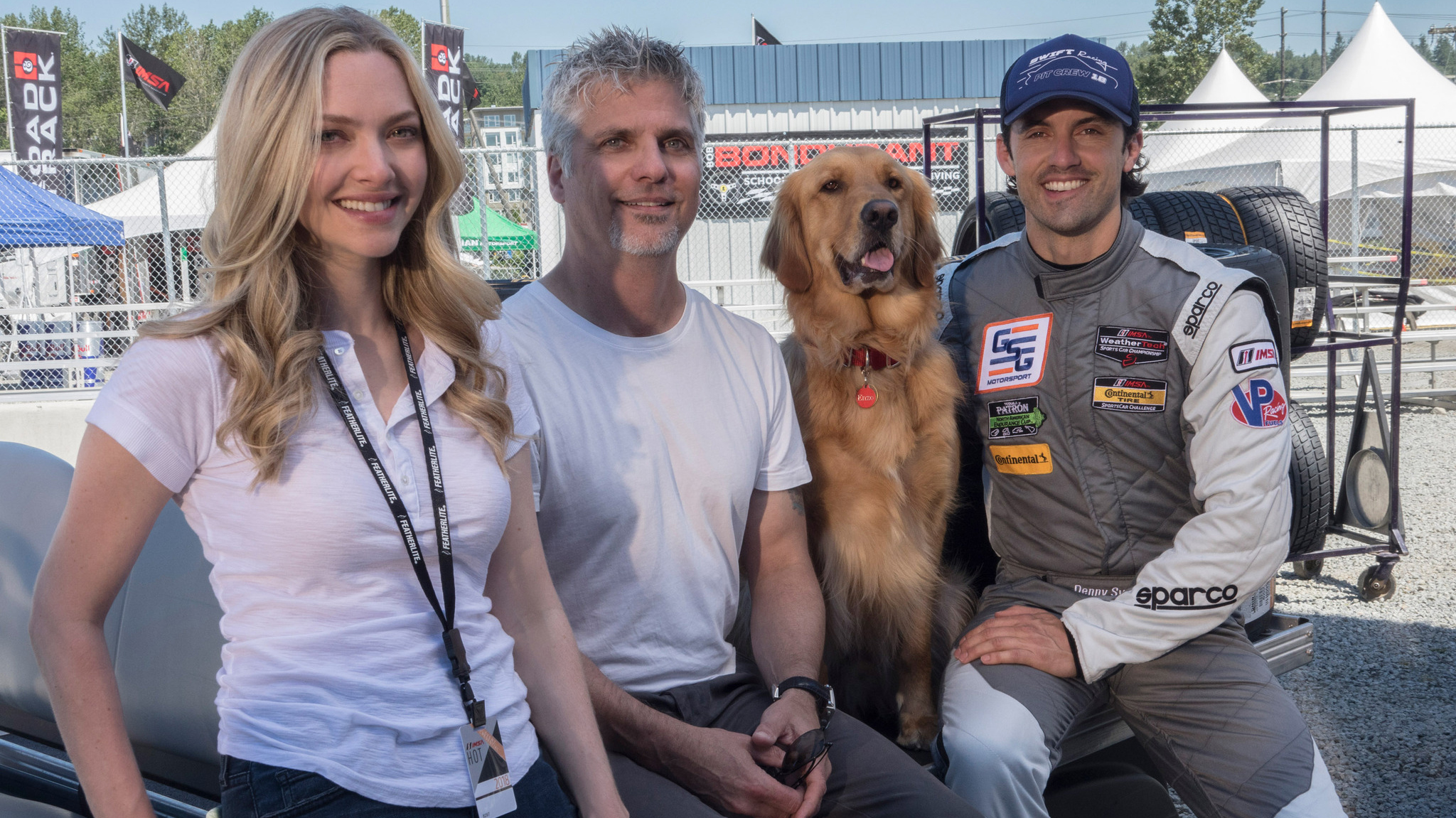
Stein’s novel was adapted into a movie starring Milo Ventimiglia as Denny, a race car driver who adopts a very special pup named Enzo (voiced by Kevin Costner). The movie follows Denny and Enzo as Denny falls in love, becomes a father and struggles to hold his family and career together in the wake of devastating loss. 

Pause & Pray In Article Ad

I spoke with Garth about his lifelong love of dogs and what it was like to see his book transformed into a movie. 

Peggy Frezon: Have you always been an animal lover?

Garth Stein: Yes, I’m primarily a dog person. I’m not one who has a whole house full of dogs. Usually we have one dog at a time.

PF: Did you grow up with a dog? And do you have a dog now?

GS: The book is dedicated to my childhood dog, Muggs, an Airedale who was influential in my upbringing. We recently lost our labradoodle, Comet. Right now the only animal in our home is a bearded dragon.

PF: How did the story for The Art of Racing in the Rain come about?

GS: It didn’t come about from any one place. One of the inspirations for the book came when I saw a documentary film called State of Dogs which was set in Mongolia. Their belief was that the next incarnation for a dog would be as a person. I thought that was interesting, how could I use that? But I didn’t know exactly how I could work it into a story. Years later I heard [poet] Billy Collins read a poem, The Revenant, he had written from a dog’s point of view. And I thought, that’s how I could write this story, from a dog’s point of view. And gradually it all came together.

PF: I’m a big fan of your book and I love the movie. What was it like to have your book turned into a movie?

GS: Kind of cool, you know! There’s something fun about Hollywood. Of course, it’s an adaptation, and with an adaptation everything isn’t going to be exactly the same. You’ve got a 360 page book and a 93 minute movie—something [was] going to change. I think Simon Curtis, the director, made great choices. My concern was that they get the heart of the book right, and I think they did get the heart of the book right. Also, for a guy like me who basically spends his time alone in front of his computer, it’s cool to get out on the set. I saw Kevin Costner [the voice of Enzo] standing there and he’s such a big name in the movie industry that even other actors are afraid to talk to him! But I thought, what the heck, I’m a writer, I’ll go talk to him. And I did, and he was as nice as you could imagine.

PF: What is it about Enzo that draws us all in?

GS: Enzo’s voice is so earnest. He’s trying to figure things out, just like we all are trying to figure things out in life, right? He’s dedicated to his version of the truth, even if he doesn’t get everything right.

PF: Who played Enzo in the movie?

GS: In the book, Enzo was a mixed breed. I did that on purpose because I knew that people would want to populate the book with their own dogs. For the movie, because things had to move fast, they used an already-trained golden retriever. Parker was the main dog, he’s two years old. He was great, he had some great looks, and nods of his head. Butler played the older, more mature Enzo. And Orbit was the barking dog—Parker didn’t like to bark. 

PF: My husband and I rescue senior dogs, so we’ve developed a sensibility about losing them—it only hurts so much, because it’s so good while we were together. What do you say to people who don’t want to read a book, or see a movie, where the dog dies in the end?

GS: I constructed the book deliberately to address that issue. In the first chapter, we know that the dog is going to die. We’re prepared for that. We have this unconditional love for dogs and it’s so good, yet we know that life has highs and lows. To appreciate laughter, you have to shed a few tears. We know it’s going to be hard in the end. Having a bond with a dog is wonderful, and we’re willing to pay for that with a little bit of grief.

The Art of Racing in the Rain is available now on Digital, Blu-ray and DVD.

The Incredible Power of Simply Being Present for a Friend

There are times in life when we don’t have the energy or faith to get through our problems. We can’t find the words to pray or the strength to push ahead. That’s when our friends carry us. When we are voiceless, they become our voice. When we are weak, they become our strength. When we are down, they lift us up.

Friends remind us through their actions that we are not alone—they stand with, pray and comfort us. Even when some friends don’t always know how best to help, they want to be there for us.

You Got This In Article Ad

Author Parker J. Palmer in his book, Let Your Life Speak, shares about the time he was batting depression. He recalls that some people who visited him tried to cheer him up. “It’s a beautiful day. Why don’t you go out and soak up some sunshine and look at the flowers?” Although he understood their intention, it made him more depressed. Others reminded him that he was a teacher and writer who had helped so many people. “Try to remember all the good you’ve done and surely you’ll feel better.” That advice, too, left him depressed.

Then there were those who had the courage to stand with him in simple and healing ways. One was a guy named Bill who asked Parker’s permission to drop by his house in the afternoons. Bill would sit Parker in the chair, kneel in front of him, remove his shoes and socks and for a half an hour, massage his feet. Bill had found the only place in Parker’s body where he could still experience feelings and reconnect with the human race. Bill would simply do this and say very little. When he talked, he would not give advice but mirror Parker’s feelings. This simple act of care was what helped Parker get through his dark time.

We are thankful for the friends God sends our way, who sit with us in uncomplicated and healing ways. And we are thankful for the opportunity to be that friend, to offer our presence to those who are hurting, sick, battling depression, grieving and more. May the pathways of love, patience and kindness lead us to friends who are suffering. And once there, even if we are unsure of what to do, we can simply pray. And be present.

The Incredible Bond She Formed with an Unexpected Pet

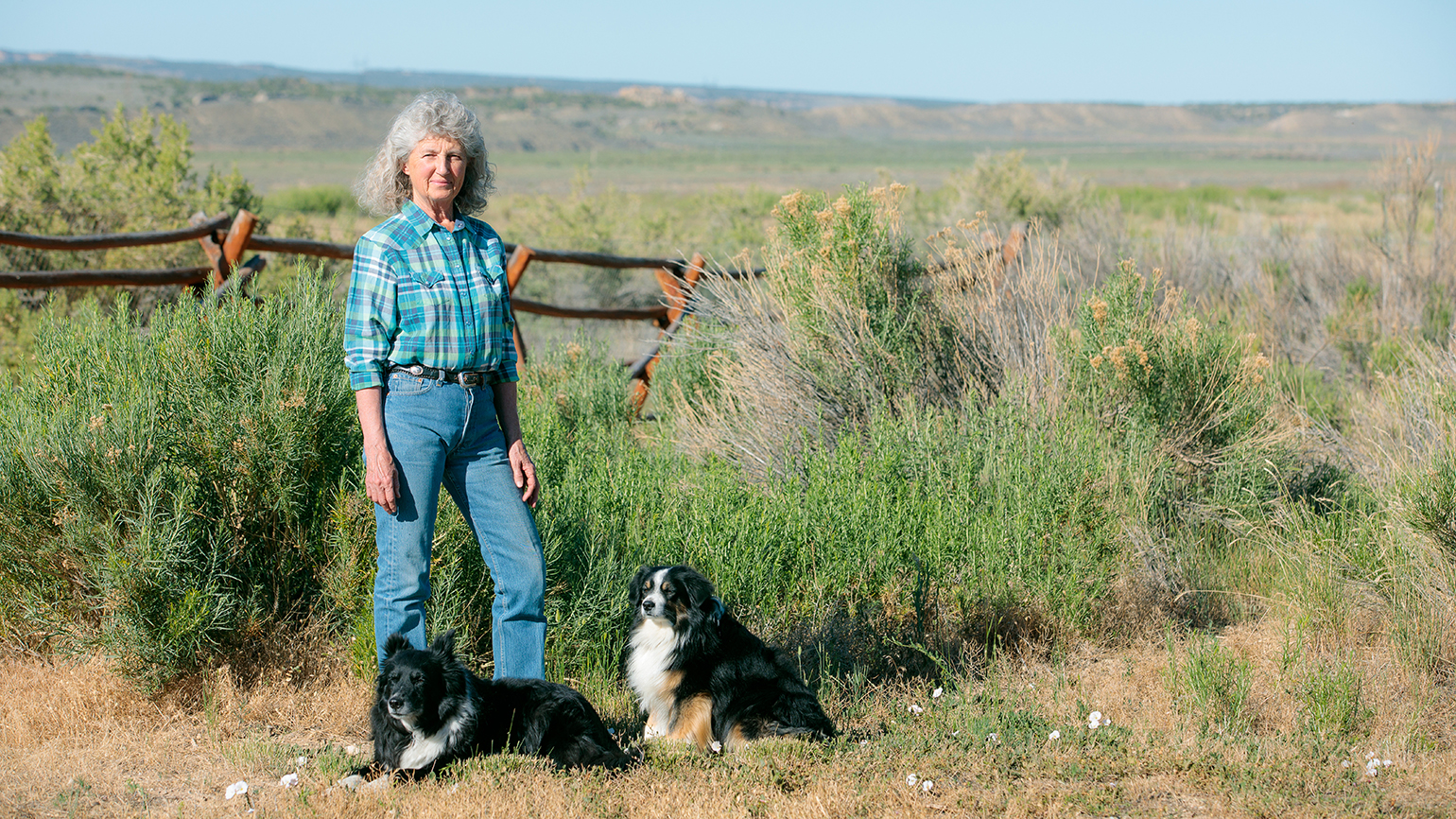
‘‘I’m too old for a puppy,” I told my friend Julie. Her beautiful border collie–miniature Australian shepherd was pregnant and she’d offered me one of the pups. But I wasn’t going there. No way.

She looked at me, surprised. “I just thought that with you losing your old dog…and you said Tuck is lonely.”

Pray a Day Vol 2 In Article Ad

I opened the door to my 4Runner, signaling my border collie, Tuck, to load. “I might consider an older dog sometime in the future. But no puppy. I’m serious.”

Julie waved goodbye as I drove down the dusty road that led from her place. The truth was, Tuck wasn’t the only one in need of company. In the northwest Colorado high desert where I live, there are more elk and deer than people. My family lived hundreds of miles away. Sometimes the days felt monotonous and I worried about growing older out here alone. When Julie and her husband rented a place nearby, it felt like an answered prayer.

Like me, Julie was a hiker, and soon we were bumping down dirt trails into the foothills. We brought our dogs with us and became fast friends. One day we’d come across a shed elk antler. Julie was thrilled.

“How many of these are around?” she asked.

“This time of the year you can find a bunch of them if you have the time to look,” I said, explaining that elk shed their antlers every spring. “There are people who will pay good money for them too.” Soon we were going out every day with our dogs, talking while we searched for sheds. I’d told her about losing my older dog, Keeper, and how much she’d meant to me. That’s when Julie told me she was “expecting” puppies and wanted me to have one.

I knew the joy of owning a puppy. I’d been around dogs all my life. My childhood dog, Shorty, had been the runt of his litter, and I’d loved him beyond words. The two of us were inseparable. But at almost 70, I wasn’t looking for an untrained pup who needed constant attention. All that jumping about? No thank you.

That was my steadfast answer every time Julie mentioned giving me one of her puppies. One day my phone rang first thing in the morning. “There’s three of them!” Julie said. “You have to come see!”

I drove over within the hour. Julie was grinning like a proud grandma. She reached for a puppy and laid a tiny black beauty in my hands. “He’s the size of a stick of butter,” she said.

“You didn’t tell me one of them was a runt,” I said.

“The vet said there’s a chance that he won’t make it,” Julie said, “but he seems pretty determined to eat. He could be yours.…”

Because of Shorty, I had a soft spot for runts. “I’m too old for a puppy,” I said, settling the little guy back with his mama. But the words didn’t come out above a whisper.

Watching the pups grow over the next few weeks and seeing that runt hold his own with his two bigger brothers, I knew there was something special about him. Still, I struggled daily with the idea of taking him, reminding myself I would soon be 70 years old. Lord, I finally prayed, help me make the right decision.

That night I dreamed of a little tri-colored puppy snuggled up close to my neck. His smell was sweet and his breath warm. I awoke with a yearning and called Julie. “His name will be Dell,” I said. “And he will be my last puppy.”

Julie moved away by the following spring. I missed our hikes and antler hunting so much that I cried when shed-hunting season opened. But the energetic new member of my family wouldn’t let me stay home and mope. He loved to hike. At six months old, Dell learned his basic commands after only two sessions. He was extremely attentive and eager to learn. I taught him to play fetch, and I could tell he was ready for a bigger challenge, like finding elk antlers.

I began by dropping smaller deer antlers around the yard, telling him, “Find the horns.” He caught on quickly. I taught him to “talk” each time he found one. I’d put him in the house, go outside and hide a few horns, then open the door.

“Find the horns,” I’d tell him. He’d give a low growl, his stubby tail flashing with excitement.

I knew that finding something on my acre wasn’t the same as finding it out on the vast acreage of public land where we hiked. But just a few weeks after I began the antler training, Tuck, Dell and I were hiking north of my place up on Blue Mountain when Dell began to bark. He’d found his first deer antler with no prompting from me! In that moment, I knew he was exceptional.

This year, at three years old, Dell helped me find six hundred dollars’ worth of elk and deer antlers. Now, when I put on my backpack, he quivers with anticipation. He loves the challenge. I’ve had several folks offer to buy him. I just smile. “He’s not for sale,” I say.

The days are far from dull with Dell around. He makes sure Tuck and I stay active and have fun. Too old for a puppy? It’s a good thing that the Lord—and my determined friend Julie—knew better.

For more inspiring animal stories, subscribe to All Creatures magazine.

The Importance of Taking Your Grandkids to Church

Last weekend we looked after our one-year-old grandson Silas while his parents were at a wedding in Vermont. A welcome break for them and a welcome opportunity for Gramps and Minnie, as we call ourselves. All of this meant we’d have him on Sunday morning.

Silas at church
  Silas goes to church!

Would we take him to church with us or skip worship? Would he be too fussy and make too much noise? Would there be childcare on hand if we needed it? What kind of worship experience would it be if we were constantly scrambling after a one-year-old?

Carol and I looked at each other, said a quick prayer, and put him in the stroller. Off we went—to church.

We learn from kids. Remember how Jesus said, “Let the little children come to me, and do not stop them; for it is to such as these the that the kingdom of heaven belongs.” (Matthew 19:14). It’s easy as a parent or grand to think you know everything. But sometimes our sense of superiority and knowledge gets in the way of the delight and openness given to children.

From the moment we entered the sanctuary Silas was captivated. He stared up at the windows, the lights, the music, the choir, the people leading the prayers, the preacher giving the sermon. He stood up in the pew and looked back at the congregation who smiled at him.

No telling what he was thinking. I couldn’t begin to know. What I could see in his face was infinite curiosity and wonder. Doesn’t the kingdom of heaven start right there?

Kids learn from us. How would children ever get into the habit of church if their parents—and grandparents—didn’t offer up models? I flashed back to memories of Silas’s father, Tim, building forts out of pew cushions and fashioning paper airplanes from the church program.

Was he paying attention to anything? Well, something must have stuck, because Tim is now going to seminary to become a minister himself. Soon Silas will have the opportunity to hear sermons delivered by his own dad. (May he not be branded a P.K.)

Tim’s journey was not a direct flight. He happened upon various spiritual byways. But would he have found his way home without our planting of the seed at the youngest age? Yes, indeed, I was his Sunday school teacher for a couple of those years. But even more crucial was the community that surrounded him.

Trust in the Lord. To our amazement Silas lasted in that church service for over an hour, hardly murmuring a peep. I don’t doubt the newness of the experience, being with us in that unfamiliar space made a difference—his dad is doing an internship at another church. Or maybe the experience reminded him of being in that other church. No matter.

“Train children in the right way, and when old, they will not stray” the Bible says (Proverbs 22:6). We can’t begin to know what our children will become when they start out. The least we can do is share what’s important to us.

Silas. That name. It appears a couple of times in the Bible. I couldn’t help recalling the story of Silas and Paul in prison, “praying and singing hymns to God.” (Acts 16:25) and couldn’t resist taking a picture of this Silas in his grandmother’s lap as we all sang hymns. Like his biblical namesake.


The Importance of Curfews

I was probably a little tough on my teen sons when it came to curfews, but I’ve always been a firm believer that nothing great happens after midnight. 

Initially, they had to be home by 11 p.m. on weekends. As my last son entered his senior year in high school, I lightened up, allowing him to be home between 12:30 and 1 a.m. only if he had plans to attend the last scheduled movie time at the theaters and needed extra time to drop off his friends.

A Journey of Faith In Article Ad - Avail Now

One evening my son’s new friend, a girl, drove to our home to watch a movie, and she stayed way past his curfew. After a few kind reminders that it was time for her to leave, I finally threatened to drive her home myself. I was surprised to find out that she didn’t have a curfew. No curfew or no restrictions? Was I the only one worrying about the safety of this teen girl?

Does your teen daughter have a curfew? Here are some thoughts to help her understand why:

1)  Talk to her about why it is important to be home at a responsible time. Safety is important. Bars and clubs usually close around 2 a.m. and many people leave them and then drive while intoxicated. Drunk drivers can cause devastating accidents. Even if your teen daughter is one of the safest, most responsible people, being out late can still have serious consequences for her.

2)  Let her know that curfews give you a time frame to know when she’ll be home. If she misses it or is late, you’ll know to call or check on her safety.

3)  Discuss consequences on missing curfews and in which circumstances you will allow more time. Curfews teach your teen daughter responsibility and respect. If she knows that she needs to be home at a certain time and there will be consequences if she doesn’t, she’s more likely to comply. And allowing her more time if an unforeseen circumstance arises, such as car problems, will teach her about grace.   

Curfews may cause occasional tension within your home, but keeping your teen daughter safe is more important than a few grumbles.

God is our refuge and strength, an ever-present help in trouble. (Psalm 46:1, NIV)

The Hope in Spring Rain

Let us know; let us press on to know the Lord; his going out is sure as the dawn; he will come to us as the showers, as the spring rains that water the earth. (Hosea 6:3)

It’s been a full day in our home school classroom, and the boys want to play outside. It’s warm enough. The sky is shaded gray, but there’s an excess of energy in this house and I learned long ago that it’s best to set that sort of thing free.

“Do I need a jacket, Mom?” Gabriel asks.

“A light one.”

“Do you know where my other shoe is?” Isaiah asks.

“Under the chair on the sun porch.”

I find my jacket, too, because I can’t resist being outdoors. The dog hears the commotion and dashes to the porch, tail turning helicopter-style. I bend to help Zay with his shoe, but soon Gabe is dressed and ready and he charges out the door. He moves across the patio but then stops fast.

“Mom!” he calls. “It’s raining! We can’t play!”

I’m still lacing a high-top, but I look out the porch door and see raindrops smattering the sidewalk. It’s not raining hard, but it’s enough, and I don’t want wet boys before dinner.

“Come on in,” I call. “We’ll play outside tomorrow.”

Gabe comes in and Zay frowns. I pull his shoes off and toss them in the basket by the door.

And that’s when the scent of rain rushes in.

It’s heavy and balmy. It’s clean and fresh. It’s something that we haven’t experienced for many months. It comes through the open porch windows and fills the room.

“Guys,” I say. “It’s the scent of spring.”

I push the door wide and let this blessing roll in.

I call for Samuel, and soon he’s rumbling down the steps. At first he thinks it’s odd, his brothers and me on the swing on the sun porch, being still and breathing deep. But we slide over and he joins us, too.

We enjoy the scent of hope.

The scent of promise.

It’s the rich, sweet scent of new things to come.

We stay like that for a good while. Watching the drops fall on the patio bricks outside. Being quiet. The old swing creaks with gentle motion. Greyhound Flash has fallen asleep at our feet, and he’s content, too.

We didn’t get to play outside today.

That’s all right.

 God’s goodness came right on in.

Thank you, Lord, for the quiet blessing of spring rain. Amen.

The Heaven-Sent Tabby Cat

“Here, boy!” I called out again. I walked down the cement steps behind the Army barracks and listened, hoping to hear an answering meow or to see a flash of black and white streaking toward me. But there was still no sign of the cat. Now I was starting to panic. While I had yet to name him, I had been feeding him for months. Seeing him had become the highlight of my day.

I could clearly remember when we first met. Sitting on these same cold cement steps that night, I’d been staring out into the darkness. Rain soaked through my pants, but I didn’t care. The only light came from the glow of my cigarette—my last. Back in my room there was a knife on the bedside table and a suicide note on my computer screen. I hoped that whoever read it first would understand why I had done what I planned to do.

Six months before that night, my unit had been deployed to the southwest of Baghdad. During an attack, a mortar had exploded 10 feet away from me, leaving me with a traumatic brain injury, a case of PTSD and a one-way ticket home. Since then, I had been living on base in Fort Riley, Kansas, but I wasn’t readjusting well. I was paralyzed by anxiety and struggling to get through each day. Mostly I was tired. I sat there on those cold cement steps just wanting to end it all. Tonight I will, I thought as I took another drag of my cigarette.

“Meow?”

I looked up. A black and white kitten with round green eyes looked back at me. His head poked out from the bushes a few steps away. He meowed again. Then, leaping from his hiding spot, he trotted right up to me. He was tiny and soaked, but he rubbed up against my legs. When I reached down to pet him, he leaned into my touch, purring.

That was all it took. I broke down. I cried, the tears hot on my face in the chilly rain. The kitten just watched me. I hadn’t scared him away. In fact, he stood there as if he knew how desperately I needed a friend. Right at that very moment.

I looked into his big green eyes and he looked back. Clearly a stray. “When was the last time you ate?” I said, stroking his wet fur. My plan to end it all was put on hold. At least until I found this kitten some food. I stood up, my cigarette forgotten. I might not be able to tackle my own problems, I thought. But his problems? I can do something to fix those.

It became a routine: Every day, I’d go to the back steps of the barracks with a packet of tuna and a paper plate. Usually, the kitten was already waiting for me. He became more than something to live for. Over time he inspired me to get help for my depression, and even gave me the confidence to get into a serious relationship. Becky and I had known each other for years. We were high school classmates in our hometown of Pittsburgh and, after I enlisted, continued to keep in touch. Now that connection had deepened.

I hated to go back inside without seeing my usual dinnertime visitor, but roll call was at 5:45 a.m. and I knew I had no chance of spotting a mostly black cat in the dark. I called Becky, worried that I had seen the last of him.

“I’m so sorry, Josh,” Becky said. She knew how much that cat had done for me. There was a time I didn’t know if I would have been able to recover from such a loss. But I was in a better place now, and I’d get through it if I had to. “Hopefully, he’ll turn up,” Becky tried to reassure me.

But he didn’t. I’d still go out behind the barracks most evenings to see if my little buddy had returned, but he never did. I found myself imagining that he’d found a real family to go home to. And he deserved it. Becky and I were shopping together near the base one day when we stumbled upon an animal adoption event, mostly cats. Becky already had a cat, and she knew there was only one cat for me, but she couldn’t resist. “Come on! We’re just going to look at them,” she said, tugging at my arm. “Show them a little love.” Like one little black and white kitten had done for me one night, I thought.

Becky and I picked our way through the narrow space between the cages. Some of the cats pressed themselves against the bars, yowling for attention. Others watched silently with wide eyes. When a black and white paw shot out from between the bars, smacking me on the arm, I laughed. I leaned down to get a better look at the feisty cat inside. His green eyes met mine. I was stunned. Could it be?

“Becky, it’s him! The cat from the barracks!” I opened the cage and scooped him up, holding him tight. He purred steadily, like he knew there was no way I was letting him go again. And, boy, was he right.

I named him Scout and he became my constant companion in the barracks. As I went through the process of my medical discharge, Scout was there. On bad days, he’d curl up in my lap and purr until I felt better. I officially left the Army in July 2009. Soon after, Becky and I got engaged, and Scout moved with me from Kansas to Pittsburgh to be closer to her.

I was far from the lonely and depressed man Scout had first approached in the rain, but I still had a ways to go. Between Scout and Becky, I had the support I needed and motivation to get there.

I made sure to get regular exercise and eat healthy. I even quit smoking. I went back to school to get my master’s degree in clinical rehabilitation and mental health counselling. I wanted to work with fellow veterans. My greatest hope was to be for someone else what Scout was for me.

For more angelic stories, subscribe to Angels on Earth magazine.

The Heaven-Sent Bible Verse This Mom Needed to Hear

This is all my fault, I berated myself as I held my wailing newborn, Micah, tight against me in the rocker. Beside me, my two-year-old son, MJ, was crying nearly as hard. Only my husband, Myron, was calm.

“The baby is fine, Tiera,” he said. I could barely hear him over the bedlam. “Everything is going to be fine.”

Pray a Day Vol 2 In Article Ad

No, it wasn’t. Nothing was going right. I’d been struggling ever since we’d come home from the hospital three weeks earlier. My every attempt to get things under control only seemed to make things worse. Like giving in to MJ’s repeated requests to hold his baby brother on his own. Seconds later, the baby had slipped from his grasp, landing hard on the bed. Hence the uproar.

I slowed the rocker, seeking the right rhythm to soothe Micah. Why is this so hard for me? People had told me during my pregnancy that raising an infant and a toddler would be the hardest job in the world, but I’d shrugged it off. My day job was figuring out how to send astronauts to Mars. That’s right—rocket science. Plus, I was working on my master’s degree in engineering management. Raising two young children? No problem.

Somehow my calculations had been way off. I was barely sleeping. The house was a mess. I choked back tears, not wanting Myron to think I was losing it. I can do all things, I told myself, a prayer I’d turned to for strength all my life. Now the words seemed to mock me. Micah’s cries grew louder. Between sobs, MJ said he was sorry.

It scared me, this feeling of losing control. I thrived on order, on finding not merely answers to problems but perfect solutions. Excelling. God had blessed me with a mind that loved complexity, challenges, computations. That drive had been key to all I’d accomplished in my 27 years. Such as graduating from MIT with a degree in aerospace engineering. Going immediately to work on NASA’s Moon to Mars mission rocket team, where I’d met Myron.

We’d founded an outreach effort to encourage kids across the world to achieve their dreams in science and engineering. I’d coauthored my first published book, Wonder Women of Science. I’d taught MJ to walk while working full-time and taking grad school classes—all over Zoom due to Covid. Myron and I mentored high school students.

I never took the easy route. A Black woman in engineering is still a rarity, and I didn’t want anyone thinking I’d received special treatment. I wasn’t afraid to be tested. But being a mom of two was something else entirely. Micah clearly needed more than I could give him. What did it matter if I could solve the physics of a rocket launch if I failed at motherhood?

“Let me take the baby,” Myron said, louder. “You need a break.”

I knew Myron could handle the baby. He was wonderful with both boys. But in that moment, it felt as if I would be surrendering something important. “No, I can do this,” I insisted. “He needs his mother.” I looked down at my beautiful baby, hoping for some sign of affirmation. The insistent cry that came from his tiny lips was not a vote in my favor.

The problems had begun in my ninth month of pregnancy. We’d gone for a routine checkup, only to learn my fluids were too low. “We’ll need to induce labor,” my doctor said. Everything had happened in a rush, spiraling out of control from there.

The hospital sent us home after only 24 hours. Myron’s dad was on hand. My parents had come to help too, but they had to spend the first week quarantining upstairs because of Covid.

That first night home with our new baby, I cooked dinner for five adults and MJ. Myron offered to cook, but it seemed easier to do it myself. After dinner, I caught up on email. The semester had just begun that day, and there’d been no time to let colleagues and my fellow students know I’d be out and missing classes. Most of them didn’t know I was pregnant. I didn’t want anyone thinking I needed a slower pace.

The next few weeks, I woke up at all hours to nurse. I held Micah as much as possible, knowing that mother-newborn bonding was so important. MJ felt threatened and confused. He loved his baby brother…but not all the attention I was giving him. MJ wanted me to hold him all the time too. He wanted to snuggle close too. When I’d finally get a minute to lie down and rest, MJ would check on me, making me his personal climbing wall. Then there was the begging to hold Micah. I couldn’t take it. I’d finally given in.

And here was the result. It wasn’t just Micah I’d failed. I’d failed MJ by not giving him enough attention. I’d failed Myron by being a nervous wreck. The house was in disarray. I hadn’t cooked a healthy meal in days. I was behind on my schoolwork. How was I possibly going to manage when I went back to work after my maternity leave? I can do all things, I tried again. If only.

Myron put his hand on my shoulder. “Let me take care of the boys,” he said. “You go and spend some time with Jesus. It’ll do you good.”

“I’ve been reminding myself I can do all things,” I said. “But lately it seems like I can’t do anything!

Myron looked at me curiously. “That’s not the whole verse, you realize?” he said, smiling. “You’re leaving out the most important part.”

I can do all things… How many times had I told myself that lately without finishing the verse? …Through Christ who strengthens me. I’d fallen into a kind of shorthand version, one that didn’t fully acknowledge the source of my strength, of all my blessings.

“Wow,” I said to my husband. “You’re right.”

“Thank you, Jesus,” I added, something else I’d forgotten to say in the tumult of the past few weeks. I didn’t have to burn myself out trying to be the perfect mother, wife, scientist and grad student. God loved me just as I was, and he was there, along with Myron, to help me do all things.

I looked down at Micah. He was sleeping peacefully in my arms. MJ had quieted too, giving his baby brother a watery smile. I nodded at MJ and said, “See? Everything’s fine.”

Still, I handed Micah to his father. My Bible was calling me.

For more inspiring stories, subscribe to Guideposts magazine.

The Healing Power of Unconditional Love

Possum Trot is so small you can’t find it on a map (not even on Google). We’re “back in the woods,” as folks here in East Texas say, a stone’s throw from the Louisiana border. No paved roads, not even a traffic light. There’s no need.

Lots of us work at the flooring plant or at Tyson Chicken over in Center. We live in double-wides on neatly maintained lots. No big fancy houses or swanky cars. Just a church at the edge of town called Bennett Chapel. That’s where my husband—I call him Pastor—preaches.

Whistle Stop Cafe In Article Ad May 2023

Everybody knows everybody and we look out for each other, especially one segment of our little community: 76 foster kids Possum Trot families have taken in. Not bad for a town of 600, right?

The idea to take in all those kids came to me after Mama died. I missed her something terrible. I was one of 17 children and she treated each of us like we were special. Never screamed or talked down to us. She gave us firm but unconditional love. She was our rock.

That morning 16 years ago, Pastor left for work and our two children, La-Donna, age nine, and Princeton, 15, went off to school. I was washing the dishes when I just broke down and started sobbing something awful right there at the kitchen sink.

“Lord,” I cried out, “I can’t take it anymore.” I threw down my dishtowel and stepped out the back door. Went out to the old wooden rocker under the oak tree and sank down.

Rocking made me feel better. In the cool breeze I seemed to hear God say: Think of all those children who don’t have what you had in a mother. I want you to give them that.

Really? I wondered. How? All the kids we had in Possum Trot were doing okay, far as I could see. The message came back at me: Adopt kids from foster care.

I knew next to nothing about adoption or foster care, but I hurried into the house, opened the phone book, punched in an 800 number and just like that I was signed up for foster parent classes in Nacogdoches, Lufkin just 60 odd miles down the road from Possum Trot (that’s right next door in Texas terms).

Pastor thought I’d gone crazy. So did my sister Diann, but I convinced them both to come with me to the classes. We heard some horror stories. The caseworkers were upfront with us.

We weren’t taking on Gerber babies. Many of these kids who’d been in the system were there because they’d been abused emotionally, physically, even sexually. They’d been shuffled from foster home to foster home. “Some of them lie or steal, they bite or cheat,” we were told. “They can’t trust and don’t understand love.”

Okay, Lord, I prayed. You can call this whole thing off anytime you want. Just give me the word.

But no word came.

Diann and I drove back and forth to Nacogdoches, Lufkin twice a week for two months and both of us got certified to be foster parents, with the hope of adopting. Diann was matched up first with four-year-old Nino, the cutest thing you ever saw.

The first Sunday she brought him to church, one hundred Bennett Chapel members crowded around, admiring him and his long dark lashes. “Who would give up this little man?” they asked.

Nino hugged Diann’s neck. “He’s all mine,” she said teasingly. “Y’all go get your own.”

Wouldn’t you know it? That was just about what everyone in Possum Trot did. The cool sweet Texas breeze that blew over me in the rocker covered our congregation with its message. Twenty-three church families signed up to take classes so they could foster parent and adopt too.

There were so many of us I convinced Child Protective Services to come to Possum Trot to get everyone trained. We would fill our hearts and our homes with children.

Pastor and I brought home five-year-old Mercedes and her two-year-old brother, Tyler. They’d been in five foster homes in the past year. Five in one year!

The first time I saw Mercedes, a scrawny kindergartner, she was standing barefoot in the playground of her latest school. She’d taken off her shoes and filled them with gravel and was playing all by herself. I couldn’t believe she didn’t have any friends.

“That’s because she steals the other kids’ lunches and snacks,” her teacher said. “Nobody wants to be with her.”

We’ll change all of that, I thought. Love can change anything.

In those first few weeks we did everything to make Mercedes and her little brother feel right at home. Stuff went missing: cookies, sodas, Vienna sausages, crackers. Was I not feeding the children enough? Was Mercedes sneaking into the kitchen at night?

I investigated her room and didn’t find anything in her drawers or under her pillow. Finally under her bed I discovered a stash of food, most of it stale and moldy. I confronted her. She wouldn’t say much but finally it came out. Her mother had taught her to steal to survive. She thought that’s what everyone did.

At church we traded stories about our kids, how much we loved them, how often we had to reassure them. Trust was a real big deal. We promised them over and over that we weren’t going to send them back.

But those poor kids had big-time issues! Eight-year-old Michael? Abandoned and abused. Now he was in the home of empty nesters who doted on him. In the first six months, he ate like a horse. He must have grown nine inches. An obedient, polite child, he seemed to be doing fine.

But one night the family ordered in pizza. The mom told him to go wash his hands. He wouldn’t budge. Finally he said with tears rolling down his face, “Please don’t eat all of it. Save some for me.”

What these kids have been through could break your heart. Their past can just jump out at them like some monster in a closet. That poor boy thought he was going to miss his supper if he turned his back.

We did all we could to keep siblings together. Diann is a single mom and loved having Nino but wanted to add a sibling for him. Child Protective Services offered six-year-old Joshua—and his five-year-old brother, Randy. Could she give them both a home?

She’s only got two bedrooms in her double-wide, but how could she refuse?

In the end she was so stressed she landed in the hospital with a thyroid situation. “Tell you what,” I said, “maybe Pastor and I can take Joshua. He gets on fine with Tyler and can see his brother anytime we get together or in church.”

Besides, like I said, Possum Trot is not exactly big. With all the extra kids, we’re like one big family.

Just like we planned, we adopted Tyler and Mercedes, and adopted Joshua. Yet that still didn’t feel like enough. That sweet cool breeze was still blowing. We signed up for one more, nine-year-old Terri.

Terri had been left alone so much and was so traumatized she insisted she was a cat. No therapist or psychiatrist could convince her to stop saying it. Well, it turns out that a tomcat was often her only companion. When we picked her up, she jumped into our backseat and curled up like a scared animal. “I’m a cat,” she said.

Lord, I asked, how am I going to help this poor girl?

Only thing I could think of was to tell her the truth. “Terri, we love cats in our family but out in the country where we live they sleep outside and we have a nice bed for you inside.”

We pulled up to our house. She crawled up to the front porch and stared at our yard. She crouched there on all fours taking it in, her eyes as wide as a cat’s. Then slowly she stood. “I don’t want to be a cat anymore,” she announced.

Still, there were moments, especially in school. Mercedes kicked a boy; Tyler got into a fight. One morning when Terri was in ninth grade, I picked up the phone and it was the school policeman. Terri had been cutting classes and was flunking out—after swearing to me that she went to every class.

I hung up and collapsed in a chair. We’d wanted to make a difference in these kids’ lives, give them stability and a nice place to live. I wanted them to know they could trust us, yet they clung to their old ways. Lying, cheating, fighting.

I felt like a bad mother. Like it was my fault and I was doing something wrong. I burst into tears. Lord, I’m not sure I can do this anymore.

All the rest of that day my mind just wouldn’t let it go. What good was I really doing? That afternoon, when Terri walked in the door, reeking of cigarette smoke, I was at my limit.

“Terri, have you been smoking?” I demanded, much louder than I had intended. Still, I was ready for a battle. For lies and evasion. For attitude.

Terri looked right at me. I was shocked to see tears in her eyes. “Yes, Mom, I have,” she said, her voice quivering. Sometimes the truth will do that to your voice. The thing that got me, though, was that one beautiful word: Mom.

God had not just given me a daughter, he’d given Terri a mother, just like he’d given me a mother to love me no matter what. Love that was unconditional, love that could be trusted.

I pulled her close and hugged her as hard as I could. “I promise I won’t smoke ever again, as long as I live in your house,” she said. And you know something? She never did, not once. And she really got her act together at school too.

So how is it all working out? Terri is 23 now and works in Shreveport. Mercedes, she’s 20 and went to college for two years. She wants to be a social worker so she can help other children in the system. Joshua will start college in the fall and Tyler is a high-school junior.

Of the 76 kids little old Possum Trot has adopted, almost all have graduated from high school. They’re working full-time jobs at the flooring plant or at Tyson, like us, or studying in school or raising kids of their own.

Some people say it’s a miracle. If it is, it’s a two-way miracle. We gave them all the love we had and ended up with more love to share.

That’s something Mama would have understood. Every child is special, every child deserves to be loved. Even if it is in a little town back in the woods, with no paved roads, no stoplight, just a cool sweet Texas breeze that blows in when you least expect it.


Download your FREE ebook, True Inspirational Stories: 9 Real Life Stories of Hope & Faith

The Hand-Me-Down Casserole

Ever since I moved to Florida, I’d spent Thanksgiving with my mother. Dinner was always the traditional American feast—roast turkey with giblet gravy; sweet potatoes; hot, crusty bread and something not quite so traditional, a family favorite: asparagus casserole.

But a few years ago, at the age of 91, my mother died just days before the holiday. After the funeral, my grown children went back to Maryland with their families. It was just me and my husband, John. Why bother cooking a Thanksgiving meal? I thought. What was there to be thankful for?

God's Constant Presence In Article Ad

I sat down at the kitchen table and thumbed through a stack of old recipe cards: turkey dressing, cranberry sauce, fresh pumpkin pie. Now it all seemed too hard to manage. “Why don’t I take you out to dinner?” John suggested. A restaurant? Thanksgiving surrounded by strangers?

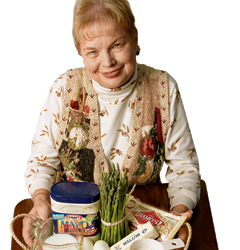
I flipped to the next card. Its edges were worn, its face spattered with stains from decades of sitting on counters too close to bubbling pots and upended measuring cups. “Asparagus Almond Casserole” the card read. In the upper right corner, in neat script, I had written long ago, “Source of Recipe: Mrs. Voight.”

Mrs. Voight. That’s who started it all, I thought. As a teenager, I earned money by babysitting for Mrs. Voight. Not only were her children well-behaved, but she was the best cook in the neighborhood. She always made an extra casserole or pie for dinner so I could have something to eat after I had tucked the kids into bed.

If I liked it she’d invite me over on a Saturday afternoon and teach me how to make it. One Saturday she taught me how to bake her “Asparagus Almond Casserole,” buttery and sweet, and covered in crunchy saltine cracker crumbs.

I brought the recipe home and Mother added her own little touches to it: a little more milk, Wheatsworth cracker crumbs instead of saltines. But we still called it “Mrs. Voight’s Casserole.”

Then my parents moved to a new town. My mother made the recipe for her new friends and for church suppers. People started asking for it by her name: “Mrs. Forsythe’s Asparagus Casserole.”

My mother also cooked the casserole for special family occasions. It was a big hit, especially with my cousin Janet. “You’ve got to give me the recipe!” she said. My mother passed it on. Soon the directions for making it were being passed around at Janet’s church as “Janet McKinney’s Asparagus Casserole.”

I got married, had three kids and the casserole became my mainstay for special occasions. I added my own little touches as well: some extra seasoning and flavored almonds. My children named the casserole after me, “Mom’s Asparagus Casserole.”

We took that recipe with us wherever we lived: Georgia, Colorado, Louisiana, Maryland and now Florida. I even made it in Cambodia when I taught English there. Up to her very last Thanksgiving, my mother would bring that special dish.

Now I held the faded recipe card in my hands. I remembered Mrs. Voight showing me how to make it. Then I recalled Mother doing it her own special way. I thought of all those church suppers when parishioners would ask for a second helping of “Mrs. Forsythe’s Asparagus Casserole.”

I thought about all those Thanksgivings with family and friends, everyone devouring the casserole of many names. Rarely any leftovers. My mother was gone, my family was away, but the memories weren’t. I could still hold them close.

So here’s our favorite recipe. Call it what you will. You’ll make something special of it too—like Mother did. Last Thanksgiving John and I ate the entire casserole by ourselves. Well, not just by ourselves. With every bite, my favorite cooks were right there with me too.

Try the Asparagus Almond Casserole.

The Golden Retriever Who Came for Christmas

Christmas Eve morning and my four-year-old daughter, Hailey, was in the hospital again, this time in a brand-new wing of Swedish Issaquah Medical Center. She was the only pediatric patient. The doctor was with Hailey, waiting to talk to my husband, Gary, and me, but I paused for a moment in the hallway, bracing myself. Whatever news the doctor had, I knew it wasn’t going to be good.

An artificial tree, festooned with lights and ornaments, stood in the corner. Carols played over the PA. The staff had tried to give the place a festive air, but it felt grim and sterile to me.

Faithful Paws and Purrs In Article Ad

Hailey had battled chronic lung disease and epilepsy since birth. She’d spent much of her short life in the hospital. Even when she was home, she was mostly bedridden. A surgically inserted feeding tube kept her alive. Her lungs were so weak, she couldn’t risk going out in public and being exposed to germs. Her big brother, Logan, and sister, Harmony, were wonderful to her, but when they went off to school or to play with friends, Hailey was left on her own. She wanted to be my helper, but she didn’t even have the strength for simple chores like unloading the dishwasher.

What kind of lonely life is this for a child? I’d found myself wondering lately. Why wasn’t God helping Hailey get better so she could play with a friend, go for a walk, eat ice cream? I wasn’t asking for anything extravagant. I just wanted my little girl to enjoy the simple pleasures of childhood.

We’d all been looking forward to Christmas. Gary and I had scrimped for months and managed to save enough for our family to celebrate. Then Hailey caught some kind of respiratory virus. In the middle of the night on December 23, she had such trouble breathing that her lips turned blue. I called 911.

When the EMTs showed up at our apartment, Hailey whispered, “Mommy, why did you call them?” Her anguished expression told me that going back to the hospital was the last thing she wanted.

She’d been rushed to Swedish Issaquah. The diagnosis was acute pneumonia. Logan and Harmony insisted they didn’t mind spending the holiday in the hospital. “We’ll celebrate Christmas after Hailey comes home,” they said.

If she comes home, I thought. I turned away from the carols echoing in the empty hospital hallway and walked into my daughter’s room. Hailey lay in bed, her face as pale as the sheets, the sparkle in her eyes dimmed. I’d never seen her looking so frail and listless.

The doctor spoke in a low voice to Gary and me, telling us Hailey needed immediate surgery to move the feeding tube from her stomach to her small intestine because she was aspirating fluid into her lungs. “The standard procedure would be to put her to sleep,” he said. “But she’s so weak, we’re not sure she would be able to wake up.”

I clutched Gary’s hand. “So what should we do?” he asked.

“The best bet would be to keep her awake during the surgery and give her a local anesthetic.”

While the doctor explained the options to Hailey in language she could understand, I talked quietly with Gary. “Look at her,” I said. “The fight’s gone out of her. I think she’s losing her desire to live.”

“What do you think, Hailey?” the doctor asked her. “Can you stay awake for the surgery?”

Hailey looked at me. “Mommy, I don’t know if I can do it.”

I was afraid that what was really going through her mind was, I don’t know if I want to do it. I don’t know if I want to go on like this anymore.

“Why don’t you take some time to think about it?” the doctor said.

Hailey had been incredibly brave through all of her treatments over the years. Yet I hadn’t been able to keep her out of the hospital at Christmas. I felt as if I’d failed her. How could I encourage her to keep fighting? Suddenly it hit me. The perfect solution, the thing she wanted most.

I brought it up with Gary that evening when we went to the cafeteria to grab a bite. “What if we got her a dog?”

The one bright spot in Hailey’s previous hospitalizations had been the therapy dogs that volunteers brought in for the pediatric patients to play with.

“Mommy, did you see him?” she asked eagerly one afternoon when I visited after work. “You should feel how soft he is, just like a teddy bear!” Hailey couldn’t stop talking about the golden retriever who’d gone from room to room. “He’ll do whatever I say. When I throw the ball, he brings it back.”

On her weakest days, the nurses let the dog onto her bed. Simply having him lie next to her comforted her. And it was just goldens she responded to. When a friendly black Lab visited, Hailey couldn’t have cared less.

She’d been asking for a dog for a while now. A golden retriever. I wanted so badly to give her the dog of her dreams, but properly bred goldens typically cost upwards of $1,000. Way beyond our budget. We were living paycheck to paycheck. And we lived in an apartment with no yard—not the kind of place for a big, active dog. We’d had to tell Hailey no.

“We really can’t afford it,” Gary reminded me. Besides the initial cost, there would be food and vet bills. He wanted Hailey to be healthy and happy as much as I did. But he was practical.

“I’ll take on extra work,” I said. I already worked full-time taking care of a child with disabilities, an ideal job because I could watch Hailey at the same time. I didn’t know how I’d find hours in the day for more work, but if it would get her through the surgery, I was willing to try. “She needs something that will make her want to live.”

“Then we’ll find a way,” Gary said.

We went back to Hailey’s room. “We have a surprise for you,” I said. “We’re getting you a very special Christmas present—a puppy.”

Her eyes lit up. “My teddy bear dog?” she squealed.

“That’s right,” Gary said. “But you’ve got to get through your surgery first before we can get the dog.”

On Christmas morning, Hailey made an announcement. “I’m doing this surgery without going to sleep,” she said. “I don’t want to risk not waking up and getting my puppy!” She told the nurses, the doctors and anyone who would listen about her Christmas present.

I sat with her in the operating room so she wouldn’t be scared while the surgical team fixed her feeding tube. I needn’t have worried. Hailey kept talking the whole time about her dog: what she would name it, how much she would love it. At one point, the anesthesiologist had to tell her to slow down and take a breath.

The surgery went smoothly, and three days later Hailey came home. But the journey to get her dog was only just beginning. I picked up odd jobs. I walked dogs, cleaned houses, worked for an on-call nanny agency at night while Gary watched the kids.

We set a jar on the kitchen table and put every spare dollar toward our “dog fund.” Logan and Harmony donated their Christmas and birthday money. Every Sunday night, we would empty the jar and count the money so we could see our progress.

It took eight months, but by the following August we finally had enough money saved. We found a golden retriever breeder and made plans to pick a puppy from his next litter. New worries sprang up in my mind: What if the dog was too rough for Hailey? What if we couldn’t train it or it had too much energy for her to keep up with? What if they didn’t bond?

We met the breeder in the parking lot of a grocery store on a Saturday morning. It was a chaotic scene, with other families clamoring to play with the 15 adorable puppies waiting for homes.

“Do you see one that you like, Hailey?” I asked.

“That one!” she said, pointing to the only puppy sitting quietly on the side, not ramped up with excitement like the others around him.

“Are you sure?” I asked. Didn’t she want a more playful pup?

“Yes, that’s the one,” she said with utter confidence. “I know. I think he’s lonely, don’t you?”

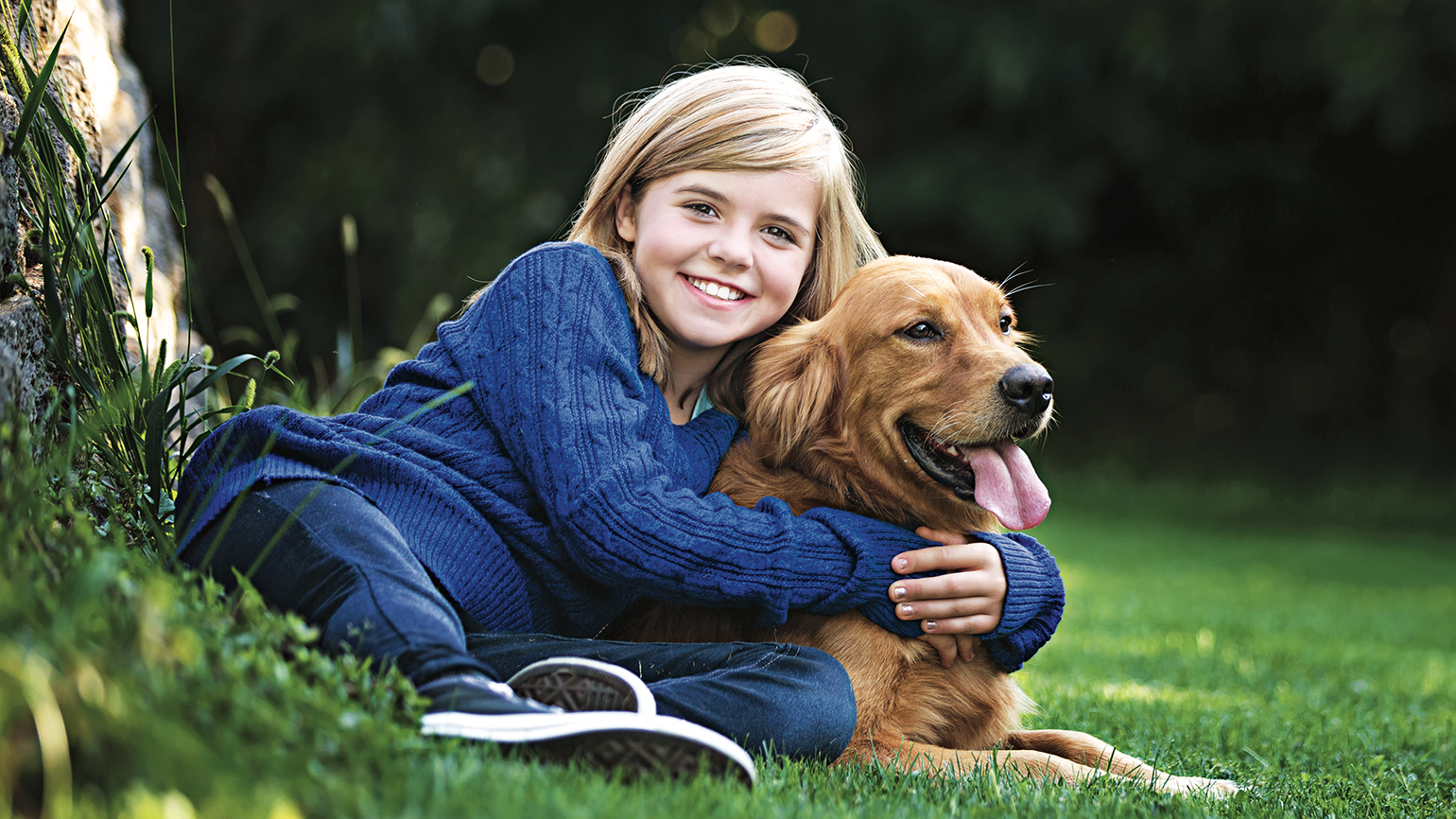
That’s how Hunter came into our lives. He became Hailey’s motivation, her reason to get out of bed, to keep fighting. She’d never had the stamina to play outside. But soon she was taking him on walks. The first time was just to our mailbox. Gary went with her, and they would add a block or so with every walk until Hailey could walk for 20 minutes without losing her breath. They played fetch and tug, and Hailey’s muscles grew stronger.

She took over the responsibility of feeding Hunter. She’d been dependent on the feeding tube, but seeing his delight in eating made her take an interest in food again. By December, she was eating small portions.

Most important, Hunter was her best friend, her constant companion. Hailey still spent much of the day resting in bed. But she wasn’t alone anymore. Hunter lay right next to her.

One day, Hailey overheard me sharing my biggest worry with Gary, that she would never be able to lead a normal life.

That night, as I was helping her get ready for bed, Hailey said, “Mom, one thing you don’t know is that I’d been praying for my teddy bear dog for a very long time. If God can get Hunter for me, surely God can take care of me!”

Hailey was right. We had Hunter trained to alert to her seizures, and her health and confidence grew. At age 9, she was eating so well, the doctors removed her feeding tube. She’s been going to school since second grade.

Our lives have grown as well. Hailey now has three younger siblings. We’ve moved into a home of our own and breed and raise golden retrievers through our small business, Legacy Champion Goldens. Our next dream is launching a center to train service dogs for other families. Like Hailey, I have faith that God will help us get there.

For more inspiring stories, subscribe to Guideposts magazine.

The Gift of Motherhood

Mother’s Day will arrive in just a few days. It’s a time when children and spouses give gifts to the moms in their lives. I’ve always thought that was a little bit backwards. I’m the one who has been blessed beyond measure by being a mom. I feel like I should be the one giving the gifts out of gratitude for the joy my children have brought to me. 

Being a mom is one of the best jobs in the world—and also one of the toughest. I’m reminded of one of the lines from my Just 18 Summers novel, “The years are long but the seasons are short.” There’s a lot of truth to that.

Faithful Paws and Purrs In Article Ad

I remember those days when my three sons were little. There were times when I was so exhausted that I wondered if I’d live long enough to see the boys reach adulthood—days when I’d have given my house away for eight hours of uninterrupted sleep.

There were long nights when I cared for sick children, dispensing medicines and hugs, praying for God to break their fevers and to help them feel better. And I won’t even start on the seemingly endless months we dealt with colic.

I remember days when it seemed like piles of laundry towered halfway to heaven, and no matter how many loads I washed, the piles never seemed to diminish. No matter how many times I cleaned the house and picked up the toys, it seemed it never stayed that way for more than five minutes.

I suggested to my husband (only halfway joking) that we might want to consider camouflage carpet and handprint-pattern wallpaper for the stairwell because our dirt-magnet boys left souvenirs behind every time they went up and down the stairs.

Can any of you moms relate?

I mean, why would any woman choose to be a mom if it means dealing with all those not-so-pleasant situations? Well, let me tell you why—it’s because in the midst of all those moments, God sends amazing sweetness, and each season is precious beyond words.

I’ll never forget the memories of a fresh-from-the-bath baby sleeping in my arms, of stroking my fingers across velvety-soft skin and through downy hair as I gazed at the perfection that God had loaned to me. How could I ever forget how my heart melted when my tiny son’s arms and legs kicked with excitement whenever I walked into the room or the joy of watching his first steps as he wobbled across the floor?

What precious memories of my rosy-cheeked toddler laughing as he rode on his daddy’s shoulders, of kneeling beside his bed for nighttime prayers and tucking him in with hugs and kisses. Oh my, those seasons went by way too fast!

READ MORE: A MOTHER’S GRACE

The snapshots in my heart bring back memories of my sweet-faced little boy standing at the front door with a bouquet of flowers he’d picked from the yard for me. How desperately I wanted to freeze-frame those moments. But I couldn’t.

And then it was time for him to start kindergarten. Yes, there were tears that day. Not his, mine. It was hard to start letting go!

We packed the seasons as tightly as we could with our family gathered around campfires, catching fireflies and playing countless games of ball in the yard or the driveway. We celebrated holidays and piled everyone in the car for vacations. We made memories, blew out birthday candles and watched as the years flew by much faster than we wanted.

It only seemed like a day or two had gone by and our son turned 13. How could he be a teenager already? And then it seemed like we only blinked once or twice and he was getting his driver’s license. How in the world could that be happening already?

The seasons seemed like they went by at warp speed, and soon we wiped away tears as our son walked across the platform for his high school diploma…and four years later across another stage for his college diploma.

READ MORE: THEY WILL CALL YOU BLESSED

And then a special girl entered his life—the girl we’d prayed for since before he was born—and months later we fought back tears as he kissed his bride. Tears of joy for them and tears of sadness for us because our least favorite season had arrived—the one for him to leave us.

For those of you whose children are still at home, I hope you won’t mind if an old grandma gal reminds you to slow down and squeeze the moments. They go by so fast! We truly have just 18 summers before our children leave home—and each season is precious beyond words.      

I can’t imagine my life without my sons. How blessed I’ve been to be their mama. So today I’d like to thank God for the gift of motherhood.

And I’d like to wish a Happy Mother’s Day to all of you moms out there. I think you’ll all agree with me that being a mom is one of the best gifts ever!

Dear Father, Thank you for the gift of our children. Help us to make family a priority, to savor the moments, to teach our children about You, and to make some memories. Amen.