Embrace God's truth with our new book, The Lies that Bind

My Christmas Star

My husband, Michael, and I squeezed into our seats in the sanctuary at St. Rita’s School, just before the start of the annual Advent program.

I could see a few other eighth-grade parents down in front and knew they had arrived early, jockeying for the best seats, video cameras at the ready, not wanting to miss a daughter’s beautiful solo or a son stepping up to the microphone and reciting a Bible verse to the hushed crowd.

Whistle Stop Cafe In Article Ad May 2023

I had nothing like that to look forward to, no proud YouTube moment to e-mail friends and family. My daughter Elizabeth would be spending the evening hidden among the bell choir and the chorus, where even I couldn’t pick her voice out from the others.

I was embarrassed to feel this way. I didn’t want to be a stage mom. But I knew my daughter had so much more to offer!

She’d been a mystery to me ever since she hit her teens. The more I coaxed her to take a step into the spotlight, the more she insisted on fading into the background. She had a beautiful voice. She liked to read. She was a Girl Scout, played piano and did well in school.

Why was she so reluctant to share her talents so that others could appreciate them? Didn’t she realize how important leadership skills are? Just once I wanted her to have a moment to shine. But this was the eighth graders’ last chance to perform. Next year they’d be at the high school.

Some younger kids took the stage, waving to their parents, glancing nervously at each other. They looked so cute in their Christmas sweaters and dresses. I remembered when Elizabeth was that age, how she burst out in song at the least provocation. She hadn’t been shy about singing in front of others then, and she talked a mile a minute. Now she barely said a word when introduced to an adult. How could she have changed so much in a few years?

One of the little girls read a short verse. Her beaming mother popped up out of her seat to snap her picture. The girl stepped back to join the group in “Away in a Manger,” their tiny voices barely carrying to the back of the church.

I wanted to be that mother again, Elizabeth to be that child. I praised her. Encouraged her. Asked her about school all the time. This was only her second year at St. Rita’s. I wanted to be sure she was adjusting okay and making friends. But her responses rarely went beyond “Everything’s fine, Mom.” She practical­ly lived in her room. I couldn’t remember the last time she’d helped out around the house without me asking her.

God, I’m not sure I even know who my daughter is anymore. But it was more a plaintive thought than a prayer.

The children paraded off the stage and the next group marched on. I thought about all the Christmas shopping I had to get done, the papers I’d brought home from work to read. I felt myself nodding off, and Michael poked me in the ribs. Finally there was a brief intermission. I stood to stretch my legs and overheard two women talking behind me.

“Don’t you love these programs?” one said. “It’s wonderful to see how much talent these kids have.”

“They always do a great job,” the other woman said. “It’s one of my favorite parts of Christmas. It won’t be the same when my son is in ninth grade next year.”

I wondered which of the solos or readings her son was doing. Of course she was looking forward to his performance. Was it so wrong for me to want to feel proud of Elizabeth in the same way?

The lights dimmed and we sat down. The bell choir took the stage. I strained to see Elizabeth, but my view was blocked by someone in front of me. Between numbers a young man read about the shepherds keeping watch over their flocks. The woman behind me leaned forward with her camera. Next up was the chorus.

From my seat it seemed like Elizabeth was barely moving her lips. Not that it mattered. The audience’s eyes were glued to the soloists. It felt as if every eighth grader had at least one starring moment. Everyone except my daughter.

The show ended to thunderous applause. I looked for the nearest exit but the aisles were already clogged.

The woman behind me smiled at me. “Wasn’t the program wonderful?” she asked.

“So you’ve got an eighth grader,” I said, dodging her question. “So do I.”

“What’s your child’s name?” she said.

“Our daughter is Elizabeth…”

“Elizabeth? You’re Elizabeth’s mom?” the woman said, her eyes wide with excitement. “My son talks about her all the time.”

I searched my memory to recall the names of any boys my daughter had mentioned, but came up blank. I looked to Michael. He only shrugged. Could she be thinking of a different Elizabeth?

“She’s always so kind to him,” the other mom continued. “She’s really helped him fit in.”

“Oh,” I said, finally understanding. “It’s your first year. Welcome to St. Rita’s. Last year Elizabeth was new. I’m sure she understands what it’s like for your son.” Slowly we snaked through the line to the middle-school classrooms, where we’d pick up our kids.

“No, that’s not it,” she said quietly. There was something in her voice that commanded my attention. “My son is autistic. While he’s gone here since kindergarten, and his siblings before him, as he’s gotten older it’s been harder for him to fit in. But this year has been a positive experience because of Elizabeth. She not only accepts him for who he is, she’s made a difference in how others see him. I’d really like to meet her.”

I saw Elizabeth waiting at the door of her classroom, her face unreadable as usual. I took a deep breath. Would this woman be greeted by the girl she thought she knew or by the uncommunicative teenager I lived with every day?

I turned to the woman and quickly introduced her to Elizabeth. I could hardly believe the change that came over my daughter.

“Hello,” she said, waving her hand. She smiled, stood up straight and made eye contact, without any coaching from me.

“I like your son,” Elizabeth said. “He’s got a great sense of humor. Sometimes he and I are the only ones who get the teacher’s jokes.” She giggled and added, “It’s nice to meet you.”

Then she hooked her arm into the crook of Michael’s elbow and tugged him down the hall. “Dad, I’m hungry!” she said, morphing from polite young woman back into typical unruly teenager. I turned to the woman, whose face was bright with happiness.

“You’ve got a good kid there,” she said. “She’s something special.”

“Thanks,” I said, nodding, slowly letting everything sink in. “You know, she really is.”

Interpersonal skills and the ability to see others’ God-given talents, weren’t those the hallmarks of a good leader too? I wished the other mom a Merry Christmas and hurried to catch up to my husband and my daughter, my own shining star.

Download your free ebook, True Inspirational Stories: 9 Real Life Stories of Hope and Faith.

Mr. Wrong and Miss Practical

Practical me. I sat at my kitchen table with the want ads: Live-in assistant horse trainer wanted. The job was 300 miles away on a farm in Ohio. It was the kind of life I wanted. There was only one problem: Michael.

He wasn’t Mr. Right. I knew that on our first date. We went to different churches. We had different political views. He cringed when I played my Debussy albums. His Neil Young hurt my ears.

The Daily Bible Large Print relaunch with digital free gift in article ad

But what really cinched it was our plans for the future. At 26 I was ready to settle down and start a family. Michael wanted to travel once he’d finished his graduate program at Penn State.

Maybe I never should have dated him to begin with, I thought, reaching for the scissors to cut out the ad. The first time Michael had asked me out I hesitated. I’d asked God to lead me to Mr. Right and vowed to be shrewd and practical in my love life.

Michael isn’t a practical choice, I told myself. But being practical had gotten pretty lonely, and this tall, blond architecture student had a way of making me happy just by smiling. “Okay,” I’d said when I accepted the movie invitation. “But nothing serious.”

Michael and I had had “nothing serious” for months now. Our differences caused plenty of heated discussions.

But when we drove out in the country in his old brown Ford, and spent afternoons sitting under the birch tree on the farm where he grew up, watching the French vanilla clouds drift by, I could almost believe this was true love.

“Better to cut it off sooner rather than later,” I said as I slipped my resume into an envelope for the job in Ohio. “It will only get more painful if I wait longer.”

“I’m moving to Ohio,” I wrote Michael at Penn State. “I know this is the life God wants for me. I want only the best for you in the life God wants for you.”

The letter was cheerful and optimistic about our future apart. Good thing Michael couldn’t see me sobbing as I dropped it in the mailbox. If only I could be practical and happy at the same time!

A few weeks into my new job, I was sure I could do just that. My coworker, Karen, and I worked long hours with the horses cleaning box stalls, feeding, grooming, haying, you name it.

I spent all day in the glorious Ohio countryside, breathing in fresh air and grass and getting a golden tan in the sun. I’d made the right decision. I was sure of it. And I’d soon be over Michael.

One morning Karen and I led a couple of shining, dark-eyed Arabian horses back into the barn. The rolling green hills stretched out around me like heaven and the sweet smell of fresh-cut hay tickled my nose.

“Pot luck after church this weekend,” Karen reminded me. She nudged me with her elbow. “Kevin will be there.”

In the months I’d spent on the farm, Ohio had started to feel like home. Karen and I went to every 4-H meeting, met everyone at church, visited every neighbor. This was just the kind of place I wanted to settle in. “I hear Kevin’s farm is gorgeous,” I said.

“Sure is,” said Karen. “Runs it with his dad. You two seemed to hit it off at that barbecue a few weeks ago.”

“Mmm,” I said, suddenly focused on smoothing the horse’s mane. Why was I being so evasive? Karen was right, Kevin and I did hit it off. We had a lot in common. Same church, same politics, same goals in life.

All I had to do was hint that I was interested in getting to know him better and half the folks at church would make it happen. Kevin couldn’t more obviously be Mr. Right if he had a sign on his forehead, but still I put off getting to know him.

What are you waiting for, Kathie? I scolded myself as we reached the barn. What happened to practical? 

My boss was at the barn door when we got there, shading his eyes and looking into the distance. “Looks like we might get a thunderstorm this afternoon,” he said. “You two better lead Honeybee in from the high pasture.”

Karen and I turned back to the hills. We’d just crested a grassy slope when I stopped short.

“What is it?” asked Karen.

The sky was suddenly all around me. French vanilla clouds drifted through the clear blue. Michael. All the months I’d spent forgetting him fell away, and I was back at that mailbox with my broken heart. “I’m sorry, Karen. I think I’m sick.”

I stumbled back down the hill, tore across the grass and I rushed up to my room. I pulled out paper and an envelope. “Dear Michael,” I wrote. “I saw the clouds today and thought of you.”

I didn’t say that an angel as big as the sky sent me a message I couldn’t ignore! Instead I told him about the farm. “Just checking in.” I told him. I miss you, I thought.

That afternoon I was positively tingling as I watched the mailman’s jeep drive away. In my head I was calculating how long it would take for Michael to receive it.

If the letter arrived at noon, if Michael missed me enough…if he loved me…if he hadn’t found someone else…if he left his farm right away and drove to Ohio without stopping…if, if, if.

Two evenings later I set out a lawn chair to watch the road. “You’re not coming to the dance?” asked Karen as she left that evening.

I shook my head. “Not tonight.”

She looked me over, taking in my lip gloss, my dress, my styled hair. “Guess you’ve got other plans.”

Did I? Or was I making a fool of myself? I gazed down the highway. There were no cars in sight.

The shadows moved slowly across the lawn as the evening melted away. The crickets came out, filling the air with their song. No one came up the road. Well, it was a silly idea anyway, I told myself. Who just plants themselves by the road and waits for love to drive up in a Ford?

I started to get up to go back to my room. Just then another sound interrupted the crickets. The sound of a lone engine coming from the east.

I leaned forward in my chair, eyes straining to make out the color and model of the car coming up the road, pausing at mailboxes to read the addresses: an old brown Ford.

In minutes Michael was swinging me over the grass in his arms. I couldn’t imagine any Mister more Right. For a long time we couldn’t say anything besides “I love you” and “I missed you” between hugs and kisses. Finally Michael pulled back to look at me, then his eyes drifted to the lawn chair.

“It almost looks like you were expecting me,” he laughed. “After all these months.”

“I was expecting you,” I said shyly. “I figured out how long it would take you to get here if you left right away after you got my letter.”

“Letter?” asked Michael, his face turning puzzled. “What letter?”

Turns out Michael hadn’t even been home to receive it. He couldn’t get me off his mind, so he called my mother to find out where I was. By the time the mail came that day, Michael had already left.

That was thirty-three years ago. Michael and I still have plenty of differences. All married people do. But when we sit outside with our daughters watching the clouds go by, I know I’ve never been so right as when I chose the wrong man.

After all, God sent him right to my door and made sure I’d be waiting for him. It doesn’t get much more practical than that.     

Download your free ebook, Angel Sightings: 7 Inspirational Stories About Heavenly Angels and Everyday Angels on Earth.      

Mountaintop Moments: Finding Hope in Hard Times

I’ll never forget the life-changing text I received from my wife on February 3, 2020, around three o’clock in the afternoon: “THIS IS HAPPENING.”

Our journey into parenthood was about to begin. I promptly said goodbye to my students, rushed out of the classroom and ran to the subway. I also texted a few members of our church, asking for prayer. I also sought advice from my buddies who had been down this road before. Our precious Sophia Rose made her grand entrance at 7:20 p.m. I remember the time exactly, because the doctor asked me to take a picture of her. I was too stunned to grab my phone. This was a mountaintop experience I’m still processing to this very day.

Sweet Carolina Mysteries In Article Ad

Life has a way of taking us through both mountains and valleys. Although I appreciate every mountain, I’ve discovered that it’s in the valleys where you find resilience during tough times. As a pastor, I always went to the hospital to comfort the dying. However, this was my first time experiencing the miracle of birth. Unbeknownst to me, I found out that on the exact day my daughter was born, my great aunt took her last breath. Here I was in the middle of celebration and reflection, hope and heartbreak—all at the same time.

The Danish philosopher Soren Kierkegaard once said, “Life is lived forward but only understood backward.” Shortly after getting settled in at home with baby Sophia, our lives were reduced to a whisper, as Covid-19 swept through the world. There we were, as new parents, trying to make the best of our “new normal” during a worldwide health crisis.

Now, only four months later, I sit in astonishment at another year of life. Who would’ve thought that a new decade would bring such massive changes? From the blessing of a new baby to the rise of a global pandemic and now, to a world in protest. Sometimes, it still baffles me that I’m celebrating this milestone, while also grappling with a sense of profound loss.

I’ll never forget watching the memorial service for George Floyd, the African-American man who died in police custody in Minneapolis, on CNN the day before my birthday. His last words, “I can’t breathe!” are still reverberating in my consciousness. I sat there motionless, grappling with this vicious death, while also celebrating the vicissitudes of life. At that moment, I decided that I would wrestle with the pain of grief while simultaneously glorifying the power of grace. I realized that amid the darkness of our world I had a brand new opportunity before me: to invest, inspire and influence the next generation.

I began to fight my fear and despair with a faith declaration.

Before bedtime every night, I began to whisper in my daughter’s ear: “You have been born at the greatest time in history.” Why? Because in the middle of chaos, confusion and calamity these are times of revolution; every revolution brings with it a sense of renewal. In essence, while we are still in quarantine my heart is overjoyed to know that God smiled on me another day and I could pay it forward by offering a glimpse of hope in the darkness. To me, that is a birthday present I’ll always cherish.

Mountains of Mystery

I was eight years old when I first crossed the border from my home state of Nebraska into Colorado. Nebraska is a beautiful state, with rolling plains, the Sandhills, and miles upon miles of open sky.

Yet, the first time I saw the Rocky Mountains looming before me, I fully realized the glory of God. Only He could create these rugged mountains with snow-capped peaks that touched the clouds.

Inspiration from the Garden in article ad

As we made our long trek up the winding, mountain road of Pike’s Peak, I was amazed at the number of trees that surrounded us.

Nebraska is full of corn and wheat fields, cow pastures and grassy prairies, so the forest of tall fir trees and lovely aspens blanketing the rocky terrain were more trees than I’d seen in my lifetime.

I’m sure many of those same trees are still there, taller than ever. And since I’ve become entranced with genealogy, I’ve found my family tree growing too. I’m adding new branches as I discover the names and histories of my ancestors and learn their stories.

One of those stories links my family to Colorado, where my great-grandmother spent some time at an orphanage as a child.

The memory of that Colorado vacation and my genealogical explorations are two of the reasons I’m so excited to be part of the Mysteries of Silver Peak series.

In the first book, A Mountain of Mystery, you’ll meet Sadie Speers, a life-long resident of the historic mining town of Silver Peak, where she owns an antique shop and specializes in local history.

Sadie learns that there are some harrowing secrets buried in her family history. Her journey into the past begins with the discovery of an old family heirloom that she thought had been lost forever.

Will Sadie’s intrepid spirit and gentle faith finally lead her to the truth? Or will that family mystery remain unsolved? You might want to join Sadie as she digs for answers and discovers the intriguing possibility of a new branch on her family tree.


Read the first chapter of A Mountain of Mystery for FREE!

Mother’s Intuition: Mysterious Ways Staffers Tell Their Stories

Guideposts Video: Inspiring True Stories

Rakeem Nelson; editorial intern: So this is a very embarassing photo of me and my mom, and speaking of my mom, me and her are really big tea drinkers, and one time after school—this is way back when I was young—I turned on the stove to boil a cup of tea and then I went to take a nap. And wherever she was at the time—probably at work—I got a text from her, saying “Go turn the stove off.” 

Walking with Jesus L&E evergreen_in article ad

I was pretty upset that I couldn’t go and take my nap, but when I got up to go and look at the stove, the fire wasn’t on; it was just the gas.

Hilary Robins, associate editor: This is my mom and I; this is a few years ago. So this one experience that I had with my mom was super inexplicable. After high school one day, I was thinking about my after-school snack, what I wanted, and I thought, “I really want frozen yogurt.” And I was think about the toppings I was going to put on it and how much I wanted to just go and get this frozen treat and mid-thought my mom calls me and she’s, like, “I’m driving to pick you up, and I was thinking we really need to stop and get some frozen yogurt.” 

It was just one of those weird moments where you go, “How did you know what I was thinking?” It was wasn’t the only time, but that’s a really memorable Mom moment for me.

Rick Hamlin, executive editor: Hi, it’s Rick Hamlin, and I’m here with my mom. I grew up in California and Mom and Dad also grew up in California. They made only one trip east before any of us kids were born. They came to New York, saw South Pacific, and then they went to Princeton, New Jersey. I don’t know why, but they saw the campus there and Mom had this feeling: One of her kids was going to go to Princeton.

Well, there were four of us, and years later, I applied to Princeton on a whim, got in, and I became that kid who went to Princeton. I sang in lots of shows there and Mom came and saw me, and her intuition proved right.

Elena Tafone, assistant editor: This is my mom. Once we were out shopping, doing our own separate errands, each on our own, and during that day, we both went to the same store at different times and bought the exact same pair of shoes and since we have the same size feet, they’re the exact same size, too, so literally the exact same pair of shoes in the same day.

It was great because when we both got home in the evening, she was, like, “I bought the best shoes! You have to see them” and I was, like, “I bought the best shoes. You have to see them!” And they were the exact same pair.

Diana Aydin, managing editor: Hi, this is me and my mom. My mom has a pretty incredible mother’s intuition, I would say, so back when I was in eighth grade, I was feeling really sick: tired all the time, my eyes felt funny.

The pediatrician said I was ok, but my mom had this nagging feeling that something wasn’t quite right. So she took to me to doctor after doctor over a few months. She took me to one doctor, and they said, “She’s definitely ok, she’s a normal teenager. At some point, you might want to get an MRI.”

In the car, my mom couldn’t get the word MRI out of her head; it was like the words were haunting her. So she convinced my father to drive to the pediatrician’s office; she got out of the car—she’s like this small, petite lady—and she demanded that he write a prescription for an MRI.

He said she was crazy, that she was overreacting and being hysterical, but she wouldn’t give in.

I got the MRI, and sure enough something was wrong: I had a brain tumor sitting on my optic nerve, and if my mom hadn’t been so pressed to get an MRI, I would have lost my vision or maybe worse. So my mom’s intuition saved my life. Thanks, Mom!

Edward Grinnan, editorial director: This is my mother, Estelle Rossiter Grinnan. It’s a black-and-white photo, but if you look closely, you can see her eyes are luminous and they were green. 

When I was a little kid, I had really, really bad asthma; I used to sit up, like, three or four nights a week, trying to catch my breath. My mother put a statue of St. Jude in my room, and I found out that St. Jude was the patron saint of hopeless causes. 

My asthma was a hopeless cause, but I did get better as I got older and I became an adolescent. I got into a fair amount of trouble in my teens, and St. Jude reappeared in my room. I didn’t like that; at that point in life, I didn’t consider myself a hopeless cause, so I would just remove St. Jude. I would just evict him from my room, but mysteriously, St. Jude would always reappear in my room.

So I started to get more inventive about where I was going to hide St. Jude. I’d put him in the linen closet; I’d put him in a cabinet in the kitchen. I don’t know how my mom found St. Jude, but she always turned up with him, and that statue of the patron saint of hopeless causes always returned to my room. And it infuriated me! 

So one day, I took St. Jude down to the garage; I climbed up into the rafters of the garage. I found the farthest, junkiest part of the rafters to hide St. Jude; I buried him in a bunch of rubble and I figured, “That’s the end of it.”

But it wasn’t, because two nights later, there was St. Jude back in my room, and I knew it was the same statue because its hand was broken. I was too proud to ask my mother how she found St. Jude, and I’ll never know how she did. But the interesting thing is, St. Jude’s color is green, just like my mother’s eyes.

Mom!

"Just look at that gorgeous fringed shirt that lady is wearing! I bet she made it. I'm going to go ask her."

"Mom!" I said. But she'd already jumped up from her seat at the restaurant where we were having lunch. With her bracelets jangling, she hurried over to talk to a complete stranger.

Light for Life NASB Study Bible in Article

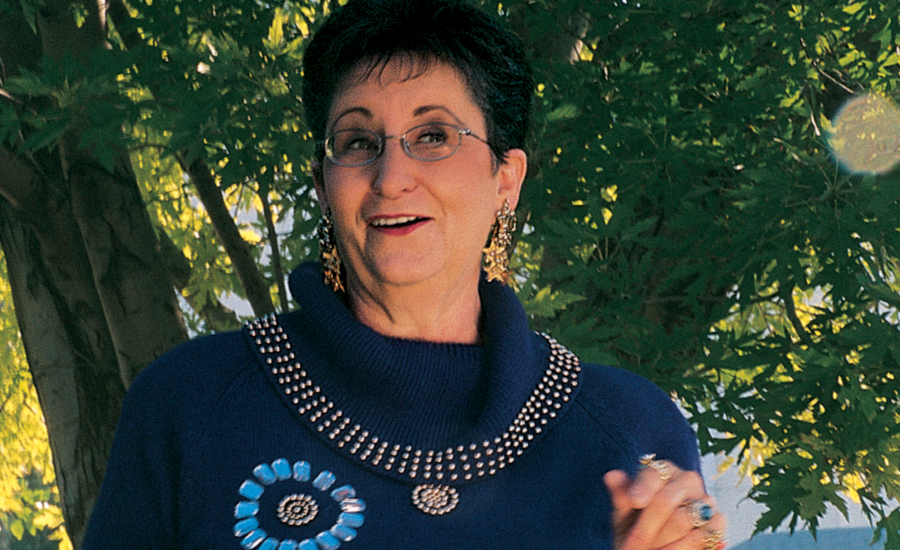
How could this woman be my mom? I favored simple clothes in muted colors. My wedding band was my only jewelry. Mom had rings on almost every finger, two on some, the stones color-coordinated to match the giant sequined parrot on the front of her shirt.

I was soft-spoken. Mom blurted out whatever came into her head and never thought twice about starting up conversations with people she didn't know.

Now I pretended to study my menu while across the restaurant Mom let out one of her loud, zesty laughs. Dear God, isn't there any way to quiet Mom down a bit?

At the age of 40 you'd think I'd have gotten used to this. I'd come out from Alaska to visit Mom in Texas, and I was flooded with memories of what it was like going out with her when I was a kid. She always dressed flashily, even for church.

At my high school football games, I couldn't believe how loudly she hollered. The more my mom made a spectacle of herself, the more I wanted to fade into the background.

I got married right out of college and moved away. After my dad died, I assumed that Mom would slow down and eventually settle into a dignified old age.

I imagined her puttering around in her flower garden and baking sugar cookies, then quilting quietly in the evening as she watched Wheel of Fortune.

Yeah, right! I should have gotten a clue when Mom sent me a poem that said, "When I am an old woman, I will wear purple." As Mom got older, she got bolder. She delighted in wearing pins the size of saucers, iridescent blouses and sandals sprinkled with glitter.

If anything, her demeanor got even less inhibited, and every time I telephoned, she was rushing out the door to go to a gospel concert or a class in water aerobics. I was glad she was having fun, but it all seemed a little much. Couldn't she just take it easy and relax?

Now sitting there in the restaurant with Mom, I could see she was just the same. She returned to our table flushed with success. "I saw exactly how she sewed that fringe on, so now I can do it too!"

"Mom, how could you just walk up to a total stranger like that?" I whispered.

"She's not a stranger to me anymore, dear." Mom winked and waved across the dining room to her brand-new best friend while I fussed with my napkin. I felt like everyone in the entire place was staring at us.

Thankfully, Mom wanted to eat in for the next couple of days. But then one evening she said, "Come on, honey, let's go to Billy and Lorene's for supper."

"Mom, you can't just show up at someone's house and expect them to feed you."

"Sure you can! I've done it before. Lorene makes the best chicken-fried steak. I'll call her right now and tell her to get started. We'll get Betty and Wilda and Darla too." Those were some of Mom's friends. I felt bad for them having to put up with Mom's whims.

"Mom, how do you know Lorene and Billy don't already have plans?"

"They'll have more fun with us!" Mom insisted.

I rehearsed an apology to Lorene in my head on the way over to her house. But when Lorene opened the front door, she grinned and said, "So glad you're here." Of course, she was probably just being polite. Secretly she was thinking, What an imposition!

Sunday morning as we got ready for church, Mom came twirling out of her bedroom in a red straw hat with a wide brim and lots of ribbons.

"Mom, do you really want to wear that to church?" I asked. She took it off and set it on my head. "Take a look," she said, turning me toward the mirror.

'Mom!" I whisked off the hat. Mom laughed. "Don't worry, honey," she said. "You don't have to wear it." She returned the hat to her own head, then took a step back to look at me. "You look real nice just the way you are," she said. "Let's get going or we'll be late."

Right after the service, Mom began greeting people, gabbing up a storm and exclaiming over the crayoned pictures that the Sunday-school children brought over for her to see. Every time I thought she was finished talking, she swooped down upon someone else.

"I've never seen a more adorable baby," she declared to a young mother, then gushed extravagantly over photographs from someone's recent graduation.

Betty appeared and slipped her arm through mine. "Mom's at it again," I said, rolling my eyes.

"And thank goodness she is," Betty said. "Your mom is one of the bravest people I know."

"Brave? In what way?"

"About getting older, living alone, dealing with the death of your father. No matter what happens, she's always the same old Lucille—as upbeat and outgoing as ever.

"I asked her once how she stays that way. She said you can't change what happens to you, but you can choose how you react. You can be miserable and feel sorry for yourself or you can be happy. She chooses happy."

I turned to look at Mom. She was letting someone try on her hat. Betty said, "It makes me feel good to be around her, especially since my husband died."

It makes me feel good to be around her. People liked my mom for her free spirit, her spontaneity, her fearlessness. She had chosen to keep being herself no matter what life threw her way. Why hadn't it ever occurred to me that I had a choice too?

Instead of always being embarrassed by her, I could choose to be…well, proud. Instead of cringing because Mom didn't live up to my image of who she should be, I could choose to appreciate her for exactly who she was. After all, wasn't that the way God loved all of us—just the way we were?

The next day Mom and I planned to spend the afternoon shopping. I put on my dark green shirt and denim skirt and tied my sensible shoes. When I went to get Mom, she was in a purple dress I'd never seen before. "What do you think?" she asked. She spun around so I could take a look at her.

"Well, Mom," I said, "you know it's not my style, but you—you look nice just the way you are."

Mom beamed, then turned to rummage in her closet. "I've got the perfect thing to go with that outfit, honey," she said. She turned to me and held out a pair of shiny gold shoes.

"Mom!" I wailed. And we both fell down on the bed laughing.

For more, read Celebrating Mom: 7 Inspiring Stories about Mothers.

Mitch Albom: 5 Spiritual Lessons

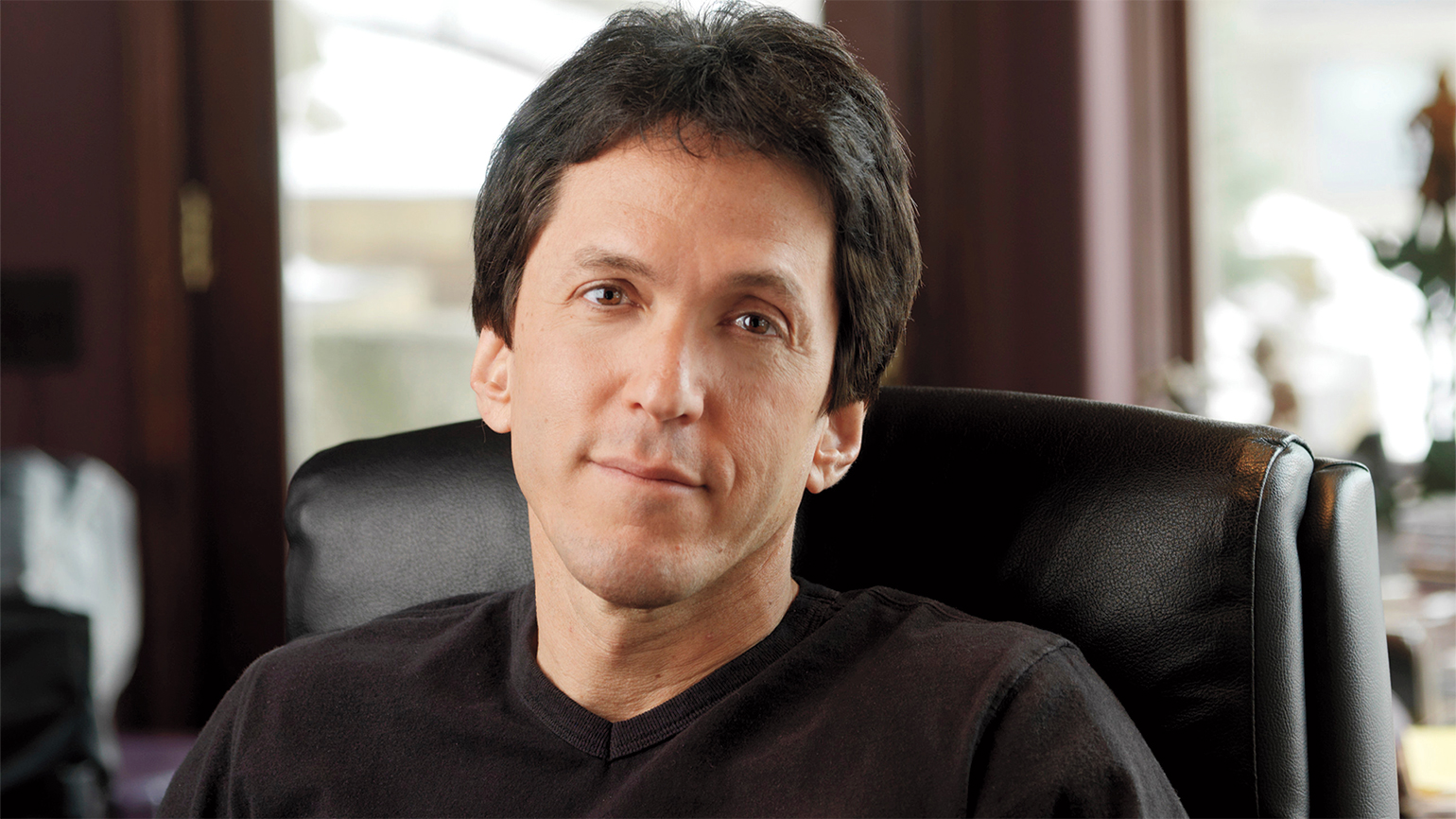
Before I wrote 1997’s Tuesdays With Morrie, I didn’t spend much time thinking about life and death. I spent even less time thinking about my faith. My focus? I wanted to be the biggest, most successful sportswriter on the planet. I worked at ESPN, did five columns a week for the Detroit Free Press, authored sports books. But writing Tuesdays With Morrie—about spending time with my former professor, who was dying of ALS—changed me.

Morrie got me thinking about the big questions: Why am I here? What’s really important? What does God want from me? I’ve written five more inspirational best sellers since then; they all tackle these questions. Along the way, I’ve started a few charities in Detroit, and I now spend a big chunk of my time in Haiti, where I run an orphanage.

What do I now know for sure? The orphanage is the most important thing in my life, hands down. It’s the core of my existence. Here’s what else I’ve learned about being the person God wants you to be:

Things happen in God’s time, not ours.

With my most recent book, The Stranger in the Lifeboat, I wanted to write a parable about the idea that God will answer our prayers in his own way and in his own time. When we ask God for something, we tend to think of it as if we’re ordering a sandwich: Okay, this is what I want, how I expect it to look and when it’s supposed to be here. If it doesn’t come this way, we get upset.

In the book, 10 people are adrift in a lifeboat in the ocean after the yacht they were on sank. Then they pick up someone else in the waves who claims to be the Lord. Here’s the question the book asks: Can we learn to change our perspective and accept God’s help even when it doesn’t come the way we wanted it?

For years, my wife and I prayed for children. It didn’t happen. Then—boom!—we ended up taking over an orphanage. Next, we adopted a five-year-old girl named Chika from there. She had just been diagnosed with a brain tumor. For the next couple years, we traveled around the world looking for a cure.

Suddenly, during our late fifties, there we were with a little girl crawling into our bed, playing silly games and demanding that I make her eggs every morning. She was loud and bossy and funny. One day, it hit me: Almost 20 years after we got married, the child that we’d prayed for finally showed up. God came through—in his own time. We had only two years with Chika before she died. For a while, I was so angry. But then I realized our time with her was an incredible gift from God.

Live each day as if it’s your last.

In The Stranger in the Lifeboat, there’s a line: “We all know we are going to die, but deep down, we don’t believe it.”

Morrie had said that to me some 25 years ago, when he was dying. What a blessing it was to be told that at age 37—and to really hear it. Although I don’t always succeed, I try very, very hard to use this philosophy to steer each day.

I started volunteering at the orphanage right after the 2010 earthquake that devastated Haiti. Then the guy who was running it ran out of money. So I stepped in. I had no idea what I was getting myself into. I was terrified. Yet I had a feeling it was a chance to do something more meaningful than anything I’d done before. If one day you wake up and it’s your time to go, it’s too late to start bargaining for more time. Don’t die with too many regrets. Do what you want to do now.

What you carry defines you.

When Chika came to live with us, I was stunned by how deeply you can come to care about somebody who hadn’t even been in your life before. Chika didn’t go to school because she was sick, so she was with my wife and me every minute of every day.

One time while she and I were coloring at the kitchen table, I realized I was late for a radio program. Chika didn’t want me to go. I said, “Chika, this is my job. I have to work.” She made a sourpuss face and said, “No, it isn’t. Your job is to carry me.” What a brilliant, God-inspired line! Of course, that was my job—and it’s the best job I’ll ever have in my life.

What you carry defines you. For many years, my arms were full of books. And my work, my reputation, my accomplishments. Then I had to drop all that to carry a little girl around. There’s no comparison. Your arms are meant for carrying other people when they need you, for carrying the children of the world who are forgotten and abandoned the way Chika was—not the other stuff.

Possessions don’t matter.

I’ve made more money than I could have ever imagined. But I live in the same house in Detroit that I lived in before Tuesdays With Morrie; I drive a 2009 car. My wife and I don’t have fancy jewelry or fancy furniture.

When I’m at the orphanage, I sleep on a little four-inch mattress; it’s uncomfortable and usually hotter than heck. But I sleep so well there—better than I do at home in Detroit. I guess that’s because I know I’m exactly where I’m supposed to be.

Sometimes the kids at the orphanage say, “When I grow up, I’m going to be really successful like Mr. Mitch.” We have college scholarships lined up for every single kid; it’s part of the plan at Have Faith Haiti Mission. But I always tell them, “I don’t care how much money you make. I only care about your heart.”

God is with us forever.

I have written books about heaven, but I’m not an expert on it. Still, I firmly believe that we’re going to be loved and taken care of after this world. This is what I’ve learned from the pastors, priests and rabbis who have talked to me.

In The Stranger in the Lifeboat, there’s a part where the God character says, “Why is that when somebody dies everyone asks, ‘Why did God take them?’ A better question would be: ‘Why did God give them to us? What did we do to deserve their love, their sweetness, these wonderful moments?’” Loving Chika showed me that those moments are a gift but that losing them is not a punishment.

The God character also says, “I know you cry when people you love leave this earth, but I can assure you they’re not crying.” I lost Chika and both of my parents in the past six years. I’m crying because I miss them, but they’re not crying. They’re happy because they’re with God now. To me, that means everything.

For more inspiring stories, subscribe to Guideposts magazine.

Mission Pawsible

Karen Shirk stroked the ears of the sleek black German shepherd sleeping at her feet. After years of being refused, she finally had her service dog whom she named Ben.

As a young college student, Karen had been diagnosed with Myasthenia Gravis (MG), a rare and debilitating neuromuscular disease. She endured long hospital stays and had to use a ventilator to breathe.

God's Constant Presence In Article Ad

The only thing that kept her going was the thought of a service dog to help her gain some independence. But she was repeatedly told that dogs could not be paired with someone on a ventilator.

After failing to find an agency that could help her, Karen took matters into her own hands. She bought Ben and enrolled in training classes. Ben learned to perform many of the tasks previously performed by personal care assistants, such as picking up objects and opening doors.

Sharing her life with Ben made her wonder: “How many others are turned away because they don’t fit the service dog agencies’ criteria? How many others need the same miracles that Ben offers me?”

That’s when she decided she would do something to improve the quality of life for others with severe handicaps by providing them with service dogs.

Based on her and Ben’s success, Karen started her own agency, 4 Paws for Ability, in 1998, which provides service dogs to any child with a disability who wishes to have a dog.

Most agencies turn down children, feeling that children can’t handle service dogs alone. “Which is true. They can’t,” Karen says. “But we work with kids by having the parents handle the dog, at the same time getting the dog bonded to the child, not the handler.”

4 Paws for Ability trains dogs to help children with autism, Down’s syndrome, diabetes, seizures, cancer, hearing impairment, loss of mobility, mental health impairments, and many other conditions.

One of Karen’s most rewarding experiences was with a 5-year old boy named Connor. He had severe medical issues and was on a ventilator, as she had been. Through the love and assistance of his service dog, Casey, he grew stronger, gained independence and could finally go outside and play.

4 Paws for Ability raises and trains their own dogs, generally working with breeds such as golden retrievers, collies, German shepherds, labradoodles and papillons. In 2000 Karen expanded her enterprise by establishing Mission Pawsible, a program to teach prison inmates to help socialize and train puppies.

“It’s so cool to see how much difference the dogs make for the inmates,” she says, “Even though these men and women are locked away from society, they can do something good.”

Karen recalls a middle-aged inmate who had been involved in a murder when he was 18. He told her that the dog helped ease his stress and build his confidence and self-esteem.

When troubles are at their peak, God can do wonderful things. Karen found a way to help not only herself, but also hundreds of others—all thanks to a nudge from a devoted German shepherd and the countless other service dogs who make her mission pawsible.

Read Donnie Kanter Winokur’s inspiring story of how 4 Paws for Ability impacted her family.

For more info on 4 Paws for Ability, visit their website.

Miracle League

Diane Alford goes to a lot of little league games near her hometown of Smyrna, Georgia. But she doesn’t care who wins or loses. She doesn’t have a favorite team and she doesn’t argue with the ump.

All that really matters to her is that the players have fun, stay happy, and above all, that they feel just like any other kid.

You Got This In Article Ad

The kids Diane cheers for are members of the Miracle League, which is made up entirely of young players with physical or mental disabilities. “These are kids who used to sit behind a fence, watching other kids play ball,” she says. “Now they get to be on the other side of that fence.” 

They also get to play in a safe, noncompetitive environment. Specially made rubber fields with painted-on baselines allow kids with wheelchairs and crutches to run the bases more easily. In the two-inning games, every kid bats, everyone gets on bases, and both teams win.

“The goal is to make it fun,” says Diane. “That’s all these kids ask for.”

The league began in 1997, when local youth baseball coach Eddie Bagwell invited a boy in a wheelchair to join his team. Moved by the idea, Diane, along with her brother, Dean, raised funds and rallied support for a special league.

In 2000, the Atlanta Miracle League had its first game. Today, there are 200 Miracle Leagues in cities all over the country, giving more than 125,000 disabled children a chance to play ball.

As executive director, Diane oversees the growth of each team, from answering that first phone call from an interested parent to attending opening day. “It’s amazing for the parents to watch their kids accomplish things they never dreamed possible,” says Diane. Her goal is to see 500 teams established nationwide. 

Miracle League has also helped bridge the gap between its members and kids who don’t face the same challenges. Last year, a group of students from a Smyrna high school each took a Miracle League player to the school’s prom.

“Other than small differences, the kids are the same,” says Diane. “They like the same music, the same movies, and now they play the same sports.” And, team by team, they’re achieving the same dreams.

Millie the Dog: My Angel of Inspiration

In my years at Guideposts I’ve found that people derive comfort, inspiration and a deepening of their faith and relationship with God through prayer, church, Bible study, meditation, reading daily devotionals and…their pets. Their pets? Quite so, and I think you know what I’m talking about. People are incredibly inspired by their pets. They see them as earthly angels sent to be our spiritual companions, gifts from God to bring us joy and moments of wonder and pure, blissful love.

Read More About the Dogs in Edward’s Life in His New BookAlways By My Side

Inspiration from the Garden in article ad

As many of you know, I have my own angel–Millie, our magnificent eight-year-old golden retriever. In April she had her spleen removed; she was having episodes of blood loss. I remember a flawless spring day a few weeks later, perfect for hiking, perfect for Millie, who was feeling much better now that that nasty spleen was gone, when Dr. M. told me my golden girl, sitting patiently by my side, tail swishing because she knew Dr. M. would give her a treat, had three to six months to live based on the splenic biopsy results. I knew that had been a possibility, even a probability. Dr. M. was very gentle and understanding. She’d recently put her own dog down, a Lab, who died of the same kind of cancer, hemangiosarcoma. I could see a sadness in her eyes still. She was young and pregnant, and she’d hoped for her dog and baby to meet. I don’t like to use the word hate. But at that moment I hated cancer, hated it more than anything.

“How will I know?” I asked, trying not to choke on that hate.

“She’ll tell you. Pick the three things she loves most. When she stops doing two of them, it’s probably time.”

SEE 12 INSPIRING PHOTOS OF MILLIE AND THE LIFE LESSONS SHE’S TAUGHT ME

That was almost impossible to imagine. Millie is bursting with love, like no other dog I have ever had. I can barely make it down the block without her wanting to say hello to someone, to curl and wag her tail and smile. She loves babies and toddlers the most—they are right at her level–and all children, for that matter. She is a celebrity in our Manhattan neighborhood. Doormen greet her, deli owners give her turkey—not scraps, mind you, but the best cuts from the slicing machine. Tourists snap her picture and pose with her. Even the homeless want to share their food and give her a hug. We have to keep her away from the lunchtime soup kitchen down the block at St. John’s because she’ll get right in line for a bologna sandwich. And the friars will give her one too, happily. She spreads joy wherever she goes, as if she were put on earth for that sole purpose. It was almost as hard to imagine the world without Millie as it was to imagine my life without her. Eight years. Too short. I’ve said before that the sadness of loving our dogs is that we outlive all but the last one. But this was so unfair. I’d never faced losing a dog so young. That’s why I hated cancer. It wasn’t just a disease, it was a thief.

Because so many of you have prayed so hard for Millie and ask so often about her, I’m grateful to report that Julee and I haven’t lost Millie yet. I am almost afraid to say that nearly four months after her diagnosis she is as healthy as ever, knowing that there is probably a malignant time bomb somewhere in her body, ticking away. Your prayers are helping it to tick more slowly, I believe, and possibly, miraculously, to stopping it ticking altogether.  She’s also on a polysaccharopeptide (PSP) supplement being tested at the University of Pennsylvania. It’s derived from the mushroom Coriolus versicolor. That may be helping too. The research is promising.

Sometimes Julee will ask, “Do you think she’s pretending to feel this good? That’s she’s just trying to please us, afraid to worry us?”

Yes, Millie is a brave and incredibly perceptive dog. Honestly, she understands me better than most people do, and she knows how much I love her. It is well known that dogs will sometimes pretend to feel better than they do so as not to disappoint the people they live to please. But I don’t let myself think Millie’s putting up a front.  I let myself think that love is keeping her healthy and alive, one day at a time, her love of life, our love for her, your loving prayers and the love of a God who cares about all his creatures. Every single day my dog inspires me with her sheer, blissful love of life, a life she will never stop loving. There’s a funny old expression I used to hear around my family that said something was so old that it was around “when God’s dog was a puppy.” I think of Millie as God’s dog. I’d just like her to be our puppy for as long as He can spare her.   

Millie inspires me every day. How does your pet inspire you? Post comments and pictures below.

See 12 photos of Millie here.

Military Holidays—What Do They All Mean?

Even as a military mom I have trouble keeping track of significant days and observances for our armed forces. I figure if I struggle others might too. So today I’m going to give you a cheat sheet for some of the major holidays that honor our men and women who are—and have—served in the military.

Since it’s May, let’s begin with the two most confused days—Armed Forces Day and Memorial Day.

Rejoice in All Things in article ad

–Armed Forces Day comes first on May 20. It was set aside to recognize those who are currently serving in our military. This includes active duty and reservists.

–Memorial Day is always the last Monday in May. This year that’s May 28. This day is to honor those who have died during their time of service in the military.

And to cloud the issue even more there are also two more days:

Veterans Day, celebrated on November 11, is the day set aside those who have previously served in the military.

K9 Veterans Day is another day recognizing those who have served and is celebrated on March 13.

Many military families regret the fact much of American doesn’t know the difference between these three days. It’s considered poor manners to wish a mother whose child is currently deployed a Happy Memorial Day.

Other confusing aspects of the military calendar is the fact that there are commemorative days for each branch of the military and each branch of the military reserve.

–Air Force Birthday (September 18) and Air Force Reserve Birthday (April 14)

–Army Birthday (June 14) and Army Reserve Birthday (April 23)

–Navy Birthday (October 13) and Navy Reserve Birthday (March 3)

–Marine Corps Birthday (November 10)  and Marine Corps Reserve Birthday (August 29)

–Coast Guard Birthday (August 4) and Coast Guard Reserve Birthday (February 19)

In addition there are days celebrating the families who’ve lost loved ones during their time of service:

Gold Star Wives Day (April 5)

Children of Fallen Patriots Day (May 13)

Gold Star Mother and Father’s Day (last Sunday in September)

Finally there are also days set aside to commemorate extreme heroism, such as Four Chaplains Day on February 3. And days that mark a battle or an end of a conflict, such as Pearl Harbor Day on December 7.

There are months designated to honor our military:

–March is the Month of the Military Caregiver.

–April is the Month of the Military Child.

–May is Military Appreciation Month.

–June is PTSD Awareness Month.

There are many other days set aside to honor military service, but these are the major ones. As a military mom, I’m grateful to our nation for setting aside these remembrances for those who are willing to serve. 

Military Appreciation Month: 5 Ways to Honor Military Families

I’ve written in the past about May being National Military Appreciation Month. But it continues to be a month that highlights ways we can help and support military families. Just a few weeks ago, I was approached by someone who wanted to reach out to a military family. 

Her friend’s son had just finished basic training and had received the dates for his first deployment. As any close friend would, this young woman wanted to support this family during a challenging time. Her words touched me. “I want to help them, not add to their burden. But I don’t know what things would help and what things might hurt.” 

Sugarcreek Amish Mysteries In-Article Ad 2023

Help Support Guideposts Military Outreach

She came to me because my son served in the Marines and was deployed several times. I’ve been in that family’s shoes. And she knows that I still serve military families any way possible—from the books I write to helping others stay informed on legislation that affects military and veteran benefits.

When we waved goodbye to our son on his first deployment to the Middle East, it was the beginning of a new family dynamic. The shock waves that shook our family as his bus pulled away reverberated for months. If it hadn’t been for our faith and our faith community, I don’t know how we’d have made it through. 

So here are 5 ways you can help a military family:

1.  Express heartfelt comfort and love.
This means stating how we feel—along with the admission that we may not always get it right while trying to help.

2.  Pray for the military member and the family.
Prayer changes things. It brings us comfort because it helps reorient our perspective of God. Most important, God honors the prayers of His people.

3.  Help the family focus on other things.
As a mom with a son at war, the hardest thing I had to do was not spend all my time and energy worrying about him. My friends helped a lot by spending time with me and keeping me active, getting me out of the house.

4.  Bring comfort through meals, cards, candy, etc.
I’ve written before how the gift of a giant chocolate bar brought me comfort while our son was deployed. But there were other things that helped as well. One friend brought me several freezer meals for those days when I just didn’t have the energy to cook and didn’t feel like going out. Many friends wrote letters and sent cards, a visible reminder that our son wasn’t forgotten. Several friends got together and planned a fun weekend for my husband and me. All those efforts, big and small, meant the world to my family.

5.  Send letters and packages to those who are deployed.
When our son was deployed, friends showered him with letters, care packages and, most important, prayer. Knowing that others loved him and were looking out for him too was the best thing our friends did.

I challenge you to follow the examples of our community and look for families nearby with ties to the military. This month, honor those who serve by reaching out in a special way.