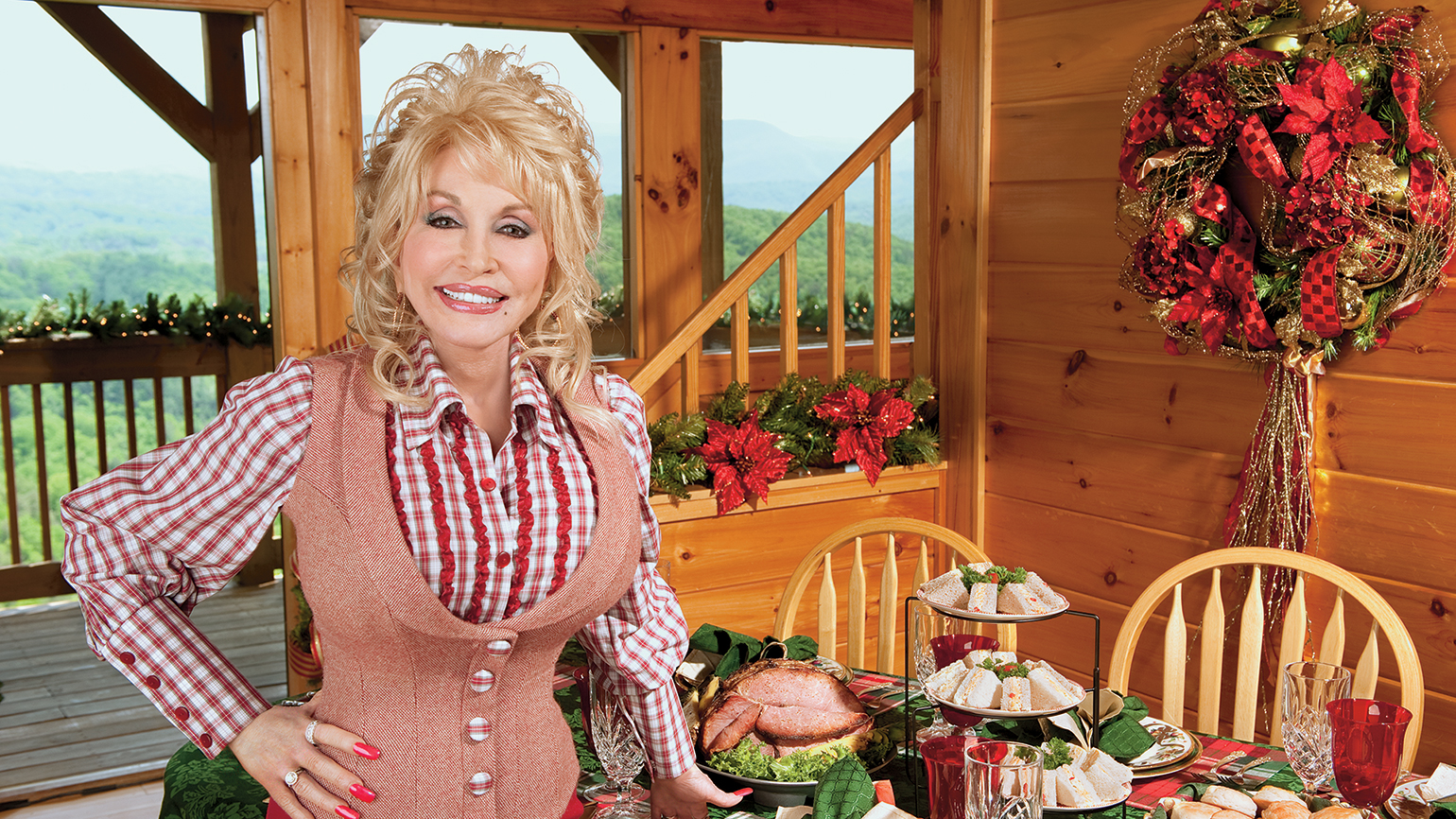
Y’all know how much I love singing and writing music and acting, but I bet you didn’t know another one of my loves—cooking! When I’m not touring you’ll find me in the kitchen, my favorite room in the house, stirring up something here, chopping up something there.
Like a lot of you, I cook for the week ahead and freeze meals. I love canning my own tomatoes and peaches too. So when Christmas comes, you bet I’m in a happy frenzy.
My mouth waters when I just think about my holiday dishes—tasty biscuits (perfect with my pecan chicken salad), savory pimento cheese sandwiches (cubed dill pickle gives it tang), luscious pies (if you’re a pecan lover, wait’ll you taste mybutterscotch pie crust) and, of course, my signature chicken and dumplings.
Sorry, but that recipe is under lock and key. It was Mama’s specialty and now it’s mine. I remember being at her side, standing on tiptoes, waitin’ for when she’d let me drop the dumpling batter into the steaming-hot chicken pot with a big old spoon.
Then there’s the ham. There was always a holiday ham ever since I was a bitty thing growing up with my 11 brothers and sisters in our two-room Smoky Mountain cabin. We knew how hard Daddy worked to raise his hogs and how much love Mama put into preparing them for the smokehouse.
Back then we’d wake up on Christmas morning to find our stockings filled with some apples or oranges and hard candy. We loved our hard candy! Daddy whittled us new toys. We sang all the Christmas carols, our voices ringing throughout the holler.
It was Mama’s job to read aloud the Christmas story from the Bible. I can hear her even now: “Behold, an angel of the Lord appeared to Joseph in a dream….”
Sure, I miss those times. But I’ve created some new traditions of my own. About a week before Christmas, I host what I call Granny Night. I helped raise some of my younger brothers’ and sisters’ children, and they started calling me Aunt Granny.
So come Christmastime I’m Granny Claus. I get all gussied up in a red velvet Santa suit. (You don’t think I’d miss a chance to wear a costume, do you?)
I load up the table with all kinds of homemade goodies: thumbprint cookies, Hello Dolly bars, walnut candy and kettle corn. Then I come in carrying a big sack of presents. “Ho ho ho!” I belt out. The kids go crazy. I don’t know who has more fun, them or me.
I like to do things big. At Dollywood in Pigeon Forge, Tennessee, not far from where I grew up, we decorate every inch of the place with lights for our Christmas festival. Our little white clapboard Christmas Chapel glows like the star in the east.
By the way, near the chapel is Aunt Granny’s restaurant, the one place you can get my chicken and dumplings.
This year our special holiday musical is Dollywood’s A Christmas Carol, based on the Charles Dickens classic. I wrote seven new songs for it and I’ll even be on stage in a new-fangled way. They made a hologram of me playing the Ghost of Christmas Past. What a twist on a classic!
Of course the message of divine redemption will always stay the same.
On Christmas Day when our family gathers around the table, we’ll bow our heads to say grace, thankful for the food before us and for the best gift the Lord ever gave us, each other.
Now, if you wouldn’t mind, please pass the biscuits, and maybe save some room for dessert. Merry Christmas, y’all, from my kitchen to yours!
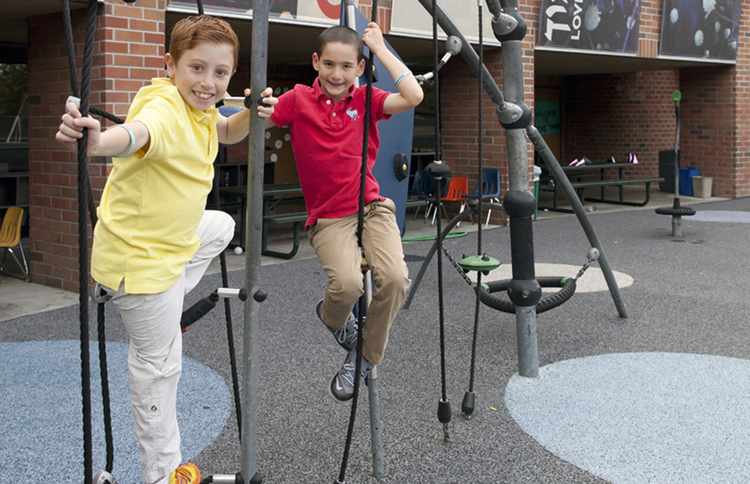
In Nicole Notare’s story for the November 2015 of Guideposts, we meet Dylan Siegel and Jonah Pournazarian, nine-year-olds who became acquainted some years ago while attending pre-K at a day school in Los Angeles. These two boys are the best of friends, as demonstrated by Dylan’s tireless efforts to raise money for research toward a cure for glycogen storage disease type 1b, a rare and incurable genetic condition that Jonah has battled since birth.
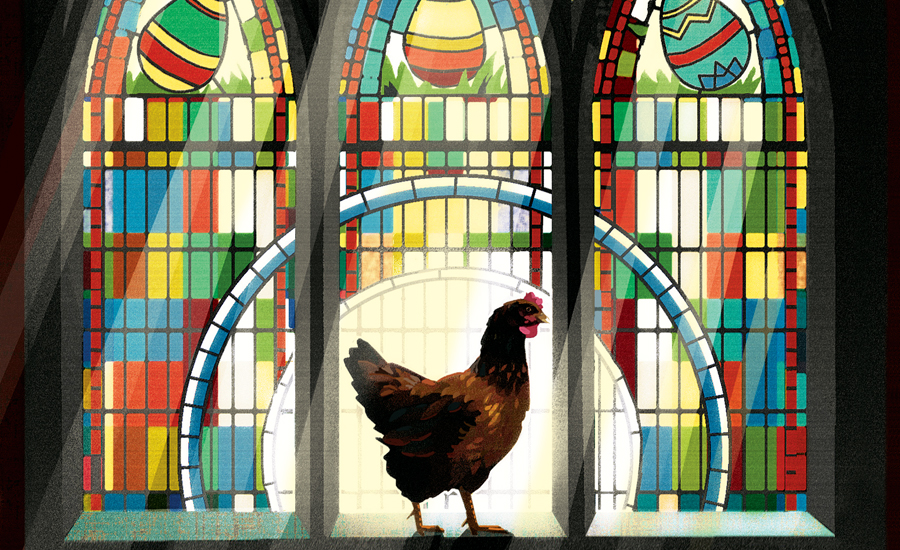
Eggs, of course. The symbol of new life come spring. How better to illustrate the season’s spiritual message?
I looked forward to teaching the lesson of the egg in my Sunday school class as Easter approached, but when I asked the children where eggs came from the answer surprised me.
“Bunnies!” all 12 students shouted.
Bunnies? I thought. Could these kids be so far removed from nature they actually think rabbits lay eggs? My own chickens would have been insulted!
“It’s on TV,” one of the girls explained. “A white rabbit lays chocolate eggs.”
Now I knew what they meant. I’d seen the commercial, but it didn’t have much to do with the lesson I wanted to teach. I had to think this through.
The following Sunday morning I got ready for school, still not sure what to do. I have to find a way to set them straight, I thought.
I checked my chicken coop before I left. My birds strutted and clucked around the hen houses: Ida, Ada and Henney Penney in their nesting boxes, Rudy the rooster scratching at the ground. Penney puffed her feathers to twice her size when Rudy got close. She was guarding a dozen eggs.
“If only the kids at Sunday school could see your eggs,” I said, stroking Penney’s copper-speckled feathers, “they’d forget all about chocolate.”
That’s when it hit me: What if I took Penney and her eggs to Sunday school with me? How many of the kids had ever seen a real egg hatch? Or watched an ordinary-looking, beige-colored egg turn into a live chick with bright little BB-pellet eyes, downy feathers and tiny feet, peeping away? The hatching of an egg was like a miracle. Why not share it with the kids? I’d give those children an Easter message they’d never forget!
I hunted for a box to hold the eggs. But wait a minute: Was I really planning to bring a chicken to church? I tried to remember another time any kind of animal had joined us at our solemn service. Once a sparrow flew in an open window and fluttered around, disturbing the reading. And a puppy had wandered in and led the ushers in a merry chase around the aisles while the children laughed. But those events hadn’t been planned.
I thought of a certain church lady, a good Christian with very strong opinions. She’d once objected to my son’s carrying in a Bible with a jazzy cover. “It’s a New Testament,” I’d assured her as she eyed the brightly colored jacket.
“Well,” she’d sniffed, “it looks like a Betty Crocker cookbook!”
I had a vision of my little bantam hen pooping on the ecclesiastical carpet. “I guess chickens really don’t belong in church,” I said. But then I remembered Jesus’ own words in the Gospel of Matthew: “How often I have longed to gather your children together, as a hen gathers her chicks under her wings.”
“That settles it,” I told Penney. “Jesus would approve of a chicken in church, and he’s who matters!” Penney would be in the Sunday school wing anyway. Nowhere near the church, actually. And nowhere near that straitlaced church lady (I hoped).
I poked holes in the lid of a straw-filled cardboard box and transferred Penney and her eggs into it. It was waiting on the table when the children came to class. As they took their seats I said, “Guess what’s inside.”
“Rabbits!” one boy shouted.
“Kitten!” a girl said over him.
“Puppy!” called someone else.
“Nobody has guessed it,” I said and lifted the lid. All the children gasped. Penney blinked in the sudden light and ruffled her feathers, but soon settled down and clucked. The children came forward slowly, so as not to scare her. The girls took turns stroking her feathers.
“What do you think Penney’s brought with her?” I said. I lifted her up to reveal a dozen eggs.
A boy poked one of the shells with a pudgy finger. “How can she sit on them?” he asked. “They’re hard!”
“Penney wants her babies very much,” I said. “She’s willing to go through hard things. Just like your mother did before you were born. God puts love into all parents’ hearts—even chicken parents!”
Now that the children had seen the eggs, I offered them a deal. “Penney has laid 12 eggs. That’s one for each of you,” I said. “You have a choice what to do with your egg. You can take it home and have your mom cook it for breakfast…”
The children giggled.
“Or I can bring Penney back next week and you can see your eggs turn into babies!”
Not one child voted for an omelet. By the following week the children had told all their friends. We discussed the impending blessed event. They couldn’t wait to see the chicks they’d been promised on Easter Sunday.
I promised, I thought as I got ready for bed on Saturday night. Should I have been so confident the children would see chicks on Easter? It took 21 days for a bantam hen egg to hatch, and in the interest of timing, I’d taken the eggs from under Penney so that she’d miss a day of brooding. But what if I’d miscounted, or addled the eggs when moving them? What if Penney’s temperature wasn’t just right? The hatching of a chicken was God’s work, not mine. God, I prayed after I switched off the light, please let at least one egg hatch for them.
The church parking lot was crowded the next morning. Everyone came for the Easter service. But why were so many people gathered around the Sunday school wing? I made my way through the crowd with my cardboard box.
“Is that Penney?” a woman asked me.
“Did the eggs hatch yet?” a man said.
They were all here to see Penney and her eggs! Along with every child from every Sunday school class, not just my own. Even the pastor came over to see what was going on. “It’s an expectant hen,” I told him, blushing. “I thought the children would like to see the eggs hatch.”
“What a perfect way to illustrate today’s sermon!” he said. “Would you bring Penney into the church?”
So much for keeping Penney under wraps, I thought as a pack of children cheered and followed me into the sanctuary. They plunked themselves on the stage at the front of the church. Okay, God, I thought as I lifted the lid. Time for an Easter miracle!
A gasp went up. There was Penney with not one but six wobbly chicks. Three were already dried and fluffy as dandelion down. The other three were still wet from their shells. Two more eggs were nearly cracked in half, the babies just emerging. The last four eggshells showed tiny holes where miniature beaks were pecking.
I looked up, beaming, from Penney’s new family—right into the face of that straitlaced parishioner I’d dreaded. She was gazing down at the chicks as happy and amazed as the little girl in front of her who asked, “How did you get the eggs to hatch right on Easter?”
“God decides when the eggs hatch,” I said. “He knew this was the right time!”
And just the right place—right in his own house, where all new life begins.
The miniature black horse with a white nose and a flowing mane trotted into a room in Nashville’s Monroe Carell Jr. Children’s Hospital at Vanderbilt. Some of the kids were in wheelchairs, some wore masks, some were hooked up to IVs, but they all squealed with excitement. “I can’t believe there’s a horse in the hospital!” a boy said. On this day, instead of undergoing challenging medical tests and procedures, these kids got to have fun with Magic the miniature mare.
Magic is a member of Gentle Carousel Miniature Therapy Horses, an all-volunteer charity, based in Gainesville, Florida, and run by Debbie Garcia-Bengochea and her husband, Jorge. Teams of therapy horses work with families who have experienced traumatic events. Each year, the animals interact with more than 25,000 people of all ages in hospitals, hospice programs, schools, libraries and mentoring programs. They also visit education resource centers in high-crime neighborhoods and attend literacy events.
This diminutive mare has a special way of knowing who needs her the most. She trots over and gently puts her head on their shoulder. She’s won numerous awards for her work, including being named one of Newsweek’s10 Most Heroic Animals of 2010 and one of Time’s 10 Most Heroic Animals. Last year, Magic celebrated 10 years of service. Here are some of the highlights of her career so far.
Sandy Hook Elementary School Shooting: Newtown, Connecticut
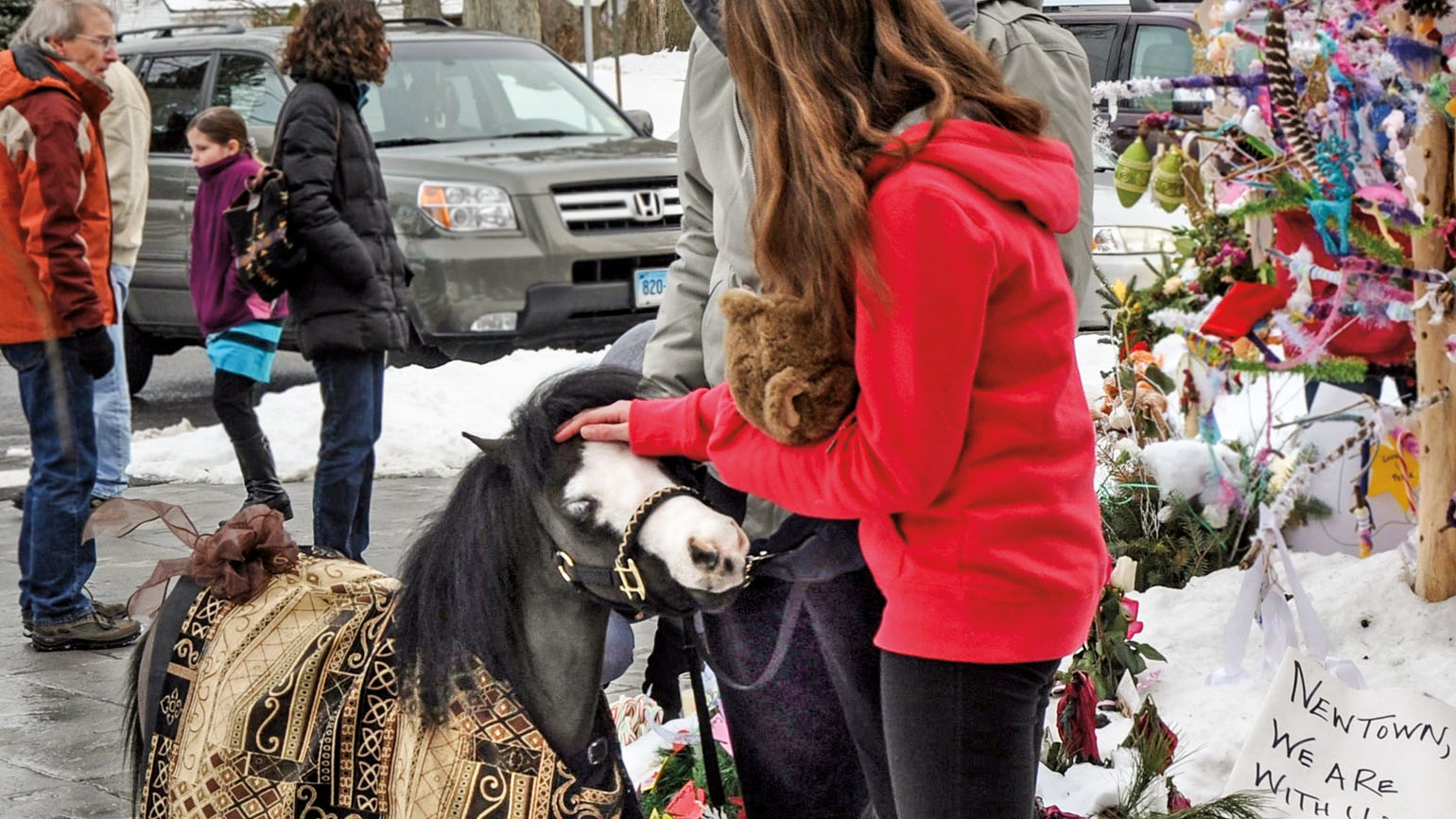
The December 14, 2012, shooting at Sandy Hook Elementary School shocked the close-knit Connecticut community and the world. Debbie answered her phone the day after the tragedy. “Could you come?” a town administrator asked.
Debbie didn’t hesitate. “We’ll be there.” Magic had never traveled so far before. She and two other horses would make the long trip. Debbie and Jorge gathered blankets and provisions to keep the horses warm—they were used to sunny Florida, not snowy Connecticut in winter. A professional horse-transportation service donated its time, and on December 18 the team set out on the more-than-1,000-mile journey.
A few days later, Magic waited to greet children in the Newtown library. No one knew what to expect. “Even if there’s only one child, we’re here to comfort him,” Debbie said.
That day the library room filled, and the line kept growing. By the end of the day, more than 600 people had shown up—not only kids, but entire families. As they each took their turn, Magic nuzzled close and at times felt their tears on her neck. They needed healing, and Magic was there to help. The horses stayed in Newtown for two weeks, spending time with Sandy Hook students and their families and first responders.
Tornados: Moore, Oklahoma
On May 20, 2013, a powerful EF5 tornado ravaged Moore, a suburb of Oklahoma City. With winds gusting to more than 200 miles per hour, it killed 24 people and obliterated homes and schools.
Magic and the team arrived in Moore on May 25. They visited with a group of children who had been trapped in their school during the terrifying storm. On May 31, Magic was scheduled to meet with a little girl who was faced with the heartbreaking ordeal of attending her best friend’s funeral.
The horses were loaded into the trailer, ready to go meet the girl. Jorge and Debbie ran into the hotel to grab something. The lobby was eerily quiet. Everyone was staring at the television. Warnings flashed across the screen—another tornado was coming their way. There was no safe place for Debbie, Jorge and the horses.
Debbie and Jorge jumped into the truck and took off down the highway, trying to outrun the storm. Roaring wind chased after them. Debbie looked up at a monitor on the dashboard, which allowed her to view the horses in the trailer. They were casually munching hay. Their training had taught them to be calm, even during a tornado.
At last Debbie and Jorge pulled into a truck stop to wait out the storm. When it passed, they had the same thought on their minds. “We have to go back,” Debbie said. A little girl was counting on them.
Back in Moore, they stared out the truck window, shocked at the devastation. The tornado was the widest in U.S. history, and its path of destruction stretched more than 16 miles. The hotel they’d been staying in was damaged and uninhabitable. Still, they met with the girl and her family in the best place they could find, a nearby parking lot. Magic trotted right up and put her head in the girl’s lap. She hugged the horse tightly. Debbie hoped that somehow Magic would give the girl the strength she needed to get through the difficult days ahead.
Gold Star Families Event: Ocala, Florida
Magic visits veterans in hospitals, assisted-living facilities and hospices. Another way she serves veterans is by participating in events for Gold Star families—immediate relatives of members of the U.S. armed forces who have been killed in action.
Last May, Magic attended an event for Gold Star families at a park in Ocala, Florida. Debbie paid special attention to the children. One seven-year-old girl sat by herself, quiet and withdrawn because of the loss of her father. “Would you like to take Magic for a walk?” Debbie asked.
The girl took one of the leads attached to Magic’s harness, while Jorge held firmly onto another. They walked around a grassy area. Debbie and Jorge attempted to fade into the background and let Magic do her work. Something about walking with the horse often helps people open up.
Eventually the young girl started talking to Magic about her father. “He took me to the movies,” she said. “We ate ice cream together.” They moved slowly down a path. “He got me some Barbie dolls for Christmas.” The girl put her face close to Magic’s and whispered, “He said he would come back.”
Debbie reached over and squeezed the girl’s shoulder. “He would have if he could,” she said. The girl looked up, her eyes wide, and nodded. At the end of their walk, she hugged Magic—a tender start to a long journey of healing.
With her uniquely empathetic personality, Magic is the one the volunteers count on to reach people in the most difficult situations, whether they are children with life-threatening illnesses or first responders haunted by a mass shooting. Her presence not only comforts, it heals. Couldn’t we all use a little Magic in our lives?
Did you enjoy this story? Subscribe to All Creaturesmagazine.
Do animals grieve? The way we humans do? I’ve been asking myself this question ever since my husband, Adam, told me the story of how his parents’ dog, Sandy, behaved after the death of his grandfather a few years ago.
“We took Sandy to my Pop Pop’s house after the funeral,” Adam said. “She raced to his armchair and lay next to it. She stayed for hours. Somehow she knew. He was gone.”
But how? To find out, I decided to talk to experts and others who have witnessed animals mourning. Like Meva Scarff, a Mysterious Ways reader from West Virginia. Meva was stunned by the way the cows on her farm seemed to express their grief after the death of her husband, Jim, about a year ago.
Meva had Jim buried on top of a hill on their 110-acre farm. The cows would constantly graze over the spot, so Meva built a fence around the gravesite to keep them away. Again and again, they found ways to push through the fence, as if to be closer to Jim. Meva couldn’t believe it. “My husband loved those cows,” she said, “and I guess they loved him too.”
Of course, some skeptics argue that people anthropomorphize their pets, giving them human qualities and feelings. But these weren’t pets. They were cows. Could something deeper be going on?
I took my questions to Dr. Eric Dougherty. He’s the medical director of Cat Practice, a feline veterinary hospital in New York. According to Dr. Dougherty, animals do mourn—for both humans and members of their own species. Interestingly, their grief often mimics the behavior we typically associate with humans.
“Animals, while possessing a different—and in some cases, not fully understood—social structure, have deep emotional connections to one another beyond simple social hierarchy,” he says. “Many of the common signs of grief in cats, for example, consist of changes like becoming withdrawn, depressed, lethargic or even aggressive.” Dr. Dougherty recalls a client whose two cats formed a lifelong bond. Just 48 hours after one of them died, the other unexpectedly passed away. A comparable phenomenon—broken-heart syndrome—has been observed in humans following the death of a loved one.
“We cannot explain exactly what each cat experienced in that case,” Dr. Dougherty says. “But have no doubt, the surviving cat knew something important from her life was lost.”
Mysterious Ways Editorial Director Edward Grinnan saw something similar happen with Millie, his golden retriever. Millie was just a puppy when she met Winky, the dog of Mysterious Ways Senior Contributing Editor Amy Wong. The two quickly became inseparable. Winky helped Millie navigate the sidewalks of New York City. In turn, Millie protected Winky from a black bear on the Appalachian Trail. “The day Winky died, Millie was across town from Winky,” Edward told me. “At the very hour it happened, Millie let out a soft cry and a deep sigh. Somehow she knew her best friend had died.”
She knew. How? I turned to other species in the animal kingdom for clues, starting with elephants. Elephant graveyards may seem like something out of The Lion King, but elephants do indeed come together to mourn when they lose a member of their herd. Tony Verhulst, founder of the sanctuary Elephant Haven in France, talked about elephants he studied in Thailand. After one died, another lingered by the body for three days. “She needed to say goodbye,” Verhulst says. “She knows where they buried her, and she still goes back to the gravesite.”
Elephant mourning rituals can be downright eerie. Joyce Poole, an animal behaviorist and author of Coming of Age With Elephants: A Memoir, says, “Their silence is unsettling. The only sound is the slow blowing of air out of their trunks as they investigate their dead companion. It’s as if even the birds have stopped singing.”
Dolphins are another species known for their grieving rituals. Like elephants, dolphins often travel in groups. Mother dolphins will sometimes carry their dead young for days. The mourning isn’t restricted to mothers. According to the book How Animals Grieve, by anthropologist Barbara J. King, when scientists studied dolphins off the Canary Islands in 2001, they observed a mother dolphin carrying her baby’s carcass. One adult dolphin swam directly in front of her, another directly behind her. The same mother dolphin was later seen with other adults in her pod—some even helped her carry the body. For six days, they wouldn’t let her grieve alone.
Not that there’s a time limit to how long animals grieve. The mourning can last weeks, months, even longer. Take the famous story of Hidesaburō Ueno, a professor of agriculture at Japan’s Tokyo University in the 1920s. He had an Akita pup named Hachikō, whom he affectionately called Hachi. Hachi would walk him to the train every morning and greet him there at night.
In 1925, Ueno passed away at his office. The dog went to the train station every day for the next 10 years, patiently waiting for his owner and friend to return. People started calling him Chuken-Hachikō, or “the faithful dog Hachikō.” Today a statue stands in dedication to his loyalty and love at the Shibuya train station in Tokyo, lest we underestimate the rich emotional lives many animals have.
“Grief is born from love.” That’s what Barbara J. King writes in How Animals Grieve. Surely that’s true for all of God’s creatures.
Old married couples like Rick and me can get settled in their routines. Take weeknights at our house. Rick’s pickup would rumble up the drive around 7:30 p.m. Another long day at his auto shop, and late enough that our 12-year-old, Thomas, the only one of our three kids still at home, and I would’ve eaten already. I’d zap Rick’s dinner in the microwave. He’d come in, give me a kiss, wash up. I’d put his plate on the table. A quick blessing, and he’d dig in. Then it was dishes for me and ESPN for him.
We might chat about Thomas and his upcoming ball game. Otherwise we didn’t talk much. Didn’t have to, I told myself.
Community Newsletter
Get More Inspiration Delivered to Your Inbox
My husband was the strong, silent type, and besides, after 25 years, I should be able to read him like the books I was constantly taking out of the library. Right? Not quite.
“This guy I know has a piece of property out in the woods,” Rick said one November night between bites. “You’ve got to take a look at it. It’s perfect.”
“For what?” I asked. My hands were busy filling the sink, my mind was on the novel I’d been reading. Maybe now that the kids didn’t need me as much, I could start writing a novel of my own.Writing was a dream of mine.
“Our log cabin.”
That got my attention. “Rick, what are you talking about?”
“Since we’ve got some money now, we can build—”
“We’ve got a great place already.” Close to our son’s school, our church, Rick’s shop. “Anyway, we decided what we’re going to do with the money.”
It was a small legacy from my grandparents. “We’re saving it. College tuition, remember?” Our daughters were still in college, and there was Thomas to consider.
“A creek runs through the land. Thomas would love it,” Rick went on as if he hadn’t heard a word. “Just think, Julie, our own cabin in the woods…like we’ve always dreamed.”
“C’mon, Rick.” Sure, he used to buy those log-home magazines, but all they did was gather dust until I finally tossed them. “We haven’t talked about this log cabin thing in years. I didn’t even know you were still thinking about it.”
“That’s why I’m telling you now, Honey,” Rick said. He glanced at his watch. “Shoot, the Braves are on already.” He stuck his plate in the sink. “Dinner was great. Thanks.” He disappeared into the den.
Our log cabin, I thought as I scrubbed the dishes. Just like we’ve always dreamed.
My mind went back to a brilliant autumn day when I was 15 and Rick, my high school sweetheart, just a year older. He zipped his lime-green Kawasaki motorcycle into the woods. I hung on tight, half scared, half thrilled.
We came across a rustic cabin. We stopped, took in the wraparound porch, the antler railings. “Now this is a home,” Rick said. He reached for my hand. “One day we’ll have a place like this…”
“…where we can sit on the porch and drink in the beauty all around us,” I finished. Rick was fearless in his dreaming, in his faith that God meant for us to have a future together.
And with my hand in his, I felt as sure about our future as he did. Back then it seemed like we knew everything there was to know about each other. Now I had no idea what was on my husband’s mind. And he wouldn’t know what was on mine because he never asked.
What happened, Lord? Why don’t Rick and I connect like we used to? I wondered. With our blessings had come responsibilities. Did our love get dragged down to earth by everyday things? Like the dishes. Bills. Church committees. The kids sports practices.
To connect, we had to talk. Rick wasn’t the communicative type, so it was up to me. I finished the dishes and went into the den. Rick looked up from the TV. “About this log cabin,” I said. “It’s not like you’ve built a house before.”
“Hey, I’m good with tools,” he said.
“You are,” I conceded. “But—”
“Just come with me, Julie, and check this spot out. You’ll see.”
“All right.” I owed him that.
That Saturday we drove into the woods. Rick led me around the plot, among the hickories and pines.
In my head, I did the math. If we spent all our savings on this land, then we’d have to get a bridge loan for the construction. What if our house didn’t sell? Could we pay our mortgage and our loan? I didn’t even want to think about how building a new house would cut into the time I hoped to set aside for writing.
“Isn’t it beautiful?” Rick said. He pointed to a clump of trees. “That’s where our wraparound porch can go.”
I opened my mouth, ready to remind him of what could go wrong. Then I saw the wonder in Rick’s eyes, the fearless fire that still burned in him.
This was the man I’d fallen in love with. The man I’d trusted my life to when I was only 18. He’d made good on that trust, working hard to provide for our family so I could be a stay-at-home mom like I’d wanted. Maybe it was his turn to do something he’d always wanted.
“Okay, Rick,” I said. “I’ll do this. For you.”
“For us,” he corrected me.
“For us,” I said.
We went to a log home manufacturer and decided on a model. Three weeks later a cardboard tube arrived by UPS. Our blueprints. I took them out, tried to read them. Nothing doing. “How will all these crisscrossing lines add up to a house? What have you gotten us into?” I practically wailed when Rick got home from the shop.
He calmly spread the blueprints out and showed me where each room would be. “I’ll take out the third bedroom,” he said, “and put in a computer room that overlooks the den. See?”
“Not really.”
“You will,” Rick said confidently.
The log company set up the logs, and by spring we had a shell of a house. Now came the really hard labor-filling the shell. Rick would come home from the auto shop, bolt down dinner, then go to work on the cabin, sometimes not crawling into bed beside me until two in the morning. He had to be exhausted, but I hadn’t seen him this happy in a long time.
Saturdays he and Thomas were a father-son construction crew. I stayed home, trying to write and not think about all the problems that could crop up with the cabin.
One weekend Rick dragged me to Home Depot. “Let’s use these rocks for the kitchen floor.”
“Rick, you’d have to polish them. How about slate tiles?” I asked. “Still rustic, but easier to clean.”
Rick nodded. “I guess we should be practical.”
Had I really heard that? “Now for the master bathroom,” he said. We strolled through the aisles in the bath section.
“Look at that tub!” I exclaimed. “With claw feet, just like the one my grandma had. I love it.”
“Then that’s what we’ll get.”
“Really?”
“Sure. It’s your house too, Julie.”
So why couldn’t I feel good about it? Even as I marked our progress—framing up, flooring installed, plumbing in, electricity working—I kept worrying. What if our current house didn’t sell? What if it sold but the price didn’t cover our building costs? What if? What if?
One Saturday about 10 months into building, I packed a picnic lunch and took it to the site. I found my husband perched at the top of a 20-foot ladder, hanging a tongue-and-groove ceiling.
“Rick!” I said, feeling like I had been riding on the back of his motorcycle.
“Don’t worry, I’m careful.” He climbed down. “Come on, I’ll take you on a tour.”
He showed me the slate tiles in the kitchen. The wood-burning stove. The antler railing on the staircase. The space where the clawfoot tub would go.
“This is amazing, Rick. The way you’ve made everything come together.”
“Didn’t I promise I would?”
“I—” I was ashamed to admit it. “I guess I wasn’t listening.”
I spread out a blanket and we had our picnic on the unfinished floor. I thought about how I wished Rick and I could connect like we used to.
I’d pegged my husband as the uncommunicative type, but hadn’t he, in his own quiet way, been reaching out, telling me what he was thinking? Showing me through his actions, if not his words. Wasn’t building this home his way of communicating?
Maybe it was me who was stuck in a routine. I get it now, Lord, I thought. Talking is important, but so is listening. Help me do more.
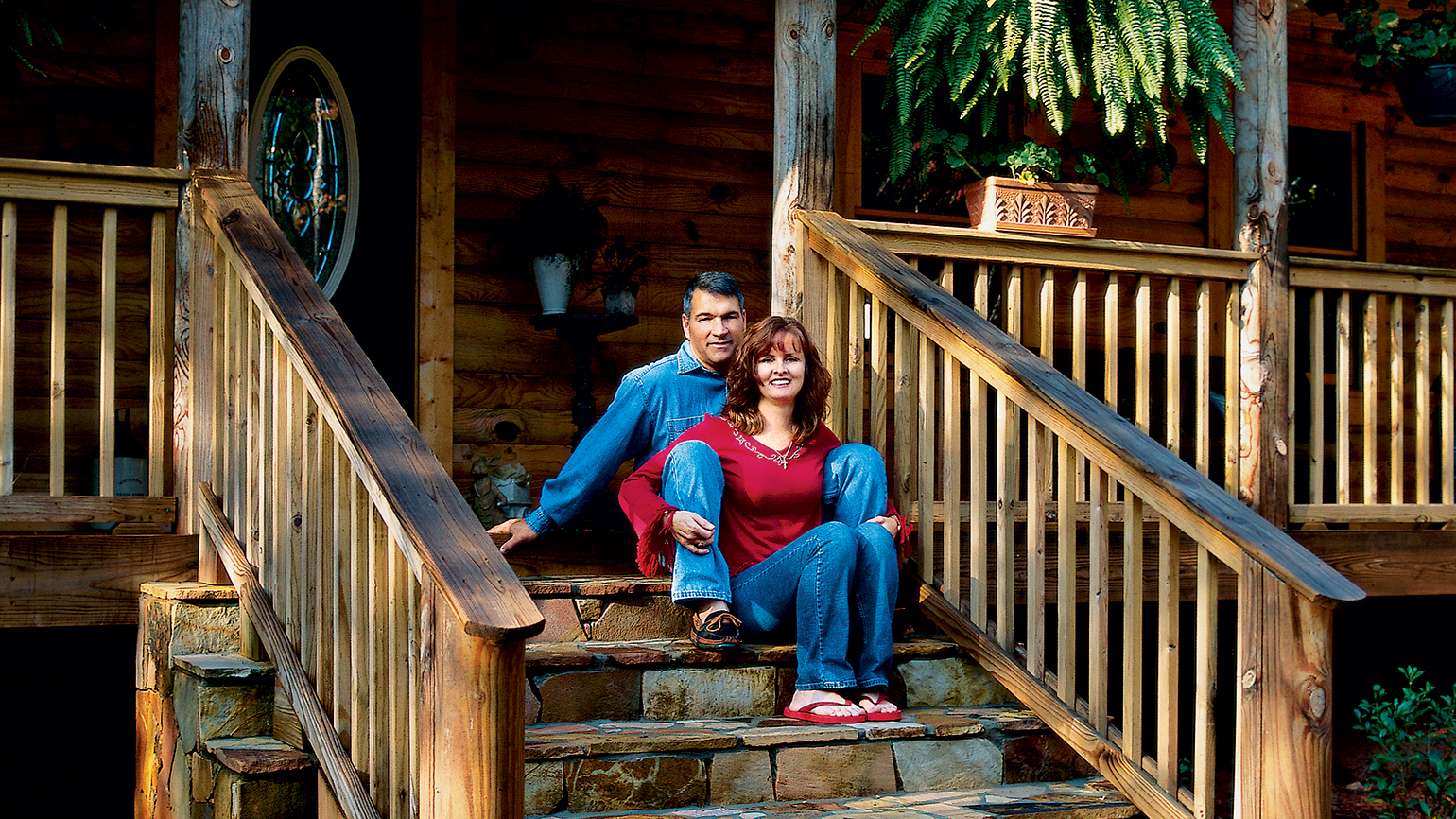
We sold our house in February and moved into the cabin the day before Valentine’s Day. Rick led me up the steps of our wraparound porch and took me on another tour.
The thought he’d put into every detail! The shelves that were the perfect spot for my grandfather’s train collection, the weathered horse collar he’d turned into a frame for our bathroom mirror. On the third floor we walked into a loft overlooking the den.
“This is for you,” he said.
“What do you mean?” I could have sworn this was the spot Rick marked as the computer room.
“There’s space for all your books and the computer. And here’s a window so you can look out at the trees. This is your writing loft, Julie.”
Tears came to my eyes. Maybe Rick hadn’t come right out and asked what mattered to me, but he’d been paying attention. Far better than I had. “Honey, you planned this all along?”
“From the very beginning,” he said.
I reached for my husband’s hands, calloused from all the work he’d done, and held them tight. “Thank you, Rick, for building our dream house.”
David Strickland was like a brother to me. For three seasons we worked together on the TV show Suddenly Susan. My friends tend to be people who are not in the entertainment business. David was different. He was a brilliant but vulnerable actor and an incredibly loyal friend.
Then in 1999 the unthinkable: David committed suicide. I was aware that he was suffering from depression. We’d talked about it. It was as if the emotional vulnerability that made him a great actor destroyed him as a person. I knew he’d been taking medication. We talked about it often. But I always wondered if I could have done more. I kept thinking of things that might have made a difference. But it was only when I faced my own depression a few years later that I truly understood how desperate David must have been, and how hard it is to reach out for help.
Throughout my depression I had the constant support of my husband, Chris Henchy, my family and my friends. There were times I must have seemed impossible to reach. And yet they kept trying and they eventually did reach me.
Here are four crucial things I’ve learned that you must do to help a friend in trouble:
1. Be There
Listening is one of the most powerful things you can do to help someone who is suffering. You don’t have to have any answers. A depressed person is trying to fight her way out of a terrible wilderness, and just to be listened to helps her in her quest for a path.
When I came home with my newborn baby, Rowan, I thought what I was experiencing was simple exhaustion. Yet there was an overriding sense of panic that I had never felt before. I wasn’t cut out to be a mother, I thought. In the past, if I felt down, I could counteract it with exercise, a good night’s sleep or a nice dinner with a friend. But I became convinced that this terrible feeling would never go away.
I called friends and family and cried to them on the phone. I called my stepsister Diana. “Promise me it will get better,” I wailed. She begged me to get a baby nurse for a few days so I could sleep. The people in my life were trying to help, but I was in over my head.
Then Rowan’s godfather, John, visited. He’d been there for me after David died, and for years before that as a trusted and levelheaded adviser. “John,” I said quietly to him one day, “I feel like there’s no hope. I’ve fallen down a dark hole and I’ll never get out.”
John listened to me for a long time. Just listened. Finally he told me that no matter what I was feeling there was always hope. Things would get better. Then, without any judgment whatsoever, he gently insisted that I seek professional help. “When you’re not well, Brooke, you go to the doctor,” he reminded me.
That was the voice I needed to hear in the dark woods to start to find my way out, back to health.
The most important thing that friends can do is to watch and listen. Watch to see if a loved one is retreating or acting down or moody for a prolonged time. Ask them questions about how they feel, about their state of mind. Listen to their answers. Then reassure them. The best advice you can give is reassurance.
I wanted to hear, over and over again, that this would get better. Maybe that’s what David needed to hear too.
2. Give Them Information
Provide information—even if they’re not ready to act on it. Information is a long, strong lifeline. My friend Sherie came over to my apartment one day with a stack of information on postpartum depression that she’d downloaded from the internet. She told me that everything I had said to her on the phone was repeated practically word for word in this material.
I couldn’t imagine that anyone could possibly feel what I was feeling.
I put it near my bedside and said I’d look at it. I didn’t say when. In fact, it was a long time before I could bring myself to read it. But when I was ready, I had all that stuff Sherie printed out for me. Seeing what other people had gone through made me feel less like a freak and less alone. There is hope in community.
3. Be Honest
Honesty is the quality I value most in a friend. Not bluntness, but honesty with compassion. At one of my worst moments I went out to lunch with my friend Stephanie. I’d been taking an antidepressant, but because I felt better I’d stopped taking it without telling my doctor (a foolish and dangerous decision). Now I wasn’t doing well.
Stephanie reached across the table and squeezed my hand. “Brooke, you have so much. You can’t forget that. I know you’re grateful. Let’s make a list.” She pulled pad and pencil from her bag. “Write down every blessing in your life.” I did as she said. The act of writing made me feel better, but it wasn’t enough to feel peace or believe I was going to survive this. Later, walking out to the parking lot, Stephanie made me promise to call my doctor as soon as I got home.
I thought about how David had spiraled out of control. He, too, had gone off his meds without telling his doctor. Why did I think I could make the same bad decision? The answer is that someone in crisis can’t always make good choices. The negative thoughts running through my head made sense to me. I not only needed objective advice, I needed medical attention.
4. Pray
I’m always praying for my friends. Not just when they’re in dire straits. I pray for them specifically. I believe that the more specific the prayer the better. So I stay in touch. That way my prayers are focused. Prayer, for me, is about the private quiet plea for help. If I suspect a friend is struggling I’ll leave messages on her answering machine, telling her that she’s in my thoughts. Can I be a pain? Maybe. Still, I’d rather leave a message for someone every day than let them wonder if I cared or risk letting them feel alone.
My friends know I pray for them. That’s important. When I felt there was nothing I could do to help myself, knowing that I was prayed for was often the only thing that stood between me and despair. I made a round of calls. One of the first people I called was my godmother, Lila. All I asked for were her prayers. That might seem like so little, but it felt like so much.
When a friend is in trouble, you need to act. Don’t worry about overreacting. It’s better than the alternative. Too often we’re afraid of intruding or seeming judgmental. But I’ve been on both sides, and there is nothing of greater earthly help than a friend who is willing to reach out, way out if necessary. Listen, give good information, be honest, pray. That’s what friends are for.
For more inspiring stories, subscribe to Guidepostsmagazine.
Nothing heralds the coming of the holiday season for me like cooking up a batch of peanut brittle. Long before my family is due for our Christmas meal, I get to work in the kitchen—alone. Alone with Jesus and the memory of my precious mother, who handed down her recipe. I like it that way, since peanut brittle can’t be prepared with the grandchildren underfoot. It’s simply not safe to have them anywhere near the sticky, boiling hot liquid.
I wasn’t allowed in the kitchen while Mama made her peanut brittle until I was a full-grown adult. She added the peanuts to that rolling boil of sugar syrup, stirring and stirring, until it was time to test a drop in a cup of tap water. If the cooled drop tasted hard and crunchy, the mixture was ready. If not, Mama kept up the boil, talking about Jesus all the while, which was Mama’s way.
“When you hear the sound of the peanuts popping,” she’d remind me, “you know you’re getting close.” After a successful taste test, Mama poured the mixture onto a well-buttered pan. “If you don’t butter that pan, you might as well throw it away,” she warned, “because that brittle ain’t never coming off!”
Mama taught me all kinds of things about cooking—things I used to think everybody’s mama had taught them. But a few years ago, there was a big fuss over the biscuits I brought to a “nighttime breakfast” fundraiser at our church. My husband, George, and I and our Sunday school class thought biscuits would be perfect. We served 900 biscuits, not one left!
The whole congregation wanted to know how to make biscuits like mine. They kept on asking until I posted a how-to video on my Facebook page. Would you believe that video was shared two million times? Now I’ve become what they call a “viral sensation,” and let me tell you, nobody’s more surprised than I am! Really, all I do is share wisdom that was passed on to me.
After our son, Dallas, and our daughter, Hannah, were born, George and I decided to alternate between our families for the Christmas gathering. One year, we’d stay in Andalusia with his parents, and the next, we’d travel the three hours to Tuscaloosa to be with mine. George’s mama and mine were as different as night and day, and so was the way they did Christmas. What “MeMama” (as the children called my mother) and “Granny,” my mother-in-law, did have in common was an abiding love for the Lord.
Granny had raised five children—four of them hungry boys. She worked outside the home as well, as a schoolteacher. There was hardly time to make a big to-do in the kitchen, and she wasn’t much for a fancy table, even at Christmastime. But she did go all out with one dessert among the store-bought Christmas candies—her glorious orange slice cake.
George grew up with this holiday confection chock-full of pecans, coconut, sugared dates and orange slice candy, topped off with an orange juice glaze. Granny probably favored the cake because it was practical: She could make it ahead and freeze it, the glaze keeping it fresh. A cup of black coffee and a slice of her cake was simply perfection.
I loved George’s mother so much because she treated me like a daughter. Once, I broke a beautiful crystal bowl that had belonged to her mother. I was heartbroken. “Don’t you worry!” Granny said. “It’s just a bowl.” She was good-hearted like that, with never an unkind word for anyone. And if you admired something in her house, she’d say, “Oh, please take it. I’m tired of dusting that thing!”
She was just as generous about sharing her recipes. When I asked Granny how to make George’s favorite cake, she was more than happy to walk me through it.
Doing Christmas with my mother and daddy, though, was a completely different experience. Mama’s long dining room table was set with red cloth napkins, white china and an elaborate holly berry centerpiece. Her dessert table offered homemade cakes, fudge, date nut balls, divinity and my favorite peanut brittle.
Unlike George’s mother, Mama was kind of secretive about her recipes, especially the cakes. She never told me every ingredient she put in them, and mine have never looked or tasted as good as hers. But how I wish we could have another conversation about Jesus while waiting for our peanut brittle to be ready to pour!
Mama found Jesus’ place in everything she did. I try to imitate that for the folks who enjoy my videos, because I think people come for more than my recipes. “How sweet are your words unto my taste!” says Psalm 119. “Yes, sweeter than honey in my mouth.”
Stirring my peanut brittle syrup on the stove, I ask the Lord to help me to be sweet with my words. When I break the cooled sheet of candy into pieces, I remember that unkind words can break hearts, and I pray never to do that.
Gathered at my house for Christmas, my children and grandchildren find a spiritual legacy on the dessert table: MeMama’s peanut brittle and Granny’s orange slice cake. In this way, I honor these very different but very loving women, and I thank the good Lord for the influence they had on me.
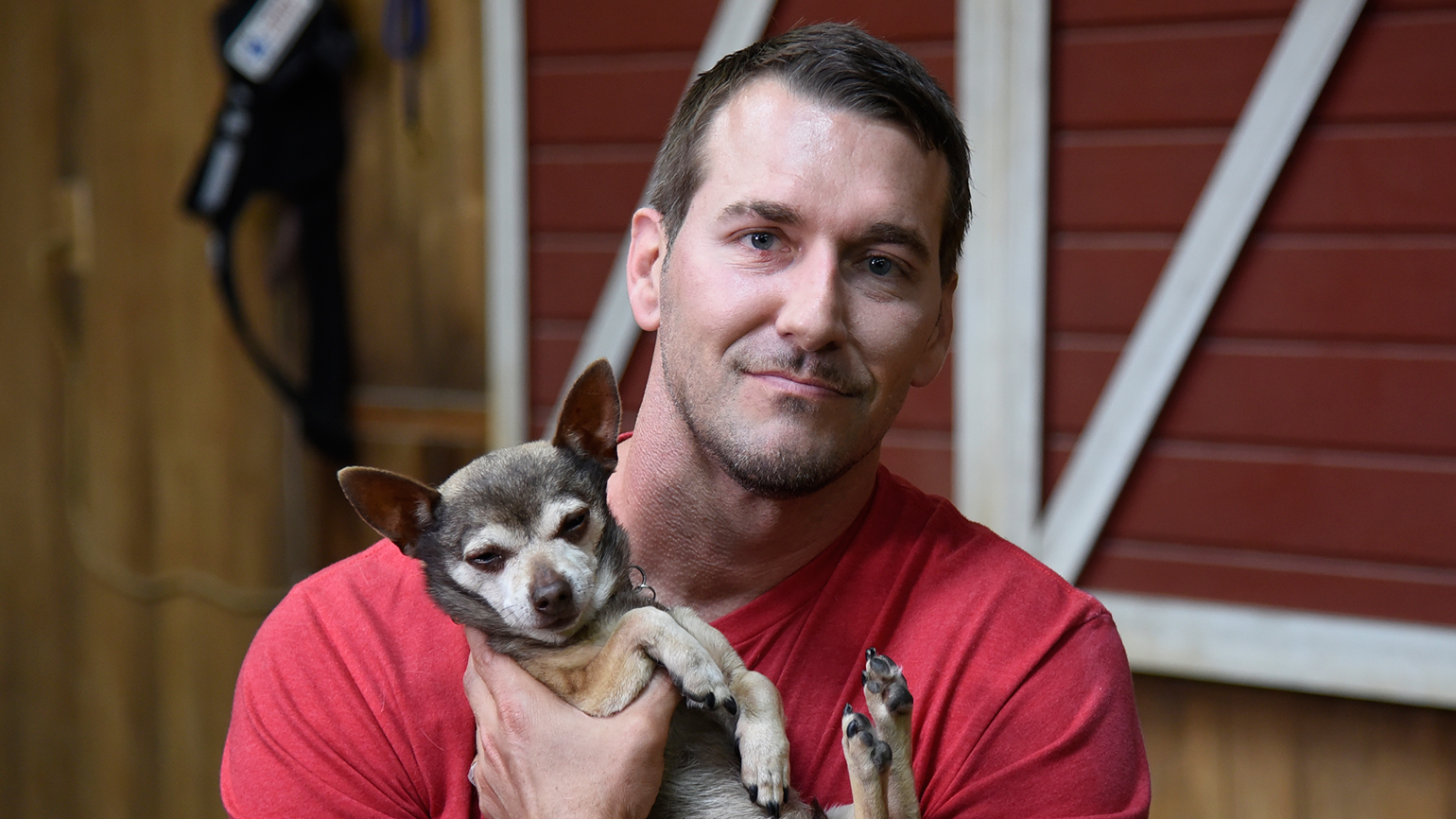
The hallways at Walter Reed National Military Medical Center all looked the same to me. It was like making my way through a maze. I asked a nurse for directions, trying to ignore the knots in my stomach. Everyone I passed stared at the massive Doberman at my side. Some even started following us. I made a conscious effort to hold Apollo’s lead loosely. I didn’t want him to sense my tension, though as smart as he was, he probably picked up on it. We’d spent months preparing for this moment.
What if all that work had been for nothing? What if I was wrong and there were some dogs who couldn’t be trained? What if I’d failed to teach Apollo to do the most important job I’d ever trained a dog for? I’d taken on this project as a favor to a friend, but there had been a personal meaning to it as well. One that went back to my grandfather, who’d died when I was 11.
Grandpa was a World War II veteran. He’d lost a leg fighting, and he wore an old-school prosthetic, a locked leg that couldn’t bend or move. If he dropped his keys, he’d have to grab onto something and practically do the splits to pick them up. Because of Grandpa, I had a deep respect for the military. I’d even planned to enlist as soon as I turned 18.
Military life would be totally different from how I grew up. My childhood was a circus—literally. My father and my uncle were both professional animal trainers. Some kids have kittens or puppies. I had tigers, elephants, primates and bears. My favorites were the grizzlies. They are highly intelligent and train extremely well. Kind of like a German shepherd, except a grizzly weighs 800 pounds.
Just as I was about to sign my enlistment papers, my uncle convinced me to take a temporary gig helping him train animals for a movie. It was supposed to last nine months, but I kept getting more work in Hollywood. It turned out I had a marketable skill. I wasn’t exactly making a fortune as an animal trainer, but I felt fortunate to be making a living doing something I loved.
One day in 2011, one of my buddies, a retired Army officer, called. “A friend of mine named Tyler Jeffries was hit by an IED in Afghanistan. He lost both legs in the blast. Is it possible to train a service dog for him?”
I didn’t hesitate. “Yes,” I said. “Can you send me his number and some videos so I get an idea of what he needs?”
I’d trained just about every type of animal there was by that point, from rhinos to cockroaches, and I’d come to believe every animal can be trained. They just need the right training and—most important—the right trainer. Tyler had had 14 surgeries over the course of a year and a half. The videos showed him trying to learn to walk on his prosthetics. Even though Tyler’s prosthetics were much more advanced, I couldn’t help but remember Grandpa and how difficult it had been for him to get around.
I asked Tyler what his life had been like before he was wounded, and the challenges he faced now. He told me he’d always been an athlete. It was frustrating not to be able to navigate curbs and steps without leaning on someone else. Plus, his wheelchair wasn’t motorized. Going up a hill to his home took a massive amount of upper body strength.
Helping Tyler was an opportunity I hadn’t even known I was looking for. A way to serve the military and honor my grandfather. I thought back to a commercial I’d done, where I’d trained a dog to retrieve a drink from a fridge and bring it to a guy on a couch. That was service dog training, though I hadn’t thought of it that way at the time. All I needed was a dog big and strong enough to brace Tyler.
That’s how I ended up with Apollo. I called a well-regarded breeder of Doberman pinschers to see if they’d be willing to donate a dog to become a service dog for a disabled veteran. “You can have Apollo,” they told me, sounding almost relieved. “The person we sold him to returned him because he’s…difficult to handle.” Difficult to handle? Not for me, I thought.
I flew to the kennel. The breeder pointed out a powerfully built red Doberman. Perfect for physically assisting someone with balance issues. “Apollo,” I called. The dog came barreling at me, all 100-plus pounds of him, slamming me into the wall. Maybe this would be more challenging than I’d thought.
I put Apollo in my rental car and drove off. Within minutes, he gnawed the inside of one of the doors until the handrest and cup holder came off. His next trick? Lifting his leg and peeing on the backseat for a full 45 seconds.
At least he’s on a leash, I thought. Before we’d left the kennel, I’d clipped an old leather leash onto his collar—my lucky leash. One of my most prized possessions. As soon as we got to a rest stop, I’d show Apollo how to behave.
Then I heard Apollo chewing again. I gave that lucky leash a tug to get his attention. Half of it came flying into the windshield.
“That’s it!” I yelled. I pulled over and started training Apollo right then and there on the side of the road.
That was only the beginning. Apollo was the most out-of-control dog I’d ever worked with—the combination of his size, strength and complete lack of discipline was incredible. He tested my belief that every animal was trainable. That I could do my job. That helping Tyler was something I was meant to do.
There were times I had to send up a silent prayer. I didn’t really know the right words. I just knew I needed help from a higher power if I was going to get this dog ready to serve Tyler.
This wasn’t like the movies. The stakes were far higher. With movies, a director says, “Cut!” and you get another take to try again. But if a disabled veteran is about to fall, the dog has to brace him 100 percent of the time. I couldn’t accept “pretty good” for Apollo. He had to be perfect. That meant my training had to be perfect too.
Which was why I was so nervous making my way through the halls of Walter Reed. Introducing Apollo and Tyler would be my moment of truth.
Finally I spotted him. A tough-looking guy in a wheelchair. “Tyler?”
He rolled over, eyes locked on the Doberman at my side.
“I’m Brandon. And this is Apollo.”
They sized each other up. Apollo didn’t tackle Tyler. So far, so good. But Tyler’s expression didn’t change.
I explained everything Apollo could do. He could brace himself so Tyler could lean on him to go up and down steps and curbs. He’d learned to pull a wheelchair up an incline. He knew “left” and “right,” so he could steer the wheelchair on command. He could pick up anything that was dropped, even a cell phone or keys, which feel strange in a dog’s mouth.
Tyler rested his head against Apollo’s and patted the dog’s neck. Then he looked up at me, tears in his eyes. “Thank you,” he said.
Relief swept through me. And gratitude. Tyler had given so much for our country. Training a dog to help him regain his independence was an honor.
I figured I’d hand over the dog, shake Tyler’s hand, thank him for his service and walk off into the sunset.
But before I could leave, other wounded veterans approached me. All of them wanted to know the same thing: “Can you train a dog for me?” I grabbed a clipboard and started jotting down notes on what they needed.
As soon as I got home, I called my buddy Mike Herstik, a legendary military and law enforcement dog trainer. “I want to start a foundation with you,” I told him. “To train service dogs for disabled veterans.” Mike was totally on board. With the Argus Service Dog Foundation, we want to honor the reality our disabled veterans face. These men and women could do 80 push-ups in two minutes, hike for miles with a 65-pound pack, fire a rifle, take it apart and put it back together again, practically in the blink of an eye. Then suddenly they can’t even get out of a chair without assistance.
Our bodies deteriorate over time, but most of us have decades to get used to our decline. These veterans lose their strength—and likely their confidence—in an instant. Friends, family, even spouses might not stick around, but dogs don’t make excuses like, “You’re not the same person anymore.” Dogs are loyal for life.
As much emotional support as our dogs offer, Argus is one of the few nonprofits that provide assistance dogs. Most service dogs for veterans are trained to help with PTSD. We train our dogs to physically work. And we don’t charge the veterans a single penny.
I knew this was my calling the moment I saw Tyler’s reaction to Apollo. I gave up my work in Hollywood to focus on it. It wasn’t easy. Money was tight. I spent months sleeping on friends’ couches, going to happy hours so I could fill up on the free appetizers. I did a lot of silent prayer. If this was going to work, it would take more than just me.
Then in 2013, a Hollywood production company, Litton Entertainment, called. They watched me train shelter dogs to become service animals for disabled veterans and others with special needs, and wanted to produce a series on the topic for a new CBS Saturday-morning lineup. They offered me my own show, Lucky Dog, training shelter dogs to be the perfect companion for a particular individual or family. It was another opportunity I hadn’t realized I needed. The perfect combination of my show business background and my calling to train service dogs.
One thing I’ve discovered is that disabled veterans and rescued dogs don’t take things for granted. Traumatic incidents have changed them but haven’t stopped them. There is always hope, even when things seem hopeless.
If I ever need a reminder, I just look at the shredded pieces of leather I’ve hung on my wall. I can still see Apollo’s teeth marks. That’s right, it’s my lucky leash. Which turned out to be beyond lucky for me.
For more inspiring stories, subscribe to Guidepostsmagazine.
Brandon McMillan is the author of Lucky Dog Lessons: Train Your Dog in 7 Days from HarperCollins Publishers.
“What’s she barking at?” Julee said. “She’s really riled up.”
I looked out the window into the gloaming, the time of day so many critters emerge for their nocturnal prowls. Evidently Gracie had treed one.
“Hey, Gracie, come!” I shouted out the door and whistled. She was having none of it. This was between her and whatever she was keeping at bay. I could just butt out, thank you.
“Go get her,” Julee said. “She’ll drive the neighbors crazy.”
Gracie gets her toy, post-porcupine.
I threw on a coat and jogged down to the apple tree where my golden had her quarry trapped. She was all proud and puffed up, tail aloft, glancing at me then staring at the upper branches of the tree. Apparently. she’d apprehended someone eating her apples which was strictly verboten. Usually, a family of deer were the culprits and were dutifully chased and chastised but this time it was a small, dark creature, probably a black squirrel curled way up towards the treetop. There were no other trees near enough to serve as an escape route, so it was stuck waiting her out.
“C’mon, Cujo, you made your point.”
Gracie followed me up the hill through the fading light back to the house, a bit of a prance to her stride, casting an occasional glance and a woof over her shoulder for good measure. Dogs. Always have to have the last word. Especially Gracie.
After such exertions she deserved a treat, which she snatched greedily. She was too jazzed up to be corrected for that indelicacy, so I let it go. Then she curled up for a nap while I worked a little and Julee dozed off watching a movie. When it was time for bed Gracie came over to me. She was limping slightly.
“Overdid it?”
She sat and showed me her paw. I took out a flashlight. There were thin silvery quills mixed in with her golden fur, barely perceptible. That was a porcupine she treed but not before getting quilled in her left foreleg. Gracie probably took a swat at it. No wonder she was so mad.
“Poor thing!” Julee said. “It’s too late to drive her up to Albany to the animal ER. We’ll have to wait till our vet opens.”
“First thing,” I said, warning myself that I’d be a fool to try removing them on my own, though I’d seen it done before. It’s just that I couldn’t bear to think of Gracie in pain. There is nothing sadder than a dog who hurts.
I dug out some pain pills she had been prescribed when she strained her back chasing a tree-trimming truck up the driveway a couple years ago—don’t worry, I checked the expiration date—and gave her one. I wanted her to sleep deeply enough that she wouldn’t lick or chew the quills and have one end up lodged in her throat. That happens, and I said a fervent prayer that it wouldn’t.
Do dogs know when we pray for them? Is it some acute level of concern that they sense? I moved her bed as close to ours as possible and tried not to cry. I’m actually not much of a crier—except when it comes to certain pieces of music—but with Gracie I’m a bit of a marshmallow.
The prayers and the pill worked. She slept easy while Julee and I took turns keeping an eye on her. In the morning she was barely hobbling and was her usual hungry self—though I didn’t feed her for fear that the vet might have to sedate her and that earned me an aggrieved and puzzled look.
I called ahead to our vet’s office, and they were ready for us when we arrived—10 minutes before they opened. Once before, I’m sorry to report, Gracie caught just a few quills in her muzzle chasing through the brush at Monument Mountain and didn’t seem to mind them at all. I had the ER vet mildly sedate her to remove them, and I think feeling so woozy afterwards upset her far more than the quilling. Dr. Phillips said she would try to remove them without sedation but would have to put her under if the pain got too bad. She’d found a lot more quills than I’d originally thought. Small quills. Probably a young porcupine.
My whole body tensed as they led her to the treatment room. I stood there holding her leash and begging God to please, please, please not let it hurt.
It seemed like hours before they brought her back—it was less than an hour, actually—and she came bounding over to me. She had some kind of red fuzzy toy in her mouth with bug eyes and half a tail.
“We let her pick out a toy,” Dr. Phillips said.
“How is she?”
“Amazing. She didn’t flinch, she didn’t wince, she didn’t even yelp, not even a little bit. I’ve never seen such a smart dog. She just stayed very still, which was very important. We must have pulled out 30 quills. More, probably.”
She showed me the quills floating in a surgical dish. They looked like tiny little sharks. My knees went weak. “Did you sedate her?”
“Didn’t need to. She was perfect. It was amazing.”
They sent her home with antibiotics and a few pain pills I insisted on though Dr. Phillips was just as insistent she wouldn’t need them, and she was right. Some dog I have.
Did God keep Gracie in His arms while they took out the quills? I like to keep that image aglow in my imagination and in my heart to remind me that I have a brave dog and a kind God, and I am very blessed. I just hope that porcupine learned his lesson.
Morning light brightened the bedroom that Sunday, but I wished I could go back to sleep. Maybe then I could pass off the fight my husband, Anthony, and I had the night before as just a bad dream.
We’d gone to bed still mad at each other, and now he was at work. Not that he liked working on Sunday, but the restaurant he and his brother ran was open and somebody had to be there.
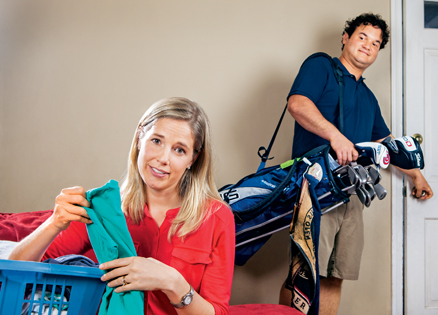
Amazingly our girls, Grace, six, and Genevieve, four, were still asleep. Might as well get a shower before the morning mayhem erupts. I went into the bathroom and almost slipped on Anthony’s rumpled pajamas on the floor. Couldn’t the man put his clothes in the hamper?
The toilet paper was out too. I remembered a colleague at the high school where I teach once saying, “You’ll know who does the lion’s share of housework in a marriage by whoever changes the toilet paper.” How ridiculous, I’d thought at the time.
Now, nine years into our marriage, I understood. I was always the one who replaced the toilet paper. And emptied the dishwasher. And folded the laundry. And took the trash out. And vacuumed.
The fight had started on the car ride home from dinner at his sister’s.
“What’s wrong?” Anthony asked.
“Nothing,” I answered, clearly meaning, “Something.”
My mind was stuck on the conversation he’d had with his brother-in-law after dinner. It began with an innocent question: “Hey, Anthony, have you played much golf lately?”
Golf was a sore subject with me. Anthony loved the game. I didn’t want to be the reason he never got to play, but a round took hours! Hours we didn’t have enough of with both of us working.
Anthony shook his head. “I’ve hardly gotten out all year.”
But you played golf two weeks ago! I wanted to point out. Yes, he’d gone out early in the morning so it didn’t cut into our family time all that much, but still…
“It’s so hard with the kids,” Anthony continued. “There’s just no free time.”
In the next breath, he made plans to watch the Eagles game the following week with his brother-in-law and brothers. I couldn’t believe he was complaining! Didn’t he see the glaring difference between his free time (limited) and mine (none)?
I didn’t say anything, but I was fuming. Of course Anthony picked up on it in the car. “Nothing’s wrong?” he said.
“We can talk later,” I said, nodding toward the girls in the backseat.
We did talk in the kitchen once the girls were in bed. I replayed the conversation with his brother-in-law. Anthony looked hurt, then annoyed. I got angry. “Don’t you realize how much I do around here?” I yelled.
“Don’t you see how much I do?” he yelled back, equally angry.
I furiously scrubbed the counter. He retreated to our room. “I’m going to bed,” he muttered. “I have to get up at five-thirty tomorrow.”
He’d left for work before I woke up. Now I wiped the steam off the bathroom mirror and cringed. I looked as wretched as I felt. Anthony and I hardly ever raised our voices, but when we did fight, it was over the same things.
“If you’re upset, you have to tell me before it builds up,” he was always reminding me. That would mean risking being a nag. So I could either be a raving lunatic or a nag. Great.
The bathroom door burst open. The girls. “Mom, we’re hungry!”
I poured Cheerios, found socks and shoes, braided hair, settled a dispute, packed coloring books and stickers to keep the girls occupied at church and herded them to the car.
Our pastor could have delivered a brilliant sermon and I wouldn’t have heard a word. All I could think about was how I’d left things with Anthony. After church I checked my cell phone. Nothing from Anthony.
That afternoon the girls had a playdate. I would’ve loved to sit down with a book but the house was a disaster. First, the laundry. I stripped the sheets off our bed, tugged off the pillowcases.
Maybe while everything was in the machine, I could run out and get a present Grace needed for a friend’s birthday party. Plus, there was the stack of library books to return and two baby gifts to send out.
Why didn’t Anthony ever worry about this stuff? If he had a moment free, he’d sit down and watch a game. But if I ever relaxed things would fall apart. They already were!
In the past month alone the heating repairman and one of Grace’s friends had commented on the state of my housekeeping. When I told Anthony, he just laughed. He didn’t understand why I was upset.
I dropped a pillowcase. I bent down to get it and noticed some stray socks under our bed. I reached for them and my hand bumped a container. I pulled it out. A large flat Rubbermaid storage box.
Anthony’s “Commencement 1999” book from college was on top, then his knee X-rays from high school football. Beneath that were letters, lots of letters. A few from his parents and friends, but most of them—dozens and dozens— were from me, going back to high school, when we’d started dating. He’d kept every card and letter I’d ever written him.
I found a green envelope with my handwriting in all caps: “DO NOT OPEN UNTIL 295!!” That would be Route 295, the highway south to his college, Georgetown. It was the card I gave him before freshman year.
“Dear Anthony, I’m sad just writing this because when you’re reading it, we will already have said goodbye…” At the end I’d put my college address at Princeton and added, “Please write!”
He did. And I wrote back, enough to fill a box. I sat on the floor and read my old letters. Most of them went on for pages, listing the many reasons I loved him. That made me think of all the ways he showed his love for me—and for our family—now.
The wonderful vacations he planned. The meals he cooked—to the amazement of friends, Anthony was in charge of dinner and groceries. If he didn’t have time to cook, he’d bring something from the restaurant. The taxes, which he took care of because I hated the forms. The bills. The bowling and pool trips he took with the girls so I could get work done.
Love is patient, love is kind… That verse had been read at our wedding.
Maybe even more than the love we had for each other, I was struck by how well I had communicated with Anthony. I told him everything: what I feared, what I hoped and prayed, what I wanted from life, what I wanted from him.
Yet now that we were settled into our marriage, did I speak up for what I wanted and needed? How could I expect him to know when I was too afraid of being a nag to tell him?
I took a deep breath and closed my eyes. Lord, in the daily chaos of life I sometimes forget it was you who brought Anthony and me together. Help me communicate with my husband better.
Just then I heard the front door open. I walked out of the bedroom. There stood Anthony in our messy living room. “I can’t stay,” he said, “but I wanted to bring lunch for you and the girls.”
A peace offering…more than that, a love offering. Tomato basil soup, the girls’ favorite, and a steak burrito, mine.
“I’m sorry about last night,” I said.
“It’s okay.”
I took a deep breath. “Do you think we could sit down later and talk?”
“Of course.” Anthony wrapped me in his arms, kissing me on the top of my head.
That night we talked, the way we used to when we first fell in love. Honestly, with patience and kindness. We agreed to each take time for ourselves. I’d speak up if I needed him to help more around the house. And I’d remember how hard Anthony worked too.
With kids and careers and everything else, life was not going to be perfect and neither was I.
The next morning Anthony was already gone when I got up. I checked my phone. There was a text message: “Salad in fridge is for your lunch. I’ll pick up the girls from school. See you tonight. Love you!” Not exactly a 10-page letter but just as sweet.
I stared at the Christmas tree and sighed. I had a lot of decorating to do. Those branches were pretty bare.
Like the branches of my family tree, I thought. I was thinking a lot about family these days. Or lack of family, I guessed. My husband and I were still mourning the recent deaths of both sets of parents, and I was more aware than ever of how little family I actually had.
With my two sons off at college, the walls of my house and my heart echoed with emptiness.
Years ago I had sketched a family tree for one of my son’s classes, based on research my sister-in-law had uncovered. Many of the branches were cut short—people either didn’t marry, passed away early or we didn’t know enough about them to fill in the details.
I need to be satisfied with the family tree I have, I decided as I hung an ornament onto our Christmas tree.
Outside the mailman pulled up. “Got a fresh batch for ya,” he said when I met him on the porch.
“Thanks,” I said, taking the mail from him. On top of the pile was a handwritten envelope addressed to me. The return address label revealed a nearby part of the state and under it was written the surname of my great-grandmother.
Hochwald Family, I read. It couldn’t be a coincidence. Curious, I sat down at the kitchen table and opened the letter:
“Dear Martha, my name is Ellen. I was doing some genealogy research when I came across your mother’s obituary and saw your name. Are you related to Emma Stuhler? If so, our grandmothers were first cousins. That makes us third cousins!”
Third cousins? I finally had a cousin! Maybe not a first cousin to fill in those near branches on my family tree, but she was a start. “How did you find me?” I called her up to ask.
“I’ve done a lot of research, much of it online,” she explained. “That’s where I found your mother’s obituary.”
“You must really know your stuff.”
“I’ve traced our family back to northern Germany,” she said proudly. “There are dozens of us. I’ve got so much to show you!”
We made plans to get together. Ellen promised to show me her research. I dug out boxes of old photographs and official documents. Maybe there was family history inside.
Ellen and her two children came over for tea one afternoon while my two boys were home for Christmas break. We had a full house.
“Here’s my grandmother’s wedding certificate, and a picture with her mother, Martha, after whom I am named,” I told Ellen. We sat on my couch with a stack of papers and photographs. My family felt like it was getting bigger by the minute.
After Ellen left I admired our Christmas tree, each branch weighed down with lights and decorations. My family tree was almost as full.
Ellen and I stay in touch on Facebook. We can’t wait to compare family artifacts again. Ellen has more genealogy research she wants to do. And I’d like to help her.
Now, the branches of our family tree are becoming full with the names of relatives from near and far away. Maybe one day we will get to visit our relatives in person with trips to other states as well as Canada, Europe and even Asia.
I’d been mourning a family that seemed to be shrinking. Now that family was growing and spreading all over the world. There was no better Christmas gift.