

Embrace God's truth with our new book, The Lies that Bind

A New Dog Helped This Retiree Strengthen His Faith

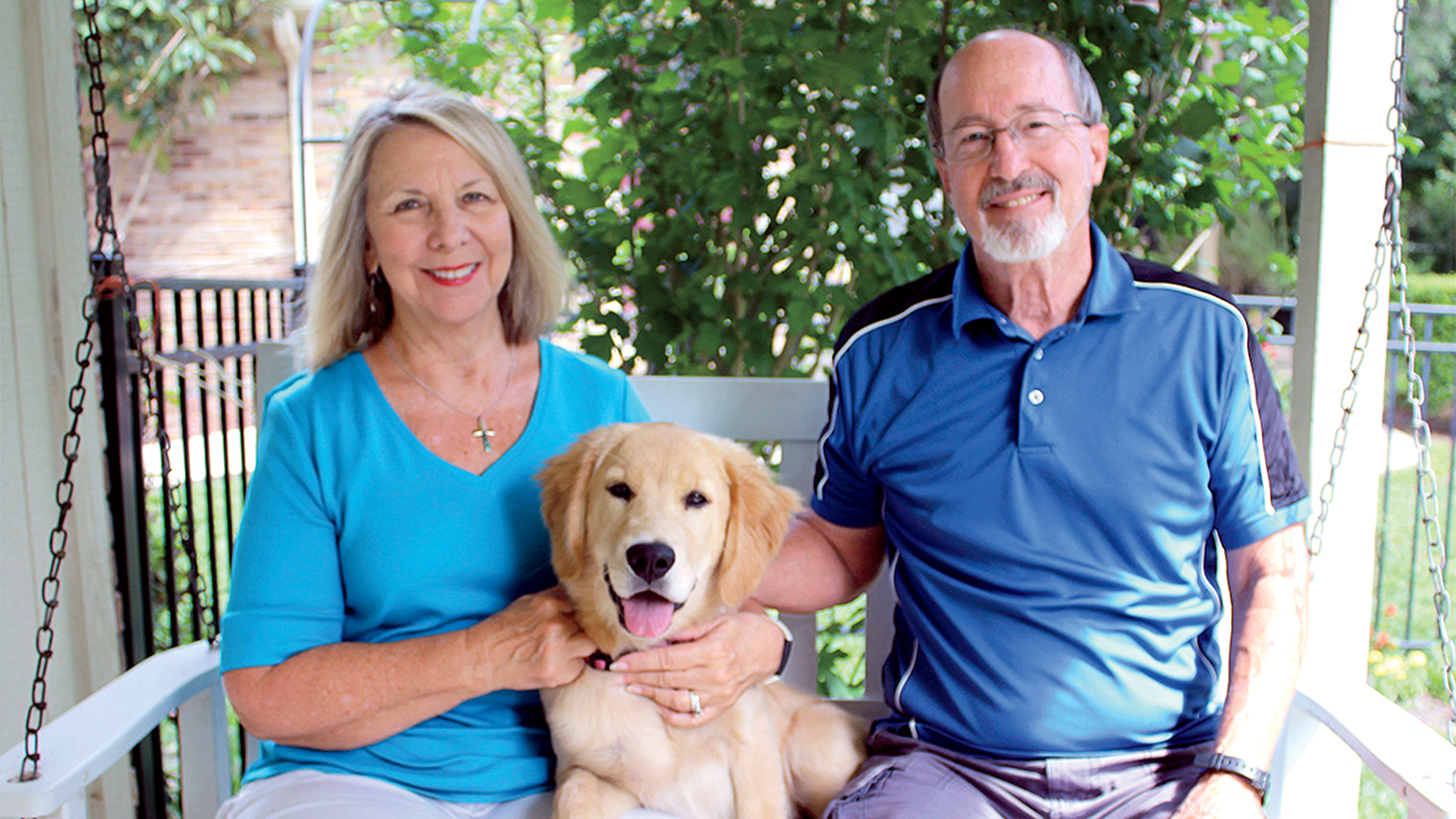
A plaintive whine emerged from the crate in my wife’s home office. Not again. The sound seemed to build as it traveled down the hall, invading the stillness of our bedroom. Not that my wife, Marilyn, and I were asleep. We’d been lying awake—the occasional long sigh escaping from one of us—for hours. Ever since we’d put our eight-week-old golden retriever to bed.

Dolly was unbelievably adorable. And unbelievably energetic. She bounded around the house and yard all day. She should have been tired by now. She’d worn us out, that was for sure.

How could one little puppy make this much noise? How long was she going to keep it up?

Marilyn and I had decided to crate-train Dolly, partly for housebreaking and partly because a crate would provide a safe place for our dog to rest and give her sense of security.

I was an Air Force veteran and retired engineer. I understood the importance of structure and consistency. Crate training worked only if you stuck to it. As I’d told Marilyn, we had to hold firm, no matter how much Dolly whined and cried. The puppy would learn.

We’d brought her home just four days earlier. But with my exhaustion, it felt like four weeks. I guess sleep deprivation and age—I was 73—will do that to you.

Lord, I thought, this is why I didn’t want to get a dog. I just don’t have it in me anymore to take care of one. What have I gotten myself into?

For more than a year, I had strategically avoided Marilyn’s demands for a dog: “Chuck, I don’t understand. You’ve had dogs before. You love dogs. Why won’t you let us get one?”

“Someday, when the time is right,” I’d say, then change the subject.

But Marilyn was tired of waiting. She was right—I had always had dogs. Heck, when I was in the Air Force, I’d even schlepped my two dogs around the world with me. They were part of the family.

Marilyn wouldn’t give up. “You keep saying we’ll get a dog. I thought you would give me one for my birthday, but you didn’t. I thought you’d surprise me with one at Christmas, but you didn’t. What’s the problem?”

What is the problem? I asked myself. I wasn’t trying to be a jerk. I just needed a break. A break from responsibility. Marilyn and I had married late in life. We were in complete agreement on our retirement plans: We would travel and enjoy new experiences—just the two of us. I had raised two children with my late wife, and Marilyn had been a single mom to three kids after her divorce. Now it was our time.

For a while, we lived like newlyweds: date nights, Saturday morning fishing, church choir on Sundays and romantic trips galore. Then, not quite five years into our marriage, Marilyn’s three-year-old grandson, Logan, came to live with us. His parents’ relationship had fallen apart, and neither of them was ready to take care of Logan full-time.

It was hard to imagine raising a young child in our sixties. But we’d prayed for Logan’s well-being since he was born, and I knew that we could provide a stable home for him.

For the next eight years, our lives centered around Logan. I got him involved in sports. We started with tae kwon do, then found his favorite—soccer. I took him to his practices and even did a few stints as Coach Chuck. Before I knew it, our weekends revolved around his games.

One busy Saturday morning, as I searched for his missing shin guards, I realized that it was okay with me. In fact, I loved it. How blessed we were to have Logan living with us! We even went RVing with him. Was it more work? Yes. But it meant more joy and wonder too.

In the spring of 2020, Logan moved in with his dad, Marilyn’s youngest. That’s when Marilyn became even more persistent about getting a dog. A golden retriever, the ultimate dog. When her friends posted photos of their goldens on Facebook, Marilyn would shove the pictures in my face. “Look how cute!” she’d say. “I want one.”

I didn’t. Lord, I’m done caregiving, I thought. People, pets…I’m tapped out. Marilyn had come into our marriage with an old cat; I’d had my aging dog. Both had died. Then we’d taken care of her son’s cat during its final years.

At long last, I was going to get my wife all to myself. Hallelujah!

Marilyn said she was excited about having together time again, just the two of us. Yet she wouldn’t let go of the idea of getting a golden retriever puppy.

I wanted my wife to be happy—after all, God had brought her to me—so I relented. One weekend, we made a four-hour trip to visit a breeder. Both of us were quiet on the drive over. Marilyn was probably worried that if she talked up getting a dog any more, I would get sick of it.

I was having second thoughts. Puppies are hard work. They need constant supervision. You can’t sleep in anymore. They get into everything. House training can be a challenge. Same with obedience. All the way there, I prayed the Lord would guide us to make the right decision. Secretly I was hoping he would say, “Forget it, Chuck!”

We arrived at the breeder’s home. A gaggle of golden retriever puppies spilled out onto the porch, tripping over their own paws. “Oh boy,” I said under my breath.

One of the pups caught my attention. She was pouncing all over her siblings. “Wow, this one’s got spunk!” I said, surprised at my reaction. We had our shoes off, and suddenly the puppy lunged and started wrestling with Marilyn’s sock. Then she growled…at the sock. It was so funny.

“She likes you,” I said to Marilyn.“

More important, I think you like her,” she responded. “You’re smiling.”

It was true. I couldn’t help it. By the time we picked up Dolly three weeks later, I had to admit—I was excited.

After four sleepless nights, the excitement had faded. My clock read 4 A.M. Another whine, then whimpers. I threw back the covers and got up.

“What are you doing?” Marilyn whispered. I shook my head and walked out to Marilyn’s office. As soon as she heard me, Dolly threw herself against the door of her crate. I sprung her from it, and she scrambled into my arms.

“You’re okay,” I said. “I’m right here.” I gave her a quick cuddle before carrying her and dragging the crate into our bedroom.

“You call this holding firm?” Marilyn said, hiding a smile…and a yawn.

I set Dolly down and put the crate in a corner. “Back to your crate,” I said.

She looked up at me, her big puppy eyes beseeching. “Crate,” I quietly repeated.

Dolly stared at me for a minute or two, then walked into her crate. This time she settled down immediately.

I climbed back in bed, smiling. I’d engineered a solution. Maybe I did have it in me to take care of a dog after all.

Our daily routine has changed since then. I get up at five to feed Dolly. Then Marilyn and I switch off walks throughout the day. I take Dolly to the dog park, but mostly we head for the woods. She loves to tromp around near the lake behind our house; she splashes in the water for as long as I’ll let her. At home, she’ll play ball or tug-of-war for hours.

“Look at this,” I said to Marilyn a couple months after Dolly came. I pulled at the loose waist of my jeans. With the walks and play, I was exercising more than I had in years.

That’s not the only benefit to having Dolly. Marilyn and I have grown even closer. Almost every day, the three of us go for a walk—it’s our together time. Often Dolly will lunge into the bushes. “What’s she after now?” Marilyn will say. A lizard? A squirrel? A bug? A wayward leaf?

We can’t help but laugh as we watch our dog’s backside wiggling under a bush, her youthful energy rubbing off on us a bit. I’d thought I was tapped out. But God keeps surprising me, bringing me love and joy I never expected. With Marilyn, then Logan and now Dolly.

We’re about to embark on our first RV trip with Dolly. I can’t wait to see what adventures the three of us get into. After all, retirement has so far been one big adventure, one I didn’t plan but wouldn’t change even if I could.

For more inspiring stories, subscribe to Guideposts magazine.
An Everyday Hero

God called a sweet friend home to be with Him last week. You won’t hear about her on the news. She wasn’t a decorated war veteran or sports figure. She wasn’t famous or wealthy. But Patsy Ramsey was a true hero to me.

She was a single mom who went the extra mile for her children.

I think Patsy came into my life when I was about nine or ten. Even as a child I recognized the weariness, the years of hard times that were etched into her features.

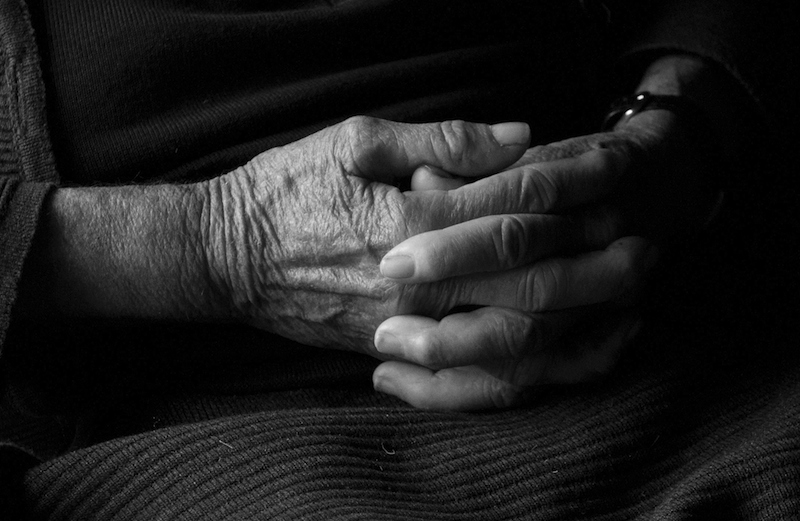
The worn hands of an elderly woman. Photo M. Palis, Thinkstock.Life had been difficult for her from the beginning. Her father had been out of the picture, and her mother had problems that impacted their home in a negative way.

Like most young women anticipating marriage, Patsy dreamed of a happy home, but even that wasn’t to be. Her first husband left her with six small children. It was a scary time, but she didn’t ask anyone for help. Instead, Patsy rolled up her sleeves and went to work.

She spent long, back-breaking days as a sewing machine operator. On many occasions, she’d work another four hours at a second job.

Patsy would return home exhausted, and then would spend what was left of the evening loving on and caring for her little ones, cleaning house and doing laundry.

One morning as she headed to work, Patsy fell down the stairs. She was banged up and bruised, and she injured her shoulder, but she picked herself up and limped into work. She had no choice if they were to eat.

Times were difficult and there were never enough dollars. She worked so hard to provide clothes and food for her children, to keep a roof over their heads.

But sometimes when the little ones had been sick and needed medicine or when unexpected bills stole her paycheck, there were days when dinner consisted of just flour and water gravy, made with love and seasoned with a mama’s tears.

I never heard her complain. Her children were always neat and clean, she tried to take them to church, and she raised six children to be productive members of society. Each of them was a trophy of a mother’s fierce love, her sacrifice and determination.

And that made Patsy Ramsey a hero to me.

I’m sure that there are many of you single parents out there today who are worn down by life, who are working hard and sacrificing for your children.

You might think that nobody cares and that nobody notices. But you’re wrong. You’re a hero in the making, to others, to your children, and to God.

Dear Father,

The world is full of single moms and dads today who are weary, whose emotions are shot, and whose wallets are empty. Please send strength and encouragement to them.

Provide what they need financially. Heal the jagged edges in homes that have been splintered apart. Help each of these moms and dads to feel Your arms around them in a special way today.

Amen

An Equestrian’s Prayer Answered

The morning sun streamed through the window, glinting off my dresser mirror, and I knew exactly how I was going to spend the last day of summer vacation. Freedom would end tomorrow with the start of my sophomore year of high school.

So today I would do what I loved most: be in the great outdoors with my best friend, my horse, Lady. I’d ride her without a bridle and saddle—that’s how much we trusted each other—and we’d gallop across the pasture.

If she stopped to graze, I’d stretch out on her broad back and watch the clouds drift overhead. It didn’t really matter what we did as long as we were together.

I’d often said it was Lady who raised me. She was part Morgan, part anyone’s guess, all black with a big head and big feet and a mane that curled when it got wet.

Dad originally bought her for Mom, but soon it was obvious she was meant to be mine. Even before I could walk I would do whatever it took to be with her.

Once when I wasn’t quite a year old, I crawled out of the house and disappeared. Mom searched our little farm frantically and finally found me sitting between the front legs of my 1,100-pound horse, gurgling contentedly.

Other times when I had a meltdown and nothing else would comfort me, Mom would pick me up and stand close to Lady. I’d stroke her and smell her and suddenly all would be well.

The bond between us hadn’t wavered as I got older. If anything, it grew stronger. Our farm was fairly isolated on the forested coast of Oregon above the muddy, tidal Yaquina River, five miles from the tiny town of Toledo. None of my friends from the private Christian elementary and middle schools I’d gone to lived close by.

Lady was always there for me, my favorite playmate, my steadfast companion. She understood me better than anyone, especially since I switched over to the public high school last year.

There, the look was everything, and if you didn’t have it, you were out. Big curly hair. The right brand of clothes. Logos on everything. I’d never given much thought to appearances, and it was like I’d been dropped into a foreign country without a guidebook.

I did well academically but otherwise, ninth grade was a disaster. This year I was prepared. I’d saved up and bought my first-ever designer sweater. And I’d gotten a perm that totally transformed my long straight hair.

I looked in the mirror at my trendy new curls. This year is going to be different, I lectured my reflection, but I couldn’t quite suppress a flicker of trepidation as I turned away.

I headed out to the river pasture where Lady grazed. Then I reached the gate and my world seemed to go dark though there wasn’t a cloud in the sky. The field was empty. Lady was gone.

Out of habit I picked up the lead rope. I checked the fences. The gates were closed and there were no holes in the wire. No tracks outside the fence either.

Sometimes she would lie down in the tall grass and you couldn’t see her until she sat up, but it was too early in the day for her afternoon nap. She was an old horse now, nearly 30. If she was down, that could only mean… No, I wouldn’t think it.

“Lady! C’mon , Ladymare!” I hollered for her so loudly Dad heard me from the barn and rushed down. Together we searched the pasture. Along the side of the field closest to the river, Dad stopped.

“Over here,” he said. I ran over. Then I heard it too, Lady’s low whicker.

She was close but I couldn’t see her. That part of the pasture wasn’t fenced. It didn’t need to be. There was nothing to interest a horse, only thorny blackberry bushes that made a natural barrier and a steep, 15-foot drop to the murky river. Why would she have come this way?

Then Dad pointed at something. A hornets’ nest on the ground, a few insects still buzzing angrily. Next to it was a swath ripped through the bushes. Instantly I knew what happened.

Lady must have trampled the nest by accident, gotten stung, fled in a panic through the blackberries and fallen over the cliff.

Dad and I pushed through the brambles. There was Lady at the bottom of the cliff, stuck chest deep in the eight-foot-wide span of mud along the water’s edge.

I had to get to her. Without a second’s thought, I skidded down the cliff. I landed up to my waist in the clammy mud. Sticks buried deep below the surface stabbed at my legs.

I wrenched one leg up and managed to stand on submerged debris. Then the other leg. Step by step, I edged over to Lady.

“Try to lead her upriver,” Dad called from above. “There’s a place we might be able to pull her out. Keep her away from the bank. The mud isn’t so deep farther out.”

I still had the lead rope. I snapped it to her halter and she nudged her head into me.

“It’s okay, Lady, I’m here,” I said, my throat tightening as I backed toward the river. I pushed my curls out of my eyes with a muddy hand and set to work.

I pulled, trying to turn Lady away from the bank. She resisted at first. Then, putting her trust in me, she tensed and lunged. The rope burned my hand and she nearly yanked me off my feet, but I didn’t let go.

Slowly Lady maneuvered around until she faced me. I backed waist deep into the water, and she followed cautiously. The mud was thinner but still our progress was agonizingly slow.

Lady sometimes waded, sometimes swam. We made our way upriver a hundred yards to where the cliff gentled to a slope.

Mom and Dad were waiting. To our dismay, the mud was even deeper here. Even with Dad and me both pulling on the rope, we couldn’t get her out.

I stayed in the water with Lady while my parents tried everything they could think of. First a longer rope hitched to our tractor. Then as the tide came in and the river rose, Dad went down the road to the public launch and put his motorboat in the water.

Soon his boat nosed around the bend. I tied Lady’s halter short to the side of the boat to keep her tail and legs clear of the prop, and we towed her across the river. She swam along, afraid but trusting. The far bank wasn’t any better.

We were running out of options. The launch was too far to swim her. We towed her back to our pasture and tried once more. The tide crested but the water didn’t lift her high enough to get any traction.

As the tide fled to the sea, all hope seemed to drain out with it.

It was late afternoon. Lady had been in the water nearly 10 hours. She and I stood in three feet of muddy water, our heads together. This was too much for an old horse.

I closed my eyes and pleaded desperately, “Oh, Lord, please help us help her. I don’t know what I’d do without this horse.”

What was that rumbling noise? My eyes flew open and I looked up in amazement. Two big diesel tractors barreled into our field. Then a big pickup with a massive winch on the bumper.

We’d been too busy to tell them what was going on but somehow our neighbors had gotten word. They’d come to save Lady.

From the bank the men studied me and my horse. Ideas flew back and forth. A few attempts were made and abandoned. It was nearing dark when one man thought of his trawling net. “How about we wrap it around her, roll her on her side and drag her out?”

Digging by hand, several men pried her legs out of the mud and kept her on her side long enough for others to gather the net around her. They hooked the net to the tractors. As the tractors slowly reversed, Lady inched up the bank.

At last they hauled her onto solid ground. A cheer went up. But I didn’t feel like celebrating. Lady staggered to her feet, trembling and dripping, caked with mud, her head hung low. Her eyes were swollen slits, her ears canted down. She sank to the ground with a groan.

I brought her feed and water but she ignored it. I piled loose hay over her for warmth. I was ready to bed down with her but Mom sent me home.

“School is tomorrow,” she said. “Eat something and go to sleep. Dad and I will stay with her. We’ll wake you if there’s any change.”

I hated to leave Lady but Mom was right. There was nothing more any of us could do. Except pray.

“Lord, you know how much I love Lady,” I said. “Please, please don’t let her die.” I went back to the house in a daze. I dished up supper but I don’t remember eating it. I crashed on the couch, too tired to go any further.

Mom woke me during the night.

“Lady got up on her own. Dad just walked her to her stall. She’s going to be okay.”

“Thank you, Lord,” I whispered and fell into a deep sleep.

The next morning I climbed on the school bus. All the perfume in the world couldn’t have masked the smell of mud. My perm was ruined. Across the front of my new sweater was a big stain where Lady had just rubbed her dirty head.

I definitely didn’t fit in with the other girls with their perfect curls and designer clothes. But I couldn’t have been happier. I had what mattered. The love of my best friend—and of the One who understood me even better than she did.

Download your FREE ebook, The Power of Hope: 7 Inspirational Stories of People Rediscovering Faith, Hope and Love.

An Encounter with Well-Tended Hope

Ever have one of those days? I’d barely slept the night be­fore, upset over a tense phone call I’d had with my estranged daughter. Then I got up at 5:00 A.M. to help my son, Brad, deliver newspapers, only to have us argue over something trivial.

My husband couldn’t find any clean socks, and blamed me for being late for his new job. The phone rang. It was a bill collector, reminding me of a past-due payment. I still had to begin homeschooling lessons for Brad, clean the house, do the laundry, help my elderly mother with some errands and, to top it off, my fibromyalgia was flaring up.

One of those days? “Lord,” I muttered, “it feels like I’m having one of those lives!”

“I’m going for a walk,” I told Brad. “Start studying. I’ll be home soon.”

I headed down our road till I reached the cemetery. That’s normally where I’d turn around. But I wasn’t ready to go home. I looked at the headstones shaded by the trees, not a living person in sight. The perfect place for peace and quiet. I crossed the street, entered through the main gate and set out on the paved path that snaked through the grounds.

I sat down in a shady spot beneath a small willow tree and finally let my tears flow. Lord, sometimes life seems so difficult. My problems feel too big to handle. What can I do? I buried my head in my hands. Yes, I was feeling sorry for myself, but didn’t I have a right to?

The sound of an approaching car made me look up. An ancient Cadillac slowly drove past, coming to a stop a few yards away. An old man climbed out and walked to the passenger side, opened the door and helped an old woman to her feet. She leaned on a cane.

The two of them went around back to the trunk. The rusted hinges moaned as they opened it. With great effort they pulled out a plastic milk jug filled with water. The woman struggled to carry it toward one of the plots. I wiped my eyes, jumped up and hurried over.

“Can I help you?”

“Please walk my wife to our son’s grave,” the old man said. “I’m afraid she’ll fall.” The woman handed me the jug and put her arm in mine, leading me to a stone etched with a name in bronze.

I ran back to the car to help the man unload more things: a shovel, a spade, clippers, some mulch, cleaning fluid and a soft cloth.

“We clean our son’s grave four times a year,” the old man said. “Ever since he died in Vietnam.”

“Let me help you,” I said.

There were two small evergreens on each side of the weathered stone that needed trimming. “We planted these the first Christmas without him,” the old man said. “It was his favorite holiday.”

I listened as I snipped overgrown branches and added mulch around the roots. “He was such a sweet boy,” his mother said. “He helped me plant flowers and vegetables in my garden.”

The father told me he missed the lazy weekend afternoons he and his son spent together. “He loved to fish, but if they weren’t biting we’d go home and shoot at empty cans in the yard.”

Their son joined the army right after high school. “We still keep his room just as he left it,” his mother said.

There was one last thing they wouldn’t let me do. When everything else was tidy, the woman knelt down and polished the surface of her son’s marker. Quietly, she hummed a song. Finally, she held the cloth to her chest, laid her hand on her son’s name and said goodbye.

Then the couple joined hands and walked to the car. I gathered the tools and returned them to their trunk. “Thank you,” the woman said. “We do this for our son, though it’s getting harder and harder. We rarely see anyone else on the days we are here. You were a blessing.”

“It was a blessing to help you,” I said, hugging them.

I watched their car drive away then headed toward the main gate. Time to get back to life. I was ready to go home. To teach my son. To do the laundry and help my mom. And to work on repairing things with my daughter.

My life could be hard, but it was good. I couldn’t let stress stop me from counting my blessings—or let me forget to be a blessing for someone else. It was just what I needed to do.

An Elephant Herd Honors the Man Who Gave Them a Home

I can still hear them. The rumbling that vibrated through the reserve that dry evening in March. Their grief-filled moans. The agitated movements of their ears. Those big eyes fixed on me and me alone.

My husband, Lawrence, always said there were things in this world that cannot be explained by reason, cannot be seen. Deep roots that connect all living things, humans and animals. It wasn’t until that night, two days after Lawrence died, that I truly understood.

This was a man who’d somehow charmed me into leaving my native France for an old Dutch farmhouse out on the savannah of Zululand in South Africa. A man who suddenly suggested we buy an old game reserve and transform it into Thula Thula, a lodge and an animal haven where leopards, zebras and white rhinos could roam free.

A man who, after watching a news report on the Iraq War, sneaked into Baghdad in the midst of battle to rescue trapped zoo animals. And then, of course, there were the elephants.

Everyone called Lawrence the Elephant Whisperer. He earned the nickname after adopting a herd of nine “delinquent” elephants about to be put to death. The herd was prone to escaping its protected habitat and rampaging through populated areas. Dangerous. Lawrence’s mind was made up, though. Maybe the elephants kept wandering because they weren’t in the right home, he said.

He had no knowledge of wild African elephants. Yet night after night, he camped out with them to earn their trust, a move that almost got him trampled. He sang to them, talked to them. Crazy, people said. But little by little, the herd took him in. First the matriarch, Nana, then the rest. They forged a deep bond, one based on trust and respect. The elephants stopped escaping and made Thula Thula their home.

Sometimes I tagged along with Lawrence on his visits to the elephants deep in the bush. Nana would extend her trunk to him and caress his face, as if he were a member of the family. The herd increased to 21 elephants and our property doubled over the years. But the bond remained. So did Lawrence’s nickname, though he preferred to be called the Elephant Listener.

“I don’t have a special talent,” he told me. “The elephants talk to me if they want to. If they don’t want to, I don’t insist. I just listen.”

I only wished he’d listen to me every now and then. Lawrence was physically strong, a robust six foot three. But lately he’d been having heart trouble. In September, at the age of 61, he’d suffered his second heart attack. He wasn’t supposed to fly, but he had insisted on traveling to Johannesburg for a weeklong business trip to help advance the mission of Thula Thula.

“Françoise, I’ll be fine,” he said before he left. “There’s no need to fret.”

The call came at seven o’clock in the morning on Friday, March 2, 2012. I was awake early, straightening up the house in preparation for Lawrence’s return. On the phone was David, Lawrence’s right-hand man, sobbing. I caught only snippets. Lawrence. Unconscious. Heart attack.

“I’m…so…sorry…Françoise,” he said. “He’s gone.”

I clutched the phone. “Impossible, impossible,” I whispered. But deep down I knew it was true.

The news hit Thula Thula like a bomb. Our staff of 70 was inconsolable. Lawrence wasn’t just the boss. His Zulu name was Mkhulu, or “grandfather.” That’s how everyone saw him. I knew they needed me to be strong, to assure them that we’d be okay, even without Lawrence. But I couldn’t think, couldn’t speak. My head was lost in memories.

Like the first time we’d met. Waiting for a taxi in London, where we had both gone on business. It was freezing, a mix of rain and snow. I finally made it to the front of the line. The concierge asked if I’d mind sharing a ride with the man at the back, also headed to the convention center.

Lawrence was wearing a bright blue windbreaker in the middle of January, as if he were on safari. No way was I sharing a ride with that guy. “No, no,” I said.

To my great surprise, I ran into him later at a Tube station. It was hard to miss that windbreaker. This time, I introduced myself, apologized for my rudeness. It was one of those moments orchestrated by that invisible force Lawrence believed in. We met for dinner and a jazz show. One year later, I left Paris, headed for South Africa. It was easy to face the unknown with Lawrence. He made me less fearful.

I didn’t want to face the unknown without him. Didn’t want to live in a world without his fierce spirit and generosity. Life without Lawrence? Impossible, impossible!

Two days after Lawrence’s death, a Sunday, I was still holed up in our bedroom. People passed in and out of the house, paying their respects. It made no difference to me.

“They’re here!” someone said with a gasp. Who was here? The voice was followed by shouts. All kinds of commotion. What was going on?

I dragged myself downstairs and opened the front door. The staff was gathered outside, all staring in the same direction, eyes wide. On the other side of the fence on our property were 21 distinct gray shapes. The elephants. Lawrence’s elephants.

Nana gazed at me. So did the rest. As if they were waiting for something. Or someone. They remained like that for more than an hour, then marched up and down along the fence, rumbling. The same noise they’d always used to “talk” with Lawrence. They seemed edgy. Distressed. Finally, they lined up one by one and made their solemn procession back into the bush.

The work at Thula Thula continues, as my husband would have wanted it to. Most people have moved on. But an elephant never forgets.

The year after Lawrence’s death, on March 4, the elephants returned. Led by Nana in the same procession. The year after that, again on March 4, they were back. And again on March 4 the following year. They mourned him like one of their herd.

How did they know? Who sent them? What does it mean? Some things in this world are beyond human understanding—cannot be explained by reason, cannot be seen.

For more inspiring stories, subscribe to Guideposts magazine.

An Angel Named Shredder

I opened the door to the Trents’ house and was greeted, as usual, by Shredder, their Airedale. He bounded toward me, jumped up and put a paw on each shoulder. “Okay, boy,” I said, rubbing the inside of his ears the way he liked. He moaned contentedly. Then he brought me the raggedy old stuffed monkey he liked to play fetch with. I tossed it down the hall a few times. “That’s all for now,” I told him. If Shredder had his way, I’d play with him all day. He was such a big dog, with energy to burn. But with so many things on my schedule—the PTA meeting, Girl Scouts, dinner, other houses to clean—I didn’t have time.

I’d been cleaning for the Trents going on two years. I should have been used to Shredder being underfoot. After all, my husband, Dave, our two girls and I had a pair of high-energy Scottish terriers. That day I told Shredder to lie down on his pillow. “I’ve got to get to work now,” I said.

I headed downstairs to vacuum the family room. Shredder settled on his carpet. Probably can’t wait till I’m done so we can play some more. Too bad for him that I’m out of here soon as I’m finished.

All of a sudden pain shot through my head. It was unlike anything I’d ever felt—10 times worse. Light exploded behind my eyes. The vacuum hose slipped out of my hand and I fell to my knees. I knew someone who’d died from a brain aneurysm. Is that what’s happening to me? I had to get help. Now. Before it was too late.

Phone, I thought. The nearest phone was in the kitchen. I tried to stand up, but couldn’t. I have to get upstairs, I thought. The pain got worse. It felt like my head was going to explode. I managed to crawl to the foot of the steps. But I couldn’t move anymore. I was helpless.

Through the pounding pain, I said a prayer. God, I don’t want this to be the end. I’ve got a husband and two kids who need me. I want to see them again. Please help. I looked up. Shredder stared back at me from the top step, tail slightly thumping the floor. Did he think I was playing? “Come here,” I whispered, trying to make my voice sound playful. He cocked his head and stared quizzically. “C’mon, boy,” I said. Shredder padded down the steps and stood next to me. His tail stopped wagging. Did he sense something was wrong?

“Help me, Shredder,” I said, grabbing his collar with my left hand. He climbed a step, then stopped. “Up!” I said. He looked back at me as if to say, “Is this right?” “Go,” I whispered. Shredder started to drag me. My left arm went numb. I had to look at Shredder’s collar to make sure I kept my grip. I reached with my right hand and managed to get hold of the banister. I strained to pull myself. Shredder tugged, and I made it up one step at a time.

I squeezed my eyes shut. Little explosions of light flashed across the inside of my eyelids. “Hurry, Shredder.”

Shredder got me to the top of the steps. Then I started to crawl. Shredder grabbed my sleeve in his teeth. He pulled and tugged, helping me across the kitchen floor. Now I knew what that stuffed monkey must’ve felt like. Finally, the phone. You’re not going to make it. Call Dave. I needed to tell him what had happened. I didn’t want the Trents to have to deliver the bad news. I got the answering machine. The message I left must have scared him silly. “I’m at the Trents’. I think I’m having an aneurysm. I’m going to die. I just wanted to tell you I love you.” Then I called 911.

Shredder sat down next to me. “Good boy.” I wanted to rub his ear, but I couldn’t. Still, he stayed right by my side.

The EMTs showed up in minutes. Shredder, who is friendly almost to a fault, jumped to his feet and started growling. “It’s okay,” I said.

He seemed to accept that they were here to help, and sat back down obediently, head cocked. “Any history of heart trouble?” one EMT asked.

“No,” I told her. “It’s my head. Pain.”

“Looks like you’ve been without oxygen,” she said. They strapped me to a gurney and rolled me out of the house. The last thing I recall is seeing Shredder.

Doctors discovered that a heart valve had gone into a spasm. It could have been caused by any number of things: a temporary blockage or a sudden severe migraine (which would explain the extreme pain in my head). They discharged me after four days, but I had another 16 weeks of complete bed rest. All that lying around doing nothing nearly drove me crazy. Maybe I was a little bit like Shredder, always needing to be active. I kept worrying about all the PTA meetings I was missing, the dinners I couldn’t fix, the houses I should have been cleaning.

Then one day my girls came into the room after school. “Mom, we’re so glad you’re here with us all the time!” one said. They told me about their day, then went off to do their homework. I thought about what they’d said. Maybe this was an opportunity to slow down and spend a little quality time with my family. Okay, Lord. I get the message.

Still, I couldn’t wait to get back to the Trents house. Not to clean. But to finish a game of fetch. Shredder had been waiting to play for too long.

Excerpted from Their Mysterious Ways Too, Copyright © 2011 by Guideposts. All rights reserved.

A Mother with Alzheimer’s Gives Her Family a Christmas to Remember

No holiday mines the memory like Christmas. The holiday spirit rides on a tide of memories. Memories of faith, memories of family and, yes, memories of food. What happens, then, when a disease steals our memories? What happens to Christmas?

During the course of my mother’s Alzheimer’s, I often asked myself what becomes of us when our memories are gone. It’s as if our memories are like a mirror that reflects who we are, and slowly our image fades in that mirror until we find no one there at all. Alzheimer’s is a disease that breaks hearts as well as minds. Whether or not I am susceptible to the same disease that took my mother, I hope I never forget her last Christmas.

That year we had decided it had become too taxing on my mom to take her from her Alzheimer’s unit to Christmas dinner with us. Osteoporosis and heart problems had set in, and she was growing weaker. December 25 was very cold, the way it should be in Michigan. My brother Joe, my sister, Mary Lou, my sister-in-law Toni and I—along with my nieces Clare and Rachel, my cousin Carol, and my wife, Julee—piled into our cars and headed to Clausen Manor to see Mom. “Does she even know it’s Christmas?” I asked Julee on the way.

Clare and Rachel brought chocolates. Julee and I had a plant, which I knew Mom would water to death before the new year. Carol put an elaborate Twelve Days of Christmas pop-up book in Mom’s lap. It was this last gift that captured Mom’s attention as she sat silently in her wheelchair. We were all chatting when out of nowhere, Mom began to read aloud: “On the…first…day of…Christmas, my true love gave…to me….”

We stared in astonishment. Mom had long since lost the ability to read. Yet she forged on: “On the…second day of….” Turtledoves changed into turtle dolls, hens into hills, maids into moms. By the tenth day, Mom was clearly tiring. I started to help her with a passage when she suddenly shot me a look I hadn’t seen for some time and snapped, “Are you going to let me do it myself?”

An instant of stunned silence gave way to laughter, save for Mom, who cast us a strangely knowing look. Then she let the book close, apparently having forgotten she’d been reading it.

Did Mom know it was Christmas? For that one bright shining moment, we all knew it.

A Mother’s Selfless Love and Prayers

I believe that the closest we can come to understanding God’s love for us is when we reflect on a mother’s selfless love for her children. Mothers put their children’s needs before their own, no matter what. Recently, I read a story about a single mother named Karen that touched my heart.

Karen established clear expectations and boundaries for her son, Thom, early on in life, but as he aged he began to rebel. He ran away from home, dropped out of school, lived on the street and used illegal drugs. During those difficult times Karen knew that God loved her son more than she did and had a plan for him. Through it all she stayed a faithful, loving and prayerful mother. But one day he went too far and stole from her, she was forced to call the police.

Afterwards, they had a rocky relationship and lived apart for many years. Later on he married but eventually left his wife and children. Throughout the years, Karen repeated the same prayer, “Lord, I know you love Thom more than I do. I ask that You protect his physical body and his heart for You so that someday he might become the man You want him to be. Do whatever it takes to make this change happen—and give me the strength to endure the wait and the pain. In the name of Jesus, amen.”

Read More: A Mother’s Day Devotion

After 30 years, God answered Karen’s prayer. Today, Thom is the man God intended him to be. He is a devoted husband and father.

How did your mom express selfless love for you? Please share with us.

Lord, thank You for a mother’s selfless love and prayers.

A Mother’s Renewed Hope

My son Jeremy stood aside, not meeting my eyes–or maybe it was me who didn’t want to meet his–and let my husband Gene and me walk into his mental health counselor’s office ahead of him.

We’d gotten him out of jail two nights before. Blenda, an addictions specialist, had given him an emergency appointment that May morning and urged us to sit in on the session.

Every time Jeremy got into trouble and couldn’t find a way out–and there had been so many times that I’d finally lost count–he hurried back to Blenda, as if he knew she was the one person in the world tough enough to keep trying with him.

She had counseled Jeremy for six years and she’d seen him in every kind of emotional state imaginable. Uncontrollable rages fueled by drugs. Manic know-it-all phases when he stopped taking his medication for bipolar disorder. Withdrawn and scared moods.

Or those increasingly rare instances when he was charming and funny, polite and cooperative. When he was the son I still had hope for, however fading.

I sat down on the brown leather sofa in Blenda’s office, wondering which Jeremy we would see this time. Gene took a chair. Jeremy plopped down on the sofa next to me. Evidently he remembered that Blenda figured out a lot about family dynamics based on where everyone chose to sit.

Jeremy had show­ered, shaved and put on clean clothes. He must have left them behind the last time he stayed at our house–when I’d caught him huffing (inhaling aerosol sprays to get high), and had to kick him out.

Now he leaned forward, clasping his hands loosely between his long legs, and listened intently to Blenda. His eager, cooperative posture. I inched away from him on the sofa.

Just give it up, Marion, a weary voice inside told me. You can’t let yourself hope anymore. It’s too late for Jeremy.

Jeremy had lost his father, my first husband, when he was 15 years old–a vulnerable age, not that he showed it. He had seemed so strong then, forging through his grief, taking over his father’s jobs around the house, like keeping our yard perfectly weeded and mown.

In his twenties, he ran his own thriving landscaping business.

But in his mid-thirties, Jeremy fell apart, as if all the feelings he’d been holding back since he was a teenager erupted, a kind of emotional volcano that destroyed everything in its path–cars, apartments, relationships, his business, the successful life he had built for himself.

Now he was 41, and I was terrified that addiction and bipolar disorder had finally swallowed up the real Jeremy. I’d read the arrest report. The police had been questioning people in the neighborhood where Jeremy was hanging out.

He hadn’t committed the crime they were investigating, and if he had just cooperated, he wouldn’t have ended up in jail.

But he had been skipping his bipolar meds. He reacted belligerently. He said that he’d done meth, cursed the officers, charged at them. They had to tase him twice.

I hardly heard a word Jeremy said to his counselor. My mind kept going back to two nights before, when we’d picked him up from jail. Guards led him into the waiting area, limping–an old hip injury from one of his car wrecks.

“It’s not my fault,” he bellowed. “I was just standing there minding my own business!” The bedraggled clothing, the dirt-encrusted hands, the wild eyes…nothing about this disturbed man resembled the Jeremy I knew, the son I loved.

“Marion, Gene,” the counselor’s no-nonsense voice brought me back to the session. “I’m very concerned for Jeremy’s life right now. He doesn’t have many more chances. I’m asking you to take him into your home for at least thirty days. He needs structure.

“But if he breaks even one rule, he’s out. He must get back on his bipolar medication, see counselors regularly, go to 12-step meetings…”

I wanted to scream, Blenda, we’ve lost the battle. Can’t you see that? Didn’t she understand the terrible anguish of watching someone you love self-destruct and feeling powerless to help him? She really expected me to open myself up again to that kind of pain?

I glared at her as she rocked gently in her chair, waiting for our answer.

Jeremy sat up straight, rubbing his hands back and forth on his jeans, not daring to look at me or Gene.

“He can stay with us,” Gene said.

I didn’t know how he could be so calm. I didn’t trust myself to speak. I just nodded mutely. It was more resignation than consent.

When we got home, I put Jeremy in the guest room. He joined us for meals. But I kept my heart closed off. Constantly I watched him for any slip-up, any deception, even the smallest white lie. One mistake and I was ready to pounce.

I was not going to get hurt again. I was not going to risk having hope again for my son. Hope had been such an empty promise.

To my amazement, the county health department promptly provided excellent counseling and the prescription medication Jeremy needed to control his bipolar disorder–all free of charge. Begrudgingly, I gave a silent prayer of thanks.

Jeremy found an AA group that met at seven in the morning. “I need this to start my day off right,” he told us. Since his driver’s license had been revoked, he got someone else in the group to pick him up and then bring him back to our house afterward. He went to those meetings six days a week.

The seventh day he went to meetings of the biblically based program Celebrate Recovery. “Man, you can confess anything there,” he told us one night at supper. “No one judges or rejects you. I fit in.” He paused. “I’m going to make it this time.” There was a quietness in his tone, not his old bravado.

“Sounds good,” Gene said. The smile he gave Jeremy said even more. It said, I believe you will make it.

Lord, how I wish I could believe it too, I thought.

Jeremy was trying hard. He kept his room immaculate. He helped around the house without being prompted and kept asking us if there was more that he could do, even as his limp grew worse. He took his meds regularly. He went to his counseling appointments. He was committed to his recovery groups.

Still, I kept thinking–almost expecting–that he would revert to his old behavior. I had seen it happen so many times already–Jeremy would get clean only to relapse and sink even lower than he had been before. And each time it felt as if he were taking a part of me with him.

Six months after Jeremy moved in with us, Blenda agreed that he was ready to try living on his own again. In November, he rented a starter apartment in the nearby town of Athens.

He told us about an organization there that provided medical care for people who couldn’t afford it. He had talked to someone in their office who thought that they might be able to give him hip-replacement surgery, free of charge.

I was certain that he had misunderstood. It just sounded too good to be true. But sure enough, just before Christmastime, Jeremy received a new hip, compliments of Mercy Health Center.

Soon, Jeremy was getting around so well that he was back doing some lawn care. His clients were so pleased with his work that they were willing to come over and pick him up.

He even lined up a job at a bakery-café and bought an old bike for five dollars at a yard sale so that he could get to and from work.

Part of me was happy for Jeremy. But another part of me couldn’t help remembering his last apartment–a nice place that had ended up trashed after repeated drug binges. It seemed as if the more progress my son made, the more I imagined the worst.

One spring day I was driving home from shopping and passed Jeremy’s new apartment. His ancient yard-sale bike was chained to a post. That meant he was home.

I decided to stop in and say hi. Or was I checking on him, always concerned that I might catch him at something? Did I just want to get the disappointment over with?

The door was unlocked. I walked in. “Hey, it’s me,” I called. The small three-room apartment was sparkling clean and fresh smelling, neater than I’d ever kept my house.

Jeremy hollered from the bedroom, “Take off your shoes, Mom. I just vacuumed and mopped.” He came out to the kitchen, carrying his Bible.

“Guess what? They made me a sponsor at Celebrate Recovery last night. And later this month, I get my one-year chip from AA.” He was beaming. “Check out Romans 5:5,” he said. He handed me his Bible. He had highlighted the Scripture in yellow: Hope does not disappoint.

I looked up at Jeremy. There was a sweetness in his expression, a trust that I had all but forgotten since I had let go of hope.

Right then the sun streamed in through the little kitchen window, and we stood there together, bathed in light. I took a deep breath and caught the faint aroma of bleach and something else, something fresh and citrusy: lemon.

Hope will always smell like lemons to me.

At that moment, standing there looking into my son’s clear eyes, I let myself trust in the miracle of his recovery, and whatever plan God had for Jeremy. I let hope into my life again, a hope as warm and bright as sunlight.

Download your free eBook, Let These Bible Verses Help You: 12 Psalms and Bible Passages to Deepen Your Joy, Happiness, Hope and Faith.

A Mother’s Love for a Special-Needs Child

It was three hours before we knew. Three hours I had to wait and wonder. And worry. I’d barely had a chance to hold my newborn son, Isaac, when the neonatology nurse whisked him away. “His blood oxygen levels are low,” she said, “but he should be fine.” I tried to settle back in my hospital bed and relax.

“Do you think our baby’s okay?” I asked my husband, Ray.

He squeezed my hand. “No news is good news.”

Not for me. My mind kept cycling through everything that could be wrong. Disabilities. Birth defects. Developmental delays. If it was serious, they would’ve told us by now, right?

My doctor had warned us from the very first sonogram. At my age, 43, I had a much higher risk of having a baby with chromosomal abnormalities like Down syndrome. I wasn’t worried then. I was just thrilled to be pregnant.

I never thought I’d get married, let alone have kids. Not with my history. My mother was mentally ill and my father was an alcoholic. It fell to me to keep everything together. Except I couldn’t save Mom from mental collapse, couldn’t keep our family from falling apart.

By the time Ray came along, I was 37 and had given up on finding a soul mate. What business did I have raising a family with my baggage?

Ray was 12 years older, a talented painter. His family had struggles too, and he knew what it was like to grow up the way I had. We fell in love and got married. I gave birth to our first son, Pierce, when I was 40.

Three years later, I was pregnant again. An answer to prayer, I told people. An ultrasound revealed markers for possible birth defects. My doctor recommended amniocentesis to test for genetic disorders. But the procedure carried a risk of miscarriage, and besides, I was determined to have my baby regardless.

Now I wished I had answers. What if Isaac had a condition that would keep him from living a normal life? Would he be an outsider like I’d been growing up? What if he was so severely disabled that he didn’t recognize me as his mother? What if he didn’t know I loved him?

God wouldn’t give me that kind of responsibility, would he? Not after I’d failed my parents. He wouldn’t entrust someone like me with a child who had special needs.

The nurse came back in. Finally.

“When can I see…” I started to ask. Then I saw the look on her face.

“Isaac has Down syndrome,” she said. “We’ll know more when the tests come back. The doctor will fill you in.”

READ MORE: BRINGING JOY TO SPECIAL CHILDREN

The week I spent at the hospital was a blur. More tests, consultations, information packets, phone call after phone call from well-meaning friends. “With God’s help, we’re taking things one day at a time,” I e-mailed everyone.

But reality set in when we brought Isaac home. There was no nursing staff on call. No book that could really tell me how to parent a special-needs baby.

At night I lay awake, fears mushrooming. Ray and I were older parents. What would happen to Isaac after we were gone? Would he be able to get a job? Live on his own? Was it fair to saddle Pierce with being his brother’s caregiver?

Isaac met with a developmental specialist right away, and I employed my own kind of therapy. Morning, noon and night I rocked him and sang him songs that I made up. I swaddled him in a blanket I’d made out of soft fleece. Anything I could think of to strengthen our bond, to show him I loved him, to quiet my worries.

He fit so naturally in my arms, just as his brother had. But he didn’t respond to me the way Pierce had at the same age. At two months, Isaac didn’t smile or coo at the sound of my voice. When I nursed him, he looked past me. Never at me. I moved my face to catch his gaze. Nothing. Not even a flicker in his beautiful hazel eyes. It was like I didn’t exist.

“My own baby doesn’t know me!” I sobbed to Ray.

“Don’t stress,” Ray said. “Isaac will develop on his own schedule.”

What if he never did? What if he never knew me?

Running on the treadmill in our bedroom became my stress relief. As I ran, I told God my fears and frustrations. I reached out to other special-needs moms. They all seemed to have their lives together. It was like they understood their child’s every need on a deep, almost spiritual level. Me? I couldn’t even get my baby to look at me.

Isaac started physical therapy at five months. Maybe things will change now, I told myself. His therapist, Mary Jane, specialized in early intervention treatment. At Isaac’s first few appointments, she worked on helping him roll over, reach for toys and sit up on his own.

READ MORE: SEA OF ANGELS

“Hypotonia, or low muscle tone, is very common in children with Down syndrome,” she said. “Our goal is to increase Isaac’s strength little by little.”

Hypotonia could affect Isaac’s mobility, even his ability to interact with other kids. If he couldn’t hold a ball or a toy, he might get left out at playtime. I worked on the exercises with Isaac the next day. Pierce watched from his corner of the play mat, planting kisses on his baby brother now and then.

No matter how I stretched and moved his limbs and torso, Isaac’s body stayed floppy. He could barely lift his head.

I woke up early one morning to pray, then jumped on the treadmill. Why had God given me Isaac? He needed a more capable mother, someone who could really reach him and help him. I strapped on my wrist weights and picked up my pace. Too bad Isaac doesn’t have weights like these to build muscle tone. If only—

I stopped the treadmill and studied the weights. The design was simple—a weighted band, adjustable strap and Velcro closure. Could I make Isaac his own mini version? Hadn’t Mary Jane talked about building strength little by little?

I hopped off the treadmill and grabbed my sewing basket. Scraps of blue fleece dotted with cars and trucks, left over from the blanket I’d made Isaac. That would work for the band. What about the weight? I needed something light, something he would hardly notice.

Sand? I scooped a cup from Pierce’s sandbox in the backyard and got to work. My creation was complete in an hour. I weighed it on the kitchen scale—less than an eighth of a pound. Could this really work?

When Isaac woke, we went through the exercises again. This time, I slipped the bands around his wrists. I stretched his arms and legs. We reached for toys and turned the pages of a book.

“He looks like a baby bodybuilder!” Ray said with a laugh.

We did exercises with the weights for half an hour each day. After two weeks Isaac seemed less floppy. Mary Jane was blown away by his progress. “Isabella, I’m so impressed!” she said. “I’ve never seen weights like these for little kids.”

I gave Mary Jane the ones I’d made to test out with her other clients and put together a new set for Isaac, filled with a quarter pound of sand. I upped our exercise time to an hour. It was the highlight of my day. Isaac still wouldn’t meet my gaze. Maybe he never would. But now I knew I was helping him.

Mary Jane’s other patients showed promising results with the weights. I searched online for similar products. I couldn’t find a company that sold weights for infants or special-needs children.

If my little invention worked for Isaac, surely other kids could benefit. What if I started my own company? “Go for it!” Mary Jane said. I tested fabric options, contacted manufacturers and researched safety standards.

Isaac’s progress was slow but steady. By nine months, he was strong enough to wear the weights beyond exercise time, even when he nursed. With Mary Jane’s help, he learned to grasp toys and roll over on his stomach. Ray, Pierce and I cheered every time Isaac reached a new milestone.

One morning while he was nursing, I sang Isaac one of my made-up songs. “I love Isaac, my dear little Isaac. How I love Isaac, my pride and my joy….” Isaac’s gaze shifted. His eyes locked on mine. I didn’t dare move. He looked at me for what felt like an eternity. Not past me. At me. Like I was the only person in the world.

He knows me! I wanted to shout. He knows I love him! How could I have doubted it? Isaac would learn to do everything he needed to. Socialize, walk, talk. Not on some developmental chart’s timetable, or my timetable, but in his own time. In his own way, as God designed.

Today Isaac is a five-year-old chatterbox who charms everyone he meets. MightyTykes, our company, is thriving too. Our weights have helped thousands of children of all ages and abilities. They’re different by design, like all of us, and like the mighty tyke who inspired them.

Did you enjoy this story? Subscribe to Guideposts magazine.

A Mother’s Hope

Something was wrong with my son David. He was a big kid, eight years old, 150 pounds, but he had lost his appetite. He’d stopped telling jokes, too, stopped being his usual happy-go-lucky self. His jaw hurt for no discernible reason. He began throwing up.

We thought David was suffering side effects from his medication for attention-deficit disorder. Then he threw up in the car on the way to his favorite restaurant, and the pediatrician told us to get him to a hospital immediately.

The emergency-room doctor was young, a resident. He checked David over, shined a light down his throat. He was so shocked by what he saw, he uttered something I can’t repeat in polite company. The doctor apologized and said, “We need an MRI immediately.”

I noticed the nurse crying. What did she know that I didn’t? Hours later, at 2 a.m., I found out. The diagnosis was still imprecise, but David was being admitted. To the oncology ward. “A massive growth is pushing into your son’s throat,” the doctor said

“Mommy, what’s wrong with me?” David asked.

“You’re going to be okay, sweetheart.”

“You’ll make it go away, right, Mommy?”

“Of course I will.”

They gave David pain medication and he soon fell asleep. My husband, Bryn, and I lay on the floor. The room had a recliner chair, but neither of us could figure out how to work it.

My mother-in-law had already taken our two older boys, Matthew and Keith, home. In the dark I tried to pray. But all that came at first were memories.

David was our youngest child, our baby. I loved him more than I knew it was possible to love anyone. We had a goodnight ritual we went through no matter what kind of day it had been. I would say, “You.” He would say, “Me.” And together we would say, “Forever. Sleep with the angels, roses on the pillow, sleep with Jesus.”

You, me, forever. Lying on that cold hospital floor, I felt fear and anger build. Twice before David I had gotten pregnant only to lose the baby. God, you didn’t give me David just to take him away, did you? A piece of medical equipment beeped. Can you at least give me some kind of answer? Some reassurance? Silence. I waited in that silence a long time. No answer came. Fine, I finally decided. I’ll do it myself. David was going to live. No power on earth would take my boy from me.

David did have cancer, in one of the worst places possible, at the base of his skull. His particular cancer was called rhabdomyosarcoma, an aggressive tumor spreading across much of the left side of his face and pressing on his carotid artery and optical nerve. It was why his jaw had hurt and he had felt so sick. It also explained his mood swings.

The tumor was right next to his brain. So close, in fact, that surgery was out of the question. David’s only chance was intensive chemotherapy and radiation. Even then, only half of kids diagnosed with his kind of cancer survived five years.

Those odds didn’t daunt me. I was determined to will David back to health. Bryn and I both worked for a computer software company—I handled finances, Bryn managed the warehouse—and our bosses generously allowed us to take time off and work odd shifts to spend as many days and nights with David as possible.

We became his nurses, his coaches, his constant companions. He had an IV line inserted in his chest. We learned how to clean it and check for infection. His eyes developed nystagmus from the pressure on the optical nerve. We made certain his patch stayed in place. When he had trouble breathing, we held the oxygen mask to his mouth.

As David’s treatment advanced, doctors told Bryn and me that his chances were even worse than most kids’. The cancer was too deeply entrenched. I refused to be discouraged. Although the chemotherapy left David skinny and weak, I urged him out of bed every day to walk down the hall.

We reached our insurance company’s $1 million coverage cap in 11 months. After that, we faced bills up to $1,400 a week. Not going to stop us, I thought. I began selling off clothes and other things around the house.

Much later, when we learned that only an expensive experimental surgery had a chance of saving David, I even went on eBay and put up for auction one of the “Frank Must Die” bumper stickers Bryn had made—”Frank” was our family nickname for David’s cancer, short for Frankenstein. I told potential bidders I was trying to raise money for my son’s cancer care. Amazingly, we got some media coverage—a reporter at our small hometown paper happened to know someone at the Washington Post—and money came in. The support was wonderful. Still, David wasn’t getting any better.

One night in the hospital he sat up in bed and said, “Mom, the angels came to talk to me. It’s time for me to go.”

I peered at him through the dimness, fighting to stay calm. Was he dreaming? “You saw angels, David?”

“They’re here with me now, Mom. It’s time to go. I’m tired.”

I struggled to control my voice. “Sweetheart, I know you’re tired. But you’re not ready to go. Fight. Stay with me. Just stay with me a little while longer.”

I rushed out of the room and told the nurses, then called Bryn and asked him to gather everyone. I was about to start praying when a nurse came up to me. “Tiffini, I’m sorry. David’s vital signs are very low. This could be the end. We’ve done everything we can for him. His little body is worn out.”

I went back to David’s room and sat in a chair in the dark. Again, my fear surged and I felt it form into words. I started to pray, then stopped. Something pressed on me, some resistance. God? Or just my own exhaustion? I was deeply tired. Tired of fighting. Tired of fruitless hope. Why, God? Why? He’s mine. You can’t take him!

Again the pressure, the resistance. Only this time it had a shape, almost like a blanket settling over me. A calmness, a sense of release. I heard words: David is a gift. Love him. Don’t own him.

The calmness deepened and I found myself repeating that word, “gift.” I had been trying so hard, throwing every ounce of strength into David’s life. What if that life wasn’t mine to have, to direct according to my will? What if the best thing I could do for David was give him to God? Lord, David’s life is a gift from you, not me. Let your will be done.

I looked up. Our entire family was there. They kissed David and said goodbye. When they left, Bryn and I sat together in the room, holding each other, crying and praying. We didn’t stop until 7 a.m., when David suddenly sat up. We looked at the monitors. His vital signs were normal.

“What are you guys doing?” he asked.

“David? Are you all right?” I asked.

“Um, yeah.”

“Can you remember anything at all about last night?”

David cocked his head. “You mean about Jesus? Sure. He told me I could stay awhile longer. There’s more for me to do.”

“You…talked to Jesus? Did you actually see him?”

David made a face. “Mom, come on. He was too bright. I could only see the angels. They were gold.”

“But you feel okay?” I asked.

“Yes, I feel fine.”

Today David is a challenging 13-year-old. The road has not been easy. Radiation and chemotherapy did not rid him of cancer. We ended up taking him to Los Angeles for an experimental surgery that removed nearly all of his tumor.

Sometimes I think of the anger I felt that awful first night in the emergency room, my fist-shaking on the cold hospital floor. I don’t blame myself for it. I’m a mother, after all. And I suppose I needed to pass through that anger to learn the lesson of my son’s illness.

As is common with kids who survive cancer, David lives with side effects from radiation and surgery. He has good days and bad days. Yet he and I both know that each and every day is a gift. And that it is a blessing to say each night, “You, me, forever.”

A Mother’s Greatest Hurdle

I travel the country speaking to women about overcoming life’s challenges. I hear a hush come over the crowd as I tell of the journey that began for me some 30 years ago. I’ve done so many things I never dreamed of when I was younger—parasailing in Mexico, climbing a coconut tree in the Philippines, working as a Spanish-language interpreter, even writing a book about my life. It’s hard to believe that when I went blind at the age of 32 I was afraid even to put one foot in front of the other.

I’d been diagnosed in my late twenties with retinitis pigmentosa, an untreatable genetic degeneration of the retina that can lead to blindness. In my mind, people either lost their sight at birth or when they were elderly. It wasn’t something that happened in the prime of life. So when the doctor told me to prepare for losing my vision I dismissed his advice.

My world revolved around my family. Taking my three little boys—Jason, seven, Jeff, five, and Joe, three—to the playground, playing cars with them, reading them stories, giving them baths, picking out their clothes, grocery shopping, cooking delicious meals, doing laundry, cleaning and, at the end of the day, still having something left for Gene, my husband. I loved feeling needed and appreciated. And at night when I closed my eyes and prayed I felt God close by.

Surely he didn’t want me to go blind. Who’d admire Jason’s artwork if I couldn’t see? Tie Jeff’s shoes? Feed baby Joe? My identity would be gone. I couldn’t let that happen.

But my sight grew worse with each passing month. I prayed. Long, pleading prayers asking for God’s help. But they did little good. My peripheral vision faded first, like a camera aperture slowly closing in from all sides, until I could only see things directly in front of me. The boys’ scattered Matchbox cars became land mines. My steps grew shorter, more tentative. I had to focus to walk from one room to the next.

“There’s no cure for RP,” the eye doctor told me at one appointment. “But even total blindness is manageable. You’ll be able to do much more than you think. It will take time, though. You have to learn to see differently.”

If he was trying to give me hope it wasn’t working. My world was growing smaller, darker, more frightening. Even God seemed distant, unreachable. I’d given up driving. My house had become a prison. I felt helpless asking Gene if he could leave work early to take Jason to Cub Scouts. Calling my mom to take me grocery shopping.

“It’s okay,” Gene would say. “We’ll figure it out.”

But what was there to understand? Everything—the simplest task, like reading The Cat in the Hat to Joe—was becoming more difficult. I’d bend over to tie his shoes and misjudge the corner of a counter, banging my head. The boys were in constant motion. I always had to be on the lookout. With my coaching they had learned to place things they wanted me to see in front of me, to be patient when they called for my help. But I wanted to be there for them, not the other way around. I’d find myself staring into their faces, trying to memorize every detail. I would never know how their faces changed as they grew into teens and adults, never see their girlfriends, never watch them cross the stage at graduation, never be able to picture any of the special moments in their lives.

My view of the world shrank to the size of a keyhole. As long as I can see just a little, I’ll manage, I told myself. I got the boys their breakfast each morning, my fingers measuring the cereal and milk as it poured into the bowls. I counted as I carefully went up the five steps to the second floor. I reached out to touch walls or furniture as I walked. But I barely slept at night, worried that if I closed my eyes I might never see again.

One morning I awoke in my bed to a dark gray haze all around me. I raised my hand in front of my face. Nothing. Not even a shadow. Gene had left for work. I felt lost, like I was trapped alone in an impenetrable fog.

“Please, God,” I heard myself crying out in the darkness. “I need your help. I need to know you are there.” But I felt no comfort in the stillness around me. I’d been dreading this day, yet not once had I allowed myself to think about how I would cope when it finally arrived. That would have been like giving in.

I threw off the covers and groped for the wall leading out of the bedroom. I heard the sounds of the TV and the boys’ laughter from the family room. What time was it? I listened closer. They were watching Mister Rogers’ Neighborhood. There was still time to get Jason and Jeff ready for school. I felt my way down the stairs. One. Two. Three. Four. Five. It was odd how familiar it seemed.

“Who wants some breakfast?” I called out. The boys scampered into the kitchen, the sounds of their footsteps each so distinctive. I’d never noticed that before. I ran my fingers across the cabinet and grasped the knob. I opened it, found the cereal and poured it into four bowls. Then added the milk. Cautiously I reached for the fruit bowl, pulled out a banana, peeled it and sliced it.

Now the hard part—transporting the bowls to the table. I took slow steps and set a bowl in front of each chair. I could feel my heart pounding. I’d done it!

Then it was time for my older boys to leave for school. I bent down and hugged them. I could feel their little hands pressing into my back, their faces so warm against mine. I didn’t have to see them to feel their love. It enveloped me—an intense, incredible feeling of comfort.

I sent the boys off to the bus and found my way to the couch. I had to think this through. “Mommy needs to rest,” I told Joe. I could hear him playing cars beside me. Then I felt something hard being pressed into my hands. “Read to me,” Joe said as he crawled onto my lap. I’d figured out breakfast, but this was the one thing I couldn’t do.

I hesitantly opened the cover, trying to remember the words to one of his stories. “The sun did not shine,” I said slowly. I felt him take the book and turn it in my hands. I’d been holding it upside down! “It was too wet to play,” I continued, my voice cracking. I stumbled on, making a complete mess of the story. But Joe didn’t seem to notice. When I finished he said, “Thanks, Mom. I liked that one the best.” He climbed off my lap and went back to his cars. The warm comforting feeling again swept over me, a love that I knew wasn’t coming only from my son.

Although I couldn’t do things the way I’d always done them, what mattered most to me—the love of my family, the presence of God—hadn’t changed. In fact, I felt all
of that more intensely than ever. I’d been so fixated on not losing my sight that I’d been blind to the fact that God had been guiding me all along, preparing me for this. I wasn’t worried anymore about how I was going to do everything. I knew I’d have plenty of help figuring it out.

Slow adjustments made me stronger. Each week I learned how to do something new. I organized and made a mental map of everything in my house. Created coding systems. I wrapped rubber bands around the flour and sugar bags to tell them apart, one for sugar, two for flour. I realized I could tell spices by their smell. It wasn’t long before I could easily put my hands on whatever I needed in the kitchen. One night I surprised Gene and the boys with a spaghetti dinner.

I could hear Joe’s untied shoelaces dragging across the kitchen tile. Could feel when Jeff’s face was dirty. My nose told me when Jason was wearing the same stinky socks two days in a row.

Where my failing eyes had once seen hurdles impossible to cross, now I relished the challenge of finding a path around them. My world expanded with each step I took.

Gene gave me the Bible on tape, and I joined a Bible study. With the use of a screen reader, I began “read­ing” on my computer. And writing on my own wasn’t off-limits either! That’s when I began sharing my story with oth­ers. Was there anything I couldn’t do?

One day while I was unloading the washing machine I overheard Joe tell a playmate, “My mommy has eyes at the end of her fingers.” I chuckled. It was true. My sight was gone, but my vision was clearer than ever.

I marveled at how my sons grew into young men. Rather than bend over to kiss their cheek, I stood on my toes to reach them. I was there at their football games and lacrosse and wrestling matches. I’d hold my husband’s hand and climb into the stands. I cheered when I heard the announcer mention my sons’ names.

And when I heard their names called out as they walked across the stage at graduation, first Jason, then Jeff, then Joe, my eyes filled with tears. I experienced it all so vividly. My world didn’t stay dark when I went blind. With God, it grew brighter, rich with hope. After all, it isn’t only with the eyes that you see.

Find more on personal growth.