

Embrace God's truth with our new book, The Lies that Bind

A Mother’s Grace

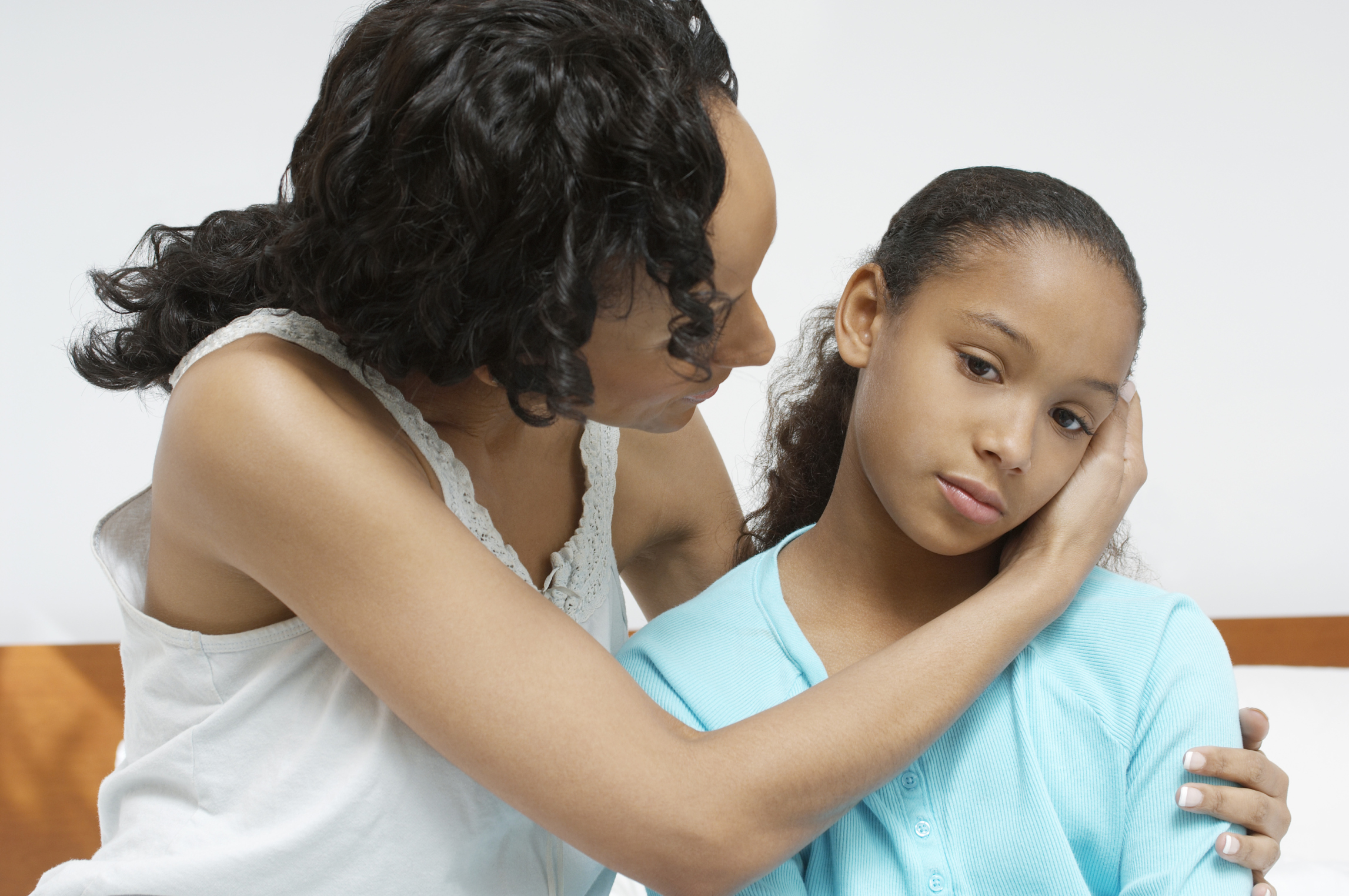
When I look back, I understand that I’d been awful to my mother all afternoon. Somewhere in the years that followed, I learned a term for what had happened that day. Misplaced anger. I’d taken all the hurt and frustration from my junior high day and hurled them at my mom.

It had been, by 12-year-old girl standards, a brutal day. My best friend Mary ditched me at lunchtime to hang with a cool girl. In P.E. class, we were lined up and forced to square dance with a member of the opposite sex. My assigned partner balked at my nervous, wet palms and, for the rest of the morning, called me “Trout.” We’d had a history test in homeroom, and though I’d studied, my memory bank was plum empty for facts on the French and Indian War.

And I had to ride the bus home.

Perfectly terrible. Every ounce of it.

“Hey, how was your day?” chirped Mom as I walked through the front door and dropped my backpack. She smiled and went back to tying my little sister’s shoe. “There are cookies on the counter.”

I sulked my way to the kitchen to find peanut butter cookies. The kind that were crisscrossed with the tines of a fork.

“Geesh, Mom,” I’d said. “Couldn’t you have made chocolate chip?”

Later in the evening, when Mom pulled baked chicken from the oven, I’d complained, too. Dad was working the three-to-eleven shift, and sometimes when he worked we had something simple like pizza. “Chicken and vegetables,” I’d growled. “Why can’t we ever have anything good?”

READ MORE: A PARENT’S JOY

My surliness continued. Mom had been patient. Kind. But by the time bedtime rolled around, she and I had a shouting match in our long, dark hall. I still remember her pink toes poking out from under her blue bathrobe. Her hair was swept back in a ponytail and anger flushed her freckled face.

“I think you’d better get to bed,” she’d said. “You can start again tomorrow. But I’m telling you, I’ll be talking with your father tonight.

I’d trounced off, bare feet slapping linoleum, and flopped on my bed. After a long while, I slipped under the covers, but I couldn’t sleep. Something unexpected met me in the darkness.

Regret.

Sorrow.

Sadness.

Why had I treated Mom like that? If I had only been willing to share, she would’ve pulled a chair close, looked into my eyes and listened. But instead I’d let her become my verbal punching bag. Surely a hefty consequence would follow.

Sleep didn’t come, and somewhere near midnight I heard a creak in the hallway. Was it Dad coming to talk with me? By then, remorse had brought a gentle flow of tears. I wiped them away in the darkness, but before long the door opened and my room was filled with soft light.

It was Mom.

She sat on my bed and leaned close. “Why don’t you come down to the kitchen?” she said. Her voice was a whisper and a tendril of her long, blond hair brushed over my cheek.

I pulled my robe from the back of my desk chair and followed her down the long hall. And what I found in the kitchen is something I’d never forget.

A table for two.

Two burgers sizzled on the griddle, newly covered with thick slices of cheese. Two milkshakes in tall, frosty glasses.

I stood, amazed, while Mom pulled a cookie sheet of fries from the oven.

I deserved a consequence. A punishment.

But Mom met me with grace.

“I’m so sorry,” I said. “Please forgive me.”

“I will,” she said. “I love you, Shawnie. I understand what it’s like to be in between a woman and a girl. It can be a tough place.” She held me close. I cried cleansing tears. After a few minutes, Mom and I sat down.

We talked half the night, sharing cheeseburgers, sharing fries, and sharing hearts.

I don’t know when I’d experienced such love. When I think back, I can still remember the quiet of darkness broken by our voices, the delicious goodness of having my mom all to myself, the way her green eyes met mine with compassion and forgiveness.

I don’t think there’s a thing in the world like the capacity of a parent to love a child.

Does it remind you, a little, of the Lord’s kind of love?
A Mother’s Faith

Saturday, April 30, 2005. Almost a week had passed. A week since my son, Troy, 15, and his friend Josh got into a two-man sailboat—minus the sail, and with a patched-up hole in the hull—and vanished into the blue Atlantic. A week in which—for me, my husband Jewel and the rest of Troy’s and Josh’s families-—each day had passed like a lifetime. Now I sat on the back porch of a beach cottage on the Isle of Palms, just off of Charleston, our hometown. My pastor, Jim Weathers, sat with me, but we were silent. Just the sound of the distant surf, like a relentless reminder.

Some well-wishers loaned the cottage so that Troy and Josh’s families and friends could stay close to the spot where the boys’ boat had gone into the water. The sea wasn’t visible from where we sat, and that was just as well. I grew up around the ocean and I’d always gone to it for comfort. For strength, even, as if its depths and the power of its tides could be drawn upon in some small human measure. Yet how could so sovereign a piece of God’s handiwork be responsible for such anguish?

An endless parade of relatives, volunteers, reporters and officials circulated inside the cottage, just as they had ever since we’d moved here. The constant flurry of activity exhausted me. But it was a blessed distraction as well. Without these good-hearted people, without the never-ending details of reviewing where the latest search parties had been and where to look next, I would have been left alone with the reality of the situation: a reality that day by day was becoming ever more unbearable.

For the last few days, the subject of a memorial service for Troy had been edging closer and closer. Pastor Jim and I had talked around the issue, neither one of us wanting to cross that terrible threshold. Two days at sea—maybe even three or four—were survivable. But a week in an open 15-foot boat, with no food or water?

Now I took a deep breath of sea air and said, “I guess there’s no putting it off anymore. We need to talk about the service. I need to accept the reality of the situation.”

Acceptance. Had I ever known what that word really meant before this week? I’d tried to do everything in the world not to accept the situation. What mother wouldn’t? Last Sunday night, realizing Troy hadn’t checked in after a day of fishing—even though he never failed to normally—I instantly came up with half a dozen reasons why he hadn’t called. I phoned Josh’s parents. They hadn’t heard from him either. I phoned Tony, Troy’s dad, from whom I am divorced. No word.

I tried to stay calm and believe there was a logical explanation that would defy the fear that was slowly twisting my heart. But eight hours later, after a panicked night spent searching for the boys’ vehicle, that hope for a logical explanation had vanished like my son. Then the first glimmer of a clue: A chopper reported sighting the hull of a small, overturned sailboat in the waters south of Charleston. I fought against a spasm of despair. If Troy and Josh were out of the boat, their chances of staying alive would drop drastically. Half an hour later, another report: The boat had algae on the hull. It had been in the water for some time. It wasn’t Troy and Josh! Maybe the boys were still in their boat. Perhaps one of them would even call.

Then, at 10:00 a.m., the Coast Guard located Josh’s black Ford Explorer and empty boat trailer on the beach at Sullivan’s Island, just south of the Isle of Palms. Troy and Josh’s cell phones were on the front seat. They’d gone out on the water with some fishing gear, wearing jeans and T-shirts. The riptide at the spot they’d put in was so strong, a Coast Guard officer told me, it could have pulled the boys beyond sight of land in under a half hour. I knew then that all the challenges to my faith up to that point in my life had only been preludes to what was to come.

Jewel and I spent Monday night at Holy Cross Episcopal Church, just a mile from where the boys had put in. The Coast Guard turned it into a mission control. I wanted to stay close. I wasn’t going home without Troy. Tuesday afternoon—day three—Jim took me aside and said, “Deb, I want you to tell me what you’re going to say to God if the boys aren’t found. Yell if you want. Scream and holler. We’re not going to give up hope, but you need to be emotionally prepared for the worst. If you’re not, this will kill you.”

I tried. I tried to find that anger, that rage at God you sometimes hear people talk about. Why? Why? But all I felt was sadness—a sadness as deep and wide as the ocean that had swallowed up my boy. What was there to say to God?

That same afternoon, the Coast Guard called all of Troy’s and Josh’s relatives together. “It’s been almost seventy-two hours,” the search leader told us. “We’re obliged to call off the search at this time.”

No! That meant the end of all the high-tech gear, the helicopters, the state-of-the-art equipment. It was a recovery mission now. If the boys were still alive, their chances of being found had just dropped from slim to essentially nil. Listening to the officer talk, I felt myself go another rung down the ladder. With each piece of bad news, I was getting closer and closer to the ultimate moment. The one that, I knew, Jim was trying to prepare me for.

“The Department of Natural Resources will keep the search going on a smaller scale,” the Coast Guard officer told us. “There could still be a miracle.” But there was a distance in his voice, more like an echo than a true conviction.

The parishioners of Holy Cross had been so patient, but it was time to give them peace. Jewel and I went home. I lay in Troy’s bed, holding his pillow. The next day, more folks came forward: The owners of the beach house lent it to us to continue our seaside vigil. Then Rich Goerling, an uncle of Josh’s in the Coast Guard Reserve, flew in from Oregon to help direct the operation. My hopes got a boost.

And like every other boost I’d gotten, it ended in disappointment. This afternoon, after days of nonstop work, Rich was going home. Any minute now, I knew, he would come out onto the porch of the cottage where Jim and I sat talking about the service and say his final goodbye.

“Jim,” I said. “I don’t know how much more of this I can take. I really mean it.”

“Deb, I have a confession to make. I’ve never been in a situation like this before. I honestly don’t know what to tell you. Except that I need God’s help for what’s next every bit as much as you do.”

Jim and I bowed our heads. It was a reflex as much as anything by now, reflexive in the deepest sense. Throughout this week there had always been God. Now there was only God. Lord, I said, I will miss Troy every day that I’m alive. But I know you are with him and have been with him from the moment he disappeared. Thank you for holding my son close. I know you love him even more than I do, though I don’t understand how. I need that love. Only your love will allow me to accept this. With a deep sigh, I let go of my prayer. Filling the space it left, there was a small spark of something. Hope. Or acceptance. Or love. It was something I knew would heal and nourish me.

A minute later, Rich came outside with Jewel and Tony. Jewel took a picture of me, Jim, Rich and Tony. Then I went inside. I was talking with a group that had just gotten back from searching the beaches several miles to the north when a cell phone went off. That was nothing unusual with so many people around. Then I heard Tony shouting, “Troy! Troy!”

I ran over to Tony. Why was he shouting? He still had his cell to his ear. “What is it, Tony? What’s going on?”

Tears fell from his eyes. “I’m talking to Troy.” Through the cheers of joy that followed, the story gradually came in. An hour before, a fishing boat had found the boys seven miles off Cape Fear, North Carolina—111 miles north of the area where the Coast Guard had been conducting its primary search. The boys were baked by the sun and dehydrated, but essentially—miraculously—healthy.

Word spread like wildfire. Rich got the call at the airport before he boarded his plane. The following day—Sunday—our church was overflowing with people wanting to celebrate the boys’ safe return and to praise God.

I too praised him for Troy’s return. Yet there was a deeper gratitude I felt—not just for the return of my son, but for a more profound understanding of faith than I’d ever had. A closeness to a power deeper than any sea, a power that would never leave me.

A Mother Lets Go

My son Thomas’s lanky 17-year-old body filled the length of our couch, his broken left leg propped on pillows.

His entire leg was wrapped in a soft cast, the bones near the ankle fractured during August football practice. Exactly what I’d warned him about.

Glued to his hands was a video-game controller, the one he’d grabbed as soon as we came home from the doctor’s office yesterday. How long had he played that thing? Well, at least he’d be hungry.

“How’s the leg feeling this morning?” I asked. “I brought you a protein shake for breakfast—with a curly straw. Remember how you used to love those?”

“Uh-huh,” my son grunted, his fingers madly directing baseball players across the TV screen. “How ’bout a waffle too?” I said. “They have calcium in them.”

Thomas didn’t take his eyes off his TV, as if I weren’t in the room. “Thanks, Mom, but I’m not hungry. And I don’t use curly straws anymore,” he said.

“I just thought it’d cheer you up,” I said. “It can’t be fun having a broken leg. But you have to keep your appetite up if you want it to heal. I’m your mom. That’s what moms do—take care of their kids.”

Thomas shook his head, still not looking at me. “I’m fine, Mom. Really.”

I walked up the stairs and looked back at Thomas. Even with a broken leg he didn’t want my help. Doesn’t he even want me to be his mom anymore? I wondered. A question that increasingly tormented me.

Okay, so Thomas was growing up, but what had happened to my baby, the sweet boy I’d prayed so hard for?

I thought back to when he was little. We used to do everything together. He would hold my hand on nature walks, the paths slippery with moss. I made him shakes. I could picture him slurping one through a curly straw. Sitting at the table with his shake he shared secrets with me, like which Matchbox car was his favorite. He was crazy about his collection.

It all seemed to change the day he turned 15. It was like I’d contracted the plague. I was the last person he wanted to be around. He certainly stopped asking my advice. And look what happened! I’d told him (and his dad, Rick) football was dangerous. How could I get him to understand he still needed me?

All day he never called me for anything. When I brought him supper he mumbled, “Thanks,” his eyes never leaving the TV. I stood waiting, thinking he might say more. But nothing came and I trudged upstairs to eat dinner with Rick. “What is wrong with that boy?” I cried.

“He’s a teenager,” Rick said. “Both of the girls went through it.”

“He’s pushing me away. Why? I don’t know how to be his mom anymore, but I need to be his mom. And he needs me!”

“Give him some space. That’s what he needs now,” Rick said. “He’s almost a man.” I frowned. Rick didn’t understand. He and Thomas got along great.

A couple of weeks later Thomas was back at school in a cast. It felt too soon. I talked him into letting me drive him to school, but he refused to let me carry his backpack to class.

He hopped on his good leg, slung the pack over his shoulder and grabbed his crutches. “I’m not a baby,” he said before hobbling toward the building. But I’m still your mom, I thought. Why won’t you let me help you?

With his friends, Thomas was different, animated, laughing easily. The most I could get out of him was a mumble, but he talked to them for hours about football and weight lifting. I noticed how the other boys respected his opinion.

“We used to talk like that,” I complained to Rick one February evening. “Now he never listens to me.”

“We have to let him make his own decisions,” he said. “He’s a smart kid. He’ll learn from his mistakes.”

What if I let Thomas choose—and he chose to give me the cold shoulder the rest of our lives? I spent the rest of the evening depressed until, alone in the bedroom, I gave up and prayed. God, please show me how to be the mom Thomas needs. Show me what to do. I’m totally lost here. I thought I knew how to be a good mom.

Nothing changed until a few months later when we went to the doctor for a checkup. His cast removed, Thomas hurried down the hallway on his crutches. “He’s doing well,” the doctor said. “He can start using a cane—if he feels the need.”

“Are you sure he’s ready for that?” I asked, trying not to sound like I wanted Thomas to remain an invalid. I mean, I didn’t did I? Of course not! Yet it dawned on me I needed Thomas more than he needed me…or needed to need me. He was my baby and I was afraid to let go.

Thomas came back into the room. “Feel this,” the doctor said, guiding my hand over where the bones had broken. Under the skin was a hard lump. “As the tissue grows back it makes the bone thicker, even stronger. The best thing to do is let nature take its course.”

There was something curious about the way the doctor said: Let nature take its course. Was he talking about Thomas’s leg or something else? That night I flipped through the Bible.

The doctor’s words reminded me of a verse and I wasn’t going to sleep till I found it. I came to Ecclesiastes 3. “A right time to hold on and another to let go.” All those years I’d spent holding Thomas’s hand. Nourishing. Teaching. Protecting. I didn’t know any other way to be a mother.

A few days later I went to his bedroom armed with a single index card. I’d written in Magic Marker, “I’m so proud of you. I’m praying for you. I ♥ you. Mom.” That was all. I slipped the card under his pillow.

He never mentioned it. For all I knew he threw it away. It had been more for my benefit anyway, a way to tell him I loved him without getting in his way. Gradually, I started smiling more and stopped pushing so hard, stopped questioning his decisions. I bit my lip more.

One morning I watched Thomas in the kitchen getting ready to go to school. “I’m staying after school today. Weight lifting,” he said. He walked to his truck, tall and steady, without his cane. I wanted to tell him to take his cane, wanted to tell him he wasn’t ready for weight lifting yet. Instead I said, “Thomas, I love you.”

He looked over his shoulder at me. “Love you too, Mom.”

“What are you putting in those protein shakes?” my husband said. “You two seem like you’re connecting.” I smiled. How could I tell him what I’d learned—that sometimes the best way to hold on is not to hold on at all?

One Saturday morning in August, just before Thomas turned 18, I was putting away socks in his room. I came across a familiar card in the top drawer, tucked right beside his favorite childhood Matchbox car. I pulled it out.

There was the note I had written him. I traced the words with my finger. I went back upstairs. I heard laughter coming from the backyard. There were Thomas and Rick throwing a football. I couldn’t help but notice that Thomas was taller than his father.

Rick was right. Soon we would have a new adult in our family. Yet in my heart, where all good things grow, he would always be my baby.

A Mother Knows

My mom isn’t a doctor. She’s not a scientist. In fact, biology was her worst subject in school. She gets squeamish around blood, and hospitals make her nervous. Yet she was the one who challenged a physician’s diagnosis and saved me from a puzzling illness.

I’ve often wondered how she could know something my doctor didn’t. Is there really such a thing as “mother’s intuition?” As it turns out, a number of researchers believe stories like mine are just the tip of the iceberg.

In eighth grade, I began experiencing headaches and nausea. I was exhausted, but couldn’t sleep. My eyes felt funny. My pediatrician ordered test after test. Nothing appeared to be off. He assured my parents that I was just a normal teenager, probably overexerting myself.

My mom tried to shake off her concerns. All parents worry about their children—but for her, this was more than worry. In the back of her mind, there was a nagging feeling—she knew something was very wrong. Pretty soon, I wasn’t the only one who couldn’t sleep. Over the next three months, she hauled me back and forth to half a dozen specialists.

“Everything looks okay, but we’ll run more tests,” one endocrinologist said. “Maybe we’ll think about getting an MRI down the line.”

MRI, MRI, MRI. On the car ride home, my mother couldn’t get those initials out of her head. She persuaded my dad to take a detour to my pediatrician’s office. While my dad and I waited in the car, she went inside and demanded that the doctor order an MRI.

He called her a hysterical, overprotective mother. An MRI was costly and unnecessary. “Maybe you need to have your head checked,” he said, trying to make light of the situation. But Mom didn’t think it was funny. Finally, the doctor wrote a referral.

That same day, I got an MRI. The results came the following afternoon—there was a cyst sitting on my optic nerve. We caught it just in time, before I lost my vision completely, and maybe even worse. All thanks to my mother’s weird, insistent feeling.

Curious after all these years about the explanation, I recently talked to Dr. Victor Shamas, a psychologist at the University of Arizona who has studied the phenomenon of mother’s intuition. Shamas conducted a study in the 1990s that suggests mother’s intuition starts early—during pregnancy.

One hundred women, who didn’t yet know the sex of their babies, were divided into two groups—those who had a gender preference and those who did not. The women were asked to guess “boy” or “girl” and explain how they made their choice.

Those who had no preference and made their determination based on intuition—say, a dream or a gut feeling—were correct 70 percent of the time, a far greater percentage than what would be expected by chance. How did Shamas account for such a phenomenon?

“Intuition is something that we don’t understand, but it’s not conscious reasoning,” he says. “I don’t know any reasoning process that a mother can use that says a plus b equals c and I know the sex of my baby.”

Shamas believes that it has to do with the bond formed in the womb. “The mother and the child share the same body for nine months.… That’s why the bond is so powerful,” he says. The mother actually becomes one with her child and can feel what the child is feeling, essentially transcending herself.

“My theory is, when your child is born, your life as an independent entity ends. You now define yourself as someone who is a parent and who is connected to this child,” Shamas says. “When you do that, you develop this intense compassion for your child. So their pain becomes your pain. Their experience to some degree becomes your experience.”

Perhaps my mother fought the doctors because she could understand my suffering in a way that no one else could.

“The mother and the child share
the same body for nine months…. That’s why the bond is so powerful.”

Parenting expert Dr. Michele Borba, the author of 12 Simple Secrets Real Moms Know, agrees that “oneness” is at the root of mother’s intuition. “The reason that we’re able to act on our intuition is that it’s not just that gut feeling,” she says. “It’s based on empathy. We’re so tuned in to them that we’re actually—it’s called stepping into their shoes—feeling with them. You’re in communion with the other person.”

That’s why mother’s intuition is most acute in times of distress, says Dr. Judith Orloff, an assistant clinical professor of psychiatry at UCLA and the author of Second Sight, a book examining intuition. “It’s easier to pick up dire situations or tragedies because it’s a louder intuitive signal. It’s like if you’re driving up the freeway, your attention goes to the accident rather than the happy family driving down the street.”

This intuitiveness can manifest itself in a number of ways—agitation, dreams, voices, even physical symptoms like higher blood pressure. Orloff had one otherwise healthy patient who experienced intense stomach pains. The woman called her son, who was away at college, and discovered he had appendicitis.

In the case of Dr. Joanne Cacciatore, a grief counselor and associate professor at Arizona State University, mother’s intuition presented itself in the form of disturbing behavior she couldn’t explain.

Cacciatore was pregnant with her fourth child when she got an overwhelming sense that “something’s wrong, something’s wrong, something’s wrong”—a feeling she hadn’t experienced with her other pregnancies. Doctors dismissed her uneasiness.

Then things got strange. In her third trimester, she came across infant obituaries in the newspaper. She instantly became tearful and felt sick to her stomach. Soon after, she read something in a library book about a baby who died at birth.

“The book fell from my hands,” she remembers. “I was very upset by it.” Three days later, she lost her baby.

Today, Cacciatore counsels grieving parents, many of whom have also experienced an intuition that their child was in danger. Cacciatore recalls one patient who woke up in the middle of the night at the exact time her son had been in a fatal car accident.

Another mother heard a distinct voice when her newborn son was placed in her arms. It said, Enjoy every moment because you’re not going to have him long. The boy died of cancer in his teens, and his mother had indeed cherished every moment he was alive.

Orloff stresses that many instances of mother’s intuition are positive, even joyful. She recalls one patient who felt an inexplicable rush of elation, miles away from where her daughter, unbeknownst to her, had just scored a big goal on the soccer field. She found herself practically jumping up and down, as if she were on the sidelines.

Orloff believes the phenomenon is a kind of unusual survival instinct. Mother’s intuition is a gift from God, she says, a “sixth sense that allows mothers to have information about their children.” She estimates that, in patients she’s worked with, mother’s intuition is correct almost 80 percent of the time.

So how can you tell the difference between a nudge from God and just nerves? At what point do you storm the pediatrician’s office to demand an MRI for your kid?

Make sure you’re listening to the right thing, Shamas cautions. “Intuition is a guiding voice that is subtle and doesn’t feel like it’s being influenced by me, by my conscious desires.” If you’re an overanxious parent, examine your feelings carefully and reasonably. Don’t confuse intuition with a desire to control your children’s lives.

Know and trust yourself—confidence is crucial, Borba says. She warns that self-doubt, fear, distraction and even advice from other parents can all distort your feelings.

“If it’s deep in your heart and it’s gnawing at you and it keeps coming up and resonating with you,” Borba says, “and no matter what you hear from somebody else—regardless of their authority, their degrees or their age—something tells you what they’re saying isn’t right and it’s not working for your child, chances are you are correct.”

Doctors too should employ a “better safe than sorry” approach, Cacciatore says. Mother’s intuition may not always make sense or even be correct, but it’s still a force to be reckoned with.

“It’s this great mystery that persists,” Cacciatore says. “But it’s a powerful mystery.”

One that might very well have saved my own life.

A Mission of Mercy Inspired by Faith and Farm Life

I’ve been rehabilitating stray and abandoned dogs and cats and finding new homes for them for almost 30 years, and in that time, I’ve met quite a number of incredibly dedicated animal rescuers. But even I was amazed by the gentle yet fearless young woman I talked to this past spring, Sister Michael Marie, a Catholic nun with the Missionaries of the Sacred Heart in Clarksburg, Ohio. She has traveled the world as a relief worker with a special mission: to rescue animals in areas hit hard by natural disasters.

“They are all God’s creatures,” she says. “Helping animals also helps the people who love them. It’s just another way of serving the Lord.”

On March 11, Sister Michael Marie awoke to the terrible news that a massive 9.0-magnitude earthquake had struck northern Japan, triggering a tsunami that swept through coastal cities and villages, killing thousands and displacing hundreds of thousands more.

Soon the horror deepened into the worst nuclear crisis since Chernobyl in 1986. Partial meltdowns and radiation leaks at the Fukushima Daiichi nuclear power plant forced the evacuation of more than 200,000 souls.

Sister could only imagine how many animals had been stranded or injured, and she knew she needed to help. A month after the quake, she arrived in Japan with a team from Kinship Circle, an organization that runs an animal disaster-aid network and sends trained responders, all volunteers, to stricken areas. Some of the team cared for sick and injured animals. Others distributed pet food and clean water.

Sister Michael Marie provided a different kind of help—and hope. People at evacuation centers begged her to look for the animals they had left behind with a week’s supply of food and water, thinking they would be back home by then. Now that their towns were off-limits indefinitely because of the nuclear emergency, they were frantic.

Since she was allowed past police checkpoints into exclusion zones, Sister focused on locating stranded pets and farm animals and moving them to safer places like shelters and foster homes until they could be reunited with their human families. Sister was willing to risk earthquake aftershocks and exposure to radiation to rescue them.

Perhaps even better than most animal lovers, she understood the unique bond people have with their furry and feathered companions. After all, she had spent most of her 36 years around animals—living with them, raising them, nursing them when they were sick or injured. She grew up on her family’s 40-acre farm in Wisconsin, with dairy goats, sheep, pigs, geese, guinea fowl, chickens and turkeys, not to mention dogs and cats.

At age 12, Sister asked her parents if she could have pet rabbits. They wanted their daughter to learn that raising animals was a serious responsibility, so they had her sign a “contract” promising that she would handle all of the rabbits’ care, and the cost of their food would come out of her allowance.

The lesson took. She kept rabbits until college.

Sister would wander the woods behind the farm, where there were beavers, wolves, foxes, otters, owls, even eagles. She often found herself thinking of St. Francis of Assisi and following in his path. “Farm animals, wild animals, pets, I prayed for them all,” she says. “And I wanted to protect them.”

At first, she thought that the best way for her to help animals was to become a veterinarian. After college, Sister worked for a few years as a technician in an animal hospital to gain hands-on experience. Eventually, though, she felt drawn to a higher calling.

At age 24 she enrolled in the Missionaries of the Sacred Heart convent. “I never expected that animals would continue to be part of my life’s work,” Sister says. “I thought God was leading me to serve people in need,” which was the mission of her order.

One day the mother superior went to a conference on providing emotional and spiritual support to disaster victims and came back with an idea for Sister Michael Marie. “I know of your past work,” the mother superior told her.

She thought Sister could apply her skills and knowledge to animal disaster aid, and reminded her of the time a family had called the convent frantic about their children’s sick rabbit.

“You gave them some advice, and the rabbit recovered. Remember how grateful the family was? This is how you can help people the most, through helping their animals.”

Sister Michael Marie got trained in disaster relief by the Red Cross and FEMA, and since then has volunteered in disaster areas all over the globe. In 2007 she went to flood-ravaged French West Africa. She worked on the Gulf Coast in 2010, searching for aquatic animals afflicted by the BP oil spill and reporting them to a rescue hotline. At the beginning of this year, she was in Brazil tending to animal victims of mudslides.

Still nothing could have prepared Sister for the devastation and ruin she faced in Japan. In mid-April she drove with volunteers from Japan Earthquake Animal Rescue and Support (JEARS) to the towns of Minamisoma and Okuma in Fukushima prefecture, mere miles from the damaged reactors.

Getting to each town was a challenge. Roads had snapped and crumbled. Power lines dangled precariously. At one point, their van ground to a halt. There was a jagged tear in the road, and the other side had sunk several feet below theirs. Sister and the others had to pile boulders and chunks of broken concrete to bridge the gap enough to drive farther.

Minamisoma and Okuma were like ghost towns. Many buildings were flattened, reduced to rubble. Those still standing were eerily empty. Residents had left in such haste that cars sat in the middle of the streets and bicycles lay on the ground where they’d been dropped.

Pets and farm animals wandered around, searching for food and for someone familiar. The rescuers were able to see to them, but Sister noticed that other animals hadn’t been so lucky and had already died of starvation and dehydration.

One woman evacuated from Minamisoma had broken down in tears explaining to Sister how she’d had to leave in such a hurry that she wasn’t able to track down two of her cats. Sister searched the area around the woman’s house without any luck, but she left a live trap with food that might lure the cats out of hiding.

“Just knowing that someone cared enough to come all the way from the United States to help her pets brought the owner comfort,” Sister says.

Sadly many of the animals could not be located, but Sister and her team were heartened by those they were able to save such as one black Labrador retriever that was spotted near a police checkpoint about 20 miles from the Fukushima power plant. It took half an hour of quiet talking and tasty treats to get close enough to touch him and slip a leash over his head. Then the dog froze and refused to take another step. Sister picked him up and carried him to their van.

“He was very thin—all his ribs showed—but his muscle tone was pronounced,” she says. “This dog had traveled for quite a distance, and he was so tired.” And scared. Yet he rode in the van for several hours to a JEARS shelter without making one sound of protest, as if he knew these strangers would take good care of him.

The dog turned out to have radioactive material in his fur, so he was decontaminated and remains at the shelter waiting to be reunited with his family.

“Were you afraid?” I asked Sister.

No. All she felt was gratitude that the Lord had put her where she could do the most good.

“Helping all his creatures is a way of doing God’s work here on earth,” she told me in her soft voice. “After all, wasn’t Noah’s Ark the first animal rescue shelter?”

Michelle Williams: The Family That Wouldn’t Give Up Hope

We were all there, the whole Williams family; every relative that lived close to my parents’ Illinois home had gathered around my dad’s hospital bed. Mom is one of eight, and almost all of them are ministers, so you can imagine the prayer that was going on in that room.

Help would have to come from God, because the doctors had already talked to Mom about withdrawing life support.

“We don’t think he’s going to make it,” they said.

Gospel music filled the room, but there was no response from Dad. No expression on his face, no change in the slow, anguished breathing, no fluttering of the eyelids, no grip in the hand I was holding. My music group, Destiny’s Child, had just finished our final tour.

I’d been home the month before to throw my grandmother, Dad’s mom, an 85th birthday party and had seen all the family then.

What a happy time that was. Running errands for Mom and Dad, picking up my nieces from school, babysitting, cooking up some mac and cheese and banana pudding, my favorites, just like always.

Now everything had changed. Dad had had a stroke, his second one, and unlike with the first, it didn’t look as if he’d recover. I remembered that first stroke as if it happened yesterday. My whole world stopped.

I was a freshman in high school. Mom had gone down to a church convention in Memphis for the weekend. It was a Sunday morning and with Mom gone, Daddy got us ready for church. He didn’t say anything, just tapped me on the shoulder and gestured. Nothing unusual about that.

Mom was the one who made noise in the morning, calling down the hall, “Get yourselves dressed, children, we’re heading out the door in five minutes!” Dad was quieter. Did I notice that he didn’t say anything in the car either? No. He just dropped us off and drove on. I figured he had an errand to run.

During worship he would be up in the sound booth, doing the audio, like every Sunday.

But at the end of the service he wasn’t anywhere to be found. Not at coffee hour or Sunday school. It was Granny who showed up in her car to take us home.

“Get in, kids.” She looked worried, but you could see she was trying to hide that from us. “Your daddy’s in the hospital,” she said “He’s had a stroke. Your mom’s on her way back from Memphis. I’m sure everything will be fine. The doctors will take good care of him.”

Daddy evidently knew something was wrong as soon as he woke up. He couldn’t hear well. Found it hard to talk. He took us to church and then drove straight to the ER. Someone there must have called Granny.

I hate to think now of the danger he put himself in, driving like that after a stroke, he should have called 911.

I don’t think he knew what was going on, but checking into the hospital was the right thing to do. And dropping us at church first? Well, God always came first in our family. Still I think God would have understood. The sooner you get medical help at the merest sign of a stroke, the better.

I should know. I’ve become an ambassador for the American Heart Association’s Power to End Stroke campaign and I make a point of letting people know things like that. But that’s now and this was then.

Dad had all the risk factors for stroke: diabetes, high blood pressure, and smoking even though he didn’t smoke that much. Mom’s a nurse and after Daddy came home she had a battle plan. No more pie à la mode. No smoking. A list of exercises.

His hearing came back; his speech was okay, but the way we ate changed totally. Goodbye salt, farewell butter. Mrs. Dash made her first appearance in our kitchen, along with grilled chicken–not fried–and lots of salads. Daddy was only in his forties. He had to stick around.

I’m sure glad he did because he got to see me make something of myself in the music business, winning Grammys, writing hit songs, singing all over the world. I owed a lot of that success to him.

On Mom’s side, I was steeped in gospel. I sang “Blessed Assurance” as a solo in church when I was only seven.

But Daddy exposed me to a lot of other music. He was the neighborhood’s go-to guy to DJ a birthday party or barbecue. Down in the basement he had stacks of milk crates full of vinyl–jazz, hiphop, pop, rock. Ray Charles, Bon Jovi, the Winans, Chaka Khan, Carman and Commissioned.

He took me to my first concert. He was also a real history buff. His father had served in World War II and Korea, and Dad could recount all the important battles. You should have heard him rattle off all the names in the Bible too, from Abraham on down.

I wrote about Mom and Dad in my songs. In “Purpose in Your Storm,” I put down a lyric, “Daddy told me things will happen, go on ahead and cry.” Like what all those prophets from the Bible foretold.

And for my mom: “Mama’s been where you goin’, it’s gonna be all right. He’ll never put more on you than you can bear.”

I wrote those words in 2003 for my album Do You Know, a year before Daddy’s second stroke. (It turns out that if you’ve had one stroke there’s a strong likelihood you’ll have another, especially if you don’t make any lifestyle changes).

Standing in his hospital room now, holding his hand, praying my heart out, I wondered if those lyrics were really true. This seemed like more than any of us could bear. How would he bounce back from this? How would we?

I heard all my aunts’ and uncles’ prayers, the gospel music playing. Mom was storming the heavens. We couldn’t lose Daddy now. Please, God, was all I could say. Please.

And then I looked down at Daddy’s feet. No way! It was his toe. His big toe. He was tapping his big toe! Not out of rhythm, not randomly, but right on the beat. I stared for a long time, counting. There was no doubt. No doubt at all. He was still with us.

Heaven would have to wait a while longer for this DJ. It was a long haul, but Daddy made great strides. He learned to walk with a walker; he was able to write again.

He still never got speech back, but he knows exactly what’s going on, following every conversation, taking it all in and letting us know what he thinks. I like to tease him, telling him, “You stuck around because you’re nosy. You don’t want to miss anything.”

Most Sundays he sits with Mom instead of in the sound booth. He raises his hands when we sing in church, something he had to work hard at in physical therapy, letting it out for the Lord.

And he’s got this prayer closet he goes into at home. He’ll maneuver behind the sliding doors with his walker and then sit there for the longest time, talking to God.

It’s been almost 10 years now that this survivor has been with us. We’ve had some scary moments. Not long ago he had to be rushed to the hospital with pneumonia, which is another complication that often afflicts people who’ve had strokes.

I’ve said my own prayers. I ask God to heal him completely, bring his voice back, let him walk, let him dance, let him spin. But in the end, I leave it in God’s hands, say a prayer of thanks that I still have my dad, and pray, Your will be done.

When I sit with him and sing a favorite song, I can see how God’s will has been done, in his life and in mine. And I’m so grateful for that, which is why I decided that what God wanted from me was to speak out on the subject of stroke and stroke prevention.

All it took was a tap of the toe.

Read Michelle’s tips for recognizing the symptoms of a stroke.

Watch as Michelle discusses stroke prevention and treatment.

This story originally appeared in the August 2014 issue of Guideposts magazine.

A Miraculous Birthday Breakthrough

Everything was ready for my trip. I was one of five speakers traveling to Florida for a “Sharing Our Faith” conference. I headed to my daughter Kelly’s room to say good-bye. At the door, I heard Kelly talking to herself and stopped to listen. “Okay. Tomorrow. Spelling test,” she murmured.

I loved the sound of Kelly’s voice, and I didn’t hear it nearly as often as I wanted. Kelly was born with a rare syndrome called Cornelia de Lange. The genetic disorder had caused multiple problems, including severe reflux and heart defects, as well as developmental delays.

Talking was especially hard for Kelly. She communicated mostly in two-word phrases. Names she shortened to a first or last name—never both together. At the high school where she attended special-education classes, the students and teachers hardly ever heard a word out of her.

Even at home she never initiated a conversation and rarely made eye contact. But alone in her room, she sometimes spoke to herself in a stream-of-consciousness way. Whenever I heard her, I would stop and listen.

“Kelly?” I said, stepping inside. “It’s almost time for me to leave for the conference. I’ll be back on Monday. The day after your birthday.”

Kelly nodded.

I hated to be away the day my eldest child turned 18, even if she didn’t mind. There was a time, after Kelly was first diagnosed, that an eighteenth birthday seemed impossible.

The conference kept me very busy, but whenever I had a moment to myself I thought about Kelly. The night before her birthday I called home to check in. I spoke with my husband, Larry, but as usual Kelly refused to talk on the phone. “We’ll wish her happy birthday for you tomorrow,” Larry promised.

That night I had dinner with the leader of our team. “Why don’t you come with me to the church where I’m preaching in the morning?” he said. “You could give your testimony.” It sounded like a great plan.

I went back to my room to prepare. I didn’t need much practice to deliver a talk on how my faith came alive years before. I’d told the story in front of many a congregation. Yet this time, when I started to practice alone, something felt wrong.

“This is the only testimony I’ve got, Lord,” I said. “What else am I supposed to talk about?”

The answer was clear: Kelly.

As of her birthday tomorrow I’d have loved her for 18 years exactly. I needed God to be a little more specific about what he wanted me to say. But when I prayed for an answer, all I heard was, Trust me. You’ll know.

When I arrived at the church the next day, I was nervous. Inspiration had not struck me during the night. In minutes I would step in front of a church full of people still not knowing what I might say!

I grabbed the service bulletin and scanned it for the day’s readings. Luke 13: 10-17, where Jesus laid hands on a woman suffering from a disabling spirit. “She was made straight, and she glorified God.” The woman had been troubled for 18 years.

Eighteen years! Kelly turned 18 years old today! I turned to the pastor. “I think I’m supposed to give my testimony after the Gospel reading,” I said.

When the time came for me to speak, the words flowed out of me. I told the congregation how special Kelly was to our family and to everyone who met her. I’d given testimonies before, but not like this. God was at work in this room. I could feel it.

“While most of us are busy searching for how to serve him,” I concluded, “Kelly always knows how to just be a child of God.”

When I finished, the entire congregation spontaneously sang “Happy Birthday to You” to Kelly. I couldn’t think of a better birthday present for her. Afterward several people came up to tell me how much joy and hope her story had brought them.

“My son is a special-needs child too,” a young mother told me. “Listening to you talk about Kelly reminded me how blessed I am to have him.”

“Any time I see a child who’s different, I’m going to think about your daughter, Kelly,” another man said. “Maybe they can teach me how to be a child of God too.”

So many people had been touched by Kelly on her birthday—it felt like a miracle God was working just for her. And I had gotten to share in it though I was miles away from her. Thank you, Lord, for this gift!

The rest of the day went by in a blur. I didn’t even get a chance to call Larry and tell him how the day started. I did tell my teammate, Tom Herrick, as we were leaving the conference that night. Tom was a longtime family friend, and we were all looking forward to him visiting for a few days—especially Kelly.

“I’m going to sing a big ‘Happy Birthday to You’ to her,” Tom said.

“She’ll love that,” I said. I took out my cell phone and dialed. I expected Larry or one of the boys to answer—

“Kelly?” Kelly did not answer the phone. “Happy birthday!” I said.

“Mommy, I’m eighteen,” Kelly said. “I’m an adult now! I cleaned my room today. It’s all ready for Tom Herrick.”

I was so shocked by her response I could barely speak.

When Kelly gave the phone to her father, I could hear the joy in his voice. “She just woke up this morning and started talking,” he said.

And then I thought back over the day. The service this morning, the scripture from Luke, and the testimony it inspired from me—all along God had been preparing me for the great breakthrough that was to come. The release of Kelly’s sweet, angelic voice was a miracle!

Download your FREE ebook, Angel Sightings: 7 Inspirational Stories About Heavenly Angels and Everyday Angels on Earth

A Message of Hope from a Cat Named Seth

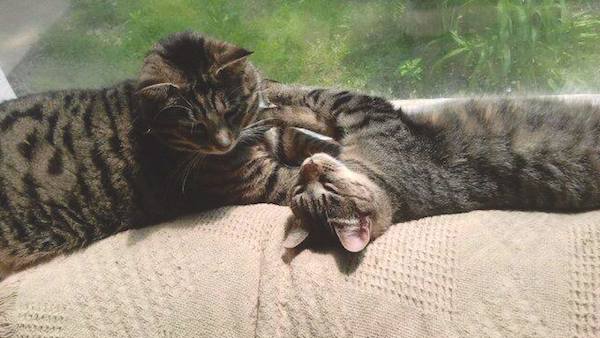
Every so often I get a message on the Mysterious Ways Facebook page from a gray tabby cat. No, really!

You see, Dana Apple, a frequent Mysterious Ways contributor, has a cat named Seth. He happens to be a big Mysterious Ways fan.

Dana sends me photos of Seth along with messages from him in distinct “cat English.” It always makes me smile.

Seth has quite the personality. He’s a stray who showed up at Dana’s house about two and a half years ago. According to Dana, Seth doesn’t get along with her other cats, except for one–Layla, who mistook Seth for her mother when they first met.

About a week ago, I was at my desk at work, really stressed. My sisters and I are currently on the hunt for a new apartment, and it’s been a nightmare times ten. May is one of the worst times to look for an apartment in New York City–not enough apartments, too many people looking. Our lease ends in two weeks, and we still have no place to call home. Needless to say, we’re all on edge. So much so that the three of us have been arguing like cats and dogs!

Read more amazing stories! Click here to subscribe to Mysterious Ways

I was feeling pretty blue about all of it, especially the fighting. And then a message popped up on the Mysterious Ways Facebook page. From Seth. It was a photo of him and Layla with this message:

“I do not know why, but I need to tell you – sometime sisters are kind of a little pain, but you just have to take it becase they love you. Hav a grate weekend. Seth” [sic]

I couldn’t believe it! How on earth had “Seth” known? I emailed Dana and asked her that very question. She said she’d recently posted the photo to her Facebook page and simply decided to send it to me. “I thought you’d like it,” she wrote in her email, “but as [Seth] said, ‘I don’t know why, but…’ Trust and follow the urge. So very glad it was timely!”

Talk about “mysterious ways”! I texted Seth’s photo and message to my sisters right away.

Are we sometimes a pain to one another? Yes. But we love each other, and we’ll get through the horrors of apartment hunting. That’s the message I received loud and clear from a cat named Seth!

Amazing Story of How a Lost Dog Made It Home

We worry about the weather out here in Oklahoma, maybe more than most folks, especially in spring when vicious storms and tornadoes can gather deadly strength in the course of an afternoon. One minute the sun is shining and the next you’re running to the basement for shelter. But that spring seven years ago, there was little that could dampen my happiness. Just months earlier I’d given birth to twin girls, Emerson and Preslee. Harley, our Dalmatian, had a litter of 12 pups. One was very special.

We called her “Muff” because her brown ears made it look as if she were wearing tiny earmuffs. Dalmatian puppies are usually all white—the spots come later—but Muff stood out with her solid brown ears. We gave away the other puppies, but kept Muff for ourselves. The perfect puppy for my babies, I thought. “They’ll all grow up together,” I told my mom.

One blustery afternoon early that May, Muff and Harley didn’t come back from playing outside. “Muff!” I shouted into the whipping wind. “Harley! Where are you?” May is the heart of tornado season out here, and there were reports of dangerous storms coming. I was worried. “They’ll come back. They probably chased a rabbit or something,” my husband, Brian, tried to assure me. “Dogs can always find their way back home.”

Get the new daily devotion for animal lovers!

But the next day they still weren’t back, and the weather was worse, much worse. I called the animal shelter, drove around town, checked with the neighbors. I was at my mom’s place when she said, “There’s a tornado coming and it looks real bad.” I scanned the darkening horizon, the sky bruised with storm clouds. “Lord,” I said, “keep my dogs safe, especially Muff. She’s just a pup.”

We took shelter in a nearby elementary school basement. Even down there I could hear the wind howling mercilessly outside. Still, I couldn’t stop thinking about Harley and Muff. Were they stuck out in the storm? I almost hoped they had been stolen. Then at least they’d be out of harm’s way. Harley was older and could take care of herself, but Muff would be helpless. All at once the wind’s howl turned to an incredible roar, like we were being run over by a freight train, and even my worries about the dogs were drowned out by it.

Finally it was over. The first thing I did was search for Muff and Harley. Driving around town, I realized how lucky my family had been. The tornado left a swath of unbelievable destruction less than a half mile from our house. The humane society shelter was chaotic—bursting at the seams with dogs and cats gone stray in the storm. Their eyes all searched desperately for a familiar face to claim them. But no Harley. No Muff.

Six months after the tornado, we moved into a new house 15 miles away. I still worried about the dogs. What if they came back to the old home and didn’t find us there? Where would they go then? I knew I was being unrealistic, but I still held out hope. It was a hope that faded with time, especially for Harley, but once you have a dog you never forget him. I always wondered about poor little Muff with those cute brown ears. The years passed, and we got two new dogs—a Dachshund and a Labrador retriever. The girls grew up playing with them. But my heart still skipped a beat anytime I saw a Dalmatian.

Then, six years after that terrible tornado season, on a Saturday afternoon a week before Easter, my mom called. She told me she and my sister had been surfing the internet when they came across the web site of Rocky Spot Rescue, a local organization that puts dogs up for adoption. “We don’t need another dog,” I started to say, but she cut me off. “I think you need to see this,” she said.

I turned on my computer and clicked to the web site. I scrolled down to the photograph of the dog Mom told me about. Chills ran down my spine. Those ears, just like earmuffs. The web site said this dog—named Ginger—had originally been rescued a week after the tornado six years ago. Could it be Muff?

Brian was cautious. “Lots of dogs got picked up after the tornado. I bet a bunch were Dalmatians,” he said. “Besides, do we have room for a third dog?”

“The shelter is hosting an open adoption at the pet store tomorrow,” I told him. “I have to act on this. Otherwise, I’ll always wonder if it was her.”

“Okay,” he said. “We’ll all go tomorrow. But don’t get your hopes up, Hon.”

Getting ready for bed that night, I had my doubts. What had become of Muff in six years? Why was she still up for adoption? Even if it were her, after six years, would she remember us? How could we even be sure it was her? She was only a puppy when she disappeared. I called my mom. “Maybe I should just let it be,” I sighed. “Nonsense,” Mom assured me. “A dog never forgets a scent. If this dog is Muff, she will know you.”

Sunday afternoon—Palm Sunday—we all piled into our SUV and headed to the pet store. My hands clutched a bunch of Muff’s puppy pictures. The girls talked excitedly about having a new dog to play with. “Now, don’t get too excited,” Brian said to them. “We’re just going to check this out.”

“But if it is Muff, we’ll get her, right?” Emerson said.

My husband gave me a look. “We’ll see,” I said.

The second I entered the pet store, my eyes scanned the dogs lined up for adoption. There were many Dalmatians, but none had those ears. I went up to one of the shelter volunteers. “Excuse me, but do you still have the Dalmatian you called Ginger?”

“Yes,” she said, “But she’s not available for adoption now. She’s recuperating from a dog bite.”

“Can we see her?” I couldn’t hide my excitement.

“Why her?” the volunteer inquired.

“Because…” I said hesitantly, “I think she’s our dog.”

I handed her Muff’s puppy photos. She flipped through them, eyes wide with disbelief. “Those ears look familiar, all right,” she agreed. “I’ll call the shelter right away and tell them about you. I’ll let them know you’re coming down.” She gave us directions and we drove off.

All the way to the shelter, my heart pounded. Please let it be Muff. Please let her remember us. As we pulled up, I could see a bunch of dogs in the fenced-in yard, some running around playing, others lazing in the shade. One Dalmatian stood at the fence. The car came to a stop and the dog turned toward us. I stepped out and called to her, “Muff?”

There was not even a moment of hesitation. The instant she heard my voice, she started to bark happily. She put her paws up on the fence, then tried to climb it, jumping up and down. The shelter employees came outside to see what all the commotion was about. “She doesn’t react that way to anybody,” one of them said to me. “She’s usually so shy.”

They let me in and the dog almost bowled me over. I kneeled down and put my arms around her. She was all over me, licking my face, barking, nuzzling against my chest. She was a whole lot bigger now, and filled out, but there was no mistaking that this dog knew exactly who I was. I held her head and looked deep into her eyes. “It’s her,” I shouted out. “It’s Muff!”

“Amy,” Brian said, his voice choking with emotion, “this dog definitely has to come home with us.”

It took us a while to find where our poor puppy had been the past six years. Rocky Spot had rescued her from the animal welfare division just days before she was scheduled to be euthanized. Her first adoptive parents after the tornado couldn’t care for her after she was hit by a car and broke her hip. Her next owners moved and left her behind, tied to a tree. She had other traumas and travails that I couldn’t even believe. But miraculously, she survived it all. And I don’t use miraculously as a figure of speech.

We call her Ginger now, but she’ll always be Muff to me. The kids got their new dog and I got my old one back. That first Easter Sunday, Muff—Ginger—and I went for a walk, just the two of us. She kept close, walking contentedly at my side, occasionally looking at me as if she couldn’t believe it. I knew how she felt. I could still remember clear as ever that day of the tornado when I searched the neighborhood for her, shouting into the rising wind. But my prayers too had been taken up by that same wind to the only One who could keep my dog safe when I could not. Now at last, she’d come home.

Did you enjoy this story? Subscribe to All Creatures magazine.

A Marriage That Was Meant to Be

Jason was different from the other handsome Jewish boys I met in college at Syracuse. I’d liked him the second my roommate’s boyfriend introduced us, in the fall of 1995.

He went to nearby Ithaca College, and on our first date, I was struck by our similar backgrounds and values, even with him growing up in New York and me in California. He was fun, and his faith was central to his life. “It’s because of what my grandparents went through,” Jason said. “They are Holocaust survivors.”

“Mine too,” I told him.

We didn’t talk much more about that. Too heavy a subject for a first date. Besides, neither of us knew much more. His grandparents, like mine, rarely spoke about their wartime experiences.

Sweetness and joy, not sadness, filled my grandparents’ home. They lived in Florida, and I visited them two or three times a year. Their house always smelled of fresh-baked sugar cookies or my favorite, Grandma Ada’s chocolate chip cake.

“When your father was little, I fed the neighborhood kids till their bellies burst,” she told me.

“It’s true,” my father added. “She was always in the kitchen.”

Every so often, I’d catch a glimpse of the numbers tattooed on Grandma Ada’s arm. One time, after getting my ears pierced, I asked why she never wore earrings. She cringed.

“A Nazi guard tore my earrings out,” she said, her voice shaking. She straightened up. “No more talk about that. Your earrings look pretty. Now, have a cookie.” That was the last she ever said about it.

It was my father who told me that Grandma Ada had been a prisoner at Auschwitz, one of the most notorious concentration camps. The tattoo on her arm was an identification number put there by her captors. Grandpa Leo survived a different camp. They met after the war and emigrated to New York City.

That was when their history seemed to start. Grandpa Leo told stories about working several jobs as a waiter to support my grandmother and my father. Grandma Ada talked about parties they threw.

“We shared holidays with other families who survived,” she said. “And so many simchas, joyful occasions…weddings, bar mitzvahs, graduations, anniversaries. Life went on.”

They took me to temple for Shabbat, Friday evenings and Saturday mornings, and I got to see families celebrate their simchas. For blessings over the wine and the challah, I joined the other children up front to drink a cup of grape juice and eat a bite of the braided bread.

Back at my grandparents’, we lit Shabbat candles and ate a feast, starting with Grandma’s soup and ending with her chocolate chip cake.

At my own bat mitzvah, my grandparents beamed with pride. “These traditions are important,” Grandma Ada told me. “We must keep them alive.” She didn’t need to say why. Passing on her faith made sure that a part of all those who had died lived on.

Something Jason understood. After our first date, I knew we’d made a real connection. I asked him to my sorority’s winter formal. We spoke on the phone a lot over the next few weeks.

At home for Thanksgiving break, I got a call from Jason. We chatted a bit about our holidays. Then Jason said something odd. “Tell your father that Jaffa, Jerry and Simon say hello.”

“Who?” I asked.

“My uncles, Jaffa, Jerry and Simon Bergson,” Jason said.

My father was surprised when I mentioned those names, and so were my grandparents. “Nadzia and Milton’s boys? They were our dear friends back in New York!” Grandma Ada said.

The story came out. She had first befriended Nadzia in Auschwitz. After the war they lost touch, until years later, when they bumped into each other one day on the street.

My grandparents were thrilled I was dating Jason. “It’s bashert!” Grandma Ada declared. “Meant to be.”

She was right. In 1998, Jason visited my grandparents and told them he planned to propose. As soon as I said yes, Grandma Ada got us a silver Passover Seder plate and Elijah cup. “To use with your family… and your children,” she said.

Jason and I have done just that. Our twin sons are named in memory of their great-grandmothers. They are a constant reminder of how sweetness and simchas can grow even from the deepest sadness.

Try Grandma Ada’s Chocolate Chip Cake!

Download your FREE ebook, True Inspirational Stories: 9 Real Life Stories of Hope & Faith

A Marriage That Started With Spaghetti

Some couples have their song. Others their spot, the place where they had their first kiss, or where he proposed. John and I have spaghetti. Baked spaghetti.

It goes back to New Year’s Eve, 1979. My family had moved from Greenville, South Carolina, to the tiny farm town of Fountain Inn six weeks earlier. I was miserable. We moved often, first because of Daddy’s military service, and then because my parents were looking for a place to settle down.

A shy 14-year-old, I just wanted to call a place home—home home—and make friends I wouldn’t have to leave in a few months.

When our new next-door neighbors invited my brother and me to their church youth group’s New Year’s Eve progressive dinner, it took all my courage to go. The first course was at a house down the road. The rec room was quite the scene—kids were shooting pool, hanging out, talking.

I found a stool in the corner and perched there awkwardly, wishing I was brave enough to speak to someone. When it was time to eat, everyone trooped into the kitchen to get salad— yuck! I stayed put.

That’s when he walked up. An older boy in a crisp plaid shirt, with steelblue eyes, wavy brown hair and a smile that made my heart quicken.

“Hey, I’m John,” he said. “What’s your name?”

“Carol.” I was too flustered to say anything more than that.

“Nice to meet you,” John said. “You’re new in town, right? Where are you from?”

“Greenville,” I replied.

I found out he was 16 and had grown up here, on a farm that had been given to his family in a land grant from King Charles II back in the 1600s. Wow, here I was, six weeks in town, and this guy’s family had been here for 300 years!

“Time to move on,” the youth minister called. “Everyone get back on the bus.”

I snagged a seat right by John and we kept talking until the bus pulled up at the next stop, a farmhouse. John held the door open for me. What a gentleman! I thought.

We stood in line in the kitchen with our plates, waiting for our host to dish out the main course. “Where’s your house?” I asked, not wanting our conversation to dry up.

He gave me a quizzical look and said, “Right here!”

I was mortified. Of course…this was the farm he’d been telling me about. Our host was his mom. Duh!

“Mom made her famous baked spaghetti,” he said.

“Baked spaghetti? What’s that?”

“Wait till you try it,” John said, excited. “Mom serves it at all our youth events. You’ll really love it.”

He was right. Every bite was the perfect combination of melted cheese, tender pasta and seasoned beef. “This is the best spaghetti I’ve ever had,” I said, getting up to get seconds.

John grinned. “What did I tell you?”

The party moved on to the next house, where John and I shared dessert and counted down to the New Year together. It was almost as though we were on a date, just the two of us. But all too soon, the night was over.

A few days later, he called. “Hi, Carol. I was wondering if you’d like to go out sometime.”

My heart leaped…then sank. “I can’t,” I said. “I’m not allowed to date until I’m sixteen.”

“Oh,” John said. “Well, I’ll talk to you later, then.”

We hung up. I guess baked spaghetti on New Year’s Eve is the only date I will ever have with him, I thought.

The next day at school he caught up to me in the hall and asked me out again. I told him my father had laid down the law. John was undaunted. He asked me out a third time. Since John was brave enough to keep trying, I worked up the nerve to go to Daddy.

I told him about John, how we’d met, what a gentleman he was. “He’s the nicest guy, Daddy,” I said, then begged, “Can I please go out with him?”

Daddy asked our next-door neighbors about John. They spoke so highly of him that Daddy relented. “Okay, you can go on a date with this boy,” he said. “With one stipulation. He has to come to the house on Saturday and meet me first.”

Oh no! Daddy was a six-feet-two Yankee truck driver who’d served in Vietnam. Even I was intimidated by him! Surely John would turn tail and run at the mere prospect of confronting my father.

But when I told him the requirement for our date, John gave me a confident smile. “I’ll be there.”

Finally Saturday came. Daddy decided to cut down some trees around our house. Poor John. Not only did he have to face my father, he had to do it while Daddy was wielding a chain saw!

All I could do was spy on them from the house and pray that John survived the interrogation. He got right in there, helping Daddy finish pulling down a tree. With the chain saw switched off, I heard Daddy demand, “What are your plans with my daughter?”

“I was thinking I could pick Carol up for church tomorrow morning and take her to lunch afterward,” John said.

Daddy fired up the chain saw again. I couldn’t hear the rest of their conversation. I saw them shake hands, and John turned to leave. I ran outside to tell him goodbye. Not forever, I hoped.

“You have my permission,” Daddy said gruffly.

Daddy says that that was one of the best decisions he ever made. John and I think so too. We built our home on his family’s farm, right next door to the house where we first shared baked spaghetti on that memorable New Year’s Eve.

It’s home home, where we’ve raised two kids together and where we recently celebrated our twenty-ninth wedding anniversary.

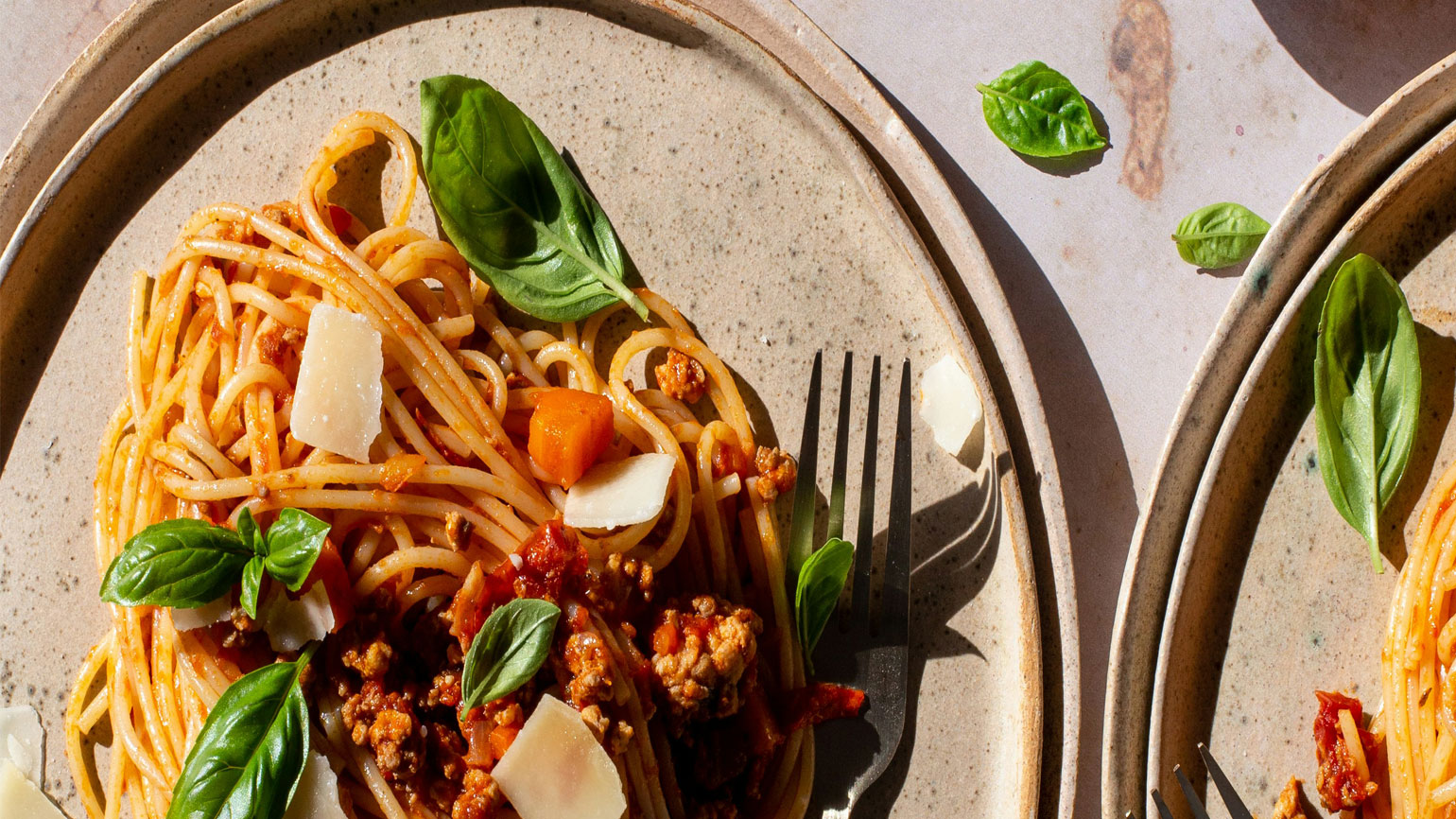
Try Carol’s recipe for the same baked spaghetti that brought her together with John.

A Marine Mom’s Perspective on the Fourth of July

When I was growing up, the Fourth of July holiday meant large family picnics in my grandmother’s back yard. We feasted on grilled hamburgers and Mom’s potato salad.

Afterward, we’d move to the park and watch the fireworks, set against a midnight black sky and accompanied by the strains of patriotic music.

It was the perfect mid-summer break, but nothing more.

As young parents of three growing boys, we continued to celebrate the Fourth in much the same way. Then the terrorist attack of September 11, 2001 changed our perspective.

As a family–and a nation–we were reminded just how much we had to celebrate in this great country…and just how quickly it could be taken from us.

Fast-forward to the first Fourth of July after our oldest son’s enlistment in the Marine Corps. That fact changed the focus of this holiday for us forever.

The patriotic music still rings loud, but the stirring strains now bring tears to my eyes. The fireworks are just as glorious, but the explosions seem to represent the echoes of war fought on distant shores. When I think of the birth of this country, I can’t help but remember the sacrifices made by so many.

For me, the price of freedom can now be quantified. I see it in the kiss of wife sending a husband away on deployment, or a mother watching her son leave for war–none of them certain their soldier will return.

It’s found in the sacrifice of a young man, still in high school, who’s willing to fight for our for freedom by joining the Army. It’s in the tears of a father who proudly watches as his daughter graduates from Marine Corps boot camp.

The Fourth of July is no longer just a pleasant summer break. It’s forever linked to honor and sacrifice. These people are my friends, my community, my support, and the hope of the future.

I’ve watched as these scenarios have played out before my very eyes. In my heart, the phrase, the home of the free and the brave is illustrated by the face of my son–and thousands of sons and daughters like him–who were willing to put it all on the line for our freedom.

So this Fourth of July, think about those who inspired that stirring music and whose willingness to serve made it possible to celebrate. Take time to say a prayer for those who serve and those who love them.