

Embrace God's truth with our new book, The Lies that Bind

A Husky Who Rescues People in Alaska

Tuesday, June 19, 2018
Amelia Milling, a twenty-one-year-old college student from Tennessee, was on Day Two of a three-day solo hike of the Crow Pass Trail, in Alaska’s Chugach Mountains. Following part of the historic Iditarod route, it runs 23 miles from the town of Girdwood to the Eagle River Nature Center. To finish the trail, she would have to negotiate snowy slopes, scree and mine ruins, as well as ford the Eagle River.

Amelia is deaf, and her mother worried about her hiking alone in such rugged terrain. To appease her, Amelia had stuffed a SPOT, an emergency satellite location and communication device, into her backpack. Trekking poles had helped her make the uphill climb to Crow Pass on Day One of her hike. Surprised by the amount of snow, even in summer, she camped overnight.

Tuesday was bright and clear. Amelia could see the lush green Eagle River Valley below. She packed up her tent and began her descent. She leaned on one of her trekking poles, and it snapped. Amelia crashed to the ground and tumbled down the snow-covered mountainside.

Tuesday evening, and I had no idea where my dog was. We live in Girdwood, a small ski community in the heart of Alaska backcountry. Ours is the last house on a dirt road, at the foot of Crow Pass. This wasn’t the first time that Nookie, my seven-year-old husky mix, had wandered off. Still, I couldn’t help worrying.

Dogs have been part of my life since I grew up in Waldoboro, Maine. My wife, Jennifer, and I initially moved to Alaska 20 years ago, then back to Maine so she could to go to school to be a nurse practitioner. When she got a job at the health clinic in Girdwood, we headed back to Alaska. The trip was made more stressful because both our dogs died of old age.

Our family, especially our young kids, Sofie and Alden, needed another dog to love. One day, Jennifer spotted an animal rescue group holding an adoption event in a Walmart parking lot. She didn’t hesitate. “I’ll take this one,” she said, scooping up the smallest puppy.

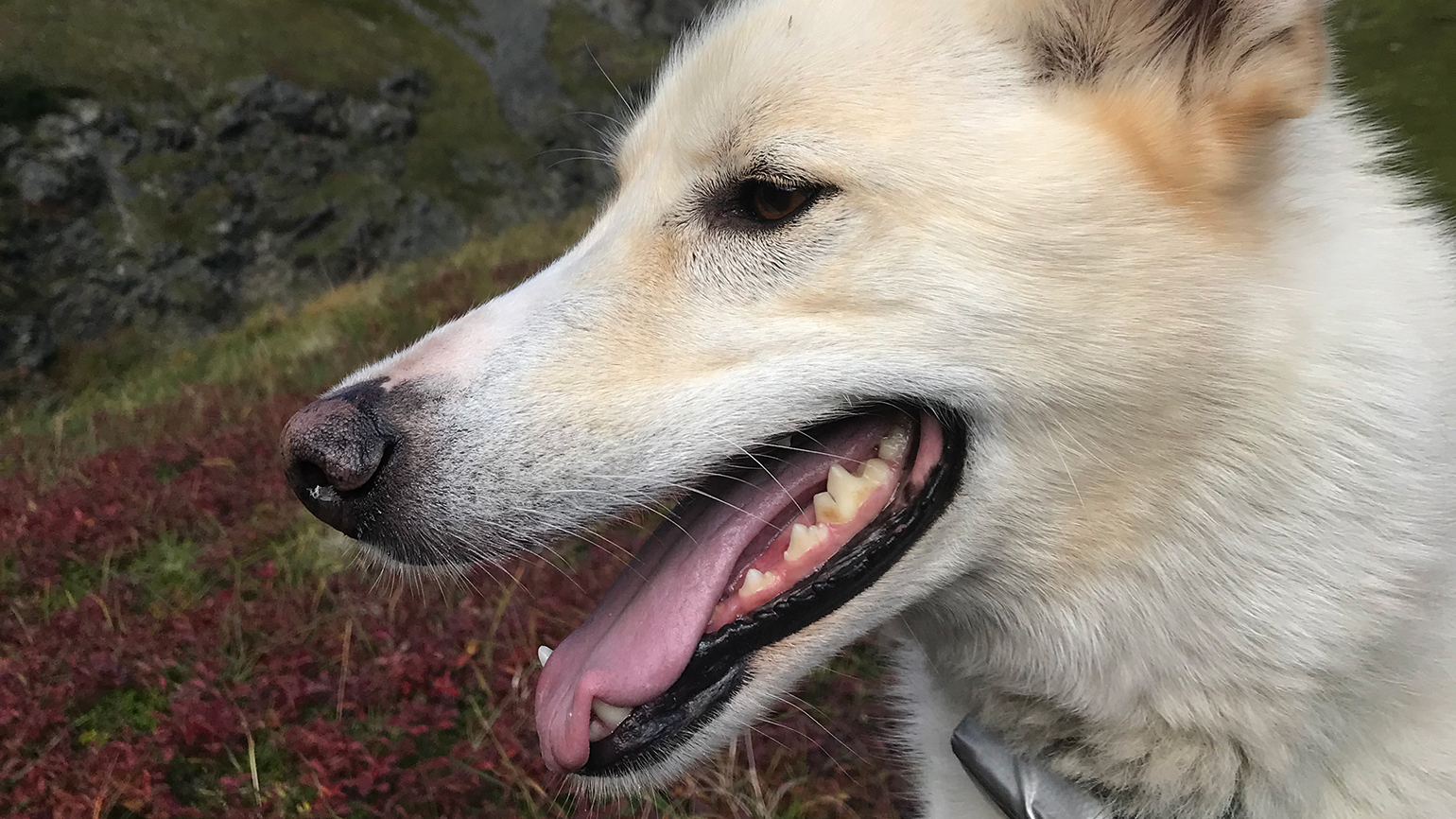
The pup was snowy white. We named him Nanook, Inuktitut for “polar bear.” The kids took to calling him Nookie. What a roly-poly ball of fluff he was! Whether snuggling on our laps, tripping over his own paws or running away with a stolen sock, he made us smile a hundred times a day.

Now he’d disappeared. Again.

Faster and faster Amelia tumbled. Unable to stop herself, she slammed into a boulder rising like a granite monster out of the snow, well off the trail. The impact flung her sideways and sent her downhill another 300 to 400 feet.

Finally she slid to a stop. Amelia scanned the wilderness for another hiker, anyone who might help. But there was no one. No one except a white dog who seemed to appear out of thin air. He wagged his tail. No sign of his owner, though.

Battered and bruised, Amelia managed to set up her tent and crawl inside. The dog lay down outside, and she shared some beef jerky with him. She fell asleep thinking he would soon be on his way.

From his spot on our porch, Nookie can see hikers drive by and park at the Crow Pass trailhead. Our first summer in Girdwood, he disappeared five times. I nailed “missing dog” signs to evergreen trees and sent a notice to our local radio station. Each time, it turned out he’d met up with hikers and walked the length of the trail, arriving safely at the other end, at the Eagle River Nature Center. So every time he went missing after that summer, I figured he was following some hikers.

“Why not just keep him tied?” people asked. I do tie him all winter, because of the danger of avalanches on the trail. But Nookie is like me—he lives for adventure—so we let him run free in the summer. I did put a tag on his collar. It reads “Crow Pass Guide” and includes my cell phone number and Jennifer’s. People called, saying they’d run into him. Sometimes they told me how they had gotten lost and Nookie led them back to the trail. Apparently, our dog wasn’t just playing on his long treks in the mountains. He was helping people.

I would also hike up to Crow Pass and ask people if they’d seen a white husky. “Yeah,” they’d say. “I saw him yesterday heading north.” Or “He was hanging with a group of hikers by the Eagle River crossing.” I would call the nature center and ask them to let me know when he arrived. Then I’d hop in my truck and pick him up. That’s a 126-mile round trip!

The nature center’s workers got to know my dog so well that they set up a tie-out station for him. “Your dog saved a little girl,” a worker told me one day.

“What? How?”

“A family was hiking with their eight-year-old daughter,” she said. “The little girl fell in Eagle River and was swept downstream. Nookie pulled her out!”

Chills ran up my spine. Was there more to our dog than we knew?

Wednesday, June 20
Come morning, the dog was still there. Amelia checked the tag on his collar. “Crow Pass Guide,” it read. Sure enough, he walked ahead of her, leading her back to the trail.

Eight miles later, they reached the Eagle River, a glacier-fed waterway and the biggest water crossing along the trail. Handouts and signs warn hikers to ford it early in the day, when the water runs at its lowest, and to cross only at designated spots. Even then, it’s suggested that hikers unbuckle their packs before entering the water, so they can be easily shed if people fall in, and that hikers cross in a group, each person holding on to the one in front of them for stability. Amelia unbuckled the hip belt and sternum strap of her pack and stepped into the water. The rocks were slick, and the current was swifter and stronger than she expected. Her foot slipped. The next thing she knew, she fell into the water.

It was freezing! She fought to keep her head above the surface. For 15 minutes, she tried to swim to shore—only 10 feet away—but the icy current and the weight of her pack pulled her down. Her whole body went numb.

The dog came running. Splashing through the water, he grabbed Amelia’s backpack straps with his teeth and pulled her to safety. Amelia shivered uncontrollably. She changed out of her soaked clothes and crawled inside her sleeping bag. She would warm up and then try to cross again, she decided. She was nodding off when she felt something wet on her face. The dog was licking her and wouldn’t stop. Was he trying to tell her something? Woozy as she was, Amelia knew she was in trouble. She pulled out her SPOT, the emergency locator her mother had insisted she carry, and pushed the button. A digital SOS went out. This was the third search and rescue operation the Alaska State Troopers air rescue crew had responded to in less than 24 hours. “Headwaters of the Eagle River,” the radio crackled. “Injured hiker, hearing impaired, needs help.”

The troopers’ helicopter launched from Anchorage. They spotted Amelia’s makeshift campsite by the Eagle River and landed just before 7 p.m. They found a young woman in a sleeping bag, dazed, hypothermic and bruised. A white dog lay on the riverbank beside her.

Amelia told the troopers what had happened by writing in a notebook. They loaded her and the dog into the helicopter. Partway back to base in Anchorage, they checked the dog’s tag and realized he wasn’t hers.

Get the new daily devotion for animal lovers!

Thursday, June 21
Nookie had been missing for two long days when my cell phone rang. “This is Lieutenant Olsen of the Alaska State Troopers. Do you own a white husky?”

I tensed. Had Nookie been attacked by a bear? Hit by a car?

“Your dog saved a hiker,” the trooper told me.

Of course, the media picked up the story. My phone buzzed night and day with calls from TV networks, movie production companies, and magazine and newspaper writers. Nookie and I were in my pickup, driving to an interview, when my neighbor flagged me down. “Guess who’s staying at our bed-and-breakfast?” he asked.

I must have looked blank. “A friend of another person who was rescued by your dog!” he said. A woman came up and told me that a couple years earlier, she and Lindsey Honemann had been hiking the Crow Pass Trail with friends. Nookie joined their group. Where the path curved, high above roaring Twin Falls, Lindsey slipped on a rock. She slid toward the treacherous gorge below. Until Nookie grabbed her jacket and stopped her. That makes it three lives he has saved so far—that we know of. I no longer panic when Nookie disappears for days at a time. Nor do I post “missing dog” signs. I have added a GPS beacon to his collar. But otherwise, I’ve learned just to let him go and not to worry. Nanook was put on this earth for a reason, and my job is to let him fulfill that mission.

For more inspiring stories, subscribe to Guideposts magazine.
When Interruptions Happen

A brand new school year. My oldest, Jeremy, was excited about being a first-grader. I wanted everything to be perfect. But I knew with a newborn and a 3-year-old, our homeschooling year might be challenging. Working around Jeb Daniel’s nursing schedule, I prepared lessons for the first week of school.

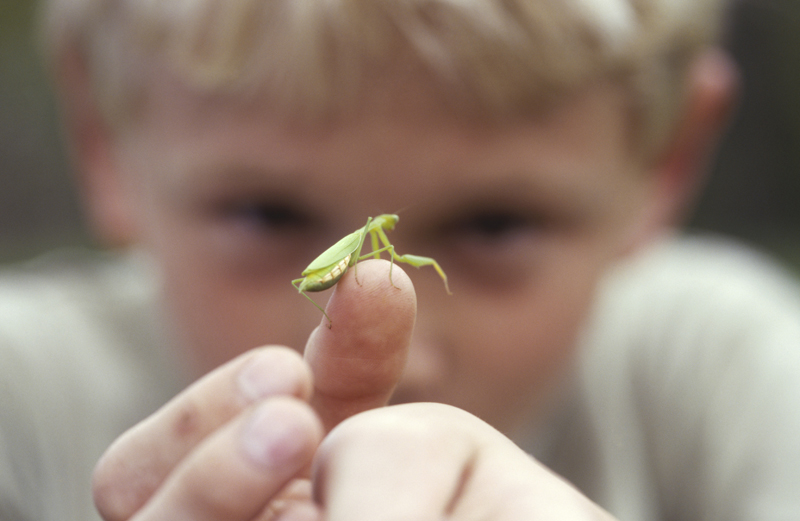
Jeremy’s latest interest was all-things insect. He was totally fascinated by them, which thrilled his daddy, a medical entomologist for the United States Navy.

I’d gathered insect books from the library, collected plastic insect toys from the dollar store to use for math, bought those cute but not very tasty butterfly-shaped crackers for snack time and located my ink pad to make fingerprints on construction paper that would creatively become bugs when six legs were added.

We snapped pictures at breakfast and celebrated the “first day of school.” And that was the only part of the day that went as planned.

Jenifer spilled milk on her clothes and had to be changed. Jeb Daniel wouldn’t settle down after nursing. My mom called from Georgia with news about a sick aunt. I forgot to take the meat out the night before so I had nothing lined up for lunchtime.

More than two hours later than I’d planned to start, I called Jeremy to the kitchen to begin our day.

“Please, Mommy, can I go to the carport first and check on my lizard? Daddy said we’re letting it go today.” His biologist-dad had caught an anole, a small lizard that can change its skin color, for him to study.

“M-O-M-M-Y! Come quick—a thousand ants are attacking my lizard!” Jeremy yelled from the carport.

Without thinking, I replied, “Not now, Jeremy; it’s time for school.”

Lessons on insects? Ants on a lizard? I realized I’d just missed the proverbial forest for the trees and dashed outside.

Fortunately, Jeremy had exaggerated. He caught the anole; I turned the cage over and dumped the ten or so ants into the grass, and we put his friend back in the cage and on a shelf away from danger.

Then we went inside and drew and labeled the three body parts of a carpenter ant.

Thankfully, I learned early in our homeschooling career that many—or perhaps most—days had interruptions. Finding a way to work around the interruption or, better yet, incorporate the interruption into my lesson plan became a challenge that I readily accepted and welcomed.

Biblical Interruptions

Jesus experienced interruptions frequently, or at least, interruptions from our human point of view. And something miraculous almost always happened because of the interruption.

In Mark 5:21-42, a synagogue leader named Jairus approached Jesus while he was by the lake. “My daughter is dying,” pleads Jairus and Jesus agreed to go to Jairus’ home. But before he traveled very far, Jesus was interrupted by the touch of a woman who had bled for twelve years.

Briefly detained from his current mission, Jesus turned and said, “Who touched my clothes?”

The woman was healed immediately upon touching Jesus’ cloak.

In another passage from the New Testament, Luke 5:17-20, Jesus’ teaching was interrupted when a paralytic’s friends lowered his mat through a hole in the ceiling. Jesus healed the crippled man and forgave his sins.

Other divine healings and appointments resulted from interruptions throughout the Old and New Testaments.

Minimizing Interruptions

Though most likely not miraculous by biblical proportions, interruptions in a homeschooling day can, at their best, lead to educational moments and spiritual growth. But at their worst, they can lead to frustration and stress.

Take steps daily to minimize interruptions. First and foremost, be as prepared as possible for each day. Written lesson plans are critical for a successful day. Our lessons work best when I stay at least a week ahead with my written plans, and each child gets his or her own lesson chart for the day.

Prior to a school day, when my husband is available to help with the kids or after the children are in bed, I glance over the schedule for the next day and pull out needed materials, like craft supplies or recipes or math manipulatives.

I follow the same procedure as above for mealtimes, planning recipes and menus at least one week in advance and gathering the needed ingredients the night before. Most mornings, I carry out the bulk of my meal preparations first thing in the morning, before any children awaken, but I leave age-appropriate tasks for the children to help me with in the kitchen later.

Family members and friends respect our homeschooling day and rarely call unless it is important. That way, I avoid phone call interruptions and listen to messages later in the day.

When Interruptions Happen

When taking a phone call is a must, I give instructions for the kids to complete a certain independent task on their lesson plan sheet or give them silent reading time. Several of my children are voracious readers and they love being “assigned” silent reading time.

Interruptions like a sick family member or neighbor in need create opportunities for prayer and teach us to be the hands and feet of Jesus. On several occasions, the kids and I have postponed schoolwork to gather in the kitchen and prepare a fresh pot of soup to deliver to an infirmed friend, and I made sure to incorporate whatever math skill we were studying while cooking.

My younger children’s needs constituted the bulk of our early school-day interruptions. Teach your student to be patient and understanding of those needs and let him or her help by retrieving a needed diaper or reading to the toddler while you nurse the baby.

Some days, if the baby was particularly fussy, I postponed schoolwork until the evening, when my husband could help with the baby and I could devote undivided attention to the student.

As the kids got older, occasionally interruptions came in the form of a newfound interest or a thought generated from a lesson. I never minded stopping the lesson to research the topic either online or in some of our resource books. And if we didn’t find what we needed, we made plans to search out the topic on our next trip to the library.

Most importantly, be flexible. Understand that interruptions will occur in a homeschooling day, just like they did for Jesus and similar to life’s interruptions in general. Take a deep breath, say a quick prayer and tackle the interlude with confidence.

Steps to minimize interruptions before they happen and strategies to capitalize on them when they occur, paired with prayers and patience, help our homeschooling days run smoother and keep us learning as we go.

A Home Filled with Love

A perfectly good cabinet just sat by the dumpster in the parking lot behind Toys “R” Us. Probably a floor model they were getting rid of, I figured. I pulled the cart right up to it.

My family was in need of all the extra storage space we could find at this point. We were living on top of one another in the small house my husband, Martin, and I owned, its walls bursting at the seams.

Community Newsletter

Get More Inspiration Delivered to Your Inbox


Our youngest son had stopped his college courses and moved home while he figured out what he wanted to do with his life. Our eldest had been hit hard by the recession. He’d moved back home too while he looked for work, bringing along his wife and my precious grandbaby.

Currently the living room was full of baby clothes and blankets in neat stacks along the walls. This cabinet wouldn’t solve all our problems, but at least the living room would look a little less chaotic.

It seemed like just yesterday that everything was in its place, I thought as I went inside the store to ask about the cabinet. Then it all fell apart.

“That cabinet is yours if you want it,” the store manager said. “Check the box out there too. I can’t even remember what’s inside.”

One of the nice things about the boys being back home was that their father and I never had to do the heavy lifting. “Wesley, meet me behind the Toys ‘RUs,” I told our youngest over the phone. Once he arrived we got the cabinet loaded in my trunk.

Then we opened the big, oblong box and peeled back the Styrofoam wrapping. Inside was a five-foot-tall dollhouse, never been used.

Even the little furniture was intact: a pink bed and matching nightstand; a tub in my favorite shade of green; and a couch and lamp in baby blue, the color of my own living room at home.

“Wow!” I said.

“We should take this too,” Wesley said. “Luke might play with it when he gets a little older.” What a thoughtful uncle Wesley was. We’d make room for the dollhouse somehow.

At home we set it up in the living room. Late that same night, while everyone else was asleep, I crept back in there to look at it again. I’d seen a dollhouse like this before. It was long ago, when I was a child.

I was five or six at the time, with my mother at the drugstore. As she put her items on the counter, I spotted an elaborate dollhouse in a glass case.

I knew better than to ask about it. Toys were an extravagance for other children. Children whose lives weren’t ruled by the chaos brought on by alcoholic parents. Certainly, a toy so pretty and expensive would be completely out of place in our ragtag home.

But there in the drugstore I could admire it through the glass. When I grow up, I’ll marry a prince and we’ll live in a nice house like that one, I reasoned way back when.

A house just like the orderly dollhouse I was staring at now: everything neat and clean and in its proper place. The vow that my adult life would be different had gotten me through some terrifying and lonely times.

But what had it all come to? Every one of us under this roof was at loose ends. It would take more than a new cabinet to get things in order around here.

I went to bed with the image of that perfect dollhouse in my head. I’m sorry, I thought, drifting off. I wanted to apologize to that little girl in the drugstore. She never got the neat, clean, ordered life she’d prayed for.

The next evening I was getting everything ready for dinner. My daughter-in-law was setting the table. Wesley and I were in the kitchen, getting the gravy just right. The others were in the den, watching the game.

“Come and get it!” Wesley shouted. We all sat down at the table. Luke squirmed in his high chair. I looked out at the well-loved faces around me–faces I now got to see every night. Suddenly I felt so very thankful. “Let’s say grace,” I announced. “Everyone grab hands.”

“Lord, thank you for all the blessings of this life,” I said. “For this food, for this home, for this family.”

“Amen,” they all answered: my two responsible sons, my kind-hearted daughter-in-law, my adorable grandbaby, and Martin, my prince. Maybe our house was a bit crowded, but in every free inch of space was love. And wasn’t that what I had really been longing for all those years as a child?

That orderly, neat dollhouse represented stability and safety–not good housekeeping. An angel must have left that dollhouse by the dumpster to make me understand. My dream had come true. I had the home I’d always wanted. Bursting at the seams with love.

Download your FREE ebook, Angel Sightings: 7 Inspirational Stories About Heavenly Angels and Everyday Angels on Earth.

A Heaven-Sent Prayer Partner

My daughter’s issues had me at my wit’s end. No one else I knew seemed to be going through the same thing with their teenager. I practically ran into my church that day, I was so desperate to talk to someone.

But it was a weekday. Everyone was busy, the pastor deep in conversation, the secretary on the phone, the associate pastor not in his office. Even the head of the women’s ministries was tied up in a meeting.

I felt more alone than ever and was about to leave when I saw a familiar face, a woman I recognized from Sunday services. I stared at her.

“Hi, I’m JoAnn,” she said, walking over to me. “This is probably going to sound odd, but I got the strongest feeling that I should come to church right now.”

“I’m Sue. I was looking for someone to talk to, but they’re all busy.”

She gently touched my arm. “I think I know why we are both here,” she said. “Let’s grab a coffee.”

We talked for over an hour. “May I say a prayer for you?” she asked. She took my hands in hers, right then and there, and I felt like I could trust her with anything.

Soon we were praying for each other every day and getting together every week at the coffee shop.

When I had no one to turn to, God put JoAnn in my path. She’s been there for me ever since—a wonderful listener, faithful prayer partner and trusted friend.

Download your FREE ebook, A Prayer for Every Need, by Dr. Norman Vincent Peale

A Heart Like Cubby’s

It’s been hard since the girls left for college. Sometimes I find myself lingering at work. I’m vice president of a fine-arts printing company. Eventually, though, I head home. I pull into the driveway.

That’s when I see him. Our dog, Cubby, standing on top of an armchair—he’s obviously jumped up there from the couch—watching out the window for me. Yet when I open the front door, he’s sitting on the couch, tail wagging, as if he’s been there the whole time.

He bounds from the couch, landing at my feet. Then he jumps up and tries to give me a kiss. I bend down and let him.

You were right, Alice, I think. The house would feel so lonely and sad without him. I wonder if Cubby misses her as much as I do. He couldn’t miss her more. Then again…

Alice and the girls dragged me to that dog adoption day in May 2013. Yes, I drove us there, but only because I was outnumbered. That’s what happens when you live with three strong-willed women and they join forces. Not fair.

At lunch Ella, 19, and Caitlin, 17, had escalated their campaign to get a new dog, telling me Home for Good Dog Rescue was holding an event at a park nearby. I’d reminded them why it wasn’t the right time for us (our first dog had died the previous year).

“Your mom’s gone twelve hours a day for work,” I said. Alice was on the road a lot training hospital staff in using medical software. “As soon as summer’s over, Cait, you’ll be wrapped up in your senior year. And Ella, you’ll be back at college. I’ll be the one stuck taking care of the dog.”

“Can’t we just go look?” they pleaded.

I turned to Alice for backup, but she had the same question in her eyes. How could I say no when she looked at me like that? I’d never been able to, not since we started dating in college.

At the adoption event, the girls made a beeline for the puppies. I stayed put by the first cage. That was as far as I was willing to go. I saw our girls playing with a pint-sized border collie. I glanced at Alice and shook my head. Too young. Too much work.

Then my gaze fell on the dog sleeping in the first cage. He was good-sized but not quite full grown. He lifted his head and looked back at me.

Something about the soulful expression in those brown eyes got to me. “Can we see him?” I asked a volunteer, not sure what had come over me.

“Sure,” she said. “We think he’s a shepherd-Shar-Pei mix, about ten months old, already housebroken. He came from a shelter down South and is being fostered here in town.”

Alice waved the girls over. We sat on the grass. The dog clambered into our laps, giving us kisses. He even flopped contentedly onto his back for belly rubs. “What a sweet boy,” Alice said. “You know, George, the house feels lonely and sad without a dog.”

What I knew was, we wouldn’t be going home without this dog!

Right away our new puppy made it clear he was family. Whatever we were doing, he wanted to be part of—eating, laundry, watching TV, sleeping. He followed us around the house.

“He reminds me of my best friend when I was growing up, Laura,” Alice said. “She was always trailing the rest of her family, so they called her Caboose. Cubby, for short.” Cubby it was.

Cubby was so affectionate with everyone. No sign that he’d been abused, which is sadly common with rescues. “He must have been a really good dog to someone,” I said to Alice one day.

In August we drove Ella to Virginia Tech for her junior year. The one she had the hardest time parting with was Cubby.

The trip was rough on Alice too, not as much emotionally as physically. She was having an abnormally heavy period. She chalked it up to pre-menopause (she was about to turn 50).

Two weeks later, the bleeding hadn’t stopped, and Alice had terrible pelvic pain. I took her to the hospital. The diagnosis was devastating: uterine carcinosarcoma, a rare cancer, highly aggressive. It had already spread from her uterus to her abdomen and lung.

Alice took the news far better than I did. Part of it was her personality—spirited and direct. Part of it was her family history. Several close relatives had succumbed to cancer, including her mother, who died of lymphoma at 40.

Part of it was her profession—she’d trained oncology teams on software. Specialists discussed her options with us. The terminology was over my head. Stage 4B. Distant metastasis. Palliative care. But Alice understood.

“So chemotherapy could cure this?” I asked, confused.

Alice took my hand and said calmly, cutting to the chase like always, “No. I don’t have long. I am going to die.”

Still, she wanted to try chemotherapy in the hopes that it might give her one last Christmas with us. Three weeks after her first round, complications with her lungs left her too weak to go upstairs. We set her up with her oxygen tank on the couch in the family room.

Cubby knew. He stopped following us around. He only wanted to be with Alice. He parked himself by the couch, right where she could reach him.

I often saw Alice dangling her hand, stroking his head weakly. “Love you, Cubby Bear,” she’d whisper. I worked from home in another room. One day Cubby kept pacing between the rooms. I finally followed him.

Alice was watching a movie about a mom dying of cancer. She was crying uncontrollably. Cubby looked at me as if to say, I couldn’t take care of her this time. Can you?

I turned the movie off and sat next to my wife. “I don’t want to die,” she said.

“I know,” I murmured, feeling as helpless as Cubby must have. All I could do was hold Alice until she fell asleep.

That first round of chemo turned out to be her last. Alice died in the hospital just six weeks after her diagnosis. Ella, Cait and I were with her.

She wasn’t lucid enough to know Cubby wasn’t there; she thought he was, and I believe that brought her a comfort that even the girls and I could not.

In lieu of flowers we asked that donations be made to Home for Good Dog Rescue. A month later, I got a call from HFGDR’s founder. She said thousands of dollars had poured in, all donations in memory of Alice.

“That’s what she would have wanted,” I said. I told the woman how Cubby never left Alice’s side during her illness. “We feel so fortunate to have adopted a dog with a heart like his. He obviously came from a loving family.”

“Loving family?” She paused. “Cubby was one day away from being euthanized when we picked him up. He was severely malnourished. He didn’t trust anyone and cowered whenever we approached. It took his foster family weeks to get him well enough for adoption.”

I looked at Cubby, lying at my feet. I knew it was no accident he’d been given a second chance. He was meant to join our family, to love and comfort my wife in a way only he could.

And not only Alice.

With the girls away at school, it’s just Cubby and me. At night, when I’m ready to turn in, he bolts upstairs ahead of me and jumps on Alice’s side of the bed.

Once I’m settled in bed, he’ll lie with his paw touching me or his head on Alice’s pillow. He stays there until I fall asleep, and he’s back on the bed again when I wake up in the morning, those soulful brown eyes looking into mine.

I feel like he’s telling me, I know you get sad and lonely without Alice. I miss her too. But we have each other. That’s what she wanted.

The dog I didn’t want is the dog I can’t imagine living without.

A Health Crisis Bolstered Her Faith and Their Marriage

Hundreds of swimming caps bobbed in the blue-green waters of Northwest Indiana’s Wolf Lake. I strained to catch a glimpse of my husband, Todd, among the Leon’s Triathlon competitors.

“Do you think he’s okay?” I asked Emily, my teenage daughter. We’d come from our home in Pittsburgh, Pennsylvania. The first racers were already making their way across the beach to their bikes for the second leg. “He’s been out there a long time.”

Emily nodded, her lips pressed tight. This wasn’t easy for either of us.

I’d never worried about Todd the first seven years of our marriage, the second for both of us. He was strong, tall, independent. Retired Navy, though he still worked the same job as a nuclear health physicist. He absolutely lived to compete. He’d done 75 triathlons and 35 marathons, a passion that bordered on obsession. Vacations were spent traveling to competitions. His training regimen—times, distances, splits, routes, heart rate and more, all recorded faithfully on a spreadsheet— took priority over everything. Including me, I sometimes felt.

I resented the time it took away from us, from family, from church. I’d never understood it. Until our world turned upside down in 2015. Nearly two years later, all that mattered to me was helping him reclaim that drive again, to be the old, competitive Todd. The thing that had bugged me most about him. Now I’d give anything to get it back.

June 2015. We’d just come back from dinner, our third night in Aruba, an early anniversary celebration. It was the first time in more than a year we’d gone someplace, just the two of us. I’d planned every part of the trip. I was working for a corporate travel management company at the time, a dream job for someone who thrives on attention to detail and no surprises.

“I think I’m having a heart attack,” Todd said. “My chest is really hurting.”

“It’s probably just something you ate,” I said. My 50-year-old husband was not having a heart attack. I mean, he’d just completed the Boston Marathon that past April and qualified for the following year’s.

“We should go to the hospital,” Todd insisted.

A taxi took us to a small hospital, where an EKG confirmed Todd’s fears. The doctors couldn’t do a heart catheterization, the treatment that would have been done in the U.S. “We’ll give him a mix of blood thinners,” a doctor explained. “That should stabilize him enough to get home.”

I wasn’t allowed to stay overnight in the cramped hospital. I found myself praying Todd would be in good hands. Besides saying grace and attending weekly Mass, I’d never prayed much. In fact, it scared me I was worried enough to pray for my husband. Todd had always seemed invincible.

The next morning, I spoke to the hospital and Todd was doing great. Then, in the time it took for a routine brain scan, everything changed. He was bleeding—a cerebellum hemorrhage, the doctors said. He needed emergency surgery. A priest on call performed last rites. “I don’t know if we can save him,” the doctor said. A shunt was implanted, but Todd’s condition dramatically worsened. He slipped into a coma. I was in shock. If I can just get him back to the U.S. There had to be something doctors with more expertise could do. I arranged an air ambulance to a trauma center in Ft. Lauderdale, Florida, despite the warning that Todd wouldn’t survive the flight. I called my family back home to inform Emily and Todd’s adult sons, Greg and Colby. A friend started a prayer chain. Another friend, from Todd’s work, flew down to be with me.

I was beyond exhausted. Onboard the flight, sitting next to Todd, I couldn’t hold my eyes open. I turned my head. A man sat just feet away, adorned in a radiant white robe. “Todd will recover,” he said, his voice soothing yet powerful, commanding yet comforting. “But the days ahead won’t be easy. Remember I am with you. ” What? Only God himself could give me that kind of assurance. Could this really be him? Was this Jesus? I had so many questions. The vision faded. There was only Todd beside me, the plane quiet except for the sound of the engines and the ventilator keeping my husband alive. I squeezed Todd’s hand.

The plane landed, and an ambulance whisked us to the trauma center. More surgery, this time for a herniated brain stem. But the doctors were no more hopeful. “He’ll likely never regain any significant brain function,” they said.

Medically, I had nothing to cling to. Just that inexplicable vision—or was it a dream?—on the plane. And a thought that wouldn’t leave me: You don’t know Todd. That almost incomprehensible drive. I couldn’t give up on him.

I called 10 neurosurgeons back in Pittsburgh before I found one willing to admit him to an ICU. For 46 days, doctors drained fluid from his brain and administered meds to fight infection. I never left Todd’s side. I massaged his arms and legs. Played soothing music and DVDs of elite athlete triathlons, the ones he used to watch while riding his stationary bike.

At last he was stable enough to be transferred to an acute long-term care center. His eyes were open, but he remained unresponsive, breathing through a tube in his trachea. It was mostly a kind of holding pattern. Todd would have never wanted to be kept alive like this. I was sleeping at home now. How long could I hold out? I didn’t have Todd’s strength.

On August 4, I woke up angry. It was our eighth anniversary, nearly two months since Aruba. I was done. Lord, if Todd is still in there, he needs to show me something!

An idea came to me on the way to the care center. “I want you to plug his trach,” I told the speech therapist. “If he can talk, that means there’s brain activity. If he can’t…” I couldn’t bear to say the words.

Reluctantly, she blocked the hole in Todd’s throat, then stood back. Todd lay in his bed, motionless. I pressed my lips against his ear. “You need to step up. Say something. No one believes in you but me. Help me prove them wrong.”

No response. Not even an eye blink. I turned away.

“I love you. Oppy versary.”

The words garbled. Barely above a whisper. But there was no mistaking that voice. Todd. Still fighting. “Oh, honey,” I said. I turned, but his face showed no hint of what we’d just witnessed.

The speech therapist and I exchanged glances. “We need to reassess,” she said.

The new diagnosis was nearly as grim. “It’s called locked-in syndrome,” the doctor explained. “It’s a neurological condition in which the patient is aware but cannot move and in most cases can’t communicate verbally due to a paralysis of nearly all voluntary muscles. There’s rarely improvement. I’m sorry.”

Still, I insisted Todd be transferred to a rehab hospital. He was weaned off his trachea tube and received daily therapies. He grew more aware, making sounds. The doctors warned me not to expect much. But I clung to that vision on the plane.

The last day of September, Todd’s Reiki therapist was working on his scalp. “The energy I’m feeling, it’s burning hot,” she said.

The doctors agreed to an MRI. It showed a brain infection near the shunt. A surgeon removed the shunt. Something happened during that operation, as if a key were turned that unlocked him.

Almost overnight, Todd became alert. His speech more clear. Able to move his fingers. Turn his head. “I can’t explain it,” his doctor said. “This just doesn’t happen.”

“You remembered to register me for Boston, right? The deadline was in September,” Todd said one day. His words were garbled but understandable.

How was I supposed to tell him there was no way he was running a marathon? He couldn’t even stand on his own. Of course, I hadn’t sent in the registration. That was the last thing on my mind. “Yes, I did,” I said. I felt awful about lying, but there was no way I was going to crush his spirit.

October 22 was Emily’s birthday. On his own, Todd called her and very shakily sang “Happy Birthday.” Nearly every day Todd was making advances. Everyone marveled at his drive, his intensity. That all-too-familiar obsession with reaching the next level, one I had always struggled to understand.

Just before Christmas, Todd came home, getting around in a wheelchair. By the following April, he went back to work part-time. Labor Day weekend, we had a huge party. There wasn’t a dry eye in the house when Todd thanked everyone for their support and their prayers. “I especially want to thank my wife,” he said, his words coming out slowly, deliberately. “Without her, I literally wouldn’t be here.”

Our relationship had changed forever. For the first time in our marriage, it felt as if we were truly connected. We prayed together, feeling God’s presence in our lives in a way we never had before, in a way that started on the plane. Jesus had been with us on this whole journey.

By the spring of 2017, Todd had achieved the impossible, but I could tell he was struggling, unhappy with the challenge of walking more confidently with a cane.

He needed a bigger test. I looked for races for people with disabilities. I found Leon’s Triathlon, a sprint triathlon with a primary focus on disabled veterans. When I called, I learned that Todd, a 27-year Navy veteran, could definitely have a slot.

“I want to do it,” Todd said. That familiar gleam in his eye. He made a harness so he could walk on the treadmill. Used a hand-cycle to train for the bike leg. Started swimming. Recording his times every day in his resurrected spreadsheet.

Now, standing on the shore of Wolf Lake with Emily, I couldn’t help but second-guess myself. Racer after racer, a lot of them amputees, streamed past. There was no sign of Todd. Like many of the racers, he was swimming with an aide. Finally he emerged from the lake and, with the help of the aide, made his way to the hand-cycle. Minutes later, he was out of sight, chasing the pack.

That competitive obsession was no longer a mystery to me or a bane to our marriage. God had blessed Todd with it, knowing fully the challenges that lay ahead of him. And it was a gift to me too, as much as that moment on the plane, when I was given hope for the impossible.

For more inspiring stories, subscribe to Guideposts magazine.
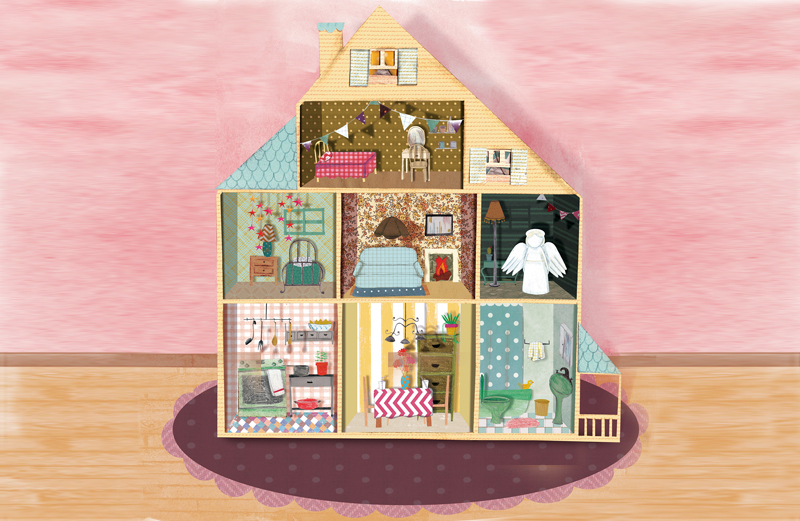
A Grandmother’s Loving Touch

There’s a picture of my grandparents on my bedside table. It was taken in the 1940’s and Mamo and Papo are sitting on the bumper of a car. Mamo’s reaching around Papo. One hand is on his shoulder and with the other she’s holding his chin. She’s giving him a kiss.

My grandmother was like that. Tactile. In every picture that I can find, she’s touching someone.

I remember being a young girl, sitting on the sofa next to Mamo. While we’d talk, she’d rub my back or run her fingers through my hair. Later, when I was grown up, Mamo would reach out and touch my face or hold my hand. Even as she approached heaven, my grandmother reached for those she’d leave behind. Over the years I watched Mamo’s touch bless those around her. It offered affection, provided care and made one feel loved, accepted, valued and secure.

Her touch spoke.

Today, when I wake and see that photograph, I think about my grandmother’s way of reaching out and touching others. And as morning lights my bedroom and calls me to move toward my day, I consider the possibilities of reaching into the lives of others, not with a physical touch, but with the love, mercy and life-saving gospel of Jesus.

It often comes to heart that Jesus said that the most important commandment was to love the Lord and the second was to love others. Loving others, I understand this morning, means reaching into the lives around us. But reaching out isn’t always easy. It takes intention. It takes time. It can be messy. It can pull me out of my wild but safe routine and into the needs of someone else.

It can feel like a sacrifice.

It seems that today’s culture presses us into a lifestyle that’s increasingly self-centered. We’re busy. Distracted. Working 24/7 to take care of our own. Yet this isn’t the way the Lord calls us to live…

Loving others means reaching into a life that is not ours.

As I make coffee, jostle my husband from bed and shake three young sons from their slumber, these plans become consuming and thoughts of my grandmother’s passion becomes a prayer: Lord, give me the heart to reach into the lives of those around me today. Bring someone who needs your love. Give me the eyes to see, a heart to give, and a desire to reach.

I’m grateful for my grandmother for many reasons. I couldn’t count them if I tried. I miss her daily but understand that she’s a part of who I am. Of who I want to be.

Today I’ll use her example to reach into the life of someone else–with God’s kind of love.

A Grandmother of God’s Choosing

It was a shiny little Cadillac with leather seats. The kind the guys at the chop shop paid 500 bucks for. The streets of Houston’s Fifth Ward were empty. I wrapped my fist in my T-shirt and punched through the back window. In a flash I was in.

I pulled out my screwdriver, jimmied the steering wheel and popped the ignition, just like my older brother had taught me. The engine roared to life. Then I heard sirens. I pushed the pedal to the floor. Red and blue lights flashed in my rearview mirror.

I’ve got to get off this road, I thought, or I’m going to juvie for sure.

I was 12 years old.

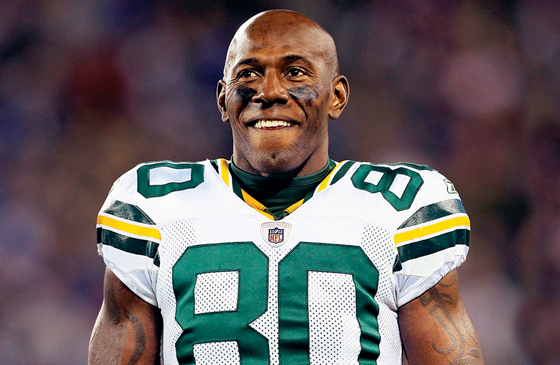
It seems crazy now. Today, everyone knows me as Donald Driver, wide receiver with the NFL’s Green Bay Packers, Pro Bowl player and winner of Dancing With the Stars. I’ve dedicated my life after football to helping disadvantaged kids around the country.

But back then, I was Quickie, a nickname that described my speed as well as how fast I was headed in the wrong direction.

Mom would have strangled me if she’d known what I was up to. My dad had gone to prison for robbing a convenience store while she was pregnant with me. I didn’t meet him until I was six. Mom wanted a better life for me, my two brothers and two sisters.

She worked long hours to support us—first as a housekeeper at a hotel and then nights as a security guard. We went to church three days a week. But she often fell behind on rent and then we’d have to move. For a while we even lived out of a U-Haul trailer.

Trouble really started when we moved next door to a man named J.R. Mom trusted him to watch us while she was at work, and he did. What Mom didn’t know was that J.R. and his buddies were dealing drugs.

My older brother Moses and I served as lookouts. We knew it was wrong, but the money was too good—$100 a night. We broke it into smaller bills, and regularly slipped some into Mom’s purse.

“Shoot, well, I guess I do have money for the light bill,” Mom would say, finding an extra twenty in her wallet. The way I saw it, we were helping the family.

Then Moses discovered we could bring in even more cash by stealing cars. I was just tall enough to reach the pedals. Before long, I got good at playing two different characters. Quickie the son, who went to school and got good grades, and then Quickie the kid who dealt drugs and stole cars.

I practiced giving the same smile, hug and kiss for my mom when I came home, no matter what I’d done on the streets. She never suspected a thing.

Now, though, I was about to get caught. The sirens got closer. I turned into a back alley, my best chance to lose the cops. I was almost free. Suddenly, up ahead, a car backed out of a driveway. I slammed on the brakes.

Too late. The Caddy T-boned the other car. Through the shattered windshield, I saw a little old lady sitting stunned in the driver’s seat. I jumped out. Thoughts flashed through my brain. Gotta get away! I had a head start on the cops, but…What if she’s hurt? You can’t just run away.

I stopped. I turned back to see if the old lady was okay. I hadn’t forgotten everything I learned in Sunday school.

The woman looked angry, but unhurt. “Go sit on my porch right now,” she said. It was the tone of voice no kid can disobey. I walked over to her ranch-style house and sat in her porch swing. The cops arrived and began to question the old woman. She’s going to turn me in! I thought.

“The man who did this ran that way,” she said, pointing down the alley.

“Who is that on your swing?” one of the officers asked.

“Oh, that’s my grandson,” she said. The cops gave me a wary look, but got back in their patrol car and drove off. The woman marched toward me. “You!” she shouted. “Come inside!”

She led me into her kitchen. “Sit,” she said. I sat, dazed. Why hadn’t she turned me in? She pushed some cookies in front of me. I took a bite but my stomach was doing flip-flops. She sat down and looked me square in the eye.

“Why did you do this, young man?” she finally asked. “You could be doing so much more with your life. This is not the way God wants you to be living.”

“This is how we survive in this neighborhood,” I said.

“It’s not how you get out of it,” she said, and pushed the cookies closer. “My name’s Evelyn Johnson.” She lived alone, she told me. She’d never married, never had kids. But she gave me the talking-to of my life, like I was her own kin.

I didn’t listen to her every word—I kept eyeing that door, wanting to run. But I stayed. She could always call the cops, after all. “You’ve been given an opportunity,” she said. “Don’t waste it. There aren’t any second chances in this neighborhood and don’t kid yourself.”

I went back to Miss Johnson’s a few days later, trying to make amends for damaging her car. I picked up groceries, helped around the house. I went again the next week, and I kept going back.

“How are your grades?” she’d ask. “Did you win the game?” Why does she want to know? I wondered. But I liked that she cared. Sure, my mom cared, a lot, but she worked so much. Miss Johnson always had the time.

At 14, I went to live with my grandparents. I spent more time studying. Miss Johnson had told me good grades were the key to a better life. Football, basketball, baseball and track kept me busy too. I do want to change, I prayed. I want to make Miss Johnson and my family proud.

One night, I said to Moses, “I’m going to go to college, like Grandpa always tells us. I’m going to make something of myself.”

Easier said than done. I won a football scholarship to Alcorn State, a college in Mississippi that had sent a ton of football players to the pros. My sophomore year, I fell for Betina, a clarinet player with the band. I was still fooling around with marijuana, though, and Betina didn’t like that.

The Olympic trials were coming up, and I had an opportunity to compete in the high jump. She couldn’t understand why I would risk that. “God is testing you, Donald,” she said. “You have to make a choice.”

Just like Miss Johnson said, I thought. Over the years, she’d become like a real grandmother to me. The last time I’d visited her, she was frail, and it was clear she didn’t have much time left. “I’ll be praying for you,” she said.

All throughout the trials, I thought about her and the chance she’d given me. I didn’t make the Olympic team, but when I got back to school, I found out my roommates had been busted for dealing dope. “That could have been you,” I could hear Miss Johnson say. She passed away not long after.

It was a major wake-up call. I’d been trying to start a new life while still making the bad choices that ruled my old one. So I buckled down. I earned my bachelor’s degree in accounting. Betina got hers in criminal justice.

I worked hard on the football field too. In 1999, the Green Bay Packers picked me in the last round of the draft. I was a long shot to make the team, but then again, I’d been a long shot most of my life. I retired last year after 14 seasons with the Packers.

Betina and I are married, with three children. I pray they’ll make good choices in life, like the one I’ll never regret: turning back to help Miss Johnson.

I’m convinced God put her in my path for a reason. I turned down an alley to escape the cops, to evade responsibility. Little did I know I’d find a way to a better life than I could ever have imagined.

Download your FREE ebook, True Inspirational Stories: 9 Real Life Stories of Hope & Faith

A Golden Retriever Helped Her Handle Her Panic Attack

Downtown Albany was as busy as usual that blustery January day last year, with no place to park on the street. My husband, Mike, pulled into the underground garage of the state office complex, 40 city blocks of concrete buildings and four office towers connected by tunnels and a windowless concourse. “You good?” he asked.

I wasn’t good. My heart was pounding. But I said, “Sure.” Sweaty palms, a knot in my stomach. We were six floors underground, and the cold concrete walls were already closing in on me. Our golden retriever, Ernest, tossed his shaggy head and wagged his tail in excitement. Easy for you, buddy.

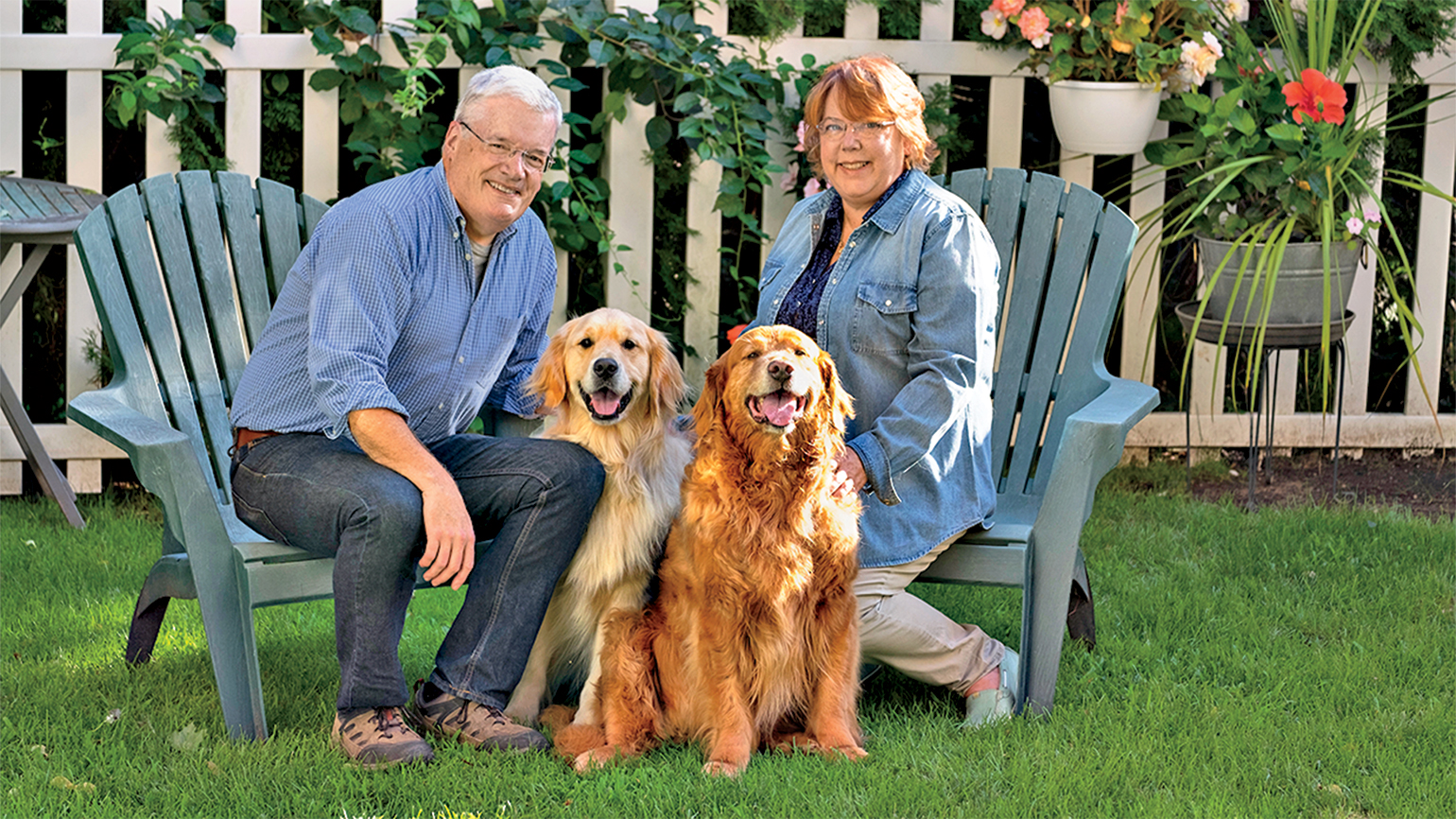
We were here for Ernest to do his job as a therapy dog, providing stress relief to employees at the New York state budget office. Mike and I rescue senior golden retrievers and together do therapy work with them. It feels great taking them places where they can provide the love and comfort that’s unique to dogs—nursing homes, schools during exams, colleges on freshmen’s first day. Just interacting with our goldens helps people feel calmer and happier.

We first got involved with therapy dogs several years ago, when Mike was in the hospital in serious condition and I was worried sick. A Bernese mountain dog loped into the room, but instead of going to Mike’s bedside, he came right up to me, knowing I needed comfort. From that moment, I knew I wanted to work with therapy dogs.

Our first was Ike, a sweet older golden. Then we rescued Ernest three years ago, when he was nine. We enrolled him in therapy dog training, and he took to it. “He was born for this work,” the instructor told me. Ernest passed his test with flying colors.

A manager at the state budget office had requested a therapy dog visit several weeks before. Mike had immediately said, “Let’s do it.” But just the thought of those huge, confusing buildings with their underground garages and elevators filled me with dread. The security checkpoints with the futuristic-looking metal detectors and imposing guards unnerved me. I wanted to ignore this request. After all, we didn’t have to go. But Mike kept bringing it up.

He worked in one of the connecting legislative buildings, and I knew he’d be proud to bring Ernest there. So I agreed to do it. For Mike. For the people in that office. And for Ernest, so he could do what he was meant to do.

I hated my irrational panic, yet I couldn’t seem to shake it. Mike took my hand and squeezed it. He knew I was struggling. I tried to slow my breathing the way I’d learned, back when I thought I had this all under control.

I’d first felt the terrifying anxiety more than 30 years ago, when I was driving down a busy highway one day. Bam, out of the blue, my heart started pounding. I couldn’t get enough air. My vision clouded. I got so lightheaded, I thought I would faint. I was sure I was having a heart attack. After that, I avoided that highway. Then the dread descended while I was driving on another street. So I avoided that street.

Before long, I stopped driving. But the mysterious spells persisted. At the movies. At the grocery store. I kept avoiding places until I had no place left to go.

I finally steeled myself to ask my doctor about it. He explained that I was having panic attacks, a type of anxiety disorder whose cause remains unknown. I didn’t want to take medication. So I spoke with a counselor, who taught me breathing exercises. Controlling my breathing slowed my heart rate and helped avert the rush of fear.

I learned to keep my thoughts anchored in the present, knowing that whatever I was worrying about would most likely never come to pass. And I curled up in my comfy chair with my dog by my side and prayed. I had a fulfilling job as an academic test writer, a loving family and good friends. What did I have to be anxious about? I reminded myself how blessed I was. How God loved me and was with me. I forced myself to go back out, and slowly my world expanded again.

Sometimes those panicky feelings still cropped up, though, especially in confined spaces. I found myself climbing 10 flights of stairs at a doctor’s office instead of taking the elevator. On road trips, I routed us around congested highways and tunnels, even if it took hours longer. Trying to steer clear of all the things I feared was exhausting, but facing the fear was even more so.

Yet here I was, underground at the state office complex, dealing with it head-on. I stared at the elevator—the only way out of the garage for the general public—then shook my head. I couldn’t do it.

“There’s one set of stairs that state employees can use,” Mike said, “but we’ll have to go over the loading docks, down the back way and through a security portal. I can get through with my state ID. Maybe if we explain what we’re here for, the guard will let you pass.” My face burned with shame. Mike shouldn’t have to deal with my fears when there was no real danger. Why did I have to make everything so complicated?

“Follow me,” he said. “There’s nothing to worry about.” Mike led us through the labyrinth of passageways. Ernest kept rubbing against my legs and looking up at me, but I was concentrating on taking deep breaths, trying to calm myself.

We climbed the stairs to the loading dock, my pulse hammering with each step. What if there’s a fire? Or a bomb? My breath came in jagged gasps. Finally we reached the security portal—a tall, revolving metal cage that looked like a torture device. A sign read: Be back in 15 minutes.

I wanted out of this tight space now! Every muscle constricted, and my jaw clenched. I slumped down to the cold cement floor and crossed my arms. Lord, why aren’t you with me? I’m here trying to do this difficult thing. I need you!

I felt something nudge my side. Ernest. A billion thoughts swirled in my head, none of them helpful. What if the guard doesn’t come back? What if we’re stuck in here? Ernest didn’t give up. He pushed his head under my elbow until my arm fell aside. He pressed forward gently until his front legs rested in my lap, his deep brown eyes never leaving mine. I’m here, his expression seemed to say. Lean on me. And so I did, patting his soft fur.

My pulse slowed, and my breathing returned to normal. I felt the fear and tension begin to leave my body. Keeping my hand planted firmly on Ernest’s back, I forced myself to look, really look, at the parking garage around me. You know what? It wasn’t that scary. Certainly not as scary as my projections. I had made it scary.

I hadn’t wanted to come here, hadn’t wanted to confront these feelings again, but this was a struggle I had to face. God didn’t leave me to do this on my own. He sent Ernest, not only to help others but to help me too. I mean, how obvious could God be?

The guard returned and said he couldn’t let me through without the proper ID. “There’s one last way,” Mike said, “but you’ll still have to deal with security desks and detectors.” Ernest gazed up at me, wagging his tail. I smiled and ruffled his ears. Everything would be okay. I knew who to lean on now.

Fear is a good thing if there is something real to be afraid of. But when fear comes first, faith must follow, with a golden retriever right behind.

Read more: Love on a Leash

For more inspiring stories, subscribe to Guideposts magazine.

After Depression, Her Rescue Dog Gave Her Hope

I sat on the couch and flipped through channels, searching for something to watch—anything. A back injury had forced me into early retirement. Even after surgery, I couldn’t return to what I loved most. I had gone from a volunteer EMT and part-time manager of a busy pizzeria to a couch-ridden daytime TV addict.

I missed the action-packed days I used to have back with my EMT partners. We were a team. There’s a one-of-a-kind fellowship in the first responder community. And at the pizzeria, all of us were like family. I fostered connections with the kids we hired as waiters and delivery people. I was like a second mom to them.

My husband, Bob, worked long hours on our 180-acre Illinois farm. My days consisted of the remote in one hand and my phone in the other as I alternately changed the channel on the television and checked Facebook. I’d scroll through my friends’ posts and click on pictures of their recent vacations, theme parties and outings.

I was too self-conscious to ask friends to come help. I resisted the exercises given by the physical therapist. Why bother? I could never volunteer as an EMT again. I could never balance two pizza pies on my arm. My back wouldn’t allow it. I could hardly make it from the couch to the kitchen. Why did this have to happen to me, God? Why does everyone else get to enjoy life and I have to sit here alone, barely able to move? Why won’t you help me?

Get the new devotion for animal lovers!

Scrolling through Facebook for the umpteenth time that morning, I landed on a photo of a dog, a post from a rescue site. A Great Dane–Catahoula hog dog mix. Why I didn’t keep scrolling, I’ll never know. He wasn’t a particularly handsome dog, but his striking blue eyes seemed to call out to me.

He was three years old. He had a dark brown-tan speckled coat with white undertones. His big, goofy paws were evident—one pressed up against the gate of the kennel. The post didn’t offer any details about his background but did give his name: Monte.

I can’t explain it. The more I stared at Monte’s photo, the more I felt he was meant to be ours. He needed a home. He needed to feel loved, wanted, needed. It didn’t take much convincing for Bob to agree to adopt Monte. The next day, a pillow wedged behind my back in the passenger seat of our van, we drove to the Chicago suburbs to pick up our newest family member.

I glanced back at Monte as we pulled into our driveway. I couldn’t wait to show our new dog around the farm. He’s been locked in the kennel, I thought. He probably doesn’t know what to do with all this land.

I had barely opened the back door of the van when Monte shot out, yanking me to my knees and breaking free of his leash. He barreled down the drive toward the farm pond, hot on the heels of a barn cat. Before that day, I’d never seen a cat swim. I hobbled back to the house while Bob chased after Monte. What in the world had I gotten myself into? How would I ever be able to handle a dog so strong and wild?

The farm obviously agreed with Monte. But could I get used to his incredible energy? I feared I wouldn’t last a week. But that first evening, Monte showed his gentler side. He jumped up on the couch, snuggled next to me and nudged the remote out of my hand. He wanted a belly rub. I smiled as I ran my fingers through his spotted coat.

“You’re a keeper, buddy,” I told him. But I knew I had to do something about his behavior.

I did some digging around and found an obedience school close to home.

Our instructor, Jennifer, got right down to business. I was impressed with her teaching methods, not only for the dogs but for their owners. Firm but gentle. Still, Monte’s life hadn’t been easy. He’d suffered neglect and abuse. He had to be taught to trust.

I was up for the challenge mentally. But physically? Not so much. Not even halfway through the class, my back would ache from standing in one place, insisting on Monte’s obedience. More often than not, he didn’t listen. I’d give a command, and he’d do the opposite! Monte didn’t trust me, and I didn’t have faith in him. I wondered if I shouldn’t just go back to my soft spot on the couch and let him run wild and free on our land.

Yet my conscience wouldn’t let me give up on Monte. He had come from a situation in which he’d been kenneled almost 24 hours a day. I too knew what it was like to be locked up all day, trapped on my couch.

So we continued to practice the exercises Jennifer taught us. To keep up, I did my physical therapy exercises. There was improvement in my pain and in Monte’s behavior. I had to put in just as much work as I was requiring of him. We trained for two years. I saw Monte’s confidence grow. Monte loved dock diving—a sport in which the length a dog jumps is measured in competition. Monte made some championship jumps!

Monte and I were out for our walk on the farm one day. Usually when I let him off the leash, he’d take off running. This time, he sat patiently and looked up at me as if to ask permission, just as we’d practiced. I nodded. It was the first time that had ever happened.

Monte graduated from obedience class to canine good citizenship and therapy dog training. I still felt a soft tug at the end of his leash when he saw a cat, but with a quick hand signal he’d settle down. We’d established a bond of implicit trust. And through it all, I felt myself grow closer to God again, trusting that he heard my prayers.

Over coffee one morning, I proposed an idea to Bob.

“Monte and I have been working so well together. I’d like to try my hand at training dogs myself.”

Bob was usually one to mull things over, but this time he didn’t hesitate. “You’d be great,” he said.

Jennifer took me on as her assistant. I learned that my lessons with Monte applied to all dogs—patience, trust, rewarding good behavior and ignoring the bad.

I got really involved with the dog world. I attended my first dog agility exhibition put on by an outfit called Canine Stars. The event was full of athletic prowess and sheer excitement—leaping, diving, catching, racing dogs with boundless energy.

A friend introduced me to the Canine Stars trainers. When they toured, they’d swing through Illinois, and I offered to let them stay at our farm so the dogs could have the freedom to run. I built a relationship with the trainers and the dogs and soon became one of the staff.

I worked the local shows—staying in the background, preparing the dogs for their events. I was taught new commands, what rewards to give the dogs and when, special training tricks. All of a sudden, I was part of a team again! It felt awesome.

I’d worked for Canine Stars for two years when folks there asked me to go on the road with them. I hesitated. Was I ready for that? Lord, am I? I prayed.

“You’ve said yourself, you’ve never felt better,” Bob told me. “Go for it!”

My first trip with the Canine Stars was out west to the Rocky Mountains, up to Calgary, Canada, and then south to Mexico. What an adventure! I went on the road more. As I came home from one long road trip, Bob met me at the door. I knew something was wrong.

“Monte hasn’t been too well. I took him to the vet. He said Monte has epilepsy,” Bob said.

We put Monte on medication, but he wasn’t the same. He became aggressive. It took him longer and longer to recover from seizures.

A year and a half later, Monte’s condition had deteriorated and he wasn’t enjoying life anymore. Bob and I made the tough decision to ease him out of his medication-induced fog and let him rest. Monte passed away peacefully at home. In my grief, I considered giving up the Canine Stars. It reminded me too much of Monte.

“Don’t give it up,” Bob said to me. “Do it for Monte.”

Bob was right. Because of Monte, I’d felt alive again. He had been the answer to my prayer, my door back to life. I had to do it for Monte.

The Canine Stars rewarded me by promoting me to dog handler eight months later.

My first show as a handler, I tried not to look at the audience filing into the arena at the National Western Stock Show in Denver, Colorado. Hundreds of people had turned out to see our amazing dog troupe showcase their talents at the Xtreme Dog show.

I was used to working in the background—training, washing, grooming and feeding the dogs. Now I was a handler. The success of our show depended a lot on me giving the dogs the correct signals for the Frisbee act, the 25,000-gallon pool dive and the fly ball relay runs. Anything could go wrong.

The other handlers were young, agile. I was a middle-aged farm wife with back problems. Why did they trust me to do this? What if I gave the wrong signal to the wrong dog? Or didn’t fling the Frisbee far enough? What if I wasn’t quick enough in step, took a tumble and caused a canine uproar?

My nerves were getting the best of me. I had to find a way to calm myself—dogs are intuitive. They sense anxiety.

Remember Monte, I told myself. Don’t forget everything that God sent him to teach you….

The lights rose in the arena, and I made my way to my position. I thought about all the lessons I’d learned—to be patient and work through difficulty, to forget past mistakes and concentrate on successes. I was where God intended me to be, for God was my trusted handler. I was capable. And, more important, I had a new level of faith.

I turned to face our troupe of eager dogs and smiled. I raised my hand and took a deep breath. Spotlight on. The show was about to begin. I was the handler. And I was ready.

For more inspiring stories, subscribe to Guideposts magazine.
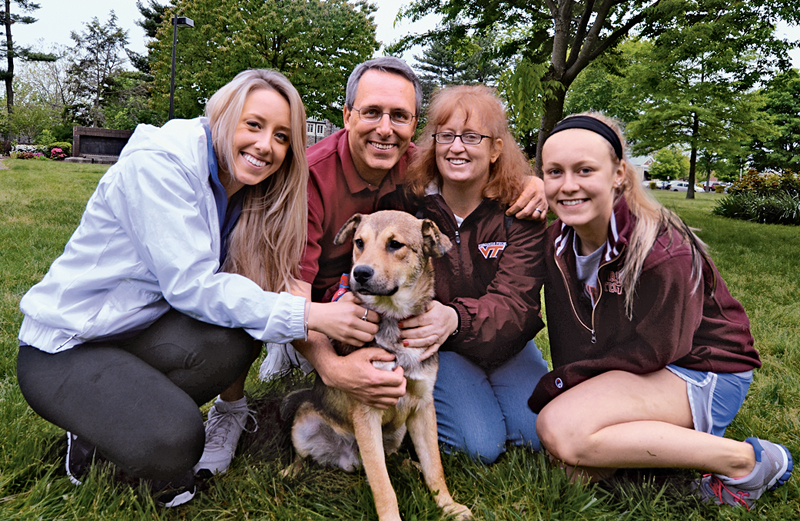
After a 30-Year Marriage, How Do You Survive Divorce?

Despite my highlighted blond hair, I’m a member of the fast growing “gray divorce revolution.”  It wasn’t my wish, but it’s my reality.

When my husband of 30 years announced he no longer loved me, I had no inkling of the  pain, trauma and heartbreak that awaited. The lies and betrayal that were to come to light. The disruption created in my son’s new college life. The three years of limbo that would shred me to pieces and eventually stitch me back up.

If you find yourself facing the end of a long marriage that you treasured, brace yourself. It’s a loss that feels like death, with all the anger, pain and bitterness that comes with irreparable harm.

The bad news about a divorce? Your life will never be the same. The good news about a divorce? Your life will never be the same. Yep—it’s a double-edged sword that cuts both ways.

With my divorce decree newly filed, I’d like to share some things I learned along the way. They just scratch the surface. But maybe they’ll help.

1) Go small

Find a small space to live, gather your thoughts, cry, plan, and, most importantly, heal. Too much stuff and space makes your world feel overwhelming. For 18 months I stayed in the big country house where our son was raised. Too many memories floated around, keeping me stuck in the past. Moving to my mother’s dinky, musty lake cottage proved a true salvation. Built as a three season house with no laundry room or garage and 26 steps to climb, it dared me to spend the winter. So I did. And I emerged a stronger woman.

2) Protect your heart.

Get off Facebook. Tell your friends not to “feed you” any info from it.  Feeling at our lowest leaves us really vulnerable. If you’re the one being “dumped” by your spouse for another person, there’s a good chance hurtful stories and photos will come your way.  That happened to me. It was devastating. I also found that reading posts about friends’ anniversaries and Valentine’s Day stung and set me back. Six months into separation, I deactivated my Facebook account. I haven’t returned.

3) Embrace grace

When scary things happen to us, we look beyond our sphere of living and strive for meaning. I started seeking answers on how to find my way through the divorce darkness, Several friends shared devotionals or spiritual readings with me. One, in particular, helped a lot. The book, Jesus Calling by Sarah Young, became my morning go to. It delivered hope and grace every day and is very popular reading for those who face divorce. Another staple for me became works by the American Tibetan Buddhist nun Pema Chodron, including When Things Fall Apart and The Places that Scare  You.There are many other books on living in the present and being grateful for all we have in our lives. The power of grace and gratitude is incredible!

4) Be bold 

Push yourself to be adventurous and independent. I was 20 when I met my ex and 54 when he left me. Suddenly I had to make every decision and solve every problem to keep functioning in the world.  So I sought to change things up. Much to the shock of friends and family, I took a solo road trip from Wisconsin to Colorado.  Armed with Allman Brothers, Tom Petty and other Classic rock CDs, I hit the open road, driving for hours at a stretch. When billboards promised quirky or historical sites (like Willa Cather’s home town or the Bridges of Madison County), I took the exit. It was a liberating trip that made me comfortable in my own skin. Getting out of my comfort zone made me better handle tough things that came my way while in  transition, like talking to your ex, watching septic bubble up from your shower, or moving your son to a big city by yourself.

5) Know you’re not alone

The night before we closed on the sale of our former house, I pulled up to the cottage in pitch blackness. The car was crammed with boxes to be unloaded. With just a cell phone for light and tears welling, I began hauling my belongings down the two flights of crumbling concrete stairs, feeling certain that I’d slip, fall and die in the darkness all alone.

The days of separation and divorce are some of the loneliest ones you’ll ever experience.

However, it won’t always be that way. Drop the shame. Forget the pride.  Be willing to share your pain.  As a result, your relationships with family and friends will deepen. You’ll find new friends.

For months my son encouraged me to talk to his friend’s mom, recently divorced. I put it off, embarrassed about the demise of my marriage. Finally, I reached out, hungry for advice. Meeting her was life-changing. We exchanged stories. She listened to my secret fears, brought me out into the world, and kick-started my confidence. I started dancing and laughing again.  More than a friend, she was a mentor.  She’s inspired me to do the same for anyone I encounter who is facing an unwanted divorce.

As you shuffle, stumble, and ultimately stride through the days ahead, remember you are not alone. Let kind-hearted people into your world. You will survive.

A Frog and a Prayer

Though fall had always been my favorite season, two years ago it was anything but pleasant for me. John, my teenage son from my first marriage, decided to go live with his father in another state. I felt abandoned, as if God paid no attention to my prayers.

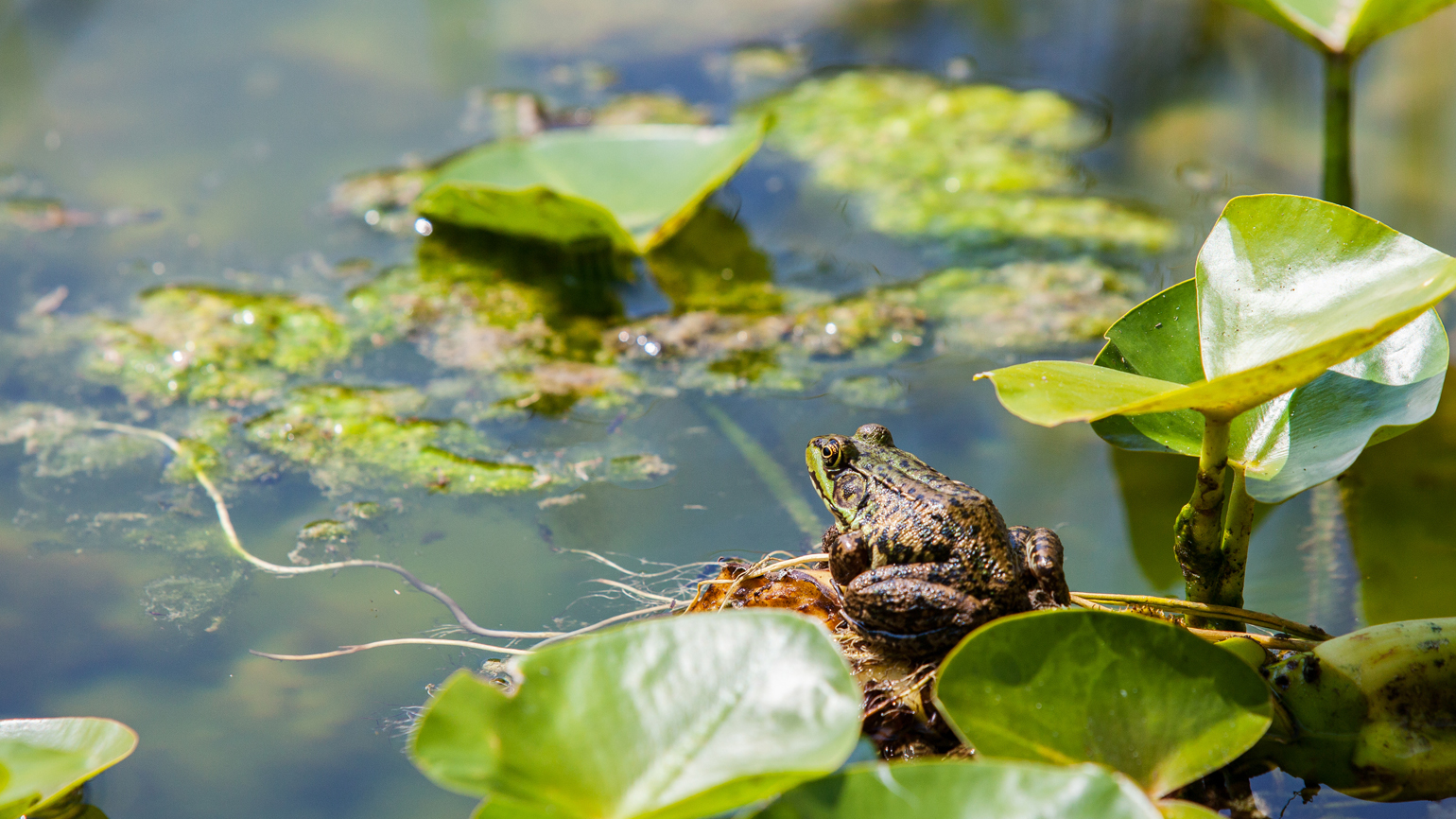
One October afternoon, exhausted from worry, I took my youngest, Jacob, to soccer practice. His brother Jordan, the amphibian aficionado, tagged along to scout the area for frogs. He pried the lid from one of the drains. “Mom! I found a frog! Can I keep him?” Before I could say no, he yelled, “Here’s another one! And another!” Cupping the frogs in his hands, he ran to show me.

“But, Honey, this is their home. Don’t you think they’d be happier here?” I asked.

Jordan persisted. He found an empty Slurpee cup, washed it out and put them inside. Just as practice ended he made a great discovery. The frogs, originally a light brown, had turned a pale beige, blending to match the inside of the cup.

“These guys are something else,” Jordan said excitedly. “What if we keep them for a day, then let them go at the duck pond? There’s lots of frogs there.”

“Yeah, Mom, could we?” Jacob begged, as he peered into the cup.

Not having the energy to argue, I agreed. On the way home, Jordan noticed distinguishing marks on the frogs’ heads. We called the one with a heart-shaped spot Love. The one with a T was Tigger. And the frog with a J-shaped splotch inspired the name Jumper.

At home we transferred Love, Tigger and Jumper to a five-gallon bucket, which the boys furnished with rocks, water, a small branch and as many bugs as they could find. They covered the bucket with plastic wrap, securing the edges with a large rubber band and punching air holes in the middle.

Jordan played with the frogs constantly. I had to tell him to put them back in the bucket before one hopped away. The frogs were only about two inches long and I was afraid they would get lost. When the one-night frog sleepover turned into two, I reminded Jordan that he had said he would release them. “Can we keep them just a little while longer?” he pleaded. On the third night the frogs looked less energetic. “I’ll let them go tomorrow,” Jordan said. “I promise.”

Before school the next morning a cry rang out. “Jumper’s missing!” Jordan yelled.

We searched his room high and low to no avail. “What if we put some food and water by the pail in case he comes back?” Jordan suggested.

With three kids, two adults, two dogs and four cats running around our house, I didn’t give Jumper good odds for survival (I had the feeling he had made a tasty snack for one of our felines), but I didn’t have the heart to tell that to Jordan.

Jumper still hadn’t turned up by the time the boys got home from school. What did I expect? I thought. Nothing’s gone right for us lately. We walked to the pond and let Love and Tigger go.

I tried not to mention poor Jumper’s fate. As the days passed the boys got absorbed in their activities again. To my relief, they stopped asking about the missing frog. I had enough on my mind with their brother John so far away. I couldn’t help worrying about whether he was okay.

One weekend I went on a cleaning binge, and saw on the floor a stack of thick books that needed to be reshelved. I picked up the atlas on top, and noticed a brown lump. I bent down to investigate. Oh, no, it looks like a squashed frog. Then one of its legs moved.

“Jordan!” I called. “Look!”

“It’s Jumper!” he cried. Quickly, we filled a bowl with water and put Jumper in. Within seconds his body plumped up. I told Jordan that I couldn’t imagine how a tiny frog had survived the onslaught of cats, dogs and my vacuum cleaner.

“I prayed for him, Mom,” Jordan said. “Isn’t that what you’re supposed to do?”

The next day we took Jumper to the pond, where a crisp autumn breeze rippled the surface. The boys released him at the water’s edge, and he leaped right in.

It was time for me to let go as well, to give my son John room to make his own decisions. Praying for him, as his brother had reminded me, was what I needed to keep doing. God would see to it that he was all right in the end.

Did you enjoy this story? Subscribe to Guideposts magazine.