Embrace God's truth with our new book, The Lies that Bind

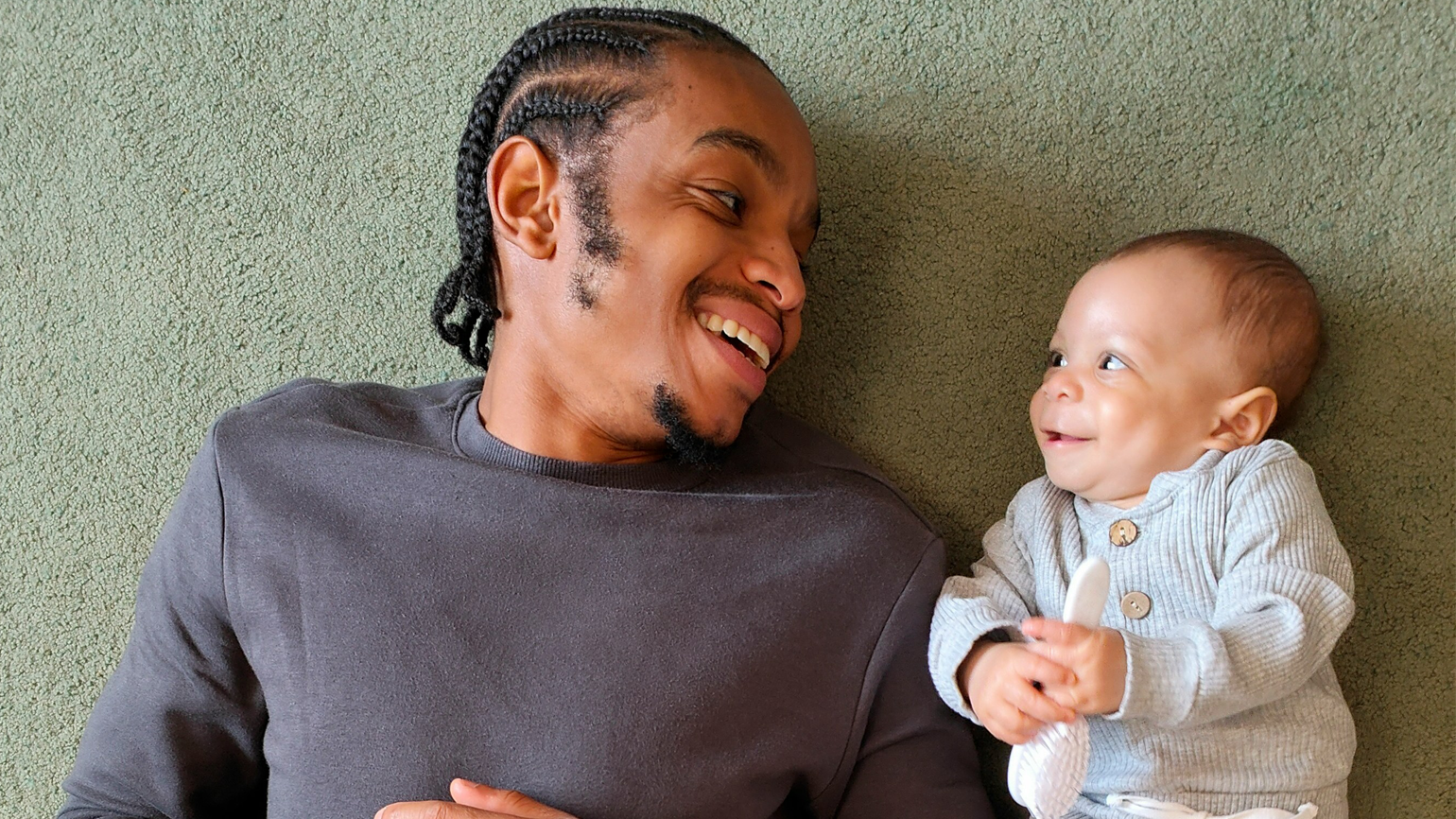
A Father’s Day Celebration of Faith

In many families, mothers are the spiritual force, but let us not forget the faith of our fathers,  often in the background while others lead from the front. On this Father’s Day, I remember the lessons from my father, Pablo, who continues to volunteer at the church food pantry and encourages those down on their luck. He taught me to make the most of my faith and God and life’s second chances. He is always praying for his children, offering counsel and teaching us to follow our call in life.

My Uncle Felix, who passed away several years ago, showed me how to stand up for my convictions but never to let them get in the way of loving others. Uncle Adolfo, also home with the Lord, was an example of a man who adhered to the calling of God in his life and had an impact upon thousands. But he never forgot to love and care for his family. These men lived their faith and showed me how to love my family, work hard and have higher dreams for my children.

Click here for great Father’s Day gifts!

In Scripture, one of the great parables in the Gospel depicts a loving father who sees his prodigal son, from a distance, returning home. He runs out to welcome his son with open arms and throws a party for the one who was lost but now found. His other son, the one who stayed home and worked, took offense at the celebration for the brother who had left. But his father reminded him that everything he had belonged to both his sons. This is a great example of love in action and also illustrates the unconditional love God has for all His children.

We don’t all have the same kind of family experiences, but wherever you can find love from a father or father figure, let’s honor their faith on Father’s Day.

A Fateful Kiss on New Year’s Eve

Most people think thirteen is unlucky, but not our family. The way my dad always told the story, my four siblings and I wouldn’t be here if he’d been led to any other number.

Back in 1941, Dad spent his Saturday nights at “The Nixon,” a dance hall on the corner of 52nd and Market streets in Philadelphia. He could dance the waltz and do the jitterbug just as well as Fred Astaire. The girls dressed up and styled their hair like Ginger Rogers. Some wore silver slippers, while the more skilled dancers wore gold. In those days, when a guy wanted to dance with a girl, he had to sign up for a song on her dance card ahead of time–and every guy wanted to sweep Peg Oestreich off her feet.

Dad was chatting with his buddy when he first saw her walk into the dance hall. Stunningly beautiful, with dark brown eyes and shoulder-length brown hair. Her slippers? Gold. Dad waited in the crowd to sign her card, and they danced to “The Anniversary Waltz.” He was completely smitten. If only he could kiss her, just once!

New Year’s Eve was coming up. Maybe he could snag Peg for the midnight dance! Then he could give her a New Year’s kiss. Dad spent every Saturday counting songs and figured out which dance would fall on the magic moment–number thirteen.

“That can’t be right,” Dad said to himself. “That’s bad luck!” Had he made a mistake? Should he sign up for the twelfth or fourteenth? What if he was too early, or too late? On New Year’s Eve, Dad ran to the dance hall, but Peg was already surrounded. By the time he got to sign her dance card, only one choice remained. Thirteen.

At 11:55, the bandleader called their song. “Harvest Moon” began to play. Dad took Peg’s hand. At that moment, he didn’t care if the song lasted until midnight–he was happy just to dance with her.

Then it happened. 10, 9, 8… The entire dance hall counted down. 3, 2, 1… HAPPY NEW YEAR! Peg looked into his eyes, and Dad delivered the perfect New Year’s kiss.

Mom and Dad started “going steady” that night, which led to 44 years of marriage, five children, four grandchildren, and two great-grandchildren–a growing family that all began with one “unlucky” number.

A Family Mystery

There’s a reason why I’m the one to tell this tale, but that will come later. The story starts with a Christmas letter.

It was one of Deborah Breda’s most cherished holiday traditions. She loved sharing with family and friends, telling everyone how the kids were doing in school, how they were adjusting to the New Jersey winters, her husband John’s career at the bank, her work as a teacher, their Bible study at church.

Even more, she looked forward to the letters that came in return, savoring the smallest tidbit of news, a niece’s violin solo or a new pet. She felt a connection, a sense of belonging she’d craved all her life. But the one letter she looked forward to most had never arrived.

For 11 years she’d faithfully mailed her family’s news to Winston- Salem, North Carolina, to a doctor she’d met only once when she was a girl and had her picture taken with him. The one person she knew who might be able to answer her questions about her father.

She was a 40-year-old woman, with a family of her own, but there was an emptiness in her life.

Now once again at her kitchen table she addressed an envelope to Dr. Reid Bahnson. Her pen hesitated at the bottom of the letter. What could she say that she hadn’t said before?

“I hope you have a merry Christmas,” Deborah finally wrote. “You’re always in my thoughts and prayers. Would love to hear from you sometime.” She folded the letter and put it in the envelope. It seemed such a futile gesture. But if she gave up hope what would she have left?

Growing up in her maternal grandparents’ home in tiny Nederland, Texas, an hour from the Gulf of Mexico, she’d often questioned her mother, Joyce, for details about her father.

How had they met? Was he handsome? What was he like? Why had he left them? And where was he now? Why did he never write or call? An endless stream of queries bubbled up inside of her.

Her mother answered her questions, sparingly. Deborah pieced everything together the best she could, like an enormous jigsaw puzzle whose pieces never seemed to quite fit.

Joyce Guthrie had met Alec Bahnson in 1960 at a Christian school run by an evangelist in Arizona where they were both teachers. He was incredibly handsome, strong and athletic, intense and charismatic, nearly 10 years older than she.

He’d fought in World War II with the legendary 10th Mountain Division, an alpine unit that suffered terrible casualties.

They had a whirlwind romance, marrying only six months after they met, not even telling their families until afterward. They left the school and traveled across the country, finally arriving in Winston-Salem, North Carolina, where the Bahnsons had settled in the early 1860s.

There her husband no longer seemed like the same man she’d fallen in love with. He was moody, prone to strange, obsessive behavior and angry outbursts. It only got worse after she told him she was pregnant. Months later he left her.

“I came back to Granddad and Grandma’s, and that’s when you were born,” her mom told Deborah. “They helped me heal from the divorce so you could be brought up in a healthy environment and we could continue on with our lives. We’re both so very, very blessed.”

Deborah loved living with her grandparents. There was always someone to read her a story or take her to the park. Joyce, a schoolteacher, had summers off. But it wasn’t enough to fill the void inside of her.

“What happened to Daddy?” Deborah would invariably ask.

It was an era when no one spoke of mental illness or what they called shell shock back then. “The war affected him,” her mom said. “And I think the responsibility of being a husband and then me being pregnant was just too much. Still, I know he loves you.”

Her mother never once said a cross word about Alec Bahnson. In fact, she went out of her way to talk up the Bahnsons. They were doctors, inventors, business people, prominent in Winston- Salem. But the question lingered, why didn’t they ever get in touch?

Then when she was 12, her mother announced that they were going on a vacation, a cross-country trip to New York City. Along the way they’d stop wherever they liked. A week later they pulled off Interstate 40, deep in North Carolina. Winston-Salem, the exit sign read.

They drove by the Bahnson family homestead, an impressive Tudor house. Deborah looked on, her eyes as wide as saucers. A few blocks away her mother stopped outside a beautiful stone building.

“This is the office of one of your father’s brothers, Dr. Reid Bahnson,” her mother said. “C’mon, let’s say hi.”

Joyce introduced herself to the receptionist. Minutes later a tall, distinguished man in a white coat appeared, his expression puzzled. Deborah realized her mother hadn’t even told him they were coming.

“Dr. Bahnson,” Joyce said, “I’d like you to meet my daughter, Debbie…your niece.”

“Well, uh, it’s nice, I mean, welcome,” he said. “What brings you to Winston-Salem?”

They talked for only a few minutes. Dr. Bahnson posed for a picture with Deborah outside the office. And that was it. No hugs. No promises to keep in touch. What her mother hoped for, Deborah didn’t know.

But the name and the memory never left Deborah. Somehow this polite but reticent man seemed like the key that could unlock this hidden side to her family. But how?

She sometimes held the snapshot of herself and the doctor in her hands, as she did now before sending yet another Christmas letter to him in Winston-Salem, praying for an answer. It was 2001. Her son was 12 years old, her daughter, 10, old enough to have questions of their own about their ancestry.

Then one evening the phone rang. “Is this Deborah Breda?” a voice on the other end asked, a voice she couldn’t place.

“Yes,” Deborah said.

“My name is Fred Bahnson,” the caller said. “I’m sorry to be the one to tell you, but your father, Alec, has passed away. I’m the executor of his will and, well, I thought you should know.”

Questions whirled in her mind amid a sea of emotions. “How did you find me?” Deborah finally asked.

“I asked my uncle, Dr. Reid, if he knew how to reach your mother,” Fred said. “He had a box full of Christmas letters from you. We’re having a memorial service. Would you be able to come?”

In a church in North Carolina she listened intently to the words spoken of her father, a man it seemed no one could fully explain. He’d bravely served his country and devoted much of his life to missionary work.

But all agreed, after the war he wasn’t the same, his mind troubled, easily stressed, haunted, it seemed, prone to nervous breakdowns. She learned he’d been hospitalized for a time in the early 1950s.“I know your father loved you,” many people told her. “It’s just a shame he was so troubled.”

Yet at long last she had a family: cousins, aunts, uncles, people who wanted to keep in touch, to send Christmas letters, who invited her into their lives. She felt embraced and cared for, that emptiness in her finally filled.

She never got a full explanation of why they had kept her and her mom at arm’s length, but she sensed pretty clearly that they were protecting her from her father’s unstable behavior.

Suddenly that lifelong jigsaw puzzle felt nearly complete, as if God was putting in the final pieces, answering a lifetime of prayer. Through a Christmas letter.

A few months later she was going through some of her deceased grandmother’s effects. And there in a box filled with old photos and letters she found an envelope addressed to her. Sent airmail from Israel. It was from her father, written on one of his missionary travels.

“I planted two trees here to honor your mother and you. You’re always in my thoughts and I love you very much.” Deborah’s mother was as shocked as she was. No doubt her grandmother had hidden the letters to protect Joyce and Deborah.

Deborah would never fully understand her past and her father’s pain or the desire of people to protect children, even from the truth. Yet now she would be able to explain the past to her own children.

By now, you might have guessed, the reason I’m telling this story is because I’m Deborah’s daughter. The story, you see, doesn’t end there.

Inspired by my mother reconnecting with her Tar Heel heritage, I set my sights on going to North Carolina for college. I was Chapel Hill bound, drawn by its history, size and prestige.

Then my guidance counselor suggested I look at another North Carolina school, tiny Davidson College. I’d never heard of it. Not interested, I told her. No way. But she kept pushing. Finally, I agreed to visit the campus.

There in the student union I saw a familiar name on a plaque honoring alumni: Bahnson. A trip to the library uncovered a weathered 1946 annual and a picture of my grandfather Alec Bahnson. A Davidson alum. Just like his brothers, Henry and Reid, before him.

A cousin, I discovered later, had just graduated himself. I felt an incredible sense of connection, of belonging. As if I were that final piece of our family’s puzzle. I was right where I was meant to be.

Download your FREE ebook, True Inspirational Stories: 9 Real Life Stories of Hope & Faith

A Familial Bond, Forged in Faith

I sat Christian, our newly adopted son, on the examination table for his checkup, required before we could leave Russia and my husband, Anthony, and I could take him home to the U.S. Already I pictured myself reading to him, pushing him in the swing at the playground, rocking him to sleep at night.

The doctor, a stern man, put his hand on Christian’s skinny leg and looked into his eyes. Christian’s sweet two-year-old face dissolved into a look of sheer terror. He screamed—an ear-piercing wail—and reached for me, his arms trembling.

I pulled him close. “Christian, it’s okay. Mommy’s right here.” It seemed like an extreme reaction, but then again he’d been through a lot in his young life. The doctor was all smiles. “You see?” he said in his thick accent. “Already he’s looking to you for comfort.”

Slowly Christian relaxed. I put him back on the table and held his hand while the doctor completed the exam. “Don’t worry,” he said. “There will be an adjustment period, but he’s a healthy boy.” I was still focused on what he’d said earlier.

I’d read that some adopted children have trouble bonding at first. Yet without my even trying, Christian and I had made a special connection, mother and child. A confirmation, I thought, that God meant for Christian to be part of our family.

I carried that warm assurance with me for the rest of our stay, on the long flight halfway around the world, even for our first few days back in our house. There was a lot going on.

Anthony had to get back to work. Kalin, our firstborn son, was starting kindergarten. Fortunately friends brought us meals, so I didn’t have to worry about cooking.

Finally, it was just Christian and me, a whole morning to ourselves. The fridge was about empty. I decided to take him to the grocery.

“We’re going to have so much fun,” I told him as I buckled him into his child seat in the cart. “We’ll get you some Goldfish crackers, bananas and grapes. And you’re gonna love chicken nuggets.”

We went inside the store. I got our milk, yogurt and bread. We were in the condiment aisle when Christian reached for a bottle of olive oil. “No, honey,” I said, pulling his hand away from the shelf. Christian arched his head backward and shrieked. It was like we were back in the doctor’s office.

“Honey, it’s okay,” I said. I tried to hold him, but he twisted and squirmed and cried even louder. I could feel disapproving stares. I wanted to turn around and go straight home, but we needed food.

I raced through the aisles, grabbing peanut butter, pasta, carrots, peas and the chicken nuggets. Finally we checked out and I took him to the car, both of us in tears.

By the time we got home he’d calmed down. I still felt terrible. What had I done wrong? I wanted to make it up to him. I baked him four chicken nuggets and presented them to him in his high chair. “Yum,” I said as I cut off a small bite and held it out to him.

He stared at it then wrinkled his face in disgust, his lips tightly sealed against any possible intrusion. I went to pick him up. “Nyet! Nyet!” he said, pushing me away.

Whatever I’d done there was no way to repair the damage. In fact, things got worse in the days that followed. The more I tried to bond with him the more Christian resisted.

He wriggled out of my arms any time I tried to hold him, scrambled off the couch the minute I picked up a picture book, wailed and writhed at bath time like I was trying to drown him. I didn’t dare try to rock him to sleep.

Was this really the same sweet boy we’d brought home from Russia? The one who’d turned to me instinctively? There were times he’d snuggle against me or smile when I stroked his cheek. Then something inexplicable would set him off.

There was nothing I could do to calm him. I worried. Had it been a mistake taking him away from the world he knew?

He wasn’t any closer to Anthony or Kalin. But they weren’t with him all day. I felt like I was walking on eggshells around him. All Christian would eat was yogurt, bread and chicken broth, plain foods I could only guess reminded him of Russia.

I couldn’t risk taking him to the grocery again or to story time at the library. The slightest thing would set him off. In desperation I resorted to sitting him in front of the TV and popping a Blue’s Clues tape in the VCR. He’d sit for hours enthralled.

But I knew that wasn’t the answer either. How could this possibly be God’s plan?

The one thing Christian and I did together—sort of—was go to the playground. We walked to the park two or three times a week. Christian loved zooming down the slides, running across the wiggly bridge and climbing the ladders. He even let me push him on the swing, but never up high or for long.

One day I begged him to let me show him how to catch some air. “C’mon, Christian, just trust me. It will be fun.”

“No,” he said. He jumped off the swing and ran to the slide. I retreated to a bench.

That night I poured out my heart to Anthony. “I don’t know what to do,” I said. “We’re just not bonding.”

“It’s going to take time,” Anthony said, “like the doctor told us.”

“It’s been five months since we brought him home,” I said. “What if we made a mistake?”

Anthony’s face grew serious. “We both felt the same thing.”

I took a deep breath. I knew what he was talking about. We’d first heard about Christian at our couples Bible study. A woman asked for prayers for a boy of African parentage living in a Russian orphanage. A social worker from our area had seen him there.

Out of the blue, I heard Anthony say, “Give us the information.” I looked at him with eyes as big as saucers. I’d had two miscarriages after Kalin. We both wanted another child. We were actively looking into domestic adoption. But Russia?

We needed to be sure. We asked God for direction. Then one morning I prayed and kept my head bowed for just a minute more. There was a stirring deep inside of me, not a voice, but the message was unmistakable: He is your child.

When Anthony came home from work he said, “I had the most amazing experience…the boy from Russia, he’s meant for us.”

We held each other tight, certain that God’s plan was already in motion.

That moment seemed ages ago now. I kissed Anthony good night and he drifted off to sleep. But I tossed and turned. Lord, I prayed, if this was meant to be, then what am I doing wrong? Please just tell me.

The next afternoon Christian and I headed for the park. He ran down the sidewalk, stopping here and there to inspect a fallen leaf or tramp through a puddle. I wasn’t through with God: Okay, it’s your plan. But I’m just not feelin’ it.

We got to the park. Christian climbed into the swing. I halfheartedly pushed him with one hand, still continuing my harangue. I needed an answer. Maybe you got me confused with someone else!

“Higher,” a small voice said.

“Christian?” I said, wondering if I’d heard correctly.

“Push me,” he said. “Christian go up.”

Really? I pulled him back toward me, my hands trembling with excitement. I let go and he sailed ever so slightly upward. “Wheeee,” he yelled.

I pushed him a little higher. His hands held tight to the chains and he leaned back, a huge smile across his face. “Mommy,” he said, “don’t stop.”

It was such a small thing, a mom pushing a child on a swing, yet at that moment it seemed monumental, miraculous. I’d never thought about the trust required just to be pushed on a swing, let alone to be adopted into a family across the globe. Trust wasn’t easy. For Christian or for me. We would both have to trust more.

Slowly, step by step, our relationship grew. One day he brought a book to me on the couch and said, “Read me a story.” A few weeks later we were playing boats in the bath. Anthony taught him to play catch. I no longer cared that he didn’t like chicken nuggets. Yogurt was healthier anyway.

Nine years have passed in the blink of an eye. I can hardly believe Christian was ever that anxious, challenging child.

Today he loves to play football with Anthony and Kalin, while his sisters, Joelle, seven, and Jada, four, cheer them on. But to me he will always be a mama’s boy, a reminder that trust is a process, a journey of giving ourselves over to a greater plan than we can ever imagine, and believing that our every step is guided.

Download your FREE ebook, True Inspirational Stories: 9 Real Life Stories of Hope & Faith

Advice from a Happy Marriage of 20 Years

Callie: Hi, I’m Callie.

Frank: And I’m Frank.

Callie: We have the honor today of bringing you some quick marriage tips. We celebrated our 20th-year wedding anniversary this March, and God has blessed our marriage.

Frank: Amen.

Callie: But it has not been easy, has it, honey?

Frank: No, it hasn’t. It’s been work.

Callie: Yes, it has. We have learned one of the things, to weep with those who weep, and rejoice with those who rejoice. You know, Scripture tells us to do that. And sometimes in marriage we want to fix the person or fix their problem, but sometimes we just need to sit and weep with them or sit and rejoice with them. And we’ve had our share of weeping.

Frank: The one thing about marriage, you’ll always hear people say that it’s 50/50, and that is completely wrong. Marriage is 100/100. You have to give 100% and your spouse has to give 100%. You need to look at your spouse with love and forgiveness, not fall into the human trap of maximizing their sin and minimizing your own. You need to try your best to minimize their sin in your eyes and maximize your own, so that you can humble yourself and ask them for forgiveness. You have to love the person enough to go to that place that’s uncomfortable and ask them for forgiveness, even if you don’t feel like you’ve wronged them. It’s humility, and it’s also grace.

Callie: You’ve forgiven me for a lot in 20 years, honey.

Frank: I still think I hold the title.

That’s how marriage is, you give, you take, you share and you laugh. You love, but try to laugh, laugh as much as you can.

Callie: Love never fails, God’s Word says that. And we have learned to love each other through thick and thin. We’ve watched God’s faithfulness, and asking that God would give us the ability to see each other through God’s eyes. That’s helped us so much.

Frank: And a lot of, lot of love.

Callie: Yeah, I love you, honey.

Frank: Love you too.

Adorable Animal Pictures From Molokai, Hawaii

On a recent trip to the Hawaiian island of Molokai, Guideposts made friends with the local animals on the beach, off the highway, in the lush jungle of Halawa Valley and more. Enjoy these pictures of adorable animals of Molokai.

Brooke Obie visited Hawaii courtesy of the Destination Molokai Visitors Bureau​.

Adoption Allows Her to Share Her Love

Long before I was even close to becoming a mother myself, I loved the Prayer of Hannah service, an annual Mother’s Day tradition at my church. Families who desired a child stood up in front of the congregation and asked for prayer.

In the Bible, Hannah and her husband, Elkanah, prayed to God for a child. Hannah was infertile, but had faith her prayer would be answered. God gave Hannah Samuel.

After Matt and I married, we took the opportunity to stand at the Prayer of Hannah. Matt and I had been blessed with one biological daughter, Leah, and an adopted daughter, Abbie, when we decided to stand again.

Two years after welcoming Abbie into our family seemed like the perfect time for another adoption. I thought an older child would be best, one who fit in age between Leah, who was ten, and Abbie, two and a half. I knew exactly what I was praying for.

Matt squeezed my hand as we stood up that Mother’s Day in church. I pictured a little girl between five and ten years old. “Lord, we are so ready to add to our family,” I said. “Please bring the right child into our hearts.” Surrounded by my husband, my congregation and my pastor, I felt sure God had heard me. Now we just had to wait.

It wasn’t until July that we got a call from an adoption and foster care ministry at our church. I couldn’t contain my excitement as I picked up the phone.

“There is a baby boy available for adoption. Would you be interested?”

A baby? That wasn’t what I was expecting at all. I wasn’t mentally prepared for a baby. My infant-caring days were behind me, I’d thought.

“The child is going to be dropped off here at the church today,” the counselor said.

Today? This was all happening so fast. A new baby came with steps I hadn’t counted on—assembling a crib, buying formula, borrowing baby clothes. I had to talk to Matt.

“Maybe God will change our minds if we pray about it,” he said when I told him about the phone call. So I did. God, if this is your will, please move our hearts to bring a baby into our home.

God wouldn’t give us anything we couldn’t handle, would he? Leah and Abbie were growing into bright, beautiful children. They would love a baby in the house.

Yes, I thought. This is definitely right for us. I called back the adoption ministry and said we were ready.

“This is it,” I said when I hung up. “They’ll call us back when the baby arrives.” I turned on the news to calm myself down.

“This evening a newborn baby boy was dropped off anonymously at a fire station,” the anchorman said. “There was no note, and police report that the birth parents are currently unknown.”

“A fire station?” Matt seemed very surprised.

“Safe-haven laws permit the leaving of unharmed infants in police stations, hospitals and fire stations so the babies can become wards of the state,” I explained. “Well, at least the birth parents cared enough to do the right thing.”

“We will have more information regarding this incident when it becomes available,” the newscaster announced.

I had the strangest thought. Could this be our baby? No reason to think so. But I couldn’t remember the last time I’d heard such a report on the evening news. It seemed like a sign. I pictured the little boy waiting for me. The phone rang, scattering my thoughts. I rushed to answer it.

“Mrs. Burklew? We have some disappointing news. I am so sorry, but the baby won’t be coming after all.”

I looked straight at the television screen, speechless. Just like that—our adoption fell through. Matt saw my disappointment and hugged me. “We’ll find our baby,” he said. I went to bed. God, I’m so confused, I prayed. You moved my heart to desire a baby instead of an older child. I am ready for a baby. Why did you close the door? Why?

I tried to find ways to keep myself busy. I searched for summer activities for Leah and Abbie, but I kept feeling this gentle tug at my heart. How could I be so wrong in what God had planned for us? Maybe we weren’t meant to be parents again. I had to accept that too.

I was getting the girls ready for the pool one day when the phone rang. I could see by the caller ID that it was the adoption ministry at our church again. I almost didn’t want to pick up.

It was the attorney for the ministry. “There was a couple from Indiana who attended the Mother’s Day service this year,” he said. “They were extremely touched by the Prayer of Hannah portion of the service, and they have a two-month-old granddaughter who needs a home. They think you’re the right match. Would you be interested?”

Interested? Try shocked. I didn’t want to get my hopes up when he gave me the couple’s contact information. I had so many questions spinning in my head. Why would a couple from Indiana want their granddaughter to be raised in Florida? What were the chances of their coming to our church on just the right day?

“What if this all falls through again?” I said to Matt. I didn’t think I could take it.

“Let’s just wait and see,” he said.

We talked to the couple via FaceTime and learned that Carol and Rob were also adoptive parents. That’s why their son and the baby’s mother were considering adoption. Carol and Rob were determined to help little Ella get the best start in life. “We happened to be in Florida on Mother’s Day and heard the prayer. God sent us there on purpose.”

Two months later, I stepped off the plane in Indiana, where Carol, Rob and baby Ella were waiting. God had answered our Prayer of Hannah better than I could have imagined.

“This feels like a family reunion, even though we just met!” I told them. Carol and Rob had invited me to stay at their home while we waited for the adoption to be finalized.

Carol helped me learn Ella’s daily routine—feeding, bathing, rocking, putting her to bed, and being the first one there when she woke up.

When the waiting period was over, the four of us flew together to Florida to be with Matt, Leah and Abbie. Carol and Rob returned to Indiana later that week, leaving Ella with us—her new family. “She seems to know this is where she belongs,” Carol said when we said goodbye.

Maybe God had prepared her to love me just as he’d prepared me to love her. The diapers, the bottles, the baby clothes, the crying were nothing compared to the love I had for my daughter. Ella was the perfect addition to our family, and God chose us to watch her grow.

Did you enjoy this story? Subscribe to Angels on Earth magazine.

Adoptee Now Fosters Love in Her Own Family

I travel the country sharing my story about foster care, permanency and family. Many families are created through biology. Some are brought together through adoption. Other times, an individual or a couple may choose to open their hearts and homes as foster parents, providing a temporary source of love and stability to children. I know firsthand the joys and challenges of each situation.

I was three when my younger brother and I were placed in foster care. Just after we moved to Florida, my teenage mother was arrested for writing bad checks. She was in jail for six days before her boyfriend confessed to the crime and she was released. With no job, family, or money to buy groceries, she was deemed unfit to care for us. Little did I know I’d never live with her again.

For nearly a decade I was shuttled between foster homes and group homes—14 of them. Some families were nice. A few would take me to church, make sure I had a place to do homework, and buy me used clothes or toys. Others were cruel, like villains in a dark fairy tale.

READ MORE: SINGER FOUND HOPE THROUGH ADOPTION

I was often told that God loved me. I wanted to believe that so much. As the years dragged by and the abuse got worse, though, it was hard to accept that I mattered to anyone. I tried to picture what it would be like to have parents who loved me unconditionally. That dream felt so out of reach. I grew cynical, distrustful. I was an expert at pushing people away before they could reject me.

At the age of 12, I was finally adopted, by Gay and Phil Courter, a couple with two adult sons. Gay was a brilliant writer, intense, and very particular. Phil was an award-winning documentary filmmaker, easygoing and quick to smile. They lived in a beautiful house on a large, wildlife-filled river. Their lives were nothing like the one I knew. Naturally I was suspicious.

“We feel you were meant to be part of our family,” Gay said one day. She and Phil told me how just the year before, when they were flying their own plane from Florida to New Jersey, their engine failed and they found themselves headed straight for a stand of trees.

“I prayed we wouldn’t crash into them,” Gay said. “We lived for a reason. And we now know that reason is you.”

READ MORE: FROM RUSSIA WITH LOVE

I wasn’t impressed. I’d been lied to by adults so many times. On my adoption day, when the judge asked if I wanted to be adopted, I shrugged and said, “I guess so.” It wasn’t that I didn’t want to live with the Courters. I knew life with them would be better than anything I’d ever known. But I wasn’t sure they truly loved me. In foster care, I’d seen many children be un-adopted, sent back like an outfit that didn’t fit.

I set out to prove that these parents were no different. I refused to call them Mom and Dad. I picked at the home-cooked meals Gay painstakingly prepared. I hid in my room as much as possible. I even slicked the rim of their water glasses with soap in protest at having to do chores. I wanted to make them mad so they’d show their true colors.

One Friday night in the eighth grade, I really pushed things to the limit. A neighborhood girl had persuaded me to sneak out of the house with her to meet some boys. She was in high school and I desperately wanted to seem cool. I crushed Advil in my parents’ drinks after dinner, thinking it would make them sleepy.

One sip and they were onto me. Wow! I’d never seen them so angry. Now they would surely send me back. Instead they said, “Ashley, we have nowhere to send our sons back to, and you’re no different. You messed up big time, but we are going to work through this like a family.”

I ran in tears to my bedroom, where I spent the weekend. Seeing how much I’d disappointed them made me ashamed, actually sick to my stomach. Every time I staggered out of the room, there was Gay with a cold washcloth to hold to my head. I couldn’t understand it. No one had ever cared for me like that. I didn’t deserve this kindness. But could I trust it? Was this what love was?

Sunday night, Gay came into my room. She bent down and kissed my cheek. “Love you, sweetie,” she said. I clutched her arm. For the first time ever, I kissed her back. “Love you too,” I said. That word—love—sounded so alien, yet felt so true. I was discovering that love is what makes a family.

Gay and Phil’s dedication helped me excel in high school and college. They offered encouragement when doubts got the better of me. They urged me to share my story, and believed in my dream of becoming an inspirational speaker. Then they gave me the confidence to trust in my heart when my now husband, Erick, fell in love with me.

READ MORE: AN ADOPTION MEANT TO BE

Erick is unlike me in so many ways. He has boundless optimism. To him, life is an endless romantic adventure. His parents are happily married. I wanted to believe we had what it took to build our own happy family. But like always, I had my doubts.

Shortly after we were married, Erick and I became foster parents. The kids’ stories were heartbreaking. They had been victims of emotional, physical and sexual abuse—even as infants. During training we’d been told not to think of foster parenting as a path to adoption. The goal was to reunite kids with their birth families.

I understood this, but at times, returning children home seemed like the worst option. The comings and goings of the kids in our home stirred up memories of my own experiences. Erick bonded with each child then bounced back more easily than I did.

I was in an emotional limbo when a social worker called one day in 2012 asking if we would take two brothers, Denver, 18 months, and Skyler, 4 months. Skyler’s father, high on drugs, had tried to kill them. Skyler suffered a broken leg and had to be placed in a full-body cast for weeks.

READ MORE: KAREN KINGSBURY’S HAITIAN ADOPTIONS

We already had our hands full fostering Lillian, an impulsive two-year-old who had been sexually abused. I was also four months pregnant with our first biological child. I was already wondering what it would be like to parent a child who would never be taken away.

“I don’t know if we should take on more children right now,” I told Erick. He wouldn’t take no for an answer. His compassion wore me down and finally I agreed. How was it so easy for him to love someone he had never met?

The boys arrived with their caseworker on a muggy summer afternoon in the middle of a thundershower. Erick ran out with an umbrella. Denver looked terrified. I knew that look well. I took Skyler from the caseworker, cradling him in my arms. “You’re brave to do this,” the worker said.

Erick and I soon had a tight routine. I laid out the kids’ outfits at night. In the morning, Erick did diapers and dressing while I made breakfast. Then he delivered all three to a day-care center—a state requirement for children under five. After school Denver and Lillian had a snack while I gave Skyler his bottle.

One day I noticed something: In the midst of all the chaos, I felt calm. Holding him, I could feel my anxieties about parenting ebbing away.

That November, our lives changed forever. I gave birth to our son Ethan. He was beautiful, but exhausting. He was up every two hours to nurse, something that did not come easily to either of us.

Lillian was expelled from day care for biting and we had to find a specialized center for her more than 20 minutes away. Denver was having tantrums. The day care wasn’t sure they could keep him either. It felt as if our world were spinning out of control at times.

“Everything’s going to be okay,” Erick reassured me over and over. But the more he said it, the less I believed him. Just after the New Year, Denver’s caseworker told us that they had located his birth father, who hadn’t known he had a son, but who stepped up to take responsibility.

Lillian was subsequently moved to be reunited with her birth mother, a woman who had admitted that she knew her daughter was being raped, but “didn’t think it was that big of a deal.” We were devastated, but there was nothing we could do.

READ MORE: A BLESSING BORN RIGHT ON TIME

Our house was suddenly quieter, with only the two boys. One day, Ethan was asleep in his swing and I was rocking Skyler in my arms. Erick touched my shoulder and said, “I’d be happy if Skyler never left.”

I didn’t say anything. I’d had the same thought. Skyler had been with us for more than a year. I knew the state’s first priority was to reunite him with his mother, Tiffany. But what was best for Skyler? In my heart I was starting to believe we were the answer.

Gay had been a volunteer court-appointed child advocate for years. I knew she’d have an interesting perspective. “Skyler’s mother has to want you to be his parents,” she said. “Everything in life is about relationships. She needs to feel like she can trust you.”

Trust. Trust my heart. Trust in the plan falling into place. Erick and I sat down one evening and I dialed Skyler’s mother. My heart was racing. Tiffany answered. “Who is this?” she said.

“It’s Ashley, Skyler’s foster mom,” I said. I took a deep breath. “I was just thinking about you and wanted you to know that it has always been our goal to help the children we’ve fostered return home.”

Silence. “I don’t know,” she said. “They keep telling me that I’m not internalizing the lessons from the parenting classes.” I could hear that she was getting emotional. I put the phone on speaker for Erick to listen. More silence. Finally, Tiffany spoke: “If I’m not able to keep Skyler, would you want to adopt him?”

READ MORE: ADOPTION ALLOWS ASHLEY RHODES-COURTER TO SHARE HER LOVE

I looked at Erick, his eyes as wide as saucers. “Yes,” I said. “We would. Absolutely.” I was elated for us, but heartbroken to hear a mother say those words. I knew how hard—and brave—this was for her. We finalized the adoption of 21-monthold Skyler the day before Ethan’s first birthday. Erick’s family and Gay and Phil joined us in the judge’s chambers.

“I like to ask children if they want to be adopted,” the judge said. I glanced at Skyler, who was waving his hands. He gave the judge a huge smile. “I’ll take that as a yes,” said the judge. We all applauded. It was done. I’d come full circle. I knew my adoptive parents had been right all along. We were, all of us, meant to be together. A family in every sense of the word. Our hearts felt full.

Two weeks later I discovered I was pregnant again.

Skyler, now four, is active, curious, full of joy. Ethan and Andrew have never known a day without their big brother. I hope the three of them become the best of friends. Over the years we’ve fostered more than 20 children. I think of how all our paths have converged. It’s love, not biology, that binds us. In the end, unconditional love, trust and support are what make a family.

A Dog’s Tale: Thoughts on Being Lost—And Found

Today’s guest blog is by Gracie Grinnan.

Editor’s Note: A reader recently asked why it has been so long since Gracie, Edward’s golden retriever, has been heard from in this space. He can take the hint. The following are her impressions of fall and the meaning of the seasons. Edward is taking the day off.

Hello, this is Gracie speaking, Edward and Julee’s golden retriever, back by popular demand. Ha ha. That’s just a joke. Dogs do have a sense of humor, contrary to what you might have heard. If we didn’t, how could we put up with you humans? That’s a joke too. Don’t be offended!

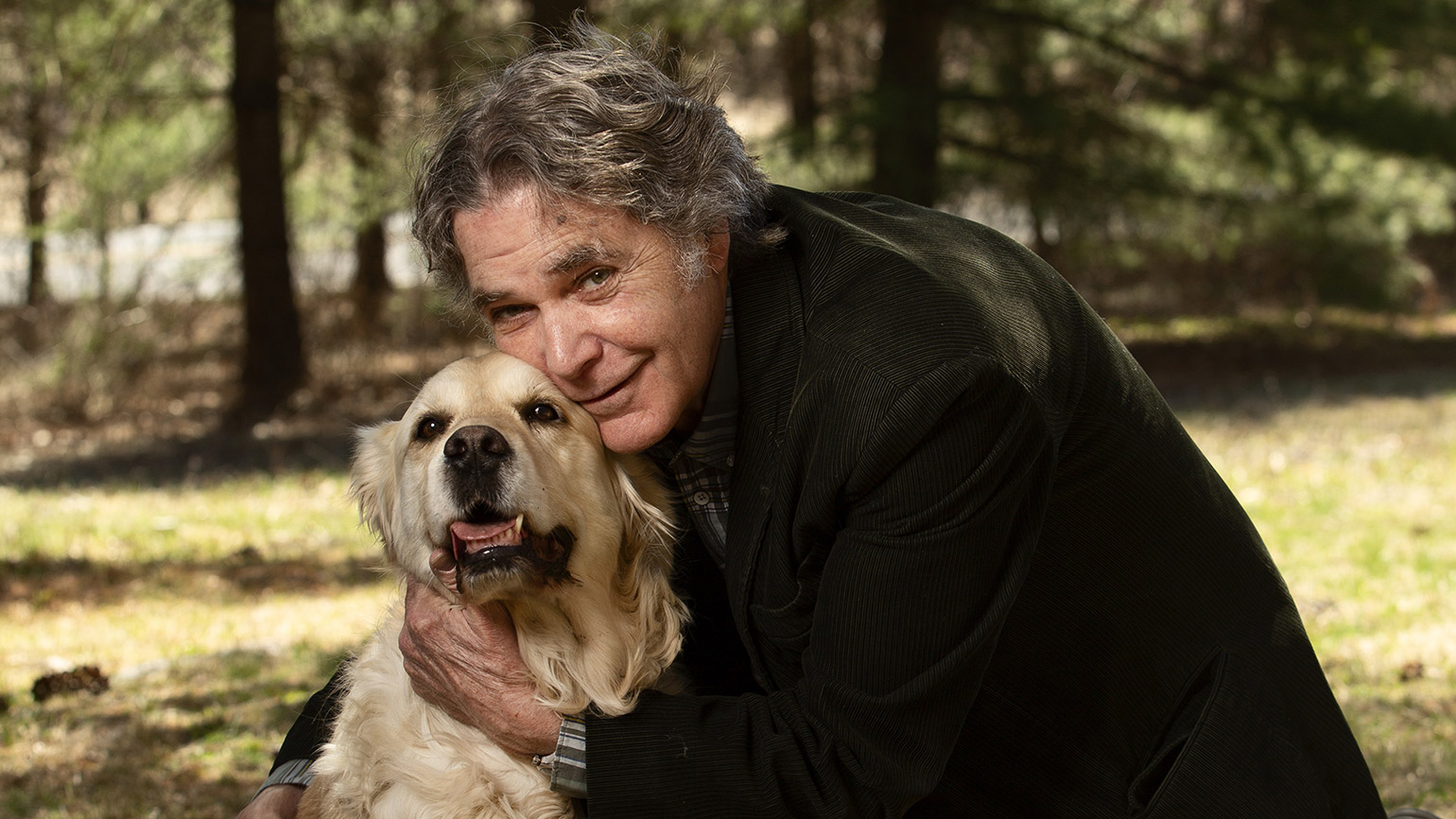
Gracie in the woodsI am six now, so I believe I have experiences and observations that are worth sharing, ever since I told you about my New Year’s resolutions when I was a puppy. Remember?

Take the fall. I love the fall, don’t you? I’m imagining that you love the colors. That would make sense. What I love, I mean really love, are the smells. Nothing smells like fall in the woods. It’s as if a whole year of smells have piled up just for me. It can make me crazy!

Which is what happened a couple of years ago when I got lost. Yes, I, Gracie, got lost. Or maybe it was Edward who got lost. I suppose it’s how you look at it, right? It was scary and Julee will never let him forget it!

We were at my favorite hiking area in the Berkshires called Monument Mountain reservation. We were on a trail to the aforementioned mountaintop. I was minding my own business when—suddenly! —a smell took control of my nose. No other way to say it. I went shooting off into the woods in pursuit. Of what, I’m not sure. I just bolted. Crazy! You too must know the feeling when you just do something because you can’t stop yourself, right? Not my fault!

I don’t know how far I ran before I realized that I was way off trail. Edward has this whistle he blows. I could hear it, faintly. And his voice. Even fainter. Angry then scared. I just couldn’t get my bearings. He was somewhere moving away. Stay still! I’ll find you! But he kept moving farther away. If only he stayed where he was! Stop looking for me! Now you’re the one who’s lost.

Have you ever been lost? I mean, really lost. It’s a terrible, scary feeling. So alone! And confused! Where was I? I was afraid anything I did would get me more lost. Why did I have this crazy nose that got me into this?

I’d never been lost before. Even now, when I think about it, it scares me. To imagine that you’ll never find the people you love again. What an awful feeling that is. Or that they don’t care. Or they’ve given up. No hope!

But it wasn’t true! It couldn’t be. Plus, I knew Edward was doing something he always does when he’s scared, that thing they call praying. I don’t understand it necessarily—it must be some kind of asking for help—but I really hoped he was doing it.

I started out. Found the trail (finally!). My heart was beating like it never had before and I was so thirsty, but I ran all the way to the top of the mountain. There, I stared over the cliff edge. I saw the tops of trees below. A wind blew all sorts of smells at me. There were birds too, the ones that float on air. I could hear Edward calling. I just couldn’t find him. Way far away. So far! Where was he? And then I saw an angel!

Well, okay, it was a man. Just this guy with a backpack. But he knew something was wrong. I let him look at my collar (thank goodness for my collar!). He took out that thing that people talk into. He talked. Nodded his head. He gave me some water. It got all over my face because I didn’t have my trail bowl. Then he took some string from his pack and tied it to my collar. What was this about? Was I being dognapped? Still, I thought I could trust him. He smelled honest. What choice did I have?

So down we went, all the way down the mountain, and all of a sudden there was Edward. The look on his face! I almost ran away again. But then he was hugging me and laughing and hugging and smiling and rubbing my ears and it felt really good, better than anything. Safe again. I wanted to say I was sorry, and I was, but it wasn’t all my fault. He should have stayed put. I guess we both panicked.

So that was the story. There was another time one fall when I tore off trail—my crazy nose again!—and had an untimely encounter with a porcupine but that is for another day.

I still love fall more than anything. I love all the seasons and how they change. I don’t understand it and must assume I am not meant to. Change is just change, and I accept it. But fall is the best with its smells and its colors, most of which I can’t see.

Just remember when you are lost that you never really are. There will always be someone looking for you, someone praying for you, someone who loves you. Sometimes it’s best to just wait until you are found.

A Dog’s Devotion Brings Healing

Dogs. That was the smell permeating the classroom at the 4 Paws for Ability service-dog facility. I took a deep breath, wanting to take it all in.

We’d driven 500 miles from our suburban Atlanta home to this former VFW hall in Ohio to pick up the dog the trainers here had spent the better part of a year readying for us. More specifically, for my 10-year-old adopted son, Iyal, who has fetal alcohol syndrome (FAS), leaving him with a constellation of developmental disabilities.

My husband, Harvey, and I loved Iyal as if he were our own flesh and blood. Possibly more. Yet that love seemed powerless to stem his extreme impulsivity, his lack of a sense of consequences, his irrational thinking and explosive rages.

He was besieged with night terrors. He couldn’t communicate beyond the level of a preschooler or explain what he was feeling, his grammar rudimentary at best. He struggled to connect with others, even those who loved him.

Yet I saw how desperately he wanted friends. I ached for him. I’d tried everything to reach Iyal, offer him some understanding of the world outside himself. Daily, the strain tore at our family, unraveling the safety net we tried to weave around him.

This was my last resort. I drew the doggy odor into my lungs. Hope, I tried to tell myself, it smells like hope.

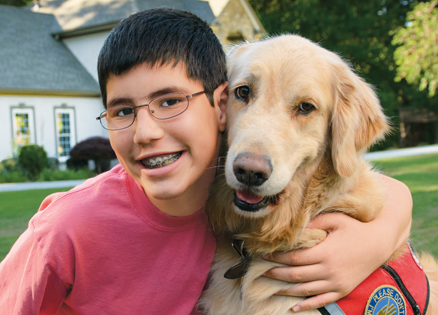
I crouched by our dog’s crate, flanked by Iyal and my daughter, Morasha, two days younger, both adopted from Russia when they were 14 months old. An enormous golden retriever peered out at us, with an expectant smile.

“Hey, Chancer,” I whispered. He looked happy, friendly, eager to please. But could even the most perceptive dog understand Iyal’s anguish? What if Iyal hit Chancer when he was upset? Even for 4 Paws this was new territory, Iyal their first client living with fetal alcohol syndrome.

“Okay, let’s meet your dogs,” the head trainer, Jeremy Dulebohn, announced to the class, all families whose children had special needs. We’d come for 10 days of training, required before we could take our dogs home.

I slipped the crate latch. Chancer bounded out, tail wagging exuberantly. Morasha got down on his level. “He’s beautiful,” she said. I stroked his head and he licked my hand. “Good boy,” I offered. Iyal patted Chancer’s side, then wandered out of the classroom.

“Iyal! Come back,” I called. He didn’t even turn his head.

“I’ll get him,” my dad said. “Focus on Chancer.” 4 Paws required two adults to attend the training, and I needed someone to help watch Iyal. My dad and cousin had flown in.

Harvey wanted to come, but as the founding rabbi of a smaller synagogue, he felt his extended absence would be a hardship on the staff.

“Dogs don’t judge,” Jeremy said. “They don’t see a person with disabilities. They see someone who can give them love. They think, ‘What can I do to get a treat?’ Right now it seems overwhelming, but once you learn the basic commands, you’ll be able to relax and let your dogs do the work. Remember, we’ve done ninety percent of the training for you.”

Since receiving Iyal’s FAS diagnosis in 2002, I’d tried various therapies and medications for him, structured his days, changed his diet and reframed my thinking. After five years of little progress I wasn’t looking for miracles anymore. A good night’s sleep would be a gift.

But for Chancer to bond with Iyal, to think of him as his boy, wouldn’t they actually have to spend time together? “Stand in front of your dogs,” Jeremy instructed. “Using their name, tell them to sit.”

“Sit, Chancer,” I said. He settled on his haunches inside a circle on the floor, eagerly watching my hand. “Good dog!” I held out a treat. Chancer inhaled it.

“Let’s do it again,” Jeremy said. “Dogs respond to one of three things—food, toys or praise. They learn through repetition and positive reinforcement.”

Chancer liked food. That was clear. And repetition? I knew what that meant, all too well. Iyal had trouble remembering instructions from one day to the next. Don’t squeeze the cat. Don’t go out of the house. Don’t crowd your sister.

No matter how I repeated myself, I couldn’t seem to make the world understandable to him or convey that there were basic rules. In truth, it was equally hard for us to understand what was swirling through his mind. The slightest change in routine or simply telling him no could spark an uncontrollable outburst.

Yet Harvey and I were certain Iyal and Morasha were meant to be in our lives. We’d struggled with infertility and were in our forties when we saw them on a referral video from a Russian orphanage. It was divinely ordained destiny. Beshert, in Hebrew. God’s will.

Our first two years as a family were a time of joy. Then shortly after the kids’ third birthday we noticed disturbing changes in Iyal. He couldn’t fall asleep or stay asleep. He became agitated at the smallest things. He threw a chair at a classmate in preschool.

“It’s just a stage,” friends at temple said. But we knew something was very wrong.

Pediatricians and child psychiatrists couldn’t agree on a diagnosis. Finally a developmental pediatrician noted Iyal’s small head, the thin upper lip and lack of crease between his mouth and nose, the wider space between his eyes.

“Your son has fetal alcohol syndrome, the most severe expression of fetal alcohol spectrum disorders,” he told us. “When a mother drinks during pregnancy it can cause irreversible developmental and neurological damage. While largely invisible to others, the behavioral effects will become more challenging as he gets older. This is a lifelong birth defect.”

It’s common for kids from overseas orphanages to have developmental issues, but irreversible brain damage? I was devastated, engulfed by grief.

Spurred on by my maternal instinct and a need to do something, I devoted myself to Iyal’s care, shedding activities from my former life. I consumed research on FAS D, spent hours online with other moms whose kids had experienced prenatal alcohol exposure.

People began coming to me for advice. I founded the Georgia state affiliate of the National Organization on Fetal Alcohol Syndrome. Advocacy became my full-time job.

But what about the answers I needed? As Iyal reached school age, his tantrums morphed into limbic rages. He’d pull away from me and run into the street in front of cars, unaware of danger. Sometimes nights were worse than the days.

“Donnie, how can we go on like this?” Harvey said early one morning after we’d gotten Iyal back to bed. “It’s not fair to Morasha. Iyal’s disabilities have taken over our lives. We need help, maybe a special-needs nanny? Something.”

God, why can’t I give my son what he needs? I asked, not for the first time. I felt like I’d failed Iyal, failed God. After all, hadn’t God given me Iyal to raise and love?

Then I stumbled across the website for 4 Paws. They trained service dogs for kids in wheelchairs, with seizure disorders, with psychiatric illness, with autism. Each dog was trained to match a specific child. I couldn’t wait to tell Harvey.

“Are you sure?” he said. “Like we need more responsibility. People don’t mean much to Iyal. Why would a dog?”

“But they each get five hundred hours of training.”

“No,” he said. “Please, Donnie. No dog.” I knew we were both at the breaking point. Still, if I could just get a little more information…

I called Karen Shirk, the director of 4 Paws. She had her own concerns. “Is your son likely to scream at a dog?” she asked. “Would he ever hit a dog?”

I swallowed. “He might.”

Silence. I braced myself.

“Okay,” Karen said. “You must have a doctor’s prescription and we’ll need you to make a video. We want to see Iyal from morning till night, every noise he makes, all of his disruptive behaviors, every tantrum. But I have to warn you, this is a major commitment and one out of ten dogs that we place doesn’t work out.”

Now, in this VFW hall in Ohio, that conversation seemed like a dream. Except here I was looking into the eyes of a very real golden. I glanced at the other families in the class, the kids bonding with their dogs. One in ten. What if we were the family that didn’t work out?

We practiced sit, then stay. Iyal came and plopped himself in the middle of Chancer’s circle. He wouldn’t budge. The class came to a halt. “I’m so sorry,” I gasped. “Iyal, get up!” I implored as loud as I dared, afraid of a meltdown.

Jeremy had taught Chancer three special skills: nuzzling against Iyal at the first sign of agitation; if Iyal was on the floor, climbing on top of Iyal’s legs and lying down (the pressure calming him); and tethering.

This required Iyal and Chancer to wear special vests tethering them to each other. On command Chancer would drop to the ground, keeping Iyal from running off.

Now Chancer looked on, head cocked in bewilderment. “It’s okay,” Jeremy said. “We’ll wait.” Finally Iyal moved. But by then I could feel the glow of hope inside me fading.

The next day Chancer sat, lay down and stayed like a pro, but there was no sign of any connection with Iyal. When it came time to practice tethering, Morasha stood in for Iyal. Does Chancer even know Iyal exists? I wondered. And vice versa?

That evening we took our dogs back to the hotel for the night. I put Chancer’s crate at the end of Iyal’s bed, exhausted. My cousin took Chancer for a walk. “Why don’t the kids and I go down to the hot tub?” my dad offered. I was glad for the chance to be alone.

All too soon there was the sound of the door swinging open, the kids, my cousin and Dad bursting into the room, Chancer leading the way, dripping. My nose wrinkled at the odor of wet dog.

“You’ll never guess what happened!” Dad said. “The kids were in the hot tub. When Chancer came back from his walk he looked right at Iyal, alerted and…”

“He jerked the leash right out of my hand,” my cousin interjected excitedly. “The next thing I knew he was in the hot tub trying to save Iyal. And Iyal…I’ve never heard him laugh like that.”

I looked at my son, a trace of a smile on his lips. My son and his dog. And so much more. This was beshert, as unmistakable as the smell of hope that lingered in the air.

Eight days later we pulled into our driveway. Harvey hugged us tight, especially Chancer. “Welcome to the family,” he exclaimed. I thought Chancer’s tail would fly right off his hindquarters!

The next morning I awoke to sunlight streaming through our bedroom window. We’d slept through the night? Where was Iyal? Harvey and I raced to his bedroom. Iyal was snuggled up to Chancer, both sleeping peacefully.

That afternoon I asked Iyal to turn off the TV. His brow furrowed, lips trembled. Then Chancer trotted purposefully past me. He nuzzled Iyal, placing his body on top of him, licking his face until Iyal was laughing! Not screaming, laughing!

About six months later, I was in the kitchen, Iyal beside me, petting Chancer. Suddenly he said, “Mommy, do you think Chancer knows I love him?”

Was this for real? My son, who had never uttered such a complex sentence, let alone expressed awareness that someone might have feelings different from his own? “Yes,” I said. “He knows. And he loves you, just like Morasha and Daddy and I love you. Like God loves you.”

Iyal nodded. “I’m glad,” he said.

Two sentences. A miracle that I never expected, that I was guarding against because I was afraid to hope. Not anymore. It’s been four years since we brought Chancer home. There’s still plenty of stress, adolescence creating another layer of challenges for Iyal.

Still, the difference Chancer has made is profound. Scientists theorize that Chancer’s calming influence allows Iyal’s brain to relax, making possible the observations, self-reflection and thoughtful questions that continue to stream from his lips.

My theory? My son and his dog coming together was beshert. God’s will.

Learn more about the dog-training organization 4 Paws for Ability.

A Dog Named Pistachio Taught Her a Lesson About Letting Go

I sat on the porch with my cof­fee. I’d snuck outside, inching the sliding glass door open so as not to wake anyone. My husband, Anthony; daughters, Grace, 13, and Genevieve, 11; and son, Joseph, 6, were still asleep in the cabin we’d rented in the mountains near Asheville, North Carolina. The day before, we had driven 10 hours to get here, with Luna, our 75-pound Lab-bulldog mix, sitting on my lap, and Jo­seph telling endless knock-knock jokes.

Today was my fortieth birthday. And I needed to be alone.

Three years earlier, my mom had died right before my birthday, after an eight-month battle with malignant melanoma. I missed her with an ache that went through my bones, through every part of me. I didn’t want to cel­ebrate. Was this going to be how I felt on every birthday?

A banging on the sliding door star­tled me. Joseph was awake. I went in­side. The girls were up as well. “Happy birthday, Mom!” they said, slurping their chocolate vacation cereal.

On our way to Cedar Creek Stables to go horseback riding, we saw signs for a lost dog. “That’s so sad!” the kids said. “What if Luna got lost?”

Anthony dropped off the girls and me and went to explore the nearby town of Lake Lure with Jo­seph. Several hours later, Anthony met us at the stables. He had a strange look on his face. “We got you a birthday pres­ent,” he said. “It’s in the car.”

“Where’s Joseph?”

“He’s in the car, with the present.”

We walked around the corner to where the car was parked. I saw Jo­seph’s beaming face first. I peered in the window. There was a medium-size brown dog sitting beside him. When the dog saw me, it wiggled excitedly.

“Can we keep him, Mom? Please, can we?” Joseph asked. The dog began to lick his face.

“We were heading into town when we saw this dog running along the side of the road,” Anthony said. “I pulled over to check on him, and as soon as I opened the door he jumped in.”

“Is this the lost dog?” the girls asked. I thought of the pictures on the signs we had seen earlier. Nope. This was not that dog.

Metal glinted on his collar. “Look!” I said. “He has tags.”

Anthony shook his head. “It’s just the name of a shelter. I checked.”

I searched for the shelter name on my phone. It was an hour away! All we had for food in the car was a bag of pistachios. The dog looked at me, ears perked, tail wagging, as I opened the bag. I offered him a pistachio, then another. He nudged my hand for more. “Let’s name him Pistachio!” Joseph cried. The girls agreed.

“Calm down, everyone,” I said. “I didn’t say we could keep him.”

On the way back to the cabin, I called the shelter and left a message with my name and number and the ID number on the dog’s tag. I turned to pet Pista­chio. The kids were smiling ear to ear.

“He ran all that way to get here,” I said, not wanting to get their hopes up. “I wouldn’t be surprised if he runs away from us too.”

Sure enough, Pistachio raced into the woods. He came back, though, and played with Luna. They dashed around the yard until Pistachio had enough and retreated under the cabin’s deck.

That night, Pistachio slept in Luna’s crate. When I went to get him in the morning, he leaped and spun in joy. I texted a picture to my sister back in New Jersey. “Dog jumped in the car on my birthday. Shelter tags. Kids in love.”

She texted back, “Is this Mom’s idea of a birthday gift?!”

We drove to Chimney Rock State Park for a hike. We left Luna in her crate and, over the protests of the kids, Pistachio outside.

“What if he runs away?” they cried.

“Then it wasn’t meant to be,” I said. “He’s a runner, guys, and he won’t be happy penned up inside all day.” Was I trying to convince the kids or myself? Pistachio was a sweet dog, and I want­ed to think of him as a birthday gift, a sign that Mom was with God.

On the hike, all the kids talked about was Pistachio. How had he escaped from the shelter? How had he run so far? Would he be there when we got back?

We went to an ice cream shop on the main road. While we were waiting in line, my phone buzzed. The shelter. I stepped outside to take the call.

“Hi…is this Jenn?” It was the adop­tion coordinator, who said she had re­ceived my message and looked up the dog’s file. “He was adopted by a couple last year. They’re from a town outside Asheville. But the last paper in his file is a complaint from some neigh­bors saying that he wasn’t being taken care of. So if you would like—I mean, we don’t usually do this, but given the circumstances, he’s yours.”

I went back into the shop and told my family. The kids practically melted with relief. “Yay! Pistachio! Let’s keep him!”

We all sat down with our ice cream. Just as we were finishing, my phone buzzed again.

“Jenn? I called back because I just talked with the former owner, the man who adopted Pistachio. The dog’s name is actually Hammer.”

“Hammer?”

“Yes. If you ask me, Pistachio is a much better name. Anyway, he did adopt him, so officially I have to tell you what he said. You can do with this information what you want. But…he would like the dog back.” She gave me the man’s information, saying again, “I just officially have to tell you this.”

I pictured an unkempt dog pen, ce­ment floors, Pistachio on a chain. Had he been adopted as a guard dog, given the name Hammer and then run away first chance he got?

I told the kids and Anthony. “Mom! We can’t bring him back there!”

I felt uneasy about taking a dog that had a rightful owner. But what kind of place would he be going back to? “First let’s see if he’s even there when we get to the cabin,” I told the kids.

We drove mostly in silence along the curvy mountain roads. Pulling into the long driveway, I scanned the woods for Pistachio. No sign of him.

Then we turned the bend and the cabin came into view. We all let out a little cry. There was Pistachio, sitting lookout on the front porch. When he saw us, he did three spins of joy and ran to the car. The kids leaped out. An­thony and I shared a look.

I texted my sister, copying my niece, as the two of them volunteered at a dog rescue. “What should I do?” I asked.

My niece answered right away. “Do not return him to that owner!”

The next afternoon, we were driv­ing high in the mountains on the Blue Ridge Parkway when I got a message from an unknown number. “Hi, Jenn, this is the director of the shelter that Hammer is from. I’m calling because this morning his owners drove down here, and they were very upset. I spent a lot of time with them. They want him back. Please call me.”

I could no longer enjoy the beautiful views. I imagined angry owners yelling about their lost guard dog. I pictured a run-down home, where the dog was not loved.

Back at the cabin, I called the shel­ter director. I told her my concerns. She listened. “I have been doing this for more than 20 years, and if I am wrong about these people, then I am in the wrong line of work,” she said. “They really want their dog back.”

I sat looking at Pistachio’s own­er’s number for a long time before I finally dialed. A man answered. His voice was warm and deep. “We’re so grateful you folks found him,” he said. “My wife’s been crying ever since he got lost on Monday. We were out of town at a funeral, and when we got home there was no sign of him. He’s always come back before. He waits for us on the front porch.”

We arranged to meet at their house. On the way there, the kids took turns holding Pistachio on their laps, telling him what a good boy he was and how much they would miss him.

I was nervous. I’d gotten a good feeling from Pistachio’s owner while we were on the phone, but what if we showed up and the place was horrible?

“Looks like it’s just up this road,” Anthony said, turning at a wide-open field. I took a deep breath. Pistachio stood and tilted his head. The kids, even Joseph, went silent. A few min­utes later, we took a left onto a paved country road. And then there was the house. Lovely flower gardens. A big, sloping yard that ended in a creek. Plenty of space to run. I couldn’t imag­ine anywhere better for a dog, especial­ly this dog. Pistachio whimpered when he saw his owners waiting for him on the front porch.

“I think this is his home, Mom,” Jo­seph said.

“I think so too,” I answered.

We opened the door and Pistachio leaped out and raced to his owners. They crouched down and let him lick their faces as he wiggled uncontrolla­bly. They laughed and held him close.

We stood back and watched, know­ing this was right. The owners told us again and again how thankful they were. We got in the car, this time with­out Pistachio, and started the drive back. I thought about how Pistachio had been a gift. Not a dog to keep, at least not for long, but a dog with a mes­sage I needed to hear: It’s time to let go. You will be okay.

The next morning, I sat on the deck as Luna explored behind our cabin. I could hear Anthony and the kids chat­tering in the kitchen. “Good-bye, Mom,” I whispered, taking in the blue sky above. “I love you. I miss you.” Then I stood up to join my family, thinking about the home that Pistachio had returned to, the home that was more beautiful and loving than anything I could have ever imagined.

A Doggie New Year’s Resolution

Dear Guideposts People,

My name is Grace. Maybe you have heard of me. I am a golden retriever. My human is Edward Grinnan. He is helping me write this. So is Julee, who tells me to call her Mama. They usually call me Gracie. Sometimes they call me Goo-goo. I don’t know where that came from. I’m told I drool a lot.

As a puppy—I’m eight months old—I do many things I can’t help (and some things I can but don’t, I guess). I try. I really do. I just don’t think people get how irresistible dirty socks are. You have no idea! So guard them with your life.

I joined my family in September. There had been another dog before me. Her name was Millie. Also a golden. Millie crossed the Rainbow Bridge. I don’t really understand that part but I know my humans were very sad. I had the strangest feeling I was sent to help them. I can’t explain that either. I just know that sometimes they need to hug me and even though it’s hard for me to sit still, I do my best, and I try not to mind if my coat gets a little damp.

I know I am a good dog—or at least I’m told that about a hundred times a day—but I want to be better. I have heard people talking about New Year’s resolutions. I think these could help me in my growth and development. So here are a few goals I am going to try and live up to in 2016. But remember, I’m not perfect.

Read More About the Dogs in Edward’s Life in His New Book: Always By My Side

Observe Boundaries

I have a habit of running up to strangers and sticking my snout into whatever body surface is convenient. Not all people like this. Some actually howl. Likewise not every dog wants to play with me or be sniffed even though I want to play with them and sniff them. I have been growled at several times, which is humiliating. But I have to learn my limits.

Stop Chewing Rugs in the Middle of the Night

This is so wrong and I know it. But what else is there to do when the humans are snoring and disturbing my rest? It makes them very upset and I want to make them happy. I do too much forbidden chewing (Again, I’m sorry about your new Nikes, Mama). I will stop this behavior. Soon.

Curb My Appetite

As my humans point out, they don’t get down on their hands and knees and stare at my food while I’m eating. So I guess I shouldn’t do that to them. I guess.

Love Is Patient

I can’t have everything I love all at once all the time. Sometimes one or both of my humans go away. I get sad. I forget they are coming back. They ALWAYS come back. I have to stop acting like it’s the end of the world. I don’t want them to feel guilty. I don’t think.

Teach Others to Be Joyous and Free

That’s me in a nutshell so this one is kind of a gimme. Still, I notice humans can be very stressed. There is no reason for this. I can help. Life is a blessing. It is the most incredible thing. Every single morning is the best morning ever and you really don’t need much to be happy…Food, Love, Hugs. And naps. It’s not complicated.

My humans do something called praying. I hope they will pray for me to be the best puppy I can be in 2016!

Happy New Year

GRACE