From the minute I woke up, I was behind schedule. Typical. I loaded my two young daughters into the car to run errands. Our town, Petoskey, was built along Lake Michigan. To get from one end of town to the other, you have water on one side of you at all times.
Before we even left the driveway, the girls began to bicker. I let their chatter fade into white noise as I rushed around. Grocery store. Dog groomer. Post office. Gas station. Then something made me glance in the rearview. My younger daughter pointed toward the water and said, “Who poured that?”
“Who poured that?” I repeated. I looked out at the expanse of blue, stretching as far as the eye could see.
Everything seemed to slow as I took a breath and answered, “God did.”
Now I have one daughter who is highly scientific and needs to drill down to the proof of the matter. My other daughter is extremely visual and needs to see in order to understand. Yet there was no follow-up interrogation. Both carried on as if that was the answer they’d been seeking. I felt a wave of satisfaction and assurance and, yes, even pride. Somehow in all the messiness of everyday life, I had instilled in my girls enough faith to understand the simple response “God did.” I silently gave thanks for the reminder to slow down and take in the wonders all around me—from the Great Lake to my growing girls.
"Serve the Lord thy God with all they heart and with all thy soul."—Deuteronomy 10:12
To those who’ve never delighted in the companionship of a McNab cow dog, this breed has the intellect of a Mensa member, the cunning of Sherlock Holmes, the work ethic of John Henry, the do-or-die loyalty of Gunga Din and, with my Blue Dog, the finely tuned hearing of a bat.
Blue Dog comes with me as I go about my daily chores on the ranch. The thing I’ve noticed most about him is he’s always listening for commands. It doesn’t matter if I’m talking to someone else, to myself or to him. If he hears a command, he’s prepared to spring into action. And it doesn’t have to be meant as a command.
I was fixing a fence the other day, and when I finished splicing the broken wires, I said, “That’s it.” I must’ve run my words together because Blue Dog heard “sit” and immediately sat, watching me with his steely brown eyes, ready for my next instruction.
Another time Blue Dog was in the back of the pickup while I’d gotten out to close a gate. Someone came by and told me I could leave it open. I said, “Okay.” Blue Dog immediately sprang from the truck. Okay is his word to unload.
Blue Dog can be snoring on his bed, but if he even thinks he hears a command, he’ll leap to his feet. I’ve learned to be careful of what I say because I know, whether he’s asleep or awake, Blue Dog has one ear trained on me at all times, ready to obey.
Dear Lord, if only I would serve you like that, always listening for your instruction and ready to spring into immediate action, with all my heart and soul.
“Grandmama, you should love me best.” My 7-year-old grandson’s earnest little face looked up at me. Our family was in the middle of a nine-day vacation, a wonderful time for all our sons, daughters-in-law and our six grandchildren (ages 3-8) to laugh, love and be together.
A couple of times during the week I’d noticed a few traces of jealousy in the grandbabies—not about toys, but about me. If one sat on my leg, another would rush over and jump on the other leg and snuggle in.
I’d hug on both of them, but later in the week when my grandson uttered those words, I knew I had an opportunity to teach them an important lesson. I said, “I want to tell you something important. Grandmama loves each of you. All of you are special to me for different reasons, but I love ALL of you just as much.”
I continued, “You know how it is when you blow up a balloon? You can blow on it and blow on it again and again, but there’s still room for more air. That’s what Grandmama’s heart is like, there’s always room for enough love for all of you.” They seemed to understand that explanation and I didn’t notice any more instances of jealousy the rest of the week.
They’re children and “enough love for everyone” wasn’t something they just automatically understood—and I suspect that there are many of us adults who could also use a refresher course in that.
Many of us have grown up in homes where we didn’t feel loved and valued. We’ve dealt with issues such as low self-esteem and not feeling wanted…even in our own families. Sometimes those situations can’t be fixed, but there’s one thing we can count on: God has enough love for all of us and there will never be a shortage.
He says it best in Jeremiah 31:3, “I have loved you with an everlasting love.”
In I John 3:16, He says, “By this we know love, that he laid down his life for us.” Yes, friends, not only does He love us, He loved us enough to die for us. There’s no greater love than that.
I’m so grateful for the sweet security of His love—and that there’s enough for everyone. Aren’t you?
Today’s guest blogger is Cassidy Doolittle. Cassidy lives in Fort Worth, Texas, with her husband, Steve.
A former nurse in a psychiatric ward, she traded in her stethoscope and scrubs for swords and capes as she now spends most of her days wrangling her two little boys. She has been published in inspirational and motherhood magazines and is the Editor and Director of Author Relations for SozoWomen. Cassidy is passionate about really strong coffee and lemon poppy-seed biscotti shared with great friends.
“Three balls, two strikes!” the umpire shouted.
My sweaty hands gripped the bat, heart pounding, nerves shredded. What was I doing here?
The pitcher wound up and let a high lob fly. I swung blindly and, to my surprise, made contact with the ball. I sprinted as the third baseman bobbled the ball. I was going to make it!
Six steps, four steps, three steps! Then pain. Lots of pain. I lost my stride as my left thigh turned into a hard knot of injured muscle.
“Yooou’re out!” the ump yelled as I stumble-fell across first base, one step too late.
I limped off the field, quadriceps and pride stinging, angry I had ever been roped into this.
Rewind a few weeks to me racing around the kitchen getting dinner ready, teething baby gnawing on my ankle, busy four-year-old begging to play “pirates.” My husband comes home and the boys race and crawl to him, giving me a hands-free moment to try and rescue the blackened hamburger.
“Hey, can you change Andy’s diaper and walk the plank with Jake?” I say, without looking up from the beef. Steve grabs the boys and they play while he wrestles the baby out of a full diaper.
A few minutes later, we’re sitting down to slightly singed dinner while Jake is bouncing peas off Andy’s laughing face, and Steve asks, “Hey… are you up for subbing at our softball game? We’re short some people.”
“No.”
“Come on, you used to play.”
“Yeah… more than a decade ago. Besides, I don’t have a glove.”
“You can borrow Carrie’s.”
“I don’t have cleats.”
“We’ll get some.”
Running out of excuses, I blurted out the trump card sure to save me, “I’ve got to watch the boys.”
“Kacie’s coming over.”
I sighed deeply and conceded, “Fine, but don’t expect much.”
As game day approached, anxiety churned my stomach. My husband’s a great athlete and he and some work friends put a coed team together. And by work friends I mean twentysomethings. Fresh, young, kidless, wrinkle-free people. Walking into that dugout among their lively chatter was one of the most insecure moments I can remember.
So when I dragged my left leg back to the bench, I just wanted to call it quits. But that’s when my husband gave me a solid high five and said, “Great job, Cass! You hit the runner home!”
Buoyed a bit, I limped to take my infield position and cheer Steve on as he pitched an incredible game.
That night, every time I batted, I got out. My leg was swollen and sore. I was 10 years older than most of the team. And I actually had a blast.
These are the busiest, most exhausting years of my life; little children and full schedules zap any extra time and energy. It’s far too easy to just become really great roommates with Steve and forget what it was like when we used to have a lot of fun together.
Though I initially grumbled and fretted my way onto that softball field, it’s turned out to be a great thing for our marriage. Yes, it’s hard to get a sitter every Friday at 9 p.m., but the fun I’ve rekindled with Steve during those two diaper-free, kid-free, sweat- and dirt-filled hours is priceless.
I’m very thankful God helped me get past my insecurity and busy schedule to remind me to “Enjoy life with your [husband], whom you love…” (Ecclesiastes 9:9)
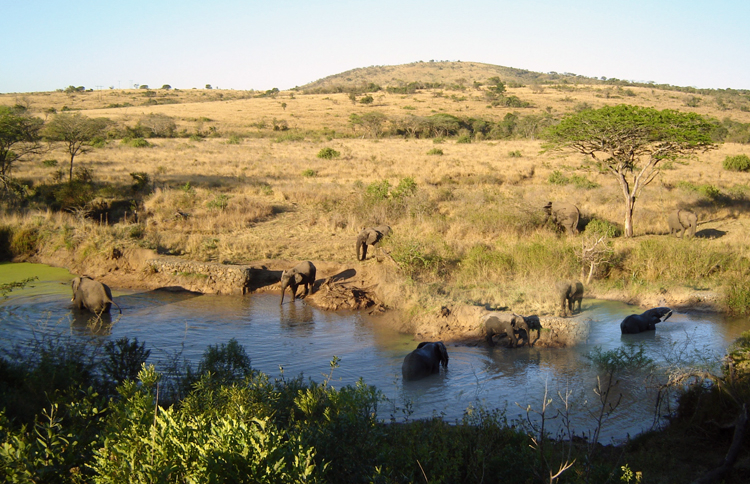
Lawrence Anthony was a beloved wildlife conservationist from South Africa, known throughout the world as “The Elephant Whisperer”—a nickname he earned after adopting and rehabilitating a herd of wild elephants on his game reserve, Thula Thula.
In 2012, Lawrence suffered a fatal heart attack. Two days later, his wife, Françoise Malby Anthony, witnessed something incredible. The elephants of Thula Thula appeared outside her home in a solemn procession to pay tribute to Lawrence, a moving story Françoise told in the December/January 2016 issue of Mysterious Ways magazine.
Here, Françoise shares some behind-the-scenes photos and stories about Lawrence, the elephants and the mysterious force that connects all living things.
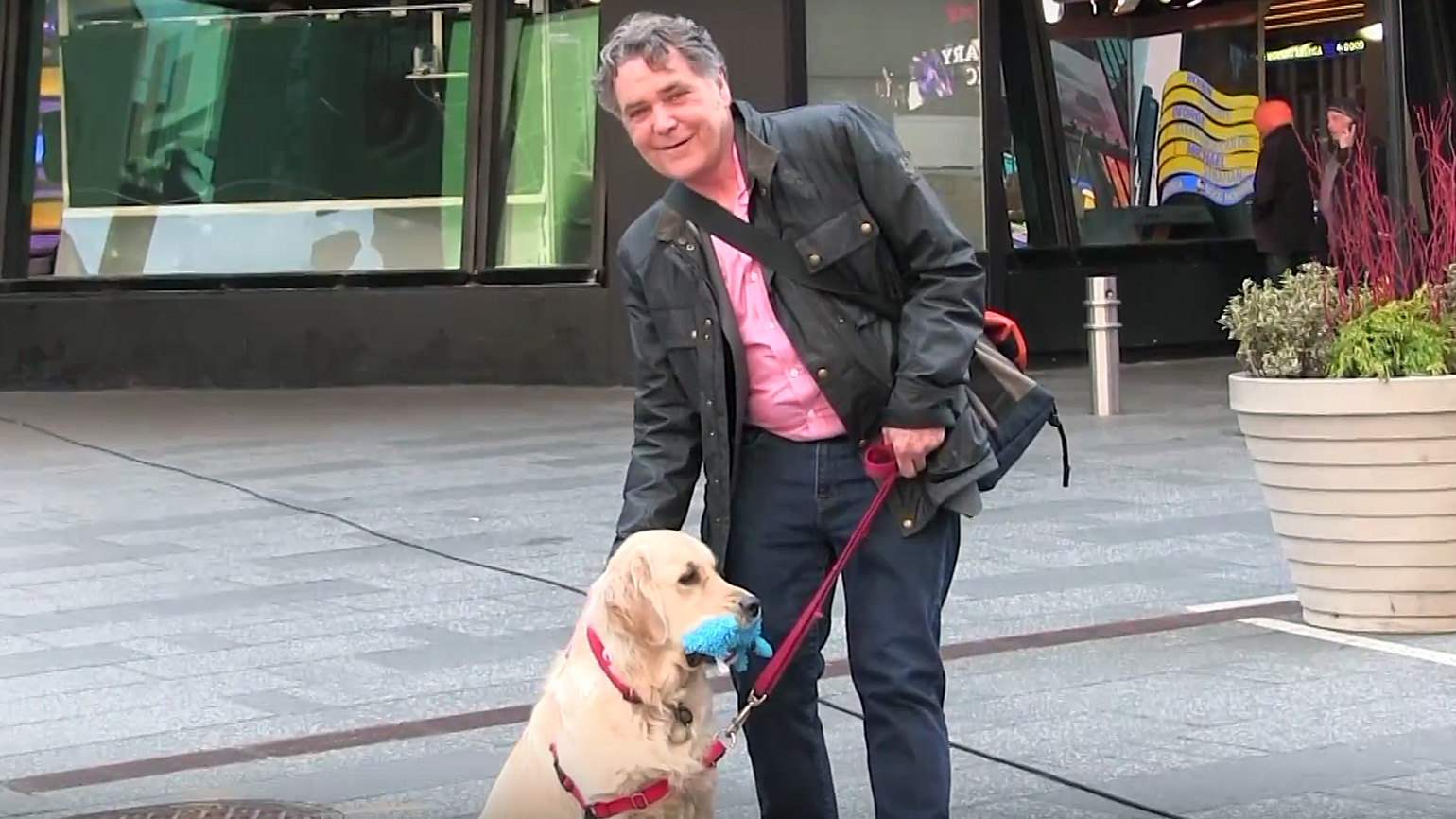
OK, let’s go! Come on. The car should be waiting for us to take us up to “Good Morning America,” Gracie. You ready? Good girl! Come on. Can you get in the car? Go on up. You’re gonna be a really big star.
Edward Grinnan and Gracie.
Now, Gracie, I don’t want you to drool on camera.
[LAUGHTER]
Oh, no, she sees another dog. I told you you were gong to have fun here.
Aw!
[UPBEAT MUSIC]
And, Matt, our producer, will be in in just a second.
Terrific. Thank you. Hi.
[CHATTER]
Aw, good girl. It’s gonna be a few minutes, and then Robin’s gonna talk to you. Now, keep your answers short, OK? Don’t ramble.
Don’t be nervous.
And don’t be nervous.
[LAUGHTER]
My family longtime admirers of Guideposts– I’m appreciative. I’ve got the cover on my desk.
Aw.
I framed it.
The one with your mother?
Yes.
Yeah.
Yeah.
You drove us down to New Orleans, I think.
Mm-hm. Where does the time go, you two?
I know.
Where does it go?
[CHATTER]
I got [INAUDIBLE], even now.
Do you need tissue?
Even more so than [INAUDIBLE]. This is what I– I needed calm in my life right now. Because KJ, being a Jack Russel–
[CHATTER]
It’s always special when somebody has seen my hometown, the Pass.
Yeah.
My sister has a little store there now called Robin’s Nest in the Pass
Oh, really?
And it’s all about celebrating the creative spirit in all of us.
Ah. That’s terrific. I’ll have to go back someday.
There is an organization, Tails High, near Washington, D. C. that deserves an angel star in heaven for finding homes for lost, feral or homeless cats and kittens.
Similar organizations exist all over the country. This one is in Alexandria, Virginia, just across the river from me. They have an arrangement with a Hallmark store whereby they take a few cats on certain days to the store, in hopes of attracting an owner who will fall in love with one. An ancient maxim observes that it is our animals who choose us, and as I listen to the tales of cat adoptions, I think this must be true.
Consider Blanca, for example, who was passed over time and again. One day my friend Eileen, who works with Tails High, prayed to St. Anthony (patron of lost things, including causes) for a miracle: Find a home, she prayed, for the beautiful Blanca. At that very moment, a woman walked into Hallmark and adopted her. The owner adores her and comes back periodically to show pictures of Blanca (now renamed Snowy).
Percival was another lost cause, in need of his own cat angel. Luck is not always with the valiant. The last of three “White Knights,” Percival had his share of disappointments. When Eileen took him once again in his carrier case to the Hallmark store, just a few small meows during the entire drive betrayed his trepidation. Once at the store, he was every inch the brave Knight-of-the-Holy-Grail for which he was named. It was Halloween. Many people came over to the pretty cat, reached out, even hauled him out to hold him and hear him purr in their ear. Each time they put him back in his cage and moved on, bought their cards, forgot the beautiful homeless cat.
At the end of the day (why is it always this way?) a tall lady, Linda, walked into Hallmark with her daughter, shopping for Halloween extras and was drawn magically to Percival.
“Oh, what a beautiful cat! I grew up with white cats!” she exclaimed, and the rest was love.
The next day Linda came to Tails High with her husband and a brand-new carrier. They signed the contracts and took away their love. I’m told that Percy is slowly charming two elderly female cats and sleeps on his lady’s bed, eating delicately, behaving every inch the knight, or prince, he is.
And which is the angel in this story? The women at the shelter, who make it their business to save lost cats? The lady Linda who took Percival away? The cat itself, who will fulfill his destiny to give a human extra love? Or the coincidences of angels diving invisibly into our lives, coordinating coincidences, to serve the animals and people whom they love?
I haven’t shot a gun since I was a kid, but my dad liked to go to the range—he was a good shot—and we had a trunkful of his guns in the house, carefully stored. Personally speaking, I never had much of a stomach for hunting. I didn’t see where I had the right to deprive another of God’s creatures of the gift of life, simply for sport.
My father shot a man once. In the middle of the night, he spotted someone trying to steal our brand-new Pontiac Bonneville from the driveway. He got a gun, shouted a warning at the man then put a round in his calf. The man’s howl woke the neighborhood. Soon the police were on the scene, lights strobing the leafy suburban darkness. The man was not badly hurt. He was, however, a bad repo man. He’d meant to repossess a car down the street and confused the addresses.
That was some years ago, obviously, and most everyone would defend my father’s actions in defending the Bonneville (I loved that car). But the shootings we hear about today, especially the mass shootings, are horrifying. They are beyond comprehension and as they seemingly grow more frequent, they get closer.
A few days ago, Dr. Robert Lesslie, his wife and two grandchildren were gunned down for no other reason than they were a target of opportunity for a tragically disturbed individual who shouldn’t have even been able to possess a gun for any fathomable reason.
Dr. Lesslie was a Guideposts author and beloved by his family and community, a man of great talent and even greater faith. That’s what I mean by these senseless shootings getting closer, gunfire that shatters a family and a community the way it shatters the silence.
Will we soon all know someone, or some family affected by gun violence, just as we know families who lost loved ones to Covid-19? The nightmare violence at Sandy Hook Elementary in 2012 shook Guideposts. Some of our employees had children in that school system, and one former colleague lost a daughter.
The violence is getting closer.
There are more guns than people in this country. We are the only society that contends with this level of nihilistic slaughter. The debate over gun rights is acrimonious and driven by fear on both sides—fear of violence and fear of the deprivation of a right.
What we should fear is that we are a country dangerously close to accepting this grotesque level of gun violence and just moving on. We are, I pray to God, better than that. I know we are. Like so many of our national differences, common ground is required to find a solution based in empathy and understanding—not fear. There are those who decry the overuse of the reflexive phrase “thoughts and prayers” in response to these tragedies. Thoughts and prayers are where the solution should begin, not end.
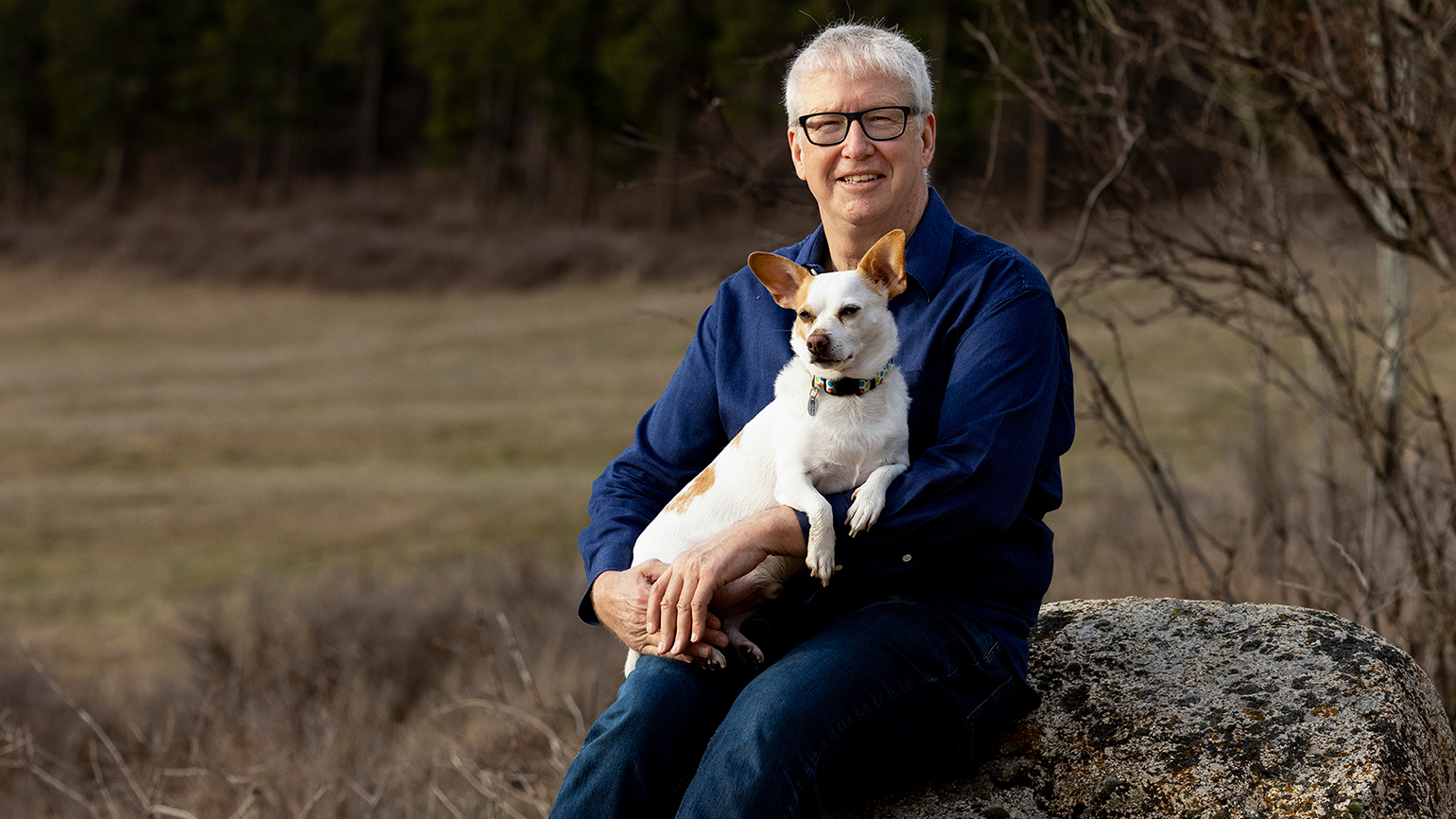
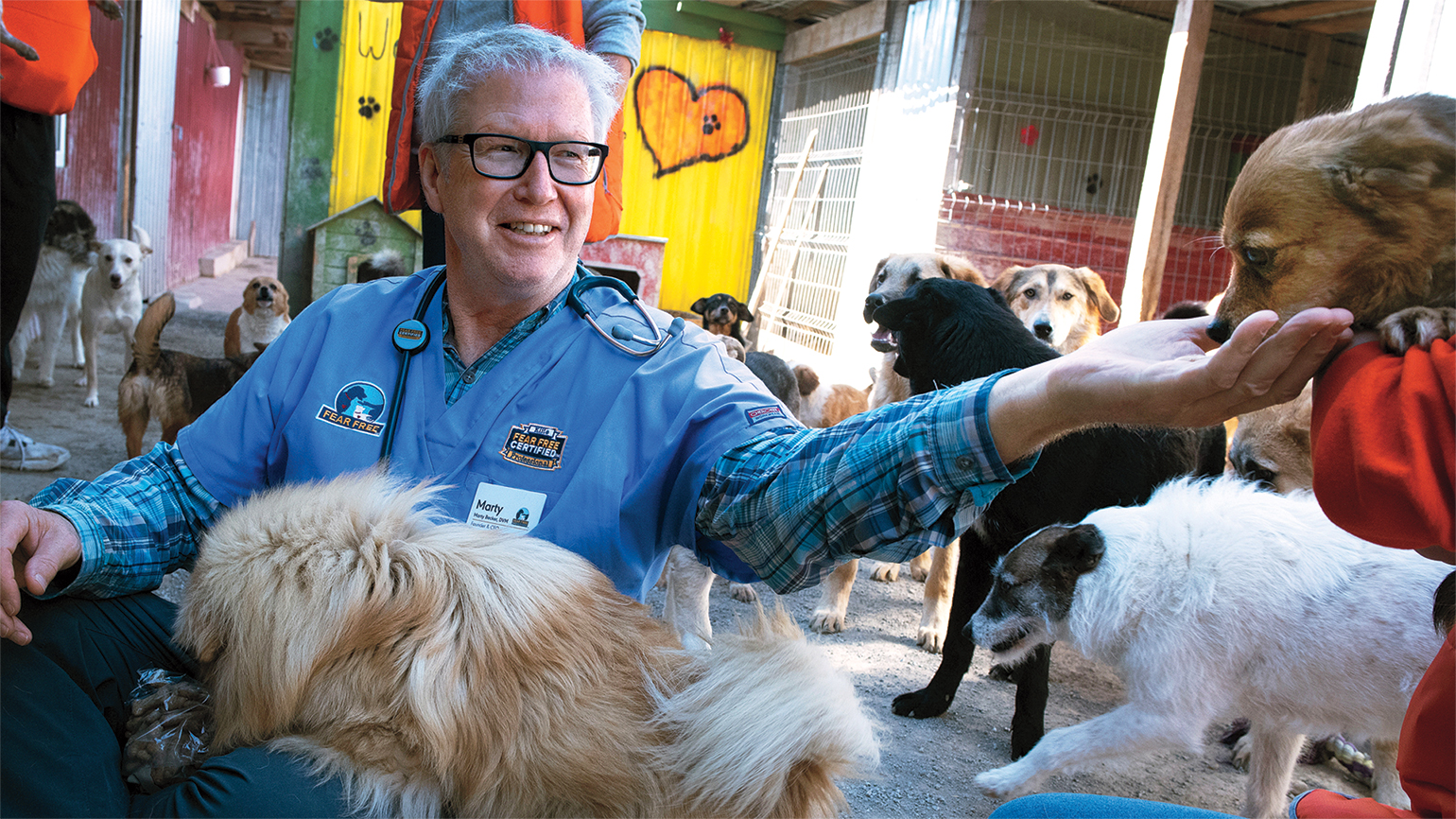
Hi Guideposts. I’m Dr. Marty Becker, here with my wing dog, QT Pi, at Almost Heaven Ranch. I’ve been a practicing veterinarian for over 40 years and a lifetime pet lover. I wrote some books called “Chicken Soup for the Soul” about that affectionate connection between people and their pets. That led to an appearance on Good Morning America to promote the book. That led to 17 years on Good Morning America and then being on Dr. Oz and then 23 books and lastly a syndicated column. But I still practice at North Idaho Animal Hospital in Sandpoint, Idaho.
Really delighted to be part of Fear Free, which we look to really take the “pet” out of petrified in all situations, whether it’s going to the veterinary practice, going to see the groomer, going to be boarded. We know that pets have rich emotions just like humans do, so we want pets to not just be physically healthy but emotionally healthy as well.
What can a pet parent do to make a veterinary visit fear-free? The worst thing any pet parent feels is like they’re hurting their pet by trying to help it. It’s sick, it’s injured. You need their teeth cleaned. You need their vaccinations and you think, “It’s so stressful for them. Maybe I’ll just wait.”
The veterinarian is the true pet health expert and there’s no substitute for regular veterinary visits, either for wellness or the first signs of an illness or first moments of an accident. So that’s why you need to go with a veterinarian that’s trained in Fear Free. And in Fear Free, when we go to do a procedure, like we’re giving a vaccination, we’re giving injection, antibiotics, we’re examining them, we’re doing a blood draw. We go very careful. We talk to them, we use a distraction technique.
So if I was going to examine a wound on QT Pi or give him a vaccine, we would actually have a little silicone mat with a little smiley face in Easy Cheese or peanut butter or whipped cream, and while he’s distracted licking this off, that’s when we would examine the wound or give the vaccination. Most of the time, they don’t even know something’s happened.
How can a pet parent alleviate anxiety in their pets? One thing is to desensitize them. And QT Pi here, he was a shelter dog, and we had to do exactly this with him. What usually triggers the separation anxiety, putting your coat on, the jingling of keys, going outside starting your car. So what you do is you put your coat on and then you take it back off. Then you give them a treat. You do your keys, you jingle your keys, you put them back. You go outside, you start your car up, you come back inside. So you desensitize them to those triggers.
Also there are pheromones, so there are some sick pheromones you can give a dog. So you put a plug-in of the pheromone in your house, or you can spritz their bedding with it. There are some nutraceuticals you can use; talk to your veterinarian about it. Some of these are products that mimic the milk that a mother gives their puppies. And then there’s pharmacy solutions.
What is the best way to distract a pet in a stressful situation? Number one, your emergency call is always “come”. Above anything else, you need to have a dog that’ll come to you. You may be out for a walk and there’s a big dog coming down the road. There’s a fire engine coming recklessly. So what I recommend on the word “come” is to have some treat that you give that they don’t get any time else. A good example would be warm deli turkey, little slices of hot dogs or something like that, so they know how to come.
So how do you help pets deal with loud noises? Let’s talk about thunderstorms first. For most dogs, they… Cats very seldom get thunderstorm phobias, But most dogs, they get a buildup of static electricity in their coat before they hear the rumbling of thunder, before they hear the flashes of light. And so if there’s thunderstorms in the forecast, you can take an unscented fabric softener sheet and just wipe it along the whole trunk of your dog’s body. And in about 30% of the dogs they won’t have a thunderstorm phobia just because they don’t get the buildup of static electricity.
QT Pi here is really freaked out by thunderstorms. So if there are thunderstorms in the forecast or let’s say it’s July 2nd, we either give him a product called Sileo, or we get generic xanax or alprazolam. And literally, if he’s on alprazolam, that thunder can hit right outside the house here and shake this whole house, and it does absolutely nothing except give him a very robust appetite. One other thing too, thundershirts work in about 60% of dogs. And how do those work? They’re a compression garment. All of us have seen a baby swaddled. Why do they swaddle a baby? It comforts them. And one more thing is pheromones. Again, pheromones are like a chilling mist. It works throughout a dog’s life.
My dog, QT Pi (“Cutie Pie”), tucked his little white paws under his body and trembled in my arms. As a veterinarian at VCA North Idaho Animal Hospital, I’m usually the one easing pet parents’ fears, but on that day six years ago, I couldn’t calm my own. Or my dog’s.
QT Pi is my heart dog, the one who always wants to be by my side. A Chihuahua–Jack Russell–dachshund mix, he is two dogs long and a half dog tall. I’d adopted him from a litter of shelter puppies that had distemper. He had spent a week in intensive care at Washington State University College of Veterinary Medicine, my alma mater. Afterward, I had taken care of him at home.
As seen in the Aug-Sept
2022 issue of Guideposts
Now I’d brought QT Pi to the clinic for the first time. He was there for a dental cleaning, a procedure that required general anesthesia. When I walked in and tried to hand him over to my colleague, he clung to me, panting and shivering. I kissed his nose. “You’re going to be fine,” I said, wishing he understood. He whimpered as I peeled him away and stepped outside.
I found myself shaking too, and it wasn’t just that I was anxious because there’s a risk of an adverse reaction anytime an animal is put under anesthesia. The fear that my little dog felt hit me someplace deep inside. What was going on here? I took a slow breath in and out. The last time I felt like this was at that lecture….
I’d wanted to be a veterinarian ever since I was a young boy growing up on a dairy farm in Idaho. I graduated from veterinary school in 1980 and went into practice in southern Idaho. My career grew. My wife, Teresa, and I moved halfway up a mountain in northern Idaho in 1997, to a horse ranch that we call Almost Heaven Ranch.
In 1996, I received the wonderful opportunity to become the veterinary correspondent for Good Morning America. I joined the team at the Dr. Oz Show in 2009.
I’d been practicing veterinary medicine for almost three decades by then, and I was thinking about retiring. Then at a conference that year, I went to a lecture by famed veterinary behaviorist Dr. Karen Overall. It had been a busy conference, and I was tired. I stood up, thinking I’d slip out early.
“Fear is the worst thing a social species can experience,” I heard Dr. Overall say. I stopped short.
“It causes permanent damage to the brain.” I turned and sat back down.
Dr. Overall explained that pets are like one-year-old children. She asked us to imagine being taken against our will, having no control, being unable to escape, feeling pain that we couldn’t understand. “Think back to a time as a child when you felt manhandled, threatened or abused,” she said.
The memories came flooding back, memories I thought I’d put behind me. My two sisters, brother and I were in the car returning home from a trip to the grocery store with our mom. We chanted a little verse we’d made up: “Daddy’s in a huffy puff. Daddy’s in a huffy puff.”
We were too young to understand, but our father was in the grip of two diseases that would go undiagnosed and untreated until later in his life: alcoholism and bipolar disorder. We never knew what kind of state we’d find him in.
The house was quiet as we unpacked the groceries. I thanked my lucky stars that he was nowhere around. Later that night, as I huddled in my bedroom just off the kitchen, I heard Mom and Dad fighting. Again.
“Outta my way!” Dad yelled. The angry words escalated. Things crashed, and Mom screamed. I shivered under the covers. “I’m going to kill you!” Dad bellowed. I could feel his rage through the thin walls. I was so frightened, I couldn’t move. Mom started crying. A door slammed. The fight was over, for now. But I knew there would be more.
I’d lived with that fear throughout my childhood. In the car when Dad drove, zipping down dirt roads at a hundred miles an hour while I clung to my seat for dear life. Or when I played in the fields, barely old enough to tie my own shoes, and Dad would push me up onto the driver’s seat of the hay baler, and laugh when I screamed, terrified, because I couldn’t handle the huge machine.
Traumatic childhood experiences can teach resilience. I became a high achiever, striving for top grades in school and, later, for the biggest market share for the veterinary hospitals I owned. I was very competitive and never wanted to show weakness.
Even in my personal life, I was driven. Teresa and I married in my third year of veterinary school, and we built the stable, happy family I’d longed for as a boy. A pastor friend helped me learn to accept the pain of my past. I came to trust in the love of God, the father who would never fail me. My positive, high-energy, can-do self shielded my vulnerabilities so well that I almost forgot I had them.
Until Dr. Overall’s lecture drew them to the surface again.
I’d always done my best for my patients. Looking back, however, I hadn’t always recognized the signs of fear: shivering, shaking, yawning, panting, salivating, leaning away, glancing at the door, even biting.
When I’d seen a dog lie perfectly motionless on the exam table, I thought he was calm. Dr. Overall explained that he was likely paralyzed with fear. The way I had been the night I’d heard my dad yelling that he was going to kill my mom. Just recalling it made me feel shaky, as vulnerable as a child again.
If fear still had such a hold on me even though I could talk to a counselor and lean on the comfort of my faith, how must it be for helpless animals? The animals whose suffering I’d promised to prevent and relieve when I took my veterinarian’s oath?
I had to face the truth: Although I had the best of intentions, there were times I had actually caused my patients trauma. Back in veterinary school in the late 1970s, we didn’t receive training in animals’ emotional well-being. The focus was on their physical health. Even pain management was pretty basic.
I knew God had nudged me to stay at that lecture for a reason. Genesis says God gave us humans dominion over the fish of the sea and the birds of the air and every living thing that moves upon the earth. He entrusted animals to our protection and care. I wanted to do better by them. “Show me a better way to treat animals,” I asked God. “A way free of fear.”
I couldn’t retire yet. I had more to learn, to do. I talked to and studied the work of veterinary behaviorists. Alleviating fear would improve the well-being of both pets and their people.
Not only could fear and anxiety in cats and dogs mask other health problems, but these emotions were also at the root of most aggressive behaviors. Behaviors that could destroy the human-animal bond and lead to abandonment, relinquishment or euthanasia.
I experimented using treats and toys to distract pets from procedures. I researched FAS (fear, anxiety and stress) pheromones, chemical signals animals give off that send a message to others of the same species.
That’s what QT Pi must have sensed from the other dogs at the clinic entrance, I thought now, as I waited for my dear little dog to be done with his dental procedure. He was so bonded to me that he’d picked up on my fear, anxiety and stress too. God was nudging me again, as he had at the lecture, reminding me of my vulnerability in order to galvanize me into action. It was time to put my ideas into practice.
The next week, when QT Pi and I returned to the clinic for his vaccinations, I made sure the outside area was cleaned to remove FAS chemicals and then spritzed with pheromones that would evoke a calming response. Because he’d balked at the front door, I brought in QT Pi through the side door, where he hadn’t formed any unpleasant associations. There was no shivering, no trying to escape!
In the exam room, he squirmed at the sight of the big metal table, so I set him on the floor and got down beside him. His ears perked, and his tail wagged. I’d brought him in hungry, so he’d respond better to food rewards. As my colleague readied the syringe, I used a can of spray cheese to write “QT Pi” on a bumpy rubber pad called a licky mat. He licked his name off the mat and barely noticed when he got his injection. I hugged him close, and he kissed my face. What a difference!
From then on, I was committed to implementing my new techniques and teaching them to others. I worked with veterinary behaviorists to enhance the emotional well-being of pets in all aspects of their lives. In 2016, I formally launched the Fear Free Certification Program, an online course designed to help veterinary professionals eliminate fear, anxiety and stress and create a more rewarding experience for all.
Today more than two thirds of all veterinary students graduate Fear Free–certified. Plus, we have Fear Free programs for pet professionals (such as groomers and dog sitters), shelters and pet parents.
None of this would have happened if God hadn’t put me where I would hear what I needed to hear and feel what I needed to feel. Reliving the pain and fear of my past showed me that vulnerability is a strength, not a weakness. It gave me a deeper empathy for and understanding of the animals God has given us to love and care for—animals who, like my QT Pi, love and care for us right back.
My three-year-old grandson, Nolan, loves cars. I rarely see him without one clutched in each chubby little hand. His cars accompany him to church, the grocery store, on visits to family, and to the dinner table.
When our family went to Disney World for five days, Nolan headed out every day with clutching his cars—and even with all the constant ins and outs from his stroller and countless rides on the attractions, he never lost one.
When we had dinner at his house last Sunday, he spent half an hour on Granddaddy’s lap looking at a pamphlet of cars, showing him which ones he needed.
So when Nolan and our five-year-old grandson, Ethan, came for a sleepover at our house last night, it was no surprise that a cars theme developed for the evening.
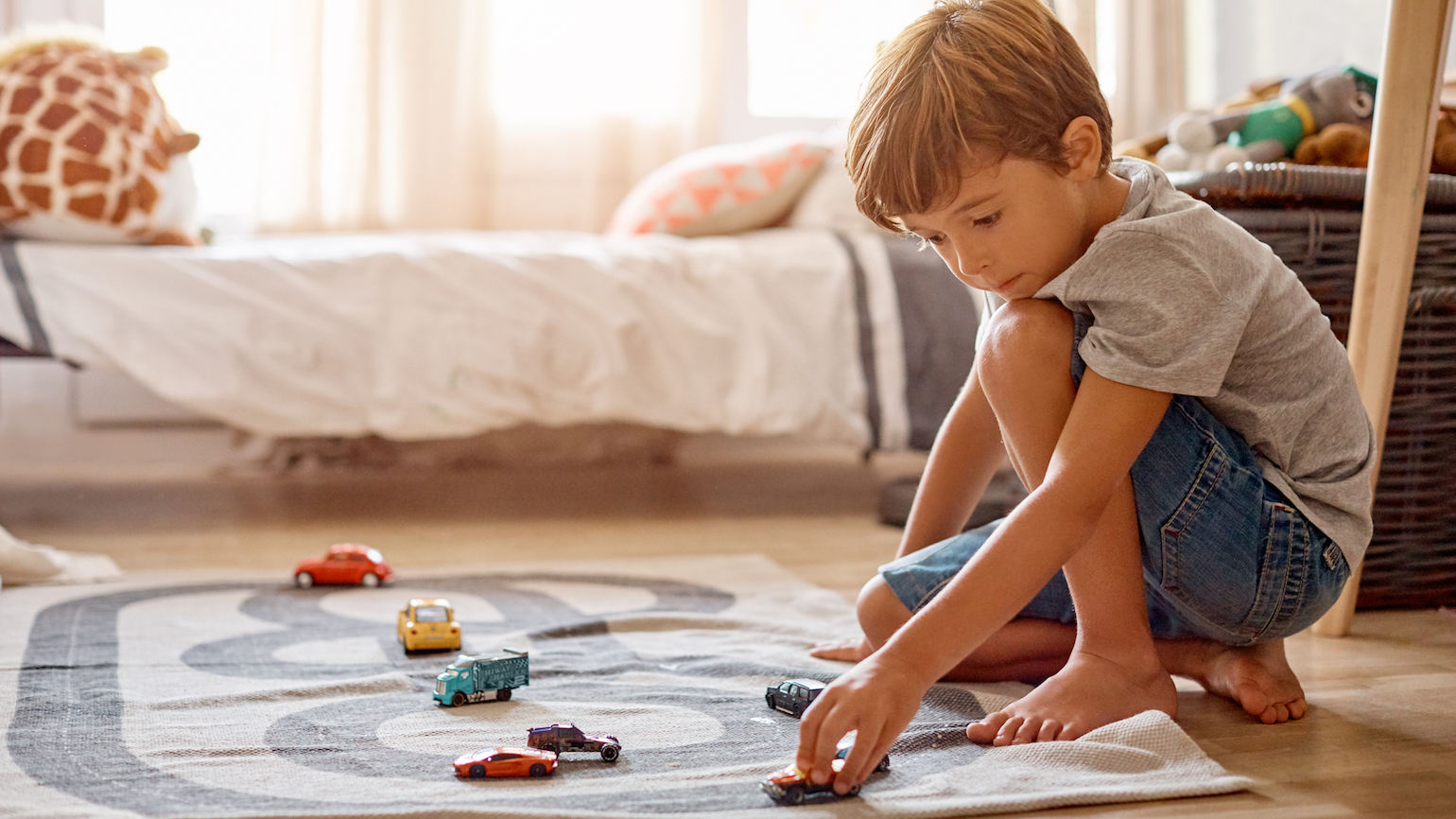
We had tacos for dinner and then we baked cookies. Nolan settled in a chair at the kitchen island, a cookie in one hand and a car in the other. After that, we had a Cars movie marathon. While we watched the movies, Nolan had a car tucked in each hand. And then the boys played on our car rug, which depicts roads and various scenes like a football stadium (with parking lot), a gas station, and other places where they can take “road trips.” They lined the cars up in rows. Lined them up in circles. And took them for drives across the rug.
After bedtime prayers, I tucked the boys in. Nolan said, “Wait a minute!” He jumped out of bed and when he slid back under the covers, I realized he had cars to sleep with. And first thing this morning before he was even fully awake, I watched as he flung the covers around until he found his cars.
I love how he holds onto his beloved cars so tightly. As I watched that precious little face that weekend, the prayer on my heart was, “Dear God, please help Nolan to always hold just as tightly to you. Help him to take You everywhere he goes. Help Him to plan his life with You in mind, and help him to love you with a love that’s even fiercer than his love for his cars.”
Hold on to Jesus, little buddy. He’ll be the perfect companion for all the roads that life will take you.
1. Remember that pets have a full range of emotions, including fear, joy, happiness, jealousy, pleasure, compassion, grief, relief, sadness, despair and love.
2. Dogs pick up on our anxiety. When you’re taking a pet to the vet, don’t use baby talk and coddle it. This amps up their own anxieties.
3. Pets communicate with us through voice, body language and overall demeanor. You have an obligation to connect with your pet in any way you can.
4. Understand your pet, and allow it to be what it is. Retrievers want to retrieve. Let them retrieve. Terriers want to dig. Let them dig.
5. Never allow your pet to get into extreme distress. Use distractions, a compression shirt for dogs, calming music or prescribed medication, if needed.