What could be more important than celebrating the birthday of Jesus? Christmas is a great time to talk about the birth of the Savior, especially with your children as well as others. So here are a few ways to share about your faith using the traditions of Christmas.
1) Baking
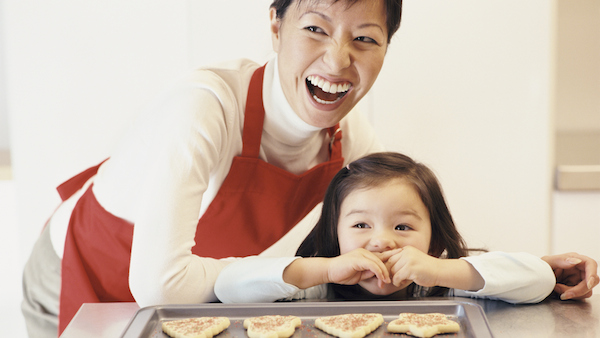
We can give plates of cookies and candies to others and use that as an opportunity to share the sweet message that Jesus—the salvation of the world—was born in Bethlehem. Consider making a birthday cake for Jesus and singing “Happy Birthday” to Him. I did that when my sons were little and love that the tradition carries on with my grandchildren.
2) The Nativity Set
Nothing gives a better visual reminder at Christmas about the humble beginnings of Jesus. Years ago, when we bought our nativity set, I purposely got one that was unbreakable. My three sons played on the floor for many hours with the figures from that set, with Mary and Joseph arriving after the innkeeper told them he had no room for them and the sheep and camels galloping in to see the baby Jesus.
Now my grandchildren do the same when they’re at our house. On Christmas Eve when our family reads the Christmas story from Luke 2 together, the children place the figures in the stable as the story is read. I love that they’re getting a hands-on illustration of the gospel.
3) Christmas Carols
What could be better than praising the One who came to give His life for us? I was at my son’s house earlier this week making candy with my grandchildren. It brought tears to my eyes as I saw the expressions on their sweet little faces as they sang the words to “Noel” from Chris Tomlin’s “Adore” album. Teach these songs about Christmas to your children. You’re planting seeds of faith that will always stay with them.
4) Gifts
We can give gifts to others in His name. Whether it’s taking a pot of poinsettias to a nursing home resident, purchasing gifts for a single mom who can’t afford to buy things for her children or providing the funds for Christmas dinner for an orphanage in Africa, we can do these things as our gift of love to Him.
5) Decorations
We often decorate extensively for other birthdays so why shouldn’t we make it even more festive when we’re celebrating the birth of the Savior? The tree represents the cross where He gave His all for us. The candles in the windows are a symbol of the light of the world. The nativity set gives a visual of the Christmas story. The red of the poinsettia is a reminder that He came to shed His blood for us, the greatest gift ever given.
6) Christmas Cards
By finding cards with a message and a Bible verse, we can share our faith as well as brighten the lives of others—especially the military, single parents and senior citizens who might not have anyone sending things to them.
In the midst of all the hustle and bustle of Christmas, there’s nothing better than keeping Him at the center of it all. After all, He truly is the reason for the season. And using the traditions of Christmas to plant those elements of faith in our children will carry that message to future generations who need to hear about Him.
All relationships take work; marriage is no different But if you set aside some time every day—or every week– to incorporate these six marriage habits into your new union, you will be well on your way to keeping your marriage happy and strong for years to come.
1. Get in the habit of saying “I love you” every day
As a newlywed, it can be easy to get caught up in the day-to-day routine of life and forget to say “I love you” to your spouse. However, making a habit of saying these three little words is essential.
First, it reminds you both that you are still madly in love with each other. Second, it sets a positive tone for the day and helps to chase away any negative feelings. And third, it gives you both something to look forward to hearing at the end of the day. So make a point to say “I love you” every day. You’ll be amazed at how much it can improve your relationship.
2. Make time for each other, even when you’re busy
Being newlyweds is an exciting time, but it can also be a busy one. Between working full-time, setting up a new home, running errands, and keeping up with friends and family, it can be hard to find time for each other.
However, it’s important to make time for your spouse, even when you’re feeling stretched thin. Small gestures like cooking dinner together or taking a walk after work can make a big difference in your relationship. And, by making quality time a priority, you’ll be laying the groundwork for a strong marriage that can weather any storm.
3. Be honest and communicate openly
Being honest and communicating openly is one of the most important positive marriage habits for all newlyweds. It allows both partners to feel safe and secure in the relationship, and it ensures that each person’s needs are being met. Here are some good communication tips:
Don’t interrupt each other
Agree to listen to each other one at a time
Maintain eye contact while you talk or listen
Don’t let one of you dominate the conversation
Set rules beforehand on the final decision-making process
Furthermore, open communication can help newlyweds avoid conflict and build a foundation of trust. Ultimately, being honest and communicating openly is essential for a successful newlywed relationship.
Being newlyweds is an amazing time filled with love and joy. But as any newlywed knows, it’s not always easy. Marriage consists of both good and bad times. The support you give each other when things are going well will also help carry you through the tough times.. So don’t forget to show your support, even when things aren’t perfect. It’s one of the most important parts of being in a relationship.
5. Laugh together
Newlywed couples who laugh together tend to have a stronger bond than those who don’t; laughter creates a sense of intimacy and connection. Laughing also increases feel-good endorphins, soothes tension and boosts your immune system.
When newlyweds take the time to laugh together, they reinforce their commitment to each other and set the tone for a happy and lasting marriage.
6. Spend time doing things you both enjoy
As a newlywed, it’s important to find ways to connect with your spouse and enjoy the time you spend together. One great way to do this is by doing things that you both enjoy. Here are some examples you can discuss with your spouse to get those great ideas flowing:
Go on a hike or a walk
Take up a new hobby together
Go to your all-time favorite restaurant
Garden or take care of your house plants together
Make a list of places you both want to visit, like parks or museums
Each of you pick a favorite movie to show the other and have a movie night
Whatever it is, make sure it’s something that you both can really get behind and enjoy.
Doing things together that you both enjoy is a great way to build a strong connection with your spouse and create positive marriage habits that will last a lifetime. So, don’t take your new spouse for granted! Say “I love you,” spend time together, support each other through thick and thin and laugh through it all, and you’ll be well on your way to a long and happy marriage.
Struggling with your dog’s or cat’s behavior? There may be a pet product that can help. We’ve done the research so you can find the right one for your needs. Remember: Some behavioral problems have a medical basis, so be sure to report any concern or change in behavior to your veterinarian first.
Your pet is anxious or afraid.
When you leave the house, does your dog bark or whine incessantly, or your cat yowl? One option for addressing separation anxiety is calming pheromones. Pet pheromones mimic a calming chemical naturally released by a dog or a cat. Pheromones can come in the form of a handy room spray or mist, a plug-in diffuser, or a collar or bandana.
Some pets are afraid of loud noises. A snug anxiety shirt or vest can help many cats and dogs settle down during thunderstorms, fireworks and other stressful situations. The pressure of the shirt works much the way that swaddling an infant does. You can also play targeted calming music, a tactic sometimes used in humane societies and rescue shelters. Look for clinically tested music that is shown to produce a calming effect in animals.
Your pet is bored.
If you’ve ever come home to find chewed furniture and shredded pillows, you know that’s how some pets entertain themselves when left alone. Why not provide more acceptable options to keep them occupied? We like interactive toys such as puzzles that release treats when solved. These are available for both dogs and cats. Puzzles range in their degree of difficulty and involve actions such as rolling balls, turning discs, uncovering compartments, moving sliders, flipping beakers and even solving a maze to get to treats.
Your dog pulls on the leash.
Are you walking your dog, or is your dog walking you? If your pup is a strong and consistent puller, a leash attached to a collar can be ineffective and lead to neck pain or injury. A back-clip harness actually makes it easier for your dog to pull.
Instead, try a front-clip harness, which has the leash attachment at the center of the chest. When your dog pulls, the harness puts pressure across his shoulders and turns him to the side, away from what he’s straining toward. Another option is a head collar, a device that fits around a dog’s head and has the leash attachment under his chin. In addition to training classes, either of these products can help you feel more secure and in control on walks.
Your pet gulps down dinner.
Pets who eat too fast can suffer an upset stomach, belching, and a life-threatening condition called bloat. One way to combat this problem: a slow feeder. This sort of food bowl contains ridges and mazes that make your pet eat at a healthier pace. Another type of slow feeder has protruding fingers that resemble a patch of grass. Yet another requires your pet to spin its lid to uncover hidden compartments of food. Puzzle balls release one or two pieces of food at a time when pushed or batted. Another popular option is a snuffle mat, which is made of soft, washable cotton. You hide bits of dry kibble in the mat to encourage your cat or dog to forage for its food. (For crafty folks, there are even instructions you can find online to make your own.)
Your pet won’t take medication.
If your pet hates her meds, try hiding the pills in special soft, hollow treats. Just push the pill or capsule into the pocket and pinch the ends closed. The odor and flavor of the treat will mask the smell and taste of the pill. The little pockets are easy and convenient to use.
Your dog hates to be groomed.
Do you have a dog who won’t stand still for grooming or a bath? Use a distraction device, such as a bumpy silicon pad that you smear with peanut butter and stick to the side of the bathtub. Your dog will stand still and happily lick the peanut butter while you scrub in the suds. The pad sticks to any shiny surface, so you can use it while you clean his ears, brush his fur or trim his nails.
Did you enjoy this story? Subscribe to All Creaturesmagazine.
Heroes come in all shapes and sizes. Some of them have fur, paws or even hooves. One thing all these creatures have in common? They’ll go above and beyond for their human companions. Whether they’re saving lives, preventing harm or predicting health scares, these animals have proved to be loyal, brave sidekicks.
Check out these six remarkable four-legged heroes.
When Scott and Vanessa Martindale from Colleyville, Texas, faced problems as a family, they weren’t sure where to go for advice or tips for blended families.
According to the Merriam-Webster dictionary, a blended family, or stepfamily, is “a family that includes children of a previous marriage of one spouse or both.” A blended family can include stepparents, stepchildren, step-grandparents, and ex-spouses who still co-parent together.
Both Scott and Vanessa were familiar with the concept. They grew up in blended families; but now they were dealing with challenges as a married couple with a blended family of their own. Vanessa was going through a heated litigation with her ex-husband. Meanwhile, Scott was struggling as a new stepparent to Vanessa’s young son, Michael.
“We have strong faith, so we’d reached out to our church looking for resources for stepfamilies,” Vanessa told Guideposts.org. “However, we couldn’t find anything. Unfortunately, at the time, there were not a lot of resources for blended families.”
As Scott and Vanessa worked through their issues— and learned valuable lessons along the way— they decided to use their experience to make things easier for others. “We felt like the Lord put [it] on our heart,” Vanessa said. “What we went through is something that He could use to help other families like ours.”
The Martindales created Blended Kingdom Families, a ministry that offers resources and community for those in blended families. “Our ministry and story encourage other families to look at their blended family through a Biblical lens,” Scott said. “We give them practical solutions for how to deal with stress and uncertainty.”
Here are Scott and Vanessa’s top tips for blended families:
1. Find the Communication that Works Best
Every family is different. Sometimes people get along well, sometimes they can’t stand to be in the same room together. When it comes to blended families, particularly ex-spouses who share custody of a child, there can be a lot of high emotions and miscommunication. Therefore, the Martindales recommend finding the form of communication that works best for your situation.
“Just go inch by inch,” Scott said. “Do one thing at a time that exemplifies good communication.” This can be anything from active listening to working together to find a compromise. Scott says parents can unfortunately fall into the habit of talking to each other through their children. “Keep the communication between you and the other parent. Don’t try to use your child as the messenger.”
However, if you are not at the point where you can talk with your child’s other parent on the phone or see them in person, there are resources to help you work through that. “There are different apps where you can upload your child’s schedule, send medical bills, and communicate via text,” Vanessa said. She recommends My Family Wizard or The Family Core. You can also utilize a family facilitator, who is trained to help blended families through the ups and downs of custody issues.
2. Prioritize Your Marriage
Another common issue that couples with children from past marriages can face is not giving their current marriage the attention it needs. Vanessa says this can often manifest out of a parent wanting to focus on their children after the trauma of a divorce. “Oftentimes you’ll see someone put their children’s needs before their spouse’s needs and it causes a lot of disunity in the marriage.”
There is always room for balance and quality time can be a good way to find that balance. Vanessa recommends spending time alone with your spouse every week, even for just an hour. “Maybe in the evening after the kids go to bed,” she said. “[Have] face to face, intentional time, all distractions set aside. No phones or laptops.”
Committing time and energy to your marriage can even help your children move past the discomfort and sadness they felt around the divorce. “If a divorce hurt your children,” Scott said, “a healthy marriage can be what will help heal them.”
3. Parent Together
Parenting can be a challenge for anyone, let alone a new stepparent who is entering the role with little experience. This was the case for Scott, who had never been a parent before becoming a stepdad to Vanessa’s son. For the Martindales, step-parenting was made so much easier when both Vanessa and Scott had a say in their son’s life, whether it was about schedules or discipline.
Scott and Vanessa Martindale
“Decisions should not be made in a vacuum of one parent,” Scott said. “There needs to be unity in those decisions.”
In terms of the stepparent and stepchild’s relationship, quality time together can be a great way to build a strong relationship. Scott makes sure to spend an equal amount of time with his stepson as he does with his biological sons. Vanessa says this made all the difference and even became a huge blessing in their home.
“Oftentimes stepparents get this bad rap, like they’re the evil stepmom or stepdad,” she said. “But they’re really this person that is stepping in and committing to not only loving their new spouse, but also to help raise these children in a way that is honoring and loving.”
4. Plan for Holidays
Holidays can be a difficult time for many blended families. Whether they are trying to sit down to Christmas dinner or organize a family cookout on the 4th of July, families will need to make tough decisions. The Martindales advise how much planning ahead can make these decisions easier and more civil. Sit down at the beginning of the year and plan out how you will spend each holiday and where. This will also help to make the holiday more enjoyable for your children.
“Children thrive in environments of structure and routine,” Vanessa said. “Having a plan will help prevent a lot of anxiety.”
It’s also important to remember that you might not have the ideal holiday plan you were hoping for. Compromises are an inevitable part of planning. Focusing on the time you do have together will help you forget the back and forth and create some wonderful memories.
“The most anxiety in blended families, as it relates to the holidays, is when someone is not available,” said Scott. “The more grace that you could show during that holiday season, the better the year will be moving forward.”
5. Be Understanding with Each Other
Inflexibility is another common obstacle that blended families can face. If difficult decisions need to be made, they aren’t made any easier by people who are unwilling to work together. Furthermore, as blended families evolve, family members need to be prepared to adjust their lives.
“The uniqueness of blended families is that they change over time,” said Scott. “The way your blended family reacts when you have a five-year-old or a 10-year-old or a 16-year-old… The opportunity to be flexible is going to be a huge relief.”
Finding patience with her ex-husband was a huge step for Vanessa. For her, prayer was a vital part of listening to what God wanted for her and her blended family. “I asked God what He wanted me to do,” she said. “He said ‘I want you to love him the way that I see and love him.’ That was hard. I had to surrender all my anger and resentment. Instead of blaming everything on my ex-husband, I had to look at myself and the things I had done.” This brought her to a place of better understanding with her ex-husband. They now peacefully co-parent their son together.
6. Look Through the Biblical Lens
An important aspect of the Martindale’s ministry is looking at what the Bible says about blended families. Vanessa says the most logical place to look first is Jesus’ family.
“Jesus came from a blended family,” she said. “Joseph in the Bible was not his biological father. I think it’s a beautiful representation of how Joseph loved Mary and loved Jesus as his very own son.” Vanessa also compares how Jesus’ seeks us out to how stepparents seek out their stepchildren. Even in the face of any resentment a stepchild may feel, a stepparent can love them through it.
“Despite the anger they may get from their stepchild,” she said, “they should be steadfast in the pursuit of that love. The Bible talks about that a lot. How Jesus is steadfast and pursues us as his children.”
Scott learned to rely on God during their most difficult times, either through prayer, counseling, or simply letting go. “I now understand that surrendering to God was an answer,” he said, “I began letting Him work out a solution.”
Scott Martindale is a licensed professional therapist with a bachelor’s degree in Psychology and a master’s degree in Counseling and Human Development. Vanessa Martindale is a registered nurse and currently pursuing a master’s degree as a Marriage and Family therapist. They are founders of Blended Kingdom Families and the authors of Blended and Redeemed: The Go-To Field Guide for the Modern Family.
Reading and sharing friends and family stories can be a wonderful way to laugh and learn. From parenting to marriage to finding a place for a furry friend, family life has many facets. We’ve got them all covered. For 75 years, Guideposts has been thrilled to share true accounts of friends and family with the world.
Here are five of our most popular friends and family stories:
Lester Holt Shares How Family and Faith Influenced His Career
The respected and award-winning NBC Nightly News anchor discusses the role that his supportive, church-going family continues to impact the work he was called to do. Learn how Lester Holt is influences by his faith.
Caregivers are often faced with the additional challenge of relocating their loved ones from a home they’ve lived in for decades. Holly Lebowitz Rossi shares some tips for beginning the process paring down lifetime of possessions. See her best decluttering tips here.
For nearly three decades, photographer Joel Sartore has traveled the globe for National Geographic magazine. His toughest assignment, however, wasn’t in the wild. In 2005, Joel’s wife, Kathy, was diagnosed with breast cancer. He stopped working for a year to take care of her and their three kids. Once Kathy recovered, Joel embarked on a new project: The National Geographic Photo Ark, a photographic archive of 12,000-plus animal species currently in human care. So far, he has captured images of 9,000 species, mostly in zoos and wildlife sanctuaries. The purpose, Joel says, is to raise awareness of the beauty, diversity and value of animal life, especially the lives of endangered species.
Arthritis had crept into her joints and the years had caught up with her, but that didn’t stop Macie Bailey each Sunday morning. She’s gone home to be with Jesus for quite a while now, but I can still see her so clearly, her white hair in a bun and a sweet smile as she made her rounds through our church.
She’d greet newcomers with “Welcome, I’m so glad to see you’uns!” as she gave them a hug. It didn’t matter if they were from low-income housing, wealthy or a big-name politician, all were made to feel welcome. I always enjoyed watching the reactions. Some would be taken aback, unused to such exuberant hospitality, but they always walked away with a smile. None of them ever left our church feeling like they hadn’t been warmly welcomed.
So you can understand why it made me so sad to read a friend’s Facebook post recently. She and her husband have moved to a new state and they’ve been trying to find a church home.
Here’s what she posted:
We’ve gone to this church about eight times. It’s like we’re ghosts. I started going to the women’s Bible study. I can’t imagine sitting with a new person and sharing like you do in Bible study, and not trying to connect. Every single week after the study, ladies figure out where to go to lunch. And I’m right there and not one person invites me to join them. The retreat was yesterday. A lady asked if I was going. I explained that we have one car and that Gary needed it for work. Talk about a perfect opportunity to offer to give me a ride. Nope. She walked away.
Folks, that’s so sad to me. That’s not how church should be—yet I’ve experienced it myself when I’ve been out of town and visited churches. What broke my heart was thinking about all those hungry souls—about people who were desperately searching for God’s love—who might have finally worked up their courage to go to church…and then no one spoke to them or made them feel welcome.
How to fix that? Here are 5 ways:
1) Make sure that everyone who walks through the doors will feel welcome and wanted. A simple “I’m glad you’re here, and I hope you’ll come back!” goes a long way.
2) Instead of jetting out the doors as soon as the “Amen” is uttered from the closing prayer, take a few minutes to talk to the newcomers. Invite them to Bible study. Tell them about the activities for their children.
3) Be an extension of God’s loving hands. Take a casserole, send a card or provide help as needed.
4) Ask newcomers how you can pray for them.
5) Introduce them to other church members and your staff. Help them build a community.
It takes so little to make someone feel welcome—and it takes so little for someone to feel so unwelcome that they will never enter the doors of a church again.
Every church needs a Miss Macie to make folks feel welcome. Could you be the Miss Macie for your church?
I love working with kids and helping them develop a creative living space. Here are the top 5 ways to inspire your child.
1. Talk from the Heart
Give your child time to tell you what’s on his or her mind. And listen. Always listen.
2. Dream Together
Read about inspiring people. Honor a role model. I’ve made a lamp with images of inspiring people like Gandhi and Martin Luther King, Jr. Projects like this can bring a role model into your child’s room and heart.
3. Add Action to Compassion
Collect food for a food pantry. Save outgrown clothes for a shelter. Restore used furniture found on the curb, and give to a thrift store. When you empower your child to help others you build self-esteem and kindness.
4. Practice Positive Thinking
Surround your child with positive words and pictures. Make a “Calendar of Belief,” a chalkboard decorated by your family. At dinnertime, write in one positive thing from that day. You’ll find, at the end of the month, countless reminders of the good in your lives.
5. Buy Less, Create More
Necessity is the mother of invention. Redecorate your child’s room with what you have or find at thrift stores or garage sales. The more your child is involved, the better he or she will feel about the results.
Read how Kelee Katillac found a new purpose in life by redecorating an old chair in Room to Grow.
I have so many friends who are going through difficult times right now. There are major health problems where pain is a daily companion. There are broken-down vehicles, and no money to pay for repairs.
Some have lost loved ones, their hearts breaking as they look ahead at the empty days ahead of them. Others are going through a huge crisis with family members, with situations that have broken their hearts and wrecked homes and lives. My heart aches for my precious friends and I’d love to fix their circumstances, but I can’t.
Instead of feeling frustrated and helpless, I thought I’d share a few of the “what to do when you don’t know what to do” ideas that God put on my heart:
1) Give your time.
Whether it’s a warm hug, listening, or holding someone’s hand to comfort them, just our presence can make a difference.
2) Pray.
That’s a sober responsibility. I was reminded of that this week when a sweet friend shared that a year ago when she asked me to pray about something, I was the only one she asked to pray. That moved me to tears as I thought about that. Thankfully, I had prayed for her, but what if I hadn’t? Let’s pray as if we’re the only ones lifting our friends’ requests to God.
3) Offer hands-on help.
Whether it’s making a cake or casserole, changing the oil in the car for a disabled person, driving a senior citizen to the doctor or taking a turn sitting at the hospital with a sick friend, we can show our love and compassion in even small gestures.
4) Share a miracle story.
Talk about how God’s provided for you or someone in the past, those “tried and proven” moments that remind us that the God who performed miracles in the past is still able to do them today.
5) Spread encouragement.
We can encourage others with phone calls, visits and texts. And we can share precious verses from God’s Word, Scriptures that have touched our hearts, sweet promises that have helped us through our own difficult days.
So what else can we do when we don’t know what to do? Ask God to show us ways that we can become extensions of His loving arms in the lives of those who need us. I know these things will make a difference–I’ve been the beneficiary on so many occasions.
As my pastor, Rev. Ralph Sexton says, “All we have is God and each other.”
How could you share His love and compassion with someone today?
Many cats and dogs are able to relax and even sleep when left home alone. But other pets have an extreme response: They become distressed at the mere sight of you picking up your keys or putting on your coat. While you’re away, they pant, pace, frantically claw at doors and walls, howl or bark nonstop, have house-training accidents, or rip up furniture. These could be signs of separation anxiety. Here are five steps you can take to help your pet.
1. Make your departure and return times calm. The way you leave and return to the house sets off cues that your pet reacts to. Making a big fuss and giving him lots of attention before you depart only builds up his anxiety. Instead, offer a calm goodbye or leave without saying anything. When you return, resist gushing over him. Walk in and sit down for a few minutes, then give your pet some attention. When you leave without fanfare, and return the same way, you’re telling your pet that this is no big deal. Consider saying the same phrase, such as “Be right back,” every time you leave. He’ll associate those words with your leaving—and also with your returning.
2. Create a safe, low-stress environment. Unhousebroken puppies and destructive dogs can typically be left in a crate for a few hours when you’re out. But dogs with separation anxiety may try to escape from crates and have been known to chew or claw at the metal or plastic until they’ve caused themselves injury. If your dog gets anxious in a crate, confine her in a safe room with a baby gate instead. Make sure her space is set up for success. Remove anything that might be ingested or destroyed. This may be challenging, as some particularly anxious dogs have gone so far as to rip up baseboards and chew through doors.
Before you leave, turn on soothing music (or the radio or TV) or plug in a dispenser with calming pheromones. Never leave your dog without something to do—provide plenty of toys, a Kong and puzzle feeders to keep her engaged. You may want to save an extra-special toy just for when she is home alone. Teach your pet to associate your leaving the house with good things happening. For cats, try hiding a few small treats to give them an opportunity to hunt.
3. Limit time left alone. A puppy may be able to handle being home alone for a couple of hours, and an older dog may tolerate up to eight hours if necessary. But for a dog with separation anxiety, try to limit the length of time that he’ll be by himself. Come up with alternatives: Can you bring your pet to work? Enroll him in doggy day care? Ask a neighbor to take him on a midday walk?
4. Try progressive desensitization. You can teach your dog to enjoy, or at least tolerate, being home alone. Consult an animal behaviorist or an experienced trainer to help you implement an effective method of progressive desensitization. One method goes something like this: Start off by asking your dog to stay, then go to the other side of the door for a few seconds. Reappear calmly. Do this several times a day. Next, leave the room for a few seconds, then reappear. If your dog stays calm, gradually increase the length of time you are out of sight. Take it slow and always end with a successful attempt.
5. Discuss medication. Some pets are so distressed that they need antianxiety medication or tranquilizers. Talk to your veterinarian about what is right for your pet. A combination of medication and some of these other techniques may be effective. You might eventually be able to wean your pet off the medication.
Your pet doesn’t have to struggle every time you leave the house. She just needs your help to feel safe. When you come home to a calm pet, you’ll both feel better.
Did you enjoy this story? Subscribe toAll Creaturesmagazine.
Thanksgiving is the day when we feel most grateful for the blessings in our lives. So why do we talk so much about Thanksgiving stress? The food, the family, the travel, the emotions—it can weigh more heavily on us than that second slice of pumpkin pie.
If you’re feeling stress and anxiety as you anticipate Thanksgiving, take comfort. Not only is it normal to experience those feelings, it is also possible to turn them around and reconnect with the gratitude that’s at the heart of this holiday.
Read on for five of the most common Thanksgiving stressors—and how to reorient yourself toward an attitude of gratitude.
Family Tension and Stress
The Stress: When a family gathers around a large table, the iconic Norman Rockwell scene doesn’t always materialize. Relationships that are strained can feel even more so when everyone is in the same room.
Parents and grown children often clash over everything from table manners to when they might expect a new grandbaby. Old arguments—political, emotional, or otherwise—can resurface. For many people, Thanksgiving is a tinderbox of family-related stress.
The Solution: Make a list before Thanksgiving of ways your family triggers negative feelings. Articulating these patterns will help you recognize them before they spin out of control. Then, make a plan to avoid those irritations.
Pledge to politely disengage from tense conversations—step outside for a breath of fresh air, help out in the kitchen, or play a game with the kids. And make an effort to cultivate gentleness and love.
As relationship educator and therapist Dr. Laura Berman advises, “Whether it’s complimenting your always grouchy aunt on her new sweater or telling your exhausted sister that she is a great mom, your words will go a long way in keeping the day positive, meaningful, and full of happiness.”
Thanksgiving Cooking for a Crowd
The Stress: Whether you’re cooking your first Thanksgiving dinner or have been the go-to host for years, it can be stressful to be at the culinary helm. Some family members may have dietary restrictions like veganism. Others might tell you they’re looking forward to a meal exactly Grandma used to make, which makes you feel pressured.
Even if you’re not sweating your menu, Thanksgiving logistics can leave many hosts depleted.
The Solution: Preparing Thanksgiving dinner is a lot of work, and not everything will go exactly according to plan. If you can accept those two realities, your ability to sit down to dinner with a genuine smile on your face will rise significantly.
Start planning early. Create detailed shopping lists. Make and freeze anything you can prepare in advance. Pull out serving dishes and decorations early so you won’t be digging through cabinets with a houseful of guests. Create a timeline for your oven so you have enough space for everything that needs to cook on Thanksgiving Day.
Also, recruit kitchen help mindfully, inviting friends or family members who will encourage you, follow directions, and take initiative when they notice you’ve piled up the silverware but haven’t set the table yet. Don’t forget to take a private moment to feel proud of the gift you have given your family by preparing this meal.
Keeping to a Healthy Food Plan
The Stress: If you struggle with your weight, Thanksgiving is a complicated holiday. You look forward to the foods that have brought you joy and comfort since childhood. But you also recognize those creamy mashed potatoes and rich gravy are dietary danger zones.
Nobody wants to be “on a diet” at Thanksgiving, fielding questions about why you’re not enjoying second helpings. Many people worry that their stress will lead to even more overindulgence.
The Solution: Thanksgiving doesn’t have to be a caloric free-for-all for you to feel satisfied and nourished. Schedule some exercise into your holiday—a brisk walk with a family member is an opportunity for a private chat as well as a healthy break.
Eat breakfast on Thanksgiving morning so you are not famished by the time the turkey arrives. At dinner time, try for as colorful a plate as possible—crimson cranberries, vibrant green beans, orange sweet potatoes, and lean, ivory white meat turkey—to maximize your meal’s nutritional value.
Finally, taste each and every bite, savoring it and gently casting aside any thoughts of guilt. Remember, all things are good, in moderation.
Travel Anxiety
The Stress: Getting from A to B at Thanksgiving time is far more complex than virtually any other time of year. There are more cars on the road if you’re driving, trains are packed, and security lines at the airport are long. Add to that the cost of gasoline or airfare, plus unexpected delays and traffic jams, and it’s no wonder travel is a big source of Thanksgiving stress.
The Solution: Thanksgiving travel is more manageable if you control the things you can, and are flexible with things you can’t. For example, keep a change of clothes, some basic toiletries, mobile device chargers, and extra reading material handy in case you experience delays.
Pack healthy snacks (nuts, fruits, and cut-up vegetables are great choices) to curb stress eating. Leave yourself more time than you think you’ll need to get to the airport or train station. When you feel stress surge, take deep breaths and picture something about Thanksgiving that’s very much worth the journey.
The Stress: Just because Thanksgiving is a day of celebration doesn’t mean that everyone feels joyful. For those who struggle with their emotional health, feelings of isolation can arise when everyone else appears to be looking forward to a holiday with loved ones.
A person can feel alone whether they’re making Thanksgiving dinner for one or seated at a table full of friends and family members. Those feelings can be exacerbated at a time when happiness is what we are told we’re “supposed” to feel.
The Solution: Acknowledge feelings of sadness and loneliness. Be honest about what’s at the heart of your emotional experience of Thanksgiving.
Step away from social media and television shows that idealize Thanksgiving. It might be comforting to tell yourself Thanksgiving is a day just like any other.
Finally, regardless of whether you are on your own or with a big group, it’s healthy and pleasurable to identify things in your life you are grateful for—large and small. You may also want to turn your emotions over to God and pray for peace and connection in the days to come.