


Embrace God's truth with our new book, The Lies that Bind

4 Ways to Help Your Teen Understand True Beauty

I struggled with self-esteem when I was a tween. I was a painfully shy, a little skinny and a late bloomer. Guys didn’t notice me. They noticed and dated the pretty girls, but then something happened. Time. It changed everything about me–my confidence, outward appearance and inner peace.

Outward beauty. Does it matter to your daughter? As women, young and old, we are bombarded by images around the world to be beautiful. It must be important to us because we spend $426 billion a year on beauty products. That’s a lot of money.

The reality is our society idealizes attractive supermodels, athletes, pop stars and celebrities. Teens often focus on their physical appearance and forget to weigh their inner strengths because of what the media feeds them. They strive to look like their role models. They don’t realize that most of the images have been altered and many of the celebrities have very good plastic surgeons.

READ MORE: TEENS AND E-CIGARETTES

So how do we as parents and grandparents help our teen daughters focus on the inward qualities of a person?

1) Encourage patience.
Let your daughter know that true beauty evolves over time and will continue throughout her life. Outward appearances will change and fade, but inner beauty will last a lifetime.

2) Focus on inner passions.
If you know your daughter’s passions, there you will find her inner beauty and help her concentrate on what she loves. Is she a musician? Does she love animals? Does she love children? What does she want to do or achieve in life? Take time to find out what she loves and what her life passion is.

3) Be her cheerleader.
Be the person who encourages her to pursue this passion even further. This is where her true inner beauty will shine. This is where she will find the truth about beauty the media skews through its manipulation of imagery.

4) Practice true beauty.
True beauty includes not only a healthy lifestyle, eating right and exercising but also sharing our unique qualities, characteristics, gifts and talents with others in the pursuit of making a difference in the world.

I praise you because I am fearfully and wonderfully made;
your works are wonderful,
I know that full well. (Psalm 139:14, NIV)

4 Ways to Comfort Extended Military Family Members

Truthfully, I don’t know anyone who doesn’t struggle with stress. But since April is National Stress Awareness Month, I wanted to highlight a community that deals with a particular kind of stress—extended military family members. On this blog I talk a lot about the pressures and challenges military members and their immediate families face. But the extended families also deal with a considerable amount of stress.

When our son was deployed, it was also hard on his grandparents and my sister who were very close to him. And because our son wasn’t married and we didn’t live on or near the base where he was stationed, his father and I also fell into the no-man’s-land of extended family.

I don’t know how we’d have all managed if it hadn’t been for the faith community surrounding us. There were four things they did that really helped:

1) They prayed for our son.
They added him to prayer lists, sent him letters and cards, and let us know that they were actively praying.

2) They gave us the opportunity to talk about our son.
They asked how he was, where he was, and for details of his life. It helped so much to be able to share what was going on with someone we loved.

3) They kept trying even when we backed away.
One of the common coping mechanisms of those with a loved one who’s serving is the bunker mentality. We tend to hunker down and refuse to lift our heads when life gets too stressful. Our friends kept the invitations coming even when we declined several in a row.

4) They didn’t engage in political debate.
We all have strong feelings about what our country’s role should be in foreign conflicts. But those who cared about us stayed focused on the face of war, not the politics of war.

These all may seem like minor things, but they’re not. They are a lifeline for anyone who has someone they love in the military. Even now, I try to pay attention to those around me who might have a family member serving. I’ll never forget what others did for my extended family to help us cope with our stress, and I try to honor their kindness by paying it forward.

4 Tips for Coping with Your Pet’s Medical Diagnosis

More tips from Peggy Frezon:

One summer day my husband stroked our golden retriever Ernest’s side, the same way we both had many times before. But this time he felt a bump, no bigger than a mosquito bite. Our vet’s biopsy showed that it was a malignant mast cell tumor. Cancer. One moment we thought our eight-year-old dog was perfectly healthy; the next, we knew that he had a potentially fatal disease.

How did it happen? Could we have prevented it? Sometimes there’s no explaining why a pet becomes ill. You may feel scared, distraught or confused. There is no wrong reaction. It’s okay to cry—your pet is a beloved part of the family. Here are four steps you can take to cope with a difficult diagnosis and give your pet the best care possible.

1. Gather information.
To make sure we don’t miss anything and that our questions and concerns about our dogs are addressed, my husband and I go to the vet’s office together. Or you can bring along a friend or other family member. I always take notes. One friend records the conversation on her phone so she can go over the details later.

If you look up your pet’s condition online, beware of inaccurate and conflicting information. Check that you’re consulting a reliable source (I like Petmd.com and Amva.org), then confirm the information with your vet.

2. Connect with other pet parents.
After the diagnosis, you may be bombarded with tests, medications and additional veterinary appointments. Overwhelming, right? That’s why it helps to share the news with others who understand.

Seek out pet parents who have been in similar situations. A friend of a friend whose dog had mast cell tumors offered Ernest her dog’s leftover Chinese herbal medications (which our vet approved). When our spaniel Kelly had a spinal injury, someone advised us about a treatment that had helped her dog. Turned out, it helped Kelly too.

If you can’t find a support group locally, look online. Kelly was diagnosed with dementia later in life, and we found it comforting to connect with others in a canine cognitive dysfunction group on Facebook.

3. Evaluate decisions.
Which treatments are best? Is surgery advisable? Are the benefits worth the risks? There are no right answers that fit every pet. Do your research, ask for advice and talk to your vet. But ultimately, you know your pet and your own situation best.

A useful tool is veterinarian Alice Villalobos’s “Quality of Life Scale” on Pawspice.com, which helps you evaluate your pet using factors like level of pain, ability to take in nourishment, mobility and happiness.

Personal finances are another factor in determining a pet’s treatments. A blood test can cost from $30 to $250. An ultrasound may cost upward of $400. And surgery can run into the thousands of dollars. Discuss the options with your vet. In some cases, ours was able to suggest less expensive treatments. If you can’t afford the surgery or lifesaving treatment, organizations like Diabetic Cats in Need or the Magic Bullet Fund may be able to help.

Get the new daily devotion for animal lovers!

4. Find comfort.
Most important, don’t make every day about the illness. My husband and I love looking at photos of our pets when they were young and healthy. One friend notes positive moments in a journal and has found the good days outnumber the bad.

Do what makes your pet happy. Even after 16-year-old Kelly had become blind and deaf, we took her up to the mountains where she had played for many summers. Kelly couldn’t see or hear, but she still enjoyed smelling ferns near the cabin and chipmunks along the trail.

Turn to your faith. My husband and I put our hands on the place where Ernest’s tumor was removed and pray for the cancer to be gone. One friend rubbed healing oils on her dog, and another brought his cat to a Blessing of the Animals service. Not long after Ernest’s diagnosis, our friend Lori slid a note that read “Ernest the dog” into a crack between stones of the Western Wall in Jerusalem, a centuries-old Jewish custom to bring prayer requests before God. We were so touched—and strengthened—by her prayer.

Peggy Frezon is the author of Faithfully Yours: The Amazing Bond Between Us and the Animals We Love and other books about pets. Connect with her on her blog, peggyfrezon.blogspot.com; on Twitter @peggyfrezon; and at facebook.com/peggyfrezonbooks.

4 Positive Habits for a Relaxing Family Dinner

Julia Child is quoted as saying, “The dinner hour is a sacred, happy time when everyone should be together and relaxed.” So how about a relaxing family dinner?

The great chef and her husband never had children. So those of us raising kids might think the sacred happiness of a dinner hour sounds lovely but unattainable. Competing schedules, food preferences, and conversational skills often conspire against best-laid plans.

Any of us can find our way to a relaxing family dinner, though. It calls for settling the family into some habits that bring us together in an easy, love-filled way.

1) Set the Table

Even if you’re standing up at the counter for a quick bite before heading out to an evening activity, take a moment to set out a placemat, napkin, and a plate. That can bring you as much contentment as the food you’re serving. Making physical space for your evening meal—even if the “dinner hour” is more like 10 minutes—cues your whole family to tune in and chill out at suppertime.

2) Seed the Conversation

Need to spark lively conversation around the dinner table? There are many versions of “conversation cards.” You can pick them up or download them for a fresh supply of questions, reflections, or facts. It will elevate the conversation beyond “how was your day?” or “don’t forget to….”  Everyone will come to the table knowing they can leave the stresses of the day behind and enjoy a fun, relaxed family dinner with those who love them most.

3) Empower Your Eaters

At my son’s school, the cafeteria menu changes each lunchtime, but students always have two additional options if they aren’t enticed by the offering. At dinnertime, you can make a similar plan. Always offer a simple sandwich, a bowl of cereal, or scrambled eggs as a no-fuss alternative for those who aren’t thrilled with the menu. This will empower your picky eaters to make their own choices. And it will disrupt arguments about ingredients or portions, and preserve peace around food you’ve prepared. Now that’s a relaxing family dinner!

4) Don’t Force It

Maybe someone has a major homework project due tomorrow. Or they had an exhausting day at work. They may just not be hungry. Let them be excused. They’ll get something to eat eventually, and you’ll be showing them that you see and hear that they’re not in the right place for family time. Remind them that you love them, and that you’ll be right there at the table tomorrow, ready to nourish and relax together.

What’s your recipe for a relaxing family dinner?

4 Life Lessons Learned at the San Diego Zoo

My career at the San Diego Zoo started back in 1978. As a child, I often visited this zoo, and getting a job there was a dream come true. At first, I didn’t know much about the issues facing wildlife, but I quickly learned that many species were—and still are—in trouble and desperately need our help.

Initially, I worked in public relations and fundraising. Then, in 2017, I helped launch the San Diego Zoo Global Press, which publishes books for adults and children. I write the Hope and Inspiration children’s series, which features true stories about animals at the zoo and its Safari Park that have overcome challenges and hardships in their lives. The animals I write about hold a special place in my heart.

I wanted these books to introduce children to a specific animal, help them grow to love that animal and then teach them the importance of protecting all animals. The books have had a greater impact than I ever expected: Young readers have learned important life lessons through the stories. To be honest, so have I.

Friendship Heals

The zoo has paired cheetahs and dogs as animal ambassadors since the 1980s. Cheetahs are shy and nervous and need the comfort of their canine companions. Because the cub and pup are raised together, they form strong, lifelong bonds. Ruuxa, a cheetah cub at the Safari Park, and Raina, a Rhodesian ridgeback puppy, were like brother and sister from the start. Keepers noticed that young Ruuxa’s legs were bowed. Veterinarians were unsure if he’d ever be able to run, even after surgery, but no one told Ruuxa he couldn’t. With Raina by his side during recovery, it wasn’t long before he was running at top speed.

When Raina was two, veterinarians discovered several tumors in her body and diagnosed her with terminal cancer. Raina had just months to live! Trainers were heartbroken for her and worried how Ruuxa would do without her. They brought in Little Rae, a Rhodesian ridgeback puppy, hoping this new friend would be there for Ruuxa when Raina was gone.

Then something amazing happened: Raina didn’t die. She didn’t even seem sick anymore. Another scan showed that the two smaller tumors had disappeared and the larger tumor had shrunk enough so it could be removed. Three rounds of chemotherapy later, she was cancer-free. Today Ruuxa, Raina and Little Rae live together. Their friendship reminds me to believe in miracles.

Courage is Contagious

Karen, a Sumatran orangutan, was raised by keepers because her mother wasn’t able to nurse her. At a year old, Karen wasn’t growing as quickly as she should have been. Veterinarians discovered a penny-size hole in her heart. She needed open-heart surgery, which had never been done on an orangutan.

Two of the world’s top cardiac surgeons volunteered to repair Karen’s heart. For two weeks following the surgery, Karen remained on a ventilator because of a lung infection, and doctors were concerned she might not survive. Finally, she started breathing on her own.

Karen’s story was all over the news. Letters poured in from around the world. One get-well card came from a five-year-old girl named Jennie, who was fighting leukemia. She promised to visit Karen as soon as she was well enough. Jennie beat cancer and grew up to become an emergency room nurse. To this day, Jennie still visits Karen at the zoo every chance she gets. Sharing the challenges we face can help others summon the bravery to overcome their own challenges.

Make the Most of What You’ve Been Given

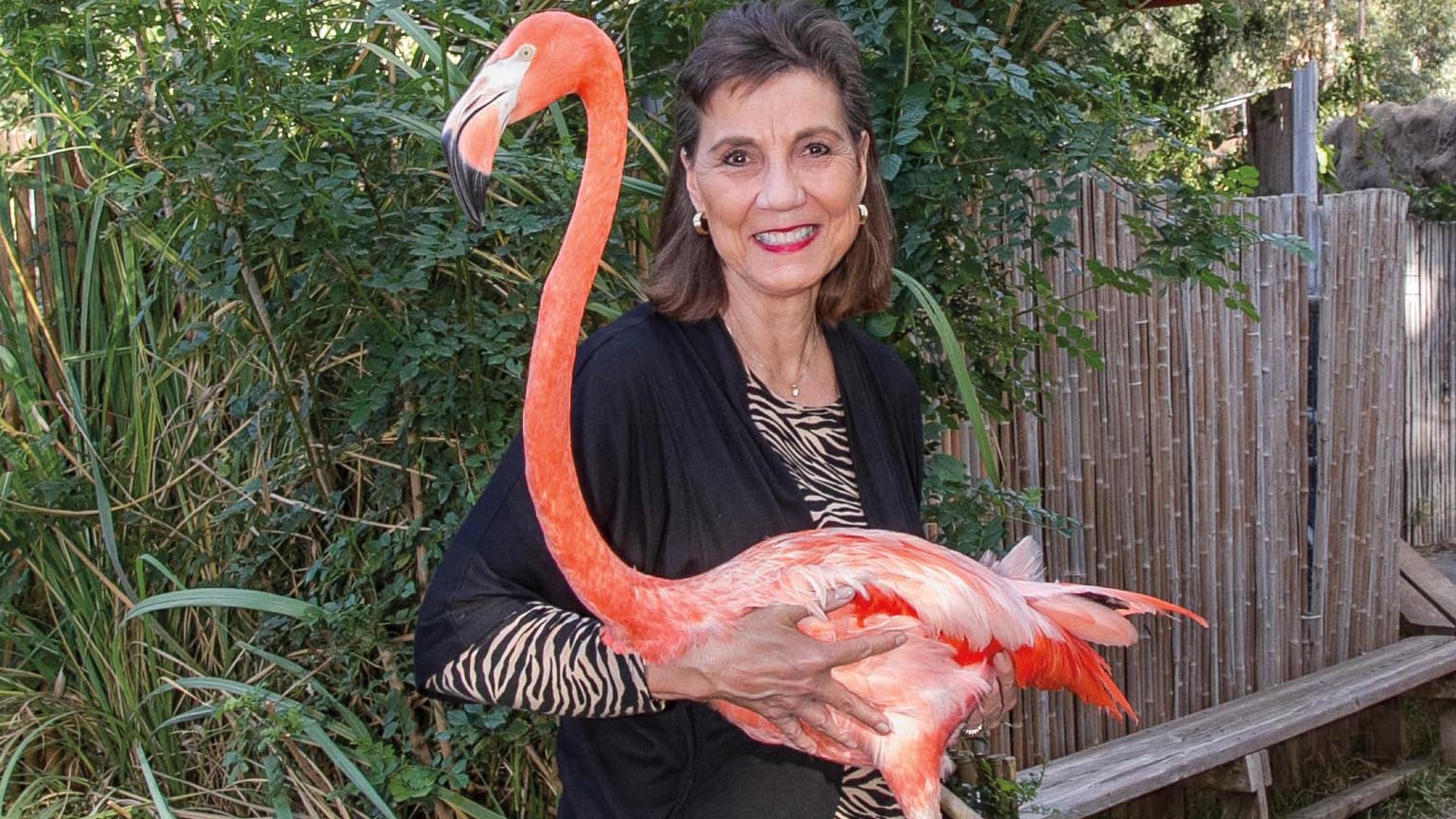
Seven years ago, Floyd the flamingo was hatched and started his training to be an animal ambassador at the zoo. As Floyd grew, his caretakers noticed that his legs were crooked, and it looked as if he had two left feet. He went through a series of surgeries to straighten his legs. Still, no one was sure Floyd would ever walk again. He worked hard to regain his strength and balance, and when he took his first steps on his own, his trainers cried with joy. Floyd rejoined his flock and returned to his job as an animal ambassador.

One day last December, Floyd fell. His legs were injured so badly, there was nothing veterinarians could do. It was devastating to lose Floyd, but he lived seven wonderful years—time he never would have had if he hadn’t persevered. He showed me that life isn’t always easy, but it’s always worth living.

It’s Never Too Late to Fulfill Your Purpose

When Mosi Musa, a vervet monkey, was born, his mother showed no interest in caring for him. But his grandma, Thelma, was drawn to him. She cuddled and held him and taught him to be a monkey. Mosi grew confident and independent, thanks to his grandma, and soon he was able to live full-time with his vervet family.

Eventually Thelma’s health failed. I visited her shortly before she died. Even in her weakened state, she continued to be protective of Mosi. She fulfilled her purpose until the end. Thelma reminded me that we’re never too old to make a difference, a message that resonates with me as I approach an age at which many people retire. I love what I do and plan to help animals for as long as I can.

These days I’m busy observing and sometimes photographing close to 10 animals for future children’s books. There’s something fascinating about not knowing how each story will turn out. It’s a lot like life, I guess—not knowing where it will go is part of the adventure.

I’ve learned so much about different species over the course of my career. All I’ve ever wanted to do was share that knowledge. That’s why I started writing these books, to teach people about animals. As it turns out, the animals are the real teachers.

Did you enjoy this story? Subscribe to All Creatures magazine.

46 Years Later, a Heartwarming Father-Son Reunion

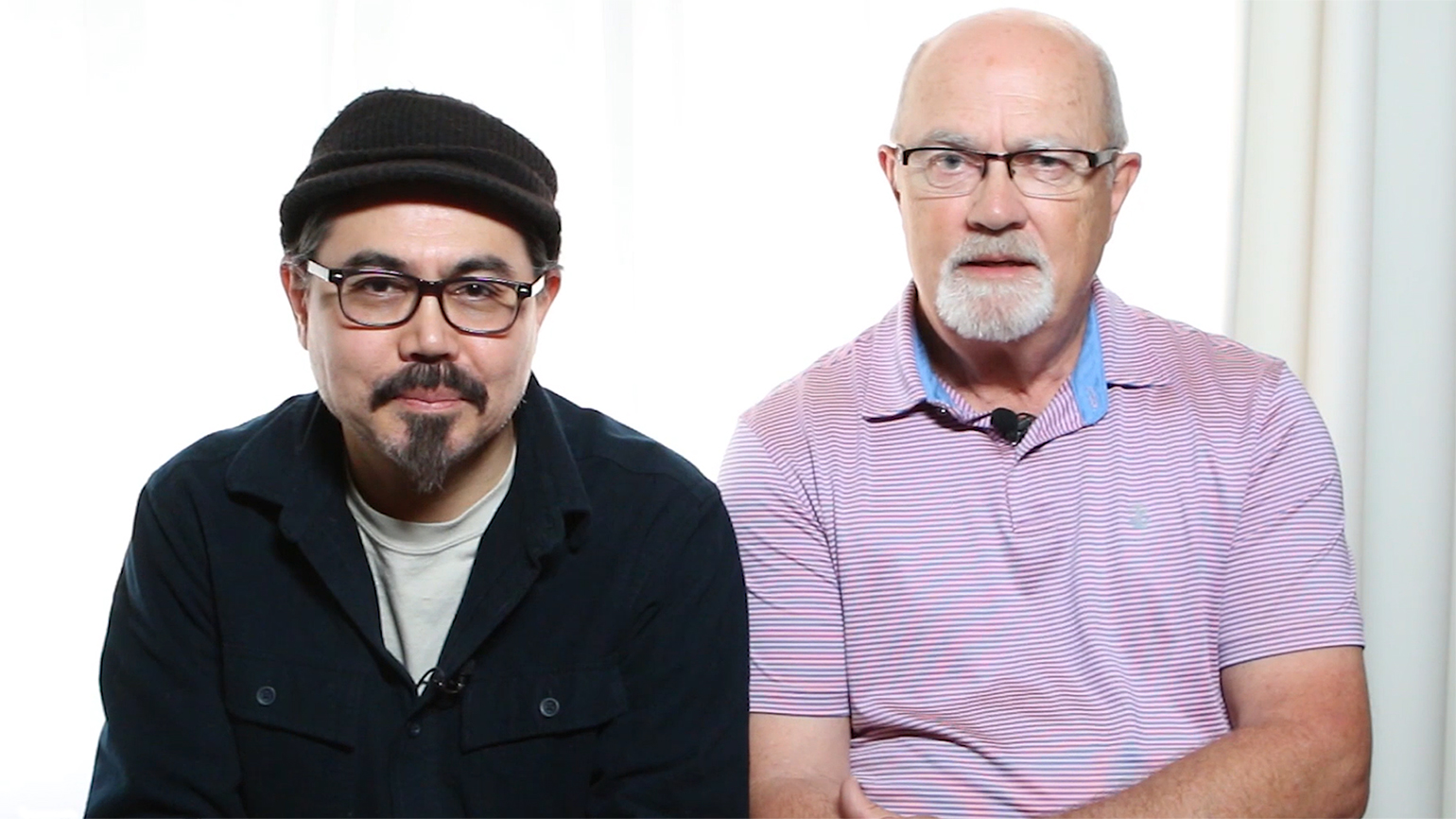
Bob Nore: Hi, Guideposts. I’m Bob Nore, and this is my son, Son Vo. I first met Son Vo at the age of 46, when I found out he was my son. This was through ancestry.com, where his wife got him a DNA kit and my wife got me a DNA kit. We live 3000 miles apart. What are the chances of both of us taking the DNA test and finding out that we have a father-son relationship?

Son Vo: Well, when I got that email I was actually…I thought I was being punked, in a sense. You know, as I absorbed it more, I finally realized, Yeah, OK, this is my father. I guess I should probably reply and reach out, so I did. And then later on, he reached out.

Bob: Well, I was stunned. I thought, I really don’t know if he wants to have a father, or if he even wants to know anything about me. So I thought I would wait until he made the first move, and then I would respond.

Son: I think it was on our first phone call, right? We’d started talking, and then I told him I’m a musician. I think you asked what I played. And then I said, “I play bass.” And then he said, hey, I play bass too. I think that just kind of just opened up the conversation. I believe that’s when you said, right, that “He must be my son.” Or something to that effect. There you have it, you know? It’s confirmed.

Bob: Well, I was convinced from the beginning that Son was my son. The DNA just doesn’t lie. The time that I was in Vietnam was right. So there was no doubt in my mind that he was my son. And I wanted a relationship, if he would have it.

Son: Well, you got it. [laughs]

Bob: Yeah.

Son: To me, it was—I mean, it was intense. You know, it’s my dad. I don’t know what a dad is until that very moment; I never had that really. So it was it was intense. And it was obviously just an introductory phone call, so we were really just kind of getting to know each other. Kind of just feeling ourselves out. And what struck me was we talk alike. Our cadence, our pauses, how we, I don’t know—it was uncanny.

Bob: It really hit me, and I know I broke down and cried for a while.

Son: I had the phone call. It could’ve been like, a week? Two weeks later? I went to a gig on a Sunday, and as I was driving home, it all just hit me. The floodgates opened. And I was just bawling as I’m driving, it’s steaming up my glasses, and I missed my turn. I was, like, “Where am I? I don’t even know where I am. Oh my God, I found my dad.”

We went there—I think it was last year, right? A little over a year ago?

Bob: The year before.

Son: Yeah, we actually did go up there.

Bob: We did walk through the streets of Saigon, just trying to reconnect with the places that I’d been there.

Son: Because that was the first time that I’d been back since I left as a child. So some of the streets, like, it just—you know, it’s those memories. The smells, the visuals. You’re, like, “Oh my God, I do remember; this is how it was.” And it just goes right back to being two or three years old. It was really interesting. And it was cool. It was cool that we did that together. That was really cool.

It’s quite miraculous, and just the confluence of the whole idea of technology and DNA being able to help.

Bob: And I think that time there were not too many people that had taken the DNA test, so it was really strange that they linked us.

Son: Yeah. I mean, to tell you the truth, I had actually lost faith in finding my father. I had the wrong name, because my mom gave me a name that she thought was my father. So I’d been looking under that name. And it just got to that point where I said, “You know what? I don’t think this is going to happen.” And so I just kind of said, “You know what? I’m going to just have to let go.”

It’s interesting that when you lose faith, but if you also let go, all of a sudden the gates open and in comes a miracle.

Bob and Son: [singing] When I want you in my arms,
When I want you and all your charms,
Whenever I want you, all I have to do
Is dream—dream, dream, dream.
When I feel blue…
[fade out]

3 Ways to Be an Authentically Positive Friend

“Being honest may not get you a lot of friends,” John Lennon is quoted as saying, “but it will get you the right ones.” Lennon, whose friendship with fellow Beatle Paul McCartney was legendary but also famously fraught, challenges us with these words. Where is the line, he asks us to consider, between being honest with hard truths friends might not want to hear, and doing your part to cultivate healthy, lasting friendships?

Today, we might look at this as a challenge to strive for “authentic positivity” in our friendships, the opposite of a toxic positivity that would have us encouraging friends in all things, regardless of what we might feel or observe or know about the challenges of life.

1) Ask Questions
A hallmark of authentic positivity is a curious mindset, a mentality where you are less locked into “telling it like it is” and more interested in wondering and exploring the possibilities together with your friend. Positive friends ask each other questions, and listen deeply to the answers. If your friendship has a history of welcome advice-giving, your question could be, “Are you looking for ideas, or do you just want me to listen?”

2) Name Hard Truths
“That’s so disappointing” is sometimes the most positive thing you can say to your friend when they are struggling. Resisting the urge to say, “It’s all going to work out, don’t worry” shows your friend that you see them in their pain, and that you are available to support them in the here and now. That’s not to say you need to dwell in the negative. You can use “yes/and” statements like, “It’s so frustrating that happened at work—AND I know how creative you are, that you’ll find a way to move forward.”

3) Learn to Apologize—and Ask for an Apology
Every friend misses the mark sometimes. Spoiler alert—that includes you, too. Being authentic in a friendship means having the freedom to say to a friend, “I’m sorry I hurt you.” It also means being able to say, “your words/actions hurt me.” Friendships that stand the test of time have room for mistakes, and for repair.

What do your most positive friendships have in common?

3 Ways for Teens to Cultivate True Beauty

True Beauty. What does it mean to you? Is beauty in the eyes of the beholder? Is it only skin deep? Does it matter to you?

As women, young and old, we are bombarded by images around the world to be beautiful. It must be important to us because we spend 426 billion dollars a year on beauty products. That’s a lot of money.

The reality is our society idealizes attractive supermodels, athletes, pop stars and celebrities. Teens often focus on their physical appearance and forget to weigh their inner strengths because of what the media feeds them.

They strive to look like their role models. They don’t realize that most of the images have been altered and many of the celebrities have very good plastic surgeons.

So how do we as parents and grandparents help our teen daughters focus on the inside qualities of a person?

1. If you know your daughter’s passions, there you will find her inner beauty and help her concentrate on what she loves. Is she a musician? Does she love animals? Does she love children? What does she want to do or achieve in life? Take time to find out what she loves and what her life passion is.

2. Be the person who encourages her to pursue this passion even further. This is where her true inner beauty will shine. This is where she will find the truth about beauty the media skews through its manipulation of imagery.

3. True beauty includes not only a healthy lifestyle, eating right and exercising but also sharing our unique qualities, characteristics, gifts and talents with others in the pursuit of making a difference in the world.

I praise you because I am fearfully and wonderfully made;
 your works are wonderful,
 I know that full well. (Psalm 139:14, NIV)

3 Things You Should Know About Military Culture

Today’s guest blogger is Dr. Laurel Shaler.

Years ago, early in my marriage, my Navy husband was stationed on a ship that required he stand watch pretty regularly. One day, I decided to visit him on the ship during his watch duty. After a brief visit, I made my way across the deck to leave. Having watched many sailors stop at the top of the ramp before exiting the ship in order to salute the watch guard, I decided to be silly and salute to my husband as I left. I made two major faux pas: I am not in the military and should not have been saluting; I saluted with my left hand.

You can imagine how appalled my husband was! The military has its own rules and regulations, but more than that, it has its own culture. I went against it all the day of the left-hand salute (as we now call it). Thankfully, I’ve learned a lot more about military culture since then, including:

1. Honor
Those who are serving or who have served in the Armed Forces consider it a privilege. They do not ask for anything in return but do strive to honor one another for the sacrifice. Veterans don’t like being honored on Memorial Day as that day is reserved for those who died while serving our country or as a result of serving our country.

2. Loyalty
Service members and veterans are loyal to one another. They find their military experience to be unifying and identify as brothers and sisters. They strive to help one another out and grieve when one dies even if they have never met him or her.

3. Commitment
While military personnel are committed to one another, it might be said they are most committed to their sense of duty. Their service is a choice, and they are dedicated to the call to protect the United States of America.

While there are many facets to military culture–such as organization and norms–these three non-tangible attributes are ingrained in service members and play a major role in their service and life. Understanding these three can help you better connect with the military personnel in your life. But regardless of how close you are, don’t try a left-handed salute. That will not win you any military friends. Take it from me!

Dr. Laurel Shaler is a certified counselor and licensed social worker. She is the author of Reclaiming Sanity: Hope and Healing for Trauma, Stress, and Overwhelming Life Events.

3 Bible Verses About God’s Presence

I learned an important lesson many years ago when our oldest son, Jeremy, was in elementary school. The school had planned a special program, and since he had to be there early, Jeremy rode with our neighbors and their daughter.

My husband and I arrived a little later and took seats near the middle of the auditorium. Soon the children filed onto the stage. That’s when I noticed our son’s head turning back and forth as if he were at a tennis tournament. I knew he was looking for us.

His face lit up when he finally spotted us, and then he never looked our way again throughout the program. But I realized something: He might not ever say so, but it was important to him that we were there.

I thought of that this morning as I attended my little granddaughter’s end-of-school award ceremony. I’m on a tight deadline to finish a book, I had an article to write, a conference call for which I needed to prepare, and numerous other tasks that all had to be done by the end of the week, so I didn’t really have time to give up half a day.

But I knew it was important to be there.

The same is true in our lives. No matter what we go through—serious illness, financial difficulties, loneliness, a prodigal child or broken dreams—simply knowing that God is there with us can make all the difference. And He promises us in His Word that we can count on that:

1) Isaiah 41:10
“Fear not, for I am with you; be not dismayed, for I am your God; I will strengthen you, I will help you, I will uphold you with my righteous right hand.”

2) Deuteronomy 31:8
“It is the Lord who goes before you. He will be with you; he will not leave you or forsake you. Do not fear or be dismayed.”

3) Joshua 1:9
“Have I not commanded you? Be strong and courageous. Do not be frightened, and do not be dismayed, for the Lord your God is with you wherever you go.”

I’m so grateful for a God who understands how important it is for Him to always be there for us whenever we need or want Him. Aren’t you?