Embrace God's truth with our new book, The Lies that Bind

10 Animal Books that Changed My Life

As a kid, my favorite books were always about animals. Well, not a lot’s changed now that I’m grown.

I still love to read an inspiring tale of a beloved pet or one of God’s amazing wild creatures. As an author of books about the human-animal bond, animals are also my favorite topic to write about!

Today is National Education Association’s “Read Across America,” a day set aside to encourage a love of books and reading. In honor of this day, here are some classic and other much-loved books that celebrate the human-animal bond, and have made a giant impact on my life.

Classics
1)  Charlotte’s Web by E.B. White
I must have read this book a hundred times, and each time it retained the charm and magic that it held upon the first reading. I admire Fern’s maternal nature and loving attempts to protect her animal friends.

2)  All Creatures Great and Small by James Herriot (and the rest of the series)
Beautifully-told tales of an English veterinarian and how he cared, with great love and compassion, for the farm animals and pets of the colorful people of Yorkshire.

3)  Born Free by Joy Adamson
I loved the bond between the author and the lioness Elsa so much, that when asked what I wanted to be when I grew up, I always responded, “Joy Adamson.”

Contemporary Adult
4)  The Art of Racing in the Rain by Garth Stein
Though many sad themes run through the book, the caring and sensitive observations of Enzo the dog steal my heart.

5)  You Had Me at Woof by Julie Klam
Not only does the author share her love of dogs, but she humorously recounts the trials and joys of fostering dogs.

6)  Homer’s Odyssey by Gwen Cooper
This book reveals a deep and honest relationship between a blind cat and his guardian.

7)  Through a Dog’s Eyes by Jennifer Arnold
When I read this book, it definitely enhanced my understanding of what my dogs wants and needs. We can apply this philosophy of understanding and respect to all animals.

Children’s
8)  Curious George by H.A. Rey
What is it about the Man with the Yellow Hat’s relationship with the curious little monkey? He is a guardian and friend who always trusts George to be good and is always there to get him out of trouble. I read these books to my children, and now I’m reading them to my granddaughter.

9)  The Incredible Journey by Sheila Burnford
To think of pets that loved their family so much, they endured a long and perilous journey to return home warms my heart. Based on a true story, too.

10) The Tenth Good Thing about Barney by Judith Viorst
This sweet book about pet loss helped me and my children deal with the loss of our beloved family pet and continues to be one I send to friends when they lose a pet.

There are so many wonderful and worthy books about animals and the humans who love them. What are some of your favorite animal books?

For Aaron Judge, the A.L.’s New Home Run King, Faith and Family Come First

Imagine the mythical lumberjack Paul Bunyan standing before you, but instead of a woodsman’s ax resting on his shoulder, he carries a baseball bat and displays a warm smile. That’ll give you a good picture of New York Yankees rookie sensation Aaron Judge, who, at 6’7” and 280 pounds, is one of the biggest men ever to play professional baseball.

Judge now holds the new American League record for home runs in a single season after slamming his 62nd long ball of the year on October 4, 2022, off Texas Rangers starter Jesus Tinoco. That homer broke Roger Maris’ mark of 61 homers, set in 1961. Maris broke Babe Ruth‘s longstanding record of 60 home runs, set in 1927. And now 61 years later, Judge rules the A.L. homer roost.

After the game, Judge said. “Getting a chance to do this, with the team we’ve got, the guys surrounding me, the constant support from my family whose been with me through this whole thing … it’s been a great honor.”

Judge’s prolific display of power in 2022 was far from an anomaly. He hit more home runs in his first season than any rookie slugger in history and led the New York Yankees into the playoffs, where they fell just one win short of representing the American League in the 2017 World Series. For his heroics, Judge was named the A.L. Rookie of the Year in a unanimous vote by the Baseball Writers of America, the first Yankees player so recognized since Derek Jeter won that award in 1996.

In addition to setting the new American League homer record and his 2017 Rookie of the Year award, Judge has amassed a long list of other accomplishments in his young career. He’s a four-time All-Star and won the 2017 Home Run Derby. He’s also been named a Silver Slugger twice and won the Fielding Bible Award, which rewards solid defensive play, in 2021.

Judge is a superstar in a city that loves its sports heroes but also tempts them with an abundance of the kind of distractions that can derail a promising career. He relies on faith and family to keep his feet firmly on the ground.

Born and raised in Linden, California, Judge was adopted as a newborn. When he was 10 years old, his folks, Patty and Wayne Judge, both teachers, shared with him that they were not his birth parents, something he had already begun to suspect. “I knew I didn’t look like them,” Judge told NorthJersey.com columnist Bob Klapisch. “I finally said, ‘OK, what’s going on?’ and that’s when they told me. I was fine with that, they were the only parents I ever knew. It actually wasn’t a big deal.”

Judge remains very close to his parents and calls them every day. He’s also known for his efforts to commit to memory the names of every reporter he encounters, both at home and during road trips.

Judge also avoids the nightlife that has been the downfall of many a New York athlete, and while he does, like so many athletes today, have a Twitter account, it’s strictly G-rated. The intro blurb reads, “Christian. Faith, Family, then Baseball. If what you did yesterday still seems big today, then you haven’t done anything today!,” and the banner image at the top of the page quotes 2 Corinthians 5:7—”For we walk by faith, not by sight.”

In 2017,  Joe Girardi, then the Yankees manager, discussed what makes the superstar right fielder special. “He’s got a smile all the time,” Girardi said. “He loves to play the game. You always think that he’s going to do the right thing on the field and off the field when you look at him. He’s got a presence about him.”

Faith, family, then baseball. That’s a recipe for success. Record-setting success.

For more inspiring stories, subscribe to Guideposts magazine.

Forgiving Her Father

Strained. That was really the kindest way to describe my relationship with my father. My parents got divorced when I was six. After that, contact with Dad was sporadic. Not because of Mom, who understood that I needed him in my life. It was because of Dad.

He would miss scheduled visitations, go weeks sometimes without returning my calls. Mom tried to make excuses for him, but she couldn’t answer the questions that tore at my heart. Wasn’t I important to my own father? Didn’t he love me?

I saw how my friends were with their dads, and I yearned for that kind of closeness. I wanted a father I could rely on. Someone who wouldn’t forget my birthday or miss my dance recital and then claim he’d lost his ticket.

He did make it to my high school graduation, though. He wore his best summer suit and nice cologne, and it felt so good to have him throw his arm around me. I prayed that that would be a turning point for us. It wasn’t.

If anything, we drifted even further apart. Practically nonexistent would be the most accurate way to describe our relationship for most of the last 15 years. I had stayed close to my grandma, his mom, and I would see him at her house for a few hours each Christmas.

He’d sit on the couch sipping Scotch and we’d carry on an awkward conversation, like a couple of strangers instead of father and daughter. I tried to close my heart and pretend it didn’t matter. I was an adult; I had my own life. But pretending didn’t work. It still hurt.

Then one Christmas Dad made an unexpected—and uncharacteristic—offer. “Keep the books for me at the shopping center one day a week, and I’ll pay your mortgage,” he said, looking not at me but at the ice cubes he was swirling around in his glass. “At least you’ll keep a roof over your head.”

He’d bought a small strip mall in Tulsa, sold his house and taken up residence in one of the vacant storefronts. Money had been tight for me since I started my own business.

I could use the income, but the last thing I wanted was to drive an hour and a half each way from my home to his place and risk being hurt again. Still, what if this was the opening I’d hoped for all these years? I told him I’d do it.

“You can start Monday,” Dad said. “Come real early.” He wanted me there the moment he awakened.

That first Monday I discovered why. It was the only time he was sober. He steadily consumed alcohol and painkillers all morning, and by noon his eyes were glazed over.

How could I not have known?

I drove home that afternoon not sure whether I was more angry at him or at myself. We had never spent much time together, but now everything made sense—the missed visits, the forgotten phone calls. Lord, why are you having me work with Dad? I can’t help him.

But I couldn’t stop thinking about him either. Dad was on my mind when I fell asleep that night and when I got up the next day. Perhaps he couldn’t show me love because of his addiction, but what was my excuse? At least I could let him know I cared about him and was grateful that he’d hired me.

I scrolled through the card-making program I had on my computer. I chose a simple drawing of a star with the message “You’re a star.” I printed out the card, folded it and wrote a few lines thanking him for the opportunity to work with him.

Digging through my desk for an envelope, I came across a box of silver stars—like the ones teachers use. Dad might get a kick out of them, I thought. I shook some inside the envelope and put the card in the mailbox.

He didn’t mention it the following Monday. “Did you get my card?” I finally asked.

“Mmm-hmm,” he muttered, without even glancing my way. His tone sounded disapproving.

He’ll never change. I pushed my hurt down and went back to his files.

Mondays with Dad weren’t ever easy. He was moody and argumentative and sometimes downright irrational. One day as I was leaving, he stopped me at the door.

“I’ve always done right by you, girl,” he said, waving the check for my mortgage. The check I’d earned by keeping his books, I wanted to remind him.

Irritation must have shown on my face because Dad’s neck reddened and his eyes narrowed. “I paid child support and put you through college,” he said. “I even bought you a camera for that photography class you took.”

I should have kept my voice calm, but a lifetime of hurt rose up and boiled over. “That was twenty years ago!” I snapped. “Why are you bringing up the past?”

Dad’s shoulders slumped. “Because it was the best I could do.”

He had always taken great pride in keeping his financial obligations to me. Was it easier for him to give material things than the love I craved? Or maybe giving money was the way he showed love. My heart softened and I stepped toward Dad to hug him. But he turned away.

“See you next Monday,” he said, hoisting his bottle of Scotch. “Come early.”

I drove home enveloped by sadness—not only for myself but also for my dad. Instead of seeing him through the eyes of a wounded child, I had a new, adult perspective.

My 62-year-old father was an alcoholic and an addict, and likely had been most of my life. That colored everything he did and said. Maybe it wasn’t just the best he could do—maybe it was all he could do.

From then on I prayed for Dad every morning. Help him, Lord, I asked. Let him know that I love him. That I forgive him. I tried talking to him about his addiction, but it sent him flying into a rage.

So I kept it simple. Every week I mailed him a lighthearted computer-generated card or a Polaroid of my dog with a silly saying written on it. Sometimes I brought along treats I’d baked for him. I had my grandma’s recipe box and she’d marked his favorites, like black walnut cookies and coconut cake.

Dad never mentioned any of it, but the more I prayed and did loving things for him, the less I felt the hurt of the past.

For more than a year i spent Monday mornings in Tulsa with Dad. Come June I was looking forward to Father’s Day. I sent him a special card and called several times that Sunday to wish him a happy Father’s Day.

I couldn’t get him on his landline or his cell phone. I figured he’d been drinking and couldn’t pick up.

My phone rang that night. Was it Dad returning my call? No, it was the Tulsa fire marshal. He told me the roof of the shopping center had caught fire in the early hours that morning. The fire had spread fast and Dad was dead of smoke inhalation.

Very little was salvageable, the fire marshal said, but someone needed to walk through the site the next day and inventory Dad’s belongings for the insurance company. I was his nearest relative.

Monday afternoon I met the fire marshal outside Dad’s place. The smell was overpowering, charred lumber mixed with bitter tar from the roof. Ashes floated on the breeze. “We need to wait for the insurance adjuster,” the fire marshal said.

“I didn’t get to wish him a happy Father’s Day,” I murmured. It seemed immeasurably sad that just when I thought I’d rediscovered my father, I lost him.

The insurance agent arrived. “I’m sorry for your loss,” he said. He handed me a paper mask. I pulled it over my nose and mouth and followed him into the burned-out building.

Cautiously we made our way through the charred rubble. Dad’s desk had been incinerated. All that was left of the couch was the steel frame and wire coils. The dining table was burned down to its legs. Shards of broken dishes and glass littered the counters.

We got to the back room, Dad’s bedroom. His dresser, the furthest away from where the fire started, stood unmarred. “Check the drawers and I’ll take a peek in the closet,” the insurance adjuster said.

I pulled open the first drawer and found a stack of white undershirts. I gathered up a handful and buried my face in the soft fabric. It didn’t seem possible, but the scent of Dad’s cologne surrounded me.

The bottom drawer stuck. I used both hands and heaved hard. The drawer flew open. A smattering of silver stars spilled out. The ones I’d put in that first card I’d made for him on my computer. The drawer was stuffed with cards and photos.

One by one I lifted them out. Dad had never said a word, but he’d saved every single thing I’d sent him the past year and a half.

I dug deeper in the drawer. There was a bunch of old papers. I couldn’t believe it. Letters I’d written to him from college. He’d saved them. My school pictures too. And Father’s Day cards dating all the way back to when I was six.

I sank to my knees, tears rolling down my cheeks. Tears of gratitude for these past months we’d had together.

I hadn’t been spending Mondays with Dad to get me through a rough patch or to help him or change him. I’d been given this time to change me, to heal my hurt, to forgive the past and open my heart to my father’s love.

I scooped up the silver stars and let them slide through my fingers. I watched them drift through the air and come to rest in my lap.

“Happy Father’s Day, Daddy,” I whispered.

Download your FREE ebook, True Inspirational Stories: 9 Real Life Stories of Hope & Faith

Forgiveness Might Still Be Possible in the Digital Age, But How Do We Forget?

Evidently, Sarah Palin, or at least her minions, have been trying to take down the now-notorious map of 20 congressional districts targeting representatives to challenge in the 2010 elections.

Call them crosshairs, call them surveyors’ marks, but as Josh Bernoff at Adage.com has pointed out, you can’t take something off the Net once it’s been put up there. In fact, you can even draw more attention to it by your efforts (there’s evidently something called the Streisand effect, recalling Barbra Streisand’s lawyer’s efforts to remove pictures of her house on the web).

How do we forgive and forget in this age when nothing can truly be forgotten? It’s all out there floating around in cyberspace.

I’ve typed stuff in a rage to one or two correspondents that I really hope never turns up again. I’d like to think it sinks into oblivion, weighted down by the ages, but it’s just as alive as when I typed it. Not long ago, I really hurt a friend with a hasty message I left on his phone. He called back and left me a message revealing his anger. Luckily, I was able to catch him on the phone and apologize. “Please forgive me,” I said. “Think nothing more of it,” he said. “It never happened.” But what if the whole thing were in an e-mail exchange, waiting to be rediscovered, like a wound begging to be picked? You can push “delete” and then delete it from your deleted mail and you know it’ll still be there.

Forgiveness is a powerful force, essential to our mental health. Laura Hillenbrand’s best-selling book Unbroken: A World War II Story of Survival, Resilience, and Redemption tells about how Louie Zamperini, brutally tortured in a Japanese prison camp, found release when he finally forgave his torturer, who surely doesn’t sound like he deserved it. But then, isn’t that the whole point? To really forgive you’ve got to forgive the unforgivable.

We depend on time to heal all wounds. Forgetting is a helpful partner when you need to forgive. I remember my wife writing an article about adult siblings who had reunited after long periods of separation. “You can write about my dad and my uncle,” I suggested. They had a falling out when I was a kid and didn’t speak for years, but by their 70s they were the closest of brothers. She tentatively approached my dad on the idea. He would do anything to help my wife, but he wasn’t going to help her here. To bring up the feud again was to bring up something too painful. Better to leave things alone. Forgiveness had happened with the aid of forgetting. (Even as I reveal the thinnest outlines of the story I fear I might hurt my uncle or my cousins or any of my loved ones.)

Forgiveness is part of our spiritual well being, but when I’ve talked to people who have forgiven powerful wrongs, they’ve pointed out that it’s not always good to ask for someone’s forgiveness. It can bring up the unforgettable. Better to act in a forgiving way. Forgetting is divine.

My favorite example of divine forgetfulness comes from a surely apocryphal story of a simple Philippine peasant who claimed that he had spoken to Jesus. He was taken to the local bishop, his claims tested, only to insist on the truth of his testimony. “All right,” said the bishop, “next time you talk to Jesus, ask him to tell you what sins I’ve confessed.” The peasant agreed. Soon he returned to the bishop and offered only one answer, “He forgets.”

Now in telling this, I’m sure I’ve gotten some detail wrong or made a mistake in attribution, so please forgive me. I’m afraid that none of what I’ve written here can be forgotten.

Following God’s Directions

Sometimes I think our SUV’s GPS has a mind of its own—and not a very good mind in my opinion. That thing has taken us on some crazy trips! On one occasion, it was for an extra three-hour journey of all the back roads in South Carolina. I suspect we repeated some of them at least two or three times. Maybe four.

In other instances when we’ve been near our home, our GPS has suggested a route that we know isn’t the best way. And once when I was in a big city, the skyscrapers blocked out the signal and this country girl spent some frantic moments making turns and praying that I wouldn’t end up in scary areas.

Hear the Hush of Jesus’ Spirit

Sometimes our GPS doesn’t give us any warning that we have a turn until it’s too late to make it. And on other occasions, it’s quit giving directions just when we were at a critical point for our destination, leaving us floundering about how to get there.

There have been times when I’ve been tempted to throw it out the window. That might be hard to do since it’s built into the console. But it did make me think about something: We never have to worry that God’s Positioning System will give us bad directions.

G – We have to get in His Word.
It’s impossible to know the right directions unless we read or hear them. Everything we need is already there in God’s road map for life—and it all works perfectly as long as we follow His directions.

P – We need to pray and ask God for direction.
The Bible says that if we search for God we’ll find Him. Just as I told my sons exactly what I wanted them to do when they were little boys, God doesn’t hold back on letting us know His desires and plans for us.

Read More: One More Gift from God

S – We need to stay close to Him.
We should listen when He tells us what He wants us to do. When we stay close to God, we can hear His whispers, and we can feel His presence.

And unlike my frustration with the GSP in our vehicle, we’ll never get wrong directions or be frustrated when we follow His directions for us.

I will instruct you and teach you in the way you should go. (Psalm 32:8)

Finding Our Way to Forgiveness

The act of forgiveness is one of the most difficult things life asks of us. Yet it is one of the most necessary—mentally, spiritually, even physically. As the director of the Stanford University Forgiveness Project, I’ve devoted over 15 years to helping people let go of the grievances, grudges and heartache in their lives.

I’ve worked with mothers whose sons were killed in sectarian violence in Northern Ireland, with families of 9/11 victims and with thousands of everyday people who have been let go from jobs, cheated in business, betrayed by their spouses or mistreated by their parents. My research shows that forgiveness is a skill you can develop and practice like any other. And I can say with scientific certainty that learning to forgive makes you healthier, happier and, most important, deepens your relationship with God.

It’s often people who are at their lowest point, who feel disconnected from God and their friends and family, who come to me for help. They know the Bible says they should forgive, but it doesn’t spell out how to do it. Most people, I’ve discovered, don’t really understand what forgiveness even is—and what it isn’t.

Forgiveness changes the present, not the past. Forgiveness is a personal choice. It’s not about changing the person who hurt you. It’s not about condoning their actions or even reconciling with them. It’s a choice you make to heal yourself. Letting go means deciding that you’re not going to allow anger and bitterness to poison your life. It’s about taking control of your thoughts and emotions and not playing the part of the victim in your life story.

Research shows that people’s reactions to the exact same event differ widely depending on their point of view. In one study, participants were given details of a car accident where the driver was grossly negligent. Some were told that they were injured victims. Others were given the part of rescuers and heroes. The “victims” felt angry and helpless. The “heroes” felt their self-confidence soar. By forgiving you’re able to take on a new role. Instead of remaining a victim of someone else’s bad behavior, suddenly you’re someone who persevered, who had courage, who learned from their mistakes.

I know the power of this transformation. I’ve lived it myself. My best friend growing up was a boy named Sam. He was the brother I never had. We were inseparable. Then in college he met a woman who didn’t want him spending time with me. Almost overnight he cut me out of his life. When they got married I didn’t even rate a phone call, much less an invitation.

The pain of his rejection ate at me long after I celebrated my own wedding and went to graduate school to study psychology. I didn’t realize how cynical and distrustful I’d become until one day my wife said, “Fred, I love you, but I don’t like the person you’ve become.”

I was devoting more energy to someone no longer in my life than I was to the people I cared most about. There’s an expression I’ve heard: Holding onto resentment is like drinking poison and expecting the other person to die. That was me. I needed to let go.

I read everything I could about forgiveness, which at the time wasn’t much. The topic took hold of me. I thought long and hard about what Sam had done, why it bothered me. I began to understand how my holding a grudge was really my inability to handle rejection.

Something amazing happened. I got so interested in forgiveness I didn’t have time to fixate on the past. Had I discovered something that could benefit others? I was a scientist. I needed to know for sure.

I designed my first experiment and put an ad in the paper asking for volunteers who were having trouble forgiving. Nearly 200 people applied! I wasn’t the only one looking for answers.

By the end of the experiment I knew I’d found my life’s work. And I was no longer angry at Sam. It was funny, our dispute seemed more like a blessing. I wanted to share what I’d learned.

Put your hurt into words. When someone mistreats you, you have a very real reaction. Your blood pressure shoots up. Your muscles tense. Your body’s ready to do one of two things: fight or flee. It’s an instinctive response.

Fortunately it usually doesn’t take long for the higher brain to realize there’s no grave danger, and life returns to normal. But sometimes you can’t get past it. Your thoughts turn back to what the other person has done, and each time triggers the fight or flight reflex. Your stress level skyrockets.

The first step toward forgiveness is to confront those feelings. Chances are you’re experiencing a variety of emotions: fear, betrayal, confusion, anger, shame. Write them all down. Think about how each one makes you feel. Then tell just a few close and trusted friends.

Doing this fights the tendency to minimize or deny what you’re going through. It’s okay to admit you’re hurting. You can’t address a problem you won’t acknowledge.

Be specific about what happened. Just as important is knowing what caused your hurt and why it matters so much to you. This is different from describing your pain. You’re acknowledging that something specific did happen to you.

Again, write it down and share it with a few trusted friends. It’s not enough to say your ex-husband is a jerk or your sister is annoying. What did they do? Why did it upset you? You’re moving beyond raw emotions to understanding why you feel the way you do. Ask yourself if these feelings are a pattern in your life.

Remember, this isn’t about changing the person who hurt you. It’s about understanding yourself in a deeper, more healing way. The thing that hurt you is in the past. By remaining resentful, you are only re-inflicting that pain on yourself.

Change the channel to positive. Imagine your life is a 500-channel TV lineup. On Channel 51 there are nature shows. Channel 14 features love stories. Channel 28 has inspirational programming.

But of course there are channels that are frightening, that cause worry, that make you angry. Those are what you flip to when you feel betrayed. The problem comes when that’s all you watch for weeks, months or even years. You miss the amazing, life-affirming things happening all around you.

Forgiveness comes through deliberately changing the channel to the positive. Do things that focus your attention away from yourself and your past hurt. Call a friend you haven’t talked to in a while. Get involved at church. Play with your children. Go on a hike and breathe in the beauty around you.

Keep at it day after day, until positivity blots out negativity. Use the beauty of the world to conquer your hurt. Your stress and anger will ease. You will find, as I did, that you have become a forgiving person.

Pray for comfort. For some people just knowing forgiveness is an option can be immediately freeing. But for most of us, forgiving takes time and effort.

One of the best ways to get into a forgiving frame of mind is through prayer. When you feel your anger resurfacing, your body tensing, pray. Take a deep breath, pushing your stomach out then relaxing it as you exhale. Do this with each prayer you say. Prayer is calming. It forces your mind to slow down and redirect your thoughts away from yourself.

Practice, practice, practice. Forgiveness is a life skill you can learn and get better at. Look for small ways every day to forgive—the driver who cuts you off in traffic, the sales clerk who’s rude, the coworker who didn’t give you credit for your idea. Then when something more difficult happens you’ll be far more able to handle it. It doesn’t mean that you won’t feel deep hurt or disappointment. Forgiveness doesn’t make you immune to emotions. But you’ll take it less personally. You won’t lose sight of the wondrous things happening all around you.

It’s good for body and soul. How do I know that this is true? Because I’ve seen the amazing results in study after study. The same process works whether you are a college student bickering with a roommate or a mother grieving the loss of a child.

The women I worked with in Northern Ireland initially rated their pain at 8.5 on a 1 to 10 scale. Their stories were truly heartbreaking. At the end of one week of practicing forgiveness the hurt they felt had fallen to an average a bit over 3.5. Six months later it remained below 4.

Forgiveness is a transformative act, a path to spiritual contentment. Studies from a variety of disciplines demonstrate that spirituality is tied to healthier lives. Why? Because you can’t be consumed by anger and feel a close, personal connection with God. It’s most often when people focus on others, when they’re able to see the wonder in their lives, that they feel God’s infinite love.

When you forgive it releases the stress you’ve built up from focusing inward on your pain. Prolonged stress has a negative effect on your body. In one study I divided participants into two groups and asked them to rate the number of times they felt physical symptoms such as a racing heart, upset stomach and dizziness. The group who completed forgiveness training reported significant decreases in their symptoms initially, and still four months later. The group that didn’t go through training experienced no change.

I’ve seen the power of forgiveness. Thousands of times. Lives unchained from the traumas of the past. Do you need to forgive? Then take the first step into a brighter and blessed future.

Download your FREE ebook, Paths to Happiness: 7 Real Life Stories of Personal Growth, Self-Improvement and Positive Change.

Finding Grace in Winter

It is easy for us in the Northeast to find negatives this time of year. It’s too cold, and so gray. The darkness sets in so early (who’s motivated for adventure after work when the sun sets at 5pm?). The roads get icy. Flights are cancelled due to blizzards.

If I am not careful, I forget to appreciate that the early mornings are lighter; that the warmth of our homes, schools and offices are great comforts; that the sky at sunset this time of year can be spectacular; that being out of doors can be refreshing—invigorating even.

Reminding myself of these more rewarding, positive elements (as my grandfather, Norman Vincent Peale practiced) stops me from looking ahead to that first spring day when my long winter coat is no longer necessary, to the first outdoor soccer practices, to starting a new garden. Anticipation can be a good thing but this kind of looking ahead keeps me from just being in the here and now and finding peace and grace in it.

One of my dearest friends, Sam Lardner, is a singer and songwriter. I am a huge fan of his music, and one of his songs is by far my favorite, “Be.” The song harkens back to a time and place when Sam felt perfectly present in the moment. He was just “being” and appreciating the gratification in that. To me this state feels like grace.

Each time I listen to this song, I practice being more present in my moments, in both attitude and conviction. This time of year forces me to be all the more deliberate in my practicing. I am so glad Sam Lardner’s “Be” is readily accessible to me. Now I’d like to share the song with you so it is within your reach too.

Finding a Way to Observe Lent Without Church

I’m standing in front of my late wife’s closet. Happy Lent. I mean, can you say that?

Let me step back, both from the closet and that sentence. In my last piece for Guideposts.org I conjured up memories of my boyhood Lents, the whiff of candle wax and incense, the saints shrouded in purple, a practice which I never completely understood. So much of Lent was connected to church and my duties as an altar boy, and the obscure, ancient rituals we observed. And some not so ancient ones.

“What have you given up for Lent, Edward?” Father Walling would ask.

“Swearing.”

“You shouldn’t swear anyway. That doesn’t count.”

Traditions of Lent

Even as I was tripping over my cassock, I understood that the 40 days of Lent were the sacrificial prelude to the miracle of Easter and the Risen Redeemer. In fact, in the ancient church Lent was a period of intense purification for those wishing to convert to Christianity and who fasted and purged in preparation for baptism on Easter. Only in later centuries did the tradition arise among the faithful of honoring these catechumens by making small sacrifices themselves, a habit or pleasure you would temporarily relinquish, like milkshakes or going to the movies.

There was also this odd ripple: You were exempt from this self-denial on Sundays. Lawyers must have been involved in this decision because I could never make sense of it.

READ MORE: What Is the Meaning of Lent: Why Do We Observe It?

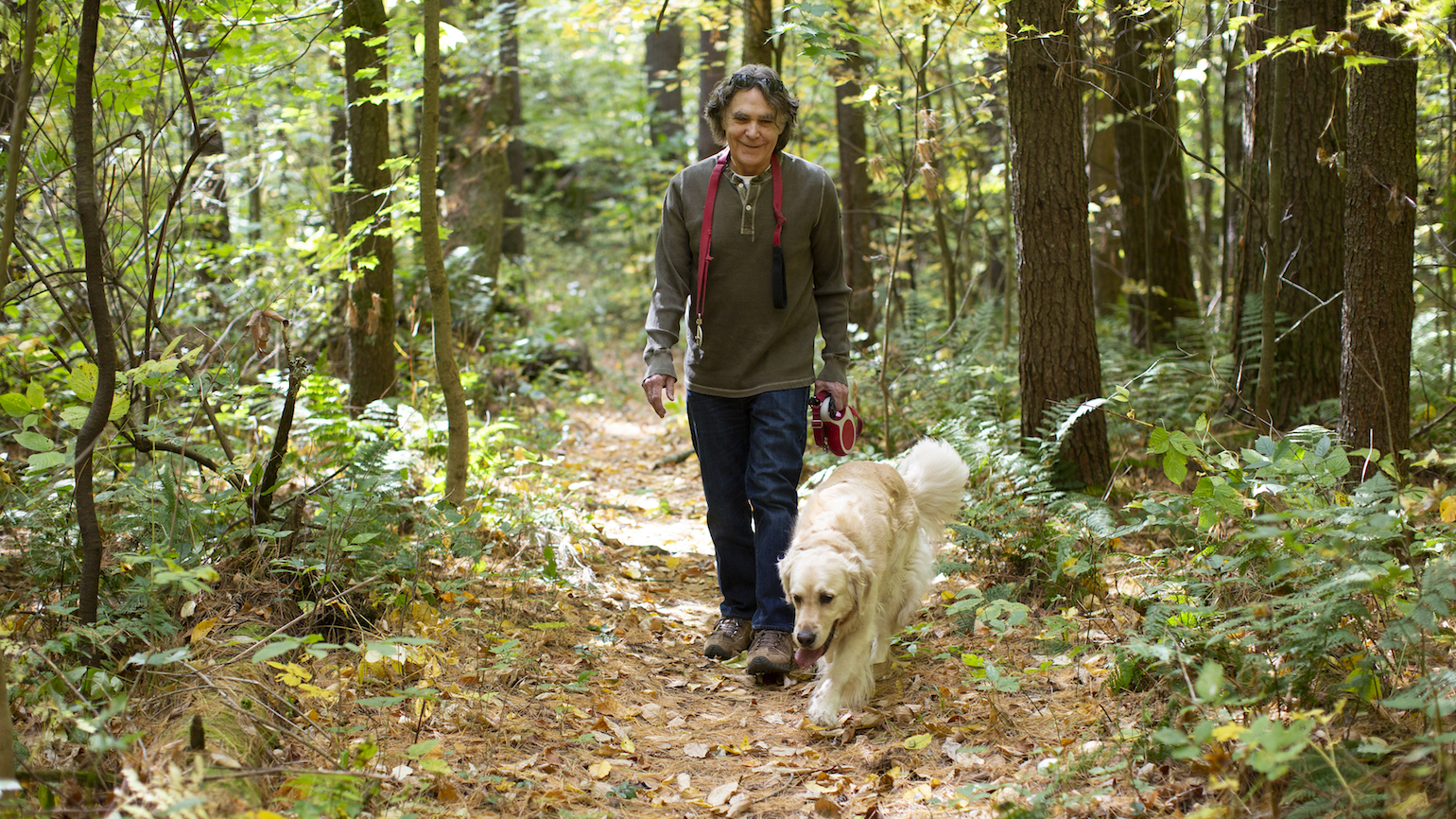
Edward and his dog Gracie walking through the woods to celebrate lent without church

A Fresh Dimension of Lent

By the time I was a teenager I was running out of new things to give up and later, when I found a fresh dimension of spirituality in 12-step groups, where you truly did suffer and struggle to give something up to God, I questioned the whole purpose of these trivial gestures. Did God really care if we didn’t chew gum for Lent? Weren’t some of the things we abandoned for our own good?

And yet I cannot forget how everyone in my family would disclose what they had given up, especially my parents. As I have written, Dad was a sugar junkie and chocoholic who predictably fell off the Lenten wagon. He may have thought of himself as setting a poor Christian example, but those petty fails made him seem more human to me than he would ever know. My mother, as usual, was a different story.

Mom just charged ahead, doing more rather than less—more volunteering, more prayer, more giving. She did more of what helped others and sacrificed her time and energy doing so. Additive in her sacrifice rather than subtractive. She showed that you could do Lent without church—that a meaningful Lenten sacrifice could be more than a church-bound ritual.

The Sacrifice of Giving

I lost my wife, Julee, last June. Since then, I have resisted doing something with her things. She had a serious wardrobe. She used to say, “I don’t have children, I have clothes.” Don’t worry, she said it with a smile. Julee couldn’t have children.

Why couldn’t I distribute these things? I could use the closet space. That’s what Julee would have said. I could still hear the wry note in her voice. No, it wasn’t that. I wasn’t trying to hang on to her. I was past that. It just seemed like such an insurmountable task, and I was Sisyphus. And how would Bloomingdale’s survive without her?

I fingered a delicately embroidered silk scarf in scarlet which held a trace of Joy, her perfume. It was still tucked under the collar of a sleek coat. The world was full of people who needed clothes, especially this time of year. Nice clothes, any kind of clothes. New York City was dealing with an influx of immigrants, most of whom arrived with only the shirts on their backs. There were the homeless and homeless shelters. The working poor. The people Jesus cared for and cared about. Why couldn’t I undertake this task for Lent? I could. It would be my Lent.

And maybe not just this year. This could be a Lenten practice every year. I have plenty of clothes I don’t need. Most of us do. There’s a drop box right at the end of my block and several churches nearby that hold clothing drives. It’s what my mother would do. Lent was about the sacrifice of giving.

Edward Grinnan finds a way to observe Lent without church by honoring his late wife Julee

A Last Act of Love

I won’t try and fool you by saying a lot of this emotional paralysis about clothes and loss and guilt and so many other things is not part of grieving, and I wonder if grief is something we learn to live through or learn to live with. Or if it is just the last act of love.

One year Julee said she was going to give up smoking for Lent.

“But, Jules, you quit smoking years ago,” I scoffed.

“Yes, but it’s a process. I think it counts.”

Yes, it’s a process. Happy Lent.

How would you observe Lent without church?

READ MORE ABOUT LENT:

Feed the Good Wolf

Our Lord Jesus sums up living positively with two rules: “‘You shall love the LORD your God with all your heart, with all your soul, with all your mind, and with all your strength.’ This is the first commandment. And the second, like it, is this: ‘You shall love your neighbor as yourself.’ There is no other commandment greater than these.” (Mark 12:30-31).

Of course, if we love God with everything we have, we won’t disobey him. And if we love our neighbors, we won’t steal from them, lie to them, or do any of the other negative things that can destroy their happiness and peace of mind (and ours!). However, none of us is perfect, and the Scriptures warn God’s people over and over against the ungodly, negative behavior that it’s so easy to fall into.

But how can you and I avoid such behavior and live more positively? One thing’s for sure: we can’t live as we should in our own strength. All of us sin and come short of God’s desire for us (Romans 3:23). “Without faith it is impossible to please Him [God]” (Hebrews 11:6). Today we can live as we should by “looking unto Jesus, the author and finisher of our faith” (Hebrews 12:2).

An old Cherokee Indian tried to help his grandson by telling him about the war between good and evil that affects everyone. He said, “The battle is between two wolves inside us all. One is Evil. It is anger, envy, jealousy, greed, arrogance, self-pity, resentment, inferiority, lies, and false pride. The other wolf is Good. It is joy, peace, love, hope, serenity, humility, kindness, generosity, truth, compassion, and faith.” The boy asked, “Which one wins?” The old Indian answered, “The one you feed.”

What are you doing to feed your positive side, to help good triumph in your own life? The closer you live to God, the more positive, upbeat and truly successful you will be. Read your Bible; pray; attend worship services. Join with the Psalmist in saying, “It is good for me to draw near to God” (73:28).

Download your FREE ebook, Let These Bible Verses Help You: 12 Psalms and Bible Passages to Deepen Your Joy, Happiness, Hope and Faith.

Faith in the Path

Like most kids, I loved getting lost. Not really lost, but lost in a more intentional way. I had one favorite place to do it too: Montrose Park just above Georgetown in Washington, D.C. Montrose featured—and still features—a boxwood maze: a winding labyrinth made up of strategically planted and carefully trimmed shrubs.

Today I don’t find the Montrose maze all that intimidating. But at age four or five, it felt huge. And hugely attractive. Moving deeper and deeper into its twisting green interior, I felt the rest of the world fade away. Something, I knew, was waiting for me at the heart of that maze. And the closer I got to it—my hands now and then brushing against the tiny green leaves of the walls on either side of me for reassurance—the more excited I became.

There was something a little scary about being in that maze. That was part of its allure. Just beyond its walls my mother was waiting, and a single shout would bring her to my rescue. Because of that, I was able to savor the sense of disorientation that entering its borders created. After finding that mysterious center and emerging back into the world, I would always feel just a little larger—a little more grown-up—than I had when I had first entered.

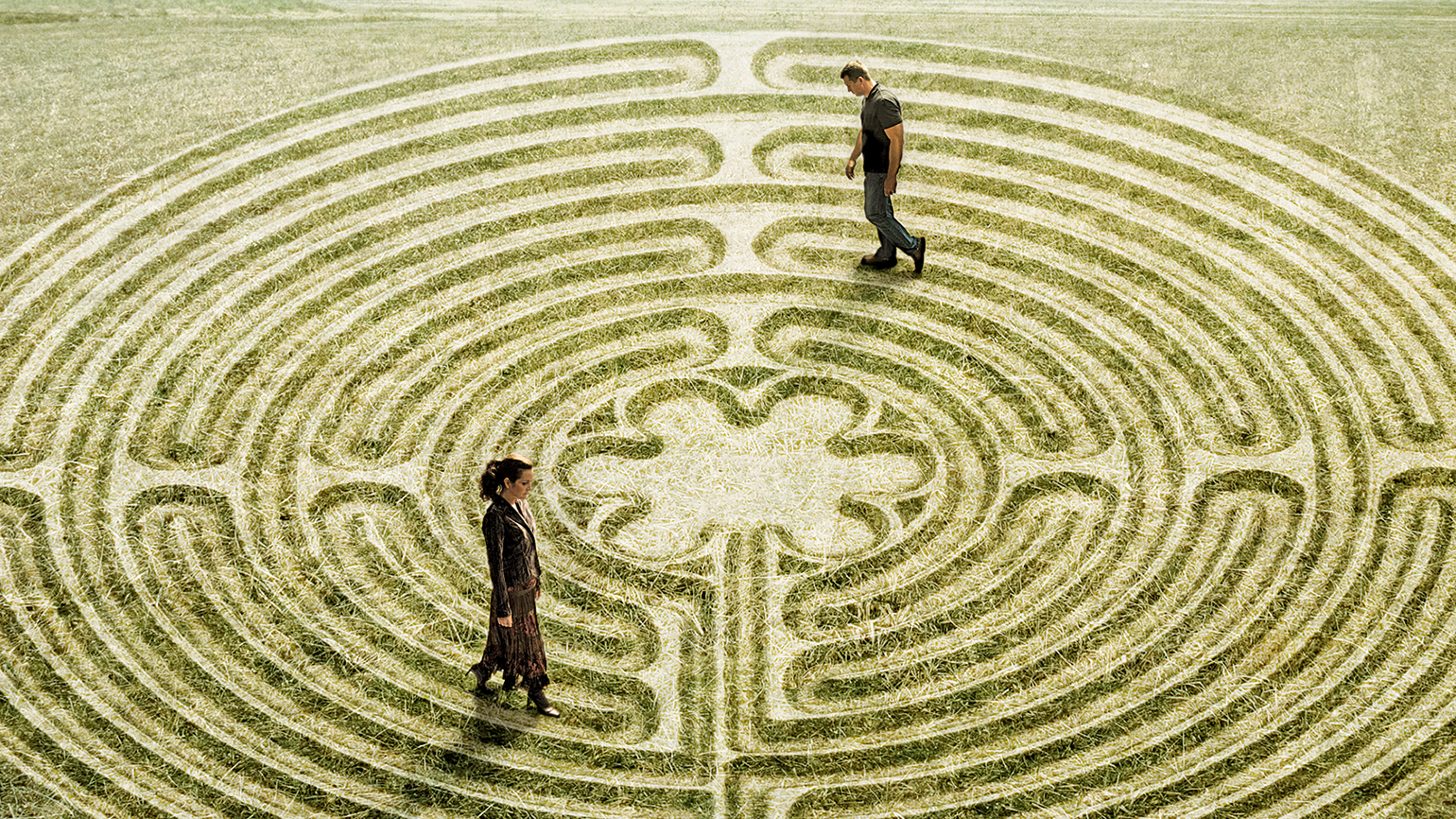
Those childhood visits to the Montrose boxwood maze came back to me recently when I paid a visit to St. Thomas Episcopal Church in Mamaroneck, New York. Several years ago St. Thomas installed a permanent labyrinth on its grounds. Unlike the Montrose hedge maze that drew me into its depths as a kid, the St. Thomas labyrinth is flat. Because there are no walls to block your view, you don’t lose sight of the outside world. You just follow along the path laid out at your feet.

There’s another critical difference: The labyrinth at St. Thomas’s has no wrong turns to it. To use the technical language employed by maze scholars, it is unicursal rather than multicursal. As much as it twists and turns, there is only one path, so you can’t really lose your way even if you wanted to. All that’s necessary to reach the center is faith in the path you’re on, and a little patience.

In spite of those differences, once I entered the labyrinth at St. Thomas, a strangely familiar feeling came over me: the same feeling I’d gotten as a kid. Once again I was moving, turn by turn, toward a mysterious center: a center that I could see as it got closer, then farther away, then closer again as I followed the labyrinth’s curves and reversals. A center that now, just as then, felt like it held some essential and enormous secret. By losing myself in the curves of the St. Thomas maze, I was finding a part of myself as well.

The labyrinth at St. Thomas Church is just one of thousands that have sprung up in recent years, ever since 1991 when Lauren Artress, the canon of Grace Cathedral in San Francisco, laid down a large canvas labyrinth in the nave of the church and began teaching people the art of walking it. This canvas labyrinth became so popular that in 1994 an indoor floor tapestry was laid down in its place, followed by a permanent limestone labyrinth last year. In 1995 a stone version was also opened in the church’s meditation garden. What lies behind the allure of the labyrinth? As Canon Artress puts it, the answer has everything to do with its mysterious center. “The labyrinth,” says Artress, “teaches us that if we keep putting one foot in front of the other, we can quiet the mind and find our center.” The journey may be difficult, even confusing. But “the lesson is to trust the path.”

Both the labyrinths at Grace Cathedral and St. Thomas Church are patterned after the largest church labyrinth in the world: one that, in the early 13th century, was laid down in limestone and marble on the floor of the western nave of Chartres Cathedral in France. Both the Grace Cathedral and St. Thomas Church labyrinths are a little smaller than the one at Chartres and, of course, they’re not as finely wrought. But they also differ in another way. While the center of the labyrinths at Grace Cathedral and St. Thomas’s are empty (to suggest the mystery of the divine presence that walkers will hopefully encounter there) the one at Chartres has an indentation where a large brass medallion used to sit (it was removed during the Napoleonic wars and melted down to make cannons).

Though no paintings or drawings of the Chartres medallion have been found, scholars have good evidence for what was pictured on it: a battle between a hero from Greek mythology named Theseus and a monstrous creature with the body of a man and the head of a bull called a Minotaur. This Minotaur, legend tells us, lived in a labyrinth built by King Minos on the island of Crete. Each year Minos offered sacrificial victims to the Minotaur, until the day when Theseus braved the maze, did battle with the monster and finally slew it.

Wait a minute, you might say. What is a picture of a ferocious battle between two characters from Greek mythology doing at the heart of a medieval Christian cathedral? The answer has something to do with that slight sense of trepidation that I always felt when entering the Montrose maze as a kid. The fact is, mazes are both calming and scary—and no one knew this better than the early Christians. They saw in the story of Theseus’s journey to the heart of the labyrinth and his victorious battle with the Minotaur a parallel with another, more recent story.

In the original Christian view of the labyrinth, its twists and turns are those of earthly life (in some versions, even of hell itself), and at the heart of the labyrinth we encounter not peace and tranquility but a struggle to the death between Christ and Satan. As maze scholar Craig Wright has pointed out, “The myth of the maze expresses the hope of salvation—that eternal life will be won for all by the actions of the one savior.”

It was this reading of the story of the hero Theseus and the Minotaur that the creators of the Chartres labyrinth had in mind when they placed that seemingly incongruous image at the center of their labyrinth. In medieval Christian symbolism, the West is associated with death and the underworld. By placing the labyrinth at the westernmost part of the great cathedral, where everyone entered, the architects of Chartres were suggesting that every Christian must journey in spirit with Christ through the struggles of this earthly life—and even through hell itself—before emerging into the light of heaven (which is symbolized in the cathedral by the rose window stationed high above the famous labyrinth).

The journey into and out of the labyrinth that many contemporary maze walkers take today is, then, quite different from the one that those first creators of church labyrinths imagined. Of these two very different visions for labyrinth walkers, which one is actually correct? They both are.

As I suspected even as a child in Montrose Park, being lost in the twists and turns of life can be an adventure—but it can also be a battle. All of us get lost in life to some degree. But the promise of the labyrinth is that ultimately we do so to our own benefit. By putting our faith in the path, we reemerge from the labyrinth of life as different, larger beings than we were when we first entered it. We will lose ourselves only to find ourselves. Or as the poet T. S. Eliot famously put it:

We shall not cease from exploration
And the end of all our exploring
Will be to arrive where we started
And know the place for the first time.

For more inspiring stories, subscribe to Guideposts magazine.

Faith and Finding the Right Path

Here’s a little story about how God puts us back on the right path. My daughter, Ally, and I were trying to squeeze in a three-mile walk/jog before nightfall, so we picked up the pace. As we hurried down that last hill at Otis Golf Course in Bedford, Indiana, the sun dropped below the horizon, and it grew immediately darker.

Then, out in front of us, something crossed the road. I was just about to ask Ally what it was since she was a bit in front of me, but before I could speak she said, “Look, a kitty! Looks like MarMar.”

Michelle's cat, MarMar AdamsMarnie Moo is our Tuxedo cat who is affectionately known as “MarMar.”

With that, Ally ran after the kitty that was now nestled in some tall grass on the side of the road.

Just as Ally was about to reach down to pet the pretty kitty, we both realized it wasn’t a pretty kitty at all.

It was a skunk!

Ally retreated just in time to avoid the wrath of the scared skunk, and we finished our walk/jog in a full-out sprint.

Though the skunk did resemble MarMar, we discovered an important lesson that night—things are not always as they appear.

So many times in life, I have acted impulsively on what I thought looked good, only to have it turn out just the opposite. I run toward it with great enthusiasm and expectation only to find a perturbed Pepe Le Pew awaiting me.

I bet you have, too.

It’s just how many of us are wired. If you’re like me, you often leap before you look; proceed before you pray; say ‘yes’ before you’re sure. But here’s the good news. God created us, and He knows us better than we know ourselves.

READ MORE: HOW MUCH DO YOU TRUST GOD?

He has made provisions for those of us who chase after kitties that turn out to be skunks, and He watches over us. Every time I’ve leapt before I’ve really looked, He has been there. He always knows where I am, and He always puts me right back on the right path.

I love what Psalm 139 says:

Lord, you have examined me and know all about me. You know when I sit down and when I get up. You know my thoughts before I think them. You know where I go and where I lie down. You know everything I do. (Verses 1-3, NCV)

That’s comforting to me, and it should be reassuring to you, too. It’s another way of saying, “Don’t worry. Even if you step out in the wrong direction, He knows where to find you. And, even if you go one direction and walk through what seemed to be a good door, but it wasn’t a ‘God’ door, He will be there to help you.”

Sure, it’s always best to look before you leap, pray before you proceed, and hear from God before you say “yes,” but if you occasionally (or often) find yourself pursuing Pepe Le Pew, don’t fret. God is a God of grace, and He sees your heart.

He knows that once He gets your enthusiastic self back on the right path, you’ll run your race well and finish strong—hopefully free from skunk spray.

Faith and Blue Ribbons Inspire This County Fair Queen to Keep Cooking

I walked out of my house that Sunday last June carefully carrying my newest culinary creation—blackberry jam cake with caramel icing—to my daughter Cathy’s car for the drive to the Virginia/Kentucky District Fair, where I’ve been entering my food and crafts since the early 1980s.

Cathy had the trunk of her Camry filled to the top with my canned corn, peaches, spaghetti sauce, sauerkraut, jellies and pickles. I put my quilt entry in a hard plastic tote. We found a spot for my three fudges and peach pie. Making sure everything fit securely was like a giant game of Jenga.

“We’re all set, Mama,” Cathy said as she shut the trunk.

“Now drive real slow,” I told her. Those 17 miles to the fairgrounds might be the most challenging part of this whole process. Every time the car hit a bump, I sent up a prayer asking that no Ball jar cracked and no icing got smudged. (Judges take off points for that.)

We pulled into the fairground parking lot and lugged all the boxes across the gravel, past cows and goats and the Ferris wheel, to the exhibit building. Fair staff greeted us at a long table where they logged in my entries. Early the next day, an anonymous panel of judges would get to work to decide the winners. Results would be posted the first day of the fair.

Like always, I ended up calling Cathy that night to go over what I’d made and wonder if I should have changed this or that. Waiting for the results is nerve-racking even for someone like me, who has been doing this for decades.

I have to laugh, though, when I think of how I got here. God sure had his hand in it because back when I was a young newlywed, I had absolutely no interest in cooking. All I could make were sandwiches. My husband, Frank, liked bologna and tomato with mayo so that’s what I made for dinner—every night.

Poor guy. Never complained once. I packed sandwiches in his lunch pail too with a thermos of coffee and a glass bottle of Pepsi to take with him to the coal mines. My father was a miner, and one of my brothers had died in a mining accident, so I always said extra prayers for the Lord to watch over Frank as I kissed him goodbye.

The Thanksgiving our first baby, Frank Jr., was one, I wanted to step it up a notch. I made a big turkey. I had no idea what that little pouch of stuff inside the bird was for so I just left it in. Fortunately, Frank said he’d never tasted better turkey. That boosted my confidence.

I scoured magazines for recipes. Asked everyone at church. I would have asked my mother, who was an excellent cook (her chocolate fudge at Christmas was my favorite), but she’d suffered a stroke that left her bedridden and unable to talk.

My mother-in-law, Celia, lived right next door to us. One day, I saw her making a quilt with little Dutch doll appliqués. “I’d like to make one for Cathy,” I told her. “Can you show me how?” By then, Frank and I had the first of our two daughters. “Come sit next to me, Linda,” she said.

Celia was real patient with me. I was holding the quilting fabric in my lap and actually sewed it to my skirt! We both had a good laugh. Later, after my mom died, my mother-in-law gave me a gentle hug. “I can’t ever take your mom’s place,” she said, “but I’ll always be here to help you.” And she was. I learned from her how to can tomatoes, make sauerkraut and roll the flakiest piecrust. I improved my sewing and learned how to embroider.

In his teens, Frank Jr. liked working on model kits, gluing hundreds of tiny plastic pieces to make cars and such. He was especially proud of a stagecoach and horses he’d made, and he entered it in the fair. “Mama, you should enter those pillowcases you sewed,” he said. “Nah. I would never win,” I said. “Well, you don’t know that,” he said.

So I folded the crisp white pillowcases I had embroidered with little birds and roses and gave them to him to enter. Would you believe they won a blue ribbon! That inspired me. I’ve entered every fair since.

I’ll always be grateful to my son for giving me that little push I needed. Nine years ago, he died in an accident while driving his tractor trailer. He was studying to be a minister. I take comfort knowing he’s with the Lord. Still, it’s bittersweet come fair time knowing he’s not here to cheer me on.

I start planning what I’ll enter in the fair months in advance. Last year, things slowed me down. In October 2021, Cathy lost her husband to Covid. I lost my oldest brother and his wife to it in December. Right after Christmas, I was diagnosed with leukemia.

For the first time in a long time, I didn’t feel like cooking. So Frank took us out for dinner. But the next day, I got back to doing what I love. Cooking and canning got my mind off the diagnosis and the grief. So did reading my Bible and talking to God. I stirred and prayed, asking God to give me strength to get through this battle too.

The Tuesday after Cathy and I dropped off my entries, Frank took me to the fairgrounds to see how I did. Inside the exhibit building, all my entries were displayed on shelves. I couldn’t believe my eyes. I counted 25 blue ribbons! They were on my fudges, yeast rolls, biscuits, kraut, canned peppers, pies, jellies, preserves, brownies, chocolate chip cookies and that blackberry jam cake. My quilt embroidered with a butterfly won. (A far cry from those early days when I sewed the quilt to my skirt.) I even swept some categories!

Frank hugged me. “I always knew who the best cook was.”

I take a chemo pill once a day, and doctors tell me I’m doing great. The Lord has been so good to me. He gave me cooking and crafting to sustain me through life’s heartaches. He saw fit that I get this far. I’m in his hands the rest of the way. And if he gives me more opportunities to win blue ribbons, I’m going for them. I’m already planning what my entries will be for this year’s fair.

Try Linda’s Blue Ribbon Peanut Butter Fudge!

For more inspiring stories, subscribe to Guideposts magazine.