Embrace God's truth with our new book, The Lies that Bind

Will the Real Mary Magdalene Please Stand?

I saw the new film Risen at the Magic Johnson Theater in Harlem on a Sunday afternoon (with an occasional “Alleluia” coming from the audience). It’s pretty good on historical details. For instance, the wounds on Christ’s body are on his wrists at the bottom of his hands where a criminal would be nailed to the cross, not on the palm of the hand which wouldn’t support the body.

But as Bible scholar Ben Witherington notes in his review of the film, one crucial historical and biblical detail the film gets wrong is making Mary Magdalene a repentant prostitute.

In a scene from the movie, actor Joseph Fiennes, playing a Roman tribune, visits what is apparently a house of ill repute and asks if any of men know Mary Magdalene. Almost all the men in the dimly-lit room raise their hands. They knew her–wink, wink, nudge, nudge. Oh, come on.

Why does this myth persist?

Mary Magdalene gained this unfair reputation in an apparent conflation of several New Testament stories about sinning women. For instance, there is the unnamed woman who brings Jesus an alabaster vase of perfumed oil and wipes it on His feet along with her tears.

Jesus’ host, the Pharisee Simon, is appalled and asks Jesus if He has any idea what kind of woman is touching Him. Jesus knows only too well and forgives her sins. “I tell you that her many sins have been forgiven so she has shown great love,” He says. (Luke 7: 47)

Is this Mary Magdalene? Goodness no. It couldn’t be because the real Mary Magdalene shows up a few verses later in Luke, identified as one of the women who had been healed of evil spirits and sicknesses. “Among them were Mary Magdalene (from whom seven demons had been thrown out).” (Luke 8:2)

A lot more could be said about this remarkable follower of Jesus: that she was dubbed “apostle of the apostles” and appears in all four gospels as one of the first witnesses of the Resurrection. The version that moves me the most is in John’s gospel, when Mary doesn’t even recognize Jesus until He says her name, “Mary.” “Rabbouni,” she replies. “Teacher.” (John 20:16)

Now that’s a moment that I wish had been dramatized in the film. That’s a message I hold with me in faith and prayer. Sometimes I miss seeing Jesus in this worrisome world because I have the wrong expectations–I don’t look for new life and hope; I don’t expect the Resurrection. But if I sit and wait and listen, I know He knows my name. Like Mary, I come to recognize Him.

Have you seen Risen? Check out our review here.

Wild Rice Stuffing

Try this alternative recipe and you’ll be pleasantly surprised.

Ingredients

3 cups water

1 tablespoon salt

2 cups mixed wild rice

1 loaf pumpernickel bread, cut into ¼–inch cubes

1 medium carrot, peeled (cut into four pieces)

1 stalk celery (cut into 4 pieces)

1 large onion (cut into 4 pieces)

¼ cup olive oil

3 cups chorizo, large dice

3 cloves garlic, chopped

6 sprigs fresh thyme leaves

2 tablespoons fresh sage leaves, chopped

2 tablespoons black pepper, plus more to taste

4 cups chicken stock

Salt to taste

Cooking oil or nonstick cooking spray

Preparation

1. Preheat oven to 350 degrees.

2. Bring water to boil in a medium saucepan, add salt and rice, stir, and cover. Reduce heat to low and simmer until water is absorbed, about 35 minutes. Rice will still be a bit underdone at this point, but that is okay.

3. Remove rice and place in a large mixing bowl.

4. Place cubed pumpernickel on a large sheet tray and toast in the oven until dry, about 8 minutes, then add to rice.

5. Chop all vegetables in a food processor to a small dice, pulsing to keep everything evenly cut.

6. Heat a large sauté pan on high and add olive oil. Once oil is hot, add chorizo and brown well. Add chopped vegetables, garlic, and herbs, reduce heat to medium, and cook, stirring often, until onions are soft. Add mixture to rice and bread, and combine well.

7. In a small sauce pot, bring chicken stock to a boil. Oil or spray a 13 x 9-inch pan and spread the stuffing evenly in the pan. Pour chicken stock over stuffing and bake until most of the liquid is absorbed, about 40 minutes.

Serves 12

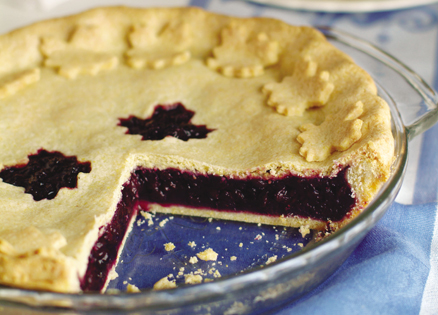
Wild Blueberry–Maple Pie with a Cornmeal Crust

The fun of writing your own pie cookbook is that you don’t have to justify weighting the material toward your personal favorites. So without apology, I present yet another blueberry pie that I simply love.

I think of this as a sort of “Best of New England” blueberry pie: small, sweet-tart wild blueberries sweetened with real maple syrup. The earthy cornmeal crust is a nod to earlier times, when cornmeal was much more commonly used in American kitchens. It’s crunchy yet tender, the perfect crust when you want a rustic pie for your family or a casual gathering. I like to serve it with vanilla ice cream.

Ingredients

1 recipe Cornmeal Pie Pastry, Double Crust (see below), refrigerated

Filling
3 cups wild blueberries, canned (drained), frozen (partially thawed), or fresh (picked over for stems)

¼ cup pure maple syrup, preferably light or medium amber

2 tablespoons sugar

1½ tablespoons cornstarch

1 tablespoon fresh lemon juice

⅛ teaspoon ground cinnamon

Preparation

1. If you haven’t already, prepare the pastry and refrigerate until firm enough to roll, about 1 hour.

2. On a sheet of lightly floured waxed paper, roll the larger portion of the pastry into a 12-inch circle with a floured rolling pin. Please note that this pastry is a little softer than some and the graininess from the cornmeal makes it slightly more fragile, so proceed delicately and with a well-floured pin. Invert the pastry over a 9-inch standard pie pan, center, and peel off the paper. Gently tuck the pastry into the pan, without stretching it, and let the overhang drape over the edge. Place in the refrigerator for 15 minutes.

3. Combine the blueberries and maple syrup in a medium-size bowl. Combine the sugar and cornstarch in a small bowl, then stir the mixture into the blueberries along with the lemon juice and cinnamon.

4. Turn the filling into the chilled pie shell, smoothing the fruit with a spoon. Preheat the oven to 400°F.

5. Roll the other half of the pastry into a 10-inch circle on a sheet of lightly floured waxed paper. Moisten the outer edge of the pie shell with a pastry brush. Invert the top pastry over the filling, center, and peel off the paper. Press the top and bottom pastries together along the dampened edge.

6. Using a knife, trim the pastry flush with the edge of the pan. Pinch and push the pastry slightly down inside the pan so that it sits just below the edge. Doing so will protect the pastry, which has a tendency to overbrown along the edge. Poke several steam vents in the top of the pie with a paring knife, twisting the knife to enlarge the holes slightly. Put a couple of the vents along the edge so you can check the juices there later.

7. Place the pie on the center oven rack and bake for 25 minutes. Reduce the oven temperature to 350°F and rotate the pie 180 degrees, so that the part that faced the back of the oven now faces forward. Just in case, slide a large aluminum foil–lined baking sheet onto the rack below to catch any spills. Continue to bake until the juices bubble thickly along the edge, 25 to 30 minutes. If the top pastry starts to get too brown, cover the pie with loosely tented aluminum foil during the last 10 to 15 minutes.

8. Transfer the pie to a wire rack and let cool for at least 1 hour before serving.

Cornmeal Pie Pastry

I often make this pastry during the holidays. It just seems to fit in with what I think of as early American pies, such as cranberry, pumpkin, and apple. It contains just enough butter to have a great flavor, but what I like best is the little bit of cornmeal crunch. Be aware that a crust made from this pastry may turn a deep golden brown around the edge. Cornmeal will toast up like that, but it’s seldom serious, and the darkening is limited to a very small area. One thing you can do to mitigate the browning somewhat is to use an aluminum foil shield.

Ingredients

For a Single Crust
1 cup plus 2 tablespoons all-purpose flour

¼ cup fine yellow cornmeal

1 tablespoon sugar

½ teaspoon salt

2 tablespoons cold unsalted butter, cut into 1/4-inch pieces

¼ cup cold vegetable shortening, cut into pieces

¼ cup cold buttermilk

Preparation

To Make in a Food Processor

1. Put the flour, cornmeal, sugar, and salt in the food processor. Pulse several times to mix.

2. Scatter the butter over the dry ingredients and pulse 5 or 6 times to cut it in. Fluff the mixture with a fork, lifting it up from the bottom of the bowl.

3. Scatter the shortening over the flour and pulse 5 or 6 times. Fluff the mixture again.

4. Drizzle half of the buttermilk over the flour mixture and pulse 4 or 5 times. Fluff the mixture and sprinkle with the remaining buttermilk. Pulse again, briefly, until the dough forms clumps. It will be damper than some crusts you’ve seen because of the buttermilk.

5. Dump the contents of the processor into a large, shallow bowl.

To Make by Hand

1. Combine the flour, cornmeal, sugar, and salt in a large bowl. Toss well, by hand, to mix. Scatter the butter over the dry ingredients and toss to mix.

2. Using a pastry blender, 2 knives, or your fingertips, cut or rub the butter into the flour until it is broken into pieces the size of split peas.

3. Add the shortening and continue to cut until all the fat is cut into small pieces. Sprinkle half of the buttermilk over the dry mixture. Toss well with a fork to dampen the mixture.

4. Add the remaining buttermilk and continue to toss and mix, pulling the mixture up from the bottom of the bowl on the upstroke and gently pressing down on the downstroke. If it seems necessary, add a bit more buttermilk until the pastry can be packed.

To Make with an Electric Mixer

1. Combine the flour, cornmeal, sugar, and salt in a large bowl. Add the butter, tossing it with the flour. With the mixer on low speed, blend the butter into the flour until you have what looks like coarse, damp meal, with both large and small clumps.

2. Add the shortening and repeat. Turning the mixer on and off, add half of the buttermilk. Mix briefly on low speed.

3. Add the remaining buttermilk, mixing slowly until the dough starts to form large clumps. If you’re using a stand mixer, stop periodically to stir the mixture up from the bottom of the bowl. Do not overmix.

4. Using your hands, pack the pastry into a ball (or 2 if you’re making a double crust) as you would pack a snowball. If you’re making a double crust, make one ball slightly larger than the other; this will be your bottom crust.

5. Knead each ball once or twice, then flatten the balls into ¾-inch-thick disks on a floured work surface. Wrap the disks in plastic and refrigerate for at least an hour or overnight before rolling.

Makes 8 to 10 servings

Why UP TV Makes Family-Friendly Entertainment

UP Entertainment CEO Charley Humbard is creating entertainment the whole family can enjoy.

For decades, Humbard worked in the entertainment industry, serving as a senior executive at Discovery Networks and helping the company usher in seven new cable networks in 140 countries. Then, 9/11 happened.

“It was a time in my life, like many Americans, that I paused and kind of rethought what was important,” Humbard tells Guideposts.org. He decided to leave Discovery to focus his love for TV and entertainment on creating content that would uplift and inspire people and encourage family connections. Humbard had grown up in the church, his dad was famed televangelist Rex Humbard, and gospel music was a passion of his. He spent years building connections, raising funds to do just that through the launch of the Gospel Music Channel (GMC) in 2004. Once the channel made it to air the network quickly expanded as more viewers were looking for faith-based entertainment on TV.

“We were hearing things from viewers like, ‘Hey, why don’t you air this movie?’ things that had faith to them or things that were really good for families,” Humbard explains. “We went out and we bought a Make-a-Wish series that Amy Grant had done. It was a little mini-series, and tried that on the network and got a really good response to it. It really began from that point.”

The network rebranded from GMC to UP TV and started focusing on not only faith-based content, like gospel music, but on movies, series, and original programming that families could enjoy.

“We’ve really put a special focus on families,” Humbard says of the rebranding. “We like to say we get family. If you look at the channel today and the different shows that make us up from Growing Up McGhee to Parenthood to Bringing Up Bates, it’s a great look at all different kinds of families and relationships for our viewers. I like to say we’re probably the most relatable channel on TV.”

Whether it’s reality shows about the hilarious dynamics of families, scripted comedies about single dads, or dramas about people reconnecting with their roots, the channel boasts exclusively wholesome original programming. And if you still love old favorites like 7th Heaven, Gilmore Girls, and Sister, Sister , there’s plenty of opportunity to re-watch those shows as well. Humbard also partnered with Magic Johnson to help launch ASPiRE, a network focused on bringing inspirational, uplifting stories of African American families to TV.

“As people move into widening their relationships, getting married or having a different kind of family, they change the way they think about how they spend their time, what their priorities are, and they change a little bit about their entertainment choices as well, especially if they have kids in the home,” he says of the motivation behind UP TV’s programming choices. “The stories we tell…really appeal to them.”

To help families access the channel on the go, the network recently announced its first direct to consumer app for its subscription service UP Faith & Family. It’s just another way Humbard hopes to better serve viewers.

“It is really a way to super serve the fan base because you’ll find a lot more faithful titles, Christian titles on that platform than you will on the network itself,” Humbard explains.“So it gives people a chance to go deep into some of their favorite movies or favorite series.”

Subscribers gain access to over 1,000 titles from the networks, including favorite shows, more faith-based programming, and multigenerational content that can be enjoyed by the whole family. And Humbard’s proud that, at the price of $5.99 a month, they’ve been able to make the service affordable.

“I think it’s a very unique destination for entertainment programming that promises to always leave you in a better place,” he says of UP TV and its new app. “You’ll laugh a lot. You’ll cry a good cry. And I think in the end, you’ll feel really good about the time you spent with us. And you can’t say that about a lot of brands and markets today, obviously–especially on television.”

For Humbard, who’s amassed over 40 years in the business, being able to combine his passion for entertainment with his faith-driven purpose of inspiring and uplifting others is a dream job, one he hopes to continue doing for years to come.

“I think it’s a dream really to be able to go to work every day and do something that is positive and impacts our world in a good way,” Humbard says. “We’re a purpose-driven business and we were a purpose-driven business long before it was cool to be one, I guess. But it’s all about inspiring hearts to be better. So that’s what we do every day when we come to work and create these different programming and entertainment experiences for viewers.”

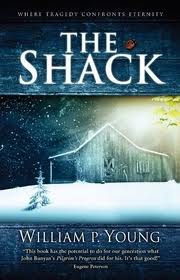
Why Is “The Shack” So Popular?

Why have millions of people read The Shack and continue to read it? Lisa, my wife, is in a book club group formed by members from our church that just started reading it. I still see it on the commuter train I take to work. And The Shack has now been on the New York Times bestseller’s list for 111 weeks. That’s incredible for a book that originally was self-published by author William Paul Young, who thought that he’d only write a nice story for his family.

So I’d like to know, what makes The Shack so special? How did it intrigue so many people? Why has it brought hope and faith to so many readers?

I have my own theory about this, but I’m just one person. I’d like to hear what you think. Would you share a thought or two about why you liked The Shack, or why you think it’s been so popular?

Please leave a comment below, or if it’s easier, you can comment on my new Facebook page. For anyone who responds (with more than 50 words) by Tuesday, August 24, I’ll randomly draw three names to each receive a free copy of the book to keep or pass to a friend, or any one book you see on shopguideposts.com.

What’s more, in an upcoming blog post, I’ll offer a general summary of what I find out. I think it will be revealing.

In the meantime, if you want to see more about The Shack, check out Guidepostsstory on author William Paul Young, or our online videos of the author. You’ll also find an honest and touching podcast interview here at Steve Brown, Etc.

Thanks for taking a minute to offer your opinion, and I look forward to hearing from you.

Why I Love Christmas in New York

Back in Ann Arbor, Michigan, right after I got out of college, I met Cynthia, who would become a lifelong friend, at the newspaper where we both worked.

Cynthia was a real New Yorker, born and raised in Manhattan, and she could hardly believe I’d never been to the city at Christmastime. “It’s the most gorgeous place in the world,” she said. “The windows at Lord & Taylor, the Rockefeller Center Christmas tree. You have to see it.”

I’ve seen more than 35 Christmas seasons in New York by now, and I still get a thrill out of it. Some things have changed. Those famous Lord & Taylor windows? Gone. (But I like the ones at Bloomingdale’s almost as much.) And it’s true that the coronavirus pandemic made Christmas 2020 a little less sparkly. But the holiday spirit remains strong and can be seen and felt in every little pocket of this great metropolis. Here are just a few of the things I love:

  • Those ultimate urban emblems, fire escapes, decorated with twinkly lights.
  • The big red bow on the front of a subway train and the tinsel decorating the ticket booth.
  • The top of the Empire State Building, as glimpsed from my apartment, lit up in green and red (and blue and white on Hanukkah).
  • The Middle Eastern-tinged holiday music played by Coptic Christians who work at the Korean grocery on my corner.
  • The sharp smell of pine as you pass by the sidewalk Christmas tree vendors. (No sniffing, Gracie!)
  • Koreatown in the West 30s, especially the stylized crèche in the window of a storefront church, one floor above a barbecue restaurant and karaoke bar.
  • Dogs of all breeds decked out in their Christmas finery.
  • The origami tree at the Museum of Natural History.
  • Vintage Christmas cards at the Sixth Avenue flea market.
  • The Byzantine hymns flowing from the Eastern Orthodox church around the corner.
  • A couple kissing at the Rockefeller Center ice rink while other skaters swirl around them. Inside, playful holiday murals by whimsical artist/illustrator Lisa Congdon are on display.
  • The laser light show on the celestial ceiling of Grand Central Terminal (especially if you’re eating a bread pudding mini loaf from Bien Cuit, a bakery in the food hall).
  • Hot pretzels (okay, they’re year ’round but I love them at Christmas with spicey mustard).
  • Kwanzaa incense wafting above the street merchants in the East Village.
  • The hot chocolate at Serendipity on the Upper East Side.
  • My Jewish friends, like Cynthia, filling the restaurants in Chinatown on Christmas day.
  • The wreath-wearing lions guarding the entrance of the New York Public Library (I once saw a play where the lions come to life and chase people down Fifth Avenue).
  • Everyone swinging a holiday shopping bag.
  • Cops on horseback on New Year’s Eve.
  • Julee and Gracie peacefully asleep on the couch before the ball drops at Times Square.

My friend Cynthia was right. Christmas here is magical. What are your favorite signs of Christmas in your city?

White Sox’s Buehrle Offers Hope—and Help

Shortly before Christmas, animal control officers in Godfrey, Illinois—a town of about 18,000 just north of St. Louis—found a dog, a female Sheltie mix, wandering the streets. The dog had an arrow sticking from its abdomen. It was clear the dog was in great pain. They took her to Horseshoe Lake Animal Hospital in Collinsville where, in a three-and-a-half-hour operation, her spleen and parts of her intestines, as well as the arrow were removed.

No one knows the circumstances in which the dog—about four years old and 30 pounds, and named Shelby—was injured. Her owners, when contacted, said Shelby had been missing for about six weeks. They then relinquished custody of the dog to Hope Animal Rescues, a nearby animal rescue organization with a no-kill policy.

Shelby needed round-the-clock care. Her expenses grew to nearly $3,000. A couple that regularly volunteers for the rescue organization—Chicago White Sox All-Star pitcher Mark Buehrle and his wife Jamie—offered to foot the bill.

The Buehrles, who own three dogs including one they rescued from a shelter, introduced Sox for Strays, their own pet adoption organization last season. Once a month during the baseball season, they sponsor a pre-game gathering at the Sox’s stadium, U.S. Cellular Field, where they unite shelter animals with fans interested in adoption.

“Mark always says maybe when he retires, we might open a sanctuary or something,” Jamie told the Chicago Tribune.

As for Shelby, she’s healthy and doing fine. Several weeks ago Jeffrey Bray, a St. Louis anesthesiologist, and his wife, Debbie, adopted her. They, too, have a history of rescuing pets from shelters. The first time they and their three children met Shelby, a Hope Animal Rescues executive told the Chicago Sun-Times, “they all got down on the floor with her, loved her and gave her kisses.”

Can’t ask for a better welcome than that.

Photo from chicago.whitesox.mlb.com

Where Christmas Music Lived

I was six when I fell in love with Christmas carols, especially American Christmas songs. That year, the nuns in the Philadelphia orphanage where I lived took me to midnight mass on Christmas Eve. The crowded chapel, the altar crèche, the scent of balsam trees—it was intoxicating!

But something else thrilled me even more: the music—soaring, majestic religious carols filled me with peace, joy and hope. It was a feeling, a deep spiritual warmth, I’d never experienced, living as I did, without a family, without a sense of belonging.

That night, I felt part of something—something much bigger than me. Where did such beautiful music come from? The question stayed with me all my life.

Finally, in my sixties, I needed an answer. I decided to travel 4,000 miles, across seven states in nine days, to find the true stories behind those songs that held such deep meaning for me. I’d collected rare recordings of carols for decades—even compiling them into three richly illustrated book/CD boxed collections.

“I’m going to ask you the biggest favor of my life,” I said to my wife, Renate, one September night after dinner. She knew better than anyone the influence Christmas carols had on me.

“I want to visit the places where American carols originated. I want to get a feeling for what might have inspired their composers.”

I was asking a lot. We both worked—me up at 3:00 A.M. to deliver 230 morning newspapers daily, she as a schoolteacher who often worked till 6:00 P.M. It meant she would have to take over my delivery route, and then head straight to her elementary school. Bless her, she said yes right away.

Unitarian Universalist Church in Savannah, GeorgiaSavannah, Georgia
Jingle Bells

I piled a suitcase, a still camera, a video camera and a tape recorder into my sturdy Volvo and headed from my home in North Cape May, New Jersey, to Savannah, Georgia, 13 hours and 760 miles south. My destination was the Unitarian Universalist Church of Savannah, known to just about every Savannan as the Jingle Bells Church.

It was there in 1857, while serving as the church’s musical director and organist, James Pierpont finally copyrighted One Horse Open Sleigh, the Christmas carol now known as Jingle Bells, which he had composed in Medford, Massachusetts, at least seven years earlier.

What a beautiful church, I thought. The stately stone edifice was recently renovated. I tried to imagine Pierpont sitting at the organ, playing his spritely song to the congregants every Christmas Eve.

The man led a complicated life. He moved to the South and fought for the Confederacy, while his brother, John, served as a Union Army chaplain. He died impoverished though his nephew was the great financial titan, J. Pierpont Morgan, said to have more money than the U.S. Treasury.

I would like to have stayed in Savannah a few days more, but the road beckoned. I phoned Renate at the end of the day. “Honey, I’m in heaven,” I said.

St. Helena Island, South Carolina
Mary Had a Baby

“You’re headed to South Carolina tomorrow, right?” she asked.

“Yes, to St. Helena Island,” I said, “just fifty miles north.”

St. Helena Island, one of South Carolina’s sea islands, is home to one of Christmas’s most precious treasures, the carol Mary Had a Baby. Composed there somewhere in the early 19th century, it’s one of the few surviving slave-written carols.

The line that never fails to move me is its last one—“People keep a-comin’ an’ the train done gone.”

There’s no agreement on its meaning, but the interpretation I like best is this one: Trains represented an escape to freedom. And though this particular train had gone, with faith surely they’d find another opportunity.

No one knows for sure the plantation where it was written, and today the Coffin Point Plantation is the only one on the island that remains. At one time it occupied 1,120 acres and housed 63 slaves. I found the three-story manor house, white with red-roof shingles, down a quiet back road, near the sea.

Built in 1801, it’s a private home now. No one was there. I backed off the veranda and stood on the ample lawn. I sang the song softly to myself and thought of what the peace of Christmas must have meant to a slave.

Murphy, North Carolina
I Wonder as I Wander

The next morning I drove six and a half hours, from St. Helena Island, to Murphy, North Carolina, in the Great Smoky Mountains.

John Jacob NilesConcord, Massachusetts
The Little Drummer Boy

After a full day of travel to All Saints Episcopal Church in Pontiac, Michigan, the source of inspiration for the Alfred Burt family carols, I headed east to Concord, Massachusetts, to visit Sleepy Hollow Cemetery, where composer Katherine K. Davis is buried.

In 1941, Ms. Davis wrote The Carol of the Drum, known today as The Little Drummer Boy. Davis taught music at Wellesley College. She penned more than 600 songs. It is said she based her famous hymn on an old Czech carol. In a long-ago interview, she said the song “practically wrote itself.”

But it wasn’t an instant hit. In fact, 17 years passed before she got a phone call one day from a friend. “Kay, your carol is on the air, all the time, everywhere on the radio!” she said.

“What carol?” she asked, surprised.

Harry Simeone and Henry Onorati had turned it into a top hit, with a new title and some minor changes. Simeone even had claimed authorship. Davis eventually proved she was, in fact, the songwriter.

The First Parish in Wayland, MassachusettsWayland, Massachusetts
It Came Upon a Midnight Clear

The First Parish in Wayland, a Unitarian Universalist church in Wayland, Massachusetts, a scenic town outside of Boston, was my next stop. It was there Edmund Hamilton Sears, author of It Came Upon a Midnight Clear, served as minister.

What I love so much about the carol is that Sears wrote it as a prayer for peace more than as a carol. The Mexican War had just ended and the Civil War was on the horizon when he penned it Christmas Eve 1849.

A year later, his friend, the soon-to-be New-York Tribune music critic Richard Storrs Willis, set Sears’s poem to music.

Longfellow HouseCambridge, Massachusetts
I Heard the Bells on Christmas Day

After a visit to the nearby Edmund Hamilton Sears Chapel, I set out for Cambridge. I had an appointment to see Dr. Jameson Marvin, director of choral activities at Harvard.

“Did you know,” I asked, “that a number of Harvard professors wrote carols? Henry Wadsworth Longfellow wrote Christmas Bells, the basis for I Heard the Bells on Christmas Day.

Christmas Eve, 1863, he was grieving over the death of his wife in a home fire, and of his son, who had been wounded in battle. The professor was awake late, in a desperate mood, when he heard the peal of church bells. Christmas had come.

“He sat down and penned his now-famous poem. Its last lines, famously, were, ‘With peace on earth, goodwill to men.’ Longfellow’s mood had changed.”

The Church of the Holy TrinityPhiladelphia, Pennsylvania
O Little Town of Bethlehem

From Cambridge I drove to Philadelphia, to The Church of the Holy Trinity on Rittenhouse Square. I wanted to pay homage to Rev. Phillips Brooks, the rector who wrote the poem O Little Town of Bethlehem, after returning from the Holy Land in 1866.

Brooks had traveled there following President Lincoln’s assassination, and the deaths of so many of his parishioners in the Civil War. He was struck by how peaceful it was in Bethlehem.

“The hopes and fears of all the years are met in thee tonight,” went his lyric—a message that he yearned for a similar peace in his homeland.

A plaque marking Irving Berlin's longtime residenceNew York, New York
Do You Hear What I Hear? and White Christmas

I saved New York City for last. First I hoofed it to the corner of Lexington Avenue and East 50th Street, and inside what was then the Beverly and is now the Benjamin Hotel. P

ianist Gloria Shayne was playing in the hotel’s dining room. Composer Noel Regney was instantly smitten. The two married and in 1962 together wrote Do You Hear What I Hear? as a hymn to peace in the wake of the Cuban Missile Crisis, and not originally a Christmas song.

My final stop was 17 Beekman Place, in Midtown East, for decades Irving Berlin’s home. The composer of the classics God Bless America, Easter Parade and Puttin’ on the Ritz believed his best song was White Christmas.

Christmas had always been a sad day for Berlin. He lost a son Christmas Day 1928, and over time grew increasingly reclusive. In 1983, when he was 95, carolers gathered outside his home and serenaded him with his wonderful song.

His maid invited them all inside. Berlin greeted them and told them how touched he was by their gesture. Carolers continued to serenade him through 1988, the last Christmas of his life, and still gather to sing outside his home—now the Luxembourg House, the country’s United Nations consulate.

I was back in Cape May the next day sweeping Renate into my arms.

“Thank you,” I said. “This was the Christmas present of a lifetime.”

Download your FREE ebook, True Inspirational Stories: 9 Real Life Stories of Hope & Faith

When in Rome

I was thinking of Paul at the Roman Forum. I’d just been reading his letters to the Romans, one of the richest, thrilling, affirming and demanding–I’ll admit–books in the Bible, and as always, I felt close to Paul.

You don’t have to go to Rome or Ephesus or Corinth to get close to Paul. He’s right there in Scripture, urging us on, as he did the Romans (and Ephesians and Corinthians, et al), but when Carol and I were in Rome last week, I asked myself, “Did Paul see any of this?”

Wisteria blooming among the ruins of Rome.It was that one week in April when the wisteria blooms and though the ancient sites were crawling with photo-snapping tourists, you felt like each golden mustard flower and ruby-red poppy bending in the breeze was blooming just for you.
“All things are from him and through him and for him,” was what Paul wrote to the Romans of God’s abiding love (11:36), and it was impossible not to think that this scene was imbued with Paul’s spirit.

Our guide at the Forum was an archeologist, full of interesting facts. Did you know, for instance, that at the Coliseum they had a huge canvas cover that they used in the summer to protect the sports fanatics from the sun? Made me think of some modern American sports arena.

Or have you seen the image of the menorah on the Emperor Trajan’s arch, a memorial to the violent destruction of the Temple and the sacking of Jerusalem that occurred under Trajan’s leadership? Just as Jesus predicted, the temple was destroyed in 70 A.D.

I had to consider how our Christian faith was birthed in a violent time. The Coliseum has long been revered as the place where some of the earliest Christian martyrs were killed, and our guide told us how some of them were burned alive on crosses at the Circus Maximus not far away.

Rome, after all, is where Paul is often thought to have found his violent end. But all that was hard to contemplate with the wisteria blooming.

READ MORE: A ROMAN HOLIDAY

Then our guide gestured to a distant ruin, still standing after 2,000 years. “That was where Paul was imprisoned for a time,” he said. “He probably wrote some of his letters from there.”

A dark prison, a place where he wrote positive, light-suffused, love-filled words. Death and new life, wisteria vines hanging down from ruined temples, poppies pushing up between felled stones.

“I’m convinced that nothing can separate us from God’s love in Christ Jesus our Lord,” Paul wrote. “Not death or life, not angels or rulers, not present things or future things, not powers or height or depth, or any other thing that is created.” (Romans 8:38-39)

Like I say, you don’t have to travel to Rome for that, whether you take a jet like I did or get shipwrecked on the way like Paul did. The promise of faith and the promise of spring are hard by–in a letter written almost 2,000 years ago and in a wisteria-scented breeze.

What Would You Do For Fame?

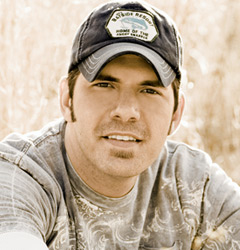
If you’re a big country-music fan, then my name probably sounds a little familiar to you. And not just because I’ve had a couple of hit singles. My last name has an illustrious history in the business. So much so that I darn near had to change it. But once I tell you a little bit about myself, I think you’ll see why that was never really an option.

Back in 1994 I was making my first forays into Nashville from east Tennessee, where I grew up. My new record label told me they had something they needed to discuss with me before we even got started. “Rodney, we’re going to have to do something about that name of yours. It’s just too close to some folks out there who everyone already knows—Chet Atkins, Trace Adkins…. You’re not related, are you?”

I shook my head.

“Well, we need something that’ll really make you stand out.”

Now don’t get me wrong. I sympathized with them. Trying to get a new country act to stand out in Nashville is like trying to get a flea to stand out on a dog. But change my name? Not even if it meant taking my guitar back to the sticks and giving up for good on my dream of hearing my voice on the radio.

It all goes back to an adoption facility called Holston Home, in Greeneville, Tennessee. One day in the spring of 1969, Charles Hutchins, the head of that facility, found himself with a male infant in need of a home after the birth mother decided she wasn’t able to care for it.

Soon after Charles and a social worker named Linda Weems found themselves looking after this infant, they discovered he had a bad respiratory infection. Bad enough, the doctors at the hospital figured, that it might just be fatal.

“He’ll either make it or he won’t,” one of the doctors told Charles. “There’s not much we can do about his condition except wait, and pray.”

That’s just what Charles and Linda did. They also got the word out that they were looking for a set of loving parents. Special parents.

Charles had some good leads. A couple named Allan and Margaret Atkins had called recently about adopting. The Atkinses had lost a newborn of their own about one year before. Mrs. Atkins’s health had been compromised by the birth, and she required surgery. Her doctors had told her that if she wanted another child, she should think about adopting.

Linda gave the couple a call. “Mrs. Atkins,” she said, “I believe I have a baby for you. He’s dearly in need of some loving parents. Would you like to come in and see him?”

Mrs. Atkins told Linda there was nothing she’d like more. “But it’s taking me longer to recover than I thought it would. And my doctor says I just can’t take on an infant right now.”

“I understand,” said Linda. She and Charles struggled along until a new couple came forward.

The story might have ended there. Except the infant developed a bad case of colic. Colicky babies cry enough as it is. Throw that on top of a nasty infection and you have enough yowling to last you till doomsday.

And way more than the couple had bargained for. After a mess of sleepless nights, they called it quits. They returned the child to the facility.

End of story? Not quite. Another couple showed up looking for a baby.

Same thing happened. They took the child home, struggled with the endless crying…and brought him back. For Charles, that baby was turning out to be one problem piece of merchandise! He didn’t dare call on the Atkinses again so soon. Surely Mrs. Atkins was still in no shape to mother such a demanding baby.

Then Charles and Linda got another call. A call they would never forget. With the Lord’s help, Mrs. Atkins was finally fully recovered. “We just wanted to try one last time,” she told Linda and Charles, “to see if you have a baby for us.”

Linda must have suppressed a whoop and a holler. “As a matter of fact, Mrs. Atkins, we do,” she said. “That same little boy who was here last time you called.”

Margaret and Allan Atkins came down to the facility as soon as they could. “He sure has some lungs on him,” Mr. Atkins said, looking down at the bundle in his wife’s arms. Linda was honest with the Atkinses about the baby’s health, and how desperate they were for a family that was truly up to the challenge.

“We understand that he’s frail,” said Mr. Atkins. “But we’re not afraid to take him home with us.”

That’s just what they did—and they didn’t bring him back. After awhile Charles called Allan and Margaret to check on how things were going for them.

“We’re all getting along just fine,” Mr. Atkins assured him.

Which gets me back to that new record label of mine and what I had to say to those folks when they brought up the matter of changing my name. It wasn’t even an option. Because that troublesome baby was me, which I’m sure y’all have guessed by now. And that family name—Atkins—is what saved me from who-knows-what and gave me the richly blessed life I have today.

A family has a way of healing you. In fact, the love of your family may be one of the most healing powers in the universe, just as powerful sometimes as the most advanced medical drugs. I turned into just about the healthiest, happiest kid you could find in east Tennessee. I outgrew the colic, of course, but I will never outgrow my family. Because family, well, that’s just about the most important thing in life. Just ask a couple by the name of Allan and Margaret Atkins.

What We Really Publish

I had the great privilege of attending the American Christian Fiction Writer’s Conference in Denver last week, and had the same thought I have every time I attend a conference: I can’t believe they pay me to do this.

I get to read for a living. I mostly work on fiction, and at this conference, I got to spend three days living, breathing, and talking fiction with some of the brightest and best up-and-coming writers out there. It’s always fun to hear what people are working on and hear about trends in the industry, but I go there to find writers and acquire books. The most frequent question I get, from both authors and agents is, “What are you looking for?”

“Good books that sell” doesn’t seem to be what people want to hear, so I thought I’d use this space to be a little more clear on what kinds of fiction GUIDEPOSTS publishes. It breaks down into two categories:

1. Direct mail.
These are the books we sell through the mail to GUIDEPOSTS customers. They’re specifically written for the GUIDEPOSTS reader, and you can’t get them anywhere else.

Some of our favorite direct mail books are the Tales from Grace Chapel Inn series, the Mystery and the Minister’s Wife series, and the Home to Heather Creek series. We’re always looking for reliable, published, agented authors to help us create these beloved books.

2. Trade.
These are our “bookstore” books. These books are all grounded in faith, but they can have a much broader appeal. For these books, we want well-written stories with a strong hook that makes them unique. Some great examples of fiction we love are Beth Pattillo’s Jane Austen Ruined My Life and The Galilean Secret, which will release in the spring.

I’ll have more specifics in upcoming blogs, but that’s an introduction to the fun world of GUIDEPOSTS fiction!

Beth Adams
Editor

—–
Check out the latest titles from GuidepostsBooks in our shop!

What I Did on My Summer Vacation

My favorite time of the year is summer. I love picnics, berries of all kinds and their requisite desserts, swimming, sunbathing, fresh corn on the cob, sundresses, ice cream outings, flip flops, homegrown tomatoes and green beans from the garden…the list goes on and on.

But another thing I love about summer is reading—which is a funny thing to say, since I read all year-round. But I love reading in summertime: on the beach, or on the grass in Prospect Park (the beautiful park near my home in Brooklyn). For whatever reason, I find I am still tied to the “school year” calendar even though I haven’t been in school in ages, and because of that, the reading I do in summer seems somehow more pleasurable—more fiction, less nonfiction; more things I want to read, not just things that have been on my shelf for six months.

Community Newsletter

Get More Inspiration Delivered to Your Inbox


I read some great books this summer—a series of mystery novels that were pure fun, a literary novel recommended by a friend, a young adult novel that I’m technically too old for but nevertheless enjoyed. And what’s so marvelous about all of this reading is how it connects me to my past—to the girl who used to laze away summer days, reading a good book on the grass.

That’s what I did on my summer vacation. I hope yours was just as lovely!