Embrace God's truth with our new book, The Lies that Bind

What Does God Look Like?

I came across an article the other day about a new book, OMG! How Children See God by Monica Parker.

In the book, Monica queried hundreds of kids, ages 4 to 12, about the Big Man Upstairs. Questions on everything from God’s special abilities to his appearance. The responses are funny, of course, but also illuminating. See a sample of the drawings in the slideshow below.

“God is like a Transformer,” says 7-year-old Shane. “He can turn himself into anything he wants.”

“God doesn’t sleep because he watches over us all the time,” says 9-year-old Kelly.

And, one of my personal favorites, from 9-year-old Gabby: “God has giant ears so he can hear everything we are saying.”

The article got me wondering about my own view of God. As a kid, I probably pictured Him with a long white beard made of fluffy white clouds! Now that I’m older, He’s lost the cloud beard. And when I talk to Him, I imagine His presence, not so much an actual person.

What about you? How has your view of God changed from when you were a kid?

Warmhearted White Bean Chili

When a mall food court came up with a creative way to help feed a food bank, many families contributed their favorite recipes to the cause.

Brad Schlossman, CEO of the West Acres Shopping Center in Fargo, North Dakota, shares the recipe his wife added to the project.

Ingredients

6 c. chicken broth 2 15-oz. cans white beans
1 c. oats 4 cups chicken breast, cooked and chopped
½ c. onion, finely chopped 2 cloves garlic, minced
2 4-oz. cans green chiles 1 Tbsp. dried oregano
1 Tbsp. ground cumin ½ tsp. ground red pepper
½ tsp. salt ½ tsp. pepper
1 c. shredded cheese for garnish

Preparation

1. Combine all ingredients in stockpot except cheese. Bring to a boil, reduce heat and simmer for ½ to 1 hour, or longer.

2. Garnish with cheese and serve.

Serves 6

Read about how this recipe helped raise money for a food bank in Recipe for Sharing.

Warm Flaxseed Porridge

Begin your day with flaxseeds, a superfood that could help improve your digestion, give you clearer skin, lower your cholesterol and maybe even help you lose some weight.

Ingredients

1 ⅓ c. flaxseeds 1 vanilla pod, split and seeds scraped
2 ½ c. coconut or almond milk, plus extra to serve ¼ tsp. ground cinnamon
1 Tbsp. honey (optional) blueberries and blackberries, to serve

Preparation

1. In a saucepan, combine flaxseeds with milk, honey (if desired) and vanilla seeds. Mix well, and simmer over medium heat.

2. Reduce heat to low, cover and simmer, stirring occasionally to prevent porridge from sticking to pan bottom, until porridge is light and fluffy, about three minutes.

3. Let cool a little before stirring in cinnamon.

4. Spoon the porridge into two bowls, and scatter the berries. Serve with extra milk on the side.

Serves 2.

Nutritional Information: Calories: 600; Fat: 39g; Cholesterol: 0mg; Sodium: 270mg; Total Carbohydrates: 51g; Dietary Fiber: 30g; Sugars: 11g; Protein: 20g.

Excerpted from The Complete Gut Health Cookbook: Everything You Need to Know About the Gut and How to Improve Yours, by Pete Evans and Helen Padarin. Reprinted with permission by Weldon Owen. All Rights Reserved. Photograph by Mark Roper.

Visit Sacred Sites in Mystical France

Excerpted with permission from Mystical France: Secrets, Mysteries and Sacred Sites by Nick Inman (Findhorn Press)

France is one of the best-known countries in the world–and yet full of secrets that most visitors don’t know about. Here is a guide to its invisible dimensions that are impregnated with mystery and history. On a trip through mystical France, you will visit legendary and sacred sites including the Notre-Dame de Paris, the ruins of the Knights Templar, Lourdes and more. –Nick Inman

TRAVEL TO SOUTHERN ITALY & THE AMALFI COAST WITH GUIDEPOSTS! DON’T MISS THIS AMAZING 12-DAY TOUR.

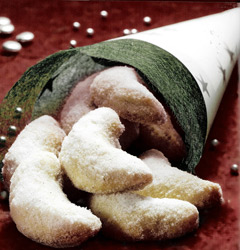
Viennese Crescents

Buttery almond cookies in the shape of crescents are traditional Christmastime treats in Austria. They’re known as Vanillekipferl for the vanilla sugar that is used in the dough and as a delectable coating.

Ingredients

Cookies:

1¼ cups (about 6 1/2 ounces) whole blanched almonds

½ cup Vanilla Sugar (see recipe below), plus another ½ cup for coating the cookies

16 tablespoons (2 sticks) unsalted butter, softened

2¼ cups all-purpose flour

¼ teaspoon salt

Vanilla Sugar:

2 cups granulated sugar

1 vanilla bean

Preparation

Cookies:

1. Combine the almonds and ½ cup of vanilla sugar in a food processor. Process until the nuts are finely ground.

2.Using an electric mixer, beat the butter in a large bowl until creamy. Add the ground almond-sugar mixture and beat until well blended. With the beaters on low speed, mix in the flour and salt just until thoroughly combined.

3. Using your hands, work the dough into a ball. Wrap the dough in plastic wrap and refrigerate for 1 hour or until firm. (If refrigerated for a longer time, the dough will become very hard, so just let it sit at room temperature for about one hour to soften before shaping.)

4.Preheat the oven to 350°F. Line 1 or 2 cookie sheets with parchment paper.

5. Break off clumps of dough a little larger than 1 inch in diameter and squeeze or roll them into little logs about 2½ inches long. Place them on the prepared sheet(s) and, with your fingers, shape the dough into crescents with tapered ends. Arrange them about 2 inches apart on the prepared sheet(s).

6. Bake the cookies for about 15 minutes or until light golden. (If using 2 cookie sheets, rotate them from top to bottom and front to back halfway through baking.) Let the cookies sit on the sheets for about 2 minutes, then carefully transfer them to a rack.

7. Place the remaining ½ cup vanilla sugar in a shallow bowl. While the crescents are still warm, gently roll them in the sugar to coat. (Handle the cookies carefully because they’re fragile.) Set them on a wire rack to cool completely.

8. Store layered between sheets of wax paper, in an airtight container for up to 10 days; or freeze for up to 2 months.

Makes about 45 Cookies

Vanilla Sugar:

1. Combine 2 cups of granulated sugar and ½ to 1 vanilla bean, cut into ¾-inch lengths, in a food processor.

2. Process until only tiny bits of the bean are visible, 1 to 2 minutes. (Pick out and discard any bits larger than the size of chocolate sprinkles.)

3. Store leftover vanilla sugar in a covered jar.

Photo credit: Corinne Planche

Vegetable Barley Soup

Experiment with different vegetables and double everything if you’re expecting a large crowd. Add 1 to 2 cups cooked chicken for a non-vegetarian dish.

Ingredients

2 quarts vegetable or chicken broth 3 bay leaves
1 c. uncooked barley 3 Tbsp. Italian seasonings
1 large onion, chopped 3 garlic cloves, minced
3 carrots, chopped 2 c. fresh or frozen vegetables (peas, corn, string beans, squash)
2 stalks celery, chopped Salt
2 c. diced tomatoes or 1 (14.5-oz.) can diced tomatoes with juice Pepper
1 (15-oz.) can dark kidney beans, rinsed and drained

Preparation

1. Heat broth in a large pot. Add barley, onions, carrots, celery, tomatoes, beans, bay leaves, seasonings, garlic. Bring to boil; cover and simmer for 90 min­utes.

2. Add additional fresh or frozen veggies; cook on medium heat for 10 minutes. Remove bay leaves before serving. Add salt and pepper to taste.

Pair this soup with Honey Whole Wheat Bread.

Read the story behind the soup in Sunday Soup Pot.

Ugly New York

I watched an old movie last night, The Taking of Pelham 123. A remake came out earlier this year. I didn’t see it. I don’t want to see it. The point of the first one wasn’t the plot (silly) or the action (there is none). The point was the city, New York.

The original was made in 1974, when any movie set in New York was really about New York. And any movie about New York was about America.

New York in the 1970s was coming apart. The city nearly went bankrupt, its major industries were in decline, suburbs sapped its population and crime rates skyrocketed. New York became a byword for urban failure, a symbol of an America that similarly felt adrift after the Vietnam War and the economic upheaval of deindustrialization.

The Taking of Pelham 123 is about four hostages who take over a New York City subway car and threaten to execute passengers if a ransom isn’t paid. The metaphor is transparent. New York, and by extension America, felt similarly taken over by hostile forces. In the movie the city, humiliatingly, is so broke it has trouble coming up with the million-dollar ransom. The movie is about humiliation, the city’s and the nation’s.

And yet what strikes me is the exuberance of the New Yorkers in the film. The New York I know in the 2000s is a pale shadow of that dirty, seedy, broke-down and yet utterly alive city. Everyone is in everyone’s face in this movie. Everyone is a concentrated ethnic type, a factory of coarse verbal wit.

At one point a subway supervisor strides down the tracks toward the hijackers, heaping abuse on them not simply for threatening hostages but for bottling up his train system. He’s outraged, indignant. He sees their guns and he doesn’t care. He’s like a dried-up sinew of the city, invulnerable. The hijackers shoot and kill him of course. He’s not invulnerable. But he stands for a city that met its degradation with a sharp, hard kick.

I was mesmerized by that kick. The film happens to take place in a subway station blocks from where I work. I ride that line every time I shop at Trader Joe’s. The stations look the same today except they’re cleaner. Subway cars are air conditioned now. There’s no graffiti. A neutered electronic voice announces stations and politely encourages passengers to stand clear of the closing doors. “Remain alert and have a safe day,” the voice says.

How lame. Veteran New Yorkers have mixed feelings about the 1970s. They don’t miss the crime or the filth or the riots or the Bronx on fire. But neither do they much like what, say, Times Square has become, this weird no-place of chain restaurants, tourist traps, gussied-up theaters and, significantly, no New Yorkers. New York is cleaner and safer now. But it’s richer, too, rich with the wealth of out-of-town fools who work in finance or entertainment and who in fact do not like cities, or at least do not like ugly cities.

Ugly New York is gone, replaced as all New Yorks are replaced by the city’s incessant metamorphosis. For a moment last night I felt nostalgia for that ugly New York, though I was a baby when it existed and I knew it only through, of all things, Sesame Street, which in those days existed mainly to educate all those kids in the burning Bronx everyone else had written off.

If you notice, early Sesame Street takes place in the ghetto and what I learned from it is that it’s okay to live in ugly New York. In some ways ugly New York is my imagined ideal city.

Time passes. New York changes. It seems to improve but really it doesn’t. It merely swaps out one set of compromises for another. It grows enchanted with wealth and loses its soul. It’s a fairy tale, a trajectory we are all tempted to live. I prefer my ugly New York.

Jim Hinch is a senior editor at GUIDEPOSTS. Reach him at jhinch@guideposts.org.

Two Thanksgiving Yam Recipes in One

After reading The Great Yam War, a 2009 story about two sisters who competed over Thanksgiving recipes, Guideposts reader Connie Ferdon decided to combine the pair’s two sweet potato recipes into one tasty dish you’ll want to serve your family this holiday season.

Ingredients

2 29-ounce cans sweet potatoes 1 tablespoon cinnamon
1 8-ounce can crushed pineapple (undrained) ½ cup pecans, chopped
1 stick butter 1 10-ounce bag miniature marshmallows
1 cup light-brown sugar

Preparation

1. Preheat oven to 350° F.

2. Lightly spray 9 x 11-inch glass baking dish with nonstick coking spray.

3. Drain sweet potatoes and place in large bowl. Use a mixer to beat potatoes till they’re smooth.

4. Add pineapple and juice, brown sugar, butter and cinnamon. Beat well.

4. Pour into dish, spreading potato mixture evenly. Spread pecans evenly over potatoes.

4. Bake for 20 minutes.

4. Remove from oven and sprinkle top with marshmallows. Return to oven and bake till marshmallows are golden brown, about 10 minutes.

Nutritional Information: Calories: 640; Fat, 18 g; Cholesterol, 20 mg; Sodium, 270 mg; Total Carbohydrates, 118g; Dietary Fiber, 7g; Sugars, 63g; Protein, 7g.

Read the story that inspired Connie to get creative in the kitchen for the holidays!

Did you enjoy this story? Subscribe to Guideposts magazine.

TV is ‘Touched by an Angel’

Of all the television series I have produced in the past 12 years, none has affected me more than the one that came to my attention in the spring of 1994.

That’s when CBS asked me if I would be executive producer of a new show called Touched By An Angel. “We’ll send you a tape of the pilot,” said my contact.

When the tape arrived, I slipped it into my VCR and sat on the living room floor to watch. The show was about angels, and I had barely viewed half before I decided against it. In fact, it upset me. It wasn’t true to what I knew about angels. From studying the Bible I knew angels were God’s messengers who could do nothing but his will.

But the pilot I saw portrayed angels as recycled dead people with power over life and death. They didn’t treat one another with respect, and the show gave the audience the option of believing in them. I felt anyone wanting to see a show about angels would expect to see heavenly beings who were enthusiastic about their work, did it with joy and integrity, and loved their Boss.

I turned off my VCR and, without really taking time to pray about it, went to the phone and told CBS I couldn’t work on the show.

A week later I had lunch with Andy Hill, president of CBS Productions. We met at a restaurant in Hollywood, and as we talked, something strange happened: I found myself bringing up the angel show.

“Now, when you hire that executive producer,” I said, “make sure he portrays angels as loving, joyful beings. And remember,” I emphasized, “don’t give the audience the option of believing in them.”

Again and again, I raised points that I felt should be considered. Even outside the restaurant, I continued talking about the show. As I finally left, I rolled down my car window and said, “If you need any ideas, give me a call.”

Andy smiled and waved good-bye. As I pulled away I felt I was leaving something important behind. But I had another possibility: NBC had offered me a courtroom drama series. Not only did it promise to be a success, it would also earn me more money than I had ever made before.

My deadline to accept this offer was the Friday before Memorial Day weekend, less than a week away. But during the next few days, no matter what I did—driving, reading, cooking—my thoughts kept turning to angels. Every time I prayed, I kept hearing the word angels. Each time I gave thanks over a meal, angels came to mind. Finally, I had to believe the Lord was speaking to me. I called Andy Hill at CBS. “Andy, is the angel job still open?”

“No, not exactly,” he said. “We’ve made appointments to interview other producers.” My heart sank. “But,” he added, “why don’t you come in? The earliest we could see you would be Wednesday after Memorial Day.”

After Memorial Day?

“Well…yes,” I agreed. “I’ll be there.”

I slumped onto my sofa, my stomach tightening. I had to give my answer to NBC this coming Friday. But I wouldn’t know about the angel show until the following Wednesday. Should I risk giving up the best offer I had ever had for something that might not even happen?

For two days and nights I wrestled with my decision. Friday morning I woke still in a quandary. Finally, with only hours left, I did what I should have done earlier: I called a prayer partner.

“Greg, please pray for a decision I must make today,” I said. “I’m not going to tell you what it’s about except that in a few hours I have to accept or turn down a good job opportunity. I just want you to ask the Lord if I should say yes or no.”

An hour later my phone rang. “Martha,” said Greg. “I’ve been in prayer since you called and all I keep hearing is no.”

This was my confirmation, for I had been getting the same answer. I hung up the phone and was about to call NBC when something made me hesitate. Was it wise to turn down a sure thing? Then I remembered one of my favorite Proverbs: “Trust in the Lord with all your heart and lean not on your own understanding.”

I called the NBC people and told them I was sorry, but I couldn’t do the courtroom show.

On Wednesday I went to CBS Television City in Hollywood. How ironic, I thought, as I got out of my car in the parking lot. Here I was interviewing for a job I had had in hand just two weeks ago.

I was ushered into a large conference room where a host of CBS executives waited—Peter Tortorici, president of CBS Entertainment, Andy Hill, four vice presidents and others. I prayed quickly for guidance and started my presentation.

“You know I’m a Christian,” I began, “and, though this is not a religious show, there are standards I feel we must follow.”

“If I do a show about angels, it must be true to what I know is true,” I continued. I looked around at the impassive faces, took a deep breath and went on.

“I’ll be responsible for providing you with one hour of quality entertainment,” I said. “But we cannot do a show about angels if we don’t respect God.”

“Every successful show has rules that are never broken without consequences. Look at Little House on the Prairie. No one failed to love the other. No one betrayed the other. The family had rules. If a character broke one, there was a price to pay. By the same token, God has rules and they do not get broken without consequences.

“I think one of the problems with television today,” I went on, “is that so many rules get broken. I believe what makes a series long running is when the audience knows the rules are inviolate. So I want to go to the scriptures to make sure what the angel rules are and still come up with something an audience can enjoy.”

The room was silent. Finally someone asked, “So, do you think you can fix the pilot?”

I thought a moment and said boldly, “No, I want to start all over. I’d rewrite completely and keep just the angels Monica and Tess.”

No one said a word, but I felt a strong sense of peace. Then Peter Tortorici said, “Okay, Martha, please wait in the next office and we’ll let you know.”

It was the longest wait I ever spent. Have I blown it? I wondered.

The door opened and Peter appeared. He pointed to the room behind him. “Everything you just said in there? Write it!”

My challenge was just beginning. I was asking the network to throw away a pilot that had cost two million dollars to produce. The responsibility fell heavy on me.

It was now June and the show was to air in September. Normally, it takes four weeks to write, shoot and fine-tune a pilot, plus come up with new episodes to follow right away. On top of that, I had to hire writers and producers and move to Salt Lake City, where we would be filming.

But I believe God bends time to his purpose. I wrote the pilot in three and a half weeks, and began shooting on time in Salt Lake City.

Though the CBS hierarchy was supportive, I didn’t think anyone felt optimistic. One day an executive told me, “Look, Martha, we know you’ve been asked to do something impossible. When this show bombs, nobody is going to blame you.”

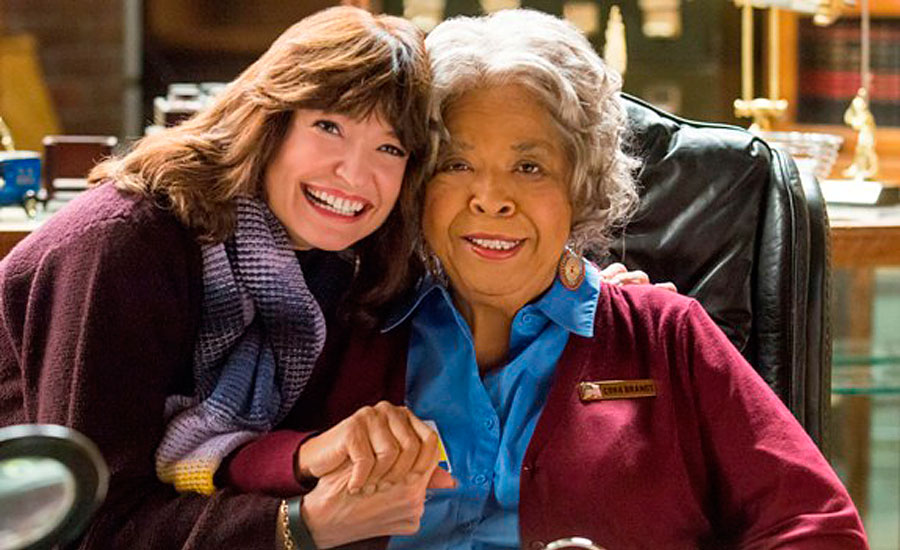
That only increased my commitment, and we made our deadline. On Wednesday, September 14, 1994, I sat at home alone, once again on my living room floor, watching the first episode of Touched By An Angel, starring Della Reese as Tess and Roma Downey as Monica. It was about a grief-stricken mother who had lost her baby to sudden infant death syndrome.

Monica comes to console her. But the mother snaps, “You’re an angel? So what. Where was the angel when my baby died? Why didn’t an angel call 911 for me? Why didn’t the angel drag me out of my bed into that nursery? Where was the angel then?”

Monica drops to her knees and says, “There was an angel with your baby when she died. And it’s the same angel who is with your baby now. God loves you more than you can possibly imagine.”

Tears streamed down my face. I couldn’t believe I had had anything to do with those words, or that they were being spoken on network television. And today, after two successful years of “Touched By An Angel,” I still feel that way.

As far as I’m concerned, God is the show’s true executive producer.

TV Host Amy Matthews on Remaining Open to God’s Plan

I looked around the office, waiting to audition. Of all the TV shows to be called for! Bathroom Renovations on the DIY Network. I was an actor, a trained opera singer, a musician. By now I’d played myriad roles in my career: from commercials, voice-overs, films, plays, operas, cruise ship entertainment…but no reality television. The producers were looking for a host, someone who could show people how to get it all done: redo the tile, fix the plumbing, paint the walls.

An acting teacher in college once told us, “Your job is to audition. To show up. To give it your all. You won’t book every job you want, but you’ll book the jobs that are right for you.” I was a shower-upper. I always brought my A game and left expectations at the door. But for some reason, this audition felt different. Is this job part of the bigger plan…?

Amy Matthews on the cover of the May 2020 issue of Guideposts
As seen on the cover of the May 2020
issue of Guideposts

That audition was a dozen years ago, here in Minneapolis. My home. The place I grew up. Did I say DIY? Well, yes, there was a bit of that in my background. My dad was an Army reservist and counselor. In his spare time, he liked fixing things around the house.

The oldest of three daughters, I was always amazed at my Dad’s workroom and its plethora of tools. A room filled with wonder and potential. Whenever a plumber or electrician or carpenter would come in, Dad would ask a million questions, trying to figure out how he could do something himself.

When I was 10, our house was remodeled to make room for the five of us. A contractor came in and popped the roof off the house to add extra bedrooms and a bathroom. All day long, I could hear the hammering and sawing. I loved to sneak a peek at the upstairs door and see only blue sky where the roof had been. A transformation in progress.

Downstairs, we girls made a fair amount of noise ourselves. Mom and Dad insisted that we take up a musical instrument and study it seriously. For me, it was the violin. I started sawing away at age three. My little sister, Sarah, also took up the violin, and Christine, the youngest, played the piano. My violin skills grew.

Music was my life. I considered it a career path. In junior high, I started singing as well. The lyric line of the violin and the smooth strength of the voice seemed one and the same. I was invited to do Christmas solos at church. I took voice lessons, and a new medium for artistic expression opened for me. This felt like home.

Then in high school, I dove into acting. We had a great drama department, and I found myself spending all my waking hours in the theater. Acting is the art of expressing ideas and giving the audience a chance to leave their routine and venture into another world.

I found this fascinating and quite fun—whether I was playing Bianca in The Taming of the Shrew, a feisty Pink Lady in Grease, the narrator in Joseph and the Amazing Technicolor Dreamcoat. I’ve always believed that we all have God-given gifts and it’s our job to find them, hone them and share them with the world.

I didn’t know where the arts would lead me, but I knew I was on a path. During those same high school years, I discovered something else I loved doing, maybe because it directly connected to my faith. My family was active with Valley Community Presbyterian Church.

Putting faith in action was something I learned from a young age. Whether it was providing the homeless with a place to sleep, visiting homebound seniors or (best of all) going on summer trips with the youth group to rebuild homes for families in need and volunteering with Habitat for Humanity.

When I was 14, we went to a little West Virginia town. I was put on a team with kids from all over the country. Our assignment: fixing up an A-frame house in disrepair. The first thing I had to do was climb a steep ladder, roll out new tar paper and attach it to the roof.

It was the steepest roof I’d ever seen. I might not have had a fear of heights before, but I sure did at that moment! I carried the tar paper in one hand and a hammer in the other. As I went up, all I could think was Mom and Dad will never let me go on another trip like this if I fall.

I said a quick prayer, then opened my eyes. The view was amazing! Lush hills and hollows stretched as far as the eye could see. A blazing blue sky, like the one above our house when the roof came off, arched above me. I felt I was where I was meant to be.

By the end of the week, the A-frame home was renewed, revitalized and functional! I watched the owners look at it in wonder. Each of us on the young crew had done our small part, but together it made a huge difference. Mustard-seed faith, one little action transforming a life. Not just the owners’—ours too.

The next summer, our Habitat project took us to a little town in Tennessee and a run-down shack. The lady who owned the home didn’t have any steps to her front porch. She was too frail to jump up or jump down, and her home had peeling paint, broken windows, floorboards coming up. In some places, you could look down clear to the earth.

Lo and behold, this roof needed tarring too. Not tar paper, as we’d used the summer before, but tar that you roll onto a tin roof. No one wanted to go up on top, but being a sun and heat lover (and now thinking of myself as a roofer), I climbed the ladder. I fastened a rope into a sort of rappel harness, looped the end of the rope to the chimney and got to work. Bliss.

Still, I didn’t see any career path connected to all that hot, sweaty, wonderful work. I was still focused on the violin, voice and acting. After high school, I went to Boston University for two years, then to a conservatory for dramatic arts in New York City. I was studying voice with a fabulous teacher who had been a star at the Metropolitan Opera. She told me I had potential. It just took time for the voice to mature.

Meanwhile, I was auditioning for everything—stage, movies, TV, commercials—I could find. I even worked for a year as a performer and hostess on a cruise line (like Julie McCoy on The Love Boat).

What a way to see the world: Tahiti, the Pacific, up and down the coast of Chile, around to Brazil, then over to Africa, the Middle East, through the Suez Canal, the Mediterranean, up to the Baltic, Russia, Iceland, Ireland. But just as we were leaving Dublin, 9/11 happened. I thought of my dad. Still with the Army, living in Minneapolis but traveling often, working in the Pentagon. I got word soon that he hadn’t been there that day. But many people he knew had been.

My father was mobilized shortly after 9/11. Suddenly, I didn’t want to be on a ship halfway around the world. Didn’t want to be in New York City. I wanted to be home. Nobody could go anywhere for a while. Boats weren’t moving; planes weren’t flying. Finally we set sail. Right into a hurricane in the north Atlantic. Go figure. As soon as I could, I returned to Minneapolis.

Work was going well in Minnesota, better than I expected. The theater scene was booming. Sometimes I’d even be flown back to New York for a project. It was the best of both worlds. And yet there was something missing.…

And now this crazy audition for Bathroom Renovations. I thought back to my DIY childhood. Those summers with Habitat and the church youth group and how much I’d loved fixing up houses, turning them into homes. I heard my name being called. How was I with a hammer, nails, a wrench? Could I climb a ladder and talk to the camera? I could almost hear myself saying, “I once had to put tar paper on this A-frame house that had the steepest roof you’ve ever seen.…”

The rest is history. I got that job, which led to other jobs, hosting DIY shows such as Sweat Equity and This New House and HGTV’s Renovation Raiders. Appearances on the Today show, CNN and CBS became regular occurrences. I got my contractor’s license—lots of studying, lots of bookwork, but it took the idea of hosting to the next level: the act of doing.

Home is where I found my passion. I love the home space. I love teaching people how to care for the biggest investment they will ever make. One thing, though, I believe any of us who work as an expert should never lose is our beginner’s mind, that mix of curiosity and enthusiasm.

I have continued my volunteer work—as you might have guessed—with Habitat for Humanity. What a thrill it is transforming people’s lives, giving them a hand up by making sure they have a solid roof over their heads.

My résumé might still seem eclectic. Violinist-turned-actor/singer and youth group volunteer–turned–budding opera diva–turned–building contractor and TV home-improvement expert. That’s the thing about God’s plans. I don’t believe in trying to decipher what they may be. I believe in showing up, in taking risks, in putting others before self and honing your unique talents. And trusting that the master plan will be greater than you could have ever imagined.

For more inspiring stories, subscribe to Guideposts magazine.

Tuscan White Bean Soup

Fifteen years ago, I studied Italian cooking in Tuscany. A big-hearted grandmother named Adele taught me how to make this classic soup. She spoke only rapid-fire Italian. My Italian was so-so. We communicated through the universal language of food.

I learned to create the perfect Tuscan bean soup in Signora Adele’s small, cozy kitchen. Tuscany is proud of its cannellini beans, which are really humble white kidney beans. They have a creamy texture and make a wonderful hearty base for soup.

The signora’s secret was adding Parmesan cheese on top. Every Italian grandmother has her own special soup recipe. Nutrient dense, healthy (the beans’ high fiber helps prevent spikes in blood sugar), delicious…Signora Adele’s soup is love in a bowl.

Ingredients

Beans
2 c. soaked or canned cannellini or great northern white beans 2 sprigs fresh or ¼ tsp. dried thyme
2 sprigs fresh or ¼ tsp. dried rosemary 4 cloves garlic, smashed
¼ tsp. fresh or ⅛ tsp. dried sage ½ tsp. sea salt
Soup
2 Tbsp. extra-virgin olive oil ¼ tsp. fresh or ⅛ tsp. dried thyme
1 ¾ c. yellow onion, finely chopped ⅛ tsp. fresh or pinch of dried sage
1 ½ c. carrots, peeled and diced ⅛ tsp. fresh or pinch of dried oregano
1 ½ c. celery, diced 8 c. low-sodium chicken stock
Sea salt Parmesan cheese
2 Tbsp. garlic, finely chopped

Preparation

1. Rinse beans and place in a pot. Cover with 3 inches of water and add a sachet of rosemary, sage, thyme and garlic. Bring to boil then cook at low simmer 45 minutes to an hour.

2. When beans are tender but still al dente, add salt to pot. Meanwhile, in large pot, heat olive oil over medium heat.

3. Add onions and a pinch of salt. Sauté until golden.

4. Add carrots, celery and ¼ teaspoon salt. Sauté 3 minutes.

5. Add garlic, thyme, sage and oregano, and sauté 2 minutes.

6. Add ¼ cup of chicken stock. Allow liquid to evaporate. Add 6 cups more stock and drained beans. Simmer 20 minutes. Add more stock if necessary.

7. You may add a squeeze of lemon juice or a final pinch of salt for taste. Serve with a sprinkle of Parmesan cheese.

Serves 6.

Time-saving Tip
It’s okay to use canned beans. Just give them a rinse, a squeeze of lemon and a pinch of salt to freshen them up.

Nutritional Info
Calories: 410; Total fat: 10 g; Carbohydrates: 49 g; Protein: 19 g; Fiber: 16 g; Sodium: 449 mg