Embrace God's truth with our new book, The Lies that Bind

Pray Psalm 23 for Your Children and Grandchildren

Psalm 23 is the most beloved, memorized and quoted Bible psalm of all time. It may be the most beloved, memorized, and quoted Bible passage of all time, with the possible exception of John 3:16 (and maybe “Jesus wept,” the go-to memory verse for underachieving Sunday school students like me). 

“The Shepherd’s Psalm,” as it is also called, has been a blessing to many in times of need, grief, weakness and peril. Attributed to Israel’s King David, it was written as a song of testimony. But it can be a boon to our praying, too. One way I use it is to turn David’s confident, grateful assertions in the first half of the psalm into petitions and use them all to express what I desire from God in the lives of my children. Though I sometimes make tiny changes in the specific wording, my prayer usually sounds something like this: 

Pause & Pray In Article Ad

Lord, my Shepherd, be the Shepherd of my children; that they may lack for no good thing (Psalm 84:11). Prompt them to lie down in green pastures; lead them beside still waters. Restore their souls and lead them in the paths of righteousness for Your name’s sake. 

And if they must walk through the darkest valleys, let them fear no evil because they know You are with them; let Your rod and staff be their comfort. Prepare a table of bountiful blessings before them, even in the presence of their enemies. Anoint their heads with the oil of gladness; cause their cups to overflow with blessing. Let goodness and mercy follow them today and all the days of their lives and let them dwell in Your house, Lord, forever.  

Now that I have five perfect grandchildren, I pray it also for them, simply changing “children” to “grandchildren” in the first line. Sometimes I’ll change that word to one of their names and pray it five times, one after the other. At other times, I’ll pause in the psalm to focus on a word or phrase and repeat it several times before moving on. Or I might re-word part of it to address a specific situation. For example, today, upon learning that one of my grandchildren is struggling with unkind treatment from schoolmates, I pray for our Shepherd to shine His light into that “dark valley,” for them to sense His presence, and for His rod and staff to defend and protect them from all evil.

The Shepherd Psalm can be prayed for others of course: parents, nieces and nephews, cousins, students, team members, employees and more. Try it and see if it doesn’t express the desires of your heart for those you love and care about.

Pray Now Instead of Later

If you’re anything like me, you come across multiple requests for prayer in the course of a week—or even in a single day. 

You’re scrolling on your Facebook news feed, and an acquaintance has posted, “Prayers please.”

Pray a Day Vol 2 In Article Ad

You see an old friend in the grocery store, and they update you on their physical challenges and when you ask how you can help, they say, “Just pray for me.”

You get an email or text about an accident or disaster or serious issue and the sender wants to corral prayer support for that situation.

I used to respond uniformly to such moments. “You’re in my prayers,” I would say. “I’ll pray for you,” I’d promise. And then I would forget. I might manage a prayer later that day, but even as I was responding to the request I knew—and I think they usually knew, too—that I was unlikely to follow through on my promise.

Read More: The Prayer That Saved Us

I hated it. It bothered me. I felt like such a cad. Such a failure. And I let down people I cared about with disturbing regularity. So I stopped.

Nowadays I don’t promise to pray. If I am scrolling on Facebook and someone asks for prayer, I never type “Praying 4 u.” I might, however, type, “Lord, have mercy; send strength and peace.”

If a friend in the store says, “Just pray for me,” I will either stop right then and there to pray quietly and briefly (if I’m confident doing so won’t totally embarrass or freak out my friend) or I will pray as I walk away, and the request is fresh in my mind.

When I receive an email or text about an accident or disaster or serious issue and someone wants me to pray at a certain time or in a certain way, I will pray at that moment—trusting God to upload my prayer at a more helpful time or translate it into more helpful terms, as He sees fit.

This doesn’t mean I’m always in a hurry when I pray; sometimes my prayer goes on longer than I thought and leads me down unforeseen paths. Nor do I never pray later about some of the concerns people share with me in the course of a day or a week; I will often remember to pray again later (that night, for example, or the next morning in my regular prayer times).

But I almost never promise to pray later, unless I record it in my calendar or to-do list on my phone or computer.  And my practice has the added benefit of turning email, texts, Facebook and occasional encounters with old friends into short prayer meetings, which sometimes keeps me in a place of prayer throughout my day. And that’s a far, far better result than broken promises and forgotten prayers.


Download your FREE ebook, A Prayer for Every Need, by Dr. Norman Vincent Peale

Pray New Berakhot

Not long ago I was in Florida at a speaking engagement when I learned that my old friend David would be speaking nearby at an event of his own. I hadn’t seen him in years–he lives in California and I live in Ohio–so I contacted him and suggested we meet.

We had a great time renewing our friendship, drinking coffee and sharing a pastry. As we rose from the table, David (who is a vibrant Orthodox Jew and knows that I am always interested in learning more of his faith and practice) asked if he could pray the appropriate berakhah.

Sugarcreek Amish Mysteries In-Article Ad 2023

Thank You for electricity! Photo by Antonio Guillem, Thinkstock.I agreed without hesitation, and he prayed, first in Hebrew then (for my benefit) in English, the Birkat Hamazon, which begins, “Blessed are You, Lord our God, King of the universe, Who brings forth bread from the earth.”


David’s prayer is one of many berakhot (“blessings”) observant Jews pray on any number of occasions. There is a berakhah to be said upon waking up, and several berakhot (plural for berakhah) that are recited when putting on certain articles of clothing.

There are different berakhot for eating fruit or drinking wine. There is even a berakhah to be recited after using the bathroom.

It may seem excessive to some, but I delight with my friend David in the opportunity to make every situation of daily life–or as many as possible–an occasion for praising God and giving thanks.

In fact, I think this is an area (among many) where all who love God and live to please him can learn from our Jewish friends and neighbors by installing new “berakhot” into our daily lives. For example, what if we made several of the following habitual?

  • On Getting Dressed
    Lord God, thank You for clothes to wear; have mercy on those who go without adequate clothing.
  • On Entering One's Workplace
    Lord God, thank You for my job, even as I remember the unemployed.
  • On Taking Medicine
    Lord God, thank You for my health and for medicine that makes me healthier; have mercy on those who are sick or suffering.
     
  • On Entering or Leaving One's Home
    Lord, I thank You for this home and all its comforts, even as I ask You to come to the aid of those without homes and those far from home.
  • On Turning Lights On or Off
    Lord, thank You for light and electricity; have mercy on those who live in darkness, figuratively or literally.
     
  • On Turning Faucets On or Off
    Lord God, thank You for running water and indoor plumbing, even as I pray for those without such necessities.

Some say it takes 28  days for a practice to become a habit. Imagine using these–or others of your own devising–to instill in your daily routines a habit of gratitude and awareness of your many blessings.

Do you think you could make a few blessings (berakhot) like these a habit? Do you think it would become too routine over time? What effect do you think it would have?

Pray ‘Never Before’ Prayers

I want so much more. 

I’m not talking about material things, primarily (though I wouldn’t mind some new outdoor furniture and maybe a fire pit). But if you’re anything like me, you tend to be fairly content with your life, health, home, income, relationships, etc.—until something happens. Until your back starts to hurt or you’re laid off or you lose a friend. Or something else.

Whistle Stop Cafe In Article Ad May 2023

It’s when a part of our life falls apart that we tend to be driven to prayer, right? “God, heal.” “Lord, restore.” And so on. 

One of the most haunting verses of Scripture is James 4:2 in which the author says, “You do not have because you do not ask God” (NIV). Or, as the more rhythmic King James Version puts it, “Ye have not, because ye ask not.”  

Wow. If that’s true (and it is), wow. 

That short verse—just seven words in the KJV—challenges me. It also instills hope. How many things do I lack because I haven’t thought to ask God for them? Put another way, while my prayer list is filled with reactive prayers—prompted by a need that’s cropped up or some problem I’m facing—what if I’m neglecting proactive prayers? Prayers to prevent problems from arising or to invite blessings I have yet to experience? 

If you were to compile a list of things you’ve never asked for, what would be on it? I ask that question not to provoke guilt or regret, but to suggest vast new vistas for prayer.

For example, until recently, I’d never prayed for flexible and pain-free joints. I’d never asked for a new friend who loves baseball like I do (and with whom I might watch games from time to time). I’d never before asked to avoid future injury or surgery, to be protected from hepatitis or cancer, to be surprised by a call from one of my children. I’d never before asked for car tires to stay properly inflated, for friends to avoid debt or divorce, for my internal organs to keep functioning well, and more. 

Since meditating on James 4:2, “never before” prayers have almost become a form of holy recreation for me. I’ve found joy in sometimes saying to God, “You know, Lord, wouldn’t it be great if today’s mail brought a blessing of some kind?” Or, “God, I’ve never asked you to pre-emptively deliver me from kidney stones, so I’m asking now.” My prayers have become more creative, visionary and exciting with the injection of “never before” prayers into my conversation with God. Maybe they’ll do the same for you.

Pray Like Paul

Pray like Paul? I tend to think of Paul as the great preacher, bringing the good news to the Gentiles from Galatia to Thessaloniki to Corinth to Rome. After all, his epistles make up a massive chunk of the New Testament, the earliest documents we have of the church.

But recently, as I’ve been reading Paul–and sometimes I can’t get enough of him–I keep stumbling over prayers in his writing. He frequently exhorts others to pray, exclaims how he prays for the people he’s writing to, and his very words form prayers. Here are a few:

Witnessing Heaven In Article Ad 827x123

Don’t be anxious about anything; rather bring up all of your requests to God in your payers and petitions, along with giving thanks. Then the peace of God that exceeds all understanding will keep your hearts and minds safe in Christ Jesus. (Philippians 4:6-7)

Now, may the God of peace himself cause you to be completely dedicated to him; and may your spirit, soul, and body be kept intact and blameless at our Lord Jesus Christ’s coming. (1 Thessalonians 5:23)

Read More: St. Paul’s Faith, Courage and Fortitude

May the grace of the Lord Jesus Christ be with your spirit. (Philemon 25)

May the God of hope fill you with all joy and peace in faith so that you overflow with hope by the power of the Holy Spirit. (Romans 15:13)

May the God and Father of our Lord Jesus Christ be blessed! He is the compassionate Father and God of all comfort. He’s the one who comforts us in all our trouble so that we can comfort other people who are in every kind of trouble. (2 Corinthians 1-4)

As the old hymn “Balm in Gilead” puts it, “If you cannot preach like Peter, if you cannot pray like Paul, you can tell the love of Jesus and say he died for all…”

I’d be likely to say, “Nope, I can’t pray like Paul. Don’t have enough of the godly spirit. Couldn’t begin to dig that deep.”

But then, didn’t he give the words for us to use? Now, when I come across a passage in any of Paul’s epistles that feels like prayer, that sounds like it, that moves me, I pray it.

Sometimes when I get stuck in the same loop in my own prayers, I turn to one of Paul’s prayers, like any of the above, and it lifts me up.

Try it. You, too, can pray like Paul. We all can. He gave us the words.

Pray Like Mary

A few days ago, a friend asked me to pray for an upcoming project to be a means of financial blessing to her and her family. Then she said, “Do you think it’s okay to ask that?”

I assured her that I think it’s more than “okay.” I think such prayers—short, simple, straightforward—are the best kind of praying we can do.

Go For It In Article Ad

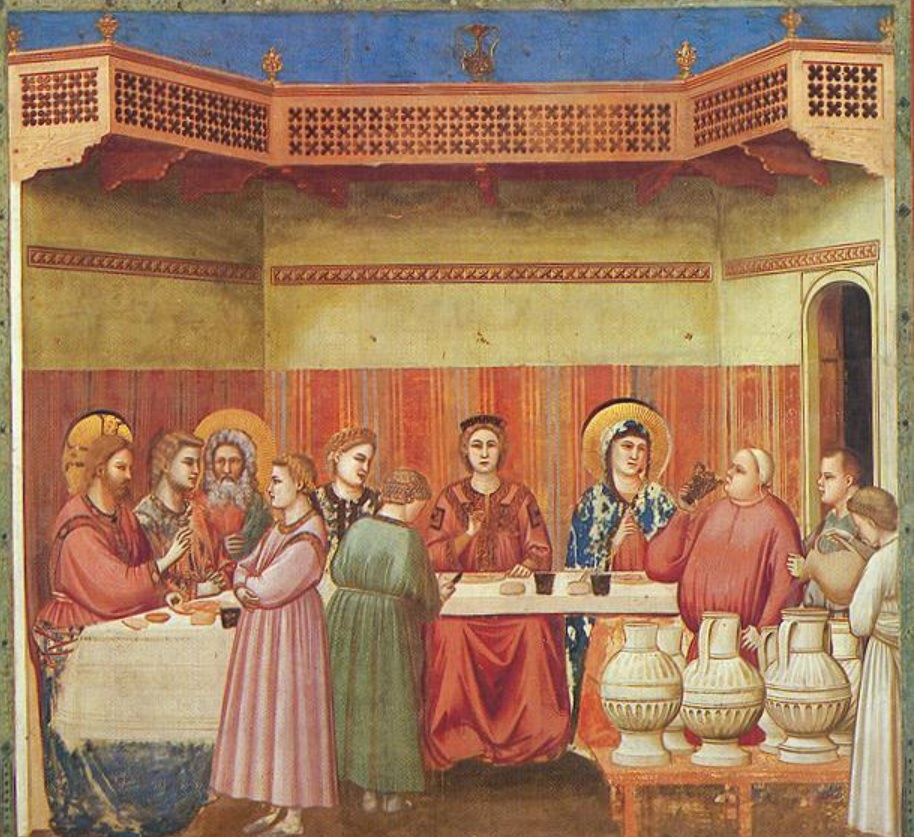
You may know the story in John’s Gospel about Jesus attending a wedding celebration with his mother, Mary. At one point early in the festivities, Mary came to Jesus and said, “They have no more wine” (John 2:3, NIV). Chances are, either the bride or groom was related to Mary and Jesus; in any case, they both would have known that running out of wine at a wedding feast would be a major embarrassment to the family.

But Jesus’ answer sounds odd: “Woman, why do you involve me?… My hour has not yet come” (John 2:4, NIV).

Nonetheless, Mary told the servants, “Do whatever he tells you” (John 2:5, NIV).

You probably know, of course, that Jesus eventually instructed the servants to fill giant jars with water, which when they served it up turned out to have been transformed into high-quality wine.

But I think Mary’s request often gets lost in the account of that water-to-wine miracle. Remember? To our knowledge, she spoke only five words to Jesus: “They have no more wine.”

She didn’t tell Jesus what to do (maybe because His initial response was, well, a trifle off-putting). She didn’t whine or wheedle or cajole. She laid out the problem—short, simple, straightforward—and left it in His hands.

But she did something else that we often neglect. She prepared for the answer. She told the servants, “Do whatever he tells you.”

It’s a pretty good primer on prayer. She knew where to go (to Jesus). She knew what to say, briefly and simply and straightforwardly mentioning the need. And she knew what to do next—prepare for the answer.

Whatever your need is today, it’s more than okay to follow Mary’s pattern. Don’t whine or wheedle or cajole. Lay out the problem. Keep it short, simple and straightforward and leave it in His hands. And prepare for the answer. It may not come as quickly as you like, but that’s okay. Just do like Mary and maybe, like her, you’ll see something special happen.

How to Pray Like Job

Great prayers populate the pages of the Bible. Prayers of Jesus, Moses, David, Daniel and Paul. They have inspired and instructed many. But few people have ever thought to look to the ancient book of Job for guidance in prayer.

Job is the story of a man who had it all and lost it all, a man who suffered greatly but never turned his back on God. But it is also the story of a man who can teach us at least five valuable lessons in prayer:

The Daily Bible Large Print relaunch with digital free gift in article ad

1)  Pray what’s really on your mind and heart.
Job didn’t mince words with God. His prayers may seem “cheeky” to many modern church-going people. He said things like, “I will give free rein to my complaint and speak out in the bitterness of my soul” (Job 1:2, NIV).

He prayed, “Stop frightening me with your terrors” (Job 13:21, NIV). He complained, “Surely, O God, you have worn me out” (Job 16:7, NIV). He didn’t hold back. He didn’t spout platitudes.

So pray like Job. Pray your true thoughts and feelings. God sees and knows those things anyway, but as C. S. Lewis said, we must learn to “lay before Him what is in us, not what ought to be in us” (C. S. Lewis, Letters to Malcolm: Chiefly on Prayer; Harcourt, Brace & World, 1964).

2)  Ask God to speak.
Job repeatedly asked God to speak, praying things like, “Tell me what charges you have against me” (Job 1:2, NIV) and “Show me my offense” (Job 13:23, NIV). Those are dangerous prayers, of course, but too often in prayer we do all the talking. We want God to listen to us but we seldom or never listen to Him and miss so much—not only correction but also affirmation and guidance, among other things. So pray like Job. Ask God to speak to you.

3)  Keep asking.
Because Job is not a short book, people sometimes get weary of the back-and-forth between him and God and between him and his friends. But part of the beauty of the story and the poetry is Job’s persistence. He becomes more desperate (and more petulant) as the story progresses, but he never gives up. It is the approach Jesus urges in prayer: “Keep on asking, and you will receive what you ask for” (Matthew 7:7, NIV). So pray like Job. Keep asking.

4)  Accept correction.
The old saying could have been written by (or about) Job: “Be careful what you ask for.” Throughout the book that bears his name, Job repeatedly asks God to speak, to answer Him. When God finally does, Job says, “I put my hand over my mouth. I spoke once, but I have no answer—twice, but I will say no more” (Job 4:4-5, NIV).

Job wanted God to answer him, but when God finally speaks, He says, “I will question you, and you shall answer me” (Job 40:7, NIV, italics added). Eesh. But Job, to his credit, bowed low and accepted God’s correction. So be like Job and accept correction when God offers it.

5)  Wait.
In the midst of his gut-wrenching, life-changing trial, Job’s wife encouraged him to “curse God and die” (Job 2:9, NIV). But he did neither. For 40 more chapters, he cried out to God, complained to God and even got petulant with God. But he waited and he endured. And eventually, the Bible says, “The Lord blessed the latter part of Job’s life more than the first” (Job 42:12, NIV).

So pray like Job. Go ahead and cry and moan and lay it all out. But wait, too. Remember that God’s time zone is different than yours. He may not show up according to your schedule, because sometimes the waiting is as much a part of His plan for you as the destination.

Pray Like a Child

Not long ago, I had been away on a business trip for a week or so, and when I returned, my four-year-old granddaughter, Calleigh, excitedly showed me a “letter” she had written to me while I was gone.

It was a single page, filled with colorful scribbles and swirls. One or two of the shapes looked like a sun or a flower and parts of it resembled handwriting. But, of course, there was not a single word on it, because Calleigh had not yet learned to spell or write.

A Journey of Faith In Article Ad - Avail Now

So I asked her to read it to me. She said, “Dear God, I love God. No, wait. I’ll start again. Dear Crappaw, I love Crappaw. Thank you for giving me a good day. I love Crappaw. Dear Calleigh.”

I saved the letter and soon recorded her exact words in my journal. I treasure both.

Jesus depicted prayer as something like a child approaching a loving parent (or grandparent). Our words may be primitive. Our prayers may be simple, even painfully so. But God treasures every one. As Richard Foster wrote, “In the same way that a child cannot draw a bad picture so a child of God cannot offer a bad prayer.”

And, just as Calleigh’s letter could hardly have been simpler—or better—our simplest prayers are the best prayers we can offer, especially when they include four of the simplest, easiest, most basic things we can bring to them:

1)  Show Up
Author and philosophy professor Peter Kreeft wrote in his book, Prayer for Beginners:

The holy Curé of Ars once noticed an old peasant praying alone in church every day before the Eucharist. The Curé asked the peasant what he did when he prayed, and his answer was the most perfect description of contemplative prayer: ‘I look at him, and he looks at me’….That is all. By a simple act of the will, turn your attention to him.

Film director and actor Woody Allen is often quoted as saying, “Eighty percent of success is showing up.” That is certainly true of prayer. Simply turn your attention to God; that is the beginning of prayer, and it is often the great majority of it as well.

2)  Trust
The soul that prays, trusts. The soul that trusts, prays. Wherever you are, remind yourself that God is there. Believe that he is listening. Remember that he is good and loving, and that he knows what you need before you even begin to pray. “The best prayer,” Julian of Norwich said, “is to rest in the goodness of God, knowing that that goodness can reach down to our lowest depths of need.”

3)  Listen
“It makes no sense for us to do most of the talking,” Kreeft says. “We ought to be listening most of the time.” It may take time and practice before you can differentiate between the voice of God and the voices in your own head, but it is well worth it to try. This is why silence and solitude are so conducive to prayer; they help us develop listening skills.

You may want to repeat the prayer of Samuel: “Speak, your servant is listening” (1 Samuel 3:10, NLT). You may find it easier to listen while walking in the woods or sitting alone in a country chapel. You may meditate on the words of author Robert Benson: “I need to listen, listen for the prayer of God that is rising in my heart, perhaps for the prayer that I should be praying rather than the one I am praying.”

4)  Ask 
Remember, “your Father knows what you need before you ask him” (Matthew 6:8, ESV). So ask. Simply. Do as Richard Foster suggests:

In Simple Prayer we bring ourselves before God just as we are, warts and all. Like children before a loving father, we open our hearts and make our requests. We do not try to sort things out, the good from the bad. We simply and unpretentiously share our concerns and make our petitions. We tell God, for example, how frustrated we are with the co-worker at the office or the neighbor down the street. We ask for food, favorable weather, and good health.

Show up. Trust. Listen. Ask. “On all occasions with all kinds of prayers and requests,” the Bible says (Ephesians 6:18, NIV). “In every situation, by prayer and petition, with thanksgiving, present your requests to God” (Philippians 4:6, NIV). “Be direct. Ask for what you need” (Matthew 7:7, The Message). Just ask. And keep on asking.


(This post is adapted from my book, The Red Letter Prayer Life: 17 Words from Jesus to Inspire Practical, Purposeful, Powerful Prayer.)

Praying with Compassion for Others

The Gospel compels us to carry out what many consider to be Jesus’ impractical principles: Love our enemies and pray for those who persecute us, forgive others as God forgives us, do not judge, love your neighbor as yourself and so forth. These Christian principles provide a road map for how we ought to live, love and pray for others.

By reading the Gospel stories, we discover a compassionate Jesus who took great interest and concern in the needs of others. He extended justice, kindness and love to all He encountered. He reached out to the despised tax collectors, healed lepers, forgave a woman caught in adultery and healed the servant of the Roman Centurion—extending His mercy to Gentiles as well. He repeatedly demonstrated His compassion to all.

The Lies That Bind In Article Ad

Ask Guideposts’ OurPrayer team to pray for you!

How do these acts teach us to pray compassionately for others? They remind us that people and their needs matter to God. It means that we, too, need to embody that spirit in our prayers.

When we pray with compassion for others, we seek to feel their pain…understand their struggles…place ourselves in their shoes. We empathize with those whom we lift up to God, connecting ourselves with them. They are part of us, and we are part of them.

When praying for others, I like to learn as much about what they are going through as possible. This allows me to put myself in their situation. When this isn’t possible, I spend time reflecting on how they may feel, or I recall my own moment of need. Praying with compassion requires us to remove judgment and be merciful.

Read More: Tim Tebow Leads Mid-Flight Prayer for Sick Passenger

Let us remember that we pray to a compassionate God whose heart is open to our very own needs, a God who weeps with us and is merciful when our actions miss the mark. This same God who hears our prayers also hears the pleas of others.

What has helped you to pray for others with compassion? Please share.

Lord, teach me to be compassionate in all my ways; help me to pray for others with empathy knowing that You care for all Your children.

Praying with Apps

Prayer can be a lot of things. In some churches, candle flames represent prayers. An artist friend of mine often paints his prayers. A musician friend prays spontaneous prayers on the piano, sometimes with words and sometimes without.

You can also pray with an app. Applications (“apps”) for smartphones and tablets are a new technology that many people–myself included–are using to enhance their prayer lives. Here are three that I use:

Community Newsletter

Get More Inspiration Delivered to Your Inbox


  • Honor Your Inner Monk is a free app developed by St. Meinrad Archabbey in Indiana. Beautifully designed, the app opens with a short excerpt from a Benedictine chant and a wisp of smoke before offering either a morning or an afternoon prayer.

    You can keep track of how often you pray, and choose from extra features such as recordings of Gregorian chants. It is available for both Apple and Android devices.

  • OurPrayer is a free prayer app produced by Guideposts that functions something like a prayer-chain for your phone or tablet. This free app allows you to request prayer, share your prayer with others, call the prayer line, view answered prayers and more. It is available for Apple devices.
     
  • 31 Ways to Pray for Your Kids is a new app that I helped develop. It gives you a short Bible-based prayer every day based on a fruit of the Spirit or a Christian virtue you want to see in the kids you love. 

The app was inspired by an article that has been published around the world and translated into such languages as Korean, Spanish, and Swahili.

That article was adapted into a prayer card that many people have kept in Bibles or purses and worn out in praying for children, grandchildren, students, nephews, nieces–even themselves. 

So now we have the app! It also allows you to set a daily reminder to pray. It’s $1.99 and available for iPhones or iPads.

Each of these apps allow you to share prayers with others via Twitter and Facebook, and are practically guaranteed to enhance and enlarge your prayer life.

Praying Around the House

Today’s guest blogger is Sue Schlesman who blogs on literature, faith and family.

Does sitting in a chair praying for people (even those you love) produce droopy eyelids or wandering thoughts? It can be hard to concentrate on praying, even with a list or journal in your lap. You want to be an active prayer warrior, but somehow, you just can’t focus.

You Got This In Article Ad

Have you ever considered praying in motion? Doing something while you pray?

This habit began for me during my baby-rocking years. Although I loved sitting in the rocking chair, feeding my baby or lulling him to sleep, I couldn’t help but add up the “unproductive” hours in my head. In an effort to multi-task, I took to praying over him.

I prayed over my baby’s eyes to see good and shun evil, his hands to help people, his feet to carry him to mission, his mind to know the Word, his heart to believe in Jesus.

As my children grew and became more mobile, I prayed around the house. While doing the laundry, I prayed over the pants and socks and shirts—that their wearers would follow God and flee from sin. As I ironed shirts, I prayed for arms to embrace others and hearts to seek God. In the kitchen, I prayed for hungry hearts and minds, for social graces, for fun family dinners and game nights around the table. In the living room, I prayed for peaceful evenings and protection from harmful media images.

At night, I often sat beside their beds and prayed in the dark, over troubling friendships, pending decisions, and bright futures. I prayed against the forces of evil that came against them daily.

Just as the Lord’s house is called a house of prayer, I want my house to be the same. And I have found that praying in motion—in the steps and actions of everyday life—is one of the best ways to make that happen and some of the most active spiritual warfare I can wage.

Pray God’s Names

Most of us pray in much the same way every time we approach God. We may call Him “God,” “Father,” “Heavenly Father” or “Lord.” And that’s about the extent of it. But even a casual reading of the Bible may suggest that praying God’s names can have an impact on how God hears and answers our prayers. In fact, just incorporating these 20 names of God into your prayers can make a huge difference:

1.  Elohim
One of the most common Bible names for God is “Elohim,” the plural form of El, meaning “Strong One.” It indicates God’s majesty, sovereignty, and creative power (e.g., Genesis 1:1, Psalm 68:7, Isaiah 54:5, Jeremiah 32:27). Try using this name when you are calling upon God to create or generate something.

Rejoice in All Things in article ad

2.  El Shaddai
“God Almighty.” This name refers to God’s power over everything and everyone (Genesis 17:7, Exodus 6:1, Psalm 91:1-2). Pray this name when you are asking God to show His power in a situation.

3.  El Elyon
This phrase means “Most High God,” emphasizing His regal authority and supremacy (Genesis 14:19, Psalm 9:2, Daniel 7:18ff). Consider using this phrase when you wish to praise and exalt God.

4.  El Olam
This name translates as “The Everlasting God,” He who was, and is, and is to come, who does not change and never ends (Genesis 16:13, Psalm 72:17, Psalm 90:1-3). You may want to pray this name when your praise or intercession involves time and timing.

Read More: Pray the Names of Jesus

5.  El Gibhor
“Mighty God,” a name that evokes an image of God as a warrior (Isaiah 9:6, Jeremiah 32:18). Try invoking “El Gibhor” when you are in a battle or are praying for someone who needs a defender.

6.  El Chaiyim
This phrase means, “The Living God” (Psalm 42:2, Jeremiah 10:10), and is a good way to pray at times involving birth, life and death.

7.  Yahweh
This name was revealed to Moses at the burning bush and comes from a verb that means simply “to exist.” It emphasizes God’s self-existent nature (Exodus 3:12, 3:14, 6:3). This name, which Jewish teaching reveres too highly to even speak it, can be a prayer in itself, especially when you don’t know what else to pray.

8.  Yahweh Yireh
This phrase means, “The Lord will provide,” and stresses God’s provision for and redemption of His people (Genesis 22:14). Pray this name when you need God to provide for you or redeem someone or some situation.

9.  Yahweh Nissi
“The Lord is my Banner.” This name emphasizes God’s willingness to fight for His people (Exodus 17:15). Pray this name especially when you face a “come-from-behind” situation.

10. Yahweh Shalom
“The Lord is Peace.” The Hebrew word “shalom” indicates not only the absence of conflict but also rest, harmony, and wholeness (Judges 6:24). Pray this word when you feel a need for peace, harmony or wholeness.

Read More: Daily Devotions

11. Yahweh Sabbaoth
This name translates as “The Lord of Hosts,” meaning the commander of heaven’s armies (1 Samuel 1:3, Psalm 46:7, Isaiah 1:24). You may want to pray this name when you are asking God to triumph over a wide-ranging field of challenges or issues.

12. Yahweh M’kaddesh
The phrase means, “The Lord your Sanctifier”—that is, the One who sets you apart and makes you holy (Exodus 31:13, Leviticus 20:8, Ezekiel 37:28). Try praying this name in a situation calling for purity and righteousness.

13. Yahweh Rohi
Psalm 23 begins with this phrase: “The Lord my Shepherd.” Consider praying this name when you are asking for God’s guidance, protection or provision.

14. Yahweh Rapha
“The Lord Who Heals” (Exodus 15:26). Pray this name when you are asking for healing and restoration for you, someone else or a place or situation.

15. Yahweh Tsidkenu
These words mean, “The Lord our Righteousness,” referring to God’s agency in making His people righteous (Jeremiah 23:6, 33:16). This name can be used to pray for deliverance when you are (or someone else is) feeling overwhelmed, condemned, or worthless.

16. Yahweh Shammah
“The Lord is there,” a phrase that invokes the Lord’s immediate and personal presence (Ezekiel 44:1-4, 48:35). Call on God by this name when you sense—or wish to sense—His presence.

17. Yahweh Elohim Israel
This name—“The Lord, the God of Israel”—contrasts God with the idols worshiped by the nations surrounding Israel (Judges 5:3, Isaiah 17:6). Pray this name of God to remind yourself or others that He alone is God, and there is no other.

18. Adonai
The singular form of this word means “master,” “owner.” Like Elohim, it refers to God’s majesty and authority (Genesis 18:2, Exodus 21:1-6, Joshua 5:14, 1 Samuel 1:15). Pray this name to remind yourself of God’s authority over you, in particular, and everyone, in general.

19.  Abba
The only non-Hebrew word in this list, “Abba,” comes from Aramaic—though it crosses linguistic lines, reflecting a baby’s first utterance for “Daddy” (Matthew 7:11, James 1:17). This is a great name to use when you are feeling (or want to feel) vulnerable and intimate before God.

There are, of course, many more names of God that can be profitably used in prayer. But these represent a good start, especially if they help us remember as we pray that God is so great and so good that our feeble words can only begin to describe Him.