Embrace God's truth with our new book, The Lies that Bind

Prayer Fellowship at Work

One of my favorite things about Monday mornings at Guideposts is prayer fellowship. I happen to work for a faith-based organization where for more than 60 years, prayer has been very much a part of its culture. All staff is welcome to attend, but no one is obligated. Employees pray for requests submitted by staff, donors and volunteers and listen to one of their colleagues share a brief inspirational message. We hold our prayer time at 9:45 a.m. to 10 a.m. in the Ruth Peale Chapel, named after our co-founder Ruth Stafford Peale. The small quaint chapel room has several pews that accommodate about 25 people.

The weekly prayer time is a great way to refocus, help others and start the morning off right with God. The gathering promotes a spirit of community and support for one another. It allows us to pray on behalf of individuals within and outside of the office who are in need. These 15 minutes of prayer and fellowship encourages us when we are down and empowers us with hope to face the busy workweek.

extraordinary women of the bible

Most work places don’t have a set time for prayer or spiritual activities given the diversity of faiths, which makes sense. But this doesn’t preclude anyone from finding a way to talk with God in their own time or as they go about their workday. In some companies, people use their lunchtime to gather for prayer or faith discussions. Each person must find what is right for him or her.

The opportunities for prayer and fellowship with others are endless inside and outside the workplace: online communities, chat rooms, weekly groups at a church, a weekly prayer call, a men’s or women’s group, a faith-based business group, or just finding a prayer partner. Although we can always pray alone, it’s encouraging to join with others. How do you connect with others for prayer and fellowship in the workplace and beyond? Please share with us.

Lord, lead us to join with others for prayer and fellowship.

Prayer: As Natural as Breathing

To try to pray is to pray.

You can’t fail at it. Nobody can. Open your heart, open your mouth, say something, say nothing. Shout if you must. Raise your hands, clasp them in your lap. Sing if you please. You can start with a “Dear Lord” and end with an “Amen,” or you can dive right in. 

Community Newsletter

Get More Inspiration Delivered to Your Inbox


You can close your eyes, get on your knees, use whatever language you like or no language at all. You can pray when you’re walking, running, driving to work, setting the table for dinner, lying in bed before you turn the light out.

To try it is to do it. It’s the only human endeavor I can think of where trying is doing. Reaching out is holding on. Joining in is letting go. Prayer is as natural as breathing. It’s fun. It’s a relief. It’s comforting. It’s a solace. You can tell yourself it’s an obligation or that it’s a terrific waste of time, but how often do you get to waste time with a purpose? If you’re like me and think every minute of your day has to be accounted for, you really do need prayer. You’ll run out of steam without it.

You can do it in private. You can do it with a friend at your kitchen table or in a church pew or with your family at dinner. You can do it in a windowless basement with a twelve-step group or out under the stars on a summer night. You can practice it all you like, but the practice itself is perfect. No need for a dress rehearsal. All your false attempts, your back-up-and-try-again efforts—they’re it. 

You will wonder if you’re doing it right. You will want a little more guidance. You’ll want to hear from others who take it seriously and learn from their example. Even the finest cooks look for inspiration in a new cookbook. But the masters will affirm that prayer is a school for amateurs because doing it from the heart is all that matters. That’s the only expertise you need. 

For thirty years I’ve made a conscious effort to work on my prayer life. I do it religiously, faithfully, absentmindedly. I often forget to pray, but I don’t forget how. I don’t think you really can. A need, a friend, a worry, a piece of bad news or a cause for celebration pulls me back. Returning is part of the process. So is waiting. Besides, being critical of your prayers defeats the whole purpose. 

What has helped me? The Bible, especially the Psalms. A faith community that challenges me and keeps me on my toes—Sundays at church, I get recharged. Writers who know more than I do. Friends who give me working models of passionate faith. A family that prayed together and still does at every dinner. And for almost all those thirty years I’ve worked for a magazine where I’ve been expected to ask boldly, sometimes brazenly, about other people’s prayer lives.

“Do you ever pray?” I ask, or “When did you pray?” or “Did you pray about that?” You’d be surprised by the answers and how committed people are to prayer. I remember the actress whom I had written off as a spiritual lightweight because she showed up in glossy fashion magazines. “I pray all the time,” she said without a pause. Or there was the newscaster who spoke profoundly and humbly of the people in disasters she prayed for, disasters she had to report on. “Easy enough for you to say,” I thought, until I discovered quite by accident how she followed up those prayers with substantial financial help. (No, I can’t say who she was. Giving anonymously was a crucial part of her faith.) And there have been the countless subjects who have promised to put me in their prayers. One recently emailed me because she had a sense that I needed urgent prayer. (She was right.) 

To tune into people’s prayers is to look into their souls. It’s to learn how to love them and stretch my own soul. Through my job I’ve heard the prayers of farmers battling drought, athletes pushed to their physical limits, people dealing with disease and financial turmoil and incalculable loss. I can’t begin to say what an effect all these stories have had on me except to give you a glimpse of the ones that I still retell myself.

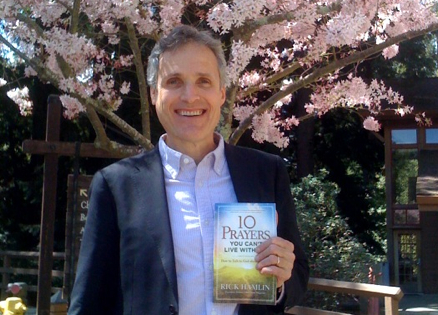
I’ve called my book Ten Prayers You Can’t Live Without because it’s an attempt to break down and categorize the prayers I find the most helpful. Do I expect you to pray exactly the prayers that I have in the same way? Goodness no. Prayer is personal. Find the way that works best for you. Even the Lord’s Prayer can be said in different ways. I hope I can expand your thinking about it and help you find other prayers to use. There’s “Nooooo” and “Thanks” and “Forgive me, I blew it” and “Hi, God!” At other times I turn to more formal prayers like the one a mentor taught me: “Jesus Christ, have mercy upon me. Make haste to help me. Rescue me and save me. Let thy will be done in my life.”

As I said, we’re all amateurs at prayer. You can practice a prayer in your head, like a conversation you expect to have with your boss. You want to get the words right. You want to make sure you’re understood. But don’t forget that every thought you’ve phrased and rephrased in your mind has been heard and understood better than you could have expressed it.

“Search me, O God, and know my heart,” the psalmist says. “Try me and know my thoughts.”

Every writer hopes to be read, but I would be just as happy if you stopped reading me, dog-eared a page or marked a spot in your e-reader and prayed instead. A doctor I interviewed once told me that for him, reading was a form of prayer. I believe that. Would that reading this book feels like prayer to you (writing it certainly has been for me). A good read makes me want to talk to the author. But in this case if you talked to our Maker, I would feel like I really accomplished something.

New Guideposts Devotional: Pray a Word a Day

When I was a child, a single “yes” or “no” from my mom or dad could change the course of my day—sometimes seemingly my whole life. “Are we there yet?” “Can I go outside?” “Can I have a dog?” 

As an adult, I’ve learned to employ that power in my daily life, through prayer. Like many people, I pray every day, and often use many words to ask God, tell God, beg God to work in my life and in the lives of those I love. But I will often adopt a single word to pray throughout my day. It might be “help.” Or “yes” or “no.” Or “mercy.” Among many, many others. 

Journey With Jesus in article ad

So, I was delighted when Guideposts asked me to contribute to the collection, Pray a Word a Day. It’s a non-dated, 365-day devotional that helps you to be intentional about connecting with God by focusing on a different word each day. Each day’s reading starts with an inspirational quote or Scripture based on one word, followed by a short anecdote and a prayer. Here’s one of my contributions:

Change

Change your thoughts and you change
your world.
 —Norman Vincent Peale

Recently, the word of the day suggested by my Bible reading was “change.” So I prayed that short word throughout the day: “Change my heart, O God. Give me strength and hope through the changes of these coming weeks.” A grocery-store transaction put change in my pocket, prompting a prayer for the wise use of our “loose change.” A sudden schedule change seemed providential. And so on.

Even Facebook somehow got into the act. I know Facebook’s algorithms detect websites I visit or purchases I make and incorporate those into ads and promotions, but I couldn’t think of any online hint I gave of my word-of-the-day prayer. But “change” nonetheless became a theme, popping onto my computer screen through the rest of the day. I even noticed the word in a television commercial or two, which sent me back to prayer when I saw and heard it.

Father, change my heart, thoughts, life,
and circumstances as You will. Amen.

Each page of this devotional also offers a few lines for you to jot down your own thought or prayer in response to the reading. And I hope that you will (as I often do) take that single word with you each day, meditating on it, praying it and letting God use it to speak to you—which He will do, often in surprising ways. 

You may not think a single word can do much, even if you pray it. But I’m hopeful and faith-filled that Pray a Word a Day will show you just how powerfully life-changing a single word can be.

Order your copy of Pray a Word a Day!

Must I Pray for My Enemies?

Pray for my enemies? My first reaction is, “Ugh, no thanks, I’d rather not.” My second reaction: Heck, I don’t have any enemies. Everybody likes me.

I had been deluding myself with this pleasant fantasy until the other day when I saw someone walking on the other side of the street, far away enough that he didn’t seem to see me, a man I had considered very much an enemy. I had once wished him dead and no doubt the feeling was mutual.

Light for Life NASB Study Bible in Article

It all came back to me quite vividly, that period I had vilified him. I imagined all sorts of terrible things happening to him—being struck down by a stroke or making a fatal trip to the ER. Not kind thoughts, mind you, but that’s what happens when you become consumed by having an enemy. The enemy takes over a big chunk of your emotional real estate, you imagination, your peace of mind, your soul.

My only way out was to do what Jesus said and what I had been avoiding all along. “You have heard it said, you must love your neighbor and hate your enemy,” Jesus said, “But I say to you, love your enemies and pray for those who persecute you” (Matthew 5:43-44).

Quite frankly, I was glad Jesus didn’t say “like.” Liking my enemy would have been impossible, but loving I could work at and loving meant I had to pray for him. The two seem to work hand-in-hand in Jesus’ command. Praying for your enemies forces you to think about who they are and why they behave the way they do. You acquire, almost against your will, compassion for them, and compassion is not only the object of prayer but its best reward.

I began to see why Jesus would ask us to do something this hard. It’s good for our mental health. It defines prayer as something that stretches us beyond our comfortable confines. Loving enemies is crucial to making his “kingdom come.” I think Jesus’ command is one of the greatest lessons in prayer. To love your enemies is to pray for them and to pray for them is to love them. It’s an essential tool to developing a compassionate heart.

No, when I saw my former enemy across the street I didn’t rush over to embrace him, but he was normal, just another human being, not some monster of my imagining. That seemed a victory and a relief.

Got an enemy? Give thanks for them. They’re going to help you grow spiritually. You don’t have to like them. To love them is enough.

Mountaintop Prayers

Mountains figure prominently in the Bible. Mount Sinai, where Moses received the ten commandments; Mount Ararat, where Noah landed safely after the flood; the temple mount in Jerusalem; the sermon on the Mount, where Jesus preached; and of course Calvary, where Jesus died.

Early this week, on tour for my book 10 Prayers You Can’t Live Without, I was at the Mount Hermon Christian Writers Conference in California, helping writers with their story ideas. The conference center is in the midst of the verdant redwood forests of the Santa Cruz Mountains and marked by a cross on the top of the highest hill. So early in the morning, to get some exercise and clear the brain, I ran up the hill, following the twisting and turning trails to the cross.

Faithful Paws and Purrs In Article Ad

It seemed like just the right thing to do at the dawn of Holy Week, run to the cross while thinking about Christ’s end. What a brutal story. I thought, as I pushed along the trail in the half-light, of Jesus’ own prayers before he faced the Crucifixion.

Everybody always quotes Jesus’ prayer in the garden of Gethsemane, when he said, “Not my will but thy will be done,” but it also seems noteworthy that before that prayer of relinquishment he asked God, “Father if you are willing, remove this cup from me.”

Even on the cross he prayed, “My God, my God, why hast thou forsaken me?” In times of trials, there’s no reason we shouldn’t be just as honest in our prayers. Truth to tell, when I’m at rock bottom, when I’m feeling abandoned as Jesus was by all who loved him, I don’t feel much like praying at all. Not much more than a No, God, no, which I count as one of those 10 prayers you can’t live without. When you’re desperate, at least you should let God know.                

I kept running and almost at the top of hill, I tripped over a branch and fell on my knees. Ain’t that always the way, I thought. Falling at the foot of the cross. Stumbling along in my faith. Was there supposed to be some lesson here? I picked myself up, dusted myself off and made my way to the summit.

Only then could I put it together. The sun had just come up and the view was spectacular, out over the mountains and the valleys blanketed with fog. The fruit trees were blooming and I could see a dusting of pink in a few spots from the cherry trees. The view from the cross was exhilarating.

This is what I’ll have to hold on to during Holy Week, I thought. Suffering and pain are terrible but if you stay in touch with God all the while, even crying out in your misery, there’s the promise of clarity. It’s not an easy lesson in prayer, but it’s essential. Easter is at the end of the trail. The sun will rise, the trees will bloom, life will be restored. A new life better than anything that went before.

How to Make Prayer a Habit

Why Make Prayer a Habit?

Our faith is like a muscle—we need to take the time to stretch it and exercise it. Regular prayer can be a powerful way to do this. Make a positive habit of sitting in silence, closing our eyes, and reaching out to God with our personal thoughts and hopes.

However, between busy schedules of work, errands, chores, family time, and getting those eight hours of sleep, it can be hard to find time to connect with God. Instead of making prayer an every-once-and-a-while practice, incorporate it into your daily or weekly schedule. By making prayer a habit—like drinking a cup of coffee in the morning or brushing our teeth before bed—we can be sure our time with God is built into our day. Even praying or practicing some spiritual meditation for just a few minutes a day can make a difference.

A Journey of Faith In Article Ad - Avail Now

Girl in a white tshirt with her hands on her heart learning how to make prayer a habit

The Benefits of Regularly Prayer:

According to an article shared by the Association for Psychological Science, there are various benefits to prayer and spiritual meditation, including:

  • Decrease in anxiety and stress
  • Having a more positive mood
  • Calming down the nervous systems
  • Feeling a sense of emotional support
  • Reacting less to negative emotions
  • Feeling less angry

Perhaps the most fascinating find was that prayer can foster a sense of connection, whether with a higher power, the environment around us, or other people in our lives.

8 Steps on How to Make Prayer a Habit:

Man in a yellow sweater with blue background making a prayer habit

1. Make a commitment to pray

Sit down with Jesus and ask Him to help you set a realistic prayer goal. It’s better to start with one prayer period a day, adding more after daily prayer becomes an established positive habit.

READ MORE: To Start a New Habit, Do this First

Woman sitting in bed and saying her morning prayer habit

2. Schedule prayer time into your day

Find the time that’s best for you so that God gets the best of you—when you’re most alert. That may be right when you wake up, when you can sit with a cup of coffee or tea and approach God with your morning prayers. Or it may be in the middle of the day while you are at work, when you can take a much needed break and turn to God for guidance or comfort. Your prayer time may be at the end of the day, when you can say bedtime prayers to speak with God about your day and find some peace.

Woman in her pajamas drinking coffee and saying her daily prayer habit

3. Establish a regular place for prayer

By doing this, when you enter that special room and sit in that same chair, your mind automatically begins to tune in to the Lord. It should be a place where you can be alone, without being interrupted.

READ MORE: Amy Grant, Bear Grylls and Others Share Their Favorite Prayer Spots

Woman sitting outside with headphones on doing a prayer habit

4. Minimize distractions

Take the phone off the hook or ask whoever’s home to take calls. If you can’t find a quiet place to pray, buy a pair of earplugs or noise-cancelling headphones.

Woman in a white sweater with her hand on her heart saying her prayer habit

5. Shorten instead of skipping

On those days when you absolutely cannot get in your full prayer time, you can at least offer an abbreviated prayer. Consider praying just one word, like “blessing,” “direction,” or “thanks.” Five minutes with the Lord are better than no time at all. Just be sure you shorten only on the days when that’s the only alternative to skipping prayer.

READ MORE: 18 Best Micro Habits to Improve Your Life in Minutes

Woman in a yellow sweater writing in her journal how to make prayer a habit

6. Keep a prayer diary

It takes just minutes to record the date and any insights that come to you from your time with the Lord, I like to note specific prayer requests and people I’ve prayed for. When you look back through your diary, you’ll be amazed at the number of prayers the Lord has answered, the surprising ways He has done it, the steady movement of His Spirit in my life.

Two people holding hands and doing their daily prayer habit

7. Find a prayer partner 

Pick a prayer partner who is reliable and can join you in regular prayer. Agree on a daily time and stick with it. If you can’t meet in person, telephone is just as good!

Woman outside in the sunshine with her eyes closed saying a prayer habit

8. Give thanks for your inarticulate prayers

Remind yourself that even if you go through periods where your prayers feel dry and inarticulate, this is precisely the time when the Lord is working behind the scenes to prepare you to come closer to Him. Be patient with your prayers and consider reading Bible verses about prayer to inspire you.

READ MORE: 6 Ways to Build Up Your Prayer Life By Habit Stacking

Bible Verses About the Importance of Prayer:


Woman on a beach with a bible in her lap doing her daily prayer habit

  • Jesus went out to a mountainside to pray, and spent the night praying to God. —Luke 6:12
  • O Lord, in the morning you hear my voice; in the morning I plead my case to you and watch. —Psalm 5:3
  • Devote yourselves to prayer, being watchful and thankful. —Colossians 4:2
  • Call to me and I will answer you and tell you great and unsearchable things you do not know. —Jeremiah 33:3
  • For where two or three gather in my name, there am I with them. —Matthew 18:20
  • And pray in the Spirit on all occasions with all kinds of prayers and requests. With this in mind, be alert and always keep on praying for all the Lord’s people. —Ephesians 6:18
  • Rejoice always, pray continually, give thanks in all circumstances; for this is God’s will for you in Christ Jesus. —1 Thessalonians 5:16-18
  • Be joyful in hope, patient in affliction, faithful in prayer. —Romans 12:12
  • But when you pray, go into your room, close the door and pray to your Father, who is unseen. Then your Father, who sees what is done in secret, will reward you. —Matthew 6:6
  • Very early in the morning, while it was still dark, Jesus got up, left the house and went off to a solitary place, where he prayed. —Mark 1:35

Listening Prayer

You will keep him in perfect peace, Whose mind is stayed on You, Because he trusts in You. (Isaiah 26:3)

The simplest definition of prayer is that we are talking to God. But that leaves out one important element: listening to God.

Community Newsletter

Get More Inspiration Delivered to Your Inbox


If I am only talking and not listening, I often only hear my own problems. That can keep the mind cluttered with worry. This happens unless I make a point to listen while I pray, to pause every now and then to hear God’s reassurance that He is with me.

The question, of course, is whether or not God says anything in response to the prayers I send up. I would say that God does speak to us, and not just when we are actually praying or talking to him. So we return to the question: Are we listening? The prophet Isaiah tells us that God will keep us in perfect peace when our minds are focused on the Lord.

When the mind is listening to the overwhelming evidence that tells us how difficult life is, we are filled with worry. We then begin to imagine scenarios that suggest chaotic existence rather than peace. There is a solution to the worried mind, and it is found in God’s word. I have tried it and I know that it works. Whenever we find something good, I think we should share it.

Prayer points for listening to God:

  • Be aware of restlessness in your thoughts.
  • Write down some Scriptures like Isaiah 26:3, Proverbs 12:26 and Philippians 4:6-8.
  • Make it a regular habit to meditate upon the Scriptures above.
  • Pray without ceasing.

God bless you!

For more on this topic watch Peola’s video, Tips for Releasing Worries, and listen to her Blog Talk Radio program, The Prayer Journey.

How to Turn Your Worries into Prayers

I had to laugh when I heard author Sarah Bessey talking about her book The Rhythm of Prayer. She remembered a pastor once telling her that the part of you that worries is the part of you that prays. “And since I can pretty much worry without ceasing,” she said wryly, “I can definitely pray without ceasing too.”

Don’t we all know what’s that like, worrying without ceasing? I can easily plunge down the worry rabbit hole, turning molehills into mountains. But Jesus also told us that by faith we could move mountains. 

A Journey of Faith In Article Ad - Avail Now

Why not use our prayers to move those molehills too? Here’s how:

Notice the worries. When I pray in the morning, the worries always make their appearance. Mundane things like, “What do we need to put on the grocery list?” “Did I remember to write that check—and how is our balance doing?” Not to mention all the people I need to email, call or text.

My rule to self: Don’t get up and scribble a note or take out your phone to send a text. Not now. Not during prayer time. This is my moment to give worries to God. The to-do list will be there when I get off the sofa. The precious one-on-One time will not.

If you don’t acknowledge the worries, they can get bigger, feeding on silent fears. Using prayer as a moment to hear them helps me shrink them into manageable size. Back into molehills.

See your powers of worry as a gift. Worry is a peculiarly human quality. It gets us out of bed in the morning. We cross off things on to-do lists. Worry—used healthily and sparingly—helps us prepare for the future. We can’t know what tomorrow will bring, but we can get ready.

“Can any of you by worrying add a single hour to your span of life?” Jesus asked (Matthew 6:27). Nope. But we can use that power into making us who He would want us to be.

Make thanksgiving an antidote. Gratitude can put your mind in a better place. The apostle Paul knew exactly what he was saying when he wrote, “give thanks in all circumstances” (1Thessalonians 5:17-18). All circumstances. 

I’ve got a little notebook where I try to write down something that I’m grateful for every day. At least one thing. I forget from time to time, but then I scribble down lots of things. Somehow writing it down—in my indecipherable handwriting—makes it more tangible to the soul.

“Consider the lilies of the field…” Jesus reminds us to look to the creation for models on how to deal with worry. Those flowers “neither toil nor spin, yet I tell you, even Solomon in all his glory was not clothed like one of them” (Matthew 6:28-29).

It’s not that they don’t need the Creator, turning to the sky for the vital resources of sun and rain, rooting themselves in the soil. No more do we bloom without turning to the Creator. We can look up and smile. Like those lilies.

And that, I think, can be the blessing of worry. It gives us a chance to turn to God. It is impossible for me to imagine living without worry. Just as it is impossible to think of living without prayer.

How to Turn a Toast into a Prayer

Weddings. Retirements. Reunions. Departures. Wakes and funerals. They don’t happen every day, but when they do, they present the opportunity (or obligation) to raise a glass and offer a toast to someone, whether or not alcohol is involved. 

The practice started in ancient Greece when people sometimes poisoned the wine to get rid of a dinner companion; offering a toast was considered a good faith gesture (and perhaps a last chance for the poisoner to change his mind). While most of us don’t worry these days about being poisoned by anything other than our own bad judgment, we are still sometimes called upon to raise a glass and say something to—or about—someone else.

The Lies That Bind In Article Ad

At such moments, you may offer a good wish to a friend (“May misfortune follow you the rest of your life, but never catch up”) or a word of advice to a bride or groom (“To keep your marriage brimming with love in the cup, whenever you’re wrong, admit it; whenever you’re right, shut up”—Ogden Nash). But why not pray instead?

Watch This: A Wedding Toast Like No Other!

I’ve been asked to raise a glass or offer a toast at all sorts of events. For many years I struggled to find something appropriate to say—until I started a mental collection of a few go-to prayers that make a fitting toast on almost any occasion.

Here are a few of my favorites:

May God give you heaven’s dew and earth’s richness (Genesis 27:28a, NIV).

May God give you the desire of your heart and make all your plans succeed (based on Psalm 20:4).

May God be gracious to you and bless you and make his face shine upon you (based on Psalm 67:1).

(For a wedding) May God grant you, today and every day that is to come, a love that burns like blazing fire, like a mighty flame; the love which many waters cannot quench, and mighty rivers cannot wash away; the love which lasts longer than life is stronger than death, and is worth more than all the wealth in the world (based on Song of Songs 8:6-7).

May you have God’s strength to steer you,
God’s power to uphold you,
God’s wisdom to guide you,
God’s eye for your vision,
God’s ear for your hearing,
God’s word for your speech,
God’s hand to protect you,
God’s pathway before you,
God’s shield for your shelter,
and God’s angels to guard you (based on the Breastplate of St. Patrick).

And, of course, the traditional Irish blessing is almost always appropriate:

May the road rise up to meet you.
May the wind be always at your back.
May the sun shine warm upon your face;
the rains fall soft upon your fields
and until we meet again,
may God hold you in the palm of His hand.

Once you’ve committed one or two of these to memory, you will never be at a loss when called upon to raise a glass, and you’ll do more than make a toast; you’ll be a blessing.

How to Talk to God

We communicate with people every day–our family, friends, co-workers. The cashier at the grocery store, the barista making your coffee, the chatty woman on the bus. Conversation is a natural and essential part of our lives. But how are we to talk to God? It’s as simple as A, B, C.

A: Focus on God.
We can know about anyone by hearsay, but to actually know someone requires interaction. A rich prayer life requires us to be attentive to God. Unfortunately we, like Martha, are easily distracted by all we need to do (Luke 10:40). Our minds rush off to other thoughts, and we are not fully tuned into the conversation.

Whistle Stop Cafe In Article Ad May 2023

If we are to speak openly with the Lord our God, we must have no other gods–or even other things to do–before Him (Exodus 20:2-3).

We must place ourselves wholly in His presence. Sometimes that takes conscious effort. I bring myself before You, Lord, I say at the start of my morning prayer time, and ask You to help me focus entirely on being with You.  We sometimes miss the point of what God tells us because we are too hurried and too distracted to pay close enough attention.

Read More: Bible Verses Celebrating God’s Creation

B: Listen carefully.
Proverbs 18:13 warns us, “To answer before listening–that is folly and shame.”

In prayer we do not need to worry about whether or not God is available to listen to us. The real question is whether we are quiet long enough to hear Him.

The importance of giving God time and space to speak to us is driven home by how frequently the word listen is used by the prophets. Isaiah and Jeremiah, Nehemiah and Zechariah all have lots to say about what happens when we let God’s will go in one ear and out the other.

“While you were doing all these things, declares the LORD, I spoke to you again and again, but you did not listen; I called you, but you did not answer” (Jeremiah 7:13). The more we listen, the easier it is to hear every word that comes from the mouth of the Lord. “My sheep listen to my voice,” Jesus says (John 10:27), knowing that we can only follow Him when we’re more accustomed to hearing His voice rather than our own.

C: Respond thoughtfully.
In everyday conversation, the way people know that we are listening is by how we respond. In the spiritual life, it’s obedience that keeps the dialogue going. “You are my friends if you do what I command,” Jesus said (John 15:14). He gives us the parable of the sower, which is rich in imagery about what happens when we hear but do not live out the Word of God.

There are those who hear, but respond by going their own way. There are others who listen but get distracted by life’s worries, riches and pleasures. It is only those who respond, “who hear the word, retain it, and by persevering produce a crop” who become mature Christians (Luke 8:15).

When we open our hearts in prayer, we are implicitly agreeing to do what God commands: to love our neighbors, forgive our enemies, feed the hungry, clothe the naked and visit those in prison.

Will you make time today for the most important conversation of all?

How to Start a Prayer Life

You pray. Of course you do. Maybe you said bedtime prayers as a child. Or you might say “grace” before meals. And you’ve prayed in church—along with others.

But you crave more than that. You want a prayer life. How do you do that? How do you even start?

Pray a Day Vol 2 In Article Ad

First, you can relax, knowing that you’re not alone. In fact, one day, Jesus’ first followers came to Him and said, “Lord, teach us to pray, just as John taught his disciples” (Luke 11:1, NIV).

Those were grown men. More specifically, they were grown Jews. Men who had been praying all their lives, since they’d been knee-high to a menorah. But they wanted more. They wanted to pray the way they saw Jesus praying.

The next step is to do what those men did; they asked, “Lord, teach us to pray.” Jean-Nicholas Grou, the 18th-century author of the famous How to Pray, wrote:

There is no Christian who is not in the same case as the disciples. Every Christian ought to say as humbly as they: “Lord, teach us to pray.” Ah! If we were only convinced of our ignorance and of our need of a Teacher like Jesus Christ!

So, ask for the grace of a praying heart. Then, finally, start where you are.

Too often we think we have to start where someone else is. We think we should pray like Brother Matt. Or we read about someone who prays for an hour every morning, starting at 4 a.m. We think maybe that’s what “a prayer life” looks like.

Not for me, it doesn’t.

I don’t think Jesus prescribed a formula when His followers said, “Teach us to pray.” I think He demonstrated prayer. I think He lifted His face toward heaven and said, “Our Father…” and showed them how simple it can be. Conversational. Elemental. Even brief.

It might help to choose a quiet place and a regular time. But it doesn’t have to be 4 a.m. And you don’t have to pray for an hour. Just start. Keep it simple, as though you’re talking to a friend (because you are). Talk honestly about real things (like bread and forgiveness, as Jesus modeled). You can do it beside your bed, in the car, at your desk, while you’re doing dishes. As the 17th century writer and lay monk, Brother Lawrence, advised:

A little lifting up the heart suffices; a little remembrance of God, one act of inward worship … [these] are prayers which, however short, are nevertheless very acceptable to God.

You can start small. You can start now. And maybe start with the words, “Lord, teach me to pray.”

How to Quickly Pray for Someone You’ve Just Met

Today’s guest blogger is Steve Sjogren.

Some time ago I began a habit of asking people—often people I’ve just met—if I could pray a “10-second prayer” for them. You see, if you offer to pray for someone you don’t know by asking, “May I pray for you?” you’ll usually be turned down; most people worry that an open-ended prayer could carry on for who-knows-how-long, and could become downright embarrassing. But a 10-second prayer feels much safer.

The Lies That Bind In Article Ad

I encourage you to try it. After you’ve met someone and shared a few words—in line at the grocery store or at a bus stop, perhaps—before parting, ask, “May I pray a 10-second prayer for you?” They may say, no. But they may say, yes.

For a 10-second prayer, keep the following 5 tips in mind:

1. Start with a prayer of availability.
The Bible is full of the stories of people who were willing to pray those electrifying words, “Here I am Lord, send me.” So start by praying a variation: “Here I am Lord. Use me.” When we tell God we are willing to be used by Him, we’re saying, “I am willing to be interrupted.”

As Shakespeare’s Hamlet said, “The readiness is all.”

2. Turn on your “noticing radar.”
The Holy Spirit is able—even excited—to communicate with you. Jesus walked through life with his “spiritual radar” on 24/7.

Once when He was walking past the Pool of Bethesda, He and his friends saw dozens, maybe hundreds, of sick and crippled people gathered around that pool hoping to be healed. Jesus walked past everyone, except for a man who had never walked. After an exchange of just a few words with Jesus, the crippled man walked.

Later Jesus explained why He only prayed for one man: “I only do what I see the Father doing” (John 5:19, paraphrase).

Turn on your radar. Ask the Spirit, “Help me to see what You are up to around me.”

READ MORE: 10 QUICK “BREATH PRAYERS”

3. Focus on God’s power, not on your fears.
Relax. Let God do what you can’t do.

We so easily talk ourselves into believing the lie that something isn’t possible: “Yeah, I’d love to pray for that person, but that’s not something a person like me is wired to do.”

If that sounds like you, develop the habit of praying, “You deal with my fears, God.” Then dive in head first, despite your fears and watch God work.

4. Ask God to pray His prayer through you.
When you meet someone, or as you’re talking with someone, try silently praying, “God, pray your prayer through me; flow through me with your joy and encouragement.”

As you do, a prayer will often form in your heart and mind before you even ask the other person if you can pray a ten-second prayer. Sometimes it will even come into your mind as a picture, allowing you to envision a blessing for them, such as, “In the name of the Father, the Son and Holy Spirit, I bless you with His life and love.” Or, “I pray that all may go well with you and that you may be in good health, as it goes well with your soul” (3 John 1:2, ESV).

5. Don’t forget to have fun!
This might be the most important point of all. Paul wrote, “Where the Spirit of the Lord is, there is liberty.” 

Relax! Smile! Enjoy the freedom from fear that comes upon you when the Spirit of the Lord is present. After just a few 10-second prayers, you will find yourself smiling and changing…along with those you pray for.

Steve Sjogren is the author of The Day I Died (Bethany House Publishers 2006) and Conspiracy of Kindness (Regal 2008).