

Embrace God's truth with our new book, The Lies that Bind

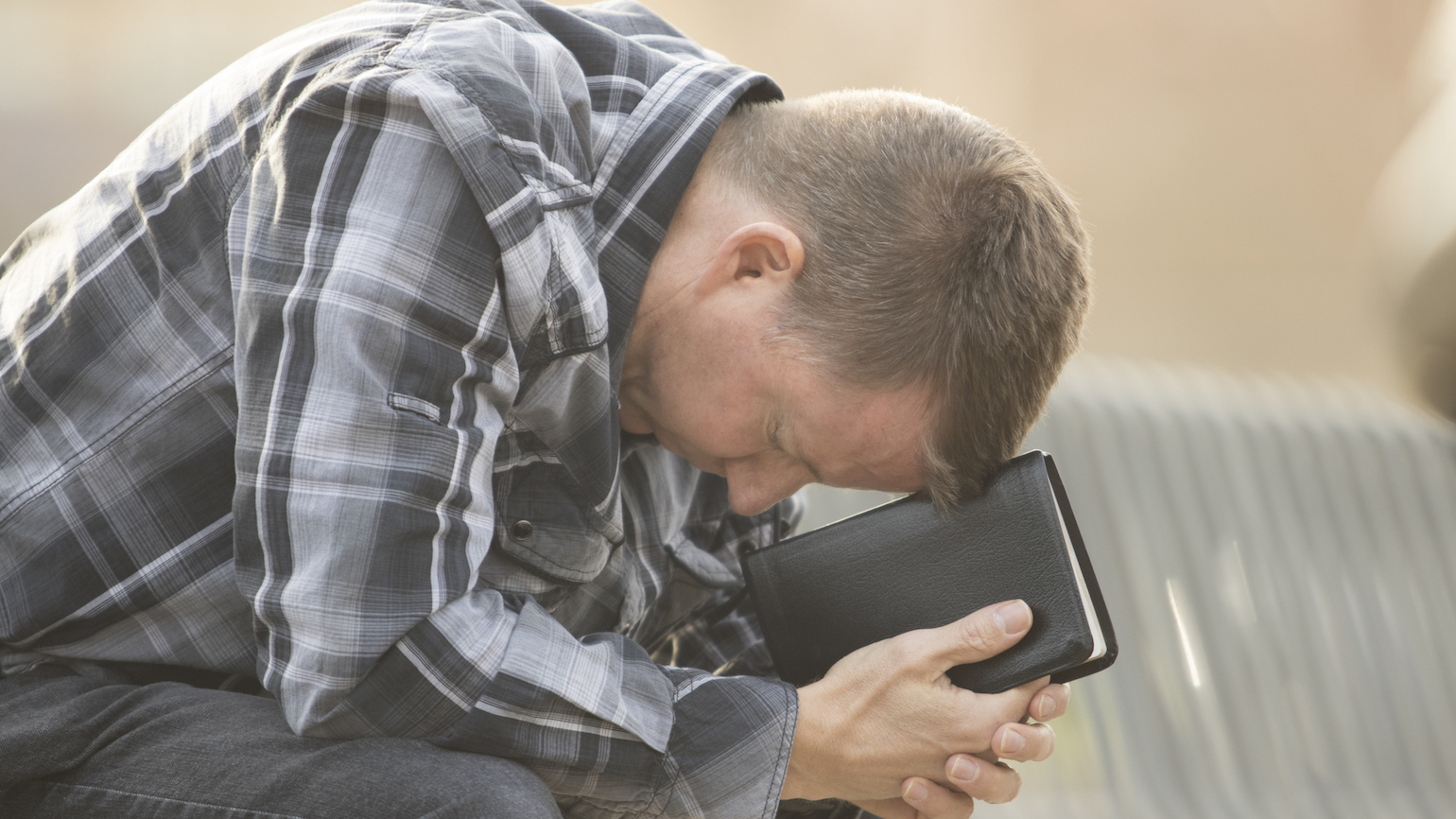
7 Ways to Make Praying Easier

There are few things everyone can agree on, but this may just be one of them: Praying is hard sometimes.

If it weren’t hard, we’d do it more, right? Sure, at its most basic, prayer is simply talking to God, anywhere and everywhere. But many people struggle to pray. Why? What makes something that we easily agree is important—even crucial—such a struggle? I think the answer is usually one or more of the following:

1) You don’t know how.

Many of us learned to pray as children—mostly table graces and bedtime prayers. But how many people reach adulthood without any additional instruction? Sure, we hear and read many admonitions to pray, in sermons and elsewhere, but few people can say they’ve been taught or mentored in prayer. That’s why I think it’s important to read the Gospels often, to learn how to pray from Jesus. The Lord’s Prayer is always a great place to start, but prayer is just speaking freely and openly to God from your heart.

2) You’re busy.

As the candy commercial says, “Life comes at you fast.” The pace of modern life leaves little time for prayer; we’re just too busy. But it’s not the culture alone that has made it so. We are busy because we choose to be busy. We are busy because we don’t choose the alternative but let others dictate our daily agenda. That’s why I think it’s important to prioritize morning prayer; it is one way to assert control over the entire day.

3) You’re easily distracted.

Sometimes we make a start in prayer, but a noise or thought interrupts our efforts. But I think it’s important to see “distractions” as prayer “prompts” instead of interruptions (I even blogged about it here), reminding you that anything and everything can move you to prayer.

4) Embarrassment makes you want to hide.

Any relationship suffers when one party has wronged another, and our relationship with God is no different. When we mess up, it makes us want to run and hide from God, like our first parents (see Genesis 3:8). That’s why I think confession is crucial to a healthy prayer life (see here for tips on how to confess well). Remembering that God loves you unconditionally can make you feel safe sharing even your embarrassment and your mistakes with God.

5) You don’t see answers.

It can be a vicious circle. We don’t pray because we don’t experience answers to our prayers. But if we don’t pray, we won’t see answers. And so on. That’s one of numerous reasons I often write my prayers in a prayer journal, because it helps me to remember and record answered prayers, turning some pages in my prayer journal into vivid affirmations that God is a prayer-answering God (see here).

6) You’re self-sufficient.

Self-sufficiency is often a good thing. Many of us have learned to chart our own paths, make our own way and rely on ourselves, day by day. A “can do” spirit can do great things. But if we navigate our daily lives using only our own wisdom and strength, we will be ill-equipped when skies darken and storms arise. That is among the reasons I pray even when I don’t “need” to pray, as this post explains, because regular prayer stores up in me a treasury of faith and familiarity that is always available, and especially when great needs present themselves.

7) You’re experiencing doubt.

We often talk about believing in God, but prayer happens only when we believe God. If we really believed God when He says, “Apart from me you can do nothing” (John 15:5, NIV), wouldn’t we pray? If we believe that “My help comes from the Lord, the Maker of heaven and earth” (Psalm 121:2, NIV), we will pray. If we believe that “If you remain in me and my words remain in you, ask whatever you wish, and it will be done for you” (John 15:7, NIV), we will pray. If we believe that “Every good and perfect gift is from above” (James 1:17, NIV), we will pray. The more I believe God, the more I pray. And the more I pray, the more I believe God. That’s why I am learning to rely daily on prayer, because I am learning to believe God more.

7 Ways to Make Prayer Part of Your Morning Routine

I used to think that praying every morning would require me to get out of bed earlier and devote a block of time to prayer. But one of the many things I learned on regular prayer retreats in a real, honest-to-goodness monastery was that (for me, at least) finding ways to incorporateprayer into my daily rhythms and routines was far more productive.

So, while it will probably look different for every individual, here is a suggested strategy for connecting specific prayers to your morning routine:

1) Pray as you sit up in bed.
“O God, come to my assistance; O Lord, make haste to help me.”

2) Pray as you walk (or, if you’re like me, stumble) to the bathroom.
“Praise the Father and the Son and the Holy Spirit, as it was in the beginning, is now, and will be forever. Amen.”

3) Pray while you’re in the bathroom.
“Most merciful God, I confess that I have sinned against You in thought, word, and deed, by what I have done, and by what I have left undone. I have not loved You with my whole heart; I have not loved my neighbor as myself. I am truly sorry and I humbly repent; for the sake of Your Son Jesus Christ, have mercy on me and forgive me; that I may delight in Your will and walk in Your ways, to the glory of your Name. Amen.”

4) Pray as you shower.
Sing a hymn or worship song, such as “Joyful, Joyful, We Adore Thee,” “Morning Has Broken,” or “10,000 Reasons.”

5) Pray as you brush your teeth and comb your hair.
Say the Lord’s Prayer.

6) Pray as you get dressed.
Pray for the coming day. “Present your requests to God” (Philippians 4:6, NIV). Give Him your worries, needs, hopes, dreams. Pray for those you care about. Thank Him for blessings you enjoy.

7) Pray as you finish getting dressed.
“Almighty Lord and God, protect me by Your power through the course of this day, even as You have enabled me to begin it. Do not let me turn aside to any sin, but let my every thought, word, and deed aim at doing what is pleasing in Your sight, through my Lord Jesus Christ, Your Son, who lives and reigns with You and the Holy Spirit, one God, for ever and ever.”

You may, of course, choose to alter or adapt some of the above. You may at first need to print out #1-7 and put it on your bedside table as you retire so you can refer to it each morning.

Within a very short time, however, your subconscious will associate each of those activities with those prayers or hymns, making your prayer and worship intrinsic to your morning routine. Eventually, you’ll wonder how you ever made it through the day any other way.

7 Ways to Experience the Comfort of Silence

Silence is not just for introverts. Sure, I’m an introvert. And yes, my first prayer retreat to a monastery where silence was observed (except in corporate worship) was a prayer-life-altering experience for me. And okay, I took my extrovert wife along with me a couple years later to the monastery with fear and trepidation, unsure whether she would survive four days and three nights of silence.

But that’s when she and I both discovered that silence is a boon for everyone: introverts, extroverts and ambiverts.

Community Newsletter

Get More Inspiration Delivered to Your Inbox

Notice: JavaScript is required for this content.

/* FORM STYLES */

#nf-form-5-cont {
background-color:#ffffff;
border-radius:35px;
-webkit-border-radius:35px; }

/* FIELDS STYLES */

.nf-form-content .nf-field-container #nf-field-27-wrap {
margin:0;
border-radius: 25px;
-webkit-border-radius: 25px; }
.nf-form-content .nf-field-container #nf-field-27-wrap .nf-field-element .ninja-forms-field {
background-color:#ffffff;
border-color:#ffffff;
margin-bottom:0;
border-radius: 25px;
-webkit-border-radius: 25px; }
.nf-form-content .nf-field-container #nf-field-28-wrap {
width:120px;
}
.nf-form-content .nf-field-container #nf-field-28-wrap .nf-field-element .ninja-forms-field {
background-color:#00ab84;
width:120px;
}
.nf-form-content .nf-field-container #nf-field-28-wrap .nf-field-element .ninja-forms-field:hover {
background-color:#00ab84;
}


var formDisplay=1;var nfForms=nfForms||[];var form=[];form.id=’5′;form.settings={“objectType”:”Form Setting”,”editActive”:true,”title”:”Sign up for Newsletter”,”show_title”:0,”allow_public_link”:0,”embed_form”:””,”clear_complete”:0,”hide_complete”:0,”default_label_pos”:”above”,”wrapper_class”:”master-signup-form-wrap”,”element_class”:”master-signup-form”,”key”:””,”add_submit”:0,”currency”:””,”unique_field_error”:”A form with this value has already been submitted.”,”logged_in”:false,”not_logged_in_msg”:””,”sub_limit_msg”:”The form has reached its submission limit.”,”calculations”:[],”container_styles_show_advanced_css”:1,”title_styles_show_advanced_css”:0,”row_styles_show_advanced_css”:0,”row-odd_styles_show_advanced_css”:0,”success-msg_styles_show_advanced_css”:0,”error_msg_styles_show_advanced_css”:0,”formContentData”:[{“order”:1,”cells”:[{“order”:0,”fields”:[“master_signup_email”],”width”:66},{“order”:1,”fields”:[“subscribe_now_1660636976556″],”width”:34}]}],”changeEmailErrorMsg”:”Please enter a valid email address!”,”changeDateErrorMsg”:”Please enter a valid date!”,”confirmFieldErrorMsg”:”These fields must match!”,”fieldNumberNumMinError”:”Number Min Error”,”fieldNumberNumMaxError”:”Number Max Error”,”fieldNumberIncrementBy”:”Please increment by “,”formErrorsCorrectErrors”:”Please correct errors before submitting this form.”,”validateRequiredField”:”This is a required field.”,”honeypotHoneypotError”:”Honeypot Error”,”fieldsMarkedRequired”:”Fields marked with an * are required”,”container_styles_background-color”:”#ffffff”,”container_styles_border”:””,”container_styles_height”:””,”container_styles_margin”:””,”container_styles_padding”:””,”container_styles_float”:””,”container_styles_advanced”:”border-radius:35px;n-webkit-border-radius:35px;”,”title_styles_border”:””,”title_styles_height”:””,”title_styles_width”:””,”title_styles_font-size”:””,”title_styles_margin”:””,”title_styles_padding”:””,”title_styles_float”:””,”row_styles_border”:””,”row_styles_width”:””,”row_styles_font-size”:””,”row_styles_margin”:””,”row_styles_padding”:””,”row-odd_styles_border”:””,”row-odd_styles_height”:””,”row-odd_styles_width”:””,”row-odd_styles_font-size”:””,”row-odd_styles_margin”:””,”row-odd_styles_padding”:””,”success-msg_styles_border”:””,”success-msg_styles_height”:””,”success-msg_styles_width”:””,”success-msg_styles_font-size”:””,”success-msg_styles_margin”:””,”success-msg_styles_padding”:””,”error_msg_styles_border”:””,”error_msg_styles_width”:””,”error_msg_styles_font-size”:””,”error_msg_styles_margin”:””,”error_msg_styles_padding”:””,”drawerDisabled”:false,”export_settings”:[],”form_title_heading_level”:”3″,”ninjaForms”:”Ninja Forms”,”fieldTextareaRTEInsertLink”:”Insert Link”,”fieldTextareaRTEInsertMedia”:”Insert Media”,”fieldTextareaRTESelectAFile”:”Select a file”,”formHoneypot”:”If you are a human seeing this field, please leave it empty.”,”fileUploadOldCodeFileUploadInProgress”:”File Upload in Progress.”,”fileUploadOldCodeFileUpload”:”FILE UPLOAD”,”currencySymbol”:”$”,”thousands_sep”:”,”,”decimal_point”:”.”,”siteLocale”:”en_US”,”dateFormat”:”m/d/Y”,”startOfWeek”:”1″,”of”:”of”,”previousMonth”:”Previous Month”,”nextMonth”:”Next Month”,”months”:[“January”,”February”,”March”,”April”,”May”,”June”,”July”,”August”,”September”,”October”,”November”,”December”],”monthsShort”:[“Jan”,”Feb”,”Mar”,”Apr”,”May”,”Jun”,”Jul”,”Aug”,”Sep”,”Oct”,”Nov”,”Dec”],”weekdays”:[“Sunday”,”Monday”,”Tuesday”,”Wednesday”,”Thursday”,”Friday”,”Saturday”],”weekdaysShort”:[“Sun”,”Mon”,”Tue”,”Wed”,”Thu”,”Fri”,”Sat”],”weekdaysMin”:[“Su”,”Mo”,”Tu”,”We”,”Th”,”Fr”,”Sa”],”recaptchaConsentMissing”:”reCaptcha validation couldn't load.”,”recaptchaMissingCookie”:”reCaptcha v3 validation couldn't load the cookie needed to submit the form.”,”recaptchaConsentEvent”:”Accept reCaptcha cookies before sending the form.”,”currency_symbol”:””,”beforeForm”:””,”beforeFields”:””,”afterFields”:””,”afterForm”:””};form.fields=[{“objectType”:”Field”,”objectDomain”:”fields”,”editActive”:false,”order”:1,”idAttribute”:”id”,”label”:”Email”,”type”:”email”,”key”:”master_signup_email”,”label_pos”:”hidden”,”required”:1,”default”:””,”placeholder”:”@Your email”,”container_class”:”master-email-wrap”,”element_class”:””,”admin_label”:”master_signup_email”,”help_text”:””,”custom_name_attribute”:”email”,”personally_identifiable”:1,”wrap_styles_border”:””,”wrap_styles_width”:””,”wrap_styles_margin”:0,”wrap_styles_padding”:0,”wrap_styles_float”:””,”wrap_styles_show_advanced_css”:1,”label_styles_border”:””,”label_styles_width”:””,”label_styles_font-size”:””,”label_styles_margin”:0,”label_styles_padding”:0,”label_styles_float”:””,”label_styles_show_advanced_css”:0,”element_styles_border”:””,”element_styles_width”:””,”element_styles_font-size”:””,”element_styles_margin”:0,”element_styles_padding”:0,”element_styles_float”:””,”element_styles_show_advanced_css”:1,”cellcid”:”c4722″,”value”:””,”drawerDisabled”:false,”wrap_styles_advanced”:”margin:0;nborder-radius: 25px;n-webkit-border-radius: 25px;”,”element_styles_background-color”:”#ffffff”,”element_styles_border-color”:”#ffffff”,”element_styles_advanced”:”margin-bottom:0;nborder-radius: 25px;n-webkit-border-radius: 25px;”,”manual_key”:true,”id”:27,”beforeField”:””,”afterField”:””,”parentType”:”email”,”element_templates”:[“email”,”input”],”old_classname”:””,”wrap_template”:”wrap”},{“objectType”:”Field”,”objectDomain”:”fields”,”editActive”:false,”order”:2,”idAttribute”:”id”,”label”:”Subscribe Now”,”type”:”submit”,”cellcid”:”c4725″,”processing_label”:”Processing”,”container_class”:””,”element_class”:””,”key”:”subscribe_now_1660636976556″,”wrap_styles_border”:””,”wrap_styles_width”:120,”wrap_styles_margin”:0,”wrap_styles_padding”:0,”wrap_styles_float”:””,”wrap_styles_show_advanced_css”:1,”element_styles_border”:””,”element_styles_width”:120,”element_styles_font-size”:””,”element_styles_margin”:0,”element_styles_padding”:0,”element_styles_float”:””,”element_styles_show_advanced_css”:0,”submit_element_hover_styles_border”:””,”submit_element_hover_styles_width”:””,”submit_element_hover_styles_font-size”:””,”submit_element_hover_styles_margin”:””,”submit_element_hover_styles_padding”:””,”submit_element_hover_styles_float”:””,”submit_element_hover_styles_show_advanced_css”:0,”wrap_styles_advanced”:””,”element_styles_background-color”:”#00ab84″,”submit_element_hover_styles_background-color”:”#00ab84″,”drawerDisabled”:false,”id”:28,”beforeField”:””,”afterField”:””,”value”:””,”label_pos”:”above”,”parentType”:”textbox”,”element_templates”:[“submit”,”button”,”input”],”old_classname”:””,”wrap_template”:”wrap-no-label”}];nfForms.push(form);

Don’t believe me? Try it. You’ll probably be surprised at the effects of silence, even if you never take a silent retreat. Here are a few tips for beginners:

1)  Don’t Be Afraid
Silence can be intimidating at first, simply because you’re not used to it. How often do you experience real silence? Hardly ever, as we’re constantly surrounded by muzak, traffic sounds, radio and television, etc. But no matter how strange it may seem at first, try embracing the quiet.

2)  Start Small
Find a quiet place and set the timer on your phone for five minutes. Try spending those minutes without external stimuli. Your mind may whirl frantically in the silence, but that’s okay. With time, your brain will begin to make adjustments.

3)  Breathe
One way to channel mental distractions is to focus your mind on your breathing. Inhale through your nose, exhale through your mouth. Feel your lungs expand. Let your breathing affect your posture. Make each breath a one-word prayer, perhaps asking God to “fill” your life with good things as you inhale and “cleanse” you of stress, fear, or illness as you exhale.

4)  Try a Daily or Weekly Technology Fast
Instead of reading on your smart phone during lunch, try eating in silence, savoring every bite. Or program your phone to block calls and your computer to “sleep” for a certain period every day; use that time to slow down, breathe deeply and think freely. You might even fast from technology on your day off or all weekend—people survive such rigors, you know.

5)  Take a Walk
Find a park or woodland path, silence your phone and take a stroll. When’s the last time you actually strolled?

6)  Observe
Freedom from aural stimuli can focus other senses. So, while you spend time in silence, set your other senses free. Notice the shapes and colors that surround you. Touch different textures. Breathe deeply of various scents.

7)  Write
Silence need not mean inactivity. You may find (as I always do) that a little silence ignites your creativity and organizes your mind. Keep a pen and notebook handy to write down ideas, memories and prayers that occur to you in the silence.

After her first day at the silent monastery, my wife was alone in her private room and heard talking in the hall (where people were supposed to maintain the silence). She tried to be patient, but the “noise” soon disturbed her so much, she opened the door and shot a look at the offenders! She told me afterward of how surprised she was to learn that silence had so quickly become so important to her in that place. I nodded. I understood completely.

7 Ways to Confess Well

A clear conscience before God and others. Improved sleep habits. A better sense of your strengths and weaknesses. A growing intimacy with God. Stronger self-control. Increasing likeness to Jesus Christ. These are just some of the benefits that come from learning to confess our sins in prayer and doing it regularly.

These days, however, confession is seldom talked about and even less frequently practiced, even by the most experienced and mature followers of Jesus. But it is still possible to learn how to confess well, particularly by following the example of King David.

Psalm 51 in the Bible has long been identified with David and his devastating sin with Bathsheba and the exposure of that sin by the prophet Nathan. It certainly tracks well with the biblical account of that episode (see 2 Samuel 11-12). It also provides seven keys to remember in confessing our own sins:

1) Remember God’s nature.
David began his psalm, “Have mercy on me, O God, according to your unfailing love; according to your great compassion blot out my transgressions” (Psalm 51:1, NIV). The basis of our confession is God’s unfailing love and willingness to forgive. Nothing else. Not our past “righteousness” or imagined worthiness. Not any mitigating circumstances. Only God’s nature.

Read More: 4 Ways to Pray Yourself Clean

2) Call it what it is.
David prayed, “Wash away all my iniquity and cleanse me from my sin. For I know my transgressions, and my sin is always before me” (Psalm 51:2-3, NIV). He called sin “sin.” He didn’t whitewash it or excuse it. He didn’t refer to it as a “mistake.” It gets us nowhere to use “weasel words” in confessing.

3) Take full responsibility.
David used the word “my” five times in the first three verses of Psalm 51: “my transgressions,” “my iniquity,” “my sin,” “my transgressions,” and “my sin” (Psalm 51:1-3, NIV). Sure, he’s repeating himself. But he’s blaming no one but himself, which is key to a good and thorough confession.

4) Get specific.
David went on to pray, “Against you, you only, have I sinned and done what is evil in your sight; so you are right in your verdict and justified when you judge” (Psalm 51:4, NIV). If the background of Psalm 51 is David’s sin with Bathsheba, then I can think of at least three people he sinned against, in addition to God (Uriah, Bathsheba, and the child of David and Bathsheba, who died in infancy). But all sin is first and foremost against God, so perhaps David’s focus is correct if not comprehensive (like the prodigal son in Jesus’ story, who said, “Father, I have sinned against heaven and against you” (Luke 15:21, NIV).

5) Claim God’s forgiveness.
After confessing his sin, David makes a catalog of requests:

Cleanse me with hyssop, and I will be clean;

wash me, and I will be whiter than snow.

Let me hear joy and gladness;

let the bones you have crushed rejoice.

Hide your face from my sins

and blot out all my iniquity.

Create in me a pure heart, O God,

and renew a steadfast spirit within me.

Do not cast me from your presence

or take your Holy Spirit from me (Psalm 51:7-11, NIV).

Interestingly, the New Testament writer of 1 John promised, “If we confess our sins, He is faithful and just and will forgive us our sins and purify us from all unrighteousness” (1 John 1:9, NIV). He drew a straight line from confession to forgiveness and cleansing. He didn’t say we need to plead or beg or cajole; we simply confess and God freely forgives.

6) Renew your commitment.
David seems to be on a roll in his penitential psalm. He goes on to make further requests of God: “Restore to me the joy of your salvation and grant me a willing spirit, to sustain me” (Psalm 51:12, NIV). Once we have confessed our sins and laid hold of God’s free and full forgiveness, it is only appropriate to renew our commitment to Him and seek the joy of His presence.

7) Move on to other prayers.
Finally, David seems to move beyond confession to praise and petition in his psalm. He declares his intention to “teach transgressors your ways” (v. 13). He asks God to open his lips in praise (v. 15). He asks God to prosper Zion and “build up the walls of Jerusalem” (v. 18). Similarly, when we have confessed well, we will find that praise and petition flows from our lips more naturally and abundantly than before, as the overflow of a clean heart and a renewed spirit.

7 Questions to Pray

There are many kinds of prayers. Petitions, of course, in which you ask God to do something. Intercessions (asking God to do something for or through someone else). Confession. Thanks. Praise.

But did you know you can also pray your questions? Many of the prayers in the Bible—though they are often overlooked as prayers—are questions, from Cain’s “Am I my brother’s keeper?” (Genesis 4:9) to the martyrs’ “How long, Sovereign Lord, holy and true, until you judge the inhabitants of the earth and avenge our blood?” (Revelation 6:10). Praying your questions is clearly a practice with biblical precedent.

So what are some good questions to pray? Here are seven to get you started:

1) “What now?”
Probably the most common question people pray is “Why?” Especially, “Why me?” I’ve prayed those myself, many times. But I’ve never received much of an answer to either one. I’ve gotten much better results with the question, “What now?”

2) “Why do I do that?”
Sometimes I think God is just waiting for me to ask this question, like a loving parent hoping for a child to see the need for change and improvement in an unprofitable, even destructive, habit.

3) “My God, my God, why have you NOT forsaken me?”
Both David and Jesus, of course, prayed one of the most famous “question prayers”: “My God, my God, why have you forsaken me?” (Psalm 22:1, Matthew 27:46). Nothing wrong with that. But I more often pray, “My God, my God, why have you NOT forsaken me?”

4) “What do you want me to pray?”
It has taken me a long time, but I have learned to pray this question often, usually before I pray anything else. It places me in a listening posture, and I am often surprised at the ways it is answered.

5) “What are you trying to tell me or teach me?”
This prayer, too, helps me to listen to God’s voice, which is a huge need I have. I tend to talk way too much. I don’t always ask this question when I am frustrated or stymied; sometimes I remember to ask it as a way of “checking in” and reflecting both on recent events and future directions.

6) “Where are you at work?”
I tend to try hard to get God enlisted in my agenda and endorsing my actions. These days, while I’m not yet good at it, I am getting better at asking God to show me areas and people in which He seems to be acting and moving, so I can pray for and support those efforts.

7) “What are we going to do together today?”
I love this prayer. It reminds me not to launch into each day’s challenges and opportunities under my own power, but to place my hand in God’s hand and walk with him.

These are far from the only questions I pray, and they’re not the only questions you will want to pray. In fact, you probably have others that come quickly to mind. But the above are some of the more frequent among my “question prayers,” and I hope they’ll get you started or add to your prayer repertoire.

7 More Great Prayer Tips

I shared in a previous post the results of a question I posed to my friends on Facebook: What has been the biggest breakthrough or most helpful “tip” you’ve ever received or experienced in energizing your prayer life? The results were gratifying…and inspiring.

So many people responded that I couldn’t fit them all into one post. So here are seven more prayer tips culled from the experiences of my friends:

1) Start by listening.
Lora, who lives in Pennsylvania, says she has learned “to not pray for what I think a person needs, but to wait on God until I hear how He wants me to pray. When people ask me to pray, I only want to hear about the situation…just the facts. Then I’ll take it to God and find out what He is speaking into the situation and pray according to His desires, not anyone else’s.”

2) When words won’t come, you can groan or sob.
Michigan resident Gloria says, “There have been times when all I could do was moan to Him. Words wouldn’t come, only the groaning of my spirit.”

Linda from Pennsylvania describes a similar practice: “One family I’m praying for in particular, where the husband/father has an aggressive brain tumor. The wife/mom updates us through her blog posts. Whenever I start praying for them, there are no words—just these gut-wrenching sobs that I can’t stop or control. For a while I would try to ‘start over’ to do it right, till I realized the Spirit knows what I’m praying for—and that those sobs are probably the most intimate, heartfelt prayers I offer up.”

3) Pray about every little thing.
Amy from New York says, “When my children were younger and had a problem or concern, I would always ask if they had prayed about it! I tried to teach them that they can talk to God just like they talk to their friends or mom and dad. Just, ‘God, please help me with my math test today!’ or ‘Connie is in the hospital and I’m scared for her, please help her get better!’ My 16-year-old now says she prays her way through school sometimes (if she is sad or someone is not being kind or if a teacher is out sick) so I guess it worked!”

4) Pray breath prayers.
Ohio resident Donna says she prays a single, short prayer throughout the day: “Lead, guide and direct me.”

5) Pray tactically.
Maureen from New York says, “I learned from my husband, whose Mom taught him: When struggling with an area of temptation, pick a missionary and pray for them. Every time the temptation comes to mind, immediately start praying for the missionary you picked. Satan doesn’t like prayer, so he often lets up on the temptation.”

6) Say “thank you.” A lot.
Samantha, who lives near Birmingham, England, says she has learned to “say thank you—no matter what the circumstance because without God it would be a hundred times worse, and He has a plan. He might be teaching you something, so even when you’re not happy with Him and circumstances, say ‘thank you.’”

7) Pray all day.
Coralee from Ohio says, “I try to pray all during the day. God seems to just bring people and situations to mind.”

And Cindy from New York says prayer has “become a part of my very being! Some days I feel that I am in constant prayer. I can focus during the chaos and in the stillness because it is an ongoing dialog. A friend taught me years ago that I don’t need to summon God; He’s with me constantly, and He’s always listening.”

7 Moments When Jesus Turned to Prayer

There are no bad times to pray, except maybe out loud in the middle of a concert or movie. But, generally speaking, prayer is suitable for every occasion. Still, there are times when we may not automatically turn to prayer, even though maybe we should.

Recently I took a few moments to scan the instances when the Bible describes Jesus praying, to see if noticing when He prayed could reveal something. And I think it did. Consider these seven moments when Jesus turned to prayer:

1) On Special Occasions
Luke’s account of Jesus’ baptism by His cousin John includes an often-overlooked detail. It says, “When all the people were being baptized, Jesus was baptized too. And as he was praying, heaven was opened” (Luke 3:21 NIV). Of course, Jesus was praying as He was being baptized; it was a special occasion. It was (forgive me for this) a watershed event and thus a perfectly appropriate moment to pray. As it was for Him, so it is for us; baptisms, holidays, weddings, funerals, reunions and other special events offer a reminder and an occasion for prayer.

2) During Demanding Seasons
We know, of course, that after His baptism Jesus entered the Judean wilderness to be tempted by the devil. There, He prayed and fasted for 40 days and nights (see Matthew 4, Mark 1, Luke 4), which probably contributed to His success over temptation. Likewise, when we face demanding seasons—adjusting to a new job, preparing for a new round of treatments, etc.—prayer can help us face and meet the challenge.

3) Before a Big Decision
On the night before choosing His 12 closest disciples, Jesus “spent the night praying to God” (Luke 6:12 NIV). Such a crucial decision prompted an all-night prayer session. How often do we try to face such weighty moments all on our own, rather than turning to God for wisdom and guidance?

4) When Missing Someone
The Bible mentions that Jesus “often withdrew to lonely places and prayed” (Luke 5:16 NIV). He probably needed a retreat from the crowds that thronged Him, but we might also wonder if He even missed the kind of heavenly fellowship with the Father that He had enjoyed before taking on human flesh. In any case, we can learn from Jesus that prayer in “lonely places” can temper our loneliness when we’re missing someone.

5) In Concert with Others
Luke’s Gospel tells of one time when Jesus “took Peter, John and James with him and went up onto a mountain to pray” (Luke 9:28). On that occasion, Jesus’ three closest friends were there to see Him in the company of two other friends—Elijah and Moses! Similarly, some of the most transformative times of prayer for us will be when we pray with others—in church, perhaps, or in a small group or even a sidewalk café.

6) When in Need
Jesus’ prayer session in the Garden of Gethsemane surely ranks as His most heartfelt—most desperate, even (see Luke 22:40-44). The Bible accounts of this event (in all four gospels) form an amazing depiction of the Son of God and Son of Man in great and urgent need. We may never face such a “Gethsemane moment,” but the Bible urges us to “pray in the Spirit on all occasions with all kinds of prayers and requests” (Ephesians 6:18 NIV), laying our needs, trivial and otherwise, before God.

7) When in Pain
Jesus prayed repeatedly while in pain on the cross. He cried out in desperation, quoting from a psalm that told the whole tale of His suffering (see Matthew 27:46). He prayed for those who were hurting Him (see Luke 23:34). And He uttered a prayer of surrender of Himself into the Father’s hands (see Luke 23:46). We follow His example when we pray in pain—even when our prayers are inartful or inarticulate.

These seven moments when Jesus prayed can help us, as we see that occasions and opportunities for prayer are all around us, wherever we go and whatever we do.

6 Inviting Places to Pray

The Bible describes Jesus frequently withdrawing to “lonely” or “solitary” places to pray (Mark 1:35, Luke 5:16).

Surely He could have prayed at home or in the synagogue, right? He was Jesus, after all. You’d think He could have prayed anywhere. And He probably did, but He also probably knew a little more about prayer than most of us do. Maybe this:

A change of scenery can enhance your prayer life.

I’ve certainly found this to be the case. In fact, I have often found new energy and sweetness in prayer in one of these seven cool and inviting places to pray:

1. Churches
“Well, of course,” you might say. But I mean empty (or largely empty) churches. Many churches (particularly in urban areas) open their doors for prayer during the week. Some even have tiny chapels set aside for private prayer.

2. Parks
Maybe this is too obvious, but among my favorite places to pray are the trails and benches in the municipal and state parks near where I live.

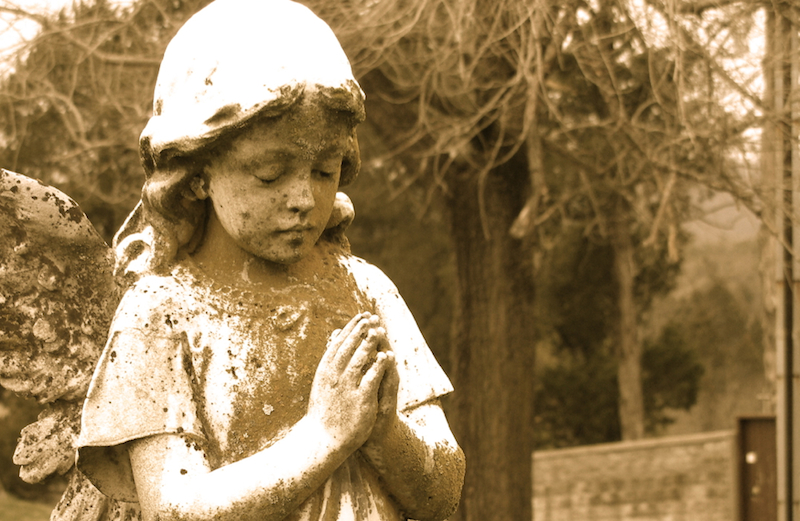
A cemetery angel prays. Where are your favorite places to pray?3. Cemeteries
Sure, some cemeteries are depressing places. But many are breathtakingly beautiful and inspiring. Whether you walk the grounds or rest on a bench, praying in a cemetery can underscore the shortness of this life and the imminence of eternity like few other places.

4. Hotels and Airports
Did you know that many airports have interfaith chapels for prayer and meditation? So do most hospitals. I’ve prayed often in these quiet, usually out-of-the-way spots, and have seldom (if ever) encountered anyone else there.

5. Gardens
Is there a botanical garden or arboretum near your home? You might be surprised; there are probably more than you think. Some charge an admission fee, but many are free to enjoy. And they make great places to pray.

6. Outdoors at Night
Have you ever prayed while lying on your back in a field (or your back yard) while gazing up at the stars? It is a memorable and beautiful way, as Wendell Berry said, to “coordinate our human celebration with the great liturgy of the heavens.”

Have you prayed in any of these places? Have you tried other prayer places? What was your experience like?

7 Bible Prayers for Our Nation—and the World

Every year I get excited as the 4th of July holiday approaches. The freedoms Americans enjoy are worth celebrating, even as we remember and pray for those who don’t enjoy those same freedoms.

This year, why not make one or more of these prayers, drawn from the Bible, a part of your celebration, perhaps printing them and kicking off your cookout by taking turns reading through them? You might even make them an annual Independence Day tradition.

1)  Psalm 113:4, KJV
Lord God, Your Word says that You are “high above all nations, and [Your] glory above the heavens.” We live in a nation of many different creeds and convictions, ethnicities and backgrounds, but we know that You love and reign over us all.

Please let the ways we exercise our freedoms reflect Your holiness and Your compassion, “that your ways may be known on earth, your salvation among all nations” (Psalm 67:2, NIV).

2)  Psalm 67:1-5, NIV
God, “be gracious to us and bless us and make [Your] face shine on us” as a nation. Make us strong but peaceful. Make us just and also merciful. Make us prosperous and generous. Make us a beacon of freedom and righteousness in a needy world.

3)  Psalm 122:6-8, NIV
Heavenly Father, like the psalmist’s plea, we pray for Jerusalem while praying also for our nation and region and all those who face threats to their safety and security: “May those who love you be secure. May there be peace within your walls and security within your citadels.” For the sake of those souls You love and the world for which Jesus died, I will say, “Peace be within them all.”

4)  Psalm 133:1-3, NIV
As Your Word says, Lord, “How good and pleasant it is” when people live together in unity—how refreshing and how cleansing. And how much sadness and suffering results when a nation and a people are divided.

Please pour on us a spirit of unity and cooperation like “precious oil,” like “the dew of Hermon,” washing away bitterness and guiding us into mutual respect and shared hope.

5)  Psalm 146:6-8, NIV
Lord God, Maker of heaven and earth, the sea and everything in them—You remain faithful forever. On this day when we celebrate our freedoms, we remember those in different circumstances.

We ask You, as Your Word says, to uphold the cause of the oppressed and give food to the hungry. Set prisoners free, give sight to the blind, lift up those who are bowed down, wherever they are, whatever language they speak, whatever nationality they claim, that they too may soon possess the kinds of benefits we enjoy today.

6)  John 8:3, NIV
Jesus, while You walked this earth, You proclaimed, “If the Son sets you free, you will be free indeed.” Thank You for all of our freedoms, including those we often overlook or take for granted, foremost among them freedom from condemnation and punishment.

Please let the freedom found in Christ be known not only to us but to those who haven’t yet experienced Your great love whether they live in our community, state, nation or in other nations from one end of the earth to the other.

7)  Revelation 5:9, NIV
Lamb of God, saints and angels in heaven are right in singing, “You are worthy to take the scroll and to open its seals, because you were slain, and with your blood you purchased for God persons from every tribe and language and people and nation.”

Let Your kingdom come to every tribe and language and people and nation. Deliver us from the bigotry and hatred that divide us. Help us to rejoice instead in the great diversity of Your Creation, to find and focus on the humanity we share and the freedoms we treasure.

7 Benefits of Prayer—No Matter the Outcome

In the Bible, Hannah prayed for a child, and later gave birth to Samuel. Elijah prayed for rain, and rain came. Daniel prayed for insight to interpret dreams, and God answered.

On the other hand, Jesus prayed for the “cup” of His looming torture and crucifixion to pass from Him; it didn’t happen. Paul prayed for deliverance from the “thorn” in his side, and instead was given grace to endure it.

I’ve prayed many prayers over the years. Some were answered in the way I hoped. Many were not. But I’ve learned that no matter the answer, I still gain. In fact, getting the answer I want is almost never the best fruit, the greatest benefit, of prayer. As I reflect on the time and energy I’ve spent in praying, I see seven ways I’ve gained, regardless of the outcome:

1) Silence. Sometimes it feels like I’m surrounded—assaulted, even—by noise. But prayer brings into my life periods of quiet that have been a boon to my soul. In prayer, I have often “calmed and quieted myself, I am like a weaned child with its mother” (Psalm 131:2 NIV).

2) Stillness. Similarly, my prayer times become an oasis amid an ever-racing heart, mind and body. I can’t know the extent to which prayer has prevented or delivered me from stress, anxiety, high blood pressure and more. But I’m confident it has.

3) Presence. Some people live their whole lives without experiencing (or acknowledging) the presence of God. How impoverished I would be if I didn’t turn to prayer and experience the joy of His presence (see Psalm 16:11).

4) Perspective. I don’t always get the answers I want when I pray, but I almost always gain a new perspective. My problems seem smaller. My priorities are sorted. The path ahead seems clearer. Even God seems larger than before.

5) Balance. I can say with the psalmist, “as for me, my feet had almost slipped; I had nearly lost my foothold” (Psalm 73:2 NIV). It’s so easy to get off-kilter and out of whack, reacting to external stimuli and teetering on the emotional edge. But prayer re-orients me—“uprights” me. In prayer, I take God’s hand and regain my balance, saying, “as for me, it is good to be near God” (Psalm 73:28 NIV).

6) Peace. It’s hard to express or quantify the cumulative effect of the silence, stillness, presence, perspective and balance that prayer brings into my life. But I can say that the more I pray, the more I experience the promise of Isaiah 26:3: “You will keep in perfect peace all who trust in you, all whose thoughts are fixed on you!” (NLT).

7) Hope. Because I pray often and regularly, I’m never without hope. The hope of healing, deliverance, blessing and goodness perches in my soul and perseveres through every storm. And, even when the hoped-for outcome doesn’t come, my heart and soul are buoyed by the awareness that my good God is working, always working, and somehow planning something better.

6 Ways You Can Pray Like a Bible Hero

Have you ever watched a child do something exactly like one of his or her parents? Some physical features and mannerisms are genetic, of course, but others can only have been acquired through observation and imitation. For example, I recently watched, amazed, as my grandson cut the sandwich he made for his school lunch while it was in a plastic baggie. He didn’t pull that practice out of thin air; he said it’s how his mom does it, to make clean-up easier.

What if we can do something similar by paying a little attention to the prayer habits of Bible heroes?

1) Hide Your Face

Take Moses, for example. On encountering the burning bush in the wilderness, God instructed Moses, “Take off your sandals, for the place where you are standing is holy ground” (Exodus 3:5, NIV). After God identified Himself as “the God of your father, the God of Abraham, the God of Isaac and the God of Jacob,” Moses “hid his face, because he was afraid to look at God” (Exodus 3:6, NIV). Do you ever pray that way? Do you ever cover your face with your hands as you pray? Or even bow down with your face to the ground?

2) Raise Your Arms

On a much later occasion, God’s people were under attack, so Moses went up on a hill overlooking the battle. He lifted his hands—perhaps in a gesture of prayer or blessing. While his arms were raised, the Israelite army prevailed. So Aaron and Hur positioned themselves on either side of Moses to help him keep his hands aloft until the battle was won (see Exodus 17:8-16). Why not try lifting your hands in prayer, raising them toward heaven? Or perhaps cupping your hands as if to receive from God?

3) Ask Boldly

The prophet Elijah seemed to boldly ask God for big answers to prayer. He asked for no rain for three and a half years. Then he asked for it to rain again (1 Kings 17–18). On Mt. Carmel, Elijah challenged the prophets of Baal to a contest and, after they failed, stepped out and prayed, “Lord, the God of Abraham, Isaac and Israel, let it be known today that You are God in Israel and that I am Your servant and have done all these things at Your command. Answer me, Lord, answer me, so these people will know that You, Lord, are God, and that You are turning their hearts back again” (1 Kings 18:36-38, NIV). God answered Elijah’s prayer that day with literal fire from heaven. How boldly do you pray? Do you shy away from asking God for “big” things? Or do you pray like Elijah?

4) Sing Your Prayers

Many of David’s prayers have been preserved to this day because he didn’t just “say them,” he sang them. “I will sing the Lord’s praise, for He has been good to me,” he vowed (Psalm 13:6, NIV). He even sang about singing his prayers to God: “I will sing a new song to You, my God; on the ten-stringed lyre I will make music to You” (Psalm 144:9, NIV). So why not try praying like David? Sing a hymn to God. You can also make up your own tune to one of David’s psalms. Or just put the prayer of your heart into a melody.

5) Pray Three Times a Day

Though a royal decree had recently made his action illegal, “Three times a day [Daniel] got down on his knees and prayed, giving thanks to his God, just as he had done before” (Daniel 6:11, NIV). His practice sent him to the lion’s den, but also contributed to victory over the lions—and the royal decree. Do you pray that way? Three times a day? Perhaps a pattern of morning, noon and evening prayer (see Psalm 55:17) will prepare you for some lion-taming victories of your own.

6) Pray on Your Roof

Acts 10:9 describes a prayer practice of the Apostle Peter: “About noon the following day… Peter went up on the roof to pray” (NIV). Houses in that time and place often had flat roofs that provided cooler and calmer surroundings than the house below (where food was cooked, business conducted and even animals were kept). Do you have a special place of prayer? A quiet place? Why not try praying like Peter and find a spot that encourages focus and fervency in prayer?

These are just six simple prayer habits of some heroes of the Christian faith. We can learn much not only by imitating them but also by paying attention to the practices of others who pray often and well.

What prayer habits have you learned from others?

6 Ways to Use a Prayer Book

Many years ago, my prayers were all spontaneous. I had a prayer list, of course, as many people do, but the prayers I uttered were all off the cuff, so to speak.

That eventually changed, and for a couple decades now, a large proportion of my prayers come from a book. The book itself changes from time to time, from The Psalms in the Bible to The Book of Common Prayer to Phyllis Tickle’s The Divine Hours to Robert Benson’s Venite and more.

When I talk to others about using a prayer book, some people wrinkle their noses. They think (and sometimes say) that prayers-you-read are rote or insincere or even “vain repetitions” (Matthew 6:7, KJV). And I suppose they are, for some people. But not for me. My prayers are richer and often more meaningful and heartfelt because I use a prayer book—not mindlessly or carelessly but with great focus and reward. Here are 7 ways I pray using a prayer book:

1) I usually stand, and often pace, with the book in my hands
Being on my feet seems to focus my mind and heart in a way that sitting (or even kneeling) does not.

2) I speak (or chant) the prayers aloud
Speaking or chanting the written prayers tends to slow me down and prevent me from rushing through or thinking of something else while I’m praying (I use a few simple Gregorian melodies, and change the melody each day; if you’re unfamiliar with using chant in prayer, there are many online resources that explain or can get you started in the practice).

3) I sometimes adapt the prayer book’s wording to me and my circumstances
I might change “thees” and “thines” of some prayers or hymns to “you” and “yours.” I may also change corporate language (“our” and “us”) to singular (“my” and “me”), as well as personalizing in other ways.

4) If a hymn appears in the prayer book and I know the melody, I may sing it—or not
For example, a vespers reading may include verses of the hymn, “Abide with Me”:

Abide with me, fast falls the eventide
The darkness deepens; Lord, with me abide.
When other helpers fail and comforts flee,
Help of the helpless, oh, abide with me.

Sometimes, singing helps my concentration and expression. At other times, however, I find it more helpful to turn the hymn into a spoken prayer.

5) I freely amplify or meditate on specific lines or words in the prayers
I love the familiar phrases of the call to prayer (“O God, come to my assistance; O Lord, make haste to help me”) or opening phrase of Compline (“May the Lord Almighty grant me and those I love a peaceful night and a perfect end”).

But I might start the call to prayer, “O God, come to my assistance; I need you, Lord. I need you now. I need you here,” etc. Or the petition from compline—“Watch, O Lord, with those who wake or watch or weep tonight, and give Your angels charge over those who sleep. Tend Your sick ones, O Lord Christ,” etc.—may become “Watch, O Lord, with those who wake (such as Kevin who is working late tonight and will be very tired on the drive home) or watch (such as Marsha at her husband’s hospital bedside) or weep tonight (especially Bill who still mourns the loss of his father.)” And so on.

6) I sometimes stop to listen, make notes or write in my journal
I keep a pen and journal nearby so that when a prayer or portion of scripture prompts a thought, I can put a bookmark in the prayer book and write away. I may also fold the book on my lap and just stand, pace or sit in God’s presence for a while. After all, the process is about the journey—and my Companion—not about reaching a destination.

My practices may not appeal to everyone, and I often change parts or all of my routine. Some days (or months, even) my prayers are still very unscripted and spontaneous. But I have found great pleasure and reward in using various prayer books, so I find it easy to imagine that others may too.