


Embrace God's truth with our new book, The Lies that Bind

One Woman’s Frantic Thanksgiving Prayer

“You doing anything special for Thanksgiving?” If one more person asked me that, I was going to lose it. I just wanted the whole thing to be over with. Like most years.

Thanksgiving had never been the happiest holiday for me. When I was little, it was fun seeing my cousins, aunts and uncles. Then my father left. Thanksgiving dinner became subdued, less a celebration and more a reminder of how my family was splitting apart, not coming together.

Now I was divorced. The past year had been such a downer for me. I’d had to move to a smaller, cheaper apartment. Then my hours had been cut back at my bookstore job. I didn’t feel like being around a lot of people, let alone pretending to be thankful for something. Not this year especially. I just wanted to stay home with my two cats and sleep in. Maybe I’d watch a movie.

If only my well-meaning coworkers hadn’t kept asking, “Linda, what are your plans for Thanksgiving?” At first I’d been honest, but the looks of pity I got were too much. So I changed my reply to a casual, “Oh, I might have a few people over.” That worked better. Nobody pursued it.

Except my twentysomething coworker Jessica. She approached me as we were closing up the Tuesday before Thanksgiving. “I know this is a lot to ask,” she said shyly, “but my family lives out of town. Would you have room for one more?”

I started to grind my teeth. Jessica looked at me all doe-eyed. She was so sweet and innocent. I couldn’t crush her hopes. “Of course, Jessica. I’d love to have you join us.”

Her face lit up. “I’ll bring my mom’s famous creamed corn. How many people are coming?”

I blurted out a number at random and Jessica went off with a spring in her step. I felt like a woman on her way to the gallows. What was I going to do now, when it would be just the two of us with enough creamed corn to feed an army?

As soon as I got home I called friends who lived too far away to bail me out. “Tell your coworker the truth,” one said. “Say you’re sick,” another offered. “Pray” was the third suggestion.

My thoughts were too scrambled to come up with any prayer more coherent than People. Turkey. Chairs. I muttered it, pacing my apartment. Even my cats, who were normally clamoring for dinner the minute I walked through the door, steered clear, alarmed.

You got yourself into this fix, I thought. Don’t expect God to get you out of it.

I fed the cats and rushed out to the grocery store. I threw a 20-pound turkey, a bag of sweet potatoes, an extra-large can of cranberry sauce and a couple of frozen pumpkin pies in my cart. For drinks I grabbed a few jugs of apple cider and I was done.

The total at the checkout made me wince.

“Wow, you’re feeding an army,” the clerk said.

Army? That’s right! Weren’t soldiers lonely on holidays? Not to mention hungry. I lugged my groceries home and called the USO. The man who answered sounded thrilled.

“How cool of you!” he said. “I’ll post a notice about it on our bulletin board.”

My face warmed with shame. I wasn’t doing this out of the goodness of my heart. I was doing it to avoid the humiliation of having Jessica be my only guest.

Where else could I find hungry people who were far from home? A college! St. Mary’s was nearby. Surely they had international students. I called.

“That’s very kind of you,” the coordinator of the international program said. “I’m sure some of our students would love to experience a true American Thanksgiving.”

I dug out my address book and phoned people I hadn’t seen in years. “Let’s catch up over turkey,” I said. I knocked on neighbors’ doors and asked them to drop by. So what if I’d only nodded to them in passing? Or if some of them didn’t speak English?

I even invited a man at work whom I’d secretly nicknamed Gloomy Gus. “I doubt I’ll be able to come,” he said. “I’ve been having car trouble.”

“No problem. I’ll have someone pick you up,” I said.

All too soon it was Thanksgiving morning. Except for Jessica, no one had actually confirmed they were coming. I couldn’t waste time worrying about that, though. I had to get cooking. The only thing worse than having just Jessica and me and a 20-pound turkey was an apartment full of guests with nothing to feed them.

The morning flew by in a blur of mixing, whipping, chopping, basting. And praying. People. Turkey. Chairs. Wait . . . chairs! I had enough to seat eight. I’d invited at least 30.

I had only one option. I ran to the funeral home down the street and explained my predicament to the director. “Is there any chance I could borrow some chairs? You’re welcome to come for dinner, by the way.”

He politely declined but let me take eight folding chairs.

I brought them home and arranged them around the table. Moments later there was a knock on the door. It was Jessica, carrying a veritable vat of creamed corn.

My old friend Judy was right behind her. “I brought my new boyfriend,” she said with a twinkle in her eye. I was about to give the man a hug hello when he said, “The turkey smells great, miss, but I’m just the cabdriver. Gotta pick up my next fare.”

My Russian neighbor arrived and started yakking with Judy. There was no language barrier. All they needed to communicate were enthusiastic gestures and cell-phone photos of their pets.

A Chinese student from St. Mary’s College appeared. After him came a couple of soldiers in uniform. Even Gloomy Gus showed up.

Fifteen guests in all. Everyone was talking, laughing, digging into the food with gusto. Including the cats, who got their own little plate of turkey. And Gloomy Gus, who announced that this was the second-best Thanksgiving dinner he’d ever had, despite the lumps in my gravy. (He wouldn’t reveal the best.)

Thank you, God, for the people, the food and the chairs. Thank you, thank you, thank you.

Out loud, I said to my guests, “I’m so grateful you could all be here today. You’ve made this a very happy Thanksgiving.” Then I winked at Gus and asked if he’d be kind enough to pass the lumpy gravy.


READ MORE: A THANKSGIVING DEVOTION

New Prayers for a New Year

Old prayers—like the Lord’s Prayer, the Gloria, and the Magnificat, to name only a few—can be helpful. They’ve proven their worth. They’ve stood the test of time. They can comfort and console.

But when the disciples of Jesus asked Him to teach them to pray—to pray the way He did—He didn’t recite the ancient Shemaor the (possibly) familiar Amidah; He recited for them a new prayer, which has since come to be called “The Lord’s Prayer.”

What would happen if you asked the Lord to give you a new prayer? Now, today, at the outset of a new year? Nothing can replace The Lord’s Prayer, and none of us should abandon the heart cries for which we still await answers. But in addition to those, what would a “new prayer for a new year” look like for you?

Maybe, if you’re in the habit of earnestly praying to be delivered from your fears and anxieties, a new prayer could be a daily hymn of thanks to God for the blessings and comforts of your life.

If you’ve been repeatedly asking God to change your spouse—or child or in-laws or neighbors—you might start praying a new prayer, asking God instead to change you.

If your spiritual life has been sluggish lately, you might try entering into a prayer covenant with your spouse or a close friend, asking him or her to hold you accountable. Or, if your circumstances allow, enlist a partner to pray with you each week or every weekday or even on the phone at a certain time.

Maybe you focus less on asking and more on giving praise. Or start a new way of praying, such as singing or chanting your prayers. You might write a daily or weekly prayer of your own or compose a prayer to recite every day for the coming year to reflect your hopes, dreams and possibilities.

What would happen if you asked the Lord to give you a new prayer for 2021? You won’t know…until you do.

Make Prayer Your Foundation in the New Year

With Christmas behind us and the New Year near, many of us take inventory. We review the goals we set in the beginning of the year, those we accomplished and those we did not. Too often the list of goals we didn’t fulfill is longer than those achieved. During this time we may also mourn the people we lost and the relationships that ended or think of the job that didn’t go as we anticipated or that we didn’t get. Instead of letting these feelings weigh us down and set the tone for the New Year, why not count our blessings and turn to prayer?

Prayer elevates us to a higher ground and renews our perspective and vision for living. Recently, I witnessed the power of prayer while attending a conference where spiritual leaders from 125 cities and 40 nations gathered. Many of them shared how prayer led them to find a new vision for the betterment of their cities. Prayers broke down the barriers and allowed these individuals to see the possibilities for their communities. When we pray, we too can see the vision and guidance that comes from the Lord for our communities and life.

As we prepare for the New Year, let us pray, reflect and renew our minds. In prayer we can share our hopes, dreams and regrets with the Lord who calls us to surrender our burdens and aspire to better thinking and living. In doing so, our spirit is lifted and new ideas and a vision for our lives will emerge. Prayer strengthens and deepens our confidence in God who has brought us this far not to let us go.

As we turn toward a new beginning, I am reminded of the words of Jeremiah to the people of God, “But blessed is the one who trusts in the Lord, whose confidence is in Him. They will be like a tree planted by the water that sends out its roots by the stream. It does not fear when heat comes; its leaves are always green. It has no worries in a year of drought and never fails to bear fruit” (Jeremiah 17:7-8 NIV).

Whether you had an amazing or challenging year, pray and trust that the Lord will order your steps. We are not alone. God will give us the power to face life’s challenges with faith and to do amazing things with our lives. And remember, all things are possible with God.

Lord, thank you for the blessings of the past and hope for the future.

Lenten Prayers

Ash Wednesday is the beginning of Lent, a perfect time for spiritual growth, a natural time for prayer. But let me be honest with you: I’ve resisted going to our church’s Ash Wednesday service for years.

Quite frankly, it sounded too penitential to me. Not that I mind getting honest in prayer. I try not to edit my thoughts when I’m talking to God. I mean, he knows what I’m thinking, so why should I hide anything? And of course, I ask for forgiveness every time I say the Lord’s Prayer. It’s there in the text. “Forgive us our sins as we forgive those who sin against us.” (Or “debts” or “trespasses.”)

But a whole service dedicated to contrition? I feared it would be too dreary.

Finally after years–and I’m serious, it’s really been years–I went to the Ash Wednesday service for the first time last year. I felt pretty awkward, as though it was the first time I’d ever stepped in a church. What were they going to make me do? What was I going to say? Would anyone notice if I slipped out?

As a congregation we prayed all of Psalm 51, which seemed OK. It has one of my favorite lines of prayer: “Create in me a clean heart, O God, and renew a right spirit within me” (verse 11). I’ve prayed that one a lot. Renewal is something that I look for daily.

But then we went into a long litany, praying aloud, confessing our sins, and our pastor’s guiding words made me think more carefully about my failings and our wrongs than I had ever done. Our anger, self-indulgence, negligence, prejudice, pride, hypocrisy and one of the phrases from the Book of Common Prayer that really stuck, “our intemperate love of worldly goods and comforts.”

Halfway through it stopped being a chore and felt like a blessing. Like a good talk with a friend when you finally open up about something that’s been on your conscience for too long. I’d hear a phrase and take an internal inventory, then let go of a nagging guilt, sometimes one I didn’t even know was there. It was liberating. To feel God’s forgiveness of everything. Everything.

By the end of the service I felt more ready for Lent than I have before, my mind open, my heart restored. I’ve done a series of videos on prayer tips for Lent, one a week. I hope they’re helpful. But I really hope in your prayers you can experience something I did last Ash Wednesday. It’s available any day of the week. Let God clean the slate. Today is a new day to become that person we know God wants us to become.

I’m going to Ash Wednesday services this year. I’ve surely got some stuff to unload.

Join Our Lenten Prayer Program

For God, who said, “Let light shine out of darkness,” made his light shine in our hearts to give us the light of the knowledge of God’s glory displayed in the face of Christ. 2 Corinthians 4:6 NIV

Lent is a blessed time of year, a time to devote yourself to developing a closer relationship with God. In the coming days, you have the magnificent opportunity to deepen your faith and reflect on the life and message Jesus shared with the world.

Why Join a Lenten Prayer Program?

A group of people doing a lent prayer program together

During this beautiful time of renewal, focus on your faith and God’s amazing ability to bring good out of bad. In just three days, the pain and sorrow of Good Friday became the joy and glory of Easter. No matter what challenges you face, you can look forward in faith knowing that God can restore what is broken and change it into something amazing (Joel 2:25). By joining a Lenten Prayer Program, you can be reminded of this and the meaning of Lent through emails sent directly to your inbox.

What is our Lenten Prayer Program?

Join our free Lenten Prayer Program and each morning you’ll receive an uplifting email from us. The program runs every day except Sundays, from Ash Wednesday (February 22, 2023) to Holy Saturday (April 8, 2023). These emails will include:

  • Inspiring scripture
  • Lenten reflection
  • A daily Lent prayer
  • An opportunity to send a prayer request to be prayed for by our caring community

How to Sign Up

Woman signing up for a lent prayer program email on her phone while in her kitchen

Join us for daily reflections aimed at deepening your prayer life and relationship with Jesus. Go to our Newsletter Sign-Up page and sign up for our 30-Day Prayer Programs newsletter. This will enable us to send a daily Lent Prayer Program email directly to your inbox so you can pray and reflect for all 40 days of Lent.

READ MORE ABOUT THE LENTEN SEASON:

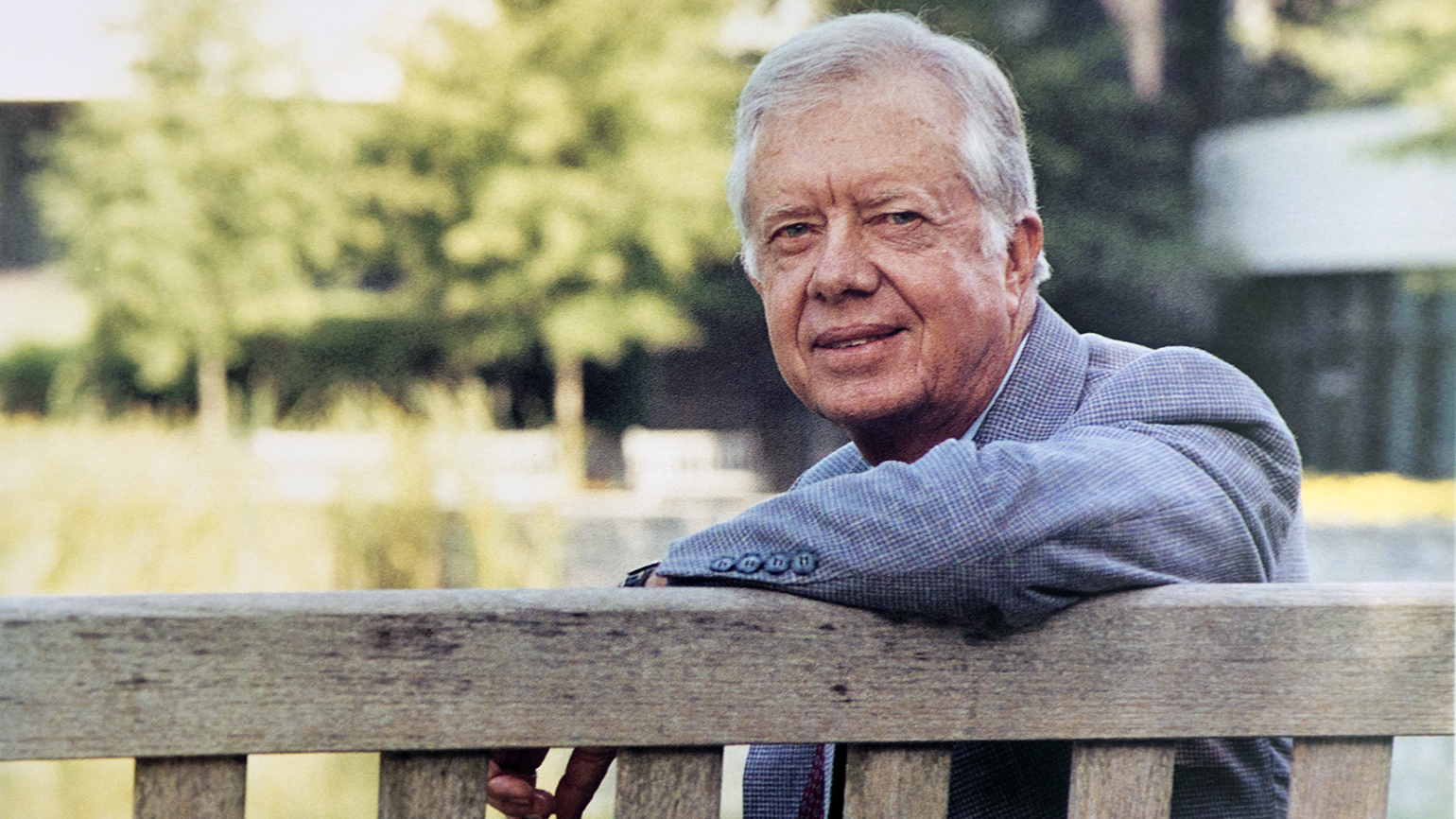
Jimmy Carter: How Prayer Sustained Him

During Jimmy Carter’s presidency from 1977 to 1981, he faced down challenges in the Middle East, Panama and the Soviet Union, as well the energy crisis here in the United States.

It’s all in Carter’s 2010 book, White House Diary, a fascinating collection of the thoughts, observations and candid discussions about his faith that he recorded during his years in office.

According to Carter, it was the Iranian hostage situation that tested him the most. “I prayed more during that year when the hostages were being held than I did any other time in my life,” said Carter in a phone interview during his book tour. “My prayer was that every hostage would come home safe and free while I protected the interests of my country.” Carter’s prayers weren’t answered as quickly as he’d hoped; the hostages were released on his last day in office.

Carter also relied on prayer during his negotiations at Camp David with Egyptian president Anwar El Sadat and Isreali Prime Minister Menachem Begin. He had so much faith in the power of prayer, in fact, that on the first day Carter proposed that the three lead a world-wide prayer for peace. Sadat agreed immediately, and Begin eventually agreed after the three collaborated on the prayer’s exact wording.

“I don’t doubt that millions of people in Israel, Egypt, in the Arab world and also in America prayed for peace,” says Carter. The Israel-Egypt Peace Treaty was finally signed in 1979.

Carter’s faith was so central to his life that, despite hectic presidential demands, he maintained spiritual practices that were important to him: teaching Sunday school and nightly Bible reading.

Carter began teaching Sunday school when he was just 18 and a midshipman at the Naval Academy—and he has taught ever since. As president, he taught Bible lessons at the Baptist church nearest the White House, though the days he would be there were never announced for security reasons.

In 1970, Carter and his wife Rosalynn began the habit of ending each day by reading from the Bible. They took turns each night reading aloud, and when they were in different cities they read the same passage. Beginning in 2000, the couple read in Spanish, just to practice the language.

Though his faith gave him strength, Carter also found inspiration in the regular folks he met thanks to the human rights-focused Carter Center he founded and his work with Habitat for Humanity.

“We see the bright side of things and the blessings that God gives so many people,” he said.  “I would say the most impressive thing I’ve learned is how similar people are all over the world. A lot of times we tend to underestimate people who don’t have a decent home or don’t have a good education for their kids, who can’t provide for healthcare, or don’t have a regular job. But as we work side-by-side with these people, say, building a Habitat (for Humanity) house, always we find those poor families…are just as smart as I am, just as ambitious, just as hard-working, and their family values are just as good as mine…So we’ve learned a lot about how varied God’s blessings are and how worthy people are and how equal we are in the eyes of God.”

In All Circumstances, Give Thanks

Of all the means of prayer, gratitude is one of the easiest. Even people who are not particularly faithful can choose gratitude. At Thanksgiving at our house we usually go around the dinner table and each person mentions something they’re grateful for: good health, great kids, a winning soccer team, the food on our plates, the presidential election, a passing grade in chemistry.

Other virtues can be so much harder to acquire. Tell yourself to be hopeful and if you’re worried sick and biting your fingernails, it’s not going to change your thinking. Tell yourself to be patient and after ten minutes at baggage claim at the airport, looking for your green suitcase among all the black ones, you will be fuming. But “let gratitude be your attitude” is one of those pithy sayings you can actually make happen. It doesn’t take much to train your mind to be grateful. A pen and paper will do.

Several years ago I worked with newscaster Deborah Norville on an article about gratitude. In her three decades as a TV reporter, she observed, “I’ve always marveled that certain people, even in the face of heart-stopping obstacles and the most difficult circumstances, are able to go forward with smiles on their faces and optimism in their outlooks. How is that possible? In each instance, it comes down to the same answer: They were grateful.”

Deborah believes in actually writing down what you are grateful for, keeping track of your blessings in a journal the way you keep track of your checks in your checkbook. She insists it’s good for your career, your family life, your marriage, your well-being, and she offered scientific research to prove it….

Deborah told me about how she used gratitude to combat a health problem. “For years I’ve suffered migraines,” she said. “I’ve done everything every doctor recommended, but after my investigation into gratitude I tried something new. I made a daily habit of writing down the things that made me grateful. And I started seeing the benefits. My migraines have all but disappeared, my energy has increased and I’ve experienced joy by ‘being there’ for others.”

She called it “Thank You Power” and wrote a book with the same name. Her prescription: Write down three things every day that you’re thankful for. Three things was all, duly noted and recorded. “You need to work on it consciously to make a difference,” she said.

Her advice made sense though I was certain it wasn’t anything I needed to follow. I’m a natural optimist. Why did I need to write down what I was thankful for?….

Am I thankful that I had open-heart surgery? Of course. I am thankful to the doctors, thankful that someone figured out I had an aneurysm before it ruptured, thankful to the nurses who took such good care of me. Without surgery I would not be alive. But here’s something a little harder to explain: I’m thankful for the compassion it’s given me for anyone else who goes through the trials of major surgery. Especially the recovery.

Four weeks out of surgery, I crashed. I felt rotten. I would lie in bed shivering under a mountain of quilts, close my eyes in the hope of sleep, and what came to me was a small dark block in my head. Imagine all your deepest fears pressed down and packed together into a domino that’s lodged in your head. You can’t step around it, you can’t ignore it, you can feel its brooding presence and you wonder if it will explode or suck you into endless night. I could almost locate it near my forehead. I started calling it the black domino, all dark blankness and not a single dot of light….

I lay in bed, watching the black domino warily, monitoring it like the enemy. It was the enemy. Was I going to plunge into a bottomless pit of gloom? Was I going off the deep end?….

Was it claustrophobia? I hate being in closed spaces. In my editorial career there is only one story that gave me the creeps so much I couldn’t work on it. It was about a man who went scuba diving through Caribbean coral caves and came to a spot that got narrower and narrower until he couldn’t get out. He couldn’t turn around and he couldn’t figure out the route that would take him back. His air was running out. Through the murky water and the coral he could see sunlight above but couldn’t reach it.

Fortunately for him, he was able to escape, but that remains my worst nightmare. To be trapped. Maybe my body was still objecting to being strapped down on a hospital bed for hours of surgery, a machine doing the work of my heart and lungs.

“But you’re doing all the right things,” I told myself. I walked around the small park near our house three times a day. I took naps. I ate carefully, filling myself up with protein and iron. I had oatmeal for breakfast and lentil soup for lunch. I took prescription painkillers when I had to. Otherwise two Advil at bedtime and another two in the middle of the night.

“I’m not getting better,” I told Carol.

“Give it some time,” she said. “It’s not going to be a straightforward trajectory. You’ll have good days and some bad days—a few steps forward, a few steps back—but you’ll feel better over the long term.”

No reason why that shouldn’t happen. But I couldn’t believe it and I felt myself unalterably changed. The novelty of being a patient had worn off. The adrenaline of surgery was long gone. I was in the deep slough of recovery and I hated it….

I couldn’t pray. I couldn’t reach God. He was that light above me. I could accept that he was there but I couldn’t get to him. This time it wasn’t enough to tell myself that others were praying for me and doing it on my behalf. Not anymore….

I picked up my battered volume of the New Testament and Psalms and complained, “I’m mad at you, God.” I read from a psalm that was full of rage: “Arise, O Lord; save me, O my God, for thou has smitten all mine enemies upon the cheek bone; thou hast broken the teeth of the ungodly.” I thought it could get me in touch with my anger. But it didn’t make me feel any better…

“You’ve talked about wanting to have a sabbatical someday,” Carol said, looking for the upside. “Maybe you can think of this time as your sabbatical.”

A nice thought, but not one I could put into practice. On the ideal sabbatical my head would be clear enough so that I could read through Proust and Tolstoy and Dante, savoring the greats with the greatest mental agility. I wasn’t up to that. I watched old videos and thumbed my way through the books friends had sent me.

I was a dead weight. I couldn’t clean the house or give a dinner party or even do the laundry. About the only challenge I was up for was writing a thank-you note. That I could try. “Just the kind of thing Deborah Norville would have you do,” I thought. I’d emailed her shortly after surgery, just to tell her what I was going through. She’d responded with a generous prayer. But her “thank-you power” advice? That was still on file somewhere in my head.

I sat on the side of my bed and took out a note card. I looked over at the gifts people had sent. There was a bowl my coworker Celeste had given me for my oatmeal, the perfect thing. But why write her? I would see her soon enough back at the office. I could say something then. She wouldn’t be expecting anything from me.

No, I needed to write it down now, all my gratitude. I would forget it in a couple of days. I scrawled a few sentences. At once there was an inner ping, as sure as the clanging of a bell: “Yes, that’s right. That’s you, Rick. That’s who you are. That’s where you want to be.”

I was hungry to be grateful, desperate like a starving man seeking food or a thirsty one crawling across the desert for water. It was almost physical, holding a pen in my hand and opening a blank card, my mind looking for words to describe a kindness. Thankfulness was the one thing that would keep the black domino from sucking me up and absorbing me. Thankfulness expressed in very specific terms.

I wrote another note and another. Thank you for the card, thanks for the roses, thanks for the burritos from FreshDirect, thanks for the bottle of wine, thanks for the friendship, thanks for the postcard that made me laugh, thanks for the CD, thanks for the phone call, thanks for the prayers, thanks for the visit, thanks for the email.

I could hear myself as I wrote. I could feel stirrings of faith even if I was writing nothing about my faith because I was participating again in the goodness of the world. Sitting on the side of my bed and writing was my therapy. Later at church someone said, “I can’t believe you sent me a note thanking me for my note.” How could I say that the note I sent her was vital to my recovery?

Prayer is communication and this was essential communication. Our friend F. Paul had sent me a slew of witty postcards over the last month, every one of them a gem. One day I picked out a dozen of them and made a silly collage of the images to send to him as thanks. Back at ya.

I couldn’t pray the way I was accustomed to, but writing thank-you notes—something so mundane and yet so profound—was my prayer. I could connect to my spiritual core. I could do battle against the inner darkness pulling me down. I could linger in the light.

In a matter of weeks I sent seventy-five thank-you notes and postcards. I hope I never have to read them. I’m sure they were inane or over-the-top or even illegible. But they were a godsend to me. I could wait, pen in hand, and tell myself, “I don’t really have anything to say,” but once I started writing, all sorts of things came out.

Gratitude wasn’t far beneath the surface. It was just waiting to be expressed. I’m amazed that I actually had seventy-five different people to write, seventy-five people who did nice things for me. But once you start looking for things to be grateful for, you end up feeling grateful in the most cosmic way.

For me it was a way to reclaim the turf I longed to inhabit and it kept me from sinking into godless despair. It was many months before the black domino disappeared—I can still conjure it up like a phantom in a Stephen King novel. But I had found the tool to banish it, one I still use.

Be thankful in all things. Write them down. Even if you don’t feel grateful, even if you can’t pray. What you write will be your prayer. Feelings you can’t force, faith is not something you can necessarily talk yourself into, but thankfulness you can. All it takes is a pen or a pencil and a scrap of paper. You can write to yourself, you can write to a friend, you can write to God. Put your gratitude down, even at the worst of times. Especially then. What you say will lift you back up.

How to Pray Your Way Through Christmas Stress

I remember reading a survey about holiday stress a few years ago when everyone around me was in the thick of addressing cards, buying gifts, scheduling visits, decorating, buying groceries, baking, going to holiday parties and so on.

The feedback indicated overwhelming stress around spending extra money. And moms felt extra stressed by all the cooking and cleaning and trying to make sure the family was having Christmas fun.

Stressed yet?

You’re not alone. But there’s hope; there’s help. There are ways to pray through the stress and anxiety and stay centered—even serene—amid the swirl and chaos of the Christmas season.

Remember the story of Mary and Martha from the Bible? Luke reported it in his Gospel:

As Jesus and His disciples were on their way, He came to a village where a woman named Martha opened her home to Him. She had a sister called Mary, who sat at the Lord’s feet listening to what He said. But Martha was distracted by all the preparations that had to be made. She came to him and asked, “Lord, don’t you care that my sister has left me to do the work by myself? Tell her to help me!”

“Martha, Martha,” the Lord answered, “you are worried and upset about many things, but only one thing is needed. Mary has chosen what is better, and it will not be taken away from her” (Luke 10:38-42, NIV).

We can be sure that having Jesus visit in her home was a very special occasion to Mary and Martha. But their different approaches can help us pray through the busyness and stress of our own special occasions. We may identify with Martha. Her preparations were probably good stuff: making beds, sweeping floors, putting some bread in the oven, maybe spraying some air freshener. Good stuff. But not necessary stuff.

But look again at the account and tell me who was stressed and who was serene. And notice too what Jesus said to Martha, as the NASB translates the phrase, “Only one thing is necessary” (Luke 10:42a, NASB).

So it is in our lives. In our holidays. Our celebrations. Many things would be nice, even good. But only one thing is necessary. So, to reduce holiday stress, choose one necessary thing.

It’s so easy to want our holiday season to be perfect. Perfect decorations, perfect atmosphere, perfect gifts, perfect meals, perfect parties. And we end up like Martha.

Choose one necessary thing each day: Pray. Sit at Jesus’ feet, even if only for a few seconds or a handful of minutes. Press pause. Calm yourself. Breathe deeply. Focus on Him. Listen to Him. Speak to Him. Discover the difference a focus on Jesus can make.

One. Necessary. Thing.

How to Pray on Valentine’s Day

Valentine’s Day—and the week or two leading up to it—can be a challenge for many people. For those who are happily in a relationship, it can involve agonizing card and gift decisions (candy again?). For those unhappily in a relationship, it can cause deep pain. And for those who are searching for love, every heart, cupid,and love song can make them feel even worse.

But there is a way to celebrate Valentine’s Day that doesn’t depend on or add to your relational (or financial) angst. It is beautifully simple and uplifting: Prayer.

But not just any prayer. Oh, no. I suggest praying the Bible’s famous “love chapter,” a short depiction of love from one of Paul’s letters to the first-century church in Corinth: 1 Corinthians 13. Here is one way to do it:

God, I know that even if I could speak all the languages of earth and of angels, but didn’t love others, I would only be a noisy gong or a clanging cymbal. I know that if I had the gift of prophecy and understood all of Your secret plans and possessed all knowledge and had such faith that I could move mountains, but didn’t love others, I would be nothing. And I know that if I gave all my possessions to the poor and even sacrificed my body but didn’t love others, I would have gained nothing.

Read More: A Valentine’s Day Angel

I want to love well and love all. Please make me patient and kind—not jealous or boastful or proud or rude. Let me not demand my own way. Help me not to be irritable. Save me holding grudges. Let me never be glad about injustice but rather rejoice whenever the truth wins out. May I never give up, never lose faith, always stay hopeful, and endure through every circumstance.

Remind me that the gifts of prophecy and speaking in unknown languages and special knowledge will someday disappear, but love will last forever! Remind me that now my knowledge is partial and incomplete, and even the gift of prophecy reveals only part of the whole picture, but the time will come when such things will fade but love will remain.

Remind me that when I was a child, I spoke and thought and reasoned as a child but grew up and put away childish things—and so, though I see things imperfectly now, like puzzling reflections in a mirror, I will someday see everything with perfect clarity. Though all that I know now is partial and incomplete, someday I will know as I am known by You—perfectly and completely. I will see what truly matters and what lasts forever: faith, hope, and love—especially love (based on 1 Corinthians 13 in the New Living Translation).

You may pray it differently, which is okay. You may focus on some verses and not others; that’s okay, too. But praying the Bible’s “love chapter”—especially around Valentine’s Day—can work wonders. It can focus your thoughts and feelings far better than the best Hallmark card. It can lift your spirits more than flowers or a movie. Most importantly, it can help you focus on what truly matters and what lasts forever: faith, hope, and love. Especially love.

How to Praise God, Just Like Mary

It was one of the most memorable church Christmas pageants. The young, unprepossessing girl who played Mary was walking down the center aisle and suddenly came into her own. Reciting Mary’s prayer of praise—the Magnificat as it’s called—she didn’t skip a beat.

“It must have been the Holy Spirit,” I thought, those matchless words and the courage of that 13-year-old playing the part. This time of year, as we prepare to celebrate Christ’s wondrous birth, I find myself mulling over Mary’s prayer. Praying with her.

My soul magnifies the Lord, and my spirit rejoices in God my Savior (Luke 1: 47). I’ve never had a miraculous experience like Mary’s, being visited by an angel and told of an extraordinary role to be played.

But I’ve often been in situations that feel completely over my head. Then I have to simply trust that God is with me and that what I’m doing can magnify Him.

For He has looked with favor on the lowliness of His servant… (Luke 1:48). God’s power doesn’t work through us when we brag about how great we are. It comes, as it came to Mary, when we least expect it, when we’re not even sure we measure up.

There’s no fake humility here. Who was Mary? A young woman in a small town without grand assumptions. Who am I that God should hear my prayer? The humblest of souls.

His mercy is on those who fear Him from generation to generation (Luke 1:49). In our small Bible study group, one of the members exclaimed how uncomfortable the word “fear” makes her in phrases that speak of “the fear of God.” Wasn’t fear a bad thing?

Someone else explained that fear here is more like “awe” or “wonder.” What we feel for a power that is so far beyond anything we can imagine. That word “mercy” also sets it up. God might have inexpressible power, but He exercises it in mercy and love.

He has shown strength with His arm; He has scattered the proud in the thoughts of their hearts (Luke 1:51). There is a purity in God’s strength. Trusting it keeps me from wandering down the muddled path of relying on only my power.

He has helped His servant Israel…according to the promise He made to our ancestors, to Abraham and to His descendants forever (Luke 1:54-55). Mary is holding on to God’s promises, invoking them in her prayer.

We can do that, too. “God, you promised you’d be with me…God, you know the secrets of my heart better than I know them myself…God, please be with me in that ‘forever’ part of my life.”

It’s easy enough to get caught up in all my worries and anxieties. But then I think of what must have been going through Mary’s mind. Imagine what she must have been thinking after that angel’s visit. She put that aside and was able to sing God’s praise. May I do the same.

Read More—The Story of a Song: ‘Mary, Did You Know?’

How Candles Can Light Up Your Prayers

Candlelight has long illuminated prayers of faith. Many of our Jewish neighbors light a candle just before sunset to light their shabbat celebrations. Orthodox and Roman Catholic Christians often light candles as an aid to prayer. Some Christian families and churches mark the season of Advent with an Advent wreath of five candles, the last to be lit on Christmas Day. And candles illuminate many churches on Christmas Eve and New Year’s Eve, as worshippers sing and pray on those special occasions.

This Advent season, however, I’d like to suggest a few more ways that candles can light up your prayers and help you pray meaningfully:

Light a candle for focus.

A flickering candle can help you stay focused in prayer. Simply light it (perhaps with an invocation such as, “Come, Lord Jesus, Light of the World”) and gaze into the flame as you pray. You may find it easier to shut out distractions as you watch the candle burn.

Light a candle in gratitude.

The warmth of light—whether a torch, lamp, candle or sunrise—brought blessings of safety, clarity and health to people in Jesus’ day. So, during this special season, you may want to light a candle daily, accompanied by a prayer of gratitude for the blessings you enjoy. 

Light a candle for someone.

There may be a friend or loved one for whom you feel a special concern right now. One way to remember and pray for that person is simply to light a candle and, as you do, ask God to meet that person’s needs.

Light a candle as a reminder.

I know a businesswoman who kept a candle burning on her desk during the workday. Whenever her eyes alighted on that flame, she paused for a moment of prayer. The candle helped her to invite God’s presence and work at regular intervals throughout her tasks. Keep a candle nearby as you work, occasionally prompting a prayer.

Light a candle to spread the fragrance of prayer.

The last book of the Bible depicts an angel mixing incense with the prayers of God’s people: “The smoke of the incense, together with the prayers of God’s people, went up before God from the angel’s hand” (Revelation 8:4 NIV). You might choose a scented candle to enhance your prayers during this season. Like the suggestion above, you may let that candle remind you to pray each time you notice its fragrance.

These are just a few ways to light up your prayers this Advent season. They’re offered in the hope that they may ignite your own creativity and serve as new and meaningful guideposts to prayer.

Good Friday Reflection: The Message of the Cross

Growing up in a Spanish Pentecostal home, Good Friday was a sacred day in our family for prayer and reflection. Every Good Friday we spent from two to five in the afternoon in worship at church. We listened to preaching on the last seven words of Christ from the cross and sang the hymns, “The Old Rugged Cross” and “On the Cross Where I First Believed.”

In my earlier years, the day was filled with doom and gloom. As I grew in my faith so did my understanding of the message of the cross. Here is a Good Friday reflection to guide you through this holy day.

READ MORE: Why Is Good Friday So Important?

Good Friday Reflection

Woman reading Good Friday reflection in her old Bible

On Good Friday, the words of Apostle Paul become real to me, “For the message of the cross is foolishness to those who are perishing, but to us who are being saved it is the power of God.”

Crucifixion was an exceedingly common in antiquity. The Romans conventionalized it as a form of state punishment. For many the death of Jesus on the cross is a mystery; for others madness. For me, the cross expresses the power of an amazing love.

We know from history that in Jesus’ time there were many claiming to be the Messiah but only one wasn’t forgotten…. the One who changed the course of history. On Good Friday the cross of shame, defeat and failure was transformed into a symbol of victory.

READ MORE: 8 Prayers for Good Friday and Resurrection Sunday

What could compel Jesus to give his life, be tortured and humiliated on the cross? Love. In the Bible, we read the words of Jesus in John 15:13, “Greater love has no one than this, than to lay down one’s life for his friends.” He thought of us above all else, so that we would experience the power of love through forgiveness, the abundant life and external life. The cross of death became the gift of life!

What could compel Jesus to give his life, be tortured and humiliated on the cross? Love.

Today I still miss my childhood Good Friday services and reflection, but no matter where I am, the message of the cross remains the same…God loves us. What does the cross mean to you? Do you have any childhood memories of a Good Friday service? Share your story with us in the comments field below.

Lord, thank you for your amazing love expressed through Christ on the cross. May we experience the power of Your love in our lives.

READ MORE ABOUT GOOD FRIDAY AND HOLY WEEK REFLECTIONS: