Embrace God's truth with our new book, The Lies that Bind

The Blueprint for Happiness

In the same way, let your light shine before men, that they may see your good deeds and praise your Father in heaven.”  Matthew 5:16

One day I was reading the fifth chapter of Matthew. I’ve read that chapter hundreds of times, but this time I had a revelation about it: It is a blueprint for happiness.

The descriptions of what you must do to be happy go on through the whole chapter. And it says not only to love your friends, but also to love your enemies and pray for those who mistreat you. Then the great sermon rises to a climax when it says, “Be perfect, therefore, as your heavenly Father is perfect.”

You may say, “That is unattainable. That is too hard.”

That is why Jesus is Jesus. He put it high because He believed that there was something great in human beings.

He tried to get us to see that if you have what it takes to rise to this challenge, you will find happiness in a way you cannot find it anywhere else. If you are courageous enough to take it, your life will be great.

One day, I stopped for lunch with a friend whom I’ve known for many years. This man is really one of the most inspirational men I have ever known. I greeted him by saying, “I just met a man who told me it was impossible to be happy anymore.”

“No happiness?” he asked. Then he reached in his pocket and pulled out a card. This is what it said:

TAKE TIME TO LAUGH: It is the music of the soul.

TAKE TIME TO PLAY: It is the source of perpetual youth.

TAKE TIME TO PRAY: It is the greatest power on earth.

TAKE TIME TO LOVE AND BE LOVED: It is a God-given privilege.

TAKE TIME TO BE FRIENDLY: It is the road to happiness.

TAKE TIME TO GIVE: It is too short a day to be selfish.

I was impressed by this but said to my friend: “There is one thing left out. I’d like to add it, if you don’t mind.”

TAKE TIME FOR GOD: It is the way to life.

And it is, too.

The Benefits of Being Humble

Failure and frustration are in the unwritten pages of everyone’s record. I have had my share of them. But if my mother’s gentle hands were not there to guide me, perhaps my life in music would have ended long ago.

The faith my mother taught me is my foundation. It is the only ground on which I stand. With it I have a freedom in life I could not have in any other way. Whatever is in my voice, my faith has put it there.

Her presence runs through everything I ever wanted to be. The particular religion a child echoes is an accident of birth. But I was converted to my mother’s faith and patient understanding long before I could define either.

We were poor folk. But there was a wealth in our poverty, a wealth of music, and love and faith. My two sisters, Alice and Ethel, and I were all in the church choir—the junior, not the senior one. There is still a vivid memory of our mother and father, their faces shining with pride, watching us from the front pews. And when I was six I was once fortunate enough to be selected to step out in front of the choir and sing “The Lord Is My Shepherd.”

It was a Baptist Church we attended in Philadelphia. But my mother taught us early that the form of one’s faith is less important than what’s in one’s heart.

“When you come to Him,” she said, “He never asks what you are.”

We children never heard her complain about her lot; or criticize those who offended her. One of her guiding precepts has always been: “Never abuse those who abuse you. Bear them no malice, and theirs will disappear.”

My sisters still attend the Baptist Church in Philadelphia. It is a church and a congregation I hold most fondly in my heart for many reasons. These were the people who, years ago, pooled their pennies into what they grandly called “The Fund for Marian Anderson’s Future,” a gesture of love and confidence impossible to forget in a lifetime. When I come to Philadelphia, I always try to see some of these people who have been so important to me, and though it seldom is possible these days, I love to sing in their choir.

My father died when I was twelve, and my mother’s burden became heavier. Before she became a housewife, and the mother of three daughters, she was a schoolteacher. Now she became a father to us as well as a mother and earned our whole livelihood by taking in washing. It was terribly difficult for her, I know, but she would not even hear of any of us children leaving school for work.

During these years I began to have my first opportunity to earn a little money by singing. Almost entirely they were Sunday evening concerts for the church, or for the YWCA and the YMCA. At these affairs I could sing, perhaps, two or three songs, and my fee was a very grand 50 cents, or once in a great while, $1.00. Sometimes I would dash to four or five of these concerts in one evening.

Many people were kind to me: teachers who took no fees, those who urged me forward when I was discouraged. Gradually I began to sing with glee clubs and churches in other cities. After one minor effort in Harlem, a group of well-meaning people hastily sponsored me for a concert in Town Hall in New York.

It seemed at once incredible and wonderful. But I wasn’t ready: indeed, I was far from it either in experience or maturity. On the exciting night of my first real concert I was told Town Hall was sold out. While waiting in dazed delight to go on, my sponsor said there would be a slight delay. I waited five, ten, fifteen minutes. Then peeked through the curtain.

The house was half empty! I died inside. But when the curtain went up I sang my heart out. And when the concert was over, I knew I had failed. The critics next day agreed with me, but what they said was really not so important. I was shattered because within me I felt I had let down all those people who had had faith and confidence in me. It seemed irrevocable.

“I’d better forget all about singing, and do something else,” I told my mother.

“Why don’t you think about it a little, and pray a lot, first?” she cautioned.

She had taught me to make my own decisions when I could, and pray for the right ones when I could not. But I did not heed her now. I refused a few offers to sing at other concerts. I avoided my music teacher. For a whole year I brooded in silence. My mother suffered because I was not expressing myself in the only way I knew happiness. But she knew I had to find my own way back alone. From time to time she just prodded me, gently:

“Have you prayed, Marian? Have you prayed?”

No, I hadn’t. Nothing would help. I embraced my grief. It was sufficient. But in those tearful hours there slowly came the thought that there is a time when even the most self-sufficient cannot find enough strength to stand alone. Then, one prays with a fervor one never had before. From my torment I prayed with the sure knowledge there was Someone to Whom I could pour out the greatest need of my heart and soul. It did not matter if He answered. It was enough to pray.

Slowly I came out of my despair. My mind began to clear. No one was to blame for my failure. Self-pity left me. In a burst of exuberance I told my mother:

“I want to study again. I want to be the best, and be loved by everyone, and be perfect in everything.”

“That’s a wonderful goal,” she chided. “But our dear Lord walked this earth as the most perfect of all beings, yet not everybody loved Him.”

Subdued, I decided to return to my music to seek humbleness before perfection.

One day I came home from my teacher unaware that I was humming. It was the first music I had uttered at home in a whole year. My mother heard it, and she rushed to meet me, and put her arms around me and kissed me. It was her way of saying:

“Your prayers have been answered, and mine have too.”

For a brief moment we stood there silently. Then my mother defined the sweet spell of our gratitude:

“Prayer begins where human capacity ends,” she said.

The golden echo of that moment has always been with me through the years of struggle that followed. Today I am blessed with an active career, and the worldly goods that come with it. If sometimes I do not hear the echo and listen only to the applause, my mother reminds me quickly of what should come first:

“Grace must always come before greatness,” she says.

For more inspiring stories, subscribe to Guideposts magazine.

Suit Up in God’s Armor

You wouldn’t play tennis in your bare feet. You wouldn’t mountain climb in your pajamas. You wouldn’t swim in your winter coat. So why go into battle without the proper attire?

Ephesians, chapter 6, has a lot to say about the battle every Christian is fighting. This Scripture passage uses the symbolic language of the ancient warrior in armor who goes out to fight the good fight. And that fight we are to wage is against evil in one’s own heart and in the world. “For our struggle is not against flesh and blood, but against the rulers, against the authorities, against the powers of this dark world and against the spiritual forces of evil in the heavenly realms” (verse 12).

The struggle of the believing Christian is against vast and entrenched forces of evil and he must be very strong. And he will be strong, if he follows the Apostle Paul’s advice on what to wear. “Put on the full armor of God, so that you can take your stand against the devil’s schemes” (verse 11).

This armor is put on first by buckling on the belt of truth. When encircled with truth, nothing can ever get through your spiritual defenses to defeat you. Then put on the breastplate of righteousness. This refers to the protection given by goodness and by right-mindedness (verse 14). Put on your feet the gospel of peace, so that wherever you go, goodness goes also and evil flees away (verse 15). Take the shield of faith (verse 16). The shield was designed to protect the heart, the vital center. If always you have faith in your heart, your life center is shielded and protected.

Then put on the helmet of salvation (verse 17). The helmet was designed to protect the head against thoughts of evil, against negative thoughts. The mind must be kept strong in the Lord, for the mind is ever subject to the attack of wrong thoughts. And wrong thoughts destroy.

And finally, take the sword of the spirit (verse 17), the bright and shining sword of God’s Word, and with it strike out against every evil thing in life.

Yes, life is a war of good against evil. But—good news!—you’re on the winning side. Just don’t forget to “suit up” for battle.

Download your FREE ebook, Let These Bible Verses Help You: 12 Psalms and Bible Passages to Deepen Your Joy, Happiness, Hope and Faith.

See Your Troubles with Eyes of Faith

How do you handle adversity?

There’s an old Russians proverb that I like: “The hammer shatters the glass, but forges steel.” If you’re glass, if you’re superficial, if there’s no faith in you, adversity will crack and shatter you. But if you “seek the Lord and his strength, seek his face continually” (1 Chronicles 16:11) you will have in you the victory that overcomes the world. Then the hammer of circumstance hitting you forges you into a strong person. God knew what he was doing when he constructed this world so that there was difficulty in it.

Facing difficulty is what makes it possible for us to grow, to learn where our strength really lies. “The Lord is a refuge for the oppressed, a stronghold in times of trouble” (Psalm 9:9). Sometimes we get so caught up in our troubles that we forget an important fact: Within every difficulty is possibility. Always. Every problem has the seeds of its own solution, and sometimes those solutions lead up to new and exciting things. God says, “See, I am doing a new thing! Now it springs up; do you not perceive it?” (Isaiah 43:19).

Generally, when people are disheartened, they can’t see the possibilities. They see only the difficulties that are involved, not the solution. They magnify the difficulties, to blow them up, to make them bigger than they actually are. Don’t let yourself go down that path! The thing to do when you are disheartened is the very opposite: Go hunting around in your situation for the bright possibilities that are surely there. God’s kindness and compassion “are new every morning” (Lamentations 3:23). Seek them out! He wants to place before you “an open door that no one can shut” (Revelation 3:8). There are no dead-ends with God.

Jesus told his disciples, “In this world you will have trouble. But take heart! I have overcome the world” (John 16:33). Accept Jesus Christ as your Savior, receive him as your Divine Redeemer, let your life be changed. Then you will be able to handle anything life brings. I don’t mean to say it’s going to be easy. It never will be easy. You’ll have trouble to the end, but you can be master of it in the name of Jesus.

Scripture to Make the Most of Today

Ever wish you could enter a time machine and go back and change something in your past—fix a mistake, alter a decision? Everybody has regrets! Even the “heroes” of the Bible had cause to look back wistfully. Yet the Apostle Paul warns us not to keep our eyes in the rearview mirror: “Forgetting what is behind and straining toward what is ahead, I press on toward the goal to win the prize for which God has called me heavenward in Christ Jesus” (Philippians 3:13-14).

Imagine how Peter must have felt when, in the pre-dawn of the night of Jesus’ arrest…the rooster crowed. In that moment, Peter knew he had utterly failed. “Even if all fall away on account of you, I never will,” Peter had insisted. But Jesus replied, “Truly I tell you, this very night, before the rooster crows, you will disown me three times” (Matthew 26:33-34). It’s no surprise Who was right.

But Peter was not the first person in the Bible who struggled with regret. Adam and Eve surely looked back wistfully on the paradise they had lost. An act of willful disobedience, and Eden was gone. Adam and Eve (and the rest of mankind) would now grow their food “by the sweat of your brow” (Genesis 3:19).

There was also Samuel, a parent whose sons “did not follow his ways. They turned aside after dishonest gain and accepted bribes and perverted justice” (1 Samuel 8:3). Holy as he was, surely Samuel, too, wished he’d done a few things differently.

Free will gives us the opportunity to make our own decisions—and the not-so-pleasant possibility that we’ll make choices we later wish we hadn’t. But if looking at our past choices draws our hearts closer to God, the time spent pondering how we’d do things differently is valuable. Looking back can help us repent, and “If we confess our sins, he is faithful and just and will forgive us our sins and purify us from all unrighteousness” (1 John 1:9).

God has given us opportunities every day of our lives, but today is the day we’re given to start looking ahead, to shake off old chains, to forgive and be forgiven. “The old has gone, the new is here!” (2 Corinthians 5:17).

Scripture for Self-Control

“I wish I had more self-control!” How many times have you heard someone say that—or said it yourself? Whether it’s sticking with a diet and exercise program or knowing when to hold your tongue, most people feel they come up short in the self-control department.

Even the Bible is outspoken on its importance. “Like a city whose walls are broken through is a person who lacks self-control” (Proverbs 25:28).

So what is self-control? The phrase seems to imply a hefty dose of sheer willpower. And there is, indeed, work involved.

Peter writes, “Make every effort to add to your faith goodness; and to goodness, knowledge; and to knowledge, self-control; and to self-control, perseverance; and to perseverance, godliness; and to godliness, mutual affection; and to mutual affection, love” (2 Peter 1:5-7).

Yet Scripture also tells us that self-control is a gift. “For the Spirit God gave us does not make us timid, but gives us power, love and self-discipline,” we learn in 2 Timothy 1:7. And “The fruit of the Spirit is love, joy, peace…gentleness and self-control” (Galatians 5:22-23).

So how much self is there in self-control? What’s up to us, and what’s up to God?

“For the grace of God…teaches us to say ‘No’ to ungodliness and worldly passions, and to live self-controlled, upright and godly lives in this present age” (Titus 2:11-13). Since the grace of God is our instructor, it is imperative that we do well as students.

To learn takes attentiveness—and humility. We have to trust that our teacher knows more than we do. We need to accept that perhaps the lessons aren’t going to be entertaining, relaxing or humorous. They may not satisfy our obvious desires, but, rather, lead our hearts toward deeper ones.

Becoming a good student in the school of self-control requires listening with the intention of learning what’s being taught. With the Psalmist we can pray, “Teach me your way, Lord, that I may rely on your faithfulness; give me an undivided heart, that I may fear your name” (Psalm 86:11)

What does a person with good self-control look like? Often it’s easier to come up with a list of people who clearly lack self-discipline. We all know someone whose struggles with “the lust of the flesh, the lust of the eyes, and the pride of life” (1 John 2:16).

Self-control grows when we pay attention to “whatever is true, whatever is noble, whatever is right, whatever is pure, whatever is lovely, whatever is admirable” (Philippians 4:8).

Take a bit of time each day to meditate on these things. A large part of self-control is about removing our focus on who we are now and refocusing our attention on who God wants us to become.

“Lead us not into temptation,” we pray, as Jesus instructed. Those words come after we’ve said, “Your kingdom come, your will be done” (Matthew 6:9-13).

The order of the requests matters, because self-control depends in large part on how much we put God in control of our lives. The more we desire God’s will, the easier it is to choose it.

No matter how hard we try, there will still be times when, like Paul, we lament that, “I have the desire to do what is good, but I cannot carry it out. For I do not do the good I want to do, but the evil I do not want to do” (Romans 7:18-19).

We will stumble and fall, and we will get up and refocus our eyes on the prize. We will resolve to “put aside the deeds of darkness and put on the armor of light” (Romans 13:12). Then we will pray to the Holy Spirit to renew the gift of self-control within us. And he will.

Scripture for a Happy Day

An amazing number of people are only vaguely happy. But this shouldn’t be! You should awaken every morning with a thrill in your heart, looking forward to the day.

These three verses will help you cast off unhappiness and show you how to live joyfully.

1. This is the day which the Lord has made; let us rejoice and be glad in it. —Psalm 118:24

Every morning, as soon as you awake, say these dynamic words aloud. God has given you a new day crammed with opportunity to build a better life, to learn something new, to spend time with those you love, to do something worthwhile for the world. As you begin your daily business, repeat this verse. And, if you begin to run down in spirit during the day, say it again. No method is more effective in driving off unhappiness than to saturate your mind and soul with this great passage.

2. Rejoice in the Lord always; again I will say, Rejoice. —Philippians 4:4

We make ourselves unhappy by habitually thinking unhappy thoughts. The simple cure: Start thinking joyfully. Think of every wonderful thing the Lord has done for you. Celebrate the fact that He is always with you. When you consider the implications of that fact, there is every reason to rejoice and be happy, for it means that nothing can ever defeat you.

3. Blessed are those who have learned to acclaim you, who walk in the light of your presence, LORD. They rejoice in your name all day long; they celebrate your righteousness.  —Psalm 89:15-16

Real, dedicated Christians are happy people. That does not mean that they are unaware of the pain and suffering all around them. Indeed, they are not true Christians unless they are deeply concerned and are doing something about it. But Christians are filled with rejoicing because they have entered into a personal relationship with Christ—and that relationship gives them victory over all misery. To be happy, be truly Christian in experience, faith and service.

Ruth: Loyal Daughter-in-Law

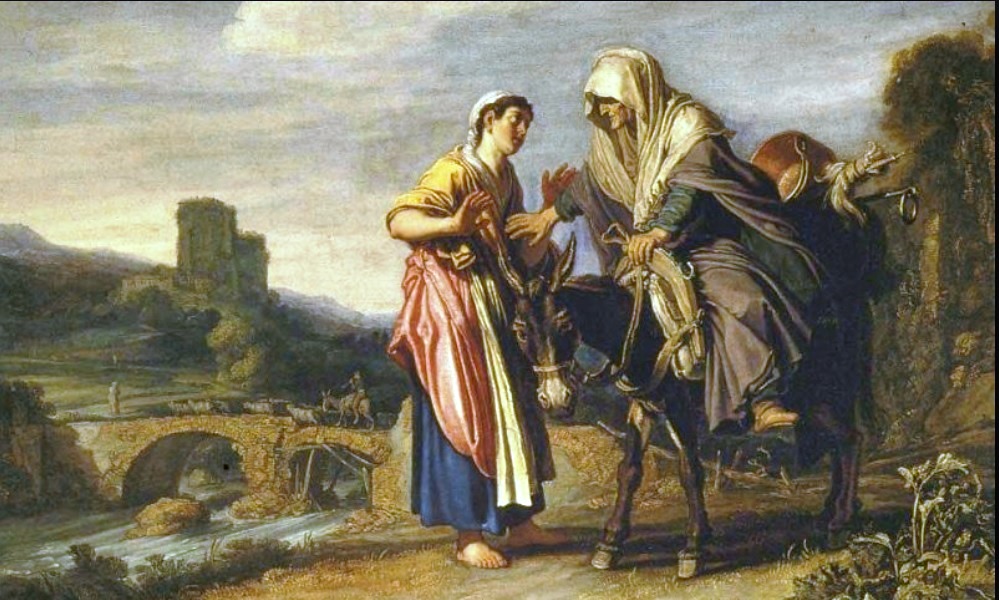
The story of Ruth, who was loyal to her husband Mahlon’s mother, Naomi, is a beloved Bible story. Ruth was a Maobite woman who married Mahlon. Her husband’s family had emigrated to Moab because of famine. Mahlon’s father died leaving behind Mahlon’s mother, Naomi and brother Chilion who married Orpah.

Ten years later both Mahlon and Chilion died, leaving behind Naomi, Ruth and Orpah. With no one left alive from her immediate family, Naomi told her son’s wives that she was going to go back to Bethlehem and that they should return to their families. Orpah didn’t want to leave but decided to go back to her home village. Knowing that her life in Bethlehem would be difficult, Ruth refused to leave Naomi saying, “Don’t ask me to leave. Where you go I will go, and where you stay I will stay. Your friends will be my friends and your God will be my God.”

Ruth and Naomi returned to Bethlehem together. It was a very long and difficult journey and Naomi could not have made it alone. Shortly after arriving, Ruth met a rich land owner, Boaz, and she worked in his fields to provide for Naomi. Her dedication and loyalty impressed Boaz and they married and eventually had a son, Obed. Obed is the grandfather of David and is named as one of Jesus’ ancestors in the Gospel of Matthew and the Gospel of Luke.

Here is her life story from the Bible.

• Ruth was a native of Moab
They married Moabite women, one named Orpah and the other Ruth. After they had lived there about ten years, both Mahlon and Kilion also died, and Naomi was left without her two sons and her husband. (Ruth 1:4-5, NIV)

• Ruth is the widow of Mahlon
I have also acquired Ruth the Moabite, Mahlon’s widow, as my wife, in order to maintain the name of the dead with his property, so that his name will not disappear from among his family or from his hometown. Today you are witnesses! (Ruth 4:10, NIV)

• Ruth loved her mother-in-law Naomi and vowed to stay with her
But Ruth replied, “Don’t urge me to leave you or to turn back from you. Where you go I will go, and where you stay I will stay. Your people will be my people and your God my God. Where you die I will die, and there I will be buried. May the Lord deal with me, be it ever so severely, if even death separates you and me.” (Ruth 1:16-17, NIV)

• Ruth listened to Naomi’s advice
One day Ruth’s mother-in-law Naomi said to her, “My daughter, I must find a home for you, where you will be well provided for. Now Boaz, with whose women you have worked, is a relative of ours. Tonight he will be winnowing barley on the threshing floor. Wash, put on perfume, and get dressed in your best clothes. Then go down to the threshing floor, but don’t let him know you are there until he has finished eating and drinking. When he lies down, note the place where he is lying. Then go and uncover his feet and lie down. He will tell you what to do.” “I will do whatever you say,” Ruth answered. (Ruth 3:1-5, NIV)

• Boaz, the wealthy landowner, notices Ruth
Boaz replied, “I’ve been told all about what you have done for your mother-in-law since the death of your husband—how you left your father and mother and your homeland and came to live with a people you did not know before. (Ruth 2:11, NIV)

• Boaz agreed to buy Naomi’s estate and take Ruth as his wife
Although it is true that I am a guardian-redeemer of our family, there is another who is more closely related than I. 13 Stay here for the night, and in the morning if he wants to do his duty as your guardian-redeemer, good; let him redeem you. But if he is not willing, as surely as the Lord lives I will do it. Lie here until morning.” (Ruth 3:12, NIV).

• Ruth gave birth to a son
So Boaz took Ruth and she became his wife. When he made love to her, the Lord enabled her to conceive, and she gave birth to a son. (Ruth 4:13, NIV)

• Through their family line came King David and ultimately Jesus, the Messiah
The women living there said, “Naomi has a son!” And they named him Obed. He was the father of Jesse, the father of David. (Ruth 4:17, NIV)

Salmon the father of Boaz, Boaz the father of Obed, Obed the father of Jesse and Jesse the father of David. (Ruth 21-22, NIV)

Salmon the father of Boaz, whose mother was Rahab, Boaz the father of Obed, whose mother was Ruth, Obed the father of Jesse, and Jesse the father of King David David was the father of Solomon, whose mother had been Uriah’s wife. (Matthew 1:5-6, NIV)

Read 10 Remarkable Women of the Bible.

Remember God’s Promises

“Whenever the rainbow appears in the clouds, I will see it and remember the everlasting covenant between God and all living creatures of every kind on the earth,” we read in Genesis 9:16. Or “Remember that you were slaves in Egypt and that the LORD your God brought you out of there with a mighty hand and an outstretched arm” (Deuteronomy 5:15).

The pattern of forgetting God–and being prompted to recall His promises–is repeated over and over again. Because if there’s one thing we must remember above all else, it’s that God is our creator and redeemer.

We are also called to…

1. Remember the importance of love.
As children, the first thing we learn about our Creator is that “God is love” (1 John 4:8). As we grow, both physically and in our faith, we are called to love others–even our enemies–“because God’s love has been poured out into our hearts through the Holy Spirit” (Romans 5:5).

The God who loves us unconditionally has called us to a life of love. The Apostle Paul reminds us, “And now these three remain: faith, hope and love. But the greatest of these is love” (1 Corinthians 13:13).

2. Remember to follow God’s commands.
Today and tomorrow and as long as we are able, we are called to remember God above and before all else. We do this by reading Scripture and by recalling Jesus’ words, “If you love me, keep my commands” (John 14:15). The Bible also exhorts us to:

  • Remember the needy.
    The destitute, the sick, the widowed, the orphans–Jesus lives in all who are in need (see Matthew 25:37-40).
  • Remember to model our lives after those rich in faith.
    “Remember your leaders, who spoke the word of God to you. Consider the outcome of their way of life and imitate their faith” (Hebrews 13:7).
  • Remember to clean our hearts regularly.
    “Therefore, if you are o ffering your gift at the altar and there remember that your brother or sister has something against you, leave your gift there in front of the altar. First go and be reconciled to them; then come and offer your gift” (Matthew 5:23-24).

3. Remember salvation’s price.
Grace is free but not cheap. “God so loved the world that he gave his one and only Son, that whoever believes in him shall not perish but have eternal life” (John 3:16). “You are not your own; you were bought at a price. Therefore honor God…” (1 Corinthians 6:19-20).

Christ wanted to make sure that His followers never forgot that their freedom was bought with his precious blood. So, on the night he was betrayed, Jesus instituted a way to be sure this happened. “And he took bread, gave thanks and broke it, and gave it to them, saying, ‘This is my body given for you; do this in remembrance of me’” (Luke 22:19). Each time you take communion, you are engaging in an act of holy remembrance.

Rebekah: Mother of Jacob and Esau

Rebekah was Isaac’s wife and Jacob and Esau’s mother. In Genesis, Isaac’s father, Abraham had been looking for a wife for his son Isaac. He sent his servant to the city of Nahor to find her. The servant came to a well and prayed that the next young woman who came to the well and gave him water would be Isaac’s wife. As he was praying, Rebekah came, gave the servant and his camels a drink and as a result because his wife.

Unfortunately after many years of marriage, Rebekah and Isaac did not have any children. Isaac prayed for God’s blessing and Rebekah became pregnant with the first twins mentioned in the Bible, Jacob and Esau. Even before they were born, Rebekah could feel the twins fighting with one another in her womb. She asked God why and the Lord told her that two nations were inside her and they were at odds with one another.

Esau was born first and he became Isaac’s favorite son. Rebekah favored Jacob.

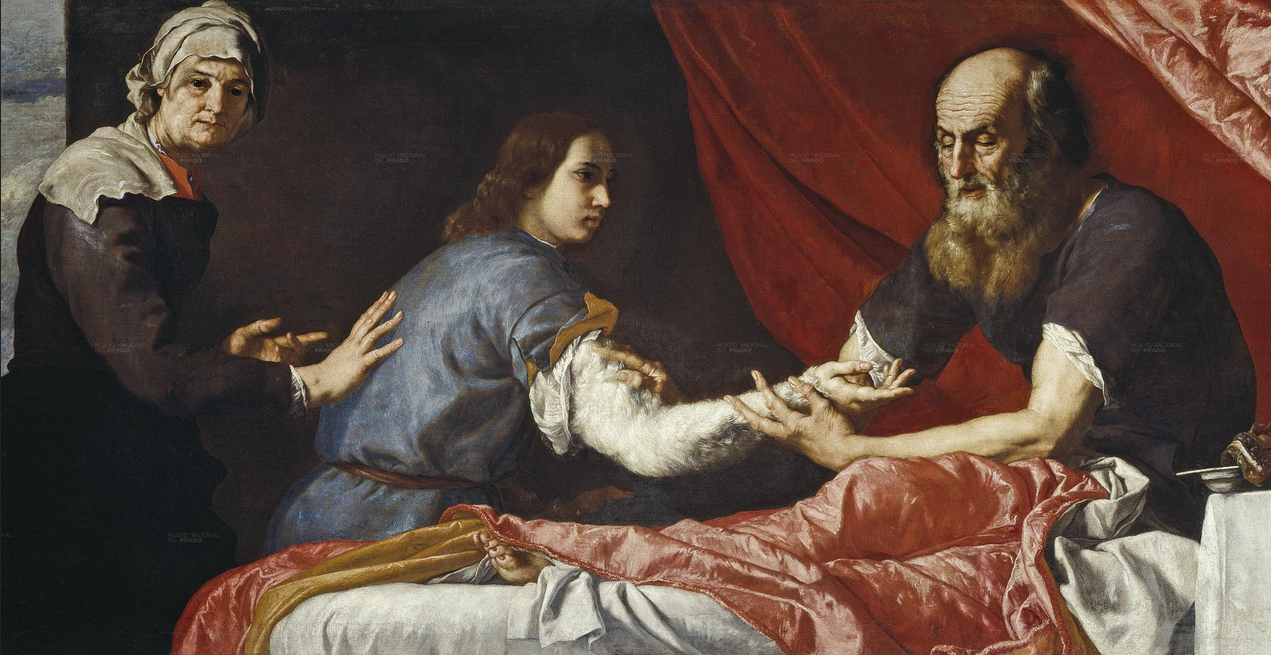
Because Esau was firstborn, he was entitled to receive the birthright but Jacob tricked Esau into selling him his birthright for a bowl of stew. Later, as Isaac was dying and could not see, Rebekah helped Jacob deceive Isaac into blessing him instead of Esau using goatskins to imitate Esau’s hairy arms. (This scene is depicted in the painting above Isaac Blessing Jacob, by Jusepe de Ribera.)

Many years later, Esau was able to forgive Jacob. When Rebekah died, she was buried in the family tomb, a cave near Mamre in Canaan, the resting place of Abraham and Sarah, Isaac, Jacob, and her daughter-in-law Leah.

Here is Rebekah’s life story from the Bible:

• Her family lived in Haran and was part of Abraham’s extended family there.
Before he had finished praying, Rebekah came out with her jar on her shoulder. She was the daughter of Bethuel son of Milkah, who was the wife of Abraham’s brother Nahor. (Genesis 24:15, NIV)

• She was chosen by God to be Isaac’s wife
May it be that when I say to a young woman, ‘Please let down your jar that I may have a drink,’ and she says, ‘Drink, and I’ll water your camels too’–let her be the one you have chosen for your servant Isaac. By this I will know that you have shown kindness to my master.” (Genesis 24:14, NIV).

• She became pregnant with twins after years of infertility
Isaac prayed to the Lord on behalf of his wife, because she was childless. The Lord answered his prayer, and his wife Rebekah became pregnant. (Genesis 25:21, NIV)

• She was the mother of twin sons, Esau and Jacob, who were the progenitors of two nations
The Lord said to her, “Two nations are in your womb, and two peoples from within you will be separated; one people will be stronger than the other, and the older will serve the younger.” (Genesis 25:23, NIV)

• She deceived her blind husband into giving Jacob the covenant blessing due the firstborn, stealing it from Esau
Jacob said to Rebekah his mother, “But my brother Esau is a hairy man while I have smooth skin. What if my father touches me? I would appear to be tricking him and would bring down a curse on myself rather than a blessing.” (Genesis 27:11-12, NIV)

Read 10 Remarkable Women of the Bible.

Rachel: Wife of Jacob, Sister of Leah

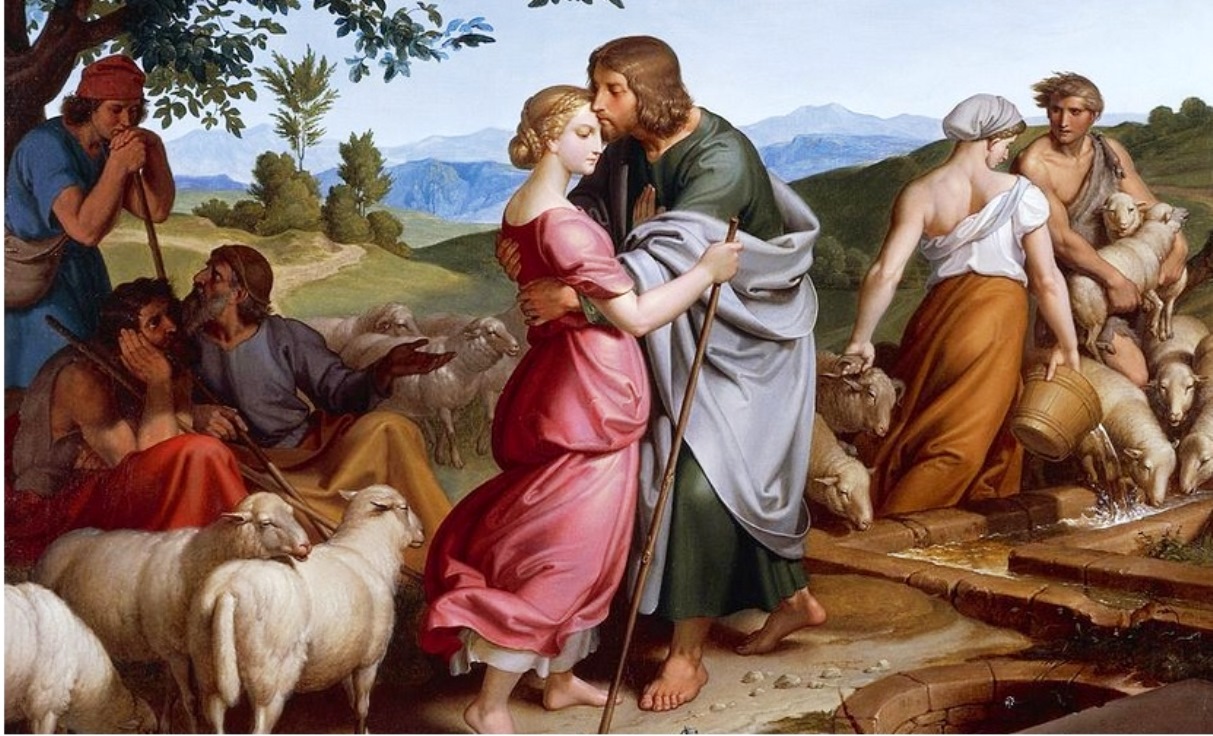
Rachel is the youngest daughter of Laban. She is first mentioned in Genesis 27 when she meets Jacob as she getting water for Laban’s flock of sheep. Jacob was fleeing the wrath of his twin brother, Esau, and looking for a wife. He fell in love with Rachel at first site and worked for Laban for seven years for the right to marry her.

The day after Jacob’s wedding he made a disturbing discovery. The heavily-veiled woman he married was not the love of his life, but was actually Laban’s oldest daughter Leah. Laban had tricked him and substituted his older daughter for Rachel.

Upset, Jacob agreed to work for Laban for another seven years for the right to marry Rachel. In the meantime, he and his first wife, Leah had children.

Seven years later, Jacob finally married Rachel. Unfortunately, it seemed the Rachel could not have children.

Both sisters were fraught with jealousy and envy. Leah was devastated that her husband favored her sister and Rachel was heartbroken that she could not have a child. Out of desperation, Rachel gave Jacob her servant Bilhah as a wife. By ancient custom Bilhah’s children would be credited to Rachel. Bilhah bore children to Jacob, causing Leah to give her servant Zilpah to Jacob, who had children with her.

Eventually, Rachel was blessed with a son, Joseph, who became Jacob’s favorite child. Rachel then conceived a second son, but tragically, she died giving birth to him. Before her last breath, she named her new son Ben Oni, “son of my mourning” but Jacob named him Benjamin.

The four women bore 12 sons and one daughter, Dinah. Those sons became the founders of the 12 tribes of Israel.

Here is Rachel’s life story from the Bible:

• Rachel is the beautiful daughter of Rebekah’s brother, Laban.
He said to them, “Do you know Laban, Nahor’s grandson?” “Yes, we know him,” they answered. Then Jacob asked them, “Is he well?” “Yes, he is,” they said, “and here comes his daughter Rachel with the sheep.” “Look,” he said, “the sun is still high; it is not time for the flocks to be gathered. Water the sheep and take them back to pasture.” “We can’t,” they replied, “until all the flocks are gathered and the stone has been rolled away from the mouth of the well. Then we will water the sheep.” When Jacob saw Rachel daughter of his uncle Laban, and Laban’s sheep, he went over and rolled the stone away from the mouth of the well and watered his uncle’s sheep. (Genesis 29:5-10, NIV).

• Rachel married Jacob after he was tricked into marrying her sister Leah.
After working for Laban another seven years, Jacob marries Rachel
Jacob did so and completed her week, and he gave him his daughter Rachel as his wife. Laban also gave his maid Bilhah to his daughter Rachel as her maid. So Jacob went in to Rachel also, and indeed he loved Rachel more than Leah, and he served with Laban for another seven years. (Genesis 29:28-30 NIV).

• Rachel was unable to have children and jealous of her sister Leah who had many sons.
When Rachel saw that she was not bearing Jacob any children, she became jealous of her sister. So she said to Jacob, “Give me children, or I’ll die!” (Genesis 30:1, NIV)
Rachel stole her father’s household idols. (There is no further explanation given for why this is done.)
When Laban had gone to shear his sheep, Rachel stole her father’s household gods (Genesis 31:19)

• Rachel gives birth to Joseph, Jacob’s favorite child.
Then God remembered Rachel, and God gave heed to her and opened her womb. So she conceived and bore a son and said, “God has taken away my reproach.” She named him Joseph, saying, “May the LORD give me another son.” (Genesis 30:22-24, NIV)

• Rachel died giving birth to Benjamin
As she breathed her last–for she was dying–she named her son Ben-Oni. But his father named him Benjamin. (Genesis 35:18, NIV)

Read 10 Remarkable Women of the Bible.

Psalm 37: A Practical Manual for Life

Psalm 37 is a powerful and practical manual for life. Within its first eight verses are rich insights for finding joy and ridding yourself of negative thinking.

Do not fret because of evil men or be envious of those who do wrong;
for like the grass they will soon wither, like green plants they will soon die away.

Trust in the Lord and do good; dwell in the land and enjoy safe pasture.
Delight yourself in the Lord and he will give you the desires of your heart.
Commit your way to the Lord; trust in him and he will do this:
He will make your righteousness shine like the dawn, the justice of your cause like the
noonday sun.
Be still before the Lord and wait patiently for him; do not fret when men succeed in
their ways, when they carry out their wicked schemes.

Refrain from anger and turn from wrath; do not fret–it leads only to evil. –Psalm 37:1-8

This Psalm gives us “do-not” commands, behaviors we must leave behind to find God’s blessing and peace. Do not worry or be envious (verse 1). Let each day find you grateful for what God has given you. Do not be an angry, vindictive individual (verse 8). Forgive as you have been forgiven; practice gentleness and self-control.

But this Psalm also gives us positive actions we need to take to bring us into alignment with God’s plan for living joyfully.

1. Trust in the Lord (verse 3).
Whatever bothers you, trust God to be able to handle it better than you can.

2. Do good (verse 3).
Life is about choices. Know that God will honor you when you do the right thing.

3. Delight yourself in the Lord (verse 4).
Fall in love with Jesus. Take time every day to sit quietly in his presence. Learn to delight in him.

4. Commit your way to the Lord (verse 5).
Trust all you do, every day, all your life, to God; he is able to handle it best.

5. Be still before the Lord and wait patiently for him (verse 7).
This does not mean to do nothing. Rather, it means that after you have done all you can, you should relax in the knowledge that God will take care of the rest.

We live in a world where advice blares from television and talk radio, streams from blogging sites; where friends and sometimes even strangers are eager to offer opinions about your life. So it’s good to know that the Bible is still relevant. Reliable. And oh so true!