

Guideposts Video: Inspiring True Stories
Pray the Psalms for Courage, Guidance & Serenity

Through the ages men have found strength and beauty and truth in the 150 songs of praise that we know as the Book of Psalms. Composed centuries ago, passed along by succeeding generations even before there was a written language, their poetry has proven a durable guide for all men in their quest for God. Christ Himself was guided by the Psalms—in word and in spirit—and today they offer spiritual insight for you.
Here are some helpful selections. Find a quiet place; take time to absorb their wisdom. And in the pages of your Bible, seek out the Psalms in their complete glory.

FOR HOPE: In Thee, O Lord, do I put my trust: let me never be put to confusion . . . Thou art my rock and my fortress. Deliver me, O my God, out of the hand of the wicked, out of the hand of the unrighteous and cruel man. For Thou art my hope, O Lord God: Thou art my trust from my youth. (Psalm 71: 1, 3, 4, 5)
FOR COURAGE: The Lord is my light and my salvation; whom shall I fear? The Lord is the strength of my life; of whom shall I be afraid?…Wait on the Lord: be of good courage, and He shall strengthen thine heart… (Psalm 27: 1, 14)
READ MORE: THE UNBELIEVABLE COMFORT OF THE PSALMS
FOR HELP IN TIME OF TROUBLE: Though I walk in the midst of trouble, Thou wilt revive me: Thou shall stretch forth Thine hand against the wrath of mine enemies, and Thy right hand shall save me. The Lord will perfect that which concerneth me: Thy mercy, O Lord, endureth forever…(Psalm 138: 7, 8)
FOR COMFORT IN SORROW: Trust in the Lord, and do good; so shalt thou dwell in the land, and verily thou shalt be fed. Delight thyself also in the Lord; and He shall give thee the desires of thine heart. Commit thy way unto the Lord; trust also in Him; and He shall bring it to pass. (Psalm 37: 3—5)
FOR GUIDANCE: I waited patiently for the Lord; and He inclined unto me, and heard my cry. He brought me up also out of an horrible pit, out of the miry clay, and set my feet upon a rock, and established my goings. And he hath put a new song in my mouth…(Psalm 40: 1—3)
FOR FULFILLMENT OF DREAMS: He heals the broken-hearted and binds up their wounds…Great is our Lord, mighty in power; His wisdom is unsearchable. The Eternal has relief for the afflicted. (Psalm 147: 3, 5, 6)
FOR SERENITY: The Lord is my shepherd; I shall not want. He maketh me to lie down in green pastures: He leadeth me beside the still waters. He restoreth my soul: He leadeth me in the paths of righteousness for His name’s sake. Yea, though I walk through the valley of the shadow of death, I will fear no evil: for Thou art with me; Thy rod and Thy staff they comfort me. (Psalm 23: 1—4)
Pray the Perfect Prayer
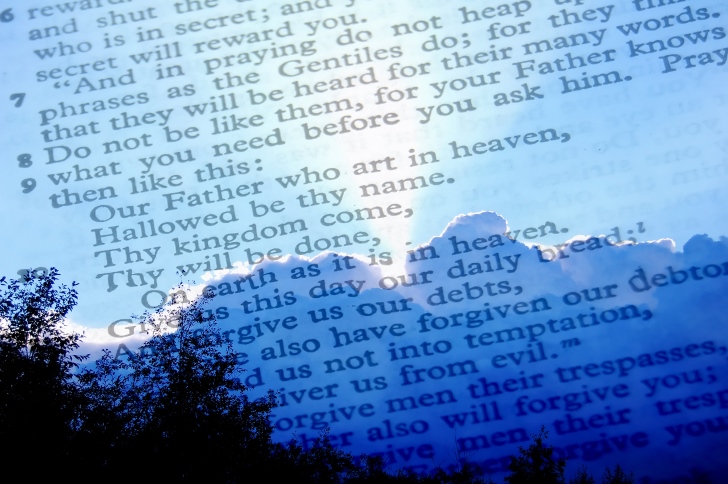
Do you remember the place in the New Testament (Luke 11:1-4) where one of Jesus’ disciples asks him to teach them how to pray?
In Matthew’s Gospel, Jesus gives a slightly longer version of the same prayer (6:9-13). Truly understanding and learning to live the Lord’s Prayer can transform you into the individual God wants you to be.

Although most of Jesus’ disciples had many times heard the prayers prayed in their synagogues, they no doubt sensed something different about his prayers.
Perhaps they suspected a connection between the Lord’s amazing miracles and the times he spent in prayer–often rising early in the morning to pray, sometimes even praying all night (Mark 1:35, Luke 6:12).
There certainly is a connection between praying and receiving God’s help. Jesus promised, “Everyone who asks receives” (Matthew 7:8).
Now to the perfect prayer:
Our Father which art in heaven.
Reminds us who God is. He is a just judge, but above everything else he is the perfect Father. In fact, he is Love itself (I John 4:8).
Hallowed be Thy name.
Names are important; they reveal who we are. We hallow God’s name by honoring Him in what we do–and by coming to Him in prayer so that we can have the strength and wisdom to do it.
Thy Kingdom come, thy will be done on earth, as it is in heaven.
Planet Earth is filled with evils of every kind. In heaven there is only love and joy and peace and praise. You can pray for God’s will to be done on earth, even as you pray that you may do his will yourself
Give us this day our daily bread.
God is interested in your body as well as your soul, your food and well-being here as well as everlasting life in heaven. But Jesus wants you to pray for this day’s needs. Live one day at a time and, “Do not worry about tomorrow” (Matthew 6:34).
And forgive us our trespasses, as we forgive those who trespass against us.
All of us fail (often!) to do our best. “For all have sinned and fall short of the glory of God” (Romans 3:23). God forgives us when we ask him to–but he cannot forgive us if we fail to forgive persons who have done something wrong to us. This is so important that Jesus repeats it right after the Lord’s Prayer ends (Matthew 6:14-15).
And lead us not into temptation, but deliver us from evil.
Temptations are all around you, but sincere prayer can help you refuse to yield to them.
For thine is the kingdom, and the power, and the glory, for ever.
Thank God that his Kingdom’s power is yours for the asking! You can glorify him every moment, beginning now and extending on into eternity. Amen!
Pray Big, Think Big, Believe Big!

Whenever I think of desperation–and determinism–I think of the two blind men Jesus met in Matthew, chapter 9. Once they spotted Him walking along the road, they began following Him and shouting, “Son of David, have pity on us!” (verse 27). Even after Jesus had reached His destination and gone inside, they persisted.
Finally, Jesus turned to them and asked, “Do you believe I can make you well?” It was a critical moment. Their answer could change everything. Without hesitation the two men responded, “Yes, Lord. Yes!” (verse 28). And with the touch of a holy finger, their world swirled into focus.

Are you seeking divine help for your own circumstances? Pray big. Think big. Believe big. “Because of your faith,” Jesus told the blind men, “you will be healed” (verse 29). Your life is going to be in proportion to how greatly you believe. Believe little, you get a little life. Believe weak, you get a weak life. Believe fear, you get a life of fear. Believe sickness, you get a sick life. But believe big, and you get a big life!
Jesus said, “Anything is possible for someone who has faith!” (Mark 9:23). Does this mean that the person who believes is going to get everything he wants? No, it doesn’t say that. But it does mean that if you believe big, you move things out of the realm of the impossible into the realm of the possible.
Christianity is the religion of the incredible, the religion of the astonishing, the religion of the breathless. You bring to yourself what you believe.
Pope Francis: The Joy of the Gospel
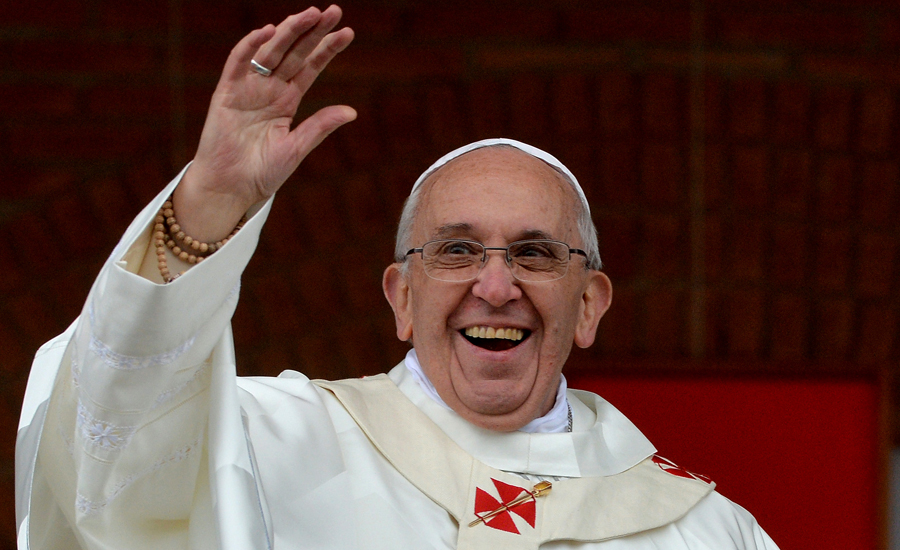
Excerpt from Walking with Jesus by Pope Francis (Loyola Press 2015)
The Joy of Encounter, From the apostolic exhortation Evangelii Gaudium

(“The Joy of the Gospel”), November 24, 2013
The joy of the Gospel fills the hearts and lives of all who encounter Jesus.
Those who accept his offer of salvation are set free from sin, sorrow, inner emptiness, and loneliness. With Christ joy is constantly born anew. [. . .]
The great danger in today’s world, pervaded as it is by consumerism, is the desolation and anguish born of a complacent yet covetous heart, the feverish pursuit of frivolous pleasures, and a blunted conscience. Whenever our interior life becomes caught up in its own interests and concerns, there is no longer room for others, no place for the poor. God’s voice is no longer heard, the quiet joy of his love is no longer felt, and the desire to do good fades. This is a very real danger for believers, too. Many fall prey to it and end up resentful, angry, and listless. That is no way to live a dignified and fulfilled life; it is not God’s will for us, nor is it the life in the Spirit, which has its source in the heart of the risen Christ.
READ MORE: POPE FRANCIS ON THE HOLY SPIRIT
I invite all Christians, everywhere, at this very moment, to a renewed personal encounter with Jesus Christ, or at least an openness to letting him encounter them. I ask all of you to do this unfailingly each day. No one should think that this invitation is not meant for him or her because “no one is excluded from the joy brought by the Lord.”
The Lord does not disappoint those who take this risk; whenever we take a step toward Jesus, we come to realize that he is already there, waiting for us with open arms. Now is the time to say to Jesus: “Lord, I have let myself be deceived; in a thousand ways I have shunned your love. Yet here I am once more, to renew my covenant with you. I need you. Save me once again, Lord, take me once more into your redeeming embrace.” How good it feels to come back to him whenever we are lost!
Let me say this once more: God never tires of forgiving us; we are the ones who tire of seeking his mercy. Christ, who told us to forgive one another “seventy times seven” (Matt. 18:22), has given us his example: he has forgiven us seventy times seven. Time and time again he bears us on his shoulders. No one can strip us of the dignity bestowed upon us by this boundless and unfailing love. With a tenderness that never disappoints but is always capable of restoring our joy, he makes it possible for us to lift up our heads and start anew. Let us not flee from the resurrection of Jesus; let us never give up, come what will. May nothing inspire [us] more than his life, which impels us onward!

Reprinted with permission from Loyola Press. PopeFrancis.LoyolaPress.com
Paying God’s Love Forward
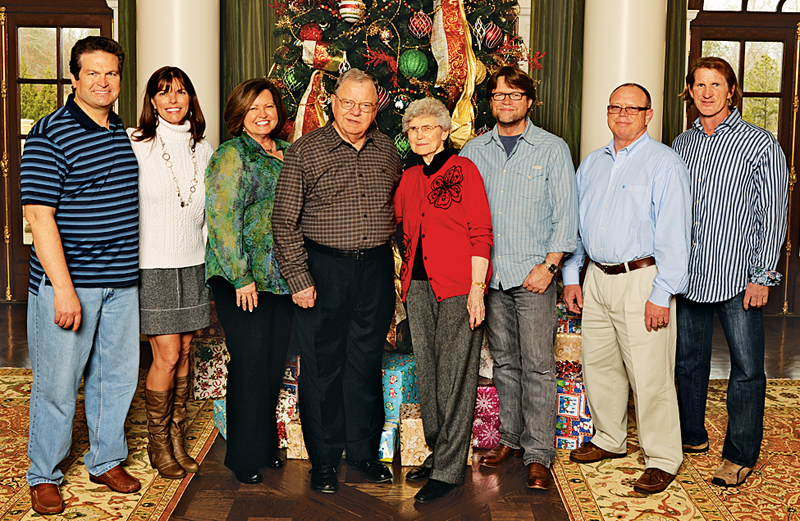
Whoops filled the room at the children’s home, the boys—a dozen teenagers—too distracted by all the Christmas presents I’d brought to notice I was there.
I was relieved. I’d come to finally introduce myself, to tell them I knew what it was like to be them. But I wasn’t sure I wanted to open up about my past. Part of becoming a successful businessman had meant putting my troubles behind me.

“We have a special guest to speak with us today,” the housemother said. The boys swung around to look at me. I saw them take in my suit and tie, their expressions wary.
I couldn’t blame them. When I was their age, I wouldn’t have trusted anything a guy like me had to say. Still, I needed to tell my story.
I’d learned early on that I couldn’t count on other people, especially adults, and that I’d have to make my own way. I had no memory of my father. My mother was a waitress and was sweet—when she wasn’t drinking.
When she was drinking, I stayed out of her way. That wasn’t hard, since she’d go out with her latest boyfriend and disappear for hours, sometimes days.
With the chaos at home, it was no wonder that I was drawn to structure and stability. I was five when I walked on my own into the church a mile from our apartment in downtown Atlanta.
I might be the only five-year-old in history who got perfect attendance in Sunday school without a parent taking him. On weekdays, I hung out at the neighborhood rec center doing my homework and playing baseball and basketball until the place closed.
When I was 12 my mother took me to visit my uncle and grandmother in Marietta, two hours away. It was good to see them. My uncle was in a wheelchair, but I never thought of him as disabled. He had an edge to him and reminded me of Elvis.
That evening, driving home, Mom was weaving all over the road. Finally she pulled the car over and almost passed out. I was tall for my age, so I took over the wheel. I drove the rest of the way home, too terrified to go more than 15 miles an hour.
We went to Marietta again for my thirteenth birthday. By afternoon Mom was smashed. No way was I getting in the car with her this time. She drove off without me (thankfully she didn’t hurt herself or anyone else).
“I’m done,” I told my uncle. “I’m running away.” I would’ve asked to stay there, but I knew he and my grandmother were barely for my scraping by on his disability checks.
“You don’t need to run away,” he said. “There are places where kids who can’t live at home can go. The government takes care of them.”
Anything would be better than living with Mom. My uncle pulled 66 dollars from his dresser drawer and gave it to me (I winced, knowing his check would have to stretch even further that month), then called a cab.
He told the driver to take us to the county building. There, a social worker asked me questions about my home life. I told her the truth—how I’d been taking care of myself for years. “Don’t worry,” she said. “We’ll find you a good home.”
Eventually, she brought me to a two-story house outside of town and introduced me to Mr. and Mrs. Price. They had four children of their own and a fifth who was also a foster child.
Every day after school, Mr. and Mrs. Price asked me about my classes. They helped me with my homework. At dinner we sat together and Mr. Price said grace. “Thank you, Lord, for giving us our children to love,” he’d pray, then say our names, one by one.
I couldn’t get used to hearing my name in that prayer. Even though my Sunday school teachers said God loved us, I couldn’t believe it. My father didn’t love me enough to stick around. My mom cared more about whomever she was dating than about me.
So why would someone as great as God love me? And why would the Prices? They hardly knew me.
One day Mrs. Price took me to a department store. She had me try on a pair of pants and a button-down shirt. “Don’t you look handsome,” she said when I came out of the dressing room.
“Thanks,” I mumbled. But I couldn’t look her in the eye. That day she bought me an entire new wardrobe, more clothes than I’d ever owned in my life. I couldn’t believe anyone would do something so nice for me.
I didn’t trust anyone. The Prices were up to something, and I wasn’t going to stick around to find out what. A few days later I ran away, back to my mom’s. That’s how confused I was.
Before long I was calling the social worker, begging her to find someplace else for me to live. “There’s only one place that might take you,” she said. “It’s called the United Methodist Children’s Home. This is your last chance.”
I moved into a cottage there with nine other teenage boys. I liked the other guys. There were playing fields and a gym, and we’d play ball until dark. Our houseparents were kind.
But there was a loneliness I couldn’t shake, a feeling that even in the midst of all these boys, I was on my own. If only I had money to buy a record player, I thought. Elvis and the Beatles could keep me company.
The week before Christmas, the boys left one by one to spend the holidays with relatives. I didn’t have enough for bus fare to my uncle’s, and I refused to have anything to do with my mom. By Christmas Eve I was the only boy left.
My houseparents tried, but it didn’t feel very festive sitting there at the table without the other boys. The next day they’d have presents under the tree and stockings filled with goodies. Me? I knew better than to expect anything.
I said good night and trudged to my room. In bed I pulled the covers over my head, as if I could hide from the emptiness closing in. You’re 14. You don’t need gifts on Christmas morning, I tried to tell myself. It didn’t work. I cried myself to sleep.
The cottage was eerily quiet when I woke. Nobody horsing around in the hall, nobody banging on the bathroom door. I got out of bed, shivering as my feet hit the cold linoleum.
Strange. There was something on the floor. Someone had pushed an envelope under my bedroom door. I picked it up. “Rick Jackson,” it said on the front in unfamiliar handwriting.
I tore it open. Inside was a crisp 100-dollar bill. And a note: “Merry Christmas from an anonymous donor.” I’d never seen so much money! For a moment I thought I was dreaming.
I ran out to the living area clutching the envelope and the bill. “Where did this come from?” I asked my housemother.
“There’s a gentleman who gives a hundred dollars to any child who is here alone on Christmas Day,” she said. “You’ve never met him. He wants his identity to remain a secret.”
My mind was spinning. Who would be so generous to a stranger? Why? Finally I asked, “Could you get a letter to him?”
She smiled. “Yes, I can. That would be very nice.”
“Dear sir,” I wrote in my best handwriting, “I don’t know who you are, but I really appreciate what you’ve done. It means the world to me that somebody would care enough to give me $100 when they don’t even know who I am.”
The next day I went to an electronics store and looked in wonder at all the things I could buy with my windfall. Transistor radios. Instamatic cameras.
At the end of an aisle I saw it. A record player. I bought it for 50 dollars, tucking the rest of the money back in my pocket.
The other guys returned and showed me what they had gotten for Christmas: a baseball glove, a G.I. Joe, a toy space capsule. But five boys came back with nothing. I knew how it hurt to be left out. What could I do? Then I remembered the money I still had left over.
I went back to the electronics store and bought five transistor radios. I couldn’t wait to give them out. But when I gave my gift to the boy across the hall, he didn’t seem very excited. He just stared at the floor and muttered, “Thanks.” What was that about?
Back in my room I tried to figure it out. Maybe he didn’t like the radio? I thought about the times someone had done something nice for me. That’s when, with a stab of guilt, I remembered the Prices and the new clothes they’d bought me. The love they’d tried to show me.
It was more than just their love, which was considerable; it was a reflection of God’s love. It was because he was so great that he loved me when my own parents weren’t able to.
An incredible feeling, like an electric current, surged through me. To know love, you had to first be open to it, to trust that someone else wanted the best for you. That someone else cared.
My life was different after that. That envelope on Christmas morning, that one act of kindness, opened my eyes to how much goodness there was in the world, in other people, even in me.
I reconnected with my mother. She’d quit drinking, but she still wasn’t able to care for me. The Prices invited me to their house for dinner and asked if I wanted to live with them again.
I jumped at the chance and stayed with them until I left for college, growing to love them the way they loved me.
I got married and by 22 was running a company. I’d achieved more than I’d ever dreamed. But still there was something missing. Right before Christmas I was at the bank and the teller gave me a 100-dollar bill.
For a moment I just stared at it. Then I knew what I had to do. I got an envelope and put the bill inside, along with a note that it was from an anonymous donor.
“I drove to the Methodist Children’s Home and asked the woman in the office to give the envelope to a boy in the cottage I’d lived in….” I finished my story and looked at the boys sitting around me at the children’s home.
I hadn’t known how good it would feel to tell this story finally, even in my suit and tie.
The wariness in their faces was gone. In its place was a kind of wonder.
“That’s what I’ve done at Christmas for the last thirty years, given envelopes with a hundred dollars to kids in homes like this,” I said.
“But there’s something else I need to give you. I want each of you to know that you’re somebody. There are people who love you. And God loves you. Even if your earthly parents haven’t been there for you, your Father in heaven always will be.”
The boys crowded around me. I wrapped my arms around them and said silent thanks to a man I’d never met for the gift that changed my life
Download your FREE ebook, True Inspirational Stories: 9 Real Life Stories of Hope & Faith.
Open Your Heart to God’s Love

Do you know a person you would consider “hard-hearted”? Someone who is gruff, holds a grudge, lacks compassion? Someone who is quick to criticize and slow to apologize? Chances are you do. Yet the Bible tells us we are to be “kind to one another, tenderhearted” (Ephesians 4:32).
How can you make sure that your heart stays tender, that you don’t slip into patterns of hard-hearted behavior? Here are four “heart healthy” tips:

1. Become a good listener.
When you read the Bible, you are really listening to God-inspired words, searching for direction and meaning. Yet it’s easy to skim over verses we find too confusing or challenging. But 2 Timothy 3:16-17 tells us: “All Scripture is given by inspiration of God, and is profitable for doctrine, for reproof, for correction, for instruction in righteousness, that the man of God may be complete, thoroughly equipped for every good work.” A heart open to God requires open ears and a willingness to tune in to every part of God’s word.
2. Open your eyes.
God loves you so much that his “mercies…are new every morning” (Lamentations 3:22-23). Yet we often fail to see how God acts on our behalf. He shows us his unending love, but we forget about it. And our hearts become hardened each time we are blind to his presence.
3. Look for the bright spots.
Think back to a time when you felt especially close to God, to a time your heart overflowed with a sense of his goodness. When was the last time that “your heart was responsive and you humbled yourself before the LORD” (2 Kings 22:19)? Look back to these spiritual bright spots—and figure out how to bring more of them into your life!
4. Look beyond your desires.
Having a tender heart toward God creates the rich soil in which our relationship with him can grow. Sadly, our personal desires can sometimes create a dry crust that keeps that love from flourishing. Even our prayer life can lead us astray, if we concentrate more on what we want than on Who we are praying to. Avoiding a hard heart requires us to “devote your heart and soul to seeking the LORD your God” (1 Chronicles 22:19), to love God as God rather than as a divine wish-granter.
The good news about hard hearts is that there is a cure! No matter how little we hear, how little we see or how dead we may be in our sins, God has made us alive with Christ. “He forgave us all our sins, having canceled the charge…which stood against us and condemned us; he has taken it away, nailing it to the cross” (Colossians 2:13-14).
A good dose of “I’m sorry, Lord” is a sure cure for a hard heart. Why not pray that prayer today?
Mysterious Ways: A Psalm for a New Mom

I gently placed my newborn son, Noah, in his crib for a nap. He looked so peaceful, serene. Not me. As I turned away, I wiped the tears from my eyes. I’d been crying a lot lately. “Baby blues,” my mother called it. I felt guilty for feeling so depressed. My husband, Dan and I struggled for years with infertility—Noah was a dream come true. So why couldn’t I be happy?
“Honey, maybe you should take a nap too,” Dan suggested when I walked out of Noah’s room. A nap?! Yeah, right, I thought. Dirty dishes were piled up in the sink, the laundry was overflowing, baby gifts and unwritten thank you notes were stacked around the house. I was experiencing insomnia and hadn’t slept for days. It seemed all I accomplished was nursing and changing Noah. Even if I were able to fall asleep, I’d just be woken up by Noah’s cries for hunger.

I went to my bedroom, collapsed onto my bed and sobbed. “Lord!” I cried. “Please show me the joy in being a new mom. I’m just not getting it.”
Immediately, an urge came over me: Read Psalm 113. I pulled out my Bible from the nightstand and opened it up to the nine-verse Psalm. “The Lord is exalted over all the nations, his glory above the heavens…” It was a nice passage, but I didn’t feel like it had to do with me. I was about to stop reading and bury myself in the sheets.
Then, my eyes fixed on the final verse: “He gives the barren woman a home, making her the joyous mother of children.”
Barren, I once was. But not anymore. And that was cause for joy.
Ministering to the Least of These
A hot, dry October day in the Texas Panhandle. My husband, David, and I drove through parched, flat sagebrush desert until suddenly we came to a small town on State Highway 287. Cactus, Texas, the roadside sign announced.
This was our destination. A dusty main street cut through town, with a few stores, a water tower, some mobile homes. Nothing surprising there. But the people!

Women in vibrant Burmese wraps hauled groceries along the sidewalk. Tall, slender Sudanese men clustered on corners, talking and laughing. Asian children played soccer on a dirt lot while their mothers watched nearby.
Everywhere, in cars and in the stores and on the streets, Central American families bustled about, some dressed in brightly dyed Guatemalan ponchos and plastic sandals.
David and I had known about the Guatemalans. That’s why we were there. David is a district superintendent for our denomination, the Church of the Nazarene. He’d recently been appointed to oversee the 100 churches of a roughly 100,000-square-mile area in West Texas.
We were driving around the district visiting churches, including Cactus’s tiny Spanish-speaking congregation, which was comprised largely of Guatemalans. But what was this virtual United Nations of immigrants doing in a remote Texas town?
The whole scene took me aback. It wasn’t so much the diversity. In fact, I embrace that. It was the poverty. Many of the mobile homes were rusted and collapsed, their roofs anchored by spare tires. Tumbleweeds blew down the streets.
Men slumped in front of a gas station drinking from bottles in brown paper bags. The only spruced-up building on the main drag was a gold-domed mosque.
The worst part was the smell. The air reeked of methane and heaven knew what else. I could hardly breathe as we pulled up to the tiny, rented cinderblock building where our Hispanic congregation met.
We’d brought our five-year-old grandson along on this trip. He dubbed the odor “the Cactus smell.”
Yet when we got inside, the small sanctuary was packed, every wooden pew filled, with just six inches between pews. The praise band played for nearly an hour.
The pastor, a woman named Elda whom my husband had coaxed out of retirement, preached in Spanish to an eager sea of faces. Our grandson found other kids his age and settled in.
After the service, we joined the congregation for a traditional Guatemalan meal, in our honor. David and I talked with a number of the English-speaking church members. I was bursting with questions but didn’t want to sound rude.
“You’re probably wondering what all these different people are doing here in the middle of the Panhandle, aren’t you?” a woman said, smiling. I nodded.
“It’s the meatpacking plant,” she said. “Just outside town. One of the biggest in Texas. They process something like four to five thousand cattle a day. Almost everyone works there. A few years ago, authorities raided the place and found the plant was employing huge numbers of illegal immigrants. After that, the company switched to recruiting refugees who have legal permission to live in the United States.
"We have folks from Guatemala, Myanmar, Somalia, Sudan. Just about every war-torn country. Most of the Somalis are Muslim, as are the Burmese. But there are some Christians too, particularly among the Sudanese and Guatemalans. They come here for worship, to one of several Protestant congregations that rent this building, or to the Catholic parish. That’s about it for churches.”
While David continued talking, I took our grandson outside to play. The odor of the packing plant and feed lot was overpowering, but the kids didn’t seem to mind.
Watching them run around a dirt lot, I tried to sort out my feelings. I grew up in small-town Oklahoma, down the street from the house where Garth Brooks, the country music star, was raised. My childhood was about as All-American as you can get.
Yet I knew America had changed, even in small towns like Cactus. David and I had served as missionaries in South Korea for five years. I’d also traveled extensively working for an international adoption agency in Fort Worth.
I was comfortable around different cultures. And I knew in my heart the church exists to serve those in need. But Cactus overwhelmed me. The need seemed so huge. And immigration is such a hot-button issue in Texas. Was it really a good idea to get involved?
David finished visiting and we got back in the car. We prayed as we headed toward our next destination.
“Lord, this town, this church, need you in a big way,” David said. “Show us how to bring the resources of our denomination to serve this place. We remember your words in Scripture: ‘Blessed are the poor in spirit, for theirs is the kingdom of heaven.’”
Less than an hour later, David’s cell phone rang. “Hey, Harley Man,” said the caller. David rode a motorcycle, so that was his nickname in our previous district.
“It’s Ron, from Ohio. Guess what? I’m a rich man! They found gas and oil on my land. I just felt moved to call you up and ask if you have any projects you could use forty thousand dollars for. You name it, I’ll send you a check.”
I felt a tingling sensation. Whatever doubts I’d wrestled with, standing outside the little church in Cactus, vanished. It was obvious God himself was opening a door for us.
David told Ron we sure could put that money to good use. We spent the rest of the drive dreaming up projects we could start up.
A short time later, David returned to Cactus along with Sam, a fellow Nazarene from Amarillo, to talk with residents and community leaders and get a feel for how the church could help.
The main priority was a building, both for worship and to house community-service projects such as ESL classes, free legal aid and health clinics. David wanted to include everyone in Cactus, so he visited with Rasheed, a Muslim leader of the Somali community.
Rasheed told him he’d be pleased to see the church expand its offerings. He suggested not putting the word church on the sign, so no one felt inadvertently excluded.
“What if we call it a ministry center?” David asked.
“Perfect,” said Rasheed.
A plan took shape. We’d solicit donations and buy one of those warehouse-style building kits, then ask church volunteers to help put it up. David and Sam filmed video footage of Cactus and made a short movie to show at the Nazarene district convention the following spring.
It seemed like everyone we told about Cactus wanted to donate. Not only that, but Sam’s daughter Jenni and her husband, Vito, pastors of a Nazarene church in Wisconsin, phoned out of the blue to say that the minute they heard about our project, they felt called to serve in Cactus.
“I know it sounds crazy,” Jenni said. “But Vito and I were missionaries in Guatemala. We’re fluent in Spanish and we really feel like the Lord is calling us. If there’s work we can do there, let us know.”
Soon we were fielding offers from volunteer work teams to help erect the 9,000-squarefoot steel building—they raised walls, welded, installed electricity.
Vito and Jenni moved to Cactus and immediately set about partnering with the local school district to serve free lunches to kids who go hungry during the summer when the school cafeteria is closed.
Elda retired (again) and Vito took over as interim pastor of the Guatemalan congregation. A Sudanese man named Chol, whom David had met on his filmmaking trip the previous fall, encouraged other Sudanese families to come to a newly formed African church.
Chol was one of the “Lost Boys” of Sudan, orphaned in that country’s civil war. Only he and an older cousin escaped when troops destroyed their village. Yet you couldn’t imagine a man more filled with God’s spirit.
Today, Chol is a ministerial student and assistant lay pastor of the African Nazarene church in Cactus, working alongside a Sudanese pastor and church planter named Michael.
The African congregation meets at the YMCA while everyone waits for the finishing touches on the ministry center, which still needs heating and air-conditioning.
Already we’ve been using the building for occasional “free-market” days, when we turn the main hall into a bazaar of donated food, clothing and other household items.
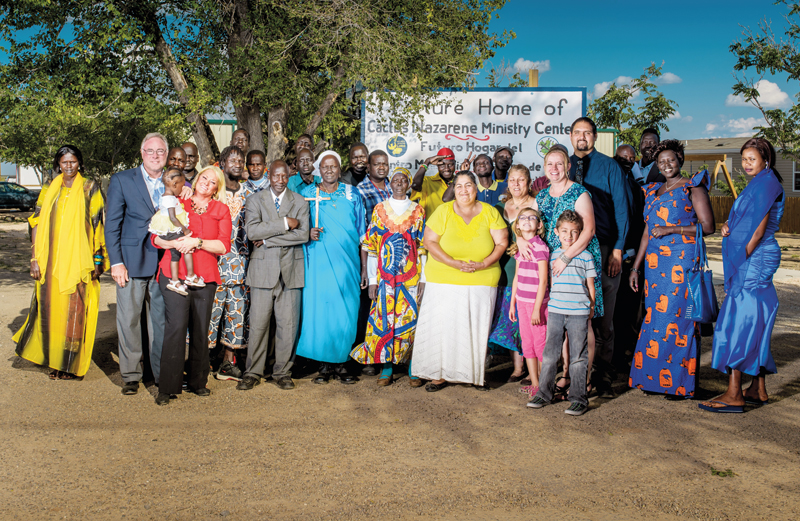
When it’s finished, the beige-and-green metal-sided Cactus Nazarene Ministry Center will have worship space for a number of different ethnic congregations, ESL classrooms, legal-aid meeting rooms and even temporary housing for Nazarene missionaries who are serving short-term stints in Cactus.
Recently, David and I stood under a rare shade tree at the site of our new ministry center, surrounded by Africans. We shared in their excited conversation about the ministry center’s progress and potential.
I thought back to my first day in Cactus, that shell-shocked feeling as I gazed around at the seemingly desolate town.
Now Cactus seemed anything but desolate. Everywhere I looked I saw evidence of God at work.
Yes, I thought, America has changed. But when Jesus tells us to serve “the least of these,” he doesn’t distinguish between languages or nationalities.
“For I was hungry and you gave me food, I was thirsty and you gave me drink, I was a stranger, and you took me in,” our Lord says. It’s that simple. So in Cactus, Texas, that’s what we do.
Download your FREE ebook, The Power of Hope: 7 Inspirational Stories of People Rediscovering Faith, Hope and Love.
Mary of Nazareth: Mother of Jesus
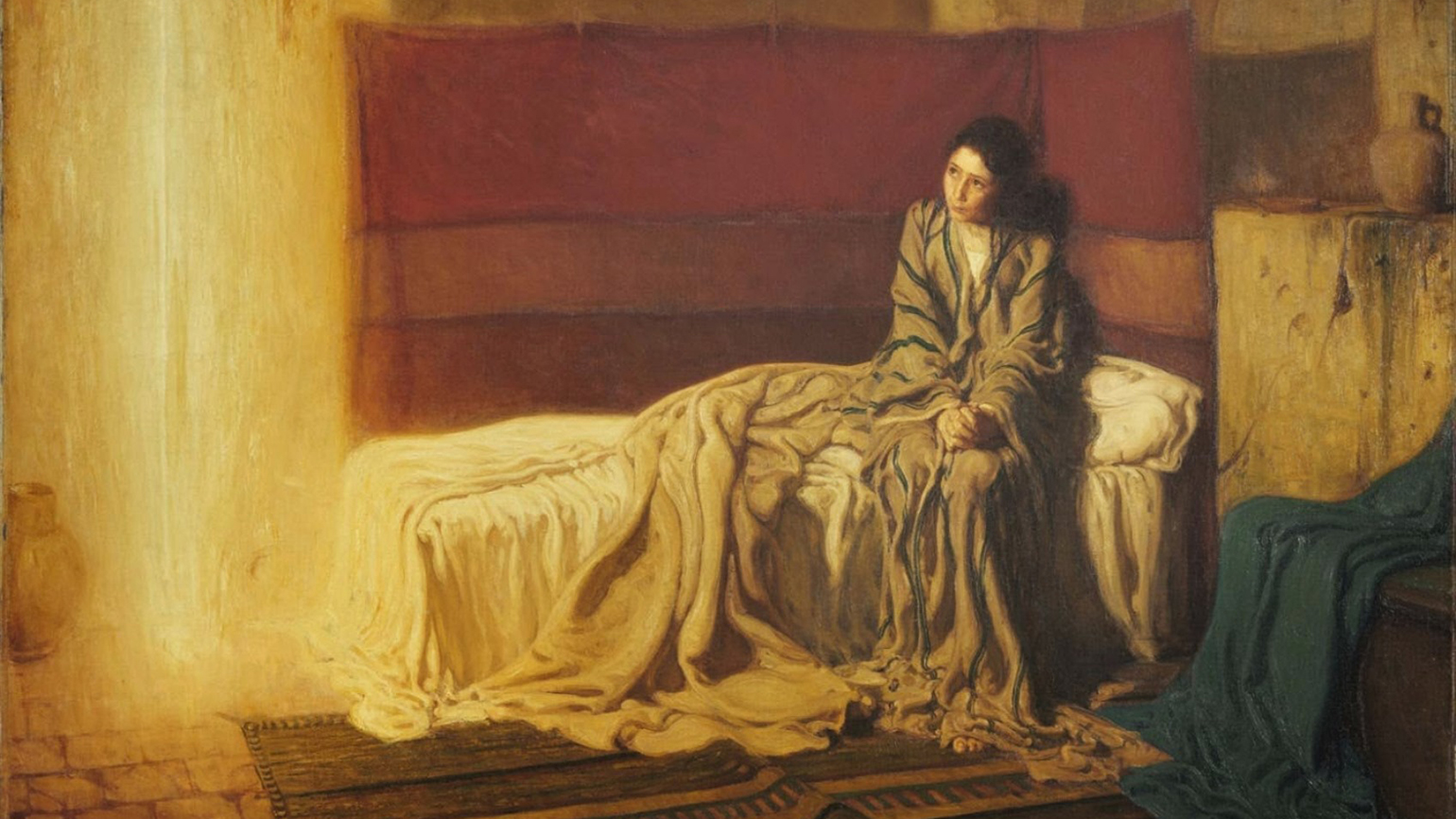
Mary was a teenager living in Nazareth when the unimaginable happened, the angel Gabriel appeared to her and announced she was chosen by God to give birth to the Messiah. The book of Matthew tells us that when the angel appeared, Mary was already betrothed to a man named Joseph. Despite confusion, uncertainty and the repercussions that her pregnancy would have on her reputation and her relationship with her future husband, Mary accepted the role as mother of Jesus with a faith-filled yes. By submitting herself to God’s will, Mary is a model of obedience and trust showing us how to be “servant of the Lord.”
Here is Mary, the Mother of Jesus’ life story from the Bible:

• Mary is a virgin, betrothed to Joseph, living in Nazareth.
In the sixth month the angel Gabriel was sent from God to a city of Galilee named Nazareth, to a virgin betrothed to a man whose name was Joseph, of the house of David. And the virgin’s name was Mary. (Luke 1:26-27)
• The angel Gabriel announces she has been chosen to give birth to the Messiah.
And the angel said to her, “Do not be afraid, Mary, for you have found favor with God. And behold, you will conceive in your womb and bear a son, and you shall call his name Jesus. He will be great and will be called the Son of the Most High. And the Lord God will give to him the throne of his father David, and he will reign over the house of Jacob forever, and of his kingdom there will be no end.” (Luke 1:30-32)
• Mary submits to God’s will.
And Mary said, “Behold, I am the servant of the Lord; let it be to me according to your word.” And the angel departed from her. (Luke 1:38)
• The angel answers Mary’s question about how she will conceive.
And the angel answered her, “The Holy Spirit will come upon you, and the power of the Most High will overshadow you; therefore the child to be born will be called holy—the Son of God. (Luke 1:36)
• The angel’s message is confirmed by Elizabeth.
When Elizabeth heard Mary’s greeting, the baby leaped in her womb, and Elizabeth was filled with the Holy Spirit. In a loud voice she exclaimed: “Blessed are you among women, and blessed is the child you will bear! But why am I so favored, that the mother of my Lord should come to me? As soon as the sound of your greeting reached my ears, the baby in my womb leaped for joy. Blessed is she who has believed that the Lord would fulfill his promises to her!” (Luke 1:41-45).
• Mary gives birth to Jesus in Bethlehem.
In those days a decree went out from Caesar Augustus that all the world should be registered. This was the first registration when Quirinius was governor of Syria. And all went to be registered, each to his own town. And Joseph also went up from Galilee, from the town of Nazareth, to Judea, to the city of David, which is called Bethlehem, because he was of the house and lineage of David, to be registered with Mary, his betrothed, who was with child. And while they were there, the time came for her to give birth. And she gave birth to her firstborn son and wrapped him in swaddling cloths and laid him in a manger, because there was no place for them in the inn. (Luke 2:1-7)
• Mary is Jesus’ first disciple.
On the third day there was a wedding at Cana in Galilee, and the mother of Jesus was there. Jesus also was invited to the wedding with his disciples. When the wine ran out, the mother of Jesus said to him, “They have no wine.” And Jesus said to her, “Woman, what does this have to do with me? My hour has not yet come.” His mother said to the servants, “Do whatever he tells you.” (John 2:2-5)
• Mary had other children.
And his mother and his brothers came, and standing outside they sent to him and called him. And a crowd was sitting around him, and they said to him, “Your mother and your brothers are outside, seeking you.” (Mark 3:31-32
• Mary was at the cross and given by Jesus into the care of John.
But standing by the cross of Jesus were his mother and his mother’s sister, Mary the wife of Clopas, and Mary Magdalene. When Jesus saw his mother and the disciple whom he loved standing nearby, he said to his mother, “Woman, behold, your son!” Then he said to the disciple, “Behold, your mother!” And from that hour the disciple took her to his own home. (John 19:25-27)
• Mary prayed with other believers for the Spirit in Jerusalem
Then they returned to Jerusalem from the mount called Olivet, which is near Jerusalem, a Sabbath day’s journey away. And when they had entered, they went up to the upper room, where they were staying, Peter and John and James and Andrew, Philip and Thomas, Bartholomew and Matthew, James the son of Alphaeus and Simon the Zealot and Judas the son of James. All these with one accord were devoting themselves to prayer, together with the women and Mary the mother of Jesus, and his brothers. (Acts 1:12-14).
Additional articles and devotions:
10 Remarkable Women of the Bible
Mary, Mother of Jesus
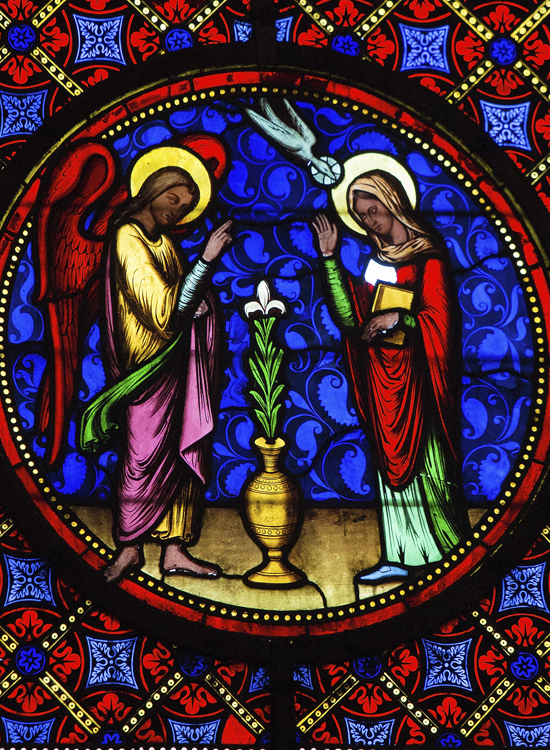
Christians around the world observe Advent. It’s a season of reflection and preparation. It’s a time of waiting for the birth of Jesus and anticipation of His return. These Bible verses, Luke 1:26-38, tell the story of the angel’s visit to Mary, when she learned that she would become a mother and when she began her own season of waiting for the birth of Jesus.
Mary Magdalene: A Devoted Follower
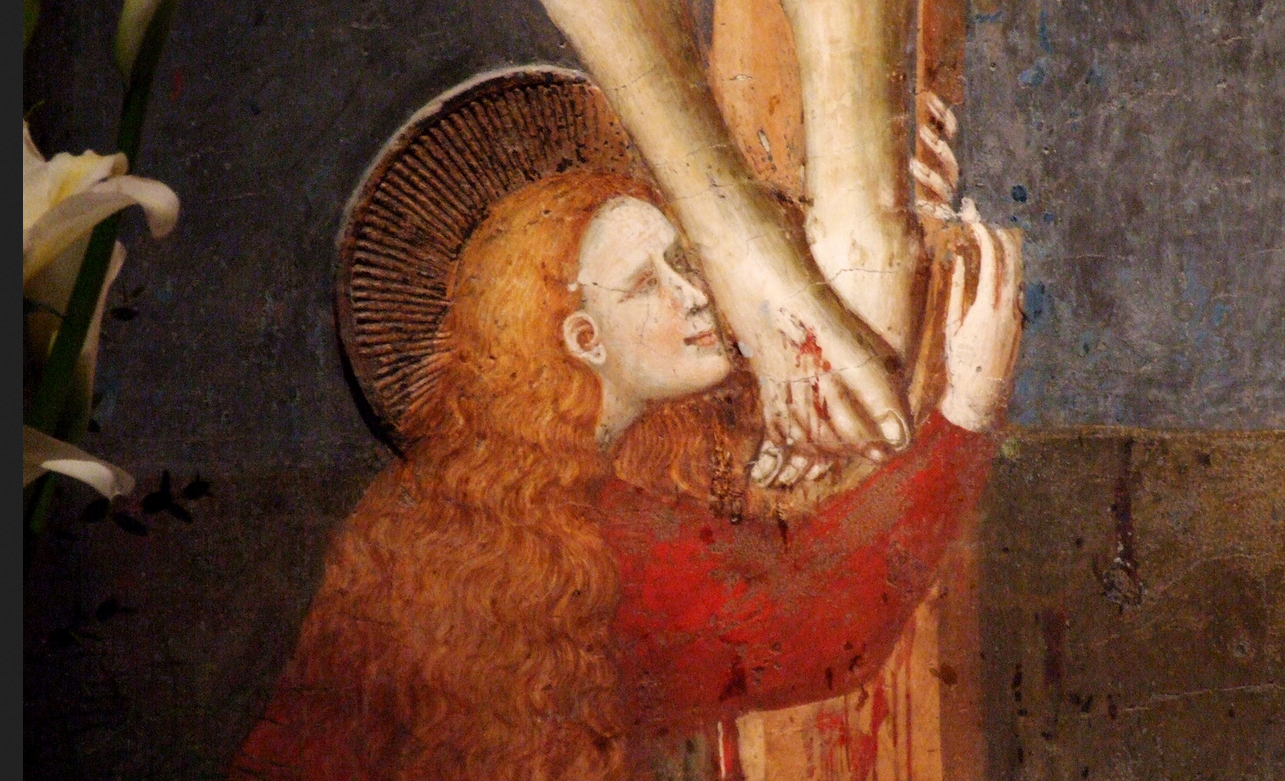
Mary Magdalene was one of Jesus’ most loyal followers and was the first to witness His resurrection. Her name, “Magdalen” comes from the town where she was born Magdala.
While historically many have portrayed Mary Magdalene as a repentant prostitute, recently scholars dispute this belief. Numerous questions about her life remain unanswered. What exactly were the “seven demons” that Jesus healed her from? What was the nature of her relationship with Jesus? What happened to Mary Magdalene after Jesus’ resurrection?
What is clear from the Bible is that Mary of Magdalene was healed by Jesus and became a devoted follower. She traveled with Jesus and the disciples. She was there was Jesus was nailed to the cross and cried out, “My God, my God, why hast thou forsaken me?” She witnessed Jesus’ death, burial and resurrection.
Here is Mary Magdalene’s story from the Bible:
• Mary Magdalene was delivered from seven demons
And also some women who had been cured of evil spirits and diseases: Mary (called Magdalene) from whom seven demons had come out. (Luke 8:2, NIV)
• Mary Magdalene financially supported Jesus’ ministry
Joanna the wife of Chuza, the manager of Herod’s household; Susanna; and many others. These women were helping to support them out of their own means. (Luke 8:3, NIV)
• Mary Magdalene witnessed the crucifixion and burial of Jesus
Many women were there, watching from a distance. They had followed Jesus from Galilee to care for his needs. Among them were Mary Magdalene, Mary the mother of James and Joseph, and the mother of Zebedee’s sons. (Matthew 27:55-56).
Mary Magdalene and the other Mary were sitting there opposite the tomb. (Matthew 27:61, NIV)
• Mary Magdalene went to the tomb and reported it empty
Early on the first day of the week, while it was still dark, Mary Magdalene went to the tomb and saw that the stone had been removed from the entrance. 2 So she came running to Simon Peter and the other disciple, the one Jesus loved, and said, “They have taken the Lord out of the tomb, and we don’t know where they have put him!” (John 20:1-2, NIV)
• Mary Magdalene saw two angels in the tomb and spoke with them
Now Mary stood outside the tomb crying. As she wept, she bent over to look into the tomb and saw two angels in white, seated where Jesus’ body had been, one at the head and the other at the foot. They asked her, “Woman, why are you crying?” “They have taken my Lord away,” she said, “and I don’t know where they have put him.” 14 At this, she turned around and saw Jesus standing there, but she did not realize that it was Jesus. (John 20:11-13, NIV)
• Mary Magdalene was the first to see the risen Lord
Jesus said to her, “Mary.” She turned toward him and cried out in Aramaic, “Rabboni!” (which means “Teacher”). Jesus said, “Do not hold on to me, for I have not yet ascended to the Father. Go instead to my brothers and tell them, ‘I am ascending to my Father and your Father, to my God and your God.’” Mary Magdalene went to the disciples with the news: “I have seen the Lord!” And she told them that he had said these things to her. (John 20:16-18, NIV)
• She delivered a message to the disciples
Then Jesus said to them, “Do not be afraid. Go and tell my brothers to go to Galilee; there they will see me.”
(Matthew 28:10, NIV)