Embrace God's truth with our new book, The Lies that Bind

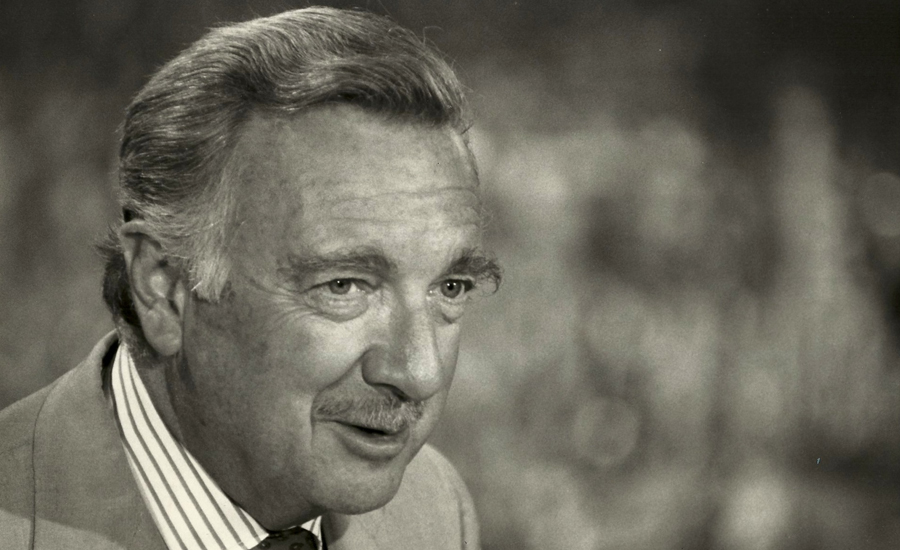
Guideposts Classics: Walter Cronkite on Honesty

Once, when I was a boy, I saw a dollar Ingersoll watch in the showcase of our local drugstore. I wanted that watch very much but didn’t have the dollar, so I asked the druggist if I could take it and then pay for it as I earned the money. He agreed.

The next day my mother happened to come into the store, and the druggist casually mentioned the arrangement we had made.

A Journey of Faith In Article Ad - Avail Now

Well, my parents would have none of it. To them what I had done was the next thing to dishonesty.

“Don’t you see,” my mother said to me, “you already consider that watch yours but you haven’t paid for it. That’s deception. If you have to use the slightest bit of dishonesty to get what you want, you’re paying too high a price.”

She paid the druggist the dollar, took the watch from me and kept it until I earned the money to retrieve it.

That lesson has stuck with me. Today I have almost a compulsive desire to be honest, not because I think it makes me any better than the next man, but because I feel so strongly about the need for honesty in our national life.

If we want to see straight dealing in our country, the place to begin is with ourselves.

Sometimes there is no problem in knowing the honest thing to do. Some speculators once offered me a large parcel of land. There was no suggestion that I talk about their property on the air. They just wanted to be able to say that I owned land in the area they were trying to promote.

They weren’t able to say it.

Another time, a group of uranium-stock promoters were ready to give me a large sum of money if I would broadcast their “find” in Colorado. They’re still waiting.

Some years ago a highly placed man in Washington suggested to newsmen that a little management of the news, now and then, would be in the national interest. The man who made the suggestion was a friend of mine.

But I felt so strongly against the idea of manipulating news that I spoke out against it publicly. Our friendship was strained. That was painful, but it would have been more painful to have allowed such an idea to go unchallenged.

Then there is the situation—which every newsman faces—known as attribution. A man will look you in the eye and say, “Please attribute what I’m telling you to ‘informed sources’—not to me.”

When the CIA first decided to reveal its role in the Green Beret case involving the death of an alleged Vietnamese double agent, it requested newsmen to attribute its version of the story to “informed sources.”

We couldn’t do that at CBS News. We reported the story the way it was: “A new version of the Green Beret case, reflecting the views of the CIA, has begun to circulate here.” Again, such honesty made a number of people unhappy, but I felt we had no choice.

Is there, in fact, any ideal today that demands more commitment—in public, business and private life—than Saint Paul’s injunction, “Put away falsehood, speak every man truth with his neighbor; for we are members one of another” (Ephesians 4:25).

I call it an ideal rather than a rule, for the more I struggle with questions of honesty, the more I learn how complicated the subject is. I also know that each man has to come to his own understanding of how to put away falsehood.

The Democratic National Convention of 1968 was a complex experience of honesty. We knew at the time that we could not possibly report every man’s understanding of the events taking place in Chicago.

Because we could not present the whole truth, pressure was put on us not to report some of the actual events themselves. Demonstrations and brutalities, we were told, were dangerous facts, too confusing for the average citizen to understand.

We just could not agree to those arguments. “Give people the light and they will find the way,” said one of our great American journalists, E. W. Scripps. I agree. To me, honesty and light are synonymous.

We went ahead, even in the face of criticism, and reported what we did see as completely as we knew how.

And because I believe that honesty and light are the same thing, I also believe that a genuine religious life must submit to this standard. Before every prayer I utter, I ask myself, “Is this honest?”

In 1951, when I had been with CBS for only a year, I was given my first big tv assignment—covering the return of General Douglas MacArthur from Korea. We were on the air with cameras grinding when we learned that the general’s plane would be delayed in coming down.

I realized right then that I hadn’t done enough spadework. In the pit of my stomach was the awful fear that I would run out of words and that this broadcast would be embarrassing, perhaps even disastrous, and the end of my career.

Could I ask God to help me here, when I had not done my homework? Not by the standards of the Ingersoll watch. I could pray that I never make this mistake again, but that was different from asking Him to bail me out now.

MacArthur’s plane was delayed 15 minutes, which seemed like as many years. During that time I recited all of his biography I could remember and ad-libbed wildly to fill the gap.

It was not my best broadcast. But to my way of thinking it would have been a worse loss if I had let panic make me try to cut some corners with God.

At other times, prayer is the honest thing—the only honest thing to do. For instance, when my daughter Nancy came down with a mysterious high fever and lapsed into a semi-coma, I prayed hard.

Or earlier, when Nancy was an infant and my wife, Betsy, was flying in from Kansas City with her, I went to a rainy, fog-shrouded airport to meet them. I squeezed through the crowd to the airline counter and inquired if the plane from Kansas City was on time. The man looked at me, very concerned.

“Sir,” he said, “I’m afraid we’ve lost contact with that plane!”

A woman screamed. Another fainted. And I prayed as I never had before. Then I rushed to find a phone, to see if I could find out anything about the missing plane—and bumped into Betsy herself. Contact with the plane had been lost simply because it had landed early.

I am not suggesting that my prayers here brought about the story’s happy ending, but I do suggest that this was an honest time to ask for God’s help.

This is an era when we need honesty in every phase of living as never before, because never before in history have we been so irrevocably members one of another.

And while our efforts to be honest can be perplexing—even cost us friendships and material gain—I believe there is a greater compensation: the awareness of being true to something and Someone bigger than we are.

For more inspiring stories, subscribe to Guideposts magazine.

Guideposts Classics: Ruth Hussey on Answered Prayer

Recently a friend came to me in an hour of deep need. She was earnestly seeking something, anything that would lift her above the turbulent sea of her sorrow.

“Ruth,” she said, “I know you have faith … but what do you get out of your religion?”

Whistle Stop Cafe In Article Ad May 2023

“Well,” I said slowly. “I get a sense of purpose, a sense of place in the universe and among my fellow men.”

She nodded, but there wasn’t any answering light. Suddenly I wondered if I were offering “cold truth.” Why was I holding back, reticent to speak of the warmth and experience that had been so close to me? Afraid of being misunderstood, misinterpreted?

If I loved my friend enough, why not explain to her how I “got” the feeling, even at the risk of sounding corny. Then I told her, “Joanne, I get comfort and inspiration.”

Her face lighted up. “Those are the things I want. But are you sure?”

I told her a story I have always hesitated to tell—my experience at “playing” the Virgin Mary on the Family Theatre for television. When Father Patrick Peyton called, to suggest it, I was stunned. The idea of “acting the part” of the Blessed Mother seemed presumptuous.

I agreed to do it, but frankly was scared and felt inadequate for the job. There was even one line in the script I could never say. I didn’t understand it.

It is my practice to commit my lines to memory by rote and, when letter perfect, to work out my concept of the character in detail. In this case once I had mastered the words, I simply could not bring myself to offer my personal interpretation to 20,000,000 viewers. Nor could I read that one “line.” In my secret heart I bad never been able to understand how Mary could say in her humility: “My soul doth magnify the Lord!”Luke 1:46

As I waited in the wings, to do my first performance on Thanksgiving Day, I felt I had never been so ill prepared. I knew only the words and, unless the inspiration came, I didn’t know what would happen. Over and over I prayed: “Be Thou my guide. Help me to forget myself.”

It is hard to explain what happened then. I moved through the part on “feeling,” on impulse rather than reason. I wasn’t conscious of speaking words or lines, but instead concentrated on the impact, the spirit behind them.

The time came to say, “My soul doth magnify the Lord,” but the way was with a kind of singing wonder … I had never thought of those words that way … but now I knew what the Virgin Mary meant! It was the purpose of a whole life.

“Yes,” said Joanne. “I see. That is answered prayer.”

A good way to start, I’ve discovered, is with thank-you prayers, little prayers offered many times throughout the day, for many things, big and small. Most often when I pray for something it is for direction, for what I am supposed to do. For the wisdom to be a good mother and wife.

Before going on the stage or before the cameras, I always pray … not to be a success, but that I shall remember what I have learned.

For more inspiring stories, subscribe to Guideposts magazine.

Guideposts Classics: Ricardo Montalban on the Power of Prayer

As I hung up the phone on our kitchen all, I turned to see my wife Georgiana’s smiling face. Her eyes were shining with excitement.

“You got the part?” she asked.

Journey With Jesus in article ad

“Yes,” I said slowly—still not quite believing the news myself. The role was in a new Broadway musical, Jamaica. It couldn’t have happened at a better time.

It was 1957, and with a wife and four small children to support, I badly needed work. Our past few years in Hollywood had been pretty lean; my career had been one of ups and downs. But this, we understood, was the nature of an actor’s life—to live from job to job in a state of constant uncertainty.

ENJOYING THIS STORY? SUBSCRIBE TO GUIDEPOSTS MAGAZINE!

Fortunately, Georgiana and I shared a firm faith in God and in the power of prayer that had never failed to see us through the roughest times. When I needed work, we prayed—with confidence and expecting an answer. That’s the way I’d been taught as a youngster.

Still, landing the role in Jamaica was more than I’d hoped for. The part was, first of all, challenging; I was the only white actor in an all-black cast and would be playing the part of a Jamaican. The job promised to be steady; advance ticket sales for the show, at Broadway’s Imperial Theater, indicated it was going to be a hit.

Best of all, the work wouldn’t take me away from my family; the contract included our all-expenses-paid move from California to New York.

It seemed too good to be true.

We arrived in New York with great expectations and weren’t disappointed. The play opened to good reviews and was booked for a year’s run. As a family, we enjoyed the excitement of big city living and new acquaintances. At the theater, deep friendships developed among the Jamaica cast and crew. One of my dearest companions was my dresser, Charlie Blackstone.

Charlie was a quiet man, immaculately groomed, with a cheerful nature and quick grin that endeared him to everyone he met. He took his work seriously. From out of nowhere, it seemed, Charlie’s efficient hands were always there when I needed them—adjusting a crooked belt buckle, sewing a button, delicately retouching a spot of makeup melted by hot stage lights.

Rarely did Charlie speak about himself or his past, and I never asked him any questions; ours was a relationship based on a kind of silent understanding. We just felt comfortable in each other’s company and never felt we had to say very much.

READ MORE: BUDDY EBSEN ON THE LORD’S PRAYER

Charlie loved boxing, and we often spent intermissions watching the fights on television in my dressing room. Saturday nights were special. That’s when Charlie and I went to midnight mass at St. Malachy’s, also known as the Actors’ Chapel because of its late-hour services and theater-district location on West 49th Street.

I grew to love that old church, with its cozy atmosphere and worn wooden pews. Charlie and I always sat in the same place. It was there it seemed I could best focus my thoughts and get close to God. I often thought how I would miss St. Malachy’s when it came time to return to California.

Our year in New York had nearly passed and Georgiana and I were busy planning our trip home when, unexpectedly, I learned that the play was being held over. A new school year was starting, so Georgiana and the children went on to California without me.

I took a temporary apartment with another actor, planning to join my family as soon as the play closed. At first our separation didn’t bother me; I didn’t expect it to last more than a few weeks.

But as weeks dragged on into months and Jamaica kept playing to sell-out audiences, it became apparent that I was stuck in New York indefinitely. I should have been happy for the show’s success, but with each passing day I grew more and more miserable with homesickness.

My family means everything to me. I missed them terribly. No matter what I tried to divert myself—books, television, shopping, museums, shows—nothing held my interest. All I wanted was to be home with my family. Phone calls and letters only made me feel worse; they were poor substitutes for the real thing.

Every day started and ended with the same prayer.

“Lord, let me go home,” I’d say. “Let me be with my family soon.”

But the show went on. The job that had been a dream come true had turned into a nightmare. With each closing curtain, I felt my throat tighten, my frustration turning into anger. It just didn’t seem fair.

Finally, after one Saturday night performance, I thought I would explode. Storming into my dressing room, I slammed the door behind me.

“I am so sick of this,” I hissed through clenched teeth. “Sick of it!”

Charlie Blackstone was sitting on a folding chair in the far corner of the room watching television. He looked up at me with troubled eyes, but said nothing. He had been waiting for me to go to mass.

We walked to St. Malachy’s in silence. The midnight sky was inky black, the stars cold and brittle. A bitter wind sounded a mournful cry as it whipped around the old stone church.

Charlie and I entered the chapel and slipped into our pew. The wooden seat was hard. The cement floor was cold on my knees. Whatever charm the church had held for me before was gone. I didn’t want to be there. I didn’t care who knew.

“Lord,” I muttered, “I want to go home. I miss my family. I’m sick of this play. Please…” I hesitated. “Please make it end!”

The chapel seemed unusually quiet.

I glanced over at Charlie. His head was bowed and he was smiling, ever so faintly. His voice was low, but I caught the words. What I heard made my heart sink.

Charlie was thanking the Lord for his work—for the very thing I was praying would end. And Charlie, I knew, wasn’t the only one. All around the city there were many others—actors, actresses, stagehands, musicians—who needed their jobs and felt the same way.

My face grew hot with shame. I felt torn apart, confused, guilty. I still wanted to go home—but certainly not at the expense of anyone else. For the first time in my life, I didn’t know what—or how—to pray.

Charlie, I noticed, had fallen silent. He remained that way for a few moments, then raised his head. His expression was one of absolute peace. With eyes still closed, he began to say the Lord’s Prayer.

“Our Father,” he began.

His words were soothing. They seemed to whisper in my ear, finding their way into my own thoughts.

Our Father,” I repeated—and stopped.

Here, in these two small words, in this age-old prayer, was the answer to my problem!

Jesus, in teaching us how to pray, had made it clear that we were to speak not only for ourselves, but for all members of His family: not to my Father, but to our Father—not just for me, Ricardo, but for all those around me.

This wonderful sense of sharing each others’ burdens in prayer was further revealed as I continued … “Give us day by day our daily bread … Forgive us our sins … Lead us not into temptation … Deliver us from evil…” (Luke 11:2-4)

In the past, my prayers had always been self-centered. There was a real freedom in thinking of others that I’d never before experienced. It was exhilarating.

Before we left the church, I simply asked the Lord for patience in understanding His will for me for the remainder of my stay in New York City. I didn’t have to tell Him how badly I wanted to go home; I’d been telling Him for weeks.

I wish I could say my situation changed—it didn’t. The play continued for five more months. But something far more important did happen. I changed. My anger was gone. And, gradually, the stabbing pains of homesickness that had made life intolerable melted away.

What remained was a sweet sort of ache that was almost pleasant in the way it served as a constant reminder that there were loved ones at home waiting for me. Besides, I recognized now that I had another family, my theater family, to appreciate and love for however long we were to be together.

It was some time ago that I received word that Charlie Blackstone had passed away. It’s been over 20 years since our night together at St. Malachy’s.

Since then, there have been many more times when I’ve called upon the Lord for guidance—times of trouble and confusion and despair that we all must endure. But now, thanks to Charlie, it’s with the needs of others in mind—as well as my own.

Did you enjoy this story? Subscribe to Guideposts magazine.

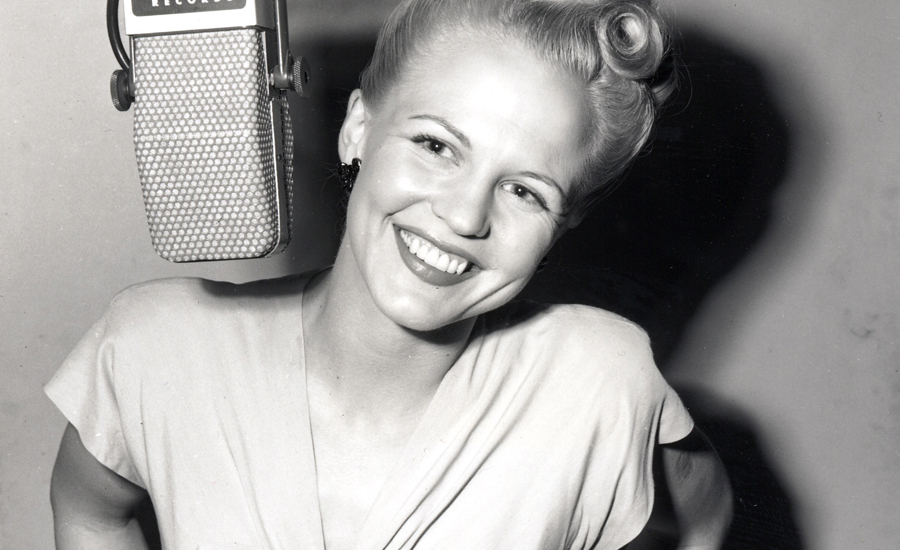
Guideposts Classics: Peggy Lee on the Power of Prayer

For twelve days I sat in a hospital where someone very dear to me hovered between life and death. Nine times the doctors, excellent men and humble, gave up hope.

And nine times the message of faith was “the Spirit of the Lord (will give) beauty for ashes, the oil of joy for mourning, the garment of praise for the spirit of heaviness.” (Isaiah 61:3).

You Got This In Article Ad

This was the answer to prayer. Not my prayers only, for there came a time when I couldn’t pray, when I thought I’d lost my faith.

READ MORE: ETHEL WATERS ON SHARING GOD’S LOVE

But through it all I was sustained by the immense, impersonal Love of my fellow man.

All this took place in a Catholic hospital. I am not a Catholic. Yet the sisters prayed for my friend. At the end of the hall was a chapel.

“I’d appreciate it very much if you’d let me go in there,” I said. “But I don’t know how to act; please tell me what to do.”

“Just don’t worry about it,” said the sister in charge. “It’s the same God. Your heart and your intent are enough.”

Some of our friends were Christian Scientists. I am not a Christian Scientist. Yet they too prayed for us, in their own way, staying, as they would put it “in the high consciousness of God’s ever-present love.”

On one very dark day a close business friend, of the Hebrew faith, kept watch beside me for many hours. He too visited the chapel. But he soon came back into the waiting room looking distressed.

“We must find the priest,” he said.

We located him in the south wing. “Father,” said my Jewish friend, “your light, the light in the sanctuary is out.”

“You must be mistaken,” the Father replied. “That light is never out.” Together we three returned to the chapel. As my friend had said, the sanctuary lamp was out, and I watched as the two men rekindled the perpetual light of faith—to the same God.

There were no limits to the offers of love that came from so many persons, each made in his own way. The teenagers, who scrubbed and waxed the long immaculate corridors, put rags down on the slippery floors so that never, day or night, was I prevented from going from the waiting room to the patient’s room.

When a blood transfusion was needed, 40 volunteered, among them my faithful and beloved Negro housekeeper and the Japanese lad who tended my garden.

READ MORE: NANETTE FABRAY ON GROWING WITH GOD

It was on the eleventh day that my own darkest hour came. There had been two operations, followed by paralysis and blindness. I called Ernest Holmes, my friend and spiritual teacher. “I’ve lost it,” I cried. “I’ve lost my faith. And I’m frightened.”

“Faith is of God,” Dr. Holmes replied steadily. “Yon couldn’t lose it if you tried. And your awareness of it will come back twofold.”

Back in the waiting room I picked up my Bible. A verse in the 91st Psalm which I must have read many times before leaped at me, and it was as though I read it with understanding for the first time:

“He shall call upon me, and I will answer him: I will be with him in trouble; I will deliver him, and honor him, with long life…” (Psalm 91:15, 16).

A great feeling of Presence, of release, swept over me. In the room down the hall the improvement commenced almost immediately. I was able to go in with confidence. “You are going to be all right now,” I told him. “I’m so grateful.”

For the first time in 11 days, I went out to dinner, to a little restaurant across the way.

Suddenly I had an impulse to return. In the elevator I met one of the doctors, his face very grave. My dear friend had suffered a relapse and was very low. But, somehow, this failed to shake my new found serenity.

The special nurse was crying. I heard her say to the Mother Superior, “Don’t let Miss Lee go in. There’s no pulse.”

“He’s all right,” I said quietly.

The Mother Superior was gentle. She took my hand. “Dear, you must let go,” she said.

READ MORE: DELLA REESE ON THE POWER OF PRAYER

“I don’t know how to explain it,” I repeated. “But he’s all right.” Within me still was that wonderful assurance that all was well.

Ten minutes later the doctors came out of the room. They were all talking about the power of God. “It was beyond our power,” said one reverently. Then, with a grin, “But He certainly had us on our toes tonight.”

We stood there, then, wrapped in prayers of praise and thanksgiving-the Mother Superior of a Catholic hospital, physicians who were Protestant and Hebrew, and myself, a metaphysician (a member of the Church of Religious Science). How did each pray? I can’t answer that.

Instead, I remember a story about Joan of Arc when she was faced by inquisitors who sought to trap her with a question. “Does God speak to you in French?” they asked.

“I don’t know,” replied the Maid of Orleans. “But I hear him in French.”

Did you enjoy this story? Subscribe to Guideposts magazine.

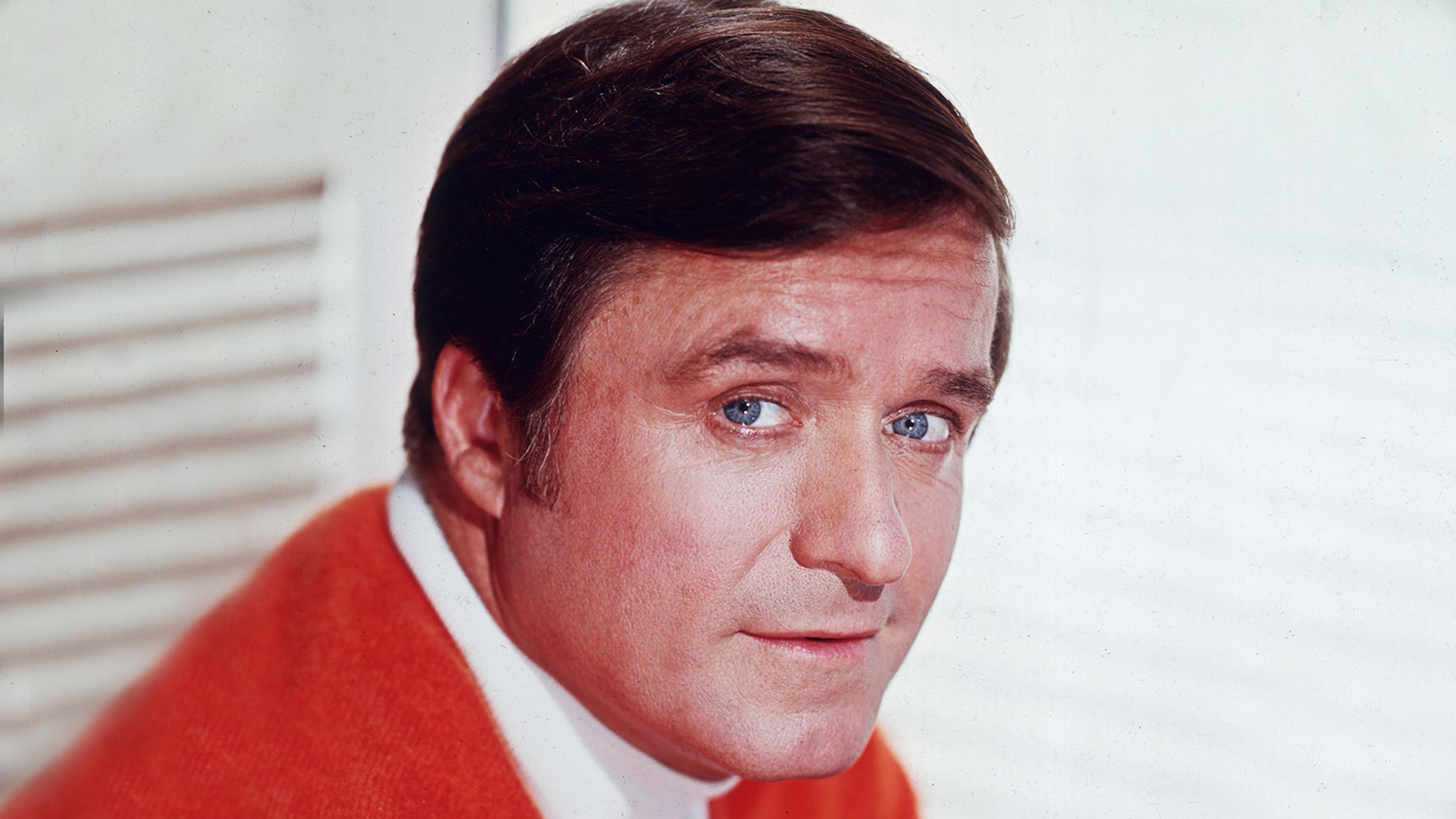
Guideposts Classics: Mike Douglas on Embracing Prayer

Some boys grow up resenting an outstanding older brother. That isn’t the way it was in my family. My older brother Bob was a star in everything he did and he was my hero. He was my special champion and protector. He still is, though that takes some explaining.

There were three of us: Bob, who was five years older than I, my sister, Helen, two years older; and I was the baby. We were all scrappy, healthy Irish kids growing up on Chicago’s west side during the Depression years, though having no money didn’t seem to have much meaning for us then.

Pray a Day Vol 2 In Article Ad

My father, who worked for the Canadian Pacific railroad, was away from home a lot, which may be one reason why early in the game Bob assigned himself the job of watching over me. I never thought I needed watching over, but he did, and there were times when I was not sorry.

READ MORE: TIM CONWAY ON ANSWERED PRAYER

Bob was big and tough and kind and had a wild temper that could work for my advantage or disadvantage. One of my favorite memories is of the day an English bulldog charged at me as I was walking home from school one afternoon.

The dog’s owner was sitting on his porch and I went up and told him he ought to keep his dog on a chain. The man got so mad that he slapped me. Boy, was it exciting when I told Bob! He did some charging of his own.

I can still see him standing on the man’s porch, that terrible temper steaming, the man peering out but refusing, wisely, to come out.

There was another time though when some pals and I were out joy-riding and we dropped into a honky-tonk.

Somebody saw me there and told Bob and the next day Bob got hold of me and shook me and sat me down and told me exactly why I was not to go into such places. And if I ever went again, and he found out, he said, the shaking I had just survived would seem like child’s play. The point was well taken.

Bob was directly responsible for the greatest thrill of my childhood. He was 17 and a basketball star playing with the Question Marks–that’s what they called their team–and I was 12 and sitting admiringly on the sidelines during a big tournament.

READ MORE: CAROL BURNETT ON SECRET KINDNESSES

The Question Marks came down to the final minute with a decisive lead when suddenly Bob left the game. He came over to me and shoved me onto the floor in his place. The ball was passed to me, I took aim and scored!

Most kids just dream about things like that but Bob had the touch for making them come true.

We were a sports-mad family and athletics were the biggest thing in my life until the afternoon mom took me downtown to a vaudeville show at the Chicago Theater. That’s the day the show business bug bit. By the time I was in my middle teens I was picking up money on local singing dates.

Before I was out of my teens I was working on an Oklahoma City radio station, WKY, and it was there in Oklahoma that I met Genevieve and we were married. She was a sophomore in high school and I was 19.

The years passed, and though I was only intermittently in Chicago and our life styles were utterly different, Bob and I remained close. He married, fathered five children, worked as a tile salesman.

He came to be an effective and popular member of his community, as I knew he would, and a strong member of his church. I used to look with respect at the way he conducted his life.

On the other hand, like so many other show business people, I spent the years struggling, hoping, angling for the big break. Eventually it came, but not until I was 35.

From 19 to 35 is a lot of years of waiting; that’s a lot of food cooked in hotel rooms and a lot of pants pressed by Gen in cramped backstages. It’s a lot of maneuvering to keep our twin daughters and Gen and me together as a real family, the way Bob’s family was.

When the break came, Gen and I had almost decided to give up show business–we had an infant daughter then, Kelly–and Gen and I were both taking real estate courses in a California night school.

READ MORE: JOE GARAGIOLA ON THE BLESSING OF LAUGHTER

Once The Mike Douglas Show came into being, however, I worked like a demon. I drove myself like a machine to make sure that what I had achieved for us did not get away.

One reason I didn’t trust the meaning of the TV ratings and the publicity and the money coming in was that I seemed to be living on a treadmill. It was exhausting.

Life as a TV star wasn’t that rich, it wasn’t that enjoyable or satisfying, even though in subtle, sneaky ways I began to be pleased by the power that TV success can bring. Yet I was to learn that it can be a deceptive power. I was to learn it suddenly.

In September, 1969, we faced one of those crises that most people think happen only to other families. Bob went into MacNeal Memorial Hospital in Berwyn, Illinois, for an operation. The doctors suspected cancer.

Mother and Dad were on their way to his bedside when their car was struck by a mail truck. Mother was hurt seriously in the crash and an ambulance rushed her to the very same hospital where Bob lay gravely ill.

And so it was that there in MacNeal Memorial Hospital, mother on one floor, Bob on another, the family gathered. It became a time for whispering, for deep thoughts and long silences, a time for looking hard at life and at oneself with fresh curiosity.

The word came for certain that mother would be all right. She was in traction and she was in pain, but she was safe. Bob was not. He was dying.

I paced the halls of the hospital in confusion. I was fully aware that this was my chance, at last, to reverse the roles: This was my opportunity to be Bob’s champion and protector. But I was powerless.

READ MORE: WALTER CRONKITE ON HONESTY

During that night I came to terms with some of the subtleties of success and power that I had been grappling with. The very day I had left the show in Philadelphia to fly to Chicago, I honestly had the feeling that I could do something. I could get the best surgeons. I had money and connections…

But I was powerless.

I can’t remember how I happened to do it or what made me do it, but somewhere in the middle of those long walks down antiseptic corridors, I began to pray. I knew little about prayer. It had never been like me to rush to churches and light candles; church had always been Bob’s department.

He had always tried to make me think more seriously about religion, but I had resisted.

My prayer, fumbling thing that it was, was not a begging one. Somehow I just wanted to feel, wanted Bob to feel, the presence of God. I wanted God to know–as if He needed my help–what a fine man Bob was and how grateful I was for him.

Strangely, in the midst of approaching death, mine was a prayer of gratitude.

Bob died. As soon as I could after his funeral, I got back to Philadelphia and went to work again. But it wasn’t the same kind of work. From the outset I discovered that I had changed. Seeing Bob’s wife and kids and feeling once again the texture of his life made me look more closely at my own life.

I saw the treadmill clearly this time, and in perspective, and I set out to slow the machinery. I found more time, surprisingly lots of time, to be alone with Gen and with the only daughter still at home, our little Kelly.

In learning to accept and enjoy the blessings at hand, no day since then has passed that I have not said my prayers and thanked God for my family and my health and my job. I am new to it and I do not understand the great ramifications of its power, but today I would not live without prayer.

I find it intriguing that ever since I stopped running so hard, ever since Bob died, people have stopped me repeatedly to say, “Mike, you never looked better.” I think I have always seemed fairly calm on camera, but it has only been in the past two years that I have discovered that I am calm.

Even my golf game has changed. For the better. Are all of these things coincidence? I doubt it.

Before every show there’s always a moment or two when I go off into a corner to say a very private prayer. Sometimes then I remember it was Bob, really, who taught me to pray. When this thought comes to me, I smile. You see, he’s watching over his little brother still. 

For more inspiring stories, subscribe to Guideposts magazine.
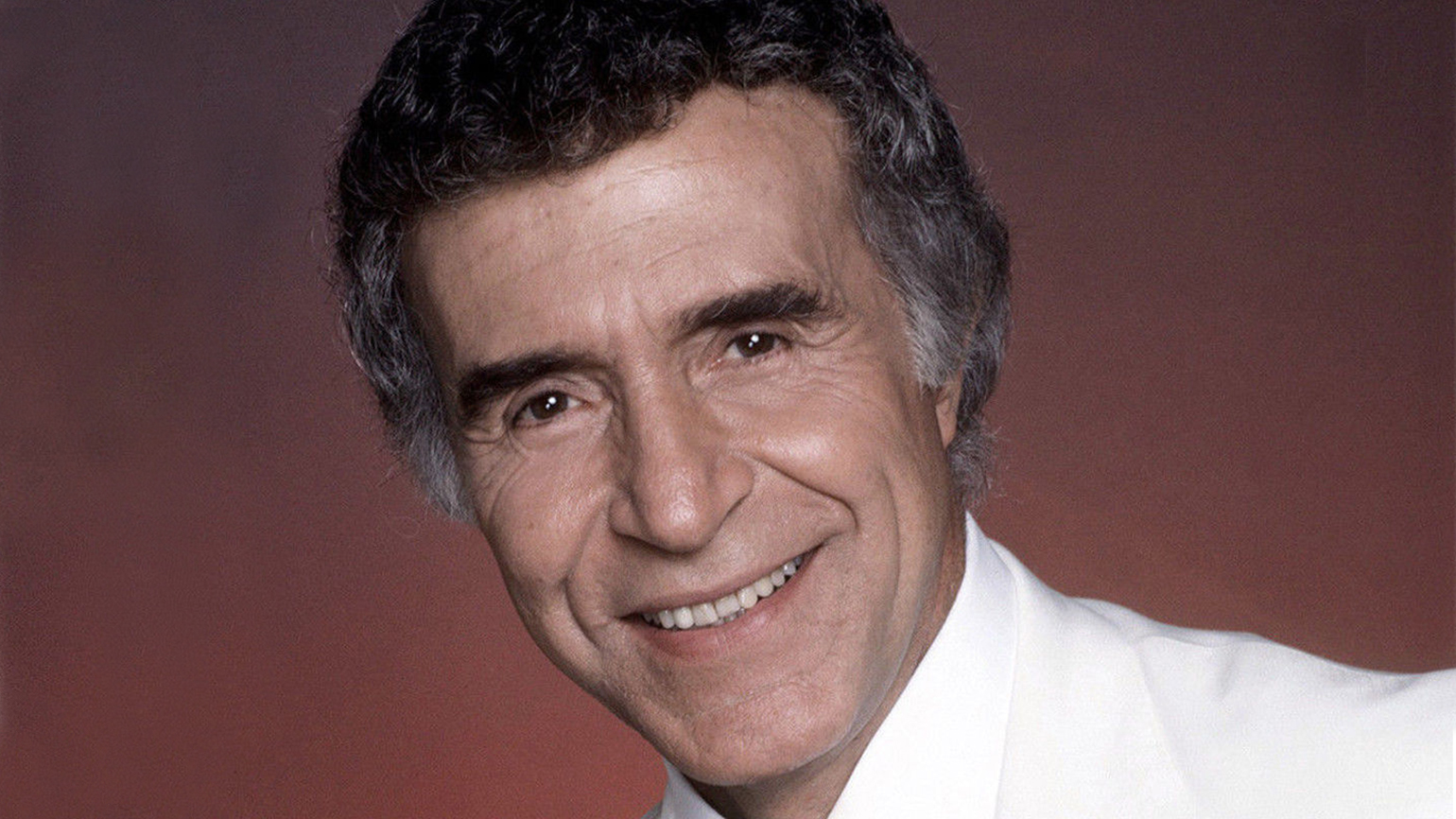
Guideposts Classics: Mel Tillis on the Serenity Prayer

I wanted the job more than anything in my life. I was a veteran, a grown man, ready to marry and settle down, but I couldn’t keep a job and I was discouraged, all because I stuttered.

I had worked as a strawberry picker, a house painter, and even a fireman for the Atlantic Coast Line Railroad. I lost that job because by the time I was able to call out the train signals ahead we were already four or five miles down the track.

Rejoice in All Things in article ad

Then I heard that a candy company in Plant City, Florida, was looking for a route driver. And I’d heard that the owner of the company, a man named Miller, was a former stutterer who had somehow learned to control his stutter.

A fellow sufferer, I was sure, would certainly understand and hire me. I set my heart on getting that job.

I got an appointment with Mr. Miller. When his secretary ushered me into his office, Mr. Miller, a kindly looking man who wore wire-rimmed glasses, looked me over. Then he asked why I wanted the job.

I couldn’t think of anything smart to say; I just started blurting the simple truth. “B-b-because I need the m-m-money,” I sputtered. I knew I sounded terrible, but I thought, Well, at least he’s hearing me at my worst.

For a long time, Mr. Miller didn’t say anything. Then finally he looked me straight in the eye. “Mr. Tillis,” he said softly, “I’m not going to give you a job.”

I stared at him, dumbfounded. He must have seen the surprise in my face.

“Oh, don’t get me wrong,” he said. “I think you’d do well. It’s just that I don’t have an opening right now.” Then he reached into a desk drawer and pulled out a piece of paper, worn and tattered. “I’d like you to take this home and read it,” he said. “Read it every night for a month.”

Hardly hearing his words, I reached out numbly, took the paper and stuck it in my pocket. Tears of disappointment burned my eyes. I turned my head away, told him good-bye and slumped out of the Miller Candy Company.

That night I felt totally dejected. “Who wants a stutterer around?” I asked myself in defeat. Nobody. And as long as I stuttered I would be a nobody. I had lived with this pain all my life.

I didn’t know that I talked differently until I started school. When I tried to talk everybody laughed. I began to withdraw more and more into myself.

My mother often said that God would help me solve my problem. I couldn’t see how. We were Baptists, but once a week Mama would take me up the road to a little Pentecostal church.

I loved to listen to the singing there, the guitars and the fiddles they used in those midweek services. And when I joined in the singing, I noticed that I didn’t stutter at all.

Mama would hold family songfests on the front porch every evening, all of us sitting around and singing for hours, I not stuttering on a word. We found out that when a stutterer speaks, air gets trapped in his throat. But when he sings, for some reason, the breathing apparatus works normally and there is no stutter.

I sometimes wondered if I might go through life singing, never having to talk again.

But after the interview with Mr. Miller, I was prepared never to utter another sound. I took the piece of paper he had given me out of my pocket, ready to tear it to shreds. But something made me look at it.

It was a prayer—a very well-known one, but one I didn’t know at the time: “God, grant me the serenity to accept the things I cannot change, the courage to change the things I can, and the wisdom to know the difference.”

I read the words again. Then again. They were like the light at the end of a tunnel.

Accept the things I cannot change. I could work at easing my stuttering, I knew, but I probably could never really change the way I talked.

Courage to change the things I can. What I could do something about were all my fears—fear of stepping out of my shell, fear of trying to be somebody, fear of thinking bigger than I had been doing.

God, grant me the serenity. Here, I knew, was the key to the whole prayer. When, I wondered, was the last time I actually had reached out to God?

Years earlier, when I was a kid, I had prayed that I would wake up one morning and talk differently. When it didn’t happen, I forgot about God. But from what I was feeling now, I was pretty sure the Lord hadn’t forgotten about me.

Soon I was asleep—a deep and restful sleep. But though serenity came that night, it didn’t hang around all the time. And change didn’t come overnight either.

I kept reciting that prayer, reminding myself of its words and their meaning, till I finally could place myself in God’s hands, in trust, without fear of what might happen to me.

I gradually grew aware of a desire deep within me to write songs, the kind of country music songs we had sung in the Pentecostal church. I learned to play the guitar and started writing.

At the same time, I often thought of how enjoyable it would be to stand up in front of people and entertain them, but I knew this was a daydream because of my stutter.

Some months later, armed with some of my songs, I went to Nashville in hopes of getting somebody to listen to my work. One door led to another, and one day I got an appointment to audition for Minnie Pearl, one of the biggest names and greatest people in country music.

I was scared. As I went to the studio, I kept praying: “Your serenity, Lord. Your serenity.”

The audition went well and Minnie Pearl hired me as a backup musician and a songwriter. I was happy, but I stayed in the background for years and years, nowhere near my daydream of standing up and doing the entertaining myself, still frightened of what people would think of my Porky Pig stammer.

Then, in 1970, Glen Campbell invited me to be an accompanying musician on his Goodtime Hour television show. We used to kid around with one another, and one day backstage I found myself trading jokes with Glen and some of his guests.

“Hey, Mel,” Glen said, suddenly serious, “you’re funny, you know that?”

“Yeah,” I said, laughing, “really funny.”

But Glen wanted me to know he wasn’t kidding. “I’d like to use you on the show, have you introduce yourself in a skit.”

“No way!” I said.

I kept trying to back out, but Glen and a few others wouldn’t hear of it. They helped me to rehearse what I’d say to the audience, but I was so nervous that the few lines I practiced kept coming out as messed up as a two-headed calf.

The night before we were to tape the show, I called my wife, Doris, at our home in Tennessee. “I don’t know what I got myself into, honey,” I said, “but right now I feel like I want out.”

Before I knew it, a bunch of yelling broke out on the telephone, not just from Doris but from our four kids who were on other extensions. “Daddy, you better do it,” said my boy Mel Jr. “I told all my friends you were going to talk on television.”

I gulped. Then Doris, in her soothing way, said, “I hope you realize we’re all behind you. Don’t be afraid.”

Afraid. Yep, that’s what I was. When I hung up the phone, my mind went back to a scrap of paper. Its words by now were as clear in my memory as they must have been on that paper when Mr. Miller first wrote them. “God …,” I began silently.

The next day, I went in to face the TV cameras. “The other d-d-day, somebody asked me when I was going to b-b-be on television,” I stuttered to the audience, trying to get out my introduction to my song. “I t-t-told them two years. I just w-w-wasn’t sure when I w-w-would ever finish th-th-this introduction.”

To my amazement, everybody laughed along with me. And my fear got drowned out in the laughter.

I could poke fun at myself, and people would respond—not in ridicule, but in warmth and fun. The audience would accept me, just as I was. And, more important, the prayer that Mr. Miller gave me had finally taught me to accept myself.

For more inspiring stories, subscribe to Guideposts magazine.

Guideposts Classics: Martin Sheen on Rediscovering Faith

In the summer of 1976 I flew out to the Philippines to begin work on a film that, to my way of thinking, was a great step upward in my career.

I had a leading role in Apocalypse Now. At last—a really important movie for this boy from Dayton, Ohio. From now on it was going to be big parts and a taste of real fame. How was I to know it would nearly be the end of me?

A Journey of Faith In Article Ad - Avail Now

From its inception, Apocalypse had all the earmarks of success: Francis Ford Coppola, with his worldwide recognition and glittering record of box-office hits, was at the helm as director, Marlon Brando was the costar, Robert Duvall had a supporting role, and the film’s financial budget was way up in the millions of dollars.

I had been assigned the role of Captain Ben Willard, an Army intelligence officer and hit man, who, although on the brink of emotional and psychological collapse, had been ordered by his superiors to travel through war-torn Vietnam into Cambodia, where he was to assassinate an American Green Beret colonel. That colonel, played by Marlon Brando, had, from all appearances, gone mad and was operating his own private renegade and bloodthirsty armies in the wilds of the Cambodian jungles.

Just before the filming of Apocalypse began, Janet, my wife of 15 years, and our four children joined me in the Philippines, where movie set designers had transformed the lush, green tropical vegetation outside Manila into amazingly close replicas of all the actual photographs I had ever seen of Vietnam and Cambodia.

For as long as I can remember, I have always taken my wife and family along to live with me during extended periods of time on location. I had never wanted my acting role to get in the way of my being a good husband and father. This time was to be no different.

From the first moment I read the script of Apocalypse, I was fascinated by the character of Captain Willard. I generally try to create a character I’m portraying in my own image. In “becoming” Willard I had no idea how dangerous this would be, for Willard was emotionally burnt out, insensitive to those around him, uncaring, hard-drinking, overly ambitious, self-centered and single-purposed. Were these menacing attributes of this on-camera character, coupled with the intensity of my own pursuit of success, beginning to boil over into my off-camera life? Or was I really more Willard than I wanted to admit?

Janet tried to talk out the wrinkles growing in our relationship and tell me what I was doing to others around me, but I vehemently denied that anything was changing—least of all me. Then Janet tried to reason with me that she and the kids didn’t mind making some sacrifices for my success, but now this role, this Willard thing, was making me lock them out. I was making them more and more miserable. Even Francis Coppola was beginning to find me difficult to deal with, but I couldn’t seem to help myself.

Although I was raised in a devout Catholic home, the thought of praying about my family problems never entered my mind. And I wasn’t about to go near a church—I had given that up in my mid-20s.

To understand where all this was taking me, let me explain where and how it all began. First, Martin Sheen is only my acting name. Born and christened Ramon Estevez 45 years ago, I was the seventh of 13 children of Francisco Estevez and Mary Ann Phelan Estevez. My father, a Spaniard, met my mother, an immigrant from Ireland, while the two attended citizenship training classes in Dayton, Ohio.

I was 11 years old when my mother died. My father, a factory worker for the National Cash Register Company, never remarried, and single-handedly raised us (ten boys and one girl; two boys died in infancy) in a lower-middle-class neighborhood in Dayton. I attended Holy Trinity grade school, run by the Sisters of Notre Dame, and Chaminade, a Catholic high school for boys. Early on I served in the parish church as an acolyte. It was our life in the church that helped keep our family together.

By the time I was six or seven years old, I was spending hours alone acting out the parts of characters I read about in books. Not until movies came into my young life did I know that what I was doing had a name—acting—and I knew then that I was an actor. Right after high school I headed for New York to fulfill my dream of becoming a professional actor.

That’s where “Martin Sheen” was born. The first name came from Robert Dale Martin, a drama coach and friend in New York. The last name came courtesy of the late radio-TV personality Bishop Fulton J. Sheen, whom I admired and—because of my name change—met in 1965. Martin Sheen. The name sounded good, solid, Irish. To my 18-year-old mind, Ramon Estevez was too ethnic and would cause me to get typecast.

My career in New York grew gradually, first on the stage, then TV and films. I married Janet, an art student at the New School for Social Research, and our family grew gradually too—three sons, Emilio, Ramon and Carlos (Charlie), and finally our daughter, Renée, all two years apart.

When the Captain Willard role in Apocalypse Now came along, it seemed to be the one big bright opportunity I had been waiting for. But the grueling work of putting together Apocalypse went on and on, often in hot, steamy days and sultry, humid nights. After nearly six months into the shooting, my Willard-born attitudes, with all the damage they were doing to my family life, had not changed. Our home was now a hotbed of intense stress and pressure.

Our kids began begging to go back to the United States to live with relatives. And finally Janet gave in and let them go. Then one day in early March 1977 Janet went into Manila for an overnight stay to make sure we would have a decent hotel when I came the next day for a weekend there.

Late in the evening I got back to the large rustic cabin we had rented for the duration of the filming. It was a comfortable place, perched on a mountainside and overlooking a volcanic lake. However, like all the other houses in the area, it had no telephone, radio or TV.

On that March night, I was alone and tired. Shooting the scenes of that day had drained me physically and emotionally. I looked forward to sacking out for the night, but when I went to bed I couldn’t sleep.

I lay in bed for a while, then got up and paced wildly around the bedroom floor. I felt strangely clumsy and awkward, and at times it was hard to keep my balance. My breathing grew strained. When I went back to bed, sleep defiantly refused to come. I don’t recall how many hours I continued in this state, but it must have been about three in the morning that I began to sweat profusely. A nagging pain crept into my right arm, and I leaped out of bed again. Something was terribly wrong, but I had no idea what.

I started to feel faint and slumped to the floor. Then came a devastating explosion of pain in my chest. It left me too weak to stand up. My breathing became rapid and difficult, I had to get outside for help, even though I was aware that outside a windstorm was raging.

I slithered slowly over to the closet and, one by one, yanked down pieces of clothing, then twisted and pulled my way into them as best I could. Another blast of pain hit my chest, and I knew what was wrong—a heart attack, the same thing that had claimed the lives of my mother, father and two of my older brothers. I knew I was dying.

I began to crawl slowly, agonizingly toward the door. The pain in my arm and chest was making me weak. Sweat poured off my body. I rose awkwardly to my feet and began taking baby steps out the front door. Just outside the house another blast of pain knocked me to the ground.

The wind was still howling. Towering palm trees were bending near the ground and lightning flittered nervously about the sky, giving the whole area the look of an eerie movie set. But this time it was definitely not a movie. Ramon Estevez/Martin Sheen was dying, and the scene was all too real.

Once more I struggled to my feet, only to find that my depth perception was failing. I reached for trees and clumps of shrubbery, only to find that they were about 50 feet away. Then my eyesight went altogether. I yelled weakly for the guards the production company had provided, tripped over something and fell again. My hearing was also weak, but I could feel the wind pick up speed. I couldn’t move anymore. That’s when I called to God for help.

I don’t know how long I lay there before one of the security guards making his rounds spotted me and carried me to the guardhouse station. He laid flat boards across the back of a Jeep and gently placed me on them. Then he drove a bumpy mile and a half down the mountainside to a small village, where a young Filipino doctor had a small clinic. I had come to know the doctor earlier since he had often given first aid and other medical treatment to members of the cast and crew.

He found my heart rate was very low and my blood pressure way up. He slipped a glycerin tablet under my tongue. Soon another blur of a figure bent over me. It was a priest. “Do you want to make your confession?” he asked in broken English. I tried to answer but couldn’t. He waited a long moment, then began to intone the Roman Catholic last rites.

My last recollection before losing consciousness was of being placed aboard one of the helicopters used as a prop in Apocalypse for a daring flight through the storm to a hospital in Manila.

When I awoke, another blur of a figure was bending closely over me. This one was smiling. Janet.

“You’re going to make it, Babe,” she said glowingly, “and remember, it’s only a movie. It’s only a movie.” At that very moment, all that ailed me physically, emotionally and spiritually began to heal.

Even though I did not physically die that night, the Willard character in me did. My face-to-face confrontation with death and my own human vulnerability purged the need to be an empty celluloid image bent on the accumulation of such things as fame or wealth. I had been shocked into recalling something I had known all along but had forgotten: that love is the true foundation of happiness. Love of family, love of people, love of God.

In the years since that painful night, Janet, our children and I have grown closer and happier than ever. I have long since returned to my church. I have never forgotten that even though I turned my back on God, in my time of greatest need, he came to find me.

For more inspiring stories, subscribe to Guideposts magazine.
Guideposts Classics: Kate Smith on the Power of Prayer

I was sitting calmly in a beauty parlor having my hair set when it happened. A spark flew out of a defective hand-cooler and ignited the cotton wadding around my head.

In an instant the cotton flared up—my hair was on fire!

Witnessing Heaven In Article Ad 827x123

The frantic operator flailed at the flames, but before he could put out the fire, my eyebrows, eyelids, face and arms were badly burned. For weeks I lay in bed with my head completely bandaged. Around me I kept hearing whispered consultations. The doctor said something about my eyes.

They were gravely concerned about my sight. I was worried too, yet I had practically no fear. A calm faith took over and steadied me more than could have any professional assurance. I believe deeply in prayer, and in this case it was simply a matter of turning everything over to God.

When the time came for the bandages to be removed, my lashes had grown back, there was not even a blemish on my face and my sight was intact. To the doctors, my recovery was nothing short of a miracle. If it was a miracle, it was because of my prayers and faith.

“Don’t ever be afraid to go to God,” I was once told. “He’s One who will never tell you to come back some other time when He’s not so busy.”

I found this to be true for the first time at the age of ten.

My family had taken a house for the summer at Colonial Beach, Virginia, not far from my native city of Washington. One day, two little girls with whom I had become friendly invited me to go canoeing with them on the Potomac River.

The day was warm and clear. The river lay serene and very blue—reflecting the cloudless sky above. Chattering excitedly, we climbed into the canoe and all three began to paddle. Soon we were so busy exchanging girlish confidences that we didn’t notice we had reached the part of the river which empties into Chesapeake Bay where there are strong currents.

Suddenly, it dawned on us that we were much too far from shore and moving faster than we should. The blue in the sky had changed to a pale, dull gray.

We grew frightened. “We’d better turn back,” one of the girls said. “Paddle toward shore, Kate.”

I tried to follow instructions and turn the canoe around. I remember my feelings as I stammered: “I can’t do it.”

The wind grew stronger; the waves like hungry animals pulled us toward them. We tried to scream for help, but fear paralyzed our voices. Without warning the canoe suddenly flipped over, pitching the three of us into the cold waters of the Potomac.

Not one of us was a good swimmer, and even a good swimmer could not have survived these raging currents.

“Hold on to the canoe,” I yelled. “Don’t let go.”

Numbed by the sudden cold, sputtering, desperate, we held on. Finally, we found our voices and screamed for help, but we were too far from shore for anyone to hear us. For the first time in our short lives I thought, “We can’t help ourselves. We are going to die.”

It’s a staggering thought for a little girl. Then I remembered the wise words of my parents—that there would be times when I couldn’t help myself, but God was always available to help. Did I believe that? Yes, I cried to myself. I must believe it. I prayed with frantic intentness.

Then came doubts. Maybe He wouldn’t answer—perhaps He had forgotten us. Maybe He was too busy with much more important matters than to save three little girls. We couldn’t hold on much longer.

Suddenly, an incoming fishing boat appeared out of nowhere and spotted us. Chattering with cold, we were lifted out of the icy waters and brought back to shore. My prayer was answered.

God had not been too busy to listen! That experience made me vow never to doubt again. Instead, the events of years that followed have strengthened my faith.

I believe in the power of prayer so completely that when Ted Collins, my manager and producer, was stricken with a heart attack some years ago, I asked my radio listeners to join me in prayers for his recovery.

Thousands of letters assured me that people all over the country were praying for him. Ted completely recovered.

These letters also made me realize how deeply sensitive people were to the needs of others. Like God, people also have that listening quality, and I have been thrilled time after time by their response.

A sick boy in an iron lung in Poughkeepsie once wrote in that his mother was sick and nobody came to see him. A suggestion that people send him postcards resulted in his receiving 30,000 pieces of mail, including baseball bats, five-pound boxes of candy, toys and telegrams.

A woman in South Bend, Indiana, sent him a dozen roses every day for two weeks.

I’ll never forget the three terrible days in 1936—May 18, 19 and 20—when floods surged over thousands of homes, killing scores of people in Kentucky, Pennsylvania and Ohio.

Eye witnesses to the disaster were put on the air, and a stirred nation began to send in financial help—to say nothing of supplies and clothing. The longshoremen of the New York docks brought in silver dimes, quarters and dollars in a burlap bag. Total cash contributions topped the one million mark!

A little girl whose mother was too poor to buy her a doll for Christmas wrote in that she was confident Santa Claus would bring her one anyway. After her story went out over the air, listeners sent in 8,000 dolls by Christmas Day. We had Western Union messengers distribute them to little girls in towns all over the country.

These people who responded were not too busy to listen to the troubles, heartaches and yearnings of others. This sensitivity to the needs of others can be the source of great happiness.

I have found that real riches in life are things money cannot buy. I am rich when a wrong is righted, and especially if I have contributed something to its doing. I am rich because of failures and lessons learned—because of dreams that failed to materialize and others which came true.

Riches are the things we cherish because we have put something of ourselves into them.

A person is rich who cares about every living human being that God created, and not just the few who make his or her life more pleasant. Keep yourself tuned in to God and to the need of your fellowman, and you will find yourself with all the wealth you’ve dreamed of.

For more inspiring stories, subscribe to Guideposts magazine.

Guideposts Classics: Fran Allison on Faith and Prayer

The big crisis in my life occurred when I was just starting my career.

A girl friend, Jessie, and I were driving to Des Moines for the weekend. An accident happened; so quickly I barely recall it. There was Jessie’s mad wrestle to control the car; then I was pitched into glass, metal, noise and pain.

Faithful Paws and Purrs In Article Ad

In a state of semi-consciousness I remember voices, a hospital and Jessie, unhurt, telling someone to call my mother back in Port City, Iowa, but not to frighten her. Then a priest came to say the last rites over me, just as I slipped into unconsciousness.

FOR MORE INSPIRING STORIES, SUBSCRIBE TO GUIDEPOSTS MAGAZINE!

Later I remember more voices:

“She wouldn’t be able to get here in time” (meaning my mother) … “It’s useless to operate”…”Too late to do much of anything.”

Weak as I was, somehow all this made me protest. They hadn’t even tried. Nobody was doing a thing. My doctor at home would have tried.

With a great effort I made a feeble sound and called the name of my home town doctor.

My voice startled them. Jessie then tried to tell me that she had talked to my mother, “Nan,” and that Nan was praying for me. (I learned later that my mother walked up and down the kitchen for ten hours straight praying for my recovery. Anyone who came near her was asked to join.)

The fact that I was able to moan for a doctor, while seemingly on the verge of death, brought on some quick action. It was four in the morning but the nurses immediately pulled out a doctors’ registry. They assumed that the doctor I called for was located in Des Moines.

Call it coincidence, but they located a doctor of the same name and got him on the phone: “Hello, Doctor … one of your patients is down here at the hospital … She’s in a bad way. Could you come out immediately?”

Fogged with sleep, the doctor couldn’t remember any patient by the name of Allison, yet he dressed and hurried down to the hospital. Of course he didn’t recognize me, but it was enough that I had called for him.

Gathering together his assistants, he went to work on my smashed face. He felt my condition was this side of hopeless. But he patched me together.

READ MORE: BOB “CAPT. KANGAROO” KEESHAN ON SHARING

I believe to this day that if God hadn’t given me enough strength to cry out that name, I would have been left unattended to die.

When I quit the hospital, whatever beauty I had was a memory. Behind my face was recurrent pain and dread onslaughts of headaches.

Yet there was much to be grateful for. My sight had been spared. My throat was all right … I could still sing. I could walk, hear. And I could laugh.

Perhaps it was my brush with death and my awareness of my mother’s prayers and my own–I had the feeling that God had bolstered my spirit when others had given me up.

In this period of recuperation, of constant headache and pain, “Nan’s” (as everyone called mother) remarkable spirit and sense of humor were powerful therapies.

Nan herself was the perfect example of a woman whose faith had triumphed over unbelievable obstacles. When I was five, my father had been felled with paralysis, so our family had to move in with his parents.

While caring for him, Mother contracted tuberculosis. Eventually she was ordered to a sanitarium. It is said that Mother prayed herself well. Cured, she came back to her husband and children, when recovery had been considered impossible.

After 27 years of ill health, my father had passed away. Nan was not bitter. It was her courage that made me realize how necessary it is to fight hard for life.

Certainly every time I am discouraged or consider myself overworked, I remember her tireless spirit and her great faith. My mother taught me by example how much power there was in prayer.

Despite a deep self-conscious feeling about my scarred face, I decided to go on with my career. And since nobody saw you in radio, I felt secure in this field. Even before the accident, I was on the air in Chicago at the wonderful (to me) salary of $50 a week. I went back.

One day a man came in to demonstrate some new songs. We looked at each other, then he took out a song and sang: “You Are My Desire.” A friendship grew, ripened, developed into love.

Archie Levington and I are of different faiths, yet love, respect and understanding are the blended ingredients in our happy marriage.

My career developed and soon fan mail began to multiply. I didn’t like to meet fans because I still felt self-conscious about my face and was very shy. One man wrote many times and finally came into the radio office, so I couldn’t avoid the meeting.

We talked for a while, and he asked about the accident and insisted that I go to a famous doctor in Memphis. He made arrangements.

I went as soon as my radio season was over. After a thorough examination, the doctor sat down with me, an astounded look on his face. He told me that I had had osteomyelitis–that the bone of my nose and right eye showed its ravages–yet now there was no trace of the disease!

“Remarkable!” he cried. “There is no cure, yet you have been cured. Under what lucky star do you live?”

“The Star of Bethlehem, I guess,” I told him.

I knew it was true too!

He performed what was a series of operations–done each year (except one) on my vacation time, until not only do I look almost like my old self again but I was rid of the pressure headaches that tormented me.

The year that didn’t find me “vacationing” in Memphis was to have been the happiest year of our marriage–the coming of the blessing my husband and I wanted above everything. But our child was stillborn.

And once more I had to cling to faith–or lose it. My husband sought out the priest who had married us. And he and my mother prayed me through–and roused me again to faith.

If I had thought the battle after my accident was tough, this second blow had left me feeling numb and cold and forsaken. Only the prayers and Archie’s love helped me pull out of it.

In the past three years, my work with the creative world of Burr Tillstrom has meant much to me.

I had known Burr (and Kukla and Ollie) during the war years when we had done bond-selling shows. But since we have been together on “Kukla, Fran and Ollie,” I came to know each of the Kuklapolitans and from each of them I have received a very definite something which I treasure.

We had much in common, Burr and I. We both have mothers who are as much a part of our work, our living, our lives, and our courage and faith as our hands and feet. Closer–my mother is twice as active at 74 and on-the-go as I am, and twice as important to my friends and Archie’s.

Her dates go on whether we are along or not.

Seriously–it’s a good and blessed life with work of special dearness. Success, yes–beyond what we can quite believe.

But when people wonder if my share of it will turn my head, when people tell me how pretty I am on television, I can’t very well do anything but marvel, and give thanks to God and to my mother’s prayers.

Did you enjoy this story? Subscribe to Guideposts magazine.

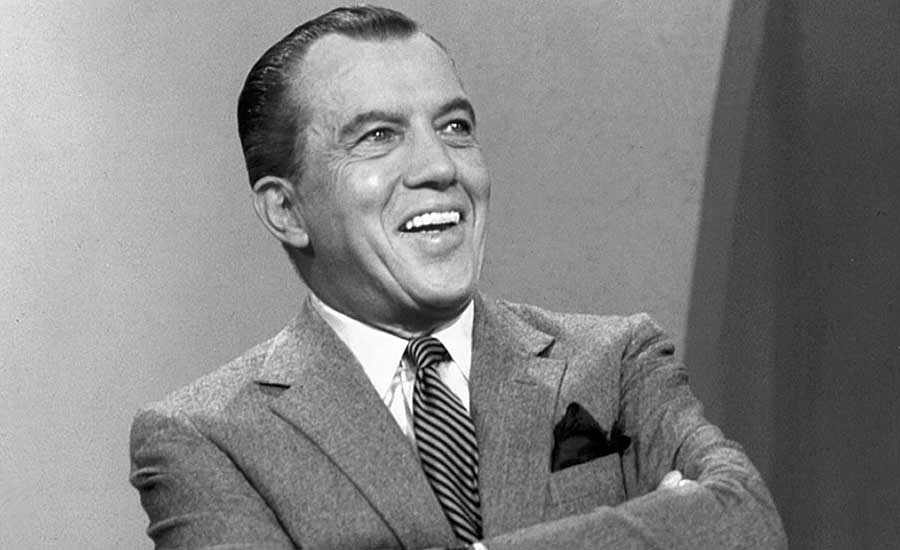
Guideposts Classics: Ed Sullivan on the Power of Prayer

The big guy sitting across the aisle on the Los Angeles to New York flight grinned at me. “I happened to notice you reading that story about the Pope’s illness. Don’t worry about it. He’ll be all right.”

I gave him a double-take as he nodded his head emphatically.

Witnessing Heaven In Article Ad 827x123

“You’re a Catholic … aren’t you?” … I nodded. “Well, I’m a Protestant,” he went on. “But I can tell you something about the Pope.”

Your reporter, a bit puzzled, urged him to continue.

ENJOYING THIS STORY? SUBSCRIBE TO GUIDEPOSTS MAGAZINE!

“Before he became Pope he was Eugene Cardinal Pacelli and he visited this country,” the big guy said. “I was the co-pilot of the plane that flew him from city to city. He had to cover a lot of cities on a lot of visits. And right smack in the middle of the trip we ran into some bad flying weather.

“One black morning, the Cardinal came down to the hangar, and he said to me and my pilot, ‘I don’t want you young men to do anything you don’t want to do. But if you don’t mind flying in this sort of weather, I don’t.’”

The big guy paused to reflect.

“The pilot was a Protestant, too. We looked at each other, both with the same thought. If we said ‘no,’ it meant that Cardinal Pacelli had more moxie than both of us.

“Apparently the Cardinal read our thoughts because he said gently, ‘This is not a matter of courage. I just wanted you to know that I trust you both.’”

My flight companion smiled.

“We told him we’d fly. But by the time we got the plane out of the hangar, there was a solid bank of black clouds at the end of the runway.

“’What do you say?’ the pilot asked me.

“’Give it the gun,’ I told him. And we took off. I guess we were just returning the faith he expressed in us.”

“What happened?” I asked.

“We gained altitude and headed into the storm clouds. Back in the cabin the Cardinal was sitting there, his thin face calm, prayerful, a sort of glow on it. Suddenly a hole opened up in the cloud center, and we sailed through. And as we went through, the opening sealed up again. If that happened once, it happened five times.”

The big guy finished the story, and I sat silent and nostalgic.

I knew what he meant by the “glow.” When my wife and daughter and I were in the Vatican in 1949, I was so intent on the Pope’s face that I had to ask the girls later what color robe he had worn.

READ MORE: MIKE DOUGLAS ON EMBRACING PRAYER

Then my thoughts wandered to the time I was a kid of 18 and a twelve-dollar-a-week sports editor of the Port Chester, N. Y. Daily Item. When the Hartford Post offered me a fifty-dollar-a-week job, there was a farewell banquet and speeches—glowing speeches about the bright future in Hartford.

Four days after I started work with the Hartford Post, the owner announced he was selling the paper. All employees would be given two weeks’ pay.

My whole, big, important world crashed. How could I go back to Port Chester? My successor at the Item was already at work. At 18 a lot of false pride can confuse your thinking. And at 18 every setback is a major calamity.

I got a job in a Hartford department store, wrapping bundles. Everybody in Connecticut was buying pots and pans that week. And wrapping paper neatly around the handles of pans requires artistry not possessed by an ex-sportswriter.

Then an infection developed on the right side of my lower jaw. The pain became so bad I couldn’t sleep. I was alone, too proud to go home, in pain and discouraged.

Just a few years before, when a student at St. Mary’s School in Port Chester, we would recite the Rosary, rattling off the responses so rapidly that it became a sing-song, devoid of meaning.

But when you’re in trouble and kneel in prayer by your bed, the “Hail Mary” becomes a very personal salutation. And your plea: “Pray for us sinners” is the complete recognition of your helplessness—and your faith.

Every young man comes to one crossroad where he is tested for manhood. At this point in Hartford prayer helped me grow up. I quit feeling sorry for myself, stuck with the job I didn’t like, went on my own to the Hartford Hospital Clinic, where a young, cheerful doctor cleaned out the infection in my jaw.

Several days later I returned from the department store to find a letter for me on the hallway table. The upper left-hand corner had the imprint, New York Evening Mail. I tore it open. It was from Sam Murphy, Sports Editor of the Mail and one of my job contacts.

“Dear Sullivan,” he wrote. “I have recommended you to our school page editor, Jack Jacowitz, to cover sports for him. Can you be in New York Monday morning?”

Could I! I wrapped my last pot and pan that Saturday night, caught an express train to Port Chester and home. That same night I was proudly showing to my mother, father, three sisters, and brother that letter and its offer of a job on a big New York daily.

On Monday morning, I went to work on the Mail, and for weeks afterwards was staring openmouthed at all the big-name newspaper by-liners along Park Row.

All of my life I’ve been blessed, first with a wonderful father and mother, sisters and brothers. Later with an exceptional wife, special daughter and splendid son-in-law. My TV show dropped into my lap by complete accident.

It is my deepest belief that all of these things have resulted from prayer—not so much my own—but prayers of priests and nuns I have known and with whom I’ve been privileged to work. And certainly the prayers and intercession of those close to me who have died.

So I know about the power of prayer. I know it keeps you steady, unshaken and able to take pain. I know it will guide you to your place—the place that will best help you grow.

Did you enjoy this story? Subscribe to Guideposts magazine.

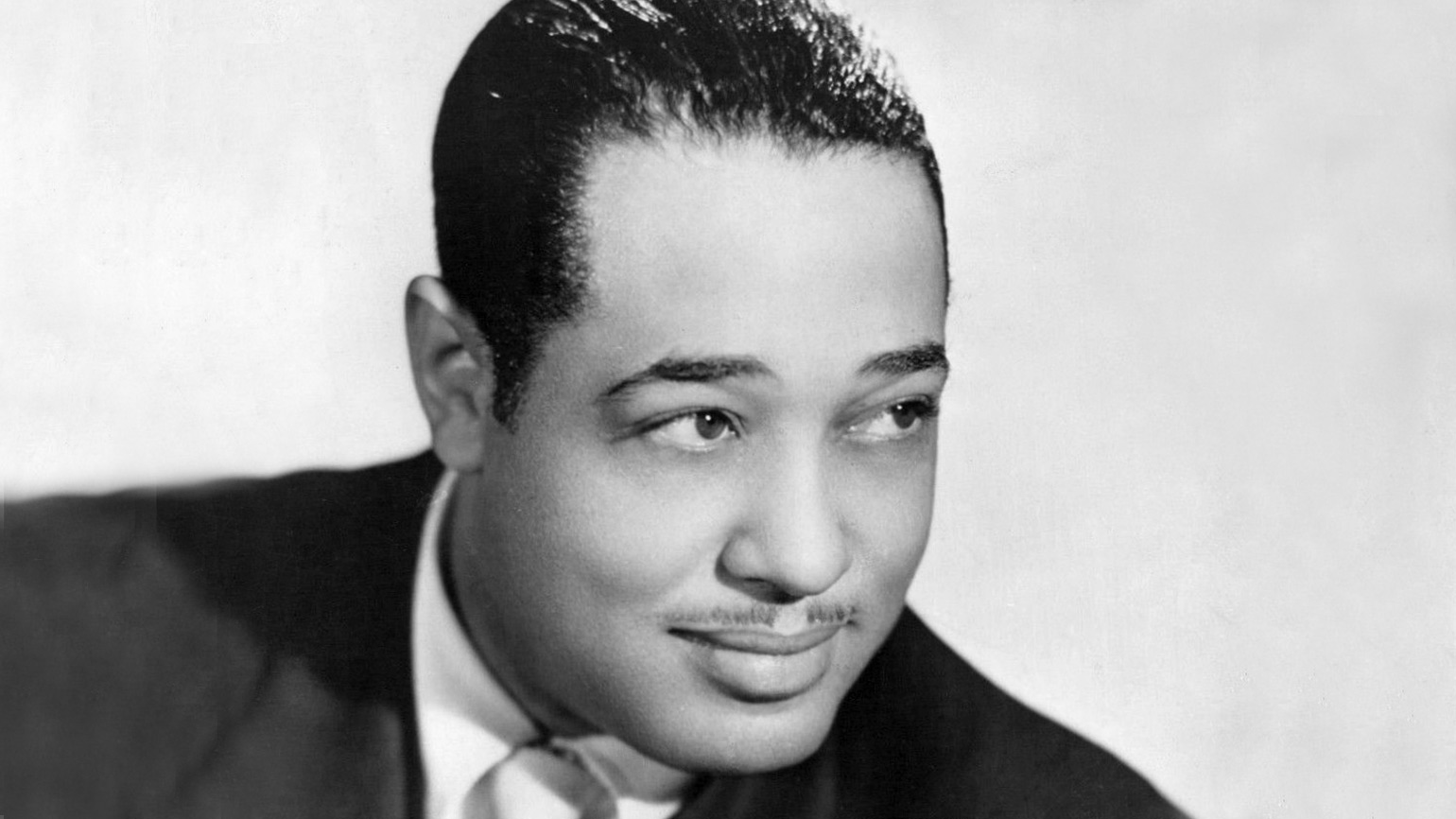
Guideposts Classics: Duke Ellington on His Path of Prayer

When my mother died in 1935, I lost all ambition. I did nothing but brood. And when my father died a couple of years later, the bottom just dropped out. The grief was so great because I kept remembering everything my parents had left me. There was the memory of mother playing the Rosary on the piano when I was four. It was so beautiful I burst out crying.

Afterward she had me take some piano lessens on a new upright. Later I worked and pounded the piano keys until I was all music.

NIVFLB Inarticle ad

My father was a caterer and sometimes worked at the White House. He later became a blueprint technician for the Navy Department. My mother, my sister, myself, we never wanted for anything. He was a good provider. He was also a man of rectitude and faith.

FOR MORE INSPIRING STORIES, SUBSCRIBE TO GUIDEPOSTS!

My parents loved us, fed us, cleaned us, took us to church. Two churches. Every Sunday we first went to my father’s church, Methodist. Then my mother took us to her church, Baptist. Their respect for each other was a lesson itself. You don’t forget that kind of teaching.

They left me such a heritage of belief that after they were gone it was natural I should turn to the Bible for help, again. I read it through four times. That took over two years.

What did I get out of it? I thought that I knew something about life and living, about a good sound and grief and joy. But after studying the Scriptures, I found a new awareness of how to meet my problems, how to deal with my fellowman, and how to bring God further into my work.

There’s really nothing new under the sun. One generation passes away and another generation comes, but the earth abides forever. Ecclesiastes 1:4. So there’s nothing to get uptight about. If you know that, you don’t have to jump at every trouble. I wrote a piece, There Ain’t But the One, which said it all. So leave it to God.

One sure way I know to meet my problems is prayer. I pray regularly, when I arise, when I retire. I pray my thanks for whatever He gives me: a thought, a bar of music, food. I believe I am helped by prayer. It makes me aware of my total dependence on Him.

We all belong to Him in the first place. I figure that when we’re born we are only given a lease, that’s all. We’re accountable to Him at the end of the lease time. We’re not supposed to arrive at the end all scarred up by anger and hurt and self-pity. My grief left when it came to me that past a certain point, it’s a sin to grieve.

READ MORE: ETHEL WATERS ON SHARING GOD’S LOVE

The light that shows us how to deal with our neighbors and ourselves and God is easy to find: the Ten Commandments. Beautiful poetry, but they’re a whole way of life, too. There’s a natural inclination to break them, but we are shown the way back if we allow ourselves to be.

One of the great things the Bible gave me was to try and look inside a man instead of at the cut of his clothes. It makes you aware of what you lack. My manager has always said that my band has no boss. He’s right. I won’t argue with anybody, in the band or out of it.

I accept my fellowmen. I love them, or try to. That gives me an inner peace of my own. Arguing with anyone brings me to the point of anger and then to judging others. I can’t and won’t do that. That’s pitting my puny strength against the great Power that runs the universe.

My feeling is that God gives each of us a role to play in life. Mine is music. The first piece I ever wrote was Soda Fountain Rag. I was 15 and jerking soda in the Poodle Dog Care in Washington, D.C., my home town. Since then there have been many thousands of pieces, many of them called sacred music.

Where do they come from? God fills your mind and heart with them. All you have to do is believe and wait until they come and use them, whether it’s laying brick a new way or writing a song. The ideas come to me anytime, anyplace. So I accept the blessings and write them.

I write on trains, planes, ships, in cabs, buses—at night, in the morning, in the din and fury of the music world and the frenzy of a thousand one-night stands. Way back, years ago, Mahalia Jackson did one of my things, Come Sunday, and my version of the 23rd Psalm. 

Later, we did an album together. It attracted the attention of various church people. Dean C. Julian Bartlett and the Rev. John Yaryan, canon of Grace Cathedral in San Francisco, asked me to present a concert of sacred music there. 

When you get that kind of invitation, you’re not in show business. You think to yourself, It all has to be kind of right. You have to go out there and make a noise that tells the truth.

I had to stop and figure out my eligibility. I prayed. Every man prays in his own language, and I believe there is no language that God does not understand. Every time his children have thrown away fear in the pursuit of His word, miracles have happened.

When I went out to Grace Cathedral in 1965, there was a shout that it was all new. It wasn’t. The sacred music began a way back, in the Thirties, and earlier inside me.

At that first concert in San Francisco I told the 2500 people present, “In this program you hear a statement without words, but I think you should know that it is a statement with six tones symbolizing the six syllables in the first four words of the Bible, ‘In the beginning God…’ “

We opened and closed with Praise God. It was based on the 150th Psalm. In the program I tried new songs and new instrumental works, Supreme Being and Something About Believing and Almighty God. The trumpet preached a solo. A fire-and-brimstone sermonette came from the percussion section. When we reached the closing, Praise God, the audience was on its feet and stayed there through a whole a capella rendition of The Lord’s Prayer.

The response to that first sacred concert was completely unexpected. One news story began: “Duke Ellington talked to the Lord in Grace Cathedral last night.” All of us, every listener, every member of the band and chorus were talking to the Lord that night.

Since then we have done sacred concerts in more than 50 houses of worship in America and Europe. When the church is too small we go into a hall. One church found the 200 voices in the chorus too much, so the church rented a ball park.

The chorus need be only 20 voices. In a church the band and chorus are arranged in the sanctuary. The bishop, minister, priest or rabbi usually address the congregation before we begin.

The sacred concerts do not take the place of worship in the ordinary manner. But the music I write for them is and always was an act of worship. From the very beginning it was a response to a growing sense of obligation to myself in self-defense through the Almighty.

It continues to be an expression of God in my life. I am only saying in music what I have been saying on my knees for a long time.

For more inspiring stories, subscribe to Guideposts magazine.
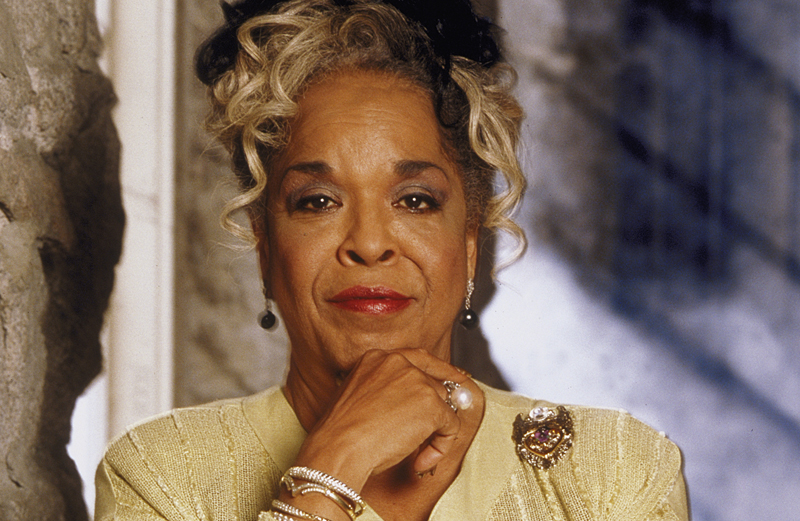
Guideposts Classics: Della Reese on the Power of Prayer

This story was first published in Guideposts magazine in June 1981.

It came just like a thief in the night. I was taping the Johnny Carson Tonight Show at NBC studios in Burbank, California, that October evening in 1979. I had often hosted this show before and felt right at home as I walked out on the stage to sing my second song that night, “Little Boy Lost.”

Pause & Pray In Article Ad

The studio audience of some 500 people who had applauded me so generously quieted down, my accompanist played the first plaintive notes on a bass fiddle. I drew in a deep breath, threw my head back, sang four bars and then I struck a flat note.

The studio and the audience revolved around me, my left knee gave way under my sequined gown, and I crumpled to the floor. Bandleader Doc Severinsen rushed up with a doctor and a nurse who happened to be in the audience.

All I could do as they carried me to the ambulance was ask: “Lord, help me. God, help me.”

Enjoy Guideposts new fiction series, Secrets of Wayfarers Inn

And then everything faded away.

I awoke the next morning to look into the anguished face of my 20-year-old daughter.

“Where am I, Dumpsey?” I asked.

“In the hospital.” She leaned down and kissed me. “Oh, Mommy, I was so worried about you.”

“Don’t fret, child,” I said, trying to smile. “God will take care of me.” I glanced at my 30-year-old adopted son –a psychiatrist–standing next to Dumpsey.

“What’s wrong with me, Jim?”

“They believe you have an aneurysm,” he said. “But they’re going to transfer you to Midway Hospital for tests to find out more about it.”

The tests were bad enough, but the grim look on the doctor’s face when he came to report was worse.

“You have an aneurysm that has ruptured,” he said, explaining that an artery in the right portion of my brain had ballooned and burst. “But we’re afraid there may be something else,” he added.

After I underwent another series of excruciating explorations, the doctor returned looking even more serious. He told me that two other aneurysms had formed on the left side of my brain, near the optic nerve.

In time, with blood surging against the weakened arterial walls, these too would rupture, which could mean the end for me.

“Your only hope now is an operation,” he said. “But, I must warn you about it. In operations like this–when the optic nerve is so closely involved–seven percent of the patients have ended up blind.” He paused and looked at me seriously. “Or worse.”

“What do you mean ‘worse’?” I demanded. He shifted uncomfortably in his chair. “Crippled, or with the loss of mental faculties.”

After he left the room, I did a lot of thinking. No matter what he said, I realized I had a choice in the matter.

I remembered what Mama had said about choices when I was about rive years old.

Mama and Papa raised us five sisters and a brother in a Detroit slum. But Mama wouldn’t allow the outside to touch us inside.

She always made it clear that Jesus Christ was her personal choice. She showed it by living His way every day.

“Pray to Him and expect His help,” she told us. “He will not let you down when you need Him.”

Her way of life was our best example. Praying and believing were a part of living in our house. There were no set times, just a part of everyday living. And so, early in life, I had made my own choice.

As I grew into my teens and saw the fancy ladies in doorways, the careening police cars, and people nodding on dope, I was so grateful that I had made the right one. For it was my faith in Jesus and his guidance that kept me from that kind of life.

READ MORE: MICHAEL LANDON ON GOD’S BLESSINGS

So I continued believing and praying, and I was blessed. The Lord had given me a voice and I had started using it in the church choir at age six. I grew up singing, and for three summers I sang with Mahalia Jackson in her gospel choir.

But I thought music was just for fun, and when I entered Wayne University, I planned to major in psychiatry. However, in my freshman year Mama died of a cerebral hemorrhage; there was just not enough money for my schooling–I had to drop out.

So now I was on my own. I did everything from working a switchboard to driving a taxi. But the thing that never left me was my love for singing.

Alone in my cab one night, I switched on the radio. As I listened to some beautiful singing, I knew that was where my heart was.

But in those days I also knew that gospel singers hardly earned travel money, and popular singers had to entertain in places like hotels, theaters and nightclubs, which I felt would compromise my religious beliefs.

I got to talking about it with my preacher, the Reverend E.A. Rundless of the New Liberty Baptist Church. He leaned forward in his chair and said, “Della, it’s not so much what you do as how you feel inside when you do it. If you feel that you can do a good job for the Lord, why not try?”

I decided to take his advice. If I sang in a club, I’d be sure to include a song about Jesus. It sure wouldn’t hurt the audience to hear it.

So I started out at age 19 in a combination bowling alley and club, and went on from there. I worked a gospel song into each act, and the people seemed to love it. During my one year at college I had organized a gospel group called the Meditation Singers.

Ten years later, I was established enough to bring them to Las Vegas to perform with me, and my career continued to blossom.

Now as I lay in the hospital bed, I realized I had another choice: listen to the doom-talking doctor, or call upon my friend Jesus, who promised that anything we ask in his name would be granted.

First thing I did was tell my family to keep that gloomy doctor out of my room.

Then, for almost two weeks, while they made further studies and gave me medicine to help keep the blood from breaking through the arteries, I kept repeating over and over: “By the power in the name of Jesus Christ I am healed. By the power in the name of Jesus Christ I am healed.”

And I believed that He would heal me. God had already saved me from the streets. He had answered my prayers for music, for everything. I knew he wouldn’t let me down now.

Then my right eye began to blur; I would see two Dumpseys standing by my bed. The doctor said it was the aneurysms pressing on my optic nerve. An immediate operation was essential.

In the meantime my good friend, the Reverend Johnnie Coleman, came from Chicago and we prayed together. She laid hands on me and I knew then that all would be taken care of.

But there were only two brain surgeons in the world who could do the complicated surgery, one in Ontario, Canada, and the other in Zurich, Switzerland. Because quick action was needed, I was flown to Ontario, where I met Dr. Charles Drake.

I felt good about him. In his 50s, be was soft-spoken, kindly and, best of all, lighthearted.

We laughed and joked as he examined me. Then, when it was over, he sat down and looked straight into my eyes. “You know, Della. I can’t do this surgery all by myself. I will do it with God’s help.”

I leaned back and relaxed. I was so grateful for this man who did not use eight-syllable words, who knew where his help came from.

READ MORE: JUNE LOCKHART ON WHERE TO PRAY

Within the hour, I was in the operating room where he opened my cranium and began working on the aneurysm.

Dr. Drake had recently designed a new type of surgical clip to protect the optic nerve during neurosurgery on aneurysms. He had sent it to Japan for various modifications and it had been returned to the hospital from Tokyo on the day I arrived. Until now, he had never tried it out.

As Dr. Drake worked on me, he looked at the clip resting on his instrument table and was faced with a choice. Should he use it? His first reaction was: No, it has not been tested yet. But he was overcome with a second thought: Use it.

So he obeyed what I believe was God’s directive. He used the clip. After five hours of surgery, my shaved scalp was stitched ear to ear and I was returned to my room.

When I awoke, I felt good. Feeling the surgical cap covering my head, I just had to look into a mirror. I had got out of bed to get one when I heard a cry behind me. It was a nurse who had just stepped into the room.

“Oh, Miss Reese,” she exclaimed, “you’re supposed to stay flat and be elevated by only thirty degrees a day. Otherwise you’ll suffer terrible migraine headaches.”

“Well, honey,” I smiled, “I just didn’t know about that. And neither does God,” I added as I got back in bed.

A second operation to complete the aneurysm repairs followed, and it went well, too.

Some people claim that in this life fate rolls over us like some giant steamroller no matter how much we pray. Well, I hate to think of what might have happened if I hadn’t prayed, if I hadn’t chosen to believe.

Would the other aneurysms have held off from bursting? Would Dr. Drake have decided to use his new surgical clip? Would I have healed as miraculously fast as I did?

When I ask myself those questions, I just remember what I learned as a little girl. Jesus makes all the difference. If you pray to him, and expect his help, you will be given it.

I know. Because I was.

Did you enjoy this story? Subscribe to Guideposts magazine.