Embrace God's truth with our new book, The Lies that Bind

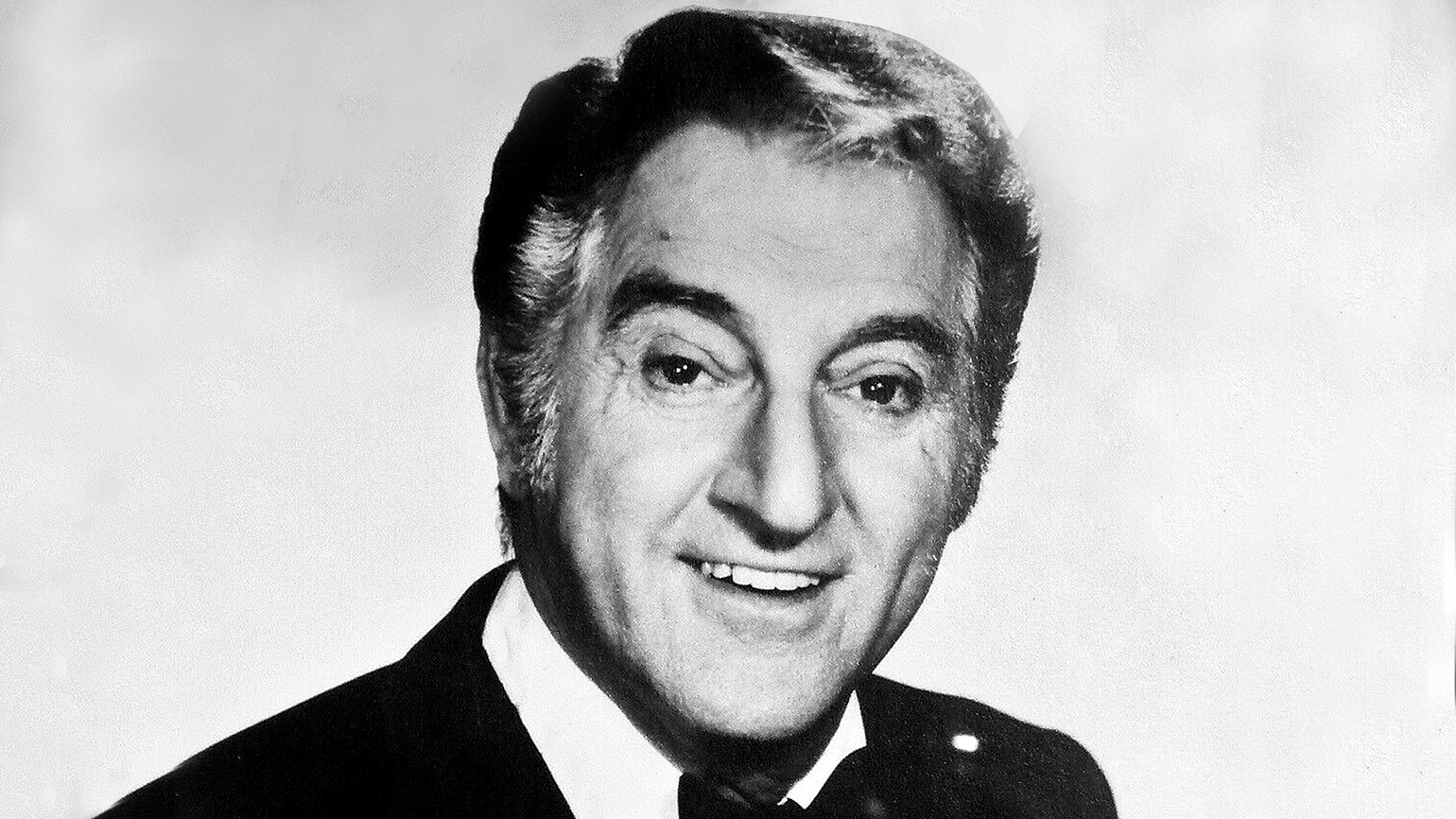
Guideposts Classics: Danny Thomas on Prayer and Promises

Many people seem to know that I once vowed to Saint Jude that I’d build a shrine in his name if he’d help me through a difficult time in my life. Yet the fascinating part of that story is how, when I failed to keep my part of the bargain, that saint resolutely refused to let me off the hook.

If you’re not a Catholic, as I am, such talk of shrines and vows and saints might sound a bit strange, but when I was growing up in a deeply religious family in Toledo, Ohio, these things were familiar matters.

Inspiration from the Garden in article ad

My parents had come from Lebanon, a country where shrines dedicated to favorite patron saints are familiar sights. Often these shrines are simply statues, or little places where you can stop to meditate and pray.

We Catholics, of course, do not worship these patron saints—we worship only God—but we do look upon them as special intercessors with God, and we choose them as our guardians and protectors.

And, believe me, as one of nine kids in a very poor immigrant family, I was grateful for all the protection I could get!

My mother did not hesitate to make her own spiritual vows. I remember especially a solemn promise she made shortly after the birth of my youngest brother. His name was Danny.

At that time my name was Amos—Amos Jacobs—but early in my show business career I took the names of my youngest and oldest brothers and became Danny Thomas.

When the first Danny was a few months old, he was badly bitten by a rat that jumped into his crib. He screamed and went into convulsions.

At the hospital the doctors told my mother that Danny was dying, but she wouldn’t accept that. She went to her knees in prayer, promising God that if her baby’s life were saved she’d beg alms for the poor for a year.

Danny got well, and every day for 12 months my mother, herself one of the poorest of the poor, living in shabby, cramped quarters over a pool hall, went out and begged pennies from door to door.

My mother’s faith in God was so strong that she could not possibly give in to fear or hopelessness. To her, despair was a tool of the devil—it was doubting God, and that was a sin.

As each of us children was born, she turned us over to God and after that she would not let herself, or us, forget that we had Him to turn to.

When I was ten years old, I landed a job hawking soda pop in the old Columbia burlesque theater in Toledo, which meant that I wouldn’t get home until 2:30 in the morning.

One day I heard a neighbor asking my mother if she wasn’t worried about the things that might happen to her little boy, but my mother’s reply rang with certainty. “Amos is sale,” she said. “I’ve given him into the care of the Blessed Mother.” She knew that I was in good hands, and so did L

I always had my heart set on being an entertainer, and during the seven years I spent at the burlesque theater I studied some of the best comedians in the business and grew all the more determined to be one too.

I quit school at 16 and worked as a busboy, a night watchman, a drill-press operator’s assistant, all the while picking up odd jobs singing and clowning at local banquets.

Eventually I went to Detroit and sang for a while on a radio program. That’s where I met and married Rosemarie, who’s been my wife ever since. And that’s where I faced the first real crisis of my life.

In June 1940, a baby was on the way. I was making two dollars a night as an M.C. at a Detroit supper club called the Club Morocco. Then it was announced that on Saturday night the club would close for good. I had no job to go to, and no prospects.

Rosemarie was urging me to consider looking for a more reliable line of work, but all I myself wanted was show business. I wasn’t worried about our future,

I wasn’t in despair—my mother had taught me too well for that—but the time had come when I had to choose a realistic career, for me and for my family.

Rosemarie talked about my going into the grocery business. I had to consider her wishes. Maybe she was right, maybe I could never make my way—and ours—as an entertainer. I was in an agony of indecision.

On Tuesday night a man came into the Club Morocco. He was celebrating something. His pockets were filled with little cards that he was handing out to people as he tried to tell them about an incredible thing that had just happened to him.

His wife was in a hospital where she’d been facing an operation for a deadly cancer. All night long this man had knelt on the cold marble floor of the hospital and prayed the same prayer over and over again.

When the sun came up in the morning the doctors called him in to report that, inexplicably, miraculously, his wife’s cancer had disappeared.

“This is the prayer that did it,” he said, handing me one of the cards. It was the prayer to Saint Jude.

All that night I thought about this man and his appeal to a saint whom I knew only slightly as “Patron of the Hopeless” or “The Forgotten Saint.”

Though an apostle of Jesus, Jude was not one of the saints whom many Catholics turned to, probably because of his name, which was really Judas Thaddeus, far too similar to that of the hated Judas Iscariot.

The next day I went into a church to pray, and when I reached into my pocket for a coin, I found the card the man had given me. Then and there I felt moved to make my vow.

I did not ask for anything specific like money or fame, but I promised Saint Jude that if he would help me find some clear course for my life, I would build him a shrine.

The day after the Club Morocco closed, I drove my old Buick down to Toledo and left Rosemarie with my parents while I took one last stab at looking for work in show business.

My plan was to go to Cleveland where I had a number of contacts, but at the last moment, I turned the other way and went to Chicago. It was almost as though I was being drawn there.

Chicago became my town. Very quickly one little radio job led to another, and in a short time I was flourishing as a character actor. Then I tried my hand again as a stand-up entertainer.

I opened before 18 customers in a converted automobile showroom called the 5100 Club; in a few months there were that many people waiting outside trying to get in. Success simply piled upon success.

And what happened to my vow to Saint Jude? Nothing. I was so busy that for two years I had forgotten about it. But Saint Jude had not.

On the way home after a night at the 5100 Club, I used to go to the 5:00 a.m. mass at St. Clement’s Church. One morning I picked up a little pamphlet that lay beside me in the pew and, to my surprise, read about a novena—a nine-day period of devotion—about to be offered to none other than my old friend Saint Jude.

Even more surprising was the information that there, on the south side of Chicago, was the first national shrine to Saint Jude. Chicago was Saint Jude’s town, too! He wanted me to know it.

I did not forget Saint Jude again. I knew I had to do something about fulfilling my vow, but I couldn’t make up my mind what kind of a shrine I should build.

Rosemarie suggested that I think about a statue, or perhaps a side altar, but somehow nothing seemed right to me. Time went by. I moved on to New York. My career progressed to movies and TV. Still I could not make up my mind.

And then came the dream.

I dreamed one night about a little boy being injured in a car accident. He was rushed to the hospital, but for some reason the doctors were reluctant to treat him and the boy bled to death. The dream was so vivid, so horrifying, that it troubled me for days.

But out of that dream came an idea, an idea born of a lifetime of experiences. I thought about the man who had prayed for his wife all night on the cold hospital floor.

I thought of my infant brother Danny grabbing hold of life just when the doctors said he was dying, and slowly I began to see Saint Jude’s shrine as a hospital.

And what better way to honor the Patron Saint of the Hopeless than with a place where “dying” children, children with “incurable” diseases could come to be healed?

That, of course, was the beginning of Saint Jude’s Children’s Research Hospital in Memphis. Tennessee. It is the only institution on this earth dedicated solely to the conquest of catastrophic diseases.

It is open to children of all faiths and races regardless of their parents’ ability to pay. No family ever pays for the services rendered there. They are free.

It took me ten years to raise the money to get the hospital started. I did it mainly through benefit performances, going all over the country raising money from Catholics and Protestants and Jews—and Moslems, too—and especially getting help from people of my own Lebanese heritage.

I never went before one of those benefit audiences that I didn’t think about my mother going door to door begging pennies, for, in my own way, I was doing the same thing, for the same reason.

Today when I look at the hospital that Saint Jude brought into being, when I see the hope that the Saint of the Hopeless has brought to thousands of parents and their youngsters, I am as certain as my mother was certain, that to right despair is to affirm our faith in God and in the love He has for all of us.

For more inspiring stories, subscribe to Guideposts magazine.
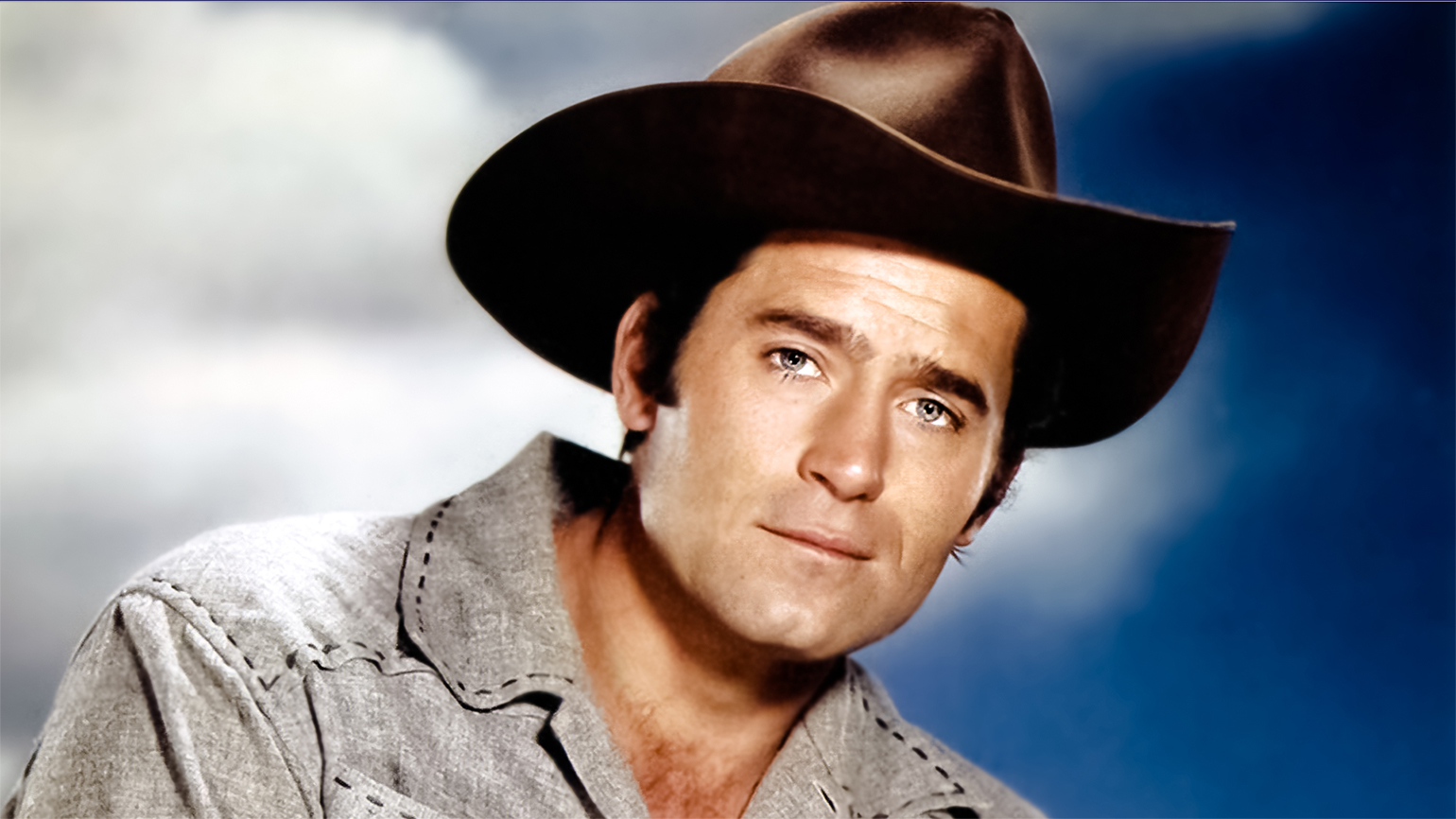
Guideposts Classics: Clint Walker on Praying for Help

I was skiing last May 24, up at Mammoth Mountain, near Bishop, California. I am pretty proficient at most sports, from shark hunting to motorcycling, but skiing is one that I have only recently tackled, which was why I was measuring the steep run before me with such a wary eye.

Finally I shoved off down the slope, gathering speed as I followed the contours of the twisting, irregular terrain. I still don’t know how it happened, but all at once I was tumbling out of control, and then—an abrupt, violent stop.

As I fell, one of my ski poles up-ended in the hard-packed snow. The momentum and my weight as I fell on it drove the pointed tip about five inches into my chest, through the breastbone and into my heart. I rolled over in the snow. The wind had been knocked out of me, and I was in terrible pain.

About 400 feet below, my instructor was looking up at me. I called as loud as I could, “I’m hurt bad—get help!” Then I fell back.

I remember a sensation as of rings of light radiating from my body, as ripples radiate from a pebble tossed into water. At the same time I had a feeling of being propelled through space; and although the pain was still there, I became less sensitive to it.

I suddenly knew that I was dying. With the knowledge came a sense of sharpened awareness. I did not think of a particular person or event; certainly my life didn’t flash before me. But I knew, with an overwhelming conviction, that the Power that had given me life could sustain it—against any odds.

My concept of time underwent a change as I lay there; my existence seemed no more than an instant in eternity, and with a clarity I had never known before, I saw life in a new perspective. Things which had seemed so important simply were not. I had recently gone through a difficult emotional experience, and I recalled it now with a tranquillity that would not have been possible previously.

Although I felt I was slipping away from this earthly experience, I also felt a sense of going on. With it came a sadness that I had not done more with my life, and immediately I had a strong desire to stay, as though there were some unfinished business to take care of.

I said, “God, I’m really in trouble! I can’t help myself. I’m not going to make it, unless You will see me through—and I would like to stay around for a while.” With that, I seemed content to let go.

The next thing I remember is being taken down the hill on a sled-type stretcher used for rescue operations. I suppose I was literally jolted back to consciousness because of the roughness of the terrain. The pain was almost unbearable.

When the doctor examined me in Mammoth, he recognized the necessity of getting me to the hospital in Bishop, some 45 miles away, as quickly as possible.

All in all, close to three hours elapsed from the time I was injured until I went into surgery at Northern Inyo Hospital at Bishop, where the doctors performed open-heart surgery. By then, according to the medical records, I was cyanosed (blue from lack of oxygen) and there was no recordable pulse or blood pressure.

The surgery was on Monday, May 24, and I left the hospital walking, eight days later. I spent three days at the UCLA Medical Center in Los Angeles and then went home. The end, you might say, of a remarkable experience.

But actually, it was merely the beginning.

News of the accident had been carried by the wire services, and I had been interviewed by television newsmen. In the course of the interviews I made a statement which was to change my life. I said that I had asked God for help on the mountain, and that I was satisfied that I would not be here now, if it were not for that prayer.

Then the letters began to pour in. Sacks of them arrived at the hospital, and were forwarded to me at home—from Australia, England, New Zealand, Canada, and all over the U.S.

I expected the usual get-well messages, and of course there were those, too. But the majority have one theme: “Thank you, Clint, for saying what you did. When a big outdoor guy like you will tell the world that he prayed for help, and got it, it strengthens my own faith.”

“I’m not a member of any church,” a Wyoming man wrote, “but what you said up there on the mountain did me more good than all the sermons in the world.”

I have prayed at times in my life before, but it took this experience to help me put things in their proper perspective. I was always a loner; even as a kid, I was shy, an introvert. I really didn’t know how to get along with people. And worry—I was the world’s champion worrier!

But up there on the mountain, I found a new appreciation of life. I realize now that if we are going to accept God’s help, we must accept it in His time and in His way. I have found that many of the problems I thought had to be solved at once can wait. And very often, it is in that time of waiting that the Creator speaks most clearly to us.

The waiting is not always easy, but I understand more fully now the verse from Psalm 62 which has always been a favorite of mine: “My soul, wait thou only upon God; for my expectation is from Him.”—Psalms 62:5

Having made a few records and sung in several pictures, I know the technical value of the little mark which indicates a pause, or rest, in music. But now it has taken on new meaning. John Ruskin made this point in a letter to his young niece, when he wrote: “There’s no music in a ‘rest,’ Katie, that I know of, but there’s the making of music in it. And people are always missing that part of the life melody.”

I don’t intend to miss it anymore!

For more inspiring stories, subscribe to Guideposts magazine.

Guideposts Classics: Beverly Sills on the Power of Prayer

How strange it is that happiness and despair can be so close together. An intense feeling of joy had come over me right in the middle of the evening performance. There was this warm, close bond between me and the audience. Everything seemed to sparkle.

I glowed all over, loving the feeling of being able to sing well, to have the sound just pour out of me, to be lost totally in the talent God had given me. This is happiness, I had thought to myself.

Witnessing Heaven In Article Ad 827x123

Yet only hours later I knew I would trade my success and career without one regret if it could make my children healthy.

My husband, Peter Greenough, and I have two children. Meredith, nicknamed Muffy, was born in 1959. Peter Jr., called Bucky, was born two years later.

Muffy has always had a bright mind. As a child she would thumb happily through books and make sense of pictures, but she never spoke. Tests showed that she was almost totally deaf.

Soon after Bucky was born, we learned that he is an epileptic and severely retarded. There has been little communication with him.

And so I asked the agonizing, self-centered question, “Why me, God?” I was so full of self-pity that when I walked along the street I’d say to myself, “Who in this crowd is suffering as much as I?”

When that self-centered period faded somewhat, I asked the bigger question, “Why them? What did those precious innocents do to deserve this fate?”

I quit singing and spent nearly two years at home trying to grope through a fog of confusion, trying to be just a mother and a wife. This was the period when my own mother’s faith helped me a great deal.

As a child I remember a certain ritual she and I would share as I went off to school. She would give me three kisses and I would say, “Mama, pray for me.”

I still seek her prayers. I’ll phone her anytime during the day and ask, “Before you go to bed tonight, mama, will you take care of something for me?” I’ll tell her the problem and then say, “Pray hard.” And we both do.

When I was going through this period of doubt and despair, my mother would say, “In God’s sight your children are perfect. No flaws. We must see them as He does.”

She’s 69 now and she is always cheerful. One day she scolded me, “Why do you try to carry the whole world on your shoulders? Leave some of it to God. Don’t you see that He’s eager to help you?”

Slowly I began to believe it. I began to talk to God personally the way Mama does. I’d talk to Him about the hurt I felt and ask Him to take it away. And then I began thanking him for the small victories.

With Bucky every little accomplishment is a major triumph. He wasn’t toilet-trained until he was five. He didn’t learn to feed himself until he was six. We had been told he would never be able to do either.

It’s a good thing we decided to put Bucky in a special school for retarded children. When he was nine he had a grand mal seizure. His quick-thinking gym instructor brought him around with mouth-to-mouth resuscitation. Bucky’s heart had stopped beating and he had been dead for 30 seconds.

The seizures he’s had over the years have not decreased in number; each one does more damage to his brain. Yet at 11 years of age he is a big strapping boy who appears quite normal. Anyone who meets him for the first time doesn’t know the difference–for a few minutes anyway. Bucky has no speech.

It’s hard for me to have him away at school but I know his daily schedule so well I can feel close to him. When traveling, I wear two watches; one is set to the time zone I’m in, and the other to the time zone Bucky’s in so that I can relate to what he’s doing at any time of day.

With Muffy the progress has been greater, the victories more numerous. There was the time when she was almost two that she got close to a hot stove. I pulled her away just in time and screamed, “Hot! Hot!”

The words broke through and her face lit up like a Christmas tree. For the rest of the day she went around saying, “Hot, hot,” as if she had discovered America.

When she was old enough, we enrolled her in a nearby school for the deaf. Today at 14 she attends a regular school. She’s studying Latin among other things. It astonishes me that a child who had almost insurmountable difficulties with her native language should be doing well in Latin.

Muffy can also lip read perfectly. When I sing to her, she knows every word. She likes to put her fingers against the speaker of a phonograph and “feel” the music, though for her the sound is distorted.

She will ask what kind of music it is, and if it’s rock, she’ll break into one of those dances that kids do–in perfect rhythm.

If it’s Mozart opera, Muffy will strike the exact pose I take on stage and imitate my trilling in a high soprano. It’s strange, but wonderful.

She has been on the same stage with me in opera productions, once carrying a candle in Lucia di Lammermoor and then a duck in Manon. Today Muffy acts so normal that I’ve almost forgotten she’s deaf.

Once I told Mama how ironic it was that one who loves music so much and sings it in the best opera houses around the world should have a child who can’t hear it.

“But see how wise God is,” she replied. “Who would work harder than a gifted singer to bring beautiful music to someone who can’t hear it?”

My husband, Peter, has been strong and understanding through all of this.

When I left my career to be with both children those first painful years, he was patient with my preoccupation with them, but after a year or so advised that I could not love their afflictions away, that it would be best for all of us if I returned to using the gifts God had given me.

Julius Rudel, director of the New York City Opera, was also patient and compassionate, but he agreed with Peter and reminded me gently that I did have a contract.

Once back in the public eye, Peter and I faced a decision. Do we refuse to discuss our children publicly, or do we openly admit our heartache in hopes that it will be helpful in some way to others?

The answer we seemed to receive to this prayer was that we should be open and vulnerable about our experiences.

Then came a kind of freedom. And an end to bitterness. I felt that if I could survive my grief I could survive anything.

Soon, in connection with my work with the Mother’s March on Birth Defects, I found myself on the speaker’s platform facing mothers with retarded children, mothers who had the same despairing look on their faces I used to have. I speak to them frankly about what will happen to their babies.

“We already know what happens to the mothers,” I say with a smile. “We get prematurely old.”

Somewhat to my surprise I found a new self-confidence in my work. Opera is a combination of drama and music, and I love to throw myself into the tragic roles of those meaty characters. The years of heartache made it easy for me to do this.

Friends warned that I should protect my voice more, that too much involvement with drama might shorten my career. But there is no way for me to avoid that kind of involvement.

I don’t think any of us understand why our children are afflicted. But I have come to see that suffering somehow is an important part of God’s grand design for us. He gives each of us certain gifts and puts us in the world for a measured time. But we are not puppets on a string.

We have freedom to make choices, good or bad. We are subject to hurts and illness. We have joys and sorrows. But God is not some uncaring force; I believe He hurts when we hurt because He loves us.

If I didn’t feel this way I couldn’t talk to Him the way I do. Nor could I thank Him for helping me to rediscover joy and to pass it on to others.

Did you enjoy this story? Subscribe to Guideposts magazine.

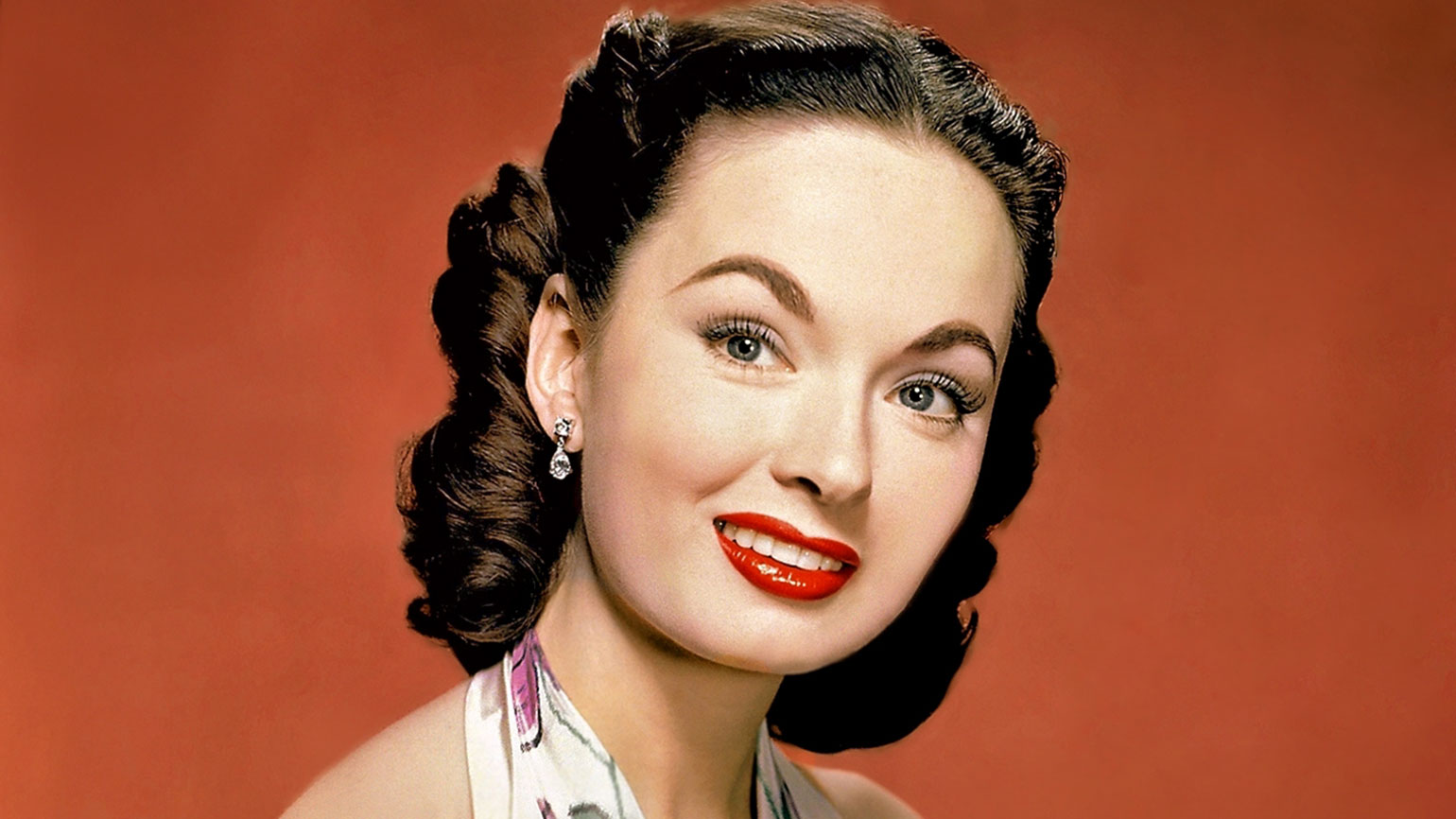
Guideposts Classics: Ann Blyth on Her Personal Faith

When I was a very little girl I remember praying fervently for a pair of red wings. After several days of watching and waiting I took my shaken faith and spread it out before my mother.

“Why?” I demanded. “Why don’t I get red wings?”

God's Constant Presence In Article Ad

My mother had, skillfully balanced with her sensitive Irish wit, an enormous respect for a serious problem. Together we examined mine. “Faith, my darling,” she told me, “is believing that God is very wise. Wiser than you. Somehow you must be praying wrong.”

As I grew older I was filled with gratitude that I need not walk through life wearing red wings. But, I was equally grateful for her gentle lesson.

Mother worked very hard and her tiny body wasn’t nearly as big as her heart. Yet I never heard her complain. In our walk-up flat on New York’s east side she would jubilantly finish a batch of ironing for her select Park Avenue clientele and call to us to admire its crisp freshness.

Sometimes it was a close shave when it came to scraping together the money for my singing, dancing and dramatic lessons but she never told me of it. Instead, she let me know constantly that faith was the foundation for lasting joy, the chief cornerstone for building a whole life.

She dreamed dreams about my wonderful future as an actress and at eight, nine and ten, I began getting radio and stage bits. When I tried for something better and failed, she would smile her wonderful warm smile, put a pert new feather in my hat, and together we’d go to St. Boniface’s to pray.

“Just have faith, my darling,” she’d say cheerfully as we walked home in the fading light. “Something better will come.” And it did. It came so fast it was like riding a giant roller coaster clear to the top. We two looked out over the whole world.

At thirteen I was on Broadway as Paul Lukas’ daughter in Watch on the Rhine. At fourteen I had dinner at the White House. At fifteen I came to Hollywood and was given the coveted role of Joan Crawford’s daughter in Mildred Pierce.

Overnight life was glamorous, exciting, completely wonderful.

Yes, we went up so fast that when we hit the first giant dip it shook my faith. But it didn’t shake my mother’s on that tragic day in a hospital room, where doctors told me I might never walk again.

We had finished Mildred Pierce and Mother took a group of us to Snow Valley, a spot in the San Bernardino Mountains. While my friends and I were tobogganing, it happened.

One minute we were sailing down the hard-packed icy hillside like snow birds, then there was a crash and I fell on my back with a sickening thud.

I didn’t cry out. The feeling was too big for that. Involuntarily, from long habit, my spirit reached out for faith and halting prayers rose to my lips. At the hospital the doctors were grave; my back was broken.

My glowing world tumbled all about me! It seemed like the end of everything.

At first I couldn’t look at my mother. When at last I raised my head, I was startled. Those warm hazel eves under her crown of auburn hair were actually smiling.

“Have faith, my darling,” she said. “You’ll walk.”

Together my mother and I planned cheerful, busy days. In a cast, with my head and feet toward the floor, my back raised high, I concentrated on high school work, determined to graduate with my studio class.

But still there were those long periods of just lying there. The busy exciting world I had known faded away and my life slowed down to little things. But even here I found myself blessed, for a new sense of prayer began to unfold to me.

Now there were not the busy times of telling Him what I needed but, rather, times of listening communion, of gathering strength, when my human strength and courage seemed to ebb away.

In seven months they told me I could walk. Not walk really, but take those first important few steps on the long road back to complete freedom. As I had gotten to know Him in my time of trial, I knew Him now in thanksgiving.

I took those steps, and then more. I graduated with my class from a wheel chair.

There were seven mouths in and out of that wheel chair, but every one was another step forward. There was my first swim. The preview of Mildred Pierce. My first game of golf. And then I made my first picture since the accident.

Now, at last, life was again the same. Only, not quite the same. I found within me an immense gratitude for simple things. An acute appreciation of all I might have lost, all the things I had accepted unconsciously before. And one more difference, I had grown up.

At first I had clung to my mother’s faith, leaned on her, step by step as she showed me the way. Now, I had found my own rock. Nor did I find it too soon.

Before I finished that first picture after my accident I was standing alone. My mother, beloved companion, was gone. A little unsteadily I clung to my rock.

But I missed her. There was an aching emptiness. Until it came to me, almost in a revelation, that she had not left me. She had prepared me for her going as she had prepared me for everything else I’d met in life.

Reaching out again for my faith came the assurance that she would be by my side in every good, beautiful and true experience, wherever l might go; a part of every decision, every success and every happiness–for they all stemmed from her inspired teaching.

They would become the flowers of the mustard seed of faith she had placed in my heart.

For more inspiring stories, subscribe to Guideposts magazine.
Following Her Son’s Stroke, Could She ‘Let Go and Let God’?

I walked alongside the gurney, gripping my 22-year-old son’s hand. The orderly stopped me at the operating room doors. “This is as far as you can go,” she said. I leaned over and kissed Spencer’s forehead. “I love you, Spoon.”

“I love you too,” he whispered back. I watched helplessly as he was wheeled away from me. Would I ever see my boy alive again?

Sugarcreek Amish Mysteries In-Article Ad 2023

Four weeks earlier, my strapping mountain biker son had suffered a stroke while he was camping with friends in Canada. He ended up being airlifted to Harborview Medical Center in Seattle, and I arrived from my home in San Diego the next morning. Spencer was asleep when I got there, his limbs anchored to the bed rails by restraints. When I touched his cheek, his eyes opened but he gave no sign of recognition.

That afternoon, Spencer would intermittently wake and talk gibberish. “I’m going to buy a goat farm,” he announced to his dad, Steve, who’d driven from Bellingham, Washington. Steve and I had divorced years ago. I laughed nervously at these outbursts, stroking Spencer’s long curly locks until he drifted back to sleep. Then without warning, he jerked upright, pulled free of his restraints and ripped out his IV.

He was having a seizure. It took four of us to hold him down, the nurse shouting for a crash cart. Dr. Louis Kim, Spencer’s neurosurgeon, arrived and told us that Spencer had suffered a second cerebral hemorrhage. After an emergency craniotomy to relieve pressure caused by the bleeding in his brain, Spencer fell into a coma.

Those first few days, I asked questions of every member of the medical staff who entered the room. Hundreds of questions. I researched everything I could find about Spencer’s condition on my iPhone. I didn’t leave his side. I didn’t sleep. I barely ate. One nurse took me aside. “Remember the wisdom of the flight attendant,” she said. I gave her a puzzled look. “You must put on your own oxygen mask before helping others with theirs.” Something clicked in my head: I couldn’t keep up my bedside vigil for the long haul. I couldn’t simply will my son to live, a revelation that brought equal parts relief and despair.

I asked family and friends to take shifts with Spencer. His older brother, Stuart, flew in from California, and a flurry of college buddies camped out in the neuro-ICU lounge. One of them stood next to his bed for an hour recounting every detail of their favorite bike trail for a comatose Spencer. At long last, I took a friend up on the offer to stay in her apartment downtown. I forced myself to spend a few nights there, even though I couldn’t really sleep. I didn’t know what to do with my “time off.” I tried walking to Pike Place Market or numbly roaming the Seattle Art Museum, indifferent to works that once would have moved me.

I did find an old-school Italian restaurant that was a welcome respite from the hospital cafeteria food. One evening, as I was walking back to the hospital from the restaurant, it started pouring. I didn’t have an umbrella. I ran to take shelter in the nearest building, the imposing St. James Cathedral. Although I had been raised without religion, my mother was a lapsed Catholic. I remembered as a child asking her why she still kept her rosary. “Even though I don’t go to church,” she said, “I sometimes feel the need to pray when bad things happen.”

“Can you show me how to pray?” I asked her.

“Wait for a scene to come to life in your imagination, then begin your prayer,” she told me.

Now, drenched to the bone, I knelt in a back pew of the cathedral and did as she had instructed. The air was cool and smelled of candle wax. I emptied my mind and waited for a scene to emerge: Spencer on his mountain bike “ripping” down the face of a snowcapped mountain. “God, if it is your will, please allow Spencer to have these adventures again,” I said. I rested my head on my folded hands and let the hush of the sanctuary wash over me. Ever so perceptibly, I felt a weight begin to lift.

On Day 14, Spencer emerged from his coma but was in the throes of what’s called ICU delirium—confusion linked to long hospital stays. In many ways, it was scarier than the coma, as if the son I knew was gone. Dr. Kim asked to meet with our family. “You have a decision to make,” he told us as we gathered in a corner of the ICU. Spencer’s strokes were caused by the rupture of a cluster of veins deep within his brain. So deep that removing the veins would entail cutting through brain tissue that controlled vital functions, including memory.

Dr. Kim explained that removing the cluster would eliminate the possibility of future strokes but that the surgery was extremely risky. There was a chance Spencer might not even survive. If he did, he might never be able to walk again or even function independently. Our options were either to let Spencer recover to whatever degree possible but with the lifelong risk of more—possibly fatal—brain hemorrhages or let Dr. Kim operate.

Dr. Kim allowed this information to sink in. We were silent for a long time.

What would you do if this were your child?” Spencer’s dad finally asked.

“I’d do the surgery,” Dr. Kim replied. That made up Steve’s mind.

“What are the chances of complications?” I asked.

“You’ll go crazy trying to figure that out,” Dr. Kim counseled. “It’s the future, and unfortunately none of us can predict it. We’ll never know more than that until we go through with it.”

I didn’t know if Dr. Kim was a man of faith, but that was exactly what he was asking me to take: a leap of faith. But first I went to the hospital chapel to pray. I closed my eyes and waited for a scene. This time I saw Spencer as a towheaded toddler frolicking in the ocean surf, without a care in the world. This vision of him unburdened was so powerful that I said yes to the surgery. I felt certain that this procedure was Spencer’s only chance to return to a full life.

Now after I kissed my son on the forehead and watched him being wheeled into the operating room, the panic of second-guessing set in. I wondered how I could have let him go. Was it the right decision? Almost paralyzed by fear, I walked down the hallway, the longest walk of my life, each step taking me farther and farther away from my son. Eight of us gathered in the hospital cafeteria to wait out the operation. We made small talk and bought round after round of coffee. After almost seven hours, a wan Dr. Kim appeared, still in surgical scrubs. His expression was unreadable.

“The surgery was a success,” he said. “However, we won’t know the extent of possible brain damage until Spencer begins to recover.”

Soon Spencer was brought back to his room. A pronounced S-shaped scar traversed his skull. Over the next several days, we kept watch at his bedside as he slept on and on. I tried to pray, to picture scenes of Spencer hiking through dense forests. Spencer snowboarding. Two weeks after the surgery, one of Spencer’s favorite songs, “Arabella” by Arctic Monkeys, was playing on the Bluetooth speaker in his room and his lips began to move.

“Are you singing?” I asked.

He opened his eyes, gave me a great big smile and said, in the raspiest, most beautiful voice ever, “Yeah!”

In the coming weeks, Spencer was able to stand, then take his first wobbly steps with help. Finally, holding tight to a walker, he made his way down the ICU hallway to the rousing applause of staff members. Dr. Kim moved Spencer to the rehab unit of the hospital, where he relearned life’s simplest tasks—showering, brushing his teeth, writing his name. Though his progress was steady, Spencer’s fine motor skills were compromised, he walked with a limp and, above all, his memory had not recovered as we’d hoped.

Fortunately, he still recognized his friends and family. He could remember everything about his prestroke life, but his short-term memory was nonexistent. He couldn’t remember what he’d had for lunch or who’d visited him earlier in the day. In late October, 56 days after he’d been admitted, Spencer was discharged from Harborview and came to San Diego to live with me.

We were able to get him enrolled in one of the top brain injury day programs in the country. Spencer was assigned to physical, occupational, speech and mental health therapists and a neurologist who specialized in brain injuries. But even with this dream team, after seven months, his case manager pulled me aside, a sheaf of doctors’ reports in hand. I held my breath, waiting for the news. “Spencer probably won’t ever be the same,” she told me. “We’ve exhausted our bag of tricks, and it’s time to discharge him.”

I couldn’t believe it. My beloved son would never fully return? I drove to a nearby beach. I perched on a rock and closed my eyes, just as I once had in the cathedral, waiting for a scene to come to life. This time, all I saw was my own clenched fist. What was the message? That I was desperately holding on to the old Spencer? That I still hadn’t learned to let go? To allow God to take care of Spencer? Moving toward acceptance of the new Spencer had always felt like a betrayal. I’d fought and fought against it. Against the facts. Against reality. Against God. But my son was in his hands, not mine.

Later that day, on our drive home from the rehab program, I asked Spencer, as I did every day, “What did you have for lunch?”

“Chicken tenders and a cookie,” he answered, without missing a beat.

I pulled the car over to the curb and began to cry.

Startled, he asked, “What’s wrong, Mom?”

“Today is the first day you remembered what you ate for lunch.”

Spencer broke into a crooked smile. “Well, there is that to hold on to,” he said.

Two years have passed since Spencer’s surgery. Surpassing all his doctors’ expectations, he has returned to college in Bellingham, where he lives with his dad and his emotional support dog, Moon. He’s ripping mountain trails again with his friends. He is every bit the son he’s always been and more.

I had finally learned to let go, with God’s help. Spencer was right: There is that to hold on to.

For more inspiring stories, subscribe to Guideposts magazine.

Faith Far Beneath the Surface

That Tuesday in January 2010, the Hotel Montana, with its white columns, layered terraces and open-air lobby, was a welcome sight after a long day on the streets near Port-au-Prince, Haiti.

With a videographer and an interpreter, I’d interviewed families living in the shacks clustered around the city, gathering video footage for Compassion International, a Christian nonprofit that helps disadvantaged children throughout the world.

Mys of Blackberry Valley In Article Ad

It would go on a website showing our health-care and education programs for new mothers and their children. My notes had almost filled my small Moleskine journal. Now, after a long, bumpy ride back in our SUV, I looked forward to dinner and a good night’s sleep.

I’d only been working for Compassion International for 18 months. Normally I gathered stories created by others. This was my turn to be on the scene. My wife, Christy, worried about the trip. Because of her concerns, I downloaded a first-aid app for my iPhone, just in case.

“I’ll be fine,” I assured her. When I traveled I worried more about her and our boys, six-year-old Josh and three-year-old Nathan. Working for a nonprofit fit my values, but it was challenging for us financially.

Right now things were strained at home. I wished I could believe everything would work out for us, but I hadn’t been able to focus much on my faith lately, and was praying less often. I felt out of touch with God.

I slung my camera around my neck and climbed out of the SUV, waving goodbye. I glanced at my watch: 4:52. Walking through the lobby, I turned to catch one more glimpse of the city.

Boom! It sounded like a thunder­clap, but so close it shook the ground beneath my feet and I stumbled. The walls rippled like liquid–then exploded, sending splinters of concrete, wood and glass flying. There was a rumble I recognized from my boyhood in California: earthquake!

I bolted for the outdoor stairs. An archway swayed and collapsed. A wall crumbled and part of the ceiling fell, striking my head. Everything went black. Pulverized concrete and mortar clogged my throat. I gasped for air. More crashes. Screams, sounding far away.

I couldn’t see a thing. I felt my face. My glasses were gone. Had something gotten in my eyes and blinded me? Pain shot from my left leg and I realized my foot was pinned under debris. I tried to yank it free, but that made the pain worse. I touched the back of my head. Warm, sticky. Blood?

I’m alive, but for how long? Any second, an aftershock could level the pocket I was in. I dug through the debris and finally wrenched my leg free. Putting my weight on my good leg, I stood. Something bumped against my chest. My camera!

I fumbled for the power button. The display lit up–I wasn’t blind, I was buried. I pressed the shutter down halfway and used the red focus light to get my bearings. I looked around. No way to get out. But about 20 yards away was something that looked like a shower stall–the elevator.

With a deep breath, I dragged myself under a fallen beam. Glass and concrete tore at my legs. On the other side, I hopped on my right leg into the elevator. Not a moment too soon. Another rumble. Debris rained down. The pocket I’d been in disappeared in an avalanche of dust.

I pulled my pants leg up. My ankle was bloody and swol­len–something felt broken. A gash ran from my knee to just above my ankle, bleeding heavily. Now what? I didn’t want to die because of this wound.

I felt my pockets. My iPhone…the first-aid app! Thank God I had downloaded that. I pulled the phone out. No cell signal, but I could launch the app. I looked up what to do. Excessive bleeding: apply constant pressure. I unbuttoned my shirt and wrapped it tight around the gash.

I took off my right sock and folded it into a compress for my head. I couldn’t let myself pass out. What if I didn’t wake up? I set the alarm on my phone to alert me every 20 minutes. Would I ever see my family again?

I pictured Christy’s smile, the one that hooked me the day I met her. I could almost hear Josh asking when I’d be home to play with him, Nathan hugging me tightly before I left, shouting, “I love you as big as the whole wooorld!” They’d hear about the earthquake and fear the worst.

In the U.S., emergency workers would’ve been on the scene in minutes. But this was Haiti. All the people I’d met here had their own families to worry about. Who would know I was still alive?

If there was ever a time to reach out to God, it was now. Lord, I haven’t been in touch with you much lately, I prayed. Now I need you more than ever. I heard a faint sound. “Who’s there?” I shouted. “Jim,” a man answered. He and five others were trapped…several yards away, it sounded like.

I explained my surroundings as best I could. Jim did the same. We talked about why we were in Haiti. But as the minutes stretched into hours, the chatter died down.

A scraping noise. Was somebody digging us out? “Hello!” I yelled. “We’re down here!” The scraping stopped. “Hello?” It was a new voice, close. Not a rescuer. A hotel worker, trapped in the next elevator. I could hear the disappointment in Jim’s voice when I told him.

I knew we needed to hold onto hope. “Would you like to pray with me?” I called. “Yes, we would,” Jim answered. “Me too,” the hotel worker said. I said aloud what I’d been praying silently. “We ask you for a miracle, Lord. Rescue us.”

Jim and the others repeated my prayer. “Thank you for that,” Jim said.

Night came, and with it, silence. Again I thought about Christy and the kids. If I didn’t make it, I wanted them to know my last thoughts were of them. I shifted and felt something dig into my side. My journal was still in my pocket, along with a pen. I used the camera flash to find an empty page.

If found, please give to my wife, Christina. I love you. I have never stopped loving you or even slowed down. Don’t give up, Christy, no matter how hard it is. God will make a way. To the boys I wrote, Don’t be upset at God…. He always provides for his children, even in hard times. He will always take care of you.

I wrote my will and lists of practical things–email passwords, how to access our online banking. By the time I was done, I was exhausted. I put the notebook down. I turned my iPhone off to save the battery. I drifted off.

Rhythmic thumping above woke me. Helicopters! But all day we waited, and no rescuers came. I felt drained. No food and no water for more than 24 hours, and I needed a doctor, badly. I closed my eyes, not sure I’d ever open them again.

I saw Josh and Nathan. But they were taller, older. We were on a camping trip. Then, in a flash, I was at Josh’s high-school graduation. I lifted my camera, but when I looked through the viewfinder, the boys were already adults, posing with their own children.

“Dan!” a voice shouted. I jolted awake. Everything was dark. It took me a moment to realize where I was. I lit up my phone: 10 p.m. on Thursday. I was still in the elevator. Had my dream been wishful thinking? Or something else: a promise? Lord, I pleaded, please let me see my boys grow up.

“Dan!” It was Jim. “I’m here,” I shouted back. “We hear voices,” Jim said. I listened. People were talking in French. One of the survivors had made contact with a rescue team through a small hole, Jim told me.

I didn’t believe it until I heard the thrum of jackhammers and power saws. Around midnight, Jim shouted, “Dan! We’re free! You’re next!” This is it! I thought. An hour passed. Then two. Things got quiet again. I banged on the wall. No response.

My phone said 3:30 a.m. The rescuers were gone. They weren’t coming for me. I’m going to die here, and there’s nothing I can do.

Then a thought came into my mind. Worship me. I began singing “Great Is Thy Faithfulness.” I choked on the chorus, “Morning by morning, new mercies I see.” Next I sang “Be Still, My Soul.” After that, another song.

Old hymns. Praise songs. Songs I loved, reaching out to the only one who knew exactly where I was. I lost track of time. I felt God’s presence stronger than I ever had. I heard his voice whisper, Trust me, with everything.

Finally I did. I let it all go. The fear of dying here. The financial stress. The worries about Christy and the kids. I knew God would take care of them. Let your will be done, Lord, I prayed, whether that means rescue or death.

“Hello! Is anybody down there?”

“Yes!” I shouted. “I’m here!”

A few hours later, a team of rescuers from Fairfax, Virginia, came down the twisted elevator shaft and hoisted me and the hotel worker in the car next to mine to safety. I was flown to Miami and admitted to a hospital at 4:53 p.m., exactly three days after the earthquake. It felt more like three years.

Christy was there. She’d never looked more beautiful. We kissed, and all the pain faded. “I thought you were dead,” she said, trying to hold back the tears. “I thought I was too,” I whispered.

I would have been, if it weren’t for the things I had with me in that dark place–faith most of all. A faith that was more alive now than ever.

Download our free ebook of more inspirational stories.

Elvis’ Kiss Answered Her Prayer

There it was, splashed across the front page of the newspaper: “Elvis Coming to Vegas!” It was the summer of 1970 and I was on break after my first year of teaching.

My friend Barb—a fellow teacher in New York—and I had just checked into our hotel room in Denver, Colorado, the starting point of our three-week Greyhound bus tour through the Western United States.

God's Constant Presence In Article Ad

I’d been looking forward to this trip all year. But seeing Elvis perform live? My heart did somersaults. Now that was something I’d dreamed about nearly my whole life!

“Barb! Elvis Presley is doing a concert in Vegas in two weeks!”

“Yeah, so?” Barb said. “I’ve never really cared for him.”

I was shocked. Who didn’t love Elvis?

“He’s my favorite!” I exclaimed, grabbing a pen and rerouting our trip on the hotel memo pad. “Instead of going to Albuquerque, the Grand Canyon, L.A., San Francisco, Reno, Salt Lake City and back to Denver, let’s reverse the order and scoot to Vegas after L.A. Wouldn’t that be fun?”

Barb looked at me as if I’d lost my mind. “Oh, please, Barb,” I begged. “Just think about it.” Although I didn’t understand what there was to think about. I mean, this was Elvis. The King of Rock and Roll!

I’d been an Elvis fan for as long as I could remember. I wasn’t even sure how it started. Maybe it was when I was in grade school and an older cousin plastered Presley’s picture all over her closet door. Soon, everyone who knew me knew about my obsession.

When I was in high school, the girl who sat in front of me in homeroom brought me magazine clippings about Elvis. “I know you like him,” she said. Like was an understatement. His songs were catchy, his voice full of emotion, and his stage presence was magnetic—even on my grainy black-and- white TV.

More than all that, Elvis was everything I wasn’t: Bold. Confident. Extroverted. I was so shy that I got tongue-tied in groups. Sometimes I ducked into empty classrooms in school to avoid speaking to someone coming down the hall.

My shyness persisted in college. “You’ll never really make it as a teacher, Aline,” one professor told me. “You just don’t—how should I put this?—bubble enough.” Please, God, I’m begging you, I prayed. Help me to loosen up and learn to talk to people. Help me to not be so shy and self-conscious.

I managed to do all right in front of the classroom for a first-year teacher, but nothing like Elvis. He owned the stage. He looked like he was having the time of his life, swinging his hips before thousands of screaming fans.

How did he do it? And what about those girls in the audience? They’d mob the stage, crying and wailing, vying for his attention. I daydreamed about attending one of his concerts. I looked at the newspaper headline and sighed.

“All right,” Barb said, relenting. “If it means that much to you, let’s do it.” And that’s how we ended up on the Vegas-bound Greyhound, aka “the Gamblers’ Express.” We checked into our motel and got ready.

Glamorous Barb had a killer wardrobe. She dressed in minutes and looked terrific. I tried on half a dozen outfits before finally settling on a short-sleeved lavender dress I had made myself.

We took a cab to the International Hotel. “Going to see Elvis, huh?” the cabbie said.

“Yes!” I said. “I can hardly wait.”

“Well, I’ll tell you girls a secret,” he said. “Give the maître d’ a tip, and he’ll give you a better seat.”

I winced. I couldn’t imagine doing something so…bold.

The ticket line wound up a long ramp overlooking a maze of slot machines. Finally we reached the theater. The doors on the right read General Admission. The other doors were for Invited Guests Only.

The maître d’ led us through the doors on the right and up to the balcony. Way up. Our seats were so far from the stage we might as well have stayed in New York! I wanted to cry. This wasn’t what I had dreamed about.

Then I remembered our cabbie’s advice. Quickly, before I could feel self-conscious, I opened my purse and pulled out a ten-dollar bill.

“Do you have any better seats?” I asked.

The maître d’ feigned surprise. “What’s wrong with these?” Lord, help me out here.

“They’re too far away. We can’t see the stage.” My throat was dry and my hands shook, but I looked him straight in the eye. “The theater is full, miss,” he said. “This is all we have left.”

The place was packed. Still, that cabbie had sounded pretty sure. So I just stood there looking unhappy, the ten clutched in my fist. Please, Lord, I’m trying…

The man glanced at my money and led us back downstairs. Aha! It worked! Only the new seats were in the last row under the balcony. Still too far away.

“Nope,” I said. “These won’t do either.” My voice sounded so confident I almost didn’t recognize it.

The maître d’ sighed loudly. “Follow me,” he said, leading us through the Invited Guests doors. Then he marched us straight down the center aisle to a double row of linen-covered tables set perpendicular to the stage. I couldn’t believe it. These were the best seats in the house!

I gave him the ten just as the house lights dimmed.

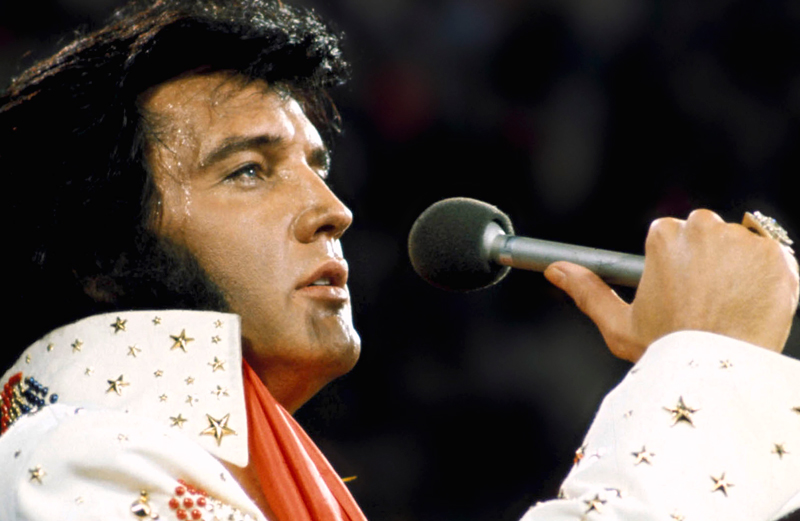
A loud drumroll, then girls screamed and Elvis walked onstage. He wore a big-collared white jumpsuit with a wide macramé belt. A bandmate handed him a guitar, and he stepped up to the mike. He smiled that adorable crooked smile and began belting out “That’s All Right (Mama).”

My knees went weak. The hard-driving “Polk Salad Annie” made my heart dance, while “You’ve Lost That Lovin’ Feelin’” nearly tore it in two. This was even better than I had dreamed.

Fans tossed handkerchiefs and scarves for him to mop his brow with. Then Elvis announced that he was going to sing the title song from one of his movies. The orchestra struck up “Love Me Tender,” and girls mobbed the stage. Between bars, Elvis kissed them.

Barb and I stayed meekly in our seats. Suddenly Elvis was right there in front of us. Close enough to touch! Barb nudged me. “Stand up.”

Did I dare?

“Go on, Aline,” Barb said again. It’s now or never, I told myself.

Just as I rose from my chair a brazen blonde with a big bouffant plowed over me and jumped at Elvis. She flung her arms around his neck and kissed him hard on the mouth. Elvis peeled her off and straightened up. Was he leaving?

I was about to sink down into my seat again when he leaned forward and looked right into my eyes. “Stay there,” he whispered. “I’ll catch you on the way back.”

Now I was sure my heart was going to beat right out of my chest!

Elvis reached the far end of the stage as the song ended. I was the only girl left standing. He forgot me! Lord, why did you let me act like such a fool?

Just then, the orchestra launched into “Love Me Tender” again. Elvis walked over to me, knelt and took my hand. Right then and there Elvis Presley serenaded me in front of a thousand people. This time when he finished singing he leaned closer and kissed my cheek.

I guess you could say I was kissed by a king, thanks to the King of all kings. The one who made me shy, but gave me persistence in abundance. Enough to make even my wildest dreams come true.

Listen as Elvis sings "I Can't Stop Loving You" in 1970 at the International Hotel in Las Vegas!

Download your FREE ebook, Rediscover the Power of Positive Thinking, with Norman Vincent Peale

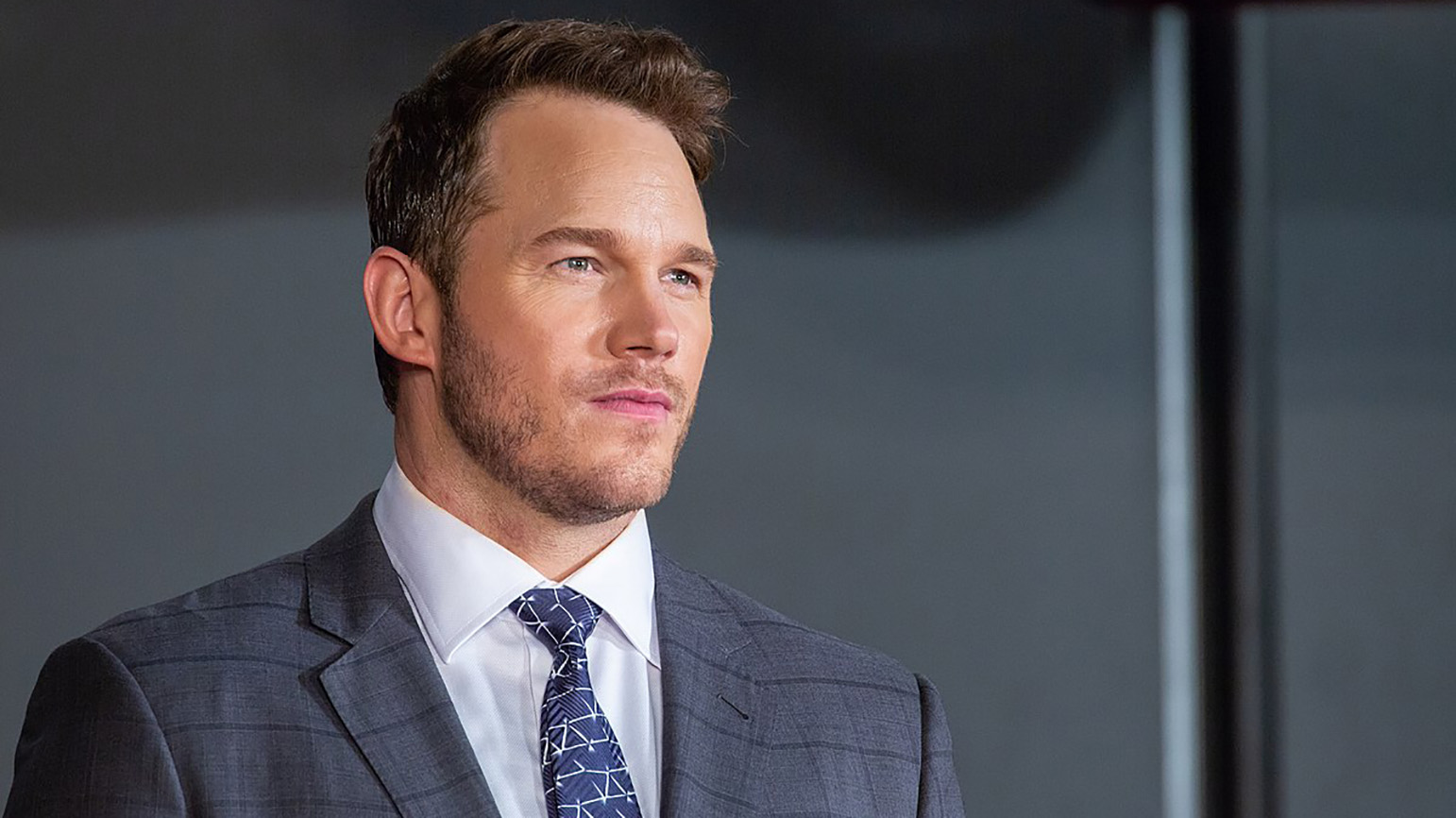
Chris Pratt: His Faith Journey and Recent Engagement

Jurassic World star Chris Pratt recently proposed to Katherine Schwarzenegger. In his announcement of their engagement he told Schwarzenegger he was “proud to live boldly in faith with you.” Their relationship is the culmination of a decades-long faith journey for Pratt.

Pratt has been open about how a chance encounter in a parking lot in Maui opened his heart to God. At the time, Pratt was living in a van and hadn’t yet decided to pursue acting. A man stopped and told Pratt that “’Jesus told me to stop and talk to you. He said to tell you you’re destined for great things,’” Pratt said in an interview with Esquire.

The Daily Bible Large Print relaunch with digital free gift in article ad

Pratt says he became a Christian that night. Four weeks later, he moved to Los Angeles to pursue acting.

His faith journey continued when his was son, Jack, was born nine weeks premature. In his family’s time of need Pratt turned to prayer.

“It restored my faith in God, not that it needed to be restored, but it really redefined it,” Pratt told People.

After a month in the hospital, Jack was able to go home. Pratt credited the “power of prayer” for saving his son and became more vocal about his faith in the following years.

When he received a star on the Hollywood walk of fame he referenced Psalm 126:3 “The LORD has done great things for us, and we are filled with joy.” While accepting an award at the Movie & TV awards he told the audience “God is real. God loves you, God wants the best for you,” and “Learn to pray. It’s easy, and it is so good for your soul.”

In early 2019, Pratt posted a video explaining that he was doing the Daniel Fast, a 21-day biblically inspired diet that focuses on prayer and fasting.

Pratt knows that his faith might make him stand out in Hollywood, but says he feels called to share his love for God with other people.

“That kind of message, it might not be for everybody. But there is a group of people for whom that message is designed,” he told the Associated Press. “And nothing fills my soul more than to think that maybe some kid watching that would say, ‘Hey, I’ve been thinking about praying. Let me try that out.’”

Belief has been the foundation of Pratt and Schwarzenegger’s relationship. They went to church together many times while dating and make faith a priority.

Pratt knows exactly who to credit for their relationship.

“Thrilled God put you in my life,” he said.  

A Treasure Hunt of Answered Prayer

Our Heart of the Father Ministries’ staff Christmas party was going to include a gift exchange. I suggested a Christmas treasure hunt instead. “Everyone prays for simple clues,” I explained. “Then we put all those clues together and go find our treasure—the special person the Holy Spirit has led us to.” Crazy, right? But we’d seen what the Bible calls “a word of knowledge” provide clues before.

My wife, Carla, and I got the job of following the prayer clues. The next morning we set off with a list of words: red, backpack, penny, Plymouth, food, library, and mother with child. “The most logical place to start is the Plymouth library,” Carla said. Plymouth is a town a few minutes away.

A Journey of Faith In Article Ad - Avail Now

“Look!” I said as we pulled into the library parking lot. “There’s a Cub Foods across the street. That’s three clues down already.”

Sure we were on the right track, we marched into the library. “Excuse me,” Carla asked the first woman we saw, “is your name Penny?”

RELATED: ONE MAN’S PERSISTENCE AT CHRISTMAS

She shook her head. So did the next woman. And the next. “The librarians probably think we’re stalkers,” I said.

We took a break to get lunch. “Maybe we need to try somewhere else,” I said. But the words had barely left my mouth when the urge came to me to return to the library. Carla went inside. I stayed in the car to finish eating. I looked up in time to see a mother and child heading inside. The woman was carrying a red backpack!

“Is your name Penny?” I asked, hurrying after her.

“No,” she said. I followed her inside. Carla asked her the same question. “My name isn’t Penny,” she repeated. “But I think I have a penny in my backpack. Does that count?”

“Good enough!” I just about shouted.

Carla and I explained our treasure hunt. When we handed her a card with the money we’d collected at the party, she burst into tears.

“My husband and I didn’t know how we were going to afford Christmas gifts for our children,” she said. “Last night we prayed over which bills we’d have to go without paying.”

We’d found our treasure all right, clue by clue.

READ MORE: SIMPLE PLEASURES OF THE CHRISTMAS SEASON

A Timely Answer to Prayer

Has God ever impressed on you to do a big project for Him, and you worked hard on it for years—and yet it seemed like nothing was happening, and God was a million miles away?

That’s where I’ve been lately with a huge dream God placed on my heart. Some good things have happened, but the big provisions from Him haven’t arrived yet. I’ll be honest, I’ve been a bit discouraged.

extraordinary women of the bible

Then during my devotions recently, I read a verse in Isaiah 7:11, “Ask a sign for yourself from the Lord your God.” Those words glared from the page at me. So I prayed, “God, I’m weary on this journey you have me on. Could you send me a sign—a word—that You’re still in charge of what You’ve asked me to do, that You’ve got it under control?”

I prayed that prayer for several weeks, and then one morning this week, the answer arrived in a way I’d never have expected…

Back in 2005, my husband and I took a group from our church on a mission trip to Costa Rica. It was a life-changing trip for all of us. Paul and I had gone hoping to be a blessing to the Costa Rican people and to our missionary friends—but we were the ones who were blessed beyond words.

Michelle's husband their Costa Rican friend, Fernando, who helped answer a prayer!One of the highlights of our trip was meeting Fernando Herrera Gomez. He’d been such an encouragement to our missionary friends, and he traveled with us that week as we visited orphanages and nursing homes, worked on building projects, and went sightseeing. Our whole group loved Fernando. He’s a gifted man, fun, and he has a huge heart for God.

We’ve stayed in touch over the years, but it had been months since we’d last talked. Then I received the message from him on Facebook this week that made me cry.

It read, “Good morning, dear sister. I’ve been praying for you during this week. This is kinda weird but for some reason I’ve been feeling you have to make decisions, and God has told me He has the control, and He is with you. Love you, dear friend. Have a wonderful and blessed day.”

I literally had goosebumps.

At the moment I received that message, I was trying to decide whether or not to squeeze a few days of a film conference into an already packed trip. I was making decisions about which publishers I needed to make appointments with at the publishing convention I’ll attend. Both decisions were tied to this big dream God’s placed on my heart, the one I’d been discouraged about.

READ MORE: WHEN PRAYERS GET ANSWERED

Fernando didn’t have a clue what I’d been praying. He didn’t know I’d been asking for God’s reassurance that He was in control of my project, but God used him to send the word of encouragement that I needed—from a country more than 1,700 miles away.

Thank you, God (and Fernando). Message delivered, right on time. 

A Sign of Answered Prayer

JB Bookstore—named for my brother—was more than a coffee shop with books. In Bayombong, the town in the Philippines where I grew up, it was a beloved gathering place. People came to talk, get news and enjoy a tasty merienda. It was busy every day. JB wasn’t just the family business; we lived above it. When my mother wasn’t teaching school, she ran the shop with my aunt; my father operated a printing press in the back. When I was 11, my family got bad news: The landlord canceled the lease and gave us a couple of months to move out.

“My husband has big plans for the area,” the landlord’s wife told my mother. She could see how upset my mom was at the news. “When I’m facing a big challenge,” the landlady said, “I say a novena to Saint Therese.”

Sweet Carolina Mysteries In Article Ad

My mother went to church every day, but she had never heard of this.

“Say this prayer for nine days,” the landlady said, writing it down for her. “You ask Saint Therese to join you. When God has answered your prayer, you’ll receive the sign of a rose.”

“What kind of rose?” asked my mother, more puzzled than reassured.

“It can be anything. A dream, a picture or a rose itself. Anything.”

The landlady had advised her to pray for strength to face the changes in our lives. Instead Mom asked for God to change the landlord’s mind so we could keep the store.

On her ninth day of prayer, Mom still hadn’t gotten a sign. At church that morning there were flowers on the altar. They were verbena, not roses, but they were very pretty. “Are you going to throw these away?” Mom asked one of the altar boys afterward. “If so, could I have some to plant?”

“I’ll bring them by the store,” he said.

The next day, the vase appeared, a big bouquet of verbena flowers and—

“What’s this?” Mom said. A single red rose tucked right in the center! Where had it come from? There had been no roses in church.

A week later, Mom was still puzzled—until she heard the news: The landlord had suddenly changed his mind. He wanted to extend our lease. His big plans had changed too. He didn’t know it, but he was following God’s plan now.

Did you enjoy this story? Subscribe to Guideposts magazine.

A Reel Inspiring Love Story

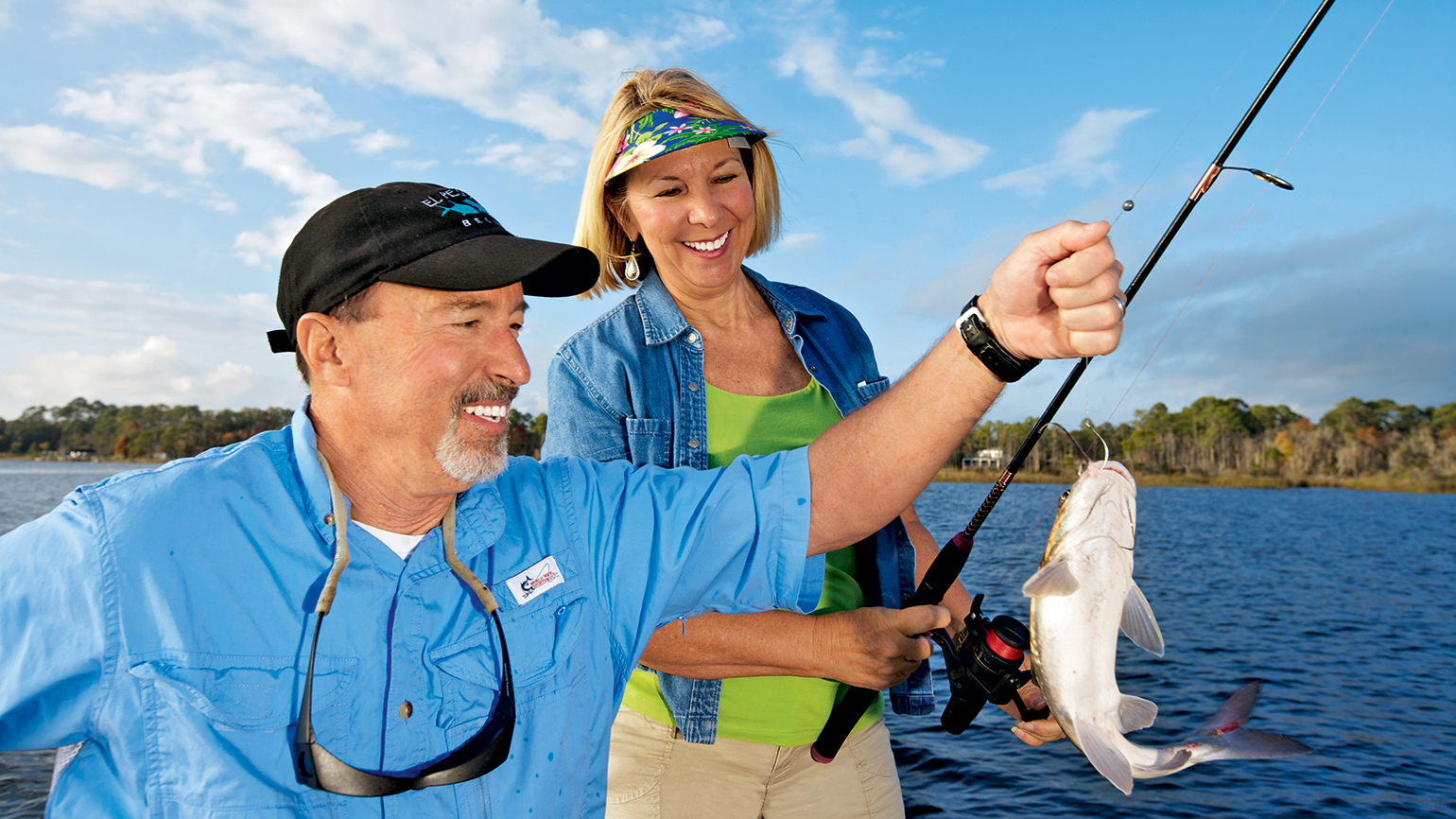
It was the last place I expected to be—on a fishing boat in the middle of Choctawhatchee Bay at six o’clock on a Saturday morning.

I didn’t even like fishing. I’d gone once before and that was enough. Sitting for hours holding a pole, staring at the water? What a waste of time! I did like Chuck, though. Smart, kind, funny Chuck. I couldn’t say no when he asked me on this trip. We’d been dating for three months…well, I thought we were dating.

New Every Morning Journal In Article Ad A

It had been a while since I’d been so interested in someone. Seven years earlier I’d gotten divorced and shortly after that I lost my job. I decided I needed a fresh start, so I left Marietta, Georgia, for a new job based in Niceville, Florida.

Shortly after I moved I found a great church and made friends. But love? At my age it seemed all the good men were married or dead!

I signed up for a popular online dating site only to receive an e-mail stating, “There is no one that meets your criteria.” Talk about a bruised ego. Was I destined to be single? Still, something inside me wouldn’t give up hope. I kept praying, Lord, I want someone to share my life with. Please send me the right man to love.

Two years (and many bad dates) later I met Chuck at church. He was a widower, retired from the Air Force, who loved boating and fishing. He had the kindest smile. I remember thinking, Wow! That’s the kind of man I could marry.

We’d talked a few times at church, but I didn’t get my hopes up. Six months later he finally called and asked me out to dinner. I was ecstatic.

Soon we were going out every week to the movies, plays, concerts. Spending time with Chuck felt so right—we talked and laughed for hours. And he was always a gentleman. Maybe too much of a gentleman. Weeks then months passed and he had yet to kiss me. Did he just want to be friends?

One night after dinner we watched a movie back at my place. Chuck sat rigidly on the sofa. I waited for him to reach for my hand, inch closer to me, put his arm around me…some sign of affection. Nothing.

At the end of the night I walked Chuck to my door and looked into his warm eyes. He leaned closer. This is what I’ve been waiting for, I thought. Our first kiss!

“I had a really great time with you, Marilyn,” he said, wrapping his arms around me in a big, brotherly hug.

Still, when Chuck asked me to go fishing a week later, I said yes. I had to know where our relationship was going.

So here we were in a boat on the bay on a clear May morning. The sunrise painted the sky pink and yellow. Ospreys soared above us and great blue herons strolled along the shore. Not far from our boat pods of dolphins rolled through the water. It was breathtaking. Romantic.

I hoped so, anyway. Lord, I’m really falling for Chuck, but I’m not sure how he feels about me and I don’t want to get hurt again. Help me to know if he’s the right man for me.

“Sooo, Chuck, how do I cast my line again?” I asked.

“Like this,” he said, stepping behind me and putting his arms around mine to demonstrate. “Aim right over there.”

I pulled the rod back and swung. Missed. My second try wasn’t much better. I caught my line on everything—docks, boats, trees. Each time Chuck smiled and untangled the line. “Don’t worry; everyone does that sometimes,” he said.

I sat down in the back of the boat and watched Chuck cast like a pro. Soon he reeled in the first catch of the day. He unhooked the fish from the line and held it up for me to see. “It’s a speckled trout,” he said. The he brought it up to his face and kissed it. Kissed it!

I was incredulous. “Why did you do that?!” I exclaimed.

“Do what? Release it?” Chuck asked.

“No! Why did you kiss it?”

“Oh, that’s just for good luck. A lot of fishermen do that.”

“Well, that makes me feel great. Guess I should be a fish!”

He looked at me, puzzled.

So that’s it, I thought. He finds a fish more attractive than me. Great! Not only was my self-esteem shot, but if Chuck was clueless as to why I was upset, what did that mean for our relationship?

The rest of the fishing trip was uncomfortably quiet.

“So, I’ll pick you up for dinner at seven. Is that good?” Chuck asked on our way back to the marina.

“Sure,” I agreed, if only to get an answer if he had feelings for me too.

Dinner was lovely and Chuck was sweet and funny, as always. Back at my house we chatted over coffee. “Let’s take a walk down to the dock,” Chuck said.

He probably just wants some fresh air, or worse he’s going to tell me it’s been fun but he just wants to be friends.

We walked to the dock side by side but not hand in hand. Finally we came to a stop under the glow of the full moon. Chuck stood behind me and wrapped me in his strong arms. “What a nice evening it’s been,” he said, turning me to face him.

I looked into his kind eyes. He leaned down and kissed me…with such passion it took my breath away. “I love you, Marilyn,” he said. “I just wanted to be sure before I kissed you.”

I didn’t wait a second longer to tell him how I felt. “I love you too, Chuck.”

After that we went fishing almost every Saturday morning. I even got to like it, although I couldn’t bring myself to kiss a fish.

One Saturday in August Chuck insisted we go out on the bay even though there were threatening skies. We were the only ones at the boat ramp. “Are you sure you want to fish today?” I asked.

“We’ll just go to our lucky spot,” he said. He drove the boat to where we’d caught fish before. Within minutes something was tugging at his line and he handed it over to me. I reeled it in.

“What do you have there?” he asked.

“I have no idea,” I said, staring at the black lump dangling from the hook.

Chuck reached for it. “It’s a plastic bag,” he said. “There’s something inside.” He cut it open and pulled out a small velvet box. A ring box. He got down on one knee. “Marilyn, will you marry me?” There was a flash of lightning.

“Yes!” I shouted. We made it back to the dock just before the deluge.

Chuck and I have been married for over two years and nearly every Saturday morning you can still find us fishing. On a boat in the middle of the bay at six o’clock in the morning with my husband? There’s no place I’d rather be. After all, fishing is a lot like love. It takes patience and faith to land a great catch.