Embrace God's truth with our new book, The Lies that Bind

‘The Star Thrower’ and the Difference You Can Make

In 1978, author Loren Eiseley published an essay called “The Star Thrower.” It recounts a beach walk by a narrator who encounters a small boy exploring a field of starfish that had washed ashore. At first, the narrator thinks the boy is collecting the sea creatures for himself, but it soon becomes clear that the boy is searching for living specimens for the purpose of throwing them back into the sea.

The story has been re-told many times by many authors, motivational speakers and spiritual leaders. No matter the variations among versions, the lesson is always the same—every single effort has the potential to make a positive difference in the world.

GP In Article Desktop

Let’s not kid ourselves—the boy won’t be able to find all the starfish in time to save them. Some of them will become food for predators. Others will dry out in the hot sun. But still the boy scans the shore, ever-searching and ever-hopeful that he can do just one more act of care, one more life-saving gesture of kindness.

It’s fairly unusual—though not impossible—to see sea stars on the New England beaches I will visit this summer, but I will still walk the sandy shore with this story in mind. Instead of being overwhelmed by everything I can’t do to protect the planet, help those in need and be a positive presence in my family and community, I will sweep my eyes back and forth across the beach and scan for what I can do. A piece of trash I can pick up. A fellow beach walker I can greet with a smile. And maybe even a sea creature’s life I can save.

And when vacation season has ended and it’s time to walk sidewalks instead of shorelines, I will try to sustain the search for opportunities for kind, selfless actions. Even one is enough. Even one makes the world a better place.

The Simple Blessings of Summer

What are your favorite childhood summer memories? When I was a kid, I couldn’t wait for school to let out so that I could spend the summer playing baseball with my friends. This was before cell phones, tablets and other gadgets took over. It was old fashion fun; playing sports at the local park, stick-ball (like baseball) in the streets and cracking jokes all day long. I avoided going home to our city apartment during the day in fear that my mom would cut playtime short especially at or after sunset.

I will never forget going with my friend Junior and his parents to Coney Island. It was a long trek on the subway, but I remember looking out the window and observing people living out their lives. It was fascinating to me as I didn’t venture outside of the city often. When my father purchased his first car, we then traveled outside of the community to Sunken Meadow Beach in Long Island and parks in upstate New York. Looking back, I consider these memories God’s blessings in my life.

The Lies That Bind In Article Ad

The author of Ecclesiastes writes, “There’s an opportune time to do things, a right time for everything on the earth…” And this is the time to enjoy summer with all of its beauty. The season is brief, but its blessings are many. We can’t afford to miss out on the simple things that summer brings: longer days, warm weather, nature’s beauty, barbeques and time with friends and family. It’s a time for recreation and renewal…God’s gift to us.

Ask Guideposts’ OurPrayer team to pray for you!

Everyone can find something to do in the summer. It doesn’t have to be costly, a lesson I learned from my childhood. My wife and I love going to the beach—the smell of the sea breeze, the sound of crashing waves, and the soft sand. Sometimes it’s just sitting on our townhouse deck taking in the sunshine and sounds. What are your summer blessings and memories? Please share with us.

Lord, thank for this season; help us to pause from our busy lives to make the most of this opportune summer time with friends and family or for ourselves.

The Silent Weapon

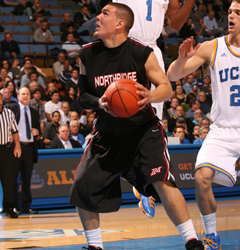
The razzing began the moment Cal State Northridge forward Michael Lizarraga hit the basketball court. Fans of the home team, University of California at Berkeley, were all over the 6-foot-7 inch senior, chanting raucously whenever he set to shoot.

Lizarraga, who scored a career-best 15 points that night last November, never once got rattled although many of the fans never realized why. The 21-year-old is deaf, the nation’s only Division I college player who is unable to hear.

A Journey of Faith In Article Ad - Avail Now

A star high-school athlete, he seemed an ideal recruit for Gallaudet University, in Washington, D.C., the renown liberal arts college for the deaf and hard of hearing. But Lizarraga didn’t want that.

“For me,” he told The New York Times, “the biggest dream was always to play for a Division I team. There were people who said I would never be able to do it. That made me more determined. I would say my favorite quote is, ‘Don’t tell me I can’t, because I will’.”

Lizarraga wasn’t offered a scholarship. He earned a spot as a walk-on, and fought hard to win a starting position during his junior year.

Bobby Braswell, Northridge’s coach, has come to be his greatest admirer. Braswell watched Lizarraga in practice, trying to absorb the intricacies of his position by sight alone, and marveled at his determination and iron will. When, in November, Northridge faced DePaul University—an opponent no team in the Matadors’ conference had defeated in five years—Braswell challenged his players to match Lizarraga’s mental toughness. They proceeded to beat DePaul, 88-66.

Afterward, senior forward Lenny Daniel told The Times, “When you’re around Mike, you realize you take a lot of stuff for granted. You can’t feel sorry for him because he doesn’t want you to. I’ve never met a guy like Mike in my life.”

Neither had Kendra Blessing, a fellow Northridge student with full hearing, who is majoring in deaf studies. She met Lizarraga last year at a bowling party. The two hit it off immediately.

Lizarraga proposed to Blessing in December. She didn’t need to sign her answer. He knew it from her loving embrace.

The Secrets to Resilience

The taxi driver deposited my bags and boxes on the sidewalk in front of my new building, slammed the trunk and drove off into the autumn night. I watched the cab disappear down the street, relief washing over me. Whew! I’d finally gotten all my things out of my old place across town. It wasn’t until I lugged the last box upstairs to my new apartment that I realized what was missing. My laptop.

That spring I’d left my full-time job to work on an idea I had for a book. I’d taken odd jobs and part-time gigs to support myself while the proposal took shape. At last I was ready to send it off to publishers. But all my research, my working notes, my drafts—everything I’d sweated over for the past six months was on that computer! I hadn’t backed anything up on disk. Panicky phone calls to the taxi bureau got me nowhere. My laptop—and my incredibly labor-intensive book proposal—were gone.

Sweet Carolina Mysteries In Article Ad

It’s in circumstances like this that we discover what we’re made of. Do you have what it takes to rebound from adversity—whether it’s a relatively minor setback like mine (of course, it didn’t seem that way at the time) or a major tragedy like Hurricane Katrina, which left thousands of people with their entire lives upended? Are you resilient?

Call it grit, hardiness, fortitude or inner strength. By whatever name, it isn’t so much your experience or training, it’s your level of resilience in the face of stress that determines whether you succeed or fail, according to a recent issue of the Harvard Business Review. Or as psychologist Al Siebert, Ph.D., author of The Resiliency Advantage: Master Change, Thrive Under Pressure and Bounce Back from Setbacks, puts it, “Resilient people decide that somehow, some way, they will do the very best they can to survive, cope and make things turn out well. They expect to bounce back. They have a knack for creating good luck out of circumstances that many others see as bad luck.”

You read that right. Resilience is a choice. Researchers have done more than 600 studies on the topic, and there’s a general consensus: The ability to bounce back from hardship isn’t a trait that a person is either born with or not. Resilience is a set of skills that anyone can learn and build on at any point in her life. Anyone!

Ask for help.
I’d thought I was a pretty resilient person, but my reaction to losing my book proposal didn’t show it. “I guess it wasn’t meant to be,” I moaned. My friend Patrick wouldn’t let me wallow in self-pity. “Your work was on that laptop, but the idea for your book is still in your head,” he said. “It’s a great idea, too! You can’t just abandon it because of one unfortunate incident.” With Patrick cheering me on, I started over. Within a year, I’d rewritten my proposal, sent it out…and landed a contract with a major publisher!

Wouldn’t it be nice if every time life knocked you for a loop you had someone like Patrick standing there to lift you back up? But your friends and family are busy with their own lives, and you can’t expect them to read your mind and automatically sense when you’re feeling down. One of the conclusions experts have come to about what it takes to be a survivor and thriver: Resilient people know they need support, and they’re humble enough to ask for it.

Take octogenarian Grace Kanner of Queensbury, New York. Several years ago, she slipped on a patch of ice and broke her hip. This active and independent senior citizen had spent her youth dancing on the stages of New York City. “I had never fallen down before, not once,” Kanner says. The idea of asking for help didn’t come easy, but during her recovery, she leaned on her family both physically and emotionally. Without them, she says, she might not be walking on the treadmill and going about town like she does today. “But in the end,” Kanner points out, “you have to make the effort yourself” to get up and go on after any kind of tumble.

A big part of that effort, researchers agree, is mental.

Expect good things.
While resilience itself isn’t hard-wired, we do pick up certain beliefs from our parents that can affect our level of it. “From birth, we are actively processing our environment and forming our beliefs,” says Andrew Shatte, Ph.D., coauthor with Karen Reivich of The Resilience Factor: 7 Keys to Finding Your Inner Strength and Overcoming Life’s Hurdles. “Research shows that our beliefs largely reflect those of our parents.”

Kanner is a case in point. “My mother was a strong woman who always looked on the bright side,” she says. “If she wanted to accomplish something, she sat down and thought about it in a positive way. And nine times out of ten, it came to fruition.”

What if your mom and dad don’t happen to be of the glass-is-half-full variety? You can work around that and learn to see life your own way. “If you grew up believing that good things aren’t supposed to happen to you,” says Shatte, “it’s time to begin challenging that notion.” (Hey, good things are supposed to happen to all of us!) Not only will you pump up your resilience, you’ll also find “it is empowering to realize you are capable of changing your old ways of thinking.” Shatte breaks it down into A, B, C. “When Adversity comes up, it doesn’t lead directly to a Consequence. In between is your Belief,” he says. “We teach people that what they believe affects what they do, which leads to the final outcome.” Change your thinking about a setback—view it as an opportunity, for instance—and you can change its consequences.

Plan for bumps in the road.
Having an optimistic outlook doesn’t mean living in a dream world. “People tend to think they are entitled to an easy life and continual comfort, but that’s not realistic,” says Salvatore Maddi, Ph.D., author of Resilience at Work: How to Succeed No Matter What Life Throws at You. And realism, he notes, is a key ingredient in the resilient mindset.

Siebert concurs: “People who are good at resilience have trained their brain to be in the habit of looking quickly and accurately at a situation. They go into a state of rapid reality-reading and can respond effectively.”

Like my dad, Steve Rovito. He’s in sales, and in his late fifties, the company he’d worked at for nearly 10 years started layoffs. The lowest sellers went first, then the new hires. Soon not even the top sellers were safe. “I didn’t think negatively but I did try to anticipate what could go wrong,” he says. “And then I got prepared.” He developed a plan to live frugally and enjoy an early retirement. He didn’t have to use it because he was offered a job with a competitor not long after being laid off, but he was ready for that bump in the road.

Still, hitting the bump can be jarring. Don’t worry if you can’t immediately pick yourself up and march on. Take time to process the situation. “Instead of wallowing, go into problem-solving mode,” says Shatte. That works for my dad. “When things don’t go my way, I go in my cave and pout,” he says. “But I also use that time to write an action plan. It might have two steps, it might have 10. But if I write it down, there’s a much better chance that I’ll stick with it.” (That’s one thing that runs in the family. My dad recently came across one of my old notebooks. Inside was a list of my goals. On it: “Write a book.”)

Practice making lemonade out of lemons.
To Maddi, writing down an action plan shows two hallmarks of resilience: You’re committed to making lemonade out of the lemons life dumps in your lap and you view the juicing process as a challenge you’re well-equipped to take on. “If you’re strong in commitment, you believe that no matter how bad things get, it is best to stick with it until the end, rather than avoiding the problem or running away,” he says. “And if you’re strong in the challenge area, you are able to see stress and change as a normal part of life. You use it as an opportunity to grow and develop.”

Joanne K. Hill of South Bend, Indiana, has had to deal with more lemons than most. In a four-year span, she lost a dozen family members, beginning with her husband and ending with her son. “A lot of people say to me, ‘You have such a positive attitude.’ I tell them, ‘It’s a process; you can learn it too.’ If you do it, and do it enough, you will always be able to do it—in the best and worst of times.” She believes so strongly that you can learn to cope positively with crisis, she wrote a book about it, Rainbow Remedies for Life’s Stormy Times.

This goes back to what researchers have found: Anyone can develop resilience, with time and practice. And the willingness to work hard at it. Leslee Spencer of Desert Hot Springs, California, knows that from fighting and beating cancer. “I didn’t let myself fall apart at the idea that I had cancer. I went into resourceful mode: What can I do? What’s my next step?” Treatment sapped her strength, and she couldn’t return to her job as a massage therapist. Spencer took a skills test, found she had an aptitude for math and now has another job she really enjoys, tutoring high school students. She and Hill are great examples of what expert Al Siebert has noticed: “Resilient people allow themselves to feel grief, anger, loss and confusion, but they don’t let it become a permanent state. They expect to rebuild their disrupted lives in a new way that works for them, and the struggle to overcome adversity develops new strengths in them.”

Choose to change the things you can.
Siebert has seen time and time again that “faith has a place in resiliency.” One man he knew successfully battled skin cancer only to be diagnosed with leukemia soon afterward. “I asked him how he was handling it all, and he replied, ‘I do what I can with the things I can control: I get a lot of rest and keep my health up. Then I accept that there are other things that are out of my hands. After that, I have faith.”

Echoes of The Serenity Prayer? It’s part of Andrew Shatte’s resiliency training program for corporate clients. He uses the famous 12-step prayer to empower people and remind them they “can develop the courage to go after those things that they can change.”

And the grit. Grace Kanner’s broken hip cut her muscles and the hospital had her in physical therapy from 9 am to 4 pm every day. A grueling regimen. When she faltered, she’d repeat something a young therapist told her—”Grace, you’re in charge. Not the muscle.”—and push on toward her goal of being active again.

“Some people remain resilient because they hold to the firm belief that they are indeed capable of influencing things for the better,” Siebert says. Joanne Hill, for whom faith is a powerful weapon against adversity, adds that knowing you’re not alone in your struggles can give you the strength to persevere, as can believing that your setbacks are part of a greater plan. “There is a blessing in everything that happens to you,” she says. “You need to make the decision to find it.” Now that is choosing resilience!

Download your FREE positive thinking ebook!

The Season of Forgiveness

I was just reading over some inspiring quotes for our very popular Up Side feature in Guideposts magazine when I came across one from a reader: “Forgiveness is the greatest expression of love.”

Immediately I thought of an interview I saw this morning on the Web with the mother of one of the three high school students killed this week in Chardon, Ohio, in another senseless school shooting spree.

Phyllis Ferguson was asked by a reporter what she would say to the 17-year-old boy who shot her son, Demetrius, apparently at random in the Chardon High School cafeteria. She replied, “I would tell him I forgive him.” Everything else, she said, was in God’s hands.

video platform video management video solutions video player

Awe and shame. Those were the reactions I had to Phyllis’s response to the reporter’s question. Awe that she can even utter the word forgiveness when she must be feeling the deepest pain a person can know, and shame at what I realize would be an almost impossible thing for me to feel in that situation. I would be consumed with all sorts of feelings but forgiveness would not be one of them.

Yet forgiveness may be the greatest act required of us as spiritual people. And it’s the hardest, at least for me. It’s easy to say I forgive, but to really let go, to move past the anger and hurt, sometimes seems almost impossible.

It is so easy to remain prisoners of bitterness. It is the safe route in the short run. But over time, the failure to forgive can eat our souls alive. True forgiveness takes great courage, and the greater wrong, the more courage it takes to forgive it.

Lent is the season of forgiveness, the 40 days leading up to that greatest act of forgiveness, the redemption of all mankind through the suffering and death of Christ. If there is a central call to action for Christians, it is to forgive. That is the call Phyllis Ferguson is answering so courageously. I am lost in admiration for her.

The quote I started with is true. Only love makes forgiveness possible. Only love overcomes the fear and the hurt. To forgive is to love. Are you a forgiving person? Or do you struggle with it like I do? Share below. And please say a prayer for the people of Chardon, Ohio, especially the families involved in the shooting.

The Real Meaning of Christmas

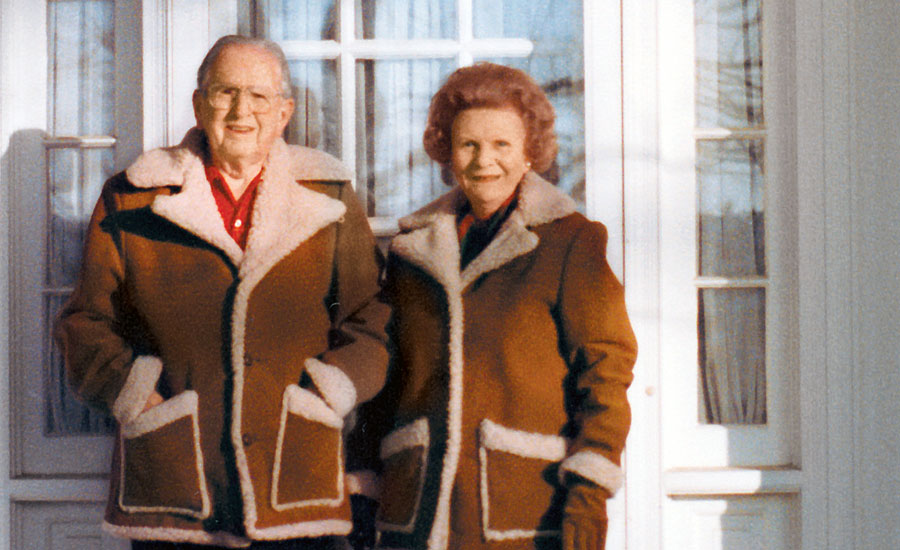
In the early years of my marriage, my husband, Norman, and I used to marvel at the frenetic atmosphere that inevitably took over our house as the holidays approached, no matter how I tried to keep organized and ahead of things.

Of course, with Norman working hard as a minister and the publisher of a fledgling magazine, and me with three children to look after while serving on nonprofit boards and juggling church activities, it wasn’t surprising that the holidays were hurried and chaotic. I imagined that when the two of us were older and the kids were grown, things would be different. Christmas would transform into a time of tranquillity and reflection.

A Journey of Faith In Article Ad - Avail Now

But Norman’s preaching schedule and the little magazine he’d started grew beyond anything we could have imagined. In the weeks before Christmas, Norman would often speak all over the country. Sometimes I had to do my holiday shopping on the road. Meanwhile, the children grew into teenagers, then adults with children of their own.

One Christmas, Norman and I took our extended family—17 in all—on a Christmas trip to the Holy Land. We visited the places Jesus walked and taught 2,000 years before. We spent Christmas Eve in Bethlehem. Did it all run smoothly? Of course not. But it ended up being a trip that stayed with us as a high point of our lives.

Another year, we got the whole family together for a Christmas trip to Africa. We spent Christmas Eve watching elephants and zebras in their natural habitat, and exchanged gifts around a scraggly brown bush decorated with a few scraps of tinsel and red ribbon.

I turned 96 this year, and though I make a point of being at home on Christmas now, that transformation of the holiday into a quiet, unhurried time of peace and reflection still hasn’t happened. As the day approaches, it never fails that there’s one more gift to buy, a train to catch, or a trip to the grocery store to pick up the item everyone can’t believe someone else didn’t think to buy.

Norman loved to tell a story that originally appeared in Guideposts about a missionary-teacher in Africa who received a beautiful seashell from a student. The boy had gone on foot to a distant section of the African coast to get the shell. “You’ve traveled so far to bring me such a wonderful present,” the missionary told him.

“Oh, teacher,” the boy replied, “long walk part of gift.”

There always seemed to be a moment when holiday preparations would get so crazy and complicated that either Norman or I would feel like throwing up our hands. That’s when one of us would stop and say those words: “Long walk part of gift.” Then we’d get back to whatever we had been doing.

The more the last-minute chores, surprise guests, and just-one-more-gift excursions into town piled up, the more we remembered that what seemed like petty distractions from celebrating the season were really nothing of the sort. They were its very heart.

These days, whether it’s gift shopping on the Internet or having presents sent by overnight delivery, there are all kinds of conveniences around that claim to help make the holidays run more smoothly.

Of course, none of them really does that. No matter how careful the planning or how well mapped-out the schedule, Christmas still means last-minute surprises and complications. And unexpected joys. Getting the perfect shell still takes a long walk. Thank heaven.

Did you enjoy this story? Subscribe to Guideposts magazine.

The Quilt of Life

“I’m so sorry, Grandma,” the young man said. “My dog climbed on my bed, and chewed the quilt you made for me. Can you replace the damaged squares?” His grandmother took the quilt in her hands, studied it, and then said, “I’ll repair the damaged squares, but I won’t replace them. Part of what’s special about quilts is their history.”

Sure enough, 20 years later, long after the dog had passed on, the man said, “Grandma was right. When I see my quilt now, with the repaired squares, I remember my beloved dog.”

The Daily Bible Large Print relaunch with digital free gift in article ad

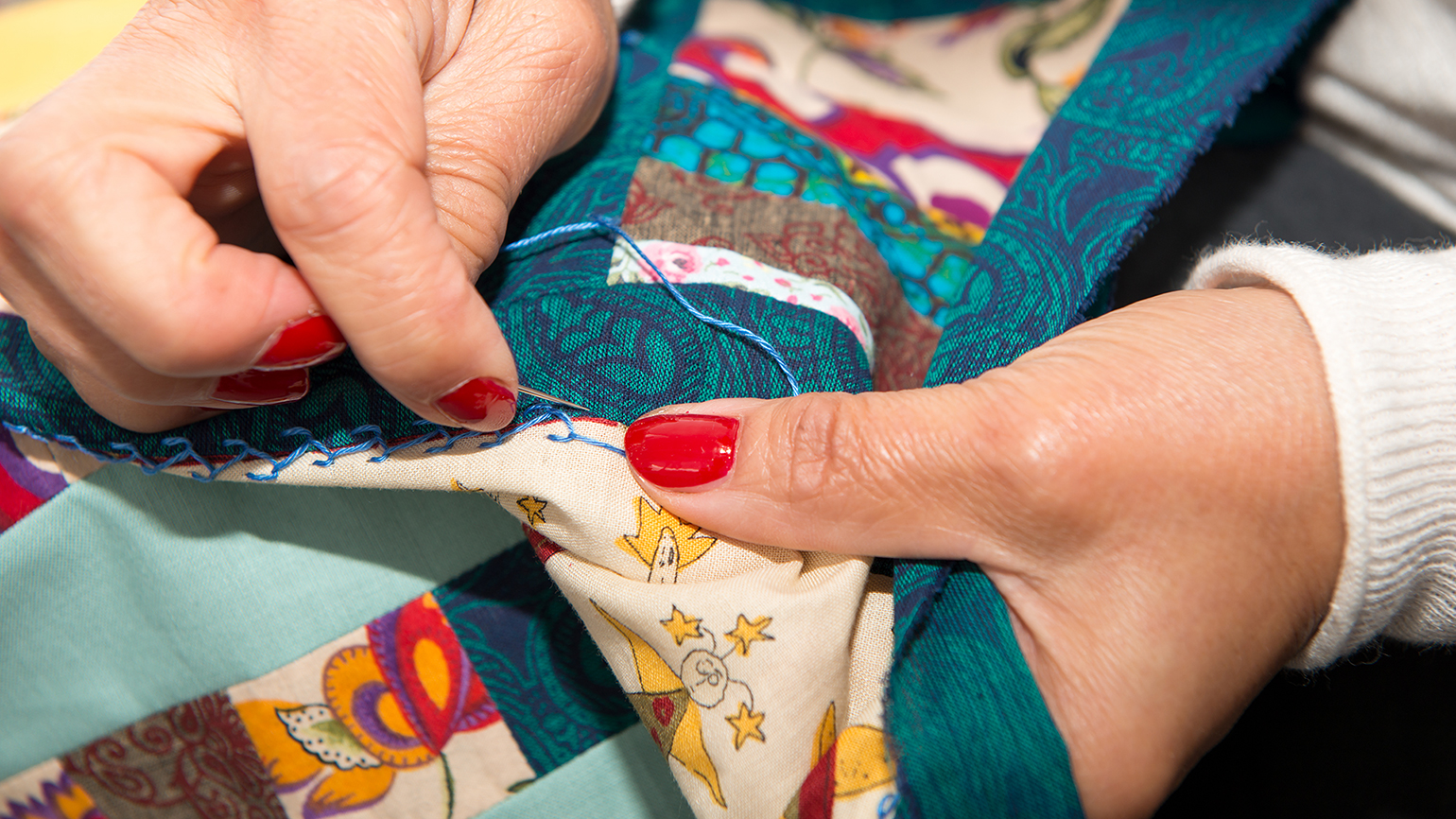
This delightful story was told by Linda Wentzler, Manager of Village Quilts, of the small Amish town of Intercourse, Pennsylvania where Larry and I recently visited with my brother David and sister-in-law Jane. We also met Lorraine Zimmerman, quilting by hand, a lovely, exquisitely-designed quilt.

Lorraine charmed us with her thoughts on the meaning of quilts…not just the art and history of them, but the philosophy of re-using vintage fabrics from clothing of our own and from that of the people we love.

The quilt Grandma Holey made for me brings back warm memories of my childhood. There are squares of checkered pink-and-blue cotton—from the only matching dresses my sister Twila and I ever had…sewed by our mother. There are squares from the flared, lavender, princess-style dress I wore for the graduation concert of my high school choir. And there is the blue dotted Swiss I wore on a date with Larry.

The photos show Larry’s heirloom quilt made by Great-grandmother Burns, and my quilt made by my Grandmother Thena Western Holey. On November 21, the Langhorne Council of the Arts, here in Bucks County, Pennsylvania, is sponsoring a “Gathering of Quilts,” not only to commemorate vintage quilts, like Larry’s and mine, but also exciting, creative, modern-day quilters or the area.

Our grandmothers probably never heard the phrase “Go Green!” but in many ways they were very “green.” In fact, their carbon footprints were so small, by today’s standards, they were microscopic. Our grandmothers bought items sparingly and re-used them whenever and as long as possible. They didn’t use hundreds of plastic bags a year, like most of us, and many probably never heard of Styrofoam.

And fabric? They designed, sewed, used, re-used, and handed-down their own clothing and that of their husbands and children. And when the clothing became ripped or out-dated, they didn’t throw the fabric away. They cut it up, stitched it together, and made quilts from it. Amazing quilts. Soft and comforting quilts. Warm. Practical. Quilts that were works of art (although most people didn’t realize this until decades later).

Hmmmm. I’ve never made a quilt…but I do have some fabric from clothes of my loved ones. Do I have the talent and patience to make a quilt? I’ll admit it. Probably not. But what about a pillow? Yes, I think I could make a pillow. Is there still time before Christmas?

Carol

Feel free to email me your environmental tips and questions!

The Quiet Beauty of Nature in Winter

In a sense, once we pass December 21, the shortest day of the year, each day of winter brings with it a little more light, a little more hope. Viewed another way, though, late December is only the beginning of the cold season, and as such it is a good moment to reflect on how we will sustain our inner warmth and positivity until the ground warms once again.

One way to keep our focus positive is to consider the quiet beauty of nature in winter. It might require some extra layering in our wardrobes and some extra time spent walking carefully without slipping on shiny sidewalks, but it is worth these extra efforts to notice the trees, hills, ponds and sky that keep us inspired the rest of the year, even as they may seem to be hibernating for winter.

Daily Strength for Women in Article ad

The poet Mary Oliver who so vividly captured the awe-inspiring power of nature in her work, offers the image of a flock of starlings leaping from a telephone wire. In her poem “Starling in Winter,” she writes:

“Chunky and noisy,
but with stars in their black feathers,
they spring from the telephone wire
and instantly

they are acrobats
in the freezing wind.
And now, in the theater of air,
they swing over buildings.” 

In her trademark way, Oliver captures the minutiae of the natural world, even in a city setting and at a time of year when we might not take the time to notice nature in the same way we seek it out in spring, summer and fall. From there, she reflects inward, doing the positive and powerful work of taking in what nature has to teach us:

“Ah, world, what lessons you prepare for us,
even in the leafless winter,
even in the ashy city.”

The poem ends with a stunning image of the wild beauty of a simple observation:

“I want
to think again of dangerous and noble things.
I want to be light and frolicsome.
I want to be improbable beautiful and afraid of nothing,
as though I had wings.”

What do you notice about how the natural world navigates the cold, quiet winter? What can you learn about how to do the same?

The Power of Thank You

In the spirit of Thanksgiving I’d love to share with you the benefits and power of two simple words. THANK YOU.

They are two words that have the power to transform our health, happiness, athletic performance and success. Research shows that grateful people are happier and more likely to maintain good friendships. A state of gratitude, according to research by the Institute of HeartMath, also improves the heart’s rhythmic functioning, which helps us to reduce stress, think more clearly under pressure and heal physically. It’s actually physiologically impossible to be stressed and thankful at the same time. When you are grateful you flood your body and brain with emotions and endorphins that uplift and energize you rather than the stress hormones that drain you.

Inspiration from the Garden in article ad

Gratitude and appreciation are also essential for a healthy work environment. In fact, the number one reason why people leave their jobs is because they don’t feel appreciated. A simple thank you and a show of appreciation can make all the difference.

Gratitude is like muscle. The more we do with it the stronger it gets. In this spirit here are 4 ways to practice Thanksgiving every day of the year.

1. Daily Thank You Walk
I wrote about this in The Energy Bus. Take a simple 10-minute walk each day and say out loud what you are thankful for. This will set you up for a positive day.

2. Meal Time Thank You’s
On Thanksgiving, or just at dinner with your friends and family, go around the table and have each person, including the kids at the little table, say what they are thankful for.

3. Gratitude Visit
Martin Seligman, Ph.D., the father of positive psychology, suggests that we write a letter expressing our gratitude to someone. Then we visit this person and read them the letter. His research shows that people who do this are measurably happier and less depressed a month later.

4. Thank You at Work
Doug Conant, the CEO of Campbell Soup, has written over 16,000 thank you notes to his employees and energized the company in the process. Energize and engage your co-workers and team by letting them know you are grateful for them and their work. And don’t forget to say thank you to your clients and customers too.

I hope you have a wonderful Thanksgiving. I’m thankful for YOU.

Download your FREE positive thinking ebook!

The Power of Hugs

Did you know that January 21 is National Hug Day? I love hugs—both giving and receiving them.

What is any better than a hug from a child or grandchild? My husband and I went to a movie last week with all of our in-town family, and three-year-old Eden sat on my lap for most of the evening. Near the end of the movie, she put her head on my shoulder. And then I felt her arms slide around my neck in a big bear hug. I felt so loved. 

Daily Strength for Women in Article ad

Hugs can be used in a variety of ways. There have been many occasions when someone I love has received a scary health diagnosis or has lost a loved one, and I haven’t known what to say. I’ve found that sometimes a tight hug says it all.   

I’ve given hugs during times of joy. I remember when a dear author friend won an unexpected award—one that isn’t usually given to authors of children’s books. At the end of the event, we flung our arms around each other in a giant celebration hug that was accompanied with squeals of excitement.

As a mom, I’ve given many hugs during times of fear, often during the middle of the night when one of my sons awoke from a nightmare. Hugs can provide security.

Hugs are often a way to say “thank you” to someone who has blessed you, when mere words don’t seem enough.

Hugs can say, “I’m sorry,” or “I’ve missed you.” They can reflect sadness when you know it will be awhile before you see a loved one again. Watching those hugs from military families as their loved ones leave for deployment always makes me cry. 

Hugs can also say, “You’re welcome here.” Macie Bailey was the official hugger at my church. Nobody came through the doors of Trinity Baptist without receiving a hug from that precious elderly lady. It was sometimes comical to see the expressions when Mrs. Macie wrapped her arms around unsuspecting first-time visitors, but they always left with smiles.

And some of the best hugs ever are the ones from heaven when we’re going through difficult times, and then it seems like God just reaches down and wraps His arms of comfort around us. 

I’ve been blessed to be the recipient of many hugs, and it makes me sad when I think about folks who don’t get hugs very often.  Of course, you don’t ever want to make anyone uncomfortable when dispensing them, but they can provide love, emotional healing, compassion, and joy. And they’re free!   

Stop and think about it: How long has it been since your elderly neighbor had a hug? Can you imagine how long it’s been since a homeless person or someone in prison received a hug?

National Hug Day would be a great time for us to be extensions of God’s hands (and His loving arms) to someone who needs to feel love or compassion today. And that’s my challenge for all of us: Who do you know who could use a hug today? 

The Positive Power of Trying Something New

I’ve been a gardener for years. I grow vegetables, have a few fruit dwarf fruit trees and putter around with some flowers. It relaxes me, gives me pleasure and feeds both my belly and my spirit. 

When I think of myself as a gardener, I don’t think myself an expert or even particularly experienced. Instead, I think of the Japanese term kaizen, which means continuous improvement. 

The literal translation of kaizen is “change for the better,” and it is cited in business circles in Japan as well as being used a principle for personal growth. The implication that this type of growth and change is ongoing and perpetual is deeply appealing to me both in the garden and in the rest of my life. 

Past a certain age, opportunities to learn new skills feel fewer and farther between. In my garden life, I seek out ways to experience a beginner’s mindset, learning a new skill and getting the opportunity to improve slowly, incrementally but continuously every day.

This year, I’ve stepped up my flower game. Morning glory seeds went into the soil at various points around the house. A climbing mandevilla is winding its way up a hand-painted trellis. And a parade of patio pots hold all my flowering experiments in an ever-shifting array of bloom, dead-heading, water management and—as they grow—relocation.

In my way, I feel I am continuously improving not just my garden but my positive outlook. Kaizen doesn’t mean that we need to be perfect—not to put too fine a point on it, but if we were perfect, then how could we possibly continue to improve? But what it does capture is the goal of positive living, the aim to continue to seek out and strive toward more peace, more love, more joy and more success—however you define that. 

What can you approach in your life with this mindset? It could be an entirely new skill, like learning a foreign language or it could be something you’ve been doing for years but are ready to embrace with renewed commitment to continuous, steady, imperfect, satisfying improvement. Even old pastimes becomes new again when you infuse them with this uplifting, forward-looking view.

The Positive Power of Our Everyday Costumes

There are so many memories from childhood that slip away as the years pass. But some that have stuck with me are my Halloween costumes. The sassy power I felt in a bandana and boots when I dressed as a cowgirl. The imaginative pleasure of being Yoda, posing for a photo next to my sister, Oscar the Grouch. And possibly my favorite—the frilly dress I wore with a ghoulish mask the year I went as a Gremlin bride.

Actors and other theater folks often talk about how integral costumes are to the process of becoming a character, inhabiting a role. Halloween costumes, especially for children, are less laden, perhaps, but no less of an invitation to visit another world, another life, for awhile. 

“I love costumes,” the actor Alessandro Nivolo is quoted as saying, “I love getting dressed up because it helps my imagination make the leap to believe that I am who I say I am.” 

This quote makes me think of something I’ve heard at most Halloween parties I’ve attended as an adult. Someone always comes in regular clothing, saying, “I’m dressed as a grown-up/parent/professional/regular person.”

The comment is a joke meant to deflect their failure to come up with a clever costume idea. But isn’t it also accurate? Don’t we all dress up every day in a costume of sorts? Outside of Halloween season, our costumes typically reflect the identity we want to project into the world—the confidence we hope to imbue, how we hope others will perceive us. At this time of year, we might enjoy trying on a completely different identity—an animal, a fantastical creature, a scary beast—just because it’s fun to take a break from everyday life.

But regardless of what costumes we wear, Nivolo’s words can guide us toward a positive view of what people see when they look at us.

Who do you say you are? With the right costume, your imagination can help you make the leap to believe in that person.