Embrace God's truth with our new book, The Lies that Bind

Making It to Your Goal

My mother grew up in the tenements of the Bronx in New York City and was the first in her family to go to college. One of the requirements she faced was having to take a course in public speaking. She was petrified. “I had never spoken publicly before,” she told me, “and I had no idea how to do it.”

She woke up with a stomachache at the mere thought of it. Fortunately her teacher gave her three crucial tips: write key points on note cards, practice before a mirror and visualize speaking before the class. See and hear yourself confidently delivering your talk.

Go For It In Article Ad

It worked. “For the first time in my life,” Mom recalled, “I was able to speak in public, something no one in my family had ever done before.” It was a breakthrough, and the practice of visualization cracked open the door.

In his book Positive Imaging, Norman Vincent Peale writes that visualization “consists of vividly picturing, in your conscious mind, a desired goal or objective, and holding that image until it sinks into your unconscious mind, where it releases great, untapped energies.”

For more than 20 years, I’ve researched and written about the power of the mind to fulfill our dreams. I’ve explored how visualization works and just how effective it can be. My most recent book, The Miracle Club, takes up this topic. What I’ve discovered is that visualizing for positive change is easier and often more powerful than we realize. Here is how it works.

Keep it real. Visualize something that’s achievable. At age 53, I’m not going to be recruited to do space walks for NASA. Think of at least two or three things that you can do right now that will move you forward. Remember it’s not about daydreams or fantasies but attainable concrete goals.

If you dream of one day starting a dog-grooming business, have you got the skills? What are the next steps to get them? Let’s say you want to go to med school. Are you taking the right courses in biology and chemistry? See to the things you can do. Authentic dreams are actionable.

Feel it first. Visualizing and believing in your ability to do something may be the only ways to make it happen. Without the courage to make that leap of faith, no success can occur. Hence the first part of visualization is to feel the confidence that you are up to the task.

Not long ago, a woman wrote me about the challenges she had maintaining a mental picture of her desired goal. “I can picture a scene in my mind, but sometimes the corresponding emotion isn’t there,” she wrote. “And that’s when the fear of not ever having changes in my life grips me. Any suggestions?”

I went back to something I’ve learned from a favorite positive-mind teacher of mine, Neville Goddard: Visualize yourself in a small, satisfying scene that implies the achievement of your aim. Bask in the emotions of your accomplishment. Replay this scene in your mind for as long as it feels natural. Don’t do it as if you’re watching yourself on the screen. Put yourself right in the middle of the action.

For example, if you’re looking to be promoted at work, picture your boss shaking your hand, maybe showing you to your new office. Take in the sense of achievement and feel it. The simpler the scene, the better. It makes it easier to return to and focus on.

Take a break if necessary. Let’s face it: Sometimes we’re just too exhausted or not up to focusing on an imagined scene. Use the visualization method when your emotions are in a positive state, when you’re joyous or at least content. Don’t struggle with it when you’re anxious or tired. If that means stepping away for a few hours or a few days, fine. You can always come back to it.

Pitting our minds against our moods is like pitting steam power against nuclear power. The emotions win every time. It’s better to use your emotions, rather than try to counter them. Let your mood match what you visualize.

Try it at night. Sometimes the best time of day to visualize is during the very relaxed moments just before you drift off to sleep. Researchers call this the hypnagogic state, prime time for visualizations or affirmations. At that hour, you are in a very supple, suggestible frame of mind. You can experience persuasive, dreamlike imagery while also retaining control over your thoughts and their direction. Use it to make new impressions on your subconscious mind.

The pioneering French psychologist Émile Coué suggested using this time of night to recite the phrase, “Day by day, in every way, I am getting better and better,” but you can devise whatever prayer or affirmation you want. Picture and feel a desired scene, such as getting a diploma and seeing it framed on a wall. Then drift off to sleep.

You can repeat the procedure as you’re waking in the morning, still in the hypnagogic state. What we think about and picture during those moments between sleep and consciousness can be very persuasive. A great way to start your day is by visualizing your day.

Be clear. A scientist friend of mine needed help using new software to sift through mounds of data for an experiment. He kept thinking he needed a research grant in order to hire a programmer. “Don’t think about the grant,” an assistant told him. “Think about the very thing you need. Visualize that.”

He did exactly that. Days later a visiting scientist toured his lab—and offered to help him with his work. For free! The scientist was not only academically qualified but the one who’d actually written the program my friend needed.

That was just one of many synchronicities he’s experienced, all of which came about when he was crystal clear about what he wanted and visualized it. “After gaining clarity,” he said, “it generally takes a few days to a few weeks for the vision to manifest itself.”

Hang in there. Sometimes people tell me that they’ve tried visualization yet nothing has occurred. I remind them that things can take time. Events can loop together in surprising ways if you wait and trust.

Some psychologists theorize that visualizing a physical act engages the muscles involved, which results in body memory. Champion golfer Tiger Woods’s mental preparation is legendary. His father taught him the technique of visualization when he was a kid. But instead of actually picturing the shot and where he wants it to go, he feels it in his hands and his body, trusting that it will go to just the right spot. As it often does.

Many golfers say that visualizing the right swing and mentally seeing the ball travel not only connects muscle to mind but also helps block distractions, including the occasional heckler. Anything to improve their mental edge.

We’re not all Tiger Woods, but God has given all of us dreams to pursue and the gifts to make them come true. Consider what you do best, focus on a goal, then visualize and see what happens. As Norman Vincent Peale said years ago, “great, untapped energies” are just waiting to be released.

For more inspiring stories, subscribe to Guideposts magazine.

Make Positive Change for the Summer Solstice

It’s June 20th, the first official day of summer and the longest day of the year in the Northern Hemisphere. Today (also known as the Summer Solstice), because the Earth is tilted towards the sun, we will have 15 incredible hours of daylight.

The word “solstice” comes from two Latin words which mean “sun” and “stand still”. The sun will appear to stay in the same place for many hours today, and that extra energy has some pretty special spiritual significance.

Whistle Stop Cafe In Article Ad May 2023

The book of Joshua tells the story of the Israelite warrior who, In the middle of his battle with the Ammorites over the city of Gibeon, prayed to God to make the “Sun stand still over Gibeon,” until the Israelites were able to defeat the Ammorites. And guess what? God did it.

“The sun stopped in the middle of the sky and delayed going down about a full day. There has never been a day like it before or since….” Joshua 10:13-14.

Just as today marks a new season of weather, it can also mark a new season in your spiritual life. Like Joshua, we can ask for and expect to receive the miraculous. While God provides spiritual renewal every day and brand new mercies every morning, consider today an extra blessing. Harness the extra hours of light energy you’ll receive today and manifest it as extra love, extra patience, extra joy, extra forgiveness, extra faithfulness, extra gentleness, extra healing, extra strength, and extra self-control: an overflow of the fruits of the Spirit.

Use these extra hours of daylight to achieve something new today and to stir up an atmosphere of newness in your life and the lives of those around you.

Love Your Job… Here’s How

Lots of us have been there. Stuck in a job that gets us down. You know the feeling. You dread Mondays. You watch the clock, praying for the workday to be over. This can be a recipe for misery. On average, Americans spend 80 percent of their waking hours at work. That’s way too much time to be unhappy. Every job has its challenges. Everyone has bad days at work. But if you find yourself screaming, “I hate this job!” once too often, it’s time to change your life a little—or a lot.

Do It Today
I used to be a high school counselor. I loved talking to at-risk kids. But you wouldn’t believe the mounds of paperwork thrown at me. For every student, there were multiple evaluation forms.

Journey With Jesus in article ad

I’d push the forms to the side of my desk for a few days, a few weeks. By the end of my first month on the job, I was so swamped with paperwork I hardly had any time to talk to the kids.

I stayed late one night to do my evaluations, now a towering stack of papers.

Lord, I shouldn’t have let things get to this point. Please show me how to get through it. Feeling revived, I picked up the first form. Page by page I worked through the stack. There was no other way.

Solution? I set a regular time to get the work I liked the least done first. Then I could maximize my time with the kids.

We’ve all got a lot coming at us—e-mail, voice mail, customer complaints, presentations. If you let the negative aspects of your job build up, at some point they’ll become your entire job. Tackle the nasty stuff first so you can focus on the part of your job you enjoy.

They’re Called Coworkers for a Reason
Do you realize most of us spend more time with our coworkers than with our family and friends? When relationships with coworkers are troubled, your life will be too. Like a marriage or a friendship, work relationships require effort, thoughtfulness, respect and clear communication.

My friend Lynn did her job well and didn’t understand why people snubbed her. No one ever asked her to lunch. Conversations were strictly business. One day Lynn overheard two coworkers talking about her. They called her a know-it-all.

My advice: Talk to those coworkers. Don’t confront them; talk to them. Ask, “What can I do to help us work together more effectively?” Using the word “I” let them know she wasn’t finding fault but was willing to work on their relationship.

She found out that the tension stemmed from her tone of voice and body language. Lynn had a habit of crossing her arms, which coworkers interpreted as standoffish. Her voice took an authoritative tone in conversations, even if it was because Lynn was just making sure that she was understood. Lynn tried to modify her behavior. Her coworkers were impressed that she opened the lines of communication. The effort alone did a lot to smooth over hard feelings.

We All Have One
A boss, that is. And there are all types, believe me. Bonnie, a hospital head nurse, put in long hours. But her boss, the chief of staff, didn’t appreciate her dedication. “He constantly berates me about problems that are out of my control,” she said. “The harder I work, the more he yells.”

I told Bonnie what my father always told me about difficult people: Kill ’em with kindness. Go to her boss and ask, “Is there anything I can do to help you?” The first time Bonnie tried that, her boss snorted, “What? You don’t have enough to do?” Bonnie asked again the next day and the day after that. Her boss gave her flippant responses. But on the fourth try—quite possibly out of exhaustion—he gave Bonnie a real answer. Bonnie followed through with the request, and her boss couldn’t help but be grateful.

“The whole time I was praying for my boss,” Bonnie said. “Every night I’d ask the Lord to give him peace of mind. I guess I got some peace too!”

The key was that Bonnie always stayed in control of her emotions. By being sympathetic to her boss’s problems, Bonnie got him to drop his defenses and see her true intent—to build a better relationship. Within a year he recommended Bonnie for a promotion. And she’s still praying for him.

Be a Learner
The quickest way to fall out of love with your job is to stop learning. When you expand your knowledge or skills, it gives you a sense of accomplishment, which in turn makes you feel more successful and content.

Some jobs don’t easily lend themselves to new opportunities. Or maybe you’ve hit the ceiling on promotions and new projects. Take Mark, my next-door neighbor. Five years of working at a department store, he was promoted to manager. Aside from the title, his duties remained the same. “I’d feel ungrateful complaining after they gave me a raise,” Mark said to his wife. “But I don’t feel fulfilled.” Looking over the company’s policies, Mark’s wife noticed a tuition reimbursement option. Why not take some classes on the company’s dime? “The store was near a Hispanic neighborhood. I always wanted to learn Spanish,” says Mark. He wrote up a proposal, explaining how becoming bilingual could benefit the company. His request was approved.

Feel bored at your job? Look for new ways to challenge yourself. To grow. It’s up to you.

Be a Giver
I love my professional speaking career, but a few years ago I really got stressed out. That’s when my best friend’s favorite saying came to mind: It’s more blessed to give than to receive.

I found a battered-women’s shelter in my area and asked if I could speak there free of charge. Am I nuts? I wondered. I’ve got five days of speaking engagements and here I am setting up a mini-conference. For free!

My friend was right. That talk at the shelter turned out to be one of the best meetings of my career. Vanessa, whose husband hit her while she was pregnant, told me: “I wanted my son to grow up in a loving home. I didn’t have a job or a place to stay, but one night I walked out the door with my baby and never looked back.” Vanessa’s courage motivated me to take brave new steps in my own life.

Most companies have community service programs. Get involved. It might give you a newfound respect for your company. And when you help lift others, you always end up lifting yourself.

Know When to Say Goodbye
Okay. So you’ve tried everything and you still don’t love your job. Maybe it’s time to stop swimming upstream. The job may not be the right fit for you.

I once found myself in this predicament. My boss was beyond difficult. One day while I was on the phone with an elderly client, he came over and screamed, “Why the heck are you wasting company time on that old man? You know he’s not worth the business.” My client heard every word. I politely got off the phone. Then and there I made up my mind. I couldn’t change my boss, but I could change my situation. It’s like the Bible says, “And if any one will not receive you or listen to your words, shake off the dust from your feet as you leave….” Two weeks later I started my own business.

You might not be able to leave a bad job right away. Make the best use of your time there. Don’t stop trying with your coworkers—someone you reach out to now might put in a good word for you later (when a prospective employer asks for references). Polish your resume and send it out. It’s easier to find a job while you have one. Above all, keep a positive attitude. That’s what you want to bring to your new job, a job you can love.

‘Love Thy Neighbor’ and the Habit of Friendship

“Love thy neighbor as thyself” (Matthew 22:39). One of the few commandments Jesus gave us. It shouldn’t be so hard, yet it is. The best thing to do is to simply make it a habit. But how?

First, look for someone who models that behavior. Then learn from them.

Witnessing Heaven In Article Ad 827x123

I practically stumbled on such a model. I was a 25-year-old actor/singer starring in a summer stock production of West Side Story, playing the coveted role of Tony. All the while thinking, “No, this isn’t what I want to do with my life.” But then, what?

Friendship in Action

The theater was in the beachside town of Santa Barbara, and there in a retirement home lived the widow of the minister who had baptized me, Mama Cropp. Almost against my will I called her up, and she invited me to lunch at the home. A free meal. Okay.

There at once I saw her in action, escorting me through the dining room, pausing at different tables, introducing me to her friends and telling them, “He’s going to be on stage this summer,” she said. “We’ll all have to go see him.”

It brought back childhood memories of her at church, circulating at coffee hour among the congregation. Grabbing hands warmly, hugging. If anyone was going through difficulties she would know, letting her husband know.

Compassion at Work

I figured it was just a role she was playing, the minister’s wife—to love thy neighbor. But now, as the two of us ate lunch, I saw that compassion at work, one-on-one. She listened to all I was saying. My bewilderment about what I wanted to do with my life. It just tumbled out. Her good care invited it.

“Caring is just a bad habit with her,” I joked with a mutual friend. Strike the “bad” from that sentence. We both knew it wasn’t bad.

Over a series of lunches and chats and beachside walks, I started asking her questions. Had she always been like this? Goodness, no. Not at all.

Who You’re Meant to Be

As our unlikely friendship grew that summer, I came to see that those good qualities were something she had worked at her entire life. By now—in her mid-70s—they just came naturally. With God’s help she had made herself into the person she wanted to be.

“Rick,” I told myself, “Now is the time to work at who you want to be. Who you’re meant to be.”

I would be insufferable if I said I succeeded. Truth to tell, I’m still working at it all these years later. But now when I hear of someone going through turmoil in their life or suffering a loss, I send that email, make that phone call, sit by that hospital bed, say that prayer. Love thy neighbor.

That I had the good fortune to turn myself into an editor/writer and come to Guideposts where that sort of caring was essential is something I also credit to Mama Cropp.

Love thy neighbor as thyself. What God wants of us is exactly what we want of ourselves.

Thanks for that, Mama Cropp.

Read More: Three Easy Ways to Make New Habits Stick

Love Through the Eyes of Children

I came across this sweet piece online about love and was moved by its simplicity. I’m not sure where it originated, but that doesn’t really matter. I needed the reminder to see the love all around us through the eyes of children, who are inherently filled with love, joy and kindness. 

It goes like this:

Walking with Jesus L&E evergreen_in article ad

A group of professional people posed this question to a group of 4- to 8-year-olds: “What does love mean?” The answers they got were broader and deeper and more profound than anyone could have imagined.

“When my grandmother got arthritis, she couldn’t bend over and paint her toenails anymore. So my grandfather does it for her all the time, even when his hands got arthritis too. That’s love.”
Rebecca, age 8

“When someone loves you, the way they say your name is different. You just know that your name is safe in their mouth.”
Billy, age 4

“Love is when a girl puts on perfume and a boy puts on shaving cologne and they go out and smell each other.”
Karl, age 5

“Love is when you go out to eat and give somebody most of your French fries without making them give you any of theirs.”
Chrissy, age 6

“Love is what makes you smile when you’re tired.”
Terri, age 4

“Love is when my mommy makes coffee for my daddy, and she takes a sip before giving it to him, to make sure the taste is OK.”
Danny, age 7

“Love is what’s in the room with you at Christmas if you stop opening presents and listen.”
Bobby, age 7

“If you want to learn to love better, you should start with a friend who you hate.”
Nikka, age 6

“Love is when you tell a guy you like his shirt, then he wears it every day.”
Noelle, age 7

“Love is like a little old woman and a little old man who are still friends even after they know each other so well.”
Tommy, age 6

“During my piano recital, I was on a stage, and I was scared. I looked at all the people watching me and saw my daddy waving and smiling. He was the only one doing that. I wasn’t scared anymore.”
Cindy, age 8

“My mommy loves me more than anybody. You don’t see anyone else kissing me to sleep at night.”
Clare, age 6

“Love is when Mommy gives Daddy the best piece of chicken.”
Elaine, age 5

“Love is when Mommy sees Daddy smelly and sweaty and still says he is handsomer than Robert Redford.”
Chris, age 7

“Love is when your puppy licks your face even after you left him alone all day.”
Mary Ann, age 4

“I know my older sister loves me because she gives me all her old clothes and has to go out and buy new ones.”
Lauren, age 4

“When you love somebody, your eyelashes go up and down and little stars come out of you.”
Karen, age 7

“You really shouldn’t say ‘I love you’ unless you mean it. But if you mean it, you should say it a lot. People forget.”
Jessica, age 8

And the final one…

A 4-year-old child saw his next-door neighbor, an elderly gentleman who had recently lost his wife, cry. The little boy went into the old gentleman’s yard, climbed onto his lap and just sat there. When his mother asked what he had said to the neighbor, the little boy said, “Nothing, I just helped him cry.”

Love’s Redeeming Power

In times of religious, cultural and political polarization, love redeems our relationships with people who have opposing views. We do not have to agree with others, but we must find a way to love them. It’s the message of the Gospel.

Love is humanity’s most potent weapon for personal and social transformation. It builds bridges instead of tearing them down and conquers all evil. When we love, we spread peace, compassion, acceptance and mercy to people from all walks of life.

Read More: Give Your Worries to God

The Gospel’s message is about a God who loved us all so much that He made a way to reach us when we were spiritually downcast. By His grace, he redeemed us with the ultimate, loving sacrifice. On the cross, Christ gave his life to free us from sin and reconnect us with our Heavenly Father so that we would have eternal security and experience abundant life in him.

Too often we label people based on their beliefs, gender and race. But no human is different than the rest. Love, the redeeming power, is for all of God’s children. And as people of faith, we can build bridges and extend our love across societal barriers through our actions, words and engagement.

How can we love others who are different from us? Please share.

Lord, show us the path to love, and teach us how to spread your redeeming love to every human being that we encounter in the journey of life.

Little Lent Miracles

This year, I gave up diet soda and Starbucks for Lent.

On the very first day of Lent, I arrived at work and found a bottle of diet soda on my desk, left over from a previous lunch. Temptation staring me straight in the eyes. This was gonna be hard.

Community Newsletter

Get More Inspiration Delivered to Your Inbox


I turned on my computer and settled in, wishing I at least had a Starbucks coffee in my hand. I have one of those quote-a-day calendars with an inspirational saying for every day of the year. Well, when I flipped the page on my calendar, I got a very important message: “Eat better.” An odd quote, but just what I needed to read. It was like God was telling me to ignore that diet soda and whatever other temptations might be thrown my way. He was rooting me on.

The miracles didn’t end there. I came home from a weekend at my parents’ house, only to discover I’d forgotten my handbag. I wasn’t worried about surviving a week without my wallet or keys. It was my work ID badge that would be hard to live without. When I emptied my overnight bag, though, I found the badge at the very bottom. I have no idea how that one item, out of all things, escaped from my handbag.

Deepen Your Faith with These Guideposts Books for Lent! 

The next weekend, I walked into a dressing room and spotted a single bead with Jesus’ image waiting for me. After that, I went to the doctor and received some truly incredible news. And, last week, I randomly stumbled upon a reading from Charles Spurgeon that very specifically addressed a problem I’d been going through. All tiny wonders that God sprinkled throughout my Lenten journey.

I have a friend who always asks me what the point of Lent is–“Why would God want you to give something up if it makes you happy?” It’s a good question. I do miss caffeine. I really do. Especially my tall skinny mochas from Starbucks. But those sacrifices, small as they are, have woken me up to more miracles. They’ve given me “new eyes” so I can better make out all the little ways that God is working in my life.

And that’s a different kind of happiness, isn’t it? One that’s worth more than all the tall skinny mochas in the world.

Have you experienced a miracle–big or small–this Lent? Share your story below!

Linda Skeens’s Blue Ribbon Peanut Butter Fudge

Ingredients

1 stick butter
1 12 oz. can evaporated milk
4 c. white sugar
1 c. packed brown sugar
1 7 oz. jar marshmallow crème
1 tsp. vanilla extract
1 16 oz. jar peanut butter

Preparation

1. In large pot, melt butter. Add evaporated milk and sugars; stir until blended.

2. Cook over medium heat until mixture comes to a full boil; boil for 7 minutes, stirring all the time.

Rejoice in All Things in article ad

3. Remove from heat; add marshmallow crème, vanilla and peanut butter. Stir until mixed well.

4. Pour into buttered 13 x 9-inch pan. Refrigerate until firm. Cut into squares.

Makes approximately 55 squares.

Read Linda’s inspiring story from the February-March 2023 issue of Guideposts!

Letting the Squirrels Have Their Fill

Early in the summer, I had a tree full of sweet cherries. Just as they started to redden, the squirrels moved in for a feast. Fast forward into August, and 90 percent of my gorgeously branch-bending peaches suddenly either disappeared entirely or fell to the ground, pocked with squirrel-sized teeth marks.

Was I disappointed? Frustrated? Angry? You bet. I had lovingly pruned my fruit trees, eagerly monitored the appearance of their first leaves, and watched them flower and begin to swell with fruit. It was maddening to think that in a neighborhood filled with acorns and other squirrel-ready snacks, they would swipe the fruits of my labors. 

Faithful Paws and Purrs In Article Ad

But then I encountered this quote from the journalist and naturalist Hal Borland: “You can’t be suspicious of a tree, or accuse a bird or a squirrel of subversion, or challenge the ideology of a violet.” It was a helpful corrector to my aggravation. As much as gardeners love to joke and commiserate about the bunnies, birds, groundhogs and, of course, squirrels that ravage our gardens, these creatures aren’t trying to hurt us. They’re just being their natural selves. 

And they’re not so different from us, in some ways. Like human beings, squirrels have a sweet tooth—that’s why they didn’t munch on my cherries or peaches until they were ripening and producing their sugary goodness. To think that they ate just to keep me from making a pie isn’t only an overestimation of squirrel intelligence, it’s a hubristic assumption that I am the center of the universe, and it’s up to the animals to live by my rules.

I decided to try to show the squirrels a little compassion. After all, we share a habitat—part of the reason I have trees and flowers is to give nature its due space.

As if to reinforce this point, I was able to harvest about a half dozen peaches that were beautifully un-chewed, and just juicy enough to finish ripening on the kitchen counter. It’s as if the squirrels said, “We’ve had enough. You help yourself.” That’s probably another overestimation of their intelligence too—but it certainly helped us end the summer on a sweet note.

Let Nature Inspire You

Have you ever wondered why God made the world so beautiful, so impressive, so awe-inspiring? Why did He fill the night sky with sparkling stars? Why did He invent the hush of dawn, the glory of the sunset? Why give us the superlative artistry of the autumn tree, the lacy beauty of a snow-covered landscape?

I think the reason is that He wanted to inspire His highest form of creation, humanity, to be big. We humans are peculiar beings. We have a capacity for greatness and an equal capacity for littleness. We can be very good and we can be very bad. But God longs to be among us. We are, after all, made in His image (Genesis 1:26).

GP In Article Desktop

And God gets at us in two ways. He gave us a message in two forms. One is in the words of the Gospel, a hopeful message about what we can be. “So then, if anyone is in Christ, that person is part of the new creation. The old things have gone away, and look, new things have arrived!" (2 Corinthians 5:17, The Daily Life Bible).

The other is in the environment in which God placed us, showing us the glory and the wonders of the world. “He has made everything beautiful” (Ecclesiastes 3:11).

Nature can teach us many lessons, but one of the most important is this: Things change. Nothing is permanent. Seasons come and go. Plants bloom and fall to seed. Storms crash across the horizon…and then the sun comes out. The circumstances of life in which you find yourself at the moment are not permanent. They only seem that way. “To everything there is a season, a time for every purpose under heaven” (Ecclesiastes 3:1).

So, don’t get the notion that, when you are blessed with everything good and pleasant, things will necessarily remain so. The Bible reminds us that “man is born for trouble” (Job 5:7). You must be ready and I must be ready, for we never know when a storm will come. And when it does come, we must not be discouraged, for always we can be assured that storms are limited in extent and there are better days ahead.

This is a necessary philosophy if you are to live in this world with courage and with skill. When we take the big, panoramic view we realize that. Jesus has promised us, “In this world you will have trouble. But take heart! I have overcome the world” (John 16:33).

Don’t let your thoughts deteriorate into little ones. You may have yielded yourself to that kind of thinking–mad about this, discouraged about that, low, defeated. Lift up your eyes unto the hills right this minute, and you will lift up your thoughts also.

Lift up your mind to the high, elevated panorama of Almighty God. And remember, you are to think big and act big. Live on a big scale. Look BIG at life.

How can nature inspire you today?

Let God Be Your Teammate

I’m not a risk-taker. That’s one of the reasons why I love watching TV’s The Amazing Race. It’s fascinating to watch the contestants travel the world, seeing different cities and cultures and facing demanding challenges that can build or tear apart friendships.

I’m always in awe as they swim with sharks, zip-line across oh-so-scary gorges and eat strange foods that most of us would never choose to ingest.

Community Newsletter

Get More Inspiration Delivered to Your Inbox


My husband and I pull for the underdogs, but we especially love watching the show when it features teams of family members who bond even more as they jet around the world and depend on each other to win challenges.

Read More: Stepping Out in Faith

One recent challenge involved racing camels…by pedaling bicycles. You could tell that it was hot that day. Miserably hot.

The teams pedaled hard, digging deep for strength and speed. One man yelled back, encouraging his exhausted partner–they were beating the camels. But when he looked ahead again, he said words to the effect of “But it’s such a long way to the finish line!”

Things have often been that way for me in my Christian walk. There have been times when I tried to do something for God–a little task or a big dream–where I’d stepped out in faith to do what God had placed on my heart.

I started enthusiastically, excited by what I was trying to accomplish, but then life—reality—stepped in, overwhelming me by how far it was to the finish line.

But dear friends, just as the competitors of The Amazing Race give it their all to win, we must continue the race God has set before us until we reach the finish line. 

And the really cool part? We can count on God to be with us every step of the way, helping us and encouraging us until we’ve completed our course.

I can’t think of a better race partner, can you? 

Lessons Learned from a Lemon Tree

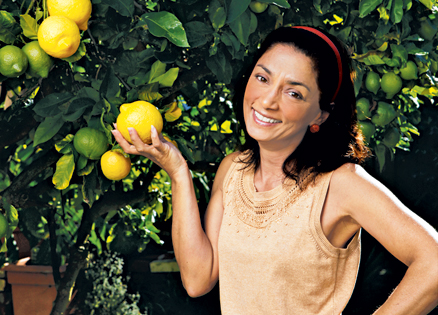
I grew up in Hawaii, where I canoed in the sparkling waters, hung my laundry in the sun and plucked ripe avocadoes. Being close to nature was like food for my soul. So I was thrilled to discover my new husband Werner’s house in California had a backyard full of birds, butterflies and trees—including our very own lemon tree! I imagined us picking and cooking with its juicy fruit, and taking shade under its leafy limbs.

Then I went to take a closer look at the tree. What a mess! The branches were twisted and tangled and sagged so low to the ground that no sunlight broke through. It sat surrounded by patches of dirt. Steel rods and cords had been used at some point to hold up the branches, but now the cords were embedded in the bark and strangling the tree. The leaves were bug-infested. Oh, and the lemons? Most of them were deformed or rotten.

Go For It In Article Ad

“Honey, I’ve tried to help that tree, but I think it might be a lost cause,” said Werner. Yet somehow I felt called to save the lemon tree. Maybe that’s because there was a time when I was a lost cause too.

Seven years earlier my first marriage ended and I moved from Hawaii to southern California. I stayed with friends and started my own business—a Polynesian entertainment company. We performed Hawaiian hula dances at Hollywood events. I loved all the attention we got—especially from men. I longed to find love again, and I decided I didn’t need God’s help. I had my dat­ing life under control.

Only I didn’t. I dated all the wrong guys. Desperate to find true love, I signed up for an online matchmaking service. That’s where I found Werner and we set up a date…but I canceled on him because the night before I’d gone to dinner with a guy I was sure was Mr. Right. Turns out he was Mr. Not Even Close. One night I found myself praying, God, I was so wrong. I need you. I swore off dating. I decided it would be just God and me for a while.

A few weeks later a message popped up in my inbox. “Wishing you a Happy Thanksgiving. Fondly, Werner.” I felt my face flush. Werner had been so gracious when I canceled on him at the last minute. I wanted to see him, but I couldn’t bring myself to date again. No way. Still, that night I prayed about it.

I woke the next morning to a voice that was loud and clear. “Respond to him,” it said. Deep in my heart I knew that God had sent Werner to me. I replied to his e-mail. Soon we met in person and fell in love, and within six months we were married.

I felt healthy and whole—and incredibly blessed. God had given me a second chance. Couldn’t I do the same for one of his creations?

So I began to work on the lemon tree. A little at a time so it wouldn’t go into shock. One by one I trimmed the heavy-laden branches. As they fell to the ground, they reminded me of all the bad choices I’d made in the past falling away. Later I released some of the cords. I couldn’t help but think about how I’d been released from being so foolish and freed to reconnect with God.

One day I laid my hands on the tree and said a little prayer. Lord, this lemon tree is a lot like how I used to be—it’s damaged and hopeless and needs lots of love. Please help me bring it back to life.

A few months later I noticed something: New fruit had grown in and this time all of the lemons were whole and healthy. The branches had opened up, letting sunlight through.

Today, seven years after I first saw that sad, mangled lemon tree, it stands tall and magnificent. It grows juicy yellow lemons that Werner and I cook with and put in gift baskets for neighbors and friends (pickled lemons are the biggest hit). And its strong limbs are covered with shiny green leaves, perfect for taking shade under.

“I can’t believe how far that tree has come!” Werner marvels. “You did an amazing job.”

It wasn’t just me. The lemon tree and I are living proof that anything can grow and blossom in the hands of the One who nurtures us all.   

Download your FREE ebook, Creativity and Personal Growth: 7 Inspiring Stories On How Crafts Can Change Your Life