Embrace God's truth with our new book, The Lies that Bind

Learning to Wait on God’s Perfect Timing

“I can’t believe you got another one!” I said, as I watched my husband skillfully reel in another largemouth bass. “What is that, 19 or 20 fish for you?”

“I don’t know,” he said, throwing the bass back into the lake. “I’m not keeping track.”

Witnessing Heaven In Article Ad 827x123

Maybe he wasn’t, but I certainly was. Jeff had caught 19 fish that day, and I’d caught nada, nothing, zilch, zippo, zero. (Unless you count the giant lily pad I had hooked earlier in the day.)

It was the worst day of fishing I’d ever had!

Now, Jeff is quite an accomplished angler. He could catch a fish in the worst conditions, so I’ve learned that if I observe him and do exactly as he does, I will catch fish. It ALWAYS works.

​Until last Saturday…

I was using the same bait as his, casting the same places he cast, wiggling my line when he wiggled his line, and yet the fish seemed to jump onto his hook and shun mine.

It just didn’t make any sense.

It had been a long, hot, sweaty, non-fish-catching kind of day for me, and I was tired.

The sun had already gone down by this point, and the night sky was quickly upon us. As Jeff put away his fishing pole and cleaned up the boat, I continued casting.

I so wanted to catch a fish.

Then, just as I was about to give up, I felt a tug on my line.

It was a big tug!

I had a fish!

I quickly set the hook and began bringing in that fish.

“That’s it!” Jeff encouraged. “He’s a nice one.”

Yes, he was.

He wasn’t a monster, but he was the biggest fish of the day, and I had caught him!

Reflecting on my catch as we drove home that night, I couldn’t help but think about the day’s events. I had fished my heart out, following Jeff’s example all day, and yet I hadn’t even had a nibble on my line until the very end.

That’s just how it goes sometimes—on and off the lake.

I learned several important truths that afternoon. First, you have to celebrate with others when they have victories in life while you wait for your breakthrough to manifest.

Second, you can be doing everything right and still not have the results you desire exactly when you desire them, because everything happens in God’s timing. And, when God brings it to pass, it’s so worth the wait.

READ MORE: WHERE’S YOUR FOCUS?

And, third, it’s important to enjoy the journey on the way to where you’re going. Though catching the fish was amazing, spending the day on the lake with my handsome hubby was equally wonderful. Oh, and fourth, Jeff is the most patient man in the world.

Pray this with me:

Lord, help me to keep a good attitude and celebrate with others when they triumph. And, Father help me to trust You even when it looks like nothing is working in my life. Help me to not give up before I see the victory.

And, lastly, Lord help me to live in the moment and enjoy the little things in life. Help me not to be so goal oriented or competitive that I miss out on the blessings all around me. I love You, Lord. In the Mighty Name of Your Son, Jesus, Amen.

Learning to Forgive Like a Rwandan

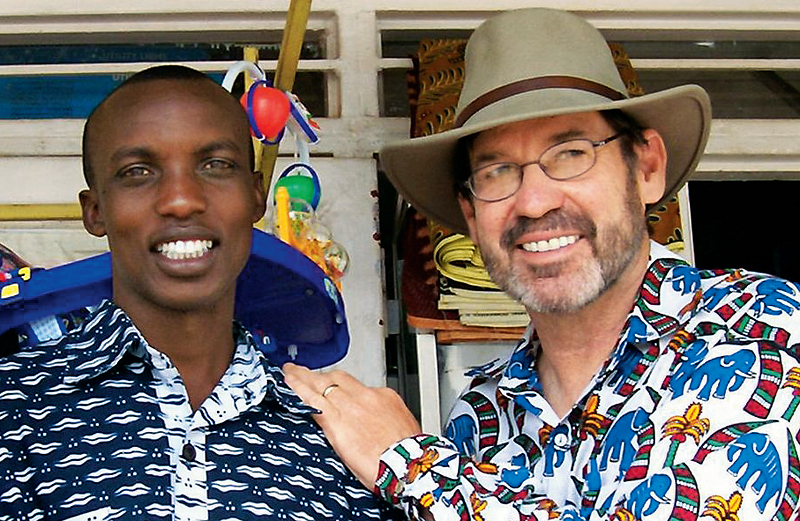
The airplane descended toward Kigali, the capital of Rwanda, in Central Africa. My heart sank with it. I’d never felt this way before when visiting the land I’d grown to love. All the other times I’d been to Africa–so many!–I’d been filled with anticipation.

My wife, Kim, and I had worked for years as missionaries, founding and supporting a ministry to college students in the university town of Butare. We’d made close friends. The ministry had grown. We’d felt as though we were doing God’s work, as though we were exactly where he wanted us.

This visit was different. In my luggage I carried a metal plaque, which I planned to place at a roadside about halfway along the 100-mile route from Kigali to Butare. The plaque read: “On this road, on July 31, 2010, Dr. Kim Hyun Deok Foreman suffered a fatal car accident. She died in Kigali at King Faisal Hospital on August 3, 2010.”

It was summer again now, exactly a year since the accident. One year since Kim, my beloved, faithful partner for 36 years, was suddenly, horrifyingly taken from me.

What was worse was that in my mind, the accident wasn’t some random tragedy. Franc Murenzi, the Rwandan director of our ministry, had been driving Kim and me from Butare to Kigali to catch an airplane. Franc had fallen asleep at the wheel. Our car drifted in front of an onrushing bus.

Franc awoke in time to jerk the steering wheel. The car flipped, throwing Kim from a window. She was bloody and unconscious by the time I was freed from my seat belt and managed to stumble to her side. She died of massive head trauma three days later.

I never forgave Franc. Through a mutual friend, a local pastor we both knew, named Paul, I fired Franc from the ministry and told him I didn’t want him at Kim’s funeral in Kigali.

Franc came anyway, his head wrapped in a huge bandage. He gave a rambling eulogy about how the accident was just an accident, and how he’d considered Kim a second mother and was devastated. He never apologized. I sat there fuming. I’d barely spoken to him since.

The plane was over Kigali now and I could see the airport. I thought back to my first time in Rwanda, almost a decade before. Coming here had been Kim’s idea. She’d already been once before, with a group of Korean missionaries.

She’d returned home to California full of excitement about the country and the wonderful people she’d met. That was Kim. Excited about life. Eager to learn new things.

She was a university professor in San Francisco. She’d encouraged me to go into the ministry after I’d spent most of my life in the Army. We’d met while I was serving in the Peace Corps in Korea.

She was a young schoolteacher then. She helped me with my Korean. I helped her with English. We spent hours drinking tea, talking. Falling in love. We always had something to talk about. Kim never lacked for words.

But what would I say now, back in Rwanda? The problem was Franc. Amazingly, no one seemed to understand why I’d fired him. Pastor Paul even warned me at the airport after the funeral that what I’d done was causing division in the ministry.

“Some people are on your side and some are on Franc’s side,” he said. “Chris, please listen to my words. If you want to return to Rwanda and continue your work here, you must learn to forgive like a Rwandan.”

For a moment his words took me aback. It’s impossible to be in Rwanda without being reminded everywhere of the nation’s brutal genocide, those years in the mid-1990s when tribes massacred one another in escalating waves of ethnic hatred.

In the years since, the country had somehow managed to come back together. But this was different. This was a car accident, not a civil war. It was personal. Kim was my wife. The accident was someone’s fault and he’d never apologized or acknowledged his responsibility.

“When your wife is killed through someone’s negligence and he won’t say sorry, then we can talk about this,” I said to Paul. “Franc deserves to be prosecuted. I’m letting him off easy.”

Paul shook his head sadly. “Chris, my wife was killed,” he said. “During the genocide. You know that. And I have forgiven. I had to. You must too.” I loved Paul. We’d grown close working together. But I could not bring myself to follow his advice.

Back home in California, I threw myself into work. Kim and I had been building a permanent home for our ministry in Butare. The Light House would be a gathering place for Christians at the university and also a small Bible college. We’d bought land and the foundation had been laid.

Now I needed to raise funds to complete the building. I knew that that’s what Kim would have wanted.

I raised the money, even using part of Kim’s life insurance and retirement savings. But construction was complicated by the situation with Franc. People we’d worked with before didn’t want to work with me anymore.

I heard about their complaints through Paul. “They are saying, ‘How can he claim to be a pastor and treat Franc this way?’” Paul told me.

The ache I felt in my heart seemed answer enough to that question. But I began to wonder. What if Paul was right? Certainly it would make everything easier if I could just forgive Franc.

But I missed Kim so much! I kept talking to her in our empty house. I listened for her voice every morning when I awoke. I couldn’t get past the pain of her loss. How could I forgive the man who’d taken her away?

At last my doubts, and the dissension in Butare, grew too big to ignore. At a monthly breakfast I held for local Baptist pastors, I bared my feelings to my friend John, a pastor who’d held a memorial service for Kim in California.

“I’m glad you brought this up,” said John. “I’ve been wanting to say something for a long time. Chris, you are being tested. I know you loved Kim. But forgiveness is love at the testing point.

"You have to ask yourself what kind of love you have in your heart. If it’s Christian love, you’ll forgive Franc. You’ll go back to Rwanda and forgive him.”

That’s not what I wanted to hear. John’s advice was exactly the same as Paul’s. But I just couldn’t feel forgiveness toward Franc. Not through all my pain. And isn’t that what forgiveness is, a change of heart?

Yet I had to do something to make peace in Butare. For Kim. The ministry had meant so much to her. Through Paul I sent word to Franc that I would hire him again to oversee the building project. I made plans to travel to Rwanda to smooth over any remaining disagreements.

There would be no way to avoid Franc. But I would deal with that then. Maybe by that point my feelings would have changed.

The plane shuddered as the wheels hit the runway. My stomach clenched. Franc was meeting me at the airport to drive me to Butare. He would be standing there as I got off the plane. What would happen when we saw each other again?

I spotted him in the throng. He saw me too. Drawing closer, I saw the terrible scar from the accident on Franc’s head. We shook hands. He asked about my flight. We walked to the car.

Conversation floated along, mostly about the project. It felt weird, as if someone was talking for me. No mention of the accident, like it never happened!

I had informed Franc about the plaque, and he’d made arrangements for us to hold a small ceremony at the site of the crash a few days later. Some people from the ministry would be there, as well as locals who’d helped at the accident scene.

We drove to Butare and checked on the building project. Franc had done a good job. The day of the ceremony we got back in the car and went to the accident site, that stretch of road I’d seen so many times in nightmares. How often had I replayed the moment in my mind?

Franc stopped the car. People were already there, gathered at the roadside. I got out. My legs felt weak. I could still see the gouges in the pavement from where the car had flipped.

I walked toward the crowd. There was the elderly man who’d used scissors to cut me free from my seat belt. There were the people who’d helped Kim into the ambulance. That’s the amazing thing about Africa, I thought. What makes it so different from America.

In Africa people don’t keep to themselves, so preoccupied with their own private goals. They live in community. They instinctively come together in crisis. They had for thousands of years.

These people had come together for Kim and me. And they’d come together in a far greater, almost unimaginable way after the genocide. Maybe some of them were from different tribes. Maybe they had relatives who’d slain one another.

I laid the plaque on the ground, then stood up to say a few words. All of a sudden the weird feeling that I’d had in the car, the feeling of someone else talking for me, evaporated. I was returned to myself, as if born again through all the pain of losing my beloved Kim.

Pastor Paul’s words seemed to ring in the air: Forgive like a Rwandan. Did I even know what those words meant?

Here I was, a Baptist pastor. A missionary. And yet these Rwandans, pierced by a national grief I could hardly fathom, were practicing Christian love just by gathering in this place today. They didn’t wait for a change of heart. They simply forgave. And the act of forgiveness changed them.

I said a few words about Kim. Then I turned to Franc. I looked in his eyes. “Brother Franc,” I said. “Forgive me for my hard heart. I know the crash was an accident and you didn’t mean to hurt Kim. I forgive you for everything.”

Franc threw his arms around me and we held each other tight. Then I hoisted his hand in the air. “This is my friend!” I cried to the crowd.

I let the words sink in as everyone around us erupted into applause. All those years ago, Kim and I had come to Rwanda as missionaries. But at that moment—no, from the very beginning—it was Rwanda ministering to me.


Download your FREE ebook, The Power of Hope: 7 Inspirational Stories of People Rediscovering Faith, Hope and Love

Learning from Life’s Detours

Trust in the Lord with all your heart, and do not rely on your own understanding; think about Him in all your ways, and He will guide you on the right paths. (Proverbs 3:5-6)

Did you even notice that life isn’t a straight line from point A to point B? Before our boys were grown, I had imagined their paths to manhood. I knew they wouldn’t face easy journeys, but I had no idea the twists and turns those journeys would take.

The Daily Bible Large Print relaunch with digital free gift in article ad

This was especially true when one son chose to enlist in the military rather than going to college. Of course we were proud of him, but with that pride came the fear of what that decision could mean.

Those fears were heightened as he served two tours in the Middle East. But I learned one thing. None of those challenges caught God off guard. He was the author of my son’s journey. He knew best how to bring our son into the fullness of his potential.

Click here to donate and bring hope and inspiration to our Armed Forces

As I look back on my own life, I see the same pattern. God used the scenic route—full of side-trips and detours to get me exactly where–and when–I was supposed to arrive.

God will drag us to places we think are miles out of the way, making our goals seem further from reach. Then boom, we round a corner and there stands what we were aiming for all along. Or He leads us down a path that leaves us bogged down for months. It’s only when we look back that we see the side-trip was the best way to get where we were going.

It’s often in the detours that our hardest lessons and greatest joys are realized.

Kerri Pomarolli and Her Faith-Filled Motivation to Pursue Comedy

In front of my daughters, I tried to act as if everything was okay. As if I was okay. But as soon as I saw them off to school, I did what I’d been doing every day lately. I holed up in my bedroom and hid under my covers, binge-watching all five seasons of Friday Night Lights, drinking Coke and eating a balanced diet of M&M’s and salt and vinegar potato chips.

I’d become a member of a club I never wanted to join—the Single Moms’ Club. It was hard to believe that just six months earlier, my husband and I had been on a Christian marriage tour, doing stand-up comedy together in stadiums and appearing on magazine covers and TV shows as “the funny couple of faith.”

But behind the scenes, we’d had some serious struggles. We’d fought and prayed and tried to make it work.

Now, with two young girls to provide for, I was sure that no one in any church circle would hire me. No one would want to hear from a divorced woman. They’d probably think I didn’t do enough or pray hard enough to save my marriage.

Lord, you called me to do clean comedy, I thought. To minister to people by making them laugh. Now I’m totally disqualified for that.

This wasn’t how I thought my life would turn out. My career was over, and I was turning (gulp)…40! My happy place was home with my family, my husband and kids. That was shattered, and I didn’t know how to pick up the pieces. And did I mention I had no other job skills?

I think I came out of the womb performing. I was a real theater kid growing up in Detroit, the daughter of an Italian-American father and a Southern mother from Alabama. My parents supported me all the way—dance classes, community theater, auditions for commercials. I got my B.F.A. in musical theater from the University of Michigan and spent summers studying at the British American Drama Academy in London and the Stella Adler Conservatory in New York City. I discovered that, at 5′2″, I was too much of a shorty to be a Broadway dancer. I would have a better shot at an acting career in Los Angeles because I looked so young.

My parents, who’d moved to Atlanta by then, helped me load my stuff into the family minivan and drove me cross-country to California. Right before they left, my dad drew me a map of L.A. with magic marker so I could get my bearings. I was so scared, I cried. Then I went out and got three jobs because I’m a Gen Xer; as extreme multitaskers, that’s what we do.

Everyone told me I had to lie about my age. Fortunately, even though I was 22, I could pass for 16. Maybe I could audition for Saved by the Bell. I found work on soap operas: General Hospital, Port Charles and The Young and the Restless. Sometimes the roles were so small, I didn’t have many lines, and I’d have to tell my mom my character was mute. I got a few parts in movies and sitcoms. I graduated from the improv program at Second City—that’s a big deal—and performed with a troupe on the main stage for a season.

I joined a great church in L.A. The more my childhood faith deepened, the bigger the gulf seemed to grow between the roles my agent wanted me to audition for and the person God wanted me to be. I said no to so many opportunities. I would imagine my parents sitting in a theater watching me onscreen. If they got up and ran out, the part wasn’t for me.

As my thirtieth birthday approached, I worried that I’d missed my chance. I’d come to Hollywood with dreams of fame and fortune and marrying Matt Damon. I was still looking for the one role that would make me amazingly famous.

One night, my agent emailed and told me I should reconsider doing a topless scene audition for a movie with a big star. “If you do this, Kerri, your career will really be going places!”

Except those weren’t places I wanted to go.

I plopped down on my bedroom floor and pulled out the Bible my parents had given me in first grade, the same one I had marked up with pink highlighting. I opened it to the book of Isaiah. It spoke of the rejection Jesus faced. Rejection—that’s something a struggling actor could really relate to.

“God, I don’t know where I fit in anymore,” I prayed. “I just want to use my gifts for you.”

The words stand-up comedy popped into my head. An idea that had to have come from God. I liked making people laugh, but I’d never considered doing stand-up, ever. Write my own material, stand in front of an audience all alone—with no one to play off of, as in improv—and hope my jokes landed? Terrifying!

“How can I reinvent myself now? I’m almost 30!” As if I needed to remind God of my age.

I could almost hear him laughing. Kerri, I parted the Red Sea. You think I can’t give you a career at 30? Buckle up, buttercup!

That’s how I came to say yes to God and yes to stand-up.

I took a stand-up comedy class and tried out my material at open mics. My jokes were all clean.

Yet somehow, three months later, I was at my first gig, standing in the narrow hallway of the world-famous Hollywood Improv, waiting to go on. The walls were lined with glossy photos of iconic comedians I’d grown up watching: Steve Martin, Richard Pryor, Martin Short and Adam Sandler. All of them had performed on this stage.

And here I was, number 23 in the lineup of 35 comics for the evening. I was petrified. Everyone who’d gone on before me had edgy material, dirty jokes. God, am I relatable? I wondered, pacing the hallway. Will this audience even like me?

“Up next, Kerri Pomarolli!”

The next thing I knew I was onstage, mic in hand. “Hi, I have an Italian Catholic dad. He raised me with good Italian Catholic values: guilt and intimidation!”

When the audience laughed, I knew I was hooked. Out of the whole lineup, I was the only one the manager asked to come back.

One night, I came back to the Hollywood Improv to showcase for some really big producers. There was a cute guy in the ticket booth who prayed for me. That was totally unexpected, but it really calmed my nerves.

Within a year of my first gig, I was making a living as a stand-up comedian. I toured with headliners like Bone Hampton and Sherri Shepherd.

Being as authentic onstage as I was offstage gave me opportunities to pray with and for other comics and for people I met at my shows. People who might never set foot in a church. The more I said yes to God, the more doors opened. I made 29 appearances on The Tonight Show doing sketch comedy. I wrote a book about my dating life and turned it into a feature film script.

Who knew my ex-boyfriends would be such great material?

Christian circles started inviting me to their churches to share my testimony. At that point, I didn’t even know what a testimony was. I had no idea if I was worthy of sharing anything about faith, but God kept reminding me—I can use you.

Remember that cute guy working at the Hollywood Improv who offered to pray for me? Turns out, he was an-other comedian who loved Jesus. We got married (sorry, Matt Damon) and had two adorable daughters, Lucy and Ruby. We schlepped our kids all over the world touring. It was a crazy life, and I loved it.

But things hadn’t worked out as we planned. Life threw some curveballs. Hiding under my covers, I was divorced and alone, feeling lost and broken. Hadn’t I said yes to the plans God had for me? After 10 successful years as a stand-up, why was he disqualifying me? Was I no longer worthy of serving him?

That’s when I heard an answer deep in my soul. I never disqualified you. You’re the one who bought that T-shirt. I love you.

Then God got tougher with me. Get back to work, Kerri. You think I can’t give you a career at 40? You have a whole new group of people you can reach now. Buckle up, buttercup!

I threw back the covers and got up. When my daughters came home from school that day, I didn’t have to try so hard to act as if I was okay. For the first time since joining the Single Moms’ Club, I felt as if I would be okay.

The first show where I talked about my divorce was a private event for women at a comedy club in Missouri. I paced backstage, as nervous as I’d been before my first gig at the Hollywood Improv.

I stepped to the mic, took a deep breath and opened with, “Well, I just went on an extreme diet. I lost 175 pounds—I got a divorce. I married for love the first time. Now I’m looking for a man with a pension who doesn’t snore.” The audience burst into laughter.

After the show, women came up and hugged me. Some even said, “The fact that you can laugh through your pain gives me hope that I can make it through what I’m struggling with.”

I should’ve known God would use my brokenness for good.

It’s been a decade since I became a single mom. I was afraid the life I loved was over, but actually, it’s just different—and better—than I could’ve dreamed. I haven’t had a date in 10 years, much to my mother’s chagrin. Still, my life and heart are full.

I travel a lot for gigs and bring my girls with me whenever I can. When they can’t come along, my ex-husband stays with them. He still takes out my garbage and is the best dad. We’re funny together at parent-teacher conferences and take great joy in embarrassing our daughters.

Ruby, 13, wants to be a comedian (and a baker in Paris). She walked on-stage with me in front of 400 people and said, “My mom is single. She’s looking for a man with a 401(k)! Having two comedians as parents means when I have a toothache, they say, ‘Chew on the other side.’” She killed it.

Lucy, 16, wants to study aerospace engineering and serve in the U.S. military as a test pilot. She really likes math and physics? Can’t she just tell jokes like the rest of her family? “Hey, Mom,” she said as we were visiting colleges recently, “will you send me care packages with homemade cookies?”

“No need,” I told her. “We’ll be roommates.”

Much as I love ministering to people at comedy shows, I love coming home to my happy place. You’ll still find me under my covers eating M&M’s and drinking Coke Zero, only these days I’m snuggled with my daughters watching British TV shows. I am truly content.

I just celebrated 20 years as a stand-up comedian and another birthday with a zero after it. I’ve appeared on Netflix, Amazon Prime, Hollywood red carpets, and I have a new Dry Bar Comedy Special. I’ve written film scripts for the Hallmark Channel and authored five more books. God is still opening doors that blow my mind. He is my agent. When he says go, I just pack a bag and say yes. I’m sure he’s having a good laugh about that.


Keeping Mice in Their Place…Outdoors

I opened the door to my boyfriend’s 1948 International grain truck without a moment’s hesitation. “Okay!” he called. “When I get the chain connected to the other truck, you go forward slowly until the other engine gets going!”

“Got it!” I said. I was eager to show Johnny I knew my way around the farm. Just because I worked behind a cosmetics counter didn’t make me prissy!

Whistle Stop Cafe In Article Ad May 2023

My dad was an entomologist. I’d grown up around creepy, crawly things he studied. They were all part of God’s universe. Not as pretty as angels, but just as necessary. I could handle anything a farm threw at me.

Johnny attached the chain to another truck that had been sitting in his barn through the long North Dakota winter. With spring and planting season coming on, it was time to get her running.

I slid my legs under the steering wheel, wishing I’d worn jeans instead of shorts. The seat was covered with dust and bits of insulation. It probably hasn’t been cleaned since ’48, I thought. The cab smelled of mothballs. I could feel a headache coming on, like the kind I got after spraying perfume all day long at the store.

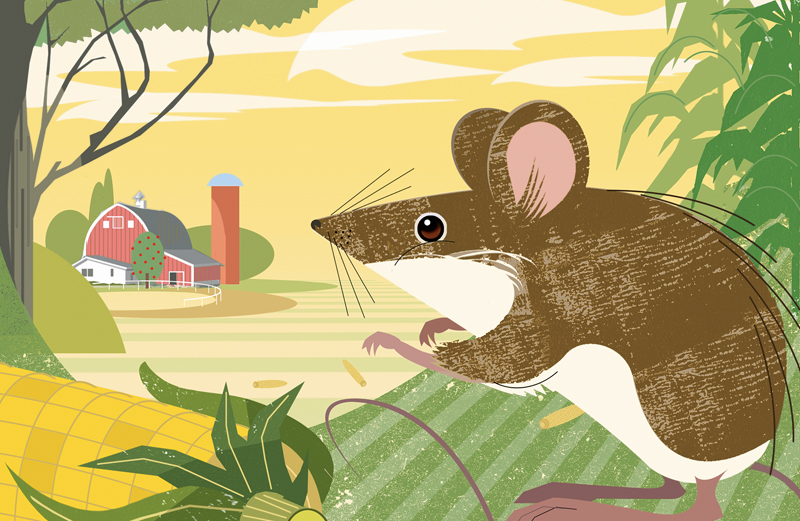
Johnny connected the chain, hopped in the cab behind me and gave me a thumbs-up. I started the engine and put the truck in gear. It eased forward, the chain tightening. I felt a tingling on my bare leg, like little feet running up my skin. Like a bug or a… Mouse! In my lap!

I slammed on the brakes and sprang out of the cab. “A mouse!” I screamed, my hands waving over my head. “It’s in the truck. Get it away from me!” I could still feel the critter’s feet on my skin!

“Sorry, there’s always mice on a farm,” Johnny said. “I put some mothballs in the truck, but nothing really works.”

“Oh,” I said, embarrassed. Maybe I was a little prissy after all. I glared at the truck. That little mouse had messed with the wrong girl! Clearly he didn’t mind the smell of mothballs, but maybe…

I pulled out some perfume samples from my purse and sprayed them inside the cab, under the seat and the dashboard, along the floorboards, everywhere. My dad had a favorite saying: “Build a better mousetrap and the world will beat a path to your door.” It was time to test out Dad’s theory.

There was a second of silence, followed by the sound of scampering feet. Ha! “They don’t want to sit in your truck when it smells like that,” I said. I couldn’t wait to tell Dad!

Johnny sniffed and made a face. “Neither do I.”

Perfume obviously wasn’t the best solution. Johnny didn’t like it, it was expensive, and the mice would come right back when it faded. I guess I hadn’t found Dad’s better mousetrap. “There’s nothing you can do about mice on a farm,” Johnny said. “Except get used to them.”

But over the next few weeks I couldn’t stop thinking about that mouse problem. Johnny was right. Mice were everywhere. I didn’t want to kill them. Maybe I wasn’t as fond of them as I was of Dad’s bugs, but they were one of God’s creepy crawlies just the same.

“Try experimenting with different things,” Dad said when I mentioned the incident over the phone. Dad was gravely ill and I knew he didn’t have much longer on this earth. “See what makes the best mouse repellent,” he challenged me.

The best mouse repellent, I thought as I hung up. But how?

Johnny got used to my fascination with repelling mice. We got married and moved to the country. I traded in my cosmetics counter for endless cornfields. I planted a huge garden and grew organic produce I sold to restaurants and at farmer’s markets.

On another patch I grew flowers and used the blooms to make potpourris and sachets, playing with scents. “Your potpourri smells wonderful,” a lady said at the market one weekend. “It drew me to your booth.”

“Thank you,” I said. Little did she know I was in pursuit of exactly the opposite—a scent that would drive something away: mice!

A lot of my profits went into my experiments. I bought all kinds of oils, peppermint and rose, cedar and balsam fir. I kept Dad posted on my progress. But I needed something to absorb the oil, to keep the aroma. Farmers wanted something that would last at least six months.

Pinecones were absorbent. A farmer could toss a pinecone into the cab of a truck and forget about it. I paid neighborhood kids to gather bags of pinecones and swabbed them with oil. Then I gave them to friends to test over the winter.

And they worked! The mice wanted nothing to do with them. Especially the pinecones soaked in balsam oil. There was just one problem. I’d used every pinecone for miles around. They just weren’t practical to use on a big scale. I knew the oil that worked best. I just needed something to hold the scent.

That spring, Dad died. Without his encouragement, I was all but ready to give up on my project. A massive summer hailstorm was icing on the cake. The cornfields, the garden—all of it was gone. Just like Dad. Just like my plans for a better mouse repellent.

Maybe Johnny was right. The only way to deal with mice on a farm was to get used to them.

I went outside where Johnny was picking up branches. All seemed hopeless. How would we recover? “We’ll get through this,” Johnny said. “This time next year we’ll have more crops than we know what to do with.”

It was true. Every spring brought rebirth, a new start. Farmers planting wheat. And soybeans. Cornfields as far as the eye could see…

Corn. The thought tickled my brain the same way that mouse’s feet had tickled my leg so long ago. How could I not have thought of it before? Ground up corncobs would hold the balsam scent for months!

I had the answer. It’d come to me at the very moment when it seemed there were no answers. When my life was at its bleakest. Not my idea. More like a connection, a stirring inside of me, an inspiration worthy of my father. Delivered on angel wings.

Today I sell my Fresh Cab mouse repellent pouches in all 50 states and Canada. People write to me with stories about mice and how happy they are to keep them outdoors where they belong. I read every one of them. Mice have become my favorite creepy crawly. (And my favorite kind of angel.)


Download your FREE ebook, Angel Sightings: 7 Inspirational Stories About Heavenly Angels and Everyday Angels on Earth

Katie Brown’s Tips for Thanksgiving Decor

Guideposts Video: Inspiring True Stories


Hi, I’m Katie Brown. Thanks for joining me today, because today I’m going to show you, well, one of my favorite things to do whenever I’m having a party and especially on Thanksgiving.

Journey With Jesus in article ad

I love to create a tablescape that makes people go “Wow!” and is super creative and yet made out of kind of humble things that aren’t too expensive, and projects that don’t take too long.
So today we’re going to set a splendid Thanksgiving table. Today, because I feel like it’s kind of Thanksgiving-looking, I’m going to go with some really easy-to-bend copper wire. I’m going to create it like a little pumpkin name tag, and you want to get one piece to start your pumpkin that’s, I don’t know, maybe a foot and a half foot long and it’s really easy, you don’t have to be a sculptor to do this.

It’s just make yourself a round circle, and it can be a little misshapen because what pumpkin isn’t? And then with your two tails, that’s where you’re going to wind it and create your leaf, and your windy stem at the top, and if it gets warped, you can kind of twist it and turn it until you get it just the way you want it. Kind of cockeyed like a pumpkin looks.

And then with the tail, I’m going to take a pencil and wind it around. So you get a little bit of a natural kind of thing out of it, and you’ve got a real abstract little pumpkin there. And then to write your name, I am going to cut off just a green leaf with a little bit of a tail on it, so it looks like it just naturally grew on the top of my pumpkin, and with a paint pen. I’m just going to write the name of my guests.

In this case, it’s my mama, who we call Meg, which If you spell it backwards, it’s Gem, and she will never let you forget that her name is Gem. You could probably use a Sharpie for this or any kind of magic marker you have, and then I’m just going to kind of, oh, so gingerly put that leaf. And I’ve got a quick and easy way to let my mom, Gem, know where to sit. And it’s a little piece of art and it’s a little, little squash, pumpkin, apple, whatever kind of veggie you want. And that’s going to go right on my plate.

You might have some leftover pumpkins from Halloween, or you might walk into any of your grocery stores, which are selling pumpkins right now, and they make a great addition to any tabletop, and they last a lot longer than fresh flowers. You just want to dress them up a little bit. And I am going to do that by using some ribbon.

I’ve picked a color scheme that I think is kind of fun, it’s like orange, pink, and brown. I am using just thumbtacks, you can also use copper nails if you have them or upholstery, but they come in all kinds of great coppers and golds, which is kind of perfect for this project.

And you can choose any color scheme you want, you know, you could stick with all browns. You could do all kinds of maroons and oranges, and you can see that these thumbtacks and copper tacks kind of add a decorative bling to my pumpkin. Fun, right? But I’m not done, because these are going to go on the same table as my name cards I just made. I want to somehow incorporate that copper wire into the design of these pumpkins. And the way I’m going to do that is I’m going to take that pencil again and wrap, kind of make a tail, like a little branch for my pumpkin. And all you’ve got to do is just drive the end of your copper wire, right to the top of your pumpkin. And it looks almost like a natural little, little branch growing off the top of your pumpkin. And you’ll see when I put that on my table, it’s going to tie it in.

I like to do something fun with my silverware rather than just set it. So I think it’s fun to kind of form an X, X marks the spot, and I’m going to again use ribbon because I want to tie this all in. Yes, I am the ribbon lady. I am that person that cannot walk out of a craft store if there’s a bowl or a basket of ribbons that are for sale, I grab them. I grab all kinds of ribbons. I buy fake flowers, yep. I buy them, If they’re on sale, I buy them. Ribbons, I buy them, even if I don’t need the color. Someday I’m going to use it.

And just tie them in an X. I mean, you’ve heard of napkin rings for your napkins. Think of this as kind of a napkin ring for your silverware only It’s a tie. So now I have three kind of festive things to bring to my tabletop. I have my name cards, I have my pumpkins, all dolled up, and I have my X marks the spot. Now I’m going to put it all together and you’re going to see it’s a show-stopping tablescape that is perfect for a fun and funky Thanksgiving. Happy Thanksgiving from my house to yours.

Katie Brown’s DIY Gift-Wrapping Tips

Guideposts Video: Inspiring True Stories


Hi, I’m Katie Brown and thanks for joining me today, because today I want to walk you through a very simple, but pretty festive way to wrap up your gifts this holiday season. And this is a really fun project to do with your kids.

Light for Life NASB Study Bible in Article

All you’ve got to do to make this wrapping paper is get yourself a big roll of white butcher paper, and you can get this at any kind of butcher shop or arts and crafts. I got it at a local grocery store who sells big to a lot of restaurant supplies.

And then I go to town with some cookie cutters. I take some cookie cutters, I take some painters pens, and I go along the outside kind of rough, kind of like painterly, or you can do it really specifically, if you want. Go all the way around the cookie cutter and kind of center the cookie cutters, wherever you’d like them to create kind of a pattern on your white package and color it in, if you want. Do some stripes on your candy cane or some ornaments on your Christmas tree, or maybe a star is the very tippy top of your Christmas tree.

And once you’re done with that, because I do a lot of shipping, I can’t do big fancy bows, plus ribbon can get expensive, so just get a collection of string. I have some green string, some red and white string, which is perfect for the candy canes. I have some orange ones, I have some yellow ones. It’s just little strings and rope, and I go a whole bunch of times around. You don’t even have to be a good bow tier and just tie it in a knot and voila, bada boom, bada bing, you got a gift wrap and I have some others here that are all finished and ready to be shipped out.

How much fun are these homemade, easy-to-make, cookie-cutter gift wraps? This is also a really great thing to do with your kids. You can roll out that white paper and put down all your different cookie cutters and they can pick out which holiday festive cookie cutter they want to trace. It’s quick, easy, so fun. My kids love it. Merry Christmas from my family to yours.

Karen Kingsbury’s God-Given Talent

The following story first appeared on Bookish.com, and is used here with permission.

Karen Kingsbury's recent bestselling novel, "The Bridge," is arguably her most bookish novel to date—the story is set in a bookstore. And while it's a work of fiction, Kingsbury has previously used inspiration from her personal life in her novels, even going so far as to use her daughter Kelsey as the cover model for her Bailey Flanigan series. In the Kingsbury's upcoming novel, "The Chance," the author once again focuses on the power of words as she tells the story of a couple that writes letters to each other. Kingsbury has talked about her early career as a journalist and author—now she reveals the person who inspired her to work with words in this exclusive essay for Bookish.

Witnessing Heaven In Article Ad 827x123

I gave up the idea of being a writer the summer before I started college.

By then I’d been writing since I was five years old. Dr. Seuss had opened the world of words to me and the Christmas of my kindergarten year I memorized "How the Grinch Stole Christmas." I couldn’t get enough of stories and storytelling. My little friends wanted dolls and dress-up clothes that year. I wanted paper. Lined paper. The kind that came bound in a book, soft and off white with faint blue lines, paper screaming for a little girl to start at page one and dream in the open spaces.

Childhood passed and a box of short stories about horses and princesses and magical lands gave way to my days at Columbus Middle School in the San Fernando Valley. I wrote for the Full Sail magazine and by the time I was in eighth grade, half the annual publication was written by me.

My dad would read one of my poems or stories and his eyes would well up. "That’s beautiful, honey," he’d tell me. "One day all the world will know what a gift God has given you."

Sometimes I’d dream with my parents about being a novelist, writing books that everyone might read. My dad was always sure it would happen. "Someone has to be the next bestselling author," he’d tell me. "It might as well be you." They were words I held on to, words that encouraged me through high school to keep believing that writing was my calling.

But somewhere along the months of my senior year, I became disillusioned. Writing books seemed like a far-off fairy tale, like something I would’ve written about when I was a kid. I became more aware of the crazy injustice in this world—bad guys getting back out on the street and doing harm again and again. I changed my mind sometime that spring.

"I’m going to be a lawyer," I told my parents. "I’m not sure about writing anymore."

My dad’s face fell, but he kept his smile. "Whatever you do, you’ll be brilliant at it." He hugged me and gave a firm nod. "Everything will work out the way it’s supposed to."

More little words. 

I began taking classes at Pierce Junior College—all my parents could afford—bent on a legal profession. But one of my first classes was Journalism 100—an option that met my freshman English requirement. It would be an easy "A" so I could focus on classes I wasn’t strong in—math and science. A few weeks into the semester, the professor assigned us a story about a fictitious apartment fire. He gave us the facts and we had a few days to write a compelling news story. The class met in an auditorium with nearly 100 kids so when I turned in my story I didn’t expect much feedback.

Professor Bob Scheibel taught Journalism 100 that semester for Pierce College. The man was a gruff veteran journalist with wild gray hair and dark glasses that slid down his nose. He didn’t talk, he barked, and from the beginning his expectations were clear. "One gross factual error on your news story and you’ll fail the assignment." He meant it. I remember turning in that first paper sure that I had the facts right. No automatic fail for me.

But a few days after, toward the end of class, Bob Scheibel put his hands on his hips and stared down the kids in the auditorium. "Karen Kingsbury?" he pushed his glasses up and scanned the room. "Raise your hand!"

Adrenaline rushed through my veins. I raised my hand, my cheeks suddenly red-hot as every face in the room turned my direction. I could barely speak. "I’m here."

"Good!" The word was a guttural shout. "You’ll come up and talk to me after class lets out."

He spoke a few closing remarks for the class but I heard none of them. Questions raced through my mind, keeping time with my pounding heart. What had I done wrong? Had I gotten the facts mixed up? Did I miss something critical in the details? By the time the class let out five minutes later, I felt sick to my stomach. Slowly, I made my way to the front of the room where Professor Scheibel was organizing a stack of papers.

I stood there, my knees knocking. "Sir? You wanted to speak to me?"

The professor spun around, his look intense. He took three quick steps closer to me and stopped. His eyes met mine with great seriousness. He pushed his glasses back up his nose again. "You’re Karen Kingsbury?"

"Yes, sir." I wondered if I might faint right there at the front of the classroom.

He pointed at me. "Two things." There was no hesitation. "First, you will never, ever stop writing." The hint of a smile lifted the corners of his lips, though his tone stayed strong. "Second, you will report to my office tomorrow morning. I’m placing you on staff of the school newspaper."

I blinked a few times. "Yes, sir."

"Karen," his voice softened just a little. "You are a very, very good writer. Don’t ever forget that."

I left Journalism 100 that day a different person. 

My back felt a little straighter, my steps came a little quicker. I was a writer. Professor Scheibel had told me so. The next day I did what he said. I reported to his office and was led to the staff room where students produced the school’s award-winning newspaper. Professor Scheibel handed me a press credential and a feature assignment. 

My head spun with the craziness of it all, but my parents weren’t surprised. They had been praying that I would come to my senses, that I might realize sooner than later that I couldn’t just stop writing. There would be other lawyers, but God had created me to tell stories, to share words with people that might touch their hearts and change their lives.

Two years ago, after my first #1 New York Times bestseller, I found Bob Scheibel—retired and in his twilight years still living in the San Fernando Valley. I called him and he easily remembered me. He congratulated me on my writing success, and I told him my memory of that long ago day. "I wouldn’t be a writer if you hadn’t said those words," I told him. "Thank you for caring."

I know Professor Scheibel was touched, because a slight sniffling sound came over the line and after a long moment he thanked me. "I had no idea."

That’s the thing with little words. The words my parents said to me growing up, the words Bob Scheibel said to me that day in his Journalism 100 class—they changed my life. We never know the difference we might make if we take the time to encourage someone. You’re reading this because it’s true.

Little words can make a big difference.

The other day, a young girl named Chloe came up to me at one of my events, eyes wide. "I want to be a novelist like you one day," she told me."

I just smiled and said the words that are still as familiar as my name. "Well, Chloe, someone has to be the next bestselling author! It might as well be you."

Little words.

Justice Tempered by Faith

I entered through the back entrance of the courthouse, my head down as I walked the hall toward my chambers. It was one of those days when I kept asking the Lord, Are my decisions helping individuals? Am I making a difference in their lives?

My mind replayed yesterday’s criminal docket-call, three hours of organized chaos where defendants, representatives for the State of Ohio and defense attorneys argued, pleaded and bargained for the sentences they felt were just. Always a trying experience, but especially so the day before Thanksgiving.

God's Constant Presence In Article Ad

Back home that morning I had laid out most of the ingredients I’d need for the special cake and three dozen rolls I’d promised to make for our multigenerational dinner at my sister’s house. But that was only a reminder of the defendants I had sentenced to spend their holidays incarcerated.

Being separated from their families and friends could spark them to change their lives. No doubt, then, I had an impact on folks’ lives. Yet was it a positive one?

I’m proud of the way I’ve served the citizens of Montgomery County, Ohio, as a common pleas court judge for the past five years. Each day brings different issues and challenges. When it comes to sentencing, I try to fashion a judgment that fits the unique circumstances of each defendant.

Many are decent people who’ve just made bad decisions. For that reason, I start each morning with a prayer: “Give me the wisdom to help the people I meet change their lives for the better.”

It’s rare, though, to find out if I succeeded. More often, I find out their fate only if they return, charged with another crime.

I entered my chambers and glanced at the papers spilling from my inbox. What a mess, I thought, picking up the calendar my bailiff Stella had prepared. I had several hearings scheduled for that Wednesday morning, but maybe I could clear my desk and sign some documents before we got started.

Outside my chamber, I heard Cheryl, my video reporter, and Moira, my staff attorney, discussing the day’s work, which defendants’ cases would go to trial and which ones would plead. Amid the friendly banter, another voice spoke up—familiar, but I couldn’t quite place it.

“May I speak to Judge McGee, please?”

“What’s your name and what is this regarding?” I heard my video reporter ask the woman.

“My name is Erica. I’ve got something important to tell her.”

Erica. Now I knew who it was. A young defendant I’d met during my early days as a judge. She’d entered the courtroom with her face scrunched into a frown, her hair wild and unkempt, with an attitude to match.

On the day of her sentencing, I received a written case history. Dropped out of high school. Trouble with drugs since her early teens. A mother to a young girl and on public assistance. She was pleading guilty to yet another possession charge.

I struggled with the sentence to give Erica. Based on what I had read, prison time didn’t seem appropriate. Look at her; try to see the face of God, I thought. “I’m going to leave you in the community. I’m giving you probation,” I said.

She seemed pleased with that. But her smile quickly faded when she heard the three additional sanctions.

First, she was to return in 90 days to show that she was serious about being a law-abiding citizen. Second, she was to write a two-page report about her goals and objectives for the next five years. Third, she was to get her General Equivalency Diploma, her GED.

“Of all the sanctions, I will look most strongly at the last two,” I told her. “If these conditions are not met, I’ll have no choice but to send you to jail.” Erica scowled so fiercely that it looked like her two eyebrows had become one. “But if you work hard and set a good example for your daughter, I know you can do anything you set your mind to.”

“Your honor,” her attorney told me afterward, “you ask too much of our clients. For them, long-range planning is figuring out what to eat for dinner.”

“My decision is final,” I said. And I meant it.

Within weeks, I received Erica’s two-page report. Amid the misspelled words, she told me that she dreamed of owning two businesses—a catering company and a beauty salon. She wanted her daughter to graduate from high school and go to college. She wanted to help her family do better in life than she had.

“Simply reaching the end of the day is hard,” she wrote. “I’m not sure how I made it this far.” It was heartbreaking but honest.

The last time I’d seen Erica, at her 90-day hearing, I almost didn’t recognize her. Gone was the scowl that hid her beautiful almond eyes. She was properly groomed with her hair cut into an attractive style. Her probation officer issued a glowing report.

“I like my GED classes,” Erica said. “Everyone wants to help and my teachers make things easy to understand. I still don’t get math, though.”

Inwardly I smiled. I’d struggled with math in school too. Outwardly, I remained stern and reminded her that the GED was a requirement.

A year and a half later, her probation officer thought she was doing well enough to recommend ending her probation early. However, I nixed the idea. She hadn’t passed the math portion of her GED yet.

Then the economy tanked. The state had to make cutbacks—and the money required for Erica’s training and probation monitoring was no longer there. With great reluctance, I finally agreed to terminate her probation.

Periodically, I heard from people who knew Erica. I learned that she was living a positive life, although she still hadn’t gotten her GED. That worried me. Then I heard nothing.

Now Cheryl ushered Erica into my chambers. She looked radiant. “Do you remember me?” she asked hesitantly.

“Of course I remember,” I said. “But I almost didn’t recognize you.”

“Judge,” she began, “I have something to tell you…I got my GED!”

The squeal that I heard came from my own mouth. I didn’t realize I could make a sound like that. A very unjudgelike thing, I suppose. Tears stung the back of my eyelids as I rushed around my desk to give her a hug. “Oh, Erica, I’m so proud of you,” I said. “Tell me all about it!”

“It was really hard,” she began. “But I didn’t give up. I just kept trying and trying until I finally passed. I’m the very first person in my family to get a diploma! Everyone comes to me now with questions or for advice. And my daughter saw how hard I worked in my studies and got serious about her classes. She’s going to graduate from high school next year. Can you believe it? We’re going to go to college together!”

“I’m so glad you came and shared that information with me today,” I said. “What made you stick with it after your probation was over?”

Erica looked hard at me. “Because you said if I worked hard, I could do anything,” she said. “I wanted my daughter to be proud of me.”

Give me the wisdom…. In Erica’s case, it seemed that God had.

“I gotta go,” Erica said. “Someone I know is in court today and I want to be there for her. I want her to know that if I can make it, she can too.”

With a wave of her hand, she rushed out of my office. I sat at my desk. In front of me was a day’s worth of motions to decide and cases to review. A job to do. And I still had a cake and three dozen rolls to bake waiting for me at home, don’t forget.

But now it didn’t seem like such a heavy workload. Thanksgiving had arrived early.


Download your FREE ebook, A Prayer for Every Need, by Dr. Norman Vincent Peale

Joy Comes in the Morning

Every time my husband, Wayne, and I go on a trip, he grunts and groans as he lifts my heavy bag, then asks, “Do you have to bring all these books with you?” It’s a rhetorical question. After some 40 years of marriage, he knows the answer. Yes, I do. Those books are how I start my day. Every day.

I’m up at 4:00. Before I head to the office, I sit at my kitchen table, read, study, pray and seek the Lord.

Light for Life NASB Study Bible in Article

I have succeeded beyond my wildest dreams as a writer, with book sales topping a hundred million. There’s even a TV show, Hallmark’s Debbie Macomber’s Cedar Cove, based on one of my book series (I’m thrilled to say that it is now going into its second season).

But I couldn’t have written all those books without the ones I start my day with.

First, there’s the Bible. I read it cover to cover every year, marking and underlining passages. Amazingly, I always find some verse that speaks to me in a new way or one that speaks to me for the first time. I never feel as if I am rereading the Bible. I feel as if I am reading it anew.

Last winter I underwent what should have been a routine medical procedure and ended up in the ICU for a week with complications. Then Wayne fell, breaking his arm in two places and tearing his rotator cuff. What’s more, I came down with shingles.

“I’m beginning to feel like Job,” I moaned. No sooner had I uttered the words than I seemed to hear the Lord say to me, But Debbie, don’t forget the great lesson of Job.

I grabbed my Bible and there it was: “After Job had prayed for his friends, the Lord restored his fortunes and gave him twice as much as he had before” (Job 42:10).

At the end of Job’s horrific suffering, he was overwhelmed with blessings. I held on tight to that lesson and good health finally returned to Wayne and me.

Then I turn to my Prayer Journal, the place I put my deepest wishes, the secrets of my heart. There were times in my life when I could tell only God what I yearned for.

He helped me overcome the negative voices I heard in my head, like what my third-grade teacher said to my mom: “Debbie is a sweet little girl, but she’ll never do well in school.” Or the one who exclaimed, “You can’t write, Debbie. Why, you can’t even spell.” (Eventually the Lord blessed me with spell check.)

All those years I prayed about my weight, I could hear the voice from my childhood that said, “Let’s go straight to the Chubby Department, Debbie. They’re sure to have your size there.”

I keep from focusing solely on myself by picking three people to pray for every year. At some point during the year, generally around their birthdays, I give them a Bible, with a letter describing how I’m praying for them.

The true value of a prayer journal is that I can look back over the years and see a record of God at work in my life and in the lives of others.

Every week I pick a different Bible verse to memorize and I put it down in my Journal of God’s Promises. Impressive, right? Okay, so sometimes I forget verses as I learn new ones, but many of them are inscribed on my heart.

For instance, if I’ve ever signed a book for you, you’ll notice that under my name I wrote, “2 Tim 1:7.” Whenever I feel afraid or doubtful I repeat that verse: “For God has not given us a spirit of timidity, but of power, love and discipline.” I have whispered the words so many times they are a part of me.

Years ago, when I was struggling to find God’s purpose for my life, stymied by obstacles and my own failings, I was in the hospital to visit an ailing cousin and I got totally lost. It felt like a metaphor for my life. I muttered that verse from II Timothy.

Finally I stopped a doctor and asked how to find my cousin. He pointed to a door that was marked Absolutely No Admittance and hurried off. I was confused. Had he made some mistake? But what did I have to lose? I was already lost. I pushed open the door. It led me to just the right ward.

That experience became a symbol to me of how I would choose to walk through life, not with “a spirit of timidity but of power and love.” I would walk boldly through the most impossible doors. Claiming and clinging to God’s promises.

Of course, I keep a Personal Journal. Always have. In my opinion, a journal or diary is indispensable for a writer. I can record a snippet of what someone said or what they wore for later use in my novels. It’s a way of capturing life, of preserving its details.

Not long ago I looked through the diary my mother kept during World War II. Three days after she and my dad were married, he was on a troop carrier to Europe. Mom wondered if she would ever see him again and hoped he knew he was always in her prayers.

Probably through the help of his younger sister, Gerty, he had roses delivered to Mom on their first anniversary. The entry in her diary says, “Roses from Ted. Oh, my heart.” Six simple, unforgettable words that speak volumes.

In many ways my Gratitude Journal may be the most important book I write in. Every day, no matter how I’m feeling, I put down five things I’m grateful for. My family, a friend, something in my writing, a mentor, a perfect sunrise.

It might be something that happened years ago. I’ll always be grateful to Sister Seraphina, my eighth-grade teacher, who saw me struggle through reading, math and just about every other subject. But she knew I was really good at one thing: knitting. So she organized a fashion show of my sweaters.

My classmates were amazed. It was a terrific boost to my self-esteem, and to this day I am a devoted knitter.

Gratitude sustains the soul. How can we experience grace if we don’t feel grateful? How do we know we’ve been blessed?

Norman Vincent Peale said we should be grateful for blessings not yet received, for blessings unknown. I find that to be powerful advice. Gratitude is a practice that opens me to God’s gifts every day.

So now you know why poor Wayne always grunts and groans over my luggage. And I think you know that he doesn’t really mind. These are the books I must write in before I start work writing my own.


Download your FREE ebook, Paths to Happiness: 7 Real Life Stories of Personal Growth, Self-Improvement and Positive Change

Journaling as a Spiritual Practice

A sweet scene unfolded in the pizzeria where I was having a quick dinner before attending church. It was a spring day in New York City, sunny but chilly; a robust man in his forties, dressed in a polo shirt and plaid shorts, came in with his six-year-old in school clothes, her long blond hair in a ponytail. Soon she was chatting up a storm in the booth next to me. They ate—two big slices for him, two child-size slices for her—and talked.

“We’re on a date,” the girl said proudly.

Her dad took a second to answer. “Yeah, I guess so. We’re on a date.”

“We’ve never been on a date before. This is the first time.”

“Yes,” he said. “What would you like to talk about?”

“Well,” she paused thoughtfully, “what did you do today at work?”

“I didn’t go to work. I met some friends and we went to a baseball game. Our team lost.”

“Oh,” she said, “I’ll bet they’ll do better next time.”

“Yeah, I’m sure they will. And what did you do today at school?”

And so it went. Father and daughter were taking the time to be together, sharing and listening, being present, getting to know each other better.

As they left, I heard him say, “So, did you like our date?”

“Yeah! Let’s do it more and more!”

Their exchange made me smile. Why, that’s how it is with our Creator, I thought. God wants to hear from us. He wants to spend time with us, know how our day went, what we’re thinking, what’s on our mind. He wants to get to know us and wants us to know Him better too.

One way to develop and strengthen that bond with God is to spend time together—like that father and daughter—in prayer, in Bible study, in quiet time or in writing in a journal. Yes, journal writing is like having a date with the most important Person in your life…God.

A journal can hold many things: the events of your day; your concerns; your prayers; your list of things to be thankful for; your praises of God; your musings about people you love, strangers you meet, surprises in your day, a beautiful moment in nature, antics from your favorite animal, an illuminating Scripture, an inspiring quote.

You can record your sadness or gladness, a disappointment or pleasure, a failure or a success, good times and tough times. It might be a long season of illness and recovery or a broken relationship or lost employment. But with faith as your polestar, your words can be building blocks to rejuvenation and renewal, helping sweep you upward to the next summit of spiritual growth.

You may write a few lines or pages upon pages, or maybe just a single word: love, scared, trust. Maybe when words don’t come or the pen won’t move, there will be a splattering of color: crayons drawing a sun, tree or flower, or an abstract painting of red, yellow and blue splashes, or a collage of paper cutouts glued to the page.

Maybe it will be a poem that unfolds from a feeling, or some notes to music your heart hears, or a dream that is a doorway to a new understanding of yourself. Each mark, whether words or image, song or story, is a prayer—an offering, a gift, a stepping-stone toward wholeness, healing or rebirth. Maybe it will appear as a stream of joy and laughter bursting forth as surprise, revealing newfound boldness and bubbling confidence.

Whatever goes into your journal and however you choose to express it, it’s yours. Everything you write in your journal helps you to grow deeper in your walk with God, to strengthen your faith, to grow hope, to become more of who you were created to be: a precious child made in God’s image; someone God created with love and said, “It is good.”

How to Begin

1. Set aside a certain time each day.
Is the morning, before you get ready for work or the family awakens, a good time? Is there a free moment or break in your day that’s better? Is just before bedtime best, when the house is quiet and so are you?

2. Where is your prayer closet?
Find a calm and quiet place where you can be free from distractions. Many times we read that Jesus went away to pray—in the wilderness, on a mountain, at a lake, on a boat. He knew the importance of a certain place and a time apart. So will you.

3. Date your page.
This is a record of your life-moments and all its seasons—the smooth, the winding, the low, the heights, the bumps and starts along the road. The timeline will always reveal God “who directs our path” and “never leaves us comfortless.”

4. Start writing.
A word, a thought, a sentence and more will tumble forth. What is in your heart? Maybe it’s nice; maybe not. Say it anyway. Tell your story. Don’t judge, don’t censure, trust yourself to God’s ever-present, compassionate care. And close with, “Thy will be done.” It leaves every outcome in the hands of God for whom nothing is impossible.

5. Listen.
Take time to pause and listen to God bringing you an answer, an idea or guidance. “Be still, and know that I am God….” (Psalm 46:10)

6. Put away your journal in a private place.
Protect your journal writing by keeping it safe. You may wish to share it with another person, if you choose. It’s up to you.

7. Read your journal from time to time.
Whether it’s weekly, monthly, several times a year or on special occasions like birthdays or New Year’s, rejoice in how much you’ve grown and how much you’ve overcome. Mark your answered prayers; you’ll be amazed. And most of all, see the good gifts of God all around you.

Is Valentine’s Day Just for Couples?

“We are most alive when we’re in love,” wrote the novelist John Updike. If we take Updike’s view, Valentine’s Day, February 14, is a very “alive” day each year. But is Valentine’s Day just for couples in love?

Emphatically, no—Valentine’s Day is a celebration of love in all its forms. Consider extending Valentine’s wishes or celebration to these relationships in your life.

extraordinary women of the bible

Yourself

Happy, single woman holding a heart on Valentine's Day.

Maybe even before you express love to a romantic partner, take Valentine’s Day as an invitation to reflect lovingly on who you are, what you do, what you stand for, and what you are becoming. Say “I love you” to….you!

Neighbors

Valentine's Day gift for a friend

A neighbor is a unique relationship, one in which you are connected by chance circumstance as much as any other factor. Not all neighbors are at the Valentine-level, but those who are thoughtful, kind, fun, inclusive, or whose gardens or paint colors you admire would love to hear from you on Valentine’s Day. You never know when a surprise message turns someone’s whole day around.

Family

Valentine's Day for family

Greeting card companies make Valentine’s Day cards for grandparents, grandkids, aunts, uncles, and siblings, in addition to spouses and partners. But why not extend the celebration to include cousins, in-laws, godparents, any family members who light up your life and would love to feel the love from you?

Friends

A group of friends on Valentine's Day

An abiding friendship is aptly described as a love-filled relationship. Drop a note to a friend whose support, laughter, insight, and patience has enriched your life, to say thank you and to assure them that they are loved.

Who will you wish a Happy Valentine’s Day this year?

READ MORE: 10 Things You May Not Know About Saint Valentine