Embrace God's truth with our new book, The Lies that Bind

Soldier of the Year

It had been dark for days when I finally heard the doctor’s voice. “Lieutenant Smiley?” 

I knew from his tone that the news wasn’t good. How could it be? I was lying in a bed in Walter Reed Army Medical Center. I had memories of an explosion in Mosul, in northern Iraq—a car driving toward my armored combat vehicle, me waving it back, shouting. Then hot, white light and loud noise. Then nothing.

Mys of Blackberry Valley In Article Ad

“We performed the final surgery last night,” the doctor told me. Since my injury two weeks before, military doctors in Iraq, Germany and the U.S. had operated on me several times, removing shrapnel from my head and eyes and cutting my skull open to relieve the swelling in my brain. For most of that time I had been in a medically induced coma. “I’m sorry, Lieutenant Smiley,” the doctor continued. “There’s nothing more we can do for you. Your blindness is permanent.”

I opened my eyes as wide as they would go, staring hard toward his voice, as if somehow I could capture light by a sheer force of will. I knew my wife, Tiffany, was in the room. I sensed my mom out in the hall—she must have left to cry. I wasn’t going to cry, though.

“Scotty,” said Tiffany softly, laying a hand on my arm.

I jerked my arm away. “I’m fine,” I said gruffly. I tried rearranging the doctor’s words: Blindness. Nothing more we can do. Permanent. No, it wasn’t true. Why would God have taken me so far—only for this to happen?

It had been just five years since I had entered West Point, and its beautiful campus high above the Hudson River. I felt on top of the world. I was certain, maybe even cocky, about my future. I majored in engineering management, planning to hone leadership skills during my five years of mandatory Army service, get an MBA at a top-ranked school and, to be frank, get rich. Yes, there had been some changes to that plan. For one thing, I hadn’t met many teachers at West Point who thought getting rich was a laudable goal. They believed in service, to their country and their students, and it showed. Then September 11 happened, and Afghanistan and Iraq, and I realized I’d probably be going into combat. I was nervous about that, but excited too. Joining the Army is like joining a big family. The 45 men I commanded in a Stryker armored combat platoon were loyal, brave and as close to each other as brothers. I had wanted that leadership experience, and here it was.

Lying in that hospital bed, though, all I could think was, What for? What was the point of leadership experience, my degree, my plans, if all of it was simply going to be washed away in darkness? Do you hear me, God? What was the point?

Tiffany again laid a hand on my arm, and again I brushed it away. I struggled to get out of bed and fell back in pain. My leg was injured too, and I was still hooked up to machines, a big bandage around my head. A feeling of vertigo came over me. Blindness! There was Tiffany, beside me. Quick, remember, what does she look like? Big smile, cute nose, that delicate face I had loved since high school. We had dated all through college while she went to nursing school in Spokane, Washington, seeing each other on vacations. I had shipped out for Iraq less than a year after we married. I would never see her again! Would I forget what she looked like? What must she think of me, lying here so weak?

“Scotty,” she said with a tremble in her voice I had never heard before, “remember that verse you like so much, ‘I can do all things through Christ who strengthens me.’ We’re going to get through this. It’s going to be okay.” I wanted to believe her. I had even had those words inscribed inside my class ring. But at that moment, all I could do was slump farther into my pillows and close my eyes. Like it made any difference! I said nothing and thought nothing and eventually went to sleep.

I was at Walter Reed for one month. I had to learn to walk again. I had to learn everything else too. How to shower. How to eat. I wasn’t a very pleasant patient. Every day brought new frustrations, new awareness of my limitations. I tried to do things myself, refusing help. But the fact was, I wasn’t independent. And I hated that. Men from my platoon called from Iraq, and Tiffany sat at my bedside every day, reading from the Bible, the newspaper, making small talk. I might have given up without the support. But I resented it too. It made me ashamed, magnified the question I least wanted to answer. What was I going to do with the rest of my life? Who was I, if I wasn’t the man who had entered West Point with such confidence?

The Army sent Tiffany and me to a blindness rehabilitation center in Palo Alto, California. I learned to walk with a stick and cross streets by listening to which way the traffic flowed, to distinguish coins by touch and to keep my money organized in my wallet so I could pay the right amount in stores. I learned new reflexes, putting my hand to my face anytime I entered a room, just in case something hazardous was suspended there.

Tiffany saw one positive side to my blindness: “You’ll never see my wrinkles!” I laughed at that, and I had to agree when she pointed out that every day I was mastering things I had once told myself I would never do again. Still, the terrible question of my future loomed before me.

Even before I had come out of the coma, Army officials had handed Tiffany a stack of forms—application papers for military disability. If I signed them, I would be discharged from the Army and guaranteed a lifetime disability payment. If I didn’t—well, I didn’t know what would end up happening.

I tried sending resumes out, mostly to defense contractors who might be able to use my military experience. But my heart wasn’t in it. That hadn’t been the dream. The dream, I was sure, was gone.

One day in our room, I heard Tiffany shuffle papers around on the desk and gather some up. I knew what papers they were. “We need to make a decision about this, Scotty,” she said.

“I know,” I said quietly. She made no reply, and I realized she was waiting for more. Finally, I spoke. “I don’t want to sign something that says I’m disabled. But I am disabled!”

“Are you? From doing what?” she asked.

The question was so strange, the answer so obvious, I didn’t know what to say to her.

Tiffany waited, then finally said, “Scotty, listen. You know the hospital people told me I could sign those papers for you before you woke up. And you know why I decided not to? I believed then, and I believe now, that God is watching over us. I know you can make this decision. You keep talking about this future you can’t have. But how do you know it’s the only future worth having?”

I sat back, and again I was speechless. The only future worth having. I did indeed know that Tiffany had refused to sign those papers. We had talked about them so many times, around and around, and just as often I’d thought of her there in that hospital, so scared, me practically unrecognizable in intensive care. And yet she’d had the presence of mind to be smart for me. She had believed in me. I’d been completely dependent on her. Dependent. I almost laughed. Who hadn’t I been dependent on? Doctors. My family. God, of course. Why was I so stuck on independence anyway? On my dreams for my future? I felt something shift inside me, something unclench.

“Um,” I said, and I could almost feel Tiffany strain toward my voice. “Actually, I do know of a few officers I could talk to about Army jobs I might be able to do.” I paused. “Non-combat things. What do you think?”

Tiffany didn’t even have to give me an answer. Her arms practically flew around my neck and, for the first time, I knew without a doubt that everything really was going to be okay.

Soon after leaving the blindness rehabilitation center I was transferred to Fort Monroe, Virginia, which happened to be home to a unit providing classroom training to new recruits about to ship overseas. When an officer offered me a teaching position, I didn’t hesitate. And I didn’t regret it, either.

Almost immediately, I discovered that I loved teaching. Blindness heightened all of my other senses, and I found myself often knowing exactly what my young recruits were feeling, sometimes even before they spoke. All of my old judgments about people—whether they looked sharp and ambitious like me—went out the window. My real blindness, I realized, had been before I had gone to Iraq, when sometimes all I could see was myself.

Postscript:  Scott did end up going for his MBA, graduating from Duke University in 2009. In September 2010, his memoir, Hope Unseen: The Story of the U.S. Army’s First Blind Active-Duty Officer was published by Howard Books.


Download your FREE ebook, The Power of Hope: 7 Inspirational Stories of People Rediscovering Faith, Hope and Love.
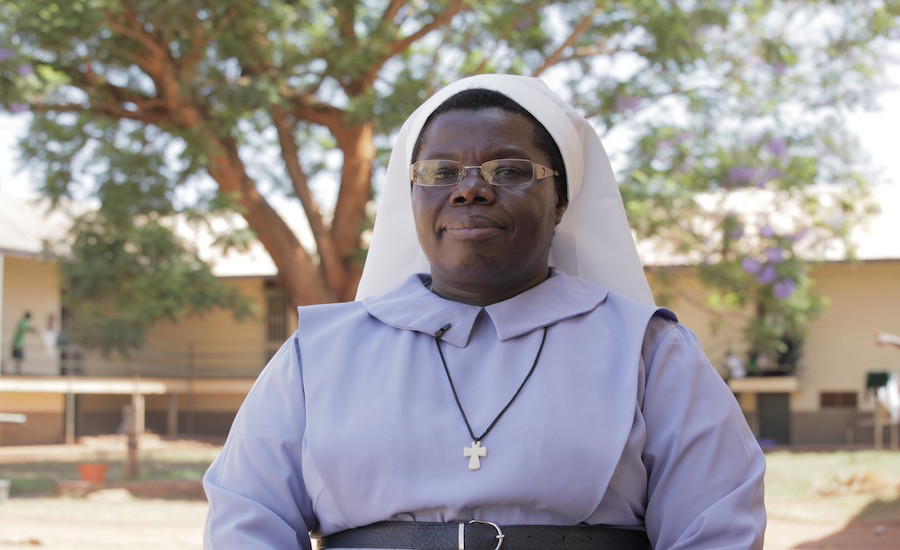
Sister Rosemary’s Faith

When I meet Sister Rosemary Nyirumbe at the Gild Hall Hotel restaurant in downtown Manhattan, she is radiating warmth and hugs me right away, like a new friend. The Ugandan activist and nun is in town to attend the sixth annual Tina Brown Women in the World Summit headlined by Hillary Clinton and attended by global women leaders and change-makers. They are in excellent company. 

Named one of Time Magazine’s 100 Most Influential People in 2014, Sister Rosemary continues to receive praise for her inspiring efforts to help women and girls in Uganda rebuild their lives after the brutal civil war. Twelve years ago, she started the St. Monica Girls’ Tailoring Center in Gulu, Uganda, to teach trades to women and girls, many of whom are refugees of war, former child soldiers and sex trafficking victims.

Pause & Pray In Article Ad

Her most popular campaign is the pop-top purse, which she’s taught the students to make out of the tops of aluminum cans. She sells them around the world and all of the proceeds go to the students, giving them not only the ability to take care of themselves, but a restored sense of self, hope and purpose. Sister Rosemary’s work with women and girls is the source of a documentary and a novel, both titled, Sewing Hope.

Her decision to open the school grew out of heartbreak and absolute necessity for these girls.

“My background is that I’m a midwife. But after awhile, I started thinking, ‘How long am I going to keep on bringing children into this world when there is so much suffering?’ I wanted to do something to help.” Sister Rosemary wanted to become a doctor in order to help more people, but with the war ravaging her country, medical school was out of the question. She vowed not to let the war stop her from fulfilling her God-given purpose.

“These girls lacked the chance of education. They’ve been abducted by rebels, trained as child soldiers, and also became sex slaves and suffered so much,” she says. “Having been a victim myself of that war, I felt that I could do something to help young women who are more disadvantaged than me.”

“If they can survive what they’ve survived, I can give them the compassion, that love and acceptance they need,” she says. “I can employ all of my intellect and I can employ the love God gave me to give them.”

Though she’s accomplished much for women and their children in her life as a nun, the powerhouse is far from done. An ally to Nigerian activist Obiageli Ezekwesili, who co-founded the Bring Back Our Girls movement to save the 200 women and girls kidnapped in Nigeria last year, Sister Rosemary is a leading voice against their abductors, the Boko Haram terror group. For Sister Rosemary, what’s happening in Nigeria hits far too close to home. Everything Boko Haram is doing to women and girls, the National Resistance Army began in Uganda in the 90s.

But just like the victims of that war, the world seems to have forgotten the kidnapped girls who have still not been returned. Sister Rosemary is determined to keep their names on people’s minds so action can be taken to find them.

“It’s very important for us to keep on raising that awareness,” she says, her voice overflowing with passion. “That’s why I admire [Ezekwesili] forever and I took part in profiling her [for Time’s 100 Most Influential People 2015]. I will keep on reminding everybody that whatever happens in humanity is never new. You may think what happened in Nigeria is just there, or is old news. That’s not right. The same people who say that said the same thing about Northern Uganda when the National Resistance Army were very actively abducting women and children and destroying them. People have not been talking about it and it continued for decades.”

“The media should have a broad span of attention, because what is happening in Nigeria can happen in the United States. What happened in Uganda can happen in the United States. When we talk about the rights of women, when we talk about women being destroyed, women being looked down upon, it happens right here [in America]. So it’s a global problem. We must understand this is something that affects everybody, it affects humanity.”

When speaking out as a woman can be a death sentence, Sister Rosemary encourages women to use their voices however they can. The nun, who has stood eye to eye with a rebel who came to kill her and the other nuns—and later helped him run away from the rebel troops—says, “We don’t know how powerful we are as women. We can move mountains.”

It’s her faith in God that lights a fire behind her voice, even in the face of grave harm. “If any moment I feel I am in danger, I say, ‘God, even if I have to go in the valley of darkness, you have been there already. And so I am protected. I can fight through that fire. If my life is put in danger, I pray that I see God in my enemy and he sees God in me and won’t harm me. But if not, that’s God telling me, ‘You have done your part.’ But at least I’ve made my contribution.”

She saves her final words to encourage me. “You are a young woman, but you must know you are very powerful,” she says. “I want to encourage you to speak. Speak up! Stand up! Man cannot destroy you because you speak. What can they say? You have a loud mouth? Fine! Let’s go on with our loud mouths,” she says with laughter, then she envelopes me again in a hug.

Singer Tim Timmons: ‘Cancer Is Not My Story’

The first time I heard Tim Timmons’ name was at a Crowder concert at the Best Buy Theater in Times Square earlier this year. He was an opening act that night and brought with him a fun onstage personality and some upbeat worship music. But what really stood out was his testimony.

Timmons was diagnosed with an incurable form of cancer and given just five years to live.

Daily Strength for Women in Article ad

That was 14 years ago.

“I remember walking in the door with my wife, sitting on the couch and just being dumbfounded,” Timmons tells Guideposts.org of the day he found out about his illness.

READ MORE: LIVING WITH CANCER: GOD TOLD HER ‘SHARE YOUR STORY’

On the heels of the diagnosis came a year’s worth of surgeries and some tough decisions at home.

“We’ve had plenty of tears,” Timmons says. “I remember telling my wife ‘Hey honey, I get it if you don’t want to have kids.’”

His wife’s response is what turned the tide in terms of how they viewed Timmons’ cancer battle.

“She said ‘Tim, we’re going to live as though you’re going to be healed.’ That was a little bit of a game changer for us,” Timmons admits. “We’re either going to believe that Jesus is either good or He’s not, that He’s actually God or He’s not. How are we going to live our lives?”

The artist decided shedding his own worries and living for his faith was the way to go.

“They still say I have four tumors on my liver and that’s wearing out my heart, but Jesus keeps waking me up every single day and I’m still blown away by that,” Timmons says. “I have this fruit of the spirit. In the past I was told, ‘Try not to worry, you’re a Christian,’ or ‘You should have more peace because you’re a Christian,’ or ‘You should be joyful in this situation.’ No, that’s exhausting, thinking like that and trying to be that really good Christian.”

“The point of Jesus is you don’t have to carry all of these awesome Christian burdens anymore. For the first time in my life I have fruit of the spirit. I’m not addicted to worry like I have been my whole life. It’s not because I’m great and I’m doing my quiet time and I’m just so good at being a Christian, it’s just because I’m saying every morning, ‘Jesus, where is Your work today? I want to join You in what You’re doing.’ It’s changed everything. I have joy that has nothing to do with circumstance. He’s always available.”

READ MORE: BIG DADDY WEAVE BRINGS ‘BEAUTIFUL OFFERINGS’

Timmons’ hopeful outlook on life comes thanks to his newly revived relationship with God.

“About 6 years ago, Jesus apprehended my heart,” Timmons says. “The problem is, I’ve known all about Jesus my whole life. I could quote any scripture to you, but I actually didn’t know Jesus.”

The singer’s first album, Cast My Cares, was his way of reconnecting with God. His second, Awake My Soul, which was released early this month, is a celebration of the love and life he’s discovered in his walk with the Lord.

“There’s a lot more joy in this record to be honest because the more I hang out with Jesus, he’s making me joyful.”

Lyrically, the album is a testament to Timmons’ passion to live out his faith. His favorite song on the record, “Finally Breathing,” details the artist’s own relief at shaking off the expectations of religion for a meaningful relationship with God.

“It’s this idea that I’ve been taking shallow breaths my whole life, spiritually,” Timmons says of the track. “For the first time in my life I finally feel like I’m taking deep breaths. My days are not filled with whether I’m happy or sad. Jesus is starting to become enough. He’s becoming a bigger deal than the religion I’ve been a part of my whole life.”

In the end, Timmons hopes he can be known for more than just his music or his battle with cancer.

“Cancer is not my story,” the artist affirms. “What a terrible story. If you have something bad happening — divorce or whatever is happening in your story — if that defines us, then we’re in trouble. For me, cancer is not my name, nor does it have a hold of me. God is at work in all things. It’s the perspective through cancer, or whatever these things are in our lives, that’s where we find our identity.”

“ I want people down the road to say ‘Because of the God of Tim …’ I want people to look at my life and say, ‘Not because of cancer, but because that man lives as though he has the fullness of God in him. I want that.’ That’s my new aim in life as I’m following Jesus.”

Signed, Sealed and Delivered

Like most people these days, I can’t imagine life without e-mail. Texting is even more convenient, especially since I have two teen daughters. But there’s something about a letter, something more personal, more meaningful.

It says that someone took time to put on paper what they felt. Sometimes people reveal something they might not have told you any other way, something that can touch your life forever.

Witnessing Heaven In Article Ad 827x123

Let me tell you about three letters that made a difference to me.

Freshman year of college I was struggling. I’d ventured far from home, from Colorado to Williams College in western Massachusetts.

Williams was and still is one of the most academically challenging colleges in the country and looks like a movie set: ivy-covered walls, Gothic columns, expansive green lawns in a charming village.

It seemed as though half my classmates had gone to boarding school. They’d already lived away from home and arrived on campus with an air of sophistication I couldn’t match. (All I knew of preppies was from the movie Love Story.)

I’d been named “Outstanding Senior” at Denver South High and was the editor of the school yearbook. I’d led my church youth group and won a prestigious scholarship. None of that seemed to count for much with my accomplished classmates.

But I loved to sing, and I was cast as the lead in the Freshman Revue. Finally something at college I could excel at! The rehearsals and performances didn’t allow much time for studying, and then there were friends to make and parties to go to.

Despite my straight A average in high school, I didn’t have good study habits. My first college report card proved it. I sat on my dorm-room bed, staring at C’s and D’s.

I knew my parents had gotten a copy of my grades. My mother was an advocate for women’s education and the treasurer of an international organization of university women. My dad ran his own business and was a pillar of the community. They’d been so proud I was following in their footsteps.

I could have called home, but long-distance calls were expensive then. Besides, telling my parents, “I couldn’t cut it in college. I’m so sorry I’ve disappointed you” hardly seemed attractive.

Mail was delivered to the student union, where every week I’d find waiting for me a thick packet of Denver news clippings from Mom with a “Daddy says hi” tacked on. I put off checking my mailbox but I couldn’t avoid the student union forever.

Finally I walked in and Mrs. Marlowe, who sorted our mail, announced, “You’ve got something.” I peeked inside my mailbox. No clippings this time. A letter. Two letters.

I grabbed them and sat on a bench outside to read. My dad’s letter was typed on his business stationery, onionskin paper that crinkled in my shaking hands.

The keys on his old Smith Corona would strike the paper so hard that some letters were raised like Braille and others made holes. I could see through the f ’s and the o’s. I could hear his voice, quiet, firm, kind.

“I understand you are struggling. We have all been there,” he wrote. Dad, struggle? He always seemed so confident! “We all fail sometimes. We disappoint ourselves. And our family. But those who deserve to be at the top, when they fail, get right back up to the top again. And I know you will.”

Then he quoted a Scripture: “From those to whom much is given, much is required.”

I put down the letter, running my fingertips across the paper. Dad wasn’t ashamed of me. He believed I could succeed. If only I could believe in myself as he did!

Then I opened the envelope from Mom, addressed in her generous, unmistakable hand. As I read, the miles between us disappeared and her words went straight to my heart.

“I suspect you are carrying burdens and feeling overwhelmed…perhaps you feel guilty about choices that you are not proud of….” I hadn’t told her about the partying. She knew.

“This is the time when everything we’ve taught you will kick in. Persistence. Forgiveness. Faith. Remember, you can tell us anything, but if you can’t, there is always One you can go to.”

I’d never heard Mom speak so personally about God. About needing him. She sang in our church choir and we said grace at dinner, but here, in this letter, she was sharing something much deeper. She was sharing her relationship with God.

He wasn’t someone I’d left behind when I came east for college. He was right here, ready to help. All I needed to do was talk to him.

I did, often. College got much better. My grades improved. I joined the Ephlats, an a cappella group that sang at dinners and concerts. I discovered a passion for writing. I also fell in love with a guy in the Ephlats.

Steve was three years older, a smart, thoughtful scientist. I thought we were the perfect match, the soprano and tenor harmonizing together, happily ever after.

Steve graduated and went off to grad school at Cornell. Ithaca, New York, wasn’t that far from Williamstown, Massachusetts. I figured I’d see him on weekends. But I didn’t hear a word from him, not a call, not a letter. I took his silence to mean it was over between us.

We’d had long conversations about what we believed, what we hoped to do in life. Had it been just some end-of-college fling for him?

I’d thought freshman year was rough. This was devastating. Now I dreaded going to the student union and seeing nothing more in my mailbox than the usual packets from Mom. Please, Lord, I prayed, make this heartache go away.

Then one day, Mrs. Marlowe, no doubt detecting my misery, said hopefully, “You’ve got something!”

I opened my box and took out a blue card. “Undeliverable. Postage due,” it read. “What does this mean?” I asked.

“Someone’s sent you something without enough postage. You’ve got to go to the post office in town and pay the balance to pick it up.” Mom probably forgot to put enough stamps on her packet.

It could wait. There was too much going on—classes, papers to write, concerts with the Ephlats, anything to distract me from my sadness. It wasn’t until weeks later that I passed the post office and remembered the postage-due card in my bag.

I walked up the marble steps and handed the card to the clerk behind the counter. I paid 25 cents and was given a thick envelope. I recognized the handwriting immediately. Steve’s.

I didn’t even make it all the way down those marble steps. I just sat and read. It was a long letter, covering both sides of eight pages. No wonder it had arrived postage due! Steve wrote how challenging grad school was, how he missed me.

Mostly he wrote about the talent he saw in me and how he cherished our relationship. “I would like to see you again. I’m hoping to visit campus on the weekend of…”

I almost screamed there on the post-office steps. He meant this weekend. Just a few days from now! He’d written weeks before and must have figured I’d given up on him. I dashed to a phone and called him, never mind the long-distance bill.

“Of course I want to see you,” I told him. And to this day, I will never forget seeing him standing at my door three days later.

No, I didn’t marry Steve. You can’t always write the script for your life and expect everybody to play the parts that you want them to. But he ended up being a terrific friend. He encouraged me to pursue a career in television that led to producing and writing the hit show Touched by an Angel.

Steve and I are still good friends and sing together with the Ephlats at reunions back at Williams. To think we might never have spoken again if he hadn’t written that letter!

I could tell you about other letters, especially the inspiring mail I got from fans of Touched by an Angel. But it should be no surprise that I believe in the power of letters. You can hear someone very clearly through the written word. They might share the secrets of their faith or their heart.

A letter can restore a relationship or change the world. Just think: Half the New Testament is made up of letters, mostly from Paul, but also from Peter, James, John and Jude. Letters are forever.

That’s why I decided to write a new TV series about a team of lost-mail detectives who help reconnect the recipients and senders of undeliverable letters. Signed, Sealed, Delivered premiered this spring on the Hallmark channel; the pilot episode may even remind you of the love letter I almost didn’t get.

The message is simple and true: Letters can touch our lives in mysterious and unexpected ways. And even if they arrive late, sometimes they’re delivered right on time after all.


Download your FREE ebook, The Power of Hope: 7 Inspirational Stories of People Rediscovering Faith, Hope and Love.
Shining the Light of Faith on Healing Journey

The call comes to me at my office several times a day. I can detect the fear in the caller’s voice. I know that fear.

She’s just been diagnosed with breast cancer. She’s found my name on the website for the Johns Hopkins Breast Center, where I’m the director, or she’s heard about us from one of our patients. Now she just needs to talk to someone.

Community Newsletter

Get More Inspiration Delivered to Your Inbox


She dreads treatment or surgery. She doesn’t know if she’ll survive. Her voice chokes up.

“I know how you’re feeling,” I eventually say. “I’ve had breast cancer myself. I was afraid too.”

I can almost feel the relief surging through the phone line. And sometimes I steal a grateful glance across to the great rotunda where a figure towers above the building’s bustling lobby.

I wanted to be a nurse from the time I was a little girl. My mom loves to show off a black-and-white snapshot of me as a four-year-old in a nurse’s outfit with my doll’s head all bandaged up. It looks like I’ve performed a craniotomy on it.

When I first came to Johns Hopkins 29 years ago, I actually specialized in such patients. I worked for a neurosurgeon who treated people with malignant brain tumors and ruptured cerebral aneurysms.

The operations were long and in those days the hospital didn’t have a designated rep to inform the families of what was happening during surgery. I would go back and forth from the OR to the waiting room, reassuring loved ones as best I could.

I can’t pretend it wasn’t stressful. A hospital is a place of both suffering and healing. But I found the perfect way to soothe my frayed nerves.

In the rotunda at the Broadway entrance was a 10-foot-high marble statue of Jesus, the Divine Healer. I could never walk by it without touching the toes and looking up to the serene face of Christ.

I asked God to give my patients strength to cope with what lay ahead, and myself the wisdom to help them. Sometimes I’d hum a hymn, one of the beautiful ones my mother sang in our small Methodist church. It always brought calm and reassurance.

Eventually I moved to administration. Hospitals had entered the era of managed care, and cost containment was imperative. I became the director of performance improvement—quite a title. I was constantly putting out fires.

“Lil, you’re going to burn out yourself before you’re forty,” my husband, Al, would warn me. But I cared about the hospital, even if I missed direct work with the patients.

One perfectly ordinary morning when I was 38, I felt something unusual in my right breast. I assumed it was just a blocked duct, something I’d had before. It would go away.

I had a mammogram, which showed it was a cyst that had returned. It was easily aspirated by the radiologist. He decided to do a baseline mammogram of my other breast, the left one, and there he saw something that actually warranted a biopsy.

Now I was the patient, frightened and unsure.

I was convinced the biopsy would be negative for cancer. Unfortunately, my doctor would not return from a conference for another few days. Because of my position at the hospital, I knew where to find the pathology report. I logged on to the data bank to see what my report was.

The words blurred in front of me: “ductal carcinoma…multiple foci…carcinoma.” I stared at the computer screen, expecting the grim reaper to rise out of it, then logged off hastily.

I hurried out of the hospital. I walked faster past the oncology corridor. For the first time I could remember, I didn’t touch the foot of the Divine Healer when I passed. Didn’t pray. Didn’t even look up.

Al is a truck driver and he was still on the road. I kept trying to think of some joke I could say to him, some way of laughing it off. But the minute he walked through the door, I blurted out, “I have breast cancer.”

His face was a mask of shock. Without a word he hugged me hard, as though he could squeeze the cancer out. “We’ll fight this together,” he finally said. “We’ll beat it together.”

I like to keep things under control and I was firmly convinced that I could control this. I scheduled a surgery date in eight weeks. It would be a full mastectomy of the left breast because there were multiple areas of cancer.

But first I had to clear off the work on my desk. As the weeks passed, I discovered there was one thing I couldn’t control: my fear.

Very early on the morning of the surgery, Al drove me to the hospital. I was wearing some old sweatpants. No makeup. In the half-empty lobby, at 5:30 A.M., the first person I saw was our hospital chaplain, Clyde Shallenberger. “What are you doing here at this ungodly hour?” I asked.

“What are you doing without your work clothes on?” he asked.

Clyde was shocked to find out that I was having surgery. “My network at the hospital has failed me,” he said. Then he added in a softer tone, “There are no ungodly hours anywhere. God is with us all the time.”

Upstairs I shed my sweats and got into my gown. Al kissed me. I was walked into the OR. I looked up at the bright lights. They strapped my arms and legs down. They connected me to an IV and put an oxygen mask over my face.

My heart was racing. Lord, I prayed, there is nothing more I can do but trust you.

Then, just before I fell unconscious, I heard a voice, a beautiful voice, my mother’s voice singing a hymn I hadn’t heard in years: “Today, on the highway I saw him/He gazed up and smiled at me/Today on the highway I found him/Jesus of Galilee.” The Divine Healer.

The surgery went well and Al was with me every step of the way in the days and weeks that followed. One thing unnerved me. I dreaded him seeing the scar where my left breast had been. I’d made a deal with him beforehand.

“I won’t show you what I look like until I’m ready,” I said, “and when I do, I want you to show me your smile without your dentures.” In all our years of marriage I had never seen Al without his dentures.

The morning of my discharge from the hospital, while my surgeon was changing my dressing, he blithely called Al into my room. I was horrified. “You look fine,” Al said, hugging me hard again. “We’ll be fine.”

I still haven’t seen him without his dentures! I keep telling Al he owes me.

Not long after my operation I got a call from one of the hospital’s doctors. “My secretary has just been diagnosed with breast cancer,” he said. “She’s terrified. Can you talk to her?”

“Of course,” I said.

I guess you could say that I found my new calling that day. Personal experience as a breast cancer survivor had deepened my understanding of what a patient feels emotionally, physically, even spiritually.

And there were so many little things to do to help patients. For instance, what could be done to shorten the wait on test results? That alone would relieve an enormous amount of apprehension for women and their families.

What could we do to reassure them that their relationships with their spouses would survive, even strengthen? Couldn’t we better prepare them for how they would feel after surgery? Encourage them to give themselves time to heal and rediscover life?

I had to undergo a second mastectomy for breast cancer just two years later and then finally got breast reconstruction a decade after that. All the while, I kept volunteering with breast cancer patients, counseling and comforting them. That led to the wonderful job I have today.

Every time I receive a phone call from someone who has just gotten the scary news, I feel I’m right where I’m supposed to be. I’m in an office with a view across to the rotunda where my favorite statue stands, where there are no ungodly moments ever.

Download your FREE ebook, The Power of Hope: 7 Inspirational Stories of People Rediscovering Faith, Hope and Love

Shielded by the Lord

I thanked God that morning for the water-stained ceiling tiles. They were as much a miracle to me as a clear blue sky. When I opened my eyes after a fitful night’s sleep and saw them above my hospital bed, I knew I was still alive. I was pretty sure there were no ceiling tiles in heaven.

I was 39 years old, and wasn’t likely to live out the week, much less see 40. As the morning dragged on, my family and the parishioners of my church came in and out of my room, praying for my recovery.

Light for Life NASB Study Bible in Article

Prayer was all I had left. It was Franny, one of my older congregants, who seemed to have the most faith in the impossible.

“Pastor Dave, I’m not sure what this means, but you will find the Lord to be a shield around you…that’s in the Bible somewhere, or maybe a hymn. I just know he wanted me to tell you that.”

I recognized the phrase, from one of David’s psalms: “You are a shield around me, O Lord.” But those kinds of miracles, the big biblical ones? They just didn’t apply today.

I’d come through the worst of my battle with acute myeloid leukemia, just completed my final round of chemo. Through it all, my wife, Sheri, stood by me, wearing a hospital gown and a mask to protect my compromised immune system.

It looked like I was going to be okay. The oncologist was pleased with my latest test results. I’d even been able to dance, briefly, with our daughter in my hospital room just before she’d left for the prom. Then something happened that made it all for naught–my appendix burst.

Sheri was at our son’s soccer game when she got the call. My white blood cells were depleted from the chemo–I couldn’t fight infection. My platelet count was low–my blood wouldn’t clot. In other words, surgery was not an option. And without it, the poison flooding my body would be fatal.

The doctors inserted a tube into my abdomen, hoping to drain off some of the toxins. But it would only buy me hours, not the weeks I needed to build up the strength to survive an appendectomy. Sheri raced to the hospital and told everyone we knew to come, come now.

A procession of visitors murmured their prayers, said goodbye. Except Franny. She was so sure of the message she’d received. I didn’t have the heart to tell her otherwise.

The nurses doped me up to keep me comfortable. I lost track of time. Soon, the sun had set again. My visitors left. Sheri went home to look after the kids.

Holy Spirit is a Catholic hospital, and Scripture readings are broadcast over the PA system at the beginning and end of each day. I could no longer hear those words of hope. In seminary, I learned that fear is not an emotion–it’s a spirit. And this evil spirit spoke louder.

I pictured Sheri sitting alone at home, mustering all her courage to hold the family together. I saw my daughter in her wedding gown, walking down the aisle without me. I saw our sons playing pickup football, no one to cheer them on. “You are gone, they are alone,” the spirit whispered.

I countered it with all I had, Franny’s strange message and David’s prayer at the forefront of my mind. “You are a shield around me, O Lord,” I said aloud. I repeated it over and over until I was able to sleep.

I woke up the next day and saw the ceiling tiles. The day after that too. My doctors and nurses knew of only one case where anyone with cancer like mine survived a burst appendix for so long.

When I passed the one-week mark, a social worker said they were sending me home, but that I’d have to come in every few days for blood tests to see if I was strong enough for surgery. There was no guarantee I would be.

I treasured every moment with my family. Sheri read to me in bed. I played piano with the kids, and we sang, talked and laughed until I couldn’t keep my eyes open. I even spent time with our dog, cuddling on the sofa.

Laying my hands on my children’s heads, I prayed for them as if it were the last time I could. “Lord, let all heaven break loose upon them as they fulfill their destinies.”

Each morning, Sheri helped me out of the shower and I stared in the mirror at the tubes hanging out of my chest, the ports from chemotherapy. I looked like the “Terminator” on a bad day.

Somehow, though, I made it six weeks. My platelet levels normalized. The surgeon prepared me for the operation. “I’m going to do an exploratory procedure,” he said. “We need to see what damage has been done.”

Through the fog of anesthesia, I remembered David’s words. Why those? Franny wasn’t sure what they meant, and neither was I. But that passage had sustained me, like provisions during a desolate winter. You are a shield around me.

I opened my eyes to the hospital ceiling tiles, Sheri squeezing my hand. The surgeon came in, holding some five-by-seven-inch glossy photos taken from inside my lower abdomen. “Have you ever had an operation before?” he asked.

“Only my tonsils,” I said.

“I’ve never seen anything like this,” the surgeon said. He held up one of the photos. It just looked like blobs to me.

“Here is your appendix, what’s left of it,” he said, pointing with his pen. “But surrounding it…is a kind of tent, composed of adhesions.” He made a circle. “It’s the strongest kind of scar tissue there is. We normally see it only after someone has surgery.”

“What does that mean?” I asked.

The surgeon fumbled for the right words. “All the toxins were contained within this structure. These adhesions, they acted almost like…tiny shields, tightly packed together.”

I’ll never know why my life was spared, not while I’m here on earth. That’s what heaven is for. For now, I enjoy my family, my friends, the blue sky. I’m not ready to see beyond the ceiling tiles quite yet.


Download your FREE ebook, Mysterious Ways: 9 Inspiring Stories that Show Evidence of God's Love and God's Grace

She Was Inspired by Her Husband’s Positivity While Dealing with Cancer

My husband, Roger, and I sat in his doctor’s office, wait­ing to hear the results of the biopsy of his left calf. “I’m afraid it’s Stage IV metastatic melanoma,” the doctor said.

We’ve been married two months! I wanted to shout. He’s only 58! This was a second marriage for us both. God was giving us a second chance for happiness. Or so I thought.

The Lies That Bind In Article Ad

“What’s our next step?” Roger said.

“We’ll keep you comfortable for the six months you probably have left,” the doctor said.

The words shocked me to my core, even though Roger had already had dozens of lesions removed from his skin. He’d spent most of his life in the sun, due to construction work and water sports. While we were dating, he went through a year of chemo for melanoma in the lymph nodes in his neck.

Some of my friends encouraged me to break off the relationship. “You don’t know what you’re getting your­self into,” they warned. “He’ll become an invalid, and then where will you be? He might even die.”

I worried. But Roger seemed to brush off the idea of dying, and that had given me a sense of security.

That security was gone now. When my first husband had left, I felt aban­doned. This diagnosis wasn’t Roger’s fault, but it felt like another form of abandonment. I pictured myself alone in a matter of months, handling his fu­neral arrangements. I immediately be­gan putting up walls around my heart. Maybe then it wouldn’t hurt so much when he died.

Roger’s oncologist told us about a Phase 2 clinical trial going on at Hill­man Cancer Center in Pittsburgh, about a four-hour drive from our home in Hurricane, West Virginia. It was our only hope. Roger enrolled in the study. Still, the doctors there gave him a two percent chance of survival.

“That’s all I need,” Roger said. “I’ll be in that two percent.”

He and 37 other patients started the clinical trial together. Each received an experimental drug along with dai­ly IV chemo treatments. The infusions left Roger shaking, running a high fever and unable to keep down any food. He even had to lean on me as we made the short walk to the place where we were staying.

“Do you want anything?” I asked.

“No, just get me to the bed,” he said.

I felt helpless to do more for Roger and questioned whether I had it in me to be the caregiver he needed.

At the end of his year-long treat­ment, only one other patient in the study remained alive. Roger’s next scan showed a suspicious spot on his right lung. He wasn’t fazed. “I believe I’m still alive because God has his hand on me every day,” he declared.

Roger’s unshakable faith upset me even more. How could he stay so posi­tive? Didn’t he care that our time to­gether would be ending far too soon? Perhaps Roger didn’t love me as deep­ly as I loved him. It seemed as if God had brought happiness into my life only to snatch it away. Had he aban­doned me too?

The decision was made to go in and remove the lesion. “It was melanoma, but we believe we got it all,” his sur­geon said after they removed half of Roger’s lung. The recovery was slow. Roger was told not to drive for six weeks, but he was anxious to get back to work as a local liaison for the state treasurer’s office, so I drove him wher­ever he needed.

I waited in the car while he visited with everyone. I tried bringing a book to pass the time, but all I could think about was Roger’s cancer. Each day, I worried it would be the last time he’d be able to enjoy working.

One morning, Roger said, “Wear something nice today. I’m going to take you in with me on my calls.”

At first, I remained quiet as I watched him interact with everyone. Roger was definitely in his element. I saw how his upbeat attitude and sense of humor helped him turn even strangers into friends.

He introduced me. It was fun meet­ing new people, and I found myself laughing and joining in the conversa­tions, the first time I’d really laughed since Roger’s cancer journey had be­gun. Could his positivity be rubbing off on me?

Maybe I would be happier and do a better job as a caregiver if I tried to emulate Roger’s outlook. While I’d been focused on the 98 percent chance of him dying, he was concentrating on that two percent chance of surviving. And it wasn’t because he didn’t care about me. Roger put all his energy into living because he loved me and wanted us to make the most of our time together.

“You know I’ve struggled with how you could be so happy through all of this,” I told him. “But I think I under­stand now.”

Roger wrapped his hand around mine and squeezed. “You need to trust God,” he said.

He was right. I made a promise to myself to try harder. God had not abandoned me. My husband might have only a few months left, but God had put him in my life for a reason. Maybe that was what I was supposed to learn—to appreciate what I have in the moment. I thought I could do that. I hoped I could. The walls that had guarded my heart slowly began to crumble.

Roger’s dermatologist sees him every three months. The doctor has found and removed two squamous cell carcinomas, one on the tip of Roger’s finger, the other on the side of his nose.

Roger has never asked why God would allow him to endure so much. “I believe it was God’s plan for me to become a melanoma patient so that I could educate others about the harm­ful effects of the sun,” he says.

He encourages patients entering treat­ment for melanoma and tries to ease their minds so they too can make it through. He’s also part of an oncology collaborative practice at a local hospi­tal where he represents the patient’s point of view.

Roger is now the sole survivor of his clinical trial. I continue to worry with every scan. My positive outlook may still be a work in progress, but I have a wonderful teacher. My husband has been bringing me laughter and steadfast faith for 13 years now. What­ever the future holds, God, Roger and I will get through it together, caring for each other.

For more inspiring stories, subscribe to Guideposts magazine.

She Used Self-Care to Overcome Chronic Pain

A fiery pain shot down my left leg as I struggled to change from my exam gown into leggings. It made me want to scream. But the conversation out­side the X-ray dressing room door was almost as troubling. “This scoliosis is severe,” I heard my chiropractor say. “It’s likely causing her sciatica.”

For months, I had trekked from specialist to specialist in search of the cause of my sciatica. I’d asked if it could be related to the scoliosis that had been diagnosed back when I was in grade school.

Finally some­one listened, and I had my answer. The whole thing was caused by my neurofibromatosis, the genetic condi­tion that had caused painful tumors to grow throughout my body and skeletal abnormalities like the scoliosis.

How could this be? In 2018, God had delivered me from 63 years of agony from neurofibromatosis, including a two-decade dependence on prescrip­tion OxyContin. Gone for good was the Roberta for whom pain and uncer­tainty had driven every decision. I was stunned at my brand-new life. Overjoyed.

In three years, I hadn’t so much as in­gested an aspirin for pain relief. I’d tapered off all 14 of my meds. Not one expert had a name for what had happened, only that my brain had some­how reprogrammed it­self after those opioids stopped.

Even retired from a 42-year nursing career, I didn’t need a fancy medical term. It was a bona fide miracle. If God could change all that, this back thing would be a cinch. In one fell swoop, he’d take away the pain again…wouldn’t he?

But with this sciatica, God seemed silent. I did all I knew to do to push through the pain. Torturous physical therapy exercises. Daily walks. I recit­ed Scripture and positive affirmations. Tried heat and ice, deep breathing, visualization, massage therapy, acu­pressure.

When these measures failed, a provider suggested opioids. Never again! I couldn’t, I wouldn’t, go back to that. Once more my body had betrayed me. I wondered if God had too.

I tried to keep busy, but I couldn’t sit, walk or even lie down without that shooting, burning pain. Then the pandemic hit. The isolation and un­certainty of Covid disconnected me from everyone and everything I cared about. Especially my faith.

You can’t be serious, I practically snarled at God. You gave me a new life, only to have it whisked away?

My leg and foot grew weak and numb. I stopped doing my PT exercises and daily walks on my country road. With the loss of feeling, I couldn’t chance stepping on a stone and losing my balance. A fall might mean a bro­ken bone, a wheelchair or worse.

When a new clinician jokingly di­agnosed my condition as TMB—“too many birthdays”—I was heartsick. Al­though as a traditionally trained nurse I’d been a bit leery of chiropractic medicine, I finally made an appoint­ment with a chiropractor a friend had recommended. I was desperate.

The evening before my consulta­tion, a man telephoned, introducing himself as the chiropractor. Dr. Perry asked how I was doing, then added, “I look forward to hearing about your life, Roberta. So we can work together to make you better.”

This was different. I’d been a life­long patient with excellent providers. Still, health care had been done to me and for me. Never with me.

At my appointment, Dr. Perry il­lustrated everything using a model of the spine. He theorized that the incorrect medication dosage I’d been given while tapering off my meds had likely set my sciatic pain in motion.

I’d gained 65 pounds in a matter of months, which put pressure on that nerve. Then I’d become profoundly anemic, so less oxygen went to my tis­sues. Fatigue and shortness of breath had led me to spend more time in bed, the immobility further weakening my back muscles.

With all I had working against me, I was terrified of what the future would bring. But Dr. Perry’s voice and eyes spoke of possibility. “If we can manipulate your spine just a couple of millimeters,” he said, “it should clear your sciatic nerve. I believe you’ll be out of pain.”

It was then that I caught a snippet of a tune coming from his radio. “That song!” I blurted out. “It used to help me feel better.” Dr. Perry and I listened to the words: For the God on the moun­tain is still God in the valley….

The lyrics moved him as much as they did me. A single tear slipped down and dampened his mask. In the most sacred moment of all my years in health care, I heard Dr. Perry say softly, “I cannot cure you. But I will care for you.”

Before he performed my first spinal adjustment, Dr. Perry said, “You are fear­fully and wonderfully made, Roberta.” With due respect to the Psalms, he couldn’t possibly mean me. Had he forgotten my very genes were de­fective? About the 37 surgeries for remov­ing the tumors I was as programmed to have as my blue eyes?

I figured fearfully made sense—I’d lived from fear to fear most of my life—but wonderfully? Still, Dr. Perry made such an impres­sion on me that I read up on the verse when I got home. I discovered that in Hebrew, yare, the word we translate as “fearfully,” means “with reverence and respect.” The way Dr. Perry was treating me. The doubt in my spirit shifted, making room for hope.

Within a few weeks, my pain was gone. The weakness and numbness in my leg and foot soon left too. In the past, I’d bounced from crisis to crisis, necessitating medical intervention. This healing took a different course.

As Dr. Perry promised, it wasn’t about a cure but about care. Taking care of myself meant adopting some lifestyle changes. Daily strengthening exer­cises for my back. A commitment to walking and good nutrition. In the past, desperate to lose weight, I’d been consuming less than a thousand calories a day. My body had kicked into starvation mode.

A consult with a clinical dietitian revealed I needed to consume more calories in order to reset my metabolism and lose weight. When I ate the right things, I had more vitality and energy. The absence of pain made it easier to exercise, and I began losing a pound a week.

I’d never discussed lifestyle changes with a pro­vider before. With every treatment, I felt better and better. I began to won­der if sciatica had also been part of a divine plan. One that would ultimate­ly make me healthier, stronger.

Sometimes life’s nos can be God’s yeses. A treatment modality I would have never considered connected me to something I’d over­looked during four decades of nursing: Our bodies are designed to participate in our own healing. When I found a provider who respected and valued the body I’d been given, I no longer focused on its deficits.

The approach was so healing that I committed to doing everything I could to move my body toward wellness. And I felt more at one than ever with the God who’d created that body.

There’s a verse in Ecclesiastes that says a cord of three strands is not easily broken. I’d always thought of those words in regard to a marriage or a friendship. But they also describe health care at its finest, where a provid­er and a patient work together toward a common goal, with God the central strand. It’s a can’t-fail approach to be­ing the healthiest I can be.

For more inspiring stories, subscribe to Guideposts magazine.

She Used Art to Help a Senior with Dementia

The e-mail came from Tony’s son, Phil, asking if I could help his dad. Tony was a retired businessman in his late eighties, suffering from dementia. He was getting excellent care in an assisted-living facility, except for one thing. “Pop loved to paint more than anything,” Phil wrote. “I wonder if you could help him do it again.”

“I’m not really an artist,” I wanted to say. Actually, I was a flight attendant. True, I worked on weekends at a rehabilitation center, teaching art as therapy, helping people who were recovering from falls or broken limbs or long hospital stays. Art gave them a purpose, I liked to think. But I’d always worked with groups, never with someone one-on-one and never with a dementia patient.

Pray a Day Vol 2 In Article Ad

Phil explained how his dad had become quiet, withdrawn. Once he had painted, and it had seemed to give him great satisfaction. If only he could have a brush in hand again. “It would mean so much to him,” Phil said. “To have that joy again.”

The joy of painting. The idea tugged at my heart. If there was anything I knew, it was how God could use the arts—painting, drawing, sculpting, music making—to help people find their way back to themselves, their best selves. As I said, I’m not a professional artist. But art came to me at a time when I desperately needed help.

Let me go back two decades. I was living in Atlanta and working long hours for Delta Airlines. I’d served as a flight attendant and then made my way up the management ranks. I could see myself running the place someday, being in charge. Not that the dream was wholly my own. It felt like an expectation, almost as though I’d borrowed it and was trying it on for size, like a nice suit that doesn’t quite fit.

Then came a string of disasters, real disasters. First, the tornado. I was lying in bed one evening in my top-floor apartment, worried about a presentation I had to give the next morning. Wind and rain battered the roof and walls. What if the windows break? I wondered. I could picture shards of glass flying at me like hail. Get in the closet! the thought came. I grabbed my pillow and comforter—and my alarm clock—and threw myself into the closet.

Almost instantly my ears popped. The wind made a nightmarish sound. The roof was sucked off, and rain poured in. I screamed at the top of my lungs. Never had I been so terrified. When the din finally died down—after a few minutes that seemed like forever—I peeked out from under my comforter. My bed had been turned upside down, the place destroyed.

Three months later, I was in a terrible car accident. An 18-wheeler swerved into my lane on the highway and pushed me off the road. My car was totaled. The driver fled.

The third disaster affected me in a different way. Flight attendants and crew members like me, as well as passengers, were lost when Swissair Flight 111 crashed off the coast of Nova Scotia, killing everyone on board. Because Swissair and Delta were partners, I was put to work helping staffers and volunteers console the families who were suffering this tragic loss, the sort of thing we had all trained for—and hoped we’d never have to do.

Again and again I told myself I was okay. I could manage. After all, I was helping others, wasn’t I? I was serving them. But at night, I’d wake up sweating, my ears seeming to pop, or have dreams of the 18-wheeler that had almost killed me or thoughts of a jet at the bottom of the sea. One weekend I went with a girlfriend to Disney World. We went on the Twister ride, thinking it would be fun. As soon as the lights dimmed, I was back in a twister of my own. I started screaming—shrieking actually. A young mother looked askance at me and asked my friend, “Would you please make her shut up?” But I couldn’t. I couldn’t stop.

Finally Delta arranged counseling for me. One of the things that was suggested was an art class, art as therapy. The woman in charge asked us to paint. Me paint? I hadn’t held a brush in my hand since grammar school. Our teacher wanted us to close our eyes and picture our dream landscape. What did it look like? What were we doing? Who else was there? Not only did we have to see it, we had to paint it.

I painted a beach, waves lapping against the shore, a dog frolicking in the sand next to a small house with a book inside. It was no great work of art, but it was mine. Just looking at it made me happy. “This could be your future,” the teacher said to me. “You could make it happen.”

I’d never thought of life that way. I’d been so immersed in work and getting the next paycheck that I’d lost all connection with my creative self. God hadn’t, though.

I quit the management job, stayed on as a flight attendant and moved to Florida. I rented a house near the beach and started reading the Good Book. I kept painting, not because I thought I’d create a masterpiece someday but because it brought joy to my life. I took classes in expressive arts, helping others experience what I had. I became a part-time teacher, working with groups, painting with them. I loved what I did. But did I have the skills to help someone like Tony? I just didn’t see how.

Phil took me to Tony’s apartment. I looked around at the paintings on the walls and felt completely intimidated. Vivid portraits, stunning landscapes—they were all things that Tony had done when he was younger. He’d been really good. One painting stood out for me. A beautiful depiction of Jesus. Linda, don’t be afraid, God seemed to say. Just be yourself.

I knelt by Tony’s chair. “Hi, I’m Linda,” I said. “What’s your name?”

“Tony Baby,” he said, then winked. We both laughed.

I took out my paints. At first he needed a little help with which end of the brush was which, but as I guided his hand his eyes lit up. He knew exactly where he wanted to put the strokes and which colors to use. We put on some music and painted for at least an hour, singing along with Frank Sinatra, “You Make Me Feel So Young.” Funny, it was Tony who made me feel young.

At the end, as I was cleaning up brushes, Phil asked, “So, Pop, what do you think?”

“About what?”

“About Linda.”

“When is she coming back?” he said.

Our art sessions became a highlight of my week. We’d play music, sing songs—Tony’s all-time favorite was “Moon River.” Whenever I flew someplace for work, I’d come back with pictures and we’d look at them together on my iPad. I showed him a video of the Christ the Redeemer statue in Rio de Janeiro. That inspired us to do a collage of Christ, arms stretched wide, embracing humanity.

We went outside and sketched by a lake, the clear blue water shimmering on the canvas. I came back from a trip to Grand Teton National Park, and we painted mountains. Tony had loved to ski back in the day. We listened to Bob Marley and sang along, “Don’t worry about a thing.” When I said goodbye to him that day, he replied, “Don’t you worry about a thing.” Tony hadn’t experienced the trauma I had, but painting had the same healing effect, transforming his final days.

On our last visit, two days before he died, he was so weak he couldn’t hold the brush by himself. I held his hand and guided it, and we painted. It was almost the way I felt guided by the Lord, bringing me here.

The memorial service was a few days later. As his children and grandchildren described the Tony they knew and loved, I recognized the man I had known only in the last year and a half of his life. Generous, creative, imaginative, kind, spiritual—despite the dementia. All those things were still there. Especially when he was allowed to do what he loved most.

Read more: 5 Ways to Engage a Senior with Dementia

For more inspiring stories, subscribe to Guideposts magazine.

Sherri Shepherd’s Moment of Truth

I stood in my kitchen, staring at the piece of sweet-potato pie on the counter. I swear I heard it call my name. “C’mon, Sherri, one bite won’t hurt.” 

The last year had been a roller-coaster ride. A devastating divorce and a painful battle to gain custody of my two-year-old son, Jeffrey. Then a move from Los Angeles to New York, where, in just a week, I’d start my dream job as a cohost on The View.

New Every Morning Journal In Article Ad A

My emotions were all over the place. There was no way I was going to deprive myself of some good ol’ fashioned comfort food. I dug in. Mmmm…

Within minutes, my toes were tingling. My vision blurred. A wave of fatigue hit me. This again? I thought. Lately I’d felt these strange symptoms when I ate sweets. But they came and went, so I brushed them off. Of all people, I should have known better.

Diabetes was all over my family like whipped cream on sweet-potato pie. Mom had it. So did her sisters, my sisters, our cousins, aunts, uncles…you get the picture. My mom’s generation would talk about how they’d gotten “the sugar.” Giving it a cutesy nickname made it sound harmless. Really, it was a nightmare.

Some relatives and neighbors had had limbs amputated. They suffered severe vision problems and nerve damage. Still, not one person ate any differently or exercised. The Shepherds loved food, and diabetes wasn’t going to change that.

Not even for Mom. She took wonderful care of my sisters and me, yet never learned to manage her illness. Maybe she was too tired. Maybe she thought the foods she adored—frosted oatmeal cookies, high-sugar juices—were a reward for her hard work. She never really talked about it.

By the time I was in my twenties, my mom had lost all feeling in her feet, and her blood sugar was through the roof. Most days she stayed in bed. She fell into a diabetic coma and passed away when she was just 41 years old. I was 23.

I numbed my grief with buttery waffles and milkshakes, all the calories that I could take in. I packed 197 pounds on my five-foot-one-inch frame. I worried about losing weight.

I didn’t worry about getting diabetes, though. I’d convinced myself that it would never happen to me. No, I was special (no one does denial quite like I do).

For years, whenever I was happy, sad or anything in between, I turned to food. My staples were extra-cheese pizza, barbecue, half-gallons of ice cream… and, of course, my sweet-potato pie. Those things made me feel good.

Till now. What was up with these stubborn symptoms? I put the pie back in the fridge, telling myself, I’m probably just stressed. Still, I was scared enough that I prayed.

Lord, I can’t feel my left big toe. If you make it better, I promise I won’t eat another piece of pie. A few hours later, the feeling came back in my toe. I promptly broke my promise to God and polished off that pie.

The next day my toes were tingling again. My fingers too. I felt like I hadn’t slept. And I was thirsty. Like stranded-in-the-Sahara thirsty. The symptoms were getting worse. I drove downtown to the doctor.

“Sherri, your blood sugar is two-thirty-eight,” she said. “You have diabetes.” For once, I was speechless. I truly believed I’d never get diabetes. My denial was that powerful. “Let me put it this way,” the doctor said. “Do you like wearing those?” She pointed to my five-and-a-half-inch heels.

“Yes, I love my shoes!” I said.

“Well, you won’t love wearing them with your feet cut off. That’s what will happen if you don’t take this seriously.”

She handed me prescriptions for medications and lancets to stick my finger with to get blood samples. “You’ll need to check your blood sugar three times a day for the rest of your life.”

I got in my car and broke down. “Lord, why are you letting this happen to me?” I shouted. Giving up fried steak? Pies? Mac and cheese? Sticking myself hard enough to draw blood? All of it scared me. Then I thought about Mom, how she’d suffered. That terrified me.

You’re probably saying, “Wow, Sherri, I bet you took a good, long look at yourself and changed your eating habits right then and there.” Oh, no. I went home and fixed myself a big plate of pesto pasta. I’m telling you, when I put on blinders, I seal them with superglue!

I sat on the stairs and devoured the pasta. All those carbs spiked my blood sugar. My eyes nearly shut and my head dropped onto my chest.

That’s when I saw it, as clear as the words on this page. My little boy in his bed, clutching a teddy bear. He was crying, staring up at the ceiling. “His mommy’s in heaven,” a voice said. “And he’s looking for her.”

I knew this had to be a vision. It couldn’t be real because Jeffrey was still staying with his dad in L.A. until I got settled. So why was I seeing it?

His mommy is in heaven? I thought, puzzled. Then it hit me: Sherri, do you want your son to grow up without you? My head snapped up. I couldn’t leave Jeffrey like Mom had left me! 

Lord, I get it. Finally. I’m the one who let this happen. I was too afraid to face the truth. Too afraid to trust you to help me. That’s gonna change, starting now.

Over the next two days I completely overhauled my diet. I went from cupcakes and pancakes (okay, all cakes) to grilling salmon in…well, nothing. It was like someone put my taste buds in solitary confinement. I had to find a way to make food more exciting.

Wait, how about those sugar-free diabetic snacks I’d seen at the grocery store? I rushed out and bought all the sugar-free chocolate bars, puddings, crackers and candy they had in stock. “Tastes great!” the label said. Aha! I could have my treats after all.

What the labels didn’t mention were the side effects (at least for me). The stomach cramps and nausea were almost instant. So much for that.

Well, I may be slow to the start, but when I get going, I catch up quick. That night I scoured the web for diabetic-friendly foods and recipes. I even printed out a list of safe foods to take with me the next morning—my first on The View.

The morning went better than I imagined as far as work went. Food-wise? I’m not gonna lie, it was hard! The spread they put out for the crew had every goodie imaginable, all of my favorites. But I resisted. “If you take in junk, you’ll feel like junk,” I told myself.

I ate a small grilled-chicken salad with veggies. I had to look at food as fuel.

The next few months I experimented—trying foods at work, making a few recipes at home (and believe me, I’m no cook, so they had to be easy-peasy). Finally, I came up with some go-to meals.

For breakfast, an egg-white omelet with spinach and mushrooms (trust me, it’s tasty). For lunch, Greek yogurt with walnuts and raspberries, or a lean turkey tortilla wrap with a side of grapes. Apples and peanut butter made a great, filling snack.

And I learned how to spruce up dinners like plain salmon with fresh herbs. The healthier I ate, the less I craved the junk.

I got movin’ too! I didn’t have much time for the gym, not with a two-yearold and a new job, so I made sure I was active throughout the day. I walked my dogs every morning and walked to work. Running around after Jeffrey was its own workout! Six months after I was diagnosed, I was down 35 pounds.

When I ate out I made sure to tell the waiter, “No bread, please.” If weight had been my only worry I could’ve had some bread and done an extra mile with my dogs the next day to make up for it. But I couldn’t compensate for the wrong foods. “That piece of bread tonight could mean a lost toe tomorrow,” I told myself.

By 2008, one year after I started on The View, I weighed 149 pounds. I even went on national TV in a bathing suit. Me, the Queen of Denial!

In 2010 I married a wonderful man, Sal, who loves Jeffrey and me so much that he isn’t afraid to tell me the truth. Not long after our wedding, I started keeping a food journal. If I ate something that wasn’t on my list, I’d write down how it made me feel (usually dreadfully exhausted).

One day Sal asked, “Honey, do you know what really happens when you don’t eat right?”

“I don’t feel well,” I said. “I end up sleeping for hours and…”

He stopped me. “No, Jeffrey and I get the brunt of it. You’re just not yourself.” I thought back to a few days earlier when I’d had a piece of cake and came home so cranky that I picked a fight with Sal. Even Jeffrey had asked, “Mommy, are you mad at me?” Point taken.

I forgave myself for the slipup and got right back to business. You’ve got to do that if you fall off track. A strong support system helps. Besides Sal and Jeffrey, I’ve got the ladies on The View.

On set, if they see me reaching for cookies or ice cream, they don’t say, “Hey! Don’t eat that!” They say, “Hey, Sherri, how’s that going to make you feel later?” Exactly.

Today, six years after my diagnosis, I’ve kept off those 50 pounds and I’m in the best shape I’ve ever been. Oh, it’s challenging to manage my diabetes, but love—and trust—are great motivators. I plan to be here for Sal and Jeffrey a long, long time.


Download your FREE ebook, Paths to Happiness: 7 Real Life Stories of Personal Growth, Self-Improvement and Positive Change

She Overcame Adult Illiteracy and Changed Her Life

I was afraid to let anyone know that I had trouble reading because I was I’d be judged, and it was just easier for me to keep that to myself.

Hello, my name is Lisa Patterson. My difficulties reading affected my life to the point that it made life a struggle every day. I didn’t have a problem getting a job, I was having a problem … well, not even getting promoted in a job–my fear of someone knowing that I had problems reading and spelling, I didn’t know anyone to know that so it was easier for me to back down out of a job or quit a job or just turn it down because that was my secret. I didn’t want to share it with anyone.

Pause & Pray In Article Ad

My relationship with God was affected because I prayed, I believed and I just didn’t undersand why, of all the things that could happen to me, that was it. That affected the way I helped my children with their schoolwork, it affected my finances, it affected every aspect of my life. So I was real upset with Him because I just couldn’t figure out why He did that to me or why wasn’t He helping me find help. 

I’m getting older and my life wasn’t going anywhere. I was still just the kids’ mother, the sergeant’s wife; I wanted my own identity and I wanted that to help me grow. I wanted my independence.

I did not give up on my literacy classes because of my husband. My husband is my rock, and he helps me, he gets whatever I need. He sits with me, he studied with me, he’d go over words with me, and that gave me hope. And then I was getting it, I was actually getting what she was saying at the class. I was, like, “I’m actually learning this; I can do this.”

And then it’s my kids and my grandkids. I can actually help my grandchildren now. I read to them at night and help with homework; I missed that with my children after a certain age. I wasn’t able to do that with them. And now it’s like God’s given me a second chance.

Now that I’m more of a confident reader, it has changed my life because I’m not as afraid as I used to be. I had such a big fear of someone finding out that I was having problems reading and spelling, and I just didn’t know if I’d be able to handle it if that got out. Now, that’s who I am. I’m working on it, God’s working on me, so I’m trying and it’s getting better, so that’s where my confidence is coming from.

She Gave a Vietnam Vet the Love He Needed in His Final Days

I sat beside the elderly veteran’s bed in the hospice unit. Watching him struggle to draw breath, I felt an ache in my own chest. Lord, am I really helping? I’d been so sure I was on the right path, a path the Lord had set me on, but now I wondered.

Until he’d moved into hospice, this Vietnam veteran—I’ll call him Robert—had been living with my family as part of the U.S. Department of Veterans Affairs medical foster home program. Taking care of these men—cooking for them, helping them with daily activities, providing a safe and stable home—was my job. Although we’d welcomed Robert into our house more than two years earlier, I’d always felt some friction between us. He and I had never really been able to see eye to eye.

God's Constant Presence In Article Ad

Maybe I’d tried to get too involved. “Don’t you think you’ve had enough sugar?” I’d ask, watching him guzzle his third soda. He’d been homeless for many years, and his health was precarious. He didn’t eat well or take his medications on time. I hovered, worried he might slip away, dabble in alcohol and other harmful substances. I wanted so badly to support him, to help him live his best life.

Robert would bristle. “I’m 75 years old. I know when I’ve had enough.”

That stung.

Caring for veterans felt like my second calling, but the work wasn’t cut-and-dried. Each veteran needed a different type of care and sought different levels of integration with our family. Some loved being a part of the life my husband and I had built with our daughters. Others kept more to themselves.

I started running a medical foster home in 2014, believing I could save every veteran who came to us—treat whatever ailed them and heal them of their pain, both physical and emotional. I was a nurse, after all—I’d spent 24 years working at an Indianapolis hospital’s bone-marrow transplant unit. And nurses are fixers.

My husband, Todd, and I had adopted three sisters from the foster care system in 2011. We’d met the girls while our friends were fostering them. My friend called me one day and said, “I don’t think God wants us to adopt these girls into our family. I think we’re being led on a different path.”

I was heartbroken for the girls. They were so sweet and funny. I was 46 and had never had children of my own. It just hadn’t happened. But maybe being a mom wasn’t out of the question.

“Todd, what if we adopted those girls?” I said. We decided to go for it. We knew we’d have to make some big adjustments. I loved my job at the hospital in Indianapolis, where I’d lived during my first marriage. I’d stayed on there even after I’d married Todd and moved to rural Greenville, 125 miles away. But I couldn’t do the two-and-a-half-hour commute anymore. Not while raising three girls under the age of 10.

“I don’t know what to do,” I told Todd one night. “I want to stay home, but we need the money.”

“Why not try doing what my mom does?” he said.

Todd’s mother, who used to own a bed-and-breakfast in Greenville, had been running a medical foster home for veterans for the past eight years. It was a 24/7 job—many of the men had complex medical issues and couldn’t live alone—but my mother-in-law found deep meaning in it.

It seemed like the perfect solution for our family. I could stay at home with our daughters while using my nursing skills and earning income.

“This is our chance to do what Christ asks of us,” I explained to my girls. “To love our fellow human beings. To take care of heroes.”

They had their doubts, but I had faith that God wouldn’t give us more than we could handle. Our large three-story home had a walk-out basement with two bedrooms and two bathrooms. The plan was to have the veterans live down there. They had call buttons they could push if they needed anything.

I’d cared for thousands of critically ill patients. I was confident in my ability to manage our new fosters. Maybe a little too confident. Our first veteran came to live with us in 2014. Right away, he made it clear that he had no interest in my managing his daily life. We didn’t hear a peep out of him the whole first week. When he finally emerged from downstairs, looking a bit haggard, he didn’t want to chat. Was I doing something wrong?

Still, I was determined to treat him like family, even while giving him the space he wanted. He started eating meals with us, telling us a bit about his personal life. We invited him to church with us on Sundays. He never came, and I never pushed, but I made sure he knew he was welcome.

My daughters took an interest in him too. They’d go downstairs on Saturdays to knock on his door. Yanet, my oldest, would ask, “Do you want to play board games with us?”

The VA provided a lot of support. The program coordinator visited us each month. VA physical and occupational therapists helped the veteran stay mobile, and a recreational therapist brought crafts and musical instruments.

We got into the swing of things and agreed to take in another veteran. The program limits caregivers to three veterans at a time, and I could see why. Between raising our girls and coordinating the veterans’ medical and therapy appointments, visits to the VA and other activities, I was exhausted.

To make matters more complicated, our second veteran was a 90-year-old with dementia who’d served in World War II. “I don’t feel comfortable keeping somebody with dementia downstairs,” I said to Todd. “What if he wanders off?”

We turned our living room into another bedroom. Todd put up walls for privacy, but because it’s on the main floor, it allowed the veteran to be a part of everything going on in the house.

“I’m not sure I can do this alone,” I said to Todd one day. “Would you be willing to give up your landscaping business to help me?”

Todd agreed. Running a medical foster home became a second career for both of us.

Still, I worried that our daughters would resent sharing more living space with our guests. One morning at breakfast, I asked, “How are you girls getting along with our newest veteran?”

Yanet grinned and said, “It’s like having a new grandpa!”

The veterans stayed with us until they opted for another living situation or passed on. Robert came to us in November 2017. Darryl, an Army veteran, moved into the main floor bedroom in November 2019. He’d lost both legs due to diabetes and used a wheelchair. He settled into our family right away, bantering with the girls, chatting with me as I cooked. I felt like I was hitting my stride.

Every day, I was up at 5 a.m., preparing one veteran for dialysis, helping Darryl with his wheelchair, organizing meds, getting the girls off to school. This is what God made me for, I thought. I was still exhausted but joyously so.

In late winter 2019, Robert took a turn for the worse. He was suffering the long-term effects of COPD, and it became clear he wouldn’t last much longer. When he told me he wanted to go into hospice care rather than stay with us, I tried not to take it personally.

Robert had no family of his own and few friends. No matter how hard I tried to connect with him, he and I never quite clicked. I kept reminding myself that his wartime experiences and years of homelessness had left him with scars I couldn’t begin to understand. That I couldn’t expect to form a bond with every veteran.

Not long after he moved out, I went to visit him in the hospice unit. He looked so frail and alone, lying there in his bed, struggling to breathe. I took pride in my work as a nurse and as a caregiver, but Robert didn’t want any part of it. He didn’t want to be in our house when he passed, even though it was the only home he’d known in many years. Had anything I’d done even helped him?

I pulled my chair closer to Robert’s bed. “I just wanted to see how you’re doing,” I said.

A light flickered in his eyes. At least he didn’t seem upset I was there.

Robert took a shaky breath. “Lynn, I changed my mind,” he said. “I want to be with you when it happens. I know you and the family love me. Please take me home.”

I almost broke down right there. I’d spent the past few years thinking Robert resented my attentiveness and attempts to help. I thought I’d failed as a caregiver, that I wasn’t meant to do this. I get it now, Lord, I prayed on the drive home. He wasn’t asking me to fix all of our veterans’ problems but to provide what they needed most: love and care.

My family and I did our best to make Robert comfortable during his last weeks. Every night, he hugged me and I’d kiss his forehead.

“I love you,” I said, and I meant it.

I let the girls miss school to attend his funeral. We drove to the veterans’ cemetery. Would we be the only ones there? Robert had no family to notify of his death. A life of service, I thought, and no one but us to mourn his passing.

I stopped in my tracks. Fifty people in dress uniform waiting for us. A full military burial.

“Are you his family?” the chaplain asked. We were the only civilians.

“We’re his medical foster—” I started to say. Then I looked at my girls. “Yes. We’re his family.”

Read more: Supporting Military Caregivers

For more inspiring stories, subscribe to Guideposts magazine.