Embrace God's truth with our new book, The Lies that Bind

A Father Reconciles with His Son Facing Drug Addiction

Someday he would hit bottom, come to himself, and come back home. Dad, he would say, “I’m sorry.” And before he could say another word, I’d go to him, throw my arms around him and say, “David, I forgive you. Welcome back!” Then I would kill the fatted calf and the celebration would begin.

I must have replayed that scene scores of times through the agonizing years of David’s drug addiction in the 1970s, and it never failed to give me hope. But it didn’t happen quite that way.

Walking with Jesus L&E evergreen_in article ad

Two weeks before his high school graduation David announced, “I’m dropping out of school and moving back to Oklahoma.” Since his junior-high years my wife, Sally, and I had known he was drinking and using drugs. We had gone to counselor after counselor, but nothing seemed to help. We had endured the pain of watching him play varsity basketbal l while high. We had lived through the long nights when he stayed out all night only to return drunk or stoned. I had stood in our carport doorway raging, “David, why are you doing this to us? Why are you doing this to yourself?” And I had seen him cling to the side of his orange Dodge van to keep from falling, unable even to comprehend my questions. I don’t know how many times I had to take him inside and put him to bed, where he would sleep all day and all night, and sometimes all the next day. Still, his announcement shocked us.

Sally and I went to our counselor. “You have no choice but to let him go,” he said.

And so, like the father in the parable of the prodigal son, I let him go. In the years that followed, I tried to live out the role of the loving father. Sally and I never let ourselves be embarrassed that our son was a drug user. We did our best to let him know that even though we didn’t approve of what he was doing, we accepted him. Although David often lied to us even when the truth would have been to his advantage, we kept communication open.

He left in May, returning to Oklahoma City, where we had formerly lived and where he could be with his drug buddies. Sally and I agreed we would not intervene until he asked for help. From time to time he phoned, and when he did, our hopes shot up. But all he ever called for was to ask for money, and we always said no. We told him he needed to get a job and support himself.

He found work all right, but went through one job after another. He sold his van and spent the money. Unable to pay rent, David broke into our former home, which we were still trying to sell, and lived there with no furniture, no water, no electricity. To buy drugs, he sold his blood. Several times he passed out from hunger. Like the prodigal, our son was living with the swine.

Finally in November David called and said, “I’m sick. Can you come get me?” I dropped my work, and Sally and I flew to Oklahoma City. The scene of what was about to happen had never been more vivid. “Dad, I’ve been wrong,” my son would say. “Will you forgive me?” The day we’d been waiting for had finally arrived!

The David we found was an emaciated shadow of the son we had known, weak from giving too much blood, and starving. That first day he ate five meals. But it didn’t take long for us to realize that however desperate David may have been, he wasn’t sorry, and the day wasn’t going to end the way we’d expected.

Disappointed yet hopeful, we took David to Idaho and sobered him up enough for him to finish high school. We were making progress. Next David returned to Oklahoma to attend a Christian college. Though drugs had often kept him from playing his best, he was still a strong-enough basketball player to win a full athletic scholarship. More progress. Back in Oklahoma, though, David fell in with his old buddies again and lost his scholarship because of drug use.

Through these years, Sally and I often became discouraged. Where did we go wrong? The question was never far from our minds. David had grown up in the same loving home as his older brother and sister, who were outstanding students at a Christian college. Why had he chosen an opposite path? We had raised him in a church where he was surrounded by people who cared for him. Why did he prefer his drug buddies? We had always made time for family—skiing in Colorado, bowling, driving the four-wheel drive up the mountainside just for fun. Sally and I had gone to every one of David’s basketball games, no matter how far away, no matter how bad the weather. What had we done to cause David to choose this lifestyle rather than the one we had tried to teach him? When our first two children were giving us so much joy, why did David have to bring us so much pain? It was when these questions refused to go away that the picture of the prodigal son’s return would keep me going. Yes, I kept telling myself, he will come home.

Where did we go wrong? The question was never far from our minds.

David moved on to Kansas City, where he lived with our daughter and her husband. We kept communicating, but David’s actions gave us little basis for hope. One day Sally and I were talking in our big country kitchen—I sitting at the table, Sally working at the counter. We had not been discussing David, but suddenly I was struck by such a forceful thought that it was as though a third person had walked into the room and joined the conversation: You need to go to David and ask his forgiveness because you have resentment against him. For a moment I was speechless. I had always pictured him coming to me, humbling himself, asking my forgiveness.

I told Sally. She was surprised, but she agreed, “Yes, that’s something you need to do.”

No, I thought, this can’t be right. I’d seldom lost my temper with David. And though I had carried some anger around inside me, I thought I had let go of it. I thought it was all in the past. “Am I really angry and resentful?” I asked.

“Yes,” Sally said. “You have been for a long time.”

It took a while for the thought to sink in. “Maybe I could call or write,” I said.

But again it was as if a third person said, No, that’s not right. It has to be in person. I’ll provide the time.

A few months later we were visiting our daughter’s family and David in Kansas City. Feeling the time was right, I asked David if we could go upstairs to his tiny bedroom to talk. David sat on the bed, the only place to sit, and I stood. “David,” I said, “the Lord has shown me that I need to ask for your forgiveness because of my bitterness and resentment about all the problems we’ve had.” Then I waited.

“Well,” he finally said, “it was partly my fault.” That’s all he said. But I understood what he was really saying; he understood, and the Lord understood.

He stood up and we hugged each other. “David,” I said, “we’re going to put the past behind us.”

As we walked out of the room David said, “I feel better.” So did I.

A few weeks later David called and told Sally, “I just thought you might like to know that I accepted Jesus into my life last night.”

He said he’d been watching television with a girl he had been dating, a friend from college. “I told her, ‘You know, I really need to make some changes in my life.’ Then she asked, ‘When are you going to?’ When I said I didn’t know, she said, ‘Why don’t we pray together right now?’ I said okay and we prayed, and I asked God to forgive me and come into my life. It’s still hard to believe it happened.”

After that night David never used drugs again. He came back to Idaho, and about a year later he married a fine Christian woman. Today he participates enthusiastically in his church, holds a highly responsible job as dispatcher for a major trucking company, and is a wonderful father to his three children.

David’s story didn’t follow my script. He never asked my forgiveness in so many words, and there never was a fatted calf. But more important, I had to depart from the role I had imagined for myself. Had I merely stood at the door, waiting for David to come to me and say, “Dad, I’m sorry,” I might still be waiting. But because God sent me to ask David’s forgiveness, our son has come home.

This story first appeared in the July 1991 issue of Guideposts magazine.

A Family’s Battle

I was in the passenger seat of a Humvee, on a dusty street in Iraq. The sun was so bright it almost blinded me. I felt the sand whipping through the window, stinging my arm and face. Gunfire erupted. Rounds came through the windshield.

I heard the driver shout. He’d been hit. Blood was everywhere. No! I realized it was my husband, Caleb, an infantryman. I couldn’t stop the blood. I shouted for a medic but I knew it was too late. Caleb was going to die.

Community Newsletter

Get More Inspiration Delivered to Your Inbox


I woke with a start. The bedroom was dark and silent. It was a dream, a terrible dream about a place I had never been, a war I had never fought in. Yet it was so real. I felt like screaming.

But I couldn’t. Caleb was asleep beside me and the last thing I wanted to do was wake him up. Who knew what he’d do if he awoke in the dark, disoriented and afraid?

Maybe he’d shout, or dive off the bed for cover. Or he’d be jolted into combat mode, striking out at an unseen enemy. He’d wake up our eight-year-old daughter, Katie, and then she’d be crying too.

Life had been like this ever since Caleb returned from his second tour of duty in Iraq. I was never even in the military. Caleb served on the front lines in Baghdad, Ramadi and other hot zones. He’d been shot at and escaped dozens of explosions. For two years there was always someone trying to kill him. He came back with a traumatic brain injury and PTSD, unable to work, unable to cope.

I’d been caring for him for several years now. His physical injuries were the easy part. The wounds to his soul were deeper. Our house had to be dark—too much light reminded Caleb of the desert sun. I had to monitor the TV to make sure nothing agitating came on—news, war images, any kind of violence.

My days were filled with typical mom duties: making meals, doing laundry, getting Katie to and from school and tap class. But I also squared off against Veterans Administration bureaucrats, monitored Caleb’s 12 different medications and planned each day down to the second to make sure nothing unexpected happened.

You never knew what might set him off. He hadn’t hit me yet. But when his memories overwhelmed him and I momentarily became the enemy, he’d come close. Mostly it was the screaming. Or his agonized replaying of some moment on the battlefield. He was racked with guilt for having survived when his buddies hadn’t.

We were broke. I was exhausted. And now I was having battlefield nightmares too. I’d become hyper-alert, just like Caleb. I scanned every room for exits. I flinched at loud noises. It was as if I’d contracted my husband’s PTSD.

Was that possible? I felt trapped and didn’t know what to do. Lying there next to Caleb, I let myself drift back to the early, happy days of our marriage. We were high school sweethearts, married in college. I loved Caleb for his rugged good looks and his sense of honor—and his smarts.

He was a civil-engineering major and never ceased to amaze me with the facts stored in his head. I was studying to become a court clerk. I pictured us settling down, raising kids, fixing up a house. You know, a happy, normal life. September 11 changed all of that.

“I’ve got to enlist,” Caleb said, watching the Twin Towers crumble. That was Caleb. A true southern gentleman, he took honor and duty very seriously. He volunteered for the infantry, though he could have chosen an easier job. He survived his first deployment and I prayed every day for his safe return from the second.

He came home, but it didn’t take long for me to see something was wrong. “Honey,” he asked a few days after getting back, “this is a stupid question, but…how do you divide a number by two? I can’t remember.”

I guess it was at that moment I felt as if the bottom had fallen out of our lives. Then came the nightmares. Angry outbursts in the grocery store. Moments of agony and guilt. Sometimes Caleb would disappear into the bedroom for an entire day and night. Then I’d worry he’d decide life wasn’t worth living.

I didn’t know where to turn. Caleb had been wrongly advised by the Army to withdraw from military service rather than getting a medical retirement, which would have entitled us to health benefits.

Without benefits we couldn’t afford basic health care, let alone treatment for a condition as complicated as PTSD. The VA bureaucracy was like a monolith. I didn’t know what we were eligible for or how to get it.

Caleb tried for a time to work, but he quickly learned that that was no longer possible. I tried starting a home business and went to food banks and church feeding programs to maximize our meager income.

At last, with the help of an organization called Vietnam Veteran Wives, I figured out how to start the process of getting Caleb disability benefits. Still, for a long time, the three of us lived on less than $20,000 a year. We exhausted our savings, and our once-perfect credit went down the drain. We ended up filing for bankruptcy.

I looked at my bedside clock: 3:00 a.m. A long time till morning. I didn’t want to sleep anyway. I was scared I’d have another nightmare. A few days earlier, I’d Googled “Caregiver PTSD.” Psychiatrists hadn’t officially recognized the condition, but the symptoms were being written about in medical journals.

They could be brought on by the stresses of caregiving. Especially caregiving for wounded veterans. And yes, you could start reliving another person’s trauma, especially a spouse’s. I didn’t know whether to feel vindicated or terrified.

I’d tried seeing a volunteer therapist—we couldn’t afford therapy otherwise—but she didn’t seem to understand. Then, just the other day, Katie and I had walked into a store together. “Mama,” Katie said, looking up at me matter-of-factly, “there are four exits from here. Look.” She pointed around the room, just like her daddy did. Not Katie too!

I stared into the darkness of the bedroom. Lord, is our whole family cursed with PTSD? I wondered. Isn’t there anything you can do to help us?

I closed my eyes, retreating into the deeper darkness of my thoughts. Suddenly an idea popped into my mind.

Start a website.

That made no sense. What would I want to start a website for? As if I had time!

I found myself remembering the conversation I’d had with a woman at Vietnam Veteran Wives, the one who’d told me how to sign Caleb up for disability. It had meant the world just to talk to someone who understood.

My eyes flew open. Was that what a website could do? Provide a way for people to reach out and share the burden of caregiving? Already a name was coming to mind: Family of a Vet. Because that’s what Caleb, Katie and I were. That’s what we had to offer.

The next day I looked up do-it-yourself instructions and cobbled together the most amateurish website you ever saw. I wrote about my struggles and asked if anyone out there was in a similar situation.

The following day I checked the site. There was a comment! “Thank you so much for sharing your story, Brannan. Our lives sound so similar. I had never heard of a vet center and how they offer combat counseling. Please tell me how to sign up.”

I posted a reply explaining what I’d learned. By the end of that week four more women had visited the site and shared stories and tips of their own. Soon hundreds of military families were coming to the site to trade stories and advice on caring for wounded warriors. I put up my contact information and other military families reached out.

Many of their situations were far worse than mine—husbands lost or suicidal, VA case managers AWOL. Talking together, we often figured out solutions. Sometimes talking was the solution. “I feel so much better,” a vet’s wife said to me after we commiserated about our kids casing rooms for exits and acting up in school.

I felt better too. You’d think listening to caregiving war stories would compound my anxiety. It didn’t. I felt reassured. I wasn’t alone. I was part of a community. And my struggles weren’t for nothing.

Now I could talk to women overwhelmed by caregiving and say with complete honesty, “I know what you’re going through.” I had become what I’d spent so many years looking for—a resource.

Gradually our home life improved. Caleb still had nightmares and mood swings—and so did I. But some evenings we made it through an entire dinner without talking about Iraq once. Especially if we were having lasagna, Caleb’s favorite, which Katie liked to help me make.

Caleb got a service dog, a German shepherd named Shilo, who’s trained to bark or put her paws on Caleb’s chest when she senses something about to trigger a PTSD episode. Shilo has been nothing short of a miracle. She’s Caleb’s, of course, but she often works “extra shifts” to help me too.

Caleb got involved with our local chapter of Rolling Thunder, the vets’ organization dedicated to raising awareness about POWs and MIAs. Recently we took a big family trip to the annual convention in Washington, D.C. It was exhausting, but we made it. And Caleb met a lot of other guys with stories like his.

The more stories he hears, and the more he shares his, the more self-assured he becomes. The love of my life has a long way to go. I’m not going to sugarcoat that. But things are definitely getting better. Family of a Vet is a registered nonprofit now. We raise money to help veterans and their caregivers get the services they need.

I even signed up for a VA program that pays caregivers of disabled vets for their work. It’s the first of its kind—and so far only open to caregivers of vets who served in Iraq or Afghanistan. But I hope it’s going to expand.

One evening, I was in the laundry room sorting clothes while simultaneously planning Katie’s lunch and Caleb’s meds for the next day. Suddenly Caleb came up behind me. For an instant I flinched—old reflexes. But all he did was take me in his arms and start dancing me around the cramped room.

I often think back to the night I got the idea for Family of a Vet. I know that that was no random idea. It was an answer to prayer. In meeting other families online, in helping them, my struggles have become a source of strength.

Caregiving is a battle. It can give you PTSD. But we don’t fight that battle alone. God gives us one another. And in that gift, he gives us himself.

Download your FREE ebook, A Prayer for Every Need, by Dr. Norman Vincent Peale.

A Fall from Grace

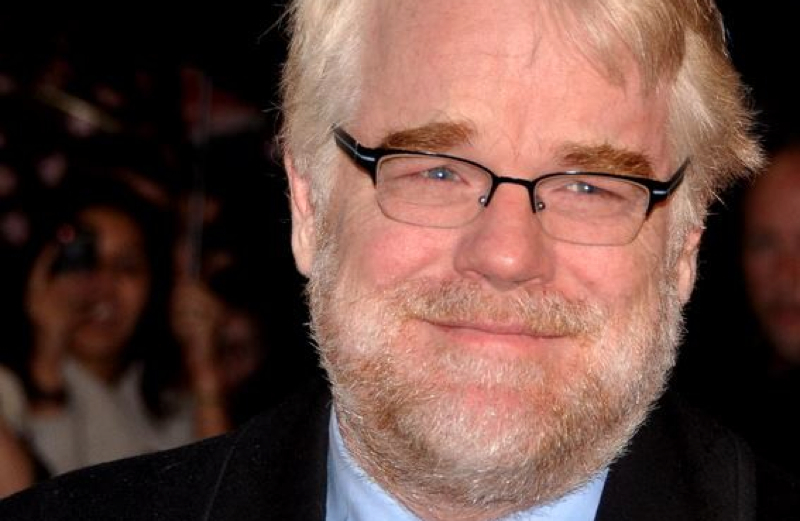
I wasn’t going to blog about the drug-overdose death of actor Philip Seymour Hoffman.

So much has already been said and there is not a very positive message in such a profoundly sad event. And I didn’t know him. But a friend of mine in recovery said today, “This hits so close to home.” He’s right.

Sweet Carolina Mysteries In Article Ad

Literally, in some respects. Julee and I live in Chelsea, one neighborhood north of Hoffman’s, just a couple of stops downtown on the 1 train from us. I first got sober at about the same time Hoffman did, some 25 years ago, before he made it big. An article about his death mentioned a small but well-known 12-step meeting he attended back then. I went to that same meeting too, almost every day. We probably sat together at some point, told each other our stories, held hands and prayed together at the end of the meeting, went out with a group (first names only) for coffee after. I probably bummed a cigarette off him.

I can’t count the number of hands I’ve held and the number of times I’ve recited the Serenity Prayer in the years since. The thought that many of those hands turned again to a drink or drug is very unsettling, even though researchers agree that addiction is a disease of pernicious relapse. But when someone who has been sober as long as Hoffman relapses, it sends out shock waves. And when they die, to an alcoholic like me, it’s as if reliable ground has shifted dangerously beneath my feet.

It may sound selfish, but any addict’s death is primarily a reminder of my own mental, physical and spiritual vulnerability. It is a dark blessing. It tells me that no matter how many years I am sober I am only one instant away from where I started. And that starting point was a particularly personal type of hell known as my bottom. Relapsing is like falling from the sky, the ground–your bottom–rushing up at you. There’s no such thing as a gentle landing.

Relapsing is a fall from grace. The concept of grace plays a big role in 12-step recovery. To me grace is the spiritual equity you accrue one sober day at a time, the blessings of a Higher Power that carry us up from our bottoms. Yet since it involves the frailty of humans, and of a particular type of human who wants to escape reality but cannot possibly escape himself, sobriety is a tenuous reprieve. It can be snatched away by the darker forces within us and around us at any second.

I don’t know why this man of such great gifts couldn’t hold on to them, especially after all those sober years. But it happens every day to people whose names we’ll never know. In the end, that’s what really hits so close to home.

A Faith Bolstered by the Titanic Tragedy

Whenever people ask me what I remember most clearly about that night on the sinking Titanic, I am hard put to choose. And yet, sometimes I think it just might be the stillness—the  stillness and the hymn we sang to blot it out.

It has always struck me as ironic that on the night the iceberg ripped that long gash in our starboard hull—April 14, 1912—the sea itself was serene. The air was frosty cold, but there was no wind and the sky was crowded with stars, all brazenly large.

Whistle Stop Cafe In Article Ad May 2023

It was calm aboard the Titanic, too, long after the collision, and an unreal attitude of nonchalance existed right up until the moment we were told we should get into the lifeboats. (“Only a precautionary measure, ladies.”)

Only then, as we collected around the boats, was there jostling and pushing, even though none of us knew at the time that those boats could take only 1178 people and we were 2207 passengers and crew.

“Stand back, stand back. Be British!” an officer barked, but the deck was sloping forward; water was pouring into the Titanic’s bow. I was just about to clamber into a lifeboat when a man stepped forward holding a bundle.

“Who will take this baby?” he cried.

Impulsively I reached for it, and with the child screaming in my arms, I found a seat for us. Even as we rowed away from the Titanic’s side, with distress rockets booming and blazing above us, we did not think the ship would sink, for we still believed that she was unsinkable.

In all, it took three hours for the Titanic to die. That last hour was a time of mounting terror as we watched what we could not believe—the ship’s stern rising out of the water, hundreds and hundreds of men and women still aboard, an orchestra playing ragtime tunes, lights twinkling.

When at last the Titanic stood straight up in the water, tall and slender as a skyscraper, the master of arms in charge of our lifeboat—his name was Bailey—suddenly stood up.

“Scream!” he shouted at us. “Scream!” as though our noise would mask and nullify what was about to happen. There was no help we could give to those still aboard the huge sinking ship; screaming, at least, was something we could do.

And so it was that as the Titanic slid roaring and rumbling into the water, we were all yelling. In the midst of death we were filling our lungs with screams of life, like babies out of the womb.

Then the stillness. That unforgettable silence. The oars of our boat trailed lifeless as our rowers slumped forward. All of us sank within ourselves, unable to speak, think or feel. The baby whimpered in my arms. A low moaning rose from the women mourning husbands and children. We were exhausted, afraid, forsaken.

Once again Master of Arms Bailey got to his feet. His eyes flashed in the starlight and his walrus mustache quivered as he said in the stillness, “Please. I want you to sing with me. Sing now, all of you. Please.” And his deep, resonant voice rolled out with, “Pull for the shore, sailors, pull for the shore…”

The men at the oars straightened. Here and there a faint voice picked up the words. Cracked and quavering at first, the voices seemed to draw strength from the old church hymn that so many of us had learned growing up in England.

“Pull for the shore, sailors, pull for the shore!

Heed not the rolling waves, but bend to the oar,

Safe in the lifeboat, sailor, cling to self no morel

Leave the poor old stranded wreck, and pull for the shore.”

With that hymn, we were God’s people again, each bending to his or her task, trying to make others comfortable, soothing the children, consoling the bereaved, doing what had to be done throughout the remainder of the night.

When morning came, so too did the rescue ship Carpathia, and soon we were safe on her decks, the baby I had held in my arms safe in its mother’s arms again.

I was 27 years old the year the Titanic sank, an unmarried young woman on her way to live in America. The memory of that disaster has never left me for as much as a day, but it has not been as ugly to recall as some might think, for one can always bring something good out of every bad experience.

I learned that night to concentrate on living life. During those hours when death and life were suddenly so starkly delineated, I realized once and for all that there is no real certainty in man’s world. Unsinkable ships do sink.

Yet I believed then, as I believe now, that there is certainty in God’s universe. When we sang that old, very familiar hymn I was reminded that we in that lifeboat were among the living, and when one is alive there is work to be done—oars to be pulled, shores to be reached.

So it was that the Titanic taught me that I should never waste my time pondering the riddle of death—and I never do, for I am much too busy accepting life.

Download your FREE ebook, True Inspirational Stories: 9 Real Life Stories of Hope & Faith

Adventure Awaits

This was all David’s fault. David, my longtime boyfriend. I mean, my ex-boyfriend. I had been so sure that we were soul mates, destined to spend the rest of our lives together.

David and I had met in high school and dated all through college and graduate school at Georgia Southern University. We were two months away from graduation when he took me out to dinner and popped the question.

Sugarcreek Amish Mysteries In-Article Ad 2023

Only it was the wrong question.

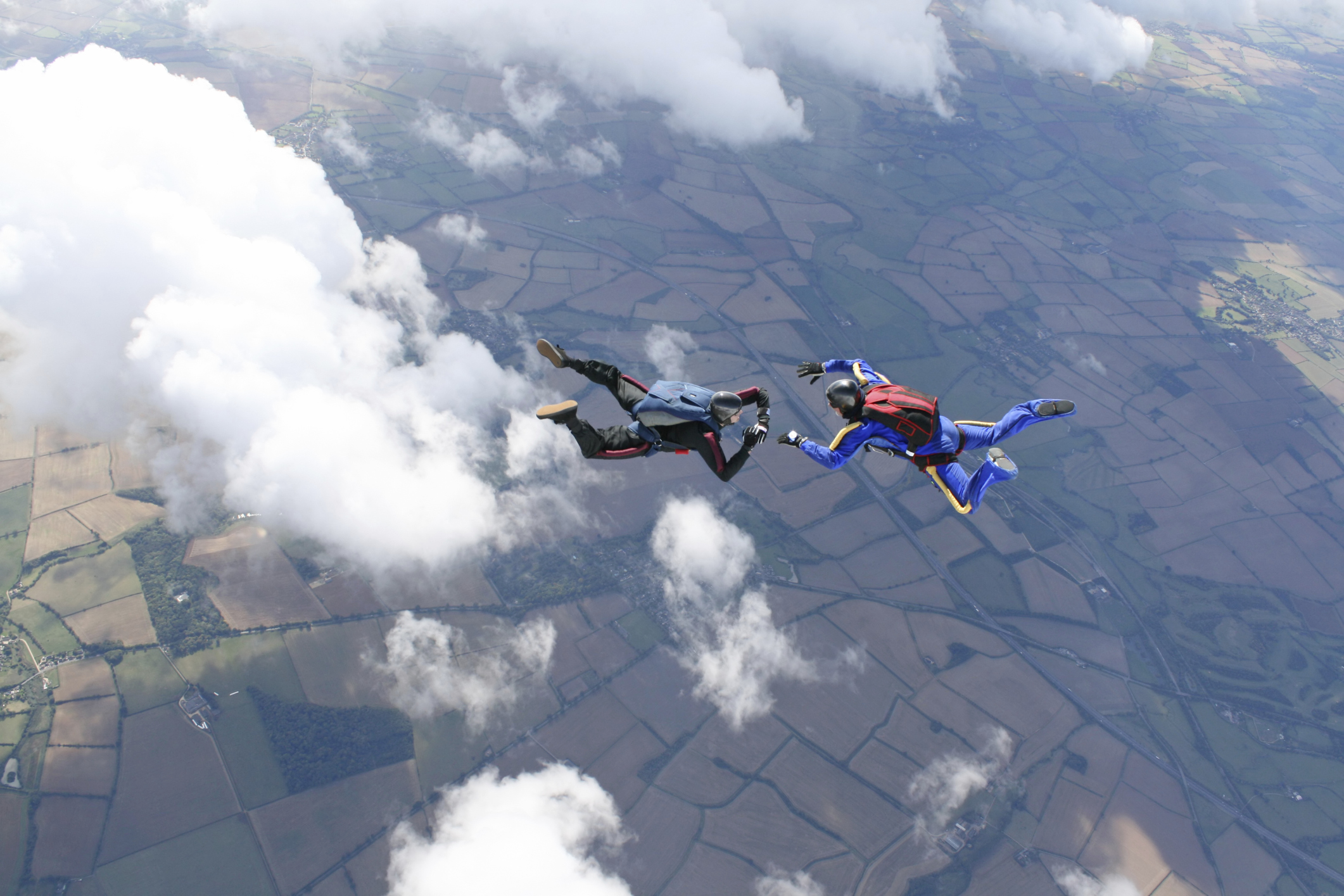
That’s why I was 3,000 feet in the air, in a small propeller plane, crawling toward the open door. Wind whipped at my face and my oversized red jumpsuit. I sat, dangling my legs out the door the way I’d practiced, and looked down carefully. Very, very carefully. Everything on the ground seemed so far away. The grassy field where I was supposed to land was the size of a pea.

“Ready?” the jumpmaster shouted over the engine noise.

Ready? Not me!

I wasn’t an adventurer, a risk taker, a daredevil. I was a homebody, a planner. I knew what I wanted out of life. And things had been going exactly as I’d mapped out. David and I had been together for six years. We were in love.

The next step was obvious. After we finished our master’s degrees—entomology for him, early childhood education for me—we would get married and settle down in our hometown of Statesboro. I’d teach at the elementary school I’d attended as a kid. David would find a good job too. Then we’d start a family.


So when David took my hand at dinner and looked deep into my eyes, naturally I thought he was going to ask me to marry him.

But that wasn’t what he asked.

“Julie, there are no jobs in my major around here. I’m going to become a Navy entomologist,” he said. “That means moving. Maybe across the country, maybe even around the world. You’ll come with me, won’t you?”

I couldn’t leave Statesboro! Everyone and everything God had blessed me with was here, not on the other side of the world. Just the thought of being uprooted made me panicky. “This is the only place I have ever called home,” I told him. “I don’t want to go anywhere else.”

“Statesboro will always be home for me too, but I have to go where my job takes me,” David said. “I love you, Julie. Please think about coming with me.”

I burst into tears. “I can’t. I’m sorry.”

David shook his head, looking as miserable as I felt. “I don’t think we should see each other anymore,” he said. “It’s only going to hurt worse when I ship out.”

Six years together, and just like that, it was over. I would have hidden away at home, nursing my broken heart and filling out my teaching application. But my best friend, Debbie, had other ideas.

She called me one day with such excitement in her voice that the phone almost levitated.

“Guess what, Julie?” She didn’t wait for me to answer, just rushed ahead in typical Debbie fashion. “I signed us up to go parachuting!”

“You what?”

“You need to get out. This will be the perfect thing to get your mind off your breakup,” she said. “We’re going to jump out of a plane. Next week. I already paid for it.”

“I can’t jump out of a plane,” I protested. “What if I break my leg? Or end up paralyzed?”

“Will you stop worrying and do something wild for once in your life?” Debbie asked. “Come on, it’ll be fun! Just imagine it—floating, the sky all around you….”

She kept talking about how cool parachuting would be.

I tuned out, my gaze wandering around my bedroom. Photos of David and me covered the walls and the top of my dresser, going all the way back to our first big date, the homecoming dance our junior year of high school.

In the corner stood the three-foot-tall stuffed dog he’d won for me on a church trip to Six Flags. The pink Izod sweater he’d given me on our first Christmas as a couple hung over the back of a chair. I’d worn it to tatters but I couldn’t bear to toss it.

Everywhere I looked, there was something that reminded me of David, and how our lives were intertwined. David and I were so different, it was a wonder that we came to be attracted to each other at all.

He was the son of academics, I was a farmer’s daughter. His family belonged to the country club, mine was just country. He was Methodist, I was Baptist. We didn’t meet until eleventh grade, when we ended up in the same chemistry class and discovered we had more than a little chemistry of our own.

Of course I had noticed the hunky guy with the adorable smile, but I didn’t think that he had taken any notice of me. Then, one afternoon in class, he saw that the laces on my tennis shoes were undone. “Let me tie those for you,” he said, and proceeded to get down on bended knee. My shoes were so cheap and old that when he pulled on the laces, they broke right off.

The world looked so different from
up here. So much bigger and more
spectacular. So…inviting. Was
this what God wanted me to see?

Not that I cared. The class hunk was flirting with me!

“Julie, you there?” Debbie said.

“Yes.”

“Yes, you’re there, or yes, you’ll jump with me?”

Maybe I did need to do something wild. “Both…I guess.”

A week later, Debbie and I were at jump school. We practiced how to depart the plane, how to deploy the chute and steer it, how to land safely, what to do in case of emergency. I was intrigued by something else the instructor told us. “The word parachute is French,” he said. “Para means ‘shield’ and chute means ‘fall.’ A parachute does exactly what its name says. It shields you from a fall.”

That made me think of one of my favorite verses, Psalm 119:114: “You are my refuge and my shield; I have put my hope in your word.” Why hadn’t God shielded me from heartbreak? He knew I was a small-town girl. Why did he let me fall in love with a Navy man who wanted to see the world? Was it God’s fault, not David’s, that I was about to jump out of a plane?

All those questions, and more, ran through my mind as I sat, my legs dangling out the open door. What if I let go too early? What if my parachute lines got tangled? What if something else went wrong, something I hadn’t even thought of?

The jumpmaster shouted again. “Ready now?”

Not really, but Debbie would never let me hear the end of it if I backed out. I felt behind me, checking just one more time that the parachute was in my pack.

I grabbed the strut—the part holding the wing in place—firmly with both hands. The metal was cold. I inched toward the drop marks—two pieces of tape on the strut that showed where I was supposed to hold on before releasing my grip.

There. The drop marks.

“Go!” the jumpmaster commanded.

Good thing the roar of the propeller drowned out the pounding of my heart. I took a deep breath and let go. Of the strut, of safety, of all reason.

I went plummeting through the air. One one thousand, two one thousand, three one thousand, I counted. I reached for the rip cord and pulled. My body jerked upward. I glanced over my shoulder. My chute billowed reassuringly and hovered over me, easing my descent.

For the first time since I’d gotten into the plane, my heartbeat slowed back down to normal. I tugged on the toggles, my brakes, and steered toward the landing spot.

The sky was robin’s egg blue, with only a few wisps of clouds in the distance. Stretching below were grassy fields like patchwork stitched together by roads and fencerows. A ribbon of silver—a stream—meandered through the trees and found its way to a larger body of water.

The world looked so different from up here. So much bigger and more spectacular. So…inviting. Was this what God wanted me to see? That falling in love meant expanding my horizons, opening my heart and my imagination to a world beyond the little patch that I knew? Yes, he would shield me from harm, but not from experiences meant to help me grow.

The ground rushed closer. I pulled on the toggles and got into position for landing. My feet touched the earth. I rolled the way we’d practiced, got to my knees and stood, feeling triumphant. Debbie had landed too. She ran toward me, grinning.

“So, are you handing in that application to teach at your old school?” she asked me.

“Nah,” I said. “I’m going to call David.”

Guess what? David and I got back together and got married. More than 25 years later, we live in Statesboro. But only after moving all over the country and traveling all over the world, courtesy of David’s career. Like the Navy slogan says, “It’s not just a job, it’s an adventure.”

Our marriage has been an adventure too, the most wonderful kind, where love led the way.

A Doctor’s Leap of Faith

Browsing the internet recently I came across a story from McAdoo, Pennsylvania (a short drive away from my hometown). Around this time last year, Justin Smith, 26, was walking home from drinks with his co-workers. He doesn’t remember what happened, but he must have tripped and fallen and knocked himself unconscious.

Don Smith, his father, found him the following morning, frozen on a snow bank. “He was blue. His face was lifeless. I checked for a pulse. I checked for a heartbeat. There was nothing,” he told WNEP news.

Pray A Word a Day - 2023 In article

“The coroner was on scene. The state police were on scene. They were doing essentially a death investigation,” said Dr. Gerald Coleman, the emergency room physician on duty when Justin’s body was brought into the hospital.

Of course–I wouldn’t be writing about it otherwise–it all ended well. After three weeks in a coma, Justin woke up, with no brain damage. Incredibly, Justin recovered completely.

That miracle wasn’t all that caught my attention, however. What I found most remarkable is what Dr. Coleman did. He wouldn’t give up on Justin and pronounce him dead, even though all his training told him the situation was hopeless. “Our mind is supposed to run the show, not our hearts because if your heart runs the show, you can run into some problems,” Dr. Coleman said. “I just kind of threw that to the wind and said, ‘No, not today.”

That’s the kind of doctor I want to see–one who can make the leap beyond what can sometimes be the cold, indifferent logic of medicine. This news item got me thinking how so many of our stories of healing and recovery feature, in one way or another, a care-giver who takes a leap of faith or who goes beyond standard protocol. In the December/January issue of Mysterious Ways, my co-worker Diana Aydin interviewed Dr. Mimi Guarneri, a physician who certainly falls into this category. Dr. Guarneri told Diana that the heart, for example, is not just a functional organ but “the connection to higher power and consciousness.”

I’d hesitate to go to a “faith healer”–I prefer a doctor with a medical degree–but after reading stories like these, I’m inclined to see a doctor who, at the very least, remains open to faith. A doctor like Dr. Guarneri, who believes that I am more than just a body manifesting certain symptoms related to some kind of biological dysfunction–that my body is connected to something else. Or someone like Dr. Coleman, who sensed something greater than himself, whatever that may have been, was telling him to keep trying to save a life, against medical common sense.

Has a doctor or caregiver ever taken a leap for you? Have you taken that leap for others? Share your story with us.

A Devotion to Lessen Anxiety

“The Lord is my light and my salvation; whom shall I fear? The Lord is the stronghold of my life; of whom shall I be afraid?” Psalm 27:1 (NRSV)

When I am afraid I can’t hear the Lord. My anxiety blocks out every good thing. It takes over my body. I tremble; I cannot sleep.

New Every Morning Journal In Article Ad A

My mind runs wild imagining the worst. There is no light or respite in fear. It’s a fog that overtakes me and I can’t see past the present moment. It is blinders that hide from me the many blessings I have been given.

Gratitude dissolves. Hope disappears. It’s like quicksand. The more I struggle, the deeper I am entrenched. I’m like a terrified child who is sure this bad situation will not—cannot—end.

READ MORE: BIBLE VERSES FOR WORRY AND STRESS

I must look to Jesus, to find His outstretched hand, His comforting gaze, the movement of His Spirit. Alone, I’m drowning and I cannot swim. Through the clamor these are the words I long to hear. Trust Me. Don’t be afraid. Rest in My arms today.

Faith Step: Look for Scriptures that talk about alleviating fear and worry. Comfort yourself with them today.

READ MORE: 10 BIBLE VERSES TO BANISH FEAR

A Death Row Chaplain Puts Alcohol and Drugs Behind Him

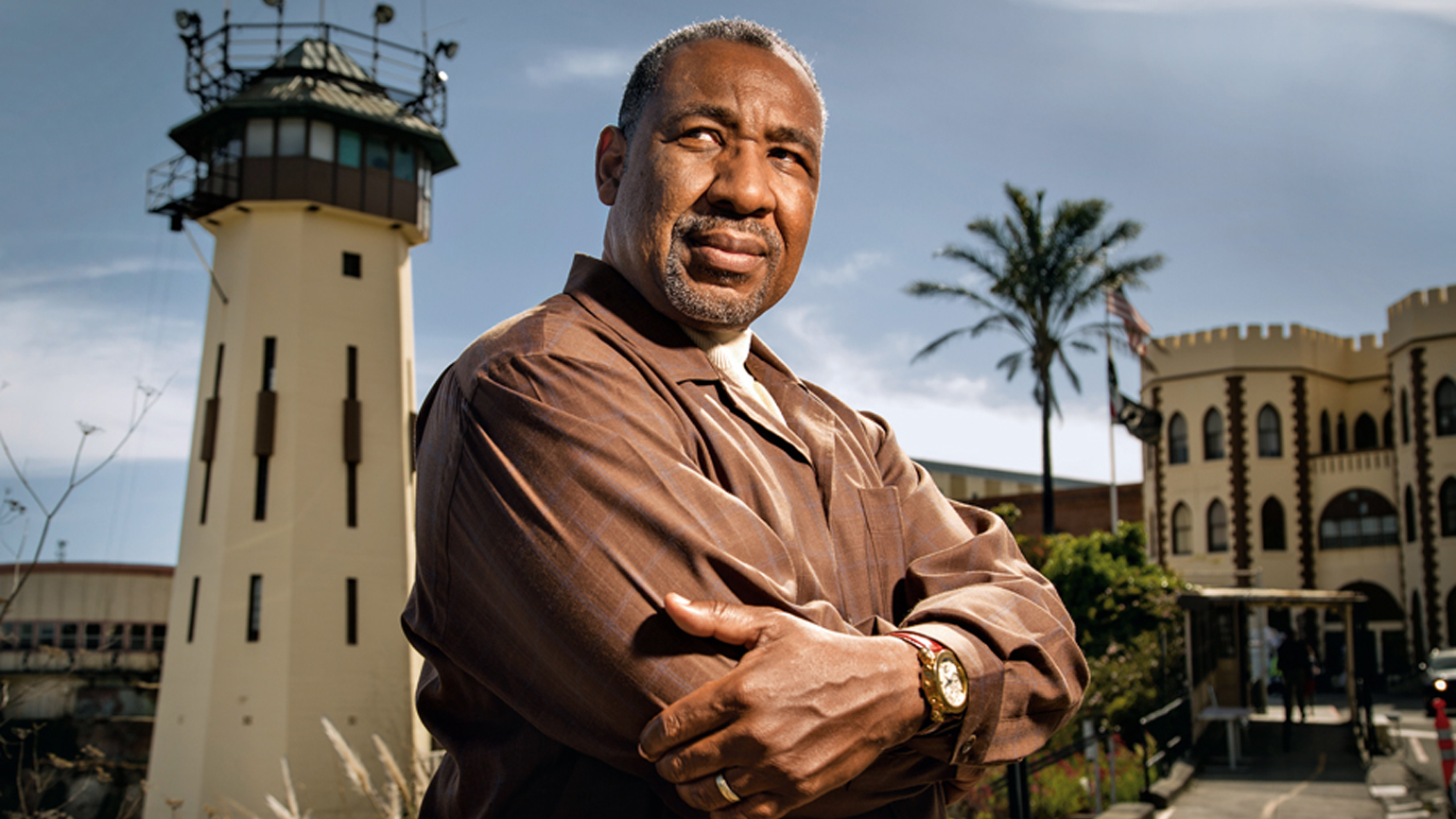
Editor’s Note: As chaplain for the Golden State Warriors, Earl Smith had a lot to celebrate when the team won the NBA Championship on June 12, 2017. Before he worked with the Warriors, he was chaplain at San Quentin State Prison.

Christmastime at San Quentin State Prison, America’s most notorious maximum-security lockup. It was the job of chaplains like me to bring the inmates some holiday cheer.

The Daily Bible Large Print relaunch with digital free gift in article ad

I didn’t have much cheer myself that Christmas. I was a brand-new chaplain, with less than five months on the job. The darkness and despair of more than 5,000 men living behind bars overwhelmed me. How could anyone bring God’s light here?

Few places in the world are grimmer than San Quentin, home to America’s largest death row. The 163-year-old prison juts out into the frigid waters of San Francisco Bay, surrounded by guard towers and rows of razor wire. Cells and hallways are cramped and decrepit.

Entrance to death row is through a single steel door with the words Condemned Row imprinted on the wall above. Charles Manson and the “Night Stalker” serial killer are part of the forbidding roster of murderers and gang kingpins who have all served time here.

In my mind, I had accomplished exactly nothing since starting this job. Prisoners are shrewd and suspicious, slow to open up. My attempts to form pastoral relationships had failed.

That day, December 13, I was handing out packets of Christmas cards to inmates who wanted to send holiday greetings, feeling more inadequate with each delivery. Nothing will do that to you more than a prison, inmate or not. They are the starkest, toughest places on earth.

It wasn’t supposed to feel this way. If ever a minister was called to a job, I was called to be a chaplain at San Quentin. When I say called, I mean I heard God’s voice at maximum volume. He even used the words San Quentin.

I grew up in a racially segregated neighborhood in Stockton, California. My parents made me go to church, but I was more into drugs—using and dealing. By the time I graduated from high school, I was overseeing a network of suppliers. I was feared on the streets of Stockton. People who crossed me regretted it.

One evening, Michael, one of my dealers, came to my apartment. He owed me money, so I figured he was coming to pay. A guy named Steven Moore was with him. We sat down and before I knew what was happening, Steven pulled a gun and shot me point-blank six times. I dove under my coffee table. Steven calmly shot me in the back.

“Let’s go,” Michael said. “He’s done.”

A neighbor called police. “You’re going to die,” a doctor told me in the hospital trauma ward. Barely conscious, I found myself alone in a room, in searing pain, awaiting surgery.

Suddenly, the pain vanished. Totally. A profound peace came over me. For an instant I thought maybe I was dead. Then a voice spoke, clear as a bell: You’re not going to die. You have things to do. You’re going to be a chaplain at San Quentin.

That was all. but it was enough. i started going to church again and eventually made my way to college, where I graduated with a degree in religion. Becoming a pastor was a long road. I kept relapsing into my old life, drinking and doing drugs.

I even found myself wondering what it would be like to come face-to-face with Steven Moore and do to him what he had done to me. An eye for an eye, right?

In college, I’d married a faithful, patient woman named Angel. With her support I got serious about my vocation. I put the drinking and drugs behind me and made amends to people I’d hurt. I even convinced myself to forgive Steven Moore. I mean, didn’t I have to say that?

I was 27 when San Quentin offered me a job as a chaplain. I started on a six-month probationary period. Many candidates don’t make it past that period. Like me, they feel overmatched by the prison’s impenetrable despair.

That December afternoon, as I pushed a cart stacked with Christmas cards down a row of cells, I figured my time at San Quentin was about over. My six-month review was coming up and I had nothing to show for myself. Obviously, God had called the wrong man to this job.

I was in the section called North Block. At cell 66 I extended a packet of cards toward the inmate, who was leaning against the bars of his cell door. All of a sudden my stomach balled up. I broke into a sweat. The man looked at me blankly—a look I got from many inmates who couldn’t care less about a visit from the chaplain.

“What’s your name?” I asked.

His entire expression changed. His eyes widened and he jumped back all the way to the rear of his cell.

“Ace,” he said with a croak. But that was a street name. I knew his real name. Steven Moore. He hadn’t recognized me at first, but I knew him on sight. How could I not? When someone looks you in the eye and shoots you pointblank, you don’t forget his face.

It’d been eight years. He was a juvenile then, just 17, a budding L.A. gangster visiting family in Stockton. He’d agreed to take me out as a favor to Michael, the dealer who owed me money.

Steven knew as well as I did what this encounter meant. Though I hadn’t formed any close relationships at San Quentin, I had met inmates I’d known back on the streets. All it would take was a subtle signal—me telling someone Steven had tried to kill me—and he’d be dead before Christmas. A quick twist of a shank in the yard.

The harsh economy of prison runs on debts and obligations. Plenty of inmates would want to do the chaplain a favor.

My heart pounded. All my old street instincts came crashing back. I had Steven Moore right where I wanted him! Hands shaking, I laid the stack of Christmas cards on the bars of his cell. I pushed my cart down the corridor.

I didn’t get far before I burst out weeping. I tried handing out more cards but I couldn’t even say “Merry Christmas.”

“What’s wrong, chaplain?” inmates started asking.

At the end of the corridor I leaned against the wall, tears streaming down, my whole body shaking now. The only way out of the cell block was back down the corridor. Past Steven’s cell. I couldn’t do it. I couldn’t make my feet move.

I stood there, the wall cold and hard against my back. With crystal clarity I saw why my ministry at San Quentin had stalled. My life had changed enormously since that night eight years ago. But the change was on the outside.

If I’d truly changed, I would’ve been able to look Steven in the face and greet him in the name of Jesus. But I couldn’t. I hadn’t forgiven him. I hadn’t left my old life behind. No wonder I failed to minister to these men. Inside, I was just like them. Imprisoned behind years of slow-burning hate and anger.

I pushed my cart back down the corridor, each step agonizing. I passed cell 80. Then 70. My pace slowed. Cell 68, 67. I stopped at cell 66. I was all set to say something terrifying to Steven—something so he’d know he was going to get what was coming to him. But a voice inside me gave me different words.

“Hey, I want to thank you for shooting me,” I said, too softly for the other inmates to hear. “God used you to get to me.”

Steven said nothing. He just stared. I hurried away, unsure what I might do next. When I finished handing out the cards, I returned to my office, collapsed in my chair and sobbed. A huge weight seemed to lift from me. I felt free. Like my own steel door had flung open, revealing a world of light and air.

I remembered the peace I’d experienced the night Steven shot me. Now I knew that was just a glimmer. This was the real thing.

From that day forward, my ministry at San Quentin took off. The inmates must have sensed I understood them in a new way. A few guys came to chapel. I started a prison baseball team. I played chess with prisoners.

And I forged deep pastoral relationships. For most inmates, it’s the inner incarceration that’s most damaging. They carry profound pain from their childhoods. They feel worthless because of their crimes. They nurse grudges and hang on to hate.

I made it my mission to help prisoners understand that even if they serve their term and are released, they’ll remain behind bars until they deal with their inner pain.

Steven Moore requested a transfer to another prison. I never saw him again or told him I forgave him. That’s okay. Forgiving him was something I needed to do for myself. It allowed me to put my old life behind me for good. And to accept that God had forgiven me too. That’s how I brought a little bit of God’s light to a place as dark and despairing as San Quentin. I opened up the cell doors of my own heart.

This story first appeared in the July 2015 issue of Guideposts magazine.

Death Row Chaplain book coverEarl Smith is the author of Death Row Chaplain: Unbelievable True Stories from America’s Most Notorious Prison, published by Howard Books (May 19, 2015).


Addiction, Recovery, and Christian Tattoos on ‘Preachers of L.A.’

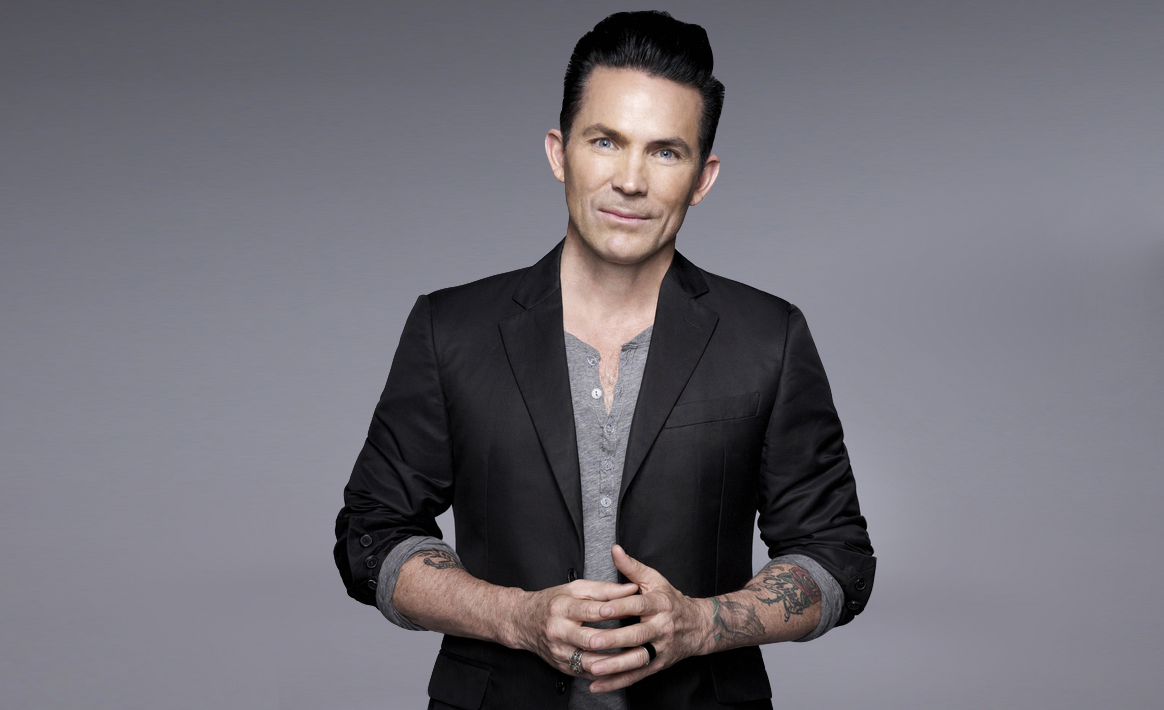
For the past two seasons of Oxygen’s hit reality show, Preachers of L.A., Pastor Jay Haizlip has let the world into his life — as pastor of Orange County megachurch The Sanctuary, husband to Christy Haizlip, and father of three.

Audiences have seen the Haizlips minister to a visibly anorexic woman they met while walking through a California park, pray with the homeless, and reach out with loving, welcoming arms to a transgender man and member of The Sanctuary.

NIVFLB Inarticle ad

“This is who we are,” Haizlip tells Guideposts.org of what viewers have seen of his ministry on TV. “The most exciting thing about our life is what we do in ministry, and I love what we do.”

Haizlip was not always a Christian.  As a pre-teen, Haizlip says he was exposed to drugs and partying due to his young mother’s “hippie lifestyle.” He’d started smoking weed and drinking wine at 12 years old. By 15, he was using cocaine, became addicted, and struggled to kick the habit for 12 years.

Despite his addiction, Haizlip rose to celebrity status as a professional vertical skateboarder. Still, he felt himself drowning in hopelessness. In his final two years as an addict, Haizlip tried desperately to get free from drugs, even checking himself into rehab. But all of his efforts failed. After his last stint in a treatment center, he immediately relapsed, and used cocaine all weekend. He felt like he was beyond hope. He cried out to God to help him.  Two weeks later, on his way to score more cocaine, Haizlip made one stop that changed his life forever.

He shares with Guideposts.org how God delivered him from drugs, why he believes it’s not a sin for Christians to get tattoos, and how Christians can learn to let go of their past.

GUIDEPOSTS: What happened the night you finally kicked your drug habit?

JAY HAIZLIP:  I’d sold this man a car and was dropping it off on my way to go do my cocaine deal. He’d just ordered Dominos Pizza and so he invited me in to have some. I thought, ‘Well once I buy coke, there is not going to be any eating, so I thought, sure.’ While I was in his house, he started to talk to me about Jesus.

I don’t ever remember anybody talking to me about Jesus the way this guy was. I mean, he was talking about Jesus in such a personal, intimate way it made me feel like Jesus was going to walk in the room at any moment. That night, I just opened up my heart and asked, ‘How do I get saved?’ The man opened up his Bible to Romans chapter 10 and read verses 9 and 10 to me, that says, ‘If you believe in your heart that God has raised Jesus from the dead and confess it with your mouth, you will be saved.” He led me in a simple prayer asking Jesus to come into my heart, be my Lord, be my Savior, forgive me of all my sins.

And as I was praying that prayer I felt all the hurt, the pain, everything I had ever done, everything I had ever gone through that was bad, I just felt it coming out of me, lifting off of me. Right then in that moment God filled me up with peace. The peace and joy God gave me, it was so indescribable. When I stood up from praying that prayer, I knew that my life had been changed. That was the last time I used drugs ever.

GUIDEPOSTS: Many of your parishioners can relate to you because you’ve been so open about what God’s delivered you from. How do you minister to those who have prayed similar prayers for healing but have not received the same kind of instantaneous deliverance you received?

JH:  That’s a great question because as a pastor, and people know my story, a lot of people come to our church hoping they can get free. Sometimes it’s instantaneous—I had what I call a Damascus Road Experience—and sometimes it’s a process. I do believe for my family there was a generational curse.  My granddad was an alcoholic, my mom was a heavy partier, I was a heavy partier. But when Jesus came into my life, through what He’s done on the cross, I don’t have to live under the power of a curse any longer because the work of the cross sets us free. The curse is broken.  

One thing I am confident of is, ‘Who the Son sets free is free.’  Whether someone gets freedom instantaneously or it’s a process they can be free and will be free.  And what we do is encourage people to just begin to walk out the process. We try to create a culture here where you can be real and honest, that you don’t have to front or fake anything. If you’re struggling or you blew it, we want to bring that out into the light because we can only help people to the level they’re willing to be transparent. And a big key to walking out the process is the renewing of our minds. It’s learning how to recognize unhealthy thoughts and replace those unhealthy thoughts with God’s good thoughts. It was our thinking and our choices that got us to where we are and it will be our thinking and our choices that get us to where God wants us to be.

GUIDEPOSTS: There’s been a lot of criticism of Preachers of L.A. due to flashy and materialistic lifestyles of the other cast members on the show. Why stay on reality TV?

JH: I love all the cast members. Loving people doesn’t mean I agree with everything they do or how they think or how they live. I do think there is a standard that Scripture teaches that guys in ministry should be successfully living. I know that when I get to the end of life, the Bible says that ministers are going to be held to a stricter judgment than anybody else. And I would never want my life to be a stumbling block to other people. I knew in my heart that God wanted us to do this show because we really felt like our mission was to represent God in a way that He wouldn’t be represented if we weren’t there.

And I’m not pointing fingers. I think it’s good that people see transparency but at the same time sometimes we can go through certain things in life where we need to say, ‘Is this really the right season for me to be in ministry? Maybe I need to be the guy receiving ministry and not actually doing the ministry.’

GUIDEPOSTS: How should ministers know when it’s time to step away and receive ministry?

JH: One thing I’ve discovered is that while Jesus is the head of the Church, and Jesus is the head of my life, I also need men that I can trust. [I need friends] that I can be absolutely transparent before and I can give them the authority to tell me no, and women as well. I think the Bible is very plain. God uses men and women.

GUIDEPOSTS: You’ve also been open about your position on tattoos, even adding a new one to your collection while filming Preachers of L.A. From women in ministry to Christians getting tattoos, how can we solve these different ideas we have about what it means to be a Christian?

JH: Well, some of that is cultural. For me, I process that through Scripture and I would never force my freedom on somebody else. If somebody else has a conviction that they are not to do something like get a tattoo, then I respect that and I encourage people to honor that conviction. There are what I call the absolutes in Scripture that are non-negotiable: the virgin birth, the sinless life, the death, the burial, and the resurrection of Jesus and the fact that He is coming back for us. Those things have to do with whether a person is going to go to Heaven or not. Then there are what I call the secondary doctrinal issues. For example, some organizations don’t believe that women should be in ministry, other organizations ordain women to be in ministry. Some organizations sprinkle people with water for baptisms, other people immerse people in water for baptism. I’m okay with differing on those things because they aren’t what keep us out of Heaven. The secondary things affect how we live our life here on earth, how we walk out our salvation, how we live out our Christianity. I’m not going to get into an argument about that. I’m just going to keep on loving. I love everybody, period, but I’m not going to engage in a doctrinal fight over those certain points.

Addiction Claimed Her Son’s Life, But Not His Story

Seven years ago, my husband, Steve, and I lost our oldest son to a heroin overdose. Justin was 29. He’d battled opioids for six years, starting with prescription pain pills and progressing to heroin. The odds of recovering from heroin addiction once a user begins injecting the drug, which Justin did, are frighteningly low. Justin did not beat the odds, although we thought he would.

Losing a child is an unimaginable experience. After Justin died, I questioned everything. Myself. How Steve and I had raised Justin. Whether we should have spent less time at work, paid more attention, recognized the warning signs. I questioned how a healthy, happy boy could become a drug addict in a safe and prosperous suburb.

Pray a Day Vol 2 In Article Ad

My story is about my search for answers to those questions. A search fueled by the anger I felt after Justin died. Immediately after his death, I was enraged at what seemed like an entire system that failed our family. We had no warnings that deadly drugs were infiltrating our schools and communities. Treatment centers we tried didn’t work. Therapists weren’t well-trained to treat the disease of addiction.

I’d always assumed drugs were someone else’s problem—an inner-city problem, a problem for troubled kids in dysfunctional families. I was wrong. I felt blindsided.

The nonprofit organization Steve and I founded a month after Justin died, Drug Crisis in Our Backyard, exists to help other families avoid the mistakes we made. We educate kids and parents about addiction, advocate for treatment and work to dispel the stigma that prevents people from dealing with drugs in a constructive way.

With God’s help, my anger and my grief have been transformed. Justin fought hard against drugs, and now I’m a fighter too. I miss him terribly. But the work I do reminds me every day that he is by my side. Never in a million years could I have imagined that my firstborn son would die of a heroin overdose.

Steve and I were a successful couple raising a family in a middle-class suburb of New York City. We both worked high-powered sales jobs and earned a comfortable living. Our kids—Justin and his three brothers—went to good schools. Justin was a cooperative child. He never gave his teachers any trouble.

If anything, he was a little too quiet. He was shy and didn’t like competing in team sports. On the peewee soccer field, he pulled his shirt over his head and ran from the ball. He found a refuge playing guitar and in a few close friendships. In an attempt to be cool in high school, he started smoking cigarettes and experimenting with marijuana.

Thinking it was a phase, we tried not to make the problem worse by coming down too hard. But Justin’s drug use worsened, especially in college, when he struggled living on his own. He turned to harder drugs—using and selling—to ease his anxiety about himself.

Whatever complacency Steve and I had allowed ourselves blew apart when Justin was asked to move out of his dorm because of marijuana possession and arrested a week later, after police found psychedelic mushrooms in his car.

His girlfriend broke up with him and told Steve and me Justin was using “perks.” We didn’t even know what that was. She explained that our son was using Percocet, an addictive prescription painkiller. In 2008, he was arrested for illegal possession of OxyContin, another widely abused painkiller.

Steve and I enrolled Justin in a rehab program, attended Narcotics Anonymous meetings with him and monitored his every move. His spiral of addiction only deepened. In rehab, another patient told Justin about heroin, which is far cheaper on the street than pain pills.

The last four years of Justin’s life were an exhausting blur of treatment, relapse, overdoses and legal troubles. By the time Justin died, he was in a group home for people who needed help with daily living—one of his overdoses had left him with a brain injury.

I was at work when I learned Justin was dead. By then, I’d changed careers, teaching in an elementary school so I could spend more time at home. The school office called my fifth-grade classroom. “Susan, can you step into the hall? Your sister needs to talk to you.” Steve had called the school, and my sister, who also taught there, gave me the news in person.

Driving home, hands gripping the wheel, I wanted to scream, to weep, to close my eyes and never open them. And I wanted answers. I felt so angry. So powerless against forces I couldn’t comprehend. “Why, God, why?” I shouted.

When Justin wasn’t using, he was a kind, caring, sensitive, smart, funny young man. He hated being an addict. He was ashamed of what his life had become and yearned to be whole again.

Why did the drugs claim him? What did we do wrong?

I got my first inkling of an answer at the wake we held for Justin. So many people came! Residents from the group home. Friends from NA and AA. Others in the local recovery community. I had no idea so many people struggled with addiction in our town.

That showed me three things. One, drugs are immensely powerful and do not discriminate between rich and poor, young and old, good families and dysfunctional families.

Two, addiction is a brain disease. Why else would so many good people ruin their lives like this?

Three, addiction carries a stigma that prevents people from being open about the problem. Our town prided itself on being a better place to raise kids than less prosperous areas. Steve and I assumed ours was the only family struggling, and we tried to cover up for Justin.

Once Justin had been laid to rest, I was left with my grief and my anger. I couldn’t bring my son back. I couldn’t stop the flow of drugs into our community. What could I do?

The answer came as I was reading The Mahopac News, our local paper. What if I wrote a letter to the paper and told the entire town about what had happened to Justin? Maybe some other family going through the same thing could at least know they weren’t alone.

I sat down and wrote a long letter about Justin. His happy childhood. His descent into addiction. His death. I bared it all, including the things Steve and I wished we had done differently, especially the way we’d enabled Justin’s addiction by downplaying warning signs and supporting him financially.

The day the letter was published—16 days after Justin died—our phone rang. “Susan Salomone? My name is Carol Christiansen. I just read your article in the News.” The woman on the phone paused. “My husband, Lou, and I buried our son, Erik, earlier this morning.”

After crying together on the phone, Carol and I agreed to get our families together. We formed a bond right away. Like Steve and me, Lou and Carol didn’t want to drown in grief. They wanted to do something.

We decided to further the education effort my letter began. We scheduled a forum about drug addiction at the town library. We invited a few experts—a pharmacist, a police officer, a state trooper and a youth advocate—and advertised in the paper. We wondered if anyone would show up.

Two hundred people came, overflowing the meeting room. I stood before the crowd and told Justin’s story. “People are afraid to talk about drug addiction in our town,” I said. “Until we acknowledge the problem and work to stop it, the drugs are going to win. For Erik and Justin’s sake, let’s do something.”

We got a standing ovation. We organized more forums and formed Drug Crisis in Our Backyard. We spoke at schools, community groups, anywhere we could raise awareness and share what we had learned. In the following years, I served on a government task force, earned a substance abuse counseling certificate and posted a comprehensive list of resources on our website.

I persevered against opposition. Once, after scheduling a forum at a nearby town, I was contacted by a real estate agent. “We’re trying to sell houses here,” the agent said. “This isn’t the image we want to project for our community.”

Image? My son’s death was too real for me to worry about things like that.

I wish I could say doing this work has eased the pain of losing Justin. In some ways it has. But not entirely.

I still wonder what Justin, who would now be 35, would be doing if he were alive. I wonder whether I should have worked less when Justin was little, paid more attention to his shyness and responded more decisively to his early drug use. I know from research and from Al-Anon that such questions lead down a false path of taking responsibility for Justin’s addiction. In the end, the only person who could defeat Justin’s addiction was Justin.

Still, I miss him and my questions linger. I have to remind myself to see Justin’s death in a larger context. For so long, I raged at the forces that took my son from me. Now I experience God’s grace in the work Justin’s death has inspired me to do.

Every time I see hope in another beleaguered parent’s eyes. Every time heads nod when I give a talk about kids and drugs. Every time we score a small legislative victory—two years ago, New York’s governor signed a reform package incorporating recommendations from an opioid task force I served on—I feel Justin, and God, at my side.

Justin was so shy when he was alive. But I know he’d be grateful I am telling his story and fighting against the disease that claimed his life.

For more inspiring stories, subscribe to Guideposts magazine.

Addiction and the Power of Faith, Hope and Prayer

Adapted from Edward Grinnan’s Editor’s Note for the September 2018 issue of Guideposts. If you’d like to subscribe, click here.

I was still new at Guideposts when I pitched the idea of a series focusing on narrators who had struggled with addiction—either themselves or in their families. My editor shook his head and said, “I’m not sure enough families identify with that problem.” Maybe my own experience with addiction skewed my thinking, I concluded.

Sugarcreek Amish Mysteries In-Article Ad 2023

American families affected by alcoholism, drug dependency and other devastating addictions now number in the tens of millions. Surveys suggest that addiction has touched as many as a third of all families. America is undergoing an epidemic of addiction. Then there are the conditions that are brought on or worsened by addiction: heart and liver disease, diabetes, cancer, depression and dementia, to name just a few. Suicide rates are on the rise as well. The medical cost of addiction to our society is estimated to exceed 600 billion dollars annually. That’s almost as much as the Pentagon gets. The cost in lives is incalculable. We are literally at war.

The stories in our Overcoming Addiction editorial series prove it is a war we can win with faith, hope and prayer. With compassion and understanding. With a commitment to loving the addict or alcoholic until he can love himself. We must believe that no addict or his family is beyond hope because hope is the lifeline we offer. As I recounted in my book The Promise of Hope, for years I lived a life devoid of any existential imperative other than the next drink or drug until I found that hope in the stories of others, initially in a 12-step group. Guideposts was meant to be my “recovery job” early in sobriety. I was only supposed to stay a year. That was 30 years ago. Your stories are why I stayed. Your stories helped keep me sober. You helped save my life.

September is National Recovery Month. Learn what Guideposts is doing in this war against addiction. For one thing, we are launching an initiative called Resolve to Quit by partnering with leading recovery and advocacy groups. There’s so much to be done, and we are counting on your help. I know how much it has meant to me.

Join Edward in our Facebook Live event on September 12, 2018 at noon (ET) to celebrate National Recovery Month: facebook.com/guideposts.

Addiction and Recovery: 8 Lessons from a Relapse

Every morning, i look in the mirror and I like the guy I see. My mother and God are the reasons for this.

Every day, I give thanks for being alive, for having two children I love, for having a woman I love, a job I love. When someone asks how I’m feeling, I usually say, “Supercalifragilisticexpialidocious.”

The Lies That Bind In Article Ad

I’m a comedian, an actor and a motivational speaker. I’ve done street comedy, stand-up, television, movies. I’m supposed to say funny stuff.

Except now I mean it. That’s also because of Momma and God.

Seven years ago, I was a hard-core crack addict. I’d smoke rock all night, then come home at 3:30 a.m., feeling crazy and exhausted. My wife would be in the bedroom, having fallen asleep waiting up for me. I’d sit beside her feeling sick and guilty. Then I’d go into the bathroom and smoke another rock. That’s the life of a crackhead.

I used crack for 23 years. But I was a functional addict. I worked, made money. I was successful. Everybody thought I was hilarious. Inside, though, I was a mess.

How did I stop? They say addiction runs in families. My dad was an alcoholic. He drank a fifth of booze a day and died of a heart attack when he was 51.

Thanks be to God, recovery runs in families too. I never told my momma about my addiction, but she knew. Of course she knew. Momma always knows. More than anyone else, she inspired me. She loved me, prayed for me, never gave up on me. The rules she taught me growing up—love God, be kind, respect yourself and others—formed my foundation. I leaned on that foundation in recovery. Momma’s love came from God. At last that love reached me and helped me get clean.

Growing up, I never knew that my family and I were poor. When everyone around you is poor, you don’t know what you don’t have.

I was raised in the Robert Taylor Homes, a 16-story public housing project on the South Side of Chicago. When we moved there in 1962, most families saw the projects as an improvement on the falling-apart places they came from. That’s how it was for us. We were on an upward path.

We would have stayed on that path if my dad hadn’t drunk all the money he made. He was a tailor who could alter and press a suit to perfection. The minute he got paid, he took that money and bought a case full of booze. Whatever he didn’t drink, he sold on Sundays when liquor stores were closed.

Lucky for me and my four older brothers, Dad wasn’t an angry drunk. He just got funny and sentimental and then passed out. He was always the life of the party, the guy everybody wanted to be around.

He and Momma fought, but they agreed on how to raise kids. We had rules and were expected to follow them. Momma was a devout Catholic, and she prayed all the time.

I loved my dad, but I swore I’d never become a drunk like him. Though I always knew he loved us, I also felt the effects of his alcoholism every day. The instability. The fights with Momma. I wanted no part of that.

Still, I was a lot like him. I was always the funny guy, a storyteller like my dad. In high school drama class, I realized you could make a whole audience laugh, not just your friends.

A friend encouraged me to try comedy on the streets. I told him he was nuts—until I saw how much money he made doing a routine on State Street. I gave it a try. People gave me money! For telling jokes!

The first winter after I started doing street comedy, I noticed something. Snow and biting wind would keep my audience away. So I loaded up my stuff in my 1967 Buick LeSabre and headed out to Los Angeles, the show business capital, where it’s summer all year long.

I did comedy on the Venice Beach boardwalk. Right away I drew lots of tourists and locals. It was a diverse crowd, and my comedy tackled issues like racial prejudice. Word spread, and soon I was being dubbed the King of Venice Beach.

Movie stars came to see me. So did producers. I got invited to audition for TV and films. My career took off.

So did my party life. I’d never become like Dad. I could handle a drink. I knew how to have fun with drugs.

Then someone introduced me to cocaine. It was like electricity coursing through my body, giving me boundless energy and confidence. More of that, please!

“You like that stuff?” a friend of mine asked one day. “Then you’ll love this.” He handed me a glass pipe that had a small white rock inside it. I held a lighter under the pipe and inhaled.

Wham! A cocaine high like I’d never experienced. The high didn’t last long.

“Give me another,” I said.

And so it began. For a long time, I told myself I had everything under control. I only smoked rock at parties. I wasn’t like those crazy crackheads on the street.

In fact, I was an addict—just like Dad. I didn’t control crack. Crack controlled me. I found myself getting high in strange motel rooms with sketchy people just because they had rock. One time, I was in an alley buying drugs. I reached toward my pocket, and the dealer must have thought I had a gun. He pulled out a real gun and pointed it at me.

“Get out of this neighborhood,” he said. I did. Fast.

I told myself I wasn’t a real addict because I still had a house, my wife had spending money, and I kept landing roles. But after I started turning up high for auditions, the roles dwindled. My wife gave up trying to make me quit. Eventually our marriage ended.

Being an addict is exhausting. All you think about is getting high. Whenever I talked to Momma back in Chicago, I tried to make it sound like I had everything together. She knew otherwise. Mothers always know.

Then she got breast cancer. I wanted to be sober for her. I was tired of living the way I did. I tried to quit. I just couldn’t. The craving for that high was too intense.

Momma died before I got sober. I was devastated. All my life, she’d been my foundation. In her eyes, I saw myself as I really was.

At last I broke down and contacted a group called Cocaine Anonymous, a 12-step program that’s modeled after Alcoholics Anonymous. I got clean, had a serious relapse, then got clean again. I’ve been sober ever since—seven years. What a gift.

Many addicts don’t stick with recovery. The odds were against me. I work in an industry where alcohol and drug use are common. I’d been addicted a long time. And I am my father’s son.

I loved my dad. I don’t want to make him sound one-dimensional or blame him for my addiction. But it’s a fact that addiction runs in families. If I’d known that earlier—really known it, believed it, acted on it—maybe I would have been more careful. Maybe I would have pushed away that glass pipe when it was offered to me.

Like I said, recovery runs in families too. Even for those of us who have addiction in our genes, there is hope. The hope comes from God.

For me, that hope was delivered through my momma’s unwavering love. It was her love that raised me with a strong foundation. Her love in the prayers she prayed for me every day. Her love in the example she set and the inspiration she provided.

Today I’m traveling around the country doing a one-man play. It’s a show with a message. And that message is: Through determination and hard work, you can overcome whatever challenges you face—especially if you put God first. Right up there with your momma. (I think God will understand.)

The show is called Michael Colyar’s Momma. That was her message to me. Now I’m sharing it with the world.

For more inspiring stories, subscribe to Guideposts magazine.