Embrace God's truth with our new book, The Lies that Bind

Why You Should Plan a Family Reunion

July is Family Reunion Month–a great reminder for all of us about the importance of being with loved ones. Time with family is truly one of God’s great blessings.

Now that our sons are grown and have families of their own, we have to be intentional about spending time together. One of our sons teaches at a college and two of our sons are in ministry, so we have to plan around their (and their wives’) hectic work schedules. Add in school calendars for the grandchildren, our business and my crazy writing projects and deadlines, and it takes some real dedication to make time together happen. 

Journey With Jesus in article ad

But it’s so much fun when it all comes together. We’re already planning a trip to Disney World for all of us. Having my children and grandchildren under one roof for a week makes my heart so happy!

Summer’s Simple Pleasures for Family Fun

Family vacations are fun and a great way to bond, but a family reunion is also an awesome way to span the generations and to pass down the stories and recipes from those who came before us.

When I was just a little girl, I remember those times at my Granny and Grandpa’s house. Long rows of tables were set up in the front yard, and relatives from near and far arrived laden with their family-famous fudge, potato salad or other bounty fresh from the garden. Grandpa’s pound cake nestled next to Granny’s shortbread, surrounded by a variety of pies, candies and cookies.

Introductions were made as family members arrived with a new spouse who hadn’t yet met the extended family. Babies were admired. Laughter ruled the day as “Do you remember when…?” stories were told. And, often, hymns were sung as evening settled across the mountains, sweet harmonies drifting on the breeze. 

It was a time for great-grandparents to sit with babies in their arms, to get hugs from grandchildren, aunts, uncles and cousins. It was a time to celebrate “us,” to see the similarities in facial features, mannerisms and other traits that only belonged to our family.

But best of all, it was a time for stories of faith to be told, to hear about what God meant to each of them and about a great-great-grandmother who prayed for her children, grandchildren and future generations. 

Those were precious memories from my childhood, moments of knowing I belonged to a special family, and times that I can pass down to my own children and grandchildren. 

As it says in my Just 18 Summers novel, “Sometimes the days feel really long, but just remember, the years are really short.” Don’t miss them.

Attend your family reunion or set one up if it doesn’t exist. Make some memories together. You’ll be so glad you did.  

Why This Veteran Brought a Dog Home from Afghanistan

“What kind of dog is that?” the woman asked me. There was a slight accent to her voice that made me pause for a moment.

People were always surprised when Fred ran out from the back room to greet them at the men’s clothing store where I worked, a job to pay the bills while I finished my degree at Georgetown University.

GP In Article Desktop

The woman’s daughter bent down and scratched Fred behind his ears. “He’s from Afghanistan,” I said. “I served there when I was in the Marines.”

There was a flicker of interest in her dark eyes, so I kept talking.

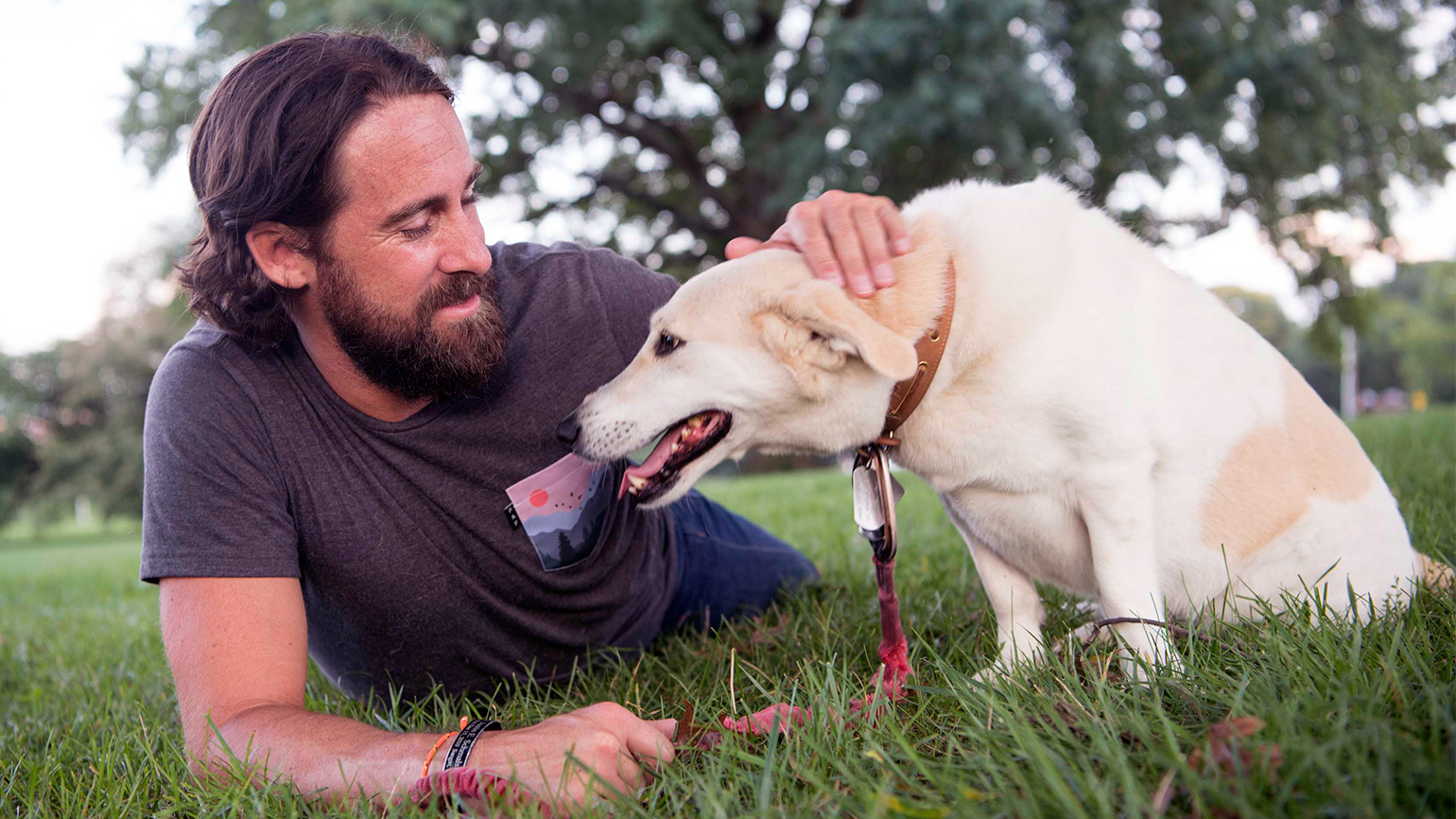
Inside our Marine compound, we’d been under near constant attack. My nerves were shot. In the afternoons, the temperature would reach 115 and the Registan Desert, Sangin District, Helmand Province, fell quiet. There was a stark beauty to the desert you never get used to. I was staring into the heat when I saw him, short legs, floppy ears, trotting across the compound to a shady spot. He wasn’t like the other dogs I’d seen in Afghanistan. Those dogs ran in packs. This guy was fending for himself in the middle of a war zone.

I grabbed a piece of beef jerky and walked over to him. He sat but watched my every step. I paused. “How’s it going?” I said. His eyes were so expressive, almost human. I heard a noise…thwap, thwap, thwap. A cloud of dust kicked up behind him. He was wagging his tail.

He was maybe eight months old. His fur—mostly white, with large spots of light orange-brown—was covered with black bugs the size of dimes. I offered the jerky and he took it. I dug my fingers into his fur, coarse and matted in dust. He leaned into me, and I wondered if he’d ever been petted. I’d always wanted a dog as a kid, but my family was into cats.

It felt as if I’d been chosen to look out for this little guy. Before the Marines, I’d never taken on a lot of responsibility. In high school, I hadn’t pushed myself. I’d graduated anyway. That’s what had drawn me to the Marines. I wanted to find a place that would hold me to a higher standard. I’d hoped it would help me figure out what God had planned for my life.

But this was crazy. Cozying up to dogs was prohibited. There was the chance of rabies. The risk of a dog drawing a Marine’s attention away at a critical moment. It wasn’t a joke. If you got caught with a dog, it would be euthanized. Reluctantly I headed back to my corner of the compound. I felt a nudge at my ankle. I looked down to see that little guy staring up at me. “Looks like you’ve made a friend,” one of the guys shouted. But what I heard was, “Looks like a Fred.”

Fred followed me to my sleeping mat and curled up on top of it. Like it was his. Another Marine and I picked the bugs off him. He didn’t protest, even as the tweezers were pulling away clumps of fur. Fred and I soon were inseparable. No one minded. He won over all of us, even our tough-as-nails master sergeant.

Join Us in Prayer for Veterans

When we went on patrol, Fred went too, loping along beside us, staying quiet. He wasn’t trained, of course. He didn’t do any actual work. But he felt like part of our unit.

With Fred around, I wasn’t on edge as much. I began to imagine a future outside of the Marines, back in Virginia, maybe a government intel position.

There was just one problem. How to get Fred back to the States. We’d been in the field for six weeks. Soon we’d be back at base for two weeks before heading out in the field again. That was my chance to ship Fred to my dad’s in Virginia. But at base, regulations were strictly enforced. Fred wouldn’t get a pass. There’d be no place to hide him.

I wracked my brain, trying to come up with a plan. Was I being selfish wanting to take Fred with me? He’d survived in the desert before we met. I needed a sign to be sure I was doing the right thing.

I paused in my story. The woman’s daughter was rubbing Fred’s tummy. The woman had sat down on a sofa, leaning forward, her eyes fixed on me. She was exquisitely dressed, a cut above my usual customers.

“The day before we were to leave, I sat with Fred and told him the deal,” I continued. “‘The helicopters are coming to take us back to base,’ I said. ‘It’s going to be loud. A little scary. But if you wanna come with me, you have to do this. Or you can stay. It’s up to you.’”

Fred stared back at me. Did he understand? I called my big sister, Sarah, back home in Virginia, just to make sure she didn’t think I was crazy. “I’ll do some research on my end,” she said.

The next morning, everyone was quiet as we packed up. But Fred was nowhere to be found. There was no time to look for him. I heard the low thump of the helicopter rotors. As the first giant bird descended outside the compound wall, a wave of sand erupted into the air. A brownout. The line of Marines began to move, still being pelted by dust and rocks. I had to focus on the guy’s rucksack in front of me.

Just as I was about to climb aboard, I felt a poke at my heel. There was Fred. His ears were pinned back. He looked terrified. But I had my sign. The master sergeant was behind me. He scooped Fred up like a gallon of milk, and I put him in my duffel bag. “We’re doing this!” he shouted.

At the base, I smuggled Fred over to the privately run shipping center the first chance I got. “What do I need to ship a dog to the U.S.?” I asked.

The manager took one look at Fred and laughed. “It can be done,” he said. “But there are forms to fill out. He’ll need a veterinarian’s okay. In the meantime, leave Fred here. He’ll be safe with me.”

Donate to help Guideposts give free publications to veterans

I said a long goodbye to Fred, worried I’d never see him again. Among the requirements, that veterinarian’s sign-off, endless customs forms, proof of a rabies vaccination. I didn’t know where to start. I called Sarah and told her the bad news. “Don’t give up,” she said. But I couldn’t get it done. I shipped out again with nothing resolved.

Two weeks in, I suffered a serious concussion when a rocket landed near me. I was sent back to base, where a doctor examined me to see if I should be sent home. I did my best to stay focused during the 45-minute exam, but it was obvious even to me that I wasn’t fully there. All I could think about was Fred. If I failed, I’d be sent home immediately, with no dog in tow. I held my breath as the doc told me her findings. “You can go back out,” she said. “But only after two weeks’ traumatic brain injury therapy.”

Thank you, God! I cried silently. I rushed over to the shipping center. Fred and I had a joyous reunion, cut short when the manager handed me a thick folder.

“What’s this?” I said.

“Your sister filled out all the forms for you,” he said. “All you need is a veterinarian’s okay. And a travel kennel.”

I found a British veterinarian who agreed to give me the approval. A soldier on the base told me where I could get a kennel. I hurried everything to the shipping center. This was it.

I held Fred’s face. “Okay, buddy,” I said. “Say hi to my dad for me.” I put a piece of lunch meat in the crate and latched the door, saying a prayer he’d arrive safe and sound.

The last months of my deployment were the hardest, when the war and the dangers we faced became all too real. We lost two men, Cpl. Sean Osterman, who died while taking fire from the rooftop of our compound, and Gunnery Sgt. Justin Schmalstieg, who was killed by an IED.

Their deaths hit me hard. I felt a responsibility to them. To somehow honor their memory.

“I didn’t want them to be forgotten,” I said quietly to the woman and her daughter.

“How long have you been back?” the woman asked.

“Three years.” I’d gotten engaged, broken it off, not ready for a relationship. I’d taken a job doing intel work. Then quit. Enrolled in college. Fred was with me through all those changes, my constant companion. We had a story everyone loved—but no ending. That thing I’d gone into the Marines searching for? I still hadn’t found it.

“It’s been hard,” I said. “I’ve had nightmares. I’m nervous around crowds. For the longest time, I didn’t want to talk about what happened. But people kept asking me about Fred. I had to tell his story, and it’s helped me. A lot. Even more than counseling.” The woman nodded. She pulled her daughter close. “I was born in Afghanistan,” she said. “My whole family fled once the Taliban took power. Thank you for your story and your service.” She reached down and patted Fred. “It’s nice to meet another Afghan.”

I looked at Fred. Born into a war zone, he was resilient, stubbornly positive. An inspiration. This goofy-looking mutt. God had thrown us together for a reason. I had a story to tell. Not only about an amazing dog but about those whose lives had inspired me. Sean and Justin. All my comrades who had given so much. Even about Afghanistan, a troubled but beautiful land. It started when a dog from the desert was sent into my life, a dog called Fred.

Cover image for Craig and Fred: A Marine, A Stray Dog, and How They Rescued Each Other           Craig Grossi is the author of Craig & Fred: A Marine, A Stray Dog, and How They Rescued Each Other (2017, William Morrow).

Why this Military Wife invited 10 Teenagers to Her Home

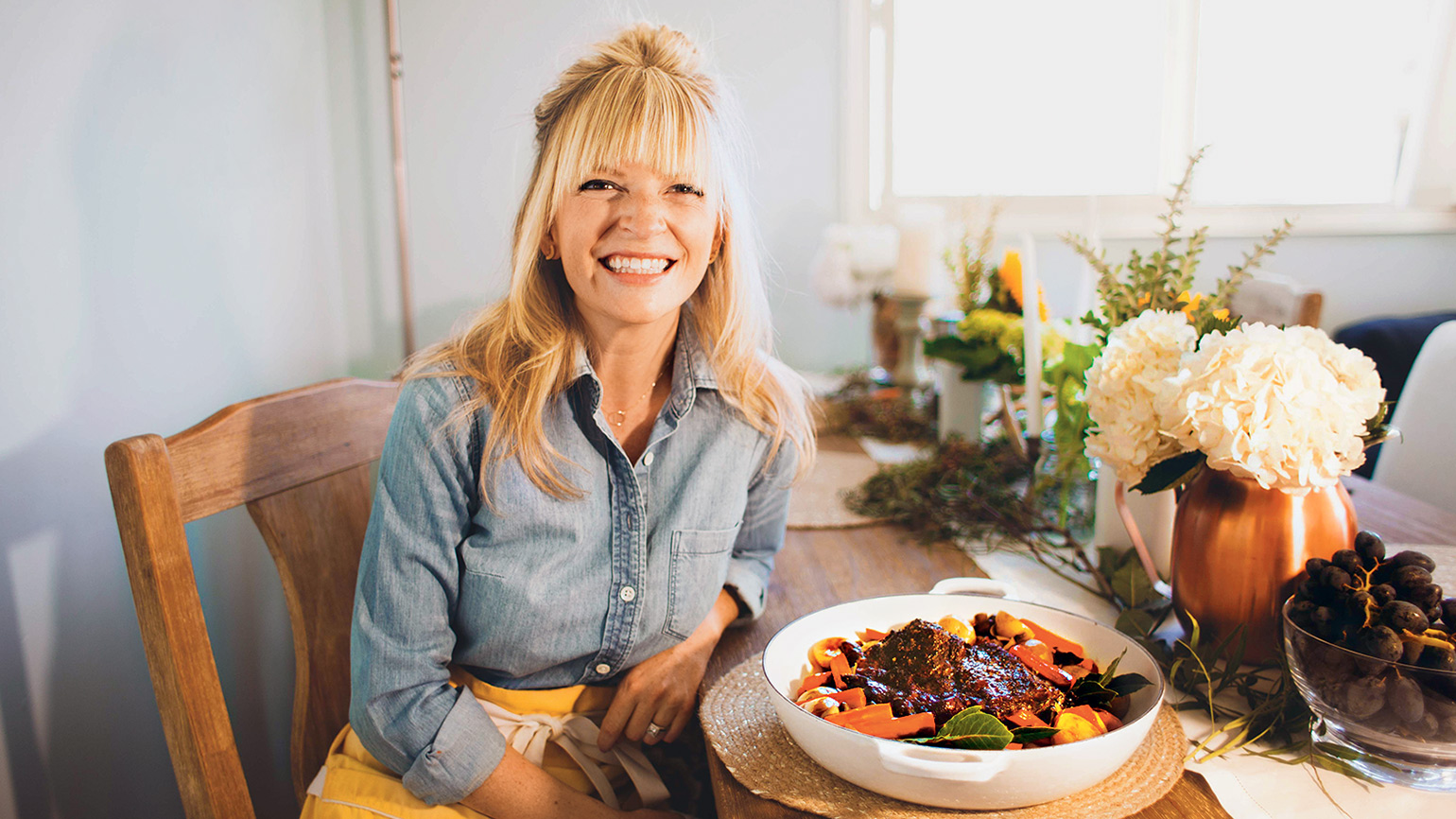
My idea of fellowship is gathering around the table for a home-cooked meal. (Have you ever noticed how often in the Gospels Jesus is sitting down and eating with someone?) “Come and eat,” I love to call out to my husband, Jeremy. To our friends. Our neighbors. Our church family. Other military wives, especially when our husbands are deployed. I’m so passionate about coming together over meals that I write a blog—and have written a whole book—about it.

I didn’t even know how to cook when Jeremy and I got married. He had to sit me down and tell me, “We can’t get Thai takeout every night because of our budget.” Several weeks later, he said, “We can’t eat hot dogs every night because I have to be physically in shape for my job.” After that, I was on the phone with my mom every day at 5 p.m., having her talk me through the most basic recipes.

Daily Strength for Women in Article ad

There was a lot I had to adjust to early in our marriage. The biggest thing was Jeremy’s deployments. Part of the reason I fell in love with Jeremy was his deep sense of commitment—to his faith, to me and to serving our country. I knew his work would take him away from me for months at a time. Yet I struggled with the whole idea of it.

During our engagement, I came across one of the laws God gave the Israelites in Deuteronomy. In chapter 24, verse 5, it says that when a man is newly married, he should not be sent to war, but rather, for one year, he is to stay home and bring happiness to his wife. I clung to that verse.

Not long after our wedding, Jeremy and I left our family, friends and church in Colorado and moved to his duty station in Florida. I wanted us to have time to establish our life in our new town. “Jesus, give us one year,” I pleaded. “Just one year.”

Three times that year, Jeremy was up for deployment. The first time, just three months into our marriage, I was a wreck. We’d barely gotten involved in the community. We were still new at our church. Why hadn’t God heard my cries? When the deployment didn’t end up moving forward, I was limp with relief.

The second time, I was annoyed. We just dealt with this, God. Why are you letting this happen again? That deployment passed us by too.

The third time, Jeremy’s bags were packed and in the car, and I was driving him to the base when he got a call. “We can turn around,” Jeremy said. “The deployment got canceled.”

I was beside myself with joy.

“Bri, at some point, I’m going to deploy. It’s part of military life,” Jeremy said. “This is what service is like.”

Service. Then it hit me. I’d made everything about me and my wants. What about what God wanted? Would I be a partner in his plan for Jeremy and me, or would I be a stumbling block? I’m going to trust you, God, I promised. Show me how to serve you, not myself.

Jeremy didn’t deploy until April 9, 2012. One day after our first wedding anniversary. God had answered my prayer and given us exactly one year.

Still, I was very sad to see Jeremy leave for Afghanistan. Our townhouse was quiet without him. Lonely.

I was feeling sorry for myself when our pastor announced that a group of high school students would be coming to town in June for a Christian summer camp. “We’re looking for people to open their homes and host these kids on the weekends,” he said. “Give them a place to do their laundry, eat some good meals and use Wi-Fi.”

Hadn’t I asked God for an opportunity to serve others? “Sign me up,” I said. Jeremy and I ate at a high-top table I’d bought in college. It sat four—enough to host two or three kids.

I wanted my home to be a haven for them. I stocked up on snacks, pulled out some of my favorite movies and planned a special dinner—my mom’s famous pot roast.

Then I got my hosting assignment. I wouldn’t be hosting two or three kids. There would be eight to ten!

I e-mailed Jeremy in Afghanistan. “Time to get our first dining room table!” We searched online and decided on a wooden farmhouse-style table with eight matching chairs.

The new dining set arrived the day before I was leaving for a quick trip out of town. I grabbed our tools, opened the boxes and laid out all the parts on the dining room floor. I tackled the largest piece first—the table. Just putting that together took two hours.

The chairs were a whole other story. You really needed two people—one to hold the frame, the other to screw the legs in place. I tried leaning chair parts against the wall, wedging them against my hip. Finally, I called it a night. I’d ask a neighbor to help me when I got back from my trip.

While I was out of town, I got a text. “This is Jenny, one of the girls you’re hosting. Would it be okay if we came by to use your washing machine and Wi-Fi this weekend?”

“Of course!” I texted back. I told her to get the key from my neighbor and gave her my Wi-Fi password. “Help yourselves to anything in the kitchen.”

Later that day, Jenny texted me again. “Would you like us to put these chairs together?”

I was mortified. I’d left the chair parts strewn across the dining room floor. “Gosh, no!” I replied. “I want my home to be a place of rest for you all.” I returned to find all the chairs put together and in place around the table. There was a note (which Jeremy and I keep on our fridge to this day): “Your home was such a needed place of rest for us. We are so grateful for your hospitality. We hope you don’t mind we put these chairs together. We can’t wait to share meals around the table with you.”

The next weekend, they did. With Mom’s long-distance coaching, I made a delicious pot roast with buttery mashed potatoes. I had the best time with the kids.

For the remainder of that deployment, I’d wake up in the morning with tears in my eyes from missing Jeremy. But in the evening, I’d throw open my door and invite new friends to come and eat. Our table became a place of celebration, love, hope and fellowship. And it’s been that way ever since.

Try Bri’s Best Pot Roast at home!

Find out more about Bri’s new book, Come and Eat: A Celebration of Love and Grace Around the Everyday Table, at comeandeatbook.com. Visit her blog at oursavorylife.com.

For more inspiring stories, subscribe to Guideposts magazine.

Why the Wait Is Worth It

My little grandson Nolan, just turned four last week. He loves playing with cars. Loves it! He even sleeps with cars in his hands. So I knew he’d be excited about the Cars racetrack that my husband and I bought him for his birthday. 

I talked to Nolan the day I bought his gift and told him that Grandmama had something he was really going to like. For the week and a half after that, it was all he could do to wait. He peppered me with questions about what it was. He asked if it was big. He guessed what it was over and over. And I gave him outlandish suggestions that it must be a bowling ball or ironing board. His eyes sparkled as he’d say, “Grandmama, it’s not that!”

Mys of Blackberry Valley In Article Ad

The day of his party arrived and as folks gathered at Nolan’s house, the pile of presents got bigger and bigger. Nolan came to where I was sitting in the kitchen and said, “Grandmama, did you bring my present?” I told him I did, and we walked into the living room so I could show the wrapped box to him. It was almost as big as he was.

A few minutes later, I heard a grunting sound and when I looked, he was trying to lug the heavy box into the kitchen. He looked up at me with pleading eyes and said, “Can I open it now?” I told him he’d have to wait just a little bit longer until after everyone ate.

He had such a hard time waiting, but when his mama said it was time to open presents, Nolan tore into that big box and discovered that it was worth the wait. 

Friends, it’s sometimes the same way in our lives. God promises us that He’s going to do something for us and when it doesn’t arrive immediately, we’re just like little Nolan. “How long do I have to wait? When’s it coming, God?”

And then when it still doesn’t arrive, we get impatient. “God, you promised. Why hasn’t it arrived yet?” But just as Nolan learned, it’s worth the wait.

I’ve learned from experience that God’s timing is always perfect—even when it’s not on my timeline. I’ve tried to rush Him and discovered that His timing was always better because the waiting period was always for a reason.

Are you tired of waiting today? Trust God and don’t rush Him—because He knows exactly when the perfect time will be to bring His plan to fruition. 

Where Love Is

Nicholas had something exciting to tell me the moment he got into the car. “They’re making a new Star Wars movie!” he said. “I saw it online.”

“Maybe we can go see it when it comes out,” I said, putting the car in gear. Nicholas had taken forever to get dressed that morning and missed his bus. The school was 30 minutes away.

“No. I want to be in it,” he said. “I want to go to California and try out.”

I took a breath. “Nicholas, you’re not an actor. You need to be thinking about your math test.”

“You never believe in me,” he said, slamming his fist against the door.

I didn’t say anything. There was no way to explain why he wouldn’t be blasting storm troopers with Han Solo. Arguing would be fruitless. Although Nicholas was 18, developmentally he was considerably younger.

We drove on in silence. I dropped my son at his high school, where he was a senior, and watched him unfold his 6-foot-4-inch frame out onto the sidewalk and go inside. I slumped back in my seat, exhausted before I even got to work. Nicholas exhausted me. My love for him exhausted me.

My husband, Mike, and I had adopted Nicholas after years of infertility treatments. Holding his tiny form that first day, I felt he was a precious gift that God had entrusted to us. We loved him like our own flesh and blood from that instant.

He was a handful, a ball of energy, all right. On his first day at preschool his teacher called. “I asked Nicholas to hang his jacket on the peg. He just stared at me. It was like he couldn’t understand the words I was saying. You should definitely look into it.”

By age five, Nicholas was seeing a psychiatrist and taking medication to calm his explosive mood swings. The doctor noted how Nicholas avoided making eye contact, how he would repeat the same phrases over and over, a sign of autism.

“Autism covers a wide range of developmental disorders. It affects everything from speech to social skills,” the doctor said. “There’s no cure, but therapy and individualized instruction can help. At his age there are still a lot of unknowns.”

I could barely process what I was hearing. This was my baby we were talking about. I’d do anything for him. But I was being told there was little I could do besides adapt to his needs.

Now, outside his school, I thought about calling in sick. No, I couldn’t. I’d missed too much work already, so many days when the stress had felt unbearable.

I was an English professor at Belmont University, a small Christian college. Mike was a math professor at the same school. We shared the responsibilities of caring for Nicholas, but even then it was like we were both working two jobs. I shifted the car into gear. I had to get going.

As Nicholas got older and bigger he developed symptoms of bipolar disorder. Anything might set him off—telling him he couldn’t watch TV or trying to limit the hours he spent on the internet. I couldn’t reason with him. Couldn’t hold him.

I kept thinking a hug would make things better. He’d only push me away. It broke my heart. An IQ test showed that his reasoning and problem-solving skills were well below average.

“We can get tutors, and schools have special programs,” Mike said. “Nicholas could surprise us all. He’s just going to need more help to get there.”

I knew what Mike was talking about. Nicholas had so many good qualities. He could be charming. He laughed easily. He loved music. And dancing. I signed him up for therapeutic horseback-riding lessons, for tennis and basketball.

One year I took him to weeks of rehearsals to dance in a community production of The Nutcracker. On opening night I was helping him put on his stage makeup when he started screaming. He pulled away and ran, deep into the catacombs of the theater. I was mortified.

“Don’t worry,” the director said. “These things happen.” She coaxed Nicholas back to the dressing room. She was being kind, but I knew it wasn’t true. Most kids didn’t act like Nicholas.

Over the years, his psychiatrist had tried 52 different medications, each with its own side effects we had to watch for. The worst were the medications that disrupted his sleep. He’d wake up in the middle of the night screaming.

As I drove to work in the aftermath of the Star Wars war, my old worries exploded to the surface. What did life hold for Nicholas? What if I weren’t there for him? I was a cancer survivor. I was healthy and fit, but I wouldn’t live forever.

Then what? Who would care for Nicholas? The anxiety tormented me. There’d been good news—sort of—when Nicholas turned 14. We hit upon a combination of four medications that helped to decrease the frequency of his outbursts.

He started attending a school for special-needs students. We enrolled him in some clinical trials at Vanderbilt University. I took classes in parenting special-needs kids, did a little yoga and meditation, anything that might alleviate the feeling that at any moment our world could fall apart.

The truth was, other than to go to work or to the grocery store, I rarely left the house. It wasn’t that Nicholas couldn’t be by himself. I didn’t have the energy to do anything more.

I didn’t go out with friends. Didn’t exercise. Sometimes the hardest part of the day was just getting out of bed in the morning.

Even going to church was an issue. When Nicholas was younger, we’d gone to a small, caring congregation where we knew everyone. But all through the sermon Nicholas would make faces, hit and kick us.

I found myself dreading Sunday mornings. We switched to a larger church, where we could be anonymous. But it hardly mattered.

I prayed constantly, for strength, for help, desperate pleas in between crises. Sometimes prayer itself seemed like just one more thing I had to do. I was totally driven by the conviction that I had to be there for Nicholas. Always.

I pulled into the parking lot at the university and trudged to my office. Switched on the computer and opened Outlook. There was an e-mail from Vanderbilt. A professor was conducting a study looking at how practicing mindfulness might affect parents of autistic children.

Mindfulness? I remembered once talking to a therapist about that. Meditation. Breathing exercises. Living in the moment. I’d tried it. But it was impossible to stick with, amid everything else I had to do.

I stared at the e-mail, and the link to an application form. I had to do something. It’d been 14 years since that day in preschool. Was this how it would always be? Struggling just to get through another day?

This was a formal study. Six weeks of training. A two-hour session every Wednesday. I was desperate. I clicked on the link and filled out the form. That night I told Mike about it. “That sounds interesting,” he said. “I’d like to do that, too.”

What about Nicholas? I almost screamed. Mike read my mind.

“We’ll find someone he can stay with,” Mike said. “He won’t be alone. We need to do this. Both of us, or we’ll be no good for Nicholas.”

That first session there were four couples in our group. We sat in a circle, Mike beside me. We introduced ourselves, and just hearing what the other families were going through suddenly brought an overwhelming sense of relief. We weren’t alone! I’d never gone to a support group. I never felt like I could get away.

“Mindfulness isn’t about changing the challenges you face,” the instructor said. She too was the mother of a special-needs child. “They’ll still be there after this training is done.

“It’s about being intentional in focusing on what you’re feeling, what you’re dealing with at any given moment. Staying in the present. Reminding yourself that you have no way of knowing what the future holds.

“Almost everything we worry about are things outside of our control. We have to learn to let go. But it won’t happen overnight. It’s a skill, a mind-set. One that by participating in this study you’re committing to….”

All around me I saw heads nodding. How is Nicholas? I wondered. Already I’d broken the rules by worrying about him! We’d left him with my mother, at her retirement home. Then we’d turned our cell phones off.

We learned about breathing, how to focus on something as small as a single breath. The importance of exercise. And guided meditation, six times a week. A way of praying. Learning to embrace the stillness.

It was a lot to take in. Walking to the car afterward, I tried to relax, to concentrate on the warmth of Mike’s hand in mine. But my palm felt sweaty. We had to get Nicholas. Why wasn’t Mike hurrying?

Nicholas and my mom were watching TV. “We had a good time,” she said. “Boy, he sure knows a lot about Star Wars, doesn’t he?”

The next day there were the usual arguments, the usual race to meet the school bus. Breathing exercises? Who had time for that? But that night, after I’d put Nicholas to bed, Mike and I sat on the floor of the study and together went over the reading we’d been assigned, a lesson on how our worst fears are often unfounded.

I closed my eyes, took a deep breath and slowly, purposefully let the air escape my lips. The room was quiet, absolutely still. I could hear Mike breathing across from me. But there was something else. A feeling of peace, deep inside of me. An unmistakable presence. God. There with me.

I’d never really stopped to make room for him. Until now. And then, just as the thought crystallized in my mind, he was gone, like a whisper in the wind. I kept at it, every day. making the time. Intentional breathing. Praying with Mike every morning. Taking a walk at lunch.

When Nicholas would get angry, when he would fixate on some impossible goal, when he repeated the same phrase over and over, I told myself, This has happened before. It’s nowhere near as bad as before, and it will pass. It’s okay. I don’t need to fix this.

At the same time I tried to concentrate on that particular moment. A focus so intent that there was no room to think about the future. I didn’t know what would happen. There was nothing I could do but trust.

More and more I could feel a presence, a comfort I could depend on, the only thing I could really depend on. I was no longer trying to do this alone. I was making room for God.

When the training was over, we filled out a survey, as we had at the beginning of the study. The results were dramatic. Nearly everyone in the group felt calmer, more at peace. Mike and I were no different.

No, it wasn’t a magic wand. It was a step in a journey that has moments of wonder and love, love that can exhaust you with its limitations. It is then that I let a greater love care for me.

It has been two years now since Mike and I participated in the Vanderbilt mindfulness study and still, every day, I remind myself of what I need to do to take care of myself. Like anything it’s easy to slip back into old habits, to let fear creep in.

Nicholas is 21 now and working as an intern at the same preschool he attended. He is part of a program at Vanderbilt that gives students with intellectual disabilities the opportunity to attend college while practicing the skills they need to find meaningful employment.

Think College, a national organization, coordinates these programs at hundreds of postsecondary-education institutions.

I’m so proud of Nicholas and the hard work he’s done. I still worry about his future. But mostly I focus on the here and now. Where I am. Where Nicholas is. Where Love is.

Learn the basics about mindfulness!

Download your FREE ebook, A Prayer for Every Need, by Dr. Norman Vincent Peale.

When You Don’t Get What You Pray For

“Dear God,” I began, curled up in my big green prayer chair. From there, my praying went a bit astray.

Many times, I pray for something I want desperately. And, in my opinion, the thing I’m wanting is unequivocally positive. Healing from an illness. Enough money to pay for a necessary home repair. A job opportunity.

A Journey of Faith In Article Ad - Avail Now

Often, the prayer isn’t even for me, but for a friend, loved one (including my dogs!) or church member. Surely, such worthy, unselfish prayers should be answered. Then, I pray for this thing, and there are roadblocks. It’s just out of my reach.

At times like this, I feel like the dog in this video.

The dog clearly wants the tasty bread his human has deliberately put out of his reach. He’s probably experienced the taste of the bread before and knows that it is good. He can smell it, and it smells inviting. To him, there is no reason why he shouldn’t have this bread.

The trouble is, we can’t always understand why our Father has placed things away from our grasp. He has a very good reason, even though his plan for us may be unclear. Whatever it is that we want so much may not be good for us at that time or place.

When I pray and don’t seem to get what I’m praying for, I take a deep breath, thank God for his blessings, and then simply trust. Something better, often totally unexpected, may be right around the corner.

The dog in the video got his crust of bread. But maybe, instead, his human went out to get a big juicy steak just for him to enjoy!

When Valentine’s Day Arrived in a Combat Zone

Nothing touches the heart like a gift from a child, especially when kids are sending cards and letters overseas to a military unit. I know, because I once heard about an instance first-hand.

It all started when I got a call one morning from our local elementary school asking if our son was deployed at the time. He wasn’t, but I had several friends who had deployed children. Because I knew the school and had permission, I passed their contact information along. I had no idea what God had set into motion until about six months later.

Rejoice in All Things in article ad

The school contacted one of my friends and told her the kindergarten classes wanted to send Valentine’s Day cards. She was thrilled to give the teacher her son’s deployment address.

Her son’s unit was deployed in a forward base, meaning they didn’t have as many comforts as those stationed in bigger bases. They were also rarely out of their armor and helmets because of the danger in that location. That particular week had been brutal. They’d run into two hand-made bombs, and several of them had been wounded and transferred out.

Into that scenario arrived a battered box from home.

The box had been bashed in on one side, and although my friend’s son tried to open it carefully, it almost disintegrated in his hands. But in the place of the rubble he expected to find, a cascade of brightly colored envelopes, interspersed with candy, came pouring out. 

His buddies gathered around because a box from home meant everyone got to share. They took turns opening the cards—one at a time—and read them out loud. They passed around the candy, and everyone found at least one of their favorites.

Instead of an evening of anxiety and fear, they were transported home by the heartfelt Valentine’s Day greetings

I encourage you to take time to write a card, at any time, to someone far from home. It could be a deployed service person, or a veteran at a local care facility. You never know how God may use your outreach to remind someone they aren’t forgotten.

If you don’t know a place to send your letter, here is the link for Solder’s Angels. They’ll be happy to make sure your card gets to someone in need.  

When Parenting Is Like a Box of Chocolates

With this past Monday being “National Chocolate Éclair Day” and with Friday being “National Chocolate Pudding Day,” I thought it only fitting to share an excerpt from my latest book about parenting, When Chocolate Isn’t Enough: An Inspirational Survival Guide for Mothers (Worthy Inspired). Hope you enjoy!


In the opening scenes of the movie, Forrest Gump, Tom Hanks, who plays Forrest, is sitting on a bench with a box of chocolates on his lap. Soon, a woman sits down on the other side of the bench.

Whistle Stop Cafe In Article Ad May 2023

“Hello. My name’s Forrest. Forrest Gump…You want a chocolate?”

The woman never even looks up from her magazine.

“My mama always said, ‘Life was like a box of chocolates,’” he continues, while chewing a piece of chocolate. “You never know what you’re gonna get.”

There’s a lot of truth in that bit of dialogue.

I also think that parenting is a lot like a box of chocolates. Some days you get your favorite caramel nut, milk chocolate covered piece, and other days you bite into the nasty orange cream filled piece! Not every day can be a caramel nut, milk chocolate kind of day. Nah, you have to have a few orange cream filled days to make you appreciate the really good ones.

I remember one of those “orange cream filled days” very well. I dropped off Ally, who was in middle school at the time, at our cousin’s shop to get her hair trimmed and highlighted while I went to my business luncheon. At the conclusion of my meeting, I noticed that my husband had called several times.

“Everything OK, babe?” I asked.

“Uhh…what was Ally supposed to get done to her hair?”

“Trimmed and highlighted, why?” I asked, nervously.

“Well, something must’ve gone drastically wrong then.”

I sped home, and when I walked into Ally’s room, I saw it. Her once long hair was cut in short layers on top, sticking up sort of like a Punk Rock rooster. The back remained long but thinned out somehow, reminiscent of a grown out mullet. I just couldn’t figure out what had happened.

“Did your hair break off in the foils?” I asked

“No,” Ally said. “I like it.”

I left her room and called our cousin, who is an amazing stylist, to find out what had happened. I knew there had to be an explanation for this horrendous hairdo.

Turns out, my little Barbie doll daughter had decided she didn’t want to look like a Barbie anymore and printed a picture off the Internet, took it to our cousin without me knowing, and said, “This is how I want my hair.” He, of course, thought I had approved.

Ally was happy; I was not.

I had to ground Ally for lying and being sneaky, although I felt like her horrible hair was punishment enough. Later that night, as I was telling the girls goodnight, I asked Ally: “Honey, why did you want to do that to your hair?”

She looked up at me with tear-filled eyes and said, “I just wanted to stand out, Mom. I just wanted to feel special like I did in Texas.”

I hadn’t even considered that, but all at once I understood. We had moved the girls from Texas back to Indiana during their middle school years, making them leave their cheer squads, their best friends, and their school—a school where they were popular and knew everyone. Ally wasn’t adjusting as well as I’d hoped. 

READ MORE: FAITH AND FINDING THE RIGHT PATH

I hugged her and told her I understood. We prayed together, and I asked God to heal her heart and send her a best friend.

Not long after, a pretty little girl with big brown eyes and the same crazy haircut showed up at our house. Her name was Jill, Ally’s new best friend. God had answered our prayers.

He’ll answer your prayers, too.

So, if you’re having a run of orange cream filled pieces, hang on! A caramel nut, milk chocolate piece is on its way.


Excerpt from When Chocolate Isn’t Enough: An Inspirational Survival Guide for Mothers by Michelle Medlock Adams (Worthy Inspired, March 2015).

When Kids Know Best

A gloomy, foggy morning in San Francisco. Standard issue for the City by the Bay. I swerved into a rare parking spot and the kids woke up in the backseat, grumpy. I tried to filter the irritation out of my voice as I helped them out of the car.

I hoisted up my backpack, full of our lunches, and herded seven-year-old Frances and four-year-old Benjamin toward the light-rail stop. This was supposed to be fun, I reminded myself. A day out with the kids.

Pause & Pray In Article Ad

Right. Another Saturday with me as solo parent. My wife, Kate, is pastor of an Episcopal church, so of course she works Sundays. But she works lots of Saturdays too, because that’s when parishioners have time to meet and she is a devoted pastor.

Often I’m in charge of our two kids for entire weekends. Were I a saint I would accept this responsibility with grace and creativity. But I’m not a saint. And I was as short on ways to keep the kids busy and amused as I was on patience.

Today my bright idea–a Dad-plus-kids trip to San Francisco from our home in San Jose, about an hour away–seemed not too bright at all. Already the kids were moaning and groaning about the walk to the train.

What would they say when they saw the long, meandering pathways of the botanical garden, our destination? As always on days like this, I felt like my time was being snatched away.

Between work, kids and chores, I never seemed to have any time to myself at all, to read or think or just dream. How different from the days when I’d lived in San Francisco as a young, single graduate student! It seemed like I’d had all the time in the world then.

“Daddy, I see our train!” Benji cried. He and Frances perked up as the light rail rumbled to a stop. We climbed aboard and the kids jumped into window seats, faces pressed against the glass.

I was busy racking my brains for what to do after we finished at the garden. I’d been too beat the night before to plan out the day.

We got off the train and walked a few blocks to the park. No complaining. The kids paused outside a bakery and stared longingly at rows of chocolate buns and other treats displayed temptingly in the window.

“Maybe later,” I said. I bought our tickets at the botanical garden and we walked through a gate to a huge lawn with a fountain at the far end.

Beyond, pathways led to a redwood forest, a Chinese moon-viewing garden (with a deck over a pond in which the moon reflects on clear nights), a garden of native California plants and the enticingly named Southeast Asian Cloud Forest. Looking at a map, we saw something called the Children’s Garden.

“Let’s go there!” the kids cried. We took a roundabout route, stopping to admire moss-draped Monterey pines, blooming poppies, a hillside bristling with cacti and the dense foliage of the cloud forest.

The Children’s Garden turned out to be an area surrounded by eucalyptus trees where schoolkids do the planting and tending.

There were sprawling artichoke plants (whose stems, if you rubbed them, smelled like steamed artichoke), giant zucchini, pots of fragrant basil and brightly colored hand-lettered signs.

Fran and Benji immediately pretended to be at a restaurant, serving imaginary garden produce to diners at a rickety table with tree-stump seats where the schoolkids eat lunch. Kate would love this, I thought.

Frances and Benji decided we should eat lunch at the fountain. We made our way back, ate, and before I’d even asked what they wanted to do next, they said in unison, “Let’s go to the beach!”

Beach? Who’d said anything about a beach? But they seemed to be on a roll. We took the train all the way to the end of the line at Ocean Beach. The fog had retreated, so we had sunshine and blue water.

The kids raced up and down the dunes, combed the beach for shells and watched some punk rockers fly a kite. I stood with my toes in the cool sand, feeling relaxed and happy almost in spite of myself.

At last the fog crept back in and I realized we’d better head toward the car to make it home in time for dinner. On the train the kids leaned against me, worn out from running around. I was just as tired as the night before when I couldn’t even plan this excursion, but it was a good tired, a satisfied tired.

Satisfied? Not quite. There was the bakery straight ahead and the kids started running. Ordinarily I would have said no. Sweets before dinner? Unthinkable! Except for today.

We bought three chocolate buns and a loaf of sourdough to take home. At a bay window looking onto the street, we watched trolleys roll by, families out for a walk, dogs in tow, elderly couples pushing handcarts full of groceries.

“These are good!” exclaimed Frances, holding up her bun.

They were good. The entire moment was good–the buns, the lovely bakery smells, the laid-back, busy city outside.

I remembered a passage from one of my favorite books, C. S. Lewis’s The Screwtape Letters. It’s when the senior devil who narrates the story instructs his pupil, a hapless junior devil, in yet another way to ensnare gullible humans.

The trick, says the senior devil, is to make people believe that their time is their “own personal birthright.” That way, when something comes along to take up their time, they resent it.

I recalled the resentment I’d felt that morning, and on other mornings when I’d awoken to a day of solo parenting. Why the resentment? What would I rather be doing, anyway? Working more? Reading more? Doing more of what I was already doing a lot of?

I watched the kids eating their buns with the intensity only kids have with sweets. How thoroughly I’d been duped by Screwtape! Not only did I insist on believing my time was my own, I refused to acknowledge that time, like all things, even life itself, is God-given.

Certainly my kids were God-given. So was Kate. Who was I to complain instead of rejoice?

“I wish we didn’t have to go,” sighed Frances.

“Me too,” said Benji.

I looked at them both, their mouths smeared with chocolate, their hair still a little wild from the briny ocean breeze. “Yeah,” I said. “Me too.”


Download your FREE ebook, Rediscover the Power of Positive Thinking, with Norman Vincent Peale.

When God Calls You to a Task

And let us not grow weary of doing good, for in due season we will reap, if we do not give up. (Galatians 6:9, ESV)

I used to believe that if God asked me to do something—called me to a task or a ministry—then I’d be under His umbrella of protection and no difficulties could touch me.

Sugarcreek Amish Mysteries In-Article Ad 2023

That’s only partially true. 

God does extend His strength and grace to those He calls to a task, but being in the middle of God’s will doesn’t exempt us from struggle or difficulty. I learned that as I watched our son during his time of service in the military. He was called to that service—of that I have no doubt. But oh how he struggled. There were seemingly insurmountable obstacles he faced during that time. I watched as he left at the tender age of 18 to serve in a war zone. And on his return, I greeted a man who had seen battle.

Join Guideposts in Supporting Our Troops!

I faced struggles with my calling as well. God had appointed me as this young man’s mother, but I wrestled with how to support a son in the military. I wanted to encourage him, even as I wanted to throw my arms around him and demand he quit. Many of you know much more about the struggles of having a loved one in the military. I still can’t imagine the strength it takes to be have a spouse who serves, or a father or mother away in a war zone.

The cost of God’s call is sometimes more than we can comprehend. There are those whose loved ones have never returned because they’ve paid the ultimate price for their calling.

How do we reconcile all this with a God who protects and loves us? It’s not an easy thing. I don’t think we have the capacity to grasp the entire width and breadth that encompasses God’s call to a people He loves. Part of that equation is faith and part of it is the peace that passes all understanding no matter the circumstance.

One thing I do know is that God is faithful. He calls us to the hard things of life, but He never lets us go through it alone. He’s always present, always giving us His strength and never abandoning those whom He loves. I’ve experienced the hard part of God’s call, but I’ve also been the recipient of the joy that comes from following that difficult path.

The call of God transcends feelings and pulls us deep onto the bedrock of faith. When we stay the course, we will have the reward. It’s not always given in this life, but we have the assurance that it’s coming. 

When Dying Is Taboo

It’s been more than three years since my brother-in-law Mick took his life. Like Robin Williams, he was brilliant and talented. He never saw the heights of fame that Williams did, but he certainly knew the same depths, the depths of depression and addiction that so many people in this world struggle with hour by hour.  

William Styron wrote an article about his sudden plunge into despair for Guideposts back in 1994. He called depression “a storm in the brain.” A great gale. A tempest. Almost beyond understanding for those who hadn’t faced those roaring winds of the psyche.  

Whistle Stop Cafe In Article Ad May 2023

Death is rarely a decision. The exception is suicide and Robin Williams’s death compels us to face a subject few are comfortable discussing. It is the one way of dying that is taboo.

It frightens us because, in truth, everyone has thought about–or “ideated”–suicide. Most people have never come close to killing themselves but knowing we can is a unique quality of being human. People who say they haven’t ever thought about it must not think very much.   

No one commits suicide because he’s bored or just in a very bad mood. It’s because he has hit a wall of intractable emotional pain that he’s lost all hope of getting through…or over or under or around. The pain feels unsurvivable. He is killing the pain as much as he is killing himself. There’s little difference between the two.

Imagine a pain so deep that it can defeat our most primitive imperative: self-preservation. 

Mick’s suicide was not really a surprise. But it was still a shock…with long shockwaves. He didn’t leave a note, just an empty bottle of pills he’d filled that morning, leaving no room for doubt. I wonder if someone had been there–Julee, me, anyone–if it would have made a difference. I guess that’s survivor guilt.

Robin Williams had many friends. How many are asking, “What more could I have done?” Nothing, probably. But the question never really goes away.

In my book, The Promise of Hope, I wrote about my own near-suicide attempt. I sat precariously on a hotel windowsill, one leg inside the room and the other leg dangling over a 21-floor void.

I had a drink in my hand I intended to finish. And another if that’s what it took. Sooner or later I would pass out on that precarious perch. Then it would be fate or physics. I was betting the laws of physics would come through for me. I was through with fate.

The reason I am here writing this today is that divine intervention rudely interrupted.

The psychic gravity that keeps so many unhappy people from destroying themselves is concern for the loved ones left behind. But a desperately depressed person convinces himself in his darkness that he is a burden on those very people: family, friends, colleagues. He sees himself as unlovable, undeserving of love and incapable of receiving it.

Suicide is the loss of love, maybe even the failure of love. The person believes all love is lost, even the love of God, the greatest loss. Without love, I can’t imagine life being livable. Hate is not the destroyer of love. Pain is.  

I grew up down the street from Robin Williams, a few years later. He went to Detroit Country Day School right across the road from my brother’s house. It was kind of a landmark. “Bet ya can’t guess who went to school there, can ya?” I’ll never look at that campus quite the same again. 

We kept Mick’s ashes in a nice box on the bookshelf. Mick loved reading. Even at his most down and out, living on the streets, he would hole up in a library and read. Everything. The librarians in small towns he drifted through feared they couldn’t keep up with his appetite for books.

I would have been fine leaving him there permanently nestled among his beloved books. Then last December when we were up at our little cabin in the Berkshires Julee simply said, “I have to let him go. I have to.” She’d held on so tight all these years. Love can trap us as well as free us.

She’d had his ashes blessed by the Franciscans. It was her birthday.

A few years back Mick had spent Christmas with us in the Berks and said it had been the happiest day of his life, and I know he meant it as true. I had to pretend to tie my boot so he wouldn’t see the tears in my eyes.

“Maybe I should move here,” he said, half-jokingly, knowing full well the turmoil that act would inevitably occasion. “Don’t worry,” he laughed. “But someday I’ll come back.”

Now Julee stood beneath an apple tree in the middle of the yard, flinging her brother into the breeze, watching the ashes drift to the ground, a light cold rain soaking them into the earth. Mick had indeed returned.

What We Give–and Receive–as Mothers

It’s been a trying week. We’ve run too fast, and when we’re breathless, bolting from one commitment to the next, our behaviors take a hit. We unravel. The boys bicker, and I snap. The house is a mess, and though I give until I’m hollow, I’m 10 steps behind.

My husband, Lonny, planned to take the older boys on an overnight, and when the date rolls around, I’m spent. But the calendar offers no room to flex. He leaves, and the smaller two boys and I decide to splurge and have a night on the town. Dinner. A movie. I’m tired, but my little sons had seen previews, and their eyes were bright with hope.

extraordinary women of the bible

It’s what we do as mothers. We give from the body. From the heart. From the soul’s deepest place.

We dress and drive and when we arrive at the restaurant, two little boys stand side-by-side to hold the door for me. When we’re shown to a table, one son pulls out my chair. After the server takes our order and there’s time to talk, a son looks me in the eye and asks, “So, Mom, how was your day?”

The boys’ desire to be gentlemen, to hold me in a high place with chivalry, has moved me. Now this question tugs my spirit. My child already knows about my day. The three of us have spent our hours as one. But the question, this reaching into my life, brings me fresh perspective. It renews my vision.

My efforts, my work, the giving and spending of the soul, has value. I may not always see the fruit moment-by-moment, and perseverance can be a struggle, but the benefits of pouring into others, of stretching thin to cover someone else, holds honor.

And the reward of the giving is sweet.

Give, and it will be given to you. A good measure, pressed down, shaken together and running over, will be poured into your lap. For with the measure you use, it will be measured to you. (Luke 6:38, NIV)

We go about our evening, boys behaving as the grown gentlemen they’ll one day be, and when we return home they ask if we can all sleep in my bed. We gather extra pillows and sink under my down comforter, and now they are little boys again. My arms stretch to curl around these children who were born of my body and my heart. The window is open, and the night seems to breathe with us.

I’ve found peace.

Being a mother means the giving of one’s self. Over and over. Again and again. But this giving is a gift, and the reward outweighs anything I could offer.

I am thankful to serve my family–to give what I have for others.

Motherhood is an honor, and servanthood is a crown.