Embrace God's truth with our new book, The Lies that Bind

Making the Most of God’s Gifts

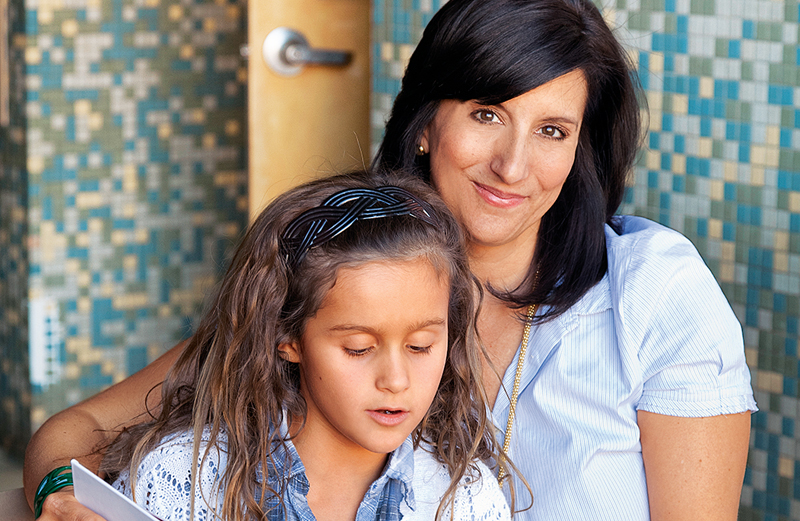
My phone buzzed as I got out of the car and walked up to my daughter Lauren’s school. I didn’t have to look. I knew it was a reminder that I was due in her classroom in 15 minutes. As if there was any way I could have forgotten what I’d promised to do for her eighth birthday. I’d stayed up all night worrying about it.

That morning at breakfast I’d asked Lauren again, “Are you sure that’s the book you want me to read?” She looked up from her cereal and said, “Yes, Mommy, I’m sure. Mrs. Small said to have you read my favorite book and Thank You, Mr. Falker is my favorite.”

Pause & Pray In Article Ad

I knew Lauren loved the book. I did too. We’d discovered it a year earlier, not long after she was diagnosed with a language-based learning disorder—a fancy way of saying she’s dyslexic.

Thank You, Mr. Falker is by the children’s book author and illustrator Patricia Polacco. It’s about her own struggles in school. She could draw well but could not read.

She was teased and bullied and felt terrible about herself until fifth grade, when her teacher, Mr. Falker, realized she had a learning disability and taught her to read. The book ends with her running into Mr. Falker years later and telling him she’s now a writer and artist, thanks in large part to how he changed her life.

Lauren started this school year—second grade—not being able to read. At all. That didn’t seem to get in her way. She was full of opinions and not afraid to express them. She told imaginative stories. And like the young Patricia Polacco, she was quite the artist.

Her teachers assured my husband and me that eventually Lauren would learn to read, and we believed them.

But how long would that take and what would she lose in the meantime? What would her classmates say when she couldn’t read aloud the way they could? How could I give my daughter self-confidence when she was failing at the most emphasized skill at school?

I kept asking God to protect Lauren and light her path forward. She’s so smart and creative, I’d pray. I don’t want dyslexia to be the thing that defines her.

I signed in at the office and took my time walking to her classroom, noticing all the homages to the written word in the hallways. Book reports lined the walls and a large yellow bulletin board proclaimed, “Reading Is Fun.”

Was it a good idea to read Lauren’s class a story about a dyslexic girl? Would describing the ways the author had been bullied as a child give my daughter’s classmates permission to torment her? Reading wouldn’t be fun for Lauren if that happened. It would be misery.

Mrs. Small met me at the door and led me to the front of the classroom, where there were two chairs set up side by side. The kids sat on the carpet. I waved to the aide, Mrs. Thompson, who had been such a help to Lauren, and took one of the chairs.

Lauren sat beside me, sporting a paper crown with “BIRTHDAY GIRL” written on it in crayon. The L was pointing in the wrong direction. I opened the book and began to read. The kids sat in a semicircle, eyes pinned on me. I felt Lauren’s little hand drape over my leg.

I came to the part where the girl is bullied by her classmates. Steadying my voice, I read the insults aloud. Inwardly I cringed. “Toad.” “Stupid.” “Dumbbell.” I could hardly imagine what it would be like if her classmates said those cruel things to Lauren. My voice nearly faltered.

Then I got to the paragraph where, thanks to Mr. Falker, the girl discovers that a learning disability is the cause of her challenges.

Lauren raised her hand and said, “Stop.” I glanced at her, puzzled. “Mom, can I say something?”

Oh, no. What is she going to say? Hoping she couldn’t hear my heart hammering, I said, “Sure, sweetie, what do you want to tell the class?”

Lauren looked at her classmates, cleared her throat and said, “I have what she has. I have dyslexia. I am just like Patricia Polacco.” Her eyes scanned the room.

“You know I’m a good artist and that’s probably why my brain is taking longer to read. But I am very smart and I am going to grow up to be a writer. Like Patricia Polacco.” No embarrassment or hesitation in her voice. Just confidence. And pride, even.

Then she turned to me and commanded, “Okay, Mom, continue.”

I did, keeping my eyes glued to the page. Finally I reached the part where the adult Patricia runs into her old teacher and tells him, “Why, Mr. Falker, I make books for children.” I paused and looked up.

The kids sat enraptured. The story had reached them like all good stories should—in the heart. The adults too. Mrs. Small and Mrs. Thompson had tears rolling down their cheeks. Our eyes met. We knew something beautiful had just happened. Something amazing.

I’d asked God to keep dyslexia from defining Lauren. And yet it had. God had used her reading deficit to embolden her, to fuel her dreams and her confidence. She saw her disability as motivation—as a strength—not as a liability. And that was the message for me too.

Lauren is 10 now, in fourth grade. Her classmates have never given much thought to her dyslexia other than to help her when she needs it. Thank You, Mr. Falker remains one of her favorites and these days shares the bookshelf with Harry Potter.

She is still bursting with opinions and is still quite the artist. And yes, she loves to write stories. Her spelling is creative, but that doesn’t stop her from putting all the stories she dreams up down on paper. Her latest is a play about a penguin named Snowy who likes to drink fish tea.

Someday, Lauren hopes to thank Patricia Polacco in person, which she predicts will likely happen at a writers’ conference. That’s because she plans to become a famous author as well as an actor and a singer.

Once I might have doubted this outcome, but now? Now I believe that with the gifts she’s been given, anything is possible.


Download your FREE ebook, True Inspirational Stories: 9 Real Life Stories of Hope & Faith
Love: The Recipe in the Jonas Brothers’ Family

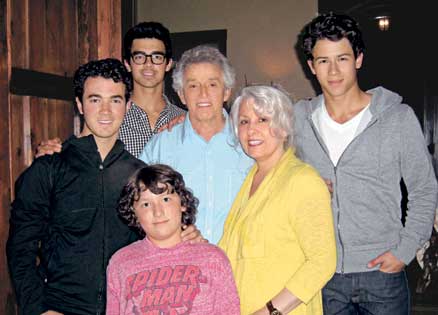
God has given me four wonderful grandsons, the children of my daughter Denise and her husband, Kevin. My greatest wish is that I lived near them, but sadly I don’t.

Over the years I’ve found that phone calls and e-mails and holiday visits are good. They just aren’t enough. I miss those boys. It’s a good thing I learned from my own grandmother MéMé a delicious way for us to stay connected no matter the miles between us.

GP In Article Desktop

MéMé lived in a small town in the Massachusetts Berkshires, several hours away from where I grew up. I spent many girlhood summer vacations and one winter at her lovely home, mostly in the kitchen. That was MéMé’s domain, and I loved being her helper. All she had to do was turn on the oven, and I would come running. We cooked and baked for the family and for her neighbors. While we waited for the timer to ring on whatever we had made that day, we would talk and laugh and she would tell me stories.

Even now all of these years later, I can close my eyes and picture MéMé in her handmade apron and the lace-up shoes with heels that made her stand ever so slightly taller than her four feet eleven inches, ready to slice a loaf of bread that was still warm from the oven. First, though, she would mark a cross on the bread with her knife and say a blessing in her native French.

The winter I lived with her, MéMé warmed many a cold morning with her stove-top rice pudding. She carefully stirred the creamy mixture with a wooden spoon, filling the kitchen with the sweet scent of vanilla. I knew it was finally ready when she handed me the spoon to lick.

I wished I could spend that kind of time with my own grandchildren, but as Denise explained, “Their lives are so busy.”

So I followed MéMé’s example. Whenever our family got together—whether it was at my house or theirs—I headed straight for the kitchen. The boys each had their special requests. Nick and Kevin’s was pizza, made from scratch. Joe loved my pumpkin chocolate chip cookies. “Your French toast is the best in the whole world!” Frankie, the youngest, told me. They also all loved the creamy stove-top rice pudding I made (using MéMé’s recipe, of course)—especially licking the spoon.

But the older my grandsons got, the harder it was to schedule visits. There were rehearsals for the church choir, for the school musical. Then the three older boys started their own band. Soon they were playing so many concerts, they hardly had any weekends at home.

I feared that I had lost the closeness we’d had, the closeness I remembered so well from MéMé’s kitchen. My grandsons’ lives were so complicated that I could barely keep up. To me, they were Nick, Kevin, Joe and Frankie. To the rest of the world they were the Jonas Brothers and the Bonus Jonas.

It turns out that I had nothing to worry about. When I finally get to see my grandsons, it’s like no time at all has passed. It’s not Christmas without homemade cookies, and last year I baked several batches of family favorites. Joe was my helper, so naturally pumpkin chocolate chip cookies were among them.

I visited Kevin a while back. One day he came into the kitchen and found me ready to bake pizza—apron on, ingredients arranged on the counter, pizza pan ready to go into the oven. I showed him my recipe.

Step by step, together we made the dough, let it set and made my special tomato and Italian seasoning sauce. Later we rolled the dough, covered it with the sauce and cheese and placed it in the oven. “Wow, Mama,” he said, while we waited for it to bake, “that was really fun!”

Just like MéMé showed me in her little kitchen in the Berkshires, when grandmothers and grandkids cook together, the real recipe is love.   

Try MéMé’s Stove-Top Rice Pudding.

Love Note

How do you know when you’ve met the love of your life? I couldn’t stop thinking about Esther. I laughed whenever we were together. My spirit soared at the sight of her. But we’d only been on a few dates! Was I really going to take her to dinner that weekend and ask her to be my girlfriend?

I knew she liked me but I was still nervous.

Pray A Word a Day - 2023 In article

On my lunch break, I ran into a deli for a sandwich, pulling some bills that I had received as change earlier in the day from my wallet to pay for it. I glanced at them as I handed them to the cashier. Something was written on one of the dollars. I snatched it back and took a closer look.

In pencil, right next to George Washington, was the word Esther. What were the chances?

No way would I let go of that dollar. Heading back to the office, I had a funny idea. I ducked into a drugstore, bought a small frame and put the buck inside. I’ll give it to Esther on Friday night, I thought, chuckling to myself. She’ll get a kick out of this.

At dinner Esther told me she’d love to be my girlfriend. While we basked in the glow of our new relationship status, I pushed a box wrapped in pretty paper across the table. “I have a present for you.”

“Aw, how sweet!” Esther said. She tore off the paper and opened the box, held up the frame and stared at it.

“It was the craziest thing,” I said, telling her how I discovered it. She just kept staring at the dollar bill. Finally she looked up at me–but not with a smile. She appeared shocked, confused, disturbed maybe. I couldn’t tell. It definitely wasn’t the reaction I was hoping for.

“I thought you’d laugh,” I said. “Isn’t it wild?”

Esther wouldn’t meet my gaze. “Remind me to tell you something later,” she said, slipping the framed bill into her purse. She seemed so out of sorts, I didn’t want to press her about it.

It was a rare awkward moment between us. A year later, I was ready for the next step. I hired a mariachi band to serenade Esther outside her window and asked her to marry me. She looked stunned for a moment, then shouted, “Yes!”

About two years after I had given her the dollar, we moved into a new apartment together. While unpacking, I came across the framed bill. I didn’t even know she’d kept it.

“Hey, you never told me about this dollar,” I said, bringing it over to Esther. “You acted so strange when I gave it to you!”

This time as Esther took the frame she smiled. “I thought if I told you the story behind it you would feel too pressured. After all, we’d only been on a few dates when you gave it to me.”

“What do you mean, the story behind it?” I asked.

“A few years before we met, I was working as a cashier at a copy shop downtown, dating someone who just didn’t feel right. I started thinking, How do you know when you’ve met the love of your life?

I got this nutty idea. I wrote my name on some dollar bills and gave them out when I had to make change. I said a prayer that somehow, one would end up with the man I’d marry.”

As it turns out, I’d hit the one-dollar jackpot! Now we have three great kids and are approaching our sixteenth anniversary. And I still consider myself lucky to be married to the love of my life.


Download your FREE ebook, Mysterious Ways: 9 Inspiring Stories that Show Evidence of God's Love and God's Grace

Love Lost

ACT ONE

I moved surreptitiously through our apartment, trying not to make it too obvious that I was looking for something. Very casual. Just rearranging some pillows on the couch, moving some magazines around. No big deal.

Rejoice in All Things in article ad

“You lost something, didn’t you?” Julee finally said in that ‘I know what’s going on here’ tone.

I stiffened. Then I confessed. I couldn’t find the TV remote. I hate losing stuff, especially when I know it’s probably right under my nose. And I hate admitting it because Julee gets so exasperated with my so-called absent-mindedness (though she’s as bad as I am when it comes to losing stuff).

In this case I had been blithely multi-tasking, switching channels while talking on the phone and checking texts.

“Take Millie out for a walk,” Julee said with a sigh. “I’ll look.”

When we returned a little later Julee greeted us, brandishing the remote like she wanted to hit me over the head with it.

“Where?”

“Bathroom.”

I hung my head, took the errant device and mumbled a thanks.


ACT TWO

Not a day later I came home from work to find Julee in an absolute frenzy, iPhone in hand. The apartment looked as if a cyclone had hit it. She couldn’t find her sunglasses. “I just got those glasses,” she cried. “The lenses cost a fortune! I’ve looked all over. Now I’m calling every place I went today.”

I poked around a bit. Took me about three minutes. I unearthed them from Millie’s box by the door where we keep her leash and clean-up bags. Julee had left them a heap.  

“You found them!”

“Simple deduction. You walked Millie, came rushing in to do something and absent-mindedly dumped them in her box.”

“Thanks, Sherlock.”

Millie wagged her tail as if she had known all along and deserved a treat, which we all went to the kitchen to get.

“Funny, isn’t it?” mused Julee. “You can always find what I’ve lost and I can always find what you’re looking for.”

Funny too, I think, that nearly 30 years ago we managed to find each other. I wonder how that happened?

With Valentine’s right around the corner, tell me how you met your sweetheart.

Love from the Amish Riviera

Ice-cream shops, antique stores, cozy bungalows, folks staking out prime spots on the white sand…a typical beach town, right? Except the sunbathers wear black hats, slacks and suspenders, and long-sleeved button-down shirts, or below-the-knee dresses and white bonnets.

This isn’t Miami Beach. It’s the Amish Paradise.

Pause & Pray In Article Ad

Also known as Pinecraft, Florida, it’s an eight-block-wide village of more than 3,000 Amish Mennonites and has been my home for most of the last 15 years.

Every winter, when work is slow on their farms, thousands from the Plain communities of Indiana, Ohio and Pennsylvania migrate south on buses and join us. You can tell where each family hails from by the different pleats and bows and strings on their clothing.

They arrive in stockings and stiff black shoes but they leave wearing flip-flops.

There’s a feeling in the air here, as if God is standing on every doorstep. We’re a community of believers, but it’s more than that. You can see God in action here. My family certainly has.

I came to Pinecraft when I was 33, with three young children to raise on my own. I earned a living cooking and cleaning houses. My family joined the Sunnyside Mennonite Church and embraced the Beachy Amish faith (named after Bishop Moses Beachy).

Our traditions are more relaxed than those of the Pennsylvania Dutch. We use electricity. Some of us drive cars, while others get around on three-wheeled bikes instead of horses and buggies.

One tradition, however, is especially strong here: visiting. We get together on the front lawn, on the beach, even in the middle of the road. Visits have the right of way—if you’re in a car trying to pass through, you’ll have to wait.

The biggest gatherings, the church fundraisers and benefit suppers in the park, draw people from outside the community. Hungry crowds line up and drop whatever money they can donate into an ice-cream bucket and enjoy Amish fare with a Florida twist, using ingredients like avocado, mango and lime.

“Amish Henry” and his wife, Sarah, famous for the cowboy stew they cook in a giant cast-iron kettle and stir with a boat paddle, gave me a warm welcome to my first supper in the park.

“There’s no such thing as a stranger, only friends we haven’t met yet,” Amish Henry said, spooning a heaping portion onto my plate.

At age 14, my oldest daughter, Jacinda, was diagnosed with eosinophilic gastroenteropathy, a rare and severe allergic reaction to all kinds of food. She couldn’t even eat her favorite fried chicken from Yoder’s Restaurant or take more than a few swallows of water.

A friend’s cousin came all the way from Mexico to help me around the house, and my younger daughter, Shannon, later worked as a hostess at Yoder’s for extra money, but it was a struggle to support my family. Lord, how are we going to get through this? I asked in my prayers every night.

Jacinda’s treatment was expensive. She needed a special feeding tube and regular trips to a hospital in Cincinnati.

“How about a fund-raiser at the church?” Amish Henry suggested. The entire neighborhood came out. The money was just a drop in the (ice-cream) bucket, but seeing everyone gathered to help my family….I knew their love would sustain us.

My friend’s cousin gave me a cookbook from her village in Mexico. I had planned to send her home with Florida oranges and key-lime-and-coconut candies. Is there a Pinecraft cookbook? I wondered. I couldn’t find one.

That gave me an idea. Pinecraft had given my family so much. What if I shared our community with others? A cookbook would warm the hearts and bellies of people all over.

I got a bunch of index cards and walked through the village, visiting. “Write down a family recipe and turn in the card at Overholt’s Produce,” I said. I hoped for a few dozen. I received more than 300!

I shouldn’t have been surprised. Pinecraft isn’t like any other beach town. It’s a family of families. In more ways than one.

Shannon married a Mennonite boy she met working at Yoder’s, and Amish Henry and Sarah made their cowboy stew for all 700 wedding guests. Whenever I need help caring for Jacinda, I know my Pinecraft community is there.

That’s how things work around here. Come visit and see for yourself!

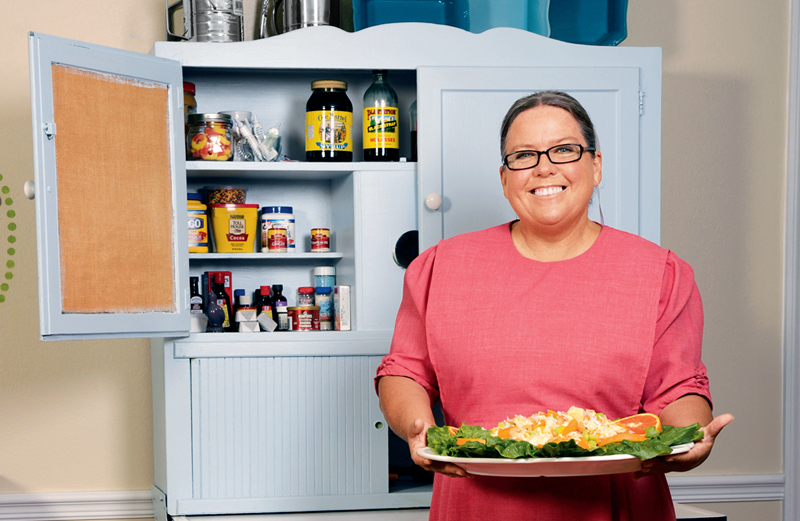
Try Sherry's Tropical Chicken Salad recipe for yourself!

Download your FREE ebook, A Prayer for Every Need, by Dr. Norman Vincent Peale

Long-Lost Pen Pals Are Reunited In Person

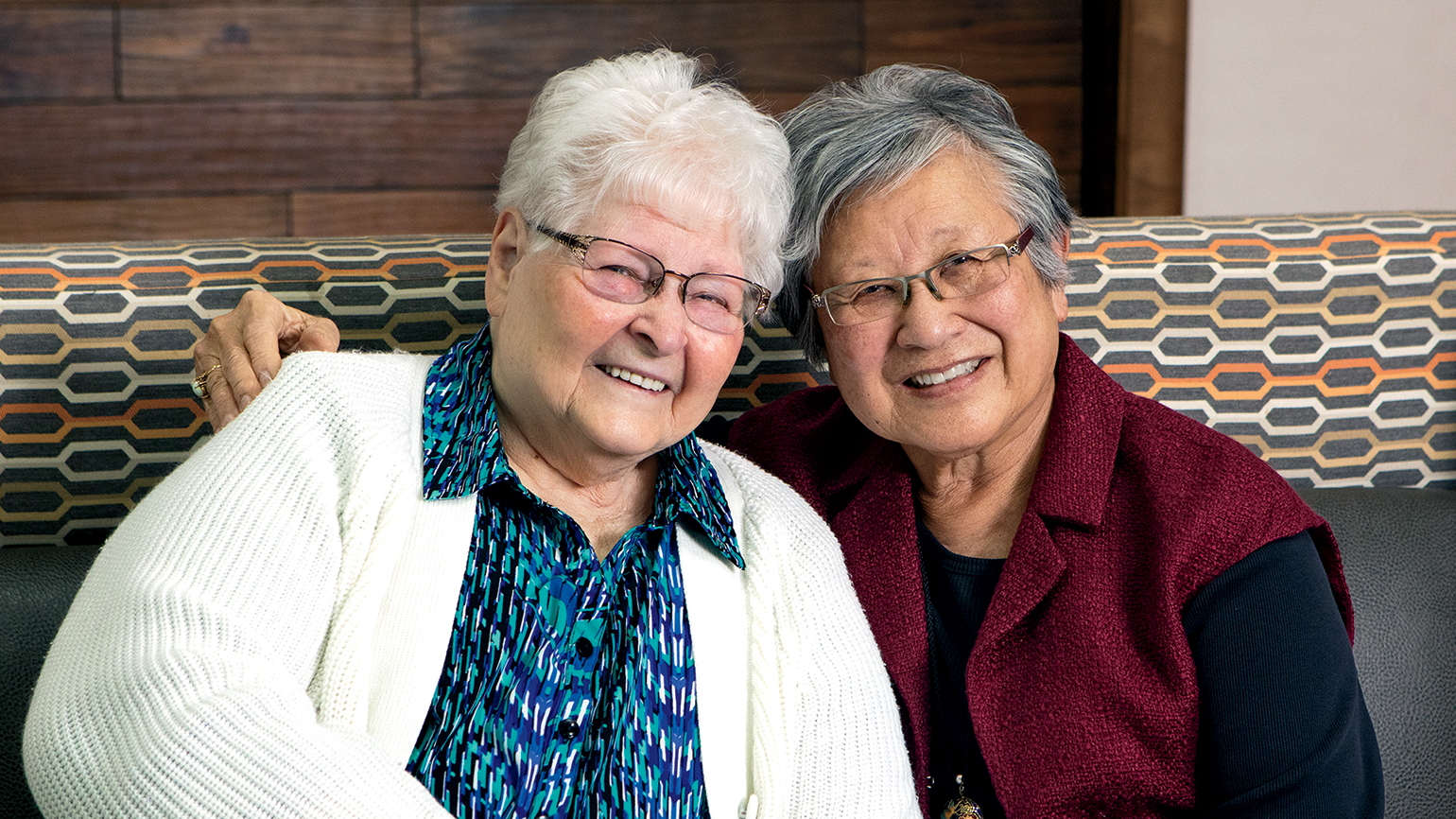
Lonely after my husband died in 1992, I found myself longing to get in touch with my childhood pen pal, Akiko Toyama. In 1944, when I was 10, my mother read about the Heart Mountain Japanese internment camp in Wyoming and suggested that our Omaha, Nebraska, church mail Christmas gifts to families there. Aki, a girl my age, sent a thank-you note. Soon we were writing every month, stories about school and friends and Aki’s life in the camp. Unjust as the camps were, Aki was always upbeat. At the end of World War II, her family returned to Los Angeles, then moved to Hawaii. Our correspondence continued. On her high school picture, Aki wrote, “When it’s God’s will…we will come to meet.” But our letters tapered off after my marriage in 1955.

Almost 40 years later, I prayed that I might find my old friend. When I read about an organization reuniting people from the camps, I contacted it. The group printed my letter in a California newspaper. Aki’s sisters read it, and Aki called the same day. More proof that God was orchestrating every step! Through laughter and tears, we caught up on our lives, our children and grandchildren. In 2010, my son Jeff arranged for Aki to visit me in Nebraska. I took her high school picture to the airport and recognized her immediately. “We’ve been waiting so long!” I said, hugging her. Now, 76 years after our first letter, we’re still pen pals!

God's Constant Presence In Article Ad

For more inspiring stories, subscribe to Guideposts magazine.

Living for Justice

People tell me I’ve always been a shy person. They also tell me I used to manage a medical office in southern California and bicycle long distances in my spare time.

They say I was fond of dogs, was an accomplished woodworker, went hiking and white-water rafting, and enjoyed life as a single woman with a close circle of friends.

Sweet Carolina Mysteries In Article Ad

They tell me I grew up the oldest of 10 children in a small Pennsylvania town and settled in California where the weather was great for bike riding. They tell me I had a strong faith.

I say people tell me these things because I wouldn’t know myself. In fact, without the memories of my friends and family I wouldn’t know a thing about the first two-thirds of my life.

That’s because right after my fiftieth birthday I suffered a severe head injury in a bicycle accident and lost all of my memory. I mean all. I awoke from a coma unable to walk, talk or eat. I had to relearn those things.

What I couldn’t relearn was my self. Who was I? What did I like, dislike? Why was I here? I couldn’t answer those questions. I needed help. And for several long years it seemed that help might never come.

I don’t remember the accident but I do have newspaper articles and a few photographs taken by a bystander. It was June in the small town of Cortez, Colorado.

For my fiftieth birthday I’d decided to take several weeks and bicycle solo across the country to Downingtown, Pennsylvania, where I was born. I spent two years training and sometimes rode 150 miles on weekend charity bike rides.

I was passing through Cortez on U.S. Route 160 when a car parked on the shoulder suddenly veered into traffic and was struck by a van. Both vehicles spun across the road. The car hit me, throwing me from my bike and straight into the windshield of the van.

Photos show the car smashed and the van plunged into a ditch. My bicycle lies bent in a patch of roadside grass.

I was flown to a trauma hospital about 50 miles away, then to another hospital in Pasadena, closer to home. I was in the hospital five weeks. My right knee was battered, I had trouble moving my left side and blood pooled dangerously between my brain and my skull.

Friends and family visited but I recognized no one.

I was transferred to a rehabilitation center where I began to relearn all the basic skills I’d lost. I took tentative first steps, learned how to use a spoon and fork, worked on simple speech and reading, and tried to remember the names of all the people who kept coming to my room swearing that they knew me and loved me.

I picked up my Bible again and gradually pieced together the faith that had once been second nature.

It wasn’t until I returned home two months later that I finally grasped what had happened to me. I was under near constant supervision by therapists, friends and family. One morning I happened to be by myself. I was at the kitchen sink when all of a sudden I asked myself why I wasn’t at work.

Maybe some key synapses in my brain healed, or maybe some trickle of memory bubbled up. Whatever it was, I knew something was wrong. What’s going on? I thought. I had enough presence of mind to call Gayle Taylor, one of my therapists.

Gayle told me to stay put, she’d be there in 20 minutes. When she arrived we sat down and she told me all about the accident. I bombarded her with questions. She told me about my job. The bike rides. The rafting. Friends. Family. And that’s all gone now.

Before she left Gayle said, “Mary, I know how hard this is. If you start feeling depressed, if you think about not wanting to live like this anymore, promise you’ll call me. Okay?”

I promised, but in the weeks that followed I almost wished I hadn’t. My short-term memory was rapidly improving. Not enough to recapture my former life but enough to make me ever more aware of what I’d lost.

Everything in my house–T-shirts from charity rides, rafting and hiking photos, woodworking equipment–was a haunting remnant of a vanished life. I could ride a bike and drive but I was still working on my speech and balance.

Talking with strangers was excruciating. No way could I go back to work. I didn’t even want to venture outside my own house. I felt useless. The Bible tells us God knows every one of us intimately, down to each hair on our heads. Well, there wasn’t much of me to know.

One day I loaded my bike in the car and drove up to one of my favorite trails in the mountains near my house. (Since I couldn’t remember the accident I had no fear of riding.) I left my helmet in the car and set off down a trail where I knew there was a steep cliff.

I was just picturing riding off that cliff and putting an end to my misery when I remembered my promise to Gayle. I braked and the bike came to a stop. Around me the mountains were quiet. The sun beat down. There was no reassuring presence, no sudden answer.

But a promise was a promise. Wearily I walked back up the hill.

I told Gayle about what had happened on the mountain. “Mary,” she said, “I think I might have found something for you.”

“Sure,” I said absently.

“No, I mean it,” she said. “I just saw an article about someone who raises puppies for the Guide Dogs of America program. You’d be great at that. You love dogs and you’re very thorough.”

“You mean I used to be those things.”

“I think you can do this. Why don’t I call them and set up a meeting?”

I was unsure but I agreed. The meeting was actually an interview and I was glad Gayle could accompany me. My speech still wasn’t perfect. The interviewer didn’t seem to mind.

What mattered more was that I’d had dogs before (two Springer Spaniels) and I was willing to do what’s required of guide-dog raisers–help the dogs socialize, expose them to different environments, keep them healthy and groomed, and teach basic commands.

I had to admit I could probably do all that. I signed up.

I picked up my first puppy, Justice, at a Guide Dogs facility an hour’s drive away. Justice was a roly-poly yellow Labrador, two months old. When I got him home I realized letting him run around in the yard wouldn’t come close to exercising him properly.

I’d have to walk him. Which meant I’d have to venture out into the neighborhood. By myself.

I leashed Justice up and we set off. He pulled me every which way. Trying to keep up with a bounding puppy made my balance even worse. Justice soon tired of walking in circles and before I knew it he was leading me in a straight line.

The same thing happened the next day. And the day after that. Soon we were taking proper walks and I was teaching Justice to stay, sit and stand up.

Justice seemed to sense my difficulties and I found that holding his leash steadied me. Once, we ran into a neighbor and I found myself talking less hesitantly–about Justice. He got all the attention, taking the pressure off me.

Caring for Justice steadied me in other ways too. Life became a routine. Up in time to feed and walk my boy, devotions, excursions to stores and other places Justice needed to get used to, visits with other guide-dog raisers to socialize the dogs.

My life hadn’t been so active since the accident. I hardly had time to feel sorry for myself. And all the talking! Everyone wanted to stop and pet this handsome boy with the bright yellow Guide Dog jacket. Everyone wanted to hear his story. Our story.

One morning, sitting in the living room, I put down my Bible and closed my eyes to pray. All the typical things to be thankful for floated through my mind. Then came something new. Thank you, God, for Justice, for the way he gives me confidence.

I opened my eyes. There he lay on the carpet, his nose resting on his fuzzy front paws. Above him, resting atop a bookshelf, sat a dusty black-and-white bicycle helmet. It was the one I’d worn in the accident. The helmet that probably saved my life.

I couldn’t remember anymore why I’d decided to keep it. I looked back at Justice. Yes, I thought, I lost so much in the accident. But look at what I’ve gained. Look at who I’ve become.

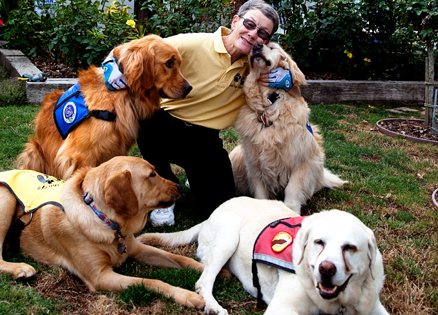
As it turned out, Justice never became a guide dog. He didn’t make the cut during training, and as his puppy raiser I had first dibs on adoption. I took him in as a veteran to help me socialize all the other dogs I’ve since raised–11 more, including my current pup, Dakota.

Two of my dogs have become full-fledged guide dogs, three became search-and-rescue dogs and the others now do therapy work in hospitals and convalescent homes. Technically I raise these dogs to serve others. But I know who they also serve.

With their help I see something I once feared I’d lost forever–my self.   

Life Without Children

Americans like to think of their country as a family-centered society. Sadly, it isn’t. The numbers speak for themselves. More than half of all births to women under 30 occur outside marriage in America. More than 40 percent of unmarried cohabiting couples have children—but these relationships are five times more likely to break up than marriages, which themselves have nearly a 50 percent likelihood of ending in divorce. Asked recently whether children were important to having a successful marriage, only 40 percent of Americans said yes. Ranked more important: sharing household chores; intimacy; and mutual interests.

The numbers I just cited come from a recent eye-opening report by a writer I’ve admired for many years. Barbara Dafoe Whitehead is a journalist who first rose to prominence with a 1993 article in The Atlantic Monthly magazine provocatively titled “Dan Quayle Was Right.” The article detailed then-new sociological research showing that, cultural wishful thinking aside, the rise in divorce that began in 1970s America had devastating effects on children.

I still remember reading that article. I was in college, years and years away from marrying and having children of my own. I knew nothing about parenting, about families, about marriage. My own parents remained married until my father died five years ago. Yet for some reason the article struck a deep chord. I have no idea why. Somehow it cemented something I’ve always felt intuitively. Families matter. They matter more than we understand.

Unfortunately that sentiment doesn’t seem to be shared in contemporary American popular culture. Americans pretend to share it. They get riled up by hot-button political issues and make grandiose statements about “the institution of marriage.” None of the rhetoric is backed up by action. Many American corporations offer virtually no paid maternity leave. Paternity leave is out of the question. (It doesn’t have to be. See this fascinating article about the effect on fatherhood of a recent Swedish paternity-leave mandate.)

Publicly funded universal preschool is a political nonstarter in this country. Ditto adequate provision for long-term elder care. I still remember the expression of utter shock on the face of a friend in Mexico when I told her about American nursing homes. “You mean you don’t take care of your parents yourselves? You don’t move them in with you?” Of course not. Because Americans’ real priorities are themselves, not their families. We are a materialistic, self-reliant, freedom-loving society that loathes limits on our self-determination and resents being asked to be responsible for others.

That’s the implication of Dafoe Whitehead’s latest research. The report I read is called Life Without Children: The Social Retreat from Children and How it is Changing America. It’s part of a research project Dafoe Whitehead co-directs called The National Marriage Project, a Rutgers University-based initiative that seeks to gather and disseminate non-partisan research on American marital and family life.

The report is 46 pages long and I can’t begin to summarize it here. This passage, though, struck me: “In recent decades, marriage (in America) has been deinstitutionalized—that is, it has lost much of its influence as a social institution governing sex, procreation and parenthood. Legally, socially and culturally, marriage is now defined primarily as a couple relationship dedicated to the fulfillment of each individual’s innermost needs and desires.”

That is, for many Americans, getting married is no longer seen primarily as the first step in starting a family. It’s seen as an end in itself, the culmination of a lifelong quest for a soulmate relationship that mutually enables both partners to achieve their life’s full potential.

I don’t begrudge people who get married for that reason. More power to them. The problem arises when such couples have children. Children, as any parent will tell you, make an inwardly focused marriage impossible. They require a massive investment of time, emotion and energy. They repay that investment many times over. But they change the nature of a marriage. They require parents to look beyond themselves, to change their priorities and their definition of what constitutes personal success and fulfillment. You can’t be self-centered and be a parent without damaging both yourself and your child.

Here’s how Dafoe Whitehead puts it: “Thus, although this new kind of American marriage is potentially more rewarding for adults, it is demonstrably less secure for children. The high expectations for personal satisfaction in marriage, though a good thing to pursue and even better to achieve, have also made such marriages harder to sustain. The greater liabilities and costs associated with the fragile, couple-centered marital ideal fall heavily on children….In short, soulmate marriage is more oriented to meeting adults’ emotional needs for intimacy than to ensuring children’s emotional needs for secure and long-lasting attachments.”

Why has this change occurred in American society? What does it mean for those of us who are trying to raise children? Why do people have children in the first place anyway? Does religious faith enter this picture at all? Those are all big questions, and I want to try to tackle them in subsequent blog posts. For now it’s enough to raise the issue and share this information, which I found fascinating and ultimately sad.

A society disinterested in children is, to me, a sad society. A society lacking in imagination and love. A society more focused on getting than giving. More focused on freedom than responsibility. I look forward to thinking about this more and sharing with you what I come up with.

Life with a Feral Cat

For the life of me, I don’t know how I ended up catering to a feral cat…yes I do. I like to eat. And so do feral cats. The one who adopted me several years ago requires a steady diet of canned cat food that I supply on a daily basis. No holidays. Substitutes required when I’m out of town. And in honor of National Feral Cat Day on October 16, I thought it only fitting to spend a little time on the subject.

In my experience, when you do business with a feral cat, don’t expect a lot of thanks or gratitude. If you think your domestic housecat is indifferent to all your efforts, multiply that by a thousand times with a feral cat. In fact, add in outright hostility. You may have been feeding your feral cat day in, day out, in sleet, rain or snow. But if you get too close…yes, run upstairs to your apartment and haul out the rubbing alcohol. Wash out the wounds and apply Band-Aids. That’s how things go with a feral cat. Or maybe it’s because she’s Jersey tough. We live in Hoboken, NJ, and she definitely harbors that whaddya lookin’ at?! approach.

Pray a Day Vol 2 In Article Ad

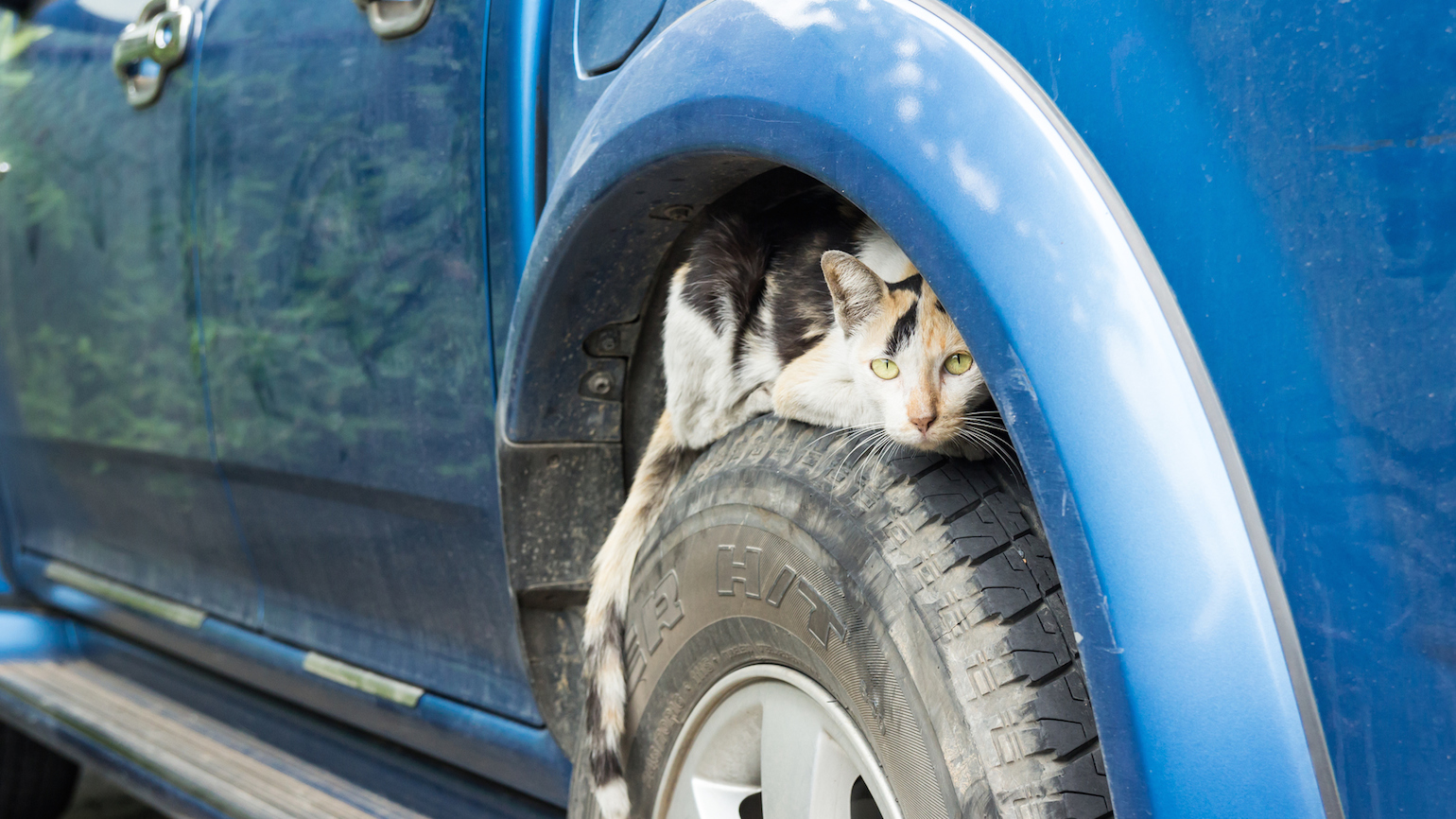
My feral cat (she would snicker if she heard me use the possessive pronoun) is a calico.  I think she’s a she because I read somewhere that most calicos tend to be female. And she has a dainty build. So I’m thinking I’m right about gender. She showed up several years ago and made her intentions clear. Just feed me, don’t expect anything in return (not that I needed more since I had two cats already upstairs in my apartment).

So my husband and I added fulfilling her needs to our daily to-do list. We’ve never given her a name. I don’t think she’d stand for it. We refer to her as the “Downstairs Cat” since we feed her under our car in our apartment garage, as opposed to where the rest of us eat on the 4th floor—husband, me, and our two cats. 

At times I’ve felt guilty about giving her grocery store cat food as opposed to the high-end stuff we buy for our own cats from boutique pet stores. I did feed her that for awhile—and I must say she was looking sleek and glorious—but then I did our budget and booted her back down to Friskies. I’m still wrestling with that decision.

My husband and I often disagree on how much food to give her. I vote for two cans, he thinks that’s too much. We’ve seen her both clean her plate and leave leftovers. So that back and forth continues except in winter when she definitely gets two cans. After all, we all need more calories in winter.

Speaking of winter, I have no idea where she bunks during snowstorms. My husband once had the idea of leaving a window open in our car so she could slip in from the weather but I, the most enthusiastic cat person you could ever meet, drew the line. Besides, I could just see me absentmindedly getting into the car one day and driving off to the grocery store only to be ambushed en route by an enraged cat. 

There are several things I marvel at: that she recognizes our car when we pull in the garage, emerging as the garage door rises. How she knows it’s a Volkswagen Passat, I don’t know. But she does. And she recognizes me when I come home through the back gate on foot. She trots out from several cars away as I turn the key, tail up, which means in cat, “hello.” I know we’ll never get past hello. But that’s ok. I accept her terms. Lastly, she has never gotten herself knocked up. I admire her standards.

Sometimes, while she dines underneath the car, usually by the right rear wheel, I sit in the driver’s seat, door ajar, and read my mail. I just like her to feel that I’m not the type to always sling down the food and go.

I fret about if we ever move or something happens to us, who will take care of her? (Right now, when we go on trips, we pay our cat sitter to include her in the feeding schedule.) I’ve got my eye on a sympathetic couple in our building. Armed with a fully funded Downstairs Cat Trust provided by us, I’m sure they’d take over.

So why, you may ask, do I go to such trouble for an ungrateful, often antagonistic creature? Because she needs me. And despite all her shortcomings, I love her anyway.

Life Lessons Learned from Her Pet Camels

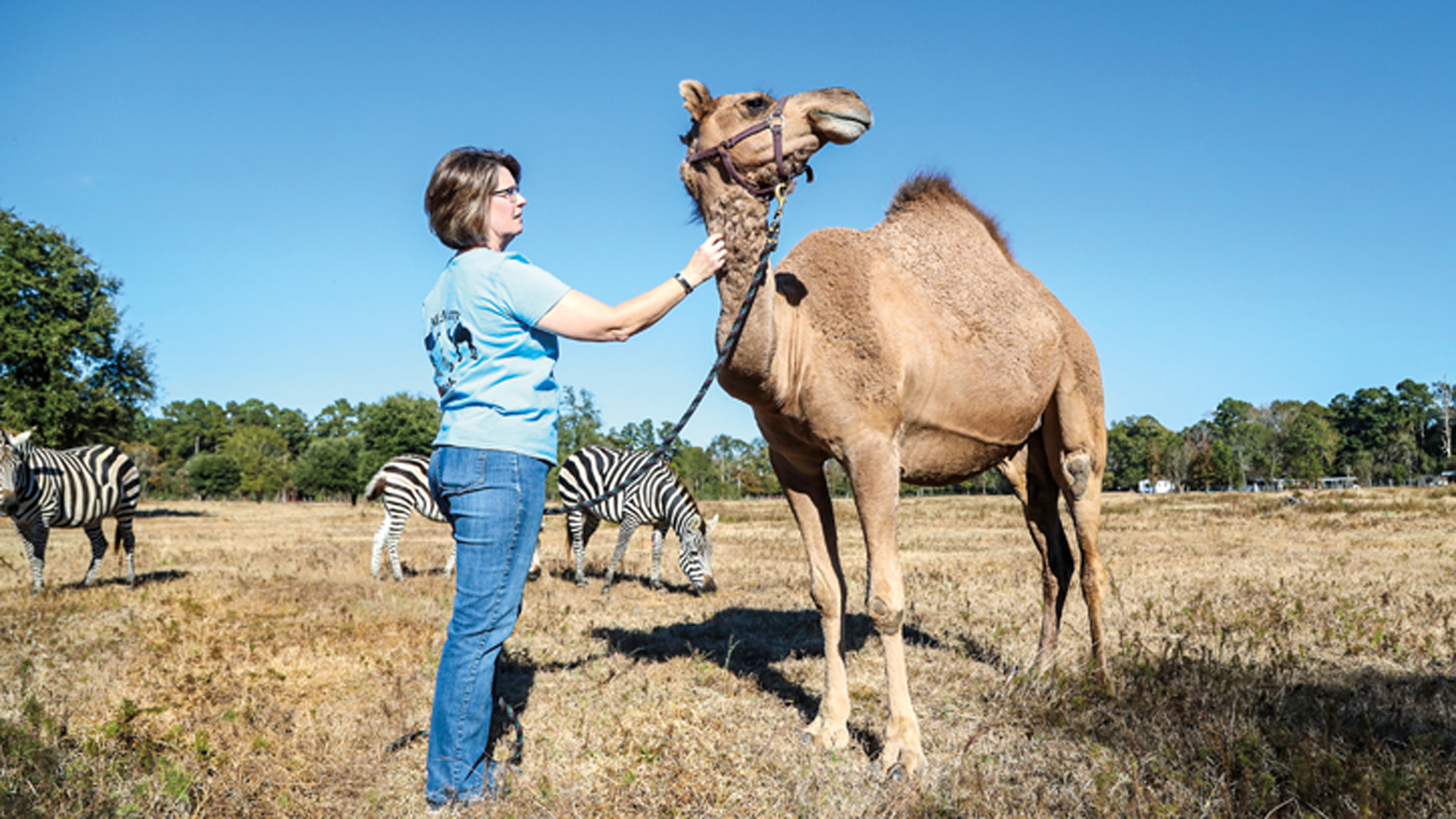
It’s feeding time on the farm. Our two camels, Sybil and Nadia, trot over to their individual feed buckets when they see me coming. “Hello, pretty girls,” I say, reaching up to pet their necks. Sybil nuzzles me; she loves being close. “Steady,” I tell her, which prompts her to stay. I hook each girl up to a lead rope to keep them in place until they finish eating. Then I set them free and they mosey off into the pasture. I marvel at how docile and obedient they are.

Caring for these two camels has been an unexpected joy for me. Feeding, bathing (can you imagine giving a 1,000-pound camel a bath?) and grooming them—it’s given us time to bond. We’ve learned a lot about one another over the past seven years since they joined my husband, Ron, and me on our 90-acre spread, land that his great-grandfather had settled in the 1890s. I’ve taught our camels how to stay on our property and how to listen. I hope I’ve taught them what it feels like to be loved. What they’ve taught me has surprised me—lessons that will stay with me forever.

Journey With Jesus in article ad

God Puts Beauty All Around Us

I couldn’t believe my ears when Ron, a traveling emergency medicine physician, turned to me one night and said, “Honey, I bought us two camels! You can’t imagine how beautiful they are.” Growing up on a farm in Oklahoma where we raised Hereford cattle and sheep, I’d always been an animal lover. But camels? They were intimidating, odd-looking and stinky. Beautiful was not a word I would have ever used to describe a camel. That was before I got to know one.

We brought Nadia and Sybil home when they were only three months old. We spent a lot of time with them and hand-fed them for months until they got to know us. Dromedary (one-humped) camels weigh more than 70 pounds at birth, so I couldn’t exactly snuggle them in my arms while I fed them, but as I looked into their soft brown eyes, fringed by two rows of the longest lashes, I sensed how vulnerable they were. They depended on me completely to take care of them. Without meaning to, I fell in love.

As the girls got older, I grew to appreciate their distinct personalities. I’d named them Nadia, meaning “first” in Arabic, and Sybil, which means “beautiful eyes” in Arabic. True to their names, Nadia seems to know she’s the firstborn and has assumed the role of matriarch. And Sybil’s eyes have always captivated me—it’s as if she’s talking to me through them.

Both camels delight in having their picture taken, and when visitors come with cameras, they run to greet them. They are especially gentle around children, but with us, they’ll sometimes playfully nip or snatch Ron’s hat. Camels are intelligent, perceptive, loyal—and yes, beautiful—creatures.

The first time Ron took me to see the 90 acres he’d inherited, I was shocked. I’d expected rolling pastures and graceful trees, but what I saw was more like a jungle—overgrown and ugly. I couldn’t imagine animals grazing here or us living in the small cottage on the property. Then Ron and I started clearing the land.

We bought a herd of Longhorn cattle that ate the brush, and we worked every day from sunup to sundown, collapsing in bed each night so exhausted we could barely speak. The farm is still a work in progress, but we have 40 acres of pasture cleared for our camels, horses, donkeys, zebras, Longhorns and chickens. When I look at what we’ve built, it amazes me.

You Are Stronger Than You Think

Nadia once gave birth to a male calf that lived only a short time. It broke my heart to hear her throaty bellow as she mourned the loss of her baby. After a week, Nadia went back to eating and roaming the pasture as usual. I can’t know how she felt inside, but the strength she showed after her loss left a deep impression on me. She eventually had a healthy calf named Amara, who also lives on the farm.

When Sybil was only a year old, she became very sick with a brain worm. We transported her to the Large Animal Hospital at Texas A&M, three hours away. The vets were able to save her with high doses of steroids and antiparasitic drugs, grueling treatments that Sybil bore patiently.

Last fall, at age seven and pregnant with her second calf, Sybil was diagnosed with a dislocated hip, a condition that is usually fatal in such a large animal. I could see the agony in her eyes, but she held on through the pain during the trip back to A&M, where we knew she’d have the best chance of survival.

After a successful surgery that beat the odds, Sybil endured months of rehab and confinement. I was awed by her fortitude and will to live. She even charmed the hospital team, who threw her a baby shower. When she was finally able to come home and run free, we shared her joy.

In 2016, Ron’s non-Hodgkin’s lymphoma recurred after he’d been in remission for 15 years. We were both devastated. For six months he underwent intensive chemotherapy and radiation treatments that left him weak and unable to work. I took on sole responsibility for caring for the animals. Hefting 50-pound sacks of feed aggravated my back. Maintenance of the animals was a 24/7 operation, in addition to keeping our household running and lifting Ron’s spirits.

I was drained mentally and physically and didn’t think I could keep it up. But Nadia and Sybil reminded me that there’s a strength within us that carries us through even the toughest of times. Thankfully, Ron is in remission again and is active and feeling well.

There’s Always Hope

I went through a period when I lost all hope. It started with my first husband, the father of my two boys, abruptly asking for a divorce. That was the end of not only my nine-year marriage but also my long-held dream that we’d take over my family’s farm in Oklahoma. On the rebound, I married a man who turned out to be abusive. I feared for my life and the lives of my sons. By the time I finally got out of that marriage, I had hit rock bottom.

One day in a crowded restaurant, a handsome man offered me his table. Instead of leaving, he said, “I’m Ron McMurry and you look like someone I’d love to know.” We chatted a bit—he was also divorced with children—and continued our conversations over email in the evenings after our kids were in bed. He won me over with his kindness and wit.

When Ron asked me to marry him less than a year after we met, I was worried about making another mistake. Still, in my heart, I knew he was different. I said yes, and we moved to Texas, where he had a farm—not the farm I’d pictured, but the farm God intended me to have.

Yet it wasn’t until I watched Nadia and Sybil live through darkness and come out on the other side that I realized that even during those difficult—and sometimes scary—years, there had been hope for me. Through the loss and medical issues our camels endured, I had always held hope for their recovery and happiness. Just as God had always held hope for mine.

Now, between animal feedings and farm chores, I sit contently in our cozy cottage, more at peace than I’ve ever been. Sybil’s calf will be born this spring. What better reason for hope than new life? I thank God—and Ron—every day for bringing me these camels. They’re truly a gift.

Did you enjoy this story? Subscribe to All Creatures magazine.

Life-Changing Advice from the Father He Hardly Knew

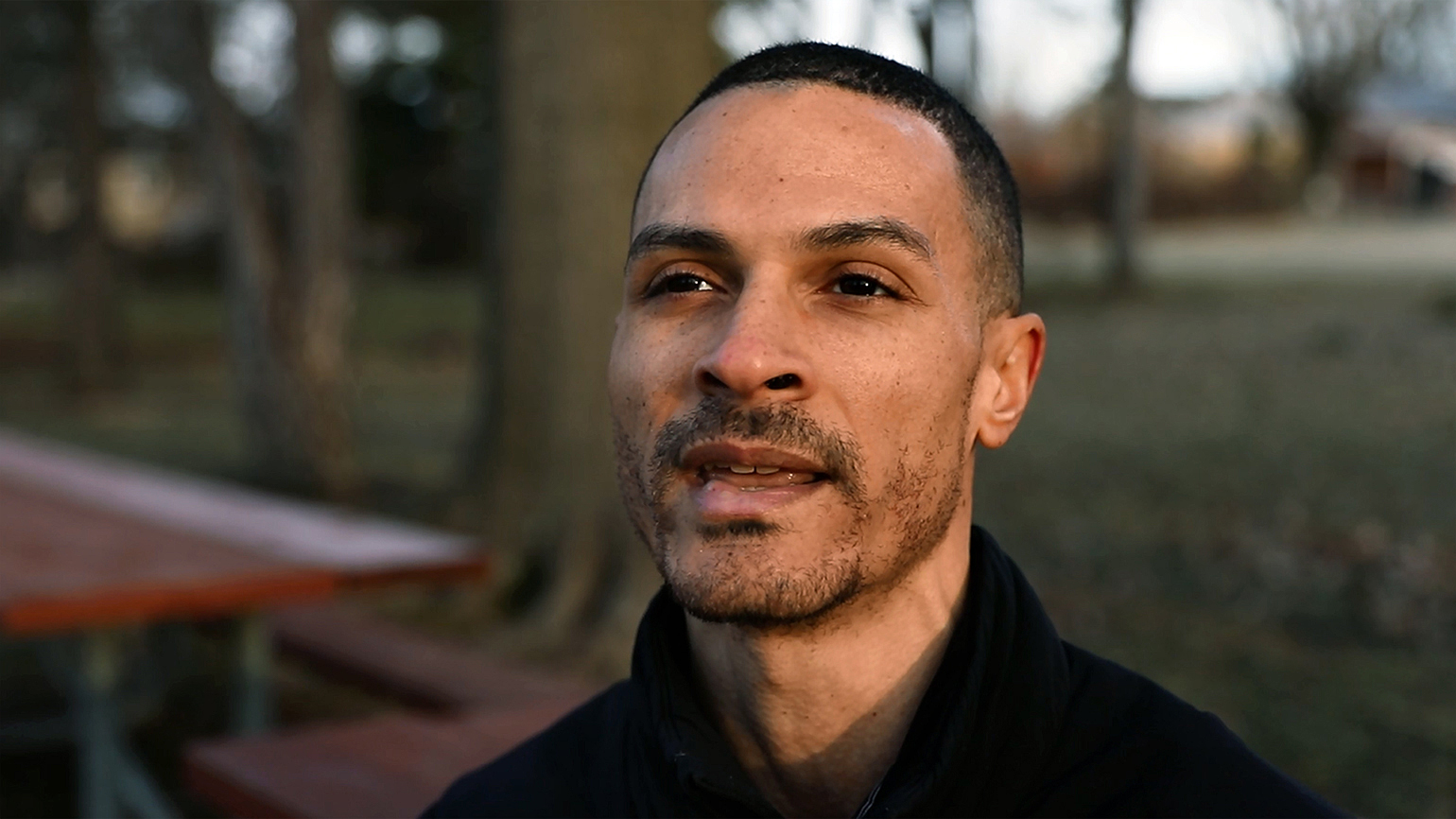
My name is Nyon Smith. I was born and raised and currently live in Cincinnati, Ohio, with my family of four. So I have four children, aged 15, 6, 4, and 10 months old. And basically, we have a quite hectic life now, as you might imagine with that many children, basically running them from sporting event to orchestra to church events. It’s quite hectic, but it’s also a blessing. I look into their eyes each morning and thank God for how unique each one of them is. Each one has something unique to offer.

In 2013, I lost my job. It was a job that I thought I would be at until retirement. Just because I looked to my father’s example, he was in a job for 30 plus years, so I kind of had attached my identity to that position. And at that point in my life, nothing seemed like it was a straight path. I had a lot of hiccups in my career and things like that. And basically, his response to me was that life hadn’t been such a straight path with him, either. He changed career course, and so things weren’t exactly a straight path for him, either.

The story that I wrote for Guideposts—it’s about my father and basically how he raised us as a family and kind of realizing that the way that he did things as we grew up doesn’t really work for myself as a father in the 21st century. My father, as I mentioned, he was on business a lot. He traveled the country. So my mother was basically the main one who got us ready for school and prepared our meals and things like that.

I think fatherhood has helped me and make peace with my dad because I realize his struggle a lot more. I’m more attuned to what he went through to raise us. And I basically take more value in being a strong and hardworking and God-fearing man.

So my dad taught me that I don’t really need to look to work for identity. That balance comes from working hard, but also being able to spend time with God and family. So I put a high priority on that outside of my career. I learned a lot of stuff from my dad now that I’m a father. I think in the article, I mentioned that he taught me how to change a U-bend on our sink. He’s also taught me how to trim our tree that we have out front in our house, and he’s taught me how to prep for job interviews. So basically, I’ll just have any excuse to spend time with him. It’s great with me because he’s a great guy.

Life After Covid—Hope on the Horizon

I miss hanging out with other humans, apart from my wife Julee and Jaseem, the cashier at the Quickmart down the road (sometimes his sister takes the register). Other than that, my contact with humanity has been woefully lean these past nine pandemic months sheltering here in western Massachusetts. It’s been doubly hard on Gracie, who loves people almost as much as she loves other dogs. 

Yesterday I took her into town so she could get in some socializing, and she ended up dragging me into one of those little specialty craft shops the Berkshires are known for. The reason was apparent. There was another dog shopping, and Gracie wanted to say hello. Badly. 

Sugarcreek Amish Mysteries In-Article Ad 2023

In a store full of pricey knickknacks, a golden retriever’s tail is a lethal weapon. I stifled it and pulled hard on her leash to slow her down. She extended her quivering nose, and gradually I let her greet her fellow canine. I felt for her. She was used to having an active social life at the dog run and around our Manhattan neighborhood, the way I was used to and probably took for granted all the people I interacted with every day at work, at the gym, in our building or simply navigating the narrow, downtown sidewalks near the Guideposts office. I even miss the people who would aggravate me by walking too slow.  

Afterwards we went for a hike. Down the trail came a couple of medium-sized mixed breeds triggering a zoomie frenzy on Gracie’s part. Soon leashes were entangled, and I went flying. “They miss other dogs,” the owner said, unsnarling the leashes while I dusted off my dignity. No kidding

God made us social creatures, dogs and people alike, and these months of isolation have been hard and lonely and unnatural. I even miss strangers, as strange as that sounds. I miss people I might have met. Or just plain people watching. Yet there is hope on the horizon with news of vaccines that can protect us against the virus. It fills my head with visions of sunny, maskless strolls in the park with Gracie and me greeting all comers without fear. That might be the worst part of all this, that we have come to fear our fellow humans.

Yet God did create us to seek out community, and He will bring us together again. Soon, I pray. Between now and then I will stay safe and deepen my appreciation for the society of other people, people I never realized it was so hard to live without. Then my own metaphorical tail will be wagging.