Embrace God's truth with our new book, The Lies that Bind

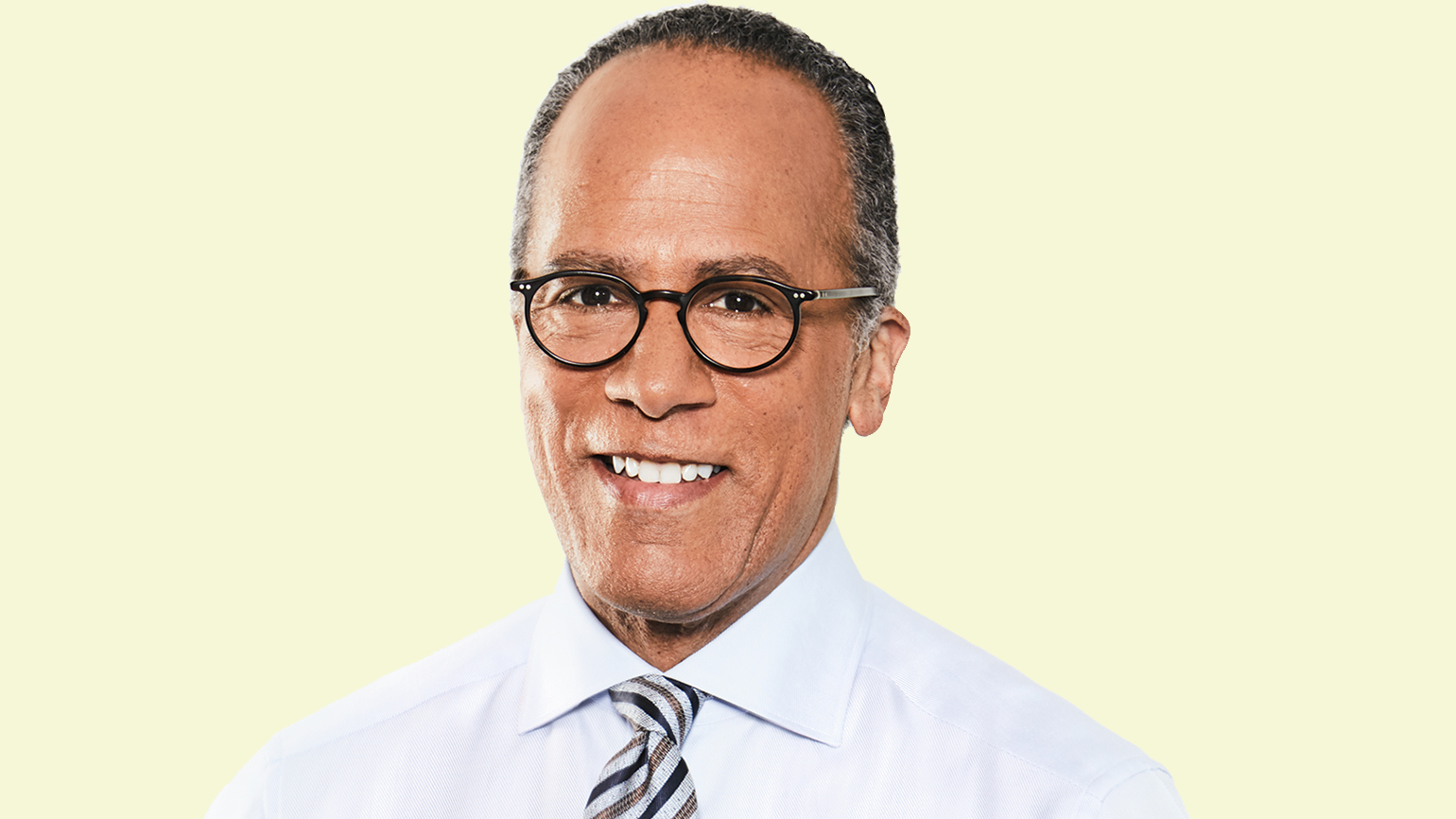
Lester Holt: How Family and Faith Have Influenced His Career

It’s a question any person of faith struggles with, not just a journalist or newscaster. You see misery in the world, terrible suffering, and wonder how it can be fair. How can you go on living your life of abundance when others suffer such deprivation? How can some have so little while others have so much?

NBC News anchor Lester Holt on the cover of the Sept 2017 issue of Guideposts; photo by Melanie DuneaMy work has taken me to places that have been devastated by war and natural disaster. I’ve stared into the hollowed-out faces of people suffering hunger and thirst. I’ve seen refugees living in abominable conditions. I remember visiting Somalia, where thousands of people were dying of starvation in the midst of civil war. We flew in to cover the story and spent several days on the ground. Then it was time to go. We returned to the States a few days before Christmas, images of the suffering we’d left behind etched into our consciousness. It seemed so unfair.

Journey With Jesus in article ad

But nothing was worse than reporting from Haiti after its catastrophic 2010 earthquake, in which more than 200,000 people perished. Here was death on a scale I’d never seen before: mass graves, whole neighborhoods leveled, survivors living on the streets and desperate for food and medicine. All of this less than 700 miles away from the richest country on the planet.

My crew and I initially slept in tents on an airfield where we’d erected our portable satellite dish and computers. We had shelter and food. So many did not. I would be there only a few days, our NBC News team several weeks, shining a light on the most abject human suffering. As always, however, the demands of other stories dictated that we would move on. And yet the disaster we’d leave behind would still be there for weeks, months, years.

My God, I thought, I don’t ever want to be in a position of exploiting people’s suffering. Was that what I was doing? In journalism, there is always another story to cover. By necessity, we move on. But here the contrast between the life I had just witnessed and the life I knew was so great it haunted me.

The network offered counseling to any of us who needed it. In the past, I’d always figured I was fine. A pro. I’d covered plenty of horrible events and been always able to file it away. This time I needed to talk to a professional. Of course I prayed, but I needed to know that our work helped rather than hindered.

A strong faith and a strong work ethic were what I grew up with. I was born in and raised mostly in Northern California. My dad was in the Air Force for twenty-some years, and he retired near Sacramento, where he immediately went back to school, got his degree and returned to the workforce. Same with Mom. She went to school while working full-time in her government job. I was one of four kids, and the unspoken message was: “You’ve got to make something of yourself.” We weren’t just encouraged to achieve. We were expected to.

Church on Sundays? No arguing about that. My parents were two-times-on-Sunday-and-Bible-study-on-Wednesdays folks, and they remain faithful. That was the model I had. Dad was an elder in the church and a natural-born counselor, with a reassuring, calm and incredibly insightful manner. I can recall him holed up for hours on the phone or behind closed doors helping someone through a personal crisis.

It was a good upbringing for a future journalist, not just the faith aspect but being around someone who was such a good listener. Dad is very level-headed. My parents both have strong values and a reliable moral compass. They taught us accountability, responsibility and compassion. Dinner table conversation was always something to look forward to (along with Mom’s pot roast!). All sides of issues were explored.

Intelligent discussion and debate. It’s something I still have a passion for. I want to hear other points of view and find great value in having my thinking challenged. A good news broadcast, I think, does just that. It compels us to examine other sides of an issue.

I can also thank my parents for giving us a good grounding in the Bible. I credit my church upbringing, in part, with helping me become comfortable working in front of a crowd. Valuable training for a future broadcaster.

Not long ago, I found an old leather-bound songbook, Sacred Selections, that I used as a teenager to lead the singing in church. I got used to being on the spot. There wasn’t any time to get nervous. I had to stand and deliver. It helped build my character and personality.

I’m occasionally asked if I serve as a song leader at our church in New York. My answer is, “There are much more capable song leaders there to do the job.” However, I recently visited another church, which had a backup band, and I was sorely tempted to grab my bass guitar and join them during a rendition of “Shout to the Lord.” The bass is one of my other passions. But usually in church, I’m content to sit and worship.

If you asked me what I feel sitting in the pews, I’d put it in one word: grateful. I have been so fortunate, so blessed. My wife, my marriage, my kids, my work. I’ve never lost my appreciation for all I’ve been given. I take that from my parents too. I’ve been successful in my work, but that professional success is no measure of who I am as a person. My job brings me great recognition, and I appreciate it, but it doesn’t define me.

Maybe that’s why I was struggling so much after returning from Haiti. What impact did my work have? What were the consequences? Were we making any difference? When asked to speak about being a journalist, I often stressed how important compassion was in the work. But what about when you had to face an overwhelming tragedy like Haiti’s, where you investigate it, report it and then move on?

The counselor I met with asked, “What would have happened if you hadn’t gone to Haiti? What if no one had covered that story? What if the devastation hadn’t appeared anywhere and people knew nothing about it?”

I thought back to all the donations people made and were still making. All those huge transport planes that landed at the airfield, even when we were still there, delivering medicine, food, water, clothes. What if no one had reported the story?

No one would know.

This was my calling; this was what I was expected to do. To shine a light in dark places. To give a voice to the voiceless. To make the invisible visible. That light illuminates our condition as human beings.

My job has changed considerably since I covered Haiti. Two years ago, I was named anchor of NBC Nightly News. I’ve had many tough assignments and heartbreaking stories to report. But I’m incredibly proud of what is now a regular segment meant to shine a light on all the good that goes on in our country. We call it “Inspiring America.” We’ve highlighted a man who sews flags for military caskets, a boy who helps disabled people navigate public spaces and a girl who travels around the country hugging police officers. It is both an honor and a duty to spread this good news.

I’m still very much my parents’ kid. Humility was another important lesson they taught me. My coworkers tease me because I keep an iron and ironing board in my office to touch up my shirts before the broadcast. I guess it’s part of the self-reliance and responsibility that was ingrained in me as a child. I definitely have the family work ethic. As for my faith, it is not something I share on the air, though I hope it permeates what I do. When I was working on the Weekend Today show a couple of years ago, I mentioned on air that I had to hustle after leaving the studio to get to worship on time.

I don’t know what viewers thought, but Mom was quick to say, “Lester, you just showed the world that you are not ashamed of the Gospel of Christ.”

Thanks, Mom. Thanks, Dad. I wouldn’t be where I am without you.

For more inspiring stories, subscribe to Guideposts magazine.
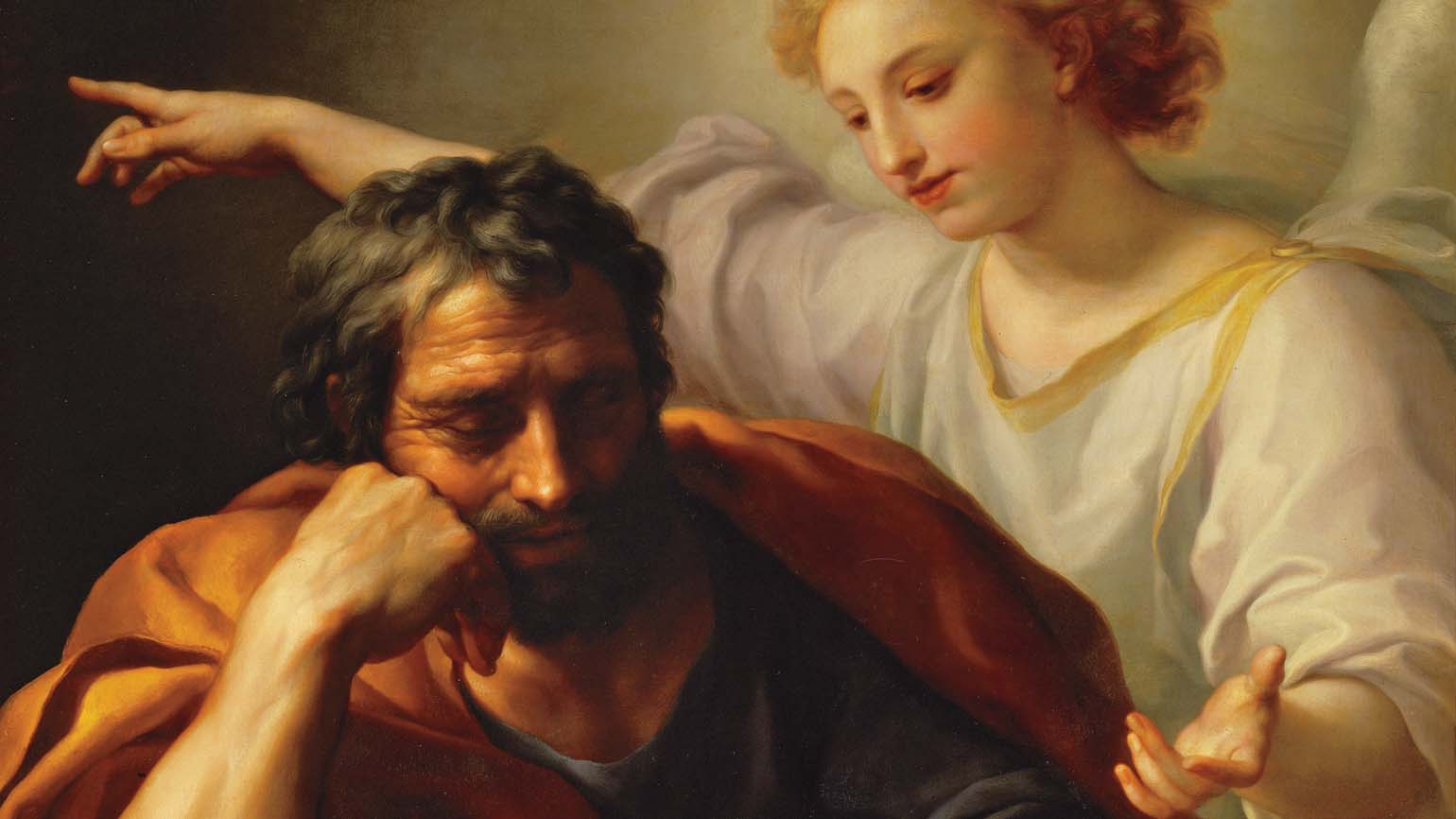
Lessons on Fatherhood from the Story of Joseph

By the time Christmas comes this year, both of my sons will have had their first child and I will be a granddad. Maybe that’s why I find myself thinking of that biblical father who appears in the crèche, often cast in the background, bearded, holding a staff. Joseph, who was given the challenge—and gift—of raising God’s only Son.

What do we know of Joseph?

Pray a Day Vol 2 In Article Ad

He was a carpenter—Jesus being rather scornfully referred to as “the carpenter’s son.” Not the poorest of the poor, but definitely toward the bottom of the social scale. That Joseph didn’t have a lot of money is apparent from Scripture. When he and Mary take their newborn to the temple in Jerusalem for dedication, they offer as a sacrifice “a pair of turtledoves or two young pigeons” (the provenance of those “two turtledoves” we encounter as we sing “On the first day of Christmas, my true love gave to me…”).

A person of means would have offered a lamb, as prescribed by law. Turtledoves were a second choice. But it is also clear that Joseph is faithful and observant. More than that, he listens to God, even in extreme circumstances.

Much is made of the angel who appeared to Mary and told her of this miraculous birth, a perennial scene in the Christmas pageant. But what of the four dreams that come to Joseph? They too involve an angel.

Joseph has his first dream just after he learns that Mary, his betrothed, is with child. He plans to quietly break things off with her. Until an angel appears to him in a dream and lets him know whose child this is, what the child should be named and the role the child will play in fulfilling God’s promise to all of us.

Can you imagine having a dream like that? Mind-boggling. It would be tempting enough to question the dream’s validity, if not dismiss it altogether. Joseph didn’t do either. He followed the angel’s instructions, taking Mary as his wife and refraining from any marital relations until Jesus was born. (Note how frank the Bible is about these seemingly private matters.)

The second dream alerts Joseph to Herod’s wrath. This newborn babe will be slaughtered unless Joseph acts decisively. He does, fleeing with his wife and child to Egypt. There they wait in safety until Joseph has a third dream: Herod is dead and the coast is clear. In one final dream, Joseph is warned that Herod’s son, almost as bad as the father, is now king. To avoid him, the holy family heads to Nazareth, in Galilee.

The last glimpse we get of Joseph in Scripture—a sidelong view—is when Jesus is 12 years old, accompanying his parents on a pilgrimage to Jerusalem for the Passover. On this visit, their adolescent son goes missing among the throngs of Jews who have journeyed to the temple for this pilgrimage holiday. While searching for his son, Joseph might have recalled the prophecies both Simeon and Anna had given here at the infant’s dedication, prophecies that echoed what Joseph knew from his own dreams.

After three days, his parents find Jesus listening, learning, amazing all the teachers at the temple. Mary chides her son: “Your father and I have been searching for you in great anxiety.”

“Did you not know that I must be in my Father’s house?” Jesus replied. I imagine Joseph the earthly father would have felt only love for that truth.

What are the lessons I take from all this? Things I learned from being a father myself. That you give your children all that you have and know. That guidance in raising them will come from places you might never expect—earthly angels as well as heavenly ones. That who they become will continue to surprise and delight you. And at some point, you will have to let them go, as they follow the path God has set out for them.

I have no doubt my sons will be great dads. And if they kindly claim they learned something of this loving role from me, I have to insist I had help—big help—along the way. Much like Joseph did.

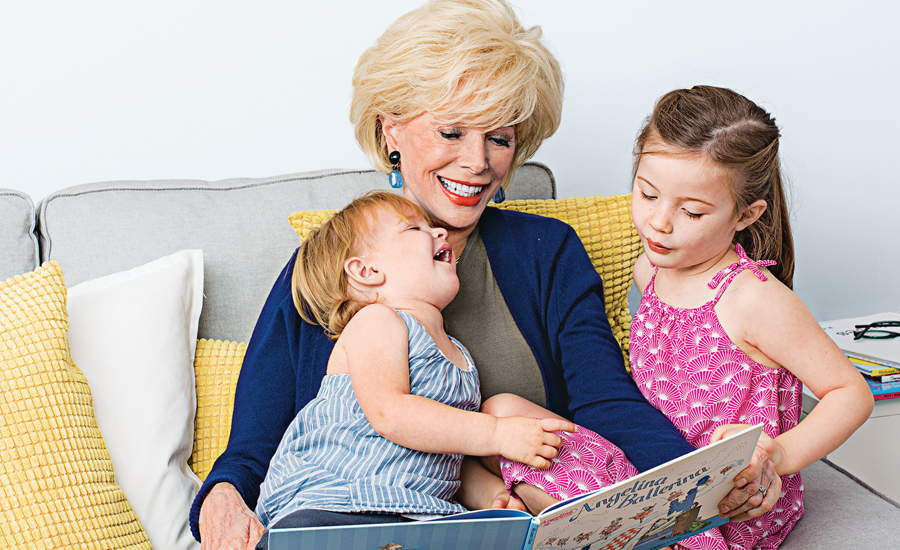
Lesley Stahl: The Blessings of Grandchildren

My 93-year-old mother was in the hospital in Massachusetts. She was not doing well—her cancer had metastasized and she was weak and tired. Fading, I feared. I was visiting her when I got the call from my daughter, Taylor, who lives in Los Angeles.

Her contractions had started. My first grandchild was on the way! I kissed my mom goodbye, promising that I would be back soon, and booked the next flight to L.A. for my husband, Aaron, and myself.

The Lies That Bind In Article Ad

I’ve always thought of myself as having enormous self-control. I can hold it together in any situation. That’s what I do in my career as a television journalist. I’ve reported from war zones and challenged heads of state. I have to listen to heart-wrenching stories and remain composed. Not now. My mother was dying, my only child going into labor; I was a wreck.

I usually enjoy flights and use the time to read a pile of books. This time I did nothing but worry all the way to Los Angeles. I thought of Taylor and our son-in-law, Andrew, and then my mom—Dolly, as we all called her.

Would she be okay until I got back? Was it time to arrange for hospice care? What about the baby in California? Would Taylor be up to it? Would I? For months I’d been pushing away those grandma gremlins.

Aaron and I landed at LAX. We got to the hospital and saw Taylor in the birthing room, calm as ever. Then we were banished to the waiting room, where we paced and checked our watches.

We knew it was going to be a girl. They’d already picked the name, Jordan. I’d gone with Taylor to doctor’s appointments. I’d heard the baby’s heartbeat and seen her little arms and legs floating on the ultrasound screen.

Forty minutes later—it felt like hours—the doctor appeared. The baby was perfect, healthy, the mother fine. We rushed back to see Jordan swaddled in Taylor’s arms. I was so pumped my heart was on a trampoline. All I wanted to do was hold Jordan.

Finally my chance came. I nearly swooned, overwhelmed with euphoria. I had assumed I’d already had my best days, my highest highs. Now I was experiencing something new, a whole new kind of love.

I was a grandmother.

My mother and I had a complicated relationship. No secret to anyone who knows us. But she was the best grandmother. The way she grandmothered had zero relationship to the way she had mothered me. Would the same be said of me?

READ MORE: SAVANNAH GUTHRIE ON HOLDING FAST TO FAITH

When Taylor was young, I was a White House correspondent with assignments that took me away for days at a time. I missed so many milestones. Aaron is a writer and worked at home. He was there for our daughter. But with Jordan I was determined not to miss a thing. We get to reboot with our grandkids, fix the mistakes or make amends for what we did as parents.

Of course, our grandchildren force us to confront our age. As the old joke goes, “My grandkids believe I’m the oldest thing in the world. And after two or three hours with them, I believe it.” It didn’t stop me from booking as many assignments in California as I could.

The first time Aaron and I babysat Jordan, giving the kids a night out, I don’t think I ever prayed so hard. We had all our instructions and were prepared to follow them to the letter. But Jordan wouldn’t take her bottle and bawled. Even then I was head over heels in love with her.

When we’re children, our feelings are selfish. During parenthood, we’re burdened with responsibility and fear (not to mention lack of sleep). Grandparents’ love is unfettered, pure. With Jordan in my arms I was filled with something very rare for me, total peace. Especially when she stopped crying.

The balance shifts when our children become parents. We grands begin holding our tongues (we try, anyway). We live by their rules now. And rule number one is: Do it their way.

One evening we were with Taylor and Andrew and they were instituting sleep-through-the-night training. At all of five months Jordan was being initiated into a new routine: bath, nursing and then into her crib to fall asleep on her own. “She has to learn she can do it, Mom,” Taylor said, reading the look of consternation on my face.

The four of us sat in the living room, listening to the baby monitor, hearing Jordan scream her little head off. Taylor and Andrew would go in occasionally and say, “We love you,” but never picked her up. It was excruciating. I couldn’t bear it. But I was so good. I didn’t say a word…or at least I thought I didn’t.

“I was the Sphinx,” I said to Aaron back in the car.

“No way,” Aaron said. “You were constantly on their case. You kept saying, ‘We never did this and you turned out all right.’” So much for my best intentions. And my self-control.

Really, though, as a grandparent, you’re willing to do anything as long as you can be with the grandkids. I know one woman whose daughter-in-law insists that she change her clothes before she holds her grandbaby. “I would wear a hazmat suit if I had to,” she says, laughing.

Summertime is the best. We take a month’s vacation and rent a place by the beach where the kids can join us. When Jordan was six months old I got to play with her every day for four weeks. She chewed on my fingers, grabbed my earrings, my glasses, my necklace. She put her fingers in my mouth and I’d suck on them as if they were straws.

After an hour I’d pray she would fall asleep now…though I had far more patience with Jordan than I ever did when Taylor was an infant.

They say once you’re over 60 you don’t know beans about technology. But we grandparents have a mighty strong incentive to learn. Even if the baby lives far away, we can still share the big moments onscreen—first step, first words, first bike ride, first ballet twirl, first haircut. “Just call me Grandma iPad,” says one woman.

When grandchildren are older, it’s the grandparents who pass along the family heritage. My friend Alice Greenwald used to run the Holocaust Memorial Museum in Washington, D.C.

“Most survivors of the concentration camps never talked to their children about what had happened to them,” she said. But they told their grandchildren because they wanted the story to be passed on to the next generation.

My parents weren’t very observant religiously, but I learned much about my Jewish faith from my grandfather. He was deeply religious. We celebrated the holidays with him.

The relationship between grandparents and grandkids is good for the kids, but it’s also therapeutic for us. For several years Aaron has been struggling with Parkinson’s, walking stiffly and slowly, a tremor in his hands (something that actually soothed Jordan when he held her).

The doctor put him on dopamine pills, which gave him a facial tic. One day five months after Jordan was born, I noticed that the tic was gone.

“What happened?” I asked.

“I’ve taken myself off dopamine,” Aaron said.

“You can’t!” I said. But he could and did for a time. Gone was the Parkinsonian mask that froze his smile. He even started driving again. It felt like a miracle, the flutter of angels’ wings in the air. The symptoms eventually came back, but for a time they were gone and we were grateful.

None of the specialists could give us a straight answer. My own theory was that becoming a grandfather was healing.

Those first weeks of Jordan’s life, if I wasn’t in L.A. or working in New York, I was in Massachusetts, helping Dolly. We moved her back home and arranged for around-the-clock palliative care. When Jordan was five weeks old, Taylor and Andrew brought her East to introduce Dolly to her greatgranddaughter.

It was the answer to all our prayers. I thought maybe my mother was holding on, willing herself not to go until she met Jordan. Perhaps that was it. A few days later she died, very peacefully, her death colliding in me with the freshness of Jordan’s new life, the wonder of it.

Aaron, who was raised a Methodist, always says there’s a plan to the universe, there’s a higher order. Grandchildren come along and they send you in a direction you never dreamed you were going. You discover a new purpose, a new calling.

We now have two grandchildren, Chloe having arrived two years after her sister. Holding her, I was flooded with the same love, the same charge I felt with Jordan. And nobody could convince me that she wasn’t drop-dead beautiful.

This role of grandmother inspired me to write a book, Becoming Grandma, asking all sorts of experts about “the joys and science of the new grandparenting,” as the book’s subtitle puts it. Of all the interviews, one conversation stands out. It was with a psychiatrist named Nancy Davis, of Bradenton, Florida.

There is one question she always asks her patients: “Who loved you?” “If nobody loved you in your first five or six years, you’re in trouble,” she said. “It’s like you can’t know what love is unless somebody loved you during that time.”

“Is it enough if the answer is, ‘My grandmother loved me’?” I asked.

“It’s enough,” she said.

Steve Leber, the CEO of grandparents .com, told me, “God gave us grandchildren to make up for aging.”

Ain’t it the truth.

Did you enjoy this story? Subscribe to Guideposts magazine.


Lenten Traditions: Remembering a Family’s Sacrifices

What is Lent? For me, Lent wafts through my mind on the remembered scent of warm candle wax and incense, my young knees aching as we said the Stations of the Cross, all 14 of them, me resisting the temptation to briefly sink back on my heels and risking an annoyed look from Father Walling and a sharp nudge from my fellow server. What Lenten lessons or Lenten traditions did I learn as a boy, serving on the altar at St. Owen’s church in Bloomfield Hills, Michigan?

Lent Is About Giving Up

Of course, first and foremost I learned that Lent is about sacrifice, the greatest sacrifice of all at Golgotha. We honor that divine sacrifice by making small sacrifices ourselves in the 40 days leading up to Easter.

Walking with Jesus L&E evergreen_in article ad

My dad was a case in point. He was a sugar addict and in particular a chocoholic. For his Lenten tradition, he would lay off the sweets. It was a real struggle for him and like most addicts the more he thought about his self-imposed deprivation the more he obsessed over it. I would try to make it easier for him by hiding my own sweets in my room, but one year we discovered that he had a secret chocolate stash. He tried to deny it, but we totally busted him. He ended up bringing his lapse to confession. Now that was a sacrifice. I knew how hard it was for him to admit defeat.

READ MORE: What to Give Up for Lent: 15 Meaningful Suggestions

Lent Is About Taking On

My mother was a different story. She didn’t have many obvious vices and the ones she did have were not necessarily subject to suppression, like speaking her mind when she probably shouldn’t. She was not self-aware in that respect. While my father’s notion of sacrifice was subtractive—he would take something away from himself—my mother’s was additive. She would do more of something. Like praying on her knees twice a day rather than once. Or increasing her volunteer work during Lent or committing more time to the troop of Girl Scouts with Down syndrome she helped lead. She would use the occasion of Lent to do more even if it exhausted her. She gave up nothing. That was her concept of sacrifice and her Lenten traditions.

Except on Good Friday when she would slip a few sharp pebbles in her shoe to remind her of Christ’s suffering. That, I’ve always thought, was more about humility than suffering, for the meaning of Lent after all is about humbling ourselves to receive the miracle of Easter.

READ MORE: 5 Things to Do (Not Give Up) for Lent

Lent Is About Helping Others

I have not gotten to the point where I put pebbles in my shoe, and Lord knows I could never quit chocolate. So, following my mother’s example, what can I increase? What good thing can I do more of during Lent, especially if it is for the benefit of others? I’m going to think about that and get back to you with a few examples in my next blog. Maybe you can use them too or share some of your own Lenten traditions. I’d love to know.

READ MORE ABOUT LENT:

Learning to Trust an Unseen Guide

Out of nowhere the butterfly flitted across the path, lingered on a flower, darted up into the sky, then came back down to us. Iridescent wings catching the sunshine, dazzling with color. Ally followed it and we followed Ally.

We were in the Botanical Gardens in Quito, Ecuador, 9,350 feet above sea level, the snow-dusted Andes encircling us. Clouds hung over the mountains and a brilliant rainbow pierced the canopy.

NIVFLB Inarticle ad

I should have been happy, here on vacation with my wife, Carol. We had flown in to visit our oldest son, Sam, and his friend Ally, but an uneasiness hovered over me.

Why was Sam here? Why couldn’t he get on with his life and go to medical school as we had planned? Why this aimless choice by a kid who normally kept his nose to the grindstone? I had always trusted him. Now I wasn’t so sure.

On our flight from Virginia I shared my feelings with Carol. “Why does Sam need to backpack through the Andes for months, ‘finding himself,’ when he never seemed lost in the first place?” He’d aced his pre-med curriculum and graduated near the top of his class. He was a shoo-in for med school.

“Think about what you were like at his age,” Carol had said.

Well, yes, but Sam wasn’t me. My buddies and I at the University of Virginia partied hard, but kids did in those days, didn’t they? The class of ’66 had Vietnam hanging over our heads. We had to let off steam. Some nights we tore a hole in the morning and crawled right through.

The wildest of us, our crazy leader, was Chuck. He was studying to be a doctor, but you wouldn’t know it watching him drive his Harley along the campus sidewalks, laughing and shouting as if he hadn’t a care in the world. That was Chuck.

“Times were different,” I said. “I didn’t know what I wanted to do.” I went straight into the military after school. Served for four years, went to grad school, got busy with marriage, kids, work.

As for Chuck, I thought of him as a cautionary tale–he’d dropped off the face of the earth. Sam seemed headed for great things. I didn’t want him to get lost, to blow his chances like Chuck and others had.

“I’ve been praying for the right words to say to him,” I told Carol.

Sam met us at the airport with Ally. She was a free spirit, the one who had encouraged his newfound wanderlust. I had suspected that she was a bad influence, but I liked her right away–polite and self-possessed.

And Sam, he’d changed, grown. I could tell immediately. He was more sure of himself, confident but not rebellious. His Spanish was good enough to get us through the throng of taxi drivers and safely to our hotel.

The next morning we visited the local market, toured the old colonial quarter, straddled the equator, ate excellent ceviche. No chance for a heart-to-heart with my son.

Today, at the Botanical Gardens, I hoped there’d be a moment when I could talk some sense into him. He’d had his fun. Now it was time to get serious.

We wandered along the garden paths, admiring a tree here, a cactus there. Sam took a picture of the rainbow. “Look!” Ally gasped. I saw that vibration of color, the butterfly, almost as if it had been spun off by the rainbow. Ally dashed after it.

We followed her zigzag path. It seemed as aimless as this trip of Sam’s. Chasing after butterflies. Chasing after vague notions of the future. I lagged several paces behind, feeling light-headed in the thin atmosphere.

The butterfly led us to a bridge over a koi pond, then vanished into the sky. Catching my breath, I barely noticed the man sitting at a table there, book in hand. But he and Carol began to talk.

“Where are you from?” I heard him ask in English. “Charlottesville, Virginia,” Carol answered. He put down his book. “I went to school at the University of Virginia,” he said. “Class of sixty-six.”

I stared at him. In an instant the years dropped away. The same crooked grin, the piercing eyes…. I could picture him raising Cain on his old Harley. “Chuck?” I exclaimed.

“Woody?” he said.

We hugged, pounding each other on the back. “Sam, this is my old buddy Chuck, from college,” I said. I fought off my sense of disbelief. Chuck? Here? In Quito, of all places?

The five of us sat down. There was so much catching up to do. We laughed at the things we had done back in the day, shook our heads as if we still couldn’t believe it.

“You know,” Chuck said, “I wasn’t as carefree back then as I wanted everyone to think. I was a pretty unhappy kid.”

I thought of that conversation I wanted to have with Sam. “Did you end up going to med school?” I asked.

“Nope,” Chuck said. “I finally realized it wasn’t really what I wanted to do. It was my father’s plan. So I traveled and tried to find out what I did want. Met a beautiful woman and we settled here. Life has been good to me.”

I stayed silent. “I was planning on going to med school too,” Sam said, “but I don’t think I’d be happy being a doctor.”

Not happy? What did being happy have to do with it? Chuck looked at him. “Only you can decide what’s right for you, the path that is most likely to make you happy. I’m glad I finally found mine.”

All at once I knew. I too had found my path. I was happy with the way my life had turned out and suddenly very proud of my adventurous son. I knew what I needed to say to Sam, not right now, but soon enough: “I love you. I only want you to be happy. Whatever you choose to do.”

Three years have flown by since the day a butterfly led me to that reunion in the least likely of places. Chuck and I still keep in touch, telling old stories and new ones.

Sam returned to the States and found another career–developing software. He’s doing very well. He’s happy, even if I don’t understand a thing about computers or what he does. I trust him.

I trust something else too, now more than ever. No matter where our paths in life take us, our steps are guided, even by a butterfly that seems to emerge from a rainbow.


Download your FREE ebook, Mysterious Ways: 9 Inspiring Stories that Show Evidence of God's Love and God's Grace

Learning to Love Their Differences

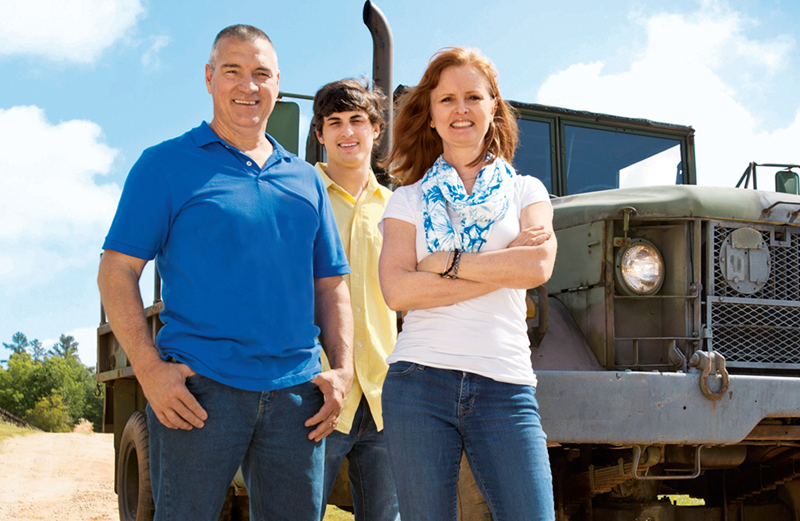
One January night, I called my husband, Rick, and our 20-year-old son, Thomas, to supper. They were outside tinkering with Thomas’s pickup truck. The three of us sat down at our old farm table.

After Rick said the blessing, I passed the mashed potatoes and asked how things had gone at work. Rick runs his own auto-repair shop and Thomas, a college student, works for him part time.

New Every Morning Journal In Article Ad A

Rick elbowed Thomas. “Go ahead. Tell her.”

Uh-oh. This couldn’t be good.

“We saw an Army truck for sale on eBay today,” Thomas said. “It looks awesome.”

I had a bad feeling I knew where this was going. Still, a woman could hope. “Is it cute, like a little green mail truck?”

Rick laughed. “I wouldn’t call it cute. It’s a deuce and a half. We’re thinking about buying it,” he said casually, as though they were considering a Matchbox car collection.

“A deuce and a half? I have no idea what you’re talking about.” But I could tell by the gleam in his brown eyes that my husband was way beyond reason. His sense of adventure was going to ruffle my quiet, peaceful world. Again.

That’s what happens when an introverted bookworm marries an extrovert who thrives on fun and hobbies—the wilder, the better.

“Means it can hold two and a half tons of cargo,” Rick said. “An Army truck makes a statement. Especially an old one.”

I don’t like making statements. I like to fit in, not stand out. I love cooking, sitting on the porch with a book, walking in the woods. Why couldn’t Rick be more like me? Now he was filling our son’s head with peculiar ideas. I could understand that they love cars, but Army trucks?

“You gotta see it, Julie. It’s incredible.”

“Don’t you ever want to do normal things like other men? Play golf on Saturdays, and—”

“That’s no fun. Besides, the truck will be a great advertisement. I’ll get the business name and our phone number printed on the side.”

I cringed. Our name in bold letters. For the whole world to see. Couldn’t he get a website like everybody else?

In 34 years of marriage, Rick has had more than a few crazy ideas. Building a log house. Rescuing parakeets and constructing an outdoor atrium for them. His plans had worked, but they were so radical. So risky. So strange. So public.

I glanced at Rick as I cleared the table, thinking, This time you’ve really lost your mind! He and Thomas tried to show me the truck on eBay. I refused to look. Maybe if I ignored their plan, they’d forget about it.

The following Sunday afternoon Thomas texted me. Ask Dad if he wants me to bid on it. That’s another thing. Rick loves his big blocky old cell phone, which is so antiquated it doesn’t have texting capabilities. I’d begged him to upgrade and learn to text, but I was wasting my breath.

I read the text to him in a flat tone. I’d lost the battle. I’d never be able to change my husband.

“Tell Thomas whatever he wants to do is fine.”

“This is insane! Bidding on some junky truck you’ve never seen. How are y’all paying for it?”

“We’re splitting it. It’s two thousand four hundred fifty dollars. These trucks usually sell for fifty-five hundred or more. If we ever decide to, we could sell it for scrap metal and make our money back. Plus, if there’s an emergency, the truck’s a workhorse. It can run on anything—even water, temporarily, and it can push cars off the street,” he said.

Push cars off the street? Oh, Lord…

Rick couldn’t keep a straight face, though. “I’ve never heard of anything more ridiculous in my life,” I snapped. I sent Thomas a text to place the bid. “Where’s this miracle-working truck?”

“Savannah.”

“What if you get there and realize that I’m right?” Surely nobody could have this many far-out ideas and have them all work out fine.

“It’s listed as being in good condition. If the seller’s misrepresenting the truth, we won’t buy it. Relax, Julie. This isn’t a big deal.”

Before I could respond, Thomas called saying they’d won the auction. My mouth went dry. We now owned a huge old Army truck. I handed the phone over. Rick congratulated Thomas, then invited me to ride along with them to pick up the truck. I declined. I wasn’t going to be seen in that thing.

Saturday morning, they got ready for the almost 600-mile round-trip to Savannah. “Life’s too short to live like everybody else,” Rick said. “Have a little fun, Julie.”

His words pricked my heart. I said goodbye and plodded to my office. I didn’t get much work done for looking out the window. Lord, why is Rick driven to be so different? Why does he like loud things? Don’t risks scare him a little bit? Isn’t he ever afraid of making a mistake? Of looking foolish?

At five o’clock, i heard a low rumble. I peeked out the window again. The Army truck was lumbering up our long gravel driveway like a camouflage-colored mastodon. Much worse than I’d imagined. Bigger than a giant dump truck.

I walked outside as Thomas parked the beast. A deuce and a half? It was more like a doozy and a half. Even our dog approached with caution.

“Isn’t it great?” Rick said.

I was speechless. He was going to drive this around town? Where people could see him? With our family name plastered all over it?

Thomas jumped out of the cab. “Check it out, Mom,” he said.

“A few years ago,” Rick said, “Thomas and I talked about how neat it would be to have an Army truck. Sort of takes me back to playing G.I. Joes.”

Did he sit around thinking of crazy new things to try? Why couldn’t he be content with life exactly how it is?

Rick squeezed Thomas’s shoulders. “Two-hundred and eighty-eight miles of shifting gears. Rough ride, wasn’t it?”

Thomas smiled. “Wasn’t too bad.”

I studied the ugly creature without saying much. What was there to say?

The following afternoon, Thomas invited me for a ride. I didn’t have it in me to say no. “Take your coat, Mom. It’s gonna be cold.” The Army truck waited, parked in the woods. Lurking would be more like it. At least no one could see it from the street.

Carefully, I climbed up the tall step and slid to the middle of the thinly padded metal seat. Rick sat beside me and Thomas drove down the driveway. There was no heater.

“Guess what we’re naming it,” Rick hollered over the engine’s roar.

“The Refrigerator?” I said, shoving my hands in my pockets.

“The General. It was made in 1970,” Thomas said. “A piece of American history. It goes fifty-six miles an hour and has only forty-five thousand miles on it.”

Thomas turned right onto a main road, exposing us to the curious expressions of onlookers. Some even gaped. I didn’t blame them. We were absurd. I looked for something I could crawl under.

Then I noticed cars slowing to let us enter traffic. And even though the truck made a terrible racket, neighbors smiled and waved. Nobody jeered or pointed. Just the opposite. I could see excitement shining in their eyes. This truck was something different. Something interesting.

Sitting there, shivering, with the engine rumbling around me, I sensed God stirring my heart. This was exactly how he had made my husband. To be like the General. Fearless. Tough. He didn’t mind making a scene if need be. Had no desire to be like everyone else. Dependable. A workhorse. Honest.

The very things that had driven me nuts are the reasons I was crazy about Rick. We don’t marry people because they’re perfect. We marry them because we love them.

If he were just like me—reserved, quiet, cautious, prone to embarrassment—imagine how dull our lives would be! We’d be like two church mice hiding in a hole. One thing about being married to Rick, we had fun. Every single day, he made me laugh.

With new appreciation for my man and our Army truck, I sat taller and waved to our neighbors. I spoke loudly. Proudly. “Don’t ever sell it for scrap metal, okay? I…well, I love the General.”

Rick’s eyes met mine. “Seriously?”

“Yeah, and I love you too. Thanks for being you. I wouldn’t change you even if I could.”

He squeezed my hand. “Ditto.”


Download your FREE ebook, Paths to Happiness: 7 Real Life Stories of Personal Growth, Self-Improvement and Positive Change

Learning to Love Charlie Bear

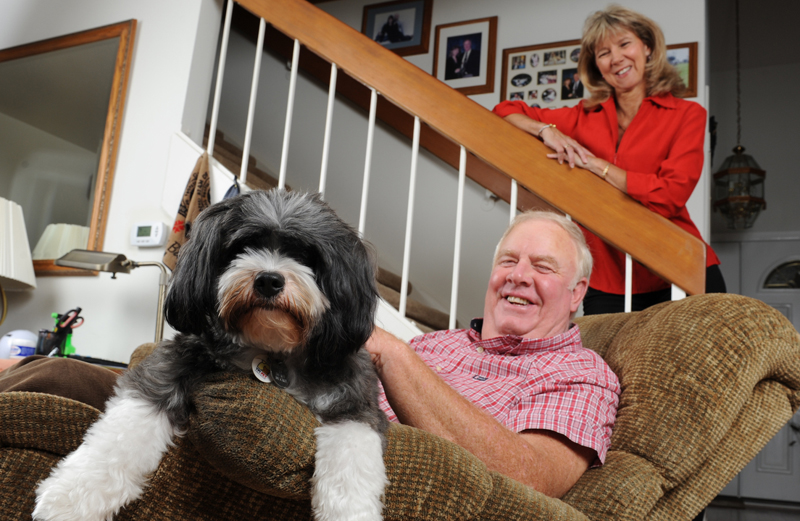
I knew we were in trouble when I caught my husband, Roger, gazing fondly at an image on the computer. It was of a 14-month-old dog, part Shih Tzu, part terrier, with salt-and-pepper fur and dark, piercing eyes.

“Charlie Bear,” Roger said, reading the name on the adopt-a-pet website. “Doesn’t he look perfect? Don’t you want to take him home right now?”

The Lies That Bind In Article Ad

I read over Roger’s shoulder. “It says he’s got ‘issues,’ like guarding his food and chasing his tail,” I said. Charlie Bear was found on a school playground where kids teased him. He’d been in a foster home for four months and was now ready for adoption.

I’ve always had a soft spot for rescues—our 10-year-old golden lab, Rex, had been rescued. But I just didn’t feel up to it this time.

We’d lost our two cats in the last few months and I was still mourning them, not to mention my fear of someday losing mellow old Rex. A new dog with “issues” sounded like way too much.

“It says he doesn’t like to be touched,” I continued. “Didn’t you say you wanted a dog you could hold? Don’t you think we need a pet that is a little less… complicated?”

Roger hardly seemed to hear me. He kept staring at the photo of that adorable face rimmed with white and those dark eyes. “Let’s just meet him and see.”

Bad idea. It was love at first sight for Roger and Charlie Bear, that’s for sure. The dog jumped right into Roger’s lap and curled up there, gazing at his possible master-to-be, while Roger petted him. So much for “doesn’t like to be touched.”

And what about the other issues? Chasing his tail or throwing fits when he didn’t get his way or snapping and growling? We didn’t see any of that.

“He’s never sat in anyone’s lap like that before,” Charlie Bear’s foster mom said. Maybe she says that to everyone, I thought. By this time Charlie Bear could barely keep his eyes open as Roger stroked his ears. If he had been a cat, he would have been purring.

“There’s a two-week probationary period,” the woman explained quietly. “We can take him back if things don’t work out.” As if my husband would ever agree to that.

Charlie Bear hardly made a peep that first night. We introduced him to our veteran Rex—who sniffed him warily—then Charlie walked into his crate, lay down and went right to sleep, exhausted. “Piece of cake,” Roger said to me.

Until the next day. Charlie Bear frantically paced the perimeter of the backyard, uncertain, it seemed, of what to do with himself. Then he ran an Indy 500 around and around the flag pole at one end and a palm tree at the other.

He came into the house afterward, panting furiously, his pink tongue hanging out, eyes searching ours for approval. Roger held him and talked to him, trying to calm him down.

That afternoon, Charlie Bear heard a bird calling in the backyard. He dashed from Roger’s arms, leaped at the closed screen door, reached up with his paws. “Charlie Bear, wait. I’ll open the door for you,” I said.

I ran to pull it open. Too late. The screen was shredded. Old Rex looked up disdainfully from his bed as though I were to blame for this rude interruption of his golden years.

Things only got worse. That night we put Charlie Bear into his crate, but he simply would not settle down. He barked nonstop for 20 minutes. “I just took him for a potty break,” I said to Roger, both of us lying in bed, trying to sleep. “I don’t understand what’s wrong.”

We’d gone through this with Rex when Rex was a puppy, but then Rex had always settled down eventually. Not Charlie Bear.

“This has got to stop,” I said.

I sprang out of bed and ran downstairs, opened Charlie Bear’s crate and led him outside. Nothing. I led him back in and closed the crate door. “Now go to sleep, Charlie Bear,” I said sternly. He just stared back at me with those pleading brown eyes.

The next few days went from one trial to the next. Charlie Bear continued to bark at bedtime. With no provocation he chased his tail, spinning and snapping and growling. Once he accosted Rex, jumped up and almost bit his throat.

“No!” I screamed, and separated them. “Outside, Charlie Bear. Outside right now!” He messed up our bedspread. I was constantly up and down, opening and closing the door.

The two weeks were almost up. I was exhausted. No way could we handle this dog. I didn’t want to disappoint my husband, but Roger would have to understand.

Roger and I were sitting in the family room one night, Roger in his recliner with Charlie Bear on his lap and me on the sofa. Roger looked at me, then said, “Honey, I think we should give him back. He’s a lot more work than we realized. A lot more work for you, especially since you’re the one who’s home most of the day.”

He was a lot of work. Too much for me. I was glad I didn’t have to make an issue of it. Roger had seen the light. I started to say a quick prayer of gratitude when I glanced over at my husband.

Roger was holding Charlie Bear and speaking ever so softly to him. His voice was calm and reassuring. He ran his fingers through the little dog’s fur. Charlie Bear gave him a whiskery kiss.

I thought back to all of Charlie Bear’s shenanigans— the screen door incident, the sleepless nights, the barking, attacking Rex. I imagined a scale, with all of Charlie Bear’s misdeeds on one side and all my husband’s affection for him on the other. It was no contest.

Charlie Bear was a handful, but in truth, all our pets had had their moments, especially when they were new. Love, I suddenly remembered, always saved the day. Love bears all things, believes all things, hopes all things. Was it as true of dogs as it was of people?

I didn’t love Charlie Bear, not yet at least, but I loved Roger and Roger loved this dog. My heart softened. Maybe I was making a terrible mistake, but there was no way I was going to give back this dog. I couldn’t do that to Charlie Bear or Roger. “I think we should keep him,” I said.

Roger looked up from the bundle of fur in his lap. “You sure?”

“We’ll adjust. He’ll adjust. We’ll be fine.” Then I prayed silently, Lord, please make it true.

It took some training. I acquired a new set of skills, and Charlie Bear, well, he calmed down, more or less.

Sometimes he goes into one of his Indy 500s around the backyard, until he runs out of breath, comes over, nuzzles me and leaps, panting, into my arms. I pet him until I think my hand is going to fall off. “You’re something else,” I say.

Maybe it wasn’t exactly love at first sight for Charlie Bear and me. But it was love, and that’s what matters.


Download your FREE ebook, Rediscover the Power of Positive Thinking, with Norman Vincent Peale

Ladybugs Renewed Her Appreciation of God’s Lovely Creation

One January three years after my husband, Eric, and I married, we moved into our dream home. At last, a place big enough for our blended family! We had been squeezing our five kids into Eric’s three-bedroom house. I was beyond grateful to have enough room for everyone. Life was so much easier.

Then I started noticing ladybugs inside—everywhere. We’d wake up in the morning and there were dozens of them on each window. At first, I gathered them up and put them back outside, but in a matter of hours, there were just as many as before. It was so overwhelming that I didn’t invite people over; I didn’t want them thinking our house was dirty or unkempt. We even had to put napkins over our glasses or we’d end up with ladybugs in our drinks! I was so upset.

The Lies That Bind In Article Ad

One day I was helping one of the kids with science homework, which involved looking up the names of groups of animals. It turns out, a bunch of zebras is called a dazzle, a group of owls is a parliament and a swarm of ladybugs is called a loveliness.

A loveliness… Was that how God saw these beetles? That made me rethink my attitude. Ladybugs are God’s creation, after all. They hadn’t come into my new home to annoy me. They were just trying to stay warm. When spring came, they went back outside. 

We still get ladybugs in our house every winter, but nowhere near as many as we did that first year. Whenever I see one, it’s a reminder that we share the world with God’s creatures, all of which are lovely in their own way.

Dear Lord, thank you for showing me your creation and reminding me that you gave us all a home.

‘Lady Bird’ Is a Love Letter to Home

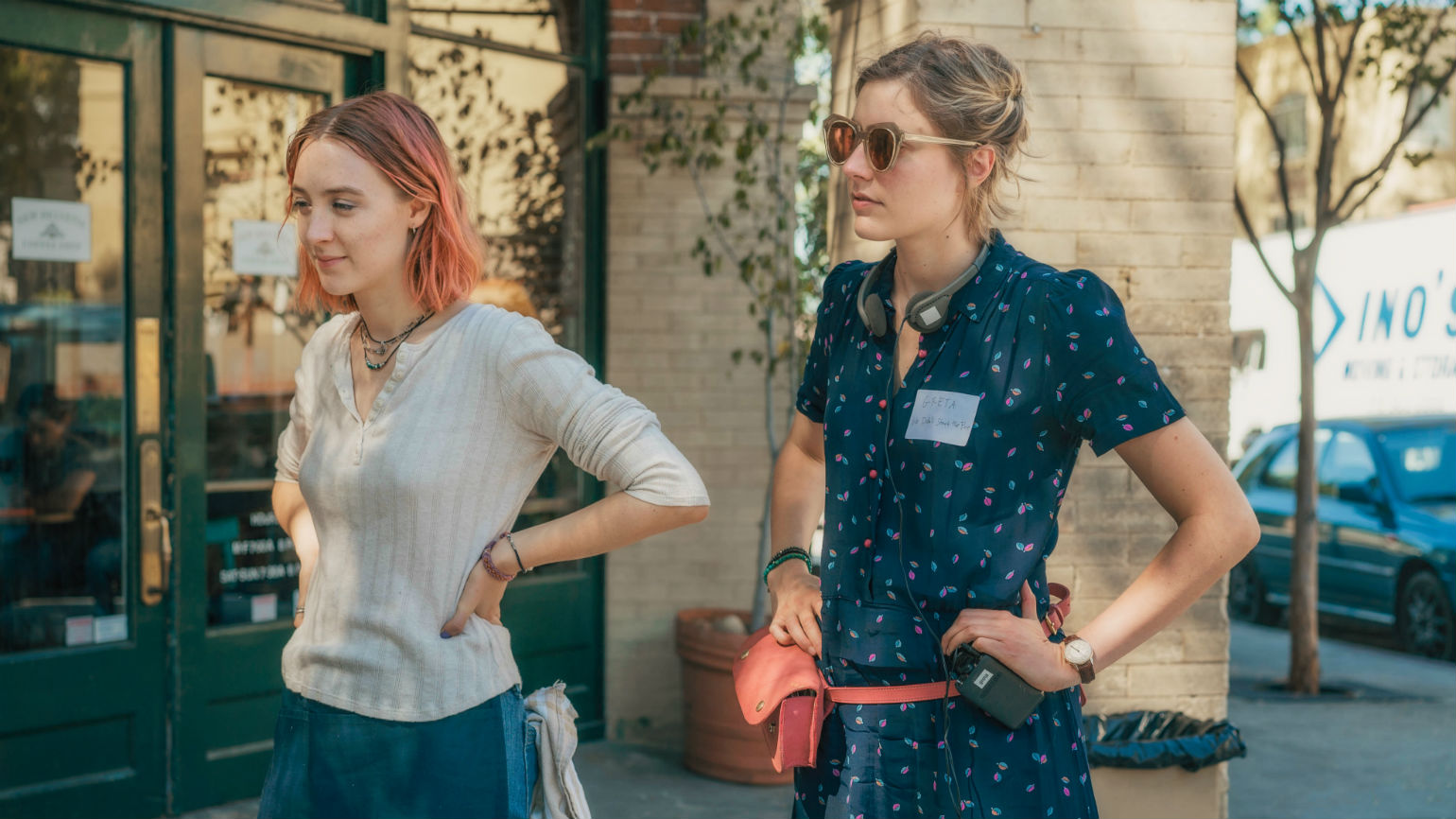
Greta Gerwig is a name you’ll be hearing quite a lot of very soon.

The director’s first feature-length film, Lady Bird, recently became the best-reviewed film on the review aggregation site, Rotten Tomatoes – a feat in and of itself – and has also earned her a handful of Golden Globe nominations that have only stoked the Oscar buzz surrounding the small indie project.

Sugarcreek Amish Mysteries In-Article Ad 2023

For Gerwig, the recognition is just a kind of white noise – the kind that’s nice to hear but that doesn’t change the way she feels about the movie, which follows a young woman struggling to break free of her hometown and the familial bonds that tie her there.

“It was such a labor of love,” Gerwig tells Guideposts.org of shooting the film, which stars Saoirse Ronan as the titular character Lady Bird and Laurie Metcalf as her mother, Marion. “I loved making this movie, and it’s meant so much to me, how it’s connected with so many different kinds of people.”

One of the reasons it’s already made such an impact is because Gerwig decided to focus her feminine coming of age tale not on first loves but on the relationships that are more meaningful, and more complicated, like the one Lady Bird has with her hometown of Sacramento, which just so happens to be Gerwig’s as well.

“I knew I wanted to write a film about home, and the way home is something that only comes into focus as you’re leaving it,” Gerwig explains. “The way that you love it, and what’s beautiful about it is hard to see while you’re in it, particularly when you’re a teenager. I wanted that to be the core of it.”

Much of the film sees Lady Bird fight against her upbringing in beautiful, suburban California. Her family lives paycheck to paycheck after her father loses his job and becomes depressed;her mother works extra shifts at a psychiatric facility to keep things afloat, and all the while, Lady Bird entertains unrealistic dreams of attending an Ivy League college on the east coast, one her parents surely couldn’t afford and for which her grades don’t really qualify her.

That need to break free from the world she’s been brought up in – a world where she lives on the wrong side of the tracks from the wealthy friends that attend her all-girls Catholic school – causes tension between Lady Bird and her mother, another relationship Gerwig was interested in dissecting.

“I feel like if you stop any woman on the street and ask her, ‘What’s your relationship with your mom like?’ Very few people have a one sentence answer. It’s a long, complicated answer,” Gerwig says. “I think that mother-daughter relationships are so fascinating because they have so much love in them, but they also have so much conflict in them. What I wanted the movie to do was to show that essentially they’re the same person, which is what makes the fighting so strong, but also the love so strong. Because it’s that thing of, how do you pull apart from this person who is a part of you, is you, and is having to grow up and move on? It’s a moment, I think, that’s universal.”

Gerwig’s film shows the unique bond between mother and daughter from both sides. We feel the angst and frustration of Lady Bird when she pushes back against her mother’s controlling nature and we feel empathy and understanding for Marion, who is constantly scraping to provide for her children and feeling underappreciated at home.

“I think often movies show mothers as being monsters or being perfect,” Gerwig says. “I think that gives mothers very little wiggle room. I think the truth is there are times when Marion says the wrong things or she does something that she’s going to look back on and regret. Just as her daughter does some things that she wishes she hadn’t done or that she behaved less than her best self. But none of those things mean that they are bad at being mothers or bad at being daughters. It just means they make mistakes because they’re human beings.”

The film isn’t wholly autobiographical, though Gerwig did grow up in California and attend an all-girl’s Catholic school as a teenager.

“Lady Bird is much more of a rebel,” Gerwig says. “She makes everybody call her by a different name, and she dyes her hair bright red, which is the most outrageous color you could dye it without actually breaking the rules. She’s always pushing boundaries. I was much more of like a rule-following kid. I really colored inside the lines.”

But Gerwig did want to relay her own unique experience attending Catholic school, especially since plenty of films do their best to criticize and mock those institutions.

“I loved going to an all-girls Catholic school,” Gerwig says. “I met a lot of priests and nuns who I really thought were incredibly compassionate, intelligent people; they were very thoughtful about the world and about faith and about the different challenges people face, without being self-righteous, which I think sometimes they’re shown to be.”

“What I didn’t want to do was create a caricature of those figures,” Gerwig explains when talking about the clergy in her film. “I wanted them to have their own personalities and rich interior lives and things that were going on. They could be sad, they could be happy, they could have a sense of humor, that they weren’t just the teacher or the nun or the principal that they would have something more complex going on. I feel like the movies that make fun of Catholic school — We’ve already done that. I don’t need to do it again.”

She also wanted to give young girls a character from which they could relate to and draw inspiration.

“The thing I love about Lady Bird is not that she does everything exactly right, but that she is so irrepressibly herself, and that essentially she likes herself. She does have insecurities, but she’s not a person who think she’s not worthy,” Gerwig says.

“I think a lot of young women can feel like something about them is lacking in a way that would prevent them from getting something that they wanted. I like that sort of essential belief in herself that Lady Bird has.”

Lacey Chabert: Christmas Is Close to My Heart

Like everyone else, I’d been doing all I could to hold things together during the pandemic lockdown, especially for our four-year-old daughter, Julia, but I couldn’t always hide my anxiety. Life as we’d known it had changed in so many ways. Here it was the middle of summer, and hopefully I’d soon be able to go back to work on my next Hallmark Christmas movie, Christmas Waltz, but the joy of the holidays felt miles away.

Matchmaker Santa; Love, Romance & Chocolate; Pride, Prejudice and Mistletoe—those movies always made people happy and, I hoped, reassured them that things would turn out for the best. More than ever, I saw the importance of making movies that bring some light into the world, but lately I’d been missing that Yuletide feeling.

Pray A Word a Day - 2023 In article
Lacey Chabert on the cover of the November 2020 issue of Guideposts
        As seen in the November 2020
        issue of Guideposts magazine

I worried about my loved ones, especially my parents. I was concerned for their health and well-being. In normal times, I visit them in Texas as often as I can. Not now. Not since last Christmas, when we all got together. When the anxiety of sheltering in place was wearing on me, I had to remind myself that it’s okay to not be okay and to simply say to God, “I’m afraid.”

I grew up in Purvis, Mississippi, on 20 acres, near my mom’s parents, Nanny and Papaw. First thing in the morning, Mom would open the back door and we’d dash out, making forts, dreaming up shows, racing through the sprinklers, bouncing on the trampoline. I would put on plays and musicals with my two older sisters and younger brother. We’d invite our grandparents, hand out programs, even serve snacks.

Was I thinking about pursuing a career as a performer? Not back then. All I knew was, I loved to sing and dance and make people smile. It was just something in me, I guess.

My parents must have seen that too. We went to New York the summer I was seven. I did a few auditions, got an agent. All at once what I did for fun at home, I was doing in front of a camera: TV commercials, a part on the soap opera All My Children. After auditioning a few times, I was cast as young Cosette in the Broadway musical Les Misérables. I loved singing her song, “Castle on a Cloud.”

I was also the understudy for Gavroche, the boy’s role, an exciting and demanding role that I hadn’t quite finished learning. On my tenth birthday, I walked into the theater with cupcakes, excited to celebrate with the other kids backstage. The stage manager met me at the theater door; the two boys were out and I would have to go on as Gavroche. They tucked my hair under a hat, put me in the costume. No time to get worried or scared. The show must go on!

The cast was so supportive, discreetly guiding me through the choreography. I sang my heart out and did my best. It was a thrill and a joy to face that challenge. Whenever I get intimidated or nervous about things now, I remember that moment. How to deal with your fears? Go right through them. Ask for support, believe in yourself and trust God.

We couldn’t always get home to Mississippi to be with Nanny and Papaw on the actual day of Thanksgiving or Christmas. But then I’d already gotten used to that. Dad worked offshore for an oil company, on a week, then off a week. If his shift coincided with the holidays, no problem. We’d just move the celebration!

Dad’s Cajun, and we enjoyed his seafood jambalaya at Thanksgiving and his gumbo with potato salad and rice on Christmas Eve—or whenever we celebrated the holidays. Between Dad’s amazing Cajun cooking and Mom’s incredible Southern food, family gatherings always centered around a delicious meal. My favorite dish is the sweet potato casserole, my great-grandmother’s recipe. Some people put marshmallows on top, but I’m partial to my family’s brown sugar pecan topping.

On Christmas Eve, Dad would read us the Nativity story out of the Bible. Then my siblings and I would sleep in the same room because we were so excited about Santa coming. We’d wake up at the crack of dawn, but the rule was, you couldn’t look at the presents until Mom and Dad were up too. We’d knock on their door. “It’s too early!” they’d say. “Go back to bed.” Five minutes later, we’d be pounding at their door and they’d get up.

Nothing was more magical than seeing the Christmas tree lit up with presents beneath it. If I close my eyes, I can feel the magic now.

We’d have Christmas at our house first, then at Nanny’s house. One year, my sister Wendy and I crawled under Nanny’s tree, decorated with all her handmade ornaments, the snowmen and Santa Claus sparkling with red and white sequins. We grabbed a present and unwrapped it—probably the most rebellious thing I ever did as a kid.

We were really careful about undoing all the tape without ripping the paper. We took a peek, then wrapped the present back up—equally carefully, we thought. We were found out, of course, because no one wrapped a present as beautifully as my dear grandmother.

The holidays hold my most treasured childhood memories—times of togetherness and deep love—so maybe it’s no wonder that stories centered around the holidays would be such a big part of my career now.

True, the movies usually have to be shot at different times of year. Sometimes the snow is real, but more often it’s this mixture similar to soap bubbles blown out of a fan. And there’s this other kind of snow that’s made out of what looks like mashed potato flakes. Once I got so much caught in my hair, it looked as if I were wearing a hat made of snow! Let’s just say we had to do that take of the scene again.

Sadly, Nanny and Papaw are no longer with us, so this past year we spent Christmas at my parents’ home in Texas. We gathered together—my siblings and their families, my husband and Julia and me. Christmas Eve, we sat around the tree in my parents’ living room, everyone in their pajamas. We played a silly white elephant game. We laughed and laughed.

Then, before everyone went to bed, we settled down and listened to my dad read the Nativity story, just as he did when I was little. It was a nostalgic moment. Simple and beautiful and full of love. It’s a feeling I hope to infuse in all of my Christmas movies.

Then the pandemic hit. My husband, Julia and I had to stay home in southern California. We couldn’t travel to see Mom and Dad. I couldn’t stop worrying about them. My mom is Julie—Julia is named after her—and my dad is Tony. They were high school sweethearts. He was the quarterback on the Purvis football team, and she was the head cheerleader and yearbook photographer. A picture-perfect couple if there ever was one.

Instead of visiting, I was calling them every day, having groceries delivered so they didn’t have to leave the house. It was difficult not to worry, but that’s when I realized that my worry didn’t mean a lack of faith. I just needed to lean deeper into my faith in God. Even when we can’t see the light at the end of the tunnel, because of God’s faithfulness we can still trust that it is there.

People have messaged me on Instagram, talked to me at Christmas Con, telling me how a particular film has offered them the comfort they needed in a tough time. I put my heart into my roles and always try to bring in a bit of my personal life. I even wore my own wedding dress in A Royal Christmas.

A few years back, when Mom had to be hospitalized (she’s fine now), a relative of another patient recognized me. “Would you please say hello to my sister?” she asked. “It would mean so much to her.” I was glad to. I don’t think people realize just how much these conversations actually mean to me.

If my work could bring such comfort to others, with God’s help, why couldn’t I find it for myself? The sadness and heaviness in the world under lockdown was really getting to me.

One day in July, I was snuggling with Julia on the sofa. She was missing her friends, missing normal life. “Mom,” she asked, “can we make it Christmas now?” I looked out the window, palm trees blowing in a warm breeze. Things are always green in California, but this was months away from Christmas.

Then I remembered how we moved the holidays around when I was a kid, for Dad and his work schedule, for me and my work schedule, for us. Christmas, Thanksgiving, they could come any time of year, couldn’t they, especially when you needed them most?

“Yes,” I said. “Let’s do it.” Wasn’t the message of Christmas meant to last all year long? It could be celebrated no matter the season—with mashed potato flakes for snow if need be!

I found a tiny tree, and we took it to Julia’s room. She decorated it with her favorite little toys. We flipped on the twinkly lights, and the tree looked ready for Santa to come any day now.

During quarantine, I did a lot of decluttering, looking through old boxes, emptying a storage unit. In the bottom of one box, I discovered a little pink Bible, my first one. I thumbed through it for the Nativity story, hearing it in my head the way Dad read it. There it was, the words I was looking for, the message, what the angel said to the shepherds and to Mary: “Fear not. I bring you good news of great joy.” The peace, joy and hope that accompanied the birth of Jesus not only then but now and always.

Try Lacey’s recipe for Sweet Potato Casserole, passed down by her great-grandmother!

For more inspiring stories, subscribe to Guideposts magazine.

Kristin Chenoweth: The Gift That Taught Her the Meaning of Christmas

Gloria Vanderbilt jeans.

The year I was 16, that’s all I wanted for Christmas. I dreamed of a gorgeously wrapped box waiting for me under the tree with the only present that mattered. Why? Well, I guess I was acting like a typical teenager, a little caught up in fashion and image.

Whistle Stop Cafe In Article Ad May 2023
The cover of the Dec-Jan 2022 issue of Guideposts
      As seen in the December-
      January 2022
Guideposts

I imagined all the heads that would turn as I walked down the halls of my Broken Arrow, Oklahoma, high school in my sleek new Vanderbilts. I wasn’t a mean girl or anything. In fact, I was a pretty good kid. But something about those jeans got ahold of my imagination and wouldn’t let go. I had to have them!

Broken Arrow was a relatively small town back then, not far from Tulsa, the big city as far as we were concerned. I planned to be a singer, dancer and actor, a combination of Julie Andrews and Carol Burnett. I’d sung solos in church. Even sang the song “Four Feet Eleven” at a national church convention. The lyrics were meant for me: “I’m only four feet eleven, but I’m going to heav­en….” My exact height (still is).

My parents wanted to make my old­er brother, Mark, and me happy, but they also knew what was best for us. Like when Mark had his heart set on a set of big tires for his truck one Christ­mas…and what did he get? Contacts. For his eyes. What a disappointment. Ah, contacts. It became a kind of joke between the two of us when some­thing didn’t go our way.

That I ended up being raised by Mom and Dad was an extraordinary gift in itself, a blessing I thank God for every day of my life. I was adopted as an infant. My birth mom, who wasn’t prepared to raise a child, did the brav­est and most generous thing by giving me up.

Mom happened to be in the same hospital, having just had a hys­terectomy, with no hope of conceiving the daughter she and Dad wanted so badly. That she managed to connect with my birth mother, whose origi­nal plans of adoption had just fallen through, seemed like God’s will.

People sometimes say, “You must feel bad because you were adopted.”

“What do you mean?” I shoot back. I got the exact set of parents I was sup­posed to have.

Mom and Dad worked hard to give Mark and me all the wonderful things we had and the opportunity to do all the things we loved. I don’t think I could ever thank them enough. Every Christmas, there were the stockings Mom filled—and still does—with little necessities: a cool new tooth­brush, hair ties, that silly razor I want­ed, some hand sanitizer (these days). Our stockings were hand-knit with our names on top and jingle bells.

That’s why from the time I was a little girl I always wanted to give Mom the best gift at Christmas. Something perfect that would make her happy.

In the summers, I’d go out west to Hinton—even smaller than Broken Arrow—and stay with our grandpar­ents for a couple weeks. They were real fixtures in town. Grandpa ran the bar­ber shop, and Grandma ran the beauty salon, The Town Beauty Parlor. When I say ran, I mean they did everything. Grandma would cut, trim, dye, set the ladies’ hair. It was one of those places with big old sinks and a noisy pop ma­chine in the corner. If you made an ap­pointment, you’d best keep it. That’s the way it was in Hinton.

Grandma gave me little jobs. “You think you can go in the back and sweep?” she’d say. Of course, I could. Or Grandpa would slip me some change to buy candy at the drugstore. Grandma always had some vintage jewelry she sold at the front desk. One summer, I spotted a beautiful antique crystal brooch shaped like a peacock. Perfect for Mom. It grabbed hold of my imagination just the way those fancy jeans would later.

I took all the babysitting money I’d squirreled away and whatever Grandma paid me for sweeping the floors and bought it. Bingo. I was set for Christmas, kind of forgetting that I didn’t have any money left to buy something for Dad and Mark.

They understood. We all under­stood. It made Mom happy, that one big gift.

Like those Gloria Vanderbilt jeans I was hankering after a few years later. Don’t worry, I’m getting to that part.

Our high school didn’t have a big arts program back then, so the only way I could make my mark as a per­former was dancing on the pom-pom squad. I was a Tigette, cheering on the Broken Arrow Tigers. Go, team! Our colors were black and gold. Maybe that’s why I wanted those jeans so badly. So I would stand out.

As soon as we put away the Thanks­giving turkey that year I was 16, we got out the Christmas decorations. We put carols on the stereo, made hot chocolate, set out the Advent calendar and the crèche and started counting down the days. Would it ever be the twenty-fifth?

I listened to carols, singing along, and watched all the TV specials (I still watch ’em): Rudolph the Red-Nosed Reindeer, A Charlie Brown Christmas. (No remote then—you had to get up and change the channels. Good exercise too.) Christmas Eve finally arrived. Dad read us the story from the Bible: “And in that region there were shepherds out in the field, keeping watch over their flock by night….” Jesus was coming, the light of the world.

After church on Christmas morning, we ate the breakfast you had to eat if you lived in Oklahoma: grits, sausage, eggs and toast. We opened our stockings, then finally settled down to hand out the big presents from under the tree. My box looked big, easily big enough for a pair of jeans, maybe two pairs. Could I be that lucky? I had butterflies in my stomach.

I untied the ribbon, carefully took off the paper (hearing in my head, even if Mom didn’t say it aloud, “Save the paper,” so it could be reused next year). Lifted the lid off the box. Only to see…what?

A Tigette letter jacket, black and gold with “Kristi” (that’s what I went by in those days!) stitched on the front and my graduation year on the sleeve.

Those butterflies in my stomach flew away real fast. Oh, I knew the jacket was a big deal: made to order and expensive. And we weren’t a rich family. Mom later told me how the company had insisted that the size was too small even for a super petite 16-year-old; she must have it wrong. No, Mom insisted, she really is four foot eleven. (Still am—did I mention that?)

I knew it was something I’d need to have later in the year. Getting your letter jacket is a big high school moment, right up there with getting your class ring. But for a Christmas present? When I was totally expecting those Gloria Vanderbilt jeans? Really?

“Wow, thanks so much,” I said, try­ing to hide my disappointment. Ah, contacts, the phrase flew through my head. I put on the jacket. A perfect fit. I knew that you should never refuse a gift. You had to receive it, to honor the givers, my dear parents who’d given me so much. I felt guilty and grateful all at once.

I thought of that brooch that had made Mom so happy, and me so happy and excited to give it to her. This was not the gift I expected, the gift that I wanted, the fancy designer jeans I wanted everybody to see me in. Yet suddenly…

Out of the corner of my eye, I saw our crèche and God’s son asleep in the manger. He too had the perfect adop­tive parents of sorts, whom God had entrusted him to, Mary and Joseph, standing over him. At once something happened inside me, disappointment becoming transformed and trans­forming me in the process.

Jesus wasn’t the Messiah—the gift—that many people expected. Not that king who would reign from a palace, the powerful figure Herod feared would lead mighty armies with his sword.

He was but an infant born to a mere carpenter and his teenage bride from the tiny town of Nazareth, a poor speck on the map in Galilee. A humble couple who traveled by don­key to Bethlehem, lodging in a stable because there was no room for people like them at the inn—I could hear Dad read the words—wrapping their baby in swaddling clothes and laying him in a manger. A manger, where animals ate, for his earthly throne. Nothing could have been more unexpected.

And who was it who first came to worship him? Shepherds, the lowliest in that world’s pecking order, bring­ing their sheep, guided by angels who appeared to them in the heavens. The light of the universe did come, a child who would indeed grow up to change the world but through love and com­passion and understanding and a sacrificial death that defied all expec­tations.

On that first Christmas, Jesus entered our world in so humble a way that no one could have imagined it. Yet he was the gift all mankind needed.

I grew up that Christmas when I was 16. I learned that what is given in love should be accepted with love. How proud I was wearing that jacket on campus; how I treasured it over the years. After the career I’ve had—be­yond my expectations—I gave it to the Broken Arrow Performing Arts Center, which has honored it and me by dis­playing it in a glass cabinet for all to see, worn by the Tigette who went on to bigger stages and wider screens.

Ever since that Christmas, I’ve tried to look at what seem like disappoint­ments differently. Sometimes you don’t get what you want. Sometimes what you get is even better. A blessing, in fact. A disappointment can be the way you are shown the direction you are meant to go in, not necessarily the one you want. Sometimes disappoint­ments morph into miracles.

Recently I had the pleasure of re­cording my new album, Happiness Is… Christmas, with songs that remind us of the greatest miracle. Some are play­ful, like one we put together to mark that 16-year-old’s disappointment, “Santa, I’ve Got a Bone to Pick With You.” Another tells of teenage Mary’s journey, “Along the Little Road to Bethlehem,” and a Hanukkah song by Stephen Schwartz (who wrote the music and lyrics for Wicked) shows how the darkness can be vanquished: “We Are Lights.”

You are the light of the world,” Je­sus said. We are.

I like to be back in Broken Arrow—like me, it’s grown up a lot—for Christmas to be with Mom and Dad, see the old crèche and the stockings Mom knit for us, but it’s not always possible. Performances, recording gigs, TV shows, film schedules don’t always allow it. In that case, Mom and Dad join me where I am. On the road, in New York, in Los Angeles. Wherever we can celebrate. That we’re together is what’s most important.

Without fail, Dad brings his Bible with him, and even if it’s offstage, with a group of actors and crew mem­bers gathered around on Christmas Eve, he reads those ancient words: “And in that region there were shep­herds out in the field, keeping watch over their flock by night….”

The gift that changed the world.

The cover of Kristin Chenoweth's 'Happiness Is...Christmas'


Kristin Chenoweth’s new album Happiness Is…Christmas is available wherever music is sold.


For more inspiring stories, subscribe to Guideposts magazine.
Kevin James’ Key to Happiness

“I’m happy.” Anyone who has ever existed tries to not only say these two words but actually mean them. We all have the same basic goal: to live a happy life. I always thought that my happiness depended solely on fulfilling my dreams… “Then I’ll be happy.” Which is true—as long as you allow your dreams to change.

When I was growing up on Long Island, my childhood wasn’t perfect, but it was filled with happy memories. Of course, church on Sunday was mandatory—St. James in Setauket. I remember Little League, ice cream trucks and Sunday dinners with family. Not just the immediate family—the entire family. And the thing I remember most about those dinners was how much we laughed.

Go For It In Article Ad

Whether my brother and I were doing impressions of people we knew, or my uncle was telling funny stories, it just felt like, as far as comedy went, my family “got it.”

Kevin James on the cover of the March 2018 issue of GuidepostsDid we think we were stand-up comedians in training? No, we were just having fun. But looking back, there was one experience that created a spark for me. It was the moment I saw Robert Klein on HBO, standing on a stage, microphone in hand, making an audience of strangers laugh (and my family howl). At that moment, I knew I was seeing something special.

Here was the problem: I wasn’t Robert Klein. I didn’t have the life experiences he had and, on top of that, unless I was with friends or family, I was extremely shy. So stand-up comedy wasn’t really an option for me. In fact, it wasn’t even a dream.

But sports were. I was all about sports. To play professional football, that was my dream. I thought, if I could just make it to the NFL, then I’d be happy. As it turns out, I was a pretty good running back at the high school level—going pro, I thought, shouldn’t be a problem. All I would need were good grades, so I could get a scholarship to a Division I college.

But my grades weren’t the best. And it wasn’t just because of a lack of intelligence. How do I put this? I had some attendance issues. Because of this, no big schools would take me. I had to get my grades up, so I went to Cortland State University, which was Division III. Oof. And I didn’t get much playing time there. Let’s just say, if you’re trying to go pro and you can’t dominate Division III football…it might be time to try out a new dream.

My modified plan was to finish college and get my degree in sports management (which, unless you’re the manager of a sports team, I’m still not sure what that means). Problem was, I still didn’t like going to class. I needed only about 20 credits to graduate. A buddy of mine told me about an easy class for three credits where all I had to do was show up. It was called Public Speaking.

Okay, this may seem obvious now, but at the time I didn’t realize that in public speaking class, you actually had to speak…in front of other people. Publicly. Hence the name. This was a problem for me because, as I said before, unless I’m with friends or family, I’m shy.

When I learned that my entire grade depended on how well I did in this class, I panicked. The night before my final speech, I sat in my dorm room with sweaty palms, rehearsing over and over. I prayed, barely slept and then prayed some more. At one point, I may or may not have thrown up.

The next day, when it was finally my turn to speak in class, something crazy happened—people laughed. Not at me but with me. Just like when my brother and I did our impressions at the family dinner table. Just like Robert Klein. Well, not as much as Robert, but it was a start.

So naturally, I did exactly what any parent would want for their child: With only 17 credits left to fulfill my degree, I quit college and moved back home. New dream: If I could make people laugh for a living,,,then I’d be happy.

There’s something to be said for throwing caution to the wind and putting it all on the line. Night after night, I hung out at local comedy clubs and worked my act with that new dream pushing me forward. The plan was to earn enough money to quit my day job and make a career performing standup. It was a solid plan…

…And I did it for a while. But it wasn’t enough. I still needed more.

In fact, it seemed as if every time I accomplished something special and finally seemed on my way to becoming completely happy, my sights were already set on something bigger. Something even more special. I set a goal to perform my stand-up on TV…and did it. Then I thought, Well, if I could just get on The Tonight Show…then did that. If I could just get on a sitcom…Got it. If I could just act in a movie…Boom, done.

Am I grateful for all those things? Absolutely. But it was as though every time I achieved a goal that would supposedly make me happy, the goalposts moved. I was caught in a cycle. And that dream of being happy—the big overall life goal that I had set so many years earlier—felt as if it wasn’t even close.

It didn’t make sense. I was missing something. Something big. It’s amazing that it took me so long to figure out what it was.

I missed home.

And not just in the geographical sense. I was in Los Angeles, and I discovered that what I was missing most was Long Island. Not just the place itself, but everything that Long Island meant to me. I missed the values I’d grown up with. I missed St. James parish in Setauket and going to Mass. I missed the tree-lined service roads off the L.I.E. I missed the American flags waving on so many front porches. I missed…home.

After years of searching, and running toward a dream that I thought was special, I realized that I was running from the most special thing of all: the ordinary. Faith. Family. Home. This was the true dream.

So my wife and I made some big choices. We moved back to New York and started going to church regularly, just like I did when I was a kid. We get the family, the entire family, together on a more regular basis. I was even blessed enough to have my new TV show, Kevin Can Wait, shot on Long Island—close to everything I love.

In the end, my unfulfilled desires found rest in God, family and home, the things that are there for us with or without fame and fortune. I am grateful to Long Island in so many ways—for helping me realize my dream, for being there for me even when I went astray, for helping me reach that goal of a more firm happiness and, even more, for making the best pizza on the planet. Because, the truth is, you can’t really find a good slice in Hollywood.

For more inspiring stories, subscribe to Guideposts magazine.