


Embrace God's truth with our new book, The Lies that Bind

Kellie Pickler: My Grandma My Angel

They say the best songs—especially the best country songs—come from the heart. I'm here to tell you that's true, and then some. Last year I was a contestant on TV's American Idol. Competing against thousands of singers, I made it to the top six before being voted off, and was grateful to have come so far.

Right away offers came in from big Nashville songwriters to write material for me. I was flattered, but in the end I figured I had to try telling my own story my own way. After all, country singing is about life. Real life. And who's going to be better at talking about my life than me?

A Journey of Faith In Article Ad - Avail Now

Country songs are also about heartaches, and I've had my share of those. Most folks know by now that I had some tough times as a kid. My mom took off when I was two. My dad was in and out of jail. Neither one of them gave me much to write inspiring songs about.

That job was left to someone else. A lady named Faye Pickler. My grandmother. I dedicated my first album, Small Town Girl, to her. The last song on the album, "My Angel," tells the whole story.

There's an old dirt driveway I mention in that song. It ran straight from the main road to the front door of Grandma and Grandpa's house. Grandma had an easy chair that looked out the big front window, and her view went straight to the street. Whoever was coming, she could see from a long way off.

Grandma could see a lot of other things coming too. Like what I was heading for in life. My dad's house was right across the way, just a big field between the two, with a path running through it. After Mom took off and Dad's troubles got worse, I got to know that path pretty well.

Seemed I was running toward Grandma's more often than heading home. Life was confusing back then, and I didn't ever know what to expect from one minute to the next.

By the time I started school, I was living with Grandma and Grandpa full-time. There was a little shelf of kids' books right inside their door. My favorite was a songbook full of hymns. Amazing Grace, Jesus Loves Me, all those old favorites.

Grandma and I would sit together on the porch with that book in our laps and sing our way right through it. I got lost in those songs. If I was feeling sad, mixed-up or scared before we started, by the time we were a couple bars in, my troubles took a backseat.

There was a power at work in those songs that you can't put words to—that you just feel in your bones. I knew Grandma felt it too. Grandma used those times to help me build up my confidence—something any child from a broken family can always use a little extra of.

Every day when I got off the school bus, there was one thing I could count on: Grandma. She was at the end of that old dirt driveway, waiting just for me. Year in and year out. No matter what.

When I stepped off that bus I knew I'd see her—either looking out from the big picture window or, if the weather was warm, standing in the front yard. She was always there.

Grandma had had a rough life herself. You know the expression "dirt poor"? Well, that was my grandparents. They were teenage sweethearts. They knew from the moment they met that they were going to get married, but they weren't looking at a whole lot of options in life.

Grandpa quit school real young when he got tired of being teased for wearing the same clothes everyday. He couldn't even read till Grandma taught him. He got his GED thanks to her, and later on his electrical license.

Grandma knew how important it was to have someone rooting for you—someone who believed in you 100 percent. And she believed in me every bit as much as she believed in Grandpa.

In all the years I knew her, Grandma's health was never good. She had rheumatoid arthritis and gout—a painful combination. She was in pain much of the time. I mean, really hurting. Not that she ever admitted to it.

Even if she'd been awake till 4 a.m. with her arthritis, she was always up the next day to get me ready for school, almost as if she drew some kind of strength from her pain. And don't think that we spent all our time out on that porch, either.

If she was feeling well enough she'd take me out back to pick apples or plant daffodils—our favorite flower. Daffodils, Grandma told me, are the flower of hope. We planted bulbs all around the house.

"All you have to do to know that God is up there watching out for all of us," she told me, "is look at a daffodil in bloom."

But then Grandma was diagnosed in 2002 with an illness she couldn't smile her way through: lung cancer. I was 15 and a sophomore in high school when she passed away. After a funeral there's always tons of relatives milling around, tons of food.

But there comes a time when the last of the friends and guests have left, the last of the leftovers have been eaten and it's time to move on. Time to get back to life—or what's left of it.

For Grandpa and me life was Grandma—end of story. Everywhere we looked in that house there was something that reminded us of her. The night of our first real supper without Grandma neither of us could sit down at the dining room table. We both just sort of stood there, staring at it.

There was my chair. There was Grandpa's chair. In between was Grandma's. Empty. Like the house. Like our lives. "Grandpa, it's too lonely in here without Grandma," I finally said. "Let's just go eat in the living room."

That's what we did too—that night and the ones after it. If I thought I knew what emptiness felt like before, I was wrong.

When I came home from my first day of school after the funeral, I looked down that dirt driveway. For the first time no one was waiting for me. I loved Grandpa dearly, but Grandma looked after him just as much as she did me. Who on earth would care for us now?

It was a long time before Grandpa and I moved our meals back into the kitchen. And just as long before I could walk down that long driveway and feel at peace. But in time, I could.

Along with everything else, it turned out Grandma had been passing along another gift to me over those years. Something I didn't know I was getting, but that was flowing into me with every song we sang on that porch.

Strength. The kind of strength that comes from only one place. The peaceful place I lost myself in when Grandma and I were singing those hymns. The strength of faith.

Another spring came, and one day, walking down that long dirt driveway, I could see that the daffodils were up again, bright and cheerful as ever, all around the house. Grandma's flower of hope.

In the fall of 2005, with the memory of all those porch songs in my heart, I made the long drive to Greensboro, North Carolina, to try out for American Idol. And the rest, as they say, is history.

Much as he hates to travel, Grandpa flew to Los Angeles to watch me perform. How much do I wish Grandma could've been there too? Well, I don't need to tell you. But, in a way—a very real way—she was. There isn't a time I open my mouth to sing I don't feel her right there beside me.

Just as sure as she sat there with me on that porch swing, Grandma's still rooting for me, believing in me 100 percent. She's there for me. Always. My angel.

Always There
By Kellie Pickler

Every day when school got out
I'd get off the bus and I'd run down
That old dirt road where
You were waiting for me
On the front porch in that blue swing
You'd be smiling and we would sing
"Amazing Grace" and "Jesus Loves Me"
You were like my mother
You were my best friend
You were everything I wanna be
And all the good inside me
There's never been
Never been another
That loved me like you did
My grandmother, my angel

Download your free ebook Angel Sightings: 7 Inspirational Stories About Heavenly Angels and Everyday Angels on Earth.
Keeping the Spark

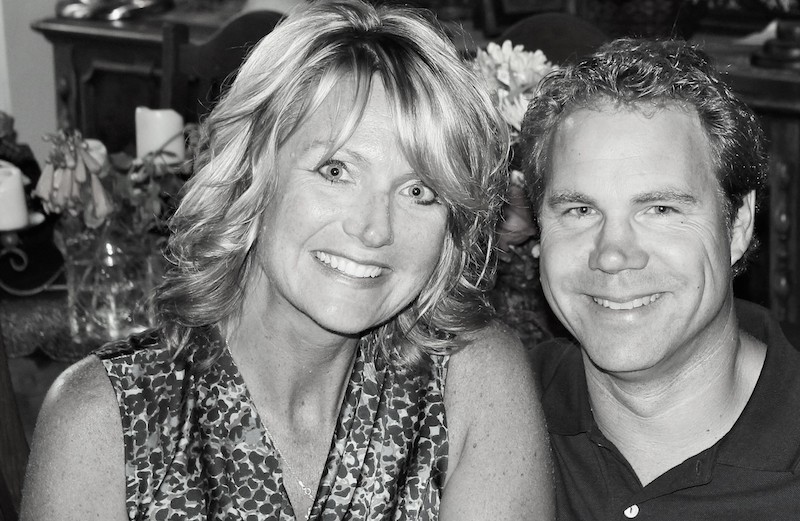
Lonny and I are across the room from one another. Four boys and our usual brand of wild are between us. But I catch it. The smile. The easy one, the one meant for me, that I’ve loved for twenty-five years. Our eyes connect, for just an instant, and the unspoken passes between us.

I love you. You are mine.

The Daily Bible Large Print relaunch with digital free gift in article ad

It’s family movie night. There are boys sprawled on the floor. Bean bag chairs cover every inch of space. Samuel has popped popcorn, and it’s destined for bowls but in reality, soon, stray pieces will be peppered all over the place. The surround sound is on. The pre-movie chatter is loud.

Shawnelle and Lonny share a strong marriageBut the connection between my husband and me is sweet and deep and clear.

If I had to pull it apart, I’d say that the gift for this oneness, this quiet connection that holds powerful words, is a blessing that we enjoy largely due to an investment of together time.

We’ve learned, over the years, that to keep a spark in our marriage, the kind that kindles intimacy, is to give our marriage the gift of time. We need to share time in order to know one another more deeply. It takes time for our relationship to change and grow.

Time is that critical component that causes us to lean into, to delight in one another, rather than leaning away or growing apart.

It’s really not so different from my relationship with God.

I need to spend time in study to stay connected to, to know, the heart of my Father. I need to hear His voice, for Him to hear mine, through prayer. I’m anchored in His presence, grounded in His love, made firm in our relationship when I spend regular, quality time in His Word.

There’s no better way to hear Him whisper:

I love you. You are mine.

A child settles onto my lap and another boy, on the sofa, sidles up next to his daddy. Someone tosses blankets from the big basket by the window and everyone snuggles deep.

 It’s time for the movie to begin.  The moment between Lonny and me has passed.

 It’s okay.

 Moments like these flow from a multitude of moments, bound together, making us strong.

And the relationship, cultivated by time, thrives.

Lord, our relationship feeds my life. Remind me, daily, to spend sweet moments with You. Amen.

Keeping It Casual on Christmas Morning

I do love a fancy celebration, with fine china, crisp table linens, handwritten place cards and a menu to write home about. Flowers, party favors—I’m on it. I was brought up to be a good Southern hostess, who makes every meal a special occasion, and my love for transforming the ordinary into the extraordinary runs deep.

It’s no wonder I make my living as a stylist and a graphic designer. I work hard to share ideas on my lifestyle blog, and I’ve styled shoots for the fashion brand of one of Hollywood’s most put-together actresses—I ran around in my uniform of a starched shirt and pearls with carefully applied red lipstick, just doing my job.

Rejoice in All Things in article ad

So when I say I love a celebration, I’m not exaggerating. And Christmas? What could be a grander occasion?

Every holiday is an opportunity for someone like me, but when I was younger, nothing came close to Christmas morning, when my family gathered around the table for our first meal of that blessed day. Then I became a mother, and things got real. Really real…really fast.

As soon as my first daughter was verbal, she had one simple request for Christmas: Could we eat breakfast while opening gifts in our pajamas? My laid-back husband turned to me with a look that said, Only you can explain to her why you have to spend Christmas morning making a fuss in the kitchen over a formal celebratory breakfast for the four of us. He’d never completely understood.

It was simply how I was raised. I was expected to wear a dress to the Sunday family dinner. We didn’t go to the table in our pajamas, not even for breakfast. Proper manners were a sign of respect and acknowledgment that we were grateful for the food before us. The family meal was a sacred time. And it was to be enjoyed around a table.

Could I break a long-held tradition—on Christmas morning, no less?

I did spend an awful lot of time working at that stove, scurrying between kitchen and dining room, trying to make what I thought should be a picture-perfect Christmas morning for my husband and our two kids. Meanwhile, all they wanted was for me to finish my preparations so I could join them. Who was I making this elaborate breakfast for, anyway? What if I made something ahead and started the day with the unbridled joy of our little ones? Wasn’t that what Christmas was about? Could I just let go of the fanfare for once? But what would I serve? Christmas or not, breakfast is important.

Then I remembered my great-aunt Dolly’s mouth-watering sausage pinwheels. She’d assemble the dough logs ahead of time and keep them in the freezer until the whole family got together at my grandparents’ lake house. We kids would gobble up the pinwheels warm from the oven before hurrying down to the water, where we’d play till lunchtime.

A couple of weeks before Christmas, I assembled the pinwheels (I gilded the lily and made biscuit dough from scratch—Aunt Dolly always used store-bought). I made extras to offer as gifts to my extended family on Christmas Eve. My older brother and two younger sisters had kids ranging in age from four to eight, so they were thrilled to have Christmas morning breakfast ready to go. I guessed they had been through this before.

On Christmas morning I preheated my oven and thought of my siblings doing the same. It was almost like being at my grandparents’ lake house with them. When the timer dinged, I carried the sausage pinwheels on a platter to the den. My husband and our daughters each helped themselves to one after another, as the mood struck, amid Santa’s surprises. No forks or knives needed, no big mess to clean up.

I savored every minute without having to style a single frame of our picture-perfect morning.

This Christmas, I’ll appreciate the stress-free fun even more holding a newborn in my lap, our third reminder about “getting real.”

And the real truth is, being a good hostess is about making those around you feel comfortable.

And being a good mom on Christmas morning means bringing comfort and joy right into our den—in my pajamas.

Pearls optional.

Try great-aunt Dolly’s recipe for sausage pinwheels!

Try Katie’s recipe for sausage cheeseballs!

Katie Brown: A Mother’s Prayer Answered

She is mine, and I am hers, I told myself, sitting in the waiting room of the geneticist my daughter’s pediatrician had recommended. I looked down at the tiny bundle in my arms, newly adopted Meredith, only one month old. I was here to learn her genetic history. Something her birth mother, Misty, who was white, couldn’t tell us in full. We knew Meredith was a baby of color, but was she Hispanic, African-American, Asian, Native American?

I tried to push away the selfish feeling that I wanted Meredith’s history to be mine. She may not have come from my body, but she had been born of my heart after much prayer. I thought of my miscarriages. The many failed adoptions. My husband, William, and I had almost given up hope of a second child when the possibility of Meredith floated into our lives just a month before she was born. Was she the answer to our prayers? William and I were beyond thrilled and somewhat stunned when, a few weeks later, we flew to Ohio, where Misty entrusted us with a tiny baby who seemed so pure and perfect. But could I love her the way I loved my biological daughter, Prentiss? I hope I’m worthy of Meredith, I thought.

Inspiration from the Garden in article ad
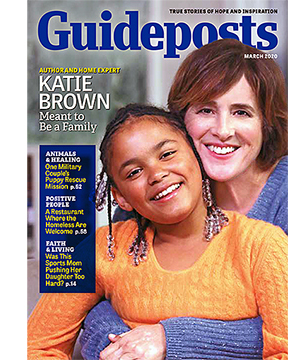
Katie Brown and daughter Meredith on the cover of the March 2020 Guideposts
       As seen on the cover of the March
       2020 issue of Guideposts

I held Meredith close in the geneticist’s waiting room, her little mouth yawning. I wanted so badly to protect her. From physical and emotional pain. That’s why I was here. If she needed a sense of place, of her heritage later on, maybe this visit would help. If we find out about Meredith’s people, would it make her less ours, less mine? I wondered. Somehow it mattered. I don’t want Meredith to be a part of any family but mine. I wasn’t proud of this feeling.

We loved Meredith with our whole hearts, but we understood that she would face different challenges than we had experienced. I’d known it in theory long before she was born and then—suddenly, heartbreakingly—again right after her birth. Meredith had been born premature. The NICU nurses, perhaps sensing my heartache and feelings of inadequacy at not being able to nurse Meredith the way I had Prentiss, taught me how to hold her as she was being fed through a tube. Then later, how to fill Meredith’s bottles and get her little self to drink.

I was particularly fond of one nurse who seemed to spend the most time with us. It probably helped that this nurse was a fan of my television show. What luck! I thought.

“I love all your recipes,” the nurse said one morning. She ran a few tests and handed Meredith back to me.

“Thank you,” I said, beaming. It was sheer bliss to hold Meredith tight, skin to skin, and smell her head. How blessed I felt to be chosen to be her mom! But was that enough to make me her mother?

The nurse sat down next to me. “You know your baby is black?”

I froze. Maybe I had misheard her. “What?”

“Do you know your baby is black?”

I sat up straighter and held Meredith tighter. Like a lioness protecting her cub. “Yes, I do. But why would you ask that?”

“Well, I just thought someone like you would like to have the perfect family,” the nurse said.

My jaw stiffened. Excuse me? I felt hot rage deep down in my bones. Rage that only a mother would know. Through the rage, I also felt deep sadness. It hit me that Meredith would grow up in a world very different than my own. A world full of people like this nurse. A world I could not always protect her from. The sting of racism, now so personal and unavoidable, felt as if God were shining a light into some very dark corners. Places I’d never had to go.

“I do have the perfect family,” I said. “Meredith makes my family perfect.”

William and I brought Meredith home to New York after a week in the NICU. We were overjoyed to be able to start this new chapter of our lives together. But soon after we got settled, Meredith got sick. Was it more than a cold? She was listless, her light brown skin paler than usual. I took her to an appointment the next day for a weigh-in and checkup and mentioned my concerns to the pediatrician.

“She’s just badly congested,” the doctor assured me. But I felt uneasy with her diagnosis. Something in my gut told me otherwise.

“I’m surprised,” I said. “I thought when we got here you were going to send us directly to the hospital.”

The doctor furrowed her brow and pressed the stethoscope against Meredith’s back. Seconds later, she shot up, dialed a number and within minutes had an ambulance waiting for us outside. We were rushed through the streets of New York, sirens screaming. Please keep her alive, I begged. No more Am I the best mother I can be to Meredith? No more Am I worthy of her? Just Please, God, please.

Meredith was intubated at the hospital and diagnosed with RSV, respiratory syncytial virus. Though most cases of RSV result in nothing more than a cold, premature babies have a greater risk of developing a life-threatening infection. Meredith, her head wrapped and breathing with the help of a machine, was wheeled into a private room so as not to infect the other patients. William came to meet us, and together we hovered over our precious daughter.

My minister and his wife, Terri, joined us. Terri took my hand.

“I don’t know if I can do this,” I said, looking at Meredith.

Terri squeezed my hand harder. “You can and you will. You must be strong enough for this. Your daughter needs you.”

Could I be strong enough? Could I be the mother Meredith needed?

After several agonizing days, we were finally given the green light to take Meredith home again. The whole ordeal made me realize that I needed to be better prepared when and if Meredith had another medical emergency. Our pediatrician suggested I learn all I could about her family history.

“We are her family!” I wanted to shout. But I knew if I truly loved Meredith, if I wanted to keep her safe, I would do everything in my power to help her. And that included fulfilling the need she might have one day to know who she was. Her birth mother, Misty, had given us such a precious gift. She had been our angel. I couldn’t endanger Meredith with my selfishness. I took a deep breath and scheduled an appointment with the geneticist.

Now here I was in the waiting room. The receptionist called my name.

I stood up with Meredith. I’m going to get a lecture, I thought as we walked into the back office.

The doctor came in. If you were casting the role of a top geneticist and needed someone who seemed sympathetic and wise, you would cast this woman. She looked like a young Jane Goodall. “How can I help you?” she asked in a tender voice, perhaps sensing my trepidation.

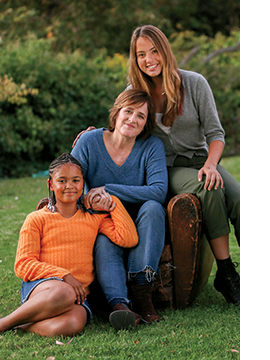
Katie with daughters Meredith and Prentiss
Katie with daughters Prentiss (top)
and Meredith

Help me? I wanted to run out of the room. Take my Meredith and never come back. But I pushed through my ego. Through my shame. Pushed into the space of love. “Meredith is adopted,” I told the geneticist. “I was hoping you could tell me what her racial makeup is. We do not know if Meredith is African or Hispanic. We want to know so that we can help supplement her health record history. So I may help her settle…”—my voice caught in my throat—“any uncertainty she may have due to not knowing.”

I took a deep breath. I wanted so desperately to do the right thing, to be the mother Meredith deserved. To be both completely loving and completely selfless.

My Jane Goodall sighed. “I’m not sure you’re asking the right question.” She placed her hand on mine and said, “Meredith is more like you than not. Ninety-nine percent of her genetic makeup is identical to yours. We have learned that all humans are closely related.” She went on to explain that all people around the world today can trace their genetic ancestry to Africa and that variations in skin color have to do with people’s proximity to the sun. “What I can do is tell you the region of the world your daughter’s tribe is from. But know that her race, your race, are the same. The differences between your genetic makeup and hers are simple and minuscule.”

A sense of calm washed over me. Was it possible? Meredith and me—we were the same. I looked into her eyes, and she gazed up at me trustingly. Yes, of course. She was a part of us, and we were a part of her long before this day. Connected biologically. And spiritually. A verse from Galatians flashed through my mind: “There is neither Jew nor Greek, there is neither slave nor free, there is no male and female, for you are all one in Christ Jesus.”

I walked out of the geneticist’s office into the sunlight, chuckling to myself, holding Meredith close. I had been seeking to define what made Meredith different from me. Instead, I had been treated to an education in what made us the same. Only God could have orchestrated a way to reassure me when I needed it most. He had connected me with an expert who blessed me with her empathy. I already had all I needed to be a real mother to my daughter.

For more inspiring stories, subscribe to Guideposts magazine.

Karen Kingsbury on Bringing Her Christmas Puppy Home


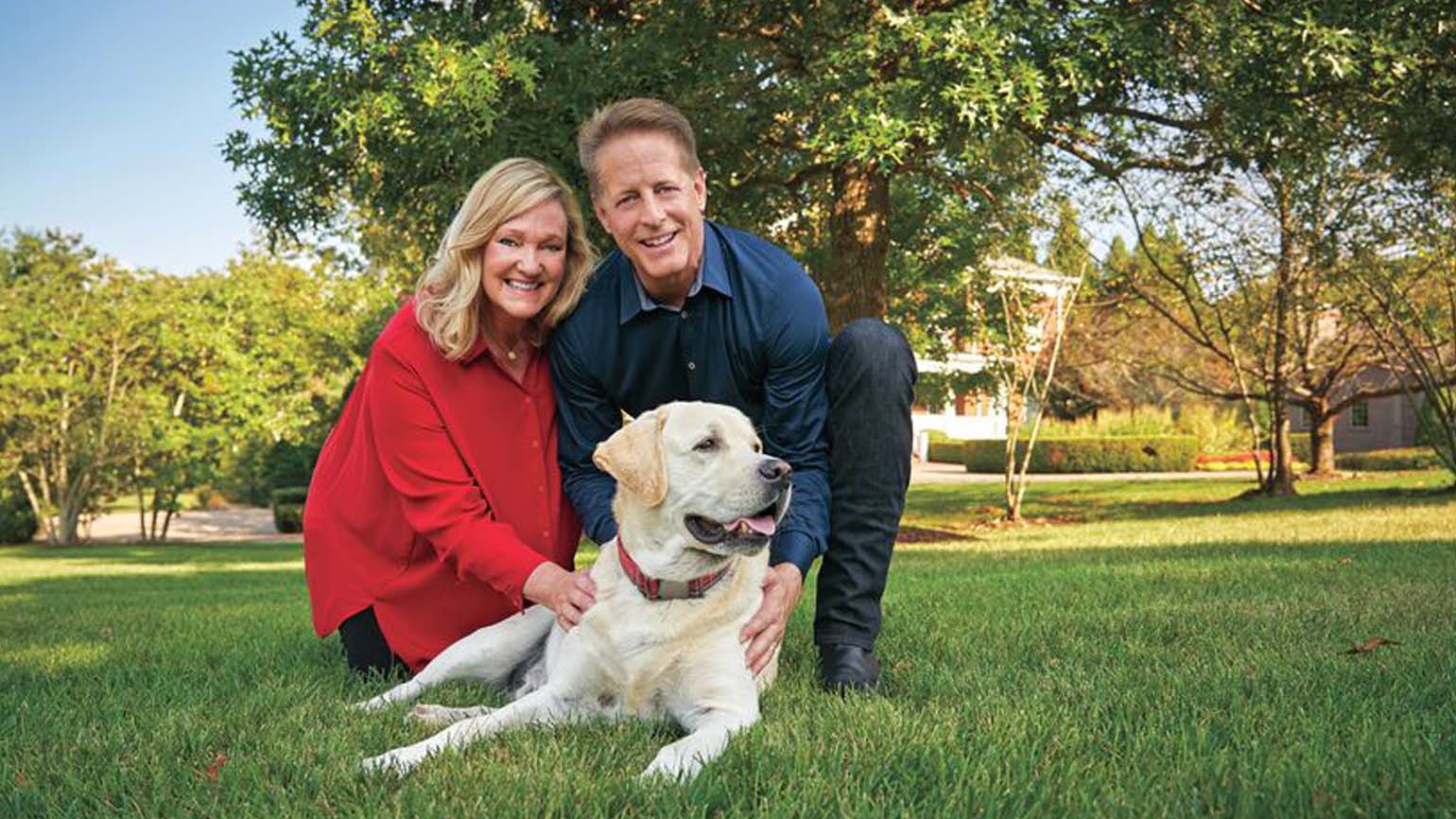
KK: I’m Karen Kingsbury. We are super excited about a story that we’re gonna tell today about Toby.

DK: And I’m her husband, Donald, and this is Toby, our dog Toby, who’s seven years old. Hi, Tob.

Faithful Paws and Purrs In Article Ad

KK: Well I remember the moment that it happened. We were in the kitchen. He had been kind of looking at pictures of a dog that we had lost, a dog named Reggie, who had passed away. And my husband said the thing that he later said he didn’t say, he said, “You know, I think maybe it’s time that we get another dog.”

And we’d had a dog for 14 years and he’d gotten very sick and had to be put to sleep, and he was also a white lab. And now it had been a couple years without having a dog, and I heard him say it. I heard him say, maybe it’s time to get a puppy, and my wheels began to turn.

DK: You know, when Reggie passed, it was so hard. I had to take him to the vet. And it was time, the vet said that he’s he’s ready to go. And so you wouldn’t think it would be that difficult, but to have him laying on the table and for them to say, okay, I mean he’s like 30 seconds away, and to pet him and just look in his eyes, it just broke my heart.

And I remember going home and just finding Karen and saying, “I’m done with puppies, I don’t want any more dogs.” That hurt, I was hurt to say goodbye to him. And I didn’t really…when I said I want a puppy, [it was] just something you say. I was looking though pictures and I was just like, “You know, maybe we do need another dog,” but I didn’t mean it at all.

KK: Be careful what you say. [chuckles]

DK: Yes.

KK: So, you know for us, I felt like once I heard him say it, it was time to make a decision and to act on it, right Toby? So I contacted a breeder who didn’t live too far away and found out he was having a litter of yellow lab, white lab puppies, to come home on Christmas eve, and I was super excited.

That was like, it was like the sign from God. Okay, well if they’re ready on Christmas Eve, then this must be the right thing. So I put a deposit down and the breeder helped me pick which one. A puppy that wasn’t too aggressive, not too shy, that would be perfect for our family.

And then we made a plan, got the family all gathered around. No one knew, I didn’t tell anyone. I didn’t want anyone talking me out of it. And at two o’clock on Christmas Eve, the doorbell rang, and it was the breeder holding this darling little white lab puppy. And the kids were just, oh they were so excited. It was like something out of a Rockwell painting with a Christmas tree in the background. And I think one of our sons started crying, like “Oh, this is the best, the best Christmas gift ever, our little puppy.”

And Donald had been in the back of the house and he heard the commotion and he came up to the front and saw this little puppy and just kind of turned around.

DK: And I came around the corner and she was holding this little puppy, and I didn’t react like I should have. I just…I turned around and walked away and went outside because I just had all this flood of memories of Reggie and now we got a new dog, and do we have the time to work with a dog, and the kids are all involved in sports and things at school, and no, no, no I don’t want this thing.

I just heard God say, “Go back in there, go back in there.” So I turned around and went back in and held him, and kind of thanked her for the gift. It probably wasn’t the best thank you, but I really didn’t want it, like I said. I did not want another puppy. But I’m so glad that I listened to the Lord that day.

KK: Well I knew it wasn’t just about the time and the commitment ’cause he’s so good with dogs. I mean, we wouldn’t have a dog if it wasn’t for you. You’re so great at training them and spending time. They always end up being his dog, no matter what. And so I wasn’t upset. I knew that his heart was hurting and that it was hard with Reggie, having lost him, and loving a puppy again.

But Christmas morning, so the next day, Donald took Toby outside and Toby was walking near the pool and fell into the ice cold water, ice cold, and he went in after him and he got him and brought him to his chest and took him really quickly back into the house and he got back into bed and he said, “I’ve got to keep him warm, he’s just shivering.” I covered him up with some blankets, just hugging that little puppy, and helping him stay warm. And I thought, he loves that dog.

It already had happened, like the transition had already happened. The transformation of, you know, “Do I really want [this], can I really do this again, to love?” had happened in that moment. And we kind of talked about it that day, you know. He warmed up and he was sitting by the Christmas tree as kids opened their presents, and we said, “You know, love hurts, like, loves comes with loss, but it’s worth it, and it’s worth loving again.”

And now, of course, you know today, like, he’s your dog, there’s no question. We take him for a walk every morning. Every morning is like a brand new walk for him. He’s so happy and hyper and hopeful. But he sits on my feet while I write novels. So I don’t write a book without Toby just like laying on my feet. Kind of, he’ll give me that look back like, “You stay in your chair.”

DK: He keeps her accountable.

KK: “You have a deadline.” So Toby’s just become such a deep part of our family, I can’t imagine life without him.

Karen Kingsbury Grows Her Family with Haitian Adoptions

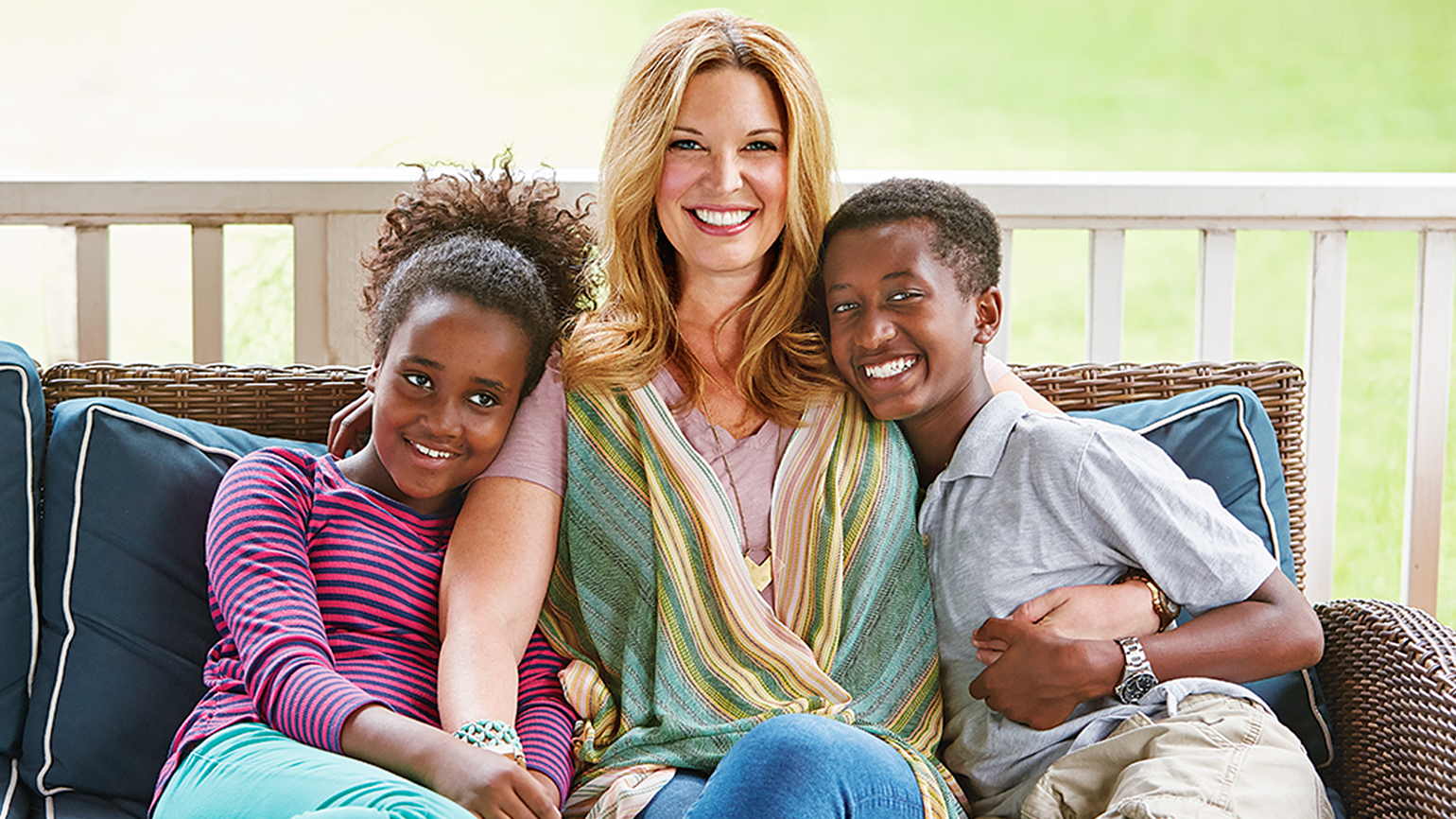
In honor of National Adoption month, we offer Christian fiction author Karen Kingsbury’s story of adopting three Haitian boys.

I brushed the bangs from my forehead and clicked “send” on an e-mail, answering a question from a fan about a character in one of my novels.

extraordinary women of the bible

A child from Haiti. The words popped into my head like an e-mail popping into my inbox. It had been a really long day: working on my new book in the morning, taking care of family and household stuff in the afternoon, then back to my study to answer fan mail in the evening. I tried to dismiss the thought. But it wouldn’t be dismissed.

At that time my husband, Don, and I already had three children, but wanted more. Don had a good job as a high school basketball and football coach. I had published half a dozen novels. By any yardstick we were a blessed family. But when our youngest, Austin, now two, was only three weeks old, he had undergone major surgery to correct an inherited heart defect. He survived, but the ordeal practically killed me.

My doctor said that it was fortunate that neither of our other children had inherited the condition. And Don and I didn’t want to take a risk with our next child. We started talking about adoption—tentatively at first, then just about every day. We met with an adoption facilitator to explore our options.

“There are plenty of kids in America who need good homes,” she told us. “But if you really want to go where the need is greatest, consider Haiti. It’s the poorest country in the Western Hemisphere.”

The facilitator mentioned one orphanage in particular, just outside the Haitian capital of Port-au-Prince. Don and I had agreed to take things slow. The orphanage had a website. But we hadn’t yet looked at it.

Now, with the kids in bed, Don up in our bedroom reading and me down here in my study with my writing done for the day, I couldn’t resist. I typed in the name of the orphanage and clicked. Heart of God’s homepage popped up. “See our list of adoptable kids,” said a banner down at the bottom.

Kelsey, our oldest, was 12. Tyler was seven. Don and I wanted to fill the gap between him and two-year-old Austin. I narrowed my search down and clicked again. A boy’s face appeared on the screen. A boy with big brown eyes and a gentle, tentative smile. I could almost hear God whispering in my ear, Adopt that boy.

“Emmanuel Jean’s grandmother dropped him off a year ago,” said the text. “She believed with all her heart that a loving American family would make him their son.”

I ran up to our bedroom and pulled Don away from his book. He followed me into my study and leaned over the screen.

“Are you sure?” he asked. “There are hundreds…”

“I know, I know,” I said. “It sounds impulsive. Crazy, even. But I just know God wants that boy to be our son.”

Don pointed to another banner that offered a free video.

Karen with her new family.

“I guess we’d better get it,” he said.

A package showed up about a week later. We hadn’t brought up the idea of adoption with our kids yet. We waited till they were all tucked into bed before slipping in the video. E. J. appeared. Same big brown eyes. Same sweet smile. And the same unmistakable feeling in my soul: He was meant for us.

The next day Don and I printed out E. J.’s picture, placed it in an empty chair in the living room and called Kelsey, Tyler and Austin in.

“How would you guys feel about having a new brother?” I asked the kids.

“He looks really friendly,” said Kelsey.

“He’s five?” Tyler chimed in. “That’s right between me and Austin!”

Don and I felt so encouraged we took another look at our finances. Why not adopt two children at once and save ourselves the time and expense of doing it again later! We got back on the website and found another boy, a close friend of E. J.’s. Like him he had a warm, sweet smile that tugged at my heart. Sean.

We initiated the adoption process. The first package of forms that came in the mail was thicker than our phone book. With each new form we tackled, the reality of what we were getting into hit Don and me harder.

Lying in bed one night, I felt my confidence—that sureness I’d felt when I first saw E. J.’s face on my screen—faltering. A noisy parade of what-ifs marched through my head. Were we taking on too much? Could we do this? Was the decision to adopt two boys really right?

Our adoption facilitator had made clear that Rule Number One of bringing a new child into a home with other children is to love all of them equally. You have to know that your adopted child is your child, end of story.

I had three children I’d raised from birth—children who were as much a part of me as the blood that flowed in my veins. Who was I kidding to think I could let two total strangers into my house and be able to treat them with that same closeness?

I hugged my pillow. God, can I really be the mother you want me to be? To five children?

Two months after E. J.’s face appeared on my computer screen, I boarded a plane for Port-au-Prince. Don would stay with our kids back in the States.

The orphanage—a low brick building surrounded by a wall topped with razor wire—lay on the outskirts of town. Inside, 42 kids lived in a 1,400-square-foot space. Pigs rooted in garbage just a few feet from the front door. I knocked.

A woman, the head of the orphanage, greeted me. “It’s a special day when a parent comes to adopt a child,” she told me. “All of the children are so excited that you’ve come.”

She led me out to a walled-off patio with a single cement bench. The kids followed after us. She called two boys out of the crowd—both so skinny their shoulders barely kept the necks of their shirts up. I recognized them instantly. Sean and E. J. I leaned down to hug them, when all at once another little boy emerged from the crowd.

“Hi, Mommy,” this one said. Then, in a gesture so familiar it was as though he had known me forever, he brushed the bangs from my forehead.

Who was this child?

The orphanage director explained. The three boys—Sean, E. J. and this third boy, Joshua—were like brothers. For all intents, they were brothers. “Joshua knows you are Sean and E. J.’s mother now,” she said. “That makes you his mother too.”

It made no difference to Joshua that I wasn’t taking him home. In his mind I was his mother nonetheless. How could that be? Trust. A trust beyond all questioning, all judgment, all logic. A trust that could only come from one place. E. J. and Sean were allowed to come with me to the guest quarters. Joshua waited with the other kids to say goodbye. Surely the reality would set in, and I dreaded the thought of hurting his feelings. I waited for his tears to come.

“Goodbye, Sean, goodbye, E. J.,” he said. Then he turned to me. “Goodbye, Mother!” he said without a hint of doubt.

Doubt. It’s something we adults are pretty good at. Sometimes it seems like the longer we live, the better we get at it. But it was a skill six-year-old Joshua had yet to learn.

A little Haitian boy with no education, few prospects and barely enough meat on his bones to keep his clothes on, he nonetheless had room in his heart for faith. Faith that I was his mother.

He simply knew. The same way I knew that night when those words popped into my head about adopting a child from Haiti. Who was I to tell him he was wrong? I called Don that night to report on the day’s events. I worried it would sound more like a plot from one of my novels than a real-life scenario.

“Honey, I don’t know how to say this exactly, but there aren’t two boys here for us, there are three.” I told him the whole story. “I just can’t bear the thought of leaving Joshua behind.”

“Well then don’t,” said Don. “Two, three…bring those boys home.”

Only Sean and E. J. could come back to the States with me on that trip. We had to go through the same complicated legal procedures to adopt Joshua. Six months later he joined our family too.

I won’t say there weren’t any rough patches, because there were. America—with its grocery stores full of food, its hot and cold running water and its completely alien ways, was a huge challenge for all three of the boys. But they had a family to love them every step of the way. And that’s what counted.

Six years later the challenges haven’t gone away. But these days they’re the kind that any normal American family faces. For one thing, we’ve got three kids in their teens now, and I don’t need to tell any parent out there that that brings a whole new world of hurdles.

Sometimes my life does sound like the plot from one of my books. But that’s not so bad, considering whose plot it is.

Watch as Karen Kingsbury talks about her novel “The Bridge,” as well as her prayer practice.

John Walsh: Protecting Our Children

These days people know me as the host of America’s Most Wanted, the program responsible for helping capture more than 800 fugitives, many of whom were on the FBI’s most-wanted list. I’m a passionate (some might say outspoken) advocate for missing children and their families.

I’ve testified before Congress, pushing to get laws passed to protect the rights of crime victims and prevent the exploitation of children. I guess I’ve become something of an expert on fighting crime.

The Daily Bible Large Print relaunch with digital free gift in article ad

But back when my six-year-old son, Adam, was kidnapped from a south Florida shopping mall and murdered, I was just a typical suburban dad. My child at risk? The thought never occurred to me. I lived in a nice neighborhood, safe from violence and the kind of predator that comes after innocent kids.

I know better now.

That July afternoon in 1981 my wife, Reve, took Adam to the mall with her to shop for lamps. Adam spotted some kids playing video games in the department store and asked if he could play too. Reve consented. She walked two aisles over to the lighting department.

When she went back to the video games less than 10 minutes later, Adam was gone. The police eventually found his body in a canal a hundred miles away. His killer was never caught.

Did you know that 80 percent of couples who suffer the murder of a child end up divorced? The tragedy puts an incredible, often unbearable, strain on a marriage. Reve and I were no different. We spiraled into depression, couldn’t eat, couldn’t talk to each other.

I couldn’t even seek solace in my faith because I kept questioning, Where is God in all of this?

It was only when the county medical examiner, a wise and compassionate man, told me what he believes—there is evil in the world, but God gives good people the strength to fight it—that I found a way out of my despair, a way to give meaning to my loss. And that is to work as hard as I can for the triumph of good. To share what I’ve learned with other people, so together we can make the world a safer place for our children.

If I can help keep one family from going through what Reve and I went through, if I can help prevent one child from being victimized, then our Adam will not have died in vain.

That’s why I went to Washington, D.C., in 1982, when my grief was still raw, and buttonholed congressmen about the urgent need for a centralized computer system for reporting and tracing youngsters who’d disappeared (the Missing Children Act, passed later that year, put that system in place).

That’s why Reve and I cofounded the National Center for Missing and Exploited Children. That’s why I told our story on talk shows, in newspapers and magazines, including Guideposts, in 1984. And that’s why I’m here now to give you some tips on how you can best protect your children, whether they’re toddlers or teenagers.

Never leave your child alone in a public place.
Not for a minute. you might think, as Reve and I did, that a six-year-old will do exactly as you say when you tell him, “Stay right here until I get back.” Yes, children want to obey. But most kids haven’t fully developed the judgment to know which adults have their best interests at heart and which are trying to take advantage of them. It’s easy for a youngster to be swayed into thinking, Well, it’s a grown-up, and I’m supposed to listen to grown-ups.

We believe that’s what happened with Adam. Some other boys, teenagers, were playing video games the same time he was. They got rowdy, so a security guard ordered all the kids out of the store. Adam, whom we’d brought up to always respect his elders, did as he was told. He would have thought it impolite to argue.

Outside the store, he must have looked confused, lost. Whoever snatched him probably said something like, “I’ll help you find your mom. Come with me.” And Adam went. He didn’t know any better. That’s the reason I think my next point is so important.

Teach your children to protect themselves.
There are some basic safety rules all kids should live by. Teenagers too. Rule #1: Check first. Before your child goes anywhere with or gets into a car with any person, before she accepts anything from anyone, she should always ask you for your okay.

Rule #2: Don’t go out alone. Make sure your child understands he must take a friend or a sister or brother with him whenever he’s going someplace without you, even if it’s just down the street to play. There is safety in numbers.

Rule #3: It’s okay to say no. What should your kids do if someone treats them in a way that makes them feel confused, uncomfortable or scared? Tell them to say no loudly and forcefully, then get away from that person as quickly as possible. It’s much more important to be safe than to be polite.

Discuss these rules and other safety issues with your kids openly and in a calm, nonthreatening manner. Children don’t have to be scared in order to get the point. But they do need constant reinforcement for these lessons to sink in and become second nature.

Are you taking the kids to the mall or to the amusement park? Turn it into a learning experience and have them practice safety skills like using the buddy system when they go to the restroom. Ask them to role-play and show you what they would do in specific situations. What if they get lost? Who would they go to for help and what would they say? What if someone they don’t know tries to start a conversation with them? How would they respond?

Know where your kids are and who they’re with at all times.
Get to know your children’s friends. Their friends’ parents too. Be clear about whose cars and houses they’re allowed to be in. If your children are younger, put together an “approved” list: only these cars and these homes, no exceptions. Get involved in your children’s activities. Go to their lessons, practices and games. Observe how the people in charge interact with them, even at church groups.

Make checking-in a family rule. Kids must leave you a phone number and address of where they’ll be. They’ll call you if there’s a change in their plans. (Hey, this is what those family cell phone calling plans are for.) And do the same for them: Let them know how to reach you and if your plans change or you’re running late. It’s a good way to show kids that rules are there for safety, not for checking up on them.

Keep an eye online.
Monitor what your kids are doing in cyberspace. A child, no matter what age, should never give out personal information online (like a full name, street address, phone number or school picture) without getting your permission first. Same goes with meeting face-to-face with someone they have only met electronically.

Know where your kids are spending their time online and with whom. Have them give you a tour of their favorite websites and chat rooms. Go over their instant-messaging buddy lists and make sure they can put a face to every screen name. Remind them not to say anything in a chat room or an online posting that they wouldn’t say in a public place.

Values protect.
The older your kids get, the more they will rely on their own judgment. That’s the way it should be. Give them freedom. But also give them a solid grounding for their own decision-making by instilling strong moral values from an early age. This is among the most important duties of parents and grandparents.

A child with a clear sense of right and wrong will be better equipped to avoid questionable people and situations later in life. And a child who knows that he is loved will likely take better care of himself when you can’t.

Above all, protecting our children begins with open and honest communication at home. Face it, your kids have to feel comfortable telling you anything, no matter how frightening or confusing to them, or they won’t open up. They need to know they can count on you to help them without judging or criticizing. Kids who know they’re valued and listened to may be the best protected children of all.

John Walsh, Facebook and Protecting Our Children

By now we all know that social media can be used for good or evil. I came across something this week that was definitely good.

Most of you know John Walsh, host of CNN’s The Hunt and an advocate for missing children. His interest is more than professional. In 1981 his six-year-old son, Adam, was abducted and subsequently found murdered in Florida. That sort of tragedy would change any parent’s life.

Whistle Stop Cafe In Article Ad May 2023

John WalshIn John’s case, it transformed him into the country’s most prominent advocate for the rights of crime victims and their families. Eventually he helped create the long-running TV show America’s Most Wanted, which resulted in the capture of more than 1,200 fugitives.
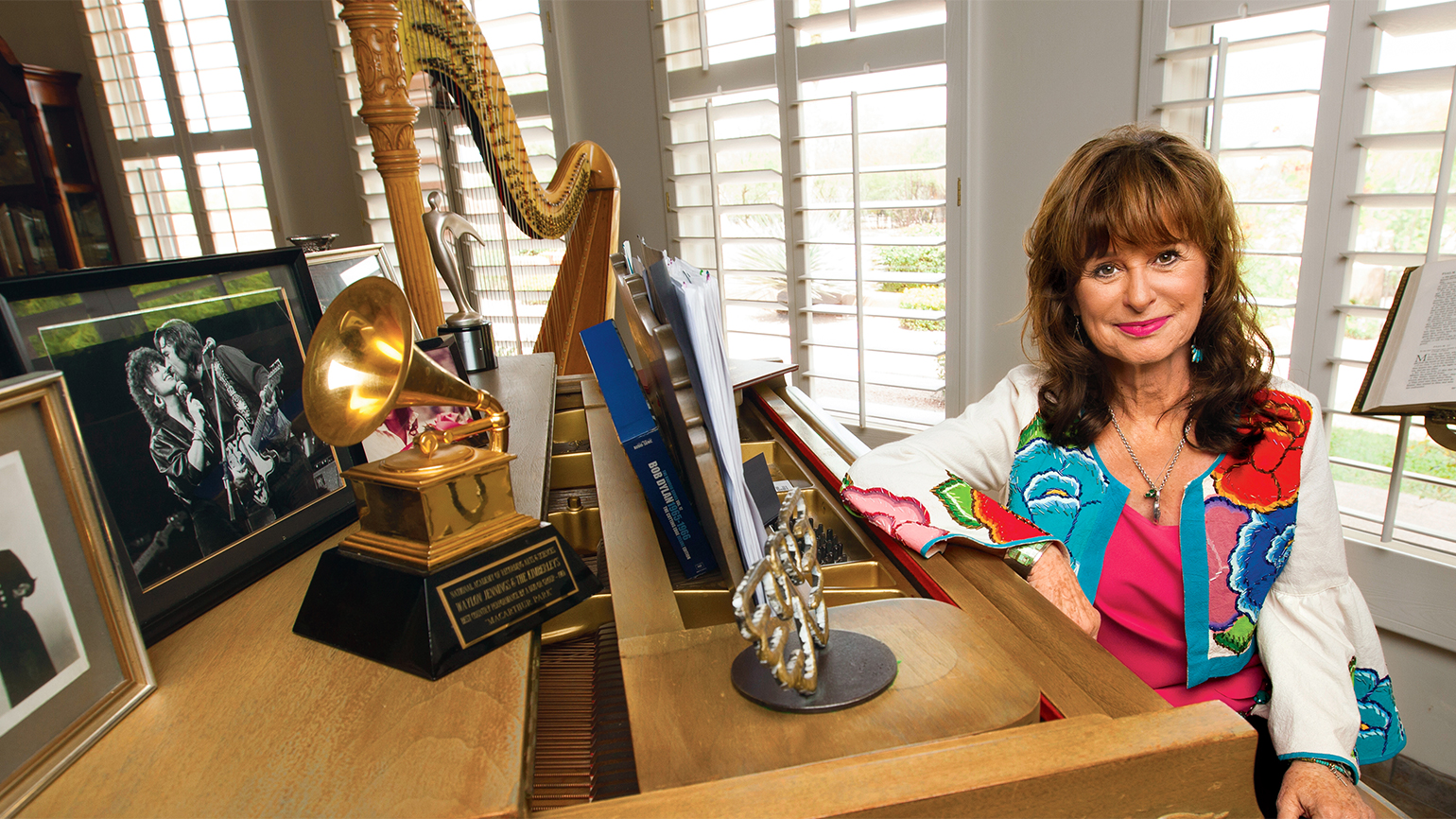
This week Facebook, in conjunction with the National Center for Missing and Exploited Children, announced that it would issue Amber Alerts on users’ newsfeeds. John Walsh called this a “game-changer” in the fight to protect our children.

Since 1996 Amber Alerts, named after another abducted and murdered child, Amber Hagerman, have gone out over traditional media wherever a child goes missing and is suspected of being abducted.

You’ve probably heard them on your car radio or seen them on TV. They’re accompanied by a picture of the child and other details of the disappearance and provide contact info if you have a lead or a tip. In many cases, the smallest tip delivered quickly has saved a child’s life.    

For John Walsh this is another way of honoring Adam. He has twice appeared on the cover of Guideposts. I feel a kinship of sorts with John. (Here's one of our stories on John.)

I was nine when my 12-year-old Down Syndrome brother, Bobby, disappeared. I remember the media parked on our front lawn that night, the cops handing out flyers the next day and my parents interviewed on the local news the day after that pleading for information on my brother. By then it was too late, as we found out many weeks later.

Who knows if an Amber Alert would have saved Bobby or Adam? There are more than 180 million Americans on Facebook. Amber Alerts will only be issued regionally. You can delete the post if you want. Just please don’t ignore it. A child’s life might depend on it.   

Jessi Colter: How Waylon Jennings Became ‘God’s Man’

It was Waylon’s last Thanksgiving. He was in the hospital for more procedures, none of which helped stem the downward spiral. Diabetes, heart troubles, neuropathy—they’d all taken their toll. I kept thinking, Now is the moment I need to talk to him. To have the conversation I’d been wanting to have for years.

By the time he and I’d met in the sixties—at the outsize two-story Arizona nightclub JD’s—I had abandoned the faith of my childhood. I gravitated toward the materialist philosophy of Ayn Rand. Her books had no mention of God, a higher power or any mystical or spiritual force. Just the preeminence of human will. Such a contrast to the tent meetings my mother used to lead, where I’d played the piano and sung hymns.

Sweet Carolina Mysteries In Article Ad

Waylon had grown up in West Texas, the oldest of four boys in a dirt-poor family. Music was his escape. And music brought us together. At JD’s, he sang with an unrelenting force. The high-voltage energy of the crowd made me feel as if I were floating on air. I’d heard about his reputation, the long list of women he had supposedly seduced, the pills he popped, the failed marriages. But he was polite and gentlemanly with me.
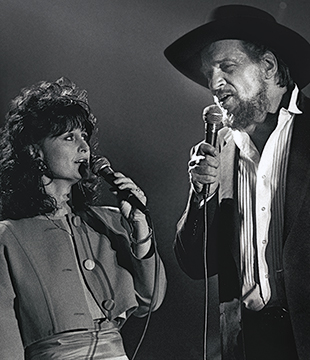
On our first date, we drove through the Painted Desert, the unearthly scenery rolling past us. “A long drive like this will give us some time to chat,” he said. It was the first time we talked about religion.

“The gospel I heard preached was all fire and brimstone,” he said. “The certainty of going to hell if you didn’t walk the straight and narrow. It was the gospel of fear stuffed down my throat.” Not surprisingly, he didn’t go to church anymore.

“What about you?” he asked. “You said your mom was a preacher. Wouldn’t imagine being a preacher’s kid was much fun…”

“You’re wrong. I liked it.” I told him about the beauty of Mother’s church, how love—not fear—was the message. But I admitted I’d left that faith behind. “I guess I’ve been busy exploring other ways of looking at the world.”

“I’m not sure the exploring stops until the day we die,” he said.

Years earlier, he’d had a narrow escape from death. He was in Buddy Holly’s band that fateful day when Buddy chartered a small plane to get to his next gig. Waylon was supposed to get on too, but he gave up his seat for another band member and took the bus. He didn’t learn about the plane crash until the next morning. “I still have nightmares about it,” he told me.

I loved everything about this man…well, almost everything. I loved watching him sing, how he led his band, how he interacted with fans. I loved his sincerity. But the one thing I couldn’t abide was his addiction to amphetamines. Diet pills, pep pills, Speckled Birds or L.A. Turnarounds (so-called because, as he said, “You could take one and drive to Los Angeles, turn around and come straight back”).

I wonder how I would have reacted if my parents had discouraged me from staying with Waylon. After all, he was an untamed, hard-living outlaw country star. Not the kind of guy they would want their beloved daughter to date. Yet both Mother and Daddy adored Waylon. And Mother instinctively understood that sermonizing would only estrange him. Just the way she never tried to change me.


Waylon and I got married and moved to Nashville. His career as a musician took off, and so did mine. I was writing and singing, a wife and a mom. Yet the more successful we became, the more I sensed something was missing. Then one day, alone in our house, I was walking down the stairs to the basement. A thought came to me, a cryptic phrase: Oh well, there’s always God.

It wasn’t God’s voice I’d heard. It sounded like a line from a poem or the answer to a riddle. They were easy words, reassuring words, words of optimism and hope that welcomed me back to a language I had lost. Oh well, there’s always God.

Later, during a show Waylon and I were doing, I walked out to the piano at center stage. I took a deep breath, another, a third. Then—to my surprise—I found myself kneeling in front of the piano, praying for strength. All at once, I felt as light as air, focused, without fear. As though my heart and God’s heart were one.

I wanted Waylon to know how I felt. I wanted him to share that intimacy. “I like that you’ve found your way back to the Lord,” he said. “It’s good to be a believer. And I do believe in something greater than myself. I’d be a fool not to. But I’m not ready to call that something by any name. Maybe I never will be.”

I found it a struggle to accept that. I wanted to tell him everything I knew, chapter and verse. But I drew on the model my mother had set for me, trusting in the power of God’s love. Waylon continued to pop his pills. He started using cocaine.

I was powerless to change him. I remained convinced that one day—and soon—the man I loved would face and defeat his demons. He cultivated an image as a country music outlaw. He even released an album entitled Ladies Love Outlaws. I was proof of that.

In the early ’80s, Waylon’s buddy Johnny Cash, whose drug dependence was just as out of control, entered the Betty Ford Center. His family had done an intervention. I wondered if we could do the same for Waylon. But as much as my mind said yes, my spirit said no.

I could see how Johnny, a believing Christian, might accept himself as a broken man needing help. But Waylon was different. No outside influence could persuade him to do what he himself had not yet decided to do on his own.

I waited. And prayed. And waited some more.

In March of 1984, Waylon was ready. But he wanted to stop on his own. We rented a house in the Arizona desert, canceled our gigs and drove out in the tour bus. The ordeal was painful, physically and emotionally. Every bone in Waylon’s body screamed out in anguish. Later he wrote how my presence, my prayers, made a difference. Somehow he quit on his own and managed to stay sober the rest of his life.

Let me be clear: I do not consider Waylon’s way to sobriety a template for others. I would never encourage anyone to rely, as he did, on sheer willpower. It can be a recipe for disaster. I thank God that Waylon made it work. And that I knew enough to stay out of the way.

But the drugs and the hard living had already taken their toll. Waylon was only 51 when he had his first heart operation, a quadruple bypass. He quit a six-pack-a-day cigarette habit. We tried to get him on a low-fat diet, a challenge for a man who’d refry a dozen doughnuts in butter for a midnight snack. Those years of abusing his body had caught up with him.

In the new millennium, we moved back to Arizona. Waylon longed for a warm climate. With the pain in his legs, he couldn’t drive, and this time I drove him around our favorite spots in the desert. He was haunted by regrets, shortcomings. “I did foolish things,” he said. “I wound up hurting myself, but mainly I hurt other people.”

God is forgiving,” I said.

“God may be, but I’m not,” he said. There were more stints in hospitals, more physical complications and specialists of every sort. Then came that Thanksgiving Day when I knew I had to speak. The time had come.

“Looks like you want to say something to me, darlin’,” he said from his hospital bed. “If you’ve got something to say, go ahead and say it.” Waylon sensed what was happening. He always did.

Finally I said it. “Are you ready to accept the Lord?”

He grinned. “I knew you were going to ask that.”

“It’s a simple question. It all comes down to one thing. Are you ready to be God’s man?”

He nodded and kept repeating, “God’s man.” Then he said, “To become God’s man, what do I need to say?”

“That you accept Jesus, that you love him as he loves you, that you turn your life over to him.”

Waylon said those words. I wept. He took my hand and said, “I love you so much.” He had declared his love for me a million times before, but this time his tone was so vulnerable, so soft, so sweet. His sincerity thrilled my heart.

That Christmas, his children came to visit and his friends rallied around. Waylon asked me to play the piano and sing the hymns I’d learned as a girl. Despite the oxygen masks and tanks and medical apparatuses, his confidence remained intact. It was a new confidence—not the swagger of an outlaw country superstar, running onstage to the cheers of a hundred thousand fans, but the quiet assurance of someone who knew he was “God’s man.”

On February 13, 2002, Waylon was all set to watch the Winter Olympics. I had an appointment that morning but came home to make him his daily treat, a big protein shake. When I arrived, he was asleep—or appeared to be. I went to kiss his forehead. It was cold. I detected no breath. The paramedics came to give him CPR. It was too late. Waylon, God’s man, was gone.

But no one is ever totally gone. We leave our mark on the world, especially an artist like Waylon. And we leave our mark on the hearts of others. At the worst of his drug addiction, I almost left him. I didn’t think I could bear to see the man I loved destroy himself. Something told me, though, that the Lord was working behind the scenes.

And he was. In the desert, when Waylon kicked drugs. On the operating table, as he survived surgery. That Thanksgiving, when Waylon at last understood that he loved the Lord as the Lord loved him.

For more inspiring stories, subscribe to Guideposts magazine.

Jen Hatmaker’s Tips for Creating Traditions with Your Kids

Taken from Of Mess and Moxie: Wrangling Delight Out of This Wild and Glorious Life by Jen Hatmaker. Copyright © 2017 by Jen Hatmaker. Used by permission of ThomasNelson. www.OfMessandMoxie.com.

Mamas, the traditions and experiences we provide during the Family Years are paving a road our kids can always return to, one that always points home. There is something about a recurring shared memory; the sum becomes greater than the parts.

Rejoice in All Things in article ad

Childhood is such a wonky, weird season. Do you remember the fears and confusion and insecurities we harbored, our own little private pile of worries? Kids are amazingly resilient and handle change better than we give them credit for, but there is something to be said for a given, some constant, an element of childhood that delivers over and over with predictability and joy. While their bodies and minds and friends and classes are a swirling vortex of volatility, while they are constantly required to adjust and shift and recalibrate and flex, providing a familiar touchpoint week after week or year after year is an anchor that keeps them grounded and a buffer against the scary winds of change. It says to them: Yes, everything is fluctuating, but you can count on this thing we do, this place we go, this meal we share, this memory we make.

Read More: Jen Hatmaker’s Tips for Positive Parenting

None of this needs to be expensive or fancy. Nor does it have to be incredibly comprehensive. I heard a speaker at a Christmas brunch once give a talk on traditions, and hand to God, she described at least fifty traditions she provided for her children: daily lunch notes with hand-drawn cartoons, thirty Birthday Month activities, leaving surprises under the lining of their trash cans to discover upon weekly removal, the What We Learned Today journal, family time capsules, the weekly thankful box. I don’t think there was one day of the year that didn’t involve some meaningful moment. I basically did a slow slide out of my chair onto the ground, because LADY PLEASE, I AM JUST TRYING NOT TO MAKE MAC AND CHEESE FOUR NIGHTS A WEEK.

Traditions can be simple. Heck, my girlfriend’s grown kids never stop talking about Friday Puzzle Night. It can be anything: Saturday pancakes and bacon, that rental house in Destin, Monopoly Monday, cutting down a Christmas tree together, lake days, sledding down that one hill every year, family camp, Grandma’s house, summer road trips, popcorn and movie night, backyard picnics. Whether it is a place you return to, a tradition you create, or a story you rewrite over and over together, miraculously, the fighting and whining and eye-rolling that often accompany that custom will one day recede and what emerges is a rock-solid bank of memories your family will share forever. Never fear, Mamas, the energy you are logging toward any tradition will not return void. You are building something special, and your kids will not forget.

I know I didn’t. I remembered.

And then one day, say, twenty-three years after your special place is gone, one of your grown kids might call your family together on your back porch because she wants to write about this tradition and mine everyone’s memories, and your husband will walk out with his outdated camcorder to record the conversation that is supposed to last around thirty minutes but goes on for three hours, because once you start down the rabbit hole of VW vans and haunted basements and programs and Chicken Foot, your laughter carries you from one memory to the next, and that grown daughter will finally tell her sister to just open another bottle of wine because, happily, you are all going to be there for quite a while. 

Jen Hatmaker’s Parenting Tips for Busy Moms

I have a confession, y’all. You might not guess it from reading my books or watching My Big Family Renovation, my family’s show on HGTV, but I am the worst end-of-school-year mom ever.

My five kids, ages 9 to 17, are good students. I care about their education. By May, though, I’m spent. Final exams, bake sales, a last-minute Benjamin Franklin costume. There’s only so much I can take. It’s hard enough being a working mom (I write, speak and blog) and a pastor’s wife. Throw algebra into the mix and things will get ugly.

Two years ago, I lost it. I just could not check my kids’ homework one more day. Their schools require parents to sign off on homework every night. There’s even a signature sheet right in their homework folders. I posted a photo of my fifth grader’s folder on my blog, my signature morphing from pretty cursive in September to barely legible in March to blank spaces in May.

ENJOYING THIS STORY? SUBSCRIBE TO GUIDEPOSTS MAGAZINE

I must’ve struck a nerve. Parents all over the country commented. That post was shared almost half a million times on Facebook. The Today show even called.

Hearing from all those stressed-out moms out there, I realized I had some advice to share. Here are a few tips from a mom who’s had her share of triumphs, tears and, yes, homework.

Reach them where they’re at
Did I mention that my husband, Brandon, and I have five kids? Gavin, Sydney, Caleb, Ben and Remy—three extroverts, one introvert and one who can’t pick a side.

Every morning, they stagger into the kitchen, rubbing the sleep from their eyes. Here’s how our conversations usually go down:

Me: Whatcha got going on today?
The Kids: Don’t know.
Me: What’re you doing in school?
The Kids: Can’t remember.

Sound familiar? Kids aren’t the best conversationalists. Sometimes you have to get in there and find a way to connect.

Sydney, 14, is our family’s deep thinker. The two of us can sit on the porch and talk theology till the sun goes down. She’s got fierce convictions. Two years ago, she became a vegetarian. Last spring, she went vegan. Bless it. In a family of meat lovers, that girl sure knows how to march to her own beat! I’m not giving up burgers, but I love to cook. So we bond over testing vegan recipes.

READ MORE: PARENTING TIPS FROM THE JONAS BROTHERS’ MOM

Ben, 11, is our athlete. He can throw, pitch, tackle, you name it. When he gets home from school, we take out our exercise mats and have ourselves a little workout party. Put on music, use weights, do crunches. He’s the best workout partner.

Your kids are whole human beings with their own extraordinary talents and interests. Enjoy them exactly the way God made them. Start with what you have in common.

Life isn’t a Pinterest board
Holler if this has happened to you. You haven’t washed your hair in a week. Pulled an all-nighter baking cupcakes for church. Packed the kids saltines for lunch. Then you check your Facebook feed and some supermom has posted a photo of the lunch she just made her kids—dolphin-shaped sandwiches leaping into a sea of kale.

Bless that mama’s heart, but let’s get real. Raising kids is messy! One afternoon I was driving home, the car packed with five starving kids. We live in a small town outside Austin, Texas, the kind of place where everybody really does know everybody. A mile away from the house, Gavin and Caleb started fussing.

“Children, if you value your lives, you will cut that out right now,” I said.

More squabbling. I pulled over.

“Gavin and Caleb, get out.”

“What?!”

“You heard me,” I said. “You know the way back.”

Two shell-shocked boys tumbled out of the car. I peeled out, tires screeching all the way home. Ten minutes later, Gavin and Caleb trudged through the front door.

Okay, maybe I freaked out a little. But it’s good to keep the kiddos on their toes. It’s okay to show them you have limits too. Sit your arguing kids nose to nose until they get over it. (They won’t make it one minute before bursting out laughing.) Creative discipline, y’all.

Because at the end of the day, parenting is hard. Forget about crafting the perfect family image. We’ll all mess up more times than we can count. Yet somehow, your kids will be okay. They’ll turn your missteps into funny stories one day.

READ MORE: THE ART OF PARENTING

I think moms should schedule a mini-meltdown once a month. Just saying.

Put your Sherlock cap on
God knows I’m a bit of a free-range mama. I don’t hover. Who has the time? They want to slide down the banister? Fine. But they’ll drive themselves to the ER.

Sometimes, though, you have to play detective with your kids. Know when to step back and when to intervene. Brandon and I adopted our two youngest, Ben and Remy, from Ethiopia three years ago. One day this past winter, Remy seemed off. “Something’s going on there,” I told Brandon. “She’s a little wobbly.”

Remy and I plopped down on the couch for some girl talk. “Baby, what’s bothering you?” I asked.

The whole story came out. Remy’s third-grade class was studying inherited traits. Her classmates could say, “I got my blue eyes from my mom” or “I look just like Grandpa!” Not Remy. I had no words to ease her pain. Instead, we boohooed on the couch together. At bedtime, we prayed extra hard for her family in Ethiopia.

It’s tough for some kids to share what they’re hurting over. You might not have all the answers for them. But if your kids know you’re there, even for a quick crying sesh on the couch, they’ll come back whether they’re 8 or 18.

Say sayonara to screens
We have “no-screen time” in our house for a good chunk of the day. No TV, phones, tablets or laptops. When summer rolls around, though, I panic. Two whole months. How in the world will I be able to entertain five kids without screens?

That kind of pressure didn’t exist when I was a kid. The second school was over, Mom told my brothers, sister and me to get outside. She left snacks out on the patio and told us to drink from the hose if we got thirsty. We played for hours and only went inside for dinner. The next morning, we were back outside again.

READ MORE: MOTHERHOOD AND MIRACLES

Whenever I’m stressing, I stop and think, “What would Mom do?” Like last summer. Caleb and Ben were slumped on the couch, bored out of their minds, staring at the extinguished flat-screen in the living room.

“Get outside,” I told them.

“What are we gonna do?”

“I don’t know. Figure it out!”

An hour later, I looked into the backyard and nearly passed out. They’d climbed a tree and were skateboarding down its long, low-hanging branches. Well, I got what I asked for!

Let kids be kids. It’s not on you to entertain them 24/7. They don’t need screens to get creative. They have their own minds.

Serve together, stay together
Brandon is the pastor of a small church in Austin. Our kids attend service every Sunday. But I want them to see faith in action beyond the pulpit. Seven years ago, we changed up our church Easter celebration. We put on a huge feast for the homeless downtown. Worship and barbecue, it doesn’t get better than that.

This year, we went further. We discovered that many in Austin’s homeless community needed decent shoes. So our church collected new sneakers and work boots to distribute at our barbecue. We collected almost 1,400 pairs of shoes—filled an entire moving truck!

We had two lines of shoes going, one for women, one for men. A deaf woman was having trouble explaining the footwear she needed. My friend called over my 17-year-old, Gavin. He’s fluent in sign language.

He knelt on the floor and fitted the gal with the perfect pair of sneakers. He visited with her for a while. You should have seen her face light up at having someone carry on a real conversation with her. You should have seen mine.

You do all these things for your kids. Teach them how to read, chew with their mouths closed and pray before bed. But you never know what’s going to stick. You can only prepare the child for the path, not the path for the child.

The Lord knows, we get so many things wrong as parents. Then there are those beautiful, blessed moments we get things right. I’m so grateful for those moments. I hope they carry my kids till they have kids of their own.

Watch as Jen reveals how her faith informs her parenting decisions.

Did you enjoy this story? Subscribe to Guideposts magazine.

Jeannie Gaffigan: Life Lessons After a Brain Tumor Diagnosis

A knock on the door. My hand squeezed Jim’s. This is really happening. A serious-looking woman entered the hospital’s pre-op area.

“Hi, I’m one of the surgeons,” she said. “I want to go over the procedure with you.” She explained how she would put some wirelike thing through a vein in my thigh and thread it all the way to my brain, where she would then cauterize the blood vessels feeding the tumor, all to reduce the risk of bleeding for the main act—the craniotomy and removal of the tumor—the next day. “Do you have any questions?” she said.

Sweet Carolina Mysteries In Article Ad

“I have five children at home,” I said, before realizing that wasn’t actually a question. My mind was still on the end-of-life directives I’d signed minutes earlier. “The thing is, they really need me.”

“Absolutely,” the surgeon said.

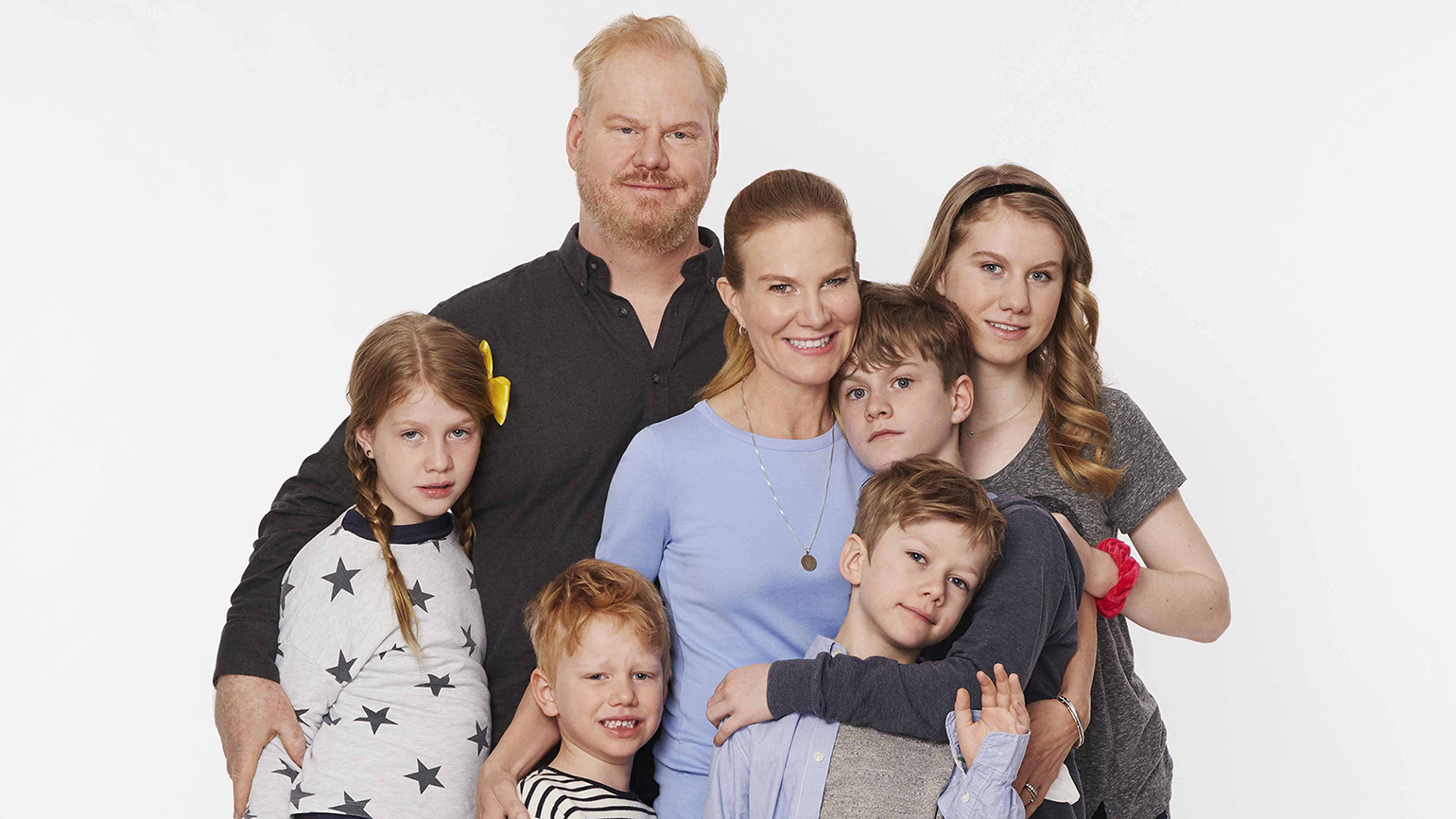
I turned to Jim, my husband of 13 years, a standup comedian, my writing partner and father to Marre, Jack, Katie, Michael and Patrick. All I could think was: God help them if I die. I believe in a God of miracles, but at that moment in April 2017, I couldn’t imagine them surviving without me, even with the Almighty’s help.

“Here’s my computer password,” I told Jim. “And the code to unlock my phone.” Somehow that seemed like the most critical info to share. He had no clue how to manage our household, the stuff I took care of without him ever realizing. He didn’t know the kids’ teachers’ names. Or the after-school schedule. How to order groceries. “All the foods we order will be highlighted on the FreshDirect website,” I told him.

Jim looked back at me with watery eyes. Was he having allergies? Had I remembered to bring the Claritin?

He and I had first met when I literally ran into him at a Korean market near where we both lived, as if in some bad romantic comedy. “We’re probably going to get married,” Jim had said. Two years later, we were. I dragged him to Mass. Jim had grown up Catholic too, but I was the one who carried a rosary everywhere I went.

We started working together. I’d never clicked with anyone like this. He was the one on stage, but creating his stage persona as a couple, watching him deliver lines I wrote, was a huge rush. His success was my success.

Behind the scenes, the kids started coming in 2005. At times, I felt like the most consistently pregnant woman in New York City. We worked the whole family thing into the act. But juggling all those pediatrician appointments, parent-teacher meetings and afterschool activities while still focusing on Team Jim was like walking a tightrope while juggling cats.

In 2015, we launched The Jim Gaffigan Show on TV. I was an executive producer. After two seasons, I was exhausted. It struck me that the time I was taking to write about being the mother of five children was taking the place of actually being a mother of five children.

“Do we want 10 seasons of an amazing show and miss them growing up, or do we want to stop at two great seasons and have amazing kids?” I asked Jim. We ended the show and set up a home office for both of us.

I had charts with every appointment, every activity, color-coded by child. Everything under control. Sure, I had throbbing headaches and trouble hearing out of my left ear. I didn’t have time for this. I pushed myself harder. Finally, at the recommendation of the kids’ pediatrician, to whom I’d admitted not being able to hear, I squeezed in an MRI.

The findings had brought us here: A large pear-shaped tumor was pressing against my brain stem. “You need surgery immediately,” the neurosurgeon said. The one thing I had no plan for. Suddenly, getting to the hospital was all that mattered.

Now, in pre-op, Jim wiped his eyes and kissed me. A nurse wheeled me into the OR. I was mostly out of it for the next two days. I regained consciousness in the ICU, a tube down my throat. Something up my nose. More tubes coming out of my arms. Jim was there. He looked terrified. He turned to talk to a doctor, but with all the medication I was on I couldn’t grasp what anyone was saying. What’s wrong? Later I learned that, while the tumor had been successfully removed and wasn’t cancerous, I had aspirated saliva in my sleep and contracted a serious case of bilateral pneumonia.

On top of that, I wouldn’t be able to speak or swallow, not even a sip of water, while my brain stem healed from the surgery. My body was so weak, i could barely move. But my brain was in overdrive. Who was checking on Marre and making sure she wasn’t on her phone but doing her homework? Family and friends were watching the kids when Jim was with me, but they didn’t know my routine. Did I tell someone to put a Pull-Up on Patrick before bed? Did Jim remember the Xbox had to be locked up so Jack wouldn’t be on it all week?

I couldn’t tell anyone; I couldn’t talk. It was maddening. The pneumonia was making me sicker. A suction tube in my mouth made sure not a single drop of saliva could escape. The breathing tube made me feel as if I were suffocating. The kids weren’t allowed in the ICU. I missed them. And I worried they were trashing our house. I felt helpless. I wanted to scream. But of course I couldn’t.

I was praying as I never had before. Why wasn’t God responding? I was doing my part. What was the holdup?

After about a week, my brother Paul brought me a clipboard and a black Sharpie. I grabbed the pen and wrote a long list of instructions. When I was done, I showed it to Jim. He squinted. “What is this?” he said.

I looked at what I’d written. With my brain stem still healing, my hand-eye coordination was a mess. My list was totally incomprehensible. I couldn’t stand it. I threw the clipboard against the wall. “I know this is awful for you,” Jim said. “But the kids and I are handling things at home. Seriously. That’s the last thing you need to worry about right now.”

My eyes met his. Who was he kidding? I pictured piles of pizza boxes scattered about the apartment. The sink full of dishes. Dirty laundry everywhere. That wasn’t what bothered me most. I missed the little rug rats, their hugs with their greasy, grimy fingers, their hair that forever needed combing, Katie’s riddles that made no sense, Marre’s stories that went on and on. Things I’d so often thought as annoyances, keeping me from getting the work of being a mother done.

Slowly I grew well enough to stand and walk short distances with the help of a physical therapist. But I still couldn’t eat or drink. The trach in my throat kept me from speaking. Every day, Jim came to visit and assured me he had things under control. He went over the plans for the week, what each of the kids was doing. He’d mastered the after-school schedule. On top of that, he’d made a detailed chart for when friends and family should visit each day, so I was never alone. This man who had made being a sloth into an art form. I saw him in an entirely new light. Like Winston Churchill in his war room. Only funnier.

After about three weeks, I was strong enough to leave the hospital and come home. But I was mostly confined to bed. Still eating through a tube, breathing with the help of a machine.

Jim, along with Sister Mary (a nun who happens to be an RN and a dear friend), led me into our apartment and to my waiting bed. The kids were out, so I could get settled first. Finally I heard the familiar sounds of their arrival. But I had to wait while they each took showers, per doctor’s orders, for infection control.

At last, the five of them stood awkwardly in front of my bed. A feast for my eyes. Seven-year-old Katie was like Florence Nightingale, concerned about my temperature, my comfort. My four- and five-year-olds, Patrick and Michael, carried toy doctor kits and used their plastic instruments to assess my condition. Then they brought in gigantic shiny helium balloons that spelled out WE LOVE U!

I was back. Not as executive producer of Team Gaffigan. But I didn’t care. At least not the way I would have before the tumor. I was surrounded by love and family, and that’s all that mattered. It had taken me literally not being able to move for God to get my attention, to show me my kids didn’t need me to be the family showrunner. They needed a mom who would listen to their rambling stories, who would cuddle with them or watch a favorite TV show together. Go on a picnic in the park. Play Legos. Just be with them. I was ready to get started.

But first I had to get well enough to get out of bed by myself, to breathe on my own. That took weeks—a long, frustrating wait I didn’t handle with grace. But every day I was reminded of how the kids were stepping up, helping with chores I had never delegated to them. Laundry was getting done. Meals were being made. Jim even let the older kids go on outings alone, taking the subway. Something I never let them do.

So many times I wanted to take charge again, to direct the action, but I couldn’t. Instead, I had to let go. It wasn’t only my body that was getting stronger but my will, my desire, to make a change. To heal, not only physically but spiritually, and learn to trust God fully.

Finally I was able to get about and speak again. My occupational therapist told me I was ready for something more challenging. “Take on something meaningful to you,” she said.

I thought for a moment. There was so much I wanted to get to. “Can I clean out my basement?” I said.

“I was thinking more like making breakfast for your kids,” she said.

Duh. The kids. I could see God looking down on me, thinking: What is it going to take for this woman to get it?

I went to the fridge, got out a carton of eggs and began cracking them into a pan. I only lightly stir my scrambled eggs so they come out with big pockets of yolk and a few white pieces. This was my first time cooking since the tumor. Soon the apartment was filled with smell of cooking eggs and Katie sauntered into the kitchen.

“Mommy, I love the way you make scrambled eggs,” she said. “You don’t make little crumbles like everybody else does.”

I beamed. “Katie, would you like me to teach you how to make them?” She pulled up a chair next to the stove. I showed her how to crack the eggs, then push the edges into the middle of the pan and fold them on top of each other. She quickly mastered it. Wonderful. Lesson finished.

“Mom, now can you teach me how to make a sunny-side up?” she asked. In my mind, I heard what I would have said pre-tumor, What do you think this is, Denny’s? I have to clean out the basement.

“I’d love to,” I said. And that’s what we did.

For more inspiring stories, subscribe to Guideposts magazine.