Embrace God's truth with our new book, The Lies that Bind

Is Family a Gift?

The high school graduation party for my niece drew together several generations. Ages ranged from two to 93. It was a beautiful time–young ones intermingling and playing games with older members; everyone joined in celebration of the occasion.

Over the years our family has become a blend of different heritages and nationalities. We come in different sizes, colors and shapes, and speak multiple languages. Our faith affiliation varies from family to family.

GP In Article Desktop

While faith is important for the majority of our family, there are a few who don’t believe in God. We love them no differently. The diversity among us leads to many interesting discussions and arguments, but most of all great fun. We enjoy expressing our emotions with our hands and our voices… often everyone at the same time. Sound familiar?

Bishop Desmond Tutu of South Africa says, “You don’t choose your family. They are God’s gift to you, as you are to them.”

While Tutu’s words ring true, families are not perfect. Most have some wonderful and some difficult members. Most have both inspiring stories of overcoming hardships and embarrassing moments that are thankfully in the past.

Keeping them together is the challenge.

READ MORE: ALL KINDS OF FAMILIES

Although there are real differences, love is the force that unites us when everything seeks to divide. Love lays the bridge to forgiveness and reconciliation in times of separation and brokenness. When illness, death or tragedy strikes, it’s the love of family that keeps us together and gets us through these difficult seasons.

I thank God for my family. The love and faith that has been handed down from one generation to the next continues to shape who we are today and who we will be in the future. I often think if we were able to choose our family, many of us would end up with the same one. I know I would.

Do you see your family as God’s gift? If you had to choose one word to describe them, what would it be?

Lord, you place us in families. Whether biological, adopted or within a church, help us to see our family as your gift and empower us to be the gift to them that you intended.

In the Military, More Than Just a Uniform

Put on the full armor of God, so that you can take your stand against the devil’s schemes. (Ephesians 6:11, NIV)

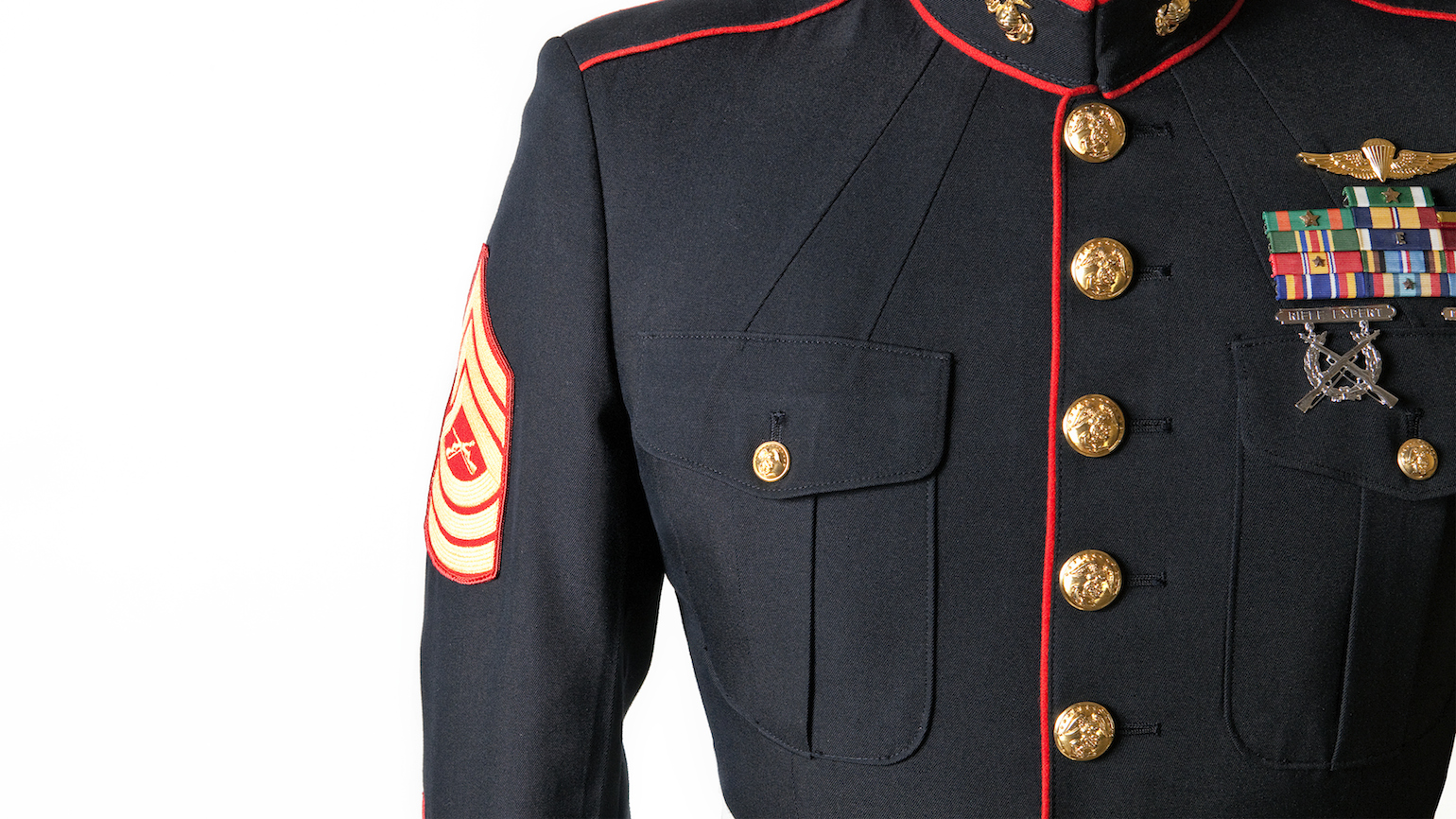
Before he enlisted, one of the things my son looked forward to most was the uniform. I’m not sure whether it was the identification with something bigger than he, or how strong those courageous men in the Marine Corps dress blues looked.

Pray A Word a Day - 2023 In article

I remember how wonderful—and grown up—he looked during boot camp graduation. Every inch of his dark green dress uniform (they don’t get the dress blues until later) was perfectly pressed and shined—from the tips of his shoes to the top of his cover (civilians would call it a hat). Every Marine on the field was dressed the same. The only differences were in the medals and ribbons adorning their chests and the stripes on some arms. Anyone looking at them would have known what they were—an elite, combat-ready group of dedicated men and women.

Please Donate to Guideposts Military Outreach

I noticed the power of these men in uniform again on the day of his first deployment. We were fortunate enough to get to be on base to see our son off to the Middle East. This time they weren’t wearing a dress uniform, but instead were combat-ready in their khaki fatigues. But there was the same set of their shoulders that told anyone looking they were ready for the job ahead.

The last time I took note of these military heroes was at our son’s wedding. The service had already begun on that special day when a dozen men slipped inside the chapel. One glance was all I needed to be able to tell that these were my sons Marine Corps buddies. None of them had on a recognizable uniform. Instead they wore what we’d expect to a wedding—dress pants and jackets. Even out of uniform, it was obvious where they served. They were unmistakably Marines.

After the wedding, my husband asked if I had known that the group were Marines. I assured him I had, and we went on to discuss how they didn’t have to be in uniform to be identified as members of the military.

As I lay in bed that night, this Bible verse above came to mind. It reminded me that we too are part of an army—God’s army. We may not wear recognizable uniforms, but to be effectively used by God, those around us should be able to tell Who we serve.

Inspiring Family Reunion

This will have to be quick because I am in the middle of a big family reunion. Wait, there’s Uncle Vince. You better quit those butts or you’ll never make it to 60. And that was a fact.

The reunion is taking place, you see, on my laptop. I am lucky to have a big sister who appointed herself the unofficial archivist for the family. God knows how many backbreaking hours she put in, organizing Dad’s home movies that went way back into two DVDs.

GP In Article Desktop

But what an inspiring treat, what an inspiring story. Isn’t that what a family is? A story? A story different from any others?

I was at the tail of the baby boom, so I am seeing so many of the previous generation I had never known. I watched four of my grandparents, three of whom died before I came around, dandle various babies whose identities were obscure. I saw my uncles go off to war and return safely. I saw my mother when she was the most beautiful woman I could imagine. And my father’s boat, varnished passionately to a blinding sheen.

I saw my squirming, squalling self as a baby. And I saw my brother Bobby as a baby, his Down syndrome evident even in the crib. Three years older than me, he would only live to 12. He hardly ever got to be more than a baby.

The moments that left no doubt as to the true story of my family were the scores of scenes that were based in our faith: baptisms, weddings, funerals, confirmations, burials, even my uncle Jim Morissey’s ordination. Clearly our faith was the spiritual gravity that held us all together as a family, a story.

My sister went to an enormous amount of work digging through the attic and splicing together usable footage. Today’s technologies make keeping a family and faith legacy much, much easier.

Now there’s Keepsakes of Faith, a new service from Guideposts in conjunction with Inspiring Voices—an easy and exciting way for you to build a faith and family legacy, a beautiful printed product that can be passed down for generations.

Those generations will thank you, I can promise you that.


Inside the Cat’s World

Like many New Yorkers, I was stuck at home during the huge snowstorm that hit the city just after Christmas. The streets were a mess, my car was buried, the subways weren’t running, and all the shops in my neighborhood (aside from the grocery store) were closed. I had no choice but to hunker down in my tiny, stuffy apartment with my cats.  

I’d just gotten back from a stressful whirlwind trip to see family for the holidays. My to-do list was ten miles long. I was behind on so many things, and the forced entrenchment made me feel anxious. I was going stir crazy. I can’t do anything sitting here in this apartment, I thought.

Journey With Jesus in article ad

I’d been bouncing off the walls for most of the morning when I gave up hope of getting anything done. I plopped down on the couch, and for the first time that day, took in my surroundings. Dean, my portly tuxedo cat, snoozed contendedly on a nearby mountain of blankets. Her sister, my lither tuxedo cat, Sal, was nosing around in a bag of opened Christmas gifts.

After a minute or so, Dean decided she’d had enough of napping on the couch, got up, and trotted into the bedroom. I decided to follow her. As soon as she got there, she did a scan of the room. Then she settled on her next napping destination, the fluffy comforter on my bed. I heard a swishing noise behind me and turned to see Sal engaged in heavy play with a catnip mouse. I looked back at Dean. She’d decided to groom herself instead of nap. I turned back to Sal. She had abandoned the mouse to search the wilds of my closet. Each time I turned my head, they were immersed in a different, and equally compelling (to them) activity.

This is their world, I thought. My small apartment is a huge world of wonder and enjoyment for them. It’s not a prison, like I’d made it out to be.

The rest of my day was much more productive. I took in my apartment as my cats do, finding amusements and discoveries in every nook and cranny. I explored the wilds of my closet with Sal, finding new spots to store things (and some things I forgot I had!). I helped Dean find her new napping spot on a window ledge I didn’t even know was there. I cleared myself off a workspace on a counter in my kitchen and made a cozy new office space.

At the end of the day, my fresh perspective gave me a day’s worth of productivity and fulfillment. And the next day, still stranded by snow closings and delays, I was overjoyed that I’d spend another day in my cats’ world.

—Jessica Bloustein

How have your cats changed your perspective on life? Tell us your cat stories at LoveDemCats@guideposts.org!


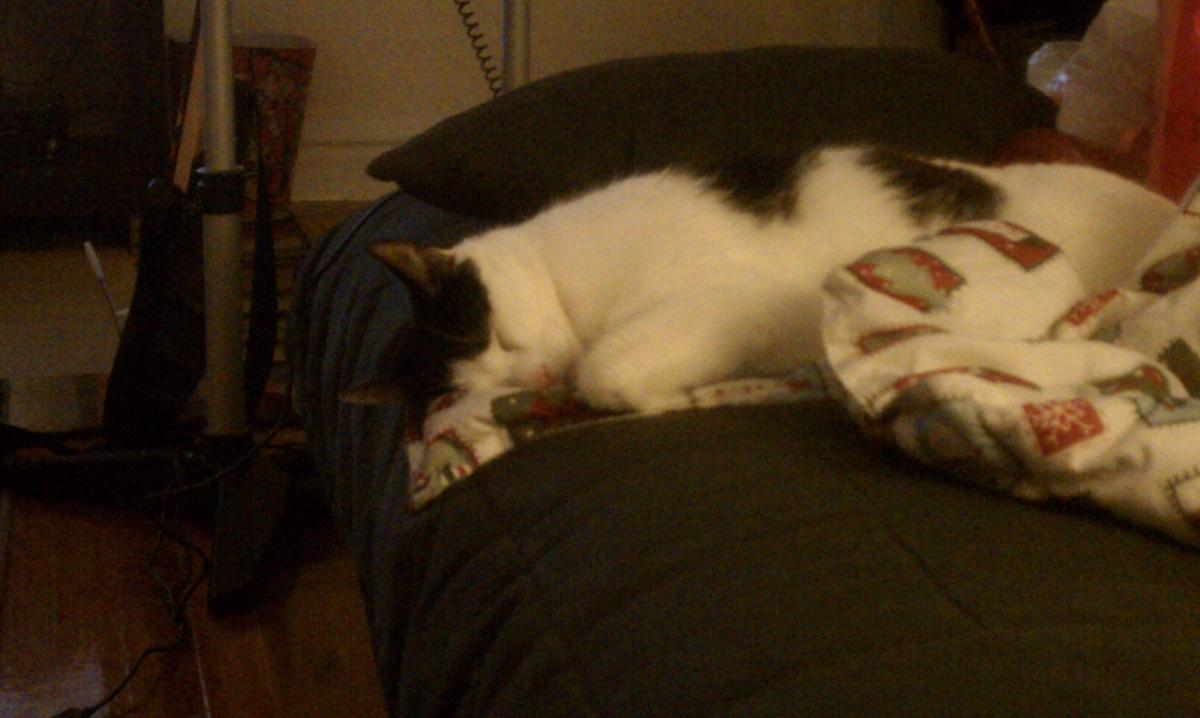
Dean, napping happily as the snow falls outside. (Photo by Jessica Bloustein)

In Praise of Those Who Mother

Maybe a proclamation would be the thing. Although that was done already. Maybe just some commonsense suasion could fix it. It’s about a little problem I have with that day carved out of the calendar, held up as Mother’s Day. Far as I can tell, there’s a missing syllable.

I would like to make the day not plain old Mother’s Day, a noun. Which by my take is exclusive, too exclusive. I would like to add an –ing. And make it Mothering Day, beckoning the verb. A day for all who mother.

Pray a Day Vol 2 In Article Ad

Not just those who know what it is to have pushed the burning bulge as if your life depended on it. And not just those who’ve signed their name on someone’s dotted line. Or stepped in without official papers. All of that is fine. But there is more—there are so, so many more.

Yes, every last someone who has stroked a brow, wiped a tear, dabbed chocolate off a little cheek, fluffed a pillow, tucked in the covers, whispered bedtime prayers, set an extra place at the table, stretched a meat loaf, picked the peas out of the pasta salad, kissed a bloody knee, kept a retching tot from falling into the toilet bowl.

Yes, every pair of arms that’s lifted a dead-weight child in the pool, played red rover until the cows came over, pushed a kid on training wheels around and around the block, turned the pages of Goodnight Moon so many times you find yourself chanting goodnight to mittens when no one’s in the room.

You get the point.

I have for years squirmed and wriggled when it comes to setting aside a certain Sunday, stockpiling loaves and loaves of toast that will be cut into triangles, smeared with jam and honey and cinnamon sugar, and delivered, teetering, on trays that stand a mighty chance of toppling off bedsheet-shrouded knees.

Not that I have anything against newspapers in bed or violets clutched in sweaty little fists. It’s just, gosh darn it, my world, for one, is highly populated with extraordinary motherers who have neither birthed nor adopted, children of their own. And plenty who simply could not deliver, ever.

The perfect Mother’s Day Gift: Women’s Devotional Bible

I am all for honoring the art of mothering. And I would make a motion to amend the noun and bow down before the brand-new ending. The –ing, I argue, is where the emphasis should be. It’s a verb—active, pulsing, life-propelling verb.

Long ago, when Julia Ward Howe composed her original Mother’s Day proclamation it was all about women rising up and demanding an end to war. That I could get in a froth about.

Especially the way she put it: “Our husbands shall not come to us, reeking with carnage, for caresses and applause. Our sons shall not be taken from us to unlearn all that we have been able to teach them of charity, mercy and patience. We, women of one country, will be too tender of those of another country, to allow our sons to be trained to injure theirs.”

So wrote Julia in 1870.

But somewhere, the Hallmarks of the world got in the way. The second Sunday in May became less about the women of the world exerting their mother-ness on the global family, and more about fluffy slippers, hand-crayoned cards, and leaving whole chunks of the population to ache because, by accident of biology, they’ve not been able to get egg plus sperm to equal zygote, their unborn children never got to take a single breath, they’ve buried a child born from their own womb, laid a lifeless little body to rest—far, far too soon.

Aches, all, that never go away. All aches the second Sunday in May only serves to jab and pierce so stingingly I know women who barely make it through the day.

Or, perhaps, they’re women who decided early on—or agonizingly—not to bring another soul into this blessed, broken world. Or men whose tender, caring touch goes uncelebrated, lost in all the hubbub of the third Sunday of June when to be a grill meister seems the height of all that matters.

They all mother, if not define themselves as mothers per se. If not their own children, then other people’s children. Or the child who dwells in every single someone. Have you not been deeply mothered by a friend? You needn’t be with child, nor even be a woman, to mother, is my point. I don’t mean to be a grouch. And I hate to throw cold water on all the blessed moments the day will surely bring.

I just feel intent on proclaiming one not-so-little matter: may it be mothering, the art of tender caring, coaxing life, leaving mercy in your wake, the art that knows no gender bounds, no census-taker’s definition, the art the world needs in mighty thronging masses, may it be mother, and not just mothers, for which we stand and shout, “God bless you, each and every motherer.”

Excerpted from Motherprayer: Lessons in Loving by Barbara Mahany. Copyright © 2017 by Barbara Mahany. Used by permission of Abingdon Press.

In Praise of Cats

June is Adopt-a-Cat Month from the American Humane Association. In honor of kitties everywhere, here is an appreciation:

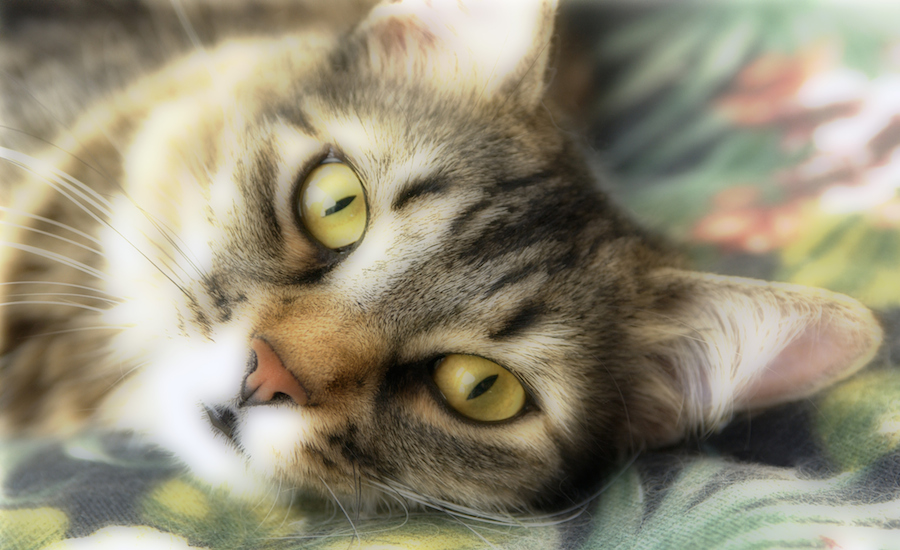
People say cats have an attitude. Some people love them because of that. Some people love them in spite of it. The funny thing about cats is that they are all unique, just like people.

A Journey of Faith In Article Ad - Avail Now

My childhood cat Henrietta loved me. She used to ride on my shoulders, perfectly relaxed as I walked from my bedroom down the hall, and then sank into a chair in the living room.

We had this wonderful brown plush easy chair. It could rock back and forth, as well as swivel around in a circle. I’d hold Henrietta in my lap and work my feet against the floor to make the chair spin around and around. You wouldn’t believe it, but Henrietta loved this ride as much as I did! She flicked the tip of her tail, totally content in my arms.

READ MORE: FEELING LOST AND ALONE

Some cats are playful and curious. Some are social and affectionate. Other people describe their cats as timid and skeptical. If someone walks into the house, they vanish. I once fed and cared for a cat while my friend was on vacation and never saw the cat! The only way I knew the cat was still okay was that the food had disappeared the next day.

Some cats are active, naughty, vocal, loving, gentle or a mixed-up marvel of feline sensation.

Thank you God for all the wonderful, marvelous, unique and beautiful cats in our lives today.

If you’re looking for a feline friend, why not visit your local shelter or cat rescue group and find a companion who will fit your lifestyle? Curious or calm, adventurous or admiring…your purr-fect pal is waiting!

Important Life Lesson from a Puppy

God saw everything that he had made, and behold, it was very good . . . Genesis 1:31 (ESV)

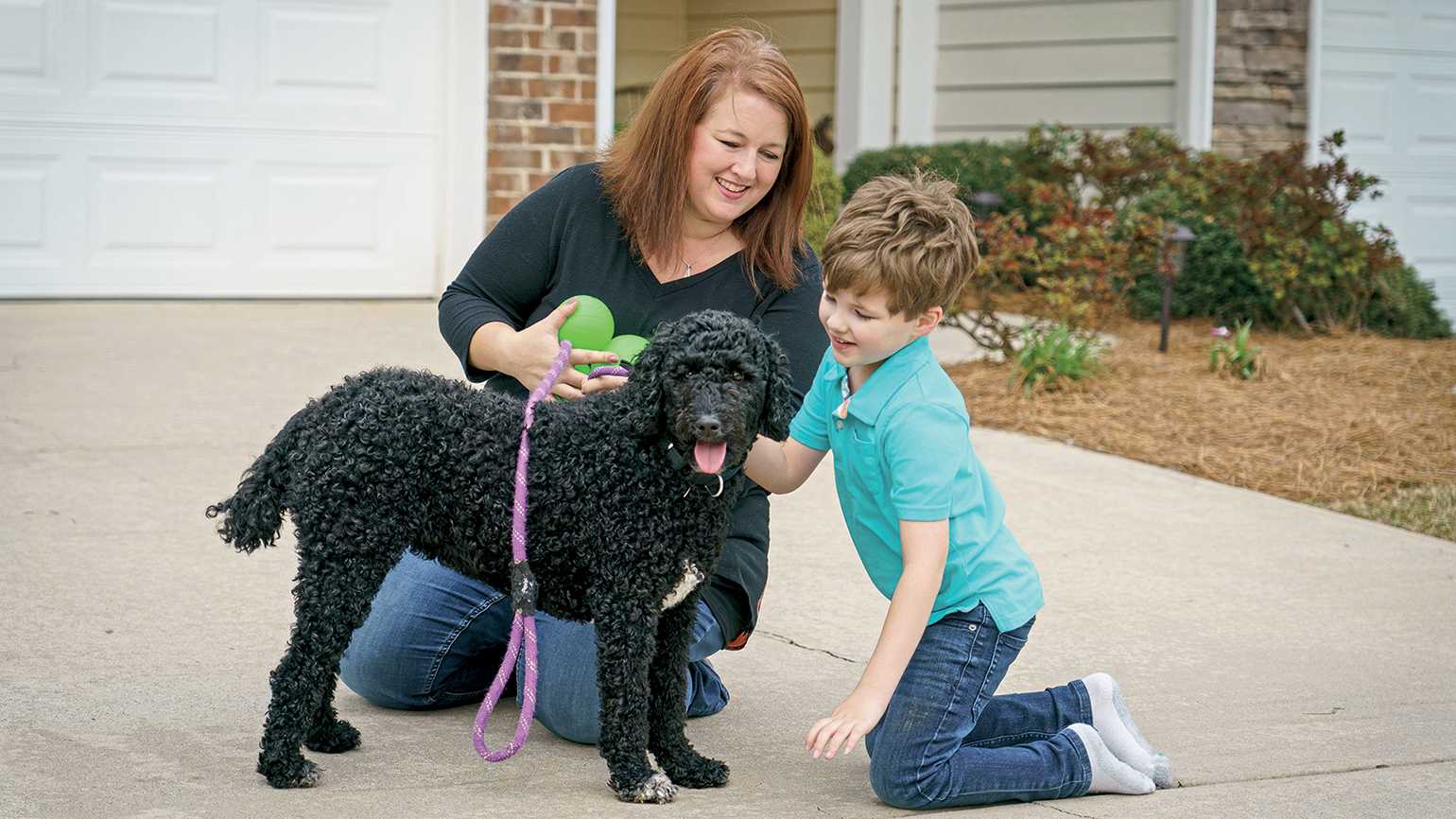
I walked in the house after being gone for a few hours and let Ody, our puppy, out of his crate. He can hardly contain himself when he sees me. He runs between my legs, rubbing against me while his tail vigorously wags. He romps around the room and picks up his toys and brings them to me. His whole being exudes joy. He clearly delights in being with me.

Journey With Jesus in article ad

I read a quote recently from Jim Wilder, a neuroscientist, who said, “Joy is being with someone who delights in being with you.” Ody truly exemplifies this phrase. As I reflected on this, I thought about the people in my life who most of the time delight in being with me. My husband, my boys, close friends, and others came to mind.

Then I thought, Jesus delights in being with us so much more than any pet or person on earth. He delights in being with us all the time, from the beginning of time. After God finished creating everything, He declared it was very good. Not just good, but very good. He delighted in His creation. He delights in us. He desires to be with us. Even in those times when we may feel as if no one delights in us, we can know Jesus does. When we believe this, we can live with an unwavering sense of joy.

And, because joy is contagious, let’s make sure others know we delight in being with them. We may not bounce around and wag our tails, but we can make intentional efforts to let those we love know we delight in being with them.

Faith Step: Who is someone you delight being with? Write them a note today and let them know how much joy they add to your life.

I Miss You, God

“I miss Grandmama and Granddaddy. I haven’t seen them since Easter.” My five-year-old granddaughter, Anna, said those words to her mama last week.

What she said isn’t exactly true. Since Easter, we’ve been to several of her ballgames. Our family went out to dinner for her uncle’s birthday, and we celebrated together at the birthday party for her twin siblings. We would have been together more than that if all three of the children in her family hadn’t been sick, and I hadn’t been on the road for some business travel.

extraordinary women of the bible

But I knew what she meant. She was out on the field when we went to her ballgames so we just had a few minutes together before and after games. Our attention was scattered with all our family at the restaurant. And with lots of children playing, it was a wild and crazy scene at Eden and Ethan’s third birthday party.

What Anna was saying was, “I haven’t had my time with Grandmama and Granddaddy.”

READ MORE: A PRAYER FOR EVERY NEED

Paul and I love our grandchildren. We have six grandbabies, and they’re all five and under. Each of them is unique and so precious to us. It’s sweet watching them play together, but we especially love our one-on-one time with each child when we get the chance for that—and our grandchildren love it as well.

When Paul and I take Anna out on a date, she always wants to go to Papa’s for “beans and rice and mokie.” And for all of you who are still trying to figure that out, “mokie” is guacamole. Anna called it that when she was two, and we all call it “mokie” now.

It’s so sweet watching Anna and Granddaddy walking hand-in-hand and seeing her cuddled up close to him while we wait for our food. Sometimes we take her to Walmart after dinner so she can buy something, but often, she just wants to go back to our house to play or to watch a movie with us.

She loves Anne of Green Gables, and I soak in the sweetness of her tucked under my arm while we watch. Or sometimes she sits on Granddaddy’s lap with her head on his shoulder, so snuggled in that she looks like she’s melted onto him. 

That’s what Anna was missing.

You know, our lives as Christians are sometimes like that. We go to church on Sunday . . . but our minds are on everything but the sermon. We play some Christian music in the background—but we don’t pay attention to the words while we ride in our cars or zip around in our houses.

We have our Bibles on our coffee tables and devotional books stacked high on our nightstands, but we don’t read them—or if we do, it’s just a couple of verses late at night when we’re so tired that nothing makes sense. And our prayer life? Let’s just say that prayer is often better than counting sheep to put us to sleep.

Does any of that sound familiar? I suspect all of us are guilty of this from time to time. We hover on the fringes spiritually, but we don’t have that intimate one-on-one time with God, that time where we shut out everything else in our lives and He becomes the focus.

Spring and summer are the busiest times of the year for me as a writer and speaker. I travel a good bit to teach and speak at writing and film conferences and at church events. Since my Just 18 Summers novel ties in to Mother’s Day, Father’s Day and summer, I typically do a number of radio interviews in conjunction with that.

Add in industry events for publishing and film, numerous writing obligations, studying for speaking engagements, keeping up with my parenting blog, working part-time for our family business, and brainstorming and compiling new projects, and the days speed by at a dizzying pace.

READ MORE: CLEAR AWAY YOUR SPIRITUAL CLUTTER

And just like little Anna missed her time with us, in the midst of this crazy time of the year, I’ve realized something: I miss God. Now don’t get me wrong. I go to church. I read my Bible and devotional book. I pray.

But there’s something inside me that craves that intimate one-on-one time with God. Time when I can sit and just worship Him, when I can snuggle close and feel His presence. Moments when I can talk with Him and listen to what He has to say to me without the distractions of life pulling me away. Times when I can put some praise music on and let the words sink into my soul. And moments when I can read my Bible and really focus on the love letter He’s written to us.    

So you’ll understand why I’m excited about tomorrow. I’ve got a date with God—hours set aside just to be with Him. Do I have time to do this? No way! My gotta-get-it-done list is packed. But I’ve decided I’m going to focus on Him—and let Him become the keeper of the rest of my time.

How about you? Do you need to make a date with God? I can promise you He’ll accept your invitation!

Dear Father, please give us a love for You and a hunger to spend time with You. Remind us daily of what’s really important in our lives and help our time spent with You to overflow into the lives of others who need to know about our amazing God. Amen. 

If Our Pets Could Talk…

Like a lot of people (and, I suspect, a whole lot of Angels readers) I talk to my dogs. “Why did you have to act that way?”

I’ll snap at my schipperke, Mercury, after he’s barked at a passing dog on the street for no apparent reason. “All he wanted to do was make friends. But no—you had to go and be nasty.” 

Up and down my block each day other dog owners are doing the same thing, addressing their schnauzers, Pomeranians, Shih Tzus, and plain mutts in full, complex, impassioned sentences (while indoors still others are also doing the same thing with their cats). 

Human beings may be, as the literary critic George Steiner put it, “the language animal,” but that doesn’t prevent a great many of us from talking to our fellow creatures as if they were language animals too.

Why does talking to animals feel so natural? Probably because, for most of human history, that’s just what it has been.

“It was, and still is in many places,” writes poet and anthropologist David M. Guss, “a widely held belief that the part of the animal we see is not the real part but only a disguise, an outfit it wears when it comes to visit our world.

“Once home again, it removes that costume and changes back into its true form—a form no different from that of humans.” 

Natural as talking to our nonhuman companions feels, however, these conversations do tend to be a little one-sided. Most animals, after all, don’t talk back to us. 

Most don’t…but not all. The idea that animals are at least potentially capable of communicating with humans goes back to earliest times.

Many biblical commentators over the centuries have suggested that before the Fall, Adam and Eve were able to discourse with the animals who shared paradise with them as naturally and easily as they could with each other.

Nor did the Fall entirely do away with people’s ability to understand animals—as Balaam’s ass proved when she verbally rebuked her master for failing to see the Angel of the Lord when he was standing right in front of them. 

Even scientists—after centuries of arguing that human beings are the only creatures capable of language—are starting to sound a little less certain on the matter.

In 1977 a Harvard-educated animal researcher named Irene Pepperberg set about teaching an African gray parrot named Alex to talk. Not on the Polly-wants-a-cracker level, but really talk.

Alex soon developed a vocabulary of more than 100 words—including “ban-berry,” a word of his own coining, which he called apples because to him they tasted like bananas but looked like cherries. 

In a recent National Geographic article, writer Virginia Morell described a visit she paid to Pepperberg and Alex (just before his death at the age of 30) at Brandeis University.

At a certain point in the visit, Pepperberg brought in younger parrots that were learning English with Alex’s help. Alex left off from talking to the humans and addressed his fellow birds—in English:

“Talk clearly!” he commanded when one of the younger birds mispronounced the word green. 

“Don’t be a smart aleck,” Pepperberg said, shaking her head at him. “He gets bored, so he interrupts the others or gives the wrong answer just to be obstinate.” 

Parrots are equipped with a vocal anatomy which, though very different from that of humans, allows them to mimic the human voice—something that other super-smart animals like dogs, chimps and dolphins have a harder time doing.

But it seems like some of these more vocally challenged species would like to imitate human speech, even if they don’t know how.

Donna Kassewitz, a researcher at SpeakDolphin.com, a Miami-based group working to break the human-dolphin communication barrier (and a faithful Angels on Earth reader), told me a story that bore this out. 

Her husband, Jack, was swimming with a dolphin named Jupiter when Jupiter suddenly became quite animated. “He was really getting in Jack’s face—in a friendly but talkative and insistent way,” Donna said.

“While underwater, the dolphin began bobbing his head around excitedly while opening and closing his mouth and vocalizing. It was quite unusual for a dolphin to behave this way because dolphins don’t use their mouths to vocalize. Instead these sounds come through the blowhole on the top of the head.

“It seemed as if Jupiter was imitating the way humans talk in an effort to show that he wanted to communicate with Jack. Understandably, Jack couldn’t shake the feeling that there was important information that Jupiter was determined to share.

“Multiple times over a four-hour period, Jack thought the session with Jupiter was over and tried to exit the water, but each time Jupiter would gently grasp Jack’s arm, pulling him back in, and Jupiter would begin talking again!

“Eventually Jack was so exhausted from swimming that Jupiter kindly let him get out.”

Donna added, “The experience made us feel that the dolphins are probably just as frustrated as we are about our limited ability to understand each other. Events such as this galvanize our commitment to breaking the dolphin language code once and for all—in fact, we pray daily for God’s guidance in this research.

“It feels urgent that we give dolphins a scientifically undeniable voice in the world. We believe that when we do, humanity is going to discover that there are many important topics these creatures want to discuss with us.” 

Such stories underline what most of us know already: Animals are kindred spirits. And though their consciousness may differ from ours in important ways, they are nonetheless beings with genuine inner lives, lives that they would, if they could, be happy to share with us.

Not that, by their very existence, animals don’t tell us plenty. “The word,” wrote the second-century Christian thinker Origen in his Commentary on St. John’s Gospel, “is present in every creature, however small.”

A century later Dionysius the Areopagite wrote that “since the creation of the world, the invisible mysteries of God are grasped by the intellect through creatures.” 

What both these writers are getting at is that just as all of creation itself is a kind of language (one that God spoke into being at the beginning of time), so too can all of God’s creatures be seen as actual words within that language. The sheer stunning variety of the animal kingdom bears this out.

The word “poet” originally comes from a Greek word meaning “maker,” and if creation is a kind of giant poem it makes sense that God would only be satisfied with the largest vocabulary of “words” possible.

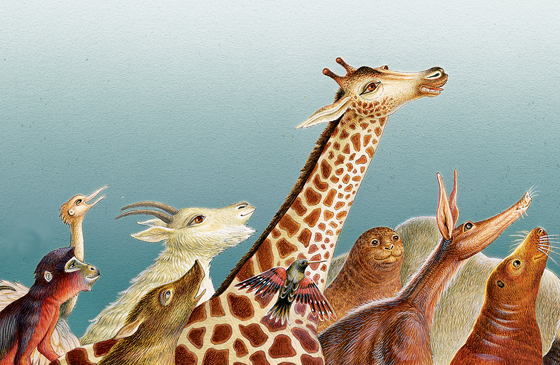
Hence we live in a world inhabited not only by dogs, cats and horses, but by wombats, platypuses, pygmy gorillas, potbellied pigs, sea cows, capybaras, flying foxes, star-nosed moles, blue whales and every other manner of beast and bird and creeping thing as well.

But in all this glorious variety, one creature does stand apart: not through being intrinsically better than the rest of creation, but through the fact that it alone of all creatures was created in the exact image of God himself.

“The human being,” writes Christian philosopher Olivier Clement, “is a craftsman—and rational—qualities which we share with the higher animals, the difference between us being one of degree and not of kind.”

Though we humans, in other words, are in no intrinsic way better than the animal creation with which we share the planet, we are higher than they are on the ladder of being—the ladder which, according to traditional Christian cosmology, stretches from the lowliest earthly creature through humans and angels all the way up to God.

In fact, by virtue of our unique relationship with the creator we are higher than the angels, even though they lie above us as we lie above the animals. 

It’s precisely this unique connection with God that gives us the awesome responsibility we humans carry here on earth.

As the sole and single truly God-like being in all of creation, it is our job, as the Book of Genesis proclaims, to exercise dominion over our fellow creatures: dominion not in the sense of tyranny and exploitation, but in the true meaning of the word, which is that of a lord who not only rules but protects the citizens of his kingdom. 

How important is this task of stewardship that God has entrusted to us humans? Vitally so. As the animals in our company—from my dog Mercury all the way up to Jupiter the dolphin—would surely tell us if they could. 


Download your FREE ebook, Angel Sightings: 7 Inspirational Stories About Heavenly Angels and Everyday Angels on Earth


Iceland: Would a Father-Daughter Trip Change Their Relationship?

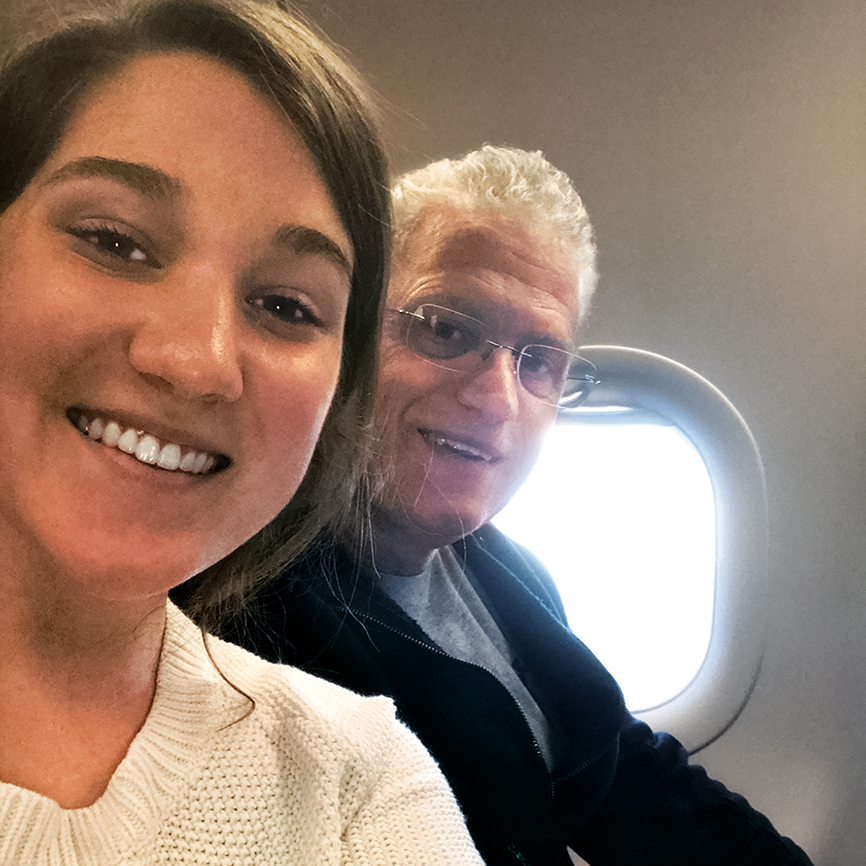
On a whim, Guideposts editor Alikay Wood asked her father if he’d like to travel with her to Iceland. She never thought he’d say yes—he’d never even traveled outside the U.S. before—but he did, and their shared adventure taught her a valuable lesson about love.

GET THESE BOOKS FOR THE FATHERS YOU LOVE

Walking with Jesus L&E evergreen_in article ad

For more inspiring stories like this one, subscribe to Guideposts magazine.

How Your Pain Can Help Others

I met up with a friend whose 17-year-old daughter is struggling. I hadn’t seen C.C. for a while, and since the purpose of getting together was to talk about her difficulties, not mine, I gave her the elevator-pitch version of my life in recent months.

“Oh my goodness! Why are you even here talking to me?” she gasped.

Sugarcreek Amish Mysteries In-Article Ad 2023

I grinned impishly. “Uh… Busman’s holiday?”

Seriously, I don’t want life to be all about me and my problems.

One redeeming quality of my struggles is that I can apply whatever nuggets of wisdom I learn to make someone else’s life easier.

I can help others in new ways: I can be a better friend, a better listener. I can ask better questions, and I can empathize first before jumping into problem-solving mode. This gives me something constructive to do with my pain.

Read More: 8 Signs of Depression

I find that the world becomes very small if it’s all about me. My likes and dislikes become more pertinent, my preferences rise to dictator status. We all need a life bigger than the circle of our pleasures and woes, a world where we can contribute kindness as well as receive it.

This goes beyond needing to be needed, because we genuinely *are* needed. Someone out there needs your ear, needs your hug. Someone out there needs a half hour of your attention, or maybe two or three half-hours. I daresay they need it regardless of whether you’re happy or sad, and they certainly need you more than you need to watch a TV show or play a mindless game on your phone. You’re likely to feel better after helping, too. Or at least that’s how it goes for me.

Read More: 5 Ways to Comfort Others in a Crisis

C.C. and I talked for a long while, and at the end of our occasionally tearful, occasionally laughing conversation, we hugged. She thanked me for taking the time to meet up with her. I said, “It’s a real pleasure to see you. Always.”

For sometimes the reason it’s better to give than receive is that when we give of ourselves we receive a certain kind of gift we can’t get any other way.